#gravitational field
12 messages · Page 1 of 1 (latest)
 buoyant garden
 steady starBOT
 sullen pivot
Isn't this a question for the Physics discord server?
 empty moth
buoyant garden
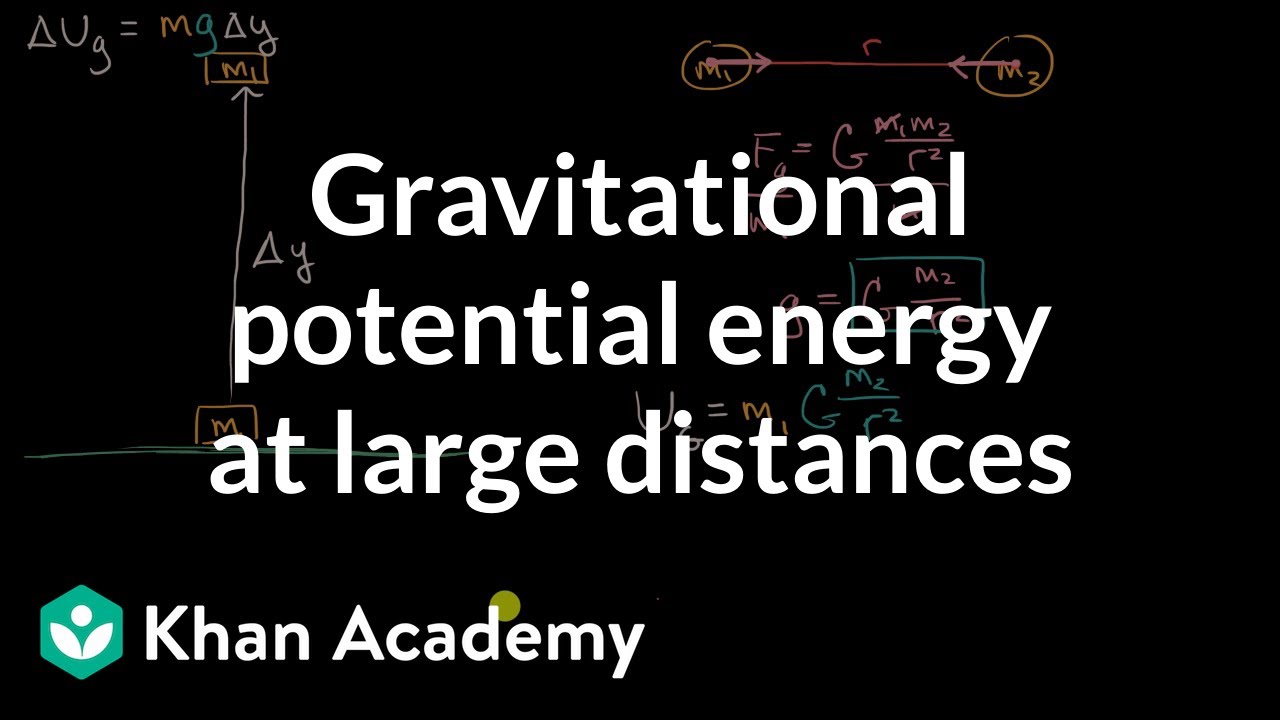
https://youtu.be/9Pp_LtKgTQg at 1:50, can anyone explain why dividing by m1 give...
empty moth
buoyant garden
https://youtu.be/9Pp_LtKgTQg at 1:50, can anyone explain why dividing by m1 give...
Gravitational potential energy (Ep) is Ep=mgh where m is mass g is gravitational acceleration and h is height
And the main SI system metric unit for energy is J(jule)
buoyant garden
sullen pivot
Isn't this a question for the Physics discord server?
my bad i thought this was the physics server
buoyant garden
empty moth
Gravitational potential energy (Ep) is Ep=mgh where m is mass g is gravitational...
sorry i don’t understand how this answers my question 😭
empty moth
Well I don’t get your question
buoyant garden
did u watch the video?
at 1:50
the part where he divides newton’s third law of gravitation by m1 to get the equation for the gravitational field of m2
empty moth
So we know that into that Newton's third law states that for every action, there is an equal and opposite reaction. This law applies to all interactions between objects including gravitational interactions. The gravitational force between two objects is given by the formula F = Gm1m2/r^2, where F is the force, G is the gravitational constant, m1 and m2 are the masses of the two objects, and r is the distance between them. To find the gravitational field of m2, we need to divide the force acting on m1 by m1. This is because the gravitational field is defined as the force per unit mass, and we want to know the force acting on a unit mass at a certain distance from m2. So, dividing both sides of the equation by m1, we get F/m1 = Gm2/r^2. The left hand side of the equation represents the gravitational field at the location of m1 due to the gravitational attraction of m2. Therefore, we can write the gravitational field as g = Gm2/r^2, which is the force per unit mass due to the gravitational attraction of m2 at a distance r from it.