#help-39
1 messages · Page 109 of 1
 pearl pondBOT
pearl pondBOT
pearl pondBOT
Channel closed
Closed by @twilit cedar
Use .reopen if this was a mistake.
 midnight haven
gonna try it myself
 honest solstice
midnight haven
gonna try it myself
honest solstice
midnight haven
gonna try it myself
Which question are you even doing
We dont read minds
pearl pondBOT
 Available help channel!
Send your question here to claim the channel.
Remember:
• Ask your math question in a clear, concise manner.
• Show your work, and if possible, explain where you are stuck.
• After 15 minutes, feel free to ping <@&286206848099549185>.
• Type the command .close to free the channel when you're done.
• Be polite and have a nice day!
Read #❓how-to-get-help for further information on how to ask a good question, and about conduct in the question channels.
 calm chasm
I know this can be solved easily using u-sub , But i just want to know what's wrong with this approach
 pearl pondBOT
calm chasm
I know this can be solved easily using u-sub , But i just want to know what's wr...
pearl pondBOT
calm chasm
I know this can be solved easily using u-sub , But i just want to know what's wr...
 muted shale
$\int \cos^3(x)\sin(x)dx$
 jolly parrotBOT
Flappie
 jolly parrotBOT


 calm chasm
muted shale
does it converge?
calm chasm
muted shale
does it converge?
for the intergal ?
the intergal is solved using u-sub
and it will be -cos(x)^4/4 + c
muted shale
take u=cos(x)
calm chasm
calm chasm
I know this can be solved easily using u-sub , But i just want to know what's wr...
what is wrong with this ?
 muted shale
owo, whats this?
 muted shale
what happens if you add -3/32 on the red line
calm chasm
what is this
calm chasm
muted shale
what happens if you add -3/32 on the red line
wait let me show u

identical
exactly
the same
what do u think about that ? @muted shale
calm chasm
why didnt the constant show up in my apprach
approach *
because like , i dont think thats the c
because the red line is exactly equal to -cos(x)^4/4
@muted shale
muted shale
in the $\int \cos^3(x)\sin(x)dx = -\frac{\cos^4(x)}{4} + C$ approach there is also a + C
jolly parrotBOT
Flappie
 calm chasm
jolly parrot
**Flappie**
calm chasm
jolly parrot
**Flappie**
yes but in f(x)= cos(x)^3sin(x) , c=0
they should be the exact same thing
with out adding the constant
right ?
muted shale
im not sure what you mean
calm chasm
muted shale
im not sure what you mean
im saying
assume c = 0
so f(x)=cos(x)^3sin(x)
so if we take the intergal using the 2 approaches
shouldnt they be the same exact thing
muted shale
calm chasm
assume c = 0
you cant just do this
if you integrate, you will always get a +C
calm chasm
yes because we are intergrating an expression
but here im talking about a function
where i already know
that c=0
muted shale
but you dont know the C after integration
if you take your other solution
and take the derivative
you will get the same result
as when you take the derivative of -cos^4(x)/4
calm chasm
we put +c because of the possibility that the function had a constant and it vanished because we differentiated it
right ?
calm chasm
muted shale
as when you take the derivative of -cos^4(x)/4
true
muted shale
one moment
Let $f(x)$ be some function, consider $g(x)=f(x)+A$, with A some nonzero constant. Then, $g'(x)=[f(x)+A]'=f'(x)+[A]'=f'(x)$. So, the derivative of g(x) is equal to the derivative of f(x), even though they are not equal.
jolly parrotBOT
Flappie
 calm chasm
okay
now i get it
@muted shale ty
so the -3/32
vanished
when we diffrentiated it
muted shale
exactly
calm chasm
and gave us the same
muted shale
you can always add a constant to a function
muted shale
and when you differentiate it, you use the property of differentiation that [f(x)+g(x)]=[f(x)]'+[g(x)]'
calm chasm
muted shale
and when you differentiate it, you use the property of differentiation that [f(x...
yep
much thanks
.close
pearl pondBOT
Channel closed
Closed by @calm chasm
Use .reopen if this was a mistake.
pearl pondBOT
Available help channel!
Send your question here to claim the channel.
Remember:
• Ask your math question in a clear, concise manner.
• Show your work, and if possible, explain where you are stuck.
• After 15 minutes, feel free to ping <@&286206848099549185>.
• Type the command .close to free the channel when you're done.
• Be polite and have a nice day!
Read #❓how-to-get-help for further information on how to ask a good question, and about conduct in the question channels.
 wraith vault
Hello I would like to know if there is a name for this 3D shape, I did 2D of it following this desmos graph, and then fudged it into 3D so from both right and left it looks like an infinity loop, but I'm not sure if it has a name so I can investigate further, ty
https://www.desmos.com/calculator/pu73klljjp

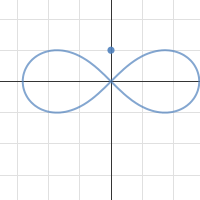
Desmos
pearl pondBOT
wraith vault
Hello I would like to know if there is a name for this 3D shape, I did 2D of it ...
 summer imp
 quiet tendon
it looks like a hyperbolic paraboloid
quiet tendon
it looks like a hyperbolic paraboloid
Forbidden pringle
pearl pondBOT
@wraith vault Has your question been resolved?
pearl pondBOT
Channel closed
Closed due to timeout
Use .reopen if this was a mistake.
pearl pondBOT
Available help channel!
Send your question here to claim the channel.
Remember:
• Ask your math question in a clear, concise manner.
• Show your work, and if possible, explain where you are stuck.
• After 15 minutes, feel free to ping <@&286206848099549185>.
• Type the command .close to free the channel when you're done.
• Be polite and have a nice day!
Read #❓how-to-get-help for further information on how to ask a good question, and about conduct in the question channels.
 mild tartan
help
pearl pondBOT
mild tartan
help
mild tartan
heyshatwt

pease please solve this!!!
please
i need so much help!!

ignore 31
i just need help on 32
please use the lift equation for this
@everyone
i hav my exam in 12 minuets
 naive dirge
mild tartan
i hav my exam in 12 minuets
naive dirge
mild tartan
i hav my exam in 12 minuets
What
Who cares about exam?
We do it for fun
Math is a habit
naive dirge
I might not be able to answer it within 12 minutes
mild tartan
i like eminem btw
naive dirge
The question is lengthy
mild tartan
i tried iusing chat gpt and copilot and gemini and nothing worked 😦
naive dirge
I suggest you to skip it and focus on other simple questions
mild tartan
but this is the main uestn
I LOVE ohio
@everyone
sorry
that was my brother
he took my computer
I understand
i will focus on the other questions
sorry
my borhter took my computer
.close
pearl pondBOT
Channel closed
Closed by @mild tartan
Use .reopen if this was a mistake.
 old marsh
@mild tartan Sorry man no excuse…looks like I have to report you to the discord mods
Ok reported
pearl pondBOT
Available help channel!
Send your question here to claim the channel.
Remember:
• Ask your math question in a clear, concise manner.
• Show your work, and if possible, explain where you are stuck.
• After 15 minutes, feel free to ping <@&286206848099549185>.
• Type the command .close to free the channel when you're done.
• Be polite and have a nice day!
Read #❓how-to-get-help for further information on how to ask a good question, and about conduct in the question channels.
 sharp smelt
Just wanted to be sure, (1,2,3)(4,5,6)(7,8,9)(10,11,12) would be a valid example, right
 pearl pondBOT
sharp smelt
Just wanted to be sure, (1,2,3)(4,5,6)(7,8,9)(10,11,12) would be a valid example...
sharp smelt
pearl pondBOT
sharp smelt
Just wanted to be sure, (1,2,3)(4,5,6)(7,8,9)(10,11,12) would be a valid example...
sharp smelt
oh, hello catbit
yeah,I missed the last part
so say (1,-1,0)(2,0,-2),(-4,0,-4)(3,-3,0)?
thanks
 merry carbon
Those'll do 
pearl pondBOT
Channel closed
Closed by @sharp smelt
Use .reopen if this was a mistake.
merry carbon
Oh wait-
merry carbon
sharp smelt
so say (1,-1,0)(2,0,-2),(-4,0,-4)(3,-3,0)?
.careful of the third one tho, only one of those two entries should be negative in there
.so that you satisfy the whole x + y + z = 0 condition and all, but otherwise 
 prime bramble
pearl pondBOT
Available help channel!
prime bramble
pearl pondBOT
Available help channel!
Send your question here to claim the channel.
Remember:
• Ask your math question in a clear, concise manner.
• Show your work, and if possible, explain where you are stuck.
• After 15 minutes, feel free to ping <@&286206848099549185>.
• Type the command .close to free the channel when you're done.
• Be polite and have a nice day!
Read #❓how-to-get-help for further information on how to ask a good question, and about conduct in the question channels.
 warped crescent
I had a question
pearl pondBOT
warped crescent
I had a question
warped crescent

Desmos
I expiremented with using two inverse functions and a line of symettry (y = x) to make a triange
realizing it makes a isosolece right triangle
was wondeeing why
 vocal lark
because the inverse transformation swaps x and y coordinates
warped crescent
and that explains congruency right
vocal lark
So if P1 is on the original function,
P2 is the inverse of P1,
and you just draw straight lines to the line of symmetry (y=x) and mark P3 on that line,
then connect the points in a triangle,
then yes, this is what you get.
warped crescent
im going to let that sink in
vocal lark
warped crescent
im going to let that sink in
start over
start with ANY other point on the green function
warped crescent
i can change the value of c
and the triangle is still isosolece right
triangle

interesting
i created equations that model the length
of the two sides
they end up being essentially the same thing
vocal lark
yes.
warped crescent
|c - f(c)|
|f(c) - c| -> |-(c-f(c))| -> |c-f(c)|
that brings another observation for me
a very intersting observation
vocal lark
hang on a sec...
warped crescent
we can model the distance between the two points (c, f(c)) and (f(c), c)
vocal lark
drawing something in desmos
warped crescent
using the distance formula
warped crescent
vocal lark
drawing something in desmos
sure no problem
vocal lark

Desmos
warped crescent
yea i see
i also was thinking of something else
if you could find a function to model the distance between the two points
most likely the distance formula
you can integrate that function to find the area between the two curves
perhaps that would have some applications in math?
find the area between a shape with symmetry about some line?
vocal lark
warped crescent
perhaps that would have some applications in math?
sure
vocal lark
warped crescent
find the area between a shape with symmetry about some line?
yeah, that comes up a lot in Calculus
warped crescent
yea i just finished calculus
vocal lark
fixed!
vocal lark
warped crescent
i understand now
cool
pearl pondBOT
@warped crescent Has your question been resolved?
Channel closed
Closed by @warped crescent
Use .reopen if this was a mistake.
Available help channel!
Send your question here to claim the channel.
Remember:
• Ask your math question in a clear, concise manner.
• Show your work, and if possible, explain where you are stuck.
• After 15 minutes, feel free to ping <@&286206848099549185>.
• Type the command .close to free the channel when you're done.
• Be polite and have a nice day!
Read #❓how-to-get-help for further information on how to ask a good question, and about conduct in the question channels.
warped crescent
the volume of a sphere is 4/3pir^3, where did i mess up in my derivation?
 pearl pondBOT
warped crescent
the volume of a sphere is 4/3pir^3, where did i mess up in my derivation?
summer imp
pearl pondBOT
warped crescent
the volume of a sphere is 4/3pir^3, where did i mess up in my derivation?
summer imp
Your expression for the half circle is wrong if you're going to center it at (r,0).
vocal lark
you only did half of it
warped crescent
yea
summer imp
Either keep x^2 + y^2 = r^2 but integrate from -r to r
summer imp
Or consider (x-r)^2 + y^2 = r^2
 vocal lark
It is useful to reposition some figures so they are centered about the origin
warped crescent
if it was centered at the origin
summer imp
warped crescent
It can work. The issue is that x^2 + y^2 = r^2 describes a circle centered at the origin, and this one isn't
vocal lark
warped crescent
0 to 2r wont work?
if it were centered at the origin (as I did it), I would just work from 0 to r and double my final result.
summer imp
warped crescent
so in my case i would have (x-r)^2+y^2=r^2
If you want to do it like that, yes.
summer imp
But what Melvin pointed out is true. Especially when it comes to very symmetric shapes like this. Oftentimes you'll save some work by centering everything and putting the symmetry to use.
vocal lark
summer imp
But what Melvin pointed out is true. Especially when it comes to very symmetric ...
yeah, really most useful for spheres and cylinders tbh
but also plane figures
warped crescent
so you would say centering at the origin is better
warped crescent
alr
warped crescent
moving the figure will make the lower bound 0 regardless
of the radius
no
let me think
vocal lark
(here we used symmetry and doubled the result though, when we move the figure to the origin, since we are only evaluating half of the figure)
warped crescent
moving the figure as in the circle horizontally right
vocal lark
warped crescent
moving the figure as in the circle horizontally right
correct
lower bound is technically -r, upper is r
but because of symmetry, we can just work from 0 to r.
and double the final result, since we are going to get a hemisphere.
warped crescent
ohhhhh
ok
im figuring this out for the first time, this isnt rlly taught in schools
vocal lark
don't worry, you would have got this sooner or later
vocal lark
np
pearl pondBOT
@warped crescent Has your question been resolved?
pearl pondBOT
Channel closed
Closed due to timeout
Use .reopen if this was a mistake.
Available help channel!
Send your question here to claim the channel.
Remember:
• Ask your math question in a clear, concise manner.
• Show your work, and if possible, explain where you are stuck.
• After 15 minutes, feel free to ping <@&286206848099549185>.
• Type the command .close to free the channel when you're done.
• Be polite and have a nice day!
Read #❓how-to-get-help for further information on how to ask a good question, and about conduct in the question channels.
 vestal pelican
how do i go on about doing this
 pearl pondBOT
vestal pelican
how do i go on about doing this
muted shale
pearl pondBOT
vestal pelican
how do i go on about doing this
muted shale
!status
pearl pondBOT
What step are you on?
1. I don't know where to begin.
2. I have begun but got stuck midway.
3. I got an answer but I was told that it's wrong.
4. I got an answer and would like my work checked.
5. I have a question about someone else's work/solution.
6. I have completed the problem and don't need help anymore. Thank you.
7. None of the above
1
muted shale
do you know the chain rule
vestal pelican
yes
muted shale
try that
vestal pelican
where
muted shale
the chain rule states that, $[g(f(x))]'=g'(f(x))\cdot f'(x)$
jolly parrotBOT
Flappie
 vestal pelican
ik that im saying where do i apply it
jolly parrotBOT
Flappie
 vestal pelican
do i plugin x and y there?
muted shale
not quite
note that, z' and f' are matrices of size 1x2 and 2x1
so we get, $\frac{\partial z}{\partial s} = \frac{\partial z}{\partial x}\frac{\partial x}{\partial s} + \frac{\partial z}{\partial y}\frac{\partial y}{\partial s}$
jolly parrotBOT
Flappie
 muted shale
$\frac{\partial x}{\partial s}$ and $\frac{\partial y}{\partial s}$ you can calculate, since you know x and y in terms of s
jolly parrotBOT
Flappie
 vestal pelican
jolly parrot
**Flappie**
vestal pelican
jolly parrot
**Flappie**
hey im kinda stuck at this
muted shale
vestal pelican
hey im kinda stuck at this
that is the chain rule
muted shale
wdym is it applied there?
vestal pelican
is the chain rule done there
muted shale
it is the chain rule
vestal pelican
ok
vestal pelican
jolly parrot
**Flappie**
how did we get this
muted shale
that is what you get from the chain rule, if you write it out
f(x,y) has two variables
so its derivative is a matrix
$f'(x,y) = \begin{pmatrix} \frac{\partial f}{\partial x} & \frac{\partial f}{\partial y}\end{pmatrix}$
jolly parrotBOT
Flappie
 vestal pelican
wasn't z also a part of the equation?
muted shale
$z'(f(x,y)) = \begin{pmatrix} \frac{\partial z}{\partial x} & \frac{\partial z}{\partial y}\end{pmatrix}$
jolly parrotBOT
Flappie
 vestal pelican
why is there no f
tbh, i need someone else to help me with this, no offence to you and it's not you, but I need someone who can explain it so i understand
<@&286206848099549185>
muted shale
jolly parrot
**Flappie**
the important one is this
im trying to show the derivation, but i forgot part of it, which makes it hard
vestal pelican
and another thing, i cant be having to wait for hours to finish an exercise sorry but i just dont have the time to waste rn
muted shale
!volunteer
pearl pondBOT
Helpers are just people volunteering their time to help you. Be polite and patient.
vestal pelican
yes i know, but if u dont know how to solve some parts it'll be harder for me to understand
muted shale
all you need to know about the chain rule is that $\frac{\partial z}{\partial s} = \frac{\partial z}{\partial x}\frac{\partial x}{\partial s} + \frac{\partial z}{\partial y}\frac{\partial y}{\partial s}$
jolly parrotBOT
Flappie
 vestal pelican
where did "s" come in play
muted shale
and similarly for r, $\frac{\partial z}{\partial r} = \frac{\partial z}{\partial x}\frac{\partial x}{\partial r} + \frac{\partial z}{\partial y}\frac{\partial y}{\partial r}$
jolly parrotBOT
Flappie
 muted shale
thats where we differentiate with respect to
right here

we want $\frac{\partial z}{\partial s}$
jolly parrotBOT
Flappie
 muted shale
and then we take $\frac{\partial}{\partial r}$ of that
jolly parrotBOT
Flappie
 muted shale
$\frac{\partial^2 z}{\partial r\partial s}=\frac{\partial}{\partial r}\left(\frac{\partial z}{\partial s}\right)$
jolly parrotBOT
Flappie
 vestal pelican
are we finding for r and s?
 muted shale
yeah, so plug it in and calculate
muted shale
jolly parrot
**Flappie**
plug this
muted shale
jolly parrot
**Flappie**
into this
vestal pelican
how do i do that
muted shale
$\frac{\partial}{\partial r}\left(\frac{\partial z}{\partial x}\frac{\partial x}{\partial s} + \frac{\partial z}{\partial y}\frac{\partial y}{\partial s}\right)$
jolly parrotBOT
Flappie
 muted shale
jolly parrot
**Flappie**
muted shale
jolly parrot
**Flappie**
$=\frac{\partial}{\partial r}\left(-\frac{\partial z}{\partial x}r\sin(s)\ln(r)+\frac{\partial z}{\partial y}r\cos(s)\ln(r)\right)$
vestal pelican
jolly parrot
**Flappie**
what did we do to this to have that answer
jolly parrotBOT
Flappie
 vestal pelican
how did we get (∂/∂r)(∂z/∂s)
muted shale
vestal pelican
how did we get (∂/∂r)(∂z/∂s)
this is the question
thats whats being asked of us
vestal pelican
nono
muted shale
 vestal pelican
yes ik
vestal pelican
vestal pelican
how did we get (∂/∂r)(∂z/∂s)
but from that u got this
muted shale
yes?
muted shale
well, do you know $f''(x) = \frac{d^2f(x)}{dx^2}$?
jolly parrotBOT
Flappie
 vestal pelican
is this some sort of differentiation rule
muted shale
what?
vestal pelican
idk
muted shale
how do you denote taking a derivative once
vestal pelican
Wdym
vestal pelican
How do I derive that?
jolly parrotBOT
Flappie
 vestal pelican
Derivative of f(x) isn't f*1?
muted shale
what?
jolly parrotBOT
Flappie
 vestal pelican
no
muted shale
do you knwo what $\frac{df(x)}{dx}$ means?
jolly parrotBOT
Flappie
 muted shale
yes
vestal pelican
ok
muted shale
so then what is $\frac{d^2f(x)}{dx^2}$?
jolly parrotBOT
Flappie
 vestal pelican
second derivative
muted shale
exactly
so then do you agree that $\frac{d^2f(x)}{dx^2} = \frac{d}{dx}\left(\frac{df(x)}{dx}\right)$?
jolly parrotBOT
Flappie
 vestal pelican
wouldnt the bottom be d^2 and x^2
muted shale
bottom where?
 muted shale
i split it
vestal pelican
yes but here it says dx^2
 muted shale
i have the derivative $\frac{df(x)}{dx}$ and then take the derivative again
jolly parrotBOT
Flappie
 muted shale
taking the derivative means i do $\frac{d}{dx}$ to whatever i want to differentiate
jolly parrotBOT
Flappie
 vestal pelican
vestal pelican
vestal pelican
if u were to combine this wont you get
((d^2)f(x))/(d^2)x^2?
muted shale
ah, i see where its going wrong
$\frac{d^2f(x)}{(dx)^2} = \frac{d}{(dx)}\left(\frac{df(x)}{(dx)}\right)$
jolly parrotBOT
Flappie
 muted shale
does it make more sense like this?
vestal pelican
yes
muted shale
so then, going back to our partial derivative
$\frac{\partial^2 z}{(\partial r)(\partial s)}=\frac{\partial}{(\partial r)}\left(\frac{\partial z}{(\partial s)}\right)$
jolly parrotBOT
Flappie
 muted shale
does this make sense?
muted shale
factorised form?
vestal pelican
isnt it factorised?
muted shale
jolly parrot
**Flappie**
yeah ig, but you almost never see it like the RHS
muted shale
you would almost always write it as $\frac{\partial^2 z}{\partial r\partial s}$
jolly parrotBOT
Flappie
 muted shale
first we look at $\frac{\partial z}{\partial s}$
jolly parrotBOT
Flappie
 vestal pelican
ok
muted shale
which, by the chain rule is $\frac{\partial z}{\partial x}\frac{\partial x}{\partial s} +\frac{\partial z}{\partial y}\frac{\partial y}{\partial s}$
jolly parrotBOT
Flappie
 muted shale
x and y are given, and we can calculate their derivatives w.r.t. s
 vestal pelican
not sure
muted shale
what would you guess that it is
vestal pelican
idk how to do derivatives like that i find it hard
jolly parrotBOT
Flappie
 muted shale
thats not what im asking for
vestal pelican
ik
muted shale
if $x=4\cos(s)\ln(4)$ then what is $\frac{dx}{ds}$?
jolly parrotBOT
Flappie
 muted shale
vestal pelican
4cos1 ln4
muted shale
vestal pelican
4cos1 ln4
no
vestal pelican
ik
muted shale
what is $\frac{d}{dx}\cos(x)$?
jolly parrotBOT
Flappie
 vestal pelican
-sinx
muted shale
exactly
muted shale
jolly parrot
**Flappie**
so then isnt this $-4\sin(s)\ln(4)$?
jolly parrotBOT
Flappie
 vestal pelican
sure
muted shale
if you take a derivative w.r.t. a certain variable, you consider the rest to be constants
vestal pelican
ik that
muted shale
so then what are you confused about?
vestal pelican
vestal pelican
here
if this is with respect to "s" why isnt r treated as a constant
muted shale
what makes you think its not?
vestal pelican
because instead of "c" it is r
muted shale
might be because of my sleep deprivation, but i dont see what you mean
 vestal pelican
do we use any differentiation rule?
muted shale
product rule and chain rule
vestal pelican
ok
muted shale
$\frac{\partial}{\partial r}\left(\frac{\partial z}{\partial y}r\cos(s)\ln(r)\right) = \left(\frac{\partial}{\partial r}\frac{\partial z}{\partial y}\right)r\cos(s)\ln(r)+\frac{\partial z}{\partial y}\left(\frac{\partial}{\partial r}r\right)\cos(s)\ln(r)+\frac{\partial z}{\partial y}r\left(\frac{\partial}{\partial r}\cos(s)\right)\ln(r)+\frac{\partial z}{\partial y}r\cos(s)\left(\frac{\partial}{\partial r}\ln(r)\right)$
jolly parrotBOT
Flappie

 rustic gate
that's quite some latex you're writing there
muted shale
rustic gate
that's quite some latex you're writing there
ctrl v did a lot of work
 muted shale
from here


 muted shale
no
first of all, i only took the second term
this one

(i didnt want to write out the full thing)
muted shale
vestal pelican
is = to this?
and this is differentiated again, but w.r.t. r
hence this at the start
 vestal pelican
how did we get this
 muted shale
that is the product rule
vestal pelican
ohh yeah nvm
muted shale
$\frac{d(uv)}{dx}=\frac{du}{dx}v+u\frac{dv}{dx}$
jolly parrotBOT
Flappie
 muted shale
i suggest you revise your differentiation rules in single and multiple variables
you struggle a lot with them
vestal pelican
its just that there are a lot of variables in play and it becomes confusing
muted shale
indeed, so having a strong grasp of the basic differentiation principles will make it easier and faster
vestal pelican
so this just need to keep on derivating right?
pearl pondBOT
@vestal pelican Has your question been resolved?
Channel closed
Closed by @vestal pelican
Use .reopen if this was a mistake.
Available help channel!
Send your question here to claim the channel.
Remember:
• Ask your math question in a clear, concise manner.
• Show your work, and if possible, explain where you are stuck.
• After 15 minutes, feel free to ping <@&286206848099549185>.
• Type the command .close to free the channel when you're done.
• Be polite and have a nice day!
Read #❓how-to-get-help for further information on how to ask a good question, and about conduct in the question channels.
vestal pelican
 vestal pelican
which test should i apply
pearl pondBOT
@vestal pelican Has your question been resolved?
midnight haven
vestal pelican
which test should i apply
you could use the integral test, I think?
it's decreasing, positive on the domain $[1, \infty)$ and continuous
jolly parrotBOT
45
 midnight haven
vestal pelican
midnight haven
vestal pelican
I suggest you do $\sum_{n=1}^\infty \frac{n+1}{n^2\sqrt{n}} = \sum_{n=1}^\infty \frac{n+1}{n^{5/2}}$ then divide by the denominator and apply the integral test
jolly parrotBOT
45
 vestal pelican
yeah limit test
midnight haven
well, you take the limit as the upper bound of the integral goes to infinity
midnight haven
yeah?

 pearl pondBOT
@vestal pelican Has your question been resolved?
Channel closed
Closed by @vestal pelican
Use .reopen if this was a mistake.
pearl pondBOT
Available help channel!
Send your question here to claim the channel.
Remember:
• Ask your math question in a clear, concise manner.
• Show your work, and if possible, explain where you are stuck.
• After 15 minutes, feel free to ping <@&286206848099549185>.
• Type the command .close to free the channel when you're done.
• Be polite and have a nice day!
Read #❓how-to-get-help for further information on how to ask a good question, and about conduct in the question channels.
 sudden cargo
How to find minimum of trig functions involving reciprocal terms?
sudden cargo
Like 14cosec^2 x + 9sin^2 x?
sharp smelt
You want to minimse $14cosec^2(x)+9sin^2(x)$?
jolly parrotBOT
ƒ(Why am. I here)=I don't Know
 sharp smelt
I'd suggest $AM \geq GM$
jolly parrotBOT
ƒ(Why am. I here)=I don't Know
 pearl pondBOT
@sudden cargo Has your question been resolved?
pearl pondBOT
Channel closed
Closed due to timeout
Use .reopen if this was a mistake.
sudden cargo
.reopen
pearl pondBOT
✅
sudden cargo
sharp smelt
You want to minimse $14cosec^2(x)+9sin^2(x)$?
yes
sudden cargo
sharp smelt
I'd suggest $AM \geq GM$
I havent studied that
just tell me the other way
sharp smelt
That's the only way I know that doesn't require calculus
Do you know how to compute the arithmatic mean of two numbers
and their geometric mean?
sudden cargo
sharp smelt
That's the only way I know that doesn't require calculus
Cant we use completing middle term?
sharp smelt
I mean you could I guess
sudden cargo
I know arithmatic mean but not geometric
sharp smelt
the arithmatic mean of two numbers a,b is defined to be $\sqrt{ab}$
jolly parrotBOT
ƒ(Why am. I here)=I don't Know
 midnight haven
Bruh
sudden cargo
bruh what
midnight haven
Geometric*
midnight haven
He meant
sharp smelt
geometric
sharp smelt
also know that $AM \geq GM$
jolly parrotBOT
ƒ(Why am. I here)=I don't Know
 jolly parrotBOT
Aryan07
 sudden cargo
yeah now?
sharp smelt
so $\frac{14cosec^2(x)+9sin^2(x)}{2} \geq \sqrt{ 14 \cdot 9}$
jolly parrotBOT
ƒ(Why am. I here)=I don't Know
 sudden cargo
hmm
midnight haven
6root14 🗿
midnight haven
Bruh nah, you would learn it too
sudden cargo
so is this applicable to all the minimum value questions for functions involving trigonometry?
midnight haven
Anyways bye
sharp smelt
There's one more useful inequality you should know
midnight haven
HM?
midnight haven
sharp smelt
There's one more useful inequality you should know
??
sharp smelt
$QM\geq AM \geq GM \geq HM$
sudden cargo
uh oh
jolly parrotBOT
ƒ(Why am. I here)=I don't Know
 sudden cargo
now whats QM and HM
sudden cargo
formula?
sharp smelt
The QM of n numbers is defined to be $\sqrt{\frac{\left(x_1^2+x_2^2+x_3^2.......x_n^2\right)}{n}}$
jolly parrotBOT
ƒ(Why am. I here)=I don't Know
 midnight haven
Uh quadratic inequality is rarely used tbh in JEE
sharp smelt
midnight haven
Uh quadratic inequality is rarely used tbh in JEE
still useful
especially for Adv
midnight haven
sharp smelt
especially for Adv
You might see few questions
I haven't seen one until now
Ofc you can learn it
sharp smelt
and the harmonic mean of n numbers is defined to be$\frac{n}{\frac{1}{x_1}+\frac{1}{x_2}......\frac{1}{x_n}}$
jolly parrotBOT
ƒ(Why am. I here)=I don't Know
 sudden cargo
is AM greater than/equal to GM applicable for all these types of question?
midnight haven
Harmonic is basically inverted arithmetic
sharp smelt
midnight haven
Harmonic is basically inverted arithmetic
yeah, by definition
sharp smelt
sudden cargo
is AM greater than/equal to GM applicable for all these types of question?
usually
at times you use it with calculus/ other identities
sudden cargo
hmm
midnight haven
sudden cargo
is AM greater than/equal to GM applicable for all these types of question?
Ig it's for non negative only
Am I right ? @sharp smelt
sudden cargo
lets say we have find the range of 1/(3sinx + 4cosx+2)
sharp smelt
midnight haven
Ig it's for non negative only
Am I right ? <@796939110815629322>
I think so
sudden cargo
sudden cargo
lets say we have find the range of 1/(3sinx + 4cosx+2)
oh wait i think thats easy
sharp smelt
sudden cargo
lets say we have find the range of 1/(3sinx + 4cosx+2)
here DON'T use $AM \geq GM$, try finding the amplitude of the function instead
jolly parrotBOT
ƒ(Why am. I here)=I don't Know
 sudden cargo
is it [-1/3, 1/7]
sudden cargo
sharp smelt
here DON'T use $AM \geq GM$, try finding the amplitude of the function instead
whats amplitude?
midnight haven
sudden cargo
lets say we have find the range of 1/(3sinx + 4cosx+2)
You multiply and divided by 5 to get together sinx and cosx then use the fact that sinx lies from -1,1 then do the transformation
midnight haven
sudden cargo
is it [-1/3, 1/7]
Umm idk
sharp smelt
,w maxima of 3sin(x)+4cos(x)
jolly parrotBOT


 Requested by physicsrocks
sudden cargo
sudden cargo
is it [-1/3, 1/7]
Requested by physicsrocks
sudden cargo
sudden cargo
is it [-1/3, 1/7]
this right
sharp smelt
yes
sudden cargo
hmm
 sudden cargo
uhhhh
sudden cargo
when tho
sharp smelt
,w 3sin(x)+4cos(x)=-2
jolly parrotBOT
 Requested by physicsrocks
sharp smelt
Requested by physicsrocks
sharp smelt
here
sudden cargo
bruh
sharp smelt
,w range of $1/(2+3sin(x)+4cos(x))$
jolly parrotBOT
Wolfram Alpha doesn't understand your query!
Perhaps try rephrasing your question?
Click here to refine your query online
Requested by physicsrocks
sudden cargo
,w range 1/(3sinx + 4cosx+2)
jolly parrotBOT
 sharp smelt
3sin(x)+4cos(x) can be -2
sudden cargo
yeah
sharp smelt
yes?
sharp smelt
*lower limit
sudden cargo
nope
-1/3 is lower limit
hold on
1/5+2
so 1/7 is minimum
and
1/(-5+2) = 1/-3
= -1/3
is upper limit
but how tf
is upper limit smaller than lower limit
midnight haven
sudden cargo
1/(-5+2) = 1/-3
What the heck is this
sudden cargo
midnight haven
What the heck is this
3sinx + 4cosx can be [-5,5]
then + 2
so denominator is [-3,7]
midnight haven
sudden cargo
3sinx + 4cosx can be [-5,5]
True ofc
sudden cargo
but then if smallest denominator value is -3
we get whole expression as -1/3
and if denominator is highest, lowest value of expression goes to 1/7
idk how is that possible
sharp smelt
why isn't it possible ?
sudden cargo
according to this, range of expression would be [1/7, -1/3]
sharp smelt
no
midnight haven
sudden cargo
according to this, range of expression would be [1/7, -1/3]
Everything minus this interval
sharp smelt
this open interval
midnight haven
The inequality would get reversed as it is in denominator
jolly parrotBOT
 midnight haven
Nice
sudden cargo
,w range 1/(3sinx + 4cosx+2)
jolly parrotBOT
 sudden cargo
,w maxima 1/(3sinx + 4cosx+2)
jolly parrotBOT
 midnight haven
jolly parrot
midnight haven
jolly parrot
Yeah this correct
sudden cargo
so maxima is -1/3
midnight haven
What are ya tryna do
sudden cargo
,w minima 1/(3sinx + 4cosx+2)
jolly parrotBOT
 sudden cargo
HOW IS MAXIMA LOWER THAN MINIMAA
sharp smelt
these are local minimas and maximas
to understand them you need to understand calculus
midnight haven
Yeah better not rush things
sudden cargo
should i jump off a bldg
sharp smelt
sudden cargo
should i jump off a bldg
please don't.
midnight haven
@sudden cargo you there ?
sudden cargo
fk this
midnight haven
I will teach you
sharp smelt
We're here to help
midnight haven
Waitt
sharp smelt
please don't do anything to yourself
sudden cargo
jumps
sharp smelt
sudden cargo
*jumps*
hey, you still here ?
we're here if you need help
please don't do anything to yourself
sudden cargo
im back
midnight haven
It's yer fault for doing suchthing now
sudden cargo
typing from heaven rn
jk guys I was in lift so no network coverage for few seconds
now its good
midnight haven
|| iam ignoring you now for pulling such a prank||
sudden cargo
whats the easiest way to find mimima and minima
 sudden cargo
sharp smelt
depends on the problem
sudden cargo
sharp smelt
depends on the problem
no give me a 1shot, like a solution to all problems
sharp smelt
calculus , but it can get really ugly
sudden cargo
whats there in calculus exactly
midnight haven
sudden cargo
whats there in calculus exactly
You can calculate area of a rotating ellipse about its axis
Jk this is too much
sharp smelt
but really you have to chose the method based on the problem
sudden cargo
hmm
sharp smelt
there's never one method in maths
sudden cargo
value of cos^2 pie/16 + cos^2 3pie/16 ....... till 4 terms
@sharp smelt@midnight haven
did yall jump too 💀💀
sudden cargo
ok
sharp smelt
$cos^2 (\frac{\pi}{16} ) + cos^2 (\frac{3\pi}{16})+ cos^2 ( \frac {5\pi}{16} + cos^2(\frac{7 \pi}{16}}$$
sudden cargo
we were taught formula when when angles are in AP, but it was for cos not cos^2
it is till 7pie/16
midnight haven
Till 4 terms ?
sudden cargo
4 terms
jolly parrotBOT
ƒ(Why am. I here)=I don't Know
Compile Error! Click the  reaction for more information.
(You may edit your message to recompile.)
 midnight haven
Ye
sudden cargo
better
midnight haven
Value you want alr
sudden cargo
yep
midnight haven
sudden cargo
yep
Use trigonometry circle
sharp smelt
I'd maybe use euler's formula
sudden cargo
sharp smelt
I'd maybe use euler's formula
whats that
sharp smelt
$cos(\theta) + i sin(\theta)= e^{ i \theta}$
jolly parrotBOT
ƒ(Why am. I here)=I don't Know
 sudden cargo
nahhhhhhhhhhhhhhhhhhhhhhh
midnight haven
Ye you can use it
midnight haven
sudden cargo
nahhhhhhhhhhhhhhhhhhhhhhh
Lol
sudden cargo
uhh
midnight haven
midnight haven
Use trigonometry circle
Look for complementary angles
That's what I mean
sudden cargo
there isnt any I can find
sudden cargo
maybe pie/16 + 7pie/16 = pie/2
midnight haven
sudden cargo
maybe pie/16 + 7pie/16 = pie/2
Yay
Ypu you got it
So
First and last term
And second and third term
sharp smelt

midnight haven
2 is the answer boi
sharp smelt
midnight haven
2 is the answer boi
yup
midnight haven
😭 you got it too
sharp smelt
euler's formula is def overkill here
midnight haven
sudden cargo
maybe pie/16 + 7pie/16 = pie/2
This
sudden cargo
sharp smelt
euler's formula is def overkill here
frfr
sharp smelt

midnight haven
sharp smelt
euler's formula is def overkill here
Nah it's normal lmao
sudden cargo
next question
midnight haven
sharp smelt
euler's formula is def overkill here
unecessary here
sharp smelt
I know
sudden cargo
2(sin1 + sin2 + sin3............. sin89)/(2(cos1 + cos2 + cos3 ............. cos44) + 1)
midnight haven
look at extreme angles
sharp smelt
notice the angles are complementary
midnight haven
89 + 1 = 90
sudden cargo
we pretty much have sin1 + sin2 ....... sin44 and cos1 + cos2 ...... cos44. and remaining is sin45 which is 1/roo2
thats in numerator
sudden cargo
huhhh
,w 2(sin1 + sin2 + sin3............. sin89)/(2(cos1 + cos2 + cos3 ............. cos44) + 1)
midnight haven
Since + sind eee
jolly parrotBOT
Wolfram Alpha doesn't understand your query!
Perhaps try rephrasing your question?
Click here to refine your query online
 Requested by 99r_ust
midnight haven
Requested by 99r_ust
midnight haven
Sinc
sharp smelt
Notice a pattern will form
midnight haven
I mean if you really wanna learn maths
Then sure
Or you can do for some specific
And follow trend
sudden cargo
sin1 + sin2 is 2*sin(3/2)cos(1/2)
midnight haven
Alr I gtg bye
Ask why am I here , he is a sweet person
sharp smelt
I have to go too, have to study for bitsat
midnight haven
sharp smelt
I have to go too, have to study for bitsat
Bruh what
sudden cargo

sharp smelt
but I can stay for this problem I guess
midnight haven
You are Indian too
sudden cargo
midnight haven
You are Indian too
ofc
sharp smelt
midnight haven
You are Indian too
half this server is Indian
midnight haven
sharp smelt
half this server is Indian
Dude why do you ask questions which I usually don't get 😭
What are you preparing forrr?
sharp smelt
just ping helpers, someone will come to help you
sharp smelt
midnight haven
Dude why do you ask questions which I usually don't get 😭
What are you preparin...
My parents want me to write bitsat, but I'm studying for college
midnight haven
Engine 1st year stuff it is Ig
sharp smelt
that's linear algbera
midnight haven
sharp smelt
My parents want me to write bitsat, but I'm studying for college
Yeahh makes sense
Yeah I have just seen it from far away, never touched
sharp smelt
anyway, we're getting off topic
sudden cargo
yes
sharp smelt
back to OP's question
sudden cargo
2(sin1 + sin2 + sin3............. sin89)/(2(cos1 + cos2 + cos3 ............. cos44) + 1)
midnight haven
All the best for yer bitsat
jolly parrotBOT
A brief description and guide on how to use me was sent to your DMs!
Please use ,list to see a list of all my commands, and ,help cmd to get detailed help on a command!
sharp smelt
Approach Zero: A math-aware search engine.
use this
start by typing dollars
and then type like sin(x)/x or whatever
it will code it for you
 sharp smelt
cos(0)=1
$\frac{2\left(\sin\left(1\right)+\sin\left(2\right).....\sin\left(89\right)+\sin\left(89\right)\right)}{2\left(\cos\left(0\right)+\cos\left(1\right)+\cos\left(2\right)....\cos\left(44\right)\right)-1}$
yes?
jolly parrotBOT
ƒ(Why am. I here)=I don't Know
 sudden cargo
it starts from cos1 not cos0
sharp smelt
what is cos(0)
sudden cargo
1
sharp smelt
$\frac{2\left(\sin\left(1\right)+\sin\left(2\right)..+\sin\left(45\right)+\cos\left(44\right)+\cos\left(43.\right)..+\cos\left(1\right)\right)}{2\left(\cos\left(0\right)+\cos\left(1\right)+\cos\left(2\right)....\cos\left(44\right)\right)-1}$
jolly parrotBOT
ƒ(Why am. I here)=I don't Know
 sharp smelt
now pair common terms in the numerator and use sum to product transformations
sudden cargo
you mean sin1 + sin2?
sudden cargo
dont know how root2/2 comes
sharp smelt
sin(A-B)
sudden cargo
@lunar nacelle
<@&286206848099549185>
$\frac{2\left(\sin\left(1\right)+\sin\left(2\right)..+\sin\left(45\right)+\cos\left(44\right)+\cos\left(43.\right)..+\cos\left(1\right)\right)}{2\left(\cos\left(0\right)+\cos\left(1\right)+\cos\left(2\right)....\cos\left(44\right)\right)-1}$
jolly parrotBOT
Aryan07

 abstract vine
bruh stop
abstract vine
let me cook
abstract vine
jolly parrot
**Aryan07**
use the identity: $sin(90-x) = cos(x)$
jolly parrotBOT
clonesolopros
 sudden cargo
yeah then???
 frosty bay
jolly parrot
**Aryan07**
frosty bay
jolly parrot
**Aryan07**
sin 1 + cos 1 = sin 1 + sin 89 = 2 sin(1+89)/2sin(88/2), so on till
sin 44 + cos 44 = sin 1 + sin 46 = 2 sin (90)/2 sisn(45)/2
pearl pondBOT
Channel closed
Closed by @sudden cargo
Use .reopen if this was a mistake.
pearl pondBOT
Available help channel!
Send your question here to claim the channel.
Remember:
• Ask your math question in a clear, concise manner.
• Show your work, and if possible, explain where you are stuck.
• After 15 minutes, feel free to ping <@&286206848099549185>.
• Type the command .close to free the channel when you're done.
• Be polite and have a nice day!
Read #❓how-to-get-help for further information on how to ask a good question, and about conduct in the question channels.
midnight haven
 pearl pondBOT
midnight haven
midnight haven
pearl pondBOT
midnight haven
midnight haven
23
sharp smelt
Well , what have you tried
midnight haven
Nothing
sharp smelt
Try analysing it case wise
midnight haven
Like?
sharp smelt
Or use the definition of floor (x)
sharp smelt
midnight haven
Like?
Greater than 0 and less than 0
midnight haven
Ugh I hate these kind of question
Lemme try
sharp smelt
Try using floor(x)= x-fractional part of (x)
jolly parrotBOT
Bob l'éponge
 midnight haven
Oh oh
 glacial sequoia
take 1.1 and -1.1, 69.420 and -69.420
floor them and see what you can come up with
midnight haven
69 I see
 sly dagger
this is childish behaviour, i expect better from u guys, try a number like 8008.135
pearl pondBOT
Channel closed
Closed by @twilit cedar
Use .reopen if this was a mistake.
pearl pondBOT
Available help channel!
Send your question here to claim the channel.
Remember:
• Ask your math question in a clear, concise manner.
• Show your work, and if possible, explain where you are stuck.
• After 15 minutes, feel free to ping <@&286206848099549185>.
• Type the command .close to free the channel when you're done.
• Be polite and have a nice day!
Read #❓how-to-get-help for further information on how to ask a good question, and about conduct in the question channels.
 reef quiver
Consider an $n\times d$ data matrix $X = [X_1 \ldots X_n]^T$.
Suppose the data has been whitened, meaning that a linear transformation is applied to $X$ that made the resulting features be uncorrelated and have variance 1.
My text says this leads to the condition
$$X^TX = nI$$
where $n$ is the number of sample points.
But I can't see why this holds. Any help would be appreciated.
pearl pondBOT
reef quiver
Consider an $n\times d$ data matrix $X = [X_1 \ldots X_n]^T$.
Suppose the data ...
jolly parrotBOT
shimamooo
 reef quiver
.close
pearl pondBOT
Channel closed
Closed by @reef quiver
Use .reopen if this was a mistake.
pearl pondBOT
Available help channel!
Send your question here to claim the channel.
Remember:
• Ask your math question in a clear, concise manner.
• Show your work, and if possible, explain where you are stuck.
• After 15 minutes, feel free to ping <@&286206848099549185>.
• Type the command .close to free the channel when you're done.
• Be polite and have a nice day!
Read #❓how-to-get-help for further information on how to ask a good question, and about conduct in the question channels.
 dim timber
just for the circled part here, how does this rearranging work?

 vast berry
dim timber
just for the circled part here, how does this rearranging work?
vast berry
dim timber
just for the circled part here, how does this rearranging work?
the purple one?