#help-39
1 messages · Page 81 of 1
 raven spade
 pearl pondBOT
Channel closed
Closed by @raven spade
Use .reopen if this was a mistake.
pearl pondBOT
 Available help channel!
Send your question here to claim the channel.
Remember:
• Ask your math question in a clear, concise manner.
• Show your work, and if possible, explain where you are stuck.
• After 15 minutes, feel free to ping <@&286206848099549185>.
• Type the command .close to free the channel when you're done.
• Be polite and have a nice day!
Read #❓how-to-get-help for further information on how to ask a good question, and about conduct in the question channels.
 sonic cradle
Let ( f ), ( g ), and ( h ) be three arithmetic functions, and ( f^{\sim} ), ( g^{\sim} ) be the inverses of ( f ) and ( g ) respectively. Which of the following statements are correct? Check each correct proposition.
\begin{itemize}
\item If ( f ) is totally multiplicative, then ( f^{\sim} ) is also totally multiplicative.
\item If ( f ) takes values in ( \mathbb{Z} ), then ( f^{\sim} ) also takes values in ( \mathbb{Z} ).
\item If ( f ) takes values in ( \mathbb{Q} ), then ( f^{\sim} ) also takes values in ( \mathbb{Q} ).
\item The inverse of ( fg ) is ( f^{\sim}g^{\sim} ).
\item If ( f ) and ( g ) are multiplicative, then ( f \cdot g ) is multiplicative (where ( f \cdot g ) is the function associating to each ( n \in \mathbb{N}_0 ) the number ( f(n) \cdot g(n) )).
\item The inverse of ( f \cdot g ) is ( f^{\sim} \cdot g^{\sim} ).
\item If ( f ) is totally multiplicative, then ( f \cdot (gh) = (f \cdot g)(f \cdot h) ).
\end{itemize}
pearl pondBOT
sonic cradle
Let \( f \), \( g \), and \( h \) be three arithmetic functions, and \( f^{\sim}...
 jolly parrotBOT
habibjr.
 pearl pondBOT
@sonic cradle Has your question been resolved?
sonic cradle
precision: ( f^{\sim} ) and ( g^{\sim} )
are a notation for the inverse for dirichlet convolution
pearl pondBOT
@sonic cradle Has your question been resolved?
pearl pondBOT
Channel closed
Closed due to timeout
Use .reopen if this was a mistake.
Available help channel!
Send your question here to claim the channel.
Remember:
• Ask your math question in a clear, concise manner.
• Show your work, and if possible, explain where you are stuck.
• After 15 minutes, feel free to ping <@&286206848099549185>.
• Type the command .close to free the channel when you're done.
• Be polite and have a nice day!
Read #❓how-to-get-help for further information on how to ask a good question, and about conduct in the question channels.
 drowsy edge
hi
pearl pondBOT
drowsy edge
hi
 pearl pondBOT
@drowsy edge Has your question been resolved?
pearl pondBOT
@drowsy edge Has your question been resolved?
pearl pondBOT
Channel closed
Closed due to timeout
Use .reopen if this was a mistake.
Available help channel!
Send your question here to claim the channel.
Remember:
• Ask your math question in a clear, concise manner.
• Show your work, and if possible, explain where you are stuck.
• After 15 minutes, feel free to ping <@&286206848099549185>.
• Type the command .close to free the channel when you're done.
• Be polite and have a nice day!
Read #❓how-to-get-help for further information on how to ask a good question, and about conduct in the question channels.
 limber sierra
The communicating vats
 pearl pondBOT
limber sierra
The communicating vats
limber sierra
pearl pondBOT
limber sierra
The communicating vats
limber sierra
I have a question
the Px in the left side is the same as Px in the right side, right?
But how can they be the same if the height for the Px on the left is twice that of the second Px?
And if they are equal to eachother, then would it be correct to consider that Py is equal to P2?
 marble sigil
they're equal but water pressure changes with height, so P1 and P2 are different
like the deeper you go in the ocean the higher pressure you get
limber sierra
marble sigil
they're equal but water pressure changes with height, so P1 and P2 are different
I see
and what about Py and P2? are they also equal to eachother?
marble sigil
right
 limber sierra
marble sigil
right
limber sierra
marble sigil
right
Alright thank you
 winged blade
I got one
limber sierra
.close
pearl pondBOT
Channel closed
Closed by @limber sierra
Use .reopen if this was a mistake.
pearl pondBOT
Available help channel!
Send your question here to claim the channel.
Remember:
• Ask your math question in a clear, concise manner.
• Show your work, and if possible, explain where you are stuck.
• After 15 minutes, feel free to ping <@&286206848099549185>.
• Type the command .close to free the channel when you're done.
• Be polite and have a nice day!
Read #❓how-to-get-help for further information on how to ask a good question, and about conduct in the question channels.
 crimson burrow
Where is 91.25 coming from here?
 pearl pondBOT
crimson burrow
Where is 91.25 coming from here?
pearl pondBOT
crimson burrow
Where is 91.25 coming from here?
 tepid ibex
365/4
pearl pondBOT
@crimson burrow Has your question been resolved?
crimson burrow
tepid ibex
365/4
oh.
pearl pondBOT
Channel closed
Closed by @crimson burrow
Use .reopen if this was a mistake.
pearl pondBOT
Available help channel!
Send your question here to claim the channel.
Remember:
• Ask your math question in a clear, concise manner.
• Show your work, and if possible, explain where you are stuck.
• After 15 minutes, feel free to ping <@&286206848099549185>.
• Type the command .close to free the channel when you're done.
• Be polite and have a nice day!
Read #❓how-to-get-help for further information on how to ask a good question, and about conduct in the question channels.
 spring crystal
 pearl pondBOT
spring crystal
pearl pondBOT
spring crystal
 unborn abyss
yeah just like that
just with a bunch of parentheses
whenever you see a √ replace it with (...)^½
spring crystal
unborn abyss
whenever you see a √ replace it with (...)^½
But how do I solve that
unborn abyss
wdym solve
spring crystal
Well doesn’t the like sqrt1-t get sqrt like 3 times
spring crystal
unborn abyss
wdym solve
Find derivative
spring crystal
unborn abyss
it's just the chain rule
Yeah but idk how to write it in exponent form
 rugged elm
u dont have to
spring crystal
Then how I solve it
rugged elm
this is how u would continue

do you know how to calculate the derivative of square root of x?
rugged elm
you dont need to do that
spring crystal
Ok but I only know how to find deriv of sqrtx cus ik it’s exponent
And I use power rule
So without it idk how to solve
unborn abyss
ok
take your original thing
and every time you see √stuff, replace that with (stuff)^½
you will have some nested parentheses. that's okay.
spring crystal
unborn abyss
you will have some nested parentheses. that's okay.
(3t)^1/2 + (2)^1/2 +(1-t)^1/2
Well that’s wrong
But idk how to write it
@unborn abyss
unborn abyss
ok
see how there's a biiiiiiiiiig square root symbol over everything?
take the stuff inside that square root symbol
and rewrite it on your piece of paper
then
put parentheses around it
and write ½ to the top right
note: you will have other square root symbols inside of there. That's okay! we'll get to those
and let me know when you've done that and what it looks like
@spring crystal ^
spring crystal
unborn abyss
and let me know when you've done that and what it looks like

Idk how to make the 1-t go to 1/2 for a third time
unborn abyss
this is what i wanted you to write

although you might find it easier to start from the inside but still
spring crystal
unborn abyss
this is what i wanted you to write
what about the inside
unborn abyss
you'll end up with $$(3t+(2+(1-t)^{\sfrac12})^{\sfrac12})^{\sfrac12}$$
jolly parrotBOT
hay²le
 unborn abyss
do you see how each layer of square root became a (...)^1/2?
compare what i wrote to your original problem
spring crystal
unborn abyss
do you see how each layer of square root became a (...)^1/2?
Yeah
It’s very confusing to look at
unborn abyss
well... yes
if you're writing it on paper you can make the inner stuff smaller
to help you keep track
you do have physical paper, right?
and a pencil?
spring crystal
Not right now
spring crystal
unborn abyss
if you're writing it on paper you can make the inner stuff smaller
What inner stuff
spring crystal
Yeah
unborn abyss
if you were writing this in person with the pencil and paper that you should always have when doing math
then you could make the inner layers smaller
unborn abyss
 unborn abyss
apply the chain rule
spring crystal
@unborn abyss am I suppose to apply this like 4 times?
 unborn abyss
should be 3 times i think
unborn abyss
remember how the chain rule works

you should find a way to make your t's not look the same as +'s
unborn abyss
i don't understand what you mean
to me it looks like you accurately wrote down the first part, the f ' ( g (t) ) term, and then wrote down something that wasn't really g ' (t) at all
spring crystal
unborn abyss
to me it looks like you accurately wrote down the first part, the f ' ( g (t) ) ...
Yeah I’m stuck on that part
The g’(t)
unborn abyss
what's g (t)?
 spring crystal
Plus sign only after 2
unborn abyss
you should write your t's with hooks on them
spring crystal
Ok I’ll change it to x later
unborn abyss
ok well if you do that then don't use x for multiplying
anyway
look at the original expression, i think you miscopied something
spring crystal
unborn abyss
look at the original expression, i think you miscopied something
I derived the 3t
So it became 3
unborn abyss
i think you need to review and practice simpler cases of the chain rule
unborn abyss
spring crystal
I derived the 3t
why did you do that?
the inner function doesn't get differentiated in that part
spring crystal
unborn abyss
the inner function doesn't get differentiated in that part
That was the g’(x) part
unborn abyss
no it isn't? isn't that the f ' ( g(t) ) part?
neatness and practice
and paper for the love of god
get some paper
i think you missed that in the original post it had a 3t + portion
somewhere along the line you dropped either the t or the + and i honestly cannot tell which one
 spring crystal
unborn abyss
hint: you'll have to use the chain rule again
spring crystal
unborn abyss
hint: you'll have to use the chain rule again
Idk how to for this
It’s too confusing
unborn abyss
this is simpler than the original one
what's g (t)?
you need to practice derivatives in general
 jolly parrotBOT
hay²le
 spring crystal
unborn abyss
you already seemed to know what to do with that 3t
spring crystal
unborn abyss
you already seemed to know what to do with that 3t
Am I supposed to bring 1/2 to the front again?
@unborn abyss
unborn abyss
you will need to use the chain rule again yes
and the power rule
and the sum rule
,tex .diff rules
jolly parrotBOT
hay²le
 pearl pondBOT
@spring crystal Has your question been resolved?
pearl pondBOT
Channel closed
Closed due to timeout
Use .reopen if this was a mistake.
Available help channel!
Send your question here to claim the channel.
Remember:
• Ask your math question in a clear, concise manner.
• Show your work, and if possible, explain where you are stuck.
• After 15 minutes, feel free to ping <@&286206848099549185>.
• Type the command .close to free the channel when you're done.
• Be polite and have a nice day!
Read #❓how-to-get-help for further information on how to ask a good question, and about conduct in the question channels.
 terse stone
How do I figure out this?
 pearl pondBOT
terse stone
How do I figure out this?
pearl pondBOT
terse stone
How do I figure out this?
 last summit
how old is both sexes
 tall flint
,calc 10034+37101+7647
jolly parrotBOT
Result:
54782
so it's the column total
anyway, you focus on the northeast column and then use whatever method you were taught to find the child dependency ratio to find that ratio
terse stone
I didn't understand the way the teacher explained it thats why I reached out to this chat because I didn't get it, there method was too in depth
tall flint
we have no way of answering this, I reckon none of the helpers are in your class
terse stone
how? I thought I could ask questions here its not like the questions sacred to the class
tall flint
because we don't know what definitions you're using
 compact ridge
The child dependency ratio is number of people under 15 / total population
tall flint
and we can't access the course materials with them
terse stone
how would I find that
compact ridge
Luckily I did geo
tall flint
you would find that in the course materials
compact ridge
So 10034/54782
tall flint
compact ridge
So 10034/54782
!nosols
pearl pondBOT
compact ridge
So 10034/54782
As a helper, please do not give out answers that could be copied as a homework solution. Have the student work through the problem themselves and guide them along the way.
terse stone
 compact ridge
tall flint
!nosols
compact ridge
tall flint
!nosols
Not relevant here as they're not struggling with the mathematics
tall flint

compact ridge
It's a geography question that happens to use maths
tall flint
that's not up for you to decide
compact ridge
As you said it requires outside knowledge
I fail to see how giving them the answer would stunt their problem solving in this situation
 versed mica
 compact ridge
They just need to remember the definition for next time
tall flint
terse stone
so would the answer be 0.18312?
compact ridge
Looks about right
It should be around 10/50 after cancelling 1000 from top and bottom
terse stone
 compact ridge
That's how you know your answer makes sense
terse stone
I can keep trying again
compact ridge
terse stone
Oh well look in your course notes
The definition is probably different
terse stone
we sadly don't have slides only sometimes pdf on zoom
compact ridge
Like those pdfs I mean
tall flint
terse stone
check the question again. It says round to the nearest thousandth
terse stone
tall flint
check the question again. It says round to the nearest thousandth
Ima try to look at his pdfs rq also so would it be 0.183?
tall flint
is 0.183 rounded to the nearest thousandth?
compact ridge
terse stone
Ima try to look at his pdfs rq also so would it be 0.183?
Mhm
Yeah I think that's the issue, totally missed that
terse stone

 unkempt sedge
What I saw , the formula says the ratio is (population of under15+above 65)/(population of 15-64)
So it's 10034+7647/37101
compact ridge
unkempt sedge
What I saw , the formula says the ratio is (population of under15+above 65)/(pop...
Ahhh right that makes more sense
unkempt sedge
,calc 17681÷37101
jolly parrotBOT
The following error occured while calculating:
Error: Undefined symbol ÷37101
compact ridge
Yeah it's the child dependents / working age population
unkempt sedge
,calc 17681/37101
jolly parrotBOT
Result:
0.47656397401687
@terse stone Has your question been resolved?
terse stone
 pearl pondBOT
@terse stone Has your question been resolved?
 buoyant stump
terse stone
buoyant stump
terse stone
Try 0.476. You don't take 5 as 10 if the number preceding it happens to be even.
pearl pondBOT
@terse stone Has your question been resolved?
pearl pondBOT
Channel closed
Closed due to timeout
Use .reopen if this was a mistake.
pearl pondBOT
Available help channel!
Send your question here to claim the channel.
Remember:
• Ask your math question in a clear, concise manner.
• Show your work, and if possible, explain where you are stuck.
• After 15 minutes, feel free to ping <@&286206848099549185>.
• Type the command .close to free the channel when you're done.
• Be polite and have a nice day!
Read #❓how-to-get-help for further information on how to ask a good question, and about conduct in the question channels.
 rain ore
yo
pearl pondBOT
rain ore
yo
rain ore
can someone help me with my math
I can't figure out what 5x8 is
I just recently learned how to do addition and subtraction
I was wondering if anyone could help me learn math
 long dirge
rain ore
I was wondering if anyone could help me learn math
long dirge
rain ore
I was wondering if anyone could help me learn math
5x8 is the same as you add 8 number of 5
a.k.a 5+5+5+5+5+5+5+5
rain ore
oh that's 40 right?
 unreal thistle
Yes correct
rain ore
yay
I've never been to school so I don't know any math
I've had people on discord help me with some though
long dirge
rain ore
I've never been to school so I don't know any math
oh really?
rain ore
yeah
unreal thistle
There are some free courses on Khan academy
rain ore
my uncle comes over and helps me with spelling and typing sometimes
unreal thistle
Check it out if you have time
rain ore
and the school is pretty far away
unreal thistle
it's ok man
long dirge
rain ore
and the school is pretty far away
how far is it?
rain ore
I don't know
unreal thistle
you can learn pretty much everything in your home of what they teach in school
rain ore
and I'm not home schooled because they're always at work
well thanks for the help bye
.close
pearl pondBOT
Channel closed
Closed by @rain ore
Use .reopen if this was a mistake.
pearl pondBOT
Available help channel!
Send your question here to claim the channel.
Remember:
• Ask your math question in a clear, concise manner.
• Show your work, and if possible, explain where you are stuck.
• After 15 minutes, feel free to ping <@&286206848099549185>.
• Type the command .close to free the channel when you're done.
• Be polite and have a nice day!
Read #❓how-to-get-help for further information on how to ask a good question, and about conduct in the question channels.
 hybrid haven
 pearl pondBOT
hybrid haven
hybrid haven
pearl pondBOT
hybrid haven
hybrid haven
is this derivative wrong or something
 sterile tusk
it looks correct
hybrid haven
wait which equation are they originally deriving from
isnt it P=8n-nsqrtn
from the question
@sterile tusk
hybrid haven
where did the -3/2 come from
sterile tusk
well $n\sqrt{n}=n^{\frac{3}{2}}$
jolly parrotBOT
y0shi
 sterile tusk
and they just used power rule
hybrid haven
how does nsqrtn =n3/2
sterile tusk
the negative was originally there so it stays
well what’s sqrt n with a fractional power?
hybrid haven
n^1/2
jolly parrotBOT
y0shi
 sterile tusk
yep
sterile tusk
yw!
 sterile tusk
dC/dx is the rate of change in the marginal cost
so if i plug in x=11 i would get how much the cost increases to get the next item
which is why we plug in x=10 to get the 11th item
hybrid haven
sterile tusk
which is why we plug in x=10 to get the 11th item
is taht just always the case
sterile tusk
C is the amount it costs
so dC/dx is the cost per item
so if i want to find how much the next item would cost
i just have to find that using the equation given
this question is a little weird in my opinion
hybrid haven
whys it weird
hybrid haven
so i only minus one from the x when its derivative of the cost right
@sterile tusk
.close
pearl pondBOT
Channel closed
Closed by @hybrid haven
Use .reopen if this was a mistake.
pearl pondBOT
Available help channel!
Send your question here to claim the channel.
Remember:
• Ask your math question in a clear, concise manner.
• Show your work, and if possible, explain where you are stuck.
• After 15 minutes, feel free to ping <@&286206848099549185>.
• Type the command .close to free the channel when you're done.
• Be polite and have a nice day!
Read #❓how-to-get-help for further information on how to ask a good question, and about conduct in the question channels.
 tulip cradle
Is this vector symmetrical because the diagonals are the same

 merry carbon
tulip cradle
Is this vector symmetrical because the diagonals are the same
merry carbon
tulip cradle
Is this vector symmetrical because the diagonals are the same
The entries on “opposite sides” of the diagonal are the same, but yep it’s symmetric
pearl pondBOT
Channel closed
Closed by @tulip cradle
Use .reopen if this was a mistake.
pearl pondBOT
Available help channel!
Send your question here to claim the channel.
Remember:
• Ask your math question in a clear, concise manner.
• Show your work, and if possible, explain where you are stuck.
• After 15 minutes, feel free to ping <@&286206848099549185>.
• Type the command .close to free the channel when you're done.
• Be polite and have a nice day!
Read #❓how-to-get-help for further information on how to ask a good question, and about conduct in the question channels.
 sour bobcat
could someone help me get the correct answer, I dont understand why mine is wrong
 pearl pondBOT
sour bobcat
could someone help me get the correct answer, I dont understand why mine is wron...
pearl pondBOT
sour bobcat
could someone help me get the correct answer, I dont understand why mine is wron...
@sour bobcat Has your question been resolved?
 spiral pivot
Remember that matrix multiplication is not commutative, so left vs right multiplication is important.
AX(D+BX)^-1 = C
AX = C (D + BX)
AX = CD + CBX
AX - CBX = CD
(A - CB)X = CD
You've gotten this far correctly
However, now you must left multiply by (A-CB)^-1
You erroneously left multiplied on the left hand side and right multiplied on the right.
@sour bobcat ^
sour bobcat
thnx
pearl pondBOT
@sour bobcat Has your question been resolved?
Channel closed
Closed by @sour bobcat
Use .reopen if this was a mistake.
Available help channel!
Send your question here to claim the channel.
Remember:
• Ask your math question in a clear, concise manner.
• Show your work, and if possible, explain where you are stuck.
• After 15 minutes, feel free to ping <@&286206848099549185>.
• Type the command .close to free the channel when you're done.
• Be polite and have a nice day!
Read #❓how-to-get-help for further information on how to ask a good question, and about conduct in the question channels.
 main musk
Question 5 pls
 pearl pondBOT
Channel closed
Closed due to timeout
Use .reopen if this was a mistake.
Available help channel!
Send your question here to claim the channel.
Remember:
• Ask your math question in a clear, concise manner.
• Show your work, and if possible, explain where you are stuck.
• After 15 minutes, feel free to ping <@&286206848099549185>.
• Type the command .close to free the channel when you're done.
• Be polite and have a nice day!
Read #❓how-to-get-help for further information on how to ask a good question, and about conduct in the question channels.
 unreal flume
I’m trying to prove the derivative power rule using limits then prove that limit with epsilon delta but I’m stuck while on the epsilon delta part
pearl pondBOT
unreal flume
I’m trying to prove the derivative power rule using limits then prove that limit...
 rough stream
It's a bad strategy. We prove the limit laws with ε-δ, then use the more powerful limit laws to handle the power rule
unreal flume
Like what
rough stream
Like where
 warm current
unreal flume
I’m trying to prove the derivative power rule using limits then prove that limit...
warm current
unreal flume
I’m trying to prove the derivative power rule using limits then prove that limit...
!show
pearl pondBOT
unreal flume
I’m trying to prove the derivative power rule using limits then prove that limit...
Show your work, and if possible, explain where you are stuck.
 pearl pondBOT
@unreal flume Has your question been resolved?
pearl pondBOT
Channel closed
Closed due to timeout
Use .reopen if this was a mistake.
Available help channel!
Send your question here to claim the channel.
Remember:
• Ask your math question in a clear, concise manner.
• Show your work, and if possible, explain where you are stuck.
• After 15 minutes, feel free to ping <@&286206848099549185>.
• Type the command .close to free the channel when you're done.
• Be polite and have a nice day!
Read #❓how-to-get-help for further information on how to ask a good question, and about conduct in the question channels.
 wet osprey
What’s with the $dxdy$ in $\iint_D f(x, y),dxdy$
jolly parrotBOT
Frosst
 wet osprey
Shouldnt it be more like $d(x, y)$
jolly parrotBOT
Frosst

 sterile crystal
Because one integral is basically smooshed inside another integral
So the dx Integral is inside of the dy one
wet osprey
But that implies there’s an order that dx happens then dy
Shouldn’t $\iint_D$ and $\int_A\int_B$ be different things?
jolly parrotBOT
Frosst
 sterile crystal
jolly parrot
**Frosst**
sterile crystal
jolly parrot
**Frosst**
The region D encompass the bounds of A and B
Just a shorthand
warm current
wet osprey
But that implies there’s an order that dx happens then dy
There's a theorem that proves there is no difference
 grizzled dust
when you think of it as a riemann sum that dA is like a little piece of area thats dx by dy and the sum can be interpreted / broken up to be doing two regular single variable integrals in a row and it can be shown that the order doesn't matter

 west sapphire
warm current
There's a theorem that proves there is no difference
west sapphire
warm current
There's a theorem that proves there is no difference
except when there is 😁
wet osprey
Well fubini tells us if they exist then it’s the same?
west sapphire
wet osprey
Well fubini tells us if they exist then it’s the same?
fubini says if the abs val is integrable then you can integrate using iterated integrals, in either order
wet osprey
So iterated integrals aren’t the same thing as this double integral then
west sapphire
they give you the same answer under fairly general conditions but no they're not the same thing
wet osprey
If $D = A \times B$, then $\iint_D$ is the same as $\int_{A\times B}$?
jolly parrotBOT
Frosst
 west sapphire
what's the significance here of using two integral symbols for the first and one for the second
wet osprey
Well I’m not too sure what this 2 integral notation means
Is it the single one by definition?
west sapphire
it's a sort of unfortunate classical notation, people (like in calculus classes) use it for area integrals even though it clashes a bit with the iterated integral notation
wet osprey
So what’s an area integral
west sapphire
once you get to the level of studying lebesgue integration, people typically use a single integral symbol regardless of the dimensionality of the space
west sapphire
wet osprey
So what’s an area integral
this guy here
 wet osprey
So the area integral is the Riemann integral in multidimensions
west sapphire
i said "area" integral but i really meant that the differential element represents area
i.e. integrating a 2-dimensional function over some 2-dimensional region
wet osprey
Right, people use dA rather than dxdy?
west sapphire
yea that's common
wet osprey
A for area? To represent a part of R?
west sapphire
in calculus books they often use the convention of not switching to dx dy until they are doing iterated integrals
after all, you can do dA in polar coordinates too for example
west sapphire
wet osprey
A for area? To represent a part of R?
yea
wet osprey
jolly parrot
**Frosst**
So there’s a difference here
The double integral is riemann where the single one is lebesgue
west sapphire
wellll i don't know that i would automatically assume that's true, i'm sure you can find different conventions among different authors
wet osprey
Oh
west sapphire
but i'd say the use of a single integral symbol seems more prevalent once you get into the lebesgue theory
because they want to deal with integrating over all sorts of spaces
or stating theorems that apply regardless of how many dimensions, for example
wet osprey
west sapphire
fubini says if the abs val is integrable then you can integrate using iterated i...
Do you also then say that if it works with the lebesgue integral then it surely also works with the Riemann integral
west sapphire
so now you're integrating with respect to some abstract measure
wet osprey
Cos fubini’s theorem is for lebesgue integrals
west sapphire
wet osprey
Do you also then say that if it works with the lebesgue integral then it surely ...
the lebesgue integral can handle situations where the one dimensional "slices" (the ones you integrate using the one dimensional iterated integrals) wouldn't be riemann integrable
so just because you can use iterated integrals and swap their order in the lebesgue world, doesn't mean it holds for the same function using riemann integrals
for most "reasonable" functions it'll work fine with riemann though
wet osprey
Oh it might still not be Riemann integrable
west sapphire
right
even in the lebesgue situation, you can have a 2-d measurable function which has some 1-d slices that aren't 1-d measurable or are measurable but integrate to infinity
wet osprey
west sapphire
this guy here
Ok suppose you had a function that was Riemann double-integrable in the sense that this is well defined (has the same value for any partitioning)
west sapphire
but if the 2-d function is absolutely integrable, such badness only occurs on a set of measure zero so it's fine
wet osprey
Then you can equate it to its iterated integral version?
west sapphire
(that's also part of the fubini theorem)
west sapphire
wet osprey
Then you can equate it to its iterated integral version?
hmm, if it's absolutely riemann double-integrable then it's also absolutely lebesgue double-integrable, so you can definitely do the iterated thing and the results will be equal if you're using lebesgue 1-d integrals
wet osprey
west sapphire
even in the lebesgue situation, you can have a 2-d measurable function which has...
Right because on the individual measure they’re non-zero but from the perspective of the product measure it’s 0
west sapphire
i bet there are degenerate situations where the riemann 1-d integrals can still be problematic though
but offhand i'm not sure
west sapphire
wet osprey
Right because on the individual measure they’re non-zero but from the perspectiv...
yea imagine a function of 2 variables that's zero everywhere except along the x axis, where you make it the characteristic function of some 1-d nonmeasurable set
wet osprey
west sapphire
i bet there are degenerate situations where the riemann 1-d integrals can still ...
If it’s Riemann double integrable then surely each part is also Riemann integrable?
Otherwise it wouldn’t equal for any partitioning no?
west sapphire
wet osprey
If it’s Riemann double integrable then surely each part is also Riemann integrab...
check this

so things can get screwed up in either direction
iterated integrals ok but double integral not ok
or
double integral ok but iterated integrals not ok
yet another example of why the riemann integral sucks haha
west sapphire
fo sho
wet osprey
wet osprey
If it’s Riemann double integrable then surely each part is also Riemann integrab...
Ok so this is not true
Oooh
Perhaps it’s because it’s just the partitioning of areas
Not individual partitioning of each dimension
west sapphire
even the statement of fubini is a mess when you're using riemann integrals, check this as well
 wet osprey
It seems they can’t swap the order here either?
west sapphire
not automatically, you need stronger hypotheses
wet osprey
It’s just saying the integral of the 2nd part of Q exists
pearl pondBOT
@wet osprey Has your question been resolved?
Channel closed
Closed by @wet osprey
Use .reopen if this was a mistake.
Available help channel!
Send your question here to claim the channel.
Remember:
• Ask your math question in a clear, concise manner.
• Show your work, and if possible, explain where you are stuck.
• After 15 minutes, feel free to ping <@&286206848099549185>.
• Type the command .close to free the channel when you're done.
• Be polite and have a nice day!
Read #❓how-to-get-help for further information on how to ask a good question, and about conduct in the question channels.
 chilly ermine
 pearl pondBOT
chilly ermine
pearl pondBOT
chilly ermine
 grizzled dust
chilly ermine
would this as a start be correct?
grizzled dust
chilly ermine
would this as a start be correct?
yeah so that's one vector parallel to the plane, now just use the direction vector of the line (i.e. <1, 2, -3> for the second and take their cross product)
chilly ermine
then what do i do with the normal?
grizzled dust
you can write an equation of a plane using any normal and any point in the plane
chilly ermine
and that would be the answer?
grizzled dust
so the logic is that if you think of any vector formed by some point P_0 in the plane and any other point P in the plane, the vector formed by those 2 points would be perpendicualr to a normal vector right?
so dot product between a normal and vector from P_0 to P would = 0, this can be used to write an equation

notice how the vector (x - x_0, y - y_0, z_z_0) is just a vector between two points in the plane (x, y, z) and (x_0, y_0, z_0) and then that equation is just writing a dot product that equals 0
with the normal vector (a, b, c)
 grizzled dust
im too lazy to do actual calculations, but as long as you understand the concepts im sure its fine 😄
chilly ermine
so basically i just cross producted 2 direction vectors to get the normal then used point P to create the vector equation would that be right?
grizzled dust
yeah basically if you have any 2 vectors that are parallel to the plane you can get then a normal
as long as they arent colinear
and from that just use that equation of the plane, its easy to remember if you understand intuitively that its basically a dot product set equal to 0
pearl pondBOT
@chilly ermine Has your question been resolved?
chilly ermine
grizzled dust
and from that just use that equation of the plane, its easy to remember if you u...
alr thanks
pearl pondBOT
Channel closed
Closed by @chilly ermine
Use .reopen if this was a mistake.
Available help channel!
Send your question here to claim the channel.
Remember:
• Ask your math question in a clear, concise manner.
• Show your work, and if possible, explain where you are stuck.
• After 15 minutes, feel free to ping <@&286206848099549185>.
• Type the command .close to free the channel when you're done.
• Be polite and have a nice day!
Read #❓how-to-get-help for further information on how to ask a good question, and about conduct in the question channels.
 dusk hound
Prove that the set of the real numbers is not bounded inferiorly using the definition of infimum, axiom of completeness, and other theorems.
It is of real analysis or mathematical thinking
pearl pondBOT
dusk hound
Prove that the set of the real numbers is not bounded inferiorly using the defin...
 dense rover
aoc is an axiom of ℝ
pearl pondBOT
@dusk hound Has your question been resolved?
dusk hound
dense rover
aoc is an axiom of ℝ
What is aoc?
pearl pondBOT
Channel closed
Closed due to timeout
Use .reopen if this was a mistake.
pearl pondBOT
Available help channel!
Send your question here to claim the channel.
Remember:
• Ask your math question in a clear, concise manner.
• Show your work, and if possible, explain where you are stuck.
• After 15 minutes, feel free to ping <@&286206848099549185>.
• Type the command .close to free the channel when you're done.
• Be polite and have a nice day!
Read #❓how-to-get-help for further information on how to ask a good question, and about conduct in the question channels.
 storm saffron
Hello. Can I get a hint on where to start from with this one? I can't think of a simple way to simplify it...
Find all such values of a, for each of which the inequality is true for all real values of x.
 pearl pondBOT
storm saffron
Hello. Can I get a hint on where to start from with this one? I can't think of a...
pearl pondBOT
storm saffron
Hello. Can I get a hint on where to start from with this one? I can't think of a...
 hallow remnant
um so let y=x(a-cos2x)
so in terms of bounds on y, when is sin(y) between -1 and 1 inclusive?
storm saffron
I honestly feel dumb rn. I can only think of when |x| <= 1/|(a-cos2x)|...
or well, if something equals zero
grizzled dust
think about possible inputs and outputs of the sin function
you can stick anything in, but you only ever get values out between -1 and 1 (inclusive)
storm saffron
true..
grizzled dust
sin(theta) represents values of y coordinates of points on the unit circle
so they can only be between -1 and 1
so the output of that expression in the middle is always going to satisfy the inequalities...the only other potential problems would be if something is undefined for a subset of the real numbers, but there's no division by 0, no functions with domain restrictions etc. so the inequality just holds for all real numbers
and for all values of a
storm saffron
looking at the function, it gets out of the restricted boundaries pretty quickly...

and the suitable values of a seem to be around [-1.4; 0]

ouch
okay, I got it right this time...
the answer

And I still don't understand how to get it..
storm saffron
storm saffron
I honestly feel dumb rn. I can only think of when |x| <= 1/|(a-cos2x)|...
I guess I might have made the right point though.. I'll try to solve it this way and see if I can get something interesting..
wait, what would I even get from that?..
..
pearl pondBOT
@storm saffron Has your question been resolved?
Channel closed
Closed by @storm saffron
Use .reopen if this was a mistake.
Available help channel!
Send your question here to claim the channel.
Remember:
• Ask your math question in a clear, concise manner.
• Show your work, and if possible, explain where you are stuck.
• After 15 minutes, feel free to ping <@&286206848099549185>.
• Type the command .close to free the channel when you're done.
• Be polite and have a nice day!
Read #❓how-to-get-help for further information on how to ask a good question, and about conduct in the question channels.
 waxen sundial
"True or False: If A is a positive definite matrix, then A^3 is a positive definite matrix"
pearl pondBOT
waxen sundial
"True or False: If A is a positive definite matrix, then A^3 is a positive defin...
waxen sundial
I'm not exactly sure how to approach this
how do matrix operations affect its positive definiteness (or whatever the word is supposed to be)
west sapphire
do you have a characterization of positive definiteness in terms of eigenvalues?
west sapphire
a theorem that tells you "a symmetric matrix is positive definite if and only if..."
waxen sundial
I have the following
"A self-adjoint matrix A: V->V is called positive definite if <Av, v> > 0 for all v =/= 0 (v vector =/= 0 vector)"
 abstract dirge
waxen sundial
I have the following
"A self-adjoint matrix A: V->V is called positive definite ...
abstract dirge
waxen sundial
I have the following
"A self-adjoint matrix A: V->V is called positive definite ...
What can you say about the eigenvalues of such a matrix
waxen sundial
its not an observation I made but I believe our instructor said something like, the eigenvalues will be greater than zero
and if positive semi-definite, then the eigenvalues are >= 0
west sapphire
ok
suppose the eigenvalues of A are all positive
what can you say about the eigenvalues of A^3?
waxen sundial
im not sure,
How do A and A^3 relate to each other
i know its the same matrix A but just with a different power
west sapphire
well one way to find out is to diagonalize A
waxen sundial
diagonalizing A to obtain SDS^-1 representation and then taking D^n (in this case D^3) ?
west sapphire
yep
waxen sundial
hmm
west sapphire
A^3 will be S(D^3)S^-1
waxen sundial
but then in that case D^3 is just the eigenvalues cubed
wait no
im dumb
uhh
wait no im right
waxen sundial
result is a positive number
waxen sundial
T
abstract dirge
T
west sapphire
T
 abstract dirge
$\top$
west sapphire
yes
waxen sundial
but i think i can use what we just did
jolly parrotBOT
Philka
 abstract dirge
Obviously
west sapphire
waxen sundial
but i think i can use what we just did
yea use the same type of argument
waxen sundial
so lemme just make sure i got this right
negative definite means every single eigenvalue is strictly negative
west sapphire
yes
waxen sundial
A^8 thus cannot be negative definite because its an even power
waxen sundial
strictly greater than 0
so if we had negative semi-definite A, A^8 could only guarantee positive semi-definite but not necessarily positive definite
west sapphire
yep that's right
semi-definite but not definite means zero is an eigenvalue
and zero will still be an eigenvalue if you take powers of A
waxen sundial
it has to be an eigenvalue of the matrix, if its semi-definite?
like if we know A is semi definite
west sapphire
if it's semi-definite and not definite then yes
waxen sundial
then at least one eigenvalue is necessarily zero?
or i guess, not at least one, but one
west sapphire
at least one if you count repetitions
in the extreme case you have the zero matrix
waxen sundial
but zero matrix has no eigenvalues right
waxen sundial
oh ok
west sapphire
(it's diagonal, so the eigenvalues are on the diagonal)
waxen sundial
sounds good. i might be back for more questions cuz my assignments are brutal 💀
But i super appreciate you breaking down the steps to answer this T/F man
west sapphire
sure, if you get stuck or want to check your answers, just open a new channel
cheers
waxen sundial
.close
pearl pondBOT
Channel closed
Closed by @waxen sundial
Use .reopen if this was a mistake.
waxen sundial
.reopen
pearl pondBOT
✅
waxen sundial
Actually, I'm back 💀
I just wanted to check how can we know A is diagonalizable
west sapphire
it's symmetric, right?
waxen sundial
hmm
waxen sundial
the definition includes self-adjoint matrices and, those are symmetric if real entries
west sapphire
ah yea good
self-adjoint if complex
symmetric if real
then the spectral theorem tells you that it's diagonalizable
pearl pondBOT
Channel closed
Closed by @waxen sundial
Use .reopen if this was a mistake.
pearl pondBOT
Available help channel!
Send your question here to claim the channel.
Remember:
• Ask your math question in a clear, concise manner.
• Show your work, and if possible, explain where you are stuck.
• After 15 minutes, feel free to ping <@&286206848099549185>.
• Type the command .close to free the channel when you're done.
• Be polite and have a nice day!
Read #❓how-to-get-help for further information on how to ask a good question, and about conduct in the question channels.
 midnight haven
hello
pearl pondBOT
midnight haven
hello
midnight haven
we have the following problem:
f:R\ {0} -> R , f(x) = (x+2)e^{1/x} . the equation of the oblique asimptote to +infinite is:?
so first we have to find m
which is defined by this:

which is 1
<@&286206848099549185>

now i have to calculate the n
which is defined by this
bcz y = mx+n
asimptote
but i dont know how to calculate this
e^1/x is 1
x+2 - x as x -> inf is theoretically 2
right?
so the final answer 2?
so y = x + 2?
pearl pondBOT
@midnight haven Has your question been resolved?
pearl pondBOT
@midnight haven Has your question been resolved?
pearl pondBOT
Channel closed
Closed due to timeout
Use .reopen if this was a mistake.
Available help channel!
Send your question here to claim the channel.
Remember:
• Ask your math question in a clear, concise manner.
• Show your work, and if possible, explain where you are stuck.
• After 15 minutes, feel free to ping <@&286206848099549185>.
• Type the command .close to free the channel when you're done.
• Be polite and have a nice day!
Read #❓how-to-get-help for further information on how to ask a good question, and about conduct in the question channels.
 lyric helm
 pearl pondBOT
lyric helm
lyric helm
pearl pondBOT
lyric helm
lyric helm
Can someone walk me thru how to get angle theta?
 pale haven
you can get BC with cos theorem
AB and AC with pythagor theorem
finally cos theorem again for the theta angle after you get all the required sides
lyric helm
okk tyy
pearl pondBOT
@lyric helm Has your question been resolved?
Channel closed
Closed by @lyric helm
Use .reopen if this was a mistake.
pearl pondBOT
Available help channel!
Send your question here to claim the channel.
Remember:
• Ask your math question in a clear, concise manner.
• Show your work, and if possible, explain where you are stuck.
• After 15 minutes, feel free to ping <@&286206848099549185>.
• Type the command .close to free the channel when you're done.
• Be polite and have a nice day!
Read #❓how-to-get-help for further information on how to ask a good question, and about conduct in the question channels.
jolly parrotBOT


 Requested by akishbrabus
 red geyser
perhaps the slopes are the same at different places
what are "both" tangent lines. Is is asking for the equation of the tangent line at t=pi/6 and t=5pi/6
Then, they may have the same slope
no, because the y-intercepts may be different
you must compute that using point-slope form, etc.
the point of intersection?
no, because the tangent lines may not go through that point? I don't know where on the graph it is at t=pi/6 or 5pi/6
you need a point on the tangent line. Plug t=pi/6 into (x(t), y(t)) to get a point on the tangent line at t=pi/6
oh are you trying to find the slope of the tangent lines at the intersection?
Then yes, 1,1 works
the slopes should be different okay I understand
those are the wrong numbers for t I believe
t should be like pi/2 and 3pi/2
well, you can check that 3pi/2 works
manually
right
i basically just solved for x(t)=1
yes
did that work?
no
if I plug 1,1 into the second equation it doesn;t work
oh its probably a type
typo
it should be y=-2x+3
that sounds about righr
that seems right
You too!
pearl pondBOT
Channel closed
Closed by @honest linden
Use .reopen if this was a mistake.
pearl pondBOT
Available help channel!
Send your question here to claim the channel.
Remember:
• Ask your math question in a clear, concise manner.
• Show your work, and if possible, explain where you are stuck.
• After 15 minutes, feel free to ping <@&286206848099549185>.
• Type the command .close to free the channel when you're done.
• Be polite and have a nice day!
Read #❓how-to-get-help for further information on how to ask a good question, and about conduct in the question channels.
pearl pondBOT
red geyser
bro you're back again 💀
lmaooo
the first bounds are from pi/2 to 5pi/6
the second are from 5pi/6 to pi
yes, I think so
its pretty easy to botch these integrals so you can probably just check on wolfram or something
yes, I'm afraid I primarily do algebra and the consistency of my integrals is in question
pearl pondBOT
@midnight haven Has your question been resolved?
Channel closed
Closed by @honest linden
Use .reopen if this was a mistake.
Available help channel!
Send your question here to claim the channel.
Remember:
• Ask your math question in a clear, concise manner.
• Show your work, and if possible, explain where you are stuck.
• After 15 minutes, feel free to ping <@&286206848099549185>.
• Type the command .close to free the channel when you're done.
• Be polite and have a nice day!
Read #❓how-to-get-help for further information on how to ask a good question, and about conduct in the question channels.
 wild star
yo
pearl pondBOT
wild star
yo
wild star
I was just studying about transforming from Cartesian coordinations to spherical coordinations
and between my notes i found this law :
$\frac{d\vec{U}{\phi}}{dt} = \frac{\partial \vec{U}{\phi}}{\partial \phi} \frac{\partial \phi}{\partial t} + \frac{\partial \vec{U}_{\phi}}{\partial \theta} \frac{\partial \theta}{\partial t}$
jolly parrotBOT
mino
 wild star
can someone tell me the name of it so that i can look for it more ?
 fossil jewel
 unkempt yacht
jolly parrot
**mino**
unkempt yacht
jolly parrot
**mino**
chain rule?
pearl pondBOT
Channel closed
Closed by @wild star
Use .reopen if this was a mistake.
Available help channel!
Send your question here to claim the channel.
Remember:
• Ask your math question in a clear, concise manner.
• Show your work, and if possible, explain where you are stuck.
• After 15 minutes, feel free to ping <@&286206848099549185>.
• Type the command .close to free the channel when you're done.
• Be polite and have a nice day!
Read #❓how-to-get-help for further information on how to ask a good question, and about conduct in the question channels.
 patent quail
im stuck at findind d and b
 pearl pondBOT
patent quail
im stuck at findind d and b
patent quail
pearl pondBOT
patent quail
im stuck at findind d and b
patent quail
i just want the values that make the function continuous
 lavish portal
Do you know how to find the values?
lavish portal
yes and for them to be continuous they need to be equal
so find the values that make the limits equal
patent quail
so after finding the limits make them equal to each other
lavish portal
You can also just find the value that makes the equations equal exactly at the point where they connect
and solve yeah
patent quail
so what happens to the x in there
i subsitute the x at where they meet right
kindly try it out please im stuck at b -d = 2
i cant move forward
<@&286206848099549185> please
pearl pondBOT
@patent quail Has your question been resolved?
pearl pondBOT
Channel closed
Closed due to timeout
Use .reopen if this was a mistake.
patent quail
.reopen
pearl pondBOT
✅
patent quail
pearl pond
<@1035388304453013525> Has your question been resolved?
no
pearl pondBOT
@patent quail Has your question been resolved?
patent quail
pearl pond
<@1035388304453013525> Has your question been resolved?
no
<@&286206848099549185> please take a look at this problem
lavish portal
Ok sorry
@patent quail I was at church so I had to stop so
can you show you work
lavish portal
Ohhhh I see where
lavish portal
patent quail
im stuck at findind d and b
The full function is continuous
so you can find b by finding where it is continuous with y=2
does that make sense
So find b first with the other equation
patent quail
not really
i got a to be 2 and c to be 2 but for b and d all i have is a relation
b-d = 2
lavish portal
patent quail
kindly try it out please im stuck at b -d = 2
The reason you ended up with this equation was because
There are multiple b and d that will make it continuous
To find the b value, we need to have an “anchor”
so instead of comparing it with another unknown equation find the value of b that is continuous with y=2 (the other equation next to it)
oh I see why it’s weird…
I think finding d and b is related to the mean value theorem which I don’t know @patent quail
patent quail
forget the mean value
lets just deal with the one that makes the function continuous
patent quail
oh okay
lavish portal
try it out yourself
patent quail
i already did
pearl pondBOT
Channel closed
Closed due to timeout
Use .reopen if this was a mistake.
lavish portal
I think you need to apply mean value theorem
 pearl pondBOT
Available help channel!
pearl pondBOT
Available help channel!
Send your question here to claim the channel.
Remember:
• Ask your math question in a clear, concise manner.
• Show your work, and if possible, explain where you are stuck.
• After 15 minutes, feel free to ping <@&286206848099549185>.
• Type the command .close to free the channel when you're done.
• Be polite and have a nice day!
Read #❓how-to-get-help for further information on how to ask a good question, and about conduct in the question channels.
 mint parrot
Can someone help me with question 33 and 34
 pearl pondBOT
mint parrot
Can someone help me with question 33 and 34
pearl pondBOT
mint parrot
Can someone help me with question 33 and 34
 dawn nimbus
mint parrot
Can someone help me with question 33 and 34
dawn nimbus
mint parrot
Can someone help me with question 33 and 34
show us ur work
mint parrot
Im trying to work out the questions with variables but it asks the verify the identity for the thinks so idk
Do I just work it out with the variables?
dawn nimbus
yes
mint parrot
That would actually kill me 💀
dawn nimbus
i mean, not a lot of work
pearl pondBOT
@mint parrot Has your question been resolved?
pearl pondBOT
Channel closed
Closed due to timeout
Use .reopen if this was a mistake.
Available help channel!
Send your question here to claim the channel.
Remember:
• Ask your math question in a clear, concise manner.
• Show your work, and if possible, explain where you are stuck.
• After 15 minutes, feel free to ping <@&286206848099549185>.
• Type the command .close to free the channel when you're done.
• Be polite and have a nice day!
Read #❓how-to-get-help for further information on how to ask a good question, and about conduct in the question channels.
 vital halo
can anyone convert this into a cosh function
 pearl pondBOT
vital halo
can anyone convert this into a cosh function
pearl pondBOT
vital halo
can anyone convert this into a cosh function

 toxic fractal
a would be the lowest point above x axis
pearl pondBOT
@vital halo Has your question been resolved?
pearl pondBOT
Channel closed
Closed due to timeout
Use .reopen if this was a mistake.
Available help channel!
Send your question here to claim the channel.
Remember:
• Ask your math question in a clear, concise manner.
• Show your work, and if possible, explain where you are stuck.
• After 15 minutes, feel free to ping <@&286206848099549185>.
• Type the command .close to free the channel when you're done.
• Be polite and have a nice day!
Read #❓how-to-get-help for further information on how to ask a good question, and about conduct in the question channels.
 sage walrus
What do you do when the number is below the variable?
so here:
tan55 = a/6
we know what to do: 5 * tan55 = a
but then in this example:
tan40 = 12/a, how do I find a?
pearl pondBOT
sage walrus
What do you do when the number is below the variable?
so here:
tan55 = a/6
we kn...
sage walrus
@lunar nacelle
 wild fable
wrong ping lol
u have to do the opposite operation of what has been done to solve for the variable
sage walrus
uh....
jolly parrotBOT
water beam
 sage walrus
tan40 * 2 is..
wild fable
huh?
wild fable
where are you getting 2 from
sage walrus
it's a mistake I meant 12
wild fable
you divide both sides by 3
wild fable
sage walrus
tan40*12 is 10.069
we arent doing tan40 * 12 and dont use the decimal value
using exact values
keep it as tan40
sage walrus
so what do I do ?
wild fable
no...
sage walrus
what am I doing wrong?
wild fable
$\frac{3x}{3}=\frac{1}{3}$
jolly parrotBOT
water beam
 wild fable
sage walrus
3 * 3x = 1x
3*1 = 1
wild fable
sage walrus
3 * 3x = 1x
3*1 = 1
none of what you wrote here is right

This pre-algebra video tutorial explains how to solve basic equations by using addition, subtraction, multiplication, and division. Some examples can fractions. You can cross multiply any time there are two fractions separated by an equal. This video also contains practice problems of solving multistep linear equations.
Algebra For Beginners...
watch this video
sage walrus
wild fable
https://youtu.be/kWOTmyoaWJg?si=1Yr7rP-kJlTUk-Ej
just like he says at 5:40, same method
wild fable
no its not the same thing as what ur doing
you are saying 3 times 1 is 1
and 3 * 3x = 1x
you are dividing both sides of the equation by 3
sage walrus
sage walrus
What do you do when the number is below the variable?
so here:
tan55 = a/6
we kn...
tan40 = 12/a
so we divide both sides by the upper number? (12)
10 = 12x
x = 1.2 ?
wild fable
i dont think you understand what youre doing here, you are getting all these random numbers from nowhere
wild fable
wild fable
https://youtu.be/kWOTmyoaWJg?si=1Yr7rP-kJlTUk-Ej
i suggest you watch the video in full
sage walrus
wild fable
i dont think you understand what youre doing here, you are getting all these ran...

a is 12
alpha is 40
I need to solve for b
wild fable
and you wont be able to solve for b if you dont know the general approach to these types of questions
like i said watch the video
once you have watched the video
come back to this question
and see if you can do it
sage walrus
I think I've got it
wild fable
tell me
sage walrus
something like this then? (
 wild fable
not quite
wild fable
$\tan40=\frac{12}{a}$ yes?
jolly parrotBOT
water beam
 sage walrus
yep ^
wild fable
you want to solve for a yes?
sage walrus
I want to solve for a
jolly parrotBOT
water beam
 sage walrus
I get
a * tan40 = a* 12/a
wild fable
does this line make sense to you?
wild fable
jolly parrot
**water beam**
this is what happens if you times both sides by a
sage walrus
wild fable
this is what happens if you times both sides by a
got it 👍
wild fable
yes
sage walrus
so we got
a * tan40 = 12 * a
wild fable
you just told me 12a/a is 12 simplified
how can there be another a next to the twelve
sage walrus
one second..
sage walrus
jolly parrot
**water beam**
so on the right side we have
12/a * a
wild fable
do you understand the fact that $\frac{a}{a}=1$
sage walrus
but that just turns out to be 12/a
jolly parrotBOT
water beam
 wild fable
if you have 2 apples and share it among two friends, how many apples does each person get?
unreal thistle
sage walrus
why's that
a gets cancelled out
sage walrus
oh--- because no matter what it is, If it's divided by itself it'll always be 1
unreal thistle
sage walrus
oh--- because no matter what it is, If it's divided by itself it'll always be 1
Yes
sage walrus
ok ok
unreal thistle
sage walrus
we do 12/a * a
We do
wild fable
it is the same thing
unreal thistle
12*a is 12a
wild fable
$\frac{12}{a}\cdot a=\frac{12a}{a}$
jolly parrotBOT
water beam
 sage walrus
still don't get it
wild fable
what do you not understand here?
unreal thistle
sage walrus
still don't get it
You have multiplied 12 and a in the numerator
sage walrus
a is like x?
sage walrus
ok so
12/x = 12x/x * x
wild fable
why are you changing a to x?
wild fable
you are overcomplicating everything
wild fable
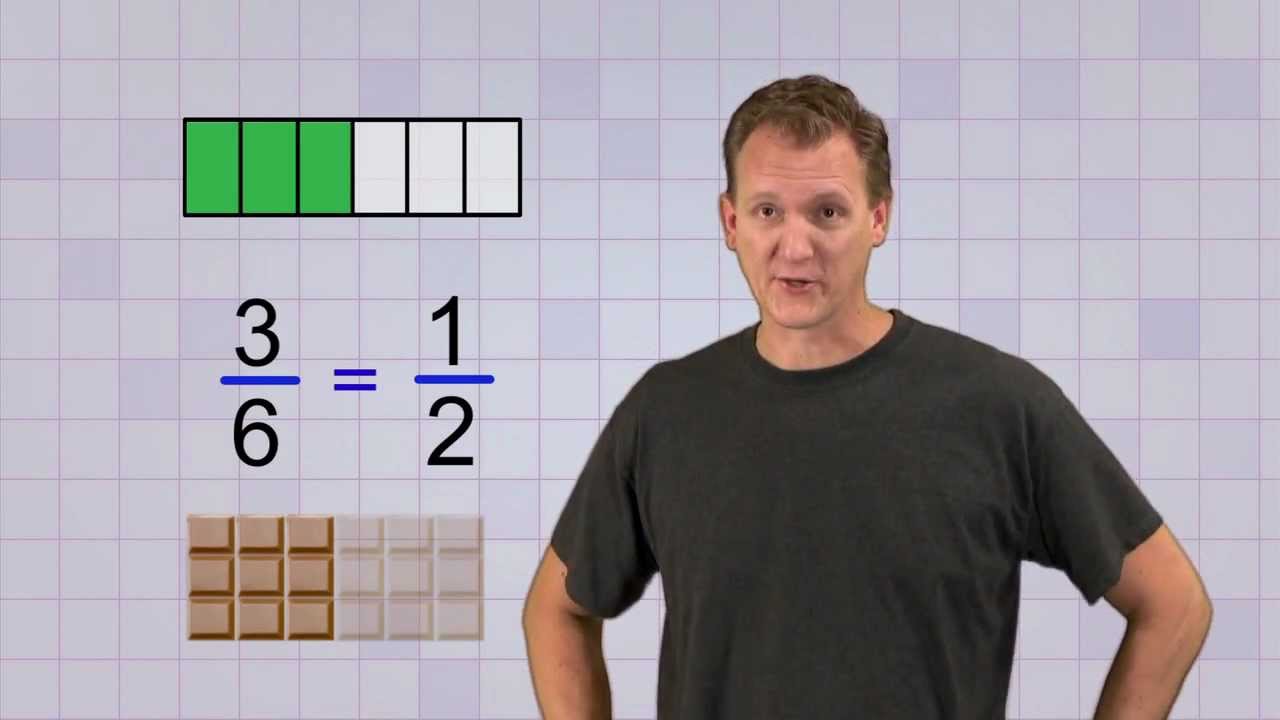
Learn More at mathantics.com
Visit http://www.mathantics.com for more Free math videos and additional subscription based content!
sage walrus
so we just temporarily take 12 out
wild fable
this may help you with the basics
wild fable
because it seems you are missing a lot of basic knowledge here to solve equations
sage walrus
sage walrus
and then we got 12/1
Is this correct tho?
and so we got:
a * tan40 = 12/1
wild fable
yes and 12/1 = 12
jolly parrotBOT
water beam
 wild fable
what happens to tan40/tan40
sage walrus
it became 1
sage walrus
so
1 = 12 / tan40
sage walrus
jolly parrot
**water beam**
a * tan40 is 1
so we are left with:
1/tan40 = 12/tan40
wild fable
you cannot simply ignore the fact that the a exists
sage walrus
right?
sage walrus
wild fable
you cannot simply ignore the fact that the a exists
I'm not ignoring it, But a * tan40 is just.. tan40
cuz u said a is 1 when divided...
wild fable
are you going to listen
wild fable
a/a = 1
any number divided by the same number
will be 1
it doesnt matter if its 90000000/90000000
or 20000000000239493/20000000000239493
it will still be 1
do you understand yes or no
sage walrus
yes
sage walrus
1
jolly parrotBOT
water beam
 sage walrus
so
a = 12/tan40
wild fable
yes
wild fable
put that into calculator or whatever yes
https://youtu.be/4CKDqvddhhg?si=66zT8ATm72MQpXrR
you should rlly watch this and some other videos on algebra
Welcome to How to Simplify Fractions (Part 1) with Mr. J! Need help simplifying fractions (aka putting fractions in lowest terms)? You're in the right place!
Whether you're just starting out, or need a quick refresher, this is the video for you if you're looking for help with how to simplify fractions. Mr. J will go through simplifying fraction...
pearl pondBOT
Channel closed
Closed by @sage walrus
Use .reopen if this was a mistake.
pearl pondBOT
Available help channel!
Send your question here to claim the channel.
Remember:
• Ask your math question in a clear, concise manner.
• Show your work, and if possible, explain where you are stuck.
• After 15 minutes, feel free to ping <@&286206848099549185>.
• Type the command .close to free the channel when you're done.
• Be polite and have a nice day!
Read #❓how-to-get-help for further information on how to ask a good question, and about conduct in the question channels.
 weak surge
