#help-38
1 messages · Page 125 of 1
 wraith hinge
 cyan nebula
Good job
wraith hinge
YAY
wraith hinge
Yeahhh?
 wraith hinge
Yeah
cyan nebula
We have to count squares
wraith hinge
Okay
cyan nebula
Count the squares
wraith hinge
wraith hinge
 wraith hinge
wraith hinge
wraith hinge
 wraith hinge
HUH?
 strange fog
YOU GOT THE VALUES
wraith hinge
WHAT U MEAN?
strange fog
nvm keep going perseus
 rough frost
U got it
cyan nebula
Ok slow down
cyan nebula
So to measure gradient
wraith hinge
Yeah
cyan nebula
We need rise/run
wraith hinge
Okay okay
wraith hinge
Yes yes
cyan nebula
Do the math
wraith hinge
Do I divide 2 by 6?
wraith hinge
Erm
cyan nebula
If ur allowed a calculator use it
wraith hinge
0.33
wraith hinge
Huh
cyan nebula
Ok nvm
wraith hinge
What is that
cyan nebula
Just take 0.333
cyan nebula
Yes
strange fog
cyan nebula
3 significant figures
wait is 3SF the 3 decimal places
wraith hinge
That not important
cyan nebula
Off topic
wraith hinge
Okay okay
wraith hinge
Yeah
cyan nebula
Is going downwards
wraith hinge
Yeahh
strange fog
wraith hinge
Evan use Google
no i pulled it out of my ass
cyan nebula
Right?
strange fog
sorry ill shut up
cyan nebula
So the gradient is negative
wraith hinge
strange fog
no i pulled it out of my ass
What?
strange fog
what the
cyan nebula
Midpoint
cyan nebula
Shut up
strange fog
(x_m, y_m) = (\frac{x_1+x_2}{2}, \frac{y_1+y_2}{2})
wraith hinge
strange fog
(x_m, y_m) = (\frac{x_1+x_2}{2}, \frac{y_1+y_2}{2})
What the fuck
wraith hinge
What u mean?
strange fog
just put in the axis
 solid kilnBOT
faiyrose
 cyan nebula
Brother
wraith hinge
solid kiln
**faiyrose**
What’s that
cyan nebula
@harsh surge I’m going mad
strange fog
TeXit
wraith hinge
Huh
cyan nebula
Teach them
strange fog
solid kiln
**faiyrose**
so to get the mid point coordinates
wraith hinge
I’m tweaking
wraith hinge
Okay
strange fog
its asking you to get the midpoint of
 cyan nebula
How many years did you retain?
strange fog
whats the coordinates
cyan nebula
Just curious
wraith hinge
Nuh uh
strange fog
she lied about that shit
wraith hinge
Boy
cyan nebula
oh
wraith hinge
What did that say
cyan nebula
ic
wraith hinge
Yeah
wraith hinge
Yes
wraith hinge
No
cyan nebula
solid kiln
**faiyrose**
What do u understand from this
Anything?
Do I need to explain this through call 💀
solid kilnBOT
dinkus

 ocean flame
wraith hinge
ocean flame
wraith hinge
this?
wraith hinge
cyan nebula
What do u understand from this
Nothing
 wraith hinge
Yeah
wraith hinge
2,9
ocean flame
nice now P1
cyan nebula
hav fun
wraith hinge
8,7
wraith hinge
Okay okay
ocean flame
so out of those two coordinates you have
wraith hinge
Yeah
solid kilnBOT
dinkus
 wraith hinge
Huh
cyan nebula
HAHAHHA
 solid kilnBOT
dinkus
Compile Error! Click the  reaction for more information.
(You may edit your message to recompile.)
 rough frost
SANDRA HOW IS IT GOING
wraith hinge
Huh
ocean flame
one sec
cyan nebula
LMAO
wraith hinge
rough frost
SANDRA HOW IS IT GOING
IDK
rough frost
DO U UNDERSTAND
ocean flame
$(x_m, y_m) = (\frac{8+2}{2}, \frac{7+9}{2})$
solid kilnBOT
dinkus
 wraith hinge
Yes
ocean flame
do you know how to put this into your calculator
wraith hinge
No
cyan nebula

ocean flame
click brackets
get an open and closed bracket
do you know how to use the fraction button
ocean flame
cyan nebula
<:bleakkekw:913344117981999125>
💀
wraith hinge
Huh
cyan nebula
How old r u brother
ocean flame
me?
cyan nebula
Yea
wraith hinge
Is it 5
ocean flame
uhh its me the evan guy
one sec
oh good job
faiy tell me
how the bot works
$(x_m, y_m) = (\frac{8+2}{2}, \frac{7+9}{2})$
wraith hinge
ocean flame
uhh its me the evan guy
Huh?
solid kilnBOT
dinkus
 cyan nebula
Lmao
ocean flame
$(x_m, y_m) = (\frac{8+2}{2}, \frac{7+9}{2})$=
cyan nebula
Ya I’m done
solid kilnBOT
dinkus
 cyan nebula
Have fun tho
wraith hinge
Erm
wraith hinge
8
ocean flame
it looks like you taught her rise/run 💀
cyan nebula
Yep
solid kilnBOT
Result:
3
,calc $(x_m, y_m) = (\frac{8+2}{2}, \frac{7+9}{2})$
solid kilnBOT
The following error occured while calculating:
Error: Syntax error in part "\frac{8+2}{2}, \frac{7+9}{2})$" (char 16)
wraith hinge
What is that
solid kilnBOT
Result:
5
Huh?
ocean flame
,calc (7+9)/2
solid kilnBOT
Result:
8
im half asleep rn
cyan nebula

wraith hinge
How did u get the 5,8
solid kilnBOT
faiyrose
 wraith hinge
Oh okay okay
solid kilnBOT
faiyrose
 solid kilnBOT
faiyrose
 wraith hinge
I dunno
ocean flame
AYO
wraith hinge
Twinning
wraith hinge
ocean flame
AYO
Ayo?
wraith hinge
Boy what?
ocean flame
im actually done
wraith hinge
Wait what?
ocean flame
sandra you need to start listening in class
rough frost
distance trust guys
ocean flame
HOLYSHIT
wraith hinge
BEO WHAT
cyan nebula
ocean flame
I GOT TIMED OUT FOT ACCIDENTLY SAYING THE N WORD
wraith hinge
OH MYGOSH
rough frost
EVACHI
wraith hinge
WHAT THE FLIP
rough frost
TWIN BROTJER
ocean flame
SHUT UP
rough frost
ITS U
wraith hinge
NO WAY
wraith hinge
BRO I THOUGHT U WERE SOME RANDO
ocean flame
:?
wraith hinge
ocean flame
NOW WHATS THE DISTANCE FORMULA
I don’t know
 ocean flame
$d = \sqrt{(x_2 - x_1)^2 + (y_2-y_1)^2}$
solid kilnBOT
dinkus
 wraith hinge
What the hellll
wraith hinge
How do I do that
wraith hinge
Wait what
wraith hinge
Let me see
ocean flame
ill sub it in for you
 ocean flame
is it the same
ocean flame
$d = \sqrt{(8- 2)^2 + (7-9)^2$
solid kilnBOT
dinkus
Compile Error! Click the reaction for more information.
(You may edit your message to recompile.)

 wraith hinge
Idk
ocean flame
$d = \sqrt{(8- 2)^2 + (7-9)^2$
solid kilnBOT
dinkus
$d = \sqrt{(8- 2)^2 + (7-9)^2$
```Compilation error:```! Missing } inserted.
<inserted text>
}
l.49 $d = \sqrt{(8- 2)^2 + (7-9)^2$
I've inserted something that you may have forgotten.
(See the <inserted text> above.)
With luck, this will get me unwedged. But if you
really didn't forget anything, try typing `2' now; then
my insertion and my current dilemma will both disappear.``` wraith hinge
I don’t know how to work that
ocean flame
oh
wraith hinge
What happend
ocean flame
$d = \sqrt{(8- 2)^2 + (7-9)^2}$
solid kilnBOT
dinkus
 wraith hinge
Why does urs and mine look wrong
ocean flame
we subbed in the values
wraith hinge
Different
 ocean flame
i used the values from the thing you gave me
wraith hinge
Did I do it wrong
rough frost
Girl
 ocean flame
$d = \sqrt{(8- 2)^2 + (7-9)^2$
solid kilnBOT
dinkus
Compile Error! Click the reaction for more information.
(You may edit your message to recompile.)
 wraith hinge
Wiat guys
ocean flame
$d = \sqrt{(8- 2)^2 + (7-9)^2}$
wraith hinge
I read the thing wrong
solid kilnBOT
dinkus
 wraith hinge
Thas my bad
wraith hinge
NO I DID ITWRING
ocean flame
its asking for x2 first
wraith hinge
I REDA IT WRING
wraith hinge
Oopy poopy
ocean flame
there
solid kilnBOT
dinkus
 ocean flame
now solve
wraith hinge
Okay
wraith hinge
Wait how do I put that in my calculator?
wraith hinge
Is it 6.324
ocean flame
calc, $d = \sqrt{(8- 2)^2 + (7-9)^2}$
solid kilnBOT
dinkus
 ocean flame
what hte sigma
wraith hinge
Em what the flip
ocean flame
,calc $d = \sqrt{(8- 2)^2 + (7-9)^2}$
solid kilnBOT
The following error occured while calculating:
Error: Syntax error in part "\sqrt{(8- 2)^2 + (7-9)^2}$" (char 6)
wraith hinge
😔
cyan nebula
Ya cause it’s impossible
ocean flame
ik
 solid kilnBOT
Result:
6.3245553203368
the anser
ocean flame
solid kiln
Result:
```
6.3245553203368
```
here
wraith hinge
Yayyy
ocean flame
 wraith hinge
Okay okay
 wraith hinge
Frick u
wraith hinge
Huh
ocean flame
uhh
wraith hinge
Tf is that
ocean flame
one sec
wraith hinge
What is starlight
cyan nebula
wraith hinge
Not this
ocean flame
kms
wraith hinge
Bro I gotta get this
wraith hinge
My exam Tommorow
wraith hinge
Yeahh
ocean flame
non linear is like a curve
wraith hinge
Hat is a starlight line?
ocean flame
in your exam use a ruler for linear but sketch the non linear by hand
if you want marks
wraith hinge
Wait nvm I read it wrong
ocean flame
wdym
wraith hinge
ocean flame
in your exam use a ruler for linear but sketch the non linear by hand
Okay okay
ocean flame
ok

 wraith hinge
ocean flame
wraith hinge
ocean flame
Okay okay
ocean flame
wraith hinge
for this
wraith hinge
Huh
wraith hinge
What’s that
cyan nebula
wraith hinge
Okay then
Let me fail my maths exam
Can somebody help with this

<@&286206848099549185>
 knotty quest
In probability if it is AND u multiply
If it is OR u add
For R,1
What is probability ull get R out of R and B?
cyan nebula
Good luck I spent half an hour explaining gradient
knotty quest
Did u understand the question?
wraith hinge
No
 lucid estuary
is anyone here a mathematican from college or institute
knotty quest
There are two things
 royal mirage
Can somebody help with this, even with the correction i can’t understand
 cyan nebula
knotty quest
cyan nebula
knotty quest
1st one is he either chooses red or blue
knotty quest
royal mirage
Can somebody help with this, even with the correction i can’t understand
knotty quest
wraith hinge
Oh okay
Second one is he either chooses 1,2,3 or 4
R,1 means
He chose red in 1st case and 1 in second case
Do u know what probability means?
wraith hinge
What
wraith hinge
knotty quest
He chose red in 1st case and 1 in second case
Wait I don’t get that
wraith hinge
knotty quest
Do u know what probability means?
Yes yes I’m pretty sure
knotty quest
Ok lemme ask u a simple question
wraith hinge
Okay
wraith hinge
Yeah
knotty quest
What is the probability that ull get 4
wraith hinge
1/6?
wraith hinge
Yeah?
wraith hinge
Oh okay
wraith hinge
knotty quest
And to choose 1 from 1,2,3,4?
1/4?
wraith hinge
knotty quest
Brb
Okay okay
wraith hinge
Huh
wraith hinge
And
wraith hinge
Multiply it
wraith hinge
How do I do that?
wraith hinge
Do I multiply the 1/4 and 1/2?
knotty quest
Yes yes
wraith hinge
Okay oka
knotty quest
That is the probability of R,1
knotty quest
wraith hinge
How do I put that in a calculator
Whaaaaaaaaat
wraith hinge
 knotty quest
Do it on ur own smh
wraith hinge
It’s that one
wraith hinge
Boy cause I don’t get what u mean
knotty quest
Wdym u don't get what I mean?
wraith hinge
How do I multiply it
cyan nebula

knotty quest
cyan nebula
<:sully:651816820122189834>
I get it lol
cyan nebula
Yeaa…
knotty quest
knotty quest
But u don't know basics of multiplication?
@wraith hinge
knotty quest
What do u not understand?
knotty quest
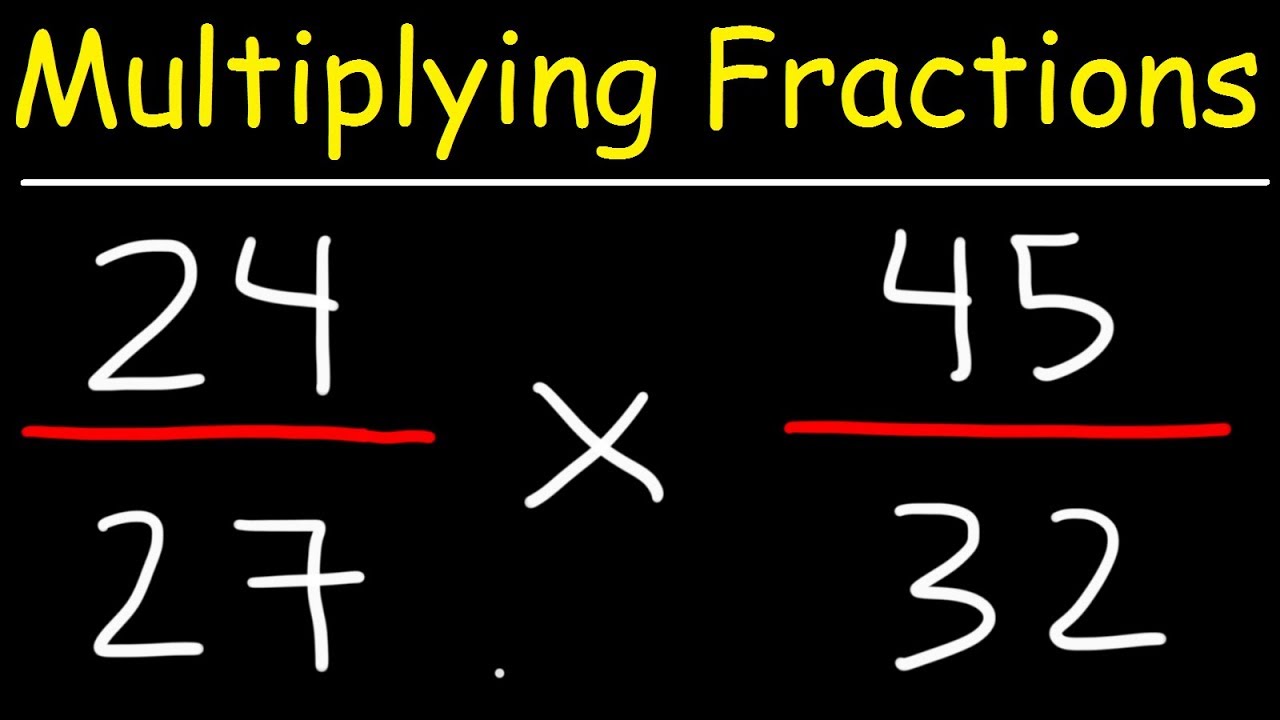
This math video tutorial explains how to multiply two fractions together.
Fractions - Basic Introduction: https://www.youtube.com/watch?v=3TklZi6MeJ4
Adding Fractions - Unlike Denominators:
https://www.youtube.com/watch?v=5fbzZEK77DQ
Subtracting Fractions:
https://www.yo...
wraith hinge
How do I do that
HELP ME
NO WAY
BRO
IM SO DUMB
THATS MB
I remember learning that oops
knotty quest
wraith hinge
How do I do that
Just watch the video ig
wraith hinge
So is it 1/8?
wraith hinge
Which one
knotty quest
The one I explained u rn
 knotty quest
No
wraith hinge
What the flip
wraith hinge
Oh what?
knotty quest
How the hell u didn't know what I was explaining
wraith hinge
I thought u were explaining how to do the first thing
Wait then how do I do the first thing
 trim joltBOT
Channel closed
Closed by @spiral talon
Use .reopen if this was a mistake.
trim joltBOT
 Available help channel!
Send your question here to claim the channel.
Remember:
• Ask your math question in a clear, concise manner.
• Show your work, and if possible, explain where you are stuck.
• After 15 minutes, feel free to ping <@&286206848099549185>.
• Type the command .close to free the channel when you're done.
• Be polite and have a nice day!
Read #❓how-to-get-help for further information on how to ask a good question, and about conduct in the question channels.
 livid inlet
How can you tell if a function such as this one has an oblique asymptote?
 trim joltBOT
livid inlet
How can you tell if a function such as this one has an oblique asymptote?
livid inlet
trim joltBOT
livid inlet
How can you tell if a function such as this one has an oblique asymptote?
livid inlet
but i would like to know in general, when should i search for an oblique asymptote with f(x)/x and f(x)-ax
trim joltBOT
@livid inlet Has your question been resolved?
 ionic pendant
if you just look at the highest power of x, then that is $\sqrt[3]{x^3} = x$ so we would expect an oblique asymptote
solid kilnBOT
cloud
 livid inlet
so because you have x
that is basically like a cartesian definition
so to + infinity on the x-axis it also goes to + infinity on the y-axis for example?
ionic pendant
well no, because it has a negative sign in the actual equation
livid inlet
ah yes but in general
if it goes to +infinity and it has something like that x then it could go into + infinity on the y axis which is what y=x looks like
ionic pendant
but we would also shoot off to infinity with something like $\sqrt[3]{x^2}$ and that does not have an oblique asymptote, because the function does not behave like $x^1$
solid kilnBOT
cloud
 livid inlet
that would tend to have more like a horizontal asymptote right?
ionic pendant
it would look somewhat "horizontal" but it would not have a horizontal asymptote
trim joltBOT
Channel closed
Closed by @livid inlet
Use .reopen if this was a mistake.
trim joltBOT
Available help channel!
Send your question here to claim the channel.
Remember:
• Ask your math question in a clear, concise manner.
• Show your work, and if possible, explain where you are stuck.
• After 15 minutes, feel free to ping <@&286206848099549185>.
• Type the command .close to free the channel when you're done.
• Be polite and have a nice day!
Read #❓how-to-get-help for further information on how to ask a good question, and about conduct in the question channels.
 surreal totem
Hi everybody,
Is someone available to help me with factorization?
trim joltBOT
surreal totem
Hi everybody,
Is someone available to help me with factorization?
@surreal totem Has your question been resolved?
surreal totem
trim jolt
<@1005979328565231697> Has your question been resolved?
Nope
surreal totem
trim jolt
<@1005979328565231697> Has your question been resolved?
no
 cedar anvil
Do you have a specific question you need help solving?
 barren tartan
royal mirage
Can somebody help with this, even with the correction i can’t understand
barren tartan
royal mirage
Can somebody help with this, even with the correction i can’t understand
do you still need hel
trim joltBOT
@surreal totem Has your question been resolved?
surreal totem
Hey man, thank you for your response. Yes, I need help. I use an iPad where I can share you my screen
Can we connect through zoom, skype or Google meet? also if I can share you my screen here I'd be happy to learn how. It would be great if we discussed the subject lively. (I am not very good at maths)
Please, take a look a this. I tried to make some advances on my own but the problem is that I don't quite understand how the logic of the formulas connect with what I have wrote or with the example.
 trim joltBOT
Channel closed
Closed due to timeout
Use .reopen if this was a mistake.
Available help channel!
Send your question here to claim the channel.
Remember:
• Ask your math question in a clear, concise manner.
• Show your work, and if possible, explain where you are stuck.
• After 15 minutes, feel free to ping <@&286206848099549185>.
• Type the command .close to free the channel when you're done.
• Be polite and have a nice day!
Read #❓how-to-get-help for further information on how to ask a good question, and about conduct in the question channels.
 torn shale
F(x)=1+x , r(x)=x^2 , whats the domain of f(r(x))
torn shale
So the rule is
Mutual donain between the two functions (^ looking sign that idk the name of) the domain of f(r(x))
torn shale
torn shale
F(x)=1+x , r(x)=x^2 , whats the domain of f(r(x))
Oh right i forgot
F(x) has domain [-2,3]
r(x)’s domain is [0,2]
ok so
Mutual domain is [0,2] and the domain od f(r(x)) is R (bc its x^2+1)
So the answer must be [0,2] ^ R
Which is [0,2]
But it is incorrect.
Why?
The original question wanted f(r(2)) but appearantly 2 is not a part of tge domain so the answer is undefined)
torn shale
torn shale
Which is [0,2]
But 2 is a part of the domain here
trim joltBOT
@torn shale Has your question been resolved?
 proper kernel
torn shale
Mutual domain is [0,2] and the domain od f(r(x)) is R (bc its x^2+1)
proper kernel
torn shale
Mutual domain is [0,2] and the domain od f(r(x)) is R (bc its x^2+1)
this is not how domain works
r(x) = x^2's domain is [0, 2]
then find the range of r(x)
the range of r(x) is not R
because the domain of r(x) is not R
the domain of r(x) is only [0, 2]
that limits what numbers you can use to only be from 0 to 2
so that limits what range r(x) can have
figure out the range of r(x) then ping me
torn shale
torn shale
Mutual donain between the two functions (^ looking sign that idk the name of) th...
Why do we need the range? @proper kernel the way i was taught used this
Which requires no range
proper kernel
well you got it wrong
do you want to try out an answer to see if what Im saying about range works out
torn shale
proper kernel
__the range of r(x) is not R__
Ok i understand
I understand why range of r(x) is not R
proper kernel
before that though, you said you know [0, 2] is incorrect
are you able to check a different answer
you would need to be taught range to do it my way, so theres a disconnect here
torn shale
But i dont understand whT it has to do with the question
proper kernel
we're not there yet
for now, lets see if the question would even accept using this method as the answer
torn shale
Ok do you want me to find the range of r(x)
torn shale
Kk
proper kernel
are you able to check a different answer
you would need to be taught range to do it my way, so theres a disconnect here
torn shale
Listening
torn shale
proper kernel
are you able to check a different answer
you would need to be taught range to do...
Wdym check a different answer
proper kernel
you said you know [0, 2] is incorrect
torn shale
proper kernel
you said you know [0, 2] is incorrect
Yes
proper kernel
that means you can check answers
proper kernel
what does the answer sheet say then
torn shale
The answer is [0,2[ i think
proper kernel
its on the shset, theres no need for "I think"
torn shale
proper kernel
what does the answer sheet say then
Ah- theres a little issue
Welll
The question is asking about
F(r(2)) actually
And the answer to that is “undefined”
And this 2 is not a part of the domain
proper kernel
hold on there
one step at a time
youre going too fast for yourself
first off, what's r(2)
torn shale
And thus [0,2] cant be the answer
proper kernel
so F(r(2)) is F(4), right
torn shale
Yes
proper kernel
now is 4 in the domain of F?
torn shale
No
proper kernel
so what would F(4) be?
torn shale
Undefined
proper kernel
now would you like to know more about this
torn shale
What doed this have to do with the question 😭
torn shale
proper kernel
now would you like to know more about this
Yea
proper kernel
torn shale
What doed this have to do with the question 😭
??????
bro
the questions asks for F(r(2))
proper kernel
slow ≠ confident
torn shale
proper kernel
the questions asks for F(r(2))
Yes ok i understand
proper kernel
I dont see you slowly rereading
I see you asking questions without bothering to try answering them yourself
torn shale
I understand why the answer is undefined
proper kernel
and thats literally it
torn shale
But i dont understand why my solving is incorrect
proper kernel
your solving has nothing to do with this
so your solving cant be on the right track
F(r(2)) would be a number or would be "Undefined"
you dont say F(r(2)) is "[0, 2]"
already thats weird to say
you mean something else
torn shale
proper kernel
I see you asking questions without bothering to try answering them yourself
No i just want to use the formal way yk i wanna use the rule
proper kernel
I just showed you the formal way
the formal way is "F(r(2)) = F(4) = undefined" and that is the end of the formal way
you mean something else
nothing that you did had anything to do with the original question
proper kernel
proper kernel
the formal way is "F(r(2)) = F(4) = undefined" and that is the end of the formal...
this does
please understand
torn shale
torn shale
Mutual donain between the two functions (^ looking sign that idk the name of) th...
Can you use this to find the domain of f(r(x)) (in interval form)
proper kernel
thats a better question
torn shale
proper kernel
the formal way is "F(r(2)) = F(4) = undefined" and that is the end of the formal...
Yesss but i want the domain
proper kernel
to figure that out, we now need to consider that r(x)'s range isnt R
now we have an example of that
you saw F(r(2)) didnt work
torn shale
proper kernel
thats a better question
That was my question from the start 😭
proper kernel
shouldve said so
torn shale
proper kernel
you saw F(r(2)) didnt work
Yes
proper kernel
even though 2 is inside [0, 2]
torn shale
Aha
proper kernel
the real reason you saw was that r(2) = 4 was not in [-2, 3]
so F(r(x)) has a different domain than just F(x) or r(x)
torn shale
Yes
proper kernel
its smaller than F(x)'s domain
torn shale
proper kernel
the real reason you saw was that r(2) = 4 was not in [-2, 3]
Bc the 4 is the codomain (range) so it doesnt have to be in the domain.. or does it idk
Wait
No
proper kernel
youre close
proper kernel
youre messing up the words but thats expected
youre close to the idea
4 is in the range of r(x)
torn shale
Lemme read what u said
proper kernel
but 4 is not in the domain of F(x)
proper kernel
torn shale
Lemme read what u said
on second thought we could just repeat what weve said before so you dont have to bother reading all of it
Ive already repeated the same info too many times so its not convenient
torn shale
proper kernel
Ive already repeated the same info too many times so its not convenient
Im sorry 😭
proper kernel
nah dw
torn shale
proper kernel
so F(r(x)) has a different domain than just F(x) or r(x)
Yes
I get this
And is why we have use the rule 🤩
proper kernel
"The" rule?
torn shale
torn shale
Mutual donain between the two functions (^ looking sign that idk the name of) th...
This
solid kilnBOT
mtt
 proper kernel
youre trying to intersect two things
one of them is [-2, 3]
the other one is the range of r(x), knowing the domain is just [0, 2]
torn shale
proper kernel
the other one is __the range of r(x), knowing the domain is just [0, 2]__
Mhm?
proper kernel
so what's the range of r(x), knowing the domain is just [0, 2]
torn shale
We get the intersect between domain of f and the range of r
Ah idk how to get the range algebrically
Lemme graph
Zero to infinity?
proper kernel
remember the domain is [0, 2]
proper kernel
whats the biggest number in the domain
torn shale
Exactly 2
proper kernel
now think that r(x) squares numbers
then look at the domain again
that would mean 2^2 is the biggest number in the range, right
proper kernel
you didnt need to graph that too
torn shale
Im dumb i didnt consider the domain
proper kernel
so you can get that the range of r(x) is [0, 4]
proper kernel
go ask if you need a recap, but I think you have enough to find the domain of F(r(x)) now
torn shale
Ok intersect between [-2,3] and [0,4]
proper kernel
thats correct
torn shale
proper kernel
the other one is __the range of r(x), knowing the domain is just [0, 2]__
Ok i did it
What now
proper kernel
back
yep [0, 3] is the domain of F(r(x))
wait
nvm [0, 3] is not the domain of F(r(x))
proper kernel
what we got for [0, 3] is the middle step
torn shale
proper kernel
what we got for [0, 3] is the middle step
Yes
proper kernel
now youre looking for the domain
you know [0, 3] is an acceptable range for r(x) and an acceptable domain for F(x)
torn shale
Of f(r(x)) yes
torn shale
proper kernel
you know [0, 3] is an acceptable range for r(x) and an acceptable domain for F(x...
Yes
proper kernel
so have [0, 3] be the range of r(x)
then work backwards to find out what the domain of r(x) is
already you have [0, 3] to tell you the middle step of F(r(x))
so working backwards will tell you the beginning step of F(r(x)), otherwise known as the domain
this wont make much sense for now since you interrupted earlier, but for now stick with the steps
torn shale
proper kernel
then work backwards to find out what the domain of r(x) is
I mean- they gave it to us
proper kernel
no no
let me repeat
if [0, 3] is the range of r(x),
then 2 cant be in r(x)'s domain anymore
because 2^2 isnt in [0, 3] is it
proper kernel
so what would the smaller domain of r(x) have to be
for the range to only be [0, 3]
torn shale
Omg ez
torn shale
proper kernel
so the domain of F(r(x)) is [0, √3]
Question mark?
proper kernel
yea its the smaller domain that makes it okay to put into F
the larger [0, 2] domain had a 2 which didnt fit
we made the domain of r(x) smaller
so that way the range of r(x) is [0, 3]
torn shale
Aha then how is f(r(x)) is also from 0 to sqrt3
proper kernel
I am
torn shale
Domain
torn shale
Oh i interrupted you
proper kernel
[0, √3] is the domain we chose for r(x)
torn shale
Yes
proper kernel
so lets see what happens after r(x) happens
you can pretend r([0, √3])
= [0, 3]
this is short for "r(a number inside [0, √3]) = a number inside [0, 3]"
proper kernel
now we chose [0, 3] because its in the range of r and the domain of F
so we do F([0, 3])
you saw that [0, 3] only uses numbers inside F's domain of [-2, 3]
so that means we dont have any problems like with 4
so that means F([0, 3]) = [1, 4] with no exceptions
torn shale
proper kernel
so we do F([0, 3])
Thats f(r(x)) right
torn shale
proper kernel
so the domain of F(r(x)) is [0, √3]
Tbh- you lost me here
proper kernel
youre rereading past stuff again
proper kernel
if youre doing that, you shouldnt be interrupting from the beginning
do you want the full explanation
torn shale
How is r[ 0 to sqrt3] is [0,3]
torn shale
proper kernel
if youre doing that, you shouldnt be interrupting from the beginning
I interrupt when you say smth that i dont understand
proper kernel
torn shale
How is r[ 0 to sqrt3] is [0,3]
you said you were OK with that earlier
proper kernel
torn shale
I interrupt when you say smth that i dont understand
the specific question you chose said you didnt want to understand
proper kernel
torn shale
What doed this have to do with the question 😭
didnt figure it would play into anything
have you changed your mind or should we continue with this
torn shale
proper kernel
you said you were OK with that earlier
I understand why [0 to sqrt3] is in [0 to 3]