#help-36
1 messages · Page 250 of 1
 muted olive
 formal trail
that channel is already closed
 final saddleBOT
@solar tapir Has your question been resolved?
final saddleBOT
Channel closed
Closed due to timeout
Use .reopen if this was a mistake.
final saddleBOT
 Available help channel!
Send your question here to claim the channel.
Remember:
• Ask your math question in a clear, concise manner.
• Show your work, and if possible, explain where you are stuck.
• Do not immediately ping people or roles. After 15 minutes, feel free to ping <@&286206848099549185> once.
• Type the command .close to free the channel when you're done.
• Be polite and have a nice day!
Read #❓how-to-get-help for further information on how to ask a good question, and about conduct in the question channels.
 modern estuary
what are reasons to drop lower order terms in a polynomial model?
modern estuary
as in im looking for certain reasons to justify dropping them in my polynomial models of certain data
modern estuary
 opal plinth
Are you asking about asymptotic behavior?
opal plinth
Are you asking about asymptotic behavior?
I have a certain set of data which I'm modelling using a degree 7 polynomial. its very accurate when i remove the terms below x^3
so i just wanna understand why is this, so i can justify removing the lower order terms to my teacher
opal plinth
Still missing context. I would just assume you were using the wrong polynomial to model your data
modern estuary
opal plinth
Still missing context. I would just assume you were using the wrong polynomial t...
what context do you need?
opal plinth
How you chose the polynomial would be a good start
What the data is, along with what polynomials you came up with
modern estuary
this is the regression equation im using. Whenever I add lower order terms (x^3, x^2, ...), it just doesnt fit as well
 opal plinth
What the data represents
modern estuary
opal plinth
How you chose the polynomial would be a good start
to be honest, randomly
im just looking to find polynomials that fit my data
opal plinth
...
modern estuary
they dont have to be great
i have a project where i have to evaluate models and how well they fit
 desert mantle
all those coefficients are basically zero already
how much of this is just noise?
scale up your data or something
 desert mantle
I dont know what regression solver desmos uses
but more options should not give worse results
at worse you should still recover the old ones by setting the relevant coeffs=0
opal plinth
Are you the one who asked something similar and tried the logistic function and a bunch of other things?
modern estuary
opal plinth
Are you the one who asked something similar and tried the logistic function and ...
indeed
logistic function worked great
opal plinth
So... what's your goal exactly?
modern estuary
desert mantle
at worse you should still recover the old ones by setting the relevant coeffs=0
yup, i could do that. i'd have to justify it though, hence my question
desert mantle
no, I mean the solver should do it on its own
if those actually give better results
if it doesnt then there is a mistake somewhere
modern estuary
opal plinth
So... what's your goal exactly?
my data is time vs frequency of popcorn pops. I have a project where I'm modelling this data using various models, to try to find an optimum time of roasting
 stone flint
are you trying to find an instance of each model that can fit your data to a good extent? otherwise, I do not see the point of trying so many models when you have quite a few good ones already.
modern estuary
stone flint
are you trying to find an instance of each model that can fit your data to a goo...
they don't need to fit well, i have some that are atrocious, and thats fine
but this case has confused me a bit. i can't understand why excluding certain terms would make it have a worse fit. it's something i'd like to discuss in my project, but i don't know the reason
opal plinth
modern estuary
my data is time vs frequency of popcorn pops. I have a project where I'm modelli...
This was probably already discussed in your earlier discussion, but a Gaussian distribution would just make sense for it, and the function to fit your data would be its CDF
desert mantle
you would need to look at the solver desmos uses
if it prohibits that you can just set one of the coeffs as zero, then you are working in a different space
modern estuary
opal plinth
This was probably already discussed in your earlier discussion, but a Gaussian d...
yup, thats already been done
desert mantle
hence you can get a different optimum
opal plinth
So why are you even bothering with a polynomial?
modern estuary
the point is to use different models.
desert mantle
and again, might just be noise due to floating point accuracy
how much worse is the fit with lower terms
show
modern estuary
desert mantle
you would need to look at the solver desmos uses
Ah, I see. So could this be a case of just some weirdness with the solver desmos uses?
opal plinth
Could you just link a Desmos snapshot?
modern estuary
opal plinth
Could you just link a Desmos snapshot?
can't sadly. not really supposed to share my data publicly
opal plinth
Can't share data about roasting popcorn? 
modern estuary
opal plinth
Can't share data about roasting popcorn? <:breadpensive:556701306169982977>
academic honesty 😭
opal plinth
Plus we're not going to do the work for you anyway
desert mantle
btw you can also take a look at google sheets
it also does regression
see if it gives different results
modern estuary
desert mantle
see if it gives different results
interesting, i will try this out as well. thanks!
modern estuary
opal plinth
Plus we're not going to do the work for you anyway
it's not that yall are wrong, it's just that it's not something i can do 🤷 .
the coefficients are basically 0 anyways so i might just write a section about polynomial models being bad fits
opal plinth
You do you, but this isn't about academic honesty
stone flint
I think at some point there's a difference between academic honesty and diagnosing the underlying data to see why certain models don't fit as well instead of having helpers grasp at straws about the potential nature(s) of your data.
modern estuary
thats fair
yeah then i guess this is unfortunate. thanks for all the help regardless guys
.close
final saddleBOT
Channel closed
Closed by @modern estuary
Use .reopen if this was a mistake.
final saddleBOT
Available help channel!
Send your question here to claim the channel.
Remember:
• Ask your math question in a clear, concise manner.
• Show your work, and if possible, explain where you are stuck.
• Do not immediately ping people or roles. After 15 minutes, feel free to ping <@&286206848099549185> once.
• Type the command .close to free the channel when you're done.
• Be polite and have a nice day!
Read #❓how-to-get-help for further information on how to ask a good question, and about conduct in the question channels.
 autumn lodge
How csa of cylinder 4πr²
 final saddleBOT
autumn lodge
How csa of cylinder 4πr²
final saddleBOT
autumn lodge
How csa of cylinder 4πr²
 civic obsidian
autumn lodge
How csa of cylinder 4πr²
civic obsidian
autumn lodge
How csa of cylinder 4πr²
bcuz the height of the cylinder is 2r
 final tangle
also make your r look less like pi
civic obsidian
autumn lodge
I'm stupid
no worries, it happens lol
autumn lodge
final tangle
also make your r look less like pi
Ty for the advice but this is a yt vid
.close
final saddleBOT
Channel closed
Closed by @autumn lodge
Use .reopen if this was a mistake.
Available help channel!
Send your question here to claim the channel.
Remember:
• Ask your math question in a clear, concise manner.
• Show your work, and if possible, explain where you are stuck.
• Do not immediately ping people or roles. After 15 minutes, feel free to ping <@&286206848099549185> once.
• Type the command .close to free the channel when you're done.
• Be polite and have a nice day!
Read #❓how-to-get-help for further information on how to ask a good question, and about conduct in the question channels.
 snow verge
I need help I joined a class a week and a half after it started and I missed the explaining period I have no idea how to do this
 final saddleBOT
snow verge
I need help I joined a class a week and a half after it started and I missed the...
final saddleBOT
snow verge
I need help I joined a class a week and a half after it started and I missed the...
 worldly spruce
snow verge
I need help I joined a class a week and a half after it started and I missed the...
worldly spruce
snow verge
I need help I joined a class a week and a half after it started and I missed the...
This means everything?
snow verge
pretty much but im fine if we can just focus on a few questions till I get the hang of it
worldly spruce
Well to begin with the 1.
 civic dome
snow verge
civic dome
snow verge
I have no idea what it means
worldly spruce
Think of functions as some sort of math machines
snow verge
we never covered this stuff in pre calc 11
worldly spruce
You input a value (the input), the function does some stuff to it, and outputs a value (the output)
 fast pendant
Yeah as u put wheat in a mill and it gives u flour
worldly spruce
So, by this, f(x) is a function of x. It tells us how it "modifies" x.
 tired walrus
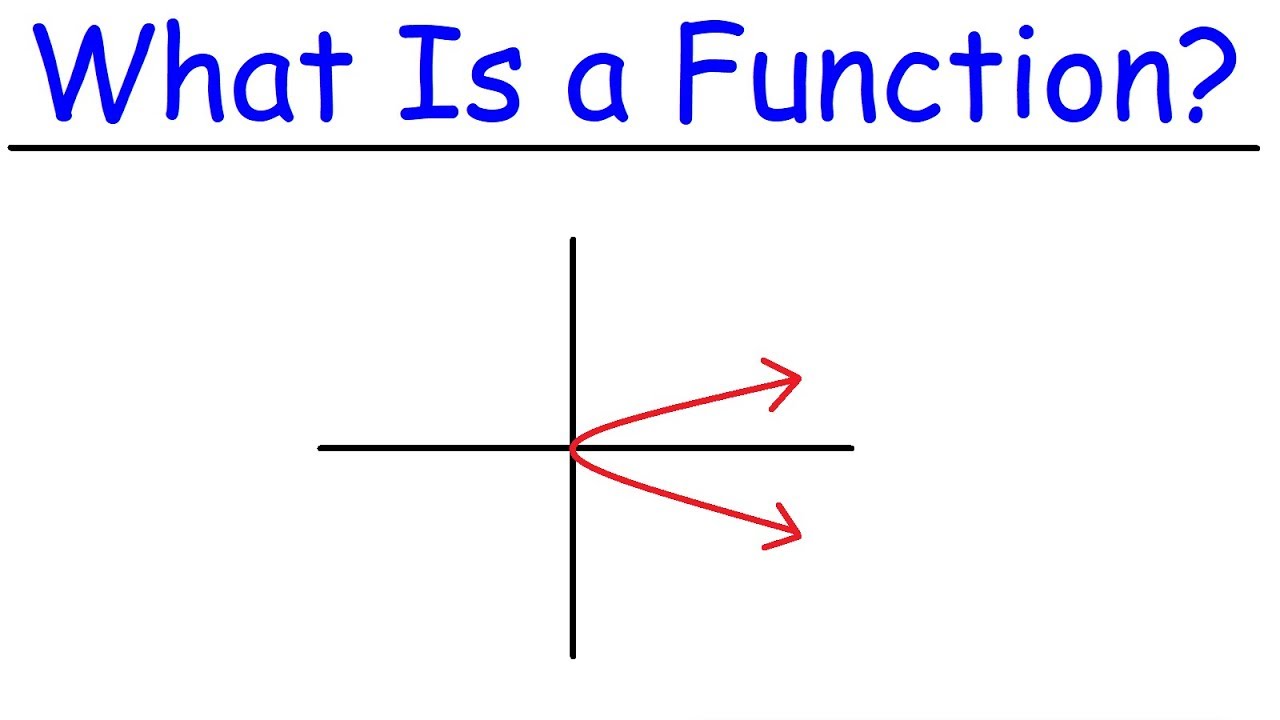
This math video tutorial explains what a function is. It is a special relation where there is exactly one output for every input. This video explains how to evaluate a function and how to determine if a graph represents a function using the vertical line test.
Functions - Free Formula Sheet: https://www.video-tutor.net/precalculus-for...
consider giving this a watch
worldly spruce
And for f (a), there is really nothing to understand about it so I will just say it. f is just the name (label) of the function. We can call it f, g, h or even something more literal like height
snow verge
should I watch the video or do you wanna explain this to me?
tired walrus
worldly spruce
And for f (a), there is really nothing to understand about it so I will just say...
the intended answer there is "f represents the name of the function" ig
worldly spruce
snow verge
should I watch the video or do you wanna explain this to me?
Whatever you wish. I would suggest watching the video though because it's from a high quality channel which probably put hours of thought into it
snow verge
alrighty ill watch the video and if I need further help ill message here
worldly spruce
Yes of course, if you don't understand anything come here
<@&268886789983436800>
Can we like get rid of people's computers who use these bots
🙁
 wispy grove
tired walrus
https://youtu.be/7JZ0IfCQ488?si=P4z53JpEiQXq4jzn
wispy grove
tired walrus
https://youtu.be/7JZ0IfCQ488?si=P4z53JpEiQXq4jzn
well there are way better channels than this one
tired walrus

u17_l2_t1_we1 Evaluating Functions
More free lessons at: http://www.khanacademy.org/video?v=E9YEUQR9NAU
Content provided by TheNROCproject.org - (c) Monterey Institute for Technology and Education
there is also this, which is more targeted
worldly spruce
wispy grove
well there are way better channels than this one
I think something as simple as the basics of functions is difficult to miss
by a channel of at least a decent following
worldly spruce
oh <@&268886789983436800> I am sorry
 opaque ember
mfw math help channel has more modpings than math help
worldly spruce
wispy grove
well if u refer to channels of named institutes
I mean, I disagree as I don't need a master chef tell me that water boils when it gets to a certain temperature.
snow verge
ok I tried the first one after watching the video
 worldly spruce
For more complex topics, of course though
worldly spruce
snow verge
ok I tried the first one after watching the video
Yes, but that is the second
snow verge
tired walrus
there is also this, which is more targeted
sweet ill watch that one soon
snow verge
worldly spruce
Yes, but that is the second
oops
im gonna ignore that first question cause really its just notes
what do i do for the smiley face question
worldly spruce
I mean, it's not really just notes
It's important to understand the meaning of symbols
Otherwise they are, well, meaningless
snow verge
ah then can you help me 🥲
worldly spruce
Right
So from before
You understand that f is just the "label"
Or the name of the function
That we picked
It could have been g(x), h(x), or circumference(x)
Just a name.
That should be understandable
snow verge
yep
snow verge
great question ngl I dont entirely know
worldly spruce
It's just the input to the function
snow verge
ohhh
worldly spruce
The value we feed into it
We can pick say x = 40
And we can evaluate what the function "does" to the value 40
We would write it as f(40)
We just replace x with the value of x
worldly spruce
snow verge
what does f(x) represent then
The output
snow verge
ah oki
worldly spruce
Let's take the example you solved
f(x) = -3x - 2
So again
f is the name of the function
could have been p(x) = -3x -2
And then we are given a rule for the function
-3x - 2
In words
This tells us
That f takes an input x
Multiplies it by (-3), and subtracts 2
And returns the value
And you were asked what f(-3) is
So as I said above, we "picked x = -3"
And we want to see what the function outputs
So we literally just substitute x = -3 into the rule, -3x - 2
And we get the output
So f(-3) = -3 * (-3) - 2 = 9 - 2 = 7
Therefore the output, f(-3), is 7
Get it?
snow verge
yeah i think I do
 hoary tiger
f(x) is essentially the output for some arbritrary value of x
worldly spruce
snow verge
yeah i think I do
Great
So the key idea is
We have f(x) = -3x -2
We want to find f(-3)
So we literally just replace every x with -3
And that's all
<@&268886789983436800> ...
oh they are here
snow verge
alrighty now how do I do the (½)

this is where ive gotten i just wanna make sure im on track
worldly spruce
Yes, exactly, we replace x with 1/2
Though I don't know what you are doing in the second line
We are multiplying two fractions
Same denominators are not required
snow verge
alrighty ill erase that
worldly spruce
I mean, it's not incorrect 
snow verge
I just think my teacher didnt want non whole numbers
worldly spruce
Just doing something you will have to undo later
$a \cdot \frac{b}{c} = \frac{a \cdot b}{c}$
 soft zealotBOT
USS-Enterprise
 tired walrus
snow verge
I just think my teacher didnt want non whole numbers
tired walrus
snow verge
I just think my teacher didnt want non whole numbers
not really
in this sort of question fractional answers will be quite unremarkable and not a sign by themselves that you would be doing sth wrong
snow verge
so is this right?
 worldly spruce
snow verge
so is this right?
worldly spruce
snow verge
so is this right?
Yes
worldly spruce
snow verge
so how do I do the little smiley face
The same way
Remember, earlier we said x is an input
I didn't explicitly say it's a number
snow verge
oh jeez
worldly spruce
For highschool, it will pretty much always be a number yes
But it doesn't have to be
It can be a smiley
And we do it the same way
It multiplies the smiley by (-3) and subtracts 2
Doesn't make sense to us
But doesn't mean it can't exist
snow verge
so is it just this?
 worldly spruce
Yes
 worldly spruce
,rccw
soft zealotBOT
 worldly spruce
snow verge
so are these 2 right?
worldly spruce
snow verge
so are these 2 right?
Yes
snow verge
now is this one right aswell it was a littlw confusing but I think i got kt
 worldly spruce
snow verge
now is this one right aswell it was a littlw confusing but I think i got kt
worldly spruce
snow verge
now is this one right aswell it was a littlw confusing but I think i got kt
Yes, end result is okay
I would take a second to improve notation though
snow verge
the way I went about doing it looks weird I know lol
worldly spruce
You've got side calculations in the middle of everything
It's best to just lead = all the way till the end result
So that the left does actually equal the right
snow verge
yeah i was just trying to work with the limited space
worldly spruce
And do little side calculations, if necessary, on the side
or below or above if there's no space
snow verge
alrighty
worldly spruce
Because right now it isn't that big of a problem
But later on you might encounter much bigger problems
Where you will first have to do tons of other little stuff
And it's extremely good for clarity to separate things
snow verge
ok next is these and they seem really confusing
 worldly spruce
,rccw
soft zealotBOT
 worldly spruce
well
Why
I assume by now you know f(2) and g(3)
And then, I assume you know how to do 3 * f(2)
snow verge
well there's now 2 but its also the fact there's a 3 in front of the f
worldly spruce
And then 3 * f(2) + g(3)
worldly spruce
snow verge
well there's now 2 but its also the fact there's a 3 in front of the f
Yes
You are just multiplying f(2) by 3
It's 3 times that output
First, calculate f(2) and g(3)
snow verge
when do I multiply after everything is done?
worldly spruce
Right I see
Let's forget about functions for a minute
Say we had $3 \cdot 5 - 5$
soft zealotBOT
USS-Enterprise
 snow verge
3×5 = 15 then 15-5 = 10
worldly spruce
Correct
Order of operations right
We multiply first and then subtract
Okay
What if we had
$3 \cdot m - p$
soft zealotBOT
USS-Enterprise
 worldly spruce
Exactly
We still first multiply 3 * m
and then subtract p
So then
How would we compute
$3 \cdot f(2) + g(3)$
soft zealotBOT
USS-Enterprise
 snow verge
so do I now multiply the 5 by 3? then add then add the other 5?
 worldly spruce
snow verge
so do I now multiply the 5 by 3? then add then add the other 5?
worldly spruce
snow verge
so do I now multiply the 5 by 3? then add then add the other 5?
Yes
But again
This notation is pretty bad now
snow verge
really? 😭🥲
worldly spruce
You are just equaling things that aren't equal
snow verge
im so confused on how I should be writing it out
worldly spruce
3f(2) = 2*2 + 1 + 9(3) = 3^2 + 3 -1
Does not make sense
Right
On the side
Compute f(2) and g(3)
Always divide a problem into small pieces
$f(2) = 2 \cdot 2 + 1 = 5$
soft zealotBOT
USS-Enterprise
 worldly spruce
$g(3) = 3^2 - 3 - 1 = 5$
soft zealotBOT
USS-Enterprise

 worldly spruce
Yes a bit
but on the left side
You have 3*f(2) written
But on the right of = you are computing only f(2), not 3 * f(2)
And at the end write 3 * 5 = 15
get rid of the 3f(2) and just write f(2)
and it's okay
and then write 3f(2) = 3 * 5 = 15
And then as you did yes, since we know f(2) = 5 and 3*f(2) = 15, and g(3) = 5. then 3*f(2) + g(3) = 15 + 5 = 20
snow verge
so kinda like this?
 worldly spruce
yes exactly
but it's important you understand why we are writing it like this
not just because I said so
We are trying to compute 3f(2) + g(3)
so 3 times f(2) plus g(3)
We can separate this problem into smaller problems
snow verge
alrightyy
worldly spruce
first we compute f(2) and g(3)
then we need 3 times f(2)
because of order of operations
and then we must add 3 times f(2) and g(3)
Just think of it like that in your head
and write it in chunks I guess
snow verge
kk ima try the next question
worldly spruce
👍
 snow verge
yeah lol
worldly spruce
I instantly see what you were doing at each step, and at each side
snow verge
I also started the next one
 worldly spruce
snow verge
I also started the next one
worldly spruce
snow verge
I also started the next one
Correct!
 snow verge
sweet
worldly spruce
see it doesn't matter if we are finding f(2), 2f(3), or f(x+1), or 4f(x^2)
The process is always the same
snow verge
alrighty ima try the next 2
worldly spruce
👍
snow verge
ok these were hard lol
 worldly spruce
,rccw
soft zealotBOT
 worldly spruce
snow verge
ok these were hard lol
worldly spruce
snow verge
ok these were hard lol
Yep, correct
Great job 🙂
I assume you understand the point of these now
Judging by the much better writing
snow verge
I think so but now ive flipped the page and im confused all over again lol
worldly spruce
What's the new page
snow verge
 worldly spruce
Well for the first
snow verge
mainly the fact that there equal and then the find part
worldly spruce
We do the exact same thing
snow verge
kk
worldly spruce
We find f(x+1) and g(x-1)
snow verge
ill start rn
worldly spruce
And then we are saying they equal
So we just set them = to each other
And solve the equation we get
snow verge
ok so im here rn
 worldly spruce
snow verge
ok so im here rn
worldly spruce
snow verge
ok so im here rn
Yep
And now you just set them equal to each other
And solve
snow verge
now how do I do that again its been a while
worldly spruce
snow verge
now how do I do that again its been a while
Well we have
f(x+1) = 2x - 1
and
g(x-1) = -4x + 2
And we want to solve f(x+1) = g(x-1)
So can't we just replace f(x+1) with 2x - 1, and g(x-1) with -4x + 2
snow verge
also I realized -4x+2 could also be -2(2x-1)
worldly spruce
snow verge
also I realized -4x+2 could also be -2(2x-1)
That's correct
worldly spruce
worldly spruce
So can't we just replace f(x+1) with 2x - 1, and g(x-1) with -4x + 2
But try doing this
And I will explain why the -2(2x-1) can work later
snow verge
so wait im confused what do I write down
worldly spruce
We need to solve $f(x+1) = g(x-1)$
soft zealotBOT
USS-Enterprise
 worldly spruce
What is f(x+1)
snow verge
2x-1
worldly spruce
and what is g(x-1)
snow verge
-4x+2
worldly spruce
soft zealot
**USS-Enterprise**
so can we not literally replace f(x+1) with 2x-1 and g(x-1) with -4x+2 here
since f(x+1) equals 2x-1 (and g(x-1) equals -4x+2)
So it doesn't matter if we write f(x+1) or 2x-1
snow verge
so we need to find the x value?
worldly spruce
yes
snow verge
ok I assumed that
worldly spruce
We are solving when f(x+1) equals g(x-1)
snow verge
but how do we find x its been a really long time since ive done that
worldly spruce
So when the output for f of x+1 equals the output of g of x-1
worldly spruce
snow verge
but how do we find x its been a really long time since ive done that
Well first do what I said
worldly spruce
worldly spruce
so can we not literally replace f(x+1) with 2x-1 and g(x-1) with -4x+2 here
.
what do we get
snow verge
im confused I'm sorry
soft zealotBOT
USS-Enterprise
 snow verge
m ≠ n?
worldly spruce
exactly
snow verge
Ohhhh
worldly spruce
this is a pretty stupid example from me
because it doesn't make sense
but the idea is
we know m = 16
and n = 40
so we can replace m and n with what they know they are
so we get 16 = 40
Which is clearly not true
So if we were asked to solve m = n, we say it's false
In our real example though, we have to find x that satisfy this (if any)
same thing
We need to solve $f(x+1) = g(x-1)$
soft zealotBOT
USS-Enterprise
 worldly spruce
since f(x+1) equals 2x-1 (and g(x-1) equals -4x+2)
so we can replace f(x+1) with 2x-1 and g(x-1) with -4x + 2
To get
$2x - 1 = -4x + 2$
soft zealotBOT
USS-Enterprise
 worldly spruce
get it?
snow verge
yeah so in the end do I just say they're not equal or do I leave it at that
snow verge
ohh
worldly spruce
It had nothing to do with our example
it was just to show how can we replace m and n
with something we know they are equal to
like here
we know f(x+1) EQUALS 2x-1
so we can replace f(x+1) with 2x-1
Because they are the same
worldly spruce
soft zealot
**USS-Enterprise**
And we get an equation which we have to solve
snow verge
ok but how do we solve it?
snow verge
fuck I feel so stupid
worldly spruce
😅
snow verge
NO I SAID THAT CAUSE IT'S BEEN A HOT MINUTE SINCE I'VE DONE ANY MATH
worldly spruce
oof
I am not making fun or anything
I just thought we were past that since we are doing functions
snow verge
ive said like 3 times ive gotten to this point but I dont remember how to solve jt
worldly spruce
I thought you didn't know how to set it up
snow verge
its semester 2 of grade 12 I have done math since semester 1 of grade 11
worldly spruce
sorry
snow verge
no i knew how to set it up just not how to solve
soft zealotBOT
USS-Enterprise
 worldly spruce
For you, enough is to know the idea is to get the variable alone
Here, the variable is x
We are solving for x
So we want x = something right
 snow verge
yeah its just been like over a year
worldly spruce
right
Well yeah
pretty much
for linear equations
(x degree 1)
all we have to know is multiplying, dividing, adding and subtracting on both sides
So here we add 1 on both sides to get $2x = -4x + 3$
soft zealotBOT
USS-Enterprise
 worldly spruce
And then add 4x on both sides to get x alone, so $6x = 3$
soft zealotBOT
USS-Enterprise
 worldly spruce
all we have to know is multiplying, dividing, adding and subtracting on both sid...
worldly spruce
worldly spruce
all we have to know is multiplying, dividing, adding and subtracting on both sid...
for linear equations
snow verge
yeah so what i did?
snow verge
ok so is this the final question or do I have to right it our a specific way
worldly spruce
what do you mean
snow verge
like can I leave this as this
 worldly spruce
The answer is $x = \frac{1}{2}$
soft zealotBOT
USS-Enterprise
 worldly spruce
well remember what we were talking about earlier
f(smiley)
we just replace every x with the smiley
same thing here
g(x) = 1 - 4x
so we just replace every x with g(x), or (1-4x)
worldly spruce
it does become f(1-4x)
g(x) = 1-4x
so you can replace g(x) with 1-4x
and then think of the 1-4x as smiley
and do the same thing
worldly spruce
snow verge
wait I think i get it
yeah?
snow verge
yeah ima do these 2 questions then stop for now cause its lunch and ima run out of time before my next class
worldly spruce
👍
snow verge
ok here
 snow verge
actually I still have about 20 minutes till the end of lunch can we do the next question
ive already figured out which are and aren't functions because of the vertical** line test but I really don't know how to explain in words and I need a little refresher on how to write out the domain and range
 worldly spruce
snow verge
ive already figured out which are and aren't functions because of the vertical**...
worldly spruce
snow verge
ive already figured out which are and aren't functions because of the vertical**...
Well that is incorrect
worldly spruce
We test whether a function is injective with the horizontal line test
snow verge
ohhh
worldly spruce
To test whether it's a function, we use the vertical line test
worldly spruce
snow verge
I meant to say vertical not horizontal
oh right
snow verge
big brain moments over here rn
snow verge
lolll
worldly spruce
Anyway
Quick definitions
Domain: all possible input values (x) the function can accept (is defined for)
Range: all possible output values (y) the function can produce
So for the domain we look at the x-axis, for the range at the y-axis
snow verge
yeah i know that i just dont remember how to right it out depending on what it is
worldly spruce
right give me a second
snow verge
like the weird E and R lookin things
 snow verge
like for a is it this or am I missing something
 worldly spruce
snow verge
like for a is it this or am I missing something
worldly spruce
snow verge
like for a is it this or am I missing something
Yes exactly
snow verge
ohh ok sweet
worldly spruce
If each square is 1 unit
snow verge
yeah
ok so now that that id out of the way how do I explain in words if its a function or not
worldly spruce
snow verge
ok so now that that id out of the way how do I explain in words if its a functio...
Well, the definition is, a function from a set X to a set Y assigns to each element of X exactly one element of Y
In other words, each input (each value from the domain) must represent exactly one output value (from the range).
On graphs, you just explain the vertical line test: the vertical line must intersect the graph of the function at most once
This means, if you have for example f(x), any x in the domain you pick you always must get one y value, not more
worldly spruce
snow verge
ive already figured out which are and aren't functions because of the vertical**...
That's why for example b isn't a function
snow verge
ok I figured now do I have to write the range and domain for the non functions?
worldly spruce
If we pick x = 1, we get both y = 2 and y = about -1.2 right
snow verge
and im kinda also stumped on questions f
worldly spruce
snow verge
ok I figured now do I have to write the range and domain for the non functions?
Yes, relations which aren't functions still have domain and ranges
worldly spruce
snow verge
and im kinda also stumped on questions f
Well what would be the domain and range
your idea
snow verge
x ≠ 0
y ≠ 0
worldly spruce
I mean
you listed values which aren't in the domain and aren't in the range
so everything else is right
snow verge
ngl I just realized that there's an answer key for this part of the work book and thats all it says lol
worldly spruce
uh
well
it's not really correct
but not really incorrect
It's just that it's asking us the domain and range
and we are saying what the domain and range aren't
so I guess we can then deduce what they are
but still
snow verge
lol isnt math fun
worldly spruce
much cleaner to write domain = $\mbb{R} - {0}$
soft zealotBOT
USS-Enterprise
 worldly spruce
and range the same
snow verge
ah okie
ive got 3 more pages of questions but my p3 class is about to start so im gonna have to call quits till im off work tonight
worldly spruce
snow verge
ive got 3 more pages of questions but my p3 class is about to start so im gonna ...
yeah of course
best of luck!
hope I've been of help
snow verge
you have thank you so much
final saddleBOT
If you are done with this channel, please mark your problem as solved by typing .close
snow verge
.close
final saddleBOT
Channel closed
Closed by @snow verge
Use .reopen if this was a mistake.
final saddleBOT
Available help channel!
Send your question here to claim the channel.
Remember:
• Ask your math question in a clear, concise manner.
• Show your work, and if possible, explain where you are stuck.
• Do not immediately ping people or roles. After 15 minutes, feel free to ping <@&286206848099549185> once.
• Type the command .close to free the channel when you're done.
• Be polite and have a nice day!
Read #❓how-to-get-help for further information on how to ask a good question, and about conduct in the question channels.
 earnest cobalt
can someone help me with derivatives? im trying to learn the complex ones
is this solved correctly?
 final saddleBOT
earnest cobalt
can someone help me with derivatives? im trying to learn the complex ones
is th...
final saddleBOT
earnest cobalt
can someone help me with derivatives? im trying to learn the complex ones
is th...
 next thorn
earnest cobalt
can someone help me with derivatives? im trying to learn the complex ones
is th...
next thorn
earnest cobalt
can someone help me with derivatives? im trying to learn the complex ones
is th...
looks good to me.
wait a minute 😟
 upbeat creek
earnest cobalt
can someone help me with derivatives? im trying to learn the complex ones
is th...
upbeat creek
earnest cobalt
can someone help me with derivatives? im trying to learn the complex ones
is th...
Yeah, that's correct, but I would convert 5throot(1/x) to x^{-1/5}. It doesn't change anything, but makes derivatives a bit clearer.
next thorn
nevermind, yeah I was having a big
1/5 - 1 = 4/5
Moment
earnest cobalt
i also got this one solved, looks good but if i can double check

i know its not equal to each other just wrote it this way
next thorn
earnest cobalt
can someone help me with derivatives? im trying to learn the complex ones
is th...
when you get the antiderivative of a differentiated function it should throw you back to the original function. if you have some sort of software that can antiderivative anything then you can by simply plugging the f'(x) in, get the antiderivative.
earnest cobalt
next thorn
when you get the antiderivative of a differentiated function it should throw you...
hmm you know any website like this?
next thorn
there is a whole bot for this
next thorn
earnest cobalt
hmm you know any website like this?
wolfram alpha
you can visit its website but you can also use it from here
starting with a ,w followed up with "integrate" then said function.
earnest cobalt
lemme try
next thorn
,w integrate -sin( (1/x)^(1/5)) * 1/5 (1/x)^(-4/5) * (-1/x^2)
soft zealotBOT


 Requested by acarvroomvroom
earnest cobalt
Requested by acarvroomvroom
earnest cobalt
nice
earnest cobalt
ill try the other one
next thorn
yeah sure.
upbeat creek
soft zealot
cool, never knew something like this existed.
earnest cobalt
,w integrate (5/(sqrt(1-25x^2))*tg(2x)-(arcsin(5x)(2/cos^2(2x))))/(tg^2(2x))
soft zealotBOT

 Requested by adamborygo
earnest cobalt
Requested by adamborygo
earnest cobalt
dam i suck
next thorn
earnest cobalt
i also got this one solved, looks good but if i can double check
is this an integral?
final saddleBOT
Please show the original problem, exactly as it was stated to you, with the entire original context. A picture or screenshot is best. If the original problem is not in English, then post it anyway! The additional context might still be helpful. Do your best to provide a translation.
earnest cobalt
next thorn
is this an integral?
first one is the function and after the = is the derivative of it
,w integrate (5tan(2x)/sqrt(1-25x^2) - 2arcsin(5x)/cos(2x)^2)/tan(2*x)^2
soft zealotBOT
 Requested by adamborygo
earnest cobalt
Requested by adamborygo
earnest cobalt
hm
next thorn
earnest cobalt
first one is the function and after the = is the derivative of it
so- you either integrate the differentiated or differentiate the function
earnest cobalt
so i did write it correctly
next thorn
you can just differentiate the left side directly.
earnest cobalt
i might be misunderstanding that terms english is not my main lang 1s
next thorn
earnest cobalt
i also got this one solved, looks good but if i can double check
what is tg2x?
next thorn
earnest cobalt
i might be misunderstanding that terms english is not my main lang 1s
please show the original problem.
earnest cobalt
next thorn
what is tg2x?
tangent (2x)
next thorn
espiecally if its in arabic, i speak arabic.
earnest cobalt
next thorn
please show the original problem.

this is the function i need to get derivative of
next thorn
,w differentiate arcsin(5x)/tan(2x)
soft zealotBOT
 Requested by acarvroomvroom
next thorn
Requested by acarvroomvroom
next thorn
is that your right-side?
earnest cobalt
no its this
 next thorn
maybe they are the same
earnest cobalt
ye this is the problem
next thorn
ok ill try to do this
earnest cobalt
idk what csc is for example
from trygonometry i only know
sin, cos. tg, ctg, arcsin, arccos, arctg, arcctg
next thorn
earnest cobalt
no its this
,w integrate ( (5/sqrt(7-25x^2) * tan(2x) -(arcsin(5x) * (2/cos(2x)^2))/(tan(2x)^2)
soft zealotBOT
 Requested by acarvroomvroom
next thorn
Requested by acarvroomvroom
next thorn
ok...
earnest cobalt
thats not a big deal tho this one im pretty sure is correct
i also got a problem with derivatives in other execrise
may i ask here?
next thorn
earnest cobalt
idk what csc is for example
csc is cosecant, reciprocal of sine
csc(x) = 1/sin(x)
you know it.
next thorn
earnest cobalt
may i ask here?
of course.
earnest cobalt
this is the task in english: Examine the monotonicity, extrema, limits, continuity, concavity, and inflection points.

and where i got:
next thorn
im not very sure what monotonicity is...
earnest cobalt
 earnest cobalt
next thorn
im not very sure what monotonicity is...
earnest cobalt
next thorn
im not very sure what monotonicity is...
this one doesnt matter tbh
last three i dont understand the most
so i did count the derivative twice
and dont really know what to do from there
from the last line i got:
so the only root is 0 cause this quadratic has no roots
 earnest cobalt
from the last line i got:
so the only root is 0 cause this quadratic has no root...
earnest cobalt
earnest cobalt
from the last line i got:
so the only root is 0 cause this quadratic has no root...
and dont really know how to get to concavity and inflection points.
next thorn
what are you exactly finding
earnest cobalt
next thorn
what are you exactly finding
from the task, im calculating first derivative
and then second derivative
next thorn
I'm not ery sure if your second derivative is correct but thats fine
next thorn
earnest cobalt
and then second derivative
i cant confirm the second derivative
but ill assume its correct... hopefully it is
so what is this?
 earnest cobalt
so this is the numerator of the second derivative
next thorn
aha
earnest cobalt
i assumed the denominator doesnt change the sign cause its always >0
and compared the numerator to 0
and solving this i got x=1 or x=0
but x=1 cannot be
next thorn
earnest cobalt
i assumed the denominator doesnt change the sign cause its always >0
the denominator is (x-1)^4
next thorn
earnest cobalt
mhm i see its not a part of hte domain
earnest cobalt
and everything to power 4 is positive right
next thorn
earnest cobalt
and everything to power 4 is positive right
you're right, I just didnt pay attention to the original function
earnest cobalt
so yeah im left with x=0 as the root to the nominator of the second derivative
next thorn
ok lets tackle the requirments one by one
next thorn
well x=0 makes f''(x)=0
so its def a root
but im not sure if theres any other roots
and im very certain that im not willing to- solve that equation
but
inflection points are like the last thing they're asking for
lets focus on the simpler stuff
like extrema and minima
next thorn
earnest cobalt
so for this we need first derivative right
indeed, what do you think we can do
next thorn
earnest cobalt
we need to solve when its 0
well
we are really looking for** critical points**
which are points that occur when f'(x) is
0
undefined
or doesnt exist
doesnt exist only really applies to piecewise functions
this is not a piecewise function
so we only have to consider the** two** cases of 0 and undefined
earnest cobalt
 next thorn
oh its basically when f'(x) has has a 0 in the denominator
earnest cobalt
so x=1?
next thorn
yes.
altho its not a part of the domain, its still worth to get a habit of checking the sign of f'(x) around it.
for increase and decrease.
alright!
seeems like we're done with the extrema and minima
great job
next is... continuity
earnest cobalt
yea i think i know it well
next thorn
take your time.
earnest cobalt
task says: examine monotonicity, local extrema of functions, convexity, concavity, intersection points
so monotonicity we can skip its basically saying that function grows from -infinity to 0 and from 3/2 to infinity etc
extrema we did
and the hard part left
next thorn
earnest cobalt
and the hard part left
well yeah
to search for concavity
and convecity ig
we need to find possible inflection points
earnest cobalt
all i know is that we need second derivative for that and we also equal it to 0
next thorn
which indeed occur when f''(x)=0
earnest cobalt
and roots are inflection points i think
earnest cobalt
assuming my solution is correct that would be x=0
next thorn
i think the root to the f''(x) =0 is indeed x=0 (and only that)
earnest cobalt
cause we remove x=1 solution cause its not in the domain
next thorn
so yeah
its worth to mention
that there are multiple requirments for a point to be considered and inflection point
its only one of hte requirements that f''(said point)=0
there is a requirment that the point has to be defined within f'(x)
next thorn
earnest cobalt
which it fortuanetly is! considering that when you plug in x=0 in f'(x) you just get- a defiend value
alright so
now that you're almost sure that x=0 is an inflection point
your next step is...
actually- to avoid this being a yak shave
do you know what our next step should be and why?
earnest cobalt
i think instead of doing =0 we need to do >0 and <0
next thorn
we already know that x=0 is an inflection point. what do we do next and why
earnest cobalt
wait so
we just draw the polynomial function
read where its positive and where negative
and we basically got it
am i right?
next thorn
not quite. "read where its positive and where negative" is lowkey gonna tell you when the function decreases and increases
but wait! we dont even need to draw
earnest cobalt
next thorn
not quite. "read where its positive and where negative" is lowkey gonna tell you...
wouldnt that be true for first derivative?
next thorn
do you know what an inflection point is?
earnest cobalt
next thorn
do you know what an inflection point is?
where it changes from one to another
next thorn
earnest cobalt
where it changes from one to another
indeed!
so wej sut found our inflection point to be x=0
all you have to do now
is know
when is the function concave up
and when is the function concave down
theres a very special property about the inflection point, **the sign of ** f''(x) changes around it
from negative to positive or from positive to negative
if the signs do not change around uit, it is not an inflection point.
but here's the thing
if f''(x) is positive then the function was concave down (convex up)
if f''(x) is negative then the function was concave up (convex down
so, search the sign of f''(x) around the inflection point (left and right)
and see if its positive or negative
this way, you can find convexity and and concavity.
earnest cobalt
so should i just put 1/2 and -1/2 for the x and see the sign
or
solve for >0 and <0
earnest cobalt
yes for which option
next thorn
next thorn
if f''(x) is **positive** then the function was concave down (convex up)
if f''(...
.
next thorn
earnest cobalt
yes for which option
you can graph or do this algebriaclly.
i offered you the algebriac approach
next thorn
earnest cobalt
so should i just put 1/2 and -1/2 for the x and see the sign
or
solve for >0 and...
solving for >0 and <0 is not very necessary
if a value after the inflection point is positive for example
then ALL of the values after the inflection point is positive
you dont have to solve an inequality
just solve for one value and others should apply. (with respect to where they are at relative to the inflection point)
it also kinda depends on what you've been taught... if you've been taught to do this algebriaclly then you should do what i said. if you were isntructed to solve this with a graph then you can try and see how the graph looks like.
after you're done checking, i will clean up the algebriac method for you to understand better.
earnest cobalt
i got to this
 next thorn
that is correct
wait a minute, what did you solve the inequality for
whats
2x(x^2-3x+3)
earnest cobalt
this
 next thorn
is that your second deritaive simplified?
earnest cobalt
shortened version of numerator
yes
but im concerned that getting rid of that (x-1) early is a mistake
next thorn
ok but you lowkey need your denominator as well. but lucky for you, the denominator is laways positive and in the denominator and it cant be 0 thus it wouldnt affect the sign or the inequality.
but dont rely on that luck every time 😔
next thorn
earnest cobalt
but im concerned that getting rid of that (x-1) early is a mistake
yit worked in this very specific situation.
earnest cobalt
i got rid of it under the condition that its always positive hence it doesnt change the sign of the second deriv
next thorn
earnest cobalt
i got rid of it under the condition that its always positive hence it doesnt cha...
you also needed to make sure its not 0
multiplying an inequality by 0 forces it to change its parameters.
earnest cobalt
it cant be zero when i got domain x not equal 1
next thorn
2 > -3
multiply both sides by 0
0 > 0
next thorn
earnest cobalt
it cant be zero when i got domain x not equal 1
amazing
so now we got that
the second derivative is positive from -inf to 0
what does that translate to in terms of concavity
earnest cobalt
that its convexity at this range
and concavity at 0 to inf
but the problem is, its not correct
next thorn
earnest cobalt
that its convexity at this range
you need to specify
is it convex up or down
final saddleBOT
Channel closed
The owner is missing!
earnest cobalt
im not missing
next thorn
ignore the bot
 next thorn
wel the phrase are inaccurate
there is a difference between concave up and cave down and convex up and convex down
earnest cobalt
either my language doesnt specify that or i just dont have this much detail yet?
 trail mango

trail mango
earnest cobalt
yes this is correct
there is no "convex up or down"
concave up and concave down are terms that calculus education have tried to push on everyone
trail mango
well nobody says convex up and convex down
next thorn
earnest cobalt
but the problem is, its not correct
how is this not correct
its idneed "convex" from -inf to 0 and concave from 0 to inf
trail mango
trail mango
concave up and concave down are terms that calculus education have tried to push...
but i just say convex and concave
next thorn
well my education uses the 4 terms.
earnest cobalt
next thorn
how is this not correct
when i checked it says:
convexity: (-inf to 0) and (1 to inf)
concavity: (0 to 1)
this 1 is important somehow then
next thorn
isnt the original function x^3/(x-1)
earnest cobalt
it is
next thorn
the function doesnt have inflection points at x=-1 and x=1.
it doesnt go fronm concave to convex anywhere execpt for x=0
earnest cobalt
when you plot this function you can see this is correct tho
next thorn
where?
 earnest cobalt
 next thorn
what the fuck
earnest cobalt
there is the asymptote at x=1 and it changes things i guess
next thorn
can you show me the function you inputted?
earnest cobalt
 next thorn
blud what
final saddleBOT
@earnest cobalt Has your question been resolved?
earnest cobalt
final saddle
<@1009153298714071160> Has your question been resolved?
no
earnest cobalt
next thorn
too zoomed in
haha
i just dont know what to do to get to this solution with 1
next thorn
yes i might have forgotten that one of the "can-be" for an inflection point is "f''(x)=0 or undefined"
we forgot to check for hte undefined case.
earnest cobalt
yep, and how to do that?
next thorn
earnest cobalt
i just dont know what to do to get to this solution with 1
the second derivative has (x-1)^4 in the denominator
f''(x) will be undefined if the denominator =0
like any value
1/0
2/0
x/0
they're all undefined because the denominator = 0
so you're gonna check for when (x-1)^4=0
earnest cobalt
x=1
next thorn
which indeed outputs x=1 as an option
yes.
so
we check the signs from - inf to 0 then from 0 to 1 then from 1 to inf
wait a minute...
f'(1) is not defined.
we cant call this an inflection point
next thorn
next thorn
we check the signs from - inf to 0 then from 0 to 1 then from 1 to inf
but we still have to do this
earnest cobalt
cause its not an inflection point
next thorn
i will make sure to clean up everything in the end
next thorn
earnest cobalt
cause its not an inflection point
one of the requirments for a point to be an inflection point is that the first derivative at that point is defined
f'(1) is not defined
and thus we cannot CALL it an inflection point
but we still have to earch for f''(x) sign around it
because as you can see, the function jumped after x=1 and that gives proposes a possibility of f''(x) changing signs.
is the reasoning clear?
we just cannot call it an inflection point, but we should still consider that f''(x)'s sign might change around it.
earnest cobalt
reasoning is clear but i dont know how to get to answer still tho
next thorn
what answer?
earnest cobalt
convexity: (-inf to 0) and (1 to inf)
concavity: (0 to 1)
next thorn
well
lets ignore that you have the answer
and go back from the step of "find inflection points"
we jsut found that x=0 is an inflection point
and because the function might change its behavior around x=1
earnest cobalt
so solving the second derivative when its =0 got us 2 roots
x=0 and x=1
since x=1 is not in the domain we removed that root but it still impacts the convexity and concavity and i dont know how to see the impact
next thorn
earnest cobalt
so solving the second derivative when its =0 got us 2 roots
x=0 and x=1
since...
you dont need to see it. you just assume that it might have an impact hten you test if there is actually one
earnest cobalt
okay so the way to test if it impacts it is to calculate value arround this undefined point
next thorn
function behaviour gets nanoying when it comes to the amount of things you have to check.
earnest cobalt
?
next thorn
earnest cobalt
okay so the way to test if it impacts it is to calculate value arround this unde...
indeed!!!!
earnest cobalt
okay let me try
next thorn
yes
remember, you have x=0 and x=1
search in every area between them
and after them
and before them
earnest cobalt
alr let me calc that
next thorn
x=-1 is before 0
x=1/2 is between 0 and 1
x=2 is after 1
which is exactly the areas around your inflection point + sus point
earnest cobalt
can i input those values to that simplified version aka this:

actually no cause it doesnt have that (x-1)
lets not overcomplicate it
next thorn
earnest cobalt
actually no cause it doesnt have that (x-1)
welll
welkl
well
you know (x-1)^4 is always positive
and thus it wont affect the sign of whatever you're gonna input
earnest cobalt
yea but im not talking about the denominator
next thorn
so you can indeed exclsue it
earnest cobalt
rather this:

we had an extra x-1 at the start
its not included in the simplified version
next thorn
well, it didnt go well when we exluded the possibility of undefined values did it?
so yes. keep it
it affects the sign. pretty hard.
oh yeah by the way
nevermind
earnest cobalt
x=-1 is 28 = positive
x=1/2 is (-0.5*1,75) = negative
x=2 is 4 = positive
next thorn
so convex --> concave -->convex
earnest cobalt
so x=-1 corresponds to -inf to 0 and its positive hence its convex
x=1/2 corresponds to 0 to 1 and its negative hence its concave
and convex for 1 to inf
alr we got it
next thorn
indeeddd
earnest cobalt
took only 1hour
next thorn
is there anything else on the list
next thorn
earnest cobalt
took only 1hour
its okay, we both learned from our mistakes
ill give you a summarization for the logic we've used
earnest cobalt
there is actually one more exercise type i dont understand at all
earnest cobalt
exercise is just to calculatge

and from the requirements for the test im pretty sure i have to use de hospitals rule
problem is i have no idea how
 earnest cobalt
cotangent(x)
earnest cobalt
alr let me write this
next thorn
okay sure do
 next thorn
im very sorry but i dont like the way you type tan
i dont think anyone does it that way
earnest cobalt
i belive its only in poland this way
next thorn
earnest cobalt
and tg is undefined at 0?
you might want to get a calculator for this
earnest cobalt
next thorn
you might want to get a calculator for this
its 0 i just checked mb
next thorn
or say that tan(0)=sin(0)/(cos(0))
earnest cobalt
so its 0/0 and we can use de hospitals then
next thorn
do you know what this means 
next thorn
earnest cobalt
so its 0/0 and we can use de hospitals then
exactlyy!!!!!