#help-28
1 messages · Page 202 of 1
 full forumBOT
 woeful anvil
Am I doing 76 correct?


 leaden ermine
woeful anvil
Am I doing 76 correct?
leaden ermine
woeful anvil
Am I doing 76 correct?
Substitute u = (x-1)²
Your substitution with u = x-1 is kind of redundant
full forumBOT
Channel closed
Closed by @woeful anvil
Use .reopen if this was a mistake.
full forumBOT
 Available help channel!
Send your question here to claim the channel.
Remember:
• Ask your math question in a clear, concise manner.
• Show your work, and if possible, explain where you are stuck.
• After 15 minutes, feel free to ping <@&286206848099549185>.
• Type the command .close to free the channel when you're done.
• Be polite and have a nice day!
Read #❓how-to-get-help for further information on how to ask a good question, and about conduct in the question channels.
 heavy gulch
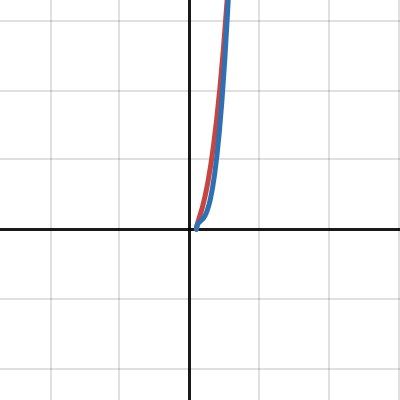
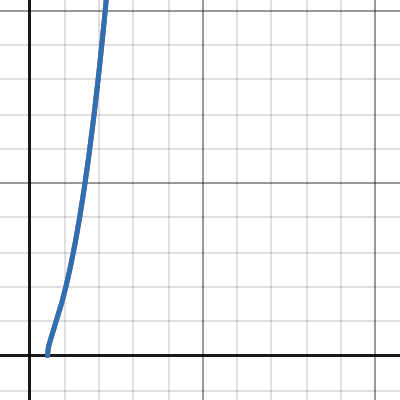
So I am back with the same optimization problem, only because no technique I could find, worked unless I am doing something wrong here. For context, I am trying to approximate a(x) with A(x,k,p) by varying k and p. But I want to find the values for k and p that make A(x) match a(x) as much as possible. Though I do not know what else to do. What I have tried to do already, is in the second image, where I just find the smallest possible difference between a(x) and A(x,k,p) when varying the parameters k and p. What else could I do? What am I doing wrong here?

 full forumBOT
heavy gulch
So I am back with the same optimization problem, only because no technique I cou...
full forumBOT
heavy gulch
So I am back with the same optimization problem, only because no technique I cou...
@heavy gulch Has your question been resolved?
full forumBOT
@heavy gulch Has your question been resolved?
full forumBOT
@heavy gulch Has your question been resolved?
full forumBOT
@heavy gulch Has your question been resolved?
heavy gulch
???
full forumBOT
@heavy gulch Has your question been resolved?
 fast peak
well what exactly is the problem
those equations look good
I assume the values of K and p you got are from solving those equations
do you mean that the graphs dont overlap all that much?
fundamentally you have very different curves so thats not unexpected
actually I just noticed you dont have the square in the lower two equations. you either want a square or an absolute value there
or just generally something which makes it positive
otherwise the positive and negative differences can cancel each other out. instead of both of them having to be small
full forumBOT
@heavy gulch Has your question been resolved?
heavy gulch
fast peak
otherwise the positive and negative differences can cancel each other out. inste...
Lemme wake up some more and I'll show

Here's the board work for now
heavy gulch
fast peak
well what exactly is the problem
The problem is the equations I get for p, do not give me the correct values
it says p is either undefined or 1
But from messing with some of the numbers (assume alpha is p), the value of p that best matches a(x) is 1.74
 full forumBOT
@heavy gulch Has your question been resolved?
 eternal stone
heavy gulch
The problem is the equations I get for p, do not give me the correct values
eternal stone
heavy gulch
The problem is the equations I get for p, do not give me the correct values
That's because your equations basically come from the following minimization problem:
$$|a(x) - A(x,k,p)|^2_{L_2([0,+\infty))} \rightarrow \min,$$
BUT $a(x), A(x,k,p) \not\in L_2([0,+\infty))$
 glossy valveBOT
EQUENOS
 eternal stone
So the problem is not well-defined
Well, the idea is good but the norm almost always diverges
I actually suspect that it diverges for any k, p, so minimizing that norm doesn't really make sense
Maybe you can try restricting everything to [1/n, n] and then minimize for arbitrary n and hope that k(n), p(n) have a limit
heavy gulch
eternal stone
I actually suspect that it diverges for any k, p, so minimizing that norm doesn'...
so you think I can alter the bounds of the integral or?
i dunno where L comes from
I setup this integral based off what seemed most reasonable
eternal stone
heavy gulch
i dunno where L comes from
L_2 is a notation for a certain banach space
 eternal stone
Anyways, we can avoid this notation
eternal stone
heavy gulch
so you think I can alter the bounds of the integral or?
Yes, you should consider different bounds
heavy gulch
Hm, that is why the most recent attempt, instead of making it go from infinity to zero, I made it go from infinity to a value called Z
eternal stone
eternal stone
Yes, you should consider different bounds
For example
$$\int_{2^{-n}}^{2^n} \left(a(x)-A(x,k,p)\right)^2dx \rightarrow \min$$
glossy valveBOT
EQUENOS
 eternal stone
In this case your equations dI/dk=0, dI/dp=0 will yield some useful values
heavy gulch
why those bounds btw? rather, why 2^n?
eternal stone
I wanted to specify some bounds that approach [0, inf) as n increases
For each individual n there exist optimal p, k which I denote p_n, k_n
Optimistically, I suspect that they approach some P, K, which will be the desired patameter values
heavy gulch
eternal stone
I wanted to specify some bounds that approach [0, inf) as n increases
This makes sense but im confused why to use it. As in, im confused why use this as opposed to a constant bc ive never really seen this used for bounds
eternal stone
heavy gulch
This makes sense but im confused why to use it. As in, im confused why use this ...
I mean, when n is fixed, those are constants
The reason I want to increase n is that the bounds will be "closer" to [0, inf)
Of course you can just plug in n=10 and call it a day, but it's interesting to see whether the resulting (p, k) for n=10 and (p, k) for n=11 differ by much
If they do, then this approach isn't very reasonable
eternal stone
heavy gulch
So I am back with the same optimization problem, only because no technique I cou...

So again, this integral diverges
So I(k, p) = infinity for all k, p
Mostly due to the fact that a(x) has a wild singularity at 0
We discussed replacing the bounds with some non-zero finite positive numbers, but there's another approach - use weight function under the integral
In this case e^(-2/x) will most likely do
So $$\int_0^{+\infty} \left( a(x)-A(x,k,p)\right)^2 e^{-\frac{2}{x}}dx \rightarrow \min$$
glossy valveBOT
EQUENOS
 eternal stone
This approach might be the only reasonable way to deal with your task, because otherwise, as you mentioned, we will have k = inf, p = 0+
heavy gulch
eternal stone
The reason I want to increase n is that the bounds will be "closer" to [0, inf)
Ah that makes sense
heavy gulch
eternal stone
Mostly due to the fact that a(x) has a wild singularity at 0
Yeah a(x) is really difficult to integrate if not impossible, which is why I am integrating it this way. I have noticed many exponential inverse functions look very similar to regular inverse functions, but appear more often (from what I can tell) in a lot of the physics stuff I do than regular inverse functions.
 pulsar sedge
how do i subtract decimals with zeros+
eternal stone
heavy gulch
Yeah a(x) is really difficult to integrate if not impossible, which is why I am ...
They only look similar, but in reality they're completely different functions
heavy gulch
eternal stone
They only look similar, but in reality they're completely different functions
Indeed but that is why it makes one a good approximation of the other, especially when it comes to integration
eternal stone
heavy gulch
Indeed but that is why it makes one a good approximation of the other, especiall...
Depends on bounds of integration
When x --> inf, then of course e^(1/x) ≈ 1 + 1/x + O(1/x²), but when x --> 0 none of k/x^p are even remotely as wild as e^(1/x)
full forumBOT
@heavy gulch Has your question been resolved?
full forumBOT
@heavy gulch Has your question been resolved?
full forumBOT
Channel closed
Closed by @heavy gulch
Use .reopen if this was a mistake.
Available help channel!
Send your question here to claim the channel.
Remember:
• Ask your math question in a clear, concise manner.
• Show your work, and if possible, explain where you are stuck.
• After 15 minutes, feel free to ping <@&286206848099549185>.
• Type the command .close to free the channel when you're done.
• Be polite and have a nice day!
Read #❓how-to-get-help for further information on how to ask a good question, and about conduct in the question channels.
 floral heart
how do i say this
 full forumBOT
floral heart
how do i say this
full forumBOT
floral heart
how do i say this

 woven sand
Perhaps "R to the 10" or "R to the tenth [power]"
full forumBOT
Channel closed
Closed by @floral heart
Use .reopen if this was a mistake.
Available help channel!
Send your question here to claim the channel.
Remember:
• Ask your math question in a clear, concise manner.
• Show your work, and if possible, explain where you are stuck.
• After 15 minutes, feel free to ping <@&286206848099549185>.
• Type the command .close to free the channel when you're done.
• Be polite and have a nice day!
Read #❓how-to-get-help for further information on how to ask a good question, and about conduct in the question channels.
 tawny sierra
I think wolfram alpha is miscalculating this
 full forumBOT
tawny sierra
I think wolfram alpha is miscalculating this
full forumBOT
tawny sierra
I think wolfram alpha is miscalculating this
 gritty rose
tawny sierra
I did it by hand and I got -\sqrt{2}/2
gritty rose
tawny sierra
I did it by hand and I got -\sqrt{2}/2
!show
full forumBOT
tawny sierra
I did it by hand and I got -\sqrt{2}/2
Show your work, and if possible, explain where you are stuck.
tawny sierra
I did stolz and I got $\frac{\sqrt{2n+1}-\sqrt{2n+2}}{\sqrt{n+1}-\sqrt{n}}$
glossy valveBOT
ω
 tawny sierra
after that I got $(\sqrt{2n+1}-\sqrt{2n+2})(\sqrt{n+1}+\sqrt{n})$
glossy valveBOT
ω
 tawny sierra
and finally $\frac{-(\sqrt{n+1}+\sqrt{n})}{\sqrt{2n+1}+\sqrt{2n+2}}$
glossy valveBOT
ω
 tawny sierra
after dividing by sqrt{n} this is convergent to -sqrt{2}/2
okay but this as a function starts at -0.4 and is decreasing It seems
so definitely its not 0
gritty rose
what do you mean "did stolz"
tawny sierra
I applied Stolz Cesaro's theorem
gritty rose
what are your two sequences
tawny sierra
the numerator and denominator
gritty rose
maybe you learned a different stolz-cesaro
show that statement and explicitly write the two sequences
 glossy valveBOT
 gritty rose
i don't follow your step here
 tawny sierra
I multiplied by $\frac{\sqrt{2n+1}+\sqrt{2n+2}}{\sqrt{2n+1}+\sqrt{2n+2}}$
glossy valveBOT
ω
 tawny sierra
and similarly by $\frac{\sqrt{n+1}+\sqrt{n}}{\sqrt{n+1}+\sqrt{n}}$
okay now its written correctly
sorry I should have written a complete sol perhaps
gritty rose
yea it's fine. i think your work is right
modulo some - signs i can't follow
why would this cancel anything
don't you just end up where you started
tawny sierra
mb It should be plus sign
glossy valveBOT
ω
 gritty rose
i don't know why you shifted things, but $a_{n+1} - a_n = -\sqrt{2(n+1)} - (-\sqrt{2n})$
 no wait i'm wrong
fixed
maybe a - sign error
yea
glossy valveBOT
riemann
 tawny sierra
glossy valve
**riemann**
tawny sierra
glossy valve
**riemann**
I think this is not correct cuz a_{n+1} has two more terms than a_n
gritty rose
tawny sierra
I think this is not correct cuz a_{n+1} has two more terms than a_n
as it should
a_n has 2n terms
tawny sierra
so where is the term $-\sqrt{2(n+1)-1}$
glossy valveBOT
ω
 tawny sierra
\sqrt{2n+1}
gritty rose
oh yea there's 3 terms in the numerator
oh nope i'm wrong
$a_n = ... +\sqrt{2n-1} - \sqrt{2n}$
glossy valveBOT
riemann
 gritty rose
$a_{n+1} = ...+\sqrt{2n-1} - \sqrt{2n} + \sqrt{2n+1} - \sqrt{2n+2}$
glossy valveBOT
riemann
 tawny sierra
yup
gritty rose
ah you're right
gritty rose
glossy valve
**ω**
so just a - sign error
tawny sierra
I think this image is correct no?
full forumBOT
Channel closed
Closed by @tawny sierra
Use .reopen if this was a mistake.
Available help channel!
Send your question here to claim the channel.
Remember:
• Ask your math question in a clear, concise manner.
• Show your work, and if possible, explain where you are stuck.
• After 15 minutes, feel free to ping <@&286206848099549185>.
• Type the command .close to free the channel when you're done.
• Be polite and have a nice day!
Read #❓how-to-get-help for further information on how to ask a good question, and about conduct in the question channels.
 unique dagger
 full forumBOT
unique dagger
full forumBOT
full forumBOT
unique dagger
full forumBOT
@unique dagger Has your question been resolved?
unique dagger
<@&286206848099549185>
 last vapor
wait
it should be most likely on 1 roll and 1 flip, right?
since Prolln=(5/6)^(n-1)(1/6)
and Pflipn=(1/2)^n
since both are decreasing functions
it should be 1 roll 1 flip for
(1/6)(1/2)
right?
unique dagger
n is the number of rolls + number of flips
last vapor
unique dagger
n is the number of rolls + number of flips
ah
unique dagger
I made a function on desmos

Desmos
can U check its right?
I am saying n is the number of dice rolls m is the number of coin flips and x = n+m
which allows me to make a function in terms of x
last vapor
unique dagger
I am saying n is the number of dice rolls m is the number of coin flips and x = ...
ah yep thats what i wanted to do next, i was gonna split n=a+b haha
unique dagger
ye and I found with 1 coin flip and 5 or 6 dice rolls I get the greatest peak for my function for p_n
but its wrong
last vapor
unique dagger
ye and I found with 1 coin flip and 5 or 6 dice rolls I get the greatest peak fo...
do u happen to have the answer
last vapor
i believe your method ends up with like a 3d function
last vapor
unique dagger
bare in mind these are questions made for like A level maths students
exactly why i believe its being overcomplicated
unique dagger
oh is it
last vapor
im not too sure yet haha
last vapor
maybe
unique dagger
but the binomial probability tells me the probability tells me the chance of getting a success inside of n events
last vapor
combinations and permutations shouldn't matter though
unique dagger
not after n events
last vapor
so
yeah
it should be closer to like
n=a+b
Prolla=(5/6)^(a-1)(1/6) Pflipb=(1/2)^b
then Pn=Prolla*Pflipb
actually wait
permutations MIGHT matter since u could have like
3 f+2 r or 2f+3r and so on
and u need to add them up
unique dagger
wait what?
unique dagger
what is f and r?
last vapor
which looks a lot like the binomial so
last vapor
unique dagger
what is f and r?
flips and rolls
unique dagger
wait how is n = 5?
last vapor
unique dagger
wait how is n = 5?
its not im giving an example
last vapor
unique dagger
im still confused so what would the function of p_n be
probably has a summation notation
not
too sure rn
wait how about consider n=2,3,4
maybe we can see a pattern
unique dagger
what would I be summing
last vapor
unique dagger
what would I be summing
let Pra denote probability for rolling 6 in a tries and Pfb denote probability for getting heads in b tries
for n=2
u need (Pr1)(Pf1)
unique dagger
yep
last vapor
for n=3 u need (Pr1)(Pf2)+(Pr2)(Pf1)
unique dagger
last vapor
for n=3 u need (Pr1)(Pf2)+(Pr2)(Pf1)
why?
last vapor
cuz u need to consider all cases n=3
and sum them
not just one case
P(n) has to return the probability that n is that specific n
last vapor
last vapor
for n=3 u need (Pr1)(Pf2)+(Pr2)(Pf1)
so for this, both n=3
unique dagger
so like this?
last vapor
so the probability P(3)=probability of both cases where n=3
 unique dagger
can u explain why u need to sum them tho cause I still dont really fully understand
last vapor
last vapor
so the probability P(3)=probability of both cases where n=3
so ^
like P(2) only had one case where n=2
which is f=1,r=1
unique dagger
ye
last vapor
but for P(3), f=1,r=2 and f=2,r=1 both give n=3
last vapor
yay!!
last vapor
@unique dagger u can check if its actually the maximum like so
 unique dagger
oh ye
ye it is a maximum
I will reopen this if it is wrong but it is probably right thank youu @last vapor
.close
full forumBOT
Channel closed
Closed by @unique dagger
Use .reopen if this was a mistake.
full forumBOT
Available help channel!
Send your question here to claim the channel.
Remember:
• Ask your math question in a clear, concise manner.
• Show your work, and if possible, explain where you are stuck.
• After 15 minutes, feel free to ping <@&286206848099549185>.
• Type the command .close to free the channel when you're done.
• Be polite and have a nice day!
Read #❓how-to-get-help for further information on how to ask a good question, and about conduct in the question channels.
 obtuse timber
hello can someone help me with this
 full forumBOT
obtuse timber
hello can someone help me with this
gritty rose
full forumBOT
obtuse timber
hello can someone help me with this
gritty rose
did you draw a picture
full forumBOT
@obtuse timber Has your question been resolved?
full forumBOT
Channel closed
Closed by @obtuse timber
Use .reopen if this was a mistake.
full forumBOT
Available help channel!
Send your question here to claim the channel.
Remember:
• Ask your math question in a clear, concise manner.
• Show your work, and if possible, explain where you are stuck.
• After 15 minutes, feel free to ping <@&286206848099549185>.
• Type the command .close to free the channel when you're done.
• Be polite and have a nice day!
Read #❓how-to-get-help for further information on how to ask a good question, and about conduct in the question channels.
 limpid needle
I have the width 8m and Area of the shape 90m^2 how can I work out L and perimeter of the shape?
 full forumBOT
limpid needle
I have the width 8m and Area of the shape 90m^2 how can I work out L and perimet...
full forumBOT
limpid needle
I have the width 8m and Area of the shape 90m^2 how can I work out L and perimet...
 hoary ember
anything else given?
 gleaming prairie
Well, you can find the length of D from the fact that it is a leg of a right triangle with hypotenuse length 8m
Then you can find the area of the triangle, and you have 8×L + (area of triangle) = 90m^2
 fickle adder
oh, yeah duh
hoary ember
gleaming prairie
Well, you can find the length of D from the fact that it is a leg of a right tri...
unless the right triangle is an icoseles you cant find D
gleaming prairie
I don't buy that
hoary ember
ig if you take the diagram
fickle adder
i think it must necessarily be 45 45 90 otherwise we cant make any statements on the area either
hoary ember
fair
fickle adder
if its not L*W for the rectangle portion, i mean. if it is, then, its a rectangle. and im pretty sure if its a rectangle you can do some angle extrapolation and prove that the triangle is 45 45 90
limpid needle
A fence around a field is shaped as shown in the Figure. It consists of a rectangle of length L and width W and a right triangle that is symmetric about the central horizontal axis of the rectangle. Suppose the width W is known (in meters) and the enclosed area A is known (in square meters).
That's the first part of the question the rest is just explaining to program it which i can do just getting to the equation got me bugging for some reason

 fickle adder
fickle adder
fickle adder
and by this, D = W/sqrt(2)
hoary ember
ok its a 45 45 90 cause "symetric about the central horizontal axisnof the rectangle"
fickle adder
fickle adder
@limpid needle this should be enough to figure it out yourself, r u stuck?
limpid needle
Think ive got there still learning MatLab as im a Phyton coder so just tryna make sure i write it properly but appreciate it think ive got it (Mind the Explanations its not for me lmao)
W = input('Enter the width of the rectangle in metres = ');
A = input('Enter the area of the shape in Metres Squared (Integer only No letters etc.)');
%First im going to work out D for the Given input of W and Height of the
%Triangle
D = W/sqrt(2);
H = sqrt(D^2 - (W/2)^2);
%Next im going to work out the Area of the triangle then L
AreaTriangle = ((H * D)*2);
%Now to work out we take the area of the triangle away from the total and
%calculate L
AreaRectangle = A - AreaTriangle;
fickle adder
you overcomplicate the area of the triangle
hoary ember
since its a 45 45 90 then the legs are D
full forumBOT
Channel closed
Closed by @limpid needle
Use .reopen if this was a mistake.
Available help channel!
Send your question here to claim the channel.
Remember:
• Ask your math question in a clear, concise manner.
• Show your work, and if possible, explain where you are stuck.
• After 15 minutes, feel free to ping <@&286206848099549185>.
• Type the command .close to free the channel when you're done.
• Be polite and have a nice day!
Read #❓how-to-get-help for further information on how to ask a good question, and about conduct in the question channels.
 lyric quail
am i on the right track here?
stats practice question, have a final coming up so really want to understand this
 full forumBOT
lyric quail
am i on the right track here?
stats practice question, have a final coming up so...
full forumBOT
lyric quail
am i on the right track here?
stats practice question, have a final coming up so...
@lyric quail Has your question been resolved?
lyric quail
<@&286206848099549185>
full forumBOT
@lyric quail Has your question been resolved?
lyric quail
.close
full forumBOT
Channel closed
Closed by @lyric quail
Use .reopen if this was a mistake.
full forumBOT
Available help channel!
Send your question here to claim the channel.
Remember:
• Ask your math question in a clear, concise manner.
• Show your work, and if possible, explain where you are stuck.
• After 15 minutes, feel free to ping <@&286206848099549185>.
• Type the command .close to free the channel when you're done.
• Be polite and have a nice day!
Read #❓how-to-get-help for further information on how to ask a good question, and about conduct in the question channels.
 safe roost
a
full forumBOT
safe roost
a
safe roost
okay uhh
integrating ∫sec^2(θ/2)tan(θ/2)
ive tried doing this like a bazillion times and ik the answer is like tan^2(θ/2) or something but i just
have no idea hwo we get there
and ik u = tan(θ/2)
but like
then ig et confused on the rest
 narrow ermine
safe roost
and ik u = tan(θ/2)
narrow ermine
safe roost
and ik u = tan(θ/2)
Well then du = sec^2(θ/2) * 1/2 dθ
safe roost
bc the θ/2 has to be derived too right
but isnt θ/2 like x/2? which would derive to 2/x^2????
that's what i keep getting stuck on rlly 😭
narrow ermine
It is like x/2, and the derivative of x/2 is 1/2 as well
safe roost
wait it is???
ive been using quotient rule to derive x/2 the whole time is it just
what???
narrow ermine
It doesn't give the wrong answer if you use the quotient rule, so you probably are making a mistake somewhere.
But regardless $\frac{d}{dx} (\frac{x}{2}) = \frac{1}{2} (\frac{d}{dx} x) = \frac{1}{2} \cdot 1$
glossy valveBOT
Azyrashacorki
 safe roost
is this like a thing ur meant to memorize that x/2 just derives to 1/2
narrow ermine
No. It's the power rule..
full forumBOT
Channel closed
Closed by @safe roost
Use .reopen if this was a mistake.
full forumBOT
Available help channel!
Send your question here to claim the channel.
Remember:
• Ask your math question in a clear, concise manner.
• Show your work, and if possible, explain where you are stuck.
• After 15 minutes, feel free to ping <@&286206848099549185>.
• Type the command .close to free the channel when you're done.
• Be polite and have a nice day!
Read #❓how-to-get-help for further information on how to ask a good question, and about conduct in the question channels.
 rose cloak
how do u do this. is this que even valid
 full forumBOT
rose cloak
how do u do this. is this que even valid
full forumBOT
rose cloak
how do u do this. is this que even valid
@rose cloak Has your question been resolved?
full forumBOT
Channel closed
Closed due to timeout
Use .reopen if this was a mistake.
full forumBOT
Available help channel!
Send your question here to claim the channel.
Remember:
• Ask your math question in a clear, concise manner.
• Show your work, and if possible, explain where you are stuck.
• After 15 minutes, feel free to ping <@&286206848099549185>.
• Type the command .close to free the channel when you're done.
• Be polite and have a nice day!
Read #❓how-to-get-help for further information on how to ask a good question, and about conduct in the question channels.
 plain anvil
 full forumBOT
plain anvil
plain anvil
full forumBOT
plain anvil
plain anvil
given is the graph of a derivative between -4 and 8, would the function be considered continously increasing in this range for -4<=x<=9
 merry kettle
what u tried so far
plain anvil
well there is not much to try, no? This is more of a understanding question if at all. f'(1x) < f'(2x) if this is true
and I'm not sure if
7.999999999999999999999999999999 and 8 not having a difference
because of the derivative being 0
makes this statement untrue
because 8 having a derivative of 0
implies there is a number inbetween
at which there is no difference to 8
no?
merry kettle
actually this graph is the derivative of a function
therefore, when the function has positive values then it is increasing
plain anvil
sure, but would this still be considered strictly increasing
 austere cove
You're asking specifically at the point x = 8 where the derivative is momentarily 0, if that means that the function is not increasing there.
merry kettle
plain anvil
sure, but would this still be considered strictly increasing
oh I see srry
austere cove
So given the definition of increasing you gave, or tried to give, a function is strictly increasing if for all x1 and x2 on an interval (a, b) if x1 < x2 then also f(x1) < f(x2)
austere cove
If the derivative is only 0 as one point, then any interval containing that point (x1, x2) will also contain non-zero values for the derivative, and these values will be positive
So the overall behavior is increasing on that interval
So it's still strictly increasing.
plain anvil
thank you
austere cove
You're welcome, and glad to see another tinkaton fan 😄
full forumBOT
@plain anvil Has your question been resolved?
Channel closed
Closed by @plain anvil
Use .reopen if this was a mistake.
full forumBOT
Available help channel!
Send your question here to claim the channel.
Remember:
• Ask your math question in a clear, concise manner.
• Show your work, and if possible, explain where you are stuck.
• After 15 minutes, feel free to ping <@&286206848099549185>.
• Type the command .close to free the channel when you're done.
• Be polite and have a nice day!
Read #❓how-to-get-help for further information on how to ask a good question, and about conduct in the question channels.
 bright thicket
Could some one plese explain to me what is means by cut into parts in this qestion
 full forumBOT
bright thicket
Could some one plese explain to me what is means by cut into parts in this qesti...
full forumBOT
bright thicket
Could some one plese explain to me what is means by cut into parts in this qesti...
 plush mural
,rotate
glossy valveBOT
 bright thicket
my bad i did not know you could do that
plush mural
lol ur fine
bright thicket
ok
plush mural
it could be like this? not rlly sure tho
 bright thicket
no because it does not say how many parts
because if could also just be a tiny line in the corner
cause the still forms a quad
plush mural
ask ur teacher lmao
full forumBOT
Channel closed
Closed by @bright thicket
Use .reopen if this was a mistake.
full forumBOT
Available help channel!
Send your question here to claim the channel.
Remember:
• Ask your math question in a clear, concise manner.
• Show your work, and if possible, explain where you are stuck.
• After 15 minutes, feel free to ping <@&286206848099549185>.
• Type the command .close to free the channel when you're done.
• Be polite and have a nice day!
Read #❓how-to-get-help for further information on how to ask a good question, and about conduct in the question channels.
 upbeat vapor


 full forumBOT
upbeat vapor
full forumBOT
upbeat vapor
 flint night
Are you solving in general, or are there numbers?
upbeat vapor
alr tysm
flint night
Why the skull
upbeat vapor
idk it hasnt been working for me
upbeat vapor
also can i dm bc i might have to go afk for a few mins
flint night
upbeat vapor
also can i dm bc i might have to go afk for a few mins
alr sure
full forumBOT
Channel closed
Closed by @upbeat vapor
Use .reopen if this was a mistake.
full forumBOT
Available help channel!
Send your question here to claim the channel.
Remember:
• Ask your math question in a clear, concise manner.
• Show your work, and if possible, explain where you are stuck.
• After 15 minutes, feel free to ping <@&286206848099549185>.
• Type the command .close to free the channel when you're done.
• Be polite and have a nice day!
Read #❓how-to-get-help for further information on how to ask a good question, and about conduct in the question channels.
 kind nacelle
Can someone help pls
 full forumBOT
kind nacelle
Can someone help pls
kind nacelle
full forumBOT
kind nacelle
Can someone help pls
kind nacelle
,rotate
glossy valveBOT
 kind nacelle
Its number 30
 weak plover
kind nacelle
Its number 30
weak plover
kind nacelle
Its number 30
what have u tried
kind nacelle
I did 1/2p+3/4h=765 and 1/4p+1h=745 and tried solving by eliminating but i dont think that worked
P is pepperoni and h is ham
kind nacelle
No not yet but ill try
weak plover
yeah so rearrange the second equation
kind nacelle
Yea isolate a variable
kind nacelle
Okay thanks
Ill let u know what i got
I got 660 calories for pepperoni and 580 for ham
Thank you
.close
full forumBOT
Channel closed
Closed by @kind nacelle
Use .reopen if this was a mistake.
full forumBOT
Available help channel!
Send your question here to claim the channel.
Remember:
• Ask your math question in a clear, concise manner.
• Show your work, and if possible, explain where you are stuck.
• After 15 minutes, feel free to ping <@&286206848099549185>.
• Type the command .close to free the channel when you're done.
• Be polite and have a nice day!
Read #❓how-to-get-help for further information on how to ask a good question, and about conduct in the question channels.
 edgy condor
why did we subtract 54 from 180 to get two answers intead of one
 full forumBOT
edgy condor
why did we subtract 54 from 180 to get two answers intead of one
full forumBOT
edgy condor
why did we subtract 54 from 180 to get two answers intead of one
@edgy condor Has your question been resolved?
Channel closed
Closed by @edgy condor
Use .reopen if this was a mistake.
full forumBOT
Available help channel!
Send your question here to claim the channel.
Remember:
• Ask your math question in a clear, concise manner.
• Show your work, and if possible, explain where you are stuck.
• After 15 minutes, feel free to ping <@&286206848099549185>.
• Type the command .close to free the channel when you're done.
• Be polite and have a nice day!
Read #❓how-to-get-help for further information on how to ask a good question, and about conduct in the question channels.
 true vale
 true vale
is there obvious mathematics im missing that makes this integral go to zero or should i dig more into the physics?
 urban basin
wtf is G
true vale
greens function
just a stand in at the moment to make it less of a pain in the ass to write
we've decduced the from of the green's function
form*
full forumBOT
@true vale Has your question been resolved?
true vale
.close
full forumBOT
Channel closed
Closed by @true vale
Use .reopen if this was a mistake.
full forumBOT
Available help channel!
Send your question here to claim the channel.
Remember:
• Ask your math question in a clear, concise manner.
• Show your work, and if possible, explain where you are stuck.
• After 15 minutes, feel free to ping <@&286206848099549185>.
• Type the command .close to free the channel when you're done.
• Be polite and have a nice day!
Read #❓how-to-get-help for further information on how to ask a good question, and about conduct in the question channels.
 red geode
someone teach me how to do D
 full forumBOT
red geode
someone teach me how to do D
full forumBOT
red geode
someone teach me how to do D
 hexed hearth
Do you know how the format of writing an equation for a line when two points are given?
red geode
hexed hearth
Do you know how the format of writing an equation for a line when two points are...
y = mx + b right?
the formula for d
hexed hearth
 red geode
but
hexed hearth
red geode
y = mx + b right?
no thats only if the slope and a point is given
here two points are given
hexed hearth
but if you find the slope you could use that
red geode
its m = 2.5
so i just needed help with d
so y = mx + b
y = 2.5(x) + b
what do i do next?
@hexed hearth ?
hexed hearth
hexed hearth
use this
weak plover
that works
red geode
what is y for y1?
weak plover
but if you have the m
hexed hearth
red geode
so y = mx + b
y = 2.5(x) + b
i mean you could use this but you've written it wrong
 hexed hearth
weak plover
hexed hearth
weak plover
yeah exactly this
hexed hearth
if u have m
red geode
how do i use it?]
hexed hearth
weak plover
Then you can just use this
weak plover
ok choose a point then sub in x1 and y1 where x1 and y1 are coordinates of a point
red geode
what do i do?
hexed hearth
so it would be y - 1 = m ( x- 3)
red geode
i dont get whats the y and x when they arent told if its x2 or y2
hexed hearth
the + b is basically 1 here when it goes to the RHS
hexed hearth
Yes
red geode
what do i do next?
red geode
y - 1 = 2.5(x-3)
red geode
let me calculate
is it equal y = 2.5(x) + (-6.5)
?
@hexed hearth
equation of the line
full forumBOT
Channel closed
Closed by @red geode
Use .reopen if this was a mistake.
full forumBOT
Available help channel!
Send your question here to claim the channel.
Remember:
• Ask your math question in a clear, concise manner.
• Show your work, and if possible, explain where you are stuck.
• After 15 minutes, feel free to ping <@&286206848099549185>.
• Type the command .close to free the channel when you're done.
• Be polite and have a nice day!
Read #❓how-to-get-help for further information on how to ask a good question, and about conduct in the question channels.
 hearty glen
p↔q ↔ [(p^q)v((~p)^(~q)]
prove using logical equivalence
full forumBOT
@hearty glen Has your question been resolved?
 dull seal
!show
full forumBOT
Show your work, and if possible, explain where you are stuck.
 elder raptor
isnt this just one big and statement ??
hearty glen
i tried going a bit backwards starting with the p↔q, going to (p→q)∧(q→p) then.. i dont really know, everywhere seems like a dead end
i know this works cus the truth table works
elder raptor
sorry just to clarify, are you asking to prove that (p is true if q is) when (both/neither p or q are true)
hearty glen
but i just dont know how to apply logical equivalence here
im trying to prove p↔q ≡ [(p^q)v((~p)^(~q)]
sorry, its hard to type mobile
elder raptor
nah its good
alright im absolutely not qualified for this but im gonna just try to provide my perspective so take what i say with a bucket of salt
- if p isnt true, but q is, there is no guarantee that (p ↔ q)
- if q isnt true, but p is, then p cannot be true as a cause of q being true
- if both p and q are true, then p will always be true when q is
- if neither p or q are true, then p will always be false when q is, so when q isnt false, p wont be false either
youre basically just boiling this down to
"p will be true when q is, but only if both p and q are true (with extra stuff too but its the same idea)", and this just seems like some long-winded tautology to me
hearty glen
it is, using the truth table, its proven to be a tautology, whats hard to do is prove using the laws in logical equivalence
elder raptor
dont the logical equivalence laws include tautology
hearty glen
yea but, there should be a step by step on how you can go from one to another
something like this
 hearty glen
.close
full forumBOT
Channel closed
Closed by @hearty glen
Use .reopen if this was a mistake.
full forumBOT
Available help channel!
Send your question here to claim the channel.
Remember:
• Ask your math question in a clear, concise manner.
• Show your work, and if possible, explain where you are stuck.
• After 15 minutes, feel free to ping <@&286206848099549185>.
• Type the command .close to free the channel when you're done.
• Be polite and have a nice day!
Read #❓how-to-get-help for further information on how to ask a good question, and about conduct in the question channels.
 subtle vector
How do you calculate inverse with cramers rule

 inland moth
subtle vector
How do you calculate inverse with cramers rule
inland moth
subtle vector
How do you calculate inverse with cramers rule

go from here
calculate the determinant of that matrix
then replace columns to find x1 x2 y1 y2
full forumBOT
@subtle vector Has your question been resolved?
subtle vector
inland moth
then replace columns to find x1 x2 y1 y2
Okay thanks
full forumBOT
Channel closed
Closed by @subtle vector
Use .reopen if this was a mistake.
full forumBOT
Available help channel!
Send your question here to claim the channel.
Remember:
• Ask your math question in a clear, concise manner.
• Show your work, and if possible, explain where you are stuck.
• After 15 minutes, feel free to ping <@&286206848099549185>.
• Type the command .close to free the channel when you're done.
• Be polite and have a nice day!
Read #❓how-to-get-help for further information on how to ask a good question, and about conduct in the question channels.
 agile ginkgo
i need help
full forumBOT
agile ginkgo
i need help
agile ginkgo

I've show that both partial derivates exist, but i'm having a hard time showing that the function isnt differentiable in the origin
 viral jasper
agile ginkgo
I've show that both partial derivates exist, but i'm having a hard time showing ...
viral jasper
agile ginkgo
I've show that both partial derivates exist, but i'm having a hard time showing ...
Do you recall the condition for a multivariable function to be differentiatiable?
agile ginkgo
I've been trying to show it using the definition
and trying to show that such a transformation wouldnt be linear
f(p+v) = f(p) + T(v) + o(v)
if T is linear, then T is the differential of f at p, right?
agile ginkgo
viral jasper
Do you recall the condition for a multivariable function to be differentiatiable...
is there a better condition?
viral jasper
agile ginkgo
if T is linear, then T is the differential of f at p, right?
That i do not remember
agile ginkgo

here's the book definition

this is what I was trying to do
and maybe show that T is not linear
viral jasper
I'm curious. Did you find $f_x(0,0)=f_y(0,0)=0$?
glossy valveBOT
SWR
 agile ginkgo
yeah
viral jasper
So your linear function is just going to be $P(x,y)=f(0,0)=0$, right?
glossy valveBOT
SWR
 agile ginkgo
by P(x,y) you mean what I wrote T(x,y)?
viral jasper
By P, i basically mean the tangent plane that approximates f at (0,0)
Idk if your T does that same thing
agile ginkgo
oh, you see
I don't think there is such a plane
since f is not differentiable
am i wrong?
viral jasper
You are correct. One will not exist. But that's the strategy i use to prove f is not differentiable. But it seems you require a different strat
This is what i use. And i found success with this current problem

Idk if you can use it though. Yours is certainly more generic and not something i am immediately familiar with
viral jasper
It's more specific. I'm guessing you are not in an ordinary multivariable calculus class
Perhaps something more in real analysis?
agile ginkgo
no, it's $R^n$ analysis
glossy valveBOT
Luizin
 viral jasper
Figured
Okay ask in #real-complex-analysis
I know some analysis, but nothing here. I don't know how you are calculating $(Df)_p$
glossy valveBOT
SWR
 agile ginkgo
Thanks man
really
im new here, so i'm gonna ask there
thanks for your kindness
.close
full forumBOT
Channel closed
Closed by @agile ginkgo
Use .reopen if this was a mistake.
full forumBOT
Available help channel!
Send your question here to claim the channel.
Remember:
• Ask your math question in a clear, concise manner.
• Show your work, and if possible, explain where you are stuck.
• After 15 minutes, feel free to ping <@&286206848099549185>.
• Type the command .close to free the channel when you're done.
• Be polite and have a nice day!
Read #❓how-to-get-help for further information on how to ask a good question, and about conduct in the question channels.
 torn jolt
hey
full forumBOT
torn jolt
hey
torn jolt
Hi
so the question is n!<= ((n+1)/2)^n prove this via mathematical induction
I got k!(k+1) <= ((k+1)/2)^k*(k+1)
via the inductive step
and k!(k+1) is (k+1)! obviously
I then got stuck
I knew the RHS should be ((k+2)/2)^k+1
via the inductive hypothesis
So i asked chatgpt
which gave me this

why does this inequality occur?
torn jolt
torn jolt
which gave me this
Well then it’s probably right
 lofty linden
dont ask chatgpt please
torn jolt
lofty linden
dont ask chatgpt please
Right..
full forumBOT
torn jolt
So i asked chatgpt
Please do not trust ChatGPT or similar AI tools for mathematical tasks, as they often generate output which "sounds correct" but has numerous factual or logical errors. Use of these AI tools to answer other people's help questions is strictly against server rules (see #rules).
torn jolt
lofty linden
dont ask chatgpt please
ok help me please
what should I get
well now we don’t want to since you cheated
@torn jolt please stop talking
Who df are you- Nvm you ain’t getting my help
lofty linden
$k!(k+1) \leq \left(\frac{k+1}{2}\right)^k(k+1)$
ok so this is what you already know
torn jolt
lofty linden
ok so this is what you already know
yes
RHS should be multiplied by (k+!) as well as this is the inductive step
(k+1)
glossy valveBOT
rbit
 lofty linden
$(k+1)! \leq \left(\frac{k+2}{2}\right)^{k+1}$
torn jolt
yes
lofty linden
this is your goal
glossy valveBOT
rbit
 lofty linden
ok then, one thing you could do is to show
torn jolt
lofty linden
ok then, one thing you could do is to show
yes?
lofty linden
$\left(\frac{k+1}{2}\right)^k(k+1)\leq \left(\frac{k+2}{2}\right)^{k+1}$
glossy valveBOT
rbit
 lofty linden
left is the upper bound for (k+1)! that you already know of, it stems from the induction hypothesis, the right side is the upper bound for (k+1)! in the inequality you want to show
torn jolt
(k+1)!<= (k+1)/2)^k*(k+1) is known
torn jolt
lofty linden
left is the upper bound for (k+1)! that you already know of, it stems from the i...
Yes I understand but I dont get one thing
lofty linden
then, if (k+1)! <= A, and if A <= B, you know that (k+1)! <= B
showing this A <= B would be our next goal
torn jolt
ohh i get it
but usually during induction
you have to show that the next step is true (as in k+1)
how is this doing that
lofty linden
well this B term is really just the term for n = k+1
and we already got (k+1)! on the left side, so that's perfect isn't it?
torn jolt
lofty linden
and we already got (k+1)! on the left side, so that's perfect isn't it?
oh i get it
im gonna try simplify that
on my whiteboard hold up
@lofty linden
doesthis give ((k+1)/(k+2))^k<= k+2/2k+2
lofty linden
what are these fractions?
torn jolt
lofty linden
what are these fractions?
I dividied both sides by ((k+2)/2)^k
then both sides by k+1
its the simplified form so ican apply limits
glossy valveBOT
rbit
 lofty linden
at least that is what I got
torn jolt
how did u get that?
lofty linden
multiply 2^(k+1) and divide (k+1)^(k+1)
torn jolt
lofty linden
multiply 2^(k+1) and divide (k+1)^(k+1)
where did you get 2^(k+1) from
also you cant treat fractions with expnonents like that I dont think??
torn jolt
lofty linden
right side there is a 2 as denominator
LHS has ^k as an exponenet so multiplying 2^k+1 doesnt do anything right???
 lofty linden
that's why there is a 2 left over
torn jolt
also RHS is the same as( k^k+1/2^k+1 + 1)
lofty linden
it's 2^(k+1) / 2^k
lofty linden
oh I was just confused by the syntax, it might be correct
$\left(\frac{a}{b}\right)^k = \frac{a^k}{b^k}$
glossy valveBOT
rbit
 lofty linden
just note this though and it should hopefully make sense
torn jolt
@lofty linden
$\left(\frac{k+1}{k+2}\right)^k\le :\frac{\left(k+2\right)}{2k+2}
how do i DO THIS LMAO
sorry
$\left(\frac{k+1}{k+2}\right)^k\le :\frac{\left(k+2\right)}{2k+2}
lofty linden
$\left(\frac{k+1}{k+2}\right)^k\le :\frac{\left(k+2\right)}{2k+2}$
glossy valveBOT
rbit
 lofty linden
hmm almost actually
what if we take the right side, and
$\frac{1}{2}\left( \frac{k+2}{k+1}\right)$
first write it like this
glossy valveBOT
rbit
 torn jolt
is it right though?
lofty linden
now multiply (k+1)/(k+2)
torn jolt
even symbolab couldnt help me lmao
lofty linden
yeah its right
lofty linden
not so fast
lofty linden
if you do these steps and simplify a little it will eventually land here again though
$2 \leq \left(\frac{k+2}{k+1}\right)^{k+1}$
glossy valveBOT
rbit
 lofty linden
if you just take this k and replace it by k-1, does that term look familiar?
torn jolt
@lofty linden is (k+2/k+1) = k+1/k+2^-1?
lofty linden
yeah
torn jolt
wait @lofty linden can you please show me the algebra from to the above thing you got

im lost
lofty linden
multiply by (k+1)/(k+2)
torn jolt
lofty linden
multiply by (k+1)/(k+2)
yeah

then how do you get 2? can you just recpirocate 1/2 and flip the signs?
lofty linden
well what would it do for you?
torn jolt
doesnt k+2/k+1 approach 1 fromt he positive side?
lofty linden
$\lim_{k \to \infty} \left(\frac{k+2}{k+1}\right)^{k+1}$
glossy valveBOT
rbit
 lofty linden
if you have a good eye you might already know what this it
lofty linden
yeah
torn jolt
goddamn
thats a hard question for me man
I struggled with that
you should see my white board @lofty linden
its written all over
torn jolt
yes we do
lofty linden
how much did you study the (1+1/k)^k sequence?
torn jolt
since eulers number is 2.7...
torn jolt
lofty linden
how much did you study the (1+1/k)^k sequence?
not much lmao
just sometimes in calc
lofty linden
because it approaches 2.7, but that doesn't mean that's true for all k
did you show it's monotone increasing?
if not then that's another round of induction for ya
yeah these problems can get a bit messy with all the algebra
torn jolt
lofty linden
did you show it's monotone increasing?
i dont think I need to do that
😭
for my level
Im not that advanced yet
lofty linden
problem is, what if for some random k=3 it's less than 2
torn jolt
lofty linden
problem is, what if for some random k=3 it's less than 2
I guess ill say for all k values greater than 3 or sum
wait for which k values is it not true
lofty linden
the limit only tells you that there is some K so that its true for all k >= K
(well actually it really is K = 1, but we didn't prove it yet)
lofty linden
I mean, just plugging in k=1, k=2, k=3, ... proves it
but how do you know it doesn't break for .. k=1000000
torn jolt
lofty linden
but how do you know it doesn't break for .. k=1000000
well it should follow the limit shouldnt it
lofty linden
it will eventually stabilize at 2.7, eventually..
torn jolt
it doesnt make sense for it to randomly break for a value
as it follows a pattern
right??
lofty linden
intuitively yes
torn jolt
@lofty linden do I need to actually prove the limit as it approaches e?
lofty linden
if you can show it's monotone (and we know it equals 2 for k=1) then that's enough
no limits needed actually
torn jolt
lofty linden
if you can show it's monotone (and we know it equals 2 for k=1) then that's enou...
oh good I did the base case step already
also a jew sent me this
can you prove this wrong?
lofty linden
if this is an analysis course and you proved that the limit equals e, then I'm pretty sure you proved somewhere that it's monotone increasing
torn jolt
lofty linden
if this is an analysis course and you proved that the limit equals e, then I'm p...
Oh okay
thanks so much btw
ive been struggling with this
lofty linden
yeah no problem
full forumBOT
Channel closed
Closed by @smoky tulip
Use .reopen if this was a mistake.
full forumBOT
Available help channel!
Send your question here to claim the channel.
Remember:
• Ask your math question in a clear, concise manner.
• Show your work, and if possible, explain where you are stuck.
• After 15 minutes, feel free to ping <@&286206848099549185>.
• Type the command .close to free the channel when you're done.
• Be polite and have a nice day!
Read #❓how-to-get-help for further information on how to ask a good question, and about conduct in the question channels.
 astral delta
I need some help with this trig identity, im mostly just confused with the cot(x/2) because i have no idea what to do with it
these are the identities we have available
I think it has to do with the cofunction identities but i dont know where the pi went

 full forumBOT
astral delta
I need some help with this trig identity, im mostly just confused with the cot(x...
full forumBOT
astral delta
I need some help with this trig identity, im mostly just confused with the cot(x...

 royal charm
pi didn't go anywhere. It's just not part of this.
I think I'd write cos(x) = cos(2 (x/2)) and use the double angle identity, then do the same for sine.
full forumBOT
@astral delta Has your question been resolved?
astral delta
royal charm
I think I'd write cos(x) = cos(2 (x/2)) and use the double angle identity, then ...
that worked, thanks
full forumBOT
Channel closed
Closed by @astral delta
Use .reopen if this was a mistake.
Available help channel!
Send your question here to claim the channel.
Remember:
• Ask your math question in a clear, concise manner.
• Show your work, and if possible, explain where you are stuck.
• After 15 minutes, feel free to ping <@&286206848099549185>.
• Type the command .close to free the channel when you're done.
• Be polite and have a nice day!
Read #❓how-to-get-help for further information on how to ask a good question, and about conduct in the question channels.
 manic bramble
I don't understand the logic of P -> Q being true when P is false and Q is true.
full forumBOT
manic bramble
I don't understand the logic of `P -> Q` being true when `P` is false and `Q` is...
gritty rose
manic bramble
I don't understand the logic of `P -> Q` being true when `P` is false and `Q` is...

Mathematics Stack Exchange
I am studying entailment in classical first-order logic.
The Truth Table we have been presented with for the statement $(p \Rightarrow q);$ (a.k.a. '$p$ implies $q$') is:
$$\begin{array}{|c|c|c|}
\
full forumBOT
Channel closed
Closed by @manic bramble
Use .reopen if this was a mistake.
manic bramble
.reopen
full forumBOT
✅

 umbral dome
using the example: "if x is a rational number, then x^2 is a rational number" is a true statement.
e.g. x = sqrt(2) then x^2 = 2. so "x is a rational number" is false, and "x^2 is a rational number" is true
essentially if p is false then the statement is true no matter what, because it makes no claim about what q should be
manic bramble
I think of it like this: 0 + 1 = 2 -> 1 + 2 = 3
and it just doesn't click for me
So, is there actual logical basis for it, or is it just defined to be like that?
 violet bolt
-2 = 2 --> (-2)² = 2² --> 4 = 4
umbral dome
it's useful to define it that way because we often use logical implications on statements which are sometimes true and sometimes false. but this definition may feel artificial for statements which are always true or always false
full forumBOT
Channel closed
Closed by @manic bramble
Use .reopen if this was a mistake.
full forumBOT
Available help channel!
Send your question here to claim the channel.
Remember:
• Ask your math question in a clear, concise manner.
• Show your work, and if possible, explain where you are stuck.
• After 15 minutes, feel free to ping <@&286206848099549185>.
• Type the command .close to free the channel when you're done.
• Be polite and have a nice day!
Read #❓how-to-get-help for further information on how to ask a good question, and about conduct in the question channels.
 bold hollow
When I checked for the answer of the integral I got an insane answer from Wolframalpha and etc

 full forumBOT
bold hollow
When I checked for the answer of the integral I got an insane answer from Wolfra...
bold hollow
full forumBOT
bold hollow
When I checked for the answer of the integral I got an insane answer from Wolfra...
bold hollow
Is this the correct way to do it?
I'm not sure if its correct
Also sorry for it being messy
 paper rain
bold hollow
When I checked for the answer of the integral I got an insane answer from Wolfra...
paper rain
bold hollow
When I checked for the answer of the integral I got an insane answer from Wolfra...
u did the expansion wrong
a^2 + 2ab + b^2
x^4 + 4x^2/sqrt(2x-1) + 4/(2x-1)

 slate violet
bold hollow
slate violet
bold hollow
what did you get for the integral of $\frac{4x^2}{\sqrt{2x - 1}}$?
glossy valveBOT
southlander!
 slate violet
Wolfram tells me this integral is $\frac{4}{15} \sqrt{-1 + 2x} (2 + 2 x + 3 x^2) + c$
glossy valveBOT
southlander!
 bold hollow
I don't know how they get that
bold hollow
bold hollow
My answer is the one squared at the bottom
slate violet
ah they probably simplified it
 bold hollow
I forgot to multiply the last 2 part by 1/2 I think
slate violet
yes I think so too
bold hollow
thanks
slate violet
bold hollow
thanks
Desmos
yes just to recap you should get this for the integral
to correct everything, the middle term should be multiplied by 1/2 and the last term should be multiplied by 1/2 * 1/2 = 1/4
then just add your answer to the integral of x^4 + 4/(2x - 1) and you're done!
,w simplify 4x^{2}-\frac{8x}{3}\left(2x-1\right)+\frac{8}{15}\left(2x-1\right)^{2}
glossy valveBOT


 slate violet
small exercise for you if you are interested
bold hollow
Sure
bold hollow
slate violet
yes just to recap you should get this for the integral
to correct everything, th...
Thanks!
full forumBOT
Channel closed
Closed by @slate violet
Use .reopen if this was a mistake.
Available help channel!
Send your question here to claim the channel.
Remember:
• Ask your math question in a clear, concise manner.
• Show your work, and if possible, explain where you are stuck.
• After 15 minutes, feel free to ping <@&286206848099549185>.
• Type the command .close to free the channel when you're done.
• Be polite and have a nice day!
Read #❓how-to-get-help for further information on how to ask a good question, and about conduct in the question channels.
 frozen plaza
yo, does anyone have pure maths book 2 pdf by any chance?
 snow jolt
frozen plaza
yo, does anyone have pure maths book 2 pdf by any chance?
snow jolt
frozen plaza
yo, does anyone have pure maths book 2 pdf by any chance?
Which board?
frozen plaza
edexcel igcse
snow jolt
frozen plaza
edexcel igcse
You mean edexcel AS level?
snow jolt
That’s where pure math is taught
frozen plaza
yea
slate violet
frozen plaza
yo, does anyone have pure maths book 2 pdf by any chance?
it's against Discord's terms of service, sorry
but try using the search engine Yandex
you should find something
frozen plaza
slate violet
it's against Discord's terms of service, sorry
can u send it thru dms?
slate violet
frozen plaza
can u send it thru dms?
no I can't sorry
frozen plaza
aight
full forumBOT
@frozen plaza Has your question been resolved?
Channel closed
Closed by @frozen plaza
Use .reopen if this was a mistake.
full forumBOT
Available help channel!
Send your question here to claim the channel.
Remember:
• Ask your math question in a clear, concise manner.
• Show your work, and if possible, explain where you are stuck.
• After 15 minutes, feel free to ping <@&286206848099549185>.
• Type the command .close to free the channel when you're done.
• Be polite and have a nice day!
Read #❓how-to-get-help for further information on how to ask a good question, and about conduct in the question channels.
torn jolt
can anyone solve this using any tool?
h^2 + (a + h/tan(75))^2 = a^2 + (h/sin(75))^2 - 2((ah)/sin(75))cos(105) ----- (1)
(2a + h + h/tan(75))(h)/2 = 32 * root6 ----- (2)
full forumBOT
torn jolt
can anyone solve this using any tool?
h^2 + (a + h/tan(75))^2 = a^2 + (h/sin(75)...
 tranquil osprey
What do the dashes mean
violet bolt
,w Solve[{
h^2 + (a + h/tan(75 degrees))^2 == a^2 + (h/sin(75 degrees))^2 - 2*(a*h/sin(75 degrees))*cos(105 degrees),
(2a + h + h/tan(75 degrees))h/2 == 32sqrt(6)
}, {a, h}]
torn jolt
just represent two equations
glossy valveBOT

 violet bolt
uhh
torn jolt
wolfram alpha failed
 vagrant jasper
torn jolt
wolfram alpha failed
vagrant jasper
torn jolt
wolfram alpha failed
So ja
violet bolt
tried solving with sympy, apparently no real solutions
full forumBOT
@torn jolt Has your question been resolved?
full forumBOT
Channel closed
Closed by @pulsar harness
Use .reopen if this was a mistake.
full forumBOT
Available help channel!
Send your question here to claim the channel.
Remember:
• Ask your math question in a clear, concise manner.
• Show your work, and if possible, explain where you are stuck.
• After 15 minutes, feel free to ping <@&286206848099549185>.
• Type the command .close to free the channel when you're done.
• Be polite and have a nice day!
Read #❓how-to-get-help for further information on how to ask a good question, and about conduct in the question channels.
 buoyant crown
yo
full forumBOT
buoyant crown
yo

 narrow granite
buoyant crown
How do u do this?
narrow granite
buoyant crown
How do u do this?
what's sin(x + pi) and sin(x + 2pi)?
buoyant crown
No idea
full forumBOT
buoyant crown
<@&286206848099549185>
Please only use the <@&286206848099549185> ping once if your question has not been answered for 15 minutes. Please do not ping or DM individual users about your question.
 sullen peak
How do I do question 1a?? My teacher gave the other pic as an example but I have no idea what she's doing or where it came from

 buoyant crown
sullen peak
How do I do question 1a?? My teacher gave the other pic as an example but I have...
buoyant crown
sullen peak
How do I do question 1a?? My teacher gave the other pic as an example but I have...
Go to another channel please
I'm using this man
sullen peak
Ok sorry
narrow granite
buoyant crown
No idea
i hope this diagram can help better?
 buoyant crown
narrow granite
what's sin(x + pi) and sin(x + 2pi)?
buoyant crown
narrow granite
what's sin(x + pi) and sin(x + 2pi)?
So would it be (pi/2 - 5pi/12)?
narrow granite
let's start with the second one because it has the sin
buoyant crown
Alr
narrow granite
you need to turn the angle inside of the sin so that you get a more known angle
buoyant crown
This is what my teacher got

Idk how tho
Where did he get the 3pi and 2 pi from?
Then how the hell did he get pi/4 + pi/6
Where are these numbers coming from?
buoyant crown
ok
narrow granite
5pi/12 = (3pi + 2pi)/12 = 3pi / 12 + 2pi / 12
after that, he would simplify the fractions
by noticing that 12 = 3 x 4, he would divide both the top side and the bottom of side of 3pi / 12 by 3
getting pi/4
as for 2pi/12, 12 also happens to be 6x2
narrow granite
which?
buoyant crown
The 2
Everything
I need someone to write it down on paper
I don't understand it at all
Are there any videos online that explain this?
narrow granite
 buoyant crown
Yea I understand that
narrow granite
 gritty rose
buoyant crown
Are there any videos online that explain this?
gritty rose
buoyant crown
Are there any videos online that explain this?
Khan academy probably
buoyant crown
gritty rose
Khan academy probably
Similar questions?
gritty rose
Yea just google
narrow granite
so basically
gritty rose
Either fractions or sum angle identity
narrow granite
anything that isn't zero divided by itself is 1
violet bolt
dividing by 3 is the same as multiplying by 1/3
narrow granite
you know how multiplying something by 1 doesn't change anything?
you apply that principle here and transform 1 to 1/3 divided by 1/3
 gritty flax
gritty rose
Khan academy probably
gritty flax
gritty rose
Khan academy probably
Ppl will start thinking mathcord is partner with khan xd
gritty rose
gritty flax
Ppl will start thinking mathcord is partner with khan xd
Not a sponsor
buoyant crown
Ima skip this part on the quiz
narrow granite
don't worry you'll get used to it
gritty rose
Sal call me if you're reading
buoyant crown
Idk where all these numbers are coming from
I appreciate u tryna help @narrow granite
I just don't get it
narrow granite
what exactly do u struggle with?
gritty rose
gritty rose
Either fractions or sum angle identity
Yea start with fractions
narrow granite
ok so basically cosines and sines are ratios used to determine the proportions of the sides of a right triangle based on the angle of its acute angles
buoyant crown
buoyant crown
So would it be (pi/2 - 5pi/12)?
Isn't it just this?
narrow granite
that's the second one we were trying to do, but the correction you showed me covers the first question
no you're not
buoyant crown
What 2nd one?
narrow granite
math is intimidating when you first look at it
buoyant crown
I only showed 1 question
narrow granite
the one with sin instead of cos
buoyant crown
buoyant crown
.
narrow granite
buoyant crown
anyway
there's a formula you're going to learn by heart
cos(a PLUS b) = cos(a)cos(b) MINUS sin(a)sin(b)
it's important that you know the plus and minus change places
buoyant crown
narrow granite
cos(a ***PLUS*** b) = cos(a)cos(b) ***MINUS*** sin(a)sin(b)
Yea ik all the formulas
I just don't know how to add the question into the formula 💀
Like 5pi/12
What's a and b?
And it's cos 5pi/12
gritty flax
Hit and trial
buoyant crown
Where's sine?
gritty flax
Why would you want sin ?
gritty flax
Ah
Sin(a+b) = cos(a)sin(b) + cos(b)sin(a)
But also you don't need it here
The formula make known value of sin to calulate
buoyant crown
Ima watch a video my teacher posted about this
He posted the whole lesson
So ima watch that and try again later
I appreciate ur guys help
.close
full forumBOT
Channel closed
Closed by @buoyant crown
Use .reopen if this was a mistake.
full forumBOT
Available help channel!
Send your question here to claim the channel.
Remember:
• Ask your math question in a clear, concise manner.
• Show your work, and if possible, explain where you are stuck.
• After 15 minutes, feel free to ping <@&286206848099549185>.
• Type the command .close to free the channel when you're done.
• Be polite and have a nice day!
Read #❓how-to-get-help for further information on how to ask a good question, and about conduct in the question channels.
 thorny rapids
 full forumBOT
thorny rapids
thorny rapids
full forumBOT
thorny rapids
thorny rapids
,rotate
glossy valveBOT
