#help-28
1 messages · Page 57 of 1
 wide sundial
 fiery valve
what are some good resources you reccomend
fiery valve
nah
 full forumBOT
@fiery valve Has your question been resolved?
Channel closed
Closed by @fiery valve
Use .reopen if this was a mistake.
full forumBOT
 Available help channel!
Send your question here to claim the channel.
Remember:
• Ask your math question in a clear, concise manner.
• Show your work, and if possible, explain where you are stuck.
• After 15 minutes, feel free to ping <@&286206848099549185>.
• Type the command .close to free the channel when you're done.
• Be polite and have a nice day!
Read #❓how-to-get-help for further information on how to ask a good question, and about conduct in the question channels.
 dire flame
 full forumBOT
dire flame
dire flame
full forumBOT
dire flame
dire flame
anyone know where i went wrong?
 keen spruce
did u do partial fractions right
dire flame
keen spruce
did u do partial fractions right
wait was i supposed to?
im confused why i would need that
dire flame
goodnight
 junior willow
dire flame
junior willow
dire flame
Can u circle the original question
dire flame
uh it was a physics problem but i can circle the original integral
junior willow
Ok
dire flame

 thorny horizon
dire flame
thorny horizon
dire flame
it looks correct upto here
$-k\alpha\left(\left[L-d\ln\left(L+\alpha\right)\right]-\left[0-\ln\left(\alpha\right)\right]\right)$
dire flame
hmm i think i accidentally had a negative i wasn't supposed to

 glossy valveBOT
𝕾ilver𝕾oldier
 junior willow
The d dissapeara
dire flame
i subbed it out of the integral
junior willow
thorny horizon
it looks correct upto here
$-k\alpha\left(\left[L-d\ln\left(L+\alpha\right)\righ...
What all these left and rights for
junior willow
dire flame
i subbed it out of the integral
Oh didnt see that
dire flame
left and rights?
dire flame
ohh
thorny horizon
junior willow
What all these left and rights for
well i thought maybe the brackets might not look good coz theres a lot of nesting
but idt it matters a lot 😄
junior willow
dire flame
ohh
The integrating part looks good so its somewhere when putting the 0 and L in
dire flame
wait i redid it without the negative one sec

i just remove a negative that was there since the brgining
the answer has ka(l-dln(1+l/d))
im going to cry
thorny horizon
you forget a d in front of the second ln
full forumBOT
Channel closed
Closed by @dire flame
Use .reopen if this was a mistake.
full forumBOT
Available help channel!
Send your question here to claim the channel.
Remember:
• Ask your math question in a clear, concise manner.
• Show your work, and if possible, explain where you are stuck.
• After 15 minutes, feel free to ping <@&286206848099549185>.
• Type the command .close to free the channel when you're done.
• Be polite and have a nice day!
Read #❓how-to-get-help for further information on how to ask a good question, and about conduct in the question channels.
 torn jolt
 torn jolt
can someone see where i went wrong with this?
 worthy tree
$V = \arctan(\sqrt{x-1})$
torn jolt
yep
glossy valveBOT
Mehdi_Moulati
 torn jolt
okay thank u!
torn jolt
worthy tree
and multiply it with 1/x
yepp
worthy tree
torn jolt
okay thank u!
anytime
torn jolt
alright thanks
worthy tree
torn jolt
alright thanks

full forumBOT
@torn jolt Has your question been resolved?
full forumBOT
Channel closed
Closed due to timeout
Use .reopen if this was a mistake.
Available help channel!
Send your question here to claim the channel.
Remember:
• Ask your math question in a clear, concise manner.
• Show your work, and if possible, explain where you are stuck.
• After 15 minutes, feel free to ping <@&286206848099549185>.
• Type the command .close to free the channel when you're done.
• Be polite and have a nice day!
Read #❓how-to-get-help for further information on how to ask a good question, and about conduct in the question channels.
 dense edge
Who discovered the logarithm change of base formula?
dense edge
It seems rather amazing to me that log5(x-y) is equivalent ln(x-y) / ln(5)
Where ln can be any log base
log69, log6969, log696969, you name it…
 full forumBOT
@dense edge Has your question been resolved?
 viral jasper
Probably the person who described logs in the first place
@dense edge pretty easy to prove
 full forumBOT
Channel closed
Closed due to timeout
Use .reopen if this was a mistake.
Available help channel!
Send your question here to claim the channel.
Remember:
• Ask your math question in a clear, concise manner.
• Show your work, and if possible, explain where you are stuck.
• After 15 minutes, feel free to ping <@&286206848099549185>.
• Type the command .close to free the channel when you're done.
• Be polite and have a nice day!
Read #❓how-to-get-help for further information on how to ask a good question, and about conduct in the question channels.
 naive bison
who works faster
 full forumBOT
naive bison
who works faster
full forumBOT
full forumBOT
naive bison
who works faster
full forumBOT
Channel closed
Closed by @naive bison
Use .reopen if this was a mistake.
full forumBOT
Available help channel!
Send your question here to claim the channel.
Remember:
• Ask your math question in a clear, concise manner.
• Show your work, and if possible, explain where you are stuck.
• After 15 minutes, feel free to ping <@&286206848099549185>.
• Type the command .close to free the channel when you're done.
• Be polite and have a nice day!
Read #❓how-to-get-help for further information on how to ask a good question, and about conduct in the question channels.
torn jolt
hello
full forumBOT
torn jolt
hello
torn jolt
i found this formula in the internet but have no idea how it work
it is a formula to calculate circumcenter coordinates of a triangle with given vertices's coordinates

can you help me?
 sharp flame
You're better off not using a formula that you haven't been taught
Instead, recall the definition of the cirumcenter and try using that
torn jolt
sharp flame
You're better off not using a formula that you haven't been taught
can you explain to me where it come from?
sharp flame
I don't know I haven't seen that either
torn jolt
i tried to use the origin formula but this one, man, it is like magic
much faster to program
sharp flame
They probably assumed general points and applied the condition for the circumcenter
torn jolt
hmm ok let me try that
sharp flame
Are you writing a computer program or are you solving for the circumcenter in a math question?
torn jolt
i am writing a program
this do it in 3 lines of code while mine did in 300
i could use it but i really want to understand where it come from
sharp flame
Then I think you should look online for a better representation of the formula and perhaps a derivation
I understand why you'd use this for a computer program
 torn jolt
sharp flame
And a proof apparently wonderful
torn jolt
sharp flame
And a proof apparently wonderful
can you share it ?
sharp flame
He just did^
torn jolt

 sharp flame
Mad textbook
Do they encourage you to use this?
Because I'd rather just find it using the condition
torn jolt
sharp flame
Do they encourage you to use this?
No lol
but my origin formula do not use any sin cos
torn jolt
torn jolt
but my origin formula do not use any sin cos
Hm
i founded a lot of those in the internet
can sin cos formula be converted to non sin cos?
They are just ratios lol
Ratios of sides
So ofc yes
sin cos is not ratio

they are functions
sharp flame
Bro pulled out the big guns for trig
torn jolt
torn jolt
sin cos is not ratio

sharp flame
torn jolt
they are functions
They are both
torn jolt

yeah i didnt learned math in english so im not sure
let me try to convert those into my origin see if it worked
Good luck
i mean there could be ratio but you need to be in a right triangle
that would be a lot of drawing
Ofc yes
That is why solution of triangles exist

BYJUS
Important Solutions of Triangle FormulaS for JEE Maths - Revise the main Solutions of Triangle formulas and improve your performance in JEE Main and Advanced exam.
Feel free to use them too
yeah i learned all of them. Just new to english math
thanks bro
Oh not a problem
ill put the formula here in case someone know it
 full forumBOT
@torn jolt Has your question been resolved?
full forumBOT
@torn jolt Has your question been resolved?
torn jolt
torn jolt
Oh not a problem
I solved it. It was not sin cos thing tho
torn jolt
torn jolt
I solved it. It was not sin cos thing tho
Ooh i wonder how tho
It turned out he was just solve normal equations like I did
but after solving, he shorten the result so it look nice
and also look confuse too
torn jolt
torn jolt
Ooh i wonder how tho
Well you probably don't want to look at the details

thanks tho
torn jolt
torn jolt
Well you probably don't want to look at the details
Oh dont worry that is far less worse than me doing trigonometry
full forumBOT
@torn jolt Has your question been resolved?
Channel closed
Closed by @viral prawn
Use .reopen if this was a mistake.
Available help channel!
Send your question here to claim the channel.
Remember:
• Ask your math question in a clear, concise manner.
• Show your work, and if possible, explain where you are stuck.
• After 15 minutes, feel free to ping <@&286206848099549185>.
• Type the command .close to free the channel when you're done.
• Be polite and have a nice day!
Read #❓how-to-get-help for further information on how to ask a good question, and about conduct in the question channels.
 lethal field
 full forumBOT
lethal field
lethal field
full forumBOT
lethal field
lethal field
can someone please explain how to solve this questions
it would be nice if someone can send a pic of the steps
 unborn rover
lethal field
unborn rover
lethal field
76th term
 rose rain
unborn rover
76th term
rose rain
unborn rover
76th term
!nosols
full forumBOT
unborn rover
76th term
As a helper, please do not give out answers that could be copied as a homework solution. Have the student work through the problem themselves and guide them along the way.
lethal field
can u explain the steps?
rose rain
if you are typing out the whole answer right now
unborn rover
lethal field
can u explain the steps?
first and last 7 terms need to be same to cut ...
middle one needs to be zero
rose rain
you better not
unborn rover
full forum
As a helper, please do not give out answers that could be copied as a homework s...
sorry, but i solved in mind..
 sly frigate
I'll give you an example
If the average of a_1, a_2, a_3 is 0 (a_n is A.P), what would a_2 be?
unborn rover
sly frigate
I'll give you an example
If the average of a_1, a_2, a_3 is 0 (a_n is A.P), what...
there are 151 terms
sly frigate
unborn rover
sorry, but i solved in mind..
Should I ping mods
 onyx glen
unborn rover
sorry, but i solved in mind..
onyx glen
unborn rover
sorry, but i solved in mind..
good for you, but this server isn't for showing off your mental math skills.
unborn rover
sly frigate
Should I ping mods
why?
sly frigate
unborn rover
there are 151 terms
Like I don't know that
onyx glen
and nobody here is a telepath.
unborn rover
what happen ?
unborn rover
onyx glen
good for you, but this server isn't for showing off your mental math skills.
bruh i am not
onyx glen
you're kind of breaking the rules and going against how this server works, jyot.
#❓how-to-get-help, #rules and #info. read those.
unborn rover
okay so i joined few hrs ago
lemme check that
if you feel i was flexing then i was not...
sly frigate
I thought it was common sense to read the rules as soon as you join a server
onyx glen
sly frigate
I thought it was common sense to read the rules as soon as you join a server
nah reading is for chumps
lethal field
so like can someone please help
sly frigate
sly frigate
I'll give you an example
If the average of a_1, a_2, a_3 is 0 (a_n is A.P), what...
Can you do this?
lethal field
sly frigate
I'll give you an example
If the average of a_1, a_2, a_3 is 0 (a_n is A.P), what...
a_1+a_2+a_3/3
0/3=0
lethal field
yes
sly frigate
What would you get as the average of a-d, a, a+d
full forumBOT
As a helper, please do not give out answers that could be copied as a homework solution. Have the student work through the problem themselves and guide them along the way.
unborn rover
what?
sly frigate
Bruh
lethal field
sly frigate
What would you get as the average of a-d, a, a+d
(3a)/(3)
sly frigate
Which is..?
lethal field
a
lethal field
yeah
sly frigate
Meaning a_2=0
lethal field
yes
unborn rover
@sly frigate we cant send any image as explanation ?
sly frigate
How about a_1, a_2, a_3, a_4, a_5 ?
What term would be 0?
unborn rover
 atomic blade
Not with full work
atomic blade
Not with full work
bruh i said ans in beginning so some said steps ,so i send steps
sly frigate
Steps with an answer 
unborn rover
bruh i am out ...
good luck
lethal field
sly frigate
How about a_1, a_2, a_3, a_4, a_5 ?
What term would be 0?
sorry i didnt understand
im getting (4a+9d)/(5)
atomic blade
unborn rover
bruh i said ans in beginning so some said steps ,so i send steps
You guide them not give the work freely
unborn rover
atomic blade
You guide them not give the work freely
ok.. 👍
sly frigate
lethal field
sorry i didnt understand
in an arithmic term, the sum of n terms (when n is odd) is n*middle term
lethal field
sly frigate
in an arithmic term, the sum of n terms (when n is odd) is n*middle term
oh
sly frigate
$a_1+a_2+a_3+a_4+a_5=5a_3$
glossy valveBOT
jay.
 lethal field
@sly frigate i understood
sly frigate
$a_1+a_2+a_3=3a_2$
glossy valveBOT
jay.
 sly frigate
so if the average of 151 terms is 0, what would the sum of 151 terms be?
lethal field
sly frigate
so if the average of 151 terms is 0, what would the sum of 151 terms be?
u can just do
(151+1)/(2)
and find the required term
right?
sly frigate
yep
sly frigate
lethal field
how do i close this channel?
sly frigate
.close
full forumBOT
Channel closed
Closed by @sly frigate
Use .reopen if this was a mistake.
lethal field
ty
full forumBOT
Available help channel!
Send your question here to claim the channel.
Remember:
• Ask your math question in a clear, concise manner.
• Show your work, and if possible, explain where you are stuck.
• After 15 minutes, feel free to ping <@&286206848099549185>.
• Type the command .close to free the channel when you're done.
• Be polite and have a nice day!
Read #❓how-to-get-help for further information on how to ask a good question, and about conduct in the question channels.
 storm bone
How do I solve this equation:
I have tried depressing the cubic, but still is no closer.
 full forumBOT
storm bone
How do I solve this equation:
I have tried depressing the cubic, but still is n...
full forumBOT
storm bone
How do I solve this equation:
I have tried depressing the cubic, but still is n...
@storm bone Has your question been resolved?
storm bone
<@&286206848099549185>
storm bone
storm bone
How do I solve this equation:
I have tried depressing the cubic, but still is n...
I want to solve this by hand without computer
 undone kettle
Ig you should take sum of roots, product of roots and do some algebraic manipulations ig you’ll get it
storm bone
undone kettle
Ig you should take sum of roots, product of roots and do some algebraic manipula...
How do I find the roots without solving it?
undone kettle
storm bone
How do I find the roots without solving it?
What is the sum of the roots for a cubic?
storm bone
undone kettle
What is the sum of the roots for a cubic?
16-20+4+1
undone kettle
No no
Let’s for now say alpha beta and gamma are the roots of this cubic.
The the sum of these roots is 20/16 = 5/4
And product of roots is -1/16
And the sum of products of roots taken 2 at a time is 4/16 = 1/4
storm bone
undone kettle
No no
Can you show me a site where I can read about this technique?
undone kettle
This is applicable for quadratic equations too
undone kettle
storm bone
Can you show me a site where I can read about this technique?
I’ll have to search wait
I have a book
 full forumBOT
@storm bone Has your question been resolved?
full forumBOT
Channel closed
Closed due to timeout
Use .reopen if this was a mistake.
Available help channel!
Send your question here to claim the channel.
Remember:
• Ask your math question in a clear, concise manner.
• Show your work, and if possible, explain where you are stuck.
• After 15 minutes, feel free to ping <@&286206848099549185>.
• Type the command .close to free the channel when you're done.
• Be polite and have a nice day!
Read #❓how-to-get-help for further information on how to ask a good question, and about conduct in the question channels.
 cursive void
 full forumBOT
cursive void
cursive void
full forumBOT
cursive void
cursive void

I know we need to use this equation
But what would my bounds be for P(B) integration?
full forumBOT
@cursive void Has your question been resolved?
Channel closed
Closed by @cursive void
Use .reopen if this was a mistake.
Available help channel!
Send your question here to claim the channel.
Remember:
• Ask your math question in a clear, concise manner.
• Show your work, and if possible, explain where you are stuck.
• After 15 minutes, feel free to ping <@&286206848099549185>.
• Type the command .close to free the channel when you're done.
• Be polite and have a nice day!
Read #❓how-to-get-help for further information on how to ask a good question, and about conduct in the question channels.
 vocal coral
 full forumBOT
vocal coral
full forumBOT
vocal coral
 vast fossil
Generally a quadratic expression $an^2 + bn + c$ reaches its maximum at $n = -b/2a$
glossy valveBOT
A Lonely Bean
 vast fossil
So, in this case, the answer to a is supposed to be 120/4
Same as 30
To calculate the number to b, you need to plug in n = 30 and evaluate P(30)
vast fossil
Yup
vast fossil
Post your question in an available help channel
full forumBOT
@vocal coral Has your question been resolved?
full forumBOT
Channel closed
Closed due to timeout
Use .reopen if this was a mistake.
Available help channel!
Send your question here to claim the channel.
Remember:
• Ask your math question in a clear, concise manner.
• Show your work, and if possible, explain where you are stuck.
• After 15 minutes, feel free to ping <@&286206848099549185>.
• Type the command .close to free the channel when you're done.
• Be polite and have a nice day!
Read #❓how-to-get-help for further information on how to ask a good question, and about conduct in the question channels.
 median cedar
Where did the 1/2 come from
 full forumBOT
median cedar
Where did the 1/2 come from
median cedar
full forumBOT
median cedar
Where did the 1/2 come from
median cedar
this is integral
 robust slate
Differentiating $(2x-1)^4$ yields a factor of $2$ using the chain rule, so multiplying by $1/2$ cancels out this factor of $2$.
glossy valveBOT
Civil Service Pigeon


 robust slate
median cedar
but like, how am i supposed to know
robust slate
median cedar
but like, how am i supposed to know
You could integrate by substitution if you need to make it more explicit
median cedar
how do i know that i have to multiple by 1/2
robust slate
robust slate
You could integrate by substitution if you need to make it more explicit
.
median cedar
idk what is this
i will read online i think
is it ok to keep this channel open? i might have other questions
robust slate
Sure
median cedar
i don't get how's integral by substitution related, mine is not multiplied by anything
robust slate
$t=2x-1$?
glossy valveBOT
Civil Service Pigeon
 robust slate
$dt=2 \boxed{dx} \implies dx=\frac{1}{2} dt$. There’s your factor of $1/2$.
glossy valveBOT
Civil Service Pigeon

 robust slate
Sure … I guess?
median cedar
is this correct?
 robust slate
,w integrate (3x-4)^5
glossy valveBOT


 Requested by Civil Service Pigeon#1465
 full forumBOT
Channel closed
Closed by @median cedar
Use .reopen if this was a mistake.
full forumBOT
Available help channel!
Send your question here to claim the channel.
Remember:
• Ask your math question in a clear, concise manner.
• Show your work, and if possible, explain where you are stuck.
• After 15 minutes, feel free to ping <@&286206848099549185>.
• Type the command .close to free the channel when you're done.
• Be polite and have a nice day!
Read #❓how-to-get-help for further information on how to ask a good question, and about conduct in the question channels.
 wanton mesa
can anyone explain how they went from the first line to the second line?
 full forumBOT
wanton mesa
can anyone explain how they went from the first line to the second line?
full forumBOT
wanton mesa
can anyone explain how they went from the first line to the second line?
 calm osprey
they start by expanding 1 to 4/4 then they bring the squareroot of three into the big squareroot
full forumBOT
Channel closed
Closed by @wanton mesa
Use .reopen if this was a mistake.
Available help channel!
Send your question here to claim the channel.
Remember:
• Ask your math question in a clear, concise manner.
• Show your work, and if possible, explain where you are stuck.
• After 15 minutes, feel free to ping <@&286206848099549185>.
• Type the command .close to free the channel when you're done.
• Be polite and have a nice day!
Read #❓how-to-get-help for further information on how to ask a good question, and about conduct in the question channels.
 stiff wagon
These are the notes from my professor…just to clarify, I’d have to find antiderivative if the function right?
 full forumBOT
stiff wagon
These are the notes from my professor…just to clarify, I’d have to find antideri...
stiff wagon
full forumBOT
stiff wagon
These are the notes from my professor…just to clarify, I’d have to find antideri...
stiff wagon
Like, I’d find antiderivative of 3+2x ^2
 quaint prawn
if you want to know the area, those integrals will give you it. But to find the exact value, yes you would have to find the antiderivatives and evaluate them
you would find the antiderivative of (3+2x-x^2)
and evaluate it from 2 to 3
and you would add to that the antiderivative of x^2-3-2x evaluated from 3 to 4
stiff wagon
quaint prawn
you would find the antiderivative of (3+2x-x^2)
Why do we have 2 sets of bounds? Is it because the function becomes negative when evaluated from a certain set of bounds and positive when evaluated with another?
quaint prawn
Because in order to find the area between two curves, as you know we take the integral of the upper function minus the lower function. But for this case, do you see how the two functions swap which is higher and which is lower? so we have to setup two different integrals for each of the sides
full forumBOT
@stiff wagon Has your question been resolved?
full forumBOT
Channel closed
Closed due to timeout
Use .reopen if this was a mistake.
Available help channel!
Send your question here to claim the channel.
Remember:
• Ask your math question in a clear, concise manner.
• Show your work, and if possible, explain where you are stuck.
• After 15 minutes, feel free to ping <@&286206848099549185>.
• Type the command .close to free the channel when you're done.
• Be polite and have a nice day!
Read #❓how-to-get-help for further information on how to ask a good question, and about conduct in the question channels.
 rustic hamlet
Can anyone point me in the direction to get started on this? I've had about 5 false starts on the proof so far, and I'm getting really frustrated with myself.
 full forumBOT
rustic hamlet
Can anyone point me in the direction to get started on this? I've had about 5 fa...
full forumBOT
rustic hamlet
Can anyone point me in the direction to get started on this? I've had about 5 fa...
 rustic hamlet
I've tried multiplying out the RHS side, using the property of conjugate multiplication on the left hand side, and I'm just stuck now.
 normal tree
idk maybe Cauchy-Schwarz?
 nova basin
Isn't it asking to prove C.S. though ?
rustic hamlet
It's about the Cauchy-Schwarz theorem?
normal tree
yes you basically have to prove the cauchy-schwarz inequality for complex numbers
I guess if you're feeling particularly lazy, you can show that C^2 with the standard dot product is an inner product space
and then regurgitate the proof LOL
rustic hamlet
Ah - the Cauchy-Schwarz inequality....I see that now! I'll dig into that, I just found it in my notes. Thank you so much for pointing me in the right direction!
nova basin
normal tree
and then regurgitate the proof LOL
The one that says <u+tv, u+tv> >= 0 for all t and rearrange that into a quadratic with negative discriminant ?
Asking because we didn't study hermitian spaces yet
rustic hamlet
I think it's the one that says the modulus of (z1w1 + z2w2)^2 less than or equal to the moduluses added together
normal tree
oh wait there's a little wrinkle where I think the standard inner product involves conjugation
since you need that for positive definiteness
nova basin
Yes
normal tree
but this should be okay because you can replace w with the conjugated stuff and it will be ok
nova basin
Hermitian spaces are just euclidian spaces with half of things being the conjugate of what they were
normal tree
I've forgotten what all of the spaces mean at this point
they all have these weird names
it better be complete and have an inner product or into the garbage it goes
nova basin
Euclidian -> real
Hermitian -> complex
And of finite dimension for both
Prehilbertian -> real with possibly infinite dimension
Hibert space -> complete prehilbertian space
full forumBOT
Channel closed
Closed by @rustic hamlet
Use .reopen if this was a mistake.
full forumBOT
Available help channel!
Send your question here to claim the channel.
Remember:
• Ask your math question in a clear, concise manner.
• Show your work, and if possible, explain where you are stuck.
• After 15 minutes, feel free to ping <@&286206848099549185>.
• Type the command .close to free the channel when you're done.
• Be polite and have a nice day!
Read #❓how-to-get-help for further information on how to ask a good question, and about conduct in the question channels.
 timber ginkgo
help
 full forumBOT
timber ginkgo
help
timber ginkgo
full forumBOT
timber ginkgo
help
timber ginkgo
i don’t know what to do for this problem at all
atomic blade
Replace the x
full forumBOT
Please read #❓how-to-get-help
atomic blade
Yeah
timber ginkgo
so y=1
timber ginkgo
timber ginkgo
help
so if x is 2y we can do
2x+5(1)=9
get rid of the 5 so it becomes
2x=4
divide that by 2
x=2?
atomic blade
Yes
timber ginkgo
okay
 short siren
Wait
timber ginkgo
i know
atomic blade
Yeah that is easier
timber ginkgo
i thought of that but i thought it may be wrong so i did it how i would usually
short siren
Well you can check your answer using the second equation
2(2) + 5(1) = 9
4 + 5 = 9
9 = 9
True
So your solution is correct
 short siren
Sure
timber ginkgo
 short siren
,rccw
glossy valveBOT
 timber ginkgo
yes
short siren
What would you do with it?
short siren
Hmm
You'd want to use substitution and the question asks you to do that
Btw is this a multiple-choice or can it be written?
timber ginkgo
it’s multiple choice
short siren
Okay
timber ginkgo
 short siren
Yeppo you'd wanna use the second equation to make it part of the first
timber ginkgo
how would we do that though because they’re not equal
timber ginkgo
yes is think so
short siren
How would the second equation look like when you isolate x?
short siren
What did we do with the x = 2y in the last example?
timber ginkgo
used it to substitute the x
short siren
Yep
short siren
You got the idea right but the substitution is wrong
timber ginkgo
hmm
short siren
Mhm
But I think that this step is unnecessary since they ask for the equation after substitution and the choices aren't simplified
timber ginkgo
short siren
But I think that this step is unnecessary since they ask for the equation after ...
true
thank you so much
short siren

 full forumBOT
Channel closed
Closed by @timber ginkgo
Use .reopen if this was a mistake.
Available help channel!
Send your question here to claim the channel.
Remember:
• Ask your math question in a clear, concise manner.
• Show your work, and if possible, explain where you are stuck.
• After 15 minutes, feel free to ping <@&286206848099549185>.
• Type the command .close to free the channel when you're done.
• Be polite and have a nice day!
Read #❓how-to-get-help for further information on how to ask a good question, and about conduct in the question channels.
 proper arch
Did I do something wrong here?
 full forumBOT
proper arch
Did I do something wrong here?
proper arch
full forumBOT
proper arch
Did I do something wrong here?
proper arch
But for some reason the teacher marked that I did something wrong or I’m missing something
 steel jewel
What the full question?
proper arch
Apparently, the orange arrows means I got something wrong
 midnight dew
It looks right to me
steel jewel
Might be stupid but if sqrt(-1)=i shouldn’t it just be 2i not +or-2i
proper arch
Hmm, maybe
full forumBOT
@proper arch Has your question been resolved?
full forumBOT
Channel closed
Closed due to timeout
Use .reopen if this was a mistake.
Available help channel!
Send your question here to claim the channel.
Remember:
• Ask your math question in a clear, concise manner.
• Show your work, and if possible, explain where you are stuck.
• After 15 minutes, feel free to ping <@&286206848099549185>.
• Type the command .close to free the channel when you're done.
• Be polite and have a nice day!
Read #❓how-to-get-help for further information on how to ask a good question, and about conduct in the question channels.
 tiny terrace
I know that the following statement is false, but I'm not sure why.
Let f be a real-valued function on the set of integers such that sum of all values of f is 1. Then f is the PMF of some random variable.
full forumBOT
tiny terrace
I know that the following statement is false, but I'm not sure why.
Let f be a ...
 simple totem
can you think of a function of that type that couldnt be a PMF?
tiny terrace
oh, if there are negative values?
simple totem
yes
full forumBOT
Channel closed
Closed by @tiny terrace
Use .reopen if this was a mistake.
Available help channel!
Send your question here to claim the channel.
Remember:
• Ask your math question in a clear, concise manner.
• Show your work, and if possible, explain where you are stuck.
• After 15 minutes, feel free to ping <@&286206848099549185>.
• Type the command .close to free the channel when you're done.
• Be polite and have a nice day!
Read #❓how-to-get-help for further information on how to ask a good question, and about conduct in the question channels.
 median wigeon
 full forumBOT
median wigeon
median wigeon
full forumBOT
median wigeon
median wigeon
is the equation correct?
100=8.3v + 1/2(v/4)(12.3)^2
full forumBOT
@median wigeon Has your question been resolved?
median wigeon
<@&286206848099549185>
 gritty rose
median wigeon
is the equation correct?
100=8.3v + 1/2(v/4)(12.3)^2
gritty rose
median wigeon
is the equation correct?
100=8.3v + 1/2(v/4)(12.3)^2
!show
full forumBOT
median wigeon
is the equation correct?
100=8.3v + 1/2(v/4)(12.3)^2
Show your work, and if possible, explain where you are stuck.
@median wigeon Has your question been resolved?
median wigeon
I'm stuck as to how to find velocity via equation. Since there are 2 unknowns I don't know how to set up the equations.
full forumBOT
@median wigeon Has your question been resolved?
full forumBOT
Channel closed
Closed by @median wigeon
Use .reopen if this was a mistake.
Available help channel!
Send your question here to claim the channel.
Remember:
• Ask your math question in a clear, concise manner.
• Show your work, and if possible, explain where you are stuck.
• After 15 minutes, feel free to ping <@&286206848099549185>.
• Type the command .close to free the channel when you're done.
• Be polite and have a nice day!
Read #❓how-to-get-help for further information on how to ask a good question, and about conduct in the question channels.
 late rain
how can you tell how many no non real zeros there are
 midnight dew
it tells you its fourth degree
but you can only see 2 zeroes
but the fundamental theory of algebra says there must be 4 zeroes
late rain
and each time it crosses the x axis do i subtract or add a zero
and how do i see there is 2 zeros
sorry i didnt get taught this
midnight dew
oh woops
so you see how it does not cross the x axis
when polynomial of degree $a$ does not cross the x-axis, it has zero real zeroes and $a$ imaginary zeroes
glossy valveBOT
CrEpasPmkinPie
 full forumBOT
midnight dew
when polynomial of degree $a$ does not cross the x-axis, it has zero real zeroes...
full forumBOT
midnight dew
when polynomial of degree $a$ does not cross the x-axis, it has zero real zeroes...
As a helper, please do not give out answers that could be copied as a homework solution. Have the student work through the problem themselves and guide them along the way.
midnight dew
i could give you the long answer instead
late rain
ok, so when it does cross the x axis and is a fourth degree polynomial each time it goes up or down do you add or subtract a zero
midnight dew
not quite
because its degree is four
theres a theorem that says it must have 4 zeroes
but it does not cross the x a xis
so they must all be imaginary
 thick minnow
The main point is that - The graph of polynomial cuts x-axis at preciously the roots
ie $\alpha$ is a root if and only if $f(\alpha) = 0$
glossy valveBOT
numbpy
 thick minnow
Now, since the graph of the polynomial doesn't cut the x-axis anywhere what does it mean?
glossy valveBOT

 Requested by numbpy#2527
thick minnow
Requested by numbpy#2527
thick minnow
as you can see, the graph cuts x-axis at 2 and 3 which are exactly its roots
 torn jolt
late rain
like this
torn jolt
late rain
like this
it is 3
late rain
its not
torn jolt
than what?
thick minnow
oh yeah, it's all 3 roots are real
cause 2 roots are same
for example - consider (x-2)(x-3)(x-3)
,w plot (x-2)(x-3)(x-3)
glossy valveBOT
 Requested by numbpy#2527
full forumBOT
Requested by numbpy#2527
full forumBOT
Channel closed
Closed by @late rain
Use .reopen if this was a mistake.
full forumBOT
Available help channel!
Send your question here to claim the channel.
Remember:
• Ask your math question in a clear, concise manner.
• Show your work, and if possible, explain where you are stuck.
• After 15 minutes, feel free to ping <@&286206848099549185>.
• Type the command .close to free the channel when you're done.
• Be polite and have a nice day!
Read #❓how-to-get-help for further information on how to ask a good question, and about conduct in the question channels.
full forumBOT
 hot herald
a lot of them are wrong

i can point out the issues with your functions
3 doesn't satisfy conditions a,c
5 doesn't satisfy condition c
etc, many satisfy one property but not all
 severe spear
how comfortable are you with finding limits?
for instance, a limit of a constant is always itself
full forumBOT
@fickle jungle Has your question been resolved?
full forumBOT
Channel closed
Closed due to timeout
Use .reopen if this was a mistake.
full forumBOT
Available help channel!
Send your question here to claim the channel.
Remember:
• Ask your math question in a clear, concise manner.
• Show your work, and if possible, explain where you are stuck.
• After 15 minutes, feel free to ping <@&286206848099549185>.
• Type the command .close to free the channel when you're done.
• Be polite and have a nice day!
Read #❓how-to-get-help for further information on how to ask a good question, and about conduct in the question channels.
 ocean elk
 ocean elk
Is this answer right?
gritty rose
,w int pi/4 to pi/2 csc^2(x) cot^5(x) dx
glossy valveBOT

 Requested by riemann#2529
gritty rose
Requested by riemann#2529
gritty rose
nice
full forumBOT
Channel closed
Closed by @ocean elk
Use .reopen if this was a mistake.
Available help channel!
Send your question here to claim the channel.
Remember:
• Ask your math question in a clear, concise manner.
• Show your work, and if possible, explain where you are stuck.
• After 15 minutes, feel free to ping <@&286206848099549185>.
• Type the command .close to free the channel when you're done.
• Be polite and have a nice day!
Read #❓how-to-get-help for further information on how to ask a good question, and about conduct in the question channels.
 zinc jungle
Need help pls and can you explain to me how to do this


 full forumBOT
zinc jungle
Need help pls and can you explain to me how to do this
full forumBOT
zinc jungle
Need help pls and can you explain to me how to do this
@zinc jungle Has your question been resolved?
full forumBOT
@zinc jungle Has your question been resolved?
full forumBOT
Channel closed
Closed due to timeout
Use .reopen if this was a mistake.
Available help channel!
Send your question here to claim the channel.
Remember:
• Ask your math question in a clear, concise manner.
• Show your work, and if possible, explain where you are stuck.
• After 15 minutes, feel free to ping <@&286206848099549185>.
• Type the command .close to free the channel when you're done.
• Be polite and have a nice day!
Read #❓how-to-get-help for further information on how to ask a good question, and about conduct in the question channels.
 tulip beacon
 gritty rose
Word sucks
glossy valveBOT
~Martin

 scenic wren
LaTeX is cool
 lusty hearth
if in latex, you can try the bigint package
 limber flicker
tulip beacon
limber flicker
tulip beacon
i wish the teacher just gave us perms to copy and paste images of equations instead of writing them out
lusty hearth
lusty hearth
if in latex, you can try the bigint package
I use it for all my electrodynamics problem sets when dealing with integrals with greens functions
 sharp vine
gritty rose
Word sucks <:catthumbsup:614540188747563008>
sharp vine
gritty rose
Word sucks <:catthumbsup:614540188747563008>
Word is pro, you have to know how to use it 🙂

also, some commands from LaTeX actually work in Word
so you don't have to search for basic symbols/operators
best version


full forumBOT
@tulip beacon Has your question been resolved?
Channel closed
Closed by @tulip beacon
Use .reopen if this was a mistake.
full forumBOT
Available help channel!
Send your question here to claim the channel.
Remember:
• Ask your math question in a clear, concise manner.
• Show your work, and if possible, explain where you are stuck.
• After 15 minutes, feel free to ping <@&286206848099549185>.
• Type the command .close to free the channel when you're done.
• Be polite and have a nice day!
Read #❓how-to-get-help for further information on how to ask a good question, and about conduct in the question channels.
 lunar ermine
This is the problem I am confused about
 full forumBOT
lunar ermine
This is the problem I am confused about
lunar ermine
full forumBOT
lunar ermine
This is the problem I am confused about
lunar ermine
This is what I have tried. When I googled $\int{\frac{1}{x^4e^{-2x}}}$ they were not able to give me an answer.
 glossy valveBOT
MattTheAsian
 full forumBOT
@lunar ermine Has your question been resolved?
full forumBOT
@lunar ermine Has your question been resolved?
quaint prawn
@lunar ermine still need help?
lunar ermine
Yeah. Good to see you again
quaint prawn
hello
lunar ermine
I thought I had it made, then I was told otherwise lol
lunar ermine
I know I forgot the negative on the e^-2 at the end, but it said it was still wrong
quaint prawn
Here is your issue
(I am not good with latex so this will take me a moment to type out, but bear with me)
lunar ermine
No problem
glossy valveBOT
AustinU
 lunar ermine
I still see what you were saying
quaint prawn
for our equation
glossy valveBOT
AustinU
 lunar ermine
Right
quaint prawn
what is p then?
glossy valveBOT
AustinU
 lunar ermine
The instructor had me do this whole derivation of the equation so I thought P was the P of the y_1
Dang that makes a lot more sense.
Cheers.
quaint prawn
yeah np
lunar ermine
.close
full forumBOT
Channel closed
Closed by @lunar ermine
Use .reopen if this was a mistake.
lunar ermine
P of the original, not P of the y_1
glossy valveBOT
AustinU
 lunar ermine
Yee
full forumBOT
Available help channel!
Send your question here to claim the channel.
Remember:
• Ask your math question in a clear, concise manner.
• Show your work, and if possible, explain where you are stuck.
• After 15 minutes, feel free to ping <@&286206848099549185>.
• Type the command .close to free the channel when you're done.
• Be polite and have a nice day!
Read #❓how-to-get-help for further information on how to ask a good question, and about conduct in the question channels.
 willow wasp
 full forumBOT
willow wasp
willow wasp
full forumBOT
willow wasp
willow wasp

I just got stuck at the part where is asks me to find the lengths, does it want me to find the length between the previous point and the final?
and how would i find the angle of the final vector when its just one line??
i thought of using trig for this but it doesnt look like a right angled triangle
 willow wasp
I just got stuck at the part where is asks me to find the lengths, does it want ...
willow wasp
willow wasp
I just got stuck at the part where is asks me to find the lengths, does it want ...
realised i can use the gradient formula, y2-y1/x2-x1
but i still could use an explanation for the angle part please i am totally lost at that part
full forumBOT
@willow wasp Has your question been resolved?
full forumBOT
Channel closed
Closed due to timeout
Use .reopen if this was a mistake.
Available help channel!
Send your question here to claim the channel.
Remember:
• Ask your math question in a clear, concise manner.
• Show your work, and if possible, explain where you are stuck.
• After 15 minutes, feel free to ping <@&286206848099549185>.
• Type the command .close to free the channel when you're done.
• Be polite and have a nice day!
Read #❓how-to-get-help for further information on how to ask a good question, and about conduct in the question channels.
 regal forge
 full forumBOT
regal forge
regal forge
full forumBOT
regal forge
regal forge

 stark hinge
regal forge
stark hinge
regal forge
What is the question? (it isn't clear in the image)
regal forge
stark hinge
What is the question? (it isn't clear in the image)
case:2
I'm not sure what I did weong
stark hinge
regal forge
what that is pretty smart
Dude, I have no idea what you did wrong..
 broken orchid
lolllll
regal forge
stark hinge
Dude, I have no idea what you did wrong..
that was correct lol
how did you do it?
!close
full forumBOT
@regal forge Has your question been resolved?
full forumBOT
Channel closed
Closed due to timeout
Use .reopen if this was a mistake.
Available help channel!
Send your question here to claim the channel.
Remember:
• Ask your math question in a clear, concise manner.
• Show your work, and if possible, explain where you are stuck.
• After 15 minutes, feel free to ping <@&286206848099549185>.
• Type the command .close to free the channel when you're done.
• Be polite and have a nice day!
Read #❓how-to-get-help for further information on how to ask a good question, and about conduct in the question channels.
dense edge
 full forumBOT
dense edge
rose rain
full forumBOT
dense edge
rose rain
Well okay
Are you familiar with functions and inverses
The best way to think about this is logarithms undo exponentiation so
Normally what you'll do is what is the result of 10^x. Say that's y
Now logs basically are undoing that
So given a y, what x makes it such that 10^x = y
So if we raise y to something say p
y^p = 10^(xp) right?
So our result is xp
full forumBOT
@dense edge Has your question been resolved?
full forumBOT
Channel closed
Closed due to timeout
Use .reopen if this was a mistake.
Available help channel!
Send your question here to claim the channel.
Remember:
• Ask your math question in a clear, concise manner.
• Show your work, and if possible, explain where you are stuck.
• After 15 minutes, feel free to ping <@&286206848099549185>.
• Type the command .close to free the channel when you're done.
• Be polite and have a nice day!
Read #❓how-to-get-help for further information on how to ask a good question, and about conduct in the question channels.
 lunar sky
1+1=?
full forumBOT
lunar sky
1+1=?
full forumBOT
Channel closed
Closed by @vagrant sparrow
Use .reopen if this was a mistake.
Available help channel!
Send your question here to claim the channel.
Remember:
• Ask your math question in a clear, concise manner.
• Show your work, and if possible, explain where you are stuck.
• After 15 minutes, feel free to ping <@&286206848099549185>.
• Type the command .close to free the channel when you're done.
• Be polite and have a nice day!
Read #❓how-to-get-help for further information on how to ask a good question, and about conduct in the question channels.
 dense goblet
 full forumBOT
dense goblet
torn jolt
dense goblet
I forgot how to do it
full forumBOT
dense goblet
torn jolt
dense goblet
I forgot how to do it
oooh so
dense goblet
yes?
torn jolt
 full forumBOT
Channel closed
Closed by @dense goblet
Use .reopen if this was a mistake.
torn jolt
nws
full forumBOT
Available help channel!
Send your question here to claim the channel.
Remember:
• Ask your math question in a clear, concise manner.
• Show your work, and if possible, explain where you are stuck.
• After 15 minutes, feel free to ping <@&286206848099549185>.
• Type the command .close to free the channel when you're done.
• Be polite and have a nice day!
Read #❓how-to-get-help for further information on how to ask a good question, and about conduct in the question channels.
 trail kindle
Hey, on the last step of solving this separable differential equation (the line in the rectangle) am I right in putting +/- at the end? The video I was watching on it didn’t include it, but I thought this would be a correct step when undoing the square on the y. Thanks in advance
(Please ping me if answering)
 full forumBOT
trail kindle
Hey, on the last step of solving this separable differential equation (the line ...
full forumBOT
trail kindle
Hey, on the last step of solving this separable differential equation (the line ...
 lyric cargo
you should be, but it depends on your initial conditions @trail kindle
lyric cargo
then yes, it seems to be correct
trail kindle
alright tyvm
lyric cargo
np
trail kindle
.close
full forumBOT
Channel closed
Closed by @trail kindle
Use .reopen if this was a mistake.
full forumBOT
Available help channel!
Send your question here to claim the channel.
Remember:
• Ask your math question in a clear, concise manner.
• Show your work, and if possible, explain where you are stuck.
• After 15 minutes, feel free to ping <@&286206848099549185>.
• Type the command .close to free the channel when you're done.
• Be polite and have a nice day!
Read #❓how-to-get-help for further information on how to ask a good question, and about conduct in the question channels.
 real glade
I have an equation A*f(x)^(5/2) = B/x^2
with A and B constants, and I need to find f(x) but I'm not sure where to start, any hints?
full forumBOT
real glade
I have an equation [A*f(x)^(5/2)](df/dx) = B/x^2
with A and B constants, and I ...
real glade
sorry for the messy notation I'm no mobile
 kind jay
Taking log first I think
 flat hornet
Take dx on the R.H.S and integrate it with B/x² and on L.H.S integrate f^5/2 with df
kind jay
Is df/dx also on the exponent?
real glade
no
flat hornet
No its in multiplication
real glade
flat hornet
Take dx on the R.H.S and integrate it with B/x² and on L.H.S integrate f^5/2 wit...
I'm allowed to integrate each side with different variables?
flat hornet
f with df and x with dx thats not different variables
full forumBOT
Channel closed
Closed by @real glade
Use .reopen if this was a mistake.
Available help channel!
Send your question here to claim the channel.
Remember:
• Ask your math question in a clear, concise manner.
• Show your work, and if possible, explain where you are stuck.
• After 15 minutes, feel free to ping <@&286206848099549185>.
• Type the command .close to free the channel when you're done.
• Be polite and have a nice day!
Read #❓how-to-get-help for further information on how to ask a good question, and about conduct in the question channels.
 crystal glen
Hello hello, Calculus work right now
full forumBOT
crystal glen
Hello hello, Calculus work right now
crystal glen

I know it's French but I can translate, just wanted to show the functions
I am stuck at c) find at which moment de object goes forward and backwards
I'm looking for intervals right?
When V is + or -?
 glacial pasture
crystal glen
When V is + or -?
glacial pasture
crystal glen
When V is + or -?
sounds about right
crystal glen
I found the derivative for that function
So do I just
Make a interval table
?
Wait hold on
Lemme try it
Out
Yep I got it

Ignore my question.
glacial pasture

full forumBOT
Channel closed
Closed by @crystal glen
Use .reopen if this was a mistake.
Available help channel!
Send your question here to claim the channel.
Remember:
• Ask your math question in a clear, concise manner.
• Show your work, and if possible, explain where you are stuck.
• After 15 minutes, feel free to ping <@&286206848099549185>.
• Type the command .close to free the channel when you're done.
• Be polite and have a nice day!
Read #❓how-to-get-help for further information on how to ask a good question, and about conduct in the question channels.
 brisk valve
ok guys
full forumBOT
brisk valve
ok guys

 plush egret

 full forumBOT
@brisk valve Has your question been resolved?
full forumBOT
@brisk valve Has your question been resolved?
 velvet marlin
brisk valve
y=mx+b
velvet marlin
brisk valve
y=mx+b
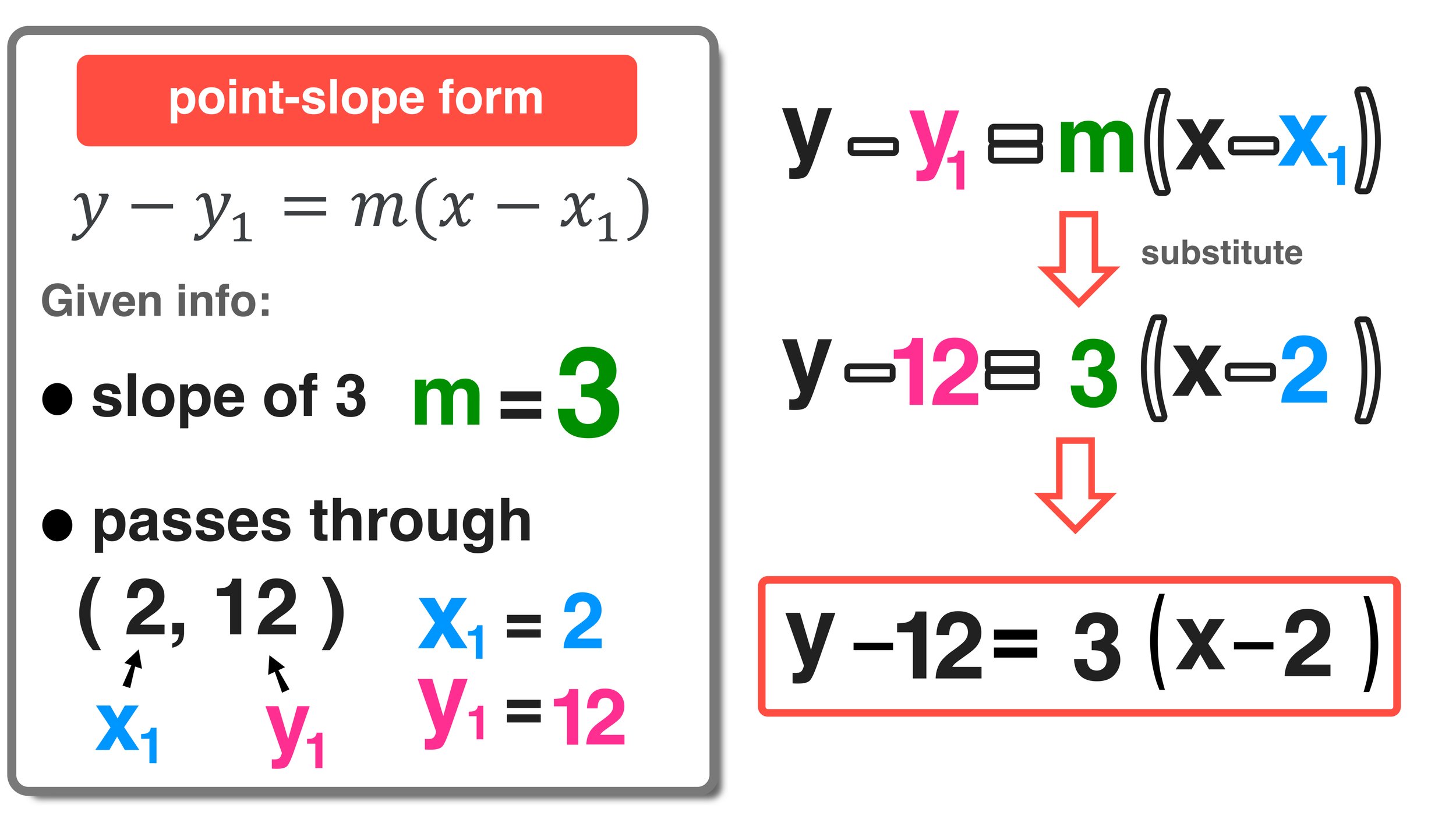
It is indeed that. It just looks a bit different from what you might expect.
Simplify this and you'll get y = mx +b
 full forumBOT
@brisk valve Has your question been resolved?
full forumBOT
Channel closed
Closed due to timeout
Use .reopen if this was a mistake.
Available help channel!
Send your question here to claim the channel.
Remember:
• Ask your math question in a clear, concise manner.
• Show your work, and if possible, explain where you are stuck.
• After 15 minutes, feel free to ping <@&286206848099549185>.
• Type the command .close to free the channel when you're done.
• Be polite and have a nice day!
Read #❓how-to-get-help for further information on how to ask a good question, and about conduct in the question channels.
 elfin lynx
could anyone help me out with this problem?
full forumBOT
elfin lynx
could anyone help me out with this problem?
elfin lynx

after rearranging the equation I got sin(theta) = -cos(theta)
then after dividing both sides by cos(theta) I get
tan(theta) = -1
 real relic
nice
then you can use the fact that tan(-theta) = -tan(theta)
(if you visualise the tan graph)
elfin lynx
real relic
then you can use the fact that tan(-theta) = -tan(theta)
I don't understand
don't I have to find the principle angle?
real relic
the graph is an odd function (if you know what that is)
elfin lynx
like this tan^-1(1)
real relic
elfin lynx
don't I have to find the principle angle?
yes but you can find the negative angle and then add 180 degrees
because tan repeats every 180
elfin lynx
oh ok, but I was taught to just ignore the negative
real relic
oh that's not quite correct for tan
elfin lynx
so it is correct for sine and cosine but not tan?
real relic
it's only correct for cosine
elfin lynx
ok so do I acknowledge that it is negative before or after finding the principle angle?
for example tan(x) = -1.3
when I take the inverse I get 52.4 so do I use this as my reference on which quadrants to use or do I use -1.3?
real relic
sorry I'm not sure what you mean?
real relic
elfin lynx
when I take the inverse I get 52.4 so do I use this as my reference on which qua...
the inverse of 1.3?
elfin lynx
so -1.3 is negative so I have to use the quadrants where tan is negative which are quadrants 2 and 4
whereas if it was positive 1.3 I would use the quadrants where tan is positive which are quadrants 1 and 3
real relic
okay I see what you mean
but you don't have to worry about that
you can take inverses of negatives
elfin lynx
oh
real relic
the principle angle is just the smallest one that's positive right?
elfin lynx
I thought it is the angle you get when you take the inverse
real relic
yeah it might be that then
your principle angle (the one shown on your calculator) is the solution between -180 and 180
if your principle angle is negative you want to add 180 because the question specifies 0 to 360
elfin lynx
so then the first solution I get by adding 180 to -52.4 is 127.6
real relic
that's fine
elfin lynx
I just want to know when to determine which quadrants to use, is it before or after taking the inverse?
real relic
either one
real relic
right exactly
elfin lynx
so Q2 and Q4
real relic
so you already know the quadrants
elfin lynx
although after I take the inverse I get positive 52.4 which is Q1 and Q3
which one do I use in order to determine the quadrants -1.3 or 52.4?
do you see what I mean?
real relic
elfin lynx
although after I take the inverse I get positive 52.4 which is Q1 and Q3
the inverse of what though?
like explicitly arctan of what
elfin lynx
tan^-1(-1.3)
real relic
that isn't 52.4 I'm pretty sure
real relic
yes so you're making it positive
so you'll get a different value
be explicit when you taking the inverse
because the inverse of -1.3 is -52.4
elfin lynx
oh I see
so the negative just indicates that I use Q2 and Q4
in my calculations I can just use 52.4
real relic
yes
elfin lynx
alright thanks I get it
elfin lynx
yeah and 360 - 52.4 = 307.6
real relic
yeah
elfin lynx
elfin lynx
okay so going back to the original question
real relic
yes
real relic
yes
elfin lynx
so my solutions would be theta = 180 - 45
elfin lynx
theta = 360 - 45
real relic
yes
real relic
No problem
full forumBOT
@elfin lynx Has your question been resolved?
Channel closed
Closed by @elfin lynx
Use .reopen if this was a mistake.
full forumBOT
Available help channel!
Send your question here to claim the channel.
Remember:
• Ask your math question in a clear, concise manner.
• Show your work, and if possible, explain where you are stuck.
• After 15 minutes, feel free to ping <@&286206848099549185>.
• Type the command .close to free the channel when you're done.
• Be polite and have a nice day!
Read #❓how-to-get-help for further information on how to ask a good question, and about conduct in the question channels.
 loud hull
Find derivative of y=(3x-5)^5 * (1-x^5)^4
full forumBOT
loud hull
Find derivative of y=(3x-5)^5 * (1-x^5)^4
loud hull

[\frac{d}{dx}(3x-5)^5 (1-x^5)^4]
[((3x-5)^5 * 4(1-x^5)^3 * -1) + (5(3x-5)^4 * 3(1-x^5)^4]
[(3x-5) * -4(1-x^5)^3 + 15(3x-5)^4 (1-x^5)^4]
[(3x-5)^4(1-x^5)^3 [-4(3x-5)+15(1-x^5)]]
[(3x-5)^4(1-x^5)^3 [-15x^5-12x+35]]
glossy valveBOT
dopediscorduser
 loud hull
What am I doing wrong? I don't see how they were able to factor a 5 out of the -4 and 15 coefficients?
 fleet briar
i dont think youre doing the chain rule correctly
loud hull
hot herald
why are you multiplying by -1
Because the x coefficient in (1-x^5) is -1
loud hull
fleet briar
i dont think youre doing the chain rule correctly
What am I dong incorrectly?
hot herald
there is no x term there
fleet briar
but, thats not how you differentiate 1 - x^5
hot herald
the coefficient of x^5 is -1,
the derivative of (1-x^5) is not -1
loud hull
The derivative of (1-x^5) would be (0 - 5x^4) or 5x^4?
fleet briar
loud hull
The derivative of (1-x^5) would be (0 - 5x^4) or 5x^4?
first one
loud hull
[\frac{d}{dx}(3x-5)^5 (1-x^5)^4]
[((3x-5)^5 * 4(1-x^5)^3 * -5x^4) + (5(3x-5)^4 * 3(1-x^5)^4]
glossy valveBOT
dopediscorduser
 loud hull
So would this be a correct first step in the chain rule then?
fleet briar
loud hull
So would this be a correct first step in the chain rule then?
yes that checks out so far
full forumBOT
Channel closed
Closed by @loud hull
Use .reopen if this was a mistake.
Available help channel!
Send your question here to claim the channel.
Remember:
• Ask your math question in a clear, concise manner.
• Show your work, and if possible, explain where you are stuck.
• After 15 minutes, feel free to ping <@&286206848099549185>.
• Type the command .close to free the channel when you're done.
• Be polite and have a nice day!
Read #❓how-to-get-help for further information on how to ask a good question, and about conduct in the question channels.
torn jolt
hello, I have a quick question about semantics. There is this function in MATLAB called linspace it allows you to 'partition' a sequence of numbers into equally sized partitions.
Take linspace(1,10,5) this is similar to saying linspace(first,last,number of elements)
which will partition the set of numbers similar to
x --- x --- x --- x --- x
now compare that to a right endpoint riemann sum which would partition similar to
o --- x --- x --- x --- x --- x
instead
My question is, is there any specific name for the case that linspace has?
full forumBOT
torn jolt
hello, I have a quick question about semantics. There is this function in MATLAB...
torn jolt
the length of a partition for the first case would be equivalent to [
p = \f{b-a}{n-1}
]
while the second it would be
[
p = \f{b-a}{n}
]
where $b$ and $a$ are the ending and starting points respectively. And $n$ is the number of elements
glossy valveBOT
 full forumBOT
@torn jolt Has your question been resolved?
 thin flint
i don't understand your question
torn jolt
thin flint
i don't understand your question
i just want to find out the name of the b-a/(n-1) partitioning similar to how the riemann sum case you can call it a right endpoint partitioning
well i guess its an odd question
thin flint
well when you take a riemann sum you can have a left side riemann sum and a right side
and middle
and some others i don't remember
so you could call it left side(d) partitioning
left side(d) or preferred linear partitioning
i don't think it specifically has a name
on wikipedia it gives it the name 'left rule'
full forumBOT
Channel closed
Closed by @vagrant sparrow
Use .reopen if this was a mistake.
full forumBOT
Available help channel!
Send your question here to claim the channel.
Remember:
• Ask your math question in a clear, concise manner.
• Show your work, and if possible, explain where you are stuck.
• After 15 minutes, feel free to ping <@&286206848099549185>.
• Type the command .close to free the channel when you're done.
• Be polite and have a nice day!
Read #❓how-to-get-help for further information on how to ask a good question, and about conduct in the question channels.
 alpine chasm
Any reason why we choose the mean E(X) specifically? Why not use the variance V(X) instead.
 full forumBOT
alpine chasm
Any reason why we choose the mean E(X) specifically? Why not use the variance V(...
full forumBOT
alpine chasm
Any reason why we choose the mean E(X) specifically? Why not use the variance V(...
 fast peak
well if you know E(X^2) then you can just calculate V(X) and vice versa
and this way the expression is a bit simpler
oh whoops I slightly misread. well to get variance you need the mean anyway
alpine chasm
fast peak
oh whoops I slightly misread. well to get variance you need the mean anyway
Oh okay also another question: If we have one unknown parameter than it is enough to use E(X). But can we not use E(X^2) and get the same estimation?
fast peak
why should that get the same result
but well it depends on whether you can express the moments from the parameters
alpine chasm
Because if the true population mean is approx equal to the sample mean. Then the square of true population mean should be approx equal to the sample mean squared
fast peak
no
the mean just tells you something about the center of the dataset, it doesnt tell you anything about how spread it is
imagine two datasets symmetric around 0, one with very big entries and one with very small ones
their mean is the same but the sum of squares are very different
full forumBOT
@alpine chasm Has your question been resolved?
full forumBOT
Channel closed
Closed due to timeout
Use .reopen if this was a mistake.
Available help channel!
Send your question here to claim the channel.
Remember:
• Ask your math question in a clear, concise manner.
• Show your work, and if possible, explain where you are stuck.
• After 15 minutes, feel free to ping <@&286206848099549185>.
• Type the command .close to free the channel when you're done.
• Be polite and have a nice day!
Read #❓how-to-get-help for further information on how to ask a good question, and about conduct in the question channels.
 tepid valve
can anybody help? cant get derivative right using quotient rule
 glossy valveBOT
maximo
 simple totem
so v is just 1-6x
full forumBOT
Channel closed
Closed by @tepid valve
Use .reopen if this was a mistake.
full forumBOT
Available help channel!
Send your question here to claim the channel.
Remember:
• Ask your math question in a clear, concise manner.
• Show your work, and if possible, explain where you are stuck.
• After 15 minutes, feel free to ping <@&286206848099549185>.
• Type the command .close to free the channel when you're done.
• Be polite and have a nice day!
Read #❓how-to-get-help for further information on how to ask a good question, and about conduct in the question channels.
 brazen prairie
what is the value of a?
 full forumBOT
brazen prairie
what is the value of a?
full forumBOT
brazen prairie
what is the value of a?
 sonic sparrow
the equations probably represent a line, and a curve
and the question says that the line is a tangent
so what u gotta do is simplify the given equations to the standard form so that u can identify which is which
brazen prairie
why its obviuos that is the curve and the otherone is the line

one is x to the power of two and the other is to the power of 1
i just dont understand how to find a
sonic sparrow
brazen prairie
why its obviuos that is the curve and the otherone is the line
bcuz the first one has x^1; and is in the form of y=mx+c
and the second one has x^2, so ur gonna have to remove the sqrt by squaring
sonic sparrow
brazen prairie
i just dont understand how to find a
youll have to use the given condition; the line is a tangent at the poi with the y acis
axis
sonic sparrow
hmm wait imma try
brazen prairie
i got a= - the sqrt of 2
oh i get it now
the incline of both functions are equal at the point of contact and because its on the y axis we know that x=0
.close
full forumBOT
Channel closed
Closed by @brazen prairie
Use .reopen if this was a mistake.
Available help channel!
Send your question here to claim the channel.
Remember:
• Ask your math question in a clear, concise manner.
• Show your work, and if possible, explain where you are stuck.
• After 15 minutes, feel free to ping <@&286206848099549185>.
• Type the command .close to free the channel when you're done.
• Be polite and have a nice day!
Read #❓how-to-get-help for further information on how to ask a good question, and about conduct in the question channels.
sonic sparrow
oh i got the answer
full forumBOT
sonic sparrow
oh i got the answer
sonic sparrow
theyll have the same intersection coordinate at x=0
so just sub that
and compare the equations
a=-1
sonic sparrow
brazen prairie
i got a=-1
yup
brazen prairie
what do you mean the same intersection coordinate
can you send how you calculated it
a photo
sonic sparrow
oh yes alright

instead of substituting x=0 and zeroing a, just compare both equations when theyre equal
.close
full forumBOT
Channel closed
Closed by @sonic sparrow
Use .reopen if this was a mistake.
full forumBOT
Available help channel!
Send your question here to claim the channel.
Remember:
• Ask your math question in a clear, concise manner.
• Show your work, and if possible, explain where you are stuck.
• After 15 minutes, feel free to ping <@&286206848099549185>.
• Type the command .close to free the channel when you're done.
• Be polite and have a nice day!
Read #❓how-to-get-help for further information on how to ask a good question, and about conduct in the question channels.
 fathom cairn
