#help-27
1 messages · Page 336 of 1
 strange nimbus
[5^x = 5 \sqrt[3]{5} \cdot 5^{4,!5}]
[5^x = 5^{5,! 5} \sqrt[3]{5}]
[5^x = 5^{5,! 5} \cdot 5^{\frac13}]
 quaint rampart
Isn’t thst just 5^2,5
 woven radishBOT
Chai T. Rex
 strange nimbus
So, how would you add 5,5 to 1/3?
woven radishBOT
Chai T. Rex
 strange nimbus
You need to add the exponents, not multiply them.
quaint rampart
5,5/1 + 1/3
strange nimbus
OK, so what fraction does that simplify to?
strange nimbus
OK, now make it an integer on top and bottom.
quaint rampart
Then I multiplied the bottom ones
quaint rampart
strange nimbus
OK, now make it an integer on top and bottom.
What
strange nimbus
Well, 5,5/1 has a decimal on top.
quaint rampart
Yeah
strange nimbus
So, we can convert it into an integer by multiplying the top and bottom by 10.
55/10.
quaint rampart
Ohhh integer means full number?
strange nimbus
Right, a number without anything after the decimal point.
quaint rampart
Right
strange nimbus
So, what does 55/10 simplify to?
 chilly quest
Sorry to interrupt , do we need log to solve this question or no
strange nimbus
No, log won't be needed.
chilly quest
Oh okay thank you
strange nimbus
No problem.
quaint rampart
11/2
chilly quest
Cuz I wanna learn too
quaint rampart
35/6
strange nimbus
OK, good.
So, what's x?
[5^x = 5^{5,! 5} \cdot 5^{\frac13}]
[5^x = 5^{\frac{35}6}]
woven radishBOT
Chai T. Rex
 strange nimbus
Unless they say to use a decimal or to round, I'd leave it as a fraction.
quaint rampart
Nvm it repeats itself
quaint rampart
strange nimbus
Unless they say to use a decimal or to round, I'd leave it as a fraction.
Right
strange nimbus
Yeah, to get a decimal that stops, the denominator has to be just 2s and 5s multiplied together.
6 has a 3 in it.
quaint rampart
,w 5^(35/6)
strange nimbus
So, like if you have 40, that's 2^3 * 5, so it has just 2s and 5s, so 1/40 has a decimal that stops.
quaint rampart
Whoops
woven radishBOT


 Requested by refinebss
woven radishBOT
Requested by refinebss
woven radishBOT
Result:
5.8333333333333
Dude I don’t really understand is that ok
strange nimbus
But leave it as 35/6 unless they say to make it a decimal or they say to round it.
That's OK.
quaint rampart
strange nimbus
But leave it as 35/6 unless they say to make it a decimal or they say to round i...
Yeah
strange nimbus
Now let's check it.
quaint rampart
Ok
strange nimbus
[\frac{0,2^{x + 0,5}}{5} = \sqrt[3]{5} \cdot 0,04^{x - 2}]
woven radishBOT
Chai T. Rex
 strange nimbus
So, let's type that in with (35/6) for x and see if the sides are equal.
,calc (0.2^((35/6) + 0.5))/5
quaint rampart
 woven radishBOT
Result:
7.4854854098249e-6
This is my teachers explanation
strange nimbus
Oh, OK.
strange nimbus
Well, a few things needed to be understood to do it the way I showed.
quaint rampart
quaint rampart
Idk wtf is going on here
strange nimbus
You needed to see that 0,2 and 0,04 are squares and square roots of each other.
quaint rampart
strange nimbus
You needed to see that 0,2 and 0,04 are squares and square roots of each other.
Yeah
Way easier than whatever he did
strange nimbus
And you needed to change things to fractions.
Like 0,2 = 1/5 and 0,04 = 1/25.
With that, it's easier to see them as squares and square roots of each other.
strange nimbus
You can then also notice that 5 keeps showing up.
And that's kind of what guided me along the way.
That and getting the xs on one side and the other stuff on the other side.
quaint rampart
Right
Yeah if I find out the order and sequence then I’m good
I know how to do most of the like calculations
strange nimbus
Oh, that's what your teacher did on the second line.
quaint rampart
strange nimbus
Oh, that's what your teacher did on the second line.
?
strange nimbus
They must have noticed the 5s.
Because they rewrote everything in terms of powers of 5.
But it's OK if you don't notice that at first.
quaint rampart
How’d he get 5^-1
strange nimbus
From the denominator on the left.
strange nimbus
It's the 5^-1 in parentheses.
They noticed that 0,2 is 1/5.
And 1/5 is 5^-1.
So, that's how they got (5^-1)^(x + 0,5).
Does that make sense?
strange nimbus
[(0,! 2)^{x + 0,! 5}]
[\qty(\frac15)^{x + 0,! 5}]
[\qty(5^{-1})^{x + 0,! 5}]
woven radishBOT
Chai T. Rex
 strange nimbus
Do you see how each step follows?
quaint rampart
Yeah now I do
strange nimbus
Anyway, their method requires you to see that everything is a power of 5.
strange nimbus
OK.
chilly quest
quaint rampart
Imma try to do the next question
Can u also send me the other questions please
I wanna learn
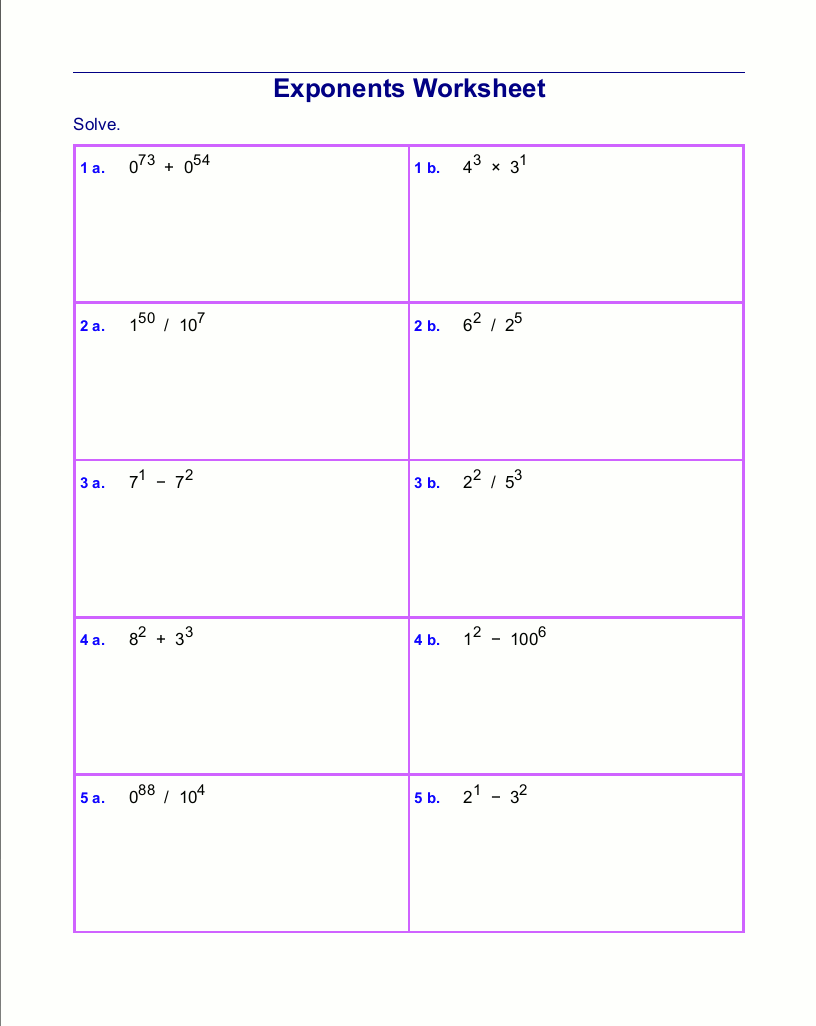
 strange nimbus
chilly quest
Can u also send me the other questions please
strange nimbus
chilly quest
Can u also send me the other questions please
There's also this unit about solving basic exponential equations (close the donation request and stuff like that): https://www.khanacademy.org/math/algebra2/x2ec2f6f830c9fb89:exp.
The section right before quiz 2 is like the earlier problem.
chilly quest
 supple knot
or uhh https://www.functionworksheets.com/wp-content/uploads/2022/07/exponential...
supple knot
or uhh https://www.functionworksheets.com/wp-content/uploads/2022/07/exponential...
Thanks
chilly quest
strange nimbus
There's also this unit about solving basic exponential equations (close the dona...
Thanks
chilly quest
strange nimbus
There's also this unit about solving basic exponential equations (close the dona...
What about I wanna do sth like harder
like the question that guy asked (maybe not hard for u)(but I wanna see like uhh ye)
 devout snowBOT
@quaint rampart Has your question been resolved?
devout snowBOT
Channel closed
Closed due to timeout
Use .reopen if this was a mistake.
 Available help channel!
Send your question here to claim the channel.
Remember:
• Ask your math question in a clear, concise manner.
• Show your work, and if possible, explain where you are stuck.
• After 15 minutes, feel free to ping <@&286206848099549185>.
• Type the command .close to free the channel when you're done.
• Be polite and have a nice day!
Read #❓how-to-get-help for further information on how to ask a good question, and about conduct in the question channels.
 arctic pulsar
can someone help on any of these since i ahve no idea what im doin


 strong tiger
for the first 2 questions you need to know the formula of theta
and the third one you need to know the property that the diameter subtends an angle of 90 degree on the circumference
arctic pulsar
whats the formua tho
strong tiger
theta = (lenght of arc)/radius
devout snowBOT
@arctic pulsar Has your question been resolved?
devout snowBOT
Channel closed
Closed due to timeout
Use .reopen if this was a mistake.
Available help channel!
Send your question here to claim the channel.
Remember:
• Ask your math question in a clear, concise manner.
• Show your work, and if possible, explain where you are stuck.
• After 15 minutes, feel free to ping <@&286206848099549185>.
• Type the command .close to free the channel when you're done.
• Be polite and have a nice day!
Read #❓how-to-get-help for further information on how to ask a good question, and about conduct in the question channels.
 thorn lagoon
 devout snowBOT
thorn lagoon
thorn lagoon
devout snowBOT
thorn lagoon
thorn lagoon
I’m struggling to understand why my teacher used the formula she did for number 13, could someone explain it to me?
chilly quest
Oh yes sorry
thorn lagoon
Why do I have to remove the triangle?
 thorn lagoon
chilly quest
U need to find the area of the QRA sector
thorn lagoon
chilly quest
U need to find the area of the QRA sector
I need to find the area of the triangle sector?
chilly quest
So first we find the area of that purple region
Then we remove the area of the triangle inside
chilly quest
thorn lagoon
And we can get the area of this shaded region
thorn lagoon
.close
devout snowBOT
Channel closed
Closed by @thorn lagoon
Use .reopen if this was a mistake.
devout snowBOT
Available help channel!
Send your question here to claim the channel.
Remember:
• Ask your math question in a clear, concise manner.
• Show your work, and if possible, explain where you are stuck.
• After 15 minutes, feel free to ping <@&286206848099549185>.
• Type the command .close to free the channel when you're done.
• Be polite and have a nice day!
Read #❓how-to-get-help for further information on how to ask a good question, and about conduct in the question channels.
 prime whale
is there a particular reason in this proof the summation went to N -1 instead of N?
 devout snowBOT
prime whale
is there a particular reason in this proof the summation went to N -1 instead of...
prime whale
devout snowBOT
prime whale
is there a particular reason in this proof the summation went to N -1 instead of...
prime whale
is it becuse we only want first N terms and we start at n = 0?
or is it deeper than that
 vast drift
prime whale
is there a particular reason in this proof the summation went to N -1 instead of...
vast drift
prime whale
is there a particular reason in this proof the summation went to N -1 instead of...
there are N terms if u start from 0 and end at N-1
devout snowBOT
Channel closed
Closed by @prime whale
Use .reopen if this was a mistake.
devout snowBOT
Available help channel!
Send your question here to claim the channel.
Remember:
• Ask your math question in a clear, concise manner.
• Show your work, and if possible, explain where you are stuck.
• After 15 minutes, feel free to ping <@&286206848099549185>.
• Type the command .close to free the channel when you're done.
• Be polite and have a nice day!
Read #❓how-to-get-help for further information on how to ask a good question, and about conduct in the question channels.
 winter meadow
What does it mean by horizontal line representing the sum? Just like the sum of terms 1-10? If so did I answer c correctly?
 devout snowBOT
winter meadow
What does it mean by horizontal line representing the sum? Just like the sum of ...
winter meadow
devout snowBOT
winter meadow
What does it mean by horizontal line representing the sum? Just like the sum of ...
winter meadow
This is uhh alternating series test
I’m mostly just super confused on series and stuff so maybe I’m just overlooking an easy answer
 acoustic leaf
you plot it on a graph where the x-axis is n and the y axis is S_n
winter meadow
Ohhhhhh
acoustic leaf
and the actual sum is on a horizontal line y = S
winter meadow
So I need to enter it as a stat plot?
acoustic leaf
that would work
 acoustic leaf
you would enter it as a function y = S (where S is the value of the sum)
winter meadow
So where n=.7604 the sum of the first ten terms?
I’m sorry if these are dumb questions I’ve just missed a lot of class recently and idk what’s really going on
acoustic leaf
it should be the sum of the full infinite series
which seems to be given to you in the exercise
devout snowBOT
@winter meadow Has your question been resolved?
Channel closed
Closed by @winter meadow
Use .reopen if this was a mistake.
Available help channel!
Send your question here to claim the channel.
Remember:
• Ask your math question in a clear, concise manner.
• Show your work, and if possible, explain where you are stuck.
• After 15 minutes, feel free to ping <@&286206848099549185>.
• Type the command .close to free the channel when you're done.
• Be polite and have a nice day!
Read #❓how-to-get-help for further information on how to ask a good question, and about conduct in the question channels.
 winter dragon
Im on the mclaurin series and i got everything but the -2 at the end chatgpt didn't help
 devout snowBOT
winter dragon
Im on the mclaurin series and i got everything but the -2 at the end chatgpt did...
supple knot
winter dragon
Im on the mclaurin series and i got everything but the -2 at the end chatgpt did...
devout snowBOT
winter dragon
Im on the mclaurin series and i got everything but the -2 at the end chatgpt did...
supple knot
winter dragon
Im on the mclaurin series and i got everything but the -2 at the end chatgpt did...
!show
devout snowBOT
winter dragon
Im on the mclaurin series and i got everything but the -2 at the end chatgpt did...
Show your work, and if possible, explain where you are stuck.
@winter dragon Has your question been resolved?
winter dragon
mb was doing otheerr problems

In the box is the problem sorry for the bad work idk how to use latex
Tell me if you need clarification
devout snowBOT
@winter dragon Has your question been resolved?
devout snowBOT
Channel closed
Closed by @winter dragon
Use .reopen if this was a mistake.
Available help channel!
Send your question here to claim the channel.
Remember:
• Ask your math question in a clear, concise manner.
• Show your work, and if possible, explain where you are stuck.
• After 15 minutes, feel free to ping <@&286206848099549185>.
• Type the command .close to free the channel when you're done.
• Be polite and have a nice day!
Read #❓how-to-get-help for further information on how to ask a good question, and about conduct in the question channels.
 dark shoal
hey guys, if I have $\int_{a}^{b} |x^2| ,dx$ does that evaluate to just$ |1/3b^2-1/3a^2|$?
devout snowBOT
dark shoal
hey guys, if I have $\int_{a}^{b} |x^2| \,dx$ does that evaluate to just$ |1/3b^...
woven radishBOT
Michele
 dark shoal
like for any integral is it just the absolute value of the normal integral
 pseudo basin
no to both
$\int_a^b |f(x)| \dd{x}$ in general need not be equal to $\absv{\int_a^b f(x) \dd{x}}$ (though you \textit{can} write down a version of the triangle inequality that relates these)
woven radishBOT
Ann

 sonic kelp
the |x²| case is that x² is always positive or 0
pseudo basin
in your specific example, $|x^2| = x^2$ anyway, so your integral equals $\frac{1}{3} b^3 - \frac{1}{3} a^3$ (not $b^2$ and $a^2$ there)
sonic kelp
so you can remove the modulus in this case
woven radishBOT
Ann
 sonic kelp
yeah
dark shoal
.close
devout snowBOT
Channel closed
Closed by @dark shoal
Use .reopen if this was a mistake.
pseudo basin
bruh doorslam
 midnight echo
lmao
devout snowBOT
Available help channel!
Send your question here to claim the channel.
Remember:
• Ask your math question in a clear, concise manner.
• Show your work, and if possible, explain where you are stuck.
• After 15 minutes, feel free to ping <@&286206848099549185>.
• Type the command .close to free the channel when you're done.
• Be polite and have a nice day!
Read #❓how-to-get-help for further information on how to ask a good question, and about conduct in the question channels.
 unkempt heath
 devout snowBOT
unkempt heath
devout snowBOT
unkempt heath
 strange nimbus
So, the numbers are areas?
devout snowBOT
@unkempt heath Has your question been resolved?
 soft umbra
unkempt heath
soft umbra
unkempt heath
Is that a rectangle?
devout snowBOT
Channel closed
Closed due to timeout
Use .reopen if this was a mistake.
Available help channel!
Send your question here to claim the channel.
Remember:
• Ask your math question in a clear, concise manner.
• Show your work, and if possible, explain where you are stuck.
• After 15 minutes, feel free to ping <@&286206848099549185>.
• Type the command .close to free the channel when you're done.
• Be polite and have a nice day!
Read #❓how-to-get-help for further information on how to ask a good question, and about conduct in the question channels.
 median arrow
Guys, can you help me?? Find a when a equation has two roots (x)
 median arrow
had this on a mock exam
 grand edge
median arrow
Guys, can you help me?? Find a when a equation has two roots (x)
grand edge
median arrow
Guys, can you help me?? Find a when a equation has two roots (x)
We have secretly a quadratic equation
Just express sqrt(4^x - a) as some variable
median arrow
grand edge
We have secretly a quadratic equation
yeah i ve got it
grand edge
Nice
median arrow
but i cant go next
grand edge
median arrow
but i cant go next
How do we know whether a quadratic equation has two roots
@restive river can you stop
median arrow
D > 0
grand edge
Yep
median arrow
and sqrt var is terrble
devout snowBOT
Please do not trust ChatGPT or similar AI tools for mathematical tasks, as they often generate output which "sounds correct" but has numerous factual or logical errors. Use of these AI tools to answer other people's help questions is strictly against server rules (see #rules).
median arrow

found t
and i think is not good to return t to its initial value
please get out here, you neglect ethic rules and sense
but it it is true its blow my top
 median arrow
i ve found this limit but i thoughyt its not enough
grand edge
median arrow
i ve found this limit but i thoughyt its not enough
We defined t as a square root, right?
median arrow
yeah
grand edge
And we need two distinct values of t
Which correspond to two real roots
So we have to have t > 0
If t = 0, then the two roots are equal and then there's only one real root
Idk if I explained it well
median arrow
oh
devout snowBOT
@median arrow Has your question been resolved?
median arrow
grand edge
Idk if I explained it well
a>3 is a result?
or it is a part of it
ohhh
now
no
i forgot the task
a = (2.75;3)
??
grand edge
median arrow
a = (2.75;3)
yeah
median arrow
grand edge
yeah
thank you 🐘
grand edge
no worries
devout snowBOT
@median arrow Has your question been resolved?
devout snowBOT
Channel closed
Closed by @median arrow
Use .reopen if this was a mistake.
Available help channel!
Send your question here to claim the channel.
Remember:
• Ask your math question in a clear, concise manner.
• Show your work, and if possible, explain where you are stuck.
• After 15 minutes, feel free to ping <@&286206848099549185>.
• Type the command .close to free the channel when you're done.
• Be polite and have a nice day!
Read #❓how-to-get-help for further information on how to ask a good question, and about conduct in the question channels.
devout snowBOT
woven radishBOT
lin.fei_. ₊˚❀₊

 warm lantern
just 2 cars
 glossy dew
woven radish
**lin.fei\_. ₊˚❀₊**
glossy dew
woven radish
**lin.fei\_. ₊˚❀₊**
do you think people having exactly 2 cars can have more than 2 cars
warm lantern
^
glossy dew
i have 10 dollars
does that imply i have atleast 10 dollars
waht
i think they mean exactly by default then
hmmh
but they explicitly mentioned at least one car
warm lantern
if the given information about myself is that "I have at least one car", and "I have two cars"
then that means I have two cars
not three
not four
not one
not zero
etc
have you clarified this exact situation with your teacher?
same question, etc
get a 4th opinion
me and blurple being the 2nd and 3rd (assumedly, and in no particular order)
 raven leaf
just two cars I think
assuming that you have correctly quoted the problem, the problem also uses "has two cars" to mean "has exactly two cars"
devout snowBOT
Channel closed
Closed by @storm kiln
Use .reopen if this was a mistake.
Available help channel!
Send your question here to claim the channel.
Remember:
• Ask your math question in a clear, concise manner.
• Show your work, and if possible, explain where you are stuck.
• After 15 minutes, feel free to ping <@&286206848099549185>.
• Type the command .close to free the channel when you're done.
• Be polite and have a nice day!
Read #❓how-to-get-help for further information on how to ask a good question, and about conduct in the question channels.
 rugged spoke
 devout snowBOT
rugged spoke
devout snowBOT
rugged spoke
 north roost
what have u done so far?
 rugged spoke
idek if its correct hehe
north roost
u are using disk method, right?
rugged spoke
shell method
north roost
dy?
 foggy ermine
Did you use parametric integration?
rugged spoke
because its respect to y no?
north roost
u're using washer then, right?
 wispy oyster
they intended to use shell but they did it wrongly
north roost
oh
wispy oyster
you have to do it wrt x since it is rotated about x=5
your radius becomes (x-5) and height becomes √x - x/2
with thickness dx
foggy ermine
Its pi * the integral of f(x))^2
north roost
wispy oyster
your radius becomes (x-5) and height becomes √x - x/2
this, if u want to do shell
bound of integration is 0 to 4
foggy ermine
Subtract upper function from lower function
foggy ermine
north roost
bound of integration is 0 to 4
0 to 5 ?
foggy ermine
wispy oyster
0 to 2 for washer
How come?
 wispy oyster
look at the point of intersections when expressed in terms of f(y)=x
wispy oyster
Newton, maybe you need to revise your calculus \j
anyways @rugged spoke do you get the idea?
rugged spoke
i can try
wispy oyster
rugged spoke
mostly
when revolving around the y axis or any axis that is a translation of the y axis (namely x=k where k in R), your thickness is dx so everything has to be in terms of x
for shell method
foggy ermine
It's rotation about x = 5 so why use shell (dy) instead of washer's (dx)?
north roost
shell is dx, washer's is dy
devout snowBOT
@rugged spoke Has your question been resolved?
foggy ermine
Dang it, I read the question wrong.
devout snowBOT
Channel closed
Closed due to timeout
Use .reopen if this was a mistake.
Available help channel!
Send your question here to claim the channel.
Remember:
• Ask your math question in a clear, concise manner.
• Show your work, and if possible, explain where you are stuck.
• After 15 minutes, feel free to ping <@&286206848099549185>.
• Type the command .close to free the channel when you're done.
• Be polite and have a nice day!
Read #❓how-to-get-help for further information on how to ask a good question, and about conduct in the question channels.
 zinc flint
hi
devout snowBOT
zinc flint
hi
 north roost
yes
zinc flint
this is from deepseek cause gpt kept getting thre answer wrong
zinc flint
north roost
yes
why is it true?
north roost
 zinc flint
all my lectures say nothing about this so im not sure the proof
north roost
epsilon-delta proof?
zinc flint
any kind of proof showing that the statement is true
zinc flint
north roost
epsilon-delta proof?
is this the proof to show it?
woven radishBOT
k
 zinc flint
sorry but how does this prove it
i havent gone that far into limits although i kinda know how the epsilon delta definition works
north roost
oh wait
its infinity
just do something similar
and show that i can always pick a bigger number that the one choose by making x within delta from the positive side
foggy ermine
Could you prove divergence?
zinc flint
no clue how to do that
foggy ermine
Do you know the definition of a convergent sequence/function?
zinc flint
north roost
and show that i can always pick a bigger number that the one choose by making x ...
would i do this for the same case on the other side
 north roost
yes
north roost
 zinc flint
north roost
yes
zinc flint
north roost
yes
ah okay
north roost
do 0 < x-a < delta or -delta < x -a < 0 depending on left or right limit
devout snowBOT
Channel closed
Closed by @zinc flint
Use .reopen if this was a mistake.
devout snowBOT
Available help channel!
Send your question here to claim the channel.
Remember:
• Ask your math question in a clear, concise manner.
• Show your work, and if possible, explain where you are stuck.
• After 15 minutes, feel free to ping <@&286206848099549185>.
• Type the command .close to free the channel when you're done.
• Be polite and have a nice day!
Read #❓how-to-get-help for further information on how to ask a good question, and about conduct in the question channels.
 plush furnace
 devout snowBOT
plush furnace
plush furnace
devout snowBOT
plush furnace
plush furnace
why could he pull out a negative sign????
plush furnace
two different answer
 plush furnace
two different answer
plush furnace
plush furnace
two different answer
i did it the top way, he did it the bottom way
bottom was is the answer
north roost
plush furnace
two different answer
distribute
plush furnace
plush furnace
two different answer
oh is it like this
plush furnace
 north roost
-(4-x^2)^2 + (4-x)^2
 graceful cosmos
∫ f(t) dt = F(b) - F(a)
-∫ f(t) dt = -F(b) + F(a)
plush furnace
plush furnace
oh i had to distribute it
north roost
yes
devout snowBOT
Channel closed
Closed by @plush furnace
Use .reopen if this was a mistake.
Available help channel!
Send your question here to claim the channel.
Remember:
• Ask your math question in a clear, concise manner.
• Show your work, and if possible, explain where you are stuck.
• After 15 minutes, feel free to ping <@&286206848099549185>.
• Type the command .close to free the channel when you're done.
• Be polite and have a nice day!
Read #❓how-to-get-help for further information on how to ask a good question, and about conduct in the question channels.
 dim dust
why does the line "normal" always bisect the angle between the 2 foci?
 dim dust
its normal to the line tangent to the point chosen to enclose the triangle between the 2 foci
<@&286206848099549185>
 rare kernel
dim dust
why does the line "normal" always bisect the angle between the 2 foci?
rare kernel
dim dust
why does the line "normal" always bisect the angle between the 2 foci?
you can think of it from an optics perspective if u want
think of one of the lines passing through the focus as an incident ray
and the line passing through the other focus as the reflected ray
so angle of incidence = angle of reflection
and both these angles are measured with respect to the normal
devout snowBOT
@dim dust Has your question been resolved?
dim dust
rare kernel
you can think of it from an optics perspective if u want
it makes sense visually but how would that be proved using geometry
rare kernel
not really aware of the proof
you can search it up tho
proof of reflective property of ellipse
devout snowBOT
Channel closed
Closed by @dim dust
Use .reopen if this was a mistake.
devout snowBOT
Available help channel!
Send your question here to claim the channel.
Remember:
• Ask your math question in a clear, concise manner.
• Show your work, and if possible, explain where you are stuck.
• After 15 minutes, feel free to ping <@&286206848099549185>.
• Type the command .close to free the channel when you're done.
• Be polite and have a nice day!
Read #❓how-to-get-help for further information on how to ask a good question, and about conduct in the question channels.
 lofty monolith
How do I even start with making C0 the subject
 devout snowBOT
lofty monolith
How do I even start with making C0 the subject
lofty monolith
devout snowBOT
lofty monolith
How do I even start with making C0 the subject
lofty monolith
It looks like they’ve skipped so many steps to me
 summer summit
remember lne = 1
lofty monolith
My first attempt lmaoo and it looks completely different to the answer

 wind mason
lofty monolith
How do I even start with making C0 the subject
wind mason
lofty monolith
How do I even start with making C0 the subject
Try to factor out a e^{C_0} term.
Or rather, just set each side equal. Then multiply by e^{C_0}.
devout snowBOT
@lofty monolith Has your question been resolved?
Channel closed
Closed by @lofty monolith
Use .reopen if this was a mistake.
Available help channel!
Send your question here to claim the channel.
Remember:
• Ask your math question in a clear, concise manner.
• Show your work, and if possible, explain where you are stuck.
• After 15 minutes, feel free to ping <@&286206848099549185>.
• Type the command .close to free the channel when you're done.
• Be polite and have a nice day!
Read #❓how-to-get-help for further information on how to ask a good question, and about conduct in the question channels.
 stark shale
i'm doing triple integrals, spherical coords.
in this problem i'm struggling to find the angle phi.
my reasoning is, i have to find phi that doesnt depends on rho, and it doesnt depend on theta.
what i did:
z= rho cos(phi)
so
rho cos(phi) = 2r
from the cone.
so i have
phi = atan(1/2)
i don't know if this is correct.
 devout snowBOT
stark shale
i'm doing triple integrals, spherical coords.
in this problem i'm struggling to ...
raven leaf
stark shale
i'm doing triple integrals, spherical coords.
in this problem i'm struggling to ...
devout snowBOT
stark shale
i'm doing triple integrals, spherical coords.
in this problem i'm struggling to ...
raven leaf
stark shale
i'm doing triple integrals, spherical coords.
in this problem i'm struggling to ...
sorry what are you trying to do here
stark shale
as i wrote in my second line, i'm trying to find phi
the bounds of integration for phi
raven leaf
how are your coordinates defined?
stark shale
i am using standard spherical coords
i think it's standard?
i'm just beginning studying these things.
rho, phi, theta
raven leaf
but if you draw a section of the cone by x=y=0, then to the edge of the cone, you could have a triangle
should*
stark shale
i dont understand what you want to tell me...
 stark shale
yes
raven leaf
 stark shale
mmm no... what you wrote is z^2 i think
devout snowBOT
@stark shale Has your question been resolved?
 azure flint
stark shale
mmm no... what you wrote is z^2 i think
azure flint
stark shale
mmm no... what you wrote is z^2 i think
@stark shale Hey, I totally understand how you're feeling, and I’m really sorry if I made you uncomfortable in any way — that was never my intention. This is actually my first time using the app, and I guess I got a little too curious and excited. I didn’t really know the best way to start a conversation, so I just kind of dove in without thinking it through. I realize now that friendship takes time and can’t be rushed, and I respect that completely. Thank you for being honest with me — I appreciate it. I’ll take your advice and try joining some public chats, get to know the space better, and just enjoy talking about shared interests naturally. Again, I’m really sorry for coming off too strong. I genuinely hope you have a great experience on here, and maybe we’ll cross paths again sometime under better circumstances 🌷
graceful cosmos
Let's relabel x² + y² = r² for radius reasons
Considering everything to be positive, I'll freely take the √ and we have
z = 2r
It's bounded above by the plane z = 2, so it's also bounded radially by r = 1
raven leaf
stark shale
mmm no... what you wrote is z^2 i think
my bad, I didn't see the z^2
the idea still holds though
devout snowBOT
@stark shale Has your question been resolved?
devout snowBOT
Channel closed
Closed due to timeout
Use .reopen if this was a mistake.
stark shale
.reopen
devout snowBOT
✅
stark shale
is my reasoning correct then to find phi?
graceful cosmos
Oh I didn't see you typed out exactly what I did. Yes your reasoning is good.
devout snowBOT
@stark shale Has your question been resolved?
devout snowBOT
Channel closed
Closed due to timeout
Use .reopen if this was a mistake.
Available help channel!
Send your question here to claim the channel.
Remember:
• Ask your math question in a clear, concise manner.
• Show your work, and if possible, explain where you are stuck.
• After 15 minutes, feel free to ping <@&286206848099549185>.
• Type the command .close to free the channel when you're done.
• Be polite and have a nice day!
Read #❓how-to-get-help for further information on how to ask a good question, and about conduct in the question channels.
 candid drift
guys ik this isnt a science server but i have a simple question 😔  i cant figure it our, im dumb :((
devout snowBOT
candid drift
guys ik this isnt a science server but i have a simple question 😔 <:please_bige...
candid drift
during anaphase in mitosis, ik the chromatids get seperated from the spindel fibers, but after telephase carrys out and the stuff after that does it end up with 46 or 23 chromosomes im confused?
candid drift
candid drift
during anaphase in mitosis, ik the chromatids get seperated from the spindel fib...
pls someone answerr 🤒
supple knot
dafuq
wispy oyster
46 chromosomes
wispy oyster
you end up with 23 chromosomes in meiosis
candid drift
wispy oyster
you end up with 23 chromosomes in meiosis
oh yeah haploid cells are only produced in egg cells and the other one
,close
.
ERM
how do u close
!
devout snowBOT
Channel closed
Closed by @candid drift
Use .reopen if this was a mistake.
devout snowBOT
Available help channel!
Send your question here to claim the channel.
Remember:
• Ask your math question in a clear, concise manner.
• Show your work, and if possible, explain where you are stuck.
• After 15 minutes, feel free to ping <@&286206848099549185>.
• Type the command .close to free the channel when you're done.
• Be polite and have a nice day!
Read #❓how-to-get-help for further information on how to ask a good question, and about conduct in the question channels.
 zenith whale
 devout snowBOT
zenith whale
zenith whale
devout snowBOT
zenith whale
zenith whale
how do i start with this problem
 livid sapphire
try finding the angle first in relation to the given arc length
s = 2pi(r)((angle)/360))
r will cancel out in the end, and you should get a constant answer
livid sapphire
0.3r is just the arc length, where r is the radius of the circle
livid sapphire
zenith whale
is 0.3 the arc legnth?
yep!
zenith whale
is it 30?
i dont understand what to do with the arc legnth
am i supposed to assume the radius is 1?
livid sapphire
oops sorry, wrong one, the formula should be the simpler one
angle = (arc length)/(radius)
livid sapphire
zenith whale
am i supposed to assume the radius is 1?
nopee, unless mentioned, leave the radius as is for now
try using the formula above to get a constant angle
zenith whale
angle=0.3/r?
livid sapphire
you're quite there!! don't forget that 0.3 is being multiplied by r in the given as well
zenith whale
i dont understand what the next step is
livid sapphire
angle = (0.3r)/r
r cancels 🎆
angle = 0.3
but right now, it's in radians so convert it to degrees
0.3 to degrees
 supple knot
Angle is n degrees
Pretend it's some arbitrary value like 100
Then once you figure the answer for arc length, do the problem again with n instead of 100
zenith whale
i have n/360 * 2pi * 6.5 so far
supple knot
Looks right, just simplify
zenith whale
x*4680?
i dont understand
like how am i supposed to find the arc legnth without a angle

how am i supposed to do this without trig functions
 elder nova
prolly just means dont write ur final answers in terms of trig functions
elder nova
unit circle, cos(30 deg) is sqrt(3)/2
ur supposed to mem them but if u draw a right triangle u can figure it out
zenith whale
is it just sqrt(3)/2 *8?
 errant zephyr
zenith whale
is it just sqrt(3)/2 *8?
errant zephyr
zenith whale
is it just sqrt(3)/2 *8?
yup basically
memorising the unit circle, even just the first quadrant will really help u
devout snowBOT
Channel closed
Closed by @zenith whale
Use .reopen if this was a mistake.
devout snowBOT
Available help channel!
Send your question here to claim the channel.
Remember:
• Ask your math question in a clear, concise manner.
• Show your work, and if possible, explain where you are stuck.
• After 15 minutes, feel free to ping <@&286206848099549185>.
• Type the command .close to free the channel when you're done.
• Be polite and have a nice day!
Read #❓how-to-get-help for further information on how to ask a good question, and about conduct in the question channels.
 slender birch
can i get some help with this one?
 devout snowBOT
slender birch
can i get some help with this one?
soft umbra
devout snowBOT
slender birch
can i get some help with this one?
soft umbra
!15m
devout snowBOT
Please only use the <@&286206848099549185> ping once if your question has not been answered for 15 minutes. Please do not ping or DM individual users about your question.
slender birch
yea
 hybrid snow
we can break that up
slender birch
how so?
hybrid snow
So consider m as a vector <Δx, Δy>
So like
For example if m is like 5/2
Your vector is <2,5>
slender birch
in our case isnt it 3/11?
im not fully sure what that means though. whats a vector?
hybrid snow
A vector, in layman's terms, is something that indicates a direction
hybrid snow
Well t is a parameter
slender birch
yea
hybrid snow
Technically there are position vectors that indicates a location
But consider this
Your slope is -3/11, so your direction vector is <11,-3>
slender birch
that makes sense
hybrid snow
Whats nice about these lines is that you can take any point on that line and add t times the direction vector
slender birch
im still a little bit confused though
like if the vector is -3,11, then how do i go and get two equations that are equal to that?
hybrid snow
You're getting ahead
hybrid snow
hybrid snow
Whats nice about these lines is that you can take any point on that line and add...
I would start by choosing a point where t = 0
In your case it's (-6,-5)
slender birch
yea
slender birch
so x = -6, and y = -5?
hybrid snow
Actyslly hold on I realized the other point is at t = 3
hybrid snow
So you need to take the direction vector <-3,11> and divide it by the difference in parameter (which is 3, because 3 - 0 = 3)
slender birch
so is it -3/11?
hybrid snow
Well here
Think about it
You need to take 3 "steps" to get from <-6,-5> to <5, -8>
slender birch
what do yo umean 3 steps?
slender birch
oh, so there kinda needs to be a mid point?
slender birch
ok, sorry
hybrid snow
When you have a line, there are two "characteristics": a point, and a direction
hybrid snow
So when we parameterize a line, we can say it's <a,b> + <Δx, Δy>t where (a,b) is a point on the line and m = Δy/Δx, and t is the parameter
hybrid snow
slender birch
can i get some help with this one?
So now look at when t = 0
<a,b> = <-6,-5>
slender birch
oh, so it would be (-6,-5) , -3/11
slender birch
oh, sorry
hybrid snow
hybrid snow
So when we parameterize a line, we can say it's <a,b> + <Δx, Δy>t where (a,b) is...
We can say any other point <x,y> can be expressed like this
Since we know that <a,b> is just the point when t = 0
hybrid snow
hybrid snow
So when we parameterize a line, we can say it's <a,b> + <Δx, Δy>t where (a,b) is...
And what I mean by this is:
<x,y> = <a,b> + <Δx, Δy>t
When t = 0, we get a point <x,y> = <-6,-5>
Si we can fill in that equation
<x,y> = <-6, -5> + <Δx, Δy>t
You know that when t = 3, <x,y> = <5,-8>
So you can find the direction vector
Whats nice about characterizing a line this way is that things get paired in the order they are listed
So like
<x,y> = <-6, -5> + <Δx, Δy>t
You can break it up into two equations:
x = -6 + Δx • t
y = -5 + Δy • t
Which is why thinking about vectors is really nice
slender birch
ok, thank you
devout snowBOT
@slender birch Has your question been resolved?
Channel closed
Closed by @slender birch
Use .reopen if this was a mistake.
Available help channel!
Send your question here to claim the channel.
Remember:
• Ask your math question in a clear, concise manner.
• Show your work, and if possible, explain where you are stuck.
• After 15 minutes, feel free to ping <@&286206848099549185>.
• Type the command .close to free the channel when you're done.
• Be polite and have a nice day!
Read #❓how-to-get-help for further information on how to ask a good question, and about conduct in the question channels.
 inner cargo
Trying to learn calculus early how did he get the 6(x+2)

 heavy current
by factoring 6x + 12
 inner cargo
Oh
inner cargo
Mb brah
 primal ferry
npnp
inner cargo
.close
devout snowBOT
Channel closed
Closed by @inner cargo
Use .reopen if this was a mistake.
primal ferry
happens more often than youd think 😭
devout snowBOT
Available help channel!
Send your question here to claim the channel.
Remember:
• Ask your math question in a clear, concise manner.
• Show your work, and if possible, explain where you are stuck.
• After 15 minutes, feel free to ping <@&286206848099549185>.
• Type the command .close to free the channel when you're done.
• Be polite and have a nice day!
Read #❓how-to-get-help for further information on how to ask a good question, and about conduct in the question channels.
 tepid fulcrum
how would i go about solving a differential equation in the form\ $y'+y^2p(x)=q(x)$
i have tried doing substitutions with $y=\tan(x)$ and function derived from it but i'm not getting anywhere
devout snowBOT
tepid fulcrum
how would i go about solving a differential equation in the form\\ $y'+y^2p(x)=q...
woven radishBOT
pixel
 tepid fulcrum
Let $P(x)$ be the antiderivative of $p(x)$\
$y=-a\tan(aP(x))\
-a^2p(x)(1+\tan^2(aP(x)))+a^2\tan^2(aP(x))p(x)=q(x)\
-a^2p(x)-a^2p(x)\tan^2(aP(x))+a^2p(x)\tan^2(aP(x))=q(x)\
-a^2p(x)=q(x)\
a=\sqrt{-\frac{q(x)}{p(x)}}$
this will only work if $a$ is a constant, so $p(x)$ and $q(x)$ need to be the same (scaled) line
here is one attempt ^^
woven radishBOT
pixel
 tepid fulcrum
on the third line i just sub it into the differential equation
devout snowBOT
@tepid fulcrum Has your question been resolved?
devout snowBOT
@tepid fulcrum Has your question been resolved?
devout snowBOT
@tepid fulcrum Has your question been resolved?
tepid fulcrum
 proper tartan
search up bernoulli's equation
proper tartan
search up bernoulli's equation
okay, thanks
devout snowBOT
Channel closed
Closed by @tepid fulcrum
Use .reopen if this was a mistake.
devout snowBOT
Available help channel!
Send your question here to claim the channel.
Remember:
• Ask your math question in a clear, concise manner.
• Show your work, and if possible, explain where you are stuck.
• After 15 minutes, feel free to ping <@&286206848099549185>.
• Type the command .close to free the channel when you're done.
• Be polite and have a nice day!
Read #❓how-to-get-help for further information on how to ask a good question, and about conduct in the question channels.
 vale iris
Hello.
I have following practice problem that i need to solve in matlab:
2nd order linear DE with Robin boundary conditions.
- Equation: u′′(x)+7u′(x)−u(x)=sin x
- Domain: x∈(0,π)
- Boundary Conditions: u′(0)−3u(0)=0 and u′(π)+3u(π)=0
- Method: Grid method/Finite difference method
- Discretization: n=100 subintervals
I wrote some code and got solution (picture).
It seems right to me but i would like some confirmation from someone else
 devout snowBOT
vale iris
Hello.
I have following practice problem that i need to solve in matlab:
2nd or...
devout snowBOT
vale iris
Hello.
I have following practice problem that i need to solve in matlab:
2nd or...
@vale iris Has your question been resolved?
devout snowBOT
Channel closed
Closed due to timeout
Use .reopen if this was a mistake.
devout snowBOT
Available help channel!
Send your question here to claim the channel.
Remember:
• Ask your math question in a clear, concise manner.
• Show your work, and if possible, explain where you are stuck.
• After 15 minutes, feel free to ping <@&286206848099549185>.
• Type the command .close to free the channel when you're done.
• Be polite and have a nice day!
Read #❓how-to-get-help for further information on how to ask a good question, and about conduct in the question channels.
 terse bolt
Im having trouble with this question
devout snowBOT
terse bolt
Im having trouble with this question
terse bolt

here is what i have done so far
Using Fermats little theorem we can distribute $x^p$ into $xx^{p-1}=x$
woven radishBOT
oklmaosad
 terse bolt
then you have x-a, which means it will always be reduceable as there is always going to be an a-a situation as $a \in \mathbb{Z}_p$ so you will end up with an $a-a$
woven radishBOT
oklmaosad
 devout snowBOT
@terse bolt Has your question been resolved?
devout snowBOT
Channel closed
Closed due to timeout
Use .reopen if this was a mistake.
devout snowBOT
Available help channel!
Send your question here to claim the channel.
Remember:
• Ask your math question in a clear, concise manner.
• Show your work, and if possible, explain where you are stuck.
• After 15 minutes, feel free to ping <@&286206848099549185>.
• Type the command .close to free the channel when you're done.
• Be polite and have a nice day!
Read #❓how-to-get-help for further information on how to ask a good question, and about conduct in the question channels.
 lusty dragon
Hey! This might be a bit of a dumb question, but how do I find critical value on my calculator? I have a Casio fx-115es plus.
devout snowBOT
lusty dragon
Hey! This might be a bit of a dumb question, but how do I find critical value on...
 upper ermine
lusty dragon
Hey! This might be a bit of a dumb question, but how do I find critical value on...
upper ermine
lusty dragon
Hey! This might be a bit of a dumb question, but how do I find critical value on...
Assuming you mean f'(x) = 0 or undef and not critical values for statistical tests
im not sure specifically about this calculator, but you could always just graph the derivative and find points where its undefined or 0
 upper ermine
lusty dragon
Sorry I meant for statistical tests, I'll send a pic of the question I need it f...
upper ermine
lusty dragon
Sorry I meant for statistical tests, I'll send a pic of the question I need it f...
ah
lusty dragon
I've been looking through youtube videos to try and figure it out for about 40 min now lol, it's ok if you don't know how but it doesn't hurt to ask haha
upper ermine
sorry i cant help with your calculator then
shouldnt be too hard to navigate though uhh
try to go into statistical mode and find some distribution menu?
upper ermine
lusty dragon
for a z-test, just use a function analagous to invNorm
lusty dragon
I've been looking for an invNorm function or something like that but I can't seem to find it
devout snowBOT
@lusty dragon Has your question been resolved?
Channel closed
Closed by @lusty dragon
Use .reopen if this was a mistake.
devout snowBOT
Available help channel!
Send your question here to claim the channel.
Remember:
• Ask your math question in a clear, concise manner.
• Show your work, and if possible, explain where you are stuck.
• After 15 minutes, feel free to ping <@&286206848099549185>.
• Type the command .close to free the channel when you're done.
• Be polite and have a nice day!
Read #❓how-to-get-help for further information on how to ask a good question, and about conduct in the question channels.
 bleak arrow
If I have the surface x+y+z=1, x>0, y>0, z>0, how would I find the boundary curve C without graphing it?
devout snowBOT
bleak arrow
If I have the surface x+y+z=1, x>0, y>0, z>0, how would I find the boundary curv...
 solar orchid
bleak arrow
If I have the surface x+y+z=1, x>0, y>0, z>0, how would I find the boundary curv...
solar orchid
bleak arrow
If I have the surface x+y+z=1, x>0, y>0, z>0, how would I find the boundary curv...
For x=0, you get y+z=1, and y=0,get x+z=1, z=0, x+y=1
And then you can have equations for boundaries
Also, confine x,y,z to belarger than zero
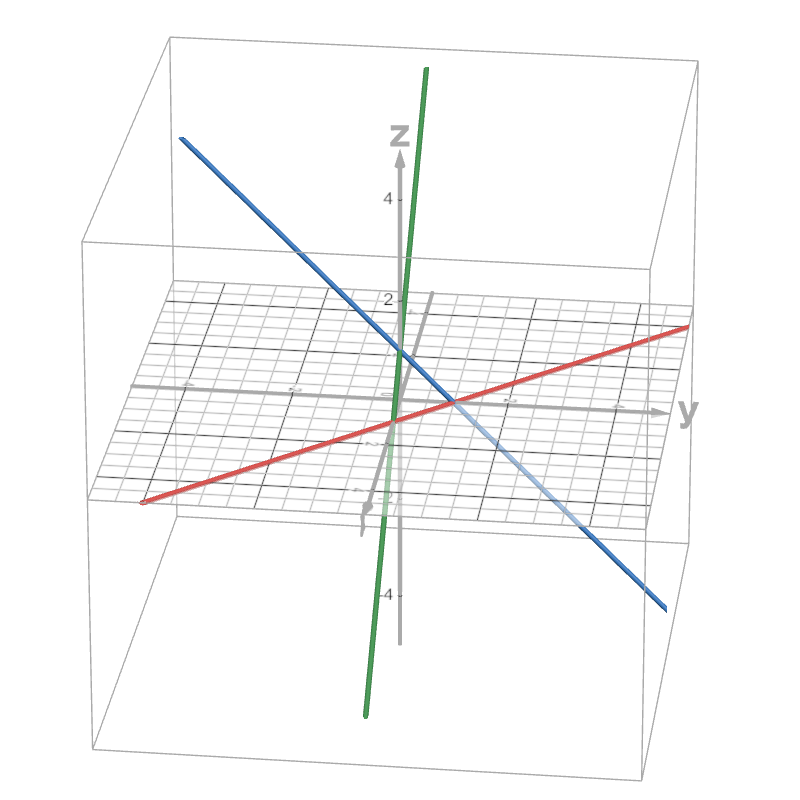 solar orchid
Do you want to derive equation and plot it at demos?
bleak arrow
yes
i already have equations but it doesn't give me the first octant
check the link i sent
devout snowBOT
@bleak arrow Has your question been resolved?
bleak arrow
I am kinda confused. You said that we put x = 0, y = 0, z = 0 to find the boundary lines. But I thought x>0, y>0, and z>0? How can x be = 0 and > 0 at the same time?
solar orchid
In your case, since you want boundary , but x,y,z >0.
I thought that question doesn't have exactly answer, since you can always find another curve C that is more close to boundary.
bleak arrow
What if we have a problem like this:
"z = 9-x^2-y^2 above the xy plane", the curve of intersection is x^2+y^2=9 at z = 0, here, we have z>0, but we don't use that
devout snowBOT
@bleak arrow Has your question been resolved?
devout snowBOT
@bleak arrow Has your question been resolved?
solar orchid
I want to make sure what the problem is . Do you mean solving what curve of equation z = 9-x^2-y^2 ?
devout snowBOT
@bleak arrow Has your question been resolved?
bleak arrow
solar orchid
I want to make sure what the problem is . Do you mean solving what curve of equ...
getting the boundary curve of the surface: z=9-x^2-y^2, where z>0
devout snowBOT
@bleak arrow Has your question been resolved?
devout snowBOT
Channel closed
Closed due to timeout
Use .reopen if this was a mistake.
Available help channel!
Send your question here to claim the channel.
Remember:
• Ask your math question in a clear, concise manner.
• Show your work, and if possible, explain where you are stuck.
• After 15 minutes, feel free to ping <@&286206848099549185>.
• Type the command .close to free the channel when you're done.
• Be polite and have a nice day!
Read #❓how-to-get-help for further information on how to ask a good question, and about conduct in the question channels.
heavy current
Let $\lambda = \int_{0}^{1} f(t) dt$ and define $g: [0, 1] \to \R$ by $g(x) = \int_{0}^{x} f(t) dt - \lambda x$. Then $g(0) = \int_{0}^{0} f(t) dt - \lambda \cdot 0 = 0 + 0 = 0$ and $g(1) = \int_{0}^{1} f(t) dt - \lambda \cdot 1 = \lambda - \lambda = 0$, so we obtain $g(0) = g(1)$. Furthermore, we have
\begin{align*}
\omega - \lambda \ dx = f \ dx - \left(\int_{0}^{1} f(t) dt \right) dx = f \ dx - \lambda \ dx = dg
\end{align*}
which is what we wanted to show. Lastly, if $\lambda' \in \R$ is another number with the same property as $\lambda$, then
\begin{align*}
\omega - \lambda \ dx = dg = \omega - \lambda' \ dx \implies (\lambda' - \lambda) \ dx = 0 \implies \lambda' = \lambda
\end{align*}
so $\lambda$ is unique.
 devout snowBOT
heavy current
Let $\lambda = \int_{0}^{1} f(t) dt$ and define $g: [0, 1] \to \R$ by $g(x) = \i...
heavy current
devout snowBOT
heavy current
Let $\lambda = \int_{0}^{1} f(t) dt$ and define $g: [0, 1] \to \R$ by $g(x) = \i...
heavy current
does this argument seem fine? 
woven radishBOT
higher!
 heavy current
my primary concern is that I haven't used the fact that f(0) = f(1) anywhere 
 faint gorge
heavy current
my primary concern is that I haven't used the fact that f(0) = f(1) anywhere <:e...
faint gorge
heavy current
my primary concern is that I haven't used the fact that f(0) = f(1) anywhere <:e...
dumb question but if you differentiate g(x) couldnt you find lambda using f(0) = f(1)
heavy current
faint gorge
dumb question but if you differentiate g(x) couldnt you find lambda using f(0) =...
I think I'm the dumb one here, because I don't see what you mean 
faint gorge
well i am not that familiar with differential forms, but the last sentence tells me that you want to actually find lambda not just show it's unique, so my very first and vague thought was to use g(x) for example since it contains lambda and then by using f(0) = f(1) somehow figure out what lambda is
heavy current
well like, we don't know what g is going to be a priori, right?
I defined g out of thin air
because it works
heavy current
heavy current
well like, we don't know what g is going to be a priori, right?
(kinda, the hint gives you an idea of how to define g, but the point remains that we don't have it to begin with)
faint gorge
ok fair
devout snowBOT
@heavy current Has your question been resolved?
heavy current
 finite obsidian
How’s dg defined here
finite obsidian
How’s dg defined here
dg is the differential of g
finite obsidian
So it should be basically like, g’dx right?
heavy current
yeah, cause g is only a function of x
dg = (f - lambda) dx, yeah?
the way I've set this up
 autumn fjord
sorry, is g given here?
finite obsidian
So for the latter part, you can’t necessarily assume they’re both equal to the same g I think?
finite obsidian
But if (f-lambda’)dx = dg, and it’s zero on 0, 1, then \int_0^1 f dx - lambda’ = 0, right?
heavy current
do you mean g or g'?
finite obsidian
Whatever the g is, it says lambda’ has to be that integral
autumn fjord
why is lambda just not 0 for all f
heavy current
you're asking me?
finite obsidian
Since it’s fdx not df
autumn fjord
oh treu
finite obsidian
Ye
autumn fjord
okay yeah. sorry. i'm tired.
finite obsidian
So you didn’t need to show g=this function
heavy current
finite obsidian
Whatever the g is, it says lambda’ has to be that integral
I don't understand
finite obsidian
finite obsidian
But if (f-lambda’)dx = dg, and it’s zero on 0, 1, then \int_0^1 f dx - lambda’ =...
You could’ve just done something like this to show lambda = integral of f?
heavy current
but is that not how I defined lambda
oh, you're saying that this shows uniqueness?
if you find it that way
instead of pulling it out of a hat
autumn fjord
what happens when you integrate dg @heavy current
finite obsidian
heavy current
I don't understand <:pikathink:879066872513970227>
g(0) = g(1) = 0, so \int_0^1 dg is 0 yeah?
autumn fjord
so when you integrate the other thing you should also get 0
finite obsidian
So the integral of (f - lambda)dx is 0
Which is: (integral of f) - lambda
So that says lambda = integral of f, without any sort of like, what g is
heavy current
finite obsidian
Which is: (integral of f) - lambda
wait, am I dumb or is this supposed to be lambda*x?
finite obsidian
But saying what g works explicitly also says there’s always such a lambda, g for any such f
finite obsidian
heavy current
wait, am I dumb or is this supposed to be lambda*x?
It’s outside the integral mf
autumn fjord
heavy current
wait, am I dumb or is this supposed to be lambda*x?
x evals to 1 and 0
int (f-lambda) = int f + lambdax | ^1_0
heavy current
 ic
ic
heavy current
finite obsidian
But saying what g works explicitly also says there’s always such a lambda, g for...
then what I did should be fine for existence, is it not?
finite obsidian
heavy current
then what I did should be fine for existence, is it not? <:pikathink:87906687251...
Ye, just saying this is a touch overcomplicating it idk
heavy current
ic
heavy current
but you said that I failed to show uniqueness, yeah?
cause it need not be the same g that works for lambda'
autumn fjord
uniqueness comes from showing that lambda has to be int f
heavy current
I see
so the way you and Sharp did it kills uniqueness at the same time
oh, I guess I can just do that for my uniqueness part though
autumn fjord
i am too tired to read sharp's messages. you should still provide an explicit g to show existence.
heavy current
I have one dw
if you're up for another problem, I'm trying to solve the very next exercise but find myself kinda clueless
autumn fjord
but i'm sure everything that sharp said is good
heavy current
it's basically this one but ++
autumn fjord
yeah i'm up for it
 finite obsidian
heavy current
oh, I guess I can just do that for my uniqueness part though
finite obsidian
heavy current
oh, I guess I can just do that for my uniqueness part though
Ye
finite obsidian
heavy current
I have no idea how to find lambda or g this time
Well, d omega = 0 is an important part
What’s c_R,1*
finite obsidian
Btw, in light of last night discussion, proposition says closed 1 form is a scaling of d theta, modulo an exact form
heavy current
I don't know what the heck the subscripts are
finite obsidian
So it says we get that it’s 1 dimensional in that quotient
Curious how that works
heavy current
c is usually a singular n-cube in Spivak's book
oh, hold on
4-23 defines it like this
 autumn fjord
if you have c be the circle of radius R then it will pull back to a 1-form and use the previous part
finite obsidian
heavy current
4-23 defines it like this
The circle
So, this makes it a map from [0, 1] and f(0)=f(1) since it’s a circular path
finite obsidian
For the one form pullback
heavy current
I see
finite obsidian
You get g by the same procedure too
So, start by showing that integral doesn’t depend on R, perhaps?
Since, if that’s the case, surely that helps out a bit in making g what it “should” be?
heavy current
the details seem kind of murky to me, but I guess I gotta write it down first
lemme see where I go with this
devout snowBOT
@heavy current Has your question been resolved?
heavy current
.close
devout snowBOT
Channel closed
Closed by @heavy current
Use .reopen if this was a mistake.
Available help channel!
Send your question here to claim the channel.
Remember:
• Ask your math question in a clear, concise manner.
• Show your work, and if possible, explain where you are stuck.
• After 15 minutes, feel free to ping <@&286206848099549185>.
• Type the command .close to free the channel when you're done.
• Be polite and have a nice day!
Read #❓how-to-get-help for further information on how to ask a good question, and about conduct in the question channels.
 median patio
 devout snowBOT
median patio
median patio
devout snowBOT
median patio
median patio
idk what to do
 upper schooner
What happens as n gets larger and larger? 
median patio
um
upper schooner
(f being continuous means you can Riemann integrate it, so what does that imply?)
median patio
the approximation is less accurate?
upper schooner
median patio
the approximation is less accurate?
(And not as n grows, it wouldn’t be!)
median patio
wdym by larger
 lethal pollen
median patio
wdym by larger
lethal pollen
median patio
wdym by larger
As you add more subintervals basically
Because n is the number of subintervals
median patio
so if there is more subintervals would the approximation be more accurate..??
heavy current
median patio
so if there is more subintervals would the approximation be more accurate..??

more subintervals, better approx c:
median patio
hm how does that apply to the question tho
lethal pollen
median patio
hm how does that apply to the question tho
Ok nvm
It's a limit question
the limit of the expression as n->inf is the value of your integral
median patio
how do you know its n-->infinity
lethal pollen
heavy current
https://upload.wikimedia.org/wikipedia/commons/e/e3/Riemann_Integration_and_Darb...
Because as you add more subintervals you get closer to the actual value
So as n approaches inf you're going to approach the actual value
median patio
hmm
how does it imply that you need to add more subintervals tho
cause it just says n subintervals
lethal pollen
median patio
cause it just says n subintervals
Because they don't want an approximation
They want the actual value of the definite integral
devout snowBOT
Channel closed
Closed by @median patio
Use .reopen if this was a mistake.
devout snowBOT
Available help channel!
Send your question here to claim the channel.
Remember:
• Ask your math question in a clear, concise manner.
• Show your work, and if possible, explain where you are stuck.
• After 15 minutes, feel free to ping <@&286206848099549185>.
• Type the command .close to free the channel when you're done.
• Be polite and have a nice day!
Read #❓how-to-get-help for further information on how to ask a good question, and about conduct in the question channels.
 solid osprey
let $ABC$ be a triangle where $AB<AC$, let $H$ be the orthocenter and let the bisector of angle $BAC$ intersect the circumcircle with diameter $AA'$ at point $M\neq A$, let there be point $X$ on $AM$ such that $HX\perp AM$, let $P$ and $Q$ be the intersections of $HX$ and $MA'$ to $BC$ respectively, prove that $PMQ$ is an isoceles triangle
devout snowBOT
solid osprey
let $ABC$ be a triangle where $AB<AC$, let $H$ be the orthocenter and let the bi...
woven radishBOT
skissue.in.a.teacup
 solid osprey

i posted this yesterday, i thought that you could prove that MA'=MY and since A'Y//PQ then MQ=MP, but i forgot that you needed to prove Y (extension of altitude at A intersecting the circumcenter) is on line MP
is there any way you can salvage this or is there another way
devout snowBOT
@solid osprey Has your question been resolved?
devout snowBOT
@solid osprey Has your question been resolved?
devout snowBOT
@solid osprey Has your question been resolved?
 lament kraken
@solid osprey
you there
I have an idea but it probably wont work
If we prove BPM should be congruent to CQM were done
And CBM is CMB as AM is bisector of BAC
So we obtain MB is MC as well
We might be able to use orthocenter and the fact that AA' is diameter to give is similar triangles or ratios to prove the rest
I am not sure tho probably will fail
solid osprey
hmm
lament kraken
@solid osprey i gtg soon good luck
 jaunty shuttle
Hello, is it okay if i ask some questions here?
 junior flax
!help
devout snowBOT
To ask for mathematics help on this server, please open your own help channel or help thread. See #❓how-to-get-help for instructions.
lament kraken
jaunty shuttle
Hello, is it okay if i ask some questions here?
!occupied
devout snowBOT
jaunty shuttle
Hello, is it okay if i ask some questions here?
Someone else is already using this help channel. If you need help with a question, please open your own help channel/thread (see #❓how-to-get-help for instructions).
 somber dawn
jaunty shuttle
Hello, is it okay if i ask some questions here?
somber dawn
jaunty shuttle
Hello, is it okay if i ask some questions here?
You can ask questions in the math help (avaliable) category
Should be one category above
lament kraken
Also @solid osprey where was the qn from
jaunty shuttle
somber dawn
You can ask questions in the math help (avaliable) category
I see, thank you
solid osprey
lament kraken
Also <@750992393502720010> where was the qn from
uhh it was from a p small oly
lament kraken
Oh ok
devout snowBOT
@solid osprey Has your question been resolved?
lament kraken
@solid osprey any progress
lament kraken
hmm ok let me attempt it
solid osprey
cause like it feels like proving congruence needs to prove the first statement first
lament kraken
solid osprey
cause like it feels like proving congruence needs to prove the first statement f...
Mb youre right
solid osprey
.close gtg sleep
devout snowBOT
Channel closed
Closed by @solid osprey
Use .reopen if this was a mistake.
devout snowBOT
Available help channel!
Send your question here to claim the channel.
Remember:
• Ask your math question in a clear, concise manner.
• Show your work, and if possible, explain where you are stuck.
• After 15 minutes, feel free to ping <@&286206848099549185>.
• Type the command .close to free the channel when you're done.
• Be polite and have a nice day!
Read #❓how-to-get-help for further information on how to ask a good question, and about conduct in the question channels.
 empty nexus
question 5
 devout snowBOT
empty nexus
question 5
devout snowBOT
empty nexus
question 5
 spring salmon
 pastel pasture
FTC
empty nexus
im confused about the 2x part
 mystic scarab
Well, FTC answers your question, doesn't it?


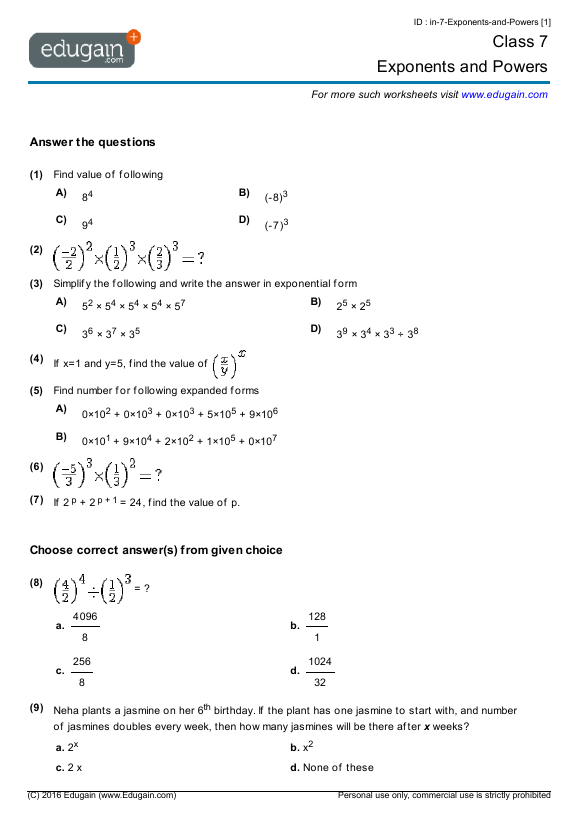
 mystic scarab
empty nexus
mystic scarab
empty nexus
Yes, it's wrong
empty nexus
why
mystic scarab
You have to use chain rule, because the upper bound is not x, rather a function of x
 real belfry
empty nexus
im confused about the 2x part
real belfry
empty nexus
im confused about the 2x part
there's nothing wrong with subbing in a variable as a limit, have you evaluated the integral?
empty nexus
mystic scarab
You have to use chain rule, because the upper bound is not x, rather a function ...
so you have to also multiply by 2?
real belfry
and it makes sense right, it would be a pretty boring f(x) without any x in there, t is just a placeholder for your function where you need to place in the limits for the area
empty nexus
or divide?
mystic scarab
empty nexus
so you have to also multiply by 2?
Exactly
mystic scarab
empty nexus
or divide?
No no, chain rule says to multiply by the derivative of the inside function
devout snowBOT
@empty nexus Has your question been resolved?
devout snowBOT
Channel closed
Closed due to timeout
Use .reopen if this was a mistake.
Available help channel!
Send your question here to claim the channel.
Remember:
• Ask your math question in a clear, concise manner.
• Show your work, and if possible, explain where you are stuck.
• After 15 minutes, feel free to ping <@&286206848099549185>.
• Type the command .close to free the channel when you're done.
• Be polite and have a nice day!
Read #❓how-to-get-help for further information on how to ask a good question, and about conduct in the question channels.
 floral lodge
"In a resturant, there are 12 sandwhiches of different meats. Each sandwhich can be served in half or full, with light or dark bread. There are also 18 different veggie-add ons, where each can be added or removed. Finally, one may choose one of 3 dressings or none. In how many different ways can a sandwhich be ordered?"
devout snowBOT
floral lodge
"In a resturant, there are 12 sandwhiches of different meats. Each sandwhich can...
floral lodge
My attemt:
12 meats, i.e 12 options, 2 options for the size of the sandwhich and 2 more for the type of bread
so far, $12\cdot2\cdot 2$
woven radishBOT
Pen
 floral lodge
For the veggies, there are 18! ways to choose a veggie combo
Lastly, there are 3 dressings but one also has the option to not order any dressing, meaning that there are 4 options for the dressings
This leads me to conclude that there is $12\cdot2\cdot 2\cdot 18! \cdot 4$ways to order a sandwhich
woven radishBOT
Pen
 floral lodge
Which is... 1229255751499776000 ways
the correct answer is 50 331 648 possible ways
I do not understand where I went wrong
 versed juniper
floral lodge
This leads me to conclude that there is $12\cdot2\cdot 2\cdot 18! \cdot 4$ways t...
versed juniper
floral lodge
This leads me to conclude that there is $12\cdot2\cdot 2\cdot 18! \cdot 4$ways t...
isnt it 2^18 not 18!
floral lodge
versed juniper
isnt it 2^18 not 18!
That does give the correct answer
versed juniper

floral lodge
2^18 would be whether to have the veggie or not?
repeated 18 times for all veggies?
versed juniper
floral lodge
2^18 would be whether to have the veggie or not?
yes, 18! is how many permutations of veggies lol
floral lodge
gosh, you are right
in my head I was thinking about the veggie combinations, at first you can order 18
then 17
then 16...
versed juniper
well even if you did it with combinations you have to remove dupes
veggie A and then veggie B is the same as veggie B then A
*in this problem
versed juniper
18! - 2^18 👍
floral lodge
so big number, gotcha
combinatorics is going to make me go bald before life gets a chance
thank you for the quick and helpful help, ten
the help was a ten out of ten, ten : )
.close
devout snowBOT
Channel closed
Closed by @floral lodge
Use .reopen if this was a mistake.
devout snowBOT
Available help channel!
Send your question here to claim the channel.
Remember:
• Ask your math question in a clear, concise manner.
• Show your work, and if possible, explain where you are stuck.
• After 15 minutes, feel free to ping <@&286206848099549185>.
• Type the command .close to free the channel when you're done.
• Be polite and have a nice day!
Read #❓how-to-get-help for further information on how to ask a good question, and about conduct in the question channels.
 restive elk
BTW the inflection point is (2,-47).
 devout snowBOT
restive elk
BTW the inflection point is (2,-47).
restive elk
devout snowBOT
restive elk
BTW the inflection point is (2,-47).
restive elk
And the cubic is x^3 - 6x^2 - 15x - 1
versed juniper
restive elk
And the cubic is x^3 - 6x^2 - 15x - 1
plug in sin x first?
and what does one cycle mean
0 to 2pi?