#help-27
1 messages · Page 213 of 1
 reef basalt
 safe jasper
you subtract the exponents when dividing only when the base is the same
so if i had a^m / a^n, that's the same as a^(m - n)
but in this case you have different bases
there's a different property that's useful here when the bases have the same exponent
if you have a^n / b^n, that's the same as (a / b)^n
reef basalt
Oh yeah
safe jasper
so based off that, what would this become?
reef basalt
(0.2/0.1)^x
safe jasper
and then you can easily simplify the inside
 viscid ivy
reef basalt
(0.2/0.1)^x
viscid ivy
reef basalt
(0.2/0.1)^x
El primoo
reef basalt
safe jasper
and then you can easily simplify the inside
Oh got it
Thanks for the help
safe jasper
viscid ivy
El primoo
for pain and for glory!
viscid ivy
safe jasper
for pain and for glory!
You play ?
safe jasper
not as much anymore but i used to play all the time
especially around 5 years ago near global release
i used to be top 3 leon mains in the country before they inflated the trophy system
viscid ivy
safe jasper
especially around 5 years ago near global release
I used to i redownloaded
So many brawlers man !
safe jasper
fr i think it's like 80 now
viscid ivy
safe jasper
fr i think it's like 80 now
I had every brawler r 25 back then
 devout snowBOT
@reef basalt Has your question been resolved?
devout snowBOT
Channel closed
Closed due to timeout
Use .reopen if this was a mistake.
 Available help channel!
Send your question here to claim the channel.
Remember:
• Ask your math question in a clear, concise manner.
• Show your work, and if possible, explain where you are stuck.
• After 15 minutes, feel free to ping <@&286206848099549185>.
• Type the command .close to free the channel when you're done.
• Be polite and have a nice day!
Read #❓how-to-get-help for further information on how to ask a good question, and about conduct in the question channels.
 haughty glen
hi
devout snowBOT
haughty glen
hi
haughty glen
.close
devout snowBOT
Channel closed
Closed by @haughty glen
Use .reopen if this was a mistake.
 tall stirrup
steven0925 supremacy 🗿
 ancient rose
bro figured it on his way here
devout snowBOT
Available help channel!
Send your question here to claim the channel.
Remember:
• Ask your math question in a clear, concise manner.
• Show your work, and if possible, explain where you are stuck.
• After 15 minutes, feel free to ping <@&286206848099549185>.
• Type the command .close to free the channel when you're done.
• Be polite and have a nice day!
Read #❓how-to-get-help for further information on how to ask a good question, and about conduct in the question channels.
 scenic surge
I dont understand the last line of this solution. I got everything else correct
 devout snowBOT
scenic surge
I dont understand the last line of this solution. I got everything else correct
scenic surge
devout snowBOT
scenic surge
I dont understand the last line of this solution. I got everything else correct
scenic surge
what do they mean by degenerate at Beta
devout snowBOT
@scenic surge Has your question been resolved?
scenic surge
<@&286206848099549185>
devout snowBOT
Channel closed
Closed due to timeout
Use .reopen if this was a mistake.
devout snowBOT
Available help channel!
Send your question here to claim the channel.
Remember:
• Ask your math question in a clear, concise manner.
• Show your work, and if possible, explain where you are stuck.
• After 15 minutes, feel free to ping <@&286206848099549185>.
• Type the command .close to free the channel when you're done.
• Be polite and have a nice day!
Read #❓how-to-get-help for further information on how to ask a good question, and about conduct in the question channels.
 steel sun
can someone verify (9,2) being the answers for y?
devout snowBOT
steel sun
can someone verify (9,2) being the answers for y?
steel sun

 feral agate
what are the corresponding solutions for x?
you have to state your solutions as ordered pairs of the form (x,y), just stating your answers for y is not sufficient
steel sun
oh
 woven radishBOT


 Requested by itzmecairo
viscid ivy
Requested by itzmecairo
viscid ivy
@steel sun You can verify yourself this way
feral agate
huh, how would you even go about solving this?
viscid ivy
y = x²-7/6
steel sun
feral agate
huh, how would you even go about solving this?
i took x as whole root 7+6y
viscid ivy
So with substitution
feral agate
steel sun
i took x as whole root 7+6y
that doesn't seem right.
feral agate
viscid ivy
So with substitution
that would give a quartic no?
steel sun
most likely
viscid ivy
@feral agate as it has a real root
We will get an irrudicible quadratic and a linear factor
feral agate
viscid ivy
We will get an irrudicible quadratic and a linear factor
what?
feral agate
it would be a 4th degree equation
viscid ivy
feral agate
it would be a 4th degree equation
No bro
steel sun
take -6y from lhs to rhs
steel sun
steel sun
take -6y from lhs to rhs
and then also send away root to rhs?
viscid ivy
woven radish
this says three roots so must not be a quartic
feral agate
viscid ivy
this says three roots so must not be a quartic
forget about Wolframalpha for a second
feral agate
steel sun
and then also send away root to rhs?
no
 lost laurel
maybe by gaphing it
feral agate
$x^2=6y+7\implies x=\pm\sqrt{6y+7}$
woven radishBOT
kheerii
 steel sun
feral agate
no
steel sun
feral agate
no
thats not allowed?
feral agate
you can't just take one of the cases
steel sun
woven radish
**kheerii**
thats not true?
feral agate
a more legitimate method is taking $$y=\frac{x^2-7}{6}$$ and substituting it into the second equation
woven radishBOT
kheerii
 lost laurel
woven radish
**kheerii**
lost laurel
woven radish
**kheerii**
wouldn't that give a 4th degree eqn though
feral agate
it definitely is
feral agate
lost laurel
wouldn't that give a 4th degree eqn though
yeah, it will
viscid ivy
lost laurel
wouldn't that give a 4th degree eqn though
Yeah its giving
steel sun
feral agate
it definitely is
so why cant i use it?
feral agate
steel sun
so why cant i use it?
how would you deal with the plus-minus?
feral agate
to make any kind of conclusion from that you need the plus-minus
$x^2=a^2\implies x=\pm a$, not just $x=a$
woven radishBOT
kheerii
 steel sun
oh
 tall stirrup
we can consider cases
feral agate
from the second equation get x as a function of y and substitute it into the first one
steel sun
ill have to sleep now cuz its 12 in my country and i have to wake up at 4
feral agate
either way you will get a 4th degree polynomial which you will have to deal with in some way
steel sun
.close
devout snowBOT
Channel closed
Closed by @steel sun
Use .reopen if this was a mistake.
viscid ivy
@feral agate it is a depressed quartic so maybe some method like cardano's or some formula
feral agate
viscid ivy
<@799480350292049940> it is a depressed quartic so maybe some method like cardan...
depends on the quartic
we can safely assume that the resulting quartic would have some means of solving, since it's being asked in the question
,w simplify ((x^2-7)/6)^2-10x+41
woven radishBOT

 Requested by shikhargupta1207
viscid ivy
Requested by shikhargupta1207
viscid ivy
Yeah i see
devout snowBOT
Available help channel!
Send your question here to claim the channel.
Remember:
• Ask your math question in a clear, concise manner.
• Show your work, and if possible, explain where you are stuck.
• After 15 minutes, feel free to ping <@&286206848099549185>.
• Type the command .close to free the channel when you're done.
• Be polite and have a nice day!
Read #❓how-to-get-help for further information on how to ask a good question, and about conduct in the question channels.
 lost crag
is "sufficent and neccsary condition" meaning $A /leftrightarrow B$?
woven radishBOT
Ayanokoji

 lusty sapphire
yes
devout snowBOT
Channel closed
Closed by @lost crag
Use .reopen if this was a mistake.
lost crag
how do I prove a if only if ( ⇔ ) equality? for more context:
A⊆B<-->C⊆D
I give the actual thing I'm trying to prove too, but I mean what's the strategy to prove it
as in I know for A=B you have to prove A⊆B and B⊆A
devout snowBOT
Available help channel!
Send your question here to claim the channel.
Remember:
• Ask your math question in a clear, concise manner.
• Show your work, and if possible, explain where you are stuck.
• After 15 minutes, feel free to ping <@&286206848099549185>.
• Type the command .close to free the channel when you're done.
• Be polite and have a nice day!
Read #❓how-to-get-help for further information on how to ask a good question, and about conduct in the question channels.
 small urchin
$y=\sqrt[5]{(3x^2+2x)^2}$
devout snowBOT
small urchin
$y=\sqrt[5]{(3x^2+2x)^2}$
woven radishBOT
Penaldo
 small urchin
I need to do the derivate and then simplify the result
 surreal night
!status
devout snowBOT
What step are you on?
1. I don't know where to begin.
2. I have begun but got stuck midway.
3. I got an answer but I was told that it's wrong.
4. I got an answer and would like my work checked.
5. I have a question about someone else's work/solution.
6. I have completed the problem and don't need help anymore. Thank you.
7. None of the above
- I don't know where to begin.
surreal night
do you know the chain rule?
small urchin
No
surreal night
then this problem is going to be quite hard
devout snowBOT
@small urchin Has your question been resolved?
devout snowBOT
@small urchin Has your question been resolved?
small urchin
.close
devout snowBOT
Channel closed
Closed by @small urchin
Use .reopen if this was a mistake.
devout snowBOT
Available help channel!
Send your question here to claim the channel.
Remember:
• Ask your math question in a clear, concise manner.
• Show your work, and if possible, explain where you are stuck.
• After 15 minutes, feel free to ping <@&286206848099549185>.
• Type the command .close to free the channel when you're done.
• Be polite and have a nice day!
Read #❓how-to-get-help for further information on how to ask a good question, and about conduct in the question channels.
 carmine orbit
 carmine orbit
how do i solve this
devout snowBOT
@carmine orbit Has your question been resolved?
surreal night
chain rule
devout snowBOT
@carmine orbit Has your question been resolved?
devout snowBOT
Channel closed
Closed due to timeout
Use .reopen if this was a mistake.
Available help channel!
Send your question here to claim the channel.
Remember:
• Ask your math question in a clear, concise manner.
• Show your work, and if possible, explain where you are stuck.
• After 15 minutes, feel free to ping <@&286206848099549185>.
• Type the command .close to free the channel when you're done.
• Be polite and have a nice day!
Read #❓how-to-get-help for further information on how to ask a good question, and about conduct in the question channels.
 dreamy palm
Find the equation of the normal to the curve 𝑥𝑦2+ 𝑥2y = 4xy at the point (1, 3)
devout snowBOT
dreamy palm
Find the equation of the normal to the curve 𝑥𝑦2+ 𝑥2y = 4xy at the point (1, ...
 weak cove

devout snowBOT
Channel closed
Closed by @dreamy palm
Use .reopen if this was a mistake.
 quaint citrus

devout snowBOT
Available help channel!
Send your question here to claim the channel.
Remember:
• Ask your math question in a clear, concise manner.
• Show your work, and if possible, explain where you are stuck.
• After 15 minutes, feel free to ping <@&286206848099549185>.
• Type the command .close to free the channel when you're done.
• Be polite and have a nice day!
Read #❓how-to-get-help for further information on how to ask a good question, and about conduct in the question channels.
 deep vortex
devout snowBOT
deep vortex
https://discord.com/channels/268882317391429632/328208536029102081/1252977384307...
deep vortex
devout snowBOT
deep vortex
https://discord.com/channels/268882317391429632/328208536029102081/1252977384307...
 clever whale
hi guys anyone knows how to do this

 restive river
6th or 7th
I mean i or ii
Ok so get the center first
Take reflection about y=1
You know how to do this?
devout snowBOT
@deep vortex Has your question been resolved?
deep vortex
.close
devout snowBOT
Channel closed
Closed by @deep vortex
Use .reopen if this was a mistake.
devout snowBOT
Available help channel!
Send your question here to claim the channel.
Remember:
• Ask your math question in a clear, concise manner.
• Show your work, and if possible, explain where you are stuck.
• After 15 minutes, feel free to ping <@&286206848099549185>.
• Type the command .close to free the channel when you're done.
• Be polite and have a nice day!
Read #❓how-to-get-help for further information on how to ask a good question, and about conduct in the question channels.
 mental crag
1+1
devout snowBOT
mental crag
1+1
 dusky drift
mental crag
1+1
dusky drift
mental crag
1+1
No trolling pls
mental crag
ok fine
quaint citrus
dusky drift
.close
bro does not have the power vested in him
 fierce heath
mental crag
fierce heath
mental crag
 dusky drift
mental crag
dusky drift
mental crag
try isolating the variable by transposing 5 to rhs.
then transpose 3
solve it
u get the value of p
mental crag
.close
devout snowBOT
Channel closed
Closed by @mental crag
Use .reopen if this was a mistake.
devout snowBOT
Available help channel!
Send your question here to claim the channel.
Remember:
• Ask your math question in a clear, concise manner.
• Show your work, and if possible, explain where you are stuck.
• After 15 minutes, feel free to ping <@&286206848099549185>.
• Type the command .close to free the channel when you're done.
• Be polite and have a nice day!
Read #❓how-to-get-help for further information on how to ask a good question, and about conduct in the question channels.
 tacit cloud
How can i prove that the triangle FXE is an isosceles triangle
 devout snowBOT
Channel closed
Channel closed due to the original message being deleted.
If you did not intend to do this, please open a new help channel,
as this action is irreversible, and this channel may abruptly lock.
devout snowBOT
Available help channel!
Send your question here to claim the channel.
Remember:
• Ask your math question in a clear, concise manner.
• Show your work, and if possible, explain where you are stuck.
• After 15 minutes, feel free to ping <@&286206848099549185>.
• Type the command .close to free the channel when you're done.
• Be polite and have a nice day!
Read #❓how-to-get-help for further information on how to ask a good question, and about conduct in the question channels.
 glacial helm
Hello
devout snowBOT
glacial helm
Hello
glacial helm
Can smn help with this?

 mighty galleon
!status
devout snowBOT
What step are you on?
1. I don't know where to begin.
2. I have begun but got stuck midway.
3. I got an answer but I was told that it's wrong.
4. I got an answer and would like my work checked.
5. I have a question about someone else's work/solution.
6. I have completed the problem and don't need help anymore. Thank you.
7. None of the above
@glacial helm Has your question been resolved?
devout snowBOT
Channel closed
Closed due to timeout
Use .reopen if this was a mistake.
Available help channel!
Send your question here to claim the channel.
Remember:
• Ask your math question in a clear, concise manner.
• Show your work, and if possible, explain where you are stuck.
• After 15 minutes, feel free to ping <@&286206848099549185>.
• Type the command .close to free the channel when you're done.
• Be polite and have a nice day!
Read #❓how-to-get-help for further information on how to ask a good question, and about conduct in the question channels.
 last prawn
I have no idea to do this one Please help me to do it
 devout snowBOT
last prawn
I have no idea to do this one Please help me to do it
devout snowBOT
last prawn
I have no idea to do this one Please help me to do it
@last prawn Has your question been resolved?
devout snowBOT
Channel closed
Closed due to timeout
Use .reopen if this was a mistake.
devout snowBOT
Available help channel!
Send your question here to claim the channel.
Remember:
• Ask your math question in a clear, concise manner.
• Show your work, and if possible, explain where you are stuck.
• After 15 minutes, feel free to ping <@&286206848099549185>.
• Type the command .close to free the channel when you're done.
• Be polite and have a nice day!
Read #❓how-to-get-help for further information on how to ask a good question, and about conduct in the question channels.
 subtle kindle
can I solve this limit like this?
devout snowBOT
subtle kindle
can I solve this limit like this?
subtle kindle
 feral agate
no, not at all
subtle kindle
oh okay lol
feral agate
convert it into polar form
 tidal pumice
2x+7
safe jasper
x^2y^2 = r^2?
woven radishBOT
kheerii
 feral agate
convert it into polar form
feral agate
feral agate
convert it into polar form
this probably still works though
feral agate
safe jasper
does taking logs help here?
yeah you will have to
subtle kindle
you mean writing it as e^(1/(x^2+y^2) * ln(1+x^2y^2)?
subtle kindle
like that?
 feral agate
e^(lim....), yes
 autumn path
It's 0/0 form so u can use l'hopital's rule
subtle kindle
oh I see
because now we have a function of 1 variable
wait, but I did something wrong
shouldn't it be like this?
 safe jasper
i don't think you can just evaluate the limits one at a time like that
 safe jasper
this is basically just evaluating your function along particular lines
this approach doesn't always work
devout snowBOT
@subtle kindle Has your question been resolved?
subtle kindle
wait, isn't it already solved? the limit of the function f(x,y) is 0, but we have e^lim(x,y)->(0,0)...., thus it's e^0 = 1?
feral agate
subtle kindle
Isn't it how iterated limits are calculated?
it isn't an iterated limit, it's a two-variable limit
there's a difference
 feral agate
what the teacher is showing you here is that, along two different paths the limit is coming out to be different
hence the limit doesn't exist
from this method you can prove a limit does not exist but you can't evaluate a limit like this
 devout snowBOT
Channel closed
Closed by @subtle kindle
Use .reopen if this was a mistake.
devout snowBOT
Available help channel!
Send your question here to claim the channel.
Remember:
• Ask your math question in a clear, concise manner.
• Show your work, and if possible, explain where you are stuck.
• After 15 minutes, feel free to ping <@&286206848099549185>.
• Type the command .close to free the channel when you're done.
• Be polite and have a nice day!
Read #❓how-to-get-help for further information on how to ask a good question, and about conduct in the question channels.
 tender lotus
$y''+k^2y=0\ y=Ae^{ikx}+Be^{-ikx} \text{ OR } y=Ce^{ikx}$ ??
woven radishBOT
Adam Ch.

 pastel pasture
isn't that just a simple harmonic oscillator equation
tender lotus
pastel pasture
isn't that just a simple harmonic oscillator equation
yes but which solution is correct ?
pastel pasture
well
technically your second one is just your first one with B = 0
is there a need to write the solution as a complex exponential
I mean I guess technically both would be write if you play around with the constants
tender lotus
pastel pasture
I mean I guess technically both would be write if you play around with the const...
but the second solution doesn't imply the first
so the 2nd solution could be wrong to write it
.close
devout snowBOT
Channel closed
Closed by @tender lotus
Use .reopen if this was a mistake.
devout snowBOT
Available help channel!
Send your question here to claim the channel.
Remember:
• Ask your math question in a clear, concise manner.
• Show your work, and if possible, explain where you are stuck.
• After 15 minutes, feel free to ping <@&286206848099549185>.
• Type the command .close to free the channel when you're done.
• Be polite and have a nice day!
Read #❓how-to-get-help for further information on how to ask a good question, and about conduct in the question channels.
 pearl gorge
What is the largest possible value for the sum of the squares of the sides of a triangle inscribed in a circle with unit radius?
I can't develop after finding using sine law:
a^2+b^2+c^2 = 4(sin^2 (A)+sin^2 (B) + sin^2 (C))
devout snowBOT
pearl gorge
What is the largest possible value for the sum of the squares of the sides of a ...
 lunar harbor
pearl gorge
What is the largest possible value for the sum of the squares of the sides of a ...
lunar harbor
pearl gorge
What is the largest possible value for the sum of the squares of the sides of a ...
consider using AM-GM
pearl gorge
lunar harbor
consider using AM-GM
I didn't achieve anything with this, could you show me how? I know there is a solution using the Lagrange multiplier
lunar harbor
$\frac{\sin^2 A +\sin^2 B +\sin^2 C}{3} \geq \sqrt[3]{\sin^2 A \sin^2 B \sin^2 C}$
woven radishBOT
Civil Service Pigeon
 lunar harbor
now recall when equality is achieved for AM-GM
pearl gorge
.close
devout snowBOT
Channel closed
Closed by @pearl gorge
Use .reopen if this was a mistake.
devout snowBOT
Available help channel!
Send your question here to claim the channel.
Remember:
• Ask your math question in a clear, concise manner.
• Show your work, and if possible, explain where you are stuck.
• After 15 minutes, feel free to ping <@&286206848099549185>.
• Type the command .close to free the channel when you're done.
• Be polite and have a nice day!
Read #❓how-to-get-help for further information on how to ask a good question, and about conduct in the question channels.
 broken verge
hi how do i find the range of arg z?
devout snowBOT
broken verge
hi how do i find the range of arg z?
broken verge
 devout snowBOT
@broken verge Has your question been resolved?
devout snowBOT
Channel closed
Closed due to timeout
Use .reopen if this was a mistake.
devout snowBOT
Available help channel!
Send your question here to claim the channel.
Remember:
• Ask your math question in a clear, concise manner.
• Show your work, and if possible, explain where you are stuck.
• After 15 minutes, feel free to ping <@&286206848099549185>.
• Type the command .close to free the channel when you're done.
• Be polite and have a nice day!
Read #❓how-to-get-help for further information on how to ask a good question, and about conduct in the question channels.
devout snowBOT
Please don't occupy multiple help channels.
Channel closed
Channel closed due to the original message being deleted.
If you did not intend to do this, please open a new help channel,
as this action is irreversible, and this channel may abruptly lock.
devout snowBOT
Available help channel!
Send your question here to claim the channel.
Remember:
• Ask your math question in a clear, concise manner.
• Show your work, and if possible, explain where you are stuck.
• After 15 minutes, feel free to ping <@&286206848099549185>.
• Type the command .close to free the channel when you're done.
• Be polite and have a nice day!
Read #❓how-to-get-help for further information on how to ask a good question, and about conduct in the question channels.
steel sun
 steel sun
multiply everything by 25 and simplify
 polar chasm
steel sun
polar chasm
polar chasm
steel sun
polar chasm
multipled everthing by 25
steel sun
polar chasm
good start
lol
polar chasm
steel sun
d1+100-d1/125
huh
steel sun
polar chasm
huh
i think im wrong
woven radishBOT
MethIsAlwaysRight
 steel sun
do i have to multiply the numerator aswell?
polar chasm
steel sun
do i have to multiply the numerator aswell?
25 is 25 / 1
steel sun
polar chasm
25 is 25 / 1
ohhh
polar chasm
woven radish
**MethIsAlwaysRight**
$=d_{1}+\frac{25}{1}\cdot\frac{100-d_{1}}{5}$
woven radishBOT
MethIsAlwaysRight
 steel sun
woven radish
**MethIsAlwaysRight**
steel sun
woven radish
**MethIsAlwaysRight**
hell nah when did it become this big
polar chasm
note that 25 can also be written as 5 * 5, so one 5 cancels
steel sun
oh
polar chasm
but before doing this
steel sun
dumb me
polar chasm
we can cancel one 5
steel sun
yes

 polar chasm
$=d_{1}+25\cdot\frac{100-d_{1}}{5}=d_{1}+\frac{5\cdot5}{1}\cdot\frac{100-d_{1}}{5}=d_{1}+5\cdot\left(100-d_{1}\right)=d_{1}+500-5d_{1}=500-4d_{1}$
this is the full algebraic manipulation that happened there
woven radishBOT
MethIsAlwaysRight
 steel sun
polar chasm
$=d_{1}+25\cdot\frac{100-d_{1}}{5}=d_{1}+\frac{5\cdot5}{1}\cdot\frac{100-d_{1}}{...
steel sun
polar chasm
$=d_{1}+25\cdot\frac{100-d_{1}}{5}=d_{1}+\frac{5\cdot5}{1}\cdot\frac{100-d_{1}}{...
damn how did u learn to type that
polar chasm
tbf i type it on https://desmos.com/calculator

Desmos
and then just copy paste it here
but it's not that hard
multiplication dot is \cdot and fractions are \frac
thats all that's needed for basic algebra
devout snowBOT
Channel closed
Closed by @steel sun
Use .reopen if this was a mistake.
devout snowBOT
Available help channel!
Send your question here to claim the channel.
Remember:
• Ask your math question in a clear, concise manner.
• Show your work, and if possible, explain where you are stuck.
• After 15 minutes, feel free to ping <@&286206848099549185>.
• Type the command .close to free the channel when you're done.
• Be polite and have a nice day!
Read #❓how-to-get-help for further information on how to ask a good question, and about conduct in the question channels.
 tired scarab


 devout snowBOT
@tired scarab Has your question been resolved?
devout snowBOT
Channel closed
Closed by @tired scarab
Use .reopen if this was a mistake.
devout snowBOT
Available help channel!
Send your question here to claim the channel.
Remember:
• Ask your math question in a clear, concise manner.
• Show your work, and if possible, explain where you are stuck.
• After 15 minutes, feel free to ping <@&286206848099549185>.
• Type the command .close to free the channel when you're done.
• Be polite and have a nice day!
Read #❓how-to-get-help for further information on how to ask a good question, and about conduct in the question channels.
steel sun
 steel sun
i used the fact that for a quadratic to have integer solutions, the discriminant should be a perfect square
and i got k = 16 for the smallest square number
however, im still struggling to find N cuz i cant see any other way than trial and error, which will be lengthy
 sacred hound
steel sun
i used the fact that for a quadratic to have integer solutions, the discriminant...
sacred hound
steel sun
i used the fact that for a quadratic to have integer solutions, the discriminant...
Is that true?
I think you can only have rational, not necessarily integer
steel sun
sacred hound
Is that true?
i may be wrong
sacred hound
But you can use that fact to find integer solution knowing that discriminant term is integer
steel sun
wdym
sacred hound
like, -b+-k is divisible by 2a
because discriminant is perfect square, k is integer
devout snowBOT
@steel sun Has your question been resolved?
devout snowBOT
Channel closed
Closed due to timeout
Use .reopen if this was a mistake.
Available help channel!
Send your question here to claim the channel.
Remember:
• Ask your math question in a clear, concise manner.
• Show your work, and if possible, explain where you are stuck.
• After 15 minutes, feel free to ping <@&286206848099549185>.
• Type the command .close to free the channel when you're done.
• Be polite and have a nice day!
Read #❓how-to-get-help for further information on how to ask a good question, and about conduct in the question channels.
 wary ruin
I'm currently working on a problem where I need to draw the function f(x,y) = x² + y² - 1. I've managed to figure out that the level curves of this function are circles with different radii. Specifically, for a given level curve, the radius is √(c+1), derived from the equation x² + y² = c + 1. However, I'm struggling with how to actually draw these level curves accurately. Could someone guide me through the steps or provide a method to visualize these circles for different values of c? Any help or tips would be greatly appreciated!
devout snowBOT
wary ruin
I'm currently working on a problem where I need to draw the function f(x,y) = x²...
lusty sapphire
wary ruin
I'm currently working on a problem where I need to draw the function f(x,y) = x²...
Draw a circle of radius 1, and label it z=0, draw a circle of radius sqrt(2) and label it z=1, draw a circle of radius sqrt(3) and label it z=2, so on
wary ruin
lusty sapphire
Draw a circle of radius 1, and label it z=0, draw a circle of radius sqrt(2) and...
Is this for drawing the level curves?
lusty sapphire
yes
wary ruin
I have done that already, I need help visualizing the function in 3D.
lusty sapphire
You're given the z for each curve. That's your height
wary ruin
So I draw circles around the z-axis?
lusty sapphire
can you show me what you are trying to do?
wary ruin
@lusty sapphire

I’ve marked that it starts from z = -1.
Ignore the level curves right above, since I mistakenly drew the coordinate system too close…
lusty sapphire
wary ruin
<@374795910032523266>
Yeah that's pretty much right
wary ruin

I checked geogebra and it gave me the same
How strict do you have to be with the points (x, y, z) on the plane?
I only did a rough sketch because I am not used to, nor good at, drawing
@lusty sapphire
devout snowBOT
Channel closed
Closed by @wary ruin
Use .reopen if this was a mistake.
devout snowBOT
Available help channel!
Send your question here to claim the channel.
Remember:
• Ask your math question in a clear, concise manner.
• Show your work, and if possible, explain where you are stuck.
• After 15 minutes, feel free to ping <@&286206848099549185>.
• Type the command .close to free the channel when you're done.
• Be polite and have a nice day!
Read #❓how-to-get-help for further information on how to ask a good question, and about conduct in the question channels.
restive river
hey guys
devout snowBOT
restive river
hey guys
 devout snowBOT
@restive river Has your question been resolved?
devout snowBOT
Channel closed
Closed due to timeout
Use .reopen if this was a mistake.
Available help channel!
Send your question here to claim the channel.
Remember:
• Ask your math question in a clear, concise manner.
• Show your work, and if possible, explain where you are stuck.
• After 15 minutes, feel free to ping <@&286206848099549185>.
• Type the command .close to free the channel when you're done.
• Be polite and have a nice day!
Read #❓how-to-get-help for further information on how to ask a good question, and about conduct in the question channels.
 umbral raven
I don't know how to solve this
 devout snowBOT
umbral raven
I don't know how to solve this
umbral raven
devout snowBOT
umbral raven
I don't know how to solve this
umbral raven
I'm rly confused
The question: "What is the area of the regular polygon? Round your answers to two decimal places."
Please ping me if you can help me
lusty sapphire
umbral raven
The question: "What is the area of the regular polygon? Round your answers to t...
Find CD using sohcahtoa
umbral raven
lusty sapphire
Find CD using sohcahtoa
So I know angle DCB is 36 right
okay so
9cos(36) = x
to find it right
@lusty sapphire
lusty sapphire
yes
umbral raven
so X = 7.281
but then i still gotta find what DB is
so lets say thats y
so 7.281tan(36)
which is
5.289
lusty sapphire
looks good
umbral raven
and the length of AB is 5.289*2
so about 10.578
and then the formula is
1/2 * P * A so
1/2 * 52.89 * 7.281
(385.09209)/2
192.546045
and then rounded to two decimal points is: 192.55
lusty sapphire
looks good
umbral raven
lusty sapphire
looks good
thx
can u help with one more
i just need u to check if theres any mistakes
Assume the triangle below is an equilateral triangle and the 9m segment is the radius of the circle which is perpendicular to the side of the triangle.

And this is my work:
Area of the circle: 81π
Each side of the triangle is 18
The height of the triangle is 9√3
(9√3 * 18)/2 = (162√3)/2 = 81√3
**81√3 - 81π
**
wait no it'd be: 81π - 81√3
cause ur subtracting the circle from the triangle
lusty sapphire
How did you get side length is 18?
umbral raven
lusty sapphire
How did you get side length is 18?
cause it says the triangle is eqilateral and the raidus of the circle is perpendicual to the side of the triangle
which means so is the diamater
and diamater is 9*2 = 18
lusty sapphire
well yeah diameter is 18, but how does that mean the side length of the triangle is 18?
umbral raven
lusty sapphire
well yeah diameter is 18, but how does that mean the side length of the triangle...
Assume the triangle below is an equilateral triangle and the 9m segment is the radius of the circle which is perpendicular to the side of the triangle.
isn't that it what it means
lusty sapphire
umbral raven
Assume the triangle below is an equilateral triangle and the 9m segment is the r...
This means they meet at right angles. It does not mean the sides are equal
umbral raven
lusty sapphire
This means they meet at right angles. It does not mean the sides are equal
oh
then what would i do
lusty sapphire
Find CE using sohcahtoa
 restive river
Just use Pythagoras since it's an equilateral triangle
umbral raven
lusty sapphire
Find CE using sohcahtoa
Is that triangle equilateral
restive river
umbral raven
Assume the triangle below is an equilateral triangle and the 9m segment is the r...
.
lusty sapphire
umbral raven
Is that triangle equilateral
yes
umbral raven
lusty sapphire
yes
so that means CE is just 9
wait no
it's a right triangle
so CE is 9√3?
Cause it's a 30-60-90 triangle
 fathom bridge
Ce is 9(sqrt(3))
umbral raven
fathom bridge
Ce is 9(sqrt(3))
so it is 9√3
lusty sapphire
umbral raven
so CE is 9√3?
Not sqrt(2). No
fathom bridge
…
umbral raven
lusty sapphire
Not sqrt(2). No
I mean sqrt 3
lusty sapphire
yes
devout snowBOT
@umbral raven Has your question been resolved?
devout snowBOT
Channel closed
Closed due to timeout
Use .reopen if this was a mistake.
Available help channel!
Send your question here to claim the channel.
Remember:
• Ask your math question in a clear, concise manner.
• Show your work, and if possible, explain where you are stuck.
• After 15 minutes, feel free to ping <@&286206848099549185>.
• Type the command .close to free the channel when you're done.
• Be polite and have a nice day!
Read #❓how-to-get-help for further information on how to ask a good question, and about conduct in the question channels.
restive river
I would love some help with this probability problem and just some tips and ways to solve problems like thiese. I just have no idea what to do
- A fair die is rolled three times in a row.
(a) What is the probability that a six was rolled first, given that the sum of all three rolls is 10?
(b) What is the probability that a one was rolled at least once, given that the sum of all three rolls is 10?
(c) What is the probability that exactly two sixes were rolled, given that at least one six was rolled?
devout snowBOT
restive river
I would love some help with this probability problem and just some tips and ways...
 bleak breach
restive river
bleak breach
restive river
hmm isn't there like a lot of cases then. would 2,4,4 and 4,4,2 count as separate cases or do we only count a case for different number combinations or does the change of order also add a case
for example the combinations that start with 1:
(1,3,6) (1,4,5).. would (1,6,3) and (1,5,4) also be valid or do we treat them the same as the ones before
devout snowBOT
@restive river Has your question been resolved?
restive river
alright well assuming that now i was able to do a and b, but now i have no idea how to go about solving the c) part of the question.
What is the probability that exactly two sixes were rolled, given that at least one six was rolled? so all combinations are 6^3 which is 216 and assuming one is guaranteed to be 6 we only need 2 more which is 36 different combinations now but how can we check if only one of those remaining ones is 6..
<@&286206848099549185>
devout snowBOT
@restive river Has your question been resolved?
devout snowBOT
Channel closed
Closed due to timeout
Use .reopen if this was a mistake.
Available help channel!
Send your question here to claim the channel.
Remember:
• Ask your math question in a clear, concise manner.
• Show your work, and if possible, explain where you are stuck.
• After 15 minutes, feel free to ping <@&286206848099549185>.
• Type the command .close to free the channel when you're done.
• Be polite and have a nice day!
Read #❓how-to-get-help for further information on how to ask a good question, and about conduct in the question channels.
restive river
Guys I don’t really understand how the curvature defintion tells us about a Curve’s curvature. The defintion says curvature K=|dT/ds| where T is the unit tangent vector and s is the arc length parameter/function
devout snowBOT
restive river
Guys I don’t really understand how the curvature defintion tells us about a Curv...
restive river
( I have really bad internet so it might take me a minute to see your message)
 urban harbor
restive river
Guys I don’t really understand how the curvature defintion tells us about a Curv...
urban harbor
restive river
Guys I don’t really understand how the curvature defintion tells us about a Curv...
I guess intuitively, if the tangent vector to a curve is changing directions, then there is curvature happening. If your curve is simply a straight line then the tangent vector is constant as you travel along it (no curvature). The more extreme the curvature, the more quickly the direction of the tangent vector is changing over a short distance (or small arc length), which is where the ratio with the arc length comes in
devout snowBOT
@restive river Has your question been resolved?
devout snowBOT
Channel closed
Closed due to timeout
Use .reopen if this was a mistake.
Available help channel!
Send your question here to claim the channel.
Remember:
• Ask your math question in a clear, concise manner.
• Show your work, and if possible, explain where you are stuck.
• After 15 minutes, feel free to ping <@&286206848099549185>.
• Type the command .close to free the channel when you're done.
• Be polite and have a nice day!
Read #❓how-to-get-help for further information on how to ask a good question, and about conduct in the question channels.
devout snowBOT
Channel closed
Channel closed due to the original message being deleted.
If you did not intend to do this, please open a new help channel,
as this action is irreversible, and this channel may abruptly lock.
 gaunt galleon
hi y'all, i am trying to write $\exists ! x \in X : A_x$ where $A_x$ is some proposition with "naked" quantifiers, this is what i've got: $$\exists x : ( x \in X \land \forall y : (y \in X \implies (A_x \iff x=y)))$$ is this correct? I couldn't find much information about this online.
woven radishBOT
belabutter

 gaunt escarp
this seems correct
gaunt galleon
ok good lol
gaunt escarp
i think you could also have done something akin to
for all y in X(y!=x) not A_x
sorry too lazy to type out the latex lmao
devout snowBOT
Available help channel!
Send your question here to claim the channel.
Remember:
• Ask your math question in a clear, concise manner.
• Show your work, and if possible, explain where you are stuck.
• After 15 minutes, feel free to ping <@&286206848099549185>.
• Type the command .close to free the channel when you're done.
• Be polite and have a nice day!
Read #❓how-to-get-help for further information on how to ask a good question, and about conduct in the question channels.
gaunt galleon
so $$\exists x : (x \in X \land \forall y : (y \in X \implies (x \neq y \implies \neg A_x)))$$ ?
devout snowBOT
gaunt galleon
so $$\exists x : (x \in X \land \forall y : (y \in X \implies (x \neq y \implies...
woven radishBOT
belabutter
 gaunt galleon
awesome
gaunt escarp
$\exists x \in X s.t (\forall y \in X, A_x \iff x=y)$
woven radishBOT
Mar the Marey
 gaunt escarp
if that makes sense
gaunt galleon
question: would it be acceptable to move the "exists y" to the front?
gaunt galleon
woven radish
**belabutter**
i am referring to this
gaunt escarp
gaunt galleon
question: would it be acceptable to move the "exists y" to the front?
do you mean the for all?
gaunt galleon
oh yeah, my mistake
gaunt escarp
all good
gaunt galleon
but yes
gaunt galleon
after the x
woven radishBOT
Mar the Marey
 gaunt galleon
thank you so much, this has been very helpful 🙂
gaunt escarp
yea
just be careful when using the existential quantifier and the universal quantifier together
as reversing the order does not maintain the meaning
$\exists x \in X s.t \forall y \neq \forall y \in X \exists x$
woven radishBOT
Mar the Marey
 devout snowBOT
Channel closed
Closed by @gaunt galleon
Use .reopen if this was a mistake.
devout snowBOT
Available help channel!
Send your question here to claim the channel.
Remember:
• Ask your math question in a clear, concise manner.
• Show your work, and if possible, explain where you are stuck.
• After 15 minutes, feel free to ping <@&286206848099549185>.
• Type the command .close to free the channel when you're done.
• Be polite and have a nice day!
Read #❓how-to-get-help for further information on how to ask a good question, and about conduct in the question channels.
restive river
I need help with this
devout snowBOT
restive river
I need help with this
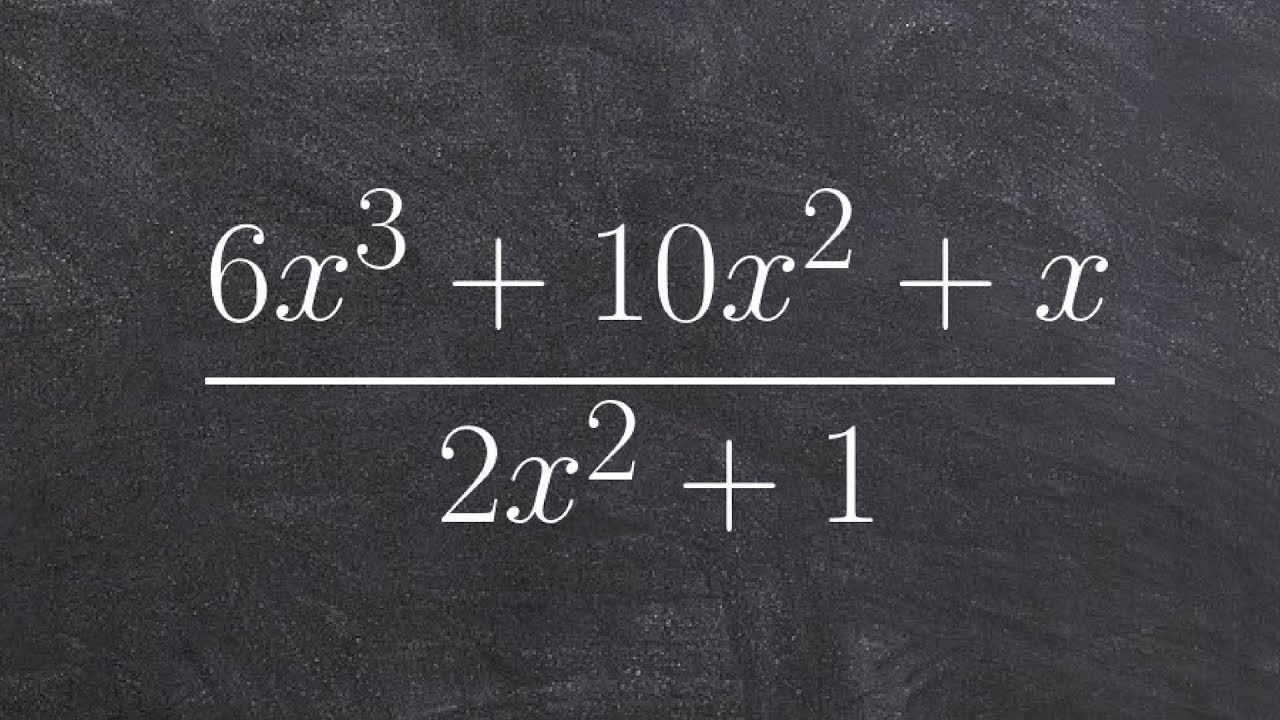
restive river
x^3 - 4x^2 - 7x + 10
 grizzled yew
=0?
restive river
yes
grizzled yew
plug easy values in first
restive river
what are easy values
restive river
I need to find the roots or sum like that
grizzled yew
yea
restive river
grizzled yew
-1,0,1
what do I do with this
 stable storm
do you know the remainder theorem?
restive river
what
grizzled yew
restive river
what does that mean
its a root
stable storm
yeah basically that
grizzled yew
what have you found?
restive river
1
restive river
stable storm
long division afterwards
whats that
restive river
grizzled yew
now do (x^3-4x^2-7x+10)/(x-1)
how do I di this
grizzled yew
look up polynomial long division
 grizzled yew
yeah
restive river
restive river
read this
the 2)
grizzled yew
do that
 outer merlin
P(x) is just the function are you familiar with f(x)? Its the same things just different letter
restive river
outer merlin
P(x) is just the function are you familiar with f(x)? Its the same things just d...
ohhh okay yeah
so now what how do I do this
restive river
grizzled yew
now do (x^3-4x^2-7x+10)/(x-1)
this
outer merlin
Long Divison?
outer merlin
fr
outer merlin
restive river
help please bro 😭
👉 Learn how to divide polynomials by quadratic divisors using the long division algorithm. Before dividing a polynomial, it is usually important to arrange the divisor in the descending order of powers of the variable(s). To divide a polynomial by a quadratic divisor using the long division algorithm, we divide the polynomial (dividend) with the...
Learn that
restive river
outer merlin
https://www.youtube.com/watch?v=U2f5VzKGNPk&ab_channel=BrianMcLogan
but but theres a +10
and no x
What is the question?
outer merlin
restive river
but but theres a +10
Its the same principe
restive river
restive river
What is the question?
x^3-4x^2-7x+10/(x-1)
restive river
outer merlin
Its the same principe
im gonna watch it
outer merlin
The video is only 4minutes take a look at it then give the problem a try
restive river
I dont understand anything he is saying
restive river
restive river
read this
btw the 2) is similar
 frigid sleet
Are you integrating this or just finding the partial fractions expansion
restive river
its what I did in class but I only dont understand
restive river
frigid sleet
Are you integrating this or just finding the partial fractions expansion
what do these words mean
Im tryna find the roots or something like that
frigid sleet
Oh okay
outer merlin
restive river
Im tryna find the roots or something like that
Thats why you need to divide with the known root then solve the quadratic as you normally would
restive river
if this helps
 restive river
outer merlin
Thats why you need to divide with the known root then solve the quadratic as you...
restive river
outer merlin
Thats why you need to divide with the known root then solve the quadratic as you...
how do I divide it
please lord save me
factor theorem and long division
fun
IDK WHAT LONG DIVISION IS
or factor theorem
restive river
restive river
IDK WHAT LONG DIVISION IS
learn it bud
restive river
restive river
learn it bud
I dont understand
outer merlin
Through trial and error(luckily it being 1 in this case) gave you one of the roots X=1. This is why you are diving the given function with (x-1).
restive river
restive river
I dont understand
Aops
MY EXAL IS IN 4 HOURS BUDDY AND I HAVE 30 MORE QUESTIONS
restive river
outer merlin
Through trial and error(luckily it being 1 in this case) gave you one of the roo...
yeah rhat I get it
restive river
restive river
or factor theorem
where u put f(1) = 0, thats factor theorem
Go on art of problem solving
THE REST
outer merlin
restive river
MY EXAL IS IN 4 HOURS BUDDY AND I HAVE 30 MORE QUESTIONS
Look at the vid and follow what he does
restive river
outer merlin
Look at the vid and follow what he does
I DONT UNDERSTAND ANYTHING HE IS DOING
cooked
where did the 3x come from bro
in the vid
y’all are tricking me thats not what I have to do
I never did that in class
restive river
restive river
I DONT UNDERSTAND ANYTHING HE IS DOING
Do you speak english or french
The vid is english
this is whag my teacher did
restive river
restive river
Do you speak english or french
french
frigid sleet
There is more than one method mila
restive river
restive river
french
Do you understand english
restive river
frigid sleet
There is more than one method mila
give me the other method
restive river
restive river
Do you understand english
yes
can y’all explain the method my teacher did
it seems easier
outer merlin
What methos is that
frigid sleet
Show us
restive river
restive river
read this
this 😭😭😭 2)
restive river
restive river
IDK WHAT LONG DIVISION IS
U would learn it in grade 3
righr
I have been strugling since midnight y’all
outer merlin
Where are you from?
restive river
belgium
frigid sleet
I wish my French was better I've only just got home from work ill try my best
restive river
the guy that was supposed to help me literally gave up and left
am I that bad at math
restive river
frigid sleet
I wish my French was better I've only just got home from work ill try my best
I can understand it if u explain it in english dw 😭
except maybe a few words
outer merlin
Dutch, German or French?
restive river
french
 restive river
I never learned this
outer merlin
Watch the video and youll solve your problem
frigid sleet
Factorising, it's seems like the method you've shown above has some substation of values and checking equalities are satisfied. But I'm not sure I'm shattered @restive river
outer merlin
This one might be better: https://www.youtube.com/watch?v=6Nd3qxO0xGE&ab_channel=KhanAcademyFrancophone

Retrouvez des milliers d'autres cours et exercices interactifs 100% gratuits sur http://fr.khanacademy.org
Vidéo sous licence CC-BY-SA.
frigid sleet
What are you finding hard to understand
restive river
she lost me when she started subtracting
I give up y’all
I have another question tho 😔
x^3 - 8x^2 + 16x this I dont get it
frigid sleet
restive river
she lost me when she started subtracting
So when you subtract you get a polynomial of a lower degree. Than before
restive river
frigid sleet
So when you subtract you get a polynomial of a lower degree. Than before
I give up
.close
devout snowBOT
Channel closed
Closed by @dense crane
Use .reopen if this was a mistake.
devout snowBOT
Available help channel!
Send your question here to claim the channel.
Remember:
• Ask your math question in a clear, concise manner.
• Show your work, and if possible, explain where you are stuck.
• After 15 minutes, feel free to ping <@&286206848099549185>.
• Type the command .close to free the channel when you're done.
• Be polite and have a nice day!
Read #❓how-to-get-help for further information on how to ask a good question, and about conduct in the question channels.
 mossy forge
i am having a hard time understanding the solution to this problem: https://artofproblemsolving.com/wiki/index.php/2021_AMC_10B_Problems/Problem_18#Solution_7_.28Complementary_.2B_PIE.29
I tried to use complementary counting so it is equal to 1-P(not every even number appears before an odd number appears)=3/6 (chance for odd)+3/6(chance for even) times 3/6(chance for odd)+3/6(even) times 3/6(even) times 3/6 (odd) +3/6(even) times 3/6 (even) times 2/6 (even that is not the last even remaining) times 3/6 (odd) + same thing before times another 2/6 + etc... till infinity which I used geometric sum to find that the total sum of P is 9/8 which doesn't make sense as 1-9/8 is negative. I don't understand the solutions as at least the simpler ones don't seem to be taking account for the fact that an even number can appear infinite times before an odd number appears
devout snowBOT
mossy forge
i am having a hard time understanding the solution to this problem: https://arto...
 shut pagoda
the simpler solutions are basically looking at only distinct numbers
after you roll a 4 you can ignore it
because it will have no effect on the final probability
after you roll a 4 there is an equal chance of the next distinct number being any of the remaining ones
mossy forge
wait i dont understand y it wont have any effect on the final probability casue what if u get a bunch of 4s with the 2 and 6 before u get the odd number
devout snowBOT
Channel closed
Closed by @mossy forge
Use .reopen if this was a mistake.
devout snowBOT
Available help channel!
Send your question here to claim the channel.
Remember:
• Ask your math question in a clear, concise manner.
• Show your work, and if possible, explain where you are stuck.
• After 15 minutes, feel free to ping <@&286206848099549185>.
• Type the command .close to free the channel when you're done.
• Be polite and have a nice day!
Read #❓how-to-get-help for further information on how to ask a good question, and about conduct in the question channels.
 winter patrol
x^2 - 20x = -100 when x=10
 twin fjord
10, -100
winter patrol
x=10 is the x-coord of the lowest point
-100 is the y-coord
winter patrol
points on the xy plane are represetned by an x-coord and a y-coord
twin fjord
At x=10, there is the lowest point for which the function takes the value -100
winter patrol
wdym
this goes all the way back to coordinate geometry
points on the xy plane are represetned by an x-coord and a y-coord
click on the point at the vertex there
you should see (10,-100)
x=10 is the x-coord of the lowest point
-100 is the y-coord
do you know how to plot points?
or to read points from a graph
devout snowBOT
Channel closed
Closed by @marble otter
Use .reopen if this was a mistake.
devout snowBOT
Available help channel!
Send your question here to claim the channel.
Remember:
• Ask your math question in a clear, concise manner.
• Show your work, and if possible, explain where you are stuck.
• After 15 minutes, feel free to ping <@&286206848099549185>.
• Type the command .close to free the channel when you're done.
• Be polite and have a nice day!
Read #❓how-to-get-help for further information on how to ask a good question, and about conduct in the question channels.
 vital delta
Given this series how to correctly determine the radius of convergence. I am in confusion because:
-If we use the formula (the inverse of d'Alembert Ratio Test) we get R = 1/2
-But I find the interval to be (-π/6, π/6) and somewhere I have read that the radius is the distance from the mid point which is π/6.
Although 1/2 is almost equal to π/6 it does not make sense getting two solutions
 devout snowBOT
vital delta
Given this series how to correctly determine the radius of convergence. I am in ...
devout snowBOT
vital delta
Given this series how to correctly determine the radius of convergence. I am in ...
@vital delta Has your question been resolved?
 vital crown
Actually inverse d'Alembert Ratio Test also gives you the same answer
You'll have |2sinx| <= R, which when you solve for x gives the same interval of -pi/6 to pi/6
You probably forgot that it's sinx and thought of it as |2x| <= R
vital delta
Take a look how I get to the solution 1/2. Why is it wrong?
 vital crown
It's because of a little detail in d'Alembert
Which you I think don't know
Basically when you doing your ratio test, you are ignoring sin(x)^n
However that would also be there
Normally we will have our x to be just a normal x
So even if you don't write it at the end
Like you write 2x <= R or 2 <= R, your R would be fine
But that's not always possible
vital delta
I deliberately missed out (sin x)^n because in my textbook that is how the formula for R is.
Using (sin x)^n helps me find the interval, that is how i knew it was (-π/6, π/6)
vital crown
Yes you should use it in the formula as well
I never was taught the formula with the name
But I used the same method
And this is always there
Because let's imagine it's not
Then the series 2^n/n^2 (sinx)^n
And 2^n/n^2 (100000x)^n
And 2^n/n^2 x^n
And 2^n/n^2 (x + 8)^n etc... would all have same interval
So it's important to also account for the x part
vital delta
Ok I understand that but wait
Using d'Alembert we get |2sinx|. But why do you say that it should be <= R and < 1. Isn't d'Alembert criteria if the limit is < 1 the series converges
vital crown
Yes my bad you're right <= 1, not <= R
vital delta
Yea but that way we are going to find x which is the interval and if apply the definition that the R is the distance from the center to end points it makes sense to be pi/6 but when I am using the formula in my textbook i get 1/2. That is why I am confused, maybe that formula doesn't apply in all cases
vital crown
vital delta
Yea but that way we are going to find x which is the interval and if apply the d...
Okay so
You will have |f(x)| <= 1
Then you solve this for x
You get |x| <= R
If f(x) = x, for example
Then R = 1
If f(x) = x - 1, then R = 2
And so on so forth
If f(x) = sinx, R = pi/2
If f(x) = 2sinx, R = pi/6
vital delta
Well if we solve for |sin x| < 1/2 in my problem we get (-π/6, π/6)
Then how do I determine the R
In this scenario it is a number like -R, R
But If I have gotten an interval like (-3, -1) how would I find that R = 1
vital crown
Here's the thing
sinx < 1/2
So solve for x to find R
x < arcsin(1/2)
Which is pi/6
vital delta
you mean sin x = 1/2, becuase sin x < 1/2 gives an interval?
vital crown
Actually it's sinx <= 1/2
So x <= arcsin(1/2) so |x| <= pi/6 = R
My phone is at 4% I have to go at any second now
vital delta
Ok no problem
vital crown
Hope you understood it, if not just reread the messages give yourself some time ai think you'll get what I' trying to convey
Best of luck, take care!
vital delta
Thanks
<@&286206848099549185> Can anyone explain why in one of the examples the formula provided in my textbook gives the correct radius of convergence but in the other it gives 1/2 when it should be π/6

 devout snowBOT
Please only use the <@&286206848099549185> ping once if your question has not been answered for 15 minutes. Please do not ping or DM individual users about your question.
 toxic kettle
vital delta
<@&286206848099549185> Can anyone explain why in one of the examples the formula...
toxic kettle
vital delta
<@&286206848099549185> Can anyone explain why in one of the examples the formula...
idk
 vital delta
It doesn't make sense the formula to work always i quess.
I should just coinsider the radius is the distance from the midpoint to center
.close
devout snowBOT
Channel closed
Closed by @vital delta
Use .reopen if this was a mistake.
 prisma gust
vital delta
<@&286206848099549185> Can anyone explain why in one of the examples the formula...
prisma gust
vital delta
<@&286206848099549185> Can anyone explain why in one of the examples the formula...
Good to see a microsoft paint buddy lololol
vital delta
I tried that but either I didn't know how to use it or I need paid version idk
devout snowBOT
Available help channel!
Send your question here to claim the channel.
Remember:
• Ask your math question in a clear, concise manner.
• Show your work, and if possible, explain where you are stuck.
• After 15 minutes, feel free to ping <@&286206848099549185>.
• Type the command .close to free the channel when you're done.
• Be polite and have a nice day!
Read #❓how-to-get-help for further information on how to ask a good question, and about conduct in the question channels.
 raven swift
help?
 devout snowBOT
raven swift
help?
raven swift
restive river
Do you know the relationship between radicals and exponents?
devout snowBOT
raven swift
help?
raven swift
restive river
Do you know the relationship between radicals and exponents?
sort of
restive river
Ok so I’ll write out how to do it on a piece of paper then send it and explain I guess
raven swift
restive river
Ok so I’ll write out how to do it on a piece of paper then send it and explain I...
thank you
restive river

I kinda wrote out as many steps as I could
I converted everything to exponent form first
I also wrote 16 and 8 out as 2^4 and 2^3, respectively
Exponents and radicals are pretty confusing at first so it might take a while to go through everything I did
raven swift
restive river
ok this is what i did 4x*x^2/3+2 x 3sqrtrootx^5
restive river
Uh it would be 4x • x^(2/3) + 2cbrt(x^5) so if you meant that x between the 2 and 3 to be a multiplication that’s correct
raven swift
restive river
Uh it would be 4x • x^(2/3) + 2cbrt(x^5) so if you meant that x between the 2 an...
whats cbrt?
restive river
After that you need to write 4x • x^(2/3) as 2x^(5/3) and 4cbrt(x^5) as 4x^(5/3)
It’s cube root
Sqrt = square root and cbrt = cube root
So like the 3rd root
raven swift
restive river
Uh it would be 4x • x^(2/3) + 2cbrt(x^5) so if you meant that x between the 2 an...
so how do i simplify this further?
restive river
raven swift
so how do i simplify this further?
You use the rule x^a • x^b = x^(a+b)
And the rule x^(b/a)= brt(x^b) where brt is the bth root
restive river
raven swift
shouldnt it be 4x^2?
How do you get x^2
raven swift
restive river
How do you get x^2
4x*x^2/3=4x^2
raven swift
restive river
You need to use the rule x^a • x^b = x^(a+b)
but x is diff on both sides
we have 4x
and also x
restive river
Uh the 4 isn’t included in the thing being raised to the power
4x^a ≠ (4x)^a
Order of operations says we have to do exponents first
raven swift
restive river
Order of operations says we have to do exponents first
so whats x on the right hand side?
4x?
raven swift
restive river
Also note x = x^1
alr so after this we add it?
restive river
You add the exponents
Yes
I mean it’s harder to explain with fractions but let’s say we have x^a • x^b where a and b are natural numbers. That’s x multiplied by itself a times multiplied by x multiplied by itself b times
Overall we have x multiplied by itself a+b times hence x^(a+b)
raven swift
restive river
I mean it’s harder to explain with fractions but let’s say we have x^a • x^b whe...
im refering to +cbrt8x^5
restive river
raven swift
im refering to +cbrt8x^5
Oh
Yea you can add them because they are both x^5/3
Otherwise they couldn’t be added
raven swift
restive river
Yea you can add them because they are both x^5/3
oh alr, i got 1
answer choice
restive river
Yea that’s right
devout snowBOT
Channel closed
Closed by @raven swift
Use .reopen if this was a mistake.
devout snowBOT
Available help channel!
Send your question here to claim the channel.
Remember:
• Ask your math question in a clear, concise manner.
• Show your work, and if possible, explain where you are stuck.
• After 15 minutes, feel free to ping <@&286206848099549185>.
• Type the command .close to free the channel when you're done.
• Be polite and have a nice day!
Read #❓how-to-get-help for further information on how to ask a good question, and about conduct in the question channels.
 stable spear
can someone help me here please
 devout snowBOT
stable spear
can someone help me here please
devout snowBOT
stable spear
can someone help me here please
 light light
The derivative by product rule is given by vu' + uv', which means: the second function x the derivative of the first + the first function x the derivative of the second
So you need to multiply z^3-z+2 by the derivative of 6-z^3
And then multiply 6-z^3 by the derivative of z^3-z+2
then add those things together
stable spear
oh wait i simplified too much
i got the answer
(3z^2-1) in the first box
and 2nd box was (-2z)
light light
Yeah when you're using the product rule you generally dont have to simplify much
 stable spear
this is part B
stable spear
stable spear
this is part B
7z^3-6z+12-z^5-2x^2
is what i got
ah thats wrong
i got -z^5+7x^3-2x^2-6z+12 and its wrong also
can someone help
nvm got it
part C

got it
.close
devout snowBOT
Channel closed
Closed by @stable spear
Use .reopen if this was a mistake.
devout snowBOT
Available help channel!
Send your question here to claim the channel.
Remember:
• Ask your math question in a clear, concise manner.
• Show your work, and if possible, explain where you are stuck.
• After 15 minutes, feel free to ping <@&286206848099549185>.
• Type the command .close to free the channel when you're done.
• Be polite and have a nice day!
Read #❓how-to-get-help for further information on how to ask a good question, and about conduct in the question channels.
 edgy pond
hat kind of sign is here: (either positive sign, or negative sign, or positive definite, or negative definite) quadratic form.
 devout snowBOT
edgy pond
hat kind of sign is here: (either positive sign, or negative sign, or positive d...
edgy pond
devout snowBOT
edgy pond
hat kind of sign is here: (either positive sign, or negative sign, or positive d...
edgy pond
<@&286206848099549185>
safe jasper
!15mins
devout snowBOT
Please only use the <@&286206848099549185> ping once if your question has not been answered for 15 minutes. Please do not ping or DM individual users about your question.
safe jasper
!original
devout snowBOT
Please show the original problem, exactly as it was stated to you, with the entire original context. A picture or screenshot is best. If the original problem is not in English, then post it anyway! The additional context might still be helpful. Do your best to provide a translation.
@edgy pond Has your question been resolved?
devout snowBOT
Channel closed
Closed due to timeout
Use .reopen if this was a mistake.
Available help channel!
Send your question here to claim the channel.
Remember:
• Ask your math question in a clear, concise manner.
• Show your work, and if possible, explain where you are stuck.
• After 15 minutes, feel free to ping <@&286206848099549185>.
• Type the command .close to free the channel when you're done.
• Be polite and have a nice day!
Read #❓how-to-get-help for further information on how to ask a good question, and about conduct in the question channels.
 dire slate
Can someone here explain to be proof by contradiction
dire slate
$\neg r \rightarrow F \equiv r$
woven radishBOT
TheKingPin
 dire slate
I believe this is the idea
 final drift
context?
final drift
okay proof by contradiction is basically a way to prove a statement S
we suppose S isn't correct
and then we run into a contradiction
thus our assumption was wrong
lets go through a basic example
"Prove that all primes other than 2 are odd"
Suppose that all primes other than 2 are not all odd
Thus, there exist an even prime p other than 2
However, then p/2 is an integer other than 1 and also a factor of p
thus p isn't prime, a contradiction
thus all primes other than 2 are odd
dire slate
so, we go with the assumption that the negation is true and try to solve it that way?
gaunt galleon
If you care about the logic: $A \implies B$ is equivalent to $$(A \land \neg B) \implies \neg A$$ You can prove this with truth tables.
dire slate
I dont think I follow
woven radishBOT
belabutter
 gaunt galleon
A implies B is what you want to prove. So you assume A and not B and prove that it implies not A. That is proof by contradition. If you fill out the truth tables for both expressions you'll find that they are equivalent.
dire slate
now Im defintely confused
im trying to think where im confused
so, here's my thought process.
You have your proposition $A \rightarrow B$
woven radishBOT
TheKingPin
 dire slate
for whatever reason you need to prove this by contradiction which instead of proving it true you prove it false
this proof type is nonsense
so how do you prove it false
gaunt galleon
you're still trying to prove that $A \implies B$ i true
woven radishBOT
belabutter
 dire slate
$A \rightarrow \neg B$
woven radishBOT
TheKingPin
 woven radishBOT
TheKingPin
 dire slate
why overcomplicate things
gaunt galleon
because given the situation one or the other comes more naturally
dire slate
fair enough
ok, so contradiction
we have to prove that false?
and fail
so prove that $A \implies B$ isnt true
woven radishBOT
TheKingPin
 dire slate
and fail the proof
gaunt galleon
yes, what is the negation of $A \implies B$?
woven radishBOT
belabutter
 dire slate
Well, I dont think theres an implication negation so you put it in the for $\neg A \lor B$
woven radishBOT
TheKingPin
 gaunt galleon
yes
dire slate
then, the negation is $A \land \neg B$
woven radishBOT
TheKingPin
 gaunt galleon
exactly
dire slate
how, there's no way you can just know this will lead to a contradiction just by looking at it. Even if it does there's no way to know when you have reached a contradiction. People just assume their work is wrong
woven radishBOT
belabutter
 gaunt galleon
you do this and this is logically equivalent to $A \implies B$
woven radishBOT
belabutter
 gaunt galleon
you assume A, which is presumably true and you also assume not B
dire slate
isnt that saying $(\neg (A \implies B) \implies \neg A)$ ?
woven radishBOT
TheKingPin
 gaunt galleon
if this implies not A, we are in trouble, because A should be true
gaunt galleon
woven radish
**TheKingPin**
yes
gaunt galleon
so we must assume that B is true
dire slate
I thought the left side is what we assume true
gaunt galleon
dire slate
why do we need to know that
know what?
dire slate
woven radish
**belabutter**
this
why not just stick to the negation of the original statement
and try to prove that
gaunt galleon
because when doing a proof by contradiction you don't think "not (A implies b)", you assume "A is true" and "not B is true" and then prove that this leads to a contradiction.
they are the same
but it's about what's more natural
dire slate
right, cause instead of proving that A implies B we prove its wrong, i.e !(a implies b) which is false, A implies B is only wrong when B is false
oh
so thats why we assume B is false
gaunt galleon
i think you get it
gaunt galleon
we assume not (A implies B) and if it leads to a contradiction, we know it's false
therefore A implies B has to be true
dire slate
ok, so we go with the approach that not(A implies B) is a true statement
and as you said lead to a contradiction because its false
so it must be true that A implies B since not (A implies b ) is false
gaunt galleon
yup
gaunt galleon
that is the "implies not A" part
you start with some assumption
that's A
and if not (A implies B) implies not A we have a contradiction
because A and not A can't be true at the same time
dire slate
im still confused with that not A approach, why not just say, assume A is true and B is false
be proven wrong so we assume A implies B is true
gaunt galleon
that's exactly what you do
dire slate
wait what
gaunt galleon
$(A \land \neg B) \implies \neg A$
woven radishBOT
belabutter
 gaunt galleon
assume A is true and B is false
dire slate
I get the left side is the negation (a implies b)
gaunt galleon
well if A is true and we somehow arrive at the conclusion that "not A" is also true, we have a contradiction
i think we need an example
dire slate
not sure, I follow, wouldn't that be $(A \land \neg B) \land \neg A$ ?
woven radishBOT
TheKingPin
 gaunt galleon
i don't think that would be logically the same as "A implies B" so no
dire slate
true but isnt that what were trying to prove
that A and not A comes out as true
which is a contradiction
gaunt galleon
you can't really prove that because it's always false
gaunt galleon
for example: prove that a>b implies a+c>b+c
dire slate
Law of contradiction, thats what im thinking about $p \land \neg p \equiv \mathbf{F}$