#help-27
1 messages · Page 41 of 1

 sharp dagger

 devout snowBOT
Channel closed
Closed by @sharp dagger
Use .reopen if this was a mistake.
 Available help channel!
Send your question here to claim the channel.
Remember:
• Ask your math question in a clear, concise manner.
• Show your work, and if possible, explain where you are stuck.
• After 15 minutes, feel free to ping <@&286206848099549185>.
• Type the command .close to free the channel when you're done.
• Be polite and have a nice day!
Read #❓how-to-get-help for further information on how to ask a good question, and about conduct in the question channels.
 burnt thunder
 devout snowBOT
burnt thunder
burnt thunder
devout snowBOT
burnt thunder
burnt thunder
Question 1: i need help to get the rest of the Euclidean division of P ( a polynomial in K[X] ) by (X-a)(X-b)
The rest should be written in function of a, b, P(a), and P(b).
<@&286206848099549185>
devout snowBOT
@burnt thunder Has your question been resolved?
devout snowBOT
Channel closed
Closed due to timeout
Use .reopen if this was a mistake.
devout snowBOT
Available help channel!
Send your question here to claim the channel.
Remember:
• Ask your math question in a clear, concise manner.
• Show your work, and if possible, explain where you are stuck.
• After 15 minutes, feel free to ping <@&286206848099549185>.
• Type the command .close to free the channel when you're done.
• Be polite and have a nice day!
Read #❓how-to-get-help for further information on how to ask a good question, and about conduct in the question channels.
 stone crater
 devout snowBOT
stone crater
devout snowBOT
stone crater
 dim spindle
all I can say is, that it must be false.
as the source states, the "Proportional limit" is the point at which no plastic deformation has occurred yet.
sciencedirect.com/topics/engineering/proportional-limit#:~:text=The proportional limit is the,returns to its original dimension.
In that case, you would be right to say, that the Proportional limit is at 80 mm
devout snowBOT
@stone crater Has your question been resolved?
devout snowBOT
Channel closed
Closed due to timeout
Use .reopen if this was a mistake.
devout snowBOT
Available help channel!
Send your question here to claim the channel.
Remember:
• Ask your math question in a clear, concise manner.
• Show your work, and if possible, explain where you are stuck.
• After 15 minutes, feel free to ping <@&286206848099549185>.
• Type the command .close to free the channel when you're done.
• Be polite and have a nice day!
Read #❓how-to-get-help for further information on how to ask a good question, and about conduct in the question channels.
 ashen quail
 devout snowBOT
ashen quail
ashen quail
devout snowBOT
ashen quail
ashen quail
how did they get to that result that I highlighted at the bottom?
im not sure what identity they used to get that
 wispy solstice
did you read the first tip that is in red..?
ashen quail
i dont understand it
wispy solstice
what specifically do you not understand
ashen quail
how did they get the 1+
ashen quail
is that just a method they use to get that 1+y?
cuz im just basing this stuff off a formula sheet but i didnt know you can just do that
 eager quiver
develop sinx(1+cosx) and you will get the original sinx+sinxcosx
ashen quail
ohhhhhhhhh
man my teacher did not go over this
gave us a formula sheet and said gl lmfao
thanks guys
eager quiver
ashen quail
man my teacher did not go over this
he doesn't have to thats some thing that can be used in any situation
ashen quail
he assumes a lot
compared to other teachers he doesnt really demonstrate examples like this
oh well
.close
devout snowBOT
Channel closed
Closed by @ashen quail
Use .reopen if this was a mistake.
Available help channel!
Send your question here to claim the channel.
Remember:
• Ask your math question in a clear, concise manner.
• Show your work, and if possible, explain where you are stuck.
• After 15 minutes, feel free to ping <@&286206848099549185>.
• Type the command .close to free the channel when you're done.
• Be polite and have a nice day!
Read #❓how-to-get-help for further information on how to ask a good question, and about conduct in the question channels.
 knotty bolt
ok
 quaint cove
 knotty bolt
will you close this yourself?
 zenith jacinth
<@&268886789983436800>
 celest dock
.close
devout snowBOT
Channel closed
Closed by @celest dock
Use .reopen if this was a mistake.
 lusty sapphire
 devout snowBOT
Available help channel!
devout snowBOT
Available help channel!
Send your question here to claim the channel.
Remember:
• Ask your math question in a clear, concise manner.
• Show your work, and if possible, explain where you are stuck.
• After 15 minutes, feel free to ping <@&286206848099549185>.
• Type the command .close to free the channel when you're done.
• Be polite and have a nice day!
Read #❓how-to-get-help for further information on how to ask a good question, and about conduct in the question channels.
 undone walrus
okay.
Topic: tangents
given is the function f with f(x) = x^2 - 3x +2 with a graph K(no graph in the book btw)
Determine the equation of the tangent on K in point P( 4 | f(4) )
devout snowBOT
undone walrus
okay.
Topic: tangents
given is the function f with f(x) = x^2 - 3x +2 with a g...
undone walrus
do I have to show a graph here? even though the task doesn't specify
solution:
tangent equation in PSF: y = 5(x-4)+6
tangent equation in main shape: y = 5x - 14
what do I even have to do?
lusty sapphire
The derivative will give you your slope
And you know one of the points the line will have
 undone walrus
solution:
tangent equation in PSF: y = 5(x-4)+6
tangent equation in main shape: ...
undone walrus
undone walrus
solution:
tangent equation in PSF: y = 5(x-4)+6
tangent equation in main shape: ...
^
devout snowBOT
@undone walrus Has your question been resolved?
 warped relic
Heyoo
Oki what I understand is
You have a function
And you want to find the tangent line at P(4, f(4))
Right?
@undone walrus
undone walrus
uh
undone walrus
undone walrus
okay.
Topic: tangents
given is the function f with f(x) = x^2 - 3x +2 with a g...
^
Determine the equation of the tangent on K in point P( 4 | f(4))
@warped relic
warped relic
Graph K?
undone walrus
yea
warped relic
Hmm
I guess that's like "Figure 10" or something
Anyways
You have your f(x) = x^2 -3x +2
And you want your tangent line at x=4
Take the derivative of f(x)
undone walrus
$2x - 3$
 woven radishBOT
TheLegend27
 warped relic
Oki
undone walrus
then I calculate the slope at x=4
undone walrus
$f´(4) = 2 * 4 - 3 = 5$
woven radishBOT
TheLegend27
Compile Error! Click the  reaction for more information.
(You may edit your message to recompile.)
 warped relic
Oki
undone walrus
$y = m * x + b = 5 * x + b$
woven radishBOT
TheLegend27
 warped relic
Nope
undone walrus
?
woven radishBOT
VulcanOne
 woven radishBOT
VulcanOne

 undone walrus
woven radish
**TheLegend27**
undone walrus
woven radish
**TheLegend27**
so, this is correct?
warped relic
You just find your b by plugging in x=4 and y = f(4)
undone walrus
undone walrus
so, this is correct?
?
warped relic
Yep

 woven radishBOT
TheLegend27
 undone walrus
warped relic
Why did you divide by 5 and 4?
undone walrus
warped relic
Why did you divide by 5 and 4?
to isolate b
undone walrus
undone walrus
we also did that here
warped relic
5(4) + b = 6
undone walrus
u get -1
woven radishBOT
TheLegend27
 warped relic
Same thing
undone walrus
no?
undone walrus
why bracket 4
undone walrus
OOOOOOH
undone walrus
undone walrus
this was also done -->
0.5 * 1 = 0.5 | /-0,5 = -1
now I see my mistake
okay okay
thank you :))))
woven radishBOT
TheLegend27
 undone walrus
if I have to do -20 or (divide)20
undone walrus
when would I need to use division?
undone walrus
-5
3x = 5
 warped relic
undone walrus
U are a life savior <:catblush:563818370550595606>
warped relic
undone walrus
U are a life savior <:catblush:563818370550595606>

Please get your own help channel
I'll check it out but please wait
undone walrus
.close
devout snowBOT
Channel closed
Closed by @undone walrus
Use .reopen if this was a mistake.
Available help channel!
Send your question here to claim the channel.
Remember:
• Ask your math question in a clear, concise manner.
• Show your work, and if possible, explain where you are stuck.
• After 15 minutes, feel free to ping <@&286206848099549185>.
• Type the command .close to free the channel when you're done.
• Be polite and have a nice day!
Read #❓how-to-get-help for further information on how to ask a good question, and about conduct in the question channels.
devout snowBOT
warped relic
I think it is defining the delta epsilon
 long kettle
Basically, it's saying that, if you give me a number, no matter how small (ε), I can pick an interval around x = c (δ) where every single point in that interval (including at c) is within ε units from f(c)
This is identical to the definition of a limit, except we also look at x = c, while in limits, we don't
This manifests in the continuity definition saying "|x - c| < δ" while the definition of a limit says "0 < |x - c| < δ"
devout snowBOT
@reef tendon Has your question been resolved?
long kettle
Do you intend on speaking or are you gonna leave the channel open without saying anything
devout snowBOT
Channel closed
Closed by @reef tendon
Use .reopen if this was a mistake.
Available help channel!
Send your question here to claim the channel.
Remember:
• Ask your math question in a clear, concise manner.
• Show your work, and if possible, explain where you are stuck.
• After 15 minutes, feel free to ping <@&286206848099549185>.
• Type the command .close to free the channel when you're done.
• Be polite and have a nice day!
Read #❓how-to-get-help for further information on how to ask a good question, and about conduct in the question channels.
 warped widget
 devout snowBOT
warped widget
warped widget
devout snowBOT
warped widget
warped widget
how do i find D coordinates
devout snowBOT
@warped widget Has your question been resolved?
devout snowBOT
Channel closed
Closed due to timeout
Use .reopen if this was a mistake.
Available help channel!
Send your question here to claim the channel.
Remember:
• Ask your math question in a clear, concise manner.
• Show your work, and if possible, explain where you are stuck.
• After 15 minutes, feel free to ping <@&286206848099549185>.
• Type the command .close to free the channel when you're done.
• Be polite and have a nice day!
Read #❓how-to-get-help for further information on how to ask a good question, and about conduct in the question channels.
 quasi yoke
hi!
devout snowBOT
quasi yoke
hi!
quasi yoke

 craggy dagger
Solve the homogeneous one and guess for a particular solution
quasi yoke
yes I have gotten to particular solution
x = t^2/4 -t/8 -1/8
do I just find general solution after this and solve?
quasi yoke
warped relic
You add up your complementary and particular solutions
got it! tysm!
warped relic
quasi yoke
.close
devout snowBOT
Channel closed
Closed by @quasi yoke
Use .reopen if this was a mistake.
devout snowBOT
Available help channel!
Send your question here to claim the channel.
Remember:
• Ask your math question in a clear, concise manner.
• Show your work, and if possible, explain where you are stuck.
• After 15 minutes, feel free to ping <@&286206848099549185>.
• Type the command .close to free the channel when you're done.
• Be polite and have a nice day!
Read #❓how-to-get-help for further information on how to ask a good question, and about conduct in the question channels.
 vivid cliff
sup my little cupids
devout snowBOT
vivid cliff
sup my little cupids

 quasi yoke
why are you everywhere 👻
first one u can expand (z-a)(z-b)(z-y)
pretend the a b and y are the Greek symbols
vivid cliff
alr
quasi yoke
maybe u can use cosine rule and interpret through graphically
 brisk totem
quasi yoke
brisk totem
quasi yoke
ohh yes u can do |w-a|^2 = (w-a)* (w*-a*) = |w|^2 - aw* - a*w + |a|^2
and use a+b+c= 0
and similarly for a* + b* + c*
quasi yoke
yaey
vivid cliff
missing my little white pie rn
devout snowBOT
@vivid cliff Has your question been resolved?
devout snowBOT
Channel closed
Closed due to timeout
Use .reopen if this was a mistake.
Available help channel!
Send your question here to claim the channel.
Remember:
• Ask your math question in a clear, concise manner.
• Show your work, and if possible, explain where you are stuck.
• After 15 minutes, feel free to ping <@&286206848099549185>.
• Type the command .close to free the channel when you're done.
• Be polite and have a nice day!
Read #❓how-to-get-help for further information on how to ask a good question, and about conduct in the question channels.
 marsh agate
Hey guys, can you help me, i dont understand with half bottom of this proof, i dont understand how can b defined out of nowhere
 devout snowBOT
marsh agate
Hey guys, can you help me, i dont understand with half bottom of this proof, i d...
craggy dagger
devout snowBOT
marsh agate
Hey guys, can you help me, i dont understand with half bottom of this proof, i d...
craggy dagger
the motivation is that it disagrees with each number in at least one digit
marsh agate
What if b is a repeating number, since a1,a2,... can be anything?
I mean how can we be sure that b != an
long kettle
How would b = a_n given the definition?
marsh agate
Maybe, Since a_n can be irrational, there could be one that has the same value as b
long kettle
Consider if they had the same value
Then that means, when a_n has a 5 in the decimal place, b does too
But, by definition, when a_n has a 5, b has a 4
craggy dagger
b doesn't have to be irrational
long kettle
And if a_n has something other than 5 in the decimal place, b must have that same number, which is different from 5
But when a_n has something other than 5, b has 5 by definition
No matter what, it's different
devout snowBOT
Channel closed
Closed by @marsh agate
Use .reopen if this was a mistake.
Available help channel!
Send your question here to claim the channel.
Remember:
• Ask your math question in a clear, concise manner.
• Show your work, and if possible, explain where you are stuck.
• After 15 minutes, feel free to ping <@&286206848099549185>.
• Type the command .close to free the channel when you're done.
• Be polite and have a nice day!
Read #❓how-to-get-help for further information on how to ask a good question, and about conduct in the question channels.
 ember palm
What's the difference between a collinear vector and a parallel vector?
ember palm

long kettle
None
ember palm
Wut da phuk?
long kettle
Different names for the same thing
ember palm
Then why "show that these two vectors and collinear" Can't be proved it I prove it through parallel
By having their vector product 0
long kettle
You can
long kettle
Can I see?
long kettle
:(
ember palm
Ain't got it written
long kettle
Either the teachers fault or you made a mistake somewhere
long kettle
I guess that works too
devout snowBOT
Channel closed
Closed by @ember palm
Use .reopen if this was a mistake.
devout snowBOT
Available help channel!
Send your question here to claim the channel.
Remember:
• Ask your math question in a clear, concise manner.
• Show your work, and if possible, explain where you are stuck.
• After 15 minutes, feel free to ping <@&286206848099549185>.
• Type the command .close to free the channel when you're done.
• Be polite and have a nice day!
Read #❓how-to-get-help for further information on how to ask a good question, and about conduct in the question channels.
 finite inlet
If the sequence in a series does not converge to 0, then the series diverges. Does that mean a series never converges to a non-zero value?
devout snowBOT
finite inlet
If the sequence in a series does not converge to 0, then the series diverges. Do...
 restive river
pls help this is timed homework
 finite inlet

restive river
u got here first sorry i leave
finite inlet

 low holly
finite inlet
If the sequence in a series does not converge to 0, then the series diverges. Do...
low holly
finite inlet
If the sequence in a series does not converge to 0, then the series diverges. Do...
do you mean the value of the series itself, or its terms?
your first sentence is correct
your second statement is incorrect (e.g. geometric series)
low holly
i'll give you an example to make it clear maybe
$1 + \frac{1}{2} + \frac{1}{4} + \frac{1}{8} + \cdots = \frac{1}{1-\frac{1}{2}} = 2$
woven radishBOT
tushar
 finite inlet
I wonder because if the series can only converge if the sequence converges to 0 then I thought the series must also converge to 0, but I guess the first few terms can give it a non-zero value anyway?
finite inlet
woven radish
**tushar**
ah yeah I see
low holly
finite inlet
I wonder because if the series can only converge if the sequence converges to 0 ...
exactly, or even all the terms
since converging to zero doesn't mean that any term has to take on the value of zero
finite inlet
ahhh okay
low holly
every term could still be contributing a varying positive amount to the sum
finite inlet
thank you 👍
low holly
happy to help
finite inlet
.close
devout snowBOT
Channel closed
Closed by @finite inlet
Use .reopen if this was a mistake.
Available help channel!
Send your question here to claim the channel.
Remember:
• Ask your math question in a clear, concise manner.
• Show your work, and if possible, explain where you are stuck.
• After 15 minutes, feel free to ping <@&286206848099549185>.
• Type the command .close to free the channel when you're done.
• Be polite and have a nice day!
Read #❓how-to-get-help for further information on how to ask a good question, and about conduct in the question channels.
restive river
I'm not sure how to simplify this properly
could someone assist me
do you know https://www.symbolab.com/
Symbolab: equation search and math solver - solves algebra, trigonometry and calculus problems step by step
could help
 stark anvil

If a number is inside the root for example √45 just do the prime factorization of 45 and multiply the number outside of the root that is repeated twice
For exanple 2√45
45 = 5 × 3 × 3
2√5×3×3
2×3√5
6√5
restive river
stark anvil
If a number is inside the root for example √45 just do the prime factorization o...
oh ok
restive river
restive river
do you know https://www.symbolab.com/
alr ty
restive river
stark anvil
2×3√5
what happens to the other x3
stark anvil
How do you define a number inside the root for example √9
Square root of √9 is 3 right
restive river
yes
stark anvil
Similiarly
√45 can be written as √9 × √5
So √9 becomes 3
3√5
Since we already have a 2 outside we multiply it with 3
To get 6√5
restive river
ah yes
right
alright ty
what about the denominator
how would u simplify √2025
.close
devout snowBOT
Channel closed
Closed by @digital ridge
Use .reopen if this was a mistake.
Available help channel!
Send your question here to claim the channel.
Remember:
• Ask your math question in a clear, concise manner.
• Show your work, and if possible, explain where you are stuck.
• After 15 minutes, feel free to ping <@&286206848099549185>.
• Type the command .close to free the channel when you're done.
• Be polite and have a nice day!
Read #❓how-to-get-help for further information on how to ask a good question, and about conduct in the question channels.
restive river
<@&286206848099549185>
devout snowBOT
restive river
<@&286206848099549185>
devout snowBOT
Please only use the <@&286206848099549185> ping once if your question has not been answered for 15 minutes. Please do not ping or DM individual users about your question.
restive river
knotty bolt
check <#488120190538743810>
okayyyy
 supple knot
.close
devout snowBOT
Channel closed
Closed by @supple knot
Use .reopen if this was a mistake.
Available help channel!
Send your question here to claim the channel.
Remember:
• Ask your math question in a clear, concise manner.
• Show your work, and if possible, explain where you are stuck.
• After 15 minutes, feel free to ping <@&286206848099549185>.
• Type the command .close to free the channel when you're done.
• Be polite and have a nice day!
Read #❓how-to-get-help for further information on how to ask a good question, and about conduct in the question channels.
 fair crescent
lim
x---> infinity (2x+5/2x-1)^3x+4
devout snowBOT
fair crescent
lim
x---> infinity (2x+5/2x-1)^3x+4
fair crescent
find the first derivative
 narrow plank
$\lim_{x \to \infty} \left( \frac{2x+5}{2x-1} \right)^{3x + 4}$?
woven radishBOT
Shenmaster
 fair crescent
i considered the entire limit as y and did the logarithmic
narrow plank
That limit will turn out to be a number, so its derivative will be 0
fair crescent
fair crescent
i considered the entire limit as y and did the logarithmic
lny = lim x---> infinity 3x+4 * ln(2x+5/2x-1)
= lim x---> infinity (2/2x-5 - 2/2x+1) /-3(3x+1)^-2
i don't know what to do after this point
restive river
woven radish
**Shenmaster**
oooooooooo
this is seems like it could be an interesting application of the limit definition of e
restive river
woven radish
**Shenmaster**
hmmm @supple knot what do u think
so
[
\lim_{x \to \infty} (\frac{2x+5}{2x-1})^{3x+4}
]
[
\to \lim_{x \to \infty} (1 + \frac{6}{2x-1})^{3x+4}
]
woven radishBOT
♡LexQa♡
 fair crescent
what did you do here?
fair crescent
how come
 timber patio
You could also do this
 restive river
fair crescent
what did you do here?
restive river
fair crescent
what did you do here?
do u know the limit definition of e
fair crescent
restive river
do u know the limit definition of e
no
woven radishBOT
♡LexQa♡
 supple knot
restive river
hmmm <@261933205387477002> what do u think
supple knot
restive river
hmmm <@261933205387477002> what do u think
just take the log then find the limit of that
restive river
i mean limit definition of e works too but 😵💫
fair crescent
i dont know that either
this is my second time approaching limits since high school
timber patio
Do you know l'hospital?
fair crescent
yes
timber patio
timber patio
You could also do this
Try rewriting it like this
restive river
woven radish
**♡LexQa♡**
anyways from this,
[
\lim_{x \to \infty} (\frac{2x+5}{2x-1})^{3x+4}
]
[
\to \lim_{x \to \infty} (1 + \frac{6}{2x-1})^{3x+4}
]
[
\to \lim_{x \to \infty} (1 + \frac{3}{x-\frac{1}{2}})^{3x+4}
]
woven radishBOT
♡LexQa♡
 fair crescent
timber patio
You could also do this
fair crescent
timber patio
You could also do this
wheres the limit?
fair crescent
woven radish
**♡LexQa♡**
how did we get 1+6
timber patio
fair crescent
wheres the limit?
I didn't write it because i was lazy lol, its supposed to be there
fair crescent
timber patio
I didn't write it because i was lazy lol, its supposed to be there
so y = lim e^lny ---> (2x+5/2x-1) = e^(3x+4) ln(2x+5/2x-1)?
 main gull
restive river
anyways from this,
\[
\lim_{x \to \infty} (\frac{2x+5}{2x-1})^{3x+4}
\]
\[
\to \...
main gull
restive river
anyways from this,
\[
\lim_{x \to \infty} (\frac{2x+5}{2x-1})^{3x+4}
\]
\[
\to \...
Fyi if you do \left and \right before each parentheses, it makes it bigger
timber patio
Theres probably an easier way to solve it but this is how I did
 restive river
woven radish
**♡LexQa♡**
restive river
woven radish
**♡LexQa♡**
just this really
timber patio
Oops this was wrong
 restive river
main gull
Fyi if you do \left and \right before each parentheses, it makes it bigger
restive river
main gull
Fyi if you do \left and \right before each parentheses, it makes it bigger
oh like
fair crescent
woven radish
**♡LexQa♡**
i dont know how to get to this point
restive river
[
\left(x \right)
]
woven radishBOT
♡LexQa♡
 timber patio
restive river
just this really
timber patio
restive river
just this really
I've just never seen that before that why i showed this solution
We werent taught that limit in school
fair crescent
timber patio
I've just never seen that before that why i showed this solution
whats your solution in the end?
like what is the limit nearing to
timber patio
fair crescent
whats your solution in the end?
1
restive river
no lol
fair crescent
no
restive river
it is e^9
timber patio
Really?
fair crescent
i dont know how
main gull
restive river
anyways from this,
\[
\lim_{x \to \infty} (\frac{2x+5}{2x-1})^{3x+4}
\]
\[
\to \...
anyways from this,
[
\lim_{x \to \infty} \left(\frac{2x+5}{2x-1}\right)^{3x+4}
]
[
\to \lim_{x \to \infty} \left(1 + \frac{6}{2x-1}\right)^{3x+4}
]
[
\to \lim_{x \to \infty} \left(1 + \frac{3}{x-\frac{1}{2}}\right)^{3x+4}
]
woven radishBOT
dldh06
 restive river
oh thanks lots, never knew of it!
timber patio
I forgot a +1 in my solution and it all went to hell
restive river
woven radish
**♡LexQa♡**
this simplifies to (e^3)^3 more or less, but explaining that is going to take so long, u might as well just live with someone else explaining it with l'hopital 
fair crescent
nobody explained it to me with lhopital
and everytime i asked someone i got a different method
sigh
.close
devout snowBOT
Channel closed
Closed by @fair crescent
Use .reopen if this was a mistake.
Available help channel!
Send your question here to claim the channel.
Remember:
• Ask your math question in a clear, concise manner.
• Show your work, and if possible, explain where you are stuck.
• After 15 minutes, feel free to ping <@&286206848099549185>.
• Type the command .close to free the channel when you're done.
• Be polite and have a nice day!
Read #❓how-to-get-help for further information on how to ask a good question, and about conduct in the question channels.
timber patio
@fair crescent
Do you know how to solve this limit with l'hopital?
 devout snowBOT
timber patio
<@500289821802233856>
Do you know how to solve this limit with l'hopital?
timber patio
devout snowBOT
timber patio
<@500289821802233856>
Do you know how to solve this limit with l'hopital?
timber patio
Well if you write it like this it becomes 0/0 so you can use l'hopital
 fair crescent
yes
timber patio
You should be able to solve it from there
fair crescent
fair crescent
lim x---> infinity (2/2x-5 - 2/2x+1) /-3(3x+1)^-2
after that i use lhopital and get this
then idk what to do
timber patio
You must have calculated something wrong

Because if you take the limit of that its equal to 9 so you get as a solution e^9 which i think you said was the right answer
fair crescent
timber patio
Because if you take the limit of that its equal to 9 so you get as a solution e^...
that is equal to 9 but remember the limit is lny
timber patio
No the limit is e^y
fair crescent
timber patio
Well if you write it like this it becomes 0/0 so you can use l'hopital
if you did it this way then limit is gonna be lny
cus u did ln of both sides
fair crescent
timber patio
You must have calculated something wrong
lny= all this (which you said was 9)
y = e^9
timber patio
timber patio
You could also do this
What i did was rewrite whats inside the limit like this
And then set everything thats on e exponent as y
fair crescent
ok i got it thank you
devout snowBOT
Channel closed
Closed by @timber patio
Use .reopen if this was a mistake.
Available help channel!
Send your question here to claim the channel.
Remember:
• Ask your math question in a clear, concise manner.
• Show your work, and if possible, explain where you are stuck.
• After 15 minutes, feel free to ping <@&286206848099549185>.
• Type the command .close to free the channel when you're done.
• Be polite and have a nice day!
Read #❓how-to-get-help for further information on how to ask a good question, and about conduct in the question channels.
 wooden island


 devout snowBOT
wooden island
wooden island
devout snowBOT
wooden island
wooden island
i’m not sure where i went wrong
 hybrid elk
u wrote $$x+4\cdot x^2$$ to equal $$x+4+x^2$$
woven radishBOT
light
 hybrid elk
you can further reduce the top and bottom by x
wooden island
i thought when they multiply it’s adding?
hybrid elk
$$\frac{x+4}{2x}\cdot\frac{x^2}{3(x-8)}$$
woven radishBOT
light
 hybrid elk
thats essentially what u have
hybrid elk
wooden island
i thought when they multiply it’s adding?
no, its multiply
$$\frac{a}{b}\cdot\frac{c}{d}=\frac{a\cdot c}{b\cdot d}$$
woven radishBOT
light
 wooden island
woven radish
**light**
wooden island
woven radish
**light**
so how do i get to the correct answer from this?
hybrid elk
x^2 is just (x)(x)
$$\frac{x+4}{2\cancel{x}}\cdot\frac{(x)\cancel{(x)}}{3(x-8)}=\frac{x+4}{2}\cdot\frac{x}{3(x-8)}$$
woven radishBOT
light
 hybrid elk
then multiply the numerators together and then multiply the denominators together
wooden island
so combine the like terms (x) to get it squared?
hybrid elk
yeah you would get x^2 + 4x for the numerator
wooden island
wait how do i get that if there are only two x on the numerators?
hybrid elk
wdym?
wooden island
how do i get x^2 + 4x with x + 4 * x
hybrid elk
$$x\cdot x + 4\cdot x$$
woven radishBOT
light
 devout snowBOT
Channel closed
Closed by @wooden island
Use .reopen if this was a mistake.
Available help channel!
Send your question here to claim the channel.
Remember:
• Ask your math question in a clear, concise manner.
• Show your work, and if possible, explain where you are stuck.
• After 15 minutes, feel free to ping <@&286206848099549185>.
• Type the command .close to free the channel when you're done.
• Be polite and have a nice day!
Read #❓how-to-get-help for further information on how to ask a good question, and about conduct in the question channels.
 verbal robin
Help me solve this! Please explain as well as you can, and be patient, as I am stupid sometimes
 devout snowBOT
verbal robin
Help me solve this! Please explain as well as you can, and be patient, as I am s...
devout snowBOT
verbal robin
Help me solve this! Please explain as well as you can, and be patient, as I am s...
 brazen parcel
verbal robin
Help me solve this! Please explain as well as you can, and be patient, as I am s...
brazen parcel
verbal robin
Help me solve this! Please explain as well as you can, and be patient, as I am s...
which part do you need help in?
@verbal robin
devout snowBOT
@verbal robin Has your question been resolved?
devout snowBOT
Channel closed
Closed due to timeout
Use .reopen if this was a mistake.
Available help channel!
Send your question here to claim the channel.
Remember:
• Ask your math question in a clear, concise manner.
• Show your work, and if possible, explain where you are stuck.
• After 15 minutes, feel free to ping <@&286206848099549185>.
• Type the command .close to free the channel when you're done.
• Be polite and have a nice day!
Read #❓how-to-get-help for further information on how to ask a good question, and about conduct in the question channels.
 urban marsh
hi
devout snowBOT
urban marsh
hi
urban marsh
can someone help me with a discord server?
 winter hound
urban marsh
can someone help me with a discord server?
winter hound
urban marsh
can someone help me with a discord server?
This is a math helping server.
If you are asking for help in non-math related, please close this channel.
urban marsh
winter hound
If you are asking for help in non-math related, please close this channel.
do you have server that helps with discord server
winter hound
urban marsh
do you have server that helps with discord server
No
urban marsh
im wait for someone
devout snowBOT
Channel closed
Closed by @urban marsh
Use .reopen if this was a mistake.
devout snowBOT
Available help channel!
Send your question here to claim the channel.
Remember:
• Ask your math question in a clear, concise manner.
• Show your work, and if possible, explain where you are stuck.
• After 15 minutes, feel free to ping <@&286206848099549185>.
• Type the command .close to free the channel when you're done.
• Be polite and have a nice day!
Read #❓how-to-get-help for further information on how to ask a good question, and about conduct in the question channels.
 wet fox
 wet fox
Can someone help me with this question
devout snowBOT
@wet fox Has your question been resolved?
 cobalt mauve
wet fox
Can someone help me with this question
cobalt mauve
wet fox
Can someone help me with this question
Okey, so we need to construct a matrix of linear transformation such that goes from $e_3$ to $e_3$, so $[P]_{e_3}^{e_3}$, right?
woven radishBOT
marejak023
 zenith jacinth
thats not what it is asking tho
devout snowBOT
Channel closed
Closed due to timeout
Use .reopen if this was a mistake.
cobalt mauve
zenith jacinth
thats not what it is asking tho
wait what is it the? i thought that they need the matrix that will do transform
devout snowBOT
Available help channel!
Send your question here to claim the channel.
Remember:
• Ask your math question in a clear, concise manner.
• Show your work, and if possible, explain where you are stuck.
• After 15 minutes, feel free to ping <@&286206848099549185>.
• Type the command .close to free the channel when you're done.
• Be polite and have a nice day!
Read #❓how-to-get-help for further information on how to ask a good question, and about conduct in the question channels.
zenith jacinth
its asking for the expression of the matrix in the basis {e_i} (1<= i <= 3)
devout snowBOT
zenith jacinth
its asking for the expression of the matrix in the basis {e_i} (1<= i <= 3)
zenith jacinth
@cobalt mauve
 real grail
$P*e_1 = e_3 \eq \matr[b]{a&b&c\d&e&f\g&h&i}* \matr[b]{1\0\0} = \matr[b]{0\0\1}$
woven radishBOT
Mehdi_Moulati
 zenith jacinth
real grail
$P\*e_1 = e_3 \eq \matr[b]{a&b&c\\d&e&f\\g&h&i}\* \matr[b]{1\\0\\0} = \matr[b]{0...
zenith jacinth
real grail
$P\*e_1 = e_3 \eq \matr[b]{a&b&c\\d&e&f\\g&h&i}\* \matr[b]{1\\0\\0} = \matr[b]{0...
you dont even need to go that far
zenith jacinth

restive river
.close
devout snowBOT
Channel closed
Closed by @reef sable
Use .reopen if this was a mistake.
restive river
saved u the time 
devout snowBOT
Available help channel!
Send your question here to claim the channel.
Remember:
• Ask your math question in a clear, concise manner.
• Show your work, and if possible, explain where you are stuck.
• After 15 minutes, feel free to ping <@&286206848099549185>.
• Type the command .close to free the channel when you're done.
• Be polite and have a nice day!
Read #❓how-to-get-help for further information on how to ask a good question, and about conduct in the question channels.
 waxen stump
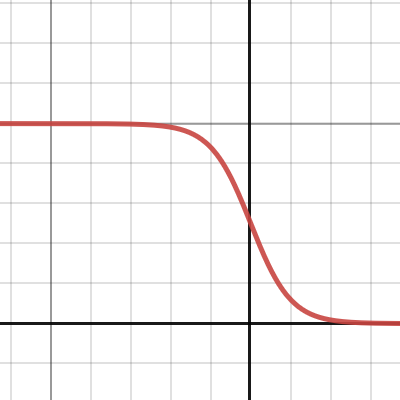
doing some desmos art, is there any funtion that does that s like shape in between me two lines htat i already made
 devout snowBOT
waxen stump
doing some desmos art, is there any funtion that does that s like shape in betwe...
low holly
waxen stump
doing some desmos art, is there any funtion that does that s like shape in betwe...
devout snowBOT
waxen stump
doing some desmos art, is there any funtion that does that s like shape in betwe...
low holly
waxen stump
doing some desmos art, is there any funtion that does that s like shape in betwe...
maybe a logistic?
waxen stump
ahhhh thnx ill take a look
 low holly
.close
devout snowBOT
Channel closed
Closed by @waxen stump
Use .reopen if this was a mistake.
Available help channel!
Send your question here to claim the channel.
Remember:
• Ask your math question in a clear, concise manner.
• Show your work, and if possible, explain where you are stuck.
• After 15 minutes, feel free to ping <@&286206848099549185>.
• Type the command .close to free the channel when you're done.
• Be polite and have a nice day!
Read #❓how-to-get-help for further information on how to ask a good question, and about conduct in the question channels.
 boreal sage
I need help with this question
 devout snowBOT
boreal sage
I need help with this question
boreal sage
devout snowBOT
boreal sage
I need help with this question
boreal sage
i need to simplify it but i got no clue how to start

tried to use de morgans law first with the double complement law but i just got more confused
the only i thought of doing it is like this

but am not sure if thats correct
 rigid terrace
wait
im gonna try to solve it now
the answer is 1

- is union
• is intersection
you use the de morgans law first
and then you see that we have A union not A
which is 1
and we also have C union not C
which is also 1
1 union with any other element is 1
rigid terrace
hm
yeah i think yes
I did the exercise like its a Boolean algebra exercise
you did it the Math way
but its the same thing
only different symbols
boreal sage
maybe am not sure
rigid terrace
how is that called in your book?
which school lesson is that?
and which subject is that?
boreal sage
discreet mathematics simplifying sets
boreal sage
that one of the inverse laws
rigid terrace
yeah
boreal sage
A U not A = U
rigid terrace
yeah
thats correct
the answer is U
U in math is the same as 1 in Boolean algebra
rigid terrace
are bad?
rigid terrace
do you need help with any other exercises?
rigid terrace
okay np
boreal sage
.close
devout snowBOT
Channel closed
Closed by @boreal sage
Use .reopen if this was a mistake.
devout snowBOT
Available help channel!
Send your question here to claim the channel.
Remember:
• Ask your math question in a clear, concise manner.
• Show your work, and if possible, explain where you are stuck.
• After 15 minutes, feel free to ping <@&286206848099549185>.
• Type the command .close to free the channel when you're done.
• Be polite and have a nice day!
Read #❓how-to-get-help for further information on how to ask a good question, and about conduct in the question channels.
 small raptor
 devout snowBOT
small raptor
https://gyazo.com/a4c31ee76e9b24fe54275b783e50e8ea
small raptor
devout snowBOT
small raptor
https://gyazo.com/a4c31ee76e9b24fe54275b783e50e8ea
small raptor
i swear its impossible to put it in the form alog(7)
u cannot simplify 7log7 - 7log8 to alog7
 topaz beacon
not necessarily
i havent actually done the calculation but it say b is an integer
could be negative
small raptor
no no
ive integrated it
i just typed it wrong
But yea
thanks didnt see that
.close
devout snowBOT
Channel closed
Closed by @small raptor
Use .reopen if this was a mistake.
Available help channel!
Send your question here to claim the channel.
Remember:
• Ask your math question in a clear, concise manner.
• Show your work, and if possible, explain where you are stuck.
• After 15 minutes, feel free to ping <@&286206848099549185>.
• Type the command .close to free the channel when you're done.
• Be polite and have a nice day!
Read #❓how-to-get-help for further information on how to ask a good question, and about conduct in the question channels.
 coarse current
For all complex numbers z, z=a+bi is such that z is an element of complex numbers, a is Re(x), b is Im(x)
devout snowBOT
coarse current
For all complex numbers z, z=a+bi is such that z is an element of complex number...
coarse current
How do I write that in set notation?
 hollow pollen
would you like to write the set of complex numbers?
low holly
what set do you want to write?
 tropic kindle
ℂ

low holly
what is x?
 torn wave
i mean its an exponent of i and itself is real, but bi is imaginary as a whole
tropic kindle
the problem is weird, i always use Re z and Im z
cause, how can Im be Im(x)
torn wave
yeah, maybe x is a new variable?
devout snowBOT
@coarse current Has your question been resolved?
tropic kindle
Z∈C
idk
z∈ℂ <-> [∀z=a+ib ∃a=Re & ∃b=Im]
i dont rly understand what do you want
it should be ∈ before Re and Im, instead of =
 worn sphinx
If $x\in\bC$ is fixed, then
$${z=a+bi\in\bC:a=\operatorname{Re}(x)\land b=\operatorname{Im}(x)}={x}$$
lol
Whoops typo
woven radishBOT
Lorago
 devout snowBOT
Channel closed
Closed due to timeout
Use .reopen if this was a mistake.
Available help channel!
Send your question here to claim the channel.
Remember:
• Ask your math question in a clear, concise manner.
• Show your work, and if possible, explain where you are stuck.
• After 15 minutes, feel free to ping <@&286206848099549185>.
• Type the command .close to free the channel when you're done.
• Be polite and have a nice day!
Read #❓how-to-get-help for further information on how to ask a good question, and about conduct in the question channels.
 mystic lava
How to find the limit of (1-e^x)/(ln(1-x)) [x→0]? Without using L'hôpital's rule
devout snowBOT
mystic lava
How to find the limit of (1-e^x)/(ln(1-x)) [x→0]? Without using L'hôpital's rule
warped relic
$\lim_{x \rightarrow 0} \frac{1 - e^x}{\ln(1-x)}$
woven radishBOT
VulcanOne
 devout snowBOT
@mystic lava Has your question been resolved?
devout snowBOT
Channel closed
Closed due to timeout
Use .reopen if this was a mistake.
Available help channel!
Send your question here to claim the channel.
Remember:
• Ask your math question in a clear, concise manner.
• Show your work, and if possible, explain where you are stuck.
• After 15 minutes, feel free to ping <@&286206848099549185>.
• Type the command .close to free the channel when you're done.
• Be polite and have a nice day!
Read #❓how-to-get-help for further information on how to ask a good question, and about conduct in the question channels.
 wanton harness
how do I find the two points that can pass a line with the slope of 5/2
devout snowBOT
wanton harness
how do I find the two points that can pass a line with the slope of 5/2
woven radishBOT
FinnaganFox
$y=\frac{5}{2}x$

 hearty gyro
you can plug in any number for the x, and the y that comes out with it will be a point on that line.
for example, if you input 0, and get out 0, a point on the line is (0, 0)
devout snowBOT
Channel closed
Closed by @wanton harness
Use .reopen if this was a mistake.
devout snowBOT
Available help channel!
Send your question here to claim the channel.
Remember:
• Ask your math question in a clear, concise manner.
• Show your work, and if possible, explain where you are stuck.
• After 15 minutes, feel free to ping <@&286206848099549185>.
• Type the command .close to free the channel when you're done.
• Be polite and have a nice day!
Read #❓how-to-get-help for further information on how to ask a good question, and about conduct in the question channels.
 onyx basin
Hello
devout snowBOT
onyx basin
Hello
onyx basin
I need help learning how to divide a function into parts
from modulus

Example ^

Can someone explain?
 gentle estuary
Consider different intervals for values of x
onyx basin
wdym
gentle estuary
What happens when x = 0? When x > 0 but < 1 (0 < x < 1)? And so on...
You're trying to split the function into cases like the second image, yes?
onyx basin
yes
gentle estuary
gentle estuary
What happens when x = 0? When x > 0 but < 1 (0 < x < 1)? And so on...
The interval I mention here should help
Think about what happens when x > 1 and when x < 0, the function behaves simply then
onyx basin
What about the sign
gentle estuary
Sign? I just mean play around with x values in certain intervals until you get a sound idea of how it behaves
onyx basin
Like drawing the function you mean
gentle estuary
You can get a better idea of the graph too, sure
But, I purely mean putting in x into f(x) and looking at value of the different expressions in f(x)
Like, x = 1/2 => f(x) = 0.5 * e^-|-1/2| = 0.5 * e^-0.5
 gentle estuary
So the inside of the exponent is negative here. For what values might it be positive?
onyx basin
- | -1 - 1 | or | -(-1-1) |
gentle estuary
If x = -1, then it's -|-1 - 1|
onyx basin
gentle estuary
So the inside of the exponent is negative here. For what values might it be posi...
1
only for 1
right?
devout snowBOT
@onyx basin Has your question been resolved?
gentle estuary
onyx basin
1
I mean the just expression x - 1. But a more useful approach to this would be to consider the values -|x-1| can take when x is between 0 and 1; what values it can take when x < 0 and when x > 1. So, look at the intervals [0, 1], (-infinity, 0), and (1, infinity).
devout snowBOT
Channel closed
Closed due to timeout
Use .reopen if this was a mistake.
devout snowBOT
Available help channel!
Send your question here to claim the channel.
Remember:
• Ask your math question in a clear, concise manner.
• Show your work, and if possible, explain where you are stuck.
• After 15 minutes, feel free to ping <@&286206848099549185>.
• Type the command .close to free the channel when you're done.
• Be polite and have a nice day!
Read #❓how-to-get-help for further information on how to ask a good question, and about conduct in the question channels.
 modern wind
how do i find the domain of F(x)?
 devout snowBOT
modern wind
how do i find the domain of F(x)?
devout snowBOT
modern wind
how do i find the domain of F(x)?
 wooden zodiac
Haven't done questions like that, maybe solve the definite integral and find the domain afterwards?

 versed heron
modern wind
how do i find the domain of F(x)?
versed heron
modern wind
how do i find the domain of F(x)?
you need to respect to the intervals(a,b)
modern wind
the part where x need to be bigger than 4 i can get
modern wind
versed heron
you need to respect to the intervals(a,b)
the what
wooden zodiac
[X,4x]
versed heron
oh you not from the uk
yeah
so we call them a,b but they given the vaules x and 4x
modern wind
yeah but how does that give back that domain
because
unless i choose and interval which contains 4 everythings good
i have an asymptote on 4
versed heron
so definite integrals, the domain of the integral can be found by visually inspecting the lower and upper bounds applied on the integral
modern wind
i can definitely tell the domain by just solving the integral and then calculating the domain afterwards
i thought there would be a way of calculating it without going through that
versed heron
think its safest to do with integrals
modern wind
it works for all?
versed heron
im not sure ill be honest with you
devout snowBOT
@modern wind Has your question been resolved?
devout snowBOT
Channel closed
Closed due to timeout
Use .reopen if this was a mistake.
Available help channel!
Send your question here to claim the channel.
Remember:
• Ask your math question in a clear, concise manner.
• Show your work, and if possible, explain where you are stuck.
• After 15 minutes, feel free to ping <@&286206848099549185>.
• Type the command .close to free the channel when you're done.
• Be polite and have a nice day!
Read #❓how-to-get-help for further information on how to ask a good question, and about conduct in the question channels.
restive river
y[x]=y'[x-1]
devout snowBOT
restive river
y[x]=y'[x-1]
restive river
A bullshit solution I found is just the lim of n to infinity of f(nx) where f is just any normal trig function
Other than that I have no idea
Cant think of any function (that doesnt involve infinity anywhere) where its equal to its derivative from one second ago
Generalizing it definitely doesnt help
I probably need a starting value or something
 stone stump
well most differential equations need a starting value
stone stump
is there more context or is this just something you came up with?
there are delay differential equations but they are instead of the form y'(x) = y(x-1)
I guess maybe you could try running the time backwards
restive river
stone stump
is there more context or is this just something you came up with?
Tinkering around
restive river
stone stump
there are delay differential equations but they are instead of the form y'(x) = ...
Sounds interesting
Do you have any online resource for delay differential equations?
stone stump
no sorry
 outer marten
this doesnt make sense do you mean y' evaluated at x-1? what are you differentiating wrt?
devout snowBOT
@restive river Has your question been resolved?
devout snowBOT
Channel closed
Closed due to timeout
Use .reopen if this was a mistake.
Available help channel!
Send your question here to claim the channel.
Remember:
• Ask your math question in a clear, concise manner.
• Show your work, and if possible, explain where you are stuck.
• After 15 minutes, feel free to ping <@&286206848099549185>.
• Type the command .close to free the channel when you're done.
• Be polite and have a nice day!
Read #❓how-to-get-help for further information on how to ask a good question, and about conduct in the question channels.
 placid fjord
How do you prove this
 devout snowBOT
placid fjord
How do you prove this
devout snowBOT
placid fjord
How do you prove this
 dark dawn
hmm there are a couple ways to get there
restive river
equivalently, $x^2 - 2x + 1 \geq 0$
woven radishBOT
Ø
 dark dawn
but I would suggest trying to get a term that is always geq or the likes
 midnight dirge
woven radish
**Ø**
midnight dirge
woven radish
**Ø**
which can be rewritten as something ^2
placid fjord
ok let me work it out
restive river
placid fjord
How do you prove this
well the question boils down to, does multiplying two numbers yield higher or lower value than addition ?
placid fjord
intuitively it makes sense I just can't seem to formally explain it
restive river
Ah, ok
placid fjord
and I get (x-1)^2 but I don't know where to go from there
restive river
Wouldn't it be equal to 2x for those values then ?
dark dawn
the current setup is (x-1)^2 >= 0
restive river
How about contradiction proof, I feel it can be helpful
restive river
$\forall x \in \mbb{R} : x²+1 ≥ 2x \
\text{negating the proposition} \
\exists x²+1 ≤ 2x$
dark dawn
you can also say x^2 + 1 -2x + 2x >= 2x
(x-1)^2 +2x >= 2x
woven radishBOT
 placid fjord
So maybe I should ask how you would formally write the proof
restive river
I would definitely go with contradiction, which is what I am trying to think of it since it is a lot for formal ig
Ah, I can prove a smaller version of it to build upon it
$\forall x \in \mbb{R} , x ≥ 2 : x² ≥ 2x$
woven radishBOT
 restive river
I can definitely further build on this if I am able to remove x≥ 2 and add +1
placid fjord
right
restive river
restive river
$\forall x \in \mbb{R} , x ≥ 2 : x² ≥ 2x$
@placid fjord is this proposition formally provable for u ?
restive river
Sure
placid fjord
 restive river
Yep
placid fjord
okay now im getting a good idea on how to do the original problem
stone stump
where are you guys going with this. why are you abandoning the (x-1)^2 thing
restive river
stone stump
where are you guys going with this. why are you abandoning the (x-1)^2 thing
Idk, it just didn't let us much further ig ? Maybe we can proof using that too, but we couldn't think about so we tried many different ways as well as simplifying proof
restive river
Oh ok
stone stump
what do we know about square numbers with respect to their sign
low holly
you can (probably) take for granted that the square of any real number is nonnegative
restive river
stone stump
what do we know about square numbers with respect to their sign
They are always positive ?
stone stump
yes
well non-negative
but you mean the correct thing
so what does this mean for the inequality (x-1)^2 >= 0
placid fjord
ah so it will always be non-negative
restive river
Makes sense now ^=^
 low holly
uhh
stone stump
it's fine
low holly
why not start from: if $x$ is a real number, $x-1$ is a real number. the square of any real number is nonnegative, thus $(x-1)^2 \geq 0$.
stone stump
but implicitly uses more knowledge about quadratics
 scarlet sequoia
increases only for x > 1
stone stump
namely that if a quadratic has a single root and positive sign then it also has the minimum there
low holly
positive leading coefficient
woven radishBOT
tushar
 placid fjord
ok so maybe this is a bit cleaner then:
 stone stump
yes
placid fjord
nice thank you guys
restive river
I didn't finish it lol
It got confusing with too much text
And also it has ALOT of errors and typos
stone stump
not sure what you are trying to do. definitely overcomplicating stuff
restive river
Yeah I will write it better
placid fjord
how do I mark as solved?
wooden zodiac
QED, or write a square.
placid fjord
I meant the channel lol
wooden zodiac
.close
devout snowBOT
Channel closed
Closed by @wooden zodiac
Use .reopen if this was a mistake.
 wicked rover
(x-1)^2>=0 and "(x-1)^2 is nonnegative" say the same thing
placid fjord
ok so I don't even have to say that nonnegative part then
wicked rover
a>=0 and "a is nonnegative" are different ways to write the same thing
devout snowBOT
Available help channel!
Send your question here to claim the channel.
Remember:
• Ask your math question in a clear, concise manner.
• Show your work, and if possible, explain where you are stuck.
• After 15 minutes, feel free to ping <@&286206848099549185>.
• Type the command .close to free the channel when you're done.
• Be polite and have a nice day!
Read #❓how-to-get-help for further information on how to ask a good question, and about conduct in the question channels.
 peak geode
 devout snowBOT
peak geode
peak geode
devout snowBOT
peak geode
peak geode
do i use integration by part to differentiate this
supple knot
just hand wave and differentiate under the integral
 magic thicket
Grandpa was fun while it lasted I guess
Also yellow on the pfp looks weird. I got so used to the green, I preferred it
hollow pollen
yellow is hgigher social status
supple knot
maybe i'll go back to green in the future. but credit to @copper flower for the change. i'm too old to learn how to do such fancy photo editing
hollow pollen
or discord status? idk
restive river
i agree with mateo713
wooden zodiac
Guys, help Melina instead of having a coffee conservation 🤓
wooden zodiac
peak geode
do i use integration by part to differentiate this
U have to take the derivative of bestelling?
Bessel*
supple knot
peak geode
the result was completely different
can you show both your attempt and answer?
peak geode
yeah integral representation of generating bessel

wait a min please

did they differentiate with respect to t ?
supple knot
peak geode
can you show the whole page
peak geode

 woven radishBOT
riemann
 supple knot
so $\frac{\pa}{\pa x} f(x,t) = -\sin(nt - x\sin(t)) \sin(t)$
woven radishBOT
riemann
 peak geode
still different from the answer
supple knot
yea i can see that
peak geode

i asked the professor about this one before
and he said its done using integration by parts
so maybe the same for this one
supple knot
woven radish
**riemann**
try it with the product of these two functions
peak geode
but they're not related
supple knot
peak geode
but they're not related
what do you mean?
you can try to do integration by parts on anything that has a product
peak geode
oh im sorry i didn't know what you were referring to
supple knot
v' should be the simpler one
peak geode
but i will have to work only with -xsin(t)
supple knot
v' = dv/dt in this case
supple knot
peak geode
not d/dx ?
nope. you're doing integration with respect to t
supple knot
the problem involves multiple steps
in order to get their answer, you must first differentiate with respect to x, then you must integrate by parts with respect to t
supple knot
woven radish
**riemann**
if you just plugged this in, you'd have an equivalent expression. but they explicitly want a different one shown, so you do IBP to get to it

 devout snowBOT
@peak geode Has your question been resolved?
supple knot
Evaluate at the endpoints
supple knot
peak geode
so we're left with the integral
You lost a minus sign from du
Oh did it cancel the minus sign from IBP
supple knot
peak geode
were going to do it twice
Do what twice
 peak geode
yeah and then ?
supple knot
peak geode
You lost an x here
supple knot
peak geode
Compare yours to the image. You're almost there
peak geode
supple knot
You're just plugging this into j'(x)
yeah but that was a differentiation
a lost x ?
supple knot
Fixed
supple knot
peak geode
a lost x ?
Chain rule. Your answer is different by an x
peak geode
yes i see it now
but i have a minus here
oh no its right
i finally got the result
Thank you so much !
devout snowBOT
@peak geode Has your question been resolved?
devout snowBOT
Channel closed
Closed due to timeout
Use .reopen if this was a mistake.
Available help channel!
Send your question here to claim the channel.
Remember:
• Ask your math question in a clear, concise manner.
• Show your work, and if possible, explain where you are stuck.
• After 15 minutes, feel free to ping <@&286206848099549185>.
• Type the command .close to free the channel when you're done.
• Be polite and have a nice day!
Read #❓how-to-get-help for further information on how to ask a good question, and about conduct in the question channels.
devout snowBOT
supple knot
Where does it say characteristic equation?
supple knot
Show the full page
 radiant drift
supple knot
Show the full page
radiant drift
supple knot
Show the full page
I’m taking a bath rn, can’t. Just assume it said it ig

Oh this is just sum and angle identity
weird
devout snowBOT
@restive river Has your question been resolved?
supple knot
radiant drift
Oh this is just sum and angle identity
It's the sum identity for tangent
devout snowBOT
Channel closed
Closed due to timeout
Use .reopen if this was a mistake.
devout snowBOT
Available help channel!
Send your question here to claim the channel.
Remember:
• Ask your math question in a clear, concise manner.
• Show your work, and if possible, explain where you are stuck.
• After 15 minutes, feel free to ping <@&286206848099549185>.
• Type the command .close to free the channel when you're done.
• Be polite and have a nice day!
Read #❓how-to-get-help for further information on how to ask a good question, and about conduct in the question channels.
 split radish
hello, what happened to the cosine square on the right? I don't see it 🥺
 devout snowBOT
split radish
hello, what happened to the cosine square on the right? I don't see it 🥺
devout snowBOT
split radish
hello, what happened to the cosine square on the right? I don't see it 🥺
 nova ibex
they've just factored out -cos(x)
^
you can check this by expanding the bottom
it'll be the same as the top
devout snowBOT
@split radish Has your question been resolved?
split radish
thank you so much! I'll make sure to do that next time c:
devout snowBOT
Channel closed
Closed by @split radish
Use .reopen if this was a mistake.
Available help channel!
Send your question here to claim the channel.
Remember:
• Ask your math question in a clear, concise manner.
• Show your work, and if possible, explain where you are stuck.
• After 15 minutes, feel free to ping <@&286206848099549185>.
• Type the command .close to free the channel when you're done.
• Be polite and have a nice day!
Read #❓how-to-get-help for further information on how to ask a good question, and about conduct in the question channels.
 winter patrol
 spark smelt
devout snowBOT
spark smelt
devout snowBOT
@tidal notch Has your question been resolved?
devout snowBOT
Channel closed
Closed due to timeout
Use .reopen if this was a mistake.
Available help channel!
Send your question here to claim the channel.
Remember:
• Ask your math question in a clear, concise manner.
• Show your work, and if possible, explain where you are stuck.
• After 15 minutes, feel free to ping <@&286206848099549185>.
• Type the command .close to free the channel when you're done.
• Be polite and have a nice day!
Read #❓how-to-get-help for further information on how to ask a good question, and about conduct in the question channels.
 heavy terrace
Context: BO and CO are bisectors of their corresponding angles. r - radius of the inscribed circle. The trapezoid is isosceles.
My question is how does segment QC become b/2 and QB a/2
 devout snowBOT
heavy terrace
Context: BO and CO are bisectors of their corresponding angles. r - radius of th...
heavy terrace
devout snowBOT
heavy terrace
Context: BO and CO are bisectors of their corresponding angles. r - radius of th...
heavy terrace
oh also angle BOC is 90 degrees
 novel dome
heavy terrace
Context: BO and CO are bisectors of their corresponding angles. r - radius of th...
novel dome
heavy terrace
Context: BO and CO are bisectors of their corresponding angles. r - radius of th...
this is an ellips right?
heavy terrace
novel dome
this is an ellips right?
wdym?
novel dome
if you're looking at this image as a 2dimensional image then the circle is just an ellips
it's kinda confusing my head
novel dome
oh ok
heavy terrace
the image is just an example

please ping when you send a message, I will be watching YT

 stuck cipher
heavy terrace
please ping when you send a message, I will be watching YT
stuck cipher
heavy terrace
please ping when you send a message, I will be watching YT
Search up power of a point
Anyways, it's just that when you have a dot, and two tangent line segments to the circle which also pass through the dot, they're equal
It's easy to prove by just noting that a tangent is always 90 degrees to center, and so you construct a right triangle
heavy terrace

stuck cipher
Hope that helps
heavy terrace
stuck cipher
Anyways, it's just that when you have a dot, and two tangent line segments to th...
yuck
I remember there was something of that nature in pervious topics about circle
I think two grades ago

anyway gotta go
.close
devout snowBOT
Channel closed
Closed by @heavy terrace
Use .reopen if this was a mistake.
Available help channel!
Send your question here to claim the channel.
Remember:
• Ask your math question in a clear, concise manner.
• Show your work, and if possible, explain where you are stuck.
• After 15 minutes, feel free to ping <@&286206848099549185>.
• Type the command .close to free the channel when you're done.
• Be polite and have a nice day!
Read #❓how-to-get-help for further information on how to ask a good question, and about conduct in the question channels.
 polar bolt
So solve the system of equations?
 void hemlock
I'm guessing you want to know how much each box weighs?
let's say a large box weighs a kg and a small box weighs b kg.
Then 2a +3b = 77 and 4a+8b = 181
you have alot of options to find a and b
Substitution for example
devout snowBOT
@tidal notch Has your question been resolved?
devout snowBOT
@tidal notch Has your question been resolved?
Channel closed
Closed by @tidal notch
Use .reopen if this was a mistake.
Available help channel!
Send your question here to claim the channel.
Remember:
• Ask your math question in a clear, concise manner.
• Show your work, and if possible, explain where you are stuck.
• After 15 minutes, feel free to ping <@&286206848099549185>.
• Type the command .close to free the channel when you're done.
• Be polite and have a nice day!
Read #❓how-to-get-help for further information on how to ask a good question, and about conduct in the question channels.
 coarse fractal
Need help with q 3c
devout snowBOT
coarse fractal
Need help with q 3c
coarse fractal

Q3c^

If one could explain what they done near the end by which they split the integral into separate fractions
Surely there’s other ways to tackle this
 mellow panther
coarse fractal
If one could explain what they done near the end by which they split the integra...
mellow panther
coarse fractal
If one could explain what they done near the end by which they split the integra...
That's splitting into partial fractions
First thing is writing u^2 = u^2 - 4 + 4
$\frac{u^2}{u^2 - 4} = \frac{u^2 - 4 + 4}{u^2 - 4} = 1 + \frac{4}{u^2 - 4}$
woven radishBOT
numbpy
 coarse fractal
Dayum, I wouldn’t think of doing it that way cl
coarse fractal
mellow panther
$\frac{u^2}{u^2 - 4} = \frac{u^2 - 4 + 4}{u^2 - 4} = 1 + \frac{4}{u^2 - 4}$
How’d you type that so fast btw 😂
Tysm, lemme work through it once more so I can get a better gidt
Also another question
mellow panther
then you can write 4 = (u + 2) - (u - 2) and do similar as above
coarse fractal
In this question type, they didn’t specify what to use for the substitution, in this case would you substitute for u what looks the most tricky
mellow panther
Substitutions are almost always tricky so you can only get better with practise
coarse fractal
mellow panther
then you can write 4 = (u + 2) - (u - 2) and do similar as above
4=?
mellow panther
$\frac{4}{u^2 - 4} = \frac{(u + 2) - (u - 2)}{u^2 - 4} = \frac{u + 2}{u^2 - 4} - \frac{u - 2}{u^2 - 4}$
 wooden veldt
Last equality is incorrect
mellow panther
My bad, typing mistake