
#help-26
1 messages · Page 197 of 1
 smoky sparrow
 open niche
is it possible for a function like this:
1 / (ln(x) + ln(5x^3))
smoky sparrow
open niche
is it possible for a function like this:
1 / (ln(x) + ln(5x^3))
yeah
open niche
so I can basically place the limit notation inside each ln function and take the limit as I want?
smoky sparrow
open niche
so I can basically place the limit notation inside each ln function and take the...
mhm, as long as you are dealing with continuous functions
be careful though
you have to learn about indeterminate forms
$\infty - \infty$ is undefined
 thorny flameBOT
southlander!
 smoky sparrow
if you had a minus not a plus you couldn't bring the limit inside
open niche
and if I get an inifinity - infinity when I place it inside the limit function?
say:
f(x) = x^3/x - ln(x^2)/log4(5x^2)
smoky sparrow
open niche
say:
f(x) = x^3/x - ln(x^2)/log4(5x^2)
log4?
smoky sparrow
open niche
say:
f(x) = x^3/x - ln(x^2)/log4(5x^2)
also isn't x^3 / x = x^2
open niche
4^power = 5x^2
smoky sparrow
oh log base 4
open niche
you have to make sure x is not 0
smoky sparrow
open niche
you have to make sure x is not 0
so this?
 smoky sparrow
open niche
and if I get an inifinity - infinity when I place it inside the limit function?
smoky sparrow
open niche
and if I get an inifinity - infinity when I place it inside the limit function?
also you are not saying what x approaches
you need that to properly define a limit
open niche
f(x) = (x^3/x) - ( ln(x^2)/log4(5x^2) )
smoky sparrow
open niche
f(x) = (x^3/x) - ( ln(x^2)/log4(5x^2) )
oh okay
why not just write x^2 then
anyways
also what is x approaching in this limit?
smoky sparrow
open niche
because x != 0
after some algebraic manipulation the function equals $x^2 - \frac{\ln(4) \ln(x^2)}{\ln(x^2) + 5}$
thorny flameBOT
southlander!
 smoky sparrow
so if we let $u = \ln(x^2)$, as $x \to \infty, u \to \infty$ as well
thorny flameBOT
southlander!
 smoky sparrow
so we have $\lim_{x \to \infty} x^2$ minus $\lim_{u \to \infty} \frac{\ln(4) u}{u + 5}$
$\lim_{x \to \infty} x^2 - \ln 4 = \infty$
thorny flameBOT
southlander!
 smoky sparrow
so x^2 - ln 4 would be our curved asymptote actually
smoky sparrow
open niche
thank you very much!
no worries!
open niche
oh
I have another question about function:
when I have some f(x)
and then I have:
- g'(x) = 1/f(x)
or - g'(x) = f(x) + x
And I'm asked to find the convexities and concavities
How do you suggest to find them?
smoky sparrow
open niche
when I have some f(x)
and then I have:
1) g'(x) = 1/f(x)
or
2) g'(x) = f(x) + x
...
oh concave is when $g''(x) < 0$ and convex is when $g''(x) > 0$
thorny flameBOT
southlander!
 smoky sparrow
so you just need to diferentiate the right hand side once
and solve the inequality
open niche
so basically what I need to do is just take the derivative of f(x)?
can I use the maximum and minimum points I found earlier for f(x)?
smoky sparrow
open niche
so basically what I need to do is just take the derivative of f(x)?
well, take the derivative of 1/f(x) and f(x) + x
wait you want to find the convexities and concavities of g(x) right
smoky sparrow
open niche
so how am I supposed to quickly solve this?
practice and you can differentiate quickly and correctly
open niche
so I need to redifferentiate g(x)?
I can't use the datums I found earlier?
x-y axis points, minimum maximum, concavities and convexities
smoky sparrow
open niche
so I need to redifferentiate g(x)?
I can't use the datums I found earlier?
exactly
open niche
for f(x)
smoky sparrow
cause convexity and concavity is talking about the 2nd derivative, not the 1st derivative
smoky sparrow
open niche
for f(x)
well you can actually reuse it for f(x) + x
cause $\frac{d}{dx} (f(x) + x) = f'(x) + 1$
thorny flameBOT
southlander!
 smoky sparrow
but not $\frac{1}{f(x)}$
thorny flameBOT
southlander!
 open niche
but g'(x) takes f(x) as the derivative
Maybe I can do (f(x))^-1?
or it's false to do that
smoky sparrow
thorny flame
**southlander!**
wait the x-coordinate of the turning points will be the same
for 1/f(x) as well
sorry I'm busy answering other people
once your question is resolved could you please just close this channel and open a new one?
 topaz sinewBOT
@open niche Has your question been resolved?
topaz sinewBOT
@open niche Has your question been resolved?
open niche
.close
topaz sinewBOT
Channel closed
Closed by @open niche
Use .reopen if this was a mistake.
 Available help channel!
Send your question here to claim the channel.
Remember:
• Ask your math question in a clear, concise manner.
• Show your work, and if possible, explain where you are stuck.
• After 15 minutes, feel free to ping <@&286206848099549185>.
• Type the command .close to free the channel when you're done.
• Be polite and have a nice day!
Read #❓how-to-get-help for further information on how to ask a good question, and about conduct in the question channels.
 copper zenith
 topaz sinewBOT
copper zenith
copper zenith
topaz sinewBOT
copper zenith
copper zenith
About the table, that part with the y = ()()(), i kinda forgot how to get the -+-+ on that part, can anyone help?
Aswell as the below/above thing
 odd forge
wavy curve?
copper zenith
 finite storm
Right to left
finite storm
Right to left
I somehow still dont get it lmao like, why. It negative or positive? Also what decides the negative/positive on each of the top ones anyways
finite storm
U arrange in numerical order
From most negative to most positive on the number line
finite storm
finite storm
Right to left
Then do this
finite storm
I think
What the term becomes after u plug in the test value
Like after plugging 0 in x+2 = 0+2 =2
And so is positive
I think this is to determine the sign of the overall output
topaz sinewBOT
@copper zenith Has your question been resolved?
topaz sinewBOT
Channel closed
Closed due to timeout
Use .reopen if this was a mistake.
topaz sinewBOT
Available help channel!
Send your question here to claim the channel.
Remember:
• Ask your math question in a clear, concise manner.
• Show your work, and if possible, explain where you are stuck.
• After 15 minutes, feel free to ping <@&286206848099549185>.
• Type the command .close to free the channel when you're done.
• Be polite and have a nice day!
Read #❓how-to-get-help for further information on how to ask a good question, and about conduct in the question channels.
 proven venture
I need help with proof
topaz sinewBOT
proven venture
I need help with proof
proven venture


This is what ive done
Is this proof logic and working?? i have no idea how to prove it
am i completely wrong or is it nice..?
topaz sinewBOT
@proven venture Has your question been resolved?
 mellow path
proven venture
Is this proof logic and working?? i have no idea how to prove it
mellow path
proven venture
Is this proof logic and working?? i have no idea how to prove it
This part is confusing:
"By the definition of preimage, if f(x) in f(A) it follows that x_1 is in A and x_2 is in A"
what's the relation between x and x_1 and x_2?
it just feels like you're trying to say too much in that one sentence. maybe split it up into smaller steps.
 barren lion
and also, if you want to show f^{-1}(f(A)) = A, then you should take a single element in the LHS and show that it's in the RHS, and vice versa
mellow path
that's true, it's a good structure for the proof
proven venture
What i meant by that is i know that f(x) ∈ f(A), then i used injective definition that f(x_1) ∈ f(A)=f(x_2) ∈ f(A) so x_1 ∈ A = x_2 ∈ A
Oh alright
so i choose like {x_1} = f^{-1}(f(A)) ?
mellow path
proven venture
so i choose like {x_1} = f^{-1}(f(A)) ?
you could start by choosing $x_1 \in f^{-1}(f(A))$ (you don't neccesarily have that $f^{-1}(f(A))$ contains just one element)
proven venture
Alright i try to do this way
thorny flameBOT
LayneTheAndroid
 mellow path
Sure, that's a good first step. What next? Your (current) goal is to show x_1 is in A
proven venture
So i f i know that f(x) ∈ f(A) then can i say that there is a ∈ A so that f(x) = f(a)?
mellow path
yes
mellow path
proven venture
So i can say that x ∈ A
yes because of the injectivity assumption
You've shown that, assuming f is injective you have, $f^{-1}(f(A))\subseteq{}A$.
proven venture
Oh thank you
mellow path
you now need to show the other inclusion too
thorny flameBOT
LayneTheAndroid
 mellow path
yes
mellow path
you're on the right tracks, just see where it leads
proven venture
So if i know that f(x_2) ∈ f(A) then i know that x_2 ∈ f^-1(f(A) )on preimage definition?
Or is it too big step ahead
mellow path
yes, this inclusion is more straightforwad than the previous (you don't even need the injectivity)
proven venture
But i have to show that the function is injective then f^-1(f(A) = A applies
So is it correct if i use injective only in one way proof? and not in the other inclusion?
mellow path
proven venture
But i have to show that the function is injective then f^-1(f(A) = A applies
yes, of course. if the one inclusion doesn't need injectivity it doesn't mean it's untrue if you do have it
that's like me asking "prove that if x>2 then x^2>0"
it's true even if x isn't 2
proven venture
Oh alright
mellow path
but crucially you did need injectivity for part of the proof
proven venture
But do i have to show other way implication also?
As i understand ive done 1 way implication at the moment?
mellow path
Yes, that's true
Altogether, you've shown "Assuming injectivity you have $A=f^{-1}(f(A)))$. Now you need show the other implication because it says "if and only if"
thorny flameBOT
LayneTheAndroid
 proven venture
Alright
So now i have to show that function is injective
So i write down injective definition as x1,x2 in X x_1 != x_2 so f(x_1) != f(x_2)
So now i choose random {x_1} = A ?
and f(A) = f({x_1}) and using preimage definition then f^-1(A)= f^-1(f({x_1})
mellow path
seems good so far
proven venture
and from assumption i know that f^-1(f(A)) = A so my thing will = x_1
proven venture
Yes my bad
And now using injective definition
f({x_1})=f({x_2}) then {x_2 }is in f^-1(f({x_1})
So that means f^-1(f({x_1}) contains only one set and that is {x_1} so the function is injective?
mellow path
proven venture
So that means f^-1(f({x_1}) contains only one set and that is {x_1} so the funct...
yes! essentially because you've shown {x_2} \subseteq {x_1} which is only possible if x_2 = x_1
proven venture
So i have proven the whole exercise now...?
mellow path
what do you think?
proven venture
I think ive done the proof 🙂
mellow path
no worries
it's a bit tricky but it basically comes down to unpacking the definitions carefully
proven venture
I see
Thank you very much once again! I hope you are having a wonderful day/night!
.close
topaz sinewBOT
Channel closed
Closed by @proven venture
Use .reopen if this was a mistake.
 neon iron
.
topaz sinewBOT
Available help channel!
Send your question here to claim the channel.
Remember:
• Ask your math question in a clear, concise manner.
• Show your work, and if possible, explain where you are stuck.
• After 15 minutes, feel free to ping <@&286206848099549185>.
• Type the command .close to free the channel when you're done.
• Be polite and have a nice day!
Read #❓how-to-get-help for further information on how to ask a good question, and about conduct in the question channels.
 sacred shale
Hi.
topaz sinewBOT
Channel closed
Closed due to timeout
Use .reopen if this was a mistake.
Available help channel!
Send your question here to claim the channel.
Remember:
• Ask your math question in a clear, concise manner.
• Show your work, and if possible, explain where you are stuck.
• After 15 minutes, feel free to ping <@&286206848099549185>.
• Type the command .close to free the channel when you're done.
• Be polite and have a nice day!
Read #❓how-to-get-help for further information on how to ask a good question, and about conduct in the question channels.
 limber snow
 topaz sinewBOT
limber snow
limber snow
topaz sinewBOT
limber snow
limber snow
sorry if this is a dumb question
i know the answer is on the page
but how did they answer question D?
how did they know to multiply <a,b> with the gradient vector
 ionic oar
That is sort of how you find the directional derivative
limber snow
good point
 glass canyon
that's the definition of the directional derivative. $D_uf=\Nabla f \cdot a$
limber snow
ohh
thorny flameBOT
fish
that's the definition of the directional derivative. $D_uf=\Nabla f \cdot  a$
```Compilation error:```! Undefined control sequence.
l.49 ...f the directional derivative. $D_uf=\Nabla
                                                   f \cdot  a$
The control sequence at the end of the top line
of your error message was never \def'ed. If you have
misspelled it (e.g., `\hobx'), type `I' and the correct
spelling (e.g., `I\hbox'). Otherwise just continue,
and I'll forget about whatever was undefined.

Preview: Tightpage -1310720 -1310720 1310720 1310720
[1{/usr/local/texlive/2023/texmf-var/fonts/map/pdftex/updmap/pdftex.map}{/usr/l```
nœn
 limber snow
multiply the function with a vector?
glass canyon
the gradient of it
limber snow
im trying to absorb this information
what does the first part of the answer mean?
when it says duf(0,0)= <a,b>dotgrad<1,1>
ionic oar
I think it's a typo
thorny flameBOT
nœn
 topaz sinewBOT
Channel closed
Closed by @limber snow
Use .reopen if this was a mistake.
topaz sinewBOT
Available help channel!
Send your question here to claim the channel.
Remember:
• Ask your math question in a clear, concise manner.
• Show your work, and if possible, explain where you are stuck.
• After 15 minutes, feel free to ping <@&286206848099549185>.
• Type the command .close to free the channel when you're done.
• Be polite and have a nice day!
Read #❓how-to-get-help for further information on how to ask a good question, and about conduct in the question channels.
 mild zealot
please help someone
 topaz sinewBOT
mild zealot
please help someone
mild zealot
topaz sinewBOT
mild zealot
please help someone
mild zealot
help please
topaz sinewBOT
Please only use the <@&286206848099549185> ping once if your question has not been answered for 15 minutes. Please do not ping or DM individual users about your question.
topaz sinewBOT
@mild zealot Has your question been resolved?
topaz sinewBOT
Channel closed
Closed due to timeout
Use .reopen if this was a mistake.
Available help channel!
Send your question here to claim the channel.
Remember:
• Ask your math question in a clear, concise manner.
• Show your work, and if possible, explain where you are stuck.
• After 15 minutes, feel free to ping <@&286206848099549185>.
• Type the command .close to free the channel when you're done.
• Be polite and have a nice day!
Read #❓how-to-get-help for further information on how to ask a good question, and about conduct in the question channels.
 storm lynx
How do I proof 🙏🙏🙏🙏🙏🙏🙏🙏🙏(part a)
 topaz sinewBOT
storm lynx
How do I proof 🙏🙏🙏🙏🙏🙏🙏🙏🙏(part a)
storm lynx
topaz sinewBOT
storm lynx
How do I proof 🙏🙏🙏🙏🙏🙏🙏🙏🙏(part a)
storm lynx
Uhm can you explain how you got that ?
The x^2
Thank you
Yeah
Dunno I don’t really remember 🤷♀️
I wouldn’t be here if I had perfect memory 😞😞
But okay that makes sense
uh
Not really
Oh okay
I think I’m cooked why’d they put in this class 😞
I’ve never proofed anything before to be honest
Yeah…. Might need to relearn that 😶
.close
topaz sinewBOT
Channel closed
Closed by @storm lynx
Use .reopen if this was a mistake.
topaz sinewBOT
Available help channel!
Send your question here to claim the channel.
Remember:
• Ask your math question in a clear, concise manner.
• Show your work, and if possible, explain where you are stuck.
• After 15 minutes, feel free to ping <@&286206848099549185>.
• Type the command .close to free the channel when you're done.
• Be polite and have a nice day!
Read #❓how-to-get-help for further information on how to ask a good question, and about conduct in the question channels.
 copper fossil
 topaz sinewBOT
copper fossil
copper fossil
topaz sinewBOT
copper fossil
copper fossil
Confused on how this becomes x. Wouldn't it be 2-x
 mild hearth
no
mild hearth
copper fossil
Confused on how this becomes x. Wouldn't it be 2-x
1 - (1-x) = 1 + (x-1) = x
mild hearth
copper fossil
I'm confused. It's (x-1) under the square root
no
sqrt((x-1)^2) is |(x-1)|
the bars mean the absolute value of (x-1)
and |(x-1)| = 1-x when 0 < x < 1
look up absolute value
copper fossil
Why are the signs flipping instead of both becoming positive
mild hearth
look up absolute value
copper fossil
I did which is why I don't understand why x is becoming negative if x<=1
mild hearth
so
if x - 1 < 0
then |x - 1| = -( x - 1) = 1 - x
because if x < 0
then |x| = -x
the key part is: -(x - 1) = 1 - x
if you're unclear on why that's true, then you're kinda screwed
copper fossil
Ah I see. The minus sign is being applied because x-1 itself is either 0 or a negative number
so it has to be -(x-1)
.close
topaz sinewBOT
Channel closed
Closed by @copper fossil
Use .reopen if this was a mistake.
topaz sinewBOT
Available help channel!
Send your question here to claim the channel.
Remember:
• Ask your math question in a clear, concise manner.
• Show your work, and if possible, explain where you are stuck.
• After 15 minutes, feel free to ping <@&286206848099549185>.
• Type the command .close to free the channel when you're done.
• Be polite and have a nice day!
Read #❓how-to-get-help for further information on how to ask a good question, and about conduct in the question channels.
 viral lantern
what are C and D looking for? (P.S. ik that A is -1.5)

 woeful drift
in C, it's asking about the behavior of the function on the x-axis. What is true of points on the x-axis?
viral lantern
woeful drift
in C, it's asking about the behavior of the function on the x-axis. What is true...
um.. well it is negative in the first and third quadrants and positive on the second and fourth
woeful drift
not exactly what i'm looking for
what is the set of points that lies on the x-axis?
viral lantern
oh you mean at y=0?
woeful drift
they all have a y-value of 0, yes
woeful drift
indeed
viral lantern
oh
I get it, so whats the behavior when one of the axis is set to 0
thats what the question is asking?
Thank You!
.close
topaz sinewBOT
Channel closed
Closed by @viral lantern
Use .reopen if this was a mistake.
topaz sinewBOT
Available help channel!
Send your question here to claim the channel.
Remember:
• Ask your math question in a clear, concise manner.
• Show your work, and if possible, explain where you are stuck.
• After 15 minutes, feel free to ping <@&286206848099549185>.
• Type the command .close to free the channel when you're done.
• Be polite and have a nice day!
Read #❓how-to-get-help for further information on how to ask a good question, and about conduct in the question channels.
 lost cloak
Why is sin, cos, tan important if we can just measure the angles with protractor and sides with a ruler?
topaz sinewBOT
lost cloak
Why is sin, cos, tan important if we can just measure the angles with protractor...
lost cloak
 shrewd horizon
like if the triangle is really big
shrewd horizon
like if the triangle is really big
How?
shrewd horizon
well if you want to measure how far away you are from a thing that's really far away
if you just make really precise measurements of what direction it's in, from two different points, and the distance between those points
you can calculate from that how far away the thing is, because essentially what you've measured is two angles of a big triangle and the length of the side between them
 shrewd horizon
yes
lost cloak
is it possible to put 2 inside the root?
shrewd horizon
well if you mean sqrt(10) then that's a different number, 2*sqrt(5) is around 4.46 and sqrt(10) is around 3.16
but sqrt(4*5) is the same as 2*sqrt(5)
lost cloak
But if we want to put 2 inside, we need to square it 2^2?
shrewd horizon
yes
lost cloak
shrewd horizon
sqrt(9) is 3 which is also not 4.46
Then it’s not mathing?
2 sqrt 5 ≠ sqrt 4*5
How’s that not equal 4.46?
lost cloak

Why can’t we just do 2 * sqrt 5?
Why does it need to be close to the root?
Why does it need to look like if it’s a single number
 timber crystal
It doesn't since it's not in decimal base, the reason why it doesn't use * is because it just takes longer to write... Well actually it's really just that people wrote it like that and everyone went along with it
For example in algebra if you've done it, you write "2x" not "2*x"
lost cloak
timber crystal
For example in algebra if you've done it, you write "2x" not "2*x"
I was confused at first cause
1+7(9+3)
I had no idea you have to multiply 7 with 12!!!
There was no multiplication sign
timber crystal
Yeah it's really just a "language" there's really no reason for it, it just exists
topaz sinewBOT
Channel closed
Closed by @lost cloak
Use .reopen if this was a mistake.
topaz sinewBOT
Available help channel!
Send your question here to claim the channel.
Remember:
• Ask your math question in a clear, concise manner.
• Show your work, and if possible, explain where you are stuck.
• After 15 minutes, feel free to ping <@&286206848099549185>.
• Type the command .close to free the channel when you're done.
• Be polite and have a nice day!
Read #❓how-to-get-help for further information on how to ask a good question, and about conduct in the question channels.
mild zealot
please help
 topaz sinewBOT
mild zealot
please help
topaz sinewBOT
mild zealot
please help
 oblique plover
looks like a calculator could be ur friend here ngl
unless u can do shit with the same exponent
nvm bruh
u can
what are you confused about
neon iron
wdym same exponent
i feel like we just separate it and notice that the modulos cycle with power
oblique plover
im a little slow
smoky sparrow
mild zealot
please help
yes you can replace 35 with 35 - 36 = -1
oblique plover
im just gonna leave
smoky sparrow
and 16 with 16 - 18 = -2
then yes the powers of 2 should cycle modulo 6
try finding 2^1, 2^2, 2^3, 2^4 modulo 6
mild zealot
ok
so 2 mod 6 is 2
4 mod 6 is 4
8 mod 6 is 2
and 16 mod 6 is 4
so a 2-4 pattern
neon iron
yep
mild zealot
so is the answer 3?
considering we're looking for the residue
oh wait no that's wrong
smoky sparrow
mild zealot
so is the answer 3?
I think that's correct, -1 - (-2) = 1
,w 35^(1723) - 16^(1723) mod 6
thorny flameBOT


 smoky sparrow
wait
smoky sparrow
yeah cause you're doing 16^1723 = (-2)^1723
so that would be -1 * 2
but you are subtracting 16^(1723) so it's -1 * -1 * 2
mild zealot
oh yeah
smoky sparrow
maybe using 16 = 4 (mod 6) would be better
to avoid confusion
topaz sinewBOT
Channel closed
Closed by @mild zealot
Use .reopen if this was a mistake.
topaz sinewBOT
Available help channel!
Send your question here to claim the channel.
Remember:
• Ask your math question in a clear, concise manner.
• Show your work, and if possible, explain where you are stuck.
• After 15 minutes, feel free to ping <@&286206848099549185>.
• Type the command .close to free the channel when you're done.
• Be polite and have a nice day!
Read #❓how-to-get-help for further information on how to ask a good question, and about conduct in the question channels.
 hollow flax
hello, i need help completing this proof
topaz sinewBOT
hollow flax
hello, i need help completing this proof
hollow flax

i couldn't quite prove that ord_n(ab)=hk
i can only prove that the order divides hk
hollow flax
 keen raptor
Suppose the order is d
keen raptor
Suppose the order is d
order of ab?
keen raptor
Yes
hollow flax
idk how to proceed from there tho
keen raptor
Usually h and k are the group elements and a and b are the numbers so I was confused for a second
hollow flax
hollow flax
one idea is showing that hk|x so that they turn out to be equal
but
i tried it and i couldnt really find any opening
keen raptor
(hk)^d = 1, suppose d < ab
hollow flax
wait why raised hk to d?
keen raptor
Isn't this the definition of order
keen raptor
Ok sure we can use x
I have a way to do this where you reduce the exponents mod h and k then set one equal to the inverse of the other
I'll let you know if I think of a better way
hollow flax
so (ab)^(x) ≡ 1 (mod n)
hollow flax
keen raptor
I have a way to do this where you reduce the exponents mod h and k then set one ...
hmm
modular inverses right?
topaz sinewBOT
Channel closed
Closed by @hollow flax
Use .reopen if this was a mistake.
topaz sinewBOT
Available help channel!
Send your question here to claim the channel.
Remember:
• Ask your math question in a clear, concise manner.
• Show your work, and if possible, explain where you are stuck.
• After 15 minutes, feel free to ping <@&286206848099549185>.
• Type the command .close to free the channel when you're done.
• Be polite and have a nice day!
Read #❓how-to-get-help for further information on how to ask a good question, and about conduct in the question channels.
 rugged glacier
I've been told this puzzle is all math based, does anyone understand this?
 topaz sinewBOT
rugged glacier
I've been told this puzzle is all math based, does anyone understand this?
topaz sinewBOT
rugged glacier
I've been told this puzzle is all math based, does anyone understand this?
@rugged glacier Has your question been resolved?
topaz sinewBOT
Channel closed
Closed by @rugged glacier
Use .reopen if this was a mistake.
Available help channel!
Send your question here to claim the channel.
Remember:
• Ask your math question in a clear, concise manner.
• Show your work, and if possible, explain where you are stuck.
• After 15 minutes, feel free to ping <@&286206848099549185>.
• Type the command .close to free the channel when you're done.
• Be polite and have a nice day!
Read #❓how-to-get-help for further information on how to ask a good question, and about conduct in the question channels.
topaz sinewBOT
@strong sable Has your question been resolved?
topaz sinewBOT
@strong sable Has your question been resolved?
topaz sinewBOT
@strong sable Has your question been resolved?
topaz sinewBOT
Channel closed
Closed due to timeout
Use .reopen if this was a mistake.
topaz sinewBOT
Available help channel!
Send your question here to claim the channel.
Remember:
• Ask your math question in a clear, concise manner.
• Show your work, and if possible, explain where you are stuck.
• After 15 minutes, feel free to ping <@&286206848099549185>.
• Type the command .close to free the channel when you're done.
• Be polite and have a nice day!
Read #❓how-to-get-help for further information on how to ask a good question, and about conduct in the question channels.
 dense lily
Pythagoras's theorem
topaz sinewBOT
Channel closed
Closed by @hollow zodiac
Use .reopen if this was a mistake.
topaz sinewBOT
Available help channel!
Send your question here to claim the channel.
Remember:
• Ask your math question in a clear, concise manner.
• Show your work, and if possible, explain where you are stuck.
• After 15 minutes, feel free to ping <@&286206848099549185>.
• Type the command .close to free the channel when you're done.
• Be polite and have a nice day!
Read #❓how-to-get-help for further information on how to ask a good question, and about conduct in the question channels.
 inland bolt
How would I find an element in a cyclic group, given it's order, a generator of the group, and the order of the group?
topaz sinewBOT
inland bolt
How would I find an element in a cyclic group, given it's order, a generator of...
 pseudo jetty
find which element?
inland bolt
I haven't been given an element
All I have is
-The group
-The order of the group
-A generator of the group
-The element's order
pseudo jetty
you can work out the order of every power of the generator
pseudo jetty
what?
inland bolt
There are 20 powers of the generator in total
inland bolt
How do I know the orders?
pseudo jetty
well it's pretty easy like
if x has order n
and you want to work out the order of x^e
you need x^me = 1
and the least m such that n divides me is n/gcd(e, n)
pseudo jetty

inland bolt
But doesn't that only work for addition
pseudo jetty
what?
pseudo jetty
the subgroup generated by x of order n is isomorphic to the cyclic group of order n
it's a completely general statement
pseudo jetty
i mean there's no difference
inland bolt
.close
topaz sinewBOT
Channel closed
Closed by @inland bolt
Use .reopen if this was a mistake.
topaz sinewBOT
Available help channel!
Send your question here to claim the channel.
Remember:
• Ask your math question in a clear, concise manner.
• Show your work, and if possible, explain where you are stuck.
• After 15 minutes, feel free to ping <@&286206848099549185>.
• Type the command .close to free the channel when you're done.
• Be polite and have a nice day!
Read #❓how-to-get-help for further information on how to ask a good question, and about conduct in the question channels.
 covert spoke
Can anyone help with how to answer this question, especially part f.
 covert spoke
weve done all parts except for part f
We thought about taking the word uv and running it through an automaton which would add an a after every word and run the rest of the word through the automata for L and M
topaz sinewBOT
@covert spoke Has your question been resolved?
covert spoke
<@&286206848099549185>
topaz sinewBOT
@covert spoke Has your question been resolved?
topaz sinewBOT
Channel closed
Closed due to timeout
Use .reopen if this was a mistake.
Available help channel!
Send your question here to claim the channel.
Remember:
• Ask your math question in a clear, concise manner.
• Show your work, and if possible, explain where you are stuck.
• After 15 minutes, feel free to ping <@&286206848099549185>.
• Type the command .close to free the channel when you're done.
• Be polite and have a nice day!
Read #❓how-to-get-help for further information on how to ask a good question, and about conduct in the question channels.
 wide juniper
 topaz sinewBOT
wide juniper
wide juniper
topaz sinewBOT
wide juniper
wide juniper
sin^2(x) = sin(x) * sin(x) why did he change it to just an x?
this is what I did for my work

sorry the pen tool is messy 😅
 mortal steeple
use latex?
 restive inlet
probs a mistake they overlooked
oblique plover
mortal steeple
use latex?
bro thinks someone learning calc 1 knows latex
mortal steeple
oblique plover
bro thinks someone learning calc 1 knows latex
should they not?
im in hs and ik some latex
oblique plover
mortal steeple
should they not?
im in hs and ik some latex
they really shouldnt your definitely an exception
neon iron
I also know latex. It's not hard to learn lol.
oblique plover
neon iron
I also know latex. It's not hard to learn lol.
you guys are also all math nerds probably
so that probably adds on to it
cause ur actually interested
 static viper
When x->0 sin x tends to x
oblique plover
in learning it
mortal steeple
yup that is the case
static viper
It's the same as using lim x -> 0 sinx/x = 1
neon iron
typing it manually on discord is easier than using latex to display it
restive inlet
$= \lim_{x\to 0} \br{\frac{\sin(x)}{x} \cdot \red{\sin(x)}} \
= \br{\lim_{x\to 0} \frac{\sin(x)}{x}} \cdot \lim_{x\to 0} \red{\sin(x)}$
thorny flameBOT
ℝαμOmeganato5
 wide juniper
mortal steeple
use latex?
wide juniper
mortal steeple
use latex?
it's faster for me to use a pen tool on excalidraw (digital whiteboard) than type in latex
oblique plover
wide juniper
it's faster for me to use a pen tool on excalidraw (digital whiteboard) than typ...
try notability
its better
neon iron
Of course it's faster to write it by pen
wide juniper
restive inlet
$= \lim_{x\to 0} \br{\frac{\sin(x)}{x} \cdot \red{\sin(x)}} \\
= \br{\lim_{x\to ...
and lim x-> sin(x) is 0?
restive inlet
lim x->0 sin(x) is 0
 wide juniper
oblique plover
try notability
wide juniper
oblique plover
try notability
- can't it's apple only
- it's not foss
- it's not in the browser
oblique plover
wide juniper
1. can't it's apple only
2. it's not foss
3. it's not in the browser
its seriously apple only?
wide juniper
yes
wide juniper
they use swift so it makes sense

I just use https://excalidraw.com/ infinite canvas in browser that can be downloaded

Excalidraw
Excalidraw is a virtual collaborative whiteboard tool that lets you easily sketch diagrams that have a hand-drawn feel to them.
it has some premium features, but they are ai stuff or sharing/corporate so eh
anyways we are off topic
.close
topaz sinewBOT
Channel closed
Closed by @wide juniper
Use .reopen if this was a mistake.
topaz sinewBOT
Available help channel!
Send your question here to claim the channel.
Remember:
• Ask your math question in a clear, concise manner.
• Show your work, and if possible, explain where you are stuck.
• After 15 minutes, feel free to ping <@&286206848099549185>.
• Type the command .close to free the channel when you're done.
• Be polite and have a nice day!
Read #❓how-to-get-help for further information on how to ask a good question, and about conduct in the question channels.
proven venture
Is my proof good
topaz sinewBOT
proven venture
Is my proof good
proven venture

So i assume that A is equivalent to B so it means there exists f: A-B(bijection)
So i have to show that AxC is equivalent to CxB for every C
So i know that there must be bijection between AxC and CxB
So i name that bijective function as g:AxC -> CxB
and give function g((a,c)) = (c,f(a)), where (a,c) is in AxC and (c, f(a)) is in CxB
So i prove injectivity of this function
So g((a1,b1)) = g((a2,b2)) => (c1,f(a1)) = (c2,f(a2))
and now i compare the components
So c_1 = c_2
and f(a_1)=f(a_2)
so the function is injective
 empty spoke
proven venture
So i know that there must be bijection between AxC and CxB
empty spoke
proven venture
So i know that there must be bijection between AxC and CxB
sorry isn't this what you want to prove? why are you assuming it exists
(I suppose the equivalence relation $A\sim B$ here means there exists a bijection $\phi:A\to B$)
thorny flameBOT
derivada.schwarziana
 empty spoke
ok
empty spoke
proven venture
So i know that there must be bijection between AxC and CxB
since you don't know this a priori I don't think it's a valid proof
what I would do is, build a bijection between AxC and CxB explicitly
empty spoke
thorny flame
**derivada.schwarziana**
using that some bijection A->B exists
empty spoke
proven venture
and give function g((a,c)) = (c,f(a)), where (a,c) is in AxC and (c, f(a)) is in...
actually yes this exact definition works
so your proof is fine if you work that way, just avoid calling g "a bijective function" before you actually prove it is
you can write something like "let g(x,y)=(...). We prove that g is a bijection: [...]"
proven venture
Oh thanks!
That has been problematic for me, ive lost so many points thanks to it
But um is the injection part good so far?
that i compare the components
empty spoke
proven venture
But um is the injection part good so far?
yep
proven venture
Alright
So for g to be surjective then i use surjectivty definiton
Such as for every (c,(fa)) in CxB there must find (a,c) in AxC so g((a,c)) = (c,f(a))
And also i wrote down surjectivity definition on f function also(which i assume is bijective)
empty spoke
yeah you're using that every b in B can be written f(a) for some a in A
proven venture
As for every b in B there must be a from A so f(a)=b
empty spoke

proven venture
So i write g((a,c)) = (c,f(a)) = (c,b) because f(a) = b
So for every c,b in Cxb there is (a,c) in AxC so g((a,c)) = (c,b). so that means g is surjective
And g is bijective function
is it correct?
empty spoke
yep it's all good
empty spoke
topaz sinewBOT
Channel closed
Closed by @proven venture
Use .reopen if this was a mistake.
empty spoke
you too
topaz sinewBOT
Available help channel!
Send your question here to claim the channel.
Remember:
• Ask your math question in a clear, concise manner.
• Show your work, and if possible, explain where you are stuck.
• After 15 minutes, feel free to ping <@&286206848099549185>.
• Type the command .close to free the channel when you're done.
• Be polite and have a nice day!
Read #❓how-to-get-help for further information on how to ask a good question, and about conduct in the question channels.
 abstract hinge
Hello everyone, can you help me decompose this rational function into partial fractions? please, im struggling so much 🙏
 topaz sinewBOT
abstract hinge
Hello everyone, can you help me decompose this rational function into partial fr...
abstract hinge
topaz sinewBOT
abstract hinge
Hello everyone, can you help me decompose this rational function into partial fr...
abstract hinge
Alrighty, let me see if i can do that cuz i tried but i got stuck
 dusk lava
abstract hinge
Alrighty, let me see if i can do that cuz i tried but i got stuck
dusk lava
abstract hinge
Alrighty, let me see if i can do that cuz i tried but i got stuck
i can give you a hint if you want
 empty heron
abstract hinge
Alrighty, let me see if i can do that cuz i tried but i got stuck
empty heron
abstract hinge
Alrighty, let me see if i can do that cuz i tried but i got stuck
as a hint, consider group factoring
abstract hinge
yes please 😭
empty heron
factor the first two terms and the last two terms individually
dusk lava
if we factor out x^2 from the first 2 terms in the denominator, can we get something similar from the second two?
abstract hinge
Alrightt :0
thank you so so much i'll try
it worked... i think! hhahaha
thank you so much everyone
.close
topaz sinewBOT
Channel closed
Closed by @abstract hinge
Use .reopen if this was a mistake.
topaz sinewBOT
Available help channel!
Send your question here to claim the channel.
Remember:
• Ask your math question in a clear, concise manner.
• Show your work, and if possible, explain where you are stuck.
• After 15 minutes, feel free to ping <@&286206848099549185>.
• Type the command .close to free the channel when you're done.
• Be polite and have a nice day!
Read #❓how-to-get-help for further information on how to ask a good question, and about conduct in the question channels.
 still wasp
Two textbooks are selected at random from a shelf containing three statistics texts, two
mathematics texts and three engineering texts. Denoting the number of books selected
in each subject by S, M and E respectively, find (a) the joint distribution of S and M
topaz sinewBOT
still wasp
Two textbooks are selected at random from a shelf containing three statistics te...
still wasp

but the join probabilities dont sum up to 1
when i look it up online they assigned sm weird values to (x=2, y=2)
if only 2 textbooks are selected
how can you possibly have 2 math and 2 stats books
topaz sinewBOT
@still wasp Has your question been resolved?
topaz sinewBOT
@still wasp Has your question been resolved?
topaz sinewBOT
Channel closed
Closed due to timeout
Use .reopen if this was a mistake.
Available help channel!
Send your question here to claim the channel.
Remember:
• Ask your math question in a clear, concise manner.
• Show your work, and if possible, explain where you are stuck.
• After 15 minutes, feel free to ping <@&286206848099549185>.
• Type the command .close to free the channel when you're done.
• Be polite and have a nice day!
Read #❓how-to-get-help for further information on how to ask a good question, and about conduct in the question channels.
 fathom sequoia
i am having trouble finding arctan(-1)
topaz sinewBOT
fathom sequoia
i am having trouble finding arctan(-1)
fathom sequoia
it says wrong cuz it must be between pi/2 and -pi/2
 hollow drum
Then that means your solution isn't between pi/2 and -pi/2
fathom sequoia
yes but what will it be then
hollow drum
Those bounds, in degrees, is 90 and -90, and you gave an answer as 315
fathom sequoia
its either 135 degrees or 315
hollow drum
fathom sequoia
its either 135 degrees or 315
Not exactly, you can go in both directions, you went in the orange direction, just go in the blue
 hollow drum
fathom sequoia
isnt -45 the same as 315
hollow drum
fathom sequoia
isnt -45 the same as 315
Yes but look what I said before
hollow drum
hollow drum
Those bounds, in degrees, is 90 and -90, and you gave an answer as 315
.
You want an answer that's between 90 and -90
315 is not between those bounds
fathom sequoia
but how can you go counterclockwise from 90 to 0 and then change to clockwise from 0 to -90
that doesnt make sense
hollow drum
fathom sequoia
but how can you go counterclockwise from 90 to 0 and then change to clockwise fr...
Not sure what you mean
fathom sequoia
i just dont understand 😭
try to make it simpler pls
i do not understand how you did -pi/4
hollow drum
fathom sequoia
try to make it simpler pls
You're trying to solve arctan(-1) and it wants an answer that's between pi/2 and -pi/2
You gave an answer that is 315 or 7pi/4
That is not between pi/2 and -pi/2
Is 7pi/4 between pi/2 and -pi/2?
hollow drum
fathom sequoia
why not 135
That is a valid solution but ideally, you want that shaded area because of the 0 point

When people say between 90 and -90, the instinct is it crosses the zero point, not 180
fathom sequoia
thats really confusing
hollow drum
Not really
When you say -90 < x < 90, you wouldn't say x could be 180, right?
You would say x could be 0
I think you're getting confused because it's a circular shape
fathom sequoia
hollow drum
I think you're getting confused because it's a circular shape
i am getting confused cuz i was taught -90 is the same as 270
hollow drum
It is, in terms of the unit circle
You're getting confuse when it says between 90 and -90
Yes 135 is a valid answer because that's the left half of the unit circle
But in terms of the bounds, it is not valid because 135 is not between -90 and 90
topaz sinewBOT
@fathom sequoia Has your question been resolved?
topaz sinewBOT
Channel closed
Closed due to timeout
Use .reopen if this was a mistake.
Available help channel!
Send your question here to claim the channel.
Remember:
• Ask your math question in a clear, concise manner.
• Show your work, and if possible, explain where you are stuck.
• After 15 minutes, feel free to ping <@&286206848099549185>.
• Type the command .close to free the channel when you're done.
• Be polite and have a nice day!
Read #❓how-to-get-help for further information on how to ask a good question, and about conduct in the question channels.
 prime storm
Can someone foolproof step 3 for me? Why would the RHS be 11 instead of 7-4=3
 topaz sinewBOT
prime storm
Can someone foolproof step 3 for me? Why would the RHS be 11 instead of 7-4=3
prime storm
topaz sinewBOT
prime storm
Can someone foolproof step 3 for me? Why would the RHS be 11 instead of 7-4=3
prime storm
I probably missed something in my wire
hollow drum
prime storm
Can someone foolproof step 3 for me? Why would the RHS be 11 instead of 7-4=3
I think that's an error, should be 3
 cedar wagon
prime storm
cedar wagon
prime storm
Cool thanks
I thought I was dripping cause I have been facing math for like the past 15 hours lol
I thought I was the one wrong until I was like holup

.close
topaz sinewBOT
Channel closed
Closed by @prime storm
Use .reopen if this was a mistake.
Available help channel!
Send your question here to claim the channel.
Remember:
• Ask your math question in a clear, concise manner.
• Show your work, and if possible, explain where you are stuck.
• After 15 minutes, feel free to ping <@&286206848099549185>.
• Type the command .close to free the channel when you're done.
• Be polite and have a nice day!
Read #❓how-to-get-help for further information on how to ask a good question, and about conduct in the question channels.
prime storm
Can anyone explain to me why do we have step 3 and 4
 prime storm
Question
 topaz sinewBOT
@prime storm Has your question been resolved?
 sweet shard
prime storm
Can anyone explain to me why do we have step 3 and 4
sweet shard
prime storm
Can anyone explain to me why do we have step 3 and 4
Can't tell unless you show the whole explanation
prime storm
sweet shard
Can't tell unless you show the whole explanation
Gimme a sec
prime storm
 sweet shard
prime storm
Can anyone explain to me why do we have step 3 and 4
sweet shard
prime storm
Can anyone explain to me why do we have step 3 and 4
They used t + 1/t >= 2 for all real numbers t
Work backwards from there
prime storm
sweet shard
They used t + 1/t >= 2 for all real numbers t
Wait what is that
Oh
Nvm
Yeah great so it's just substituing back up
If I am not mistaken
IDK what t is in this context but I think it's just substituting
sweet shard
sweet shard
They used t + 1/t >= 2 for all real numbers t
This is used 3 times
sweet shard
prime storm
Can anyone explain to me why do we have step 3 and 4
In the last line here. Each term in parentheses
topaz sinewBOT
@prime storm Has your question been resolved?
topaz sinewBOT
Channel closed
Closed due to timeout
Use .reopen if this was a mistake.
Available help channel!
Send your question here to claim the channel.
Remember:
• Ask your math question in a clear, concise manner.
• Show your work, and if possible, explain where you are stuck.
• After 15 minutes, feel free to ping <@&286206848099549185>.
• Type the command .close to free the channel when you're done.
• Be polite and have a nice day!
Read #❓how-to-get-help for further information on how to ask a good question, and about conduct in the question channels.
 outer ridge
Can someone explain to me in simple terms how to manipulate this integral? I believe I'm supposed to multiply by desired terms but we hardly covered it in class
topaz sinewBOT
outer ridge
Can someone explain to me in simple terms how to manipulate this integral? I bel...

 vernal shard
outer ridge
vernal shard
outer ridge
You have an expression for dt, and a dt in the integrand
neon iron
Try u = t^2
neon iron
Yes, the integral of 1/(u^2 + 1) uses arctan

 topaz sinewBOT
@outer ridge Has your question been resolved?
Channel closed
Closed by @outer ridge
Use .reopen if this was a mistake.
Available help channel!
Send your question here to claim the channel.
Remember:
• Ask your math question in a clear, concise manner.
• Show your work, and if possible, explain where you are stuck.
• After 15 minutes, feel free to ping <@&286206848099549185>.
• Type the command .close to free the channel when you're done.
• Be polite and have a nice day!
Read #❓how-to-get-help for further information on how to ask a good question, and about conduct in the question channels.
 ancient wedge
is this an appropriate place to ask for excel help for stats problems
topaz sinewBOT
ancient wedge
is this an appropriate place to ask for excel help for stats problems
ancient wedge

need an ANOVA for this to get the p values and test stats, no clue how to enter this data into excel in a way that will get it to show correctly
nothing im trying is working
<@&286206848099549185>
unfortunately i am going to have to ping again soon
<@&286206848099549185>
oh i see im only supposed to ping once whoops
well id like for someone to help me if at all possible
topaz sinewBOT
@ancient wedge Has your question been resolved?
ancient wedge
no
sweet shard
Unfortunately statistics isn't popular in help channels. Could try #probability-statistics
ancient wedge
yeah i did post something there as well, havent gotten any takers there either
@snow brook i know you said you cant help me actually solve this problem but do you know how I could even enter this data set into excel and have it appear as it does in the image i posted
 snow brook
sorry bro im unknowledged in this category
ancient wedge
no worries
topaz sinewBOT
@ancient wedge Has your question been resolved?
ancient wedge
Nope
 frigid dock
ancient wedge
need an ANOVA for this to get the p values and test stats, no clue how to enter ...
frigid dock
ancient wedge
need an ANOVA for this to get the p values and test stats, no clue how to enter ...
are u conducting a chi-squared test?
ancient wedge
frigid dock
are u conducting a chi-squared test?
im trying to do an ANOVA test in excel, just not sure how to enter the dataset in in a way that will have excel spit out the correct values
frigid dock
ancient wedge
im trying to do an ANOVA test in excel, just not sure how to enter the dataset i...
google should be ur best friend then
sry i’m not proficient in excel
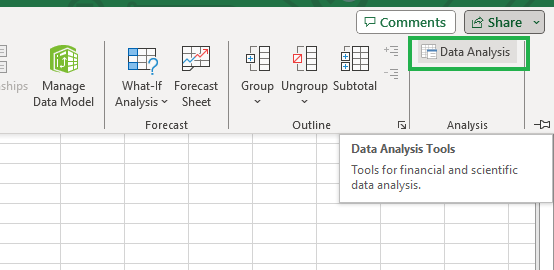
Learn the simplified process of conducting ANOVA in Excel, and interpreting the results with clear, step-by-step instructions.
here’s what i found
ancient wedge
yeah ive tried following a bunch of different stuff, nothing seems to work
topaz sinewBOT
@ancient wedge Has your question been resolved?
ancient wedge
sure man, i mean not really, but sure
topaz sinewBOT
Channel closed
Closed by @ancient wedge
Use .reopen if this was a mistake.
Available help channel!
Send your question here to claim the channel.
Remember:
• Ask your math question in a clear, concise manner.
• Show your work, and if possible, explain where you are stuck.
• After 15 minutes, feel free to ping <@&286206848099549185>.
• Type the command .close to free the channel when you're done.
• Be polite and have a nice day!
Read #❓how-to-get-help for further information on how to ask a good question, and about conduct in the question channels.
 worn gorge
 topaz sinewBOT
worn gorge
worn gorge
topaz sinewBOT
worn gorge
worn gorge
can someone do this please
i have an answer but i dont have the solutions so i just wanna verify
 clear lodge
!show
topaz sinewBOT
Show your work, and if possible, explain where you are stuck.
clear lodge
so show your work
clear lodge
photos are a thing
clear lodge
or you can use MSPaint to write it
clear lodge
that's most definetly wrong, since it has no units
worn gorge
N
clear lodge
and what is f1 and f2?
clear lodge
what value are you using for g
worn gorge
9.8
clear lodge
looks fine then
 clear lodge
20 kg, not 20 g
clear lodge
decompose both N and F into a horizontal and vertical component
worn gorge
clear lodge
decompose both N and F into a horizontal and vertical component
ah i see
clear lodge
Call them Fx, Fy, Nx and Ny for convenience
 hardy wing
Draw your FBD and apply force equilibrium on the x and y directions. Its easier if you rotate your axes 30 degrees so that the y axis is aligned with N and x axis is aligned with F
clear lodge
yes, sum of forces in same axis must equal 0
 buoyant horizon
angle chase

 worn gorge
for F it would be
Fcos30
Fsin 30
worn gorge
worn gorge
for F it would be
Fcos30
Fsin 30
is this correct?
clear lodge
you need to specify which is each of those
clear lodge
Fx = Fcos30º
clear lodge
also, remember to put the degree unit. Otherwise, it would be radians
worn gorge
clear lodge
for this tho how do i know what my angle is
worn gorge
yes...
clear lodge
same as you know that F is parallel to the plane
worn gorge
mhm
okok so the my i and j componetns
would be
-Ncos60 degrees for i component
Nsin60 degrees for j component
buoyant horizon
yeah yes
worn gorge
okok
buoyant horizon
now just equilibrium
worn gorge
then i just add everythign together
and is equal to 0
and then i do it for the i and j parts
then do simultanoues
.close
topaz sinewBOT
Channel closed
Closed by @worn gorge
Use .reopen if this was a mistake.
topaz sinewBOT
Available help channel!
Send your question here to claim the channel.
Remember:
• Ask your math question in a clear, concise manner.
• Show your work, and if possible, explain where you are stuck.
• After 15 minutes, feel free to ping <@&286206848099549185>.
• Type the command .close to free the channel when you're done.
• Be polite and have a nice day!
Read #❓how-to-get-help for further information on how to ask a good question, and about conduct in the question channels.
 woven sigil
Let A be a set and let S, T \superseteq A x A be equivalence relations on A.
Let's define the three-place relation:
S▷◁T={(a,b,c)\mid(a,b)\inS \wedge(b,c)\inT}
Let a,c \in A
1.Prove/disprove: if exists b\inA such that (a,b,c), (c,b,a) \in S▷◁T then c \in [a]_S
topaz sinewBOT
woven sigil
Let A be a set and let S, T \superseteq A x A be equivalence relations on A.
Let...
woven sigil
Idk how to convert this😃
Can someone check my proof ?
Let's say that there is $b\inA$ such that $(a,b,c), (c,b,a) \in S\triangleright \triangleleftT$
From the definition of $S\triangleright \triangleleftT$ since $(c,b,a)\inS\triangleright \triangleleftT$ we get $(c,b)\inS$ and from symmetry of S we get $(b,c)\inS$, since $(a,b,c)\inS\triangleright \triangleleftT$ we get $(a,b)\inS$ and from transitvity of S, since $(a,b),(b,c)\inS$ we get $(a,c)\inS$ and therefore from the definition of $[a]_S$ we get $c\in[a]_S$
 shadow salmon
woven sigil
Idk how to convert this😃
shadow salmon
woven sigil
Idk how to convert this😃
Let $A$ be a set and let $S, T \subseteq A \times A$ be equivalence relations on $A$.
Let's define the three-place relation:
$$S \triangleright \triangleleft T={(a,b,c)\mid(a,b)\in S \wedge(b,c)\in T}.$$
Let $a,c \in A$\medskip
1.Prove/disprove: if exists $b\in A$ such that $(a,b,c), (c,b,a) \in S \triangleright \triangleleft T$ then $c \in [a]_S$.
woven sigil
Oh wow
thorny flameBOT
Aslan
 shadow salmon
woven sigil
Let A be a set and let S, T \superseteq A x A be equivalence relations on A.
Let...
shadow salmon
woven sigil
Let A be a set and let S, T \superseteq A x A be equivalence relations on A.
Let...
And for clarity, I’m assuming in the first sentence here, S and T are subsets and not supersets..
woven sigil
Yes
Let's say that there is $b \in A$ such that $(a,b,c), (c,b,a) \in S \triangleright \triangleleft T$
From the definition of $S \triangleright \triangleleft T$ since $(c,b,a)\in S \triangleright \triangleleft T$ we get $(c,b)\in S$ and from symmetry of S we get $(b,c)\in S$, since $(a,b,c)\in S \triangleright \triangleleft T$ we get $(a,b)\in S$ and from transitvity of S, since $(a,b),(b,c)\in S$ we get $(a,c) \in S$ and therefore from the definition of $[a]_S$ we get $c \in [a]_S$
shadow salmon
woven sigil
Let's say that there is $b \in A$ such that $(a,b,c), (c,b,a) \in S \trianglerig...
You need spaces between A, S,T and the commands
You have written e.g. “\inS” but it should be “\in S”.
thorny flameBOT
prograce
 woven sigil
YESS FINALLY
woven sigil
2.prove/disprove if $c \in [a]_S$ , then there exists $b \in A$ such that $(a,b,c), (c,b,a) \in S \triangleright \triangleleft T$
shadow salmon
Anything you were in particular unsure about btw?
woven sigil
I was confidnet in 1, I'm.not sure about 2
shadow salmon
I see
woven sigil
I'm leaning towards disprove but I can't find an example
Because I got stuck in proving
shadow salmon
Why do they repeat that c is in A? Like where is a?
woven sigil
Let's say $c \in [a]_S$ from the definition of $[a]_S$ we get $(a,c) \in S$ ...?
shadow salmon
I’m asking if this is the full question
woven sigil
shadow salmon
Why do they repeat that c is in A? Like where is *a*?
a iis in A

This is the question I translated
thorny flameBOT
prograce
 shadow salmon
Which one is 2)?
woven sigil
The very last line
woven sigil
Before א) and ב) you can see they say let a, c in A (line after gives the definition of [a]_S) and after is 1) and after is 2)
shadow salmon
woven sigil
Before א) and ב) you can see they say let a, c in A (line after gives the defini...
Yup I know but reread what you translated for me
woven sigil
Oh wait I wrote wrong
thorny flameBOT
prograce
 woven sigil
My bad
shadow salmon
No worries, was just a bit confused
shadow salmon
thorny flame
**prograce**
Okay so this is how you started?
woven sigil
Yes, in the end I wanna reach $(a,b) \in C \wedge (b,c) \in C$ But I don't know how, I thought maybe using transitivty but the definition isn't "if and only if" it is one sided so I can't just assume that because $(a,c) \in S$ then there exists b such that $(a,b) \in S and (b,c) \in S$
thorny flameBOT
prograce
 woven sigil
So I'm leaning towars disproving by giving an example
I tried that A={1,2,3} S is the relation "=" but I didn't reach contradiction
shadow salmon
woven sigil
Yes, in the end I wanna reach $(a,b) \in C \wedge (b,c) \in C$ But I don't know ...
Indeed, but what if you’re able to construct such a b?
Now I’m not claiming that it’s either true or false
But I think it’s worth playing with
woven sigil
I will try
shadow salmon
woven sigil
I tried that A={1,2,3} S is the relation "=" but I didn't reach contradiction
It would have to be a counterexample for arbitrary equivalence relations, not just any specific, because of the way the question is implicitly worded
woven sigil
Ohh
shadow salmon
But you can use specific sets for A
woven sigil
How do I know if I can iuse specific or it has to be arbitrary based on the wording ?
shadow salmon
Well, now it’s very implicit of course the way they wrote it, but it would make the most logical sense if it was this way if I’m not missing anything.
Ideally what you want to do is translate the statement with quantifiers and see what the negation is and that would give you your answer.
For example. The very first sentence in your question is saying that A is arbitrary
So the negation would turn this into an existence
woven sigil
thorny flame
**Aslan**
But I don't understand, they define set A and the equivalence relations S, T the same way, saying "Let ..." in negation, both would be "there exists..." why is A specific and S, T arbitrary ??
shadow salmon
Well it’s not any S and T, they have restrictions and this in combination with 2) makes that more apparent.
If the original statement was to hold for all S,T then just pick S,T so that they’re empty and you’d not get anything
woven sigil
I see
shadow salmon
I think it’s helpful if you try and translate the question in combination with 2) using a more logical framework, who knows maybe I’m missing some subtleties here
woven sigil
I don't think I can translate it better what you're sayjng makes sense
I'll try to think of proving it again and come back
shadow salmon
woven sigil
But I don't understand, they define set A and the equivalence relations S, T the...
Oh wait I might be stupid, forget what I said before. You’re absolutely allowed to find counterexamples the way you did it earlier, I read the question wrong
It’s specifically the way question 1) is written that doesn’t allow this
Not 2)
So yea you should be allowed to find specific equivalence relations (and sets A) for 2) if you’re trying to show it’s false
woven sigil
Ok I see
I have a question , does c, b, a have to be not equal? Or can I give a counterexample where a=c ?
shadow salmon
They could be equal!
Just make sure that it type checks, like as long as they’re from the same set and relation it should be fine
topaz sinewBOT
@woven sigil Has your question been resolved?
woven sigil
Proof:
Let's say $c \in [a]_S$ from the definition of $[a]_S$ we get $(a,c) \in S$, choose $b=c \in A$ therefore $(a,c)=(a,b) \in S$ from reflexivity of T $(b,b) = (b,c) \in T$ therefore $(a,b,c) \in S \triangleleft T$ , now from reflexivity of S, we get $(b,b) \in S$ we know that (c,b)=(b,b) therefore $(c,b) \in S$, also from reflexivity of T $(a,a) \in T$ and from transitivity of T we get $(b,a) \in T$ therefore $(c,b,a) \in S \triangleright \triangleleft T$\medskip
In conclusion we reached that if $c \in [a]_S$ there exists a $b \in A$ such that $(a,b,c),(c,b,a) \in S \triangleright \triangleleft T$
Is this allowed ? 😃
thorny flameBOT
prograce
 shadow salmon
woven sigil
Proof:
Let's say $c \in [a]_S$ from the definition of $[a]_S$ we get $(a,c) \in ...
shadow salmon
woven sigil
Proof:
Let's say $c \in [a]_S$ from the definition of $[a]_S$ we get $(a,c) \in ...
How do you know that (b,c) is in T?
shadow salmon
Yup! But somehow they’re claiming that’s enough, which doesn’t seem that likely
woven sigil
Proof:
Let's say $c \in [a]_S$ from the definition of $[a]_S$ we get $(a,c) \in S$, choose $b=c \in A$ therefore $(a,c)=(a,b) \in S$ from reflexivity of T $(b,b) = (b,c) \in T$ therefore $(a,b,c) \in S \triangleleft T$ , now from reflexivity of S, we get $(b,b) \in S$ we know that (c,b)=(b,b) therefore $(c,b) \in S$, also from reflexivity of T $(a,a) \in T$ and from transitivity of T we get $(b,a) \in T$ therefore $(c,b,a) \in S \triangleright \triangleleft T$\medskip
In conclusion we reached that if $c \in [a]_S$ there exists a $b \in A$ such that $(a,b,c),(c,b,a) \in S \triangleright \triangleleft T$
thorny flameBOT
prograce
 woven sigil
Does this work?
shadow salmon
Again whose to say that (b,b) must be in T?
woven sigil
Because T is equivalnce relation on subset A, definition of reflexivity: Let R be a relation on set A for every $a \in A$ : $(a,a) \in R$
thorny flameBOT
prograce
 woven sigil
And We know $b \in A$ therefore it HAS to be $(b,b) \in T$
thorny flameBOT
prograce
 shadow salmon
Oh right, you used reflexivity didn’t notice. Yes!
woven sigil
Let's goooo😆
shadow salmon
Let me double check this now, forgot about reflexivity for some reason
woven sigil
Okay
shadow salmon
Personal preference but I think it might neater if you write (b,c) = (b,b) in T, as (b,b) in T is what sort of clarifies that (b,c) is in T; but it’s only a preference and should not matter
woven sigil
Okay will do that for when I send the solution 🫡
Thank you btw!!
I will close
.close
topaz sinewBOT
Channel closed
Closed by @woven sigil
Use .reopen if this was a mistake.
shadow salmon
.reopen
topaz sinewBOT
✅
shadow salmon
woven sigil
Proof:
Let's say $c \in [a]_S$ from the definition of $[a]_S$ we get $(a,c) \in ...
For your own sake just incase, I don’t quite see your argument for why (b,a) is in T
You say (a,a) is in T and then by transitivity of T we get (b,a) in T
But with what exactly!
That’s not clear imo
woven sigil
Oh no it's wrong
I thought (b,b) (a,a) -> (b,a) but I wasn't focused I guess
Should be (b,a) ,(a,a)
woven sigil
woven sigil
Should be (b,a) ,(a,a)
But I don't have (b,a)
shadow salmon
Right
I don’t see any direct way of patching that up. It seems you can only draw the conclusion that (b,b), (a,a), (c,c), (b,c), (c,b) is in T
shadow salmon
Yeah maybe, it might help you gain a better perspective on the problem
shadow salmon
You can close it back now if you want
woven sigil
.close
topaz sinewBOT
Channel closed
Closed by @woven sigil
Use .reopen if this was a mistake.
topaz sinewBOT
Available help channel!
Send your question here to claim the channel.
Remember:
• Ask your math question in a clear, concise manner.
• Show your work, and if possible, explain where you are stuck.
• After 15 minutes, feel free to ping <@&286206848099549185>.
• Type the command .close to free the channel when you're done.
• Be polite and have a nice day!
Read #❓how-to-get-help for further information on how to ask a good question, and about conduct in the question channels.
 cedar nacelle
Deposit: £50,000``` cedar nacelle
In conclusion, do i simply do £96,100 - £50,000 + £5668 to work out how much the total it will be that I will pay over the 5 years?
So I will pay basically £51,768 over 5 years? Or is there something that I'm missing.
timber crystal
It is correct
I just wanna point out that I find it funny you go to a math discord server to calculate your rent😂😂
cedar nacelle
Why is ChatGPT doing this?

It's multiplying the monthly payments by 60 months (5 Years) which comes to £51,616 and then it adds on the cost of the deal £5668
Basically ChatGPT is wrong and making stuff more complicated and I should avoid using it?
topaz sinewBOT
@cedar nacelle Has your question been resolved?
Channel closed
Closed by @cedar nacelle
Use .reopen if this was a mistake.
Available help channel!
Send your question here to claim the channel.
Remember:
• Ask your math question in a clear, concise manner.
• Show your work, and if possible, explain where you are stuck.
• After 15 minutes, feel free to ping <@&286206848099549185>.
• Type the command .close to free the channel when you're done.
• Be polite and have a nice day!
Read #❓how-to-get-help for further information on how to ask a good question, and about conduct in the question channels.
neon iron
To calculate the limit of suppose (2^x - 1)/x at x->0, can we find the slope of 2^x - 1 at 0 and then divide it by the slope of x at that point, which is 1, because they are now basically lines and the ratio of their values at specific values of x will be the ratio their slope? Since the curve becomes essentially a straight line when we zoom in?
topaz sinewBOT
neon iron
To calculate the limit of suppose (2^x - 1)/x at x->0, can we find the slope of ...
neon iron

 coarse tusk
what you're describing is l'hopital's rule
 prisma mesa
neon iron
To calculate the limit of suppose (2^x - 1)/x at x->0, can we find the slope of ...
prisma mesa
neon iron
To calculate the limit of suppose (2^x - 1)/x at x->0, can we find the slope of ...
yeah, that's a decent way to think about it
neon iron
but?
neon iron
coarse tusk
what you're describing is l'hopital's rule
Yes it's exactly same
prisma mesa
dont question my choice of words lol
topaz sinewBOT
Channel closed
Closed by @rough narwhal
Use .reopen if this was a mistake.
topaz sinewBOT
Available help channel!
Send your question here to claim the channel.
Remember:
• Ask your math question in a clear, concise manner.
• Show your work, and if possible, explain where you are stuck.
• After 15 minutes, feel free to ping <@&286206848099549185>.
• Type the command .close to free the channel when you're done.
• Be polite and have a nice day!
Read #❓how-to-get-help for further information on how to ask a good question, and about conduct in the question channels.
 solar musk
 topaz sinewBOT
solar musk
topaz sinewBOT
solar musk
 lusty roost
Add the 2 equations together
solar musk
okay
lusty roost
left with left, right with right
solar musk
then?
lusty roost
subtract n/y from both sides
solar musk
my+mx+ny+nx=a+b could be achieved too
lusty roost
yeah true
lusty roost
lusty roost
subtract n/y from both sides
Then, you can divide both sides by (n+m), and divide 1 by both sides
solar musk
lusty roost
For that, you needed to invert x & y, right?
explain
lusty roost
solar musk
explain
If you raised all the x & ys to the power of -1, you'd get the sum of the 2 original equations
lusty roost
ok
solar musk
add the equations
lusty roost
yes
solar musk
now ur saying in this equation or then add the older equation to get a system of equations
lusty roost
solar musk
now ur saying in this equation or then add the older equation to get a system of...
this equation
solar musk
right m+n/x and m+n/y = a+b
lusty roost
that's ok