#help-26
1 messages · Page 196 of 1
 thorny flameBOT
LXDL

 raven sparrow
You would want to show an epsilon that doesn't work
 silent frigate
oh also becuase i think i end up dividing by a negative number too when i obtian the inequality
silent frigate
thorny flame
**LXDL**
becuae what i usually did from there was $5/n < \epsilon -1 $ so then $n > 5 / (\epsilon -1)$
thorny flameBOT
LXDL
 silent frigate
but $\epsilon > 0$ so $\epsilon -1 > -1$.
thorny flameBOT
LXDL
 silent frigate
Therefore, it is entirly possible for $\epsilon -1$ to be negative
thorny flameBOT
LXDL
 silent frigate
and then i woudl need to switch the inueqlity sign
but i didnt
but if i did switch the inequality sign, i would not be able to prove?
raven sparrow
You can't prove it, because it's not true.
For 1.1, you would need $|1-\frac{5}{n} - 1.1| = 0.1 + \frac{5}{n} < \epsilon$ for any $n > N$ for some $N \in \N$ given $\epsilon > 0$.
This cannot work, because if $\epsilon = 0.05$ for instance, the last inequality can never hold.
thorny flameBOT
Azyrashacorki
 silent frigate
thorny flame
**Azyrashacorki**
silent frigate
thorny flame
**Azyrashacorki**
ohh i see. So we are not even able to get to the negative part. Because $n \in \matbb{N}$. And even if we did subtract 0.1 from epsilon, we would get $n \not\in \mathbb{N}$, as it is negative then
thorny flameBOT
LXDL
Compile Error! Click the  reaction for more information.
(You may edit your message to recompile.)
 raven sparrow
For 1.1 it's somewhat easier than 0.9, because even though the difference is the same, the sequence actually never gets close to 1.1,
Intuitively, this makes sense, because 1 - 5/n is removing something positive from 1, so you can never get closer than 0.1 from 1.1.
silent frigate
hmmm ok
raven sparrow
For 0.9 it's a tiny bit different, because 1 - 5/n actually "crosses" 0.9, so for some n, the difference might be small enough, but you have to remember that the limit definition requires that this be true for all n bigger than the given N.
silent frigate
btu would what i said above also be correct, or is there some sort of logoic flaw too
silent frigate
raven sparrow
For 0.9 it's a tiny bit different, because 1 - 5/n actually "crosses" 0.9, so fo...
mhm i se
raven sparrow
In the long run it doesn't matter, because you can show that given any N, you can find some n > N such that the difference is bigger than, say, 0.05
silent frigate
or wait, i woudl get a contradiction before that i think
silent frigate
raven sparrow
In the long run it doesn't matter, because you can show that given any N, you ca...
wait diffeence is bigger?
i thought smaller?
raven sparrow
You need smaller for convergence.
But this sequence does not converge to 0.9
So you wouldn't expect the definition to hold, so there has to be some epsilon such that no matter what N you give, there is some n > N such that the difference is bigger than epsilon
silent frigate
raven sparrow
So you wouldn't expect the definition to hold, so there has to be some epsilon s...
hmmm ok.
thanks.
So mainly this wouldnt work because sepcifcally L = 1.1 wouldn't work becsue we would get for all epsilon > 0. 0.1 + 5/n < epsilon. However, 0.1 < 0.1 + 5/n so for any epsilon less than 0.1, but greater than 0 this would fail.
raven sparrow
That's the idea, yes.
epsilon is some representation of the wiggle room you allow in the value of the limit.
The definition requires that for any epsilon (wiggle room) you desire, the sequence is eventually that close to the limit and stays there.
Here the sequence 1-5/n is never more than 0.1-close to 1.1, so 1.1 can't be the limit.
For 0.9 you can argue similarly but in this case you'll see that some values of n satisfy the inequality. However, you can show that after some point (in particular, for n > 100) the difference is always greater than 0.05.
So that means that the value of the sequence might get close to 0.9, but it doesn't stay there.
silent frigate
raven sparrow
epsilon is some representation of the wiggle room you allow in the value of the ...
could you expalin "never more than 0.1-close to 1.1"?
what does that mean again?
raven sparrow
It just means that 1-5/n is never within 0.1 of 1.1 for any natural number n
silent frigate
raven sparrow
It just means that 1-5/n is never within 0.1 of 1.1 for any natural number n
because this will awlays be less than 1.
and 1 is 0.1 within 1.1
raven sparrow
Yes. That's why the 1.1 case is "easier" to disprove.
 topaz sinewBOT
@silent frigate Has your question been resolved?
topaz sinewBOT
Channel closed
Closed due to timeout
Use .reopen if this was a mistake.
 Available help channel!
Send your question here to claim the channel.
Remember:
• Ask your math question in a clear, concise manner.
• Show your work, and if possible, explain where you are stuck.
• After 15 minutes, feel free to ping <@&286206848099549185>.
• Type the command .close to free the channel when you're done.
• Be polite and have a nice day!
Read #❓how-to-get-help for further information on how to ask a good question, and about conduct in the question channels.
 strong sable
I stucked here
 topaz sinewBOT
strong sable
I stucked here
topaz sinewBOT
strong sable
I stucked here
 noble fossil
@agile harness
 agile harness
noble fossil
<@834774466290253834>
agile harness
noble fossil
<@834774466290253834>
what
 rigid ivy
@noble fossil
noble fossil
rigid ivy
<@1295650278267162709>
;-;
noble fossil
agile harness
what
weren't u solving allo's problem
agile harness
noble fossil
weren't u solving allo's problem
that was before but i am not his personal helper lol
noble fossil
agile harness
that was before but i am not his personal helper lol
oh lol sorry for the ping
agile harness
$\int \frac{x(1+x)}{\sqrt{(1+x)^2 - 4x}} dx$
thorny flameBOT
knief
 rigid ivy
strong sable
I stucked here
rigid ivy
strong sable
I stucked here
You forgot to chain rule
agile harness
noble fossil
oh lol sorry for the ping
all good
topaz sinewBOT
@strong sable Has your question been resolved?
topaz sinewBOT
Channel closed
Closed due to timeout
Use .reopen if this was a mistake.
Available help channel!
Send your question here to claim the channel.
Remember:
• Ask your math question in a clear, concise manner.
• Show your work, and if possible, explain where you are stuck.
• After 15 minutes, feel free to ping <@&286206848099549185>.
• Type the command .close to free the channel when you're done.
• Be polite and have a nice day!
Read #❓how-to-get-help for further information on how to ask a good question, and about conduct in the question channels.
 scarlet spade
Hi
topaz sinewBOT
scarlet spade
Hi
scarlet spade

Quadratic functions using visual patterns
There’s figure 1, 2, and 3
The figure number is the X
I have no clue what the pattern is on this one and I’m so tired
Someone pls help
I need to come up with the equation for these figures
In standard form
 cinder dew
The first difference of image 1 and 2 is 9
And the second difference between image 2 and 3 is 18
The difference between 9 and 18 is 9 so the constant difference is 9 in the quadratic formula
scarlet spade
cinder dew
And the second difference between image 2 and 3 is 18
Wdym
cinder dew
I don't know bro I did quadratic functions but I forgot and I'm terrible at explaining I will provide a answer in 10-30 mins
scarlet spade
cinder dew
I don't know bro I did quadratic functions but I forgot and I'm terrible at expl...
K
scarlet spade
cinder dew
You should be left with 18
It would be 21
cinder dew
scarlet spade
It would be 21
I'm stupid my bad bro
This regard everything I said
IM SO WRONG
F(x) = a4^2 + B4+ c
cinder dew
cinder dew
F(x) = a4^2 + B4+ c
This also equals f(x)=4a^2 +4b+c
I got this because they are basically saying sub in x for any of these images values
cinder dew
Do the same for image 2
scarlet spade
There should be a value for a b and c
cinder dew
scarlet spade
There’s only supposed to be x
You can get rid of the c or the b or the a
scarlet spade
Oh
scarlet spade
cinder dew
You can get rid of the c or the b or the a
So what’s the equation then
4x^2+4x?
cinder dew
4a^2+4b+c over 13a^2+13b+c
scarlet spade
Bro what
scarlet spade
cinder dew
I got this because they are basically saying sub in x for any of these images va...
Wdyim by this
cinder dew
scarlet spade
Wdyim by this
What I'm saying is figure x is how many boxes are drawn in the images
Wait
🥴
I can't lie
Now I'm confused
Don't listen to me
Chat gpt it
topaz sinewBOT
@scarlet spade Has your question been resolved?
topaz sinewBOT
@scarlet spade Has your question been resolved?
topaz sinewBOT
Channel closed
Closed due to timeout
Use .reopen if this was a mistake.
Available help channel!
Send your question here to claim the channel.
Remember:
• Ask your math question in a clear, concise manner.
• Show your work, and if possible, explain where you are stuck.
• After 15 minutes, feel free to ping <@&286206848099549185>.
• Type the command .close to free the channel when you're done.
• Be polite and have a nice day!
Read #❓how-to-get-help for further information on how to ask a good question, and about conduct in the question channels.
 vast maple
hello i have following problem
Find the canonical equation of parabola if it is known that the equation of directrix 2x+y =
−1. Focus of the parabola has coordinates (2, 1).
i dont know how to solve it because the directrix equation is 2x + y = -1 that means that parabola is rotated by some angle and i dont know how to work with that kind of parabola
topaz sinewBOT
vast maple
hello i have following problem
Find the canonical equation of parabola if it is...
vast maple
<@&286206848099549185>
topaz sinewBOT
@vast maple Has your question been resolved?
topaz sinewBOT
@vast maple Has your question been resolved?
vast maple
.close
topaz sinewBOT
Channel closed
Closed by @vast maple
Use .reopen if this was a mistake.
topaz sinewBOT
Available help channel!
Send your question here to claim the channel.
Remember:
• Ask your math question in a clear, concise manner.
• Show your work, and if possible, explain where you are stuck.
• After 15 minutes, feel free to ping <@&286206848099549185>.
• Type the command .close to free the channel when you're done.
• Be polite and have a nice day!
Read #❓how-to-get-help for further information on how to ask a good question, and about conduct in the question channels.
topaz sinewBOT
Available help channel!
Send your question here to claim the channel.
Remember:
• Ask your math question in a clear, concise manner.
• Show your work, and if possible, explain where you are stuck.
• After 15 minutes, feel free to ping <@&286206848099549185>.
• Type the command .close to free the channel when you're done.
• Be polite and have a nice day!
Read #❓how-to-get-help for further information on how to ask a good question, and about conduct in the question channels.
 hearty yacht
The area of the rectangular parking lot was
432 m2?. Its two opposite sides were extended by 6 m and a square parking lot was obtained.
What is the area of the new parking lot?
topaz sinewBOT
hearty yacht
The area of the rectangular parking lot was
432 m2?. Its two opposite sides we...
 neon iron
nvm
i thought it's adjacent sides were extended
so if the sides of the original rectangle are l an b, then the sides of the square = l+6 = b
you can also take b = l+6, it doesn't matter
now you have two equations; solve them
lb = 432
hearty yacht
I don’t know how to do this
neon iron
?
what you don't understand?
Just consider the initial lengths and breadths as 'l' and 'b'.
Then proceed and form new relations as per the question
topaz sinewBOT
@hearty yacht Has your question been resolved?
Channel closed
Closed by @hearty yacht
Use .reopen if this was a mistake.
topaz sinewBOT
Available help channel!
Send your question here to claim the channel.
Remember:
• Ask your math question in a clear, concise manner.
• Show your work, and if possible, explain where you are stuck.
• After 15 minutes, feel free to ping <@&286206848099549185>.
• Type the command .close to free the channel when you're done.
• Be polite and have a nice day!
Read #❓how-to-get-help for further information on how to ask a good question, and about conduct in the question channels.
 gusty cobalt
Why is the top one not possible?
 topaz sinewBOT
gusty cobalt
Why is the top one not possible?
topaz sinewBOT
gusty cobalt
Why is the top one not possible?
 craggy haven
they're not the same shape
 sharp vigil
 topaz sinewBOT
Channel closed
Closed by @gusty cobalt
Use .reopen if this was a mistake.
topaz sinewBOT
Available help channel!
Send your question here to claim the channel.
Remember:
• Ask your math question in a clear, concise manner.
• Show your work, and if possible, explain where you are stuck.
• After 15 minutes, feel free to ping <@&286206848099549185>.
• Type the command .close to free the channel when you're done.
• Be polite and have a nice day!
Read #❓how-to-get-help for further information on how to ask a good question, and about conduct in the question channels.
 opal violet
how do i go abt solving this
 topaz sinewBOT
opal violet
how do i go abt solving this
topaz sinewBOT
topaz sinewBOT
opal violet
how do i go abt solving this
topaz sinewBOT
@opal violet Has your question been resolved?
topaz sinewBOT
Channel closed
Closed due to timeout
Use .reopen if this was a mistake.
Available help channel!
Send your question here to claim the channel.
Remember:
• Ask your math question in a clear, concise manner.
• Show your work, and if possible, explain where you are stuck.
• After 15 minutes, feel free to ping <@&286206848099549185>.
• Type the command .close to free the channel when you're done.
• Be polite and have a nice day!
Read #❓how-to-get-help for further information on how to ask a good question, and about conduct in the question channels.
 jade ledge
$$ \lim_{x \to 0+}{(1+x)^{\ln x}} $$
topaz sinewBOT
jade ledge
$$ \lim_{x \to 0+}{(1+x)^{\ln x}} $$
thorny flameBOT
max
 jade ledge
I have been going at this limit for a while and I seem to get nowhere, and I feel like I'm missing something trivial. Can anyone help me out?
 rare sage
jade ledge
I have been going at this limit for a while and I seem to get nowhere, and I fee...
rare sage
jade ledge
I have been going at this limit for a while and I seem to get nowhere, and I fee...
I would do it this way
 topaz sinewBOT
@jade ledge Has your question been resolved?
jade ledge
rare sage
I would do it this way
i'm sorry i'm completely confused by the first transformation, what did you do there?
rare sage
jade ledge
i'm sorry i'm completely confused by the first transformation, what did you do t...
a^b=exp(b*ln(a)) thats just from the definition of logarithm.
a=exp(ln(a))
topaz sinewBOT
@jade ledge Has your question been resolved?
thorny flameBOT
citrusmunch

 west hornet
(to break down that first step)
jade ledge
west hornet
(to break down that first step)
oh yeah i begun with this one too, i meant the next one
topaz sinewBOT
Channel closed
Closed due to timeout
Use .reopen if this was a mistake.
topaz sinewBOT
Available help channel!
Send your question here to claim the channel.
Remember:
• Ask your math question in a clear, concise manner.
• Show your work, and if possible, explain where you are stuck.
• After 15 minutes, feel free to ping <@&286206848099549185>.
• Type the command .close to free the channel when you're done.
• Be polite and have a nice day!
Read #❓how-to-get-help for further information on how to ask a good question, and about conduct in the question channels.
 midnight crow
how do i do this
 midnight crow
<@&286206848099549185>
 silent snow
midnight crow
<@&286206848099549185>
silent snow
midnight crow
<@&286206848099549185>
can you flip the picture
it's sideways
I'm on mobile and it's hard to see
 sweet shard
,rotate
thorny flameBOT

 midnight crow
ok
topaz sinewBOT
@midnight crow Has your question been resolved?
topaz sinewBOT
Channel closed
Closed due to timeout
Use .reopen if this was a mistake.
Available help channel!
Send your question here to claim the channel.
Remember:
• Ask your math question in a clear, concise manner.
• Show your work, and if possible, explain where you are stuck.
• After 15 minutes, feel free to ping <@&286206848099549185>.
• Type the command .close to free the channel when you're done.
• Be polite and have a nice day!
Read #❓how-to-get-help for further information on how to ask a good question, and about conduct in the question channels.
 ornate trellis
m=xyz solve for y
topaz sinewBOT
ornate trellis
m=xyz solve for y
sweet shard
if x and z aren't zero 
sweet shard
that's correct yes
ornate trellis
now if i wanted to divide off the y on both sides
nvm im stupid ty
i needed to think outloud
.close
topaz sinewBOT
Channel closed
Closed by @ornate trellis
Use .reopen if this was a mistake.
 brazen wyvern

 topaz sinewBOT
Available help channel!
topaz sinewBOT
Available help channel!
Send your question here to claim the channel.
Remember:
• Ask your math question in a clear, concise manner.
• Show your work, and if possible, explain where you are stuck.
• After 15 minutes, feel free to ping <@&286206848099549185>.
• Type the command .close to free the channel when you're done.
• Be polite and have a nice day!
Read #❓how-to-get-help for further information on how to ask a good question, and about conduct in the question channels.
 wise ivy
 wise ivy
how do u tell if momentum is conserved here
neon iron
what does the question want?
wise ivy
it asks to determine the impulse
neon iron
i’m not sure what you mean by conserved
 acoustic pecan
if we assume no air resistance then its conserved in the horizontal direction
but not vertical since we have gravity
neon iron
acoustic pecan
if we assume no air resistance then its conserved in the horizontal direction
but you don’t need to consider what happens once the arrow has left the string, as it only asks for the difference in momentum between arrow at rest and arrow at 88 m/s
acoustic pecan
aha, i see
wise ivy
neon iron
but you don’t need to consider what happens once the arrow has left the string, ...
oh so u can tell theres a change in momentum because it was at rest initally (no momentum) and then it had speed so it gained momentum
?
neon iron
yes
the arrow is 0.030kg, it starts at rest and ends with a horizontal velocity of 88m/s (i assume vertical velocity is 0? otherwise the question seems impossible)
topaz sinewBOT
Channel closed
Closed by @wise ivy
Use .reopen if this was a mistake.
topaz sinewBOT
Available help channel!
Send your question here to claim the channel.
Remember:
• Ask your math question in a clear, concise manner.
• Show your work, and if possible, explain where you are stuck.
• After 15 minutes, feel free to ping <@&286206848099549185>.
• Type the command .close to free the channel when you're done.
• Be polite and have a nice day!
Read #❓how-to-get-help for further information on how to ask a good question, and about conduct in the question channels.
neon iron
Hey, sorry if this isn't rlly the right place but how would you guys suggest approaching this integral?
topaz sinewBOT
neon iron
Hey, sorry if this isn't rlly the right place but how would you guys suggest app...
thorny flameBOT
HenryCavillButFat

 wary tulip
i don't know it though
 cursive patrol
tragic.
cursive patrol
do it
neon iron
$$= \int^1_0 \frac{\tan^{-1}(u)}{u^{\frac 1 n} (n u^{\frac{n-1}{n}})} , \dd u$$
$$= \frac 1 n \int^1_0 \frac{\tan^{-1}(u)}{u}, \dd u$$
Uh
neon iron
Is it this?
cursive patrol
no
but that integral is supposed to be well known
if you don’t know its value, you can justify with series expansion
neon iron
Isn't its value pi/2 ln(2)
cursive patrol
the result comes out to a series that (by definition) converges to a well known value
cursive patrol
neon iron
Isn't its value pi/2 ln(2)
no
neon iron
Right
Well tbh with you
Idrk what to do from here
Idk what arctan(X)/X when integrated gives over [0,1]
cursive patrol
it is Catalan’s constant
thorny flameBOT
HenryCavillButFat
 cursive patrol
if you don’t know its value, you can justify with series expansion
cursive patrol
cursive patrol
if you don’t know its value, you can justify with series expansion
if you need to prove it is Catalan’s constant, start by series expand arctangent
neon iron
Prolly why I didn't recognise it
cursive patrol
then divide by x and integrate
thorny flameBOT
HenryCavillButFat
 neon iron
This wouldn't give Catalans, would it?
cursive patrol
correct
neon iron
I got
cursive patrol
that is the pi log thing you showed earlier
neon iron
Pi ln(2) for it
cursive patrol
yes
cursive patrol
you’re welcome 🎉
neon iron
I attended an integration bee today if you couldn't tell
I wanted to make sure I didn't do some of them wrong
Ig one is wrong, but I did 8 (7 if you remove this one) out of 30 for my team
My other teammates did 4
I'm glad 🙂
cursive patrol
hm nice
neon iron
.close
topaz sinewBOT
Channel closed
Closed by @gritty valley
Use .reopen if this was a mistake.
topaz sinewBOT
Available help channel!
Send your question here to claim the channel.
Remember:
• Ask your math question in a clear, concise manner.
• Show your work, and if possible, explain where you are stuck.
• After 15 minutes, feel free to ping <@&286206848099549185>.
• Type the command .close to free the channel when you're done.
• Be polite and have a nice day!
Read #❓how-to-get-help for further information on how to ask a good question, and about conduct in the question channels.
 tender flicker
Does anyone understand how to do this? I know the second integral would be from 0 to 3 I think but I'm not sure about after that
 topaz sinewBOT
tender flicker
Does anyone understand how to do this? I know the second integral would be from ...
topaz sinewBOT
tender flicker
Does anyone understand how to do this? I know the second integral would be from ...
 gray mulch
Divide it into two integrals, one for x from 0 to 1, then from 1 to 3. If you chose the outer integral in x, the boundaries for the inner integral are linear functions y(x).
tender flicker
gray mulch
Divide it into two integrals, one for x from 0 to 1, then from 1 to 3. If you ch...
why two different x integrals ? what about the inner one for y or vice versa
gray mulch
Like this: $$ \int_{x=0}^{x=1} \int_{y=2-x}^{y=2} y^3 dy dx + ... $$
thorny flameBOT
IA_MW
 gray mulch
You can also do the outer integral in y, then it is possible in one double integral, but the boundaries are a slightly more difficult.
topaz sinewBOT
Channel closed
Closed by @tender flicker
Use .reopen if this was a mistake.
topaz sinewBOT
Available help channel!
Send your question here to claim the channel.
Remember:
• Ask your math question in a clear, concise manner.
• Show your work, and if possible, explain where you are stuck.
• After 15 minutes, feel free to ping <@&286206848099549185>.
• Type the command .close to free the channel when you're done.
• Be polite and have a nice day!
Read #❓how-to-get-help for further information on how to ask a good question, and about conduct in the question channels.
 rustic snow
i have an issue "understanding" the application of the complex fourier transform. I was playing around in desmos with e^ipi and created what i eventually found out was a complex fourier series which i now realize can be used to create "images" when traced out on a complex plane. As i did more research i found this complex fourier series transformation that gives the coefficients to make that transform and apparently you can get that based off of complex points. Ill link some pictures at the bottom for what i mean, but i am struggling to understand how to use the series to detive these coefficients. mind i am a highschool sophomore although i do have a decent grasp of calculus 1 topics and a small grasp of complex analysis, i pick things up fast but if im way out of my depth that would also be a help to just tell me, and yes, i have tried doing my own research. any and all help is greatly appreciated!
topaz sinewBOT
rustic snow
i have an issue "understanding" the application of the complex fourier transform...
rustic snow
this is what ive managed to create on my own so far

and i want to make this with given points so i can "control" the output shapes with given point

 topaz sinewBOT
@rustic snow Has your question been resolved?
topaz sinewBOT
@rustic snow Has your question been resolved?
rustic snow
darn
topaz sinewBOT
@rustic snow Has your question been resolved?
 fading owl
@rustic snow
I have no idea but this might help
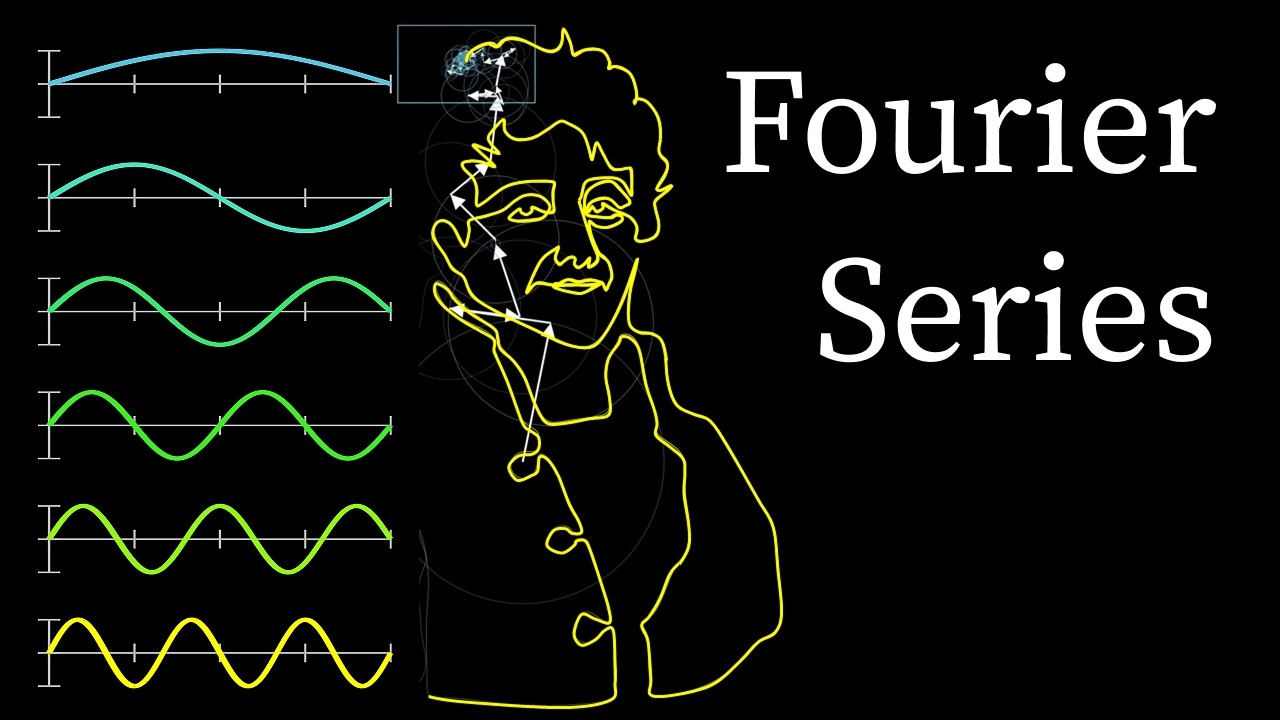
Fourier series, from the heat equation epicycles.
Help fund future projects: https://www.patreon.com/3blue1brown
An equally valuable form of support is to simply share some of the videos.
Special thanks to these supporters: http://3b1b.co/de4thanks
12 minutes of pure Fourier series animations: https://youtu.be/-qgreAUpPwM
Some viewers made apps...
rustic snow
fading owl
I have no idea but this might help
ive watched this about 20 times lol, maybe ill just really take things slow and analyze every word.
topaz sinewBOT
@rustic snow Has your question been resolved?
 jaunty leaf
rustic snow
i have an issue "understanding" the application of the complex fourier transform...
jaunty leaf
rustic snow
i have an issue "understanding" the application of the complex fourier transform...
I can explain how Fourier series work
Edit: this channel got closed so if you have any questions feel free to open a new channel and ping me there
First I'll announce the formula for Fourier coefficients and then I'll explain where it comes from
Let $f: [0, 2\pi] \rightarrow \mbb{C}$, but with a restriction that $\int_0^{2\pi} |f(t)|^2dt < \infty$. Fourier coefficients can be calculated as
$$a_k = \frac{1}{2\pi}\int_{0}^{2\pi}f(t) e^{-ikt}dt, \quad k\in\mbb{Z},$$
$$\text{and} \quad f(t) = \sum_{-\infty}^{+\infty}a_k e^{ikt}.$$
thorny flameBOT
EQUENOS
 jaunty leaf
That's known as Fourier series.
The restriction on $f(t)$ that I mentioned is very natural, and all such functions form a vector space, commonly denoted as $L_2([0,2\pi])$.
thorny flameBOT
EQUENOS
 jaunty leaf
If you're familiar with the concept of vector spaces, you may already know that functions can be viewed as vectors.
Given a dot-product ( - , - ) in a vector space, we call vectors v and w orthogonal if and only if (v, w) = 0.
In finite-dimensional vector spaces we often work with some orthonormal basis e_1, ..., e_n. In a nutshell, it means that (e_i, e_i) = 1 and (e_i, e_j) = 0.
The advantage of such basis is that the coordinates of any vector v can be obtained very easily: x_k = (v, e_k).
One may want to extrapolate this idea to an infinite-dimensional vector space. Amazingly, that's possible!
If an infinite-dimensional vector space is complete and is endowed with a dot-product, then it's called a hilbert space.
I'm not going to rigorously define completeness to keep things short, but essentially it means that any "converging" sequence of vectors has a limit in this vector space
Hilbert spaces are super nice already, but some of them are still slightly scary. For example, in some hilbert spaces it's possible to place a continuum of non-overlapping balls of the same radius. Any space without this property is called separable
Luckily, $L_2([0, 2\pi])$ happens to be a separable hilbert space! If you're wondering what's the dot-product there, it's
$$(f,g) = c \int_0^{2\pi} f(t)\overline{g(t)}dt,$$
where we can choose $c$ as any positive real constant. For out purposes we will choose $c=\frac{1}{2\pi}$.
thorny flameBOT
EQUENOS
 jaunty leaf
Just like in finite-dimensional vector spaces with a dot product, separable hilbert spaces also have orthonormal bases. The only difference is that any such basis has countably many vectors.
Observation: ${e^{ikt} \ : \ k\in\mbb{Z}}$ happens to be an orthonormal basis in $L_2([0,2\pi])$
thorny flameBOT
EQUENOS
 jaunty leaf
Of course we can calculate coordinates of any vector $f \in L_2([0,2\pi])$ as $(f,e^{ikt})$, which is precisely the definition of Fourier coefficients!
thorny flameBOT
EQUENOS
 jaunty leaf
Now to the fun part. Any "picture" traced by a curve on a plane can be viewed as a function $f: [0,2\pi] \rightarrow \mbb{C}$. Calculate enough fourier coefficients, and you have a fun animation just like in 3b1b video
thorny flameBOT
EQUENOS
 topaz sinewBOT
Channel closed
Closed due to timeout
Use .reopen if this was a mistake.
Available help channel!
Send your question here to claim the channel.
Remember:
• Ask your math question in a clear, concise manner.
• Show your work, and if possible, explain where you are stuck.
• After 15 minutes, feel free to ping <@&286206848099549185>.
• Type the command .close to free the channel when you're done.
• Be polite and have a nice day!
Read #❓how-to-get-help for further information on how to ask a good question, and about conduct in the question channels.
 mortal heart
guys i need help! i don't understand what the question is asking 
 topaz sinewBOT
mortal heart
guys i need help! i don't understand what the question is asking <:sully:6518168...
topaz sinewBOT
mortal heart
guys i need help! i don't understand what the question is asking <:sully:6518168...
 elfin dew
A composite function is basically a function applied to another function
In this case, you're looking at g(f(x))
mortal heart
elfin dew
In this case, you're looking at g(f(x))
yes
i found g(f(x)) already but i don't know what to do next
elfin dew
it's asking "what is the smallest value of k such that you can still put f(x) into g(x)"
so look at where g(x) is defined, and then say that f(x) must be bound by that
mortal heart
elfin dew
so look at where g(x) is defined, and then say that f(x) must be bound by that
ohhh
i'm still kinda confused on the definition
like what is definition for 
i usually ignore them
elfin dew
you mean the "for $x \geq -4$"?
thorny flameBOT
aeiou
 mortal heart
yess
elfin dew
right, that means that for any x below -4, g(x) doesn't exist
 elfin dew
$x \geq -4$ is what is known as the domain of the function g
thorny flameBOT
aeiou
 elfin dew
but that's just jargon for now i think
mortal heart
elfin dew
so look at where g(x) is defined, and then say that f(x) must be bound by that
how do we know that f(x) must be the one bound for that and not g(x) bound for the f(x)'s definition?
elfin dew
when you make a composite function, you need to put f(x) in place of x EVERYWHERE, including the domain
so $g(f(x)) = f(x)^2 - 4, f(x) \geq -4$
mortal heart
elfin dew
when you make a composite function, you need to put f(x) in place of x EVERYWHER...
wait wdym in place of x?
im so sorry for asking so many nonsense questions
thorny flameBOT
aeiou
 elfin dew
mortal heart
im so sorry for asking so many nonsense questions
elfin dew
mortal heart
im so sorry for asking so many nonsense questions
that's fine! the only bad question is one not asked
mortal heart


elfin dew
but yeah, when you make a composite function, you take the output of f(x) and you put it into g(x)
but the thing is, the output of f(x) is itself CALLED f(x)
elfin dew
pretty much. it's the reason why you can take $f(x) = 2x - 3$ and $g(x) = x^2 - 4$ and then say that $g(f(x))$ is just g(x) but you replace all x with whatever f(x) is
thorny flameBOT
aeiou
 elfin dew
when you get down to it, the output is actually the results of the function, but you can just call that f(x), the same way you can call it y on a graph
which is why you tend to see y = f(x) everywhere
mortal heart
ohh yesyes
mortal heart
thorny flame
**aeiou**
i get itt
so for the domain, which domain should i follow tho?
is it the f(x) or g(x) one?
elfin dew
well, we saw back there that replacing x with $f(x)$ created a new inequality $f(x) \geq -4$
thorny flameBOT
aeiou
 elfin dew
that is what's known as the "range" of function f(x), or the values that f(x) can be
it means that f(x) can't be below -4
elfin dew
the domain and range need to match up for the function to be "valid" in a sense
like, if x was a value that made f(x) less than -4, that wouldn't work
mortal heart
ohhh yesyes
elfin dew
so x >= k prevents this, and what you need to do is find the smallest value of k that works
mortal heart
elfin dew
so x >= k prevents this, and what you need to do is find the smallest value of k...
how does k prevents that 😭
mortal heart
-23
mortal heart
yes
elfin dew
the domain of g is the range of f in this situation
mortal heart
ohhhh
mortal heart
elfin dew
the domain of g is the range of f in this situation
how do you know that
elfin dew
well, if they were different then either f(x) could have a value that wasn't in the domain, or there would be values in the domain that f(x) couldn't be
and both of those are bad in this scenario
mortal heart
elfin dew
well, if they were different then either f(x) could have a value that wasn't in ...
ohh 
elfin dew
so, back to the question, there are some values of x that mean that f(x) is valid, and some that mean f(x) isn't valid
how would we match up the domain of f(x) and the range of f(x)?
mortal heart
elfin dew
how would we match up the domain of f(x) and the range of f(x)?
do we test it out one by one?
elfin dew
you can't, because there are infinite values x can take, and trying that would take literally forever lmao
Instead, try asking what value x gives f(x) = -4
mortal heart
-1/2
elfin dew
now what happens if you put x less than -1/2?
mortal heart
f(x) became lesser than -4
elfin dew
which is?
mortal heart
which is against the definition
elfin dew
which means what for x?
elfin dew
well, if x is less than -1/2 then f(x) is invalid
so what inequality shows what x CAN be?
mortal heart
x > -1/2
elfin dew
almost, remember that f(x) is allowed to be -4
elfin dew
and what does that say about k?
mortal heart
k is -1/2 ?
elfin dew
that's right!
mortal heart
omg thank u so much
elfin dew
no problem :3
 thankyou once again, i'll close the channel!
topaz sinewBOT
thankyou once again, i'll close the channel!
topaz sinewBOT
Channel closed
Closed by @mortal heart
Use .reopen if this was a mistake.
topaz sinewBOT
Available help channel!
Send your question here to claim the channel.
Remember:
• Ask your math question in a clear, concise manner.
• Show your work, and if possible, explain where you are stuck.
• After 15 minutes, feel free to ping <@&286206848099549185>.
• Type the command .close to free the channel when you're done.
• Be polite and have a nice day!
Read #❓how-to-get-help for further information on how to ask a good question, and about conduct in the question channels.
 thorn rose
help
topaz sinewBOT
thorn rose
help
thorn rose
hey man
 lusty yacht
just ask
lusty yacht

thorn rose
oh are u gonna help me?
i have a modeling task i need help with
could you read through it to give me feedback?
thorn rose
would u rather me send a word document?
or just copy pasta
and copy paste the criteria
or criterion
ill just copy pasta
topaz sinewBOT
@thorn rose Has your question been resolved?
 restive inlet
post text directly or in an embeded pic
topaz sinewBOT
Channel closed
Closed due to timeout
Use .reopen if this was a mistake.
topaz sinewBOT
Available help channel!
Send your question here to claim the channel.
Remember:
• Ask your math question in a clear, concise manner.
• Show your work, and if possible, explain where you are stuck.
• After 15 minutes, feel free to ping <@&286206848099549185>.
• Type the command .close to free the channel when you're done.
• Be polite and have a nice day!
Read #❓how-to-get-help for further information on how to ask a good question, and about conduct in the question channels.
mortal heart
guys, for the range, how do i decide if it is supposed to be > or just >= ?
 topaz sinewBOT
mortal heart
guys, for the range, how do i decide if it is supposed to be > or just >= ?
mortal heart
topaz sinewBOT
mortal heart
guys, for the range, how do i decide if it is supposed to be > or just >= ?
mortal heart
the domain of f is > only but the domain for g is >=
now i'm confused which sign to take for fg's range
 vernal matrix
Well, maybe consider the range of g, whether that's included in the domain of f, and how that transforms? 
topaz sinewBOT
@mortal heart Has your question been resolved?
mortal heart
topaz sinew
<@1129308909681778788> Has your question been resolved?
holdonn
i'm trying to understand 
mortal heart
vernal matrix
Well, maybe consider the range of g, whether that's included in the domain of f,...
ooooh
g(-1) = 4/[5(-1)+2] = -1.33
g(0) = 4/5(0)+2 = 2
g(1) = 4/[5(1)+2] = 0.57
so x has to be >= 0 bcs x that is lesser than 0 doesn't match the domain of f
is it like that? 
vernal matrix
Well, remember that -1 isn't in the domain of g to begin with 
More that you know that if $x\geq 0$, then $5x + 2 \geq 2$, and so $0 < \frac4{5x + 2} \leq 2$ (do you see why for each of those?)
thorny flameBOT
@vernal matrix
 mortal heart
vernal matrix
Well, remember that -1 isn't in the domain of g to begin with <:pikathink:879066...
mortal heart
vernal matrix
Well, remember that -1 isn't in the domain of g to begin with <:pikathink:879066...
oh right
mortal heart
vernal matrix
More that you know that if $x\geq 0$, then $5x + 2 \geq 2$, and so $0 < \frac4{5...
where do you get 5x+2
where is the 4 as the numerator?
vernal matrix
I'm doing it in steps to "build g up from x >= 0", you can multiply x >= 0 by 5 to get 5x >= 0, then add 2 to get 5x + 2 >= 2, then from there you can get to (0 <) 1/(5x + 2) <= 1/2, then multiply all sides of the latter by 4 (the strictly positive part being because the fraction has both numerator and denominator strictly positive)
mortal heart
ooooo
i'm so clueless
why do we have to build g up from x>=0 😭
sorry
where do you guys learn functions and domain range
vernal matrix
Good question  I'd have to find something probably to explain it, but the idea is that given the domain, we wanna figure out what the possible outputs of the function g could be
That's the idea of "building it up", from x >= 0, you end up getting to 0 < g(x) <= 2, so the corresponding range of g is anything between 0 (exclusive) and 2 (inclusive)

 vernal matrix
 awwww
awwww
Anyways, from there, having the range of g, you can then try to put that into f to figure out what the range of fg looks like, it's kinda like I gave you f but instead then said that 0 < x <= 2 now 
 thanks again!!
topaz sinewBOT
thanks again!!
topaz sinewBOT
Channel closed
Closed by @mortal heart
Use .reopen if this was a mistake.
topaz sinewBOT
Available help channel!
Send your question here to claim the channel.
Remember:
• Ask your math question in a clear, concise manner.
• Show your work, and if possible, explain where you are stuck.
• After 15 minutes, feel free to ping <@&286206848099549185>.
• Type the command .close to free the channel when you're done.
• Be polite and have a nice day!
Read #❓how-to-get-help for further information on how to ask a good question, and about conduct in the question channels.
thorny flameBOT
Yunus
 topaz sinewBOT
Please don't occupy multiple help channels.
Channel closed
Channel closed due to the original message being deleted.
If you did not intend to do this, please open a new help channel,
as this action is irreversible, and this channel may abruptly lock.
Available help channel!
Send your question here to claim the channel.
Remember:
• Ask your math question in a clear, concise manner.
• Show your work, and if possible, explain where you are stuck.
• After 15 minutes, feel free to ping <@&286206848099549185>.
• Type the command .close to free the channel when you're done.
• Be polite and have a nice day!
Read #❓how-to-get-help for further information on how to ask a good question, and about conduct in the question channels.
strong sable
How did they deduce this
 topaz sinewBOT
strong sable
How did they deduce this
topaz sinewBOT
strong sable
How did they deduce this
 opal vault
you know tangent of sum formula?
tan(a+b) = ?
@strong sable if you know this trig formula
strong sable
Ooh yea I know this
opal vault
strong sable
Ooh yea I know this
then I assume you also know tan(a-b)
opal vault
opal vault
then I assume you also know tan(a-b)
apply that formula to a = arctan(p) and b = arctan(x)
uhhh
you're on the wrong track
You didn't apply tan(a-b) to the a and b I suggested
strong sable
I applied😭 tan (a - b) = (tan a - tan b)/ (1 + tan a·tan b)
strong sable
arctanxxx
opal vault
both equal to arctanx?
opal vault
opal vault
apply that formula to a = arctan(p) and b = arctan(x)
again, not what I suggested
topaz sinewBOT
Channel closed
Closed by @strong sable
Use .reopen if this was a mistake.
topaz sinewBOT
Available help channel!
Send your question here to claim the channel.
Remember:
• Ask your math question in a clear, concise manner.
• Show your work, and if possible, explain where you are stuck.
• After 15 minutes, feel free to ping <@&286206848099549185>.
• Type the command .close to free the channel when you're done.
• Be polite and have a nice day!
Read #❓how-to-get-help for further information on how to ask a good question, and about conduct in the question channels.
 safe osprey
Anyone can help me through simplex tableau
topaz sinewBOT
safe osprey
Anyone can help me through simplex tableau
topaz sinewBOT
Channel closed
Closed by @safe osprey
Use .reopen if this was a mistake.
topaz sinewBOT
Available help channel!
Send your question here to claim the channel.
Remember:
• Ask your math question in a clear, concise manner.
• Show your work, and if possible, explain where you are stuck.
• After 15 minutes, feel free to ping <@&286206848099549185>.
• Type the command .close to free the channel when you're done.
• Be polite and have a nice day!
Read #❓how-to-get-help for further information on how to ask a good question, and about conduct in the question channels.
 long birch
i need help on something more conceptual
I thought derivatives were the tangent line of a function.
does this count as a tangent line??
 topaz sinewBOT
long birch
i need help on something more conceptual
I thought derivatives were the tangent...
long birch
topaz sinewBOT
long birch
i need help on something more conceptual
I thought derivatives were the tangent...
long birch
isnt this a secant line??
 long dawn
That's a secant line
And thus not a derivative of that curve at that point
I'm sure a line of that slope is a derivative at some point, but not 0,0 or 2,4
long birch
but the derivative of x^2 is 2x right
long dawn
The derivative graphed isn't necessarily tangent to the curve
Its f'(x) values represent the slope of a tangent line at the point x,f(x)
f(x) = x^2
f'(x) = 2x
f'(3) = 6 means that the line tangent to f(x) at (3,9) has a slope of 6
long birch
hmm
long dawn
Plot y-9=6(x-3), that will be tangent to the curve at the point (3,9)
long dawn
So the derivative function, while not necessarily tangent to the curve at any point, can be used to find lines that are
It gives the slope of the tangent at any point
long birch
so basically its a guideline of sorts?
long dawn
Yeah
If you look at its critical points you can see the relationship; look at where it meets (0,0)
long birch
long dawn
f(x) = x^2
f'(x) = 2x
f'(3) = 6 means that the line tangent to f(x) at (3,9) ha...
oh wait i just understood what you meant here
long dawn
The blue line being at (0,0) means that the red line has slope 0 at (0,0)
long birch
cause teh derivative is supposed to find the rate of change basically
topaz sinewBOT
Channel closed
Closed by @long birch
Use .reopen if this was a mistake.
Available help channel!
Send your question here to claim the channel.
Remember:
• Ask your math question in a clear, concise manner.
• Show your work, and if possible, explain where you are stuck.
• After 15 minutes, feel free to ping <@&286206848099549185>.
• Type the command .close to free the channel when you're done.
• Be polite and have a nice day!
Read #❓how-to-get-help for further information on how to ask a good question, and about conduct in the question channels.
 unreal zinc
this has been bothering me for a while and i cant find an intuitive reason to why does the alternating series test, absolute convergence test, root test, and limit comparison test work
topaz sinewBOT
unreal zinc
this has been bothering me for a while and i cant find an intuitive reason to wh...
@unreal zinc Has your question been resolved?
unreal zinc
.close
topaz sinewBOT
Channel closed
Closed by @unreal zinc
Use .reopen if this was a mistake.
rigid ivy
unreal zinc
this has been bothering me for a while and i cant find an intuitive reason to wh...
I can give you good reasons if you can stick around for a while
@unreal zinc
topaz sinewBOT
Available help channel!
Send your question here to claim the channel.
Remember:
• Ask your math question in a clear, concise manner.
• Show your work, and if possible, explain where you are stuck.
• After 15 minutes, feel free to ping <@&286206848099549185>.
• Type the command .close to free the channel when you're done.
• Be polite and have a nice day!
Read #❓how-to-get-help for further information on how to ask a good question, and about conduct in the question channels.
 dim pulsar
What does contour integral represent
topaz sinewBOT
dim pulsar
What does contour integral represent
dim pulsar
Definite integrals is area under a curve
I can solve basic contour but idk what the answer really represents
topaz sinewBOT
@dim pulsar Has your question been resolved?
sweet shard
dim pulsar
What does contour integral represent
skip to about 18:00
https://www.youtube.com/watch?v=EyBDtUtyshk
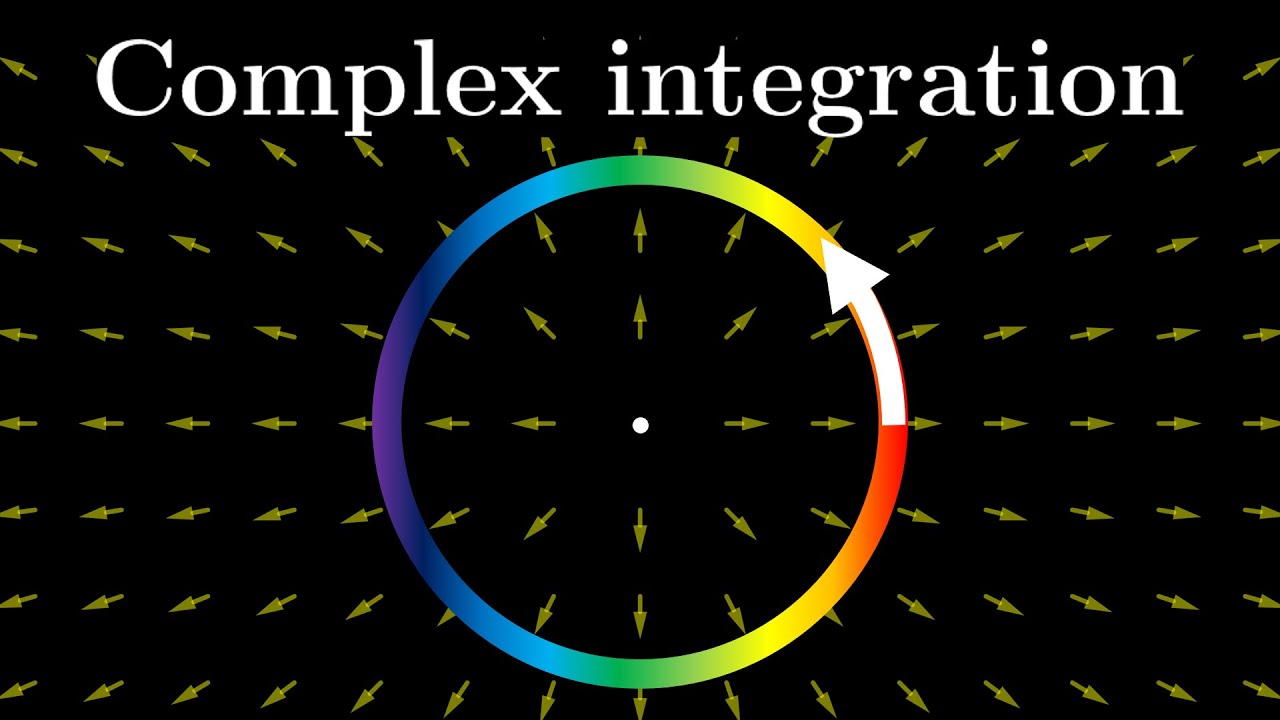
Unlock new career opportunities and become data fluent today! Use my link https://bit.ly/MathemaniacDCJan22 and check out the first chapter of any DataCamp course for FREE!
I can't pronounce "parametrisation" lol
A crash course in complex analysis - basically everything leading up to the Residue theorem. This is a more intuitive explanation ...
dim pulsar
sweet shard
skip to about 18:00
https://www.youtube.com/watch?v=EyBDtUtyshk
Ok ty
.close
topaz sinewBOT
Channel closed
Closed by @dim pulsar
Use .reopen if this was a mistake.
topaz sinewBOT
Available help channel!
Send your question here to claim the channel.
Remember:
• Ask your math question in a clear, concise manner.
• Show your work, and if possible, explain where you are stuck.
• After 15 minutes, feel free to ping <@&286206848099549185>.
• Type the command .close to free the channel when you're done.
• Be polite and have a nice day!
Read #❓how-to-get-help for further information on how to ask a good question, and about conduct in the question channels.
neon iron
 neon iron
Can someone just help me understand the rules when combing like terms and exponents
 mortal steeple
The variable part should be same while combining terms
Then the coeffs are simply added (keeping the signs in mind ofc)
Like xy + 4y can't be combined
But 3y + 4y can be
neon iron
So if the question had 6y to the 4th power and 2y to the 8th what would the exponent be when simplifying?
mortal steeple
You can't add those either
You can however factor them
These are different things
6y⁴ + 2y⁸ can't be combined
6y⁴ + 2y⁴ = 8y⁴
neon iron
mortal steeple
6y⁴ + 2y⁸ can't be combined
6y⁴ + 2y⁴ = 8y⁴
So you do add them together?
neon iron
mortal steeple
6y⁴ + 2y⁸ can't be combined
6y⁴ + 2y⁴ = 8y⁴
Im confused why in the video he keeps 8y squared and not to the 4th
.close
topaz sinewBOT
Channel closed
Closed by @wet zephyr
Use .reopen if this was a mistake.
mortal steeple
neon iron
So you do add them together?
No I was giving 2 seperate examples
When the powers are different you can't add
When they are the same you can
neon iron
mortal steeple
No I was giving 2 seperate examples
Ohh okay. So you can only combine like terms if the exponent is the same and the variable are also the same.
mortal steeple
Yesss
neon iron
mortal steeple
Yesss
Cool. Thank you. You helped me understand it better.
topaz sinewBOT
Available help channel!
Send your question here to claim the channel.
Remember:
• Ask your math question in a clear, concise manner.
• Show your work, and if possible, explain where you are stuck.
• After 15 minutes, feel free to ping <@&286206848099549185>.
• Type the command .close to free the channel when you're done.
• Be polite and have a nice day!
Read #❓how-to-get-help for further information on how to ask a good question, and about conduct in the question channels.
 lime cobalt
Hi, I need help with Relational Algebra
topaz sinewBOT
lime cobalt
Hi, I need help with Relational Algebra
 glad terrace
Ask
lime cobalt
I wanna understand what my train of thought should be when solving a question
I understand that there is an output that I'm looking for throughout multiple sets, and that I need to use operators on these sets to narrow them down to what I need
But I struggle with developing a train of thought or a guideline for myself when solving questions, even if they're simple
 odd pagoda
can you give an example of what you mean
topaz sinewBOT
@lime cobalt Has your question been resolved?
lime cobalt
it's not necessarily something specific, i just have a tough time formulating my answer

take this for instance
for question 2, what should my order of thinking be?
topaz sinewBOT
Channel closed
Closed due to timeout
Use .reopen if this was a mistake.
lime cobalt
.reopen
topaz sinewBOT
@lime cobalt Has your question been resolved?
topaz sinewBOT
Channel closed
Closed due to timeout
Use .reopen if this was a mistake.
Available help channel!
Send your question here to claim the channel.
Remember:
• Ask your math question in a clear, concise manner.
• Show your work, and if possible, explain where you are stuck.
• After 15 minutes, feel free to ping <@&286206848099549185>.
• Type the command .close to free the channel when you're done.
• Be polite and have a nice day!
Read #❓how-to-get-help for further information on how to ask a good question, and about conduct in the question channels.
Please don't occupy multiple help channels.
neon iron
Close
topaz sinewBOT
Channel closed
Channel closed due to the original message being deleted.
If you did not intend to do this, please open a new help channel,
as this action is irreversible, and this channel may abruptly lock.
topaz sinewBOT
Available help channel!
Send your question here to claim the channel.
Remember:
• Ask your math question in a clear, concise manner.
• Show your work, and if possible, explain where you are stuck.
• After 15 minutes, feel free to ping <@&286206848099549185>.
• Type the command .close to free the channel when you're done.
• Be polite and have a nice day!
Read #❓how-to-get-help for further information on how to ask a good question, and about conduct in the question channels.
 craggy yarrow
having trouble if I was able to format my proof properly, as well as not fully understanding question 1b
 topaz sinewBOT
craggy yarrow
having trouble if I was able to format my proof properly, as well as not fully u...
craggy yarrow
topaz sinewBOT
craggy yarrow
having trouble if I was able to format my proof properly, as well as not fully u...
craggy yarrow
i am pretty sure i am supposed to first prove that g is continuous
but am i supposed to later use the definition of the derivative in order to find f'(a) = g(a)?
.close
topaz sinewBOT
Channel closed
Closed by @craggy yarrow
Use .reopen if this was a mistake.
Available help channel!
Send your question here to claim the channel.
Remember:
• Ask your math question in a clear, concise manner.
• Show your work, and if possible, explain where you are stuck.
• After 15 minutes, feel free to ping <@&286206848099549185>.
• Type the command .close to free the channel when you're done.
• Be polite and have a nice day!
Read #❓how-to-get-help for further information on how to ask a good question, and about conduct in the question channels.
 fast shore
what the heck does this solution mean for d

 topaz sinewBOT
fast shore
what the heck does this solution mean for d
fast shore
topaz sinewBOT
fast shore
what the heck does this solution mean for d
fast shore
i just wrote DNE as my ans cuz its division by zero
 full hazel
they give the counterexample in the answer you sent
if p is 1/x^2 and f is x^2, then the whole p/f can be written as 1/x^4
but in limits we're not actually evaluating at a, that's just one method of finding a limit
but in reality we're finding it as it approaches a, not when it's actually at a
so as x gets closer and closer to 0, 1/x^4 is approaching positive infinity
fast shore
oh i see
it wouldnt make sense for it to be at a
ok but eitherway its undetermined but they proved it so i just said so right 😭
full hazel
that's why we can evaluate limits at x values for functions that are undefined at x. for example, if you have f(x) = x^2, and x exists on all the reals except 0, then the limit of f(x) as x approaches 0 is still 0
even though f doesn't exist at 0
full hazel
np
fast shore
.close
topaz sinewBOT
Channel closed
Closed by @fast shore
Use .reopen if this was a mistake.
Available help channel!
Send your question here to claim the channel.
Remember:
• Ask your math question in a clear, concise manner.
• Show your work, and if possible, explain where you are stuck.
• After 15 minutes, feel free to ping <@&286206848099549185>.
• Type the command .close to free the channel when you're done.
• Be polite and have a nice day!
Read #❓how-to-get-help for further information on how to ask a good question, and about conduct in the question channels.
 serene dome
 topaz sinewBOT
serene dome
topaz sinewBOT
serene dome
 zenith pasture
c?
serene dome
theyre asking how often the wave repeats itself
(this function represents a wave)
its just the period then no
2pi devided by 7/pi
got it figured out
last thing, theyre asking at what time the wave is going to be at its lowest
i subbed in the minimum value (0.7)
and found 7
but apparently theres also anotehr one
how do i find the other one
@haughty drum
topaz sinewBOT
@serene dome Has your question been resolved?
topaz sinewBOT
@serene dome Has your question been resolved?
topaz sinewBOT
Channel closed
Closed due to timeout
Use .reopen if this was a mistake.
Available help channel!
Send your question here to claim the channel.
Remember:
• Ask your math question in a clear, concise manner.
• Show your work, and if possible, explain where you are stuck.
• After 15 minutes, feel free to ping <@&286206848099549185>.
• Type the command .close to free the channel when you're done.
• Be polite and have a nice day!
Read #❓how-to-get-help for further information on how to ask a good question, and about conduct in the question channels.
 devout charm
Arent all the answers true statements?

 topaz sinewBOT
devout charm
Arent all the answers true statements?
fading owl
topaz sinewBOT
devout charm
Arent all the answers true statements?
fading owl
the grid is for reference right
devout charm
Yes
devout charm
Oh, It would be options 1,2 and 4 then.
Since we know its proportional, and the measurement of angles is the same and that the angles ACB and FHG are congruent.
fading owl
yep
 pearl brook
if you have plus or minus root x + 7 and square it does the plus and minus go away
fading owl
makes sense but they are asking for similar
fading owl
pearl brook
if you have plus or minus root x + 7 and square it does the plus and minus go aw...
!occupied
topaz sinewBOT
pearl brook
if you have plus or minus root x + 7 and square it does the plus and minus go aw...
Someone else is already using this help channel. If you need help with a question, please open your own help channel/thread (see #❓how-to-get-help for instructions).
fading owl
pearl brook
if you have plus or minus root x + 7 and square it does the plus and minus go aw...
yes
devout charm
So they why wouldnt tri ABC be congruent to tri FGH if the angles are congruent?
fading owl
devout charm
So they why wouldnt tri ABC be congruent to tri FGH if the angles are congruent?
they are congruent
but proof redundant
just say angle all same
devout charm
Ok
One last question if two angles are congruent they are just the same degrees right?
So congruent and = angles are the same?
fading owl
devout charm
One last question if two angles are congruent they are just the same degrees rig...
yep
we just say angle measure is the same
fading owl
devout charm
So congruent and = angles are the same?
only for angles
devout charm
Ok, thanks!
fading owl
i dont advice using congruent angles since ppl confuse with congruent triangles
devout charm
Have a nice day!
devout charm
.close
topaz sinewBOT
Channel closed
Closed by @devout charm
Use .reopen if this was a mistake.
topaz sinewBOT
Available help channel!
Send your question here to claim the channel.
Remember:
• Ask your math question in a clear, concise manner.
• Show your work, and if possible, explain where you are stuck.
• After 15 minutes, feel free to ping <@&286206848099549185>.
• Type the command .close to free the channel when you're done.
• Be polite and have a nice day!
Read #❓how-to-get-help for further information on how to ask a good question, and about conduct in the question channels.
 soft thorn
yo who can help
soft thorn
.close
topaz sinewBOT
Channel closed
Closed by @soft thorn
Use .reopen if this was a mistake.
Available help channel!
Send your question here to claim the channel.
Remember:
• Ask your math question in a clear, concise manner.
• Show your work, and if possible, explain where you are stuck.
• After 15 minutes, feel free to ping <@&286206848099549185>.
• Type the command .close to free the channel when you're done.
• Be polite and have a nice day!
Read #❓how-to-get-help for further information on how to ask a good question, and about conduct in the question channels.
 jade fiber
 topaz sinewBOT
jade fiber
jade fiber
topaz sinewBOT
jade fiber
jade fiber
just need a little bit of guidance here
 twin pendant
!status
topaz sinewBOT
What step are you on?
1. I don't know where to begin.
2. I have begun but got stuck midway.
3. I got an answer but I was told that it's wrong.
4. I got an answer and would like my work checked.
5. I have a question about someone else's work/solution.
6. I have completed the problem and don't need help anymore. Thank you.
7. None of the above
conflicted between if it is A or C
im going more towards a because of the limit functions
twin pendant
For c when it approaches 2 from right, it's positive inf not -inf so it's a
jade fiber
thanks for the confirmation
so apparently that was wrong
it was this one

actually
nvm that makes sense
.close
topaz sinewBOT
Channel closed
Closed by @jade fiber
Use .reopen if this was a mistake.
topaz sinewBOT
Available help channel!
Send your question here to claim the channel.
Remember:
• Ask your math question in a clear, concise manner.
• Show your work, and if possible, explain where you are stuck.
• After 15 minutes, feel free to ping <@&286206848099549185>.
• Type the command .close to free the channel when you're done.
• Be polite and have a nice day!
Read #❓how-to-get-help for further information on how to ask a good question, and about conduct in the question channels.
 tacit sundial
can someone explain me this
 topaz sinewBOT
tacit sundial
can someone explain me this
tacit sundial
topaz sinewBOT
tacit sundial
can someone explain me this
tacit sundial
I dont understand anything about the multiplication of matrices
 loud oasis
do you know the dot product?
 unreal bronze
tacit sundial
of like the vectors you multiply it and all them all up
unreal bronze
tacit sundial
of like the vectors you multiply it and all them all up
To get a value in AB, you take the dot product of the corresponding column in A and row in B
tacit sundial
do you know why its like that
unreal bronze
so e.g. 215 is [3 17 14] dot [5 6 7]
tacit sundial
oh
unreal bronze
tacit sundial
do you know why its like that
matrices represent linear transformations
any "linear function" can be written as a matrix
if we have a function f such that f(a + b) = f(a) + f(b) for vectors a and b, and f(k a) = k f(a) for real k and vector a, then f(x) = A x for some matrix A
so matrices are like functions that take in vectors and output vectors, by multipling with the matrix on the left
Matrix multiplication is "composition" of those functions. If f(x) = A x and g(x) = B x, then f(g(x)) = A (B x) = (A B) x
where (A B) is a matrix product
this is all very wordy, but it's a pretty simple concept

Multiplying two matrices represents applying one transformation after another.
Help fund future projects: https://www.patreon.com/3blue1brown
An equally valuable form of support is to simply share some of the videos.
Home page: https://www.3blue1brown.com/
Full series: http://3b1b.co/eola
Future series like this are funded by the community, th...
if you understand why matrix-vector multiplication is how it is, then to compute A B you take the columns of B and individually multiply them by A
topaz sinewBOT
Channel closed
Closed by @tacit sundial
Use .reopen if this was a mistake.
topaz sinewBOT
Available help channel!
Send your question here to claim the channel.
Remember:
• Ask your math question in a clear, concise manner.
• Show your work, and if possible, explain where you are stuck.
• After 15 minutes, feel free to ping <@&286206848099549185>.
• Type the command .close to free the channel when you're done.
• Be polite and have a nice day!
Read #❓how-to-get-help for further information on how to ask a good question, and about conduct in the question channels.
neon iron
How do you do #17?
 topaz sinewBOT
neon iron
How do you do #17?
neon iron
topaz sinewBOT
neon iron
How do you do #17?
neon iron
I am so stuck with logarithms
raven sparrow
$a \log_b (x) = \log_b (x^a)$
thorny flameBOT
Azyrashacorki

 topaz sinewBOT
@neon iron Has your question been resolved?
topaz sinewBOT
Channel closed
Closed due to timeout
Use .reopen if this was a mistake.
Available help channel!
Send your question here to claim the channel.
Remember:
• Ask your math question in a clear, concise manner.
• Show your work, and if possible, explain where you are stuck.
• After 15 minutes, feel free to ping <@&286206848099549185>.
• Type the command .close to free the channel when you're done.
• Be polite and have a nice day!
Read #❓how-to-get-help for further information on how to ask a good question, and about conduct in the question channels.
 fading nexus
Can anyone help me understanding how to find ranges from a simplex table?
topaz sinewBOT
fading nexus
Can anyone help me understanding how to find ranges from a simplex table?
@fading nexus Has your question been resolved?
topaz sinewBOT
@fading nexus Has your question been resolved?
topaz sinewBOT
@fading nexus Has your question been resolved?
topaz sinewBOT
@fading nexus Has your question been resolved?
topaz sinewBOT
Channel closed
Closed due to timeout
Use .reopen if this was a mistake.
topaz sinewBOT
Available help channel!
Send your question here to claim the channel.
Remember:
• Ask your math question in a clear, concise manner.
• Show your work, and if possible, explain where you are stuck.
• After 15 minutes, feel free to ping <@&286206848099549185>.
• Type the command .close to free the channel when you're done.
• Be polite and have a nice day!
Read #❓how-to-get-help for further information on how to ask a good question, and about conduct in the question channels.
 lethal anchor
Hi, I am trying to perform the convolution of x(t) = u(t) - u(t-2) with h(t) = e^(-2t) * u(t) where u(t) is the heaviside function
topaz sinewBOT
lethal anchor
Hi, I am trying to perform the convolution of x(t) = u(t) - u(t-2) with h(t) = e...
lethal anchor
I end up getting 1/2 *((1-e^(-2t)) *u(t) - (1-e^(-2t + 4)) *u(t-2)) but that seems wrong to me
topaz sinewBOT
Show your work, and if possible, explain where you are stuck.
lethal anchor
(I will use .* to denote convolution)
(e^(-2t) .* u(t)) = 1/2 (1-e^(-2t)) * u(t)
Then,
(e^(-2t) .* u(t-2)) - 1/2 (1-e^(-2t + 4)) * u(t-2) where I used the previous result
then I summed them up to get what I put in my original message
topaz sinewBOT
@lethal anchor Has your question been resolved?
topaz sinewBOT
Channel closed
Closed due to timeout
Use .reopen if this was a mistake.
Available help channel!
Send your question here to claim the channel.
Remember:
• Ask your math question in a clear, concise manner.
• Show your work, and if possible, explain where you are stuck.
• After 15 minutes, feel free to ping <@&286206848099549185>.
• Type the command .close to free the channel when you're done.
• Be polite and have a nice day!
Read #❓how-to-get-help for further information on how to ask a good question, and about conduct in the question channels.
 lucid harbor
 topaz sinewBOT
lucid harbor
lucid harbor
topaz sinewBOT
lucid harbor
lucid harbor
I cant figure out an answer for angle C
 empty heron
lucid harbor
I cant figure out an answer for angle C
empty heron
lucid harbor
I cant figure out an answer for angle C
have u found a and b?
lucid harbor
empty heron
have u found a and b?
Yes, I did
empty heron
lucid harbor
Yes, I did
what kind of triangle is OQR?
lucid harbor
empty heron
what kind of triangle is OQR?
Wdym by that
empty heron
lucid harbor
Wdym by that
can you find angle ORQ?
how would that relate to angle PRQ and thus angle c?
lucid harbor
empty heron
can you find angle ORQ?
B=180-100/2
=80/2
B=40
Im not quite sure. I think im doing it all wrong
topaz sinewBOT
@lucid harbor Has your question been resolved?
 tulip monolith
lucid harbor
B=180-100/2
=80/2
B=40
tulip monolith
lucid harbor
B=180-100/2
=80/2
B=40
Can you explain why you did that?
 jovial pasture
lucid harbor
B=180-100/2
=80/2
B=40
jovial pasture
lucid harbor
B=180-100/2
=80/2
B=40
this is correct, just remember to put the brackets around the 180-100
jovial pasture
lucid harbor
first I recommend finding angle a, b and c in that order. Also once you know angles a and b, you will be able to figure out angle c from there
empty heron
lucid harbor
B=180-100/2
=80/2
B=40
so what’s angle OQR?
empty heron
tulip monolith
Can you explain why you did that?
it helps to answer this question
why’d you divide by 2?
tulip monolith
empty heron
it helps to answer this question
What?
empty heron
tulip monolith
What?
i’m asking them to answer your question as a cue
tulip monolith
@lucid harbor are you familiar with the inscribed angle theorem?
lucid harbor
jovial pasture
first I recommend finding angle a, b and c in that order. Also once you know ang...
I see since A=50 B=40
I should use the triangle PQR to find C.
So I should add B(40)with 35 = 75°
With that I should find the angle of R by subtract 180-75-50=55
To get C I must substract 55 with 40.
So my final answer should be 55-40=15
lucid harbor
tulip monolith
<@837494700196888576> are you familiar with the inscribed angle theorem?
Yes
tulip monolith
I think you have done it correctly
jovial pasture
lucid harbor
I see since A=50 B=40
I should use the triangle PQR to find C.
So I should add ...
this is entirely correct
lucid harbor
🤧finally
topaz sinewBOT
@lucid harbor Has your question been resolved?
Channel closed
Closed by @lucid harbor
Use .reopen if this was a mistake.
Available help channel!
Send your question here to claim the channel.
Remember:
• Ask your math question in a clear, concise manner.
• Show your work, and if possible, explain where you are stuck.
• After 15 minutes, feel free to ping <@&286206848099549185>.
• Type the command .close to free the channel when you're done.
• Be polite and have a nice day!
Read #❓how-to-get-help for further information on how to ask a good question, and about conduct in the question channels.
neon iron
In this question's explanation, I don't understand how the highest value and lowest value of 'e' are 60 and 45 respectively

 topaz sinewBOT
neon iron
In this question's explanation, I don't understand how the highest value and low...
topaz sinewBOT
neon iron
In this question's explanation, I don't understand how the highest value and low...
@neon iron Has your question been resolved?
 light trench
neon iron
In this question's explanation, I don't understand how the highest value and low...
light trench
neon iron
In this question's explanation, I don't understand how the highest value and low...
intuitively, we're dealing with intersecting values and averages, so if the value of e is too high, it takes away from the average of the first 4 students, I do not see why they say all the first 4 are 40 though
it's ordered, so the first 4 will increase or stay the same, and a is the lightest so it's highest is 40, if you tried 41, the average would be higher than 40
and from this we know that e is 20 more than a
 neon iron
light trench
it's ordered, so the first 4 will increase or stay the same, and a is the lighte...
neon iron
light trench
it's ordered, so the first 4 will increase or stay the same, and a is the lighte...
Ok yeah that makes sense
I'll try to think about it for a couple minutes
light trench
because average says (a+b+c+d)/4=40 and (b+c+d+e)/4=45 so a+b+c+d=160 and b+c+d+e=180 or 160+e and 180+a, I hope that makes sense
lowest is the inverse, so e=45 and a=25
neon iron
light trench
because average says (a+b+c+d)/4=40 and (b+c+d+e)/4=45 so a+b+c+d=160 and b+c+d+...
I was able to solve up to e = a + 20 and the equations for totals but then I was confused about the bounds
a = 25 makes sense because b,c,d can be 45 each and the total would come to 160
Yeah I get it
thx
light trench
neon iron
I was able to solve up to e = a + 20 and the equations for totals but then I was...
yeah, so we know the bound of a+b+c+d=160, the total is a+b+c+d+e and we just replace the value
neon iron
.close
topaz sinewBOT
Channel closed
Closed by @warm gull
Use .reopen if this was a mistake.
topaz sinewBOT
Available help channel!
Send your question here to claim the channel.
Remember:
• Ask your math question in a clear, concise manner.
• Show your work, and if possible, explain where you are stuck.
• After 15 minutes, feel free to ping <@&286206848099549185>.
• Type the command .close to free the channel when you're done.
• Be polite and have a nice day!
Read #❓how-to-get-help for further information on how to ask a good question, and about conduct in the question channels.
 daring frigate
The other one is solved but this one is a little tough for me. Will you explain what will its next step be?

 topaz sinewBOT
daring frigate
The other one is solved but this one is a little tough for me. Will you explain ...
daring frigate
topaz sinewBOT
daring frigate
The other one is solved but this one is a little tough for me. Will you explain ...
daring frigate
Here's another example:

 daring frigate
The other one is solved but this one is a little tough for me. Will you explain ...
daring frigate
daring frigate
The other one is solved but this one is a little tough for me. Will you explain ...
Q: The difference between three times a number y and 18 is less than 12 or greater than 39. What real numbers do y represent?
My mind keep telling me: 3y+18<12 or 3y+18>39.
But at the same time it feels like my first solution attempt is wrong. Can you help me further and explain the concept about my pre-planning equation that might be wrong.
neon iron
daring frigate
My mind keep telling me: 3y+18<12 or 3y+18>39.
But at the same time it feels lik...
3y-18<12 or 3y-18>39
daring frigate
neon iron
3y-18<12 or 3y-18>39
Why is it not positive, I am so confused.
3y+18<12 or 3y+18>39
neon iron
daring frigate
Why is it not positive, I am so confused.
What is not "positive"? The question says "difference" which means subtraction
So you subtract 18 from 3y
neon iron
daring frigate
3y+18<12 or 3y+18>39
Also you can represent this as R - [12, 39], which is set of all real numbers excluding that interval
Idk if you have that but yea
neon iron
daring frigate
Thanks for the help.
Sure
@daring frigate do ".close" if your question is answered
daring frigate
"close"
neon iron
.close
daring frigate
.close
topaz sinewBOT
Channel closed
Closed by @daring frigate
Use .reopen if this was a mistake.
topaz sinewBOT
Available help channel!
Send your question here to claim the channel.
Remember:
• Ask your math question in a clear, concise manner.
• Show your work, and if possible, explain where you are stuck.
• After 15 minutes, feel free to ping <@&286206848099549185>.
• Type the command .close to free the channel when you're done.
• Be polite and have a nice day!
Read #❓how-to-get-help for further information on how to ask a good question, and about conduct in the question channels.
 hybrid prism
Is this a correct invocation of the axiom of replacement schema, assuming all relevant items are already known to be sets?
 topaz sinewBOT
hybrid prism
Is this a correct invocation of the axiom of replacement schema, assuming all re...
topaz sinewBOT
hybrid prism
Is this a correct invocation of the axiom of replacement schema, assuming all re...
@hybrid prism Has your question been resolved?
topaz sinewBOT
@hybrid prism Has your question been resolved?
topaz sinewBOT
Please only use the <@&286206848099549185> ping once if your question has not been answered for 15 minutes. Please do not ping or DM individual users about your question.
topaz sinewBOT
@hybrid prism Has your question been resolved?
hybrid prism
<@&286206848099549185>
topaz sinewBOT
@hybrid prism Has your question been resolved?
topaz sinewBOT
@hybrid prism Has your question been resolved?
topaz sinewBOT
@hybrid prism Has your question been resolved?
topaz sinewBOT
@hybrid prism Has your question been resolved?
topaz sinewBOT
@hybrid prism Has your question been resolved?
 pseudo sonnet
hybrid prism
Is this a correct invocation of the axiom of replacement schema, assuming all re...
pseudo sonnet
hybrid prism
Is this a correct invocation of the axiom of replacement schema, assuming all re...
you might have better luck asking in #proofs-and-logic or possibly #foundations
hybrid prism
pseudo sonnet
you might have better luck asking in <#328208536029102081> or possibly <#5370096...
Yeah I posted in the former before this and didn’t get a response. Didn’t want to spam the channel, so I posted here. I’m too intimidated to ask in #foundations lol.
topaz sinewBOT
@hybrid prism Has your question been resolved?
 lone smelt
taarquelllies
 devout spruce
 indigo narwhal
.close
 vivid lotus
so i was solving this problem. I request a expert to analyse this problem if my solution is correct or not. If not can anyone please help me.

 whole geode
! occupied @vivid lotus
topaz sinewBOT
Someone else is already using this help channel. If you need help with a question, please open your own help channel/thread (see #❓how-to-get-help for instructions).
 celest solar
 azure halo
@topaz sinew
sweet shard
.close
topaz sinewBOT
Channel closed
Closed by @sweet shard
Use .reopen if this was a mistake.
hybrid prism
Rip
 mild zealot
nice question

 soft dust
The coordinates of A is ( 0, 2/9)
Just equate f(x) with 0. And obtain the roots.
They are 0, 0 and 2/9.
 ruby oxide
soft dust
The coordinates of A is ( 0, 2/9)
ruby oxide
soft dust
The coordinates of A is ( 0, 2/9)
isnt it (9/2,0)?
x²(9-2x) = 0
x² = 0 or 9-2x = 0
9 = 2x
x= 9/2
and y is 0 cuz f(x) = y = 0
ruby oxide
 serene karma
i guess mine is correct?
serene karma
ruby oxide
isnt it (9/2,0)?
yes i saw
its correct it is equal to 0
so correct thx my life savier
i have exam 2mr
on this qs
lmfao
wish me lukc
luck
ruby oxide
serene karma
i have exam 2mr
Whats 2mr?
serene karma
ruby oxide
Whats 2mr?
tomorrow
serene karma
ruby oxide
What if I dont?
then u tought me for nothing lmfao
serene karma
yeah
topaz sinewBOT
Available help channel!
Send your question here to claim the channel.
Remember:
• Ask your math question in a clear, concise manner.
• Show your work, and if possible, explain where you are stuck.
• After 15 minutes, feel free to ping <@&286206848099549185>.
• Type the command .close to free the channel when you're done.
• Be polite and have a nice day!
Read #❓how-to-get-help for further information on how to ask a good question, and about conduct in the question channels.
 open niche
Hello,
Why for y = 1/ln(x)
x = 0 is not a vertical asymptote for the function?
topaz sinewBOT
open niche
Hello,
Why for y = 1/ln(x)
x = 0 is not a vertical asymptote for the function?
 smoky sparrow
open niche
Hello,
Why for y = 1/ln(x)
x = 0 is not a vertical asymptote for the function?
smoky sparrow
open niche
Hello,
Why for y = 1/ln(x)
x = 0 is not a vertical asymptote for the function?
well the function doesn't exist for x <= 0
smoky sparrow
wait no sorry
smoky sparrow
open niche
Hello,
Why for y = 1/ln(x)
x = 0 is not a vertical asymptote for the function?
cause you're doing $\frac{1}{-\infty} \to 0^-$
thorny flameBOT
southlander!
 open niche
what does it mean?
smoky sparrow
open niche
what does it mean?
as $x \to 0, y \to 0^-$
thorny flameBOT
southlander!
 smoky sparrow
approaching 0 from when y is negative
open niche
so because y is not approaching infinite, it's not a vertical asymptote?
smoky sparrow
open niche
so because y is not approaching infinite, it's not a vertical asymptote?
exactly
boom
open niche
so how do I know whether it's a vertical asymptote or not for other functions?
smoky sparrow
open niche
so how do I know whether it's a vertical asymptote or not for other functions?
you have to take the limit
a nice way is to substitute in x = 0.1, 0.01, 0.00001 and so on
then calculate the value of y for each of these values and see what value these y approach
which is basically the same as plotting the graph
open niche
I can't take a limit for vertical asymptotes, only for horizontal
smoky sparrow
open niche
I can't take a limit for vertical asymptotes, only for horizontal
of course you can take a limit for VA
open niche
wait,
if for a certain x -> x0 I get a y -> infinite,
it's an asymptote (for this case, y -> 0 and that's why it's not an asymptote)
but if I take a limit for x -> infinite and I get a numeric value, it's an horizontal asymptote
yes?
also,
when I do lim x-> infinite (f(x)),
do I divide the numbers of the function with the highest exponent in the nominator or denominator?
open niche
smoky sparrow
of course you can take a limit for VA
what I do now is only check whether the denominator is equal to 0 and thus it's a vertical asymptote.
smoky sparrow
open niche
what I do now is only check whether the denominator is equal to 0 and thus it's ...
exactly, so ln(x) does not approach 0 as x goes to 0
so what you are doing currently is correct
smoky sparrow
open niche
also,
when I do lim x-> infinite (f(x)),
do I divide the numbers of the function...
not applicable cause ln(x) is not a polynomial
open niche
if x = 0 were to be a vertical asymptote,
I would have had y approaching infinite values, correct?
open niche
smoky sparrow
not applicable cause ln(x) is not a polynomial
and for polynomial functions, do I divide with the biggest exponent in the nominator or denominator?
or it doesn't really matter
smoky sparrow
open niche
and for polynomial functions, do I divide with the biggest exponent in the nomin...
if x goes to positive or negative infinity
use the biggest exponents in the numerator and denominator
if x goes to 0
use the smallest exponents
open niche
smoky sparrow
if x goes to positive or negative infinity
use the *biggest* exponents in the nu...
If x goes to positive inifinity, I need to choose the number with the biggest exponent in the function, no matter if it's in the nominator or denominator
smoky sparrow
open niche
If x goes to positive inifinity, I need to choose the number with the biggest ex...
yes
choose the largest exponent out of all the terms in the numerator
great, now choose the largest exponent out of all the terms in the denominator
then divide those two terms
open niche
say for the function:
f(x) = x^3 + 5x^2 / x^4
I divide with x^4?
lim (f(x))
x->+inifite
smoky sparrow
open niche
say for the function:
f(x) = x^3 + 5x^2 / x^4
I divide with x^4?
no
$\lim_{x \to \infty} f(x) = \lim_{x \to infty} \frac{x^3}{x^4}$
thorny flameBOT
southlander!
 smoky sparrow
$= \lim_{x \to \infty} \frac{1}{x} = 0$
thorny flameBOT
southlander!
 open niche
why do I divide with the biggest exponent in numerator?
smoky sparrow
open niche
why do I divide with the biggest exponent in numerator?
it's the leading term
open niche
and why for:
y = lnx + 1/lnx
there are two asymptotes: x = 0 and x = 1?
smoky sparrow
the higher the exponent, the faster the function grows as x goes to infinity
open niche
open niche
and why for:
y = lnx + 1/lnx
there are two asymptotes: x = 0 and x = 1?
for x <= 0 the function doesn't exist
smoky sparrow
open niche
for x <= 0 the function doesn't exist
so you need to know that as $x \to 0, \ln x \to -\infty$
thorny flameBOT
southlander!
 smoky sparrow
hence $\frac{1}{\ln x} \to \frac{1}{-\infty} = 0^-$
thorny flameBOT
southlander!
 smoky sparrow
so for $x \to 0, \ln x + \frac{1}{\ln x} \to -\infty + 0^- = -\infty$, great
thorny flameBOT
southlander!
 smoky sparrow
we needed y to go to negative infinity or positive infinity for an asymptote
but also you know that ln(1) = 0
so 1/0 goes to infinity as well
open niche
and for
ln ((x+4)/(x-4))
why y = 0 is an asymptote?
smoky sparrow
open niche
and for
ln ((x+4)/(x-4))
why y = 0 is an asymptote?
you should be able to answer this one yourself actually
as x goes to infinity, what does (x + 4)/(x - 4) approach?
open niche
oh
inifinity / inifinity
smoky sparrow
open niche
oh
inifinity / inifinity
no, don't think about it like that
what is the highest power in x + 4
open niche
1
open niche
right
smoky sparrow
smoky sparrow
as x goes to infinity, what does (x + 4)/(x - 4) approach?
so now you should able to answer this question
open niche
because:
lim ( ln( (x + 4) / (x - 4) )
x -> +inifinity
so
ln (1) = 0
hence y = 0
correct?
but I can't divide x inside ln when I do lim
smoky sparrow
open niche
because:
lim ( ln( (x + 4) / (x - 4) )
x -> +inifinity
so
ln (1) = 0
yes! you got it!
smoky sparrow
open niche
but I can't divide x inside ln when I do lim
there's a rule that for a continuous function, which ln(x + 4)/(x - 4) is except at x = 4
you can take the limit inside the function
smoky sparrow
open niche
because:
lim ( ln( (x + 4) / (x - 4) )
x -> +inifinity
so
ln (1) = 0
so this equals $\ln \left(\lim_{x \to \infty} \frac{x + 4}{x - 4} \right)$
thorny flameBOT
southlander!
