#help-23
1 messages · Page 153 of 1
 sturdy swallow
 lean otter
Literally just picture a vehicle getting to the turn but not actually taking it and just continuing forward
 sturdy swallow
thats 110?
lean otter
Yep
sturdy swallow
wait what b4 did i say was 110 lol
lean otter
The turn at that 290° angle
sturdy swallow
co interior angle with 70?
lean otter
sturdy swallow
co interior angle with 70?
whatever that means 👍
oh
I think I remember this term
sturdy swallow
is there extra resource for smth like this?
 quiet juniper
I think this way is the easiest if you notice you can do that, but if you're very used to using like, corresponding angles, vertical angles, angles in a n-gon add up to 180(n - 2), that sorta thing then there's a way to do it with those theorems too
sturdy swallow
quiet juniper
I think this way is the easiest if you notice you can do that, but if you're ver...
how do i do it lool?
we have to give reasons
thats the annoying part ay
quiet juniper
Uhhh hold on I'll draw a diagram 
sturdy swallow
lol ty
lean otter
sturdy swallow
is there extra resource for smth like this?
I doubt that
I mean it's by far one of the easiest methods I've had to explain
Just continue the line, draw the angle, calculate the angle, and add/remove it to the total angle
sturdy swallow
but how will that constitue to "alternate angles in a parellel line"?
lean otter
sturdy swallow
but how will that constitue to "alternate angles in a parellel line"?
hmmm what
We've calculated a total angle of 125° up to the 3rd turn, and that 4th turn is 110°. What's the total angle?
what the fuck
lean otter
He did, it was given
quiet juniper
Oh
lean otter
I was what the fucking your diagram
quiet juniper
lol
sturdy swallow
lmfao
sturdy swallow
quiet juniper
lol
wait bro can u put that up again?
 sturdy swallow
lmfaoo
quiet juniper
So starring from the top you do vertical angles
Although
I could've skipped that step and just did alternating angles
To find the 45 degree angle in the triangle at the bottom
quiet juniper
120,70, 110 come from supplementary angles and 290 + 70 = 360
sturdy swallow
yea yea yea sheesh ok
quiet juniper
60 comes from quadrilateral angles adding up to 360
at that point you could do exterior angles of a triangle to find a but I found the supplementary angle first
sturdy swallow
ohhhhhhhhhhhhhhhhhhhh
lean otter
@quiet juniper You tripping cuh
quiet juniper

sturdy swallow
thats right i reckon?
quiet juniper
Yeah
lean otter
lean otter
We've calculated a total angle of 125° up to the 3rd turn, and that 4th turn is ...
@sturdy swallow C'mon now don't quit at the very end
lean otter
The bot deleted my message because I mentionned eye cue if you see what I mean
sturdy swallow
ag 🫡
lean otter
"I know you got the eye cue to do addition and subtraction"
sturdy swallow
lean otter
<@1148173183892074557> C'mon now don't quit at the very end
i got to write the reasoning
so i have alternate angles
bro i spent so long i got to get ready lmfao
thx tho preciate it
love lads ❤️
.close
 safe radishBOT
Channel closed
Closed by @sturdy swallow
Use .reopen if this was a mistake.
 Available help channel!
Send your question here to claim the channel.
Remember:
• Ask your math question in a clear, concise manner.
• Show your work, and if possible, explain where you are stuck.
• After 15 minutes, feel free to ping <@&286206848099549185>.
• Type the command .close to free the channel when you're done.
• Be polite and have a nice day!
Read #❓how-to-get-help for further information on how to ask a good question, and about conduct in the question channels.
 visual moss
hi can someone explain this to me please?
 safe radishBOT
visual moss
hi can someone explain this to me please?
safe radishBOT
visual moss
hi can someone explain this to me please?
 quasi bison
how much do you know about square roots in general
quasi bison
so then you do know that sqrt(a) * sqrt(b) = sqrt(ab), and the same for division?
safe radishBOT
Channel closed
Closed by @visual moss
Use .reopen if this was a mistake.
Available help channel!
Send your question here to claim the channel.
Remember:
• Ask your math question in a clear, concise manner.
• Show your work, and if possible, explain where you are stuck.
• After 15 minutes, feel free to ping <@&286206848099549185>.
• Type the command .close to free the channel when you're done.
• Be polite and have a nice day!
Read #❓how-to-get-help for further information on how to ask a good question, and about conduct in the question channels.
 copper sparrow
hi
safe radishBOT
copper sparrow
hi
copper sparrow

so i'm doing LU factorization and i understand how to derive L and U and everything but (a) is confusing me
because if what the question is saying is true, shouldnt X be an upper triangular matrix ?
if R_j + aR_i -> R_j
safe radishBOT
@copper sparrow Has your question been resolved?
copper sparrow
<@&286206848099549185>
safe radishBOT
@copper sparrow Has your question been resolved?
 peak estuary
a single row operation doesnt turn a matrix into an upper triangular matrix
safe radishBOT
Channel closed
Closed due to timeout
Use .reopen if this was a mistake.
Available help channel!
Send your question here to claim the channel.
Remember:
• Ask your math question in a clear, concise manner.
• Show your work, and if possible, explain where you are stuck.
• After 15 minutes, feel free to ping <@&286206848099549185>.
• Type the command .close to free the channel when you're done.
• Be polite and have a nice day!
Read #❓how-to-get-help for further information on how to ask a good question, and about conduct in the question channels.
Channel closed
Closed due to the original message being deleted


 crystal mist
$\mathbb{F}_{\text{un}}$
 flat frigateBOT
sakka ismail
$\mathbb{F}_{\text{un}}$
 lean otter
No
lean otter
crystal mist
$\mathbb{F}_{\text{un}}$
Asalamualaikum
crystal mist
Wa alaykom asalam
lean otter
Wanna give a brother a hand
lean otter
No
crystal mist
 crystal mist
It is an actual test
 edgy cloud
It's Drey's channel, is what I think the point was.
crystal mist
From 2006
 gray flume
Okay so banned
Or wait
No you confused me
Anyway sorry drey I was trying to bait this guy 😛
@crystal mist don't ask in other people's channels
crystal mist
I don't understand how this server works
crystal mist
gray flume
<@826898653344038972> don't ask in other people's channels
Whre i ask?
gray flume
Read #❓how-to-get-help
edgy cloud
(It was Drey's channel before he deleted his initial post, I should say).
lean otter
gray flume
Anyway sorry drey I was trying to bait this guy 😛
np
i'll forgive u if u help
gray flume
I figure as much, I deleted drey's modping so that if this guy was asking for help on a test he'd feel free to say it so I'd knock him
lean otter
:)
edgy cloud
Drey, you'll want to open another channel; this one will auto-close in a few minutes.
gray flume
I can help somewhat quickly, the idea is to use the chain rule
lean otter
i have my question pinned
gray flume
You have z(x(u,v,w), y(u,v,w))
safe radishBOT
Available help channel!
Send your question here to claim the channel.
Remember:
• Ask your math question in a clear, concise manner.
• Show your work, and if possible, explain where you are stuck.
• After 15 minutes, feel free to ping <@&286206848099549185>.
• Type the command .close to free the channel when you're done.
• Be polite and have a nice day!
Read #❓how-to-get-help for further information on how to ask a good question, and about conduct in the question channels.
lean otter
noo
safe radishBOT
lean otter
noo
gray flume
Lmfao that's what got pinned
lean otter
XD
gray flume
gray flume
You have z(x(u,v,w), y(u,v,w))
Anyway do you agree with this?
lean otter
yes
gray flume
So we wanna compute derivative of z with respect to v
We could expand it out if we were nerds
But we can do something better can't we
gray flume
Chain rule
lean otter
oh ive been doing thast
gray flume
So what does the chain rule say in this setting?
 gray flume
Well let's do it slowly
lean otter
u are a sloth afterall
gray flume
truuuuuuuuu
lean otter
gray flume
Wow okay 😦
flat frigateBOT
Sloth King Daminark
 gray flume
(Right? I'm not just asking rhetorically here my multi is barely existent)
lean otter
mhm
gray flume
So dz/dx is what?
lean otter
hmm
 gray flume
Oh
gray flume
So dz/dx = 4x^3 + y^2
dz/dy = 2xy as you say
dx/dv = 4uv^3
dy/dv = e^w
You see why?
lean otter
yes
gray flume
Alright so now let's plug stuff in
dz/dx = 3x^2 + y^4 = 3(48)^2 + 5^4
And so on
I'll have you take the reigns for a sec
gray flume
So plug the stuff in, does it work?
gray flume
(I'm not quite checking your arithmetic here)
lean otter
oof
gray flume
Okay
 gray flume
Ah I was looking at old stuff.
So dz/dx = 4x^3 + y^2 = 4(48^3) + 5^2 = 442393
dz/dy = 2xy = (2)(48)(5) = 480
dx/dv = 4(3)(8) = 96
dy/dv = e^w = 1
So we want 442393(480) + 96 = 212,348,736
lean otter
WHATTT
gray flume
Yeah I was looking at an old message when I calculated dz/dx lol
 lean otter

gray flume
Wait hmm, dx/dv = 4uv^3 right, so that's 4(3)(2^3) = 96
That was right
This is weird
Let me see if someone who's better at multivariable calculus can see what happened
lean otter
alr
 white umbra
lemme see

 white umbra
It might be a bug with the software
Unless you somehow entered the number wrong, but it looks right to me
 clear blade
I got 42470208
dz/dv = (4x^3 + y^2)(4uv^3) + (2xy)(e^w)
?
,calc (4(48)^3 + (5)^2)(4(3)(2)^3) + (2(48)(5))(e^0)
flat frigateBOT
Result:
4.2470208e+7
@lean otter
lean otter
TUSHARRR
lean otter
flat frigate
Result:
```
4.2470208e+7
```
Would y bet ur life on this answer
I used up all my chances
Unless I refresh the page I can get more but do u wanna redo it
clear blade
listen to me at your own risk
lean otter
Lool
Okay I’ll get more chances
That looks very wrong comepared to the old answers the software gave me
clear blade
nah, I'm 99.9% sure
lean otter
 clear blade
rip, there goes all of our work
white umbra
clear blade
dz/dv = (4x^3 + y^2)(4uv^3) + (2xy)(e^w)
oh I'm dumb, I multiplied the wrong numbers together in the calculator
@gray flume you multiplied together dz/dx * dz/dy instead of dz/dx * dx/dv
lol
white umbra
lean otter
So yeah, it's the same exact formula, just plug in your values of u, v, w
what are x and y equal to now?
white umbra
oh yeah it's slightly different
gray flume
Well we're also taking d/dw now
white umbra
but same technique of dz/dx dx/dw + dz/dy dy/dw
@lean otter have you calculated what x and y are equal to?
clear blade
gray flume
Well we're also taking d/dw now
true
lean otter
mhm
white umbra
What are they equal to?
white umbra
lemme check that answer
hmmm I'm getting a different answer, can you write down your steps for 724032?
white umbra
lean otter
-162
your values for x and y are correct btw
lean otter
What did u get
white umbra
Well I wanna lead you to get to the answer yourself, I'm just trying to figure out which step you may have made a calculation error
lean otter
My camera roll is full :(
white umbra
😭
okay well let's start with, did you use the formula dz/dx dx/dw + dz/dy dy/dw?
what value did you get for dx/dw and dy/dw?
lean otter
,calc (4(-162)^3 + (-5)^3)(-3)^4) + (3(-162)(-5)^2)(e^0)
flat frigateBOT
The following error occured while calculating:
Error: Unexpected operator ) (char 27)
lean otter
,calc (4(-162)^3) + (-5)^3)(-3)^4) + (3(-162)(-5)^2)(e^0)
flat frigateBOT
The following error occured while calculating:
Error: Unexpected operator ) (char 21)
lean otter
The v
white umbra
But you're trying to find dx/dw, right?
lean otter
Dz/dw
white umbra
Right, I mean, is (-3)^4 meant to be dx/dw?
white umbra
why are you taking dx/dv?
lean otter
But probably needs to be dw
white umbra
yeah
lean otter
Rip
white umbra
it should be (dz/dx)(dx/dw) + (dz/dy)(dy/dw)
lean otter
So 3w^2
white umbra
yea, and since w=0, what is that?
lean otter
0
lean otter
-3
white umbra
perfect
so now
you already said that dz/dy was 3(-162)(-5)^2
,calc 3(-162)(-5)^2 * (-3)
flat frigateBOT
Result:
36450
I think that should be your answer ^
lean otter
:DDDDDDDD
Now this whole shabang (old puc)

Pic*
But I will try it first
Wajt
What does the w come from
white umbra
w is the name of the function
lean otter
Oh yeah
lean otter
What is the chain rule for this
Uhh I can’t find dw/dx
Is it (2x+y^2+z^2)^1/2
Nvm it’s x/root x^2+y^2+z^2


elp
white umbra
lean otter
Nvm it’s x/root x^2+y^2+z^2
yea
okay lemme see what you put in
what did you get for dx/dr?
lean otter
7te^r
white umbra
I think that's dy/dr?
I think you're missing a negative sign for dx/dr
and you're missing dz/dr
lean otter
Ohh
lean otter
white umbra
and you're missing dz/dr
E^rt
white umbra
lean otter
Te^rt
yup
lean otter
i just get the same
\frac{-5e^tx+7te^ry}{\sqrt{x^2+y^2+z^2}}
\frac{-5re^tx+te^{rt}y}{\sqrt{x^2+y^2+z^2}}
for dw/dr and dw/dt
$$\frac{-5re^tx+te^{rt}y}{\sqrt{x^2+y^2+z^2}}$$
flat frigateBOT
Drey 🔍
 lean otter
$$\frac{-5e^tx+7te^ry}{\sqrt{x^2+y^2+z^2}}$$
flat frigateBOT
Drey 🔍
 safe radishBOT
@lean otter Has your question been resolved?
lean otter
come back 
safe radishBOT
@lean otter Has your question been resolved?
lean otter
.close
safe radishBOT
Channel closed
Closed by @plucky surge
Use .reopen if this was a mistake.
 royal arch

im wondering if i can get some help on this
i tried differentiating both sides but i just got sec^2(theta) = (1/x)(dh/dt)
safe radishBOT
Available help channel!
Send your question here to claim the channel.
Remember:
• Ask your math question in a clear, concise manner.
• Show your work, and if possible, explain where you are stuck.
• After 15 minutes, feel free to ping <@&286206848099549185>.
• Type the command .close to free the channel when you're done.
• Be polite and have a nice day!
Read #❓how-to-get-help for further information on how to ask a good question, and about conduct in the question channels.
royal arch
 safe radishBOT
royal arch
royal arch
safe radishBOT
royal arch
royal arch
im wondering if i can get some help on this
i tried differentiating both sides but i just got sec^2(theta) = (1/x)(dh/dt)
safe radishBOT
@royal arch Has your question been resolved?
royal arch
!help
safe radishBOT
To ask for mathematics help on this server, please open your own help channel or help thread. See #❓how-to-get-help for instructions.
royal arch
<@&286206848099549185>

im so confused where is my error
thats not even one of the solutions
<@&286206848099549185>

my work is above
idk wtf i did wrong
Nvm i got it
.close
safe radishBOT
Channel closed
Closed by @royal arch
Use .reopen if this was a mistake.
Available help channel!
Send your question here to claim the channel.
Remember:
• Ask your math question in a clear, concise manner.
• Show your work, and if possible, explain where you are stuck.
• After 15 minutes, feel free to ping <@&286206848099549185>.
• Type the command .close to free the channel when you're done.
• Be polite and have a nice day!
Read #❓how-to-get-help for further information on how to ask a good question, and about conduct in the question channels.
 dull sequoia
can anyone think of a way to do this
 safe radishBOT
dull sequoia
can anyone think of a way to do this
dull sequoia
safe radishBOT
dull sequoia
can anyone think of a way to do this
dull sequoia
without just degenerately splitting the left hand side to look like the right hand side
like currently i have $e^{i\frac{\alpha-\beta}{2}}-e^{i\frac{\beta-\alpha}{2}}=2i\sin\left(\frac{\alpha-\beta}{2}\right)$
flat frigateBOT
Frosst
 dull sequoia
but that's so degenerate
 light shoal
try factoring something out of e^(i alpha) - e^(i beta) to get a factor of that form
dull sequoia
flat frigate
**Frosst**
i mean that's what this is doing
you just force things out of the power until you get what you want
dull sequoia
is there not a better method
dull sequoia
maybe im not factoring the right thing
or not seeing the biggest thing to factor
lol it's so dumb
light shoal
take what you currently have, and multiply both sides by e^(i(a+b)/2)
the right hand side will then match the problem statement
simplify the left hand side until it does, too
 flat frigateBOT
 dull sequoia
this is so degenerate imo
light shoal
hint: what's (a+b)/2 plus (a-b)/2 ?
dull sequoia
light shoal
hint: what's (a+b)/2 plus (a-b)/2 ?
yeah but this is what i mean
you're splitting a into (a+b+a-b)/2
light shoal
dull sequoia
you don't want to be factoring the exponent, factor the whole exponential
e^x e^y = e^(x+y)
dull sequoia
oh wrong way
i want to end with the (a-b)/2 factor
i mean i just end up starting at $e^{i\alpha}-e^{i\beta}$
flat frigateBOT
Frosst
 dull sequoia
then writing down $k\left(e^{i(\alpha-\beta)/2}-e^{i(\beta-\alpha)/2}\right)$
flat frigateBOT
Frosst
 dull sequoia
then trying to figure how what k is
but maybe there just isn't a better way
it feels really cheap to just go "oh i know it looks like that so im just gonna force it"
light shoal
it may feel like a cheap trick the first couple of times you see it, but it's common enough that it becomes a technique
you see e^(ia) - e^(ib) and say, what would it take so that instead of a and b as exponents, i had two numbers that are symmetric around zero, so that becomes a sine
well the difference between a and b is a-b, so i would need (a-b)/2 and -(a-b)/2 as exponents
then work out what you need to factor out to get those
safe radishBOT
Channel closed
Closed by @dull sequoia
Use .reopen if this was a mistake.
Available help channel!
Send your question here to claim the channel.
Remember:
• Ask your math question in a clear, concise manner.
• Show your work, and if possible, explain where you are stuck.
• After 15 minutes, feel free to ping <@&286206848099549185>.
• Type the command .close to free the channel when you're done.
• Be polite and have a nice day!
Read #❓how-to-get-help for further information on how to ask a good question, and about conduct in the question channels.
 split bear
 safe radishBOT
split bear
safe radishBOT
split bear
 royal ferry
whats your first derivative?
safe radishBOT
Channel closed
Closed by @split bear
Use .reopen if this was a mistake.
Available help channel!
Send your question here to claim the channel.
Remember:
• Ask your math question in a clear, concise manner.
• Show your work, and if possible, explain where you are stuck.
• After 15 minutes, feel free to ping <@&286206848099549185>.
• Type the command .close to free the channel when you're done.
• Be polite and have a nice day!
Read #❓how-to-get-help for further information on how to ask a good question, and about conduct in the question channels.
 alpine bough
 safe radishBOT
alpine bough
alpine bough
safe radishBOT
alpine bough
alpine bough
How does number 3 make sense?
I can't seem to wrap my head around how the addition of friction would result in the mass reaching a greater height because of an increase in the angle. I would imagine two things that lead to a decrease in height would result in a greater decrease in height.
quiet juniper
Friction force is proportional to normal force so...
safe radishBOT
@alpine bough Has your question been resolved?
Channel closed
Closed by @alpine bough
Use .reopen if this was a mistake.
safe radishBOT
Available help channel!
Send your question here to claim the channel.
Remember:
• Ask your math question in a clear, concise manner.
• Show your work, and if possible, explain where you are stuck.
• After 15 minutes, feel free to ping <@&286206848099549185>.
• Type the command .close to free the channel when you're done.
• Be polite and have a nice day!
Read #❓how-to-get-help for further information on how to ask a good question, and about conduct in the question channels.
 gaunt forge
Hey everyone. why the mid-interval of this:
98 < V ≤ 104
would be 101 and not 100.5?
Is it because the symbol before V is < and not ≤???
safe radishBOT
gaunt forge
Hey everyone. why the mid-interval of this:
98 < V ≤ 104
would be 101 and not 1...
 fallow cairn
Assuming V is an integer, yes, the equality sign is causing that
gaunt forge
ok thanks!!!
fallow cairn
Or actually
fallow cairn
It's if V is not strictly an integer that this is true
fallow cairn
If we count them out
\begin{center}
99, 100, 101, 102, 103, 104
\end{center}
If V is an integer, the mid value is 101.5
But if V may be a non-integer, we instead find the mid-interval with $\frac{104+98}2 = 101$
flat frigateBOT
@fallow cairn
 safe radishBOT
Channel closed
Closed by @gaunt forge
Use .reopen if this was a mistake.
Available help channel!
Send your question here to claim the channel.
Remember:
• Ask your math question in a clear, concise manner.
• Show your work, and if possible, explain where you are stuck.
• After 15 minutes, feel free to ping <@&286206848099549185>.
• Type the command .close to free the channel when you're done.
• Be polite and have a nice day!
Read #❓how-to-get-help for further information on how to ask a good question, and about conduct in the question channels.
 empty yew
Did I do this correct?
 safe radishBOT
empty yew
Did I do this correct?
safe radishBOT
empty yew
Did I do this correct?

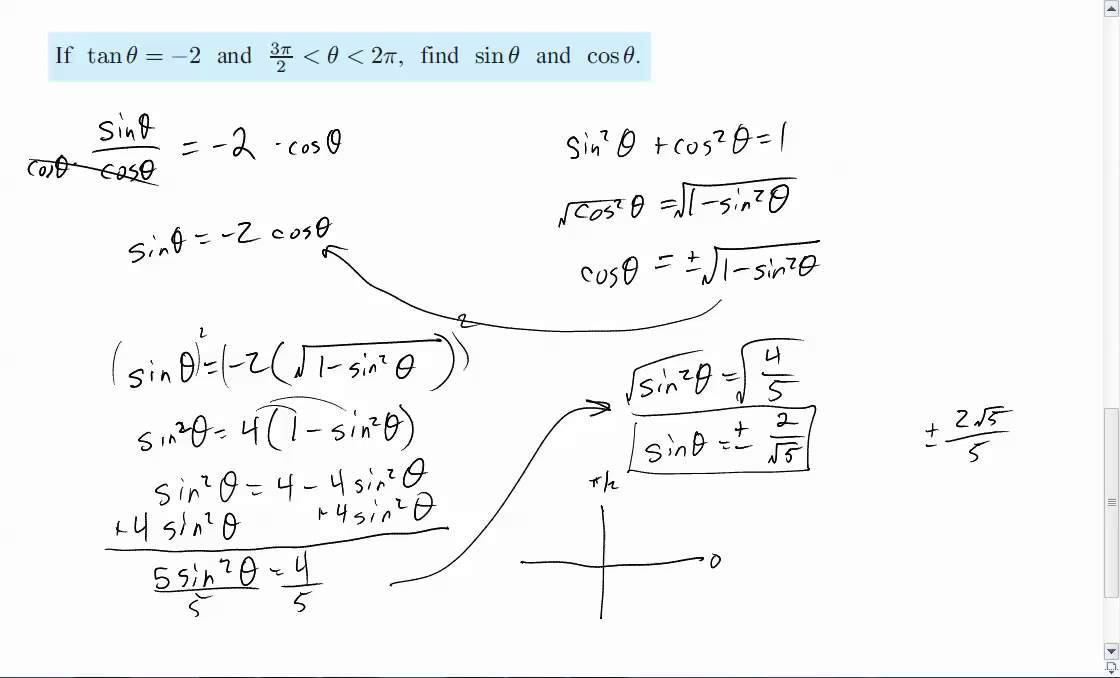 empty yew

 thin bridge
where's sin^2(t) = 8.9 coming from
quasi bison
^
empty yew
Oh don't mind that I forgot to erase that part
quasi bison
ok but then $\sin(\theta) = 19.21 (1 - \sin^2(\theta))$... where is \textbf{that} coming from?
flat frigateBOT
Ann
 thin bridge
thing that's supposed to be 79.21
empty yew
yeah
thin bridge
but still
empty yew
sry about my writing
thin bridge
ok but then $\sin(\theta) = 79.21 (1 - \sin^2(\theta))$... where is \textbf{that} coming from?
flat frigateBOT
ℝam()n()v
 quasi bison
how about you just redo this all from scratch, and make an effort to (a) write more neatly and (b) actually write things that make sense
empty yew
K
safe radishBOT
@empty yew Has your question been resolved?
safe radishBOT
Channel closed
Closed due to timeout
Use .reopen if this was a mistake.
Available help channel!
Send your question here to claim the channel.
Remember:
• Ask your math question in a clear, concise manner.
• Show your work, and if possible, explain where you are stuck.
• After 15 minutes, feel free to ping <@&286206848099549185>.
• Type the command .close to free the channel when you're done.
• Be polite and have a nice day!
Read #❓how-to-get-help for further information on how to ask a good question, and about conduct in the question channels.
 tropic flax
 safe radishBOT
tropic flax
tropic flax
safe radishBOT
tropic flax
tropic flax
its implicit differentiation but i have no clue how to find the equation of the tangent line to the elipse that actually hits (4,0)
equating the slope (m) that you get when you use points-slope formula and the slope (m) or rather, y' when you implicitly differentiate gives me another equation with variables x and y which i dont know how to solve for
safe radishBOT
@tropic flax Has your question been resolved?
safe radishBOT
Channel closed
Closed due to timeout
Use .reopen if this was a mistake.
Available help channel!
Send your question here to claim the channel.
Remember:
• Ask your math question in a clear, concise manner.
• Show your work, and if possible, explain where you are stuck.
• After 15 minutes, feel free to ping <@&286206848099549185>.
• Type the command .close to free the channel when you're done.
• Be polite and have a nice day!
Read #❓how-to-get-help for further information on how to ask a good question, and about conduct in the question channels.
 frigid spruce
A(1,3) and C(7,5) are vetices of square ABCD. Find the equaltions of AB and AD.
safe radishBOT
frigid spruce
A(1,3) and C(7,5) are vetices of square ABCD. Find the equaltions of AB and AD.
frigid spruce
isnt there any other way rather than making 4 equations and solving for vertices of B and D
peak estuary
which 4 equations do you want to make
 glass carbon
you can also use distance formula, because if you have the AC you also have side of the square
(to find coords of B or D, then equation through two points)
glass carbon
is it (4,4)?
glass carbon
Idk if it helps
peak estuary
nvm
frigid spruce
Denascite
safe radishBOT
@frigid spruce Has your question been resolved?
safe radishBOT
@frigid spruce Has your question been resolved?
frigid spruce
.close
safe radishBOT
Channel closed
Closed by @frigid spruce
Use .reopen if this was a mistake.
safe radishBOT
Available help channel!
Send your question here to claim the channel.
Remember:
• Ask your math question in a clear, concise manner.
• Show your work, and if possible, explain where you are stuck.
• After 15 minutes, feel free to ping <@&286206848099549185>.
• Type the command .close to free the channel when you're done.
• Be polite and have a nice day!
Read #❓how-to-get-help for further information on how to ask a good question, and about conduct in the question channels.
 charred atlas
!status
safe radishBOT
What step are you on?
1. I don't know where to begin
2. I have begun but got stuck midway
3. I got an answer but I'm told it's wrong
4. I got an answer and would like my work checked
5. I have a question about someone else's worked solution
6. None of the above
TimK
 charred atlas
then $g(-2) = (-2)^3-2(-2)^2-3(-2)+1$
flat frigateBOT
TimK
 charred atlas
formulae?
thin bridge
functions
 cosmic grove
 safe radishBOT
@visual oar Has your question been resolved?
safe radishBOT
Channel closed
Closed due to timeout
Use .reopen if this was a mistake.
Available help channel!
Send your question here to claim the channel.
Remember:
• Ask your math question in a clear, concise manner.
• Show your work, and if possible, explain where you are stuck.
• After 15 minutes, feel free to ping <@&286206848099549185>.
• Type the command .close to free the channel when you're done.
• Be polite and have a nice day!
Read #❓how-to-get-help for further information on how to ask a good question, and about conduct in the question channels.
 lucid echo
how would i answer this stats question: "Write a data set that has 10 entires, a mean of 10, and a population standard deviation that is approximately 3. (There are many correct answers)"
safe radishBOT
lucid echo
how would i answer this stats question: "Write a data set that has 10 entires, a...
lucid echo
i get how to find population std. dev for a data set but i dont know how to do it backwards for this question
lucid echo
so it's just trial and error?
is there no faster way
also how would i be able to guess numbers reasonably... just based off of feeling?
lucid echo
alr im trying it rn
ok like
the problem im facing rn is that when i match the mean to 10, the std. dev is like 2.7
wait is 2.7 std. dev close enough to 3 to answer the question
!closed
!answered
!close
.close.
.close
safe radishBOT
Channel closed
Closed by @lucid echo
Use .reopen if this was a mistake.
Available help channel!
Send your question here to claim the channel.
Remember:
• Ask your math question in a clear, concise manner.
• Show your work, and if possible, explain where you are stuck.
• After 15 minutes, feel free to ping <@&286206848099549185>.
• Type the command .close to free the channel when you're done.
• Be polite and have a nice day!
Read #❓how-to-get-help for further information on how to ask a good question, and about conduct in the question channels.
lean otter

 safe radishBOT
lean otter
lean otter
safe radishBOT
lean otter
lean otter
I have a question concerning these two investment scenarios. In question 1 they find the time to get to $15,000 by finding N and dividing it by the compounding period of 4.
But in question 2 they don't divide the number from N by the compounding period and take it as is(5.04 years)
why did they divide by compounding period in 1 but they didn't in 2?
safe radishBOT
@lean otter Has your question been resolved?
safe radishBOT
@lean otter Has your question been resolved?
safe radishBOT
@lean otter Has your question been resolved?
safe radishBOT
@lean otter Has your question been resolved?
 kind fractal
lean otter
why did they divide by compounding period in 1 but they didn't in 2?
kind fractal
lean otter
why did they divide by compounding period in 1 but they didn't in 2?
Hello, the questions are different. In q1, they want the time converted from quarters to years. In q2, they want it from years to quarters
lean otter
i got that part
but why didn't they divide the N in question 2 by 4
they got 5.04 for N
but isn't N = compounding period * years
so you have to divide by the compounding period in order to get the number of years
but what they did is they just took the number as is to get 5.04 years
kind fractal
N = (compounding periods per year) x years
lean otter
yes
kind fractal
Yeah you're right, mb
lean otter
so why didn't they divide by 4?
kind fractal
It looks like the units of N depend on P/Y
In q1, P/Y = 4, so N comes from the calc in quarters
In q2, P/Y=1, so N is given in years
Another possible option is that they've omitted a part of the solution
lean otter
how do you mean
kind fractal
I mean, 1.b and 2.b are supposed to be the exact result that comes out of the calc, right?
lean otter
oh wait I think it is the former
N is the total number of payments $$=payments per year×number of years. P/Y is number of payments per year. C/Y is the number of times interest is calculated per year. See below to work through an example involving a reduce balance loan with differing payment and compound periods with the TI Nspire calculator. TI ...
but how does this make sense?
what if you don't put in any payments and let it increase with just the compound interest
then wont p/y be 0
but in this case(question 1) they set p/y = c/y
kind fractal
Maybe when PMT = 0, you can set P/Y to any number you want I guess
It depends on what units you want for N
lean otter
but in question 1 when they made no payment they set it to 4
which was the compounding period
kind fractal
Yeah but they could've chosen any number I think
It's probably usual to set P/Y = C/Y when PMT=0
lean otter
hmm lemme just test that real quick
kind fractal
Focus on q1, PMT=0
They choose P/Y=4, so N is given in quarters
If you try P/Y=2, you get N in semesters
Yeah please try that
In this last case, you should get N = 20.25 semesters (?
lean otter
if I set c/y =4 but p/y=2 I get N=20.25
kind fractal
Ok great
lean otter
what does this mean though
kind fractal
Then P/Y defines the units of N, and P/Y must always be a positive integer
lean otter
is this correct
kind fractal
When PMT is not 0, then P/Y is defined by the problem's statement
lean otter
but if PMT is 0?
kind fractal
If it's 0, then you can choose it depending on what you want
It's probably usual to set it equal to C/Y
lean otter
but when I chose 2 it gave 20 quarters right?
as opposed to the 41?
so it gave a different ans
lean otter
 lean otter
wait so if I set PMT=1 it should give N in years?
lean otter
🤣
kind fractal
I haven't used that in a lot of time
It's so counter intuitive that it's easy to forget haha
safe radishBOT
Channel closed
Closed by @gusty field
Use .reopen if this was a mistake.
Available help channel!
Send your question here to claim the channel.
Remember:
• Ask your math question in a clear, concise manner.
• Show your work, and if possible, explain where you are stuck.
• After 15 minutes, feel free to ping <@&286206848099549185>.
• Type the command .close to free the channel when you're done.
• Be polite and have a nice day!
Read #❓how-to-get-help for further information on how to ask a good question, and about conduct in the question channels.
 chrome parcel
i dont understand the following word problem: "The sum of two numbers is 6, and the sum of their squares is 28. Find these numbers exactly."
safe radishBOT
chrome parcel
i dont understand the following word problem: "The sum of two numbers is 6, and ...
flat frigateBOT
GMDennis
 chrome parcel
and $x^2 + y^2 = 28$
flat frigateBOT
GMDennis
 chrome parcel
yesssir
 delicate bobcat
Both must be true
chrome parcel
right
our teacher told me something about making y = 6x
and then substituting for the second equation
delicate bobcat
Basically
chrome parcel
sorry, $y = 6 - x$
flat frigateBOT
GMDennis
 chrome parcel
delicate bobcat
Solve for one of the variables
chrome parcel
delicate bobcat
Solve for one of the variables
yeah ik but it's not that easy
what i got was
delicate bobcat
In the first equation its easy tho right
y = x - 6
Thats a oneline solving for y
chrome parcel
$x^2 + (6 - x)^2 = 28$
delicate bobcat
Yeppp
flat frigateBOT
GMDennis
 chrome parcel
is that right?
chrome parcel
right
delicate bobcat
Now you can expand the second term
chrome parcel
so now do i just FOLD everything out and add the x^2 and subtract the 28 to get a = 0?
flat frigateBOT
GMDennis
 delicate bobcat
Ok good
flat frigateBOT
GMDennis
 chrome parcel
wait a sec
i have to use quadratic equation?
why not just create the binomials
like (x - )(x - )
delicate bobcat
+/- i would write
flat frigateBOT
GMDennis
 delicate bobcat
Yea
chrome parcel
ok
lemme plug the shit in
working on it
what would be a radical for the square root of 80
2√ 20?
bcuz 40 * 2, then 20 * 2 * 2
so 2√ 20
YES
I GOT IT
AND GOT IT RIGHT COMPARED TO THE BOOK ANSWER
LETS FUCKING GOOO
the answer is 3 ± √ 5
.close
safe radishBOT
Channel closed
Closed by @chrome parcel
Use .reopen if this was a mistake.
chrome parcel
.reopen
safe radishBOT
✅
chrome parcel
.close
safe radishBOT
Channel closed
Closed by @chrome parcel
Use .reopen if this was a mistake.
safe radishBOT
✅
chrome parcel
.reopen
chrome parcel
.close
safe radishBOT
Channel closed
Closed by @chrome parcel
Use .reopen if this was a mistake.
Available help channel!
Send your question here to claim the channel.
Remember:
• Ask your math question in a clear, concise manner.
• Show your work, and if possible, explain where you are stuck.
• After 15 minutes, feel free to ping <@&286206848099549185>.
• Type the command .close to free the channel when you're done.
• Be polite and have a nice day!
Read #❓how-to-get-help for further information on how to ask a good question, and about conduct in the question channels.
 sudden sparrow
can someone help me with this
 safe radishBOT
sudden sparrow
can someone help me with this
safe radishBOT
sudden sparrow
can someone help me with this
@sudden sparrow Has your question been resolved?
 celest ember
Familiar with the formula
area =1/2 absin(c)?
sudden sparrow
yes
 twilit flame
Rearrange it
safe radishBOT
@sudden sparrow Has your question been resolved?
safe radishBOT
Channel closed
Closed due to timeout
Use .reopen if this was a mistake.
Available help channel!
Send your question here to claim the channel.
Remember:
• Ask your math question in a clear, concise manner.
• Show your work, and if possible, explain where you are stuck.
• After 15 minutes, feel free to ping <@&286206848099549185>.
• Type the command .close to free the channel when you're done.
• Be polite and have a nice day!
Read #❓how-to-get-help for further information on how to ask a good question, and about conduct in the question channels.
 misty arch
i am having trouble with part 2
 safe radishBOT
misty arch
i am having trouble with part 2
misty arch
safe radishBOT
misty arch
i am having trouble with part 2
misty arch
This is what I have so far
 safe radishBOT
@misty arch Has your question been resolved?
misty arch
<@&286206848099549185>
misty arch
it means i should take the derivative right?
 vagrant jolt
misty arch
This is what I have so far
vagrant jolt
misty arch
This is what I have so far
Wait a sec I just saw this
Did you get the answer wrong?
misty arch
yea, the answer is -0.003
misty arch
vagrant jolt
Did you get the answer wrong?
any idea on how i get -0.003?
misty arch
ok, let me try that
misty arch
vagrant jolt
Go from tan(theta)=261/x
Something like this?

ah the cos should be cos(theta)
vagrant jolt
misty arch
Something like this?
Almost there
vagrant jolt
misty arch
ah the cos should be cos(theta)
Yes and you forgot to differentiate the 261/x
misty arch
vagrant jolt
Yes and you forgot to differentiate the 261/x
to get the derivative of 261/x i use the quotient rule right?
vagrant jolt
You could
Or you could bring the x up
So it becomes x^-1
And then differentiate normally
 misty arch
yea i got to the part where i moved sec^2(theta) over, what do i do from there?
@vagrant jolt
vagrant jolt

We know theta from the formula from part a of the question
And we are told x is 128
Be careful here because you can’t just divide by 1/cos(x) in a calculator
You either turn it into multiply or you find what cos(x) and then do 1/value
misty arch
vagrant jolt
You either turn it into multiply or you find what cos(x) and then do 1/value
This should work to right?

From here do I just put it in a calculator?
vagrant jolt
Does your calculator have a sec^2 function?
If so then yeah
I would rather convert it into cos and do it separately to make it less compact
vagrant jolt
vagrant jolt
You either turn it into multiply or you find what cos(x) and then do 1/value
By this I meant this
 misty arch
hmmm, im getting -0.03
misty arch
here let me input in in again
vagrant jolt
Send a pic of what you’re typing in calc if you’re still getting smth else
misty arch
ah, i left the one on top when multiplying it
misty arch
vagrant jolt
Send a pic of what you’re typing in calc if you’re still getting smth else
yup got -0.003, thanks!
misty arch
.close
safe radishBOT
Channel closed
Closed by @misty arch
Use .reopen if this was a mistake.
Available help channel!
Send your question here to claim the channel.
Remember:
• Ask your math question in a clear, concise manner.
• Show your work, and if possible, explain where you are stuck.
• After 15 minutes, feel free to ping <@&286206848099549185>.
• Type the command .close to free the channel when you're done.
• Be polite and have a nice day!
Read #❓how-to-get-help for further information on how to ask a good question, and about conduct in the question channels.
 civic bramble
Hello, I'm trying to find the limit of the pigeon hole principle and I really need your insight on this. (
Scenario is: let there exist 367 people. A year can be 365 days or 366 days. Then there are at least 2 people with the same birthday. Let set A contains people and B contain days. So surjectivity between B and A are established.
My hypothesis, let there be 3 people with the same birthday. Then there exist, although slim, for a day that has no people to be born in it. Thus, surjectivity between B and A break.
My problem being trying to generalize this. Let n +x, m where n+x and m belong to N. All results of n + x are elements in set A. All objects m are in set B. At what point does the surjectivity does not hold?
This can be achieve if I take |A| - |B| such that this result in a negative x. But I feel like i did something wrong. I tried to ask my professor and he said my understanding of the principle is wrong. Any help is appreciated
safe radishBOT
civic bramble
Hello, I'm trying to find the limit of the pigeon hole principle and I really ne...
@civic bramble Has your question been resolved?
civic bramble
!status
safe radishBOT
What step are you on?
1. I don't know where to begin
2. I have begun but got stuck midway
3. I got an answer but I'm told it's wrong
4. I got an answer and would like my work checked
5. I have a question about someone else's worked solution
6. None of the above
3 or 4
safe radishBOT
@civic bramble Has your question been resolved?

 marsh walrus
I'm not sure I understand the last part of the question 
This can be achieve if I take |A| - |B| such that this result in a negative x. But I feel like i did something wrong. I tried to ask my professor and he said my understanding of the principle is wrong. Any help is appreciated```this
can you explain more?
safe radishBOT
@civic bramble Has your question been resolved?
civic bramble
So, I'm finding that if n + x - m = x. Somehow if |A - x| then the surjectivity between set B and |A-x| no longer hold if that make sense even though |B| to |A| was previously surjectived.
Extend this into limit as N is not bound above. So |B| never has any surjectivity to |A| for all size
If that make sense.
civic bramble

safe radishBOT
@civic bramble Has your question been resolved?

 marsh walrus
@civic bramble what is x?
what do you mean if |A-x| then ...
it doesnt even seem like youve written a valid implication here
you may need to explain more broadly the bigger picture thing youre trying to accomplish
and stop posting sad emotes
safe radishBOT
@civic bramble Has your question been resolved?
safe radishBOT
@civic bramble Has your question been resolved?
civic bramble
.close
safe radishBOT
Channel closed
Closed by @civic bramble
Use .reopen if this was a mistake.
Available help channel!
Send your question here to claim the channel.
Remember:
• Ask your math question in a clear, concise manner.
• Show your work, and if possible, explain where you are stuck.
• After 15 minutes, feel free to ping <@&286206848099549185>.
• Type the command .close to free the channel when you're done.
• Be polite and have a nice day!
Read #❓how-to-get-help for further information on how to ask a good question, and about conduct in the question channels.
lean otter
Hey, how can I evaluate cos(2) in degrees using a triangle ?
lean otter
lean otter
Hey, how can I evaluate cos(2) *in degrees* using a triangle ?
<@&286206848099549185>
 native ledge
!15min
safe radishBOT
Please only use the <@&286206848099549185> ping once if your question has not been answered for 15 minutes. Please do not ping or DM individual users about your question.
safe radishBOT
@lean otter Has your question been resolved?
safe radishBOT
Channel closed
Closed due to timeout
Use .reopen if this was a mistake.
Available help channel!
Send your question here to claim the channel.
Remember:
• Ask your math question in a clear, concise manner.
• Show your work, and if possible, explain where you are stuck.
• After 15 minutes, feel free to ping <@&286206848099549185>.
• Type the command .close to free the channel when you're done.
• Be polite and have a nice day!
Read #❓how-to-get-help for further information on how to ask a good question, and about conduct in the question channels.
 surreal fable
how is the square root of 4 times 2 equal to 2 times the square root of 2?
 safe radishBOT
surreal fable
how is the square root of 4 times 2 equal to 2 times the square root of 2?
safe radishBOT
surreal fable
how is the square root of 4 times 2 equal to 2 times the square root of 2?
 wise junco
surreal fable
how is the square root of 4 times 2 equal to 2 times the square root of 2?
wise junco
surreal fable
how is the square root of 4 times 2 equal to 2 times the square root of 2?
sqrt(4 * 2) = sqrt(4) * sqrt(2) = 2 * sqrt(2)
surreal fable
wise junco
sqrt(4 * 2) = sqrt(4) * sqrt(2) = 2 * sqrt(2)
Isnt that 4? -> 2 * sqrt(2) -> sqrt(4)
surreal fable
wise junco
n * sqrt(m) = sqrt(n * n * m)
interesting.
wise junco
surreal fable
interesting.
i mean put m = 1, and its fairly obvious property
n = sqrt(n^2)
surreal fable
I just don't know why, I'd expect 2 * sqrt(2) to be sqrt(4).
wise junco
surreal fable
I just don't know why, I'd expect 2 * sqrt(2) to be sqrt(4).
2 * sqrt(1) isn't = sqrt(2) :D
surreal fable
huh
got it
so for example here:
4 is a perfect square so I can evaluate it, and then just keep the square root of 2.
 safe radishBOT
@surreal fable Has your question been resolved?
Channel closed
Closed by @surreal fable
Use .reopen if this was a mistake.
Available help channel!
Send your question here to claim the channel.
Remember:
• Ask your math question in a clear, concise manner.
• Show your work, and if possible, explain where you are stuck.
• After 15 minutes, feel free to ping <@&286206848099549185>.
• Type the command .close to free the channel when you're done.
• Be polite and have a nice day!
Read #❓how-to-get-help for further information on how to ask a good question, and about conduct in the question channels.
 dim moon
Can somebody help with this and show the working out?
 safe radishBOT
dim moon
Can somebody help with this and show the working out?
safe radishBOT
dim moon
Can somebody help with this and show the working out?
 little mesa
!status
safe radishBOT
What step are you on?
1. I don't know where to begin
2. I have begun but got stuck midway
3. I got an answer but I'm told it's wrong
4. I got an answer and would like my work checked
5. I have a question about someone else's worked solution
6. None of the above
- I know the answer to question a) but have no idea how to calculate or what is B)
dim moon
that would be 16.042
 finite dew
so how many atoms in one mol
dim moon
4 atoms of hydrogen and 1 of carbon
finite dew
dim moon
4 atoms of hydrogen and 1 of carbon
no how many molecules are there in one mole of methane
avogadros number right
have you learnt this?
6.022x10^23 atoms in one mole
ahhh so sorry i have to go, maybe someone else can explain it
gllll
little mesa

dim moon
thanks for your help anyway
little mesa
what'd you get for a
dim moon
2.658x10^-23
little mesa
so if one molecule is 2.658*10^-23, how many molecules in a gram...
think of a simpler example, if you have a molecule of 0.1g, then there's 10 molecules in a gram, because 1/0.1=10
dim moon
oh alr
little mesa
does that make sense or nah
dim moon
yeah that does
safe radishBOT
@dim moon Has your question been resolved?
safe radishBOT
Channel closed
Closed due to timeout
Use .reopen if this was a mistake.
Available help channel!
Send your question here to claim the channel.
Remember:
• Ask your math question in a clear, concise manner.
• Show your work, and if possible, explain where you are stuck.
• After 15 minutes, feel free to ping <@&286206848099549185>.
• Type the command .close to free the channel when you're done.
• Be polite and have a nice day!
Read #❓how-to-get-help for further information on how to ask a good question, and about conduct in the question channels.
lean otter
 safe radishBOT
lean otter
lean otter
safe radishBOT
lean otter
lean otter
I need help understanding this
dim moon
lean otter
I need help understanding this
you have mathswatch haha enjoy it when you can before ur teacher switches to sparx
this channels being used
dim moon
lean otter
Ill try and help ya out
lean otter
thank you
 dim moon
Oh wait
lean otter
 dim moon
I think i know where i went wrong
lean otter
U forgot about the y=2 I believe
dim moon
my bad bro im sorry
lean otter
Nah u good
i got to my percentage cuz it switched up my questions
so i got a 100 now
so its all good
that wont even be on the test
dim moon
so would you say this is all done?
lean otter
.close
safe radishBOT
Channel closed
Closed by @dreamy bridge
Use .reopen if this was a mistake.
safe radishBOT
Available help channel!
Send your question here to claim the channel.
Remember:
• Ask your math question in a clear, concise manner.
• Show your work, and if possible, explain where you are stuck.
• After 15 minutes, feel free to ping <@&286206848099549185>.
• Type the command .close to free the channel when you're done.
• Be polite and have a nice day!
Read #❓how-to-get-help for further information on how to ask a good question, and about conduct in the question channels.
 sour mica
 sour mica
could someone explain why the solution set is empty in this case
 jolly shard
If you convert these equations into slope intercept form, what do you get?
sour mica
-14y = -2x + 0
jolly shard
And divide so you get y alone for both equations
sour mica
y = 1/7x + 0/14 or error?
jolly shard
0 into 14 groups is zero in each, so 0
sour mica
63y = 9x + 16
y = 9/63 + 16/63
jolly shard
Which simplifies
sour mica
1/9x + 16/63?
sour mica
ahh yes i mistook the result for how much u divide it by
jolly shard
Yeah, so if you look at the graph of these equations, when will they cross?
sour mica
i dont know how to look at the graph of them but i assume given theyre the same thing but different Bs they never do
jolly shard
Exactly
sour mica
wait doesnt this mean u can using ur graphing calculator to find the answer to a system of linear equations without having to do it by hand?
jolly shard
So if you know the solution to the system of equations is when they cross, what is the solution to a system that never crosses?
sour mica
nothing
jolly shard
sour mica
wait doesnt this mean u can using ur graphing calculator to find the answer to a...
You can also just look at the slope, if they’re the same they either never cross or always ‘cross’
And if the slope of two lines is different they will cross exactly once
sour mica
im more asking cause im somehow notirously bad at doing these by hand
just
the worst
i dont understand how i cant figure it out
usually the ones with 3 systems
jolly shard
3 equations and/or 3 variables?
sour mica
yah
jolly shard
Well trying to visualize that gets trickier than 2 variables, but it’s the same idea
jolly shard
Do you have one of those?
 sour mica
first add equation 1 and 3 together to get rid of x
jolly shard
Good idea
sour mica
then multiply equation 3 by 2 and add 2 and 3 together
jolly shard
Uhh you don’t need to scale it, just add row 3 to row 2
sour mica
how would u get rid of x then?
sour mica
nono lol
jolly shard
So add 2*R3 to R2 and that’s your new R2; then add R1 to R3 to become your new R3
sour mica
get
10y - 2z = 56 and
23y - 4z = 127
jolly shard
Then you can do more row operations to solve one of them
Try adding -2*R2 to R3 and solving for y
sour mica
get (4, 5, -3)
which is correct in this case
cant believe i picked one where i get it right
jolly shard
Good job!