#help-23
1 messages · Page 63 of 1

 unreal fiber
<@&268886789983436800>
 sand oar
f(x)
unreal fiber
yes
sand oar
I need to put it in the f(x+h)
unreal fiber
correct
sand oar
do I just put a +h in there
 harsh shoal
unreal fiber
<@&268886789983436800>
harsh shoal
unreal fiber
<@&268886789983436800>
Tyvm
 sand oar
then I put it to every x I see
unreal fiber
sure
 unreal fiber
yeah
 unreal fiber
unsure...
sand oar
what should I do next
 verbal oak
Don't functions like x^nsin(1/x) always have an oscillatory type discontinuity?
unreal fiber
I think derivative at a point definition would helps us more than just the h → 0 one
sand oar

unreal fiber
verbal oak
Don't functions like x^nsin(1/x) always have an oscillatory type discontinuity?
the function itself is continuous but the derivative may not be continuous at every point..?
I am really unsure though
verbal oak
I mean we have defined the function at x=0. So that shouldn't be a problem.
unreal fiber
also is oscillatory type of discontinuity even a thing
sand oar
then what should I do
verbal oak
unreal fiber
also is oscillatory type of discontinuity even a thing
I am pretty sure it is.
But I am not sure if it can be removed. My best guess is that we can not diffrentiate this function at x=0.
unreal fiber
the derivative of f(x) at point a: $f'(a) = \lim_{x → a} \frac{f(x) - f(a)}{x - a}$
 flat frigateBOT
biggboy
 unreal fiber
verbal oak
I am pretty sure it is.
But I am not sure if it can be removed. My best guess is...
unreal fiber
verbal oak
I am pretty sure it is.
But I am not sure if it can be removed. My best guess is...
not for all r yes, but I think it can be for some
like r = 2... I think
verbal oak
Maybe right hand derivative= left hand derivative definition might work.
But then again I don't think we can remove oscillatory type discontinuity.
Another easier definition of derivability to use in this case can be
limit of f'(0+)= limit of f'(0-).
unreal fiber
the graph of xⁿsin(1/x) seems to be bounded by xⁿ and -xⁿ for all positive integer n bigger than 1
so I think that "oscillatory discontinuity" disappears(?)
unreal fiber
sure
sand oar
.close
 safe radishBOT
Channel closed
Closed by @sand oar
Use .reopen if this was a mistake.
safe radishBOT
 Available help channel!
Send your question here to claim the channel.
Remember:
• Ask your math question in a clear, concise manner.
• Show your work, and if possible, explain where you are stuck.
• After 15 minutes, feel free to ping <@&286206848099549185>.
• Type the command .close to free the channel when you're done.
• Be polite and have a nice day!
Read #❓how-to-get-help for further information on how to ask a good question, and about conduct in the question channels.
 faint saffron
the ans has to be 50 cm^2 and (50pi-100)cm^2 but i dont know where to start
 safe radishBOT
faint saffron
the ans has to be 50 cm^2 and (50pi-100)cm^2 but i dont know where to start
safe radishBOT
faint saffron
the ans has to be 50 cm^2 and (50pi-100)cm^2 but i dont know where to start
 junior smelt
See you finally changed the days 
For b, you can work out what the unshaded parts are pretty easily
faint saffron
junior smelt
See you finally changed the days <:catGiggle:668948717772079128>
hehe yess
junior smelt
Then use that and the area of the square to get the area of the shaded
faint saffron
junior smelt
For b, you can work out what the unshaded parts are pretty easily
but i have no idea how to do that
junior smelt
You have a square right, and inside it is a quarter-circle of radius the same as the square’s?
faint saffron
yess
a
wait
do i have to find the area of arcs
like 90/360 multiply 10^2
and then
i forgot the english word
junior smelt
Don’t forget the pi 
junior smelt
For one of the unshaded you could do area of square - area of that quarter circle
Then you know that bit of the unshaded are the same so double that
Then remove the unshaded total area from that of the square
faint saffron
omg yess
i can see it now
and how about a?
it is a bit harder than b
seems to me
i mean
junior smelt
A tiny bit but not by much
Similar idea to the last one, the unshaded area is easy to work out
faint saffron
maybe hm i think i can find the area of the semi circle and it will be 25pi/2
but what about another unshaded area
junior smelt
Create like “sub-squares” to see it easier
faint saffron
okay a sec
 faint saffron
aaa
okaaaay
i will try it now
thank you very much chartbit!! u r cool!
.close
safe radishBOT
Channel closed
Closed by @faint saffron
Use .reopen if this was a mistake.
Available help channel!
Send your question here to claim the channel.
Remember:
• Ask your math question in a clear, concise manner.
• Show your work, and if possible, explain where you are stuck.
• After 15 minutes, feel free to ping <@&286206848099549185>.
• Type the command .close to free the channel when you're done.
• Be polite and have a nice day!
Read #❓how-to-get-help for further information on how to ask a good question, and about conduct in the question channels.
 lean otter
is this correct ?

 waxen patio
lean otter
is this correct ?
waxen patio
lean otter
is this correct ?
nope
$g\left(f\left(h\left(x\right)\right)\right)=g\left(f\left(\dfrac{-2}{x}\right)\right)=g\left(\dfrac{4}{x^2}\right)=\dfrac{4}{x^2}-1$
flat frigateBOT
SAKUUN
 waxen patio
@lean otter
safe radishBOT
Channel closed
Closed due to timeout
Use .reopen if this was a mistake.
Available help channel!
Send your question here to claim the channel.
Remember:
• Ask your math question in a clear, concise manner.
• Show your work, and if possible, explain where you are stuck.
• After 15 minutes, feel free to ping <@&286206848099549185>.
• Type the command .close to free the channel when you're done.
• Be polite and have a nice day!
Read #❓how-to-get-help for further information on how to ask a good question, and about conduct in the question channels.
 tepid torrent
How would I finish this: Tan(53.2)/1 = 14/x
safe radishBOT
tepid torrent
How would I finish this: Tan(53.2)/1 = 14/x
 quasi bison
are you asked to find the value of x?
 frank glen
You're solving for x?
tepid torrent
Sorry, let me show u the full problem 
It's a trig question- I got it down to Tan(53.2) = 14/x
and I know you're supposed to cross multiply it
I just don't know how to finish that
unreal fiber
how did you got that from the diagram... and what does x represent in the diagram
 unreal fiber
is your x the length GH
tepid torrent
yes
unreal fiber
then you got your fraction wrong
unreal fiber
angle G?
tepid torrent
yes
unreal fiber
wuh
unreal fiber
G is an angle though
unreal fiber
firstly, calm dowm
tepid torrent
okok sorry
unreal fiber
hmm
tan(53.2 degrees) is not a very nice value but workable I guess
so what would tan(53.2 degrees) would represent as a ratio of sides on your diagram
 tepid torrent
okok yes
unreal fiber
GJ would be the hypotenuse of your triangle, yes?
tepid torrent
mhm
unreal fiber
and the length HJ would be the adjacent length respect to the angle J
so we need the trigonometric function that relates both the hypotenuse and the adjacent side length
which is the cosine function
tepid torrent
cosine!
unreal fiber
yes!
tepid torrent
yay!
unreal fiber
so our cosine value of the angle J would be the ratio 14/GJ, right?
tepid torrent
mhm
unreal fiber
so solving for GJ would get us with
tepid torrent
how do I solve for GJ
unreal fiber
you have $\cos(53.2\deg) = \frac{14}{|GJ|}$
flat frigateBOT
biggboy
 unreal fiber
multiplying both sides by length GJ: $|GJ| \cdot \cos(53.2 \deg) = 14$
flat frigateBOT
biggboy
 unreal fiber
tepid torrent
can I replace GJ with x?
unreal fiber
tepid torrent
can I replace GJ with x?
you don't really need to but you can
dividing both sides by cos(53.2 deg): $|GJ| = \frac{14}{\cos(53.2 \deg)}$
flat frigateBOT
biggboy
 unreal fiber
you can just plug that in a calculator and round it the way your question suggests
unreal fiber
yeah
safe radishBOT
Channel closed
Closed by @tepid torrent
Use .reopen if this was a mistake.
safe radishBOT
Available help channel!
Send your question here to claim the channel.
Remember:
• Ask your math question in a clear, concise manner.
• Show your work, and if possible, explain where you are stuck.
• After 15 minutes, feel free to ping <@&286206848099549185>.
• Type the command .close to free the channel when you're done.
• Be polite and have a nice day!
Read #❓how-to-get-help for further information on how to ask a good question, and about conduct in the question channels.
 dark terrace
Hello im trying to to do numerical analysis.
I did 2 equation called d2_1 and d2_2 where d2_1 is the finite difference approximation of f'(xi) and d2_2 FDA of f''(xi) both is in the second order. I want to study the error of | d2_1 - f'(1) | and | d2_2 - f''(1) | in python with a graph where h reduces where f(x) = e^-x^2 and xi = 1.
safe radishBOT
dark terrace
Hello im trying to to do numerical analysis.
I did 2 equation called d2_1 and d...

 plucky elk
shouldn't your error decrease with decreasing step size
can you type out your function and its derivatives in latex
safe radishBOT
@dark terrace Has your question been resolved?
dark terrace
 dark terrace
here is the code
dark terrace
dark terrace
here is the code
 dark terrace
plucky elk
shouldn't your error decrease with decreasing step size
dark terrace
plucky elk
shouldn't your error decrease with decreasing step size
tbh I don't know
 grizzled stirrup
theres some weird things computers do with floating point calculations
dark terrace
grizzled stirrup
theres some weird things computers do with floating point calculations
So you mean it has to do something with the code so my calculation are not wrong?
grizzled stirrup
im not sure i didnt look at the code
plucky elk
dark terrace
you're missing a factor of h/2 multiplying the -2e^(-x^2) term

use $a(b+c) = ab + ac$ with $a=h/2$
flat frigateBOT
riemann
 plucky elk
oh maybe it looks right in the code
dark terrace
So based on what you said earlier i rewrote the function d2_1(h) so it look like this now:

now the graph look like this

@plucky elk
plucky elk
why is there an x and a 1 here?
 dark terrace
plucky elk
why is there an x and a 1 here?
dark terrace
plucky elk
why is there an x and a 1 here?
what do you mean?
plucky elk
this is your f''(x). the x in 4x^2 should be the same as the x in the two exponentials
 plucky elk
why is there an x and a 1 here?
plucky elk
plucky elk
why is there an x and a 1 here?
also looks like the parentheses don't match. you have -4x^2 multiplying both exponentials
dark terrace
plucky elk
this is your f''(x). the x in 4x^2 should be the same as the x in the two expone...
but when x = 1 isn't e^-x^2 just e^-1 which is the same 1/e^1
plucky elk
dark terrace
but when x = 1 isn't e^-x^2 just e^-1 which is the same 1/e^1
that's not your issue
plucky elk
plucky elk
why is there an x and a 1 here?
read the screenshot more carefully
oh you only pass in x=1

well that's completely inconsistent.
plucky elk
plucky elk
why is there an x and a 1 here?
either re-write your function to have x or don't at all.
plucky elk
plucky elk
also looks like the parentheses don't match. you have -4x^2 multiplying both exp...
fix this and plot again
dark terrace
plucky elk
either re-write your function to have x or don't at all.
I had x first but when I was trying to debug the code and put 1 to check if there were different but there was no difference then i left it like that
plucky elk
dark terrace
I had x first but when I was trying to debug the code and put 1 to check if ther...
yea that's bad
dark terrace
I changed the 1:s to x but the graph is the same
plucky elk
plucky elk
fix this and plot again
.
dark terrace
plucky elk
.
 dark terrace
plucky elk
also looks like the parentheses don't match. you have -4x^2 multiplying both exp...
dark terrace
plucky elk
also looks like the parentheses don't match. you have -4x^2 multiplying both exp...
Ok i c
 plucky elk
the blue curve looks like it makes more sense.
dark terrace
Ok im gonna check the other function in my code tomorrow tp fix it
plucky elk

dark terrace
Tnx for help
plucky elk
.close
safe radishBOT
Channel closed
Closed by @plucky elk
Use .reopen if this was a mistake.
safe radishBOT
Available help channel!
Send your question here to claim the channel.
Remember:
• Ask your math question in a clear, concise manner.
• Show your work, and if possible, explain where you are stuck.
• After 15 minutes, feel free to ping <@&286206848099549185>.
• Type the command .close to free the channel when you're done.
• Be polite and have a nice day!
Read #❓how-to-get-help for further information on how to ask a good question, and about conduct in the question channels.
 vital parrot
I feel like such an idiot but please help me figure out where I'm going wrong
If p = -4, p squared is -4 x -4 which is 16. 2p would be 2 x -4 which is -8, plus four brings it up to -4. Therefore, 16 minus -4 equals 20 due to a double negative yet somehow, the answer came out to 28. How is that even possible?
 safe radishBOT
vital parrot
I feel like such an idiot but please help me figure out where I'm going wrong
I...
vital parrot
safe radishBOT
vital parrot
I feel like such an idiot but please help me figure out where I'm going wrong
I...
vital parrot
I'm just going through practice stuff so I'll get similar questions to this til I pass so I just want to figure out how to properly do this shit
 stoic dune
(-4)² - 2(-4) + 4
Use brackets if you're having trouble
Then that's
(16) - 2(-4) + 4
= 16 + 8 + 4
vital parrot
So its not a subtraction at all
Okay, so basically each one of these is its separate formula?
stoic dune
I'm choosing to evaluate them separately then combine them after, sure
Any term seem weird? Want to go over any of it?
vital parrot
I'm gonna work through another similar problem and see if I get stuck
Give me a minute

I just don't get it
Ahh wait a sec
I misinterpreted the whole thing
It makes more sense when I write it like a sentence
Oh wait my answer is still wrong
stoic dune
A few things that catch people with these:
-
Squaring a negative number turns it into a positive number
-
Subtracting a negative number is the same as adding a positive number
vital parrot
I dunno how much more I can break this down. I went r^2 is 9, -2 times -3 is 6, plus four equals 10, therefore its -1
This is driving me nuts
vital parrot
But wait a second, the root at the end is a positive, so wouldn't it be subtraction?
stoic dune
Root at the end? I'm not sure what that refers to
vital parrot
Because -2 x -3 is a positive, plus a positive 4 we're left with a positive 10
stoic dune
Right! Don't forget about your 9 that came before
vital parrot
Yes, so we subtract a positive 10 from a positive 9, we're left with a negative 1, that's what I don't get
stoic dune
You used your - when you multiplied -2(-3)
vital parrot
So lets work through this again then, so positive 2 times negative -3 is -6 plus +4 is a negative -2
At least that's what I'm coming to
stoic dune
So note as well that the - only applies to the term to its immediate right
Your explanation is trying to do:
-(6 + 4)
But you really want to do
-6 + 4
vital parrot
So okay, its a negative -2 plus a four giving us 2
So 11 in total?
Wait no
So it'd be 9 minus 11
9 minus 2
But that leads me to my answer of 7
I just don't get it!
stoic dune
Not sure where -2 + 4 happens
stoic dune
Doing this in sentences is mixing you up
vital parrot
God I hope this is finally the correct answer
THE ANSWER IS 19?
HOW?
Oh my god I'm gonna have to come back to this later
.close
safe radishBOT
Channel closed
Closed by @vital parrot
Use .reopen if this was a mistake.
Available help channel!
Send your question here to claim the channel.
Remember:
• Ask your math question in a clear, concise manner.
• Show your work, and if possible, explain where you are stuck.
• After 15 minutes, feel free to ping <@&286206848099549185>.
• Type the command .close to free the channel when you're done.
• Be polite and have a nice day!
Read #❓how-to-get-help for further information on how to ask a good question, and about conduct in the question channels.
 rustic oracle
Quick Question: I would like to know how much sin cos and tangent is in calculus - higher level math due to my adamant distain towards it due to not learning it well enough.
safe radishBOT
rustic oracle
Quick Question: I would like to know how much sin cos and tangent is in calculus...
 final halo
yeah you're really gonna wanna learn to like it more
safe radishBOT
Channel closed
Closed by @rustic oracle
Use .reopen if this was a mistake.
Available help channel!
Send your question here to claim the channel.
Remember:
• Ask your math question in a clear, concise manner.
• Show your work, and if possible, explain where you are stuck.
• After 15 minutes, feel free to ping <@&286206848099549185>.
• Type the command .close to free the channel when you're done.
• Be polite and have a nice day!
Read #❓how-to-get-help for further information on how to ask a good question, and about conduct in the question channels.
 fiery socket
∀a∈Z, a=kq+r, k∈z+ ∧ 0<r<q
safe radishBOT
fiery socket
∀a∈Z, a=kq+r, k∈z+ ∧ 0<r<q
fiery socket
Does this notation make sense? I'm trying to say "For all/every integer a, a can be rewritten as kq+r, where k is a positive integer and r is between 0 and q.
If it doesn't, what would be the correct version?
plucky elk
yes it makes sense
fiery socket
ok ty! It's my first time learning math notations and I'm just practicing with random theorems
.close
safe radishBOT
Channel closed
Closed by @fiery socket
Use .reopen if this was a mistake.
safe radishBOT
Available help channel!
Send your question here to claim the channel.
Remember:
• Ask your math question in a clear, concise manner.
• Show your work, and if possible, explain where you are stuck.
• After 15 minutes, feel free to ping <@&286206848099549185>.
• Type the command .close to free the channel when you're done.
• Be polite and have a nice day!
Read #❓how-to-get-help for further information on how to ask a good question, and about conduct in the question channels.
 iron bolt
 iron bolt
how do i start this?
flat frigateBOT
Umbraleviathan
 safe radishBOT
@iron bolt Has your question been resolved?
safe radishBOT
Channel closed
Closed due to timeout
Use .reopen if this was a mistake.
Available help channel!
Send your question here to claim the channel.
Remember:
• Ask your math question in a clear, concise manner.
• Show your work, and if possible, explain where you are stuck.
• After 15 minutes, feel free to ping <@&286206848099549185>.
• Type the command .close to free the channel when you're done.
• Be polite and have a nice day!
Read #❓how-to-get-help for further information on how to ask a good question, and about conduct in the question channels.
 frozen harbor
 safe radishBOT
frozen harbor
frozen harbor
safe radishBOT
frozen harbor
frozen harbor
Can someone explain what this means
Ive been staring at this and i just have no idea what im looking at
In part b
 worthy hemlock
frozen harbor
In part b
worthy hemlock
frozen harbor
In part b
Do you know what f(3) means?
frozen harbor
You plug in 3 into f(x)
worthy hemlock
$f(f^{-1}(x))$ is the same logic
flat frigateBOT
dldh06
 worthy hemlock
Take $f^{-1}(x)$ plug it into f(x)
flat frigateBOT
dldh06
 worthy hemlock
Yes, and the reason for the many options, it wants you to select the one that is in that specific form that you just gave
worthy hemlock
frozen harbor
So 2(x-9 / 2) + 9
Like this
worthy hemlock
Yes
frozen harbor
Now it's asking me the same thing but plug the other one into the other other one
Is there an actual use for this or is it just asking me things
worthy hemlock
There is
worthy hemlock
frozen harbor
Is there an actual use for this or is it just asking me things
Notice how if you simplified choice a, after plugging that in, it results in x
worthy hemlock
It means that the f^-1(x) and f(x) are inverses
Like say if I gave you f(x) = x + 2 and g(x) = 3x, and I asked to prove if those were inverses of each other. If you did f(g(x)) and it resulted x and did g(f(x)) and that also resulted in x then you know that f(x) and g(x) are inverses
worthy hemlock
frozen harbor
Is there an actual use for this or is it just asking me things
That example, I just made up two random functions that weren't inverses but the idea is still the same if you were given something more complex
frozen harbor
worthy hemlock
That example, I just made up two random functions that weren't inverses but the ...
That makes sense
Plugging them into each other and getting x as both results will tell me that they are inverses of each other
worthy hemlock
Yep exactly
frozen harbor
worthy hemlock
Yep exactly
Thank you so much
worthy hemlock
.close if you are done with the channel
frozen harbor
.close
safe radishBOT
Channel closed
Closed by @frozen harbor
Use .reopen if this was a mistake.
safe radishBOT
Available help channel!
Send your question here to claim the channel.
Remember:
• Ask your math question in a clear, concise manner.
• Show your work, and if possible, explain where you are stuck.
• After 15 minutes, feel free to ping <@&286206848099549185>.
• Type the command .close to free the channel when you're done.
• Be polite and have a nice day!
Read #❓how-to-get-help for further information on how to ask a good question, and about conduct in the question channels.
 tardy copper
 safe radishBOT
tardy copper
safe radishBOT
safe radishBOT
tardy copper
safe radishBOT
Channel closed
Closed by @tardy copper
Use .reopen if this was a mistake.
Available help channel!
Send your question here to claim the channel.
Remember:
• Ask your math question in a clear, concise manner.
• Show your work, and if possible, explain where you are stuck.
• After 15 minutes, feel free to ping <@&286206848099549185>.
• Type the command .close to free the channel when you're done.
• Be polite and have a nice day!
Read #❓how-to-get-help for further information on how to ask a good question, and about conduct in the question channels.
 graceful urchin
Hi I need help finding the velocity from a limit at t seconds
graceful urchin
for the velocity
 stray socket
x approaches a?
stray socket
Just compute s'(a)
graceful urchin
then I get something wrong
stray socket
I wouldn't bother using the limit definition for derivatives unless you're being forced to
stray socket
It should be the same
graceful urchin
we havent learned it yet technically
i end up getting 300 for some reason
do you think if I just wrote the right answer the teacher would ask for my work
cus i wrote the first part
stray socket
$\limit{\frac{(-4.9a^2 + 300) - (-4.9t^2 + 300)}{a-t}}ta$
flat frigateBOT
Umbraleviathan
 graceful urchin
so i get 300.027-4.9^2+300
over a-t
over 7.825-t
?
ok thanks I got it
.close
safe radishBOT
Channel closed
Closed by @graceful urchin
Use .reopen if this was a mistake.
Available help channel!
Send your question here to claim the channel.
Remember:
• Ask your math question in a clear, concise manner.
• Show your work, and if possible, explain where you are stuck.
• After 15 minutes, feel free to ping <@&286206848099549185>.
• Type the command .close to free the channel when you're done.
• Be polite and have a nice day!
Read #❓how-to-get-help for further information on how to ask a good question, and about conduct in the question channels.
faint saffron
 safe radishBOT
faint saffron
safe radishBOT
faint saffron
 lapis shadow
try joining E & A, O & A, O & B
faint saffron
Okay i will try it now
 wintry condor
Use this

 cunning cloak
btw, if an arc is 80 deg, then isnt the angle on the opposite side equal to exactly half of that?
so would angle ADC be 40 deg?
wintry condor
That's only true if the radius of the circle is 1, isn't it?
wintry condor
cunning cloak
so would angle ADC be 40 deg?
Also don't you mean ADB?
 lapis shadow
wintry condor
Use this
lapis shadow
wintry condor
Use this
im thinking 80deg = AOB?
wintry condor
faint saffron
I dont think that will work
lapis shadow
faint saffron
what abt angle EAD
faint saffron
wintry condor
Use this
I will try this
lapis shadow
lapis shadow
what abt angle EAD
that and ECD are the same
faint saffron
Okay i will do this
 lapis shadow
cunning cloak
btw, if an arc is 80 deg, then isnt the angle on the opposite side equal to exac...
lapis shadow
cunning cloak
btw, if an arc is 80 deg, then isnt the angle on the opposite side equal to exac...
yes another way of doing it
faint saffron
Is this correct?
 lapis shadow
yes
faint saffron
wintry condor
Ooo i could also do thisss
lapis shadow
but u cud have just said 30+40 = x
wintry condor
Both are good ways 👍
lapis shadow
coz exterior angle = sum of interior opp angles
wintry condor
faint saffron
Is this correct?
You did a good job here
safe radishBOT
Channel closed
Closed by @faint saffron
Use .reopen if this was a mistake.
Available help channel!
Send your question here to claim the channel.
Remember:
• Ask your math question in a clear, concise manner.
• Show your work, and if possible, explain where you are stuck.
• After 15 minutes, feel free to ping <@&286206848099549185>.
• Type the command .close to free the channel when you're done.
• Be polite and have a nice day!
Read #❓how-to-get-help for further information on how to ask a good question, and about conduct in the question channels.
 bold ferry
 safe radishBOT
bold ferry
bold ferry
safe radishBOT
bold ferry
bold ferry
what is a?
 light shoal
well what does the mean value theorem say?
light shoal
yea should be a
light shoal
yea that will help because you'll probably have multiple answers and you want the positive one
so $$f'(c) = \frac{f(2) - f(a)}{2 - a}$$
flat frigateBOT
Bungo
 light shoal
you know c, so you can calculate f'(c)
and you know a formula for f(a)
try plugging all of that in
see if you can solve for a
safe radishBOT
Channel closed
Closed by @bold ferry
Use .reopen if this was a mistake.
Available help channel!
Send your question here to claim the channel.
Remember:
• Ask your math question in a clear, concise manner.
• Show your work, and if possible, explain where you are stuck.
• After 15 minutes, feel free to ping <@&286206848099549185>.
• Type the command .close to free the channel when you're done.
• Be polite and have a nice day!
Read #❓how-to-get-help for further information on how to ask a good question, and about conduct in the question channels.
 fickle trail
 safe radishBOT
fickle trail
fickle trail
safe radishBOT
fickle trail
fickle trail
wtf
 hardy lion
I love that i can see the original problem
 dull sequoia
Me too
fickle trail
 dull sequoia
What about it
fickle trail
Look at the answer for range
dull sequoia
fickle trail
It looks like we are trying to find domain and range of this expression?
fickle trail
As per the verified account https://quizlet.com/explanations/textbook-solutions/thomas-calculus-early-transcendentals-14th-edition-9780134439020
Find step-by-step solutions and answers to Thomas' Calculus: Early Transcendentals - 9780134439020, as well as thousands of textbooks so you can move forward with confidence.

Meanwhile...
 fickle trail
very small negative value
fickle trail
limit towards 4 for t, or limit towards Infinity?
dull sequoia
Yeah so the range is everything but 0
dull sequoia
fickle trail
limit towards 4 for t, or limit towards Infinity?
4
Something close to 4 will be very big or very negative
fickle trail
And a huge number for t would be positive, right
fickle trail
right
dull sequoia
t² -16 is really big
fickle trail
So anyways
dull sequoia
2/really big = close to 0
dull sequoia
Think the first one
fickle trail
because this textbook f'ing stinks
 trim swan
dull sequoia
Yeah so the range is everything but 0
trim swan
dull sequoia
Yeah so the range is everything but 0
No, (-inf, -1/8] U (0, inf) is correct
dull sequoia
Really
fickle trail

 radiant crypt
looking at it in GeoGebra, the second is correct
fickle trail
Meanwhile, their verified Quizlet page is full of crap
trim swan
The denominator has a minimum value of -16
fickle trail
dull sequoia
Yeah sorry
I still don't see it either
I would have went with the Quizlet answer
trim swan
So, the function cannot equal -1/16, for example, since that is equivalent to 2/(-32), but the denominator cannot ever have a value of -32
trim swan
fickle trail
Meanwhile...
This explanation is right, if a little bit hard to decipher
dull sequoia
Ok sorry my break is over sorry for confusing you :c
trim swan
@fickle trail Consider the denominator alone: t^2-16
Do you agree that it cannot be less than -16, for any value of t?
trim swan
What I mean is, there is no value of t such that t^2-16 < -16
trim swan
Right
That's the minimum value of the denominator
There is no t such that t^2 - 16 < -16
trim swan
And that minimum occurs at t=0, like you said
trim swan
Now, in the domain, you specified that t cannot be -4 or 4
fickle trail
Right
trim swan
To be clear, t CAN equal 0 (0 is in the domiain), but t=0 is a special point, because it gives the minimum value for our denominator
So, it might help to look at four separate intervals:
-inf to -4
-4 to 0
0 to 4
4 to inf
Does this make sense so far?
fickle trail
trim swan
Does this make sense so far?
Yes
trim swan
So consider the first interval -inf to -4
How does the function behave on this interval?
What does it do as t approaches -inf
and what does it do as t approaches -4 from the left?
fickle trail
-Inf would make the denominator a huge number
towards -4 from the left would make the denominator close to 0
trim swan
Right, so what about the entire function? (not just the denominator)
fickle trail
close to 0?
fickle trail
yes, for -Inf
trim swan
yep
fickle trail
for -4 lemme think
trim swan
-4 from the left specifically
fickle trail
yes
fickle trail
trim swan
So on that interval, our range is (0, inf)
And I would just stop there with my answer lol
what else am I supposed to test?
trim swan
So far, we only considered t between -inf and -4
But, now consider the interval from 4 to inf
I think you can convince yourself it has basically the same behavior
 fickle trail
and it's symmetrical because of the leading term power?
x^2
if it were odd I would want to test all intervals maybe
or understand when the intervals change due to multiplicity
trim swan
fickle trail
or understand when the intervals change due to multiplicity
This is a good strategy
fickle trail
OK
trim swan
If you had both even and odd degree terms in the denominator, it would be much less predictable
fickle trail
so if I know this interval is true, -4 to 0 must be false
trim swan
not sure what you mean by true/false
fickle trail
trim swan
If you had both even and odd degree terms in the denominator, it would be much l...
yeah
not sure either
lets continue
-4 from the right
trim swan
okay
fickle trail
approaching -4 from the right would be a very small denominator
we can say approaches 0
fickle trail
fickle trail
approaching -4 from the right would be a very small denominator
for this
trim swan
Actually, if we're approaching -4 from the right, the denominator will be a very small negative number
fickle trail
oh right,
we are counting down back to 0 on the number line, for the negatives, when approaching from the right side
keep forgetting this
trim swan
(-3.999)^2 - 16 < 0, for example
fickle trail
yeah
trim swan
So this will approach -inf, not +inf
fickle trail
I was imagining 4.00001 because it's to the right of 4, and x^2 is positive.. but we havent squared yet
trim swan
right, exactly
fickle trail
alright
fickle trail
close to -16
trim swan
so tell me about the function as a whole
trim swan
Because t=0 is in the domain
t=-4 was not
2/(t^2-16) is perfectly well-defined for t=0
We plug in 0, we get -1/8
Nothing weird
fickle trail
so basically to find all range you just need to test the limits on all sides of the domain intervals
left and right sides, if domain permits it
like if domain says (-Inf, 1) you could test from the left side of 1... 0.999999
but no point in testing from the right side of 1 ... 1.000000001
it's not included in the domain to begin with
trim swan
Yeah, I mean
If you test a value that's not in the domain, you should find that the function is undefined there
Otherwise, it would be in the domain
trim swan
Yes
fickle trail
and i guess rational functions can be the trickiest for range?
need to be careful you dont skip over domain intervals
but finding domain first seems like a good strategy for finding range
and understanding limits
trim swan
fickle trail
and i guess rational functions can be the trickiest for range?
As far as the kinds of functions you'll study in a course like this, yeah
fickle trail
OK
trim swan
You can make all kinds of weird functions that do all kinds of weird things though lol
fickle trail
question about range.. if domain is (-Inf, Inf) is it guaranteed range will be the same? regardless of the function?
fickle trail
OK lol
so generally domain has more numbers in a set than range does
generally speaking
or is it like comparing apples with oranges
trim swan
"""""yes"""""
fickle trail
can go either way
fickle trail
trim swan
"""""yes"""""
yes for which? haha
fickle trail
ty
trim swan
Your intuition is correct, but when speaking of the size of infinite sets, things get a little weird
 fickle trail
.close
safe radishBOT
Channel closed
Closed by @fickle trail
Use .reopen if this was a mistake.
safe radishBOT
Available help channel!
Send your question here to claim the channel.
Remember:
• Ask your math question in a clear, concise manner.
• Show your work, and if possible, explain where you are stuck.
• After 15 minutes, feel free to ping <@&286206848099549185>.
• Type the command .close to free the channel when you're done.
• Be polite and have a nice day!
Read #❓how-to-get-help for further information on how to ask a good question, and about conduct in the question channels.
lean otter
i have a big problem
safe radishBOT
lean otter
i have a big problem
lean otter

ok
draw a diagram
.
wait i got this far
to save time for u
k

k
seems to me u hav found the solution ; where is the workings
 lean otter
seems to me u hav found the solution ; where is the workings
lean otter
lean otter
seems to me u hav found the solution ; where is the workings
.

depending if i put it in degree or rad mode
i get different answers
put degre
so here i wnt it in degree since 36 is degre??/
....
ye
when do i want rad mode
if the angle r in radians
oh ok ty
ty for helping me
k 
.close
safe radishBOT
Channel closed
Closed by @pale sluice
Use .reopen if this was a mistake.
safe radishBOT
Available help channel!
Send your question here to claim the channel.
Remember:
• Ask your math question in a clear, concise manner.
• Show your work, and if possible, explain where you are stuck.
• After 15 minutes, feel free to ping <@&286206848099549185>.
• Type the command .close to free the channel when you're done.
• Be polite and have a nice day!
Read #❓how-to-get-help for further information on how to ask a good question, and about conduct in the question channels.
 brittle prairie
I'm not quite sure if I have done part a correct

 dull sequoia
,w solve 0=(1/20)*(18x-3x^2)
flat frigateBOT


 Requested by Frosst#1111
dull sequoia
brittle prairie
I'm not quite sure if I have done part a correct
Requested by Frosst#1111
dull sequoia
brittle prairie
I'm not quite sure if I have done part a correct
Yeah part a is right
brittle prairie
dull sequoia
Yeah part a is right
Okay, could you help me on part b ii
safe radishBOT
@brittle prairie Has your question been resolved?
Channel closed
Closed by @brittle prairie
Use .reopen if this was a mistake.
safe radishBOT
Available help channel!
Send your question here to claim the channel.
Remember:
• Ask your math question in a clear, concise manner.
• Show your work, and if possible, explain where you are stuck.
• After 15 minutes, feel free to ping <@&286206848099549185>.
• Type the command .close to free the channel when you're done.
• Be polite and have a nice day!
Read #❓how-to-get-help for further information on how to ask a good question, and about conduct in the question channels.
lean otter
 safe radishBOT
lean otter
safe radishBOT
lean otter
 vocal portal
trigonometric identity probably
lean otter
oh ok let me check
vocal portal
more like angle change formulas
pi/2 is 90degree
so theta = 90degree - beta
so sec theta - csc 90 - theta would be:...
0
cot(theta)/tan(90deg-theta) = 1
and last again 0
lean otter
i dont really get it sorry
vocal portal
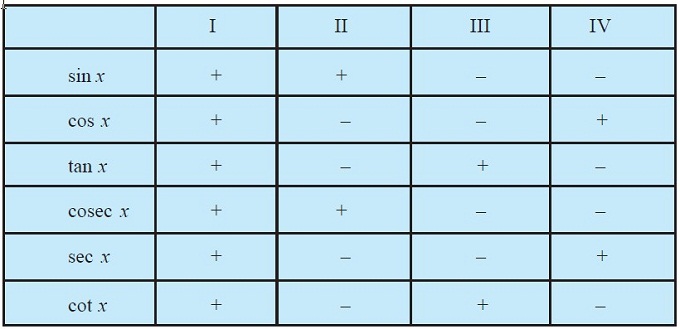
The trigonometric reduction formulas help us to reduce a trigonometric ratio to a ratio of an acute angle. If the acute angle is a common angle, this technique helps us to find the ratio. For examp…
below table you got them
so for example
vocal portal
cos(90deg+x) = -sin(x)
 hexed cedar
You can get expressions for theta and beta using the first expression they gave
lean otter
 hexed cedar
so for example if you want beta make beta the subject
lean otter
??
hexed cedar
okay so a simple way to understand this is
hexed cedar
do you know the answer to Sin(pi/2 - x) @lean otter
lean otter
yea with calculator
hexed cedar
No without calc
lean otter
no i dont then
hexed cedar
no problem it’s really simple don’t worry
vocal portal
 hexed cedar
so when ever you get something like pi/2 - something or p/2 + something for the trigonometric ratio. remember that the sign will change
sin will change to cos
so
Sin(pi/2-x) = cos x
cos(pi/2-10) = sin10
and so on
lean otter
oh ok i see now
hexed cedar
but remember to see which quadrant the angle is in
hexed cedar
hexed cedar
cos(pi/2-10) = sin10
@lean otter can you tell me which quadrant this in ?
vocal portal
 hexed cedar
pi/2 is basically 90
lean otter
sorry
hexed cedar
so 90-10 is in ?
hexed cedar
lean otter
you can use this diagram for reference
lean otter
1
hexed cedar
yes
and that’s why it’s positive
so if it was something like Cos(pi-10) the answer will be -Cos10 (here the cos doesn’t change to sin because it’s pi not pi/2 minus or plus something)
And the minus is because in the second quadrant only sin is positive
lean otter
oh ok
hexed cedar
if you didn’t understand let me know. it’s alright
lean otter
let me see
safe radishBOT
@lean otter Has your question been resolved?
lean otter
i dont understand sorry
i dont think any of that is in the homework or textbook so far
.close
safe radishBOT
Channel closed
Closed by @pale sluice
Use .reopen if this was a mistake.
Available help channel!
Send your question here to claim the channel.
Remember:
• Ask your math question in a clear, concise manner.
• Show your work, and if possible, explain where you are stuck.
• After 15 minutes, feel free to ping <@&286206848099549185>.
• Type the command .close to free the channel when you're done.
• Be polite and have a nice day!
Read #❓how-to-get-help for further information on how to ask a good question, and about conduct in the question channels.
 stray axle
just a quick question but i was wondering, why dont we also make a vector QR?
 safe radishBOT
stray axle
just a quick question but i was wondering, why dont we also make a vector QR?
stray axle
safe radishBOT
stray axle
just a quick question but i was wondering, why dont we also make a vector QR?
stray axle
alright thats cool, so is it in general you need 1 vector less than the dimension? so for (x,y) you need only 1 vector and (x,y,z) you need 2 and (x,y,z,a) you need 3?
safe radishBOT
@stray axle Has your question been resolved?
 zinc token
stray axle
alright thats cool, so is it in general you need 1 vector less than the dimensio...
zinc token
stray axle
alright thats cool, so is it in general you need 1 vector less than the dimensio...
hmm I can't speak to that
for the x, y case yeah
stray axle
.close
safe radishBOT
Channel closed
Closed by @stray axle
Use .reopen if this was a mistake.
Available help channel!
Send your question here to claim the channel.
Remember:
• Ask your math question in a clear, concise manner.
• Show your work, and if possible, explain where you are stuck.
• After 15 minutes, feel free to ping <@&286206848099549185>.
• Type the command .close to free the channel when you're done.
• Be polite and have a nice day!
Read #❓how-to-get-help for further information on how to ask a good question, and about conduct in the question channels.
 rapid lantern
 safe radishBOT
rapid lantern
rapid lantern
safe radishBOT
rapid lantern
rapid lantern
im trying to understand how that became (1/cosx) * (1/sinx)
 thin bridge
did you understand the first step?
thin bridge
do you know what the numerator:
$$\sin^2(x) + \cos^2(x)$$
simplifies to?
flat frigateBOT
ℝamonov
 thin bridge
you shouldn't be assuming that
it is unequivocally 1
it's the pythagorean trig identity
rapid lantern

so the x is 45 degrees?
i can understand now thinking that its 45 degrees
oh nvm
it works for any angle
now that i think about it
not just 45
ooooooooh
thank you so much
.close
safe radishBOT
Channel closed
Closed by @rapid lantern
Use .reopen if this was a mistake.
safe radishBOT
Available help channel!
Send your question here to claim the channel.
Remember:
• Ask your math question in a clear, concise manner.
• Show your work, and if possible, explain where you are stuck.
• After 15 minutes, feel free to ping <@&286206848099549185>.
• Type the command .close to free the channel when you're done.
• Be polite and have a nice day!
Read #❓how-to-get-help for further information on how to ask a good question, and about conduct in the question channels.
 pliant badger
Consider (O; e1 ;e2) , the vectors u(-1;0) and v = 2e1 + e2
The following propositions can be classified as:
safe radishBOT
pliant badger
Consider (O; e1 ;e2) , the vectors u(-1;0) and v = 2e1 + e2
The following propo...
pliant badger

A) both false
B) p is false and q is true
C) q is false and p is true
D) both true
I been struggling with understanding the q one
I can easily understand how p works
not the q one
and what'd make sense for me would be p being true and q false
but would like an explanation if possible as I'm trynna learn 😄
final halo
Have you tried actually calculating the things?
pliant badger
yeah I did try but I'm losing myself in the "q" one
because i don't know if I can convert the u + v into their norms like that
final halo
What do you mean convert u+v into their norms
final halo
What are a,b,c,d?
pliant badger
the coordinates of the point
final halo
These vectors have two coordinates so you only need two letters
Anyway you should explicitly find the vector 2(u+v) and then compute its norm
Then you should compute the norm of u+v and then times it by two
And see if you get the same result
pliant badger
alright I'll try that
safe radishBOT
@pliant badger Has your question been resolved?
Channel closed
Closed by @pliant badger
Use .reopen if this was a mistake.
Available help channel!
Send your question here to claim the channel.
Remember:
• Ask your math question in a clear, concise manner.
• Show your work, and if possible, explain where you are stuck.
• After 15 minutes, feel free to ping <@&286206848099549185>.
• Type the command .close to free the channel when you're done.
• Be polite and have a nice day!
Read #❓how-to-get-help for further information on how to ask a good question, and about conduct in the question channels.
safe radishBOT
 weary grotto
sorry let me re add the images i missed up the extension
safe radishBOT
@weary grotto Has your question been resolved?
weary grotto
<@&286206848099549185>
plucky elk
#old-network for CS server
some formulas here at the bottom
https://en.wikipedia.org/wiki/B-tree
In computer science, a B-tree is a self-balancing tree data structure that maintains sorted data and allows searches, sequential access, insertions, and deletions in logarithmic time. The B-tree generalizes the binary search tree, allowing for nodes with more than two children. Unlike other self-balancing binary search trees, the B-tree is well ...
safe radishBOT
Channel closed
Closed by @weary grotto
Use .reopen if this was a mistake.
Available help channel!
Send your question here to claim the channel.
Remember:
• Ask your math question in a clear, concise manner.
• Show your work, and if possible, explain where you are stuck.
• After 15 minutes, feel free to ping <@&286206848099549185>.
• Type the command .close to free the channel when you're done.
• Be polite and have a nice day!
Read #❓how-to-get-help for further information on how to ask a good question, and about conduct in the question channels.
 worldly bay
 safe radishBOT
worldly bay
safe radishBOT
worldly bay
 upbeat swan
Do you know how to convert units?
worldly bay
no
worldly bay
ah ok
safe radishBOT
@worldly bay Has your question been resolved?
safe radishBOT
Channel closed
Closed due to timeout
Use .reopen if this was a mistake.
Available help channel!
Send your question here to claim the channel.
Remember:
• Ask your math question in a clear, concise manner.
• Show your work, and if possible, explain where you are stuck.
• After 15 minutes, feel free to ping <@&286206848099549185>.
• Type the command .close to free the channel when you're done.
• Be polite and have a nice day!
Read #❓how-to-get-help for further information on how to ask a good question, and about conduct in the question channels.
 vital wing
I am lost in an exercise about similar triangles
safe radishBOT
vital wing
I am lost in an exercise about similar triangles
vital wing

I have to justify if they are similar triangles or not
I was able to do a) and b) but I'm really out of ideas in the c)
i don't know where to even begin
safe radishBOT
@vital wing Has your question been resolved?
 hasty wagon
for c) they should be guiding you to use
SAS
try to find if the ratios are the same
like,is
||9/4.5 = 7/3||?
vital wing
yeah i tried that but
even if 9/4.5 doesnt equal 7/3 it doesnt really justify it I think
because the homological side of 9 or 7 could be the side which value I don't know
I don't know if homological is the correct name but it's called like that in spanish
homologous*
that's the word
hasty wagon
vital wing
even if 9/4.5 doesnt equal 7/3 it doesnt really justify it I think
good reasoning
and you need to check also if
9/3 = 7/4.5
if both are not equal, then it's good
or we would say we cannot prove they are similar
vital wing
yes i think so too
hasty wagon
although, for later on , when we learn more about sine cosine, we can prove it's impossible to be similar
so, i think that should be it
safe radishBOT
@vital wing Has your question been resolved?
safe radishBOT
Channel closed
Closed due to timeout
Use .reopen if this was a mistake.
Available help channel!
Send your question here to claim the channel.
Remember:
• Ask your math question in a clear, concise manner.
• Show your work, and if possible, explain where you are stuck.
• After 15 minutes, feel free to ping <@&286206848099549185>.
• Type the command .close to free the channel when you're done.
• Be polite and have a nice day!
Read #❓how-to-get-help for further information on how to ask a good question, and about conduct in the question channels.
 pseudo sentinel
Hi, I need help with this:
safe radishBOT
pseudo sentinel
Hi, I need help with this:
pseudo sentinel
Write the equation of the line passing through the origin O and tangent to the curve of equation y = -ln 2x
The problem must be solved with derivatives and the result is
y = (-2/e)x
safe radishBOT
@pseudo sentinel Has your question been resolved?
pseudo sentinel
<@&286206848099549185>
 tulip saddle
ok so
what do we know about the line?
@pseudo sentinel
specifically, what two points do we know it must go through? hint: one of them has no constants, and isn't really a specific point that we know of rn, but both points are necessarily traveled through as stated by the problem
pseudo sentinel
I called the tangent line t and solved the system; the result comes out but I didn't understand the relationship between m and x

in a few words, we know two pieces of information about m (i.e. the relations placed in the system) and by uniting them we obtain the abscissa x of the tangent point, subsequently substituting the value of x in the derivative function we obtain the angular coefficient of the tangent
tulip saddle
huh this is a much better way of solving that I was going to do
though I'm not sure how you did it
pseudo sentinel
I had to think about it for quite some time but finally I was able to do it on my own
tulip saddle
good job!
pseudo sentinel
thanks anyway!
 marble imp
 marble imp
pseudo sentinel
I called the tangent line t and solved the system; the result comes out but I di...
marble imp
pseudo sentinel
I called the tangent line t and solved the system; the result comes out but I di...
I believe u did somewhat same… cool
safe radishBOT
@pseudo sentinel Has your question been resolved?
safe radishBOT
Channel closed
Closed due to timeout
Use .reopen if this was a mistake.
Available help channel!
Send your question here to claim the channel.
Remember:
• Ask your math question in a clear, concise manner.
• Show your work, and if possible, explain where you are stuck.
• After 15 minutes, feel free to ping <@&286206848099549185>.
• Type the command .close to free the channel when you're done.
• Be polite and have a nice day!
Read #❓how-to-get-help for further information on how to ask a good question, and about conduct in the question channels.
 steady loom
 safe radishBOT
steady loom
steady loom
safe radishBOT
steady loom
steady loom
Can someone help me with this problem?
I dont understand how to find the solution to this ODE
I think its a first order linear ODE
so I should solve by method of integration factor, but I get stuck when trying to deal with h(t)
 marsh walrus
try splitting it?
find a solution valid for each piece of h as a domain
then check that you are able to join the halfs
steady loom
splitting it?
As in solve for y' + y = 0 and y' + y = 1
marsh walrus
yea
safe radishBOT
@steady loom Has your question been resolved?
steady loom

@marsh walrus these are the solutions I got
what did you mean by does it make sense to put it back together?
<@&286206848099549185>
marsh walrus
sorry, ill be home in a bit
steady loom
oh ok nw appreciate it
steady loom
also it has a hint to solve it as if it wasn't discontinuous
which is why I didnt try separating it at first
safe radishBOT
@steady loom Has your question been resolved?
safe radishBOT
@steady loom Has your question been resolved?
safe radishBOT
Channel closed
Closed due to timeout
Use .reopen if this was a mistake.
Available help channel!
Send your question here to claim the channel.
Remember:
• Ask your math question in a clear, concise manner.
• Show your work, and if possible, explain where you are stuck.
• After 15 minutes, feel free to ping <@&286206848099549185>.
• Type the command .close to free the channel when you're done.
• Be polite and have a nice day!
Read #❓how-to-get-help for further information on how to ask a good question, and about conduct in the question channels.
lean otter
I do not understand how to get the final answer once cos is solved
 harsh shoal
ty
lean otter
<@&286206848099549185>
 hybrid wedge
Do you know the general solution of $\cos{x}=\cos{α}$
flat frigateBOT
Anagh
 light shoal
your reasoning in the screenshot seems fine, what is the issue?
hybrid wedge
@lean otter
lean otter
its a worked out question i just do not understand what is happeing after gettin cosx = 1/2 and cos x = 1
light shoal
well what angle x has cos x = 1?
there's only one such angle in the interval [0,2pi)
lean otter
i dont know what that is
light shoal
i'm not sure how you can solve this problem if you don't know the cosine function...
hybrid wedge
Bro first you need to learn trigo
light shoal
probably you should take a step back and review it
hybrid wedge
How to get a general solution
lean otter
so what should i look up
hybrid wedge
Then how to get solution when θ lies in some intervals
hybrid wedge
lean otter
so what should i look up
How to solve Trigonometric eqns
lean otter
ok ty
safe radishBOT
@lean otter Has your question been resolved?
Channel closed
Closed by @sharp wren
Use .reopen if this was a mistake.
Available help channel!
Send your question here to claim the channel.
Remember:
• Ask your math question in a clear, concise manner.
• Show your work, and if possible, explain where you are stuck.
• After 15 minutes, feel free to ping <@&286206848099549185>.
• Type the command .close to free the channel when you're done.
• Be polite and have a nice day!
Read #❓how-to-get-help for further information on how to ask a good question, and about conduct in the question channels.
 worn lark
how do you derive the cartesian coordinates of an icosahedron? like this \
$(\pm1,\pm\varphi,0), (0,\pm1,\pm\varphi), (\pm\varphi,0,\pm1)$
safe radishBOT
worn lark
how do you derive the cartesian coordinates of an icosahedron? like this \\
$(\p...
flat frigateBOT
🤓
 worn lark
dodecahedron also
worn lark
worn lark
how do you derive the cartesian coordinates of an icosahedron? like this \\
$(\p...
*the vertices
worn lark
not an assignment
 wooden ivy

worn lark
just me wondering how are these coordinates derived
safe radishBOT
@worn lark Has your question been resolved?
safe radishBOT
@worn lark Has your question been resolved?
safe radishBOT
@worn lark Has your question been resolved?
 rare folio
worn lark
not an assignment
rare folio
worn lark
not an assignment
HAHAHAH
rare folio
wooden ivy
is this a real question of a goofy ahh question
Lmao
worn lark
<@&286206848099549185>
lean otter

worn lark
this is a serious question
safe radishBOT
@worn lark Has your question been resolved?
 woven swan
flat frigate
**🤓**
woven swan
flat frigate
**🤓**
i dont get why everyone is laughing at this
what do you mean by derive @worn lark
the coords u gave dont give u a regular icosahedron anyway
worn lark
woven swan
the coords u gave dont give u a regular icosahedron anyway
it does
according to wikipedia
theyre the vertices
woven swan
hmm okay
worn lark
like, you cant just give me the formula of the gamma function and expect me to know how did you find it
i need to know what method did the first person that calculated these coordinates use
 misty bay
hmm well it depends on how you define an icosahedron
but like if you just draw out the shape and say its angles are something
it's in general possible to compute arbitrary rotations of arbitrary vectors
and then you can just calculate the points one by one
obviously this is not very elegant or satisfying I guess
 toxic stratus
if you take two points of the icosahedron to be placed at the poles of a sphere, you can compute the co-latitudinal angle using spherical coordinates
safe radishBOT
@worn lark Has your question been resolved?
worn lark
.close
safe radishBOT
Channel closed
Closed by @worn lark
Use .reopen if this was a mistake.
Available help channel!
Send your question here to claim the channel.
Remember:
• Ask your math question in a clear, concise manner.
• Show your work, and if possible, explain where you are stuck.
• After 15 minutes, feel free to ping <@&286206848099549185>.
• Type the command .close to free the channel when you're done.
• Be polite and have a nice day!
Read #❓how-to-get-help for further information on how to ask a good question, and about conduct in the question channels.
 brave narwhal
hi guys, does anybody know how to get the inverse function of this function with normal procedure (without drawing)?
 safe radishBOT
brave narwhal
hi guys, does anybody know how to get the inverse function of this function with...
brave narwhal
safe radishBOT
brave narwhal
hi guys, does anybody know how to get the inverse function of this function with...
brave narwhal
yup
 lapis shadow
so it has no inverse
brave narwhal
seriously???
it's pretty similar to sine or cos, and i believe they do have inverse
 lapis shadow
it has an inverse if u restrict the codomain
lapis shadow
brave narwhal
it's pretty similar to sine or cos, and i believe they do have inverse
sines and cosines are also only invertible once u restrict the codomains
brave narwhal
codomain is the y that comes after any x is inserted right?
wintry condor
brave narwhal
it's pretty similar to sine or cos, and i believe they do have inverse
This isn't a bijective function, so it has no inverse
lapis shadow
brave narwhal
codomain is the y that comes after any x is inserted right?
no, the values of y that actually do come out when u insert values of x are called the range
lapis shadow
lapis shadow
no, the values of y that actually do come out when u insert values of x are call...
the bigger set that all these values of y reside in, is called the codomain
brave narwhal
lapis shadow
the bigger set that all these values of y reside in, is called the codomain
oh yeah, understood
lapis shadow
brave narwhal
hi guys, does anybody know how to get the inverse function of this function with...
when u write $f : A\to B$
flat frigateBOT
SilverSoldier
 lapis shadow
flat frigate
**SilverSoldier**
lapis shadow
flat frigate
**SilverSoldier**
A is the domain, B is the codomain
brave narwhal
yep the function is not bijective, cuz its not injective
brave narwhal
lapis shadow
A is the domain, B is the codomain
yep thanks
lapis shadow
brave narwhal
yep the function is not bijective, cuz its not injective
neither is it surjective
brave narwhal
lapis shadow
neither is it surjective
why?
lapis shadow
not everything in the codomain has a preimage
brave narwhal
but its the case if the codomaim is all Real numbers right?
if we restricht the codomain it can be surjectibe right?
lapis shadow
but no this is never equal to something like 2
lapis shadow
brave narwhal
if we restricht the codomain it can be surjectibe right?
yeah if we restrict the codomain to [-1, 1]
is it surjective, but not injective
brave narwhal
lapis shadow
is it surjective, but not injective
yeah not injective cuz at some points y has 2 x values
lapis shadow
if we further restrict the codomain to like [0, 1], then it is both surjective and injective and it will have an inverse
lapis shadow
brave narwhal
yeah not injective cuz at some points y has 2 x values
yeah