#help-23
1 messages · Page 62 of 1
 hardy lion
 lilac widget
.close
 safe radishBOT
Channel closed
Closed by @lilac widget
Use .reopen if this was a mistake.
safe radishBOT
 Available help channel!
Send your question here to claim the channel.
Remember:
• Ask your math question in a clear, concise manner.
• Show your work, and if possible, explain where you are stuck.
• After 15 minutes, feel free to ping <@&286206848099549185>.
• Type the command .close to free the channel when you're done.
• Be polite and have a nice day!
Read #❓how-to-get-help for further information on how to ask a good question, and about conduct in the question channels.
 vale turtle
Can someobdy help me with Smoother Particle Hydrodynamics
vale turtle
i am trying to make a really simple fluid sim
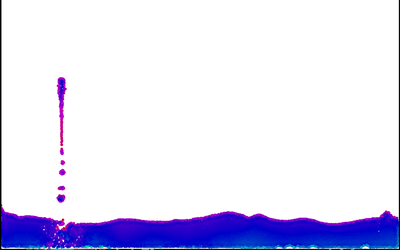
Wibbly-wobbly water. Color encodes pressure. Hooray! I finally digged through all my references and implemented a fluid simulation in Processing. Read below for what I’ve learned, video and c…
like this but i cant seem to understand anytihng in the papers
 plucky elk
vale turtle
like this but i cant seem to understand anytihng in the papers
plucky elk
vale turtle
like this but i cant seem to understand anytihng in the papers
You should just ask your math question here.
safe radishBOT
@vale turtle Has your question been resolved?
Channel closed
Closed by @vale turtle
Use .reopen if this was a mistake.
Available help channel!
Send your question here to claim the channel.
Remember:
• Ask your math question in a clear, concise manner.
• Show your work, and if possible, explain where you are stuck.
• After 15 minutes, feel free to ping <@&286206848099549185>.
• Type the command .close to free the channel when you're done.
• Be polite and have a nice day!
Read #❓how-to-get-help for further information on how to ask a good question, and about conduct in the question channels.
 sudden vigil
 safe radishBOT
sudden vigil
safe radishBOT
sudden vigil
 brave wolf
!status
safe radishBOT
What step are you on?
- I don't know where to begin
- I have begun but got stuck midway
- I got an answer but I'm told it's wrong
- I got an answer and would like my work checked
- I have a question about someone else's worked solution
- None of the above
sudden vigil
2
pretty much the problem im having
is getting the derivative of the inner function
 quasi bison
the inner function is x^(3/2) + x^(5/2)
sudden vigil
which sounds dumb
quasi bison
that ought to make it a bit easier
brave wolf
derivative of x^n is n*x^(n-1)
sudden vigil
yeah chain rule
...
alright ill try and use the exponent rule
on em
$$\frac{3}{2}x^{\frac{1}{2}}+\frac{5}{2}x^{\frac{3}{2}}$$
 flat frigateBOT
flag
 sudden vigil
$$\frac{3}{2}\cdot \sqrt{x}+\frac{5}{2}\sqrt{x^3}$$
flat frigateBOT
flag
 brave wolf
sudden vigil
so b is the answer yall?
brave wolf
sudden vigil
so b is the answer yall?
Yep
sudden vigil
.close
safe radishBOT
Channel closed
Closed by @sudden vigil
Use .reopen if this was a mistake.
Available help channel!
Send your question here to claim the channel.
Remember:
• Ask your math question in a clear, concise manner.
• Show your work, and if possible, explain where you are stuck.
• After 15 minutes, feel free to ping <@&286206848099549185>.
• Type the command .close to free the channel when you're done.
• Be polite and have a nice day!
Read #❓how-to-get-help for further information on how to ask a good question, and about conduct in the question channels.
 distant storm
im having a panic attack halp
 safe radishBOT
distant storm
im having a panic attack halp
quasi bison
safe radishBOT
distant storm
im having a panic attack halp
quasi bison
@distant storm are you in a safe place right now? we can't help you when you are panicking.
also show us the problem as stated originally. right now it looks weird.
quasi bison
distant storm
its all in slovak
post it anyway
i don't speak slovak but i speak russian and a little bit of other slavic languages so i think i can figure it out
distant storm
quasi bison
post it anyway
 quasi bison
what
distant storm
?
quasi bison
i saw this.

 quasi bison
oh, so there are two Štancis...
distant storm
yes
quasi bison
for fucks sake.
okay
so Štanci#5064 is OP and Štanci#7085 is the one who is misbehaving.
anyway
prirodzené číslo means "natural number", does it not
distant storm
yeah
quasi bison
so you got that down to $2x + xy + \frac{x}{y} = 98$, from which $x(y^2 + 2y + 1) = 98$...?
flat frigateBOT
Ann
 quasi bison
98 = 2 * 7^2, so it can be factored into a square times a number in only two ways
either 2 * 7^2 or 98 * 1^2
and one of these rules itself out unless 0 ∈ N for you
safe radishBOT
@distant storm Has your question been resolved?
Channel closed
Closed by @distant storm
Use .reopen if this was a mistake.
Available help channel!
Send your question here to claim the channel.
Remember:
• Ask your math question in a clear, concise manner.
• Show your work, and if possible, explain where you are stuck.
• After 15 minutes, feel free to ping <@&286206848099549185>.
• Type the command .close to free the channel when you're done.
• Be polite and have a nice day!
Read #❓how-to-get-help for further information on how to ask a good question, and about conduct in the question channels.
 random trench
Hi it's somewhat a mathematics question
safe radishBOT
random trench
Hi it's somewhat a mathematics question

 obtuse plover
We are decreasing from 9 million paper to 4 million paper when moving from W to X
Thus our OC is 5 million paper
random trench
oh yea
wait sorry so i notice on the x axis that its +3 million steel
y axis = -5 miliion paper
so in these cases would the negative always be the OC?
@obtuse plover
obtuse plover
I mean, thinking about the meaning of “cost” it’s something we have to give up. It’s not like we’re giving up on steel, we’re actually gaining more of it
safe radishBOT
Channel closed
Closed by @random trench
Use .reopen if this was a mistake.
obtuse plover
Np
safe radishBOT
Available help channel!
Send your question here to claim the channel.
Remember:
• Ask your math question in a clear, concise manner.
• Show your work, and if possible, explain where you are stuck.
• After 15 minutes, feel free to ping <@&286206848099549185>.
• Type the command .close to free the channel when you're done.
• Be polite and have a nice day!
Read #❓how-to-get-help for further information on how to ask a good question, and about conduct in the question channels.
 tender peak
Can you simplify radical 5?
safe radishBOT
tender peak
Can you simplify radical 5?
tender peak
I dont think you can but in this problem it is making me simplify it
can i do 2/5
2.5*
 unreal fiber
can't simplify it further using integers since 5 is a prime number
safe radishBOT
Channel closed
Closed by @tender peak
Use .reopen if this was a mistake.
Available help channel!
Send your question here to claim the channel.
Remember:
• Ask your math question in a clear, concise manner.
• Show your work, and if possible, explain where you are stuck.
• After 15 minutes, feel free to ping <@&286206848099549185>.
• Type the command .close to free the channel when you're done.
• Be polite and have a nice day!
Read #❓how-to-get-help for further information on how to ask a good question, and about conduct in the question channels.
 placid kelp
i did this without int by parts. how are you supposed to do it?


 spiral bane
placid kelp
i did this without int by parts. how are you supposed to do it?
spiral bane
placid kelp
i did this without int by parts. how are you supposed to do it?
no idea, but my first guess would be to find a u and dv so that vdu = tan^(n-2)x dx
placid kelp
spiral bane
no idea, but my first guess would be to find a u and dv so that vdu = tan^(n-2)x...
yeah its finding the u and v i'm not seeing
 lean otter
Hello guys
So integation by parts is used to evaluate definite or indefinite integrals
spiral bane
are you fluent in english @lean otter
lean otter
Not really
It is not first language
How do you use teXit
Ok i dont think my english is that bad
spiral bane
do you mean latex
 junior smelt
#latex-help if you don't know LaTeX
junior smelt
If you do, just put your $\LaTeX$ code in messages as is
flat frigateBOT
chartbit
 safe radishBOT
@placid kelp Has your question been resolved?
plucky elk
placid kelp
i did this without int by parts. how are you supposed to do it?
Did you try u=tan^n(x) and dv=dx
placid kelp
plucky elk
Did you try u=tan^n(x) and dv=dx
i'll try that one
safe radishBOT
@placid kelp Has your question been resolved?
placid kelp
plucky elk
Did you try u=tan^n(x) and dv=dx
wouldn't that result in an nx on the outside term?
 unique bison
placid kelp
wouldn't that result in an nx on the outside term?
unique bison
placid kelp
wouldn't that result in an nx on the outside term?
Wb u = tan^(n-2) and dv = tan^2 dx
placid kelp
unique bison
Wb u = tan^(n-2) and dv = tan^2 dx
that does get a tan^(n-1)x but an extra -xtan^(n-2)x. imma try u=tan^(n-1)
no wait that won't work
honestly, doing it without integrating by parts is way easier so screw the directions 😆 what i did works fine
.close
safe radishBOT
Channel closed
Closed by @placid kelp
Use .reopen if this was a mistake.
unique bison
Good call
safe radishBOT
Available help channel!
Send your question here to claim the channel.
Remember:
• Ask your math question in a clear, concise manner.
• Show your work, and if possible, explain where you are stuck.
• After 15 minutes, feel free to ping <@&286206848099549185>.
• Type the command .close to free the channel when you're done.
• Be polite and have a nice day!
Read #❓how-to-get-help for further information on how to ask a good question, and about conduct in the question channels.
 muted rose
I am currently stuck on a prob from review of calc 1, and I dont know where to start.
safe radishBOT
muted rose
I am currently stuck on a prob from review of calc 1, and I dont know where to s...
muted rose

take an integral maybe?
p(t) = 2t^2 - 2t +c
then p(1) = 4 so c = 4?
p(t) = 2t^2 - 2t + 4?
 misty coral
looks good
muted rose
sick, thanks
 mortal sandal
yeah
muted rose
.close
safe radishBOT
Channel closed
Closed by @muted rose
Use .reopen if this was a mistake.
Available help channel!
Send your question here to claim the channel.
Remember:
• Ask your math question in a clear, concise manner.
• Show your work, and if possible, explain where you are stuck.
• After 15 minutes, feel free to ping <@&286206848099549185>.
• Type the command .close to free the channel when you're done.
• Be polite and have a nice day!
Read #❓how-to-get-help for further information on how to ask a good question, and about conduct in the question channels.
muted rose
okay follow up... theres a question based upon the info above^^^^ saying "what is the position of the partical when it is at rest?" I dont know what that means :/
safe radishBOT
muted rose
okay follow up... theres a question based upon the info above^^^^ saying "what i...
 feral garden
At rest means velocity of 0.
safe radishBOT
Channel closed
Closed by @muted rose
Use .reopen if this was a mistake.
safe radishBOT
Available help channel!
Send your question here to claim the channel.
Remember:
• Ask your math question in a clear, concise manner.
• Show your work, and if possible, explain where you are stuck.
• After 15 minutes, feel free to ping <@&286206848099549185>.
• Type the command .close to free the channel when you're done.
• Be polite and have a nice day!
Read #❓how-to-get-help for further information on how to ask a good question, and about conduct in the question channels.
lean otter
hello I have a question asking to find the greatest negativ coterminal angle
safe radishBOT
lean otter
hello I have a question asking to find the greatest negativ coterminal angle
lean otter
couldn't you just keep subtracting -360 from the original angle
how exactly do you find the greatest one?
 proud hazel
Greatest would be the one closer to zero
The one you are talking about would be the least
-360 is greater than -720 and so on
safe radishBOT
Channel closed
Closed by @gusty field
Use .reopen if this was a mistake.
Available help channel!
Send your question here to claim the channel.
Remember:
• Ask your math question in a clear, concise manner.
• Show your work, and if possible, explain where you are stuck.
• After 15 minutes, feel free to ping <@&286206848099549185>.
• Type the command .close to free the channel when you're done.
• Be polite and have a nice day!
Read #❓how-to-get-help for further information on how to ask a good question, and about conduct in the question channels.
 left aurora
I need help please
safe radishBOT
left aurora
I need help please
 dense token
The first 4 terms of a geometric progression are 0.5, 1, 2 and 4. Find the smallest nuber of terms that will give a sum greater than 1000000
i found r to be 2

 thin bridge
(unfortunate that it was pretty much posted at the same time @dense token try getting another)
thin bridge
@left aurora this had your name on it, you're the one that can stay
 sterile laurel
bro
can someone help me in ellipse
if tangent are drawn to all point of the ellipse [x^2+(y^2)2 = 2] other then its 4 vertices find the locus of the mid point of these tangents upon intersecting the coord axis
left aurora
left aurora
Can any1 help
 frank glen
sterile laurel
bro
can someone help me in ellipse
if tangent are drawn to all point of the elli...
frank glen
sterile laurel
bro
can someone help me in ellipse
if tangent are drawn to all point of the elli...
!help
safe radishBOT
sterile laurel
bro
can someone help me in ellipse
if tangent are drawn to all point of the elli...
Please read #❓how-to-get-help
left aurora
 thin bridge
$15\frac14$ is a mixed fraction and represents the number with a value of $15 + \frac14$ (not $15 \times \frac14$) \
similarly \
$-2\frac78$ represents the number with a value of $-(2 + \frac78) = -2 - \frac78$
flat frigateBOT
ℝamonov
 safe radishBOT
Channel closed
Closed by @left aurora
Use .reopen if this was a mistake.
safe radishBOT
Available help channel!
Send your question here to claim the channel.
Remember:
• Ask your math question in a clear, concise manner.
• Show your work, and if possible, explain where you are stuck.
• After 15 minutes, feel free to ping <@&286206848099549185>.
• Type the command .close to free the channel when you're done.
• Be polite and have a nice day!
Read #❓how-to-get-help for further information on how to ask a good question, and about conduct in the question channels.
 viral dawn
I have a question about systems of linear equations. I'm not sure when it is possible to have a unique solutions. What if I have more unknowns than equations, what if I have the same amount of unknows as equations and what if I have more equations than unknows?
safe radishBOT
viral dawn
I have a question about systems of linear equations. I'm not sure when it is pos...
viral dawn
Like for example I have 78 equations and 36 unknows, would this be solvable?
 wild basin
yes
but the 36 unknowns must satisfy all equations
then it is solvable
@viral dawn
safe radishBOT
@viral dawn Has your question been resolved?
Channel closed
Closed by @viral dawn
Use .reopen if this was a mistake.
viral dawn
thanks kiritoholy
safe radishBOT
Available help channel!
Send your question here to claim the channel.
Remember:
• Ask your math question in a clear, concise manner.
• Show your work, and if possible, explain where you are stuck.
• After 15 minutes, feel free to ping <@&286206848099549185>.
• Type the command .close to free the channel when you're done.
• Be polite and have a nice day!
Read #❓how-to-get-help for further information on how to ask a good question, and about conduct in the question channels.
 idle pulsar
 safe radishBOT
idle pulsar
idle pulsar
safe radishBOT
idle pulsar
idle pulsar
How can I solve this?
I tried calculating d/dx f^(-1) (x/(x+1)) but then if given 1 couldn't find out what "x" would be
x = x + 1 -> 0 = 1
So it doesn't work
Tried going with f(x)
f(x) = (x^2 + x)^4
But can't get to f^(-1)(x) now
<@&286206848099549185>
 idle pulsar
which is really correct
I didn't even think of the fact that f(x) = a -> f^(-1)(a) = x
 sick zephyr
still looking for an easier way but i like doing them the long way bcs it reduces the chance of making mistakes
imo
sick zephyr
1/16 is right?
safe radishBOT
Channel closed
Closed by @idle pulsar
Use .reopen if this was a mistake.
Available help channel!
Send your question here to claim the channel.
Remember:
• Ask your math question in a clear, concise manner.
• Show your work, and if possible, explain where you are stuck.
• After 15 minutes, feel free to ping <@&286206848099549185>.
• Type the command .close to free the channel when you're done.
• Be polite and have a nice day!
Read #❓how-to-get-help for further information on how to ask a good question, and about conduct in the question channels.
 quick geyser
Given this function:
 safe radishBOT
quick geyser
Given this function:
quick geyser
safe radishBOT
quick geyser
Given this function:
quick geyser
My teacher gave the following answer:

However, I believe he is missing a term $-F(0)$ due to the product^^^^ rule
Any help?
 clear blade
I assume he's defining $F(x) = \int_{0}^x e^{t^2} dt$?
flat frigateBOT
tushar

!Mike
Compile Error! Click the  reaction for more information.
(You may edit your message to recompile.)
 quick geyser
clear blade
I assume he's defining $F(x) = \int_{0}^x e^{t^2} dt$?
quick geyser
clear blade
I assume he's defining $F(x) = \int_{0}^x e^{t^2} dt$?
idk, all he gave was that function above
clear blade
yes
quick geyser
nvm
yes yes yes he does define it but it's in a differnt language
as what u wrote above
clear blade
if we use this definition of $F(x)$, then $G(x) = (x+1)F(2x)$
flat frigateBOT
tushar
 quick geyser
clear blade
if we use this definition of $F(x)$, then $G(x) = (x+1)F(2x)$
quick geyser
clear blade
if we use this definition of $F(x)$, then $G(x) = (x+1)F(2x)$
what about the F(0) term?
clear blade
where are you getting that?
quick geyser
fundamental theorum of calc
clear blade
flat frigate
**tushar**
can you tell me what you would get if you applied the product rule to this equation?
quick geyser
yes, I can see that, but what about the lower bound?
clear blade
$G'(x) = F(2x) + 2(x+1)F'(2x)$
flat frigateBOT
tushar
 clear blade
quick geyser
yes, I can see that, but what about the lower bound?
clear blade
quick geyser
yes, I can see that, but what about the lower bound?
recall what the fundamental theorem of calculus says
quick geyser
 clear blade
remember, you want to find $F'(x) = \left(\int_{0}^{x} e^{t^2} dt\right)'$
quick geyser
no?
flat frigateBOT
tushar
 quick geyser
What I'm saying is $G'(x) = ((x+1)F(2x)-(x+1)F(0))'$
flat frigateBOT
!Mike
 clear blade
flat frigate
**tushar**
clear blade
flat frigate
**tushar**
do you agree with this?
clear blade
flat frigate
**tushar**
which is the result of applying product rule to this
quick geyser
clear blade
do you agree with this?
no I don't, but that's probably where my error is at
clear blade
the fundamental theorem of calculus part you are referring to will tell you that $\int_{0}^{x} e^{t^2} dt = \text{some antiderivative of $e^{t^2}$ evaluated at $x$} - \text{the same antiderivative of $e^{t^2}$ evaluated at 0}$
flat frigateBOT
tushar
 clear blade
however, this is not useful since you want to find F'(x)
clear blade
quick geyser
no I don't, but that's probably where my error is at
do you see where it comes from?
quick geyser
clear blade
the fundamental theorem of calculus part you are referring to will tell you that...
well exactly, doesn't this mean that when you evaluate the antiderative of that at 0, it will give you some constant C?
you can't just ignore that
clear blade
quick geyser
well exactly, doesn't this mean that when you evaluate the antiderative of that ...
where does the value of this integral come in to G'(x)?
you have an equation for G'(x)
so you simply have to find all the parts of that equation
you don't have to explicitly find the value of this integral
quick geyser
oh, so does that mean that any F(C) (C being a constant), is just ignored in these types of questions?
clear blade
no
you never have to evaluate an antiderivative at the upper and lower bounds here
you are seeking the derivative of the integral-valued function F
clear blade
flat frigate
**tushar**
again, do you see this?
quick geyser
clear blade
again, do you see this?
I'm sorry i'm not trying to be annoying, but I don't see it. Because all I see is you have (x+1) being multiplied by that integral. That integral can be redefined as F(2x) - F(0) (by the FTC), expanding out you get G(X)=(x+1)(F(2x))-(x+1)(F(0))
(idk how to do the fancy formatting  )
)
clear blade
quick geyser
I'm sorry i'm not trying to be annoying, but I don't see it. Because all I see i...
you're finding G'(x)
not G(x)
clear blade
quick geyser
I'm sorry i'm not trying to be annoying, but I don't see it. Because all I see i...
and remember the F is the integral
quick geyser
well but to get G'(x) you frist need G(x)
clear blade
quick geyser
well but to get G'(x) you frist need G(x)
true
quick geyser
flat frigate
**tushar**
exactly my point, this is wrong
quick geyser
ok ill go step by step
clear blade
we're defining $F(x) = \int_{0}^x e^{t^2} dt$
flat frigateBOT
tushar
 clear blade
so $G(x) = \int_0^{2x} (x+1)e^{t^2}dt = (x+1) \int_0^{2x} e^{t^2} dt = (x+1)F(2x)$
flat frigateBOT
tushar
 quick geyser
clear blade
so $G(x) = \int_0^{2x} (x+1)e^{t^2}dt = (x+1) \int_0^{2x} e^{t^2} dt = (x+1)F(2x...
quick geyser
clear blade
so $G(x) = \int_0^{2x} (x+1)e^{t^2}dt = (x+1) \int_0^{2x} e^{t^2} dt = (x+1)F(2x...
yes, but what if I told you the lowr bound was x?
clear blade
F has nothing to do with the F you see in the FTC, which stands for the antiderivative of the function inside the integral
i see your confusion
F is not an antiderivative of e^{t^2}
clear blade
flat frigate
**tushar**
F is the specific function we have defined here, which takes x and puts it as the upper bound of this integral
can you tell me what F(2x) is according to the above definition of F?
quick geyser
OHHHHH
it clicked
you see I was missing the upper bound of x in the F(x)
but now it makes sense
but isn't this a bit dodgy since you couldn't apply this for complex upper and lower bounds
clear blade
what do you mean?
quick geyser
or even any lower bound other that 0 that is a R
like say you had the same G(x) except that now the lower bound was like 2
clear blade
yes, the fundamental theorem of calculus states that for any constant $a$, $$\left(\int_{a}^x f(t)dt\right)' = f(x)$$
flat frigateBOT
tushar
 quick geyser
right because you are evaluating F(a) which will give you a constant, the derivative of a constant is always 0
quick geyser
Well, I still have some confusion in me, but hopefully it can be ironed out with some more exercises.
Thank you for all the help!
.close
safe radishBOT
Channel closed
Closed by @quick geyser
Use .reopen if this was a mistake.
Available help channel!
Send your question here to claim the channel.
Remember:
• Ask your math question in a clear, concise manner.
• Show your work, and if possible, explain where you are stuck.
• After 15 minutes, feel free to ping <@&286206848099549185>.
• Type the command .close to free the channel when you're done.
• Be polite and have a nice day!
Read #❓how-to-get-help for further information on how to ask a good question, and about conduct in the question channels.
 uneven jacinth
a-b = -(b-a)
 light orbit
a-b = - (b-a)
uneven jacinth
c-d=-(d-c)
when you substitute them, the negative ones (-) cancel out
leaving you with b-a/d-c
ok
i will show you
are you familiar with the distributive property?
a(b+c)= ab + ac
-(a-b)= -a + -(-b)
-(-b)=b
-a+b
b-a
idk
no
flat frigateBOT
birdy
 safe radishBOT
Channel closed
Closed by @zenith tundra
Use .reopen if this was a mistake.
Available help channel!
Send your question here to claim the channel.
Remember:
• Ask your math question in a clear, concise manner.
• Show your work, and if possible, explain where you are stuck.
• After 15 minutes, feel free to ping <@&286206848099549185>.
• Type the command .close to free the channel when you're done.
• Be polite and have a nice day!
Read #❓how-to-get-help for further information on how to ask a good question, and about conduct in the question channels.
 vocal current
Are my responses right here?
 safe radishBOT
vocal current
Are my responses right here?
vocal current
safe radishBOT
vocal current
Are my responses right here?
vocal current
I was thinking in general, multiplication is commutative, meaning that the order of the operands does not affect the result
so that was my reasoning for 1, then again not sure about it and the rest
<@&286206848099549185>
 knotty granite
Your answer for 1 is "No"...
knotty granite
Otherwise, yes they are all correct, but answer for 1 is "Yes"
vocal current
Oh, why is that
knotty granite
You said the reason yourself, multiplication is commutative, so the operation is also commutative in this set.
Also you can see that the table has D symmetry, meaning the operation is associative
vocal current
Oh yeah
good point
idk why
but when it comes to these type of qs
it really gets me thinking
knotty granite
Brain lag, I call it
knotty granite
Nothing
vocal current
yeah like for me personally
if i see a q that applies all the properties
i gotta think of like every 1, and how they fit and stuff
knotty granite
I mean, in the beginning, you always have to do, then it slowly becomes automatic
vocal current
Yea fs
knotty granite
Sometimes you even miss the obvious stuff
vocal current
like for me, jn i was looking at another one here

my first thought was
OK, we assume its not a field
and were looking at the rationals
if we were to look at the additive and multpilctive identities
a has to be (0,0)
and then it was trivial that b was 1,1
knotty granite
Yes, absolutely, I don't see what we have to do with the "NOT a field" information (I have just begun learning groups, so I don't know much about fields)
knotty granite
This is the place for all of us, just helping and being crazy
safe radishBOT
@vocal current Has your question been resolved?
vocal current
Yeah
its been resolved
big appreciation to my new friend Void Walker
really came in clutch
thanks
safe radishBOT
Channel closed
Closed due to timeout
Use .reopen if this was a mistake.
Available help channel!
Send your question here to claim the channel.
Remember:
• Ask your math question in a clear, concise manner.
• Show your work, and if possible, explain where you are stuck.
• After 15 minutes, feel free to ping <@&286206848099549185>.
• Type the command .close to free the channel when you're done.
• Be polite and have a nice day!
Read #❓how-to-get-help for further information on how to ask a good question, and about conduct in the question channels.
 frosty estuary
Complex number task: getting the imaginary part. Is this supposed to be done with eulers formula? or is there a quicker way to get the imaginary value?
 safe radishBOT
frosty estuary
Complex number task: getting the imaginary part. Is this supposed to be done wit...
safe radishBOT
frosty estuary
Complex number task: getting the imaginary part. Is this supposed to be done wit...
 peak estuary
yes eulers formula
computing big powers of complex numbers is always done by converting it to polar/exponential form
quasi bison
hmm
but how are you gonna find the sine of 100 arctan(2)
feels like thats just kicking the bucket
frosty estuary
yeah im struggling quite a bit with this one, mostly because i cant just calculate the absolute value
for usual formulas
frosty estuary
quasi bison
but how are you gonna find the sine of 100 arctan(2)
|z| = sqrt(x^2+y^2) does not apply here, right?
quasi bison
why would it possibly not apply here?
do you claim that there are scenarios in which the magnitude of a complex number ISN'T equal to the sqrt of the sum of squares of its real and imaginary parts...?
frosty estuary
hmmm, i figured it wouldnt work due to the power being 100, meaning i cant just choose an x and an y and then jam it in the absolute value formula
quasi bison
magnitude is multiplicative
the magnitude of a product equals the product of each factor's magnitude
so in fact |z_2| = |1+2i|^100 just fine
you will get that the magnitude is 5^50
frosty estuary
ah, i see. i got a bit too spooked by the ^100 then
safe radishBOT
@frosty estuary Has your question been resolved?
Channel closed
Closed by @frosty estuary
Use .reopen if this was a mistake.
safe radishBOT
Available help channel!
Send your question here to claim the channel.
Remember:
• Ask your math question in a clear, concise manner.
• Show your work, and if possible, explain where you are stuck.
• After 15 minutes, feel free to ping <@&286206848099549185>.
• Type the command .close to free the channel when you're done.
• Be polite and have a nice day!
Read #❓how-to-get-help for further information on how to ask a good question, and about conduct in the question channels.
 rugged spade
How do I get this value in this example?
The relationship between the resistance and temperature of a sensor is approximately described by the square function R: R(T) = 100 * (1 + 0.003850 * T - 5.775 * 10^-7 * T^2) with T ≥ 0 T... Temperature in °C R(T)... Resistance at the temperature T in ohms (Ω) - Calculate for T = 450 °C the amount of the relative error when using the function R, if the actual resistance is 260 Ω.
A company produces resistance temperature sensors. The resistance of these sensors at 0 °C is approximately normally distributed with μ = 100 Ω and σ = 0.8 Ω. A random sample of 10 sensors is taken from production and the resistance at 0 °C is measured for each. - Give the estimated parameters of the distribution of the sample means. - Determine the symmetric random range of the expected value μ, in which 98% of the sample means are expected to lie. In the following figure, the graph of the density function of the distribution of the sample means for a random sample of n = 10 sensors is shown in dashed lines.
 safe radishBOT
rugged spade
How do I get this value in this example?
The relationship between the resistanc...
safe radishBOT
rugged spade
How do I get this value in this example?
The relationship between the resistanc...
@rugged spade Has your question been resolved?
safe radishBOT
@rugged spade Has your question been resolved?
safe radishBOT
@rugged spade Has your question been resolved?
vocal current
Yeah
safe radishBOT
@rugged spade Has your question been resolved?
rugged spade
I guess nobody can solve this
plucky elk
rugged spade
I guess nobody can solve this
#old-network for physics server
safe radishBOT
@rugged spade Has your question been resolved?
safe radishBOT
Channel closed
Closed due to timeout
Use .reopen if this was a mistake.
Available help channel!
Send your question here to claim the channel.
Remember:
• Ask your math question in a clear, concise manner.
• Show your work, and if possible, explain where you are stuck.
• After 15 minutes, feel free to ping <@&286206848099549185>.
• Type the command .close to free the channel when you're done.
• Be polite and have a nice day!
Read #❓how-to-get-help for further information on how to ask a good question, and about conduct in the question channels.
 mystic warren
How the highlighted term evaluated here?
 safe radishBOT
mystic warren
How the highlighted term evaluated here?
mystic warren
safe radishBOT
mystic warren
How the highlighted term evaluated here?
mystic warren

I think the condition just before the highlighted text isn't fine, should be s_5 instead of s_10 there.
safe radishBOT
@mystic warren Has your question been resolved?
mystic warren
.close
safe radishBOT
Channel closed
Closed by @mystic warren
Use .reopen if this was a mistake.
safe radishBOT
Available help channel!
Send your question here to claim the channel.
Remember:
• Ask your math question in a clear, concise manner.
• Show your work, and if possible, explain where you are stuck.
• After 15 minutes, feel free to ping <@&286206848099549185>.
• Type the command .close to free the channel when you're done.
• Be polite and have a nice day!
Read #❓how-to-get-help for further information on how to ask a good question, and about conduct in the question channels.
 proper timber
I need some help with this
 safe radishBOT
proper timber
I need some help with this
safe radishBOT
proper timber
I need some help with this
@proper timber Has your question been resolved?
safe radishBOT
Channel closed
Closed due to timeout
Use .reopen if this was a mistake.
Available help channel!
Send your question here to claim the channel.
Remember:
• Ask your math question in a clear, concise manner.
• Show your work, and if possible, explain where you are stuck.
• After 15 minutes, feel free to ping <@&286206848099549185>.
• Type the command .close to free the channel when you're done.
• Be polite and have a nice day!
Read #❓how-to-get-help for further information on how to ask a good question, and about conduct in the question channels.
 swift orbit
.
 waxen patio
proper timber
I need some help with this
waxen patio
proper timber
I need some help with this
let 'a' be the length of the small triangle and 'b' the length of the bigger one... of a=2/3b....
the ratio that you need is ((area of the bigger triangle minus area of the small triangle)/3)/(area of the small triangle)
safe radishBOT
waxen patio
let 'a' be the length of the small triangle and 'b' the length of the bigger one...
waxen patio
@proper timber
so its :
$\dfrac{\dfrac{\dfrac{b^2}{2}-\dfrac{a^2}{2}}{3}}{\dfrac{a^2}{2}}$
flat frigateBOT
SAKUUN
 waxen patio
with b=3/2a and make ur calculations... you get 5/12 in the end
safe radishBOT
@waxen patio Has your question been resolved?
waxen patio
@proper timber anyway the answer to your question is here you can check it later
proper timber
Ok thanks a lot
safe radishBOT
@waxen patio Has your question been resolved?
Channel closed
Closed by @waxen patio
Use .reopen if this was a mistake.
Available help channel!
Send your question here to claim the channel.
Remember:
• Ask your math question in a clear, concise manner.
• Show your work, and if possible, explain where you are stuck.
• After 15 minutes, feel free to ping <@&286206848099549185>.
• Type the command .close to free the channel when you're done.
• Be polite and have a nice day!
Read #❓how-to-get-help for further information on how to ask a good question, and about conduct in the question channels.
 pallid lynx
Why is this wrong
 thin bridge
,rotate
flat frigateBOT
 thin bridge
you haven't integrated properly
pallid lynx
Why
pallid lynx
Where is that
thin bridge
you can't apply chain rule as though it were
pallid lynx
Where is 1/4x
thin bridge
 pallid lynx
Why can’t I use chain rule
thin bridge
you can use chain rule in one way or another, but not incorrectly like this
try differentiating and see what happens
 thin bridge
,rotate
flat frigateBOT
 thin bridge
try differentiating
$$\frac{3}{4x}(4-x^2)^{3/2}$$
and see what happens
flat frigateBOT
ℝamonov
 thin bridge
where's ln coming from
pallid lynx
No sorry
thin bridge
the issue is that the derivative of (4-x^2) isn't a constant so the 1/(d/dx(4-x^2)) doesn't apply here
pallid lynx
So how do I recognise chain rule?
thin bridge
using substitution makes it more evident
e.g. you could try see what happens if you make the substution
u = 4-x^2
pallid lynx
thin bridge
the issue is that the derivative of (4-x^2) isn't a constant so the 1/(d/dx(4-x^...
Is this got something to do with inverse trig
thin bridge
well to tackle this, you'd use a trig sub, yes
pallid lynx
thin bridge
using substitution makes it more evident
I mean in general. How do I recognise a reverse chain rule. Sometime it’s works sometimes it doesn’t and that confuses me
thin bridge
using substitution makes it more evident
pallid lynx
So I should always try substitution first
thin bridge
integration by substitution is pretty much equivalent to what people refer to as (reverse) chain rule
if you're unsure how exactly chain rule would apply, do the sub
pallid lynx
thin bridge
the issue is that the derivative of (4-x^2) isn't a constant so the 1/(d/dx(4-x^...
I don’t get this
The derivative of (4-x^2)^3 is not a constant either but this works
 thin bridge
well that's because there's an x being multiplied here
using substitution makes it more evident
have you done integration by substitution before?
safe radishBOT
@pallid lynx Has your question been resolved?
safe radishBOT
Channel closed
Closed due to timeout
Use .reopen if this was a mistake.
Available help channel!
Send your question here to claim the channel.
Remember:
• Ask your math question in a clear, concise manner.
• Show your work, and if possible, explain where you are stuck.
• After 15 minutes, feel free to ping <@&286206848099549185>.
• Type the command .close to free the channel when you're done.
• Be polite and have a nice day!
Read #❓how-to-get-help for further information on how to ask a good question, and about conduct in the question channels.
 raw pivot
$\text{How to proof that } \sum_{n=1}^\infty \frac{1}{n^2} \text{ converges ?}$
safe radishBOT
raw pivot
$\text{How to proof that } \sum_{n=1}^\infty \frac{1}{n^2} \text{ converges ?}$
flat frigateBOT
tobi.
 raw pivot
.close
safe radishBOT
Channel closed
Closed by @raw pivot
Use .reopen if this was a mistake.
Available help channel!
Send your question here to claim the channel.
Remember:
• Ask your math question in a clear, concise manner.
• Show your work, and if possible, explain where you are stuck.
• After 15 minutes, feel free to ping <@&286206848099549185>.
• Type the command .close to free the channel when you're done.
• Be polite and have a nice day!
Read #❓how-to-get-help for further information on how to ask a good question, and about conduct in the question channels.
 eternal sparrow
Hi guys
safe radishBOT
eternal sparrow
Hi guys


 winged flare
eternal sparrow
winged flare
eternal sparrow
you know how sinusoids look like looking at the equation rt?
 winged flare
if not, then it goes like this:\
for functions like $f(x) = p + {\alpha}sin(\omega{x}+\phi), \$
p is the vertical displacement\
Distance covered in one oscillation is $\frac{2\pi}{\omega}\$
Horizontal shift is $-\phi\$
Amplitude is $\alpha$
eternal sparrow
Yes but like how do I sketch it,
flat frigateBOT
 eternal sparrow
How do I plot the points
winged flare
using those details
eternal sparrow
What does w stand for?
winged flare
its not exactly w, its called omega
theyre just variables
eternal sparrow
Cool, and is my horizontal shift 6?
winged flare
no..
eternal sparrow
Then…
flat frigateBOT
 winged flare
what is pi t/6?
omega is pi/6
you can realize that by writing it as $(\frac{\pi}{6})t$
flat frigateBOT
 winged flare
so the distance travelled in one oscillation is $\frac{2\pi}{\frac{\pi}{6}}=12$
flat frigateBOT
 winged flare
eternal sparrow
winged flare
eternal sparrow
that is the reason that this sine graph has finished two oscillations when it reached 24
one oscillation -> 12
two oscillations -> 24
and the vertical displacement is
6
eternal sparrow
Hmmm 🤔
winged flare
so it starts at (0, 6)
thats all you need
-> shift the graph vertically/horizontally or both depending on the values
-> make the maximum and minimum y values as vertical shift + amplitude and vertical shift - amplitude
-> draw the amount of oscillations covered in the given distance
and there you go
you have your sinusoidal graph
eternal sparrow
I’ll try
winged flare
nice
 winged flare
its given
the period for which you have to draw graph
0 to 24
so you have to draw 2 oscillations
safe radishBOT
@eternal sparrow Has your question been resolved?
eternal sparrow
I’ll try
So @winged flare I have observed the graph that after 3pm I can add 6 hours foward to 9pm then add another 6hours to get to 15 then add another 6 hours to get to 21
Am I observing correctly?
safe radishBOT
@eternal sparrow Has your question been resolved?
eternal sparrow
.close
safe radishBOT
Channel closed
Closed by @eternal sparrow
Use .reopen if this was a mistake.
Available help channel!
Send your question here to claim the channel.
Remember:
• Ask your math question in a clear, concise manner.
• Show your work, and if possible, explain where you are stuck.
• After 15 minutes, feel free to ping <@&286206848099549185>.
• Type the command .close to free the channel when you're done.
• Be polite and have a nice day!
Read #❓how-to-get-help for further information on how to ask a good question, and about conduct in the question channels.
 kind flax
Hi I'm really lost on how to apply
AX = B
A-1AX = A-1B
IX = A-1B
X = A-1B
into
https://cdn.discordapp.com/attachments/675579750898466829/1067103982092308581/45dd5066-82ba-4b3c-a7c0-6b34e696dd53.png
https://cdn.discordapp.com/attachments/490557019623915520/1067113307145785464/778BDA56-9899-4284-8401-DF8AA30D833B.jpg
Question 9, and I have to solve it with matrices, im stuck on how to find |A| and i cant use augmented matrices since it's not in my syllabus, please help, i've tried searching for answers for 2 hours, at my wits end. thank you!

 safe radishBOT
kind flax
Hi I'm really lost on how to apply
AX = B
A-1AX = A-1B
IX = A-1B
X = A-1B
into ...
safe radishBOT
kind flax
Hi I'm really lost on how to apply
AX = B
A-1AX = A-1B
IX = A-1B
X = A-1B
into ...
 final halo
 kind flax
but what are the elements
id put them as 1 and 2
since v1=v2
but when u find |A|
its 0
 zinc token
det A is 0?
kind flax
i think so
final halo
Show your work
zinc token
,w det ((5,-14,2),(-10,-4,-10),(10,2,-11))
flat frigateBOT


 Requested by DerpZ#9141
final halo
Requested by DerpZ#9141
final halo
What is your matrix A
kind flax
1 2
1 2
final halo
How did you get that
kind flax
theres no integer in front so i assume it as 1
and since theres v1 and v2
and theyre the same value
i added v1 and v2 to become 2
to form the second column
final halo
You need to rearrange the two equations you have to make them look like two linear equations
zinc token
oh sorry I misread ur on q9
zinc token
do you have work to show
kind flax
yup moment sorry
final halo
And then your matrix elements should be the coefficients of u and v1 in those equations after simplifying with v1=v2
 zinc token
you have things of the form 1/u1 and 1/v1
that won't work
well it could
you'll just get solutions for 1/u1 and 1/v1 instead
final halo
Yeah then just flip em
kind flax
if |A| = 0 and i try to apply the A^-1 formula

it wouldnt be possible
i wouldve put no solution however the answer is given without working at the back being : u1 = 4 v1 = v2 = 3
zinc token
a matrix is only invertible if det is not 0
A is definitely not that matrix
let's maybe make it slightly less messy
let a = 1/u1 b = 1/v1
4a+15b=6
15a+13b=8 1/12
setup the matrix for this and solve for a and b
zinc token
final halo
Yeah then just flip em
then do this
kind flax
okay
will do so
thank you so much

managed to get u1 but not v1+v2
thank u so much regardless

zinc token
matrix looks right
 safe radishBOT
Channel closed
Closed by @kind flax
Use .reopen if this was a mistake.
Available help channel!
Send your question here to claim the channel.
Remember:
• Ask your math question in a clear, concise manner.
• Show your work, and if possible, explain where you are stuck.
• After 15 minutes, feel free to ping <@&286206848099549185>.
• Type the command .close to free the channel when you're done.
• Be polite and have a nice day!
Read #❓how-to-get-help for further information on how to ask a good question, and about conduct in the question channels.
 fickle trail
 safe radishBOT
fickle trail
fickle trail
safe radishBOT
fickle trail
fickle trail
Would I want to take the + or - version of this sqrt?
as my final answer

I'm guessing it needs to stay in Quadrant 3 of the unit circle?
but not sure
thin bridge
consider the inequality for t/2
fickle trail
negative
thin bridge
the word negative isn't an inequality
 abstract talon
How?
 fickle trail
 thin bridge
not what I'm asking for
unreal fiber
abstract talon
How?
channel occupied, #❓how-to-get-help
thin bridge
forget about trig and the other values for a minute
fickle trail
OK
thin bridge
focus only on the inequality
pi < t < 3pi/2
use that to determine information about
t/2
thin bridge
no
fickle trail
hmmmm
thin bridge
try not to overthink this
fickle trail
OK
thin bridge
whats a simple way to get from t to t/2
fickle trail
divide by 2
thin bridge
yes
fickle trail
so I must divide the others by 2
thin bridge
so divide all parts of the original inequality by 2
thin bridge
and that'll give you an indication of which quadrant t/2 is in
and you'll be able to determine the sign of sine of t/2 from that
fickle trail

For these answers I did not multiply pi * 2 < t * 2 < (3pi/2)*2
I used the identities here

 thin bridge
that's fine, as long as you have some way to determine which quadrant your angle is in to get the appropriate sign if needed
the
sign of sin(t/2)
depends on what quadrant t/2 is in
fickle trail
thin bridge
the
sign of sin(t/2)
depends on what quadrant t/2 is in

Quadrant 2 I think
thin bridge
yes
fickle trail
ASTC
Q2 is positive for sin
Ty!
cos(t/2) answer will be negative


Just wanna double check with you folks...
all looks good here?
.close
safe radishBOT
Channel closed
Closed by @fickle trail
Use .reopen if this was a mistake.
Available help channel!
Send your question here to claim the channel.
Remember:
• Ask your math question in a clear, concise manner.
• Show your work, and if possible, explain where you are stuck.
• After 15 minutes, feel free to ping <@&286206848099549185>.
• Type the command .close to free the channel when you're done.
• Be polite and have a nice day!
Read #❓how-to-get-help for further information on how to ask a good question, and about conduct in the question channels.
 hidden coral
I have a question regarding the logic of proof by contradicton and conditional statements.
"if p is odd then p^2 is odd" then we have like 4 possibilities in the truth table right?
True => True
False => False
False => True
True => False
But only one possibility is wrong (TRUE=> FALSE)
That means when we use proof by contradiction we essentially show that the possibility TRUE => FALSE is never satisfiable since we assume the negation of the sentence and show that the negation is never satisfiable right?
safe radishBOT
hidden coral
I have a question regarding the logic of proof by contradicton and conditional s...
hidden coral
<@&286206848099549185>
safe radishBOT
@hidden coral Has your question been resolved?
idle pulsar
hidden coral
I have a question regarding the logic of proof by contradicton and conditional s...
I didn't learn math in English, so I don't know the names.
But basically whenever we have:
p -> q
If p is false, no matter what q is (true or false) the whole statement is always true
p ❌ -> whole statement ✅
The only time that the whole statement would be false is just as you mentioned.
If p ✅ and q ❌ -> Whole statement ❌
====================================
In short:
p ❌ and q ❌ -> Whole statement ✅
p ❌ and q ✅ -> Whole statement ✅
p ✅ and q ✅ -> Whole statement ✅
p ✅ and q ❌ -> Whole statement ❌
@hidden coral
hidden coral
Yeah thats what I wrote as well
I wanted to know if I understood the logic as well
Like why proof by contradiciton works
So when we prove that the negation of the conditional is not satisfiable we essentially have eliminated the case True => False right?
idle pulsar
hidden coral
So when we prove that the negation of the conditional is not satisfiable we esse...
Well I don't think so
See negation of the conditional p -> q would be:
 hidden coral
Thats correct
idle pulsar
For this to be false (not satisfiable) either p should be false, or ~q
Wait
Sorry I made a mistake
You're right
Yes
idle pulsar
👍
hidden coral
.close
safe radishBOT
Channel closed
Closed by @hidden coral
Use .reopen if this was a mistake.
safe radishBOT
Available help channel!
Send your question here to claim the channel.
Remember:
• Ask your math question in a clear, concise manner.
• Show your work, and if possible, explain where you are stuck.
• After 15 minutes, feel free to ping <@&286206848099549185>.
• Type the command .close to free the channel when you're done.
• Be polite and have a nice day!
Read #❓how-to-get-help for further information on how to ask a good question, and about conduct in the question channels.
 wooden marsh
For unsteady flows, would you display time as an axis? Like why is the z axis displayed as time (it makes sense to me but I just wanna know the notation behind it)
safe radishBOT
wooden marsh
For unsteady flows, would you display time as an axis? Like why is the z axis di...
 hexed dune
wooden marsh
For unsteady flows, would you display time as an axis? Like why is the z axis di...
hexed dune
wooden marsh
For unsteady flows, would you display time as an axis? Like why is the z axis di...
well you can see the entire history of the flow in one go
i guess
 golden fable
- ADVERTENCIA *
Si dejas de leer, morirás esta noche.
Hola, soy Olia, tengo 11 años, fallecí ... en mi vida no tenía amigos ... Si no envías este mensaje a 20 de tus contactos, debes saber que morirás * exactamente * a las 12.00. - ¿No me crees? *
Una chica llamada Leila había leído este mensaje y se había reído ... esa noche, saqué un cuchillo de su cocina, me metí en su habitación y la maté a puñaladas ...
¿No quieres ser apolltellate como leila? VERDADERO ??
Una niña llamada Alice leyó este mensaje y lo envió a solo 10 contactos.
Ese día me vio y corrió a casa a la casa de su abuela ... Me preguntó si podía usar el baño ... pero supongo que lo que ya estaba allí chantajeando para matar a su Angel Boy ...
- Ahora está en coma *
Una niña llamada Giovanna leyó este mensaje y lo envió a 20 personas porque tenía miedo ... Por la mañana
Después ganó la lotería y su novio Antonio aceptó su matrimonio ... - Envíalo a 3 grupos y 20 contactos y tendrás suerte *
- _Si no lo envías a las 00:00 me quedaré debajo de tu cama y te mataré *
wooden marsh
hexed dune
well you can see the entire history of the flow in one go
Ahh makes sense
 solar hazel
???
safe radishBOT
Channel closed
Closed by @wooden marsh
Use .reopen if this was a mistake.
Available help channel!
Send your question here to claim the channel.
Remember:
• Ask your math question in a clear, concise manner.
• Show your work, and if possible, explain where you are stuck.
• After 15 minutes, feel free to ping <@&286206848099549185>.
• Type the command .close to free the channel when you're done.
• Be polite and have a nice day!
Read #❓how-to-get-help for further information on how to ask a good question, and about conduct in the question channels.
 whole karma
Can someone help explain to me step by step on how I am to solve this? I know now that it is a real number, but I'm not sure how I can get that answer it's asking for.
 safe radishBOT
whole karma
Can someone help explain to me step by step on how I am to solve this? I know no...
safe radishBOT
whole karma
Can someone help explain to me step by step on how I am to solve this? I know no...
 hot kindle
third root is the same as( -1/8)^1/3
wait no
there’s a way easier way
third root 1 over third root 8
simplifies to 1/2
 vestal sedge
Think u forgot a minus btw
hot kindle
yes
safe radishBOT
Channel closed
Closed by @whole karma
Use .reopen if this was a mistake.
Available help channel!
Send your question here to claim the channel.
Remember:
• Ask your math question in a clear, concise manner.
• Show your work, and if possible, explain where you are stuck.
• After 15 minutes, feel free to ping <@&286206848099549185>.
• Type the command .close to free the channel when you're done.
• Be polite and have a nice day!
Read #❓how-to-get-help for further information on how to ask a good question, and about conduct in the question channels.
 polar sigil
perpendicular line and normal are the same right
safe radishBOT
polar sigil
perpendicular line and normal are the same right
misty coral
yep
safe radishBOT
Channel closed
Closed by @polar sigil
Use .reopen if this was a mistake.
safe radishBOT
Available help channel!
Send your question here to claim the channel.
Remember:
• Ask your math question in a clear, concise manner.
• Show your work, and if possible, explain where you are stuck.
• After 15 minutes, feel free to ping <@&286206848099549185>.
• Type the command .close to free the channel when you're done.
• Be polite and have a nice day!
Read #❓how-to-get-help for further information on how to ask a good question, and about conduct in the question channels.
 dusk vapor
 safe radishBOT
dusk vapor
dusk vapor
safe radishBOT
dusk vapor
dusk vapor
no clue, assignment from the topic of continued fraction
defining a recurrence sequence from writing out the continued fraction of a number
safe radishBOT
@dusk vapor Has your question been resolved?
dusk vapor
mortal sandal
how is it recursive

im still trynna figure out how the recursive formula is defined here
 ive 12 more min till Mr. OU
mortal sandal
you get
floor(x) + 1/(the continued fraction of something else)
if that something else eventually loops then so does your continued fraction
dusk vapor
mortal sandal
floor(x) + 1/(the continued fraction of something else)

how do u get these numbers
partial convergents
eh p and q are later defined
brilliant has a page on this
im gonna go check it out
.close
safe radishBOT
Channel closed
Closed by @dusk vapor
Use .reopen if this was a mistake.
safe radishBOT
Available help channel!
Send your question here to claim the channel.
Remember:
• Ask your math question in a clear, concise manner.
• Show your work, and if possible, explain where you are stuck.
• After 15 minutes, feel free to ping <@&286206848099549185>.
• Type the command .close to free the channel when you're done.
• Be polite and have a nice day!
Read #❓how-to-get-help for further information on how to ask a good question, and about conduct in the question channels.
 buoyant gazelle
the answer though is y=6(1-ln(6))(x+1) I do not get how to match it
oh sorry check the og question
I edited it
 glass carbon
but how, we have y = 0 for x = -1, so it doesn't pass through (-1,6)
buoyant gazelle
wdym
glass carbon
tangent line at (-1,6) should pass through (-1,6)
y = 6(1-ln(6))(x+1) does not
aa
it's 6^(-x) after edition
hehe
but still
buoyant gazelle
yeah ur right
may send the other options
wait it might be a () thing
y=6(1-ln(6)(x+1))
glass carbon
it should be
y = -6ln(6)(x+1) + 6
which is
a
yes
brackets
ok
so you don't know how to get there, right?
glass carbon
this is wrong apparently
buoyant gazelle
I get it when I do it both ways what how 😢
flat frigateBOT
Modus
 buoyant gazelle
OH
glass carbon
so
buoyant gazelle
but no isn't this a^u
u have to multiply by u' because it is -x and not just x I thought
buoyant gazelle
that is what I got though
buoyant gazelle
is this it
glass carbon
plug x = -1
buoyant gazelle
lmao I plug the x in in the slope AND in the () with point slope
wait so now I have y= -6ln(6)(x+1)+6
buoyant gazelle
how do I get it to match what the answer is
glass carbon
factor out 6
buoyant gazelle
.close
safe radishBOT
Channel closed
Closed by @buoyant gazelle
Use .reopen if this was a mistake.
Available help channel!
Send your question here to claim the channel.
Remember:
• Ask your math question in a clear, concise manner.
• Show your work, and if possible, explain where you are stuck.
• After 15 minutes, feel free to ping <@&286206848099549185>.
• Type the command .close to free the channel when you're done.
• Be polite and have a nice day!
Read #❓how-to-get-help for further information on how to ask a good question, and about conduct in the question channels.
 ancient ibex
dont understand restriction is the inverse just positive root x+2?
 plucky elk
ancient ibex
dont understand restriction is the inverse just positive root x+2?
plucky elk
ancient ibex
dont understand restriction is the inverse just positive root x+2?
show why you think this
also, unclear if you mean
$\sqrt{x+2}$ or $\sqrt{x} + 2$
flat frigateBOT
riemann
 ancient ibex
x+2 inside the sqrt
well you restrict x^2-2 to x greater than or equal to 0
and +_ sqrt x+2 is restricted to positive side
cause it reflects over y=x?
plucky elk
ancient ibex
and +_ sqrt x+2 is restricted to positive side
what do you mean positive side?
ancient ibex
+sqrt x+2
plucky elk
to find the domain, you have to explicitly identify an interval (meaning without x)
ancient ibex
and interval of [-2,infinity) ? what am i restricting
plucky elk
ancient ibex
and interval of [-2,infinity) ? what am i restricting
yes
in $y=x^2-2$, there is no restriction on $x$
flat frigateBOT
riemann
 plucky elk
meaning the domain is $(-\infty, \infty)$
flat frigateBOT
riemann
 plucky elk
but in the inverse function, you need to restrict the domain to $[2, \infty)$ because you can't take the square root of negative numbers
flat frigateBOT
riemann
 ancient ibex
wait but when you inverse its +_ how do i decide which one i take
plucky elk
good question
it's just convention to take positive branch
unless more information is otherwise stated
safe radishBOT
Channel closed
Closed by @ancient ibex
Use .reopen if this was a mistake.
Available help channel!
Send your question here to claim the channel.
Remember:
• Ask your math question in a clear, concise manner.
• Show your work, and if possible, explain where you are stuck.
• After 15 minutes, feel free to ping <@&286206848099549185>.
• Type the command .close to free the channel when you're done.
• Be polite and have a nice day!
Read #❓how-to-get-help for further information on how to ask a good question, and about conduct in the question channels.
 patent vault
sorry i had to go somewhere. for this problem, all ive done it draw the image with congruent angles and sides. not sure where to do next

 safe radishBOT
patent vault
sorry i had to go somewhere. for this problem, all ive done it draw the image wi...
safe radishBOT
patent vault
sorry i had to go somewhere. for this problem, all ive done it draw the image wi...
@patent vault Has your question been resolved?
safe radishBOT
Channel closed
Closed by @patent vault
Use .reopen if this was a mistake.
patent vault
.reopen
safe radishBOT
✅
patent vault
to bump
patent vault
patent vault
sorry i had to go somewhere. for this problem, all ive done it draw the image wi...
^^
 karmic hedge
Use similar triangles
patent vault
karmic hedge
Use similar triangles
the only triangles that are similar are congruent
karmic hedge
Exactly
The sides that create the diagonal are equal
Thus, the diagonals bisect the diagonal
 karmic hedge
Wdym
safe radishBOT
Channel closed
Closed by @patent vault
Use .reopen if this was a mistake.
Available help channel!
Send your question here to claim the channel.
Remember:
• Ask your math question in a clear, concise manner.
• Show your work, and if possible, explain where you are stuck.
• After 15 minutes, feel free to ping <@&286206848099549185>.
• Type the command .close to free the channel when you're done.
• Be polite and have a nice day!
Read #❓how-to-get-help for further information on how to ask a good question, and about conduct in the question channels.
 leaden plank
 safe radishBOT
leaden plank
leaden plank
safe radishBOT
leaden plank
leaden plank
.close
safe radishBOT
Channel closed
Closed by @leaden plank
Use .reopen if this was a mistake.
Available help channel!
Send your question here to claim the channel.
Remember:
• Ask your math question in a clear, concise manner.
• Show your work, and if possible, explain where you are stuck.
• After 15 minutes, feel free to ping <@&286206848099549185>.
• Type the command .close to free the channel when you're done.
• Be polite and have a nice day!
Read #❓how-to-get-help for further information on how to ask a good question, and about conduct in the question channels.
 devout jolt
 safe radishBOT
devout jolt
lean otter
safe radishBOT
devout jolt
lean otter
ru looking for distance between two points
devout jolt
im looking for the distance of vector a - vector b
do I need to square all the terms and subtract them inside the sqauare root?
or find each of the two distances speeratly and then subtract?
safe radishBOT
@devout jolt Has your question been resolved?
safe radishBOT
Channel closed
Closed due to timeout
Use .reopen if this was a mistake.
devout jolt
.reopen
safe radishBOT
✅
devout jolt
<@&286206848099549185>
 empty gyro
Do you know how to find the magnitude of a vector, v?
 hard canopy
@devout jolt
devout jolt
empty gyro
Do you know how to find the magnitude of a vector, v?
I think so
I know that sign means finding the distance
empty gyro
well a-b will just be another vector
So calculate the vector a-b
Then find the magnitude of that
The magnitude of |a-b| is the distance
empty gyro
.close
devout jolt
.close
safe radishBOT
Channel closed
Closed by @empty gyro
Use .reopen if this was a mistake.
safe radishBOT
Available help channel!
Send your question here to claim the channel.
Remember:
• Ask your math question in a clear, concise manner.
• Show your work, and if possible, explain where you are stuck.
• After 15 minutes, feel free to ping <@&286206848099549185>.
• Type the command .close to free the channel when you're done.
• Be polite and have a nice day!
Read #❓how-to-get-help for further information on how to ask a good question, and about conduct in the question channels.
 finite crypt
$f'(k) = \frac{1}{(x^2+1)^{\frac{3}{2}}} \$
$f''(k) = \frac{(x^2+1)^{\frac{3}{2}}(0) - (1)-\frac{3}{2}(x^2+1)^{-\frac{5}{2}} \times 2x}{\Bigl(\frac{1}{(x^2+1)^{\frac{3}{2}}}\Bigr)^2}$
safe radishBOT
finite crypt
$f'(k) = \frac{1}{(x^2+1)^{\frac{3}{2}}} \\$
$f''(k) = \frac{(x^2+1)^{\frac{3}{...
flat frigateBOT
Willow

 finite crypt
oh, right. yes
quasi bison
you also screwed up the quotient rule in a bunch of places.
was your goal specifically to practice the quotient rule...?
finite crypt
quasi bison
was your goal specifically to practice the quotient rule...?
my goal was to solve the problem from class today from the pic above
quasi bison
right
so you in fact do not have any obligation to use the quotient rule.
which formally is applicable here, but it is more unwieldy than necessary.
better to use the chain rule as was done in class.
finite crypt
quasi bison
better to use the chain rule as was done in class.
ah, so the professor brought up the denominator to show that we could use the Chain Rule rather than the Quotient Rule, yes?
I know you don't like "bring up" but I don't know what else to call it
quasi bison
the prof rewrote 1/(x^2+1)^(3/2) as (x^2+1)^(-3/2)
safe radishBOT
Channel closed
Closed by @finite crypt
Use .reopen if this was a mistake.
Available help channel!
Send your question here to claim the channel.
Remember:
• Ask your math question in a clear, concise manner.
• Show your work, and if possible, explain where you are stuck.
• After 15 minutes, feel free to ping <@&286206848099549185>.
• Type the command .close to free the channel when you're done.
• Be polite and have a nice day!
Read #❓how-to-get-help for further information on how to ask a good question, and about conduct in the question channels.
 mint veldt
I'm not following after (9)

 safe radishBOT
mint veldt
I'm not following after (9)
safe radishBOT
mint veldt
I'm not following after (9)
@mint veldt Has your question been resolved?
safe radishBOT
@mint veldt Has your question been resolved?
safe radishBOT
Channel closed
Closed due to timeout
Use .reopen if this was a mistake.
Available help channel!
Send your question here to claim the channel.
Remember:
• Ask your math question in a clear, concise manner.
• Show your work, and if possible, explain where you are stuck.
• After 15 minutes, feel free to ping <@&286206848099549185>.
• Type the command .close to free the channel when you're done.
• Be polite and have a nice day!
Read #❓how-to-get-help for further information on how to ask a good question, and about conduct in the question channels.
 glass crystal
 safe radishBOT
glass crystal
glass crystal
safe radishBOT
glass crystal
glass crystal
Can someone pls help
safe radishBOT
@glass crystal Has your question been resolved?
glass crystal
<@&286206848099549185>
glass crystal
.close
safe radishBOT
Channel closed
Closed by @glass crystal
Use .reopen if this was a mistake.
safe radishBOT
Available help channel!
Send your question here to claim the channel.
Remember:
• Ask your math question in a clear, concise manner.
• Show your work, and if possible, explain where you are stuck.
• After 15 minutes, feel free to ping <@&286206848099549185>.
• Type the command .close to free the channel when you're done.
• Be polite and have a nice day!
Read #❓how-to-get-help for further information on how to ask a good question, and about conduct in the question channels.
 hallow saddle
what does this mean
 safe radishBOT
hallow saddle
what does this mean
safe radishBOT
hallow saddle
what does this mean
 solemn orbit
let x be element of the real numbers I guess?
hallow saddle
what do you mean by be element
safe radishBOT
Channel closed
Closed by @hallow saddle
Use .reopen if this was a mistake.
Available help channel!
Send your question here to claim the channel.
Remember:
• Ask your math question in a clear, concise manner.
• Show your work, and if possible, explain where you are stuck.
• After 15 minutes, feel free to ping <@&286206848099549185>.
• Type the command .close to free the channel when you're done.
• Be polite and have a nice day!
Read #❓how-to-get-help for further information on how to ask a good question, and about conduct in the question channels.
 edgy hill
How do I compute a point on this line ?
 safe radishBOT
edgy hill
How do I compute a point on this line ?
edgy hill
safe radishBOT
edgy hill
How do I compute a point on this line ?
edgy hill
I need a point that falls on that line
brave wolf
Sorry, I am stupid
But still, there are infinitely many points on that line, you need just one?
edgy hill
brave wolf
But still, there are infinitely many points on that line, you need just one?
yes
brave wolf
Okay, so in both equation there is y. You can choose any Y you want, and then just substitute it to both equations to earn x and z
Or you could choose any X you want, and there get the y from first equation, substitute it in second equation and get Z.
So first step is to choose either X, Y or Z. It can be anything you want
Look, for example you could choose X=2. Now x+2y=3, so 2+2y=3, so 2y=3-2 so Y=1/2. Now -y+5z=-1, so -1/2+5z=-1, so 5z=-1/2, so Z=-1/10. Now you have a point that lies on that line X=2, Y=-1/2 and Z=-1/10.
safe radishBOT
@edgy hill Has your question been resolved?
Channel closed
Closed by @edgy hill
Use .reopen if this was a mistake.
Available help channel!
Send your question here to claim the channel.
Remember:
• Ask your math question in a clear, concise manner.
• Show your work, and if possible, explain where you are stuck.
• After 15 minutes, feel free to ping <@&286206848099549185>.
• Type the command .close to free the channel when you're done.
• Be polite and have a nice day!
Read #❓how-to-get-help for further information on how to ask a good question, and about conduct in the question channels.
 sand oar
 sand oar
r=what would make f'(0) have a derivative
 obtuse jackal
Go back to the definition
sand oar
what do you mean with definition?
zinc token
of f
sand oar
lim h->0 one?
obtuse jackal
Yes
sand oar
how can I use it in this question?
obtuse jackal
Did you try ?
You can always come back to the definition
Try to make the computations work. It's not a tough one


 unreal fiber
recall what's the argument of your function
sand oar
what do you mean with argument
unreal fiber
"input variable" is another name I think
unreal fiber
so what do you substitute for that in your limit definition of a derivative