#help-19
1 messages · Page 130 of 1
 inland rover
 bleak idol
Because...?
bleak idol
Because...?
first how did you get 12x and 4x?
bleak idol
inland rover
first how did you get 12x and 4x?
Standard limits
inland rover
second how did 12*4 become 28?
bleak idol
It goes to zero, so i can remove sin and tan
bleak idol
inland rover
second how did 12*4 become 28?
Oh right
bleak idol
inland rover
second how did 12*4 become 28?
Oh so its 3
inland rover
bleak idol
It goes to zero, so i can remove sin and tan
eh not exactly but ok..
bleak idol
inland rover
eh not exactly but ok..
Eh? Uhm hmm
bleak idol
inland rover
eh not exactly but ok..
Sorry its just how my teacher taught me

 odd edgeBOT
Channel closed
Closed by @bleak idol
Use .reopen if this was a mistake.
bleak idol
.reopen
odd edgeBOT
✅
inland rover
bleak idol
oh yeah the answer is correct but the method is wrong
bleak idol
inland rover
oh yeah the answer is correct but the method is wrong
Oh..
inland rover
do you know that $\lim_{x \to 0}\frac{\sin x}{x}=1$?
 clever fjordBOT
convergence
 bleak idol
inland rover
do you know that $\lim_{x \to 0}\frac{\sin x}{x}=1$?
bleak idol
inland rover
do you know that $\lim_{x \to 0}\frac{\sin x}{x}=1$?
Yeah
bleak idol
clever fjord
**convergence**
Oh, so instead of removing it, should i change sin to 1?
inland rover
bleak idol
Oh, so instead of removing it, should i change sin to 1?
um i dont understand what you mean
bleak idol
inland rover
um i dont understand what you mean
 inland rover
bleak idol
inland rover
bleak idol
um its not like that
 inland rover
$\lim_{x \to 0}\frac{2\sin{6x}\tan{4x}}{\left(\frac{\sin{4x}}{4x}\right)^2\cdot(4x)^2}$
clever fjordBOT
convergence
 bleak idol
inland rover
$\lim_{x \to 0}\frac{2\sin{6x}\tan{4x}}{\left(\frac{\sin{4x}}{4x}\right)^2\cdot(...
bleak idol
inland rover
$\lim_{x \to 0}\frac{2\sin{6x}\tan{4x}}{\left(\frac{\sin{4x}}{4x}\right)^2\cdot(...
Ohh
bleak idol
inland rover
now you also multiply and divide by 3
What do i do with sin and tan on the numerator
inland rover
$\lim_{x \to 0}\frac{3\cdot(\sin{6x}\tan{4x})}{\left(\frac{\sin{4x}}{4x}\right)^2\cdot(4x)\cdot 6x}$
clever fjordBOT
convergence
 bleak idol
inland rover
$\lim_{x \to 0}\frac{3\cdot(\sin{6x}\tan{4x})}{\left(\frac{\sin{4x}}{4x}\right)^...
bleak idol
inland rover
$\lim_{x \to 0}\frac{3\cdot(\sin{6x}\tan{4x})}{\left(\frac{\sin{4x}}{4x}\right)^...
Ow
bleak idol
inland rover
now you also multiply and divide by 3
What is the purpose of that?
inland rover
now we can write the whole limit as this
bleak idol
inland rover
now we can write the whole limit as this
Mmm
I kinda dont understand tho
inland rover
$\lim_{x \to 0}\frac{3}{\left(\frac{\sin{4x}}{4x}\right)\left(\frac{\sin{4x}}{4x}\right)} \cdot\frac{\sin 6x}{6x}\cdot \frac{\tan 4x}{4x}$
clever fjordBOT
convergence
 bleak idol
inland rover
$\lim_{x \to 0}\frac{3}{\left(\frac{\sin{4x}}{4x}\right)\left(\frac{\sin{4x}}{4x...
bleak idol
inland rover
$\lim_{x \to 0}\frac{3}{\left(\frac{\sin{4x}}{4x}\right)\left(\frac{\sin{4x}}{4x...
Oh ow
inland rover
clever fjord
**convergence**
now we use this limit
bleak idol
inland rover
now we use this limit
Oh i get it
bleak idol
inland rover
then you get
How do you know its divided and multiplied by 3?
inland rover
bleak idol
How do you know its divided and multiplied by 3?
well i need something thats a multiple of 6 we have 16 in the denominator so atleast i need to mutiply and divide by 3 to get a multiple of 6 is the denominator
bleak idol
inland rover
well i need something thats a multiple of 6 we have 16 in the denominator so atl...
Hmmm this is well.. really different from how i do it usually
Thankyou tho
inland rover
bleak idol
Hmmm this is well.. really different from how i do it usually
well we all have different ways of solving
bleak idol
inland rover
$\lim_{x \to 0}\frac{3}{\left(\frac{\sin{4x}}{4x}\right)\left(\frac{\sin{4x}}{4x...
Imma get used to this when i have the time to..
inland rover
bleak idol
Thankyou tho
no problem
bleak idol
Imma solve other problems rn tho
inland rover
bleak idol
Imma get used to this when i have the time to..
oh you wanna learn LaTeX?or that kind of solving?
bleak idol
inland rover
oh you wanna learn LaTeX?or that kind of solving?
Btw, should you open another channel to solve another problem..
Or i can use 1 session for multiple problems?
inland rover
you can ask here
bleak idol
inland rover
oh you wanna learn LaTeX?or that kind of solving?
Oh, no
I mean the way you solve lim x goes to 0
bleak idol
inland rover
you can ask here
Ohh
inland rover
bleak idol
Oh, no
I mean the way you solve lim x goes to 0
oh btw i dont do it like that exactly i just wrote it like that to help you
bleak idol
inland rover
oh btw i dont do it like that exactly i just wrote it like that to help you
Ohh, okay
inland rover
clever fjord
**convergence**
i stop it like from here
then just apply when i got the conditions i require
bleak idol
inland rover
then just apply when i got the conditions i require
Oh, okay
inland rover
its best to do like practice like that for now
 bleak idol
bleak idol
bleak idol
And from what i got.. the answer is 2
But i checked wolfram, its supposed to be 4
Do anyone know what is the easier way to simplify it?
inland rover
$\lim_{x \to 2} \frac{8(x^2-4)\sin {(x^2-4x+4)}}{(x^2 -2x)\tan^2{(2x-4)}}$ is it this just to be sure
clever fjordBOT
convergence
 bleak idol
inland rover
$\lim_{x \to 2} \frac{8(x^2-4)\sin {(x^2-4x+4)}}{(x^2 -2x)\tan^2{(2x-4)}}$ is it...
bleak idol
inland rover
$\lim_{x \to 2} \frac{8(x^2-4)\sin {(x^2-4x+4)}}{(x^2 -2x)\tan^2{(2x-4)}}$ is it...
Yeah
Sorry i think i gtg
.close
odd edgeBOT
Channel closed
Closed by @bleak idol
Use .reopen if this was a mistake.
 Available help channel!
Send your question here to claim the channel.
Remember:
• Ask your math question in a clear, concise manner.
• Show your work, and if possible, explain where you are stuck.
• After 15 minutes, feel free to ping <@&286206848099549185>.
• Type the command .close to free the channel when you're done.
• Be polite and have a nice day!
Read #❓how-to-get-help for further information on how to ask a good question, and about conduct in the question channels.
 manic stone
what does R to the power of + mean?
odd edgeBOT
manic stone
what does R to the power of + mean?
manic stone

 forest sky
R means real numbers, so this means positive real numbers
 upper pasture
manic stone
what does R to the power of + mean?
upper pasture
manic stone
what does R to the power of + mean?
It just implying positive real numbers
 narrow chasm
manic stone
what does R to the power of + mean?
narrow chasm
manic stone
what does R to the power of + mean?
It just implying positive real numbers
narrow chasm
upper pasture
It just implying positive real numbers
did you just copy and paste my message 
manic stone
ah so if i were asked to write an interval notation for it would it be (0,infinity)
narrow chasm
manic stone
ah so if i were asked to write an interval notation for it would it be (0,infini...
yes
odd edgeBOT
Channel closed
Closed by @manic stone
Use .reopen if this was a mistake.
upper pasture
narrow chasm
did you just copy and paste my message <:sotrue:826971355542192148>
Excuse me?
odd edgeBOT
Available help channel!
Send your question here to claim the channel.
Remember:
• Ask your math question in a clear, concise manner.
• Show your work, and if possible, explain where you are stuck.
• After 15 minutes, feel free to ping <@&286206848099549185>.
• Type the command .close to free the channel when you're done.
• Be polite and have a nice day!
Read #❓how-to-get-help for further information on how to ask a good question, and about conduct in the question channels.
 outer wadi
Is this a reasonable answer
 odd edgeBOT
outer wadi
Is this a reasonable answer
odd edgeBOT
outer wadi
Is this a reasonable answer
 nocturne brook
you could replace the first line with something like "it suffices to show that the rref form of A is the identity matrix" (or however else you know to write this) and then proceed
nocturne brook
outer wadi
Is this a reasonable answer
watch the typo on the second transformation, you have R-1 instead of R_1
outer wadi
oh ok thank you
outer wadi
nocturne brook
you could replace the first line with something like "it suffices to show that t...
do you know if this is true for only nxn matrices?
does an identity matrix exist for not nxn matrices? because if we have an extra row or column then it can't be fully diaognal of 1's right
nocturne brook
right, and also for an n x m matrix with more rows than columns, you can automatically expect the m+1'th row to be a linear combination of the preceding m rows
$\begin{pmatrix}1&0&0&a\0&1&0&b\0&0&1&c\end{pmatrix}$
I think if a 3x4 matrix were row-equivalent to this thing then its rows would also be linearly independent
clever fjordBOT
Flip
 nocturne brook
outer wadi
does an identity matrix exist for not nxn matrices? because if we have an extra ...
nocturne brook
outer wadi
does an identity matrix exist for not nxn matrices? because if we have an extra ...
there shouldn't be an identity for a non-square matrix to answer your other question
odd edgeBOT
Channel closed
Closed by @outer wadi
Use .reopen if this was a mistake.
odd edgeBOT
Available help channel!
Send your question here to claim the channel.
Remember:
• Ask your math question in a clear, concise manner.
• Show your work, and if possible, explain where you are stuck.
• After 15 minutes, feel free to ping <@&286206848099549185>.
• Type the command .close to free the channel when you're done.
• Be polite and have a nice day!
Read #❓how-to-get-help for further information on how to ask a good question, and about conduct in the question channels.
 faint charm
 odd edgeBOT
faint charm
faint charm
odd edgeBOT
faint charm
faint charm
Would it matter if i did in different order
so i first do (in numerator) f'(x) * g(x)
 mint mirage
Subtraction is not commutative
mint mirage
Yes
faint charm
😬
mint mirage
Because $a -b \neq b - a$
clever fjordBOT
CaptainNova22
 mint mirage
So you can't swap the order that you do in the numerator
 mint mirage
Oh that's what you meant?
mint mirage
Then no, that does not matter, g(x)f'(x) = f'(x)g(x)
faint charm
like the minus currently applies to f(x)
on numerator
but if did differently
it would apply to g'(x)
but it apply to both but
mint mirage
Multiplication is commutative
faint charm

 faint charm

odd edgeBOT
@faint charm Has your question been resolved?
odd edgeBOT
Channel closed
Closed due to timeout
Use .reopen if this was a mistake.
Available help channel!
Send your question here to claim the channel.
Remember:
• Ask your math question in a clear, concise manner.
• Show your work, and if possible, explain where you are stuck.
• After 15 minutes, feel free to ping <@&286206848099549185>.
• Type the command .close to free the channel when you're done.
• Be polite and have a nice day!
Read #❓how-to-get-help for further information on how to ask a good question, and about conduct in the question channels.
 wispy vine
this is neither odd nor even right
 odd edgeBOT
wispy vine
this is neither odd nor even right
odd edgeBOT
wispy vine
this is neither odd nor even right
 wispy vine
so its neither odd nor even?
 topaz tangle
yes
wispy vine
alr
also
for that same question
how come the domain is x cannot equal pplus minus 2
but the asympotote is only x = -2
topaz tangle
if you factor the denominator x^2 - 4 as (x+2)(x-2), then y = 1/(x+2)
topaz tangle
this is a bit tricky, because when x is approximating x = 2, both numerator and denominator is becoming quite small, then you don't have an assymp
wispy vine
mm alr

whoops
wrong image
for this one, how would i find the range

it says it's -1 is less than or equal to y which is less than or equal to 1
odd edgeBOT
@wispy vine Has your question been resolved?
odd edgeBOT
@wispy vine Has your question been resolved?
wispy vine
.close
odd edgeBOT
Channel closed
Closed by @wispy vine
Use .reopen if this was a mistake.
wispy vine
.reopen
odd edgeBOT
✅
odd edgeBOT
@wispy vine Has your question been resolved?
Channel closed
Closed by @wispy vine
Use .reopen if this was a mistake.
Available help channel!
Send your question here to claim the channel.
Remember:
• Ask your math question in a clear, concise manner.
• Show your work, and if possible, explain where you are stuck.
• After 15 minutes, feel free to ping <@&286206848099549185>.
• Type the command .close to free the channel when you're done.
• Be polite and have a nice day!
Read #❓how-to-get-help for further information on how to ask a good question, and about conduct in the question channels.
 gaunt bramble
Hii i am stuck on this question because i fell asleep during the lesson can someone teach me how to do this?? i meann if a skydriver jumps from a plane they die why do we even need to count the distance 😭
 odd edgeBOT
gaunt bramble
Hii i am stuck on this question because i fell asleep during the lesson can some...
odd edgeBOT
gaunt bramble
Hii i am stuck on this question because i fell asleep during the lesson can some...
@gaunt bramble Has your question been resolved?
 nimble blaze
draw OH
then consider tangent properties and apply pythag
odd edgeBOT
Channel closed
Closed due to timeout
Use .reopen if this was a mistake.
Available help channel!
Send your question here to claim the channel.
Remember:
• Ask your math question in a clear, concise manner.
• Show your work, and if possible, explain where you are stuck.
• After 15 minutes, feel free to ping <@&286206848099549185>.
• Type the command .close to free the channel when you're done.
• Be polite and have a nice day!
Read #❓how-to-get-help for further information on how to ask a good question, and about conduct in the question channels.
 half garnet
for n>=2 we have $U_n = \prod_{k=2}^{n} \left( 2 - \sqrt[k]{3} \right)$, I have shown that $ln(2-3^{1/k}) \sim -ln(3)/k$ Is there a propertie in which I can say that $ln(U_n) \sim -\ln(3) \sum_{k=2}^{n} \frac{1}{k}$ ? I don't know if this works or not cause for me we sum equivalent.
odd edgeBOT
half garnet
for n>=2 we have $U_n = \prod_{k=2}^{n} \left( 2 - \sqrt[k]{3} \right)$, I have ...
clever fjordBOT
phoestaclies

 mystic saffron
Ok, so I guess you want to show [\lim_{n\to \infty} \left\lvert\log(U_n)+\log 3\sum_{k=2}^n \frac{1}{k}\right\rvert=0]
clever fjordBOT
uop
 half garnet
ye need the limit of Un
so with that i can say Un tends to 0 but don't know if I could write directly $ln(U_n) \sim -\ln(3) \sum_{k=2}^{n} \frac{1}{k}$
clever fjordBOT
phoestaclies

 manic sleet
yes because ln(a*b)=ln(a)+ln(b)
$U_n=\prod_{k=2}^{n}(2-3^{\frac{1}{k}})=\sum_{k=2}^{n}\ln(2-3^\frac{1}{k})$
clever fjordBOT
PajamaMamaLlama
 half garnet
? u made a mistake I think in your product
mystic saffron
the idea that $\log(2-3^{1/k}) \sim -\log(3)/k$ as $k\to \infty$ cannot be used to derive the limit you want.
manic sleet

clever fjordBOT
uop
 half garnet
like ln(un) equals the sum
manic sleet
half garnet
like ln(un) equals the sum
I know, I mentioned that in my message below the math :)
manic sleet
manic sleet
oh btw ln(U_n) equals the sum
.
half garnet
oh yes sry ty
ye but we do not have an equivalent for the sum just for 1 term, so there is a propertie for that ? cause we can't add equivalent
Like If I have $ln(2-3^{1/k}) \sim -ln(3)/k$ I can't sum equivalent to obtain ln(un) right ?
clever fjordBOT
phoestaclies
 mystic saffron
Yes, you can't in general. Even the error in one term can distort the whole limit, each individual errors do not get smaller as you take the limit $n\to\infty$.
clever fjordBOT
uop
 half garnet
So here I can if I understand, but why, what's the propertie behind this ?
ok its good thanks for your help
.close
odd edgeBOT
Channel closed
Closed by @half garnet
Use .reopen if this was a mistake.
odd edgeBOT
Available help channel!
Send your question here to claim the channel.
Remember:
• Ask your math question in a clear, concise manner.
• Show your work, and if possible, explain where you are stuck.
• After 15 minutes, feel free to ping <@&286206848099549185>.
• Type the command .close to free the channel when you're done.
• Be polite and have a nice day!
Read #❓how-to-get-help for further information on how to ask a good question, and about conduct in the question channels.
 odd aspen
can someone help me factor
sqrt(x^4-2x^2+1)
apparently its (x-1)^2 (x+1)^2 but i dont understand why
odd edgeBOT
odd aspen
can someone help me factor
sqrt(x^4-2x^2+1)
apparently its (x-1)^2 (x+1)^2 but...
odd aspen
actually its (x-1) (x+2)
 gritty verge
You know the quadratic formula?
odd aspen
yeah
gritty verge
Here as we don’t have the x cube and x term
We can take x sq as another variable like y
So y^2 -2y +1 is the new eqn
Now apply quadratic to this one
odd aspen
see when i do that and factor it it only becomes (x-1)
gritty verge
No later you put back the y as x^2
odd aspen
y^2-2y+1 is y-1
gritty verge
Bro this is in the( y-1)^2
So the answer should be (x^2-1)^2
Now what is a^2 - b^2
Do you know or ?
odd aspen
gritty verge
No later you put back the y as x^2
i didnt follow, you lost me here tbh, why did we change the values?
alright wait can we restart
gritty verge
We just assumed y=x^2 for our convince
odd aspen
are you good with composite functions?
odd aspen
alright so heres the question
g o h
g(x) = sqrt(x)
h(x) = x^4-2x^2+1
ive been trying to square root that equation but it doesnt work cause the 2x^2 is negative
so i tried factoring it
gritty verge
See we can write the x^4 -2x^2 +1 as (x^2 -1)^2
odd aspen
why
gritty verge
Because they are equal..?
gritty verge
Assume x^4 -2x^2 +1 as a quadratic with respect to x^2
odd aspen
gritty verge
See we can write the x^4 -2x^2 +1 as (x^2 -1)^2
whats the solution for that
it might just save me lol
gritty verge
odd aspen
whats the solution for that
Now sq root of it is x^2 - 1
Now what else can u write it as
odd aspen
gritty verge
See we can write the x^4 -2x^2 +1 as (x^2 -1)^2
stop bro i need to know how you found this

 odd aspen
you removed the x^2 by factoring common terms?
gritty verge
No
We are assuming that eqn to be a quadratic equation but with respect to x^2
If ur confused just take y=x^2
Then eqn is y^2 -2y+1
Now find the roots of this
odd edgeBOT
Channel closed
Closed by @odd aspen
Use .reopen if this was a mistake.
odd edgeBOT
Available help channel!
Send your question here to claim the channel.
Remember:
• Ask your math question in a clear, concise manner.
• Show your work, and if possible, explain where you are stuck.
• After 15 minutes, feel free to ping <@&286206848099549185>.
• Type the command .close to free the channel when you're done.
• Be polite and have a nice day!
Read #❓how-to-get-help for further information on how to ask a good question, and about conduct in the question channels.
 winged bison
Hi! Just started a calculus course. We were tasked to find upper and lower bounds for m <= (x+3)/(x+1) <= M. Once by looking at the graph and once by doing algebra operations by solving the inequality equation.
For the graph I am not really sure how to interpret it as to have any upper or lower bound. For the whole function, it seems that the function is boundless, but on the half (-inf , -1] it seems to be bounded above by 1 and on the interval (-1, +inf) it seems to be bounded below by 1. Is this interpretation correct? Are the any bounds according to the graph?
For the method of inequality and algebra, i haven't managed to solve it, I always run into loose ends. What is the process that should be good in finding the solution? So far, I tried some methods of isolating a single x term in the middle, but I always arrive in situations where I cannot continue from.
 odd edgeBOT
winged bison
Hi! Just started a calculus course. We were tasked to find upper and lower bound...
odd edgeBOT
winged bison
Hi! Just started a calculus course. We were tasked to find upper and lower bound...
 narrow crypt
i dont think there's any upper or lower bound
its just that x = -1 is not in its domian
 cursive field
winged bison
Hi! Just started a calculus course. We were tasked to find upper and lower bound...
cursive field
winged bison
Hi! Just started a calculus course. We were tasked to find upper and lower bound...
seems so
your interpretation looks to be fine
winged bison
Thank you! Analitically how can we reach the same conclusion? Would we have to divide the function into two and say that a half is <= 1 and the other to be >= 1?
I am afraid to be wrong, because on point 2 it seems to be implied that there are two bounds

 rough rivet
if x is >= 0 then there are bounds
x+1+2 / x + 1
-> 1 + 2/x+1
then applied x>=0
should give u x+3/x+1 <= 3
odd edgeBOT
Channel closed
Closed by @winged bison
Use .reopen if this was a mistake.
winged bison
I mean, min seems to be 1 for x>=0, doesn t it?
rough rivet
x gets bigger and the x+3/x+1 gets smaller
but there is no limit to x
so i think the min is infinity
like 1+ 2/x+1 . bigger x-> bigger denominator -> smaller 2/x+1 -> it keeps getting smaller
odd edgeBOT
Available help channel!
Send your question here to claim the channel.
Remember:
• Ask your math question in a clear, concise manner.
• Show your work, and if possible, explain where you are stuck.
• After 15 minutes, feel free to ping <@&286206848099549185>.
• Type the command .close to free the channel when you're done.
• Be polite and have a nice day!
Read #❓how-to-get-help for further information on how to ask a good question, and about conduct in the question channels.
 jade flame
How to do e?
 jade flame
.close
odd edgeBOT
Channel closed
Closed by @jade flame
Use .reopen if this was a mistake.
Available help channel!
Send your question here to claim the channel.
Remember:
• Ask your math question in a clear, concise manner.
• Show your work, and if possible, explain where you are stuck.
• After 15 minutes, feel free to ping <@&286206848099549185>.
• Type the command .close to free the channel when you're done.
• Be polite and have a nice day!
Read #❓how-to-get-help for further information on how to ask a good question, and about conduct in the question channels.
mystic saffron
When graphing a inequality why do we shade the region
nimble blaze
all points/values in that region satisfy the inequality
mystic saffron
nimble blaze
all points/values in that region satisfy the inequality
And what about the straight line on the number line
Should we shade that too?
nimble blaze
you can shade if you want,
rays/lines/points/holes would be sufficient
 mystic saffron
mystic saffron
mystic saffron
@nimble blaze
nimble blaze
,rcw
clever fjordBOT
 nimble blaze
not quite
mystic saffron
nimble blaze
not quite
Why
nimble blaze
although both are representations of x<6,
the dimensions are different
mystic saffron
nimble blaze
although both are representations of x<6,
the dimensions are different
The below graph doesn't work?
nimble blaze
wdym by doesn't work
odd edgeBOT
@mystic saffron Has your question been resolved?
mystic saffron
nimble blaze
wdym by doesn't work
I mean like which one would be the right answer
nimble blaze
which is more appropriate depends on the question
mystic saffron
nimble blaze
which is more appropriate depends on the question
Ohh right I now saw that one ques says "Cartesian plane" while the other says "number line"
Thanks👍
.close
odd edgeBOT
Channel closed
Closed by @jade sable
Use .reopen if this was a mistake.
odd edgeBOT
Available help channel!
Send your question here to claim the channel.
Remember:
• Ask your math question in a clear, concise manner.
• Show your work, and if possible, explain where you are stuck.
• After 15 minutes, feel free to ping <@&286206848099549185>.
• Type the command .close to free the channel when you're done.
• Be polite and have a nice day!
Read #❓how-to-get-help for further information on how to ask a good question, and about conduct in the question channels.
 junior ether
do either of these velocity time graphs have decreasing speeds?
 junior ether
i thought no because velocity and acceleration would need to have opposite signs which isn’t the case here
am i right
junior ether
 true wave
Which axis is velocity?
true wave
Which axis is velocity?
y
junior ether
true wave
Both have decreasing speeds
Accn is -ve
dont velocity and acceleration need to have opposite signs
for A the velocity is negative and its decreasing so acceleration is negative
same sign
same for B
true wave
so it's decreasing right?
junior ether
true wave
so it's decreasing right?
if theyre the same sign it means its speeding up
odd edgeBOT
@junior ether Has your question been resolved?
odd edgeBOT
Channel closed
Closed due to timeout
Use .reopen if this was a mistake.
odd edgeBOT
Available help channel!
Send your question here to claim the channel.
Remember:
• Ask your math question in a clear, concise manner.
• Show your work, and if possible, explain where you are stuck.
• After 15 minutes, feel free to ping <@&286206848099549185>.
• Type the command .close to free the channel when you're done.
• Be polite and have a nice day!
Read #❓how-to-get-help for further information on how to ask a good question, and about conduct in the question channels.
 frail beacon
more of a physics help question tbh but i’m at a fucking loss does anyone know how to do d
 odd edgeBOT
frail beacon
more of a physics help question tbh but i’m at a fucking loss does anyone know h...
odd edgeBOT
frail beacon
more of a physics help question tbh but i’m at a fucking loss does anyone know h...
@frail beacon Has your question been resolved?
 quasi sparrow
frail beacon
more of a physics help question tbh but i’m at a fucking loss does anyone know h...
quasi sparrow
frail beacon
more of a physics help question tbh but i’m at a fucking loss does anyone know h...
Try #old-network for physics server
odd edgeBOT
@frail beacon Has your question been resolved?
odd edgeBOT
Channel closed
Closed due to timeout
Use .reopen if this was a mistake.
odd edgeBOT
Available help channel!
Send your question here to claim the channel.
Remember:
• Ask your math question in a clear, concise manner.
• Show your work, and if possible, explain where you are stuck.
• After 15 minutes, feel free to ping <@&286206848099549185>.
• Type the command .close to free the channel when you're done.
• Be polite and have a nice day!
Read #❓how-to-get-help for further information on how to ask a good question, and about conduct in the question channels.
 tawdry onyx
Can someone help me with this
 odd edgeBOT
tawdry onyx
Can someone help me with this
upper pasture
tawdry onyx
Can someone help me with this
odd edgeBOT
tawdry onyx
Can someone help me with this
upper pasture
tawdry onyx
Can someone help me with this
How did u get ur answer
tawdry onyx
Uhhh I lowkey forgot but I think I added 218 and 622 and divided by 975
Oh and added 86
tawdry onyx
Only 219?
tawdry onyx
uhhhmmmm
upper pasture
Peep
upper pasture
The 219 is ur answer so ur gonna minus the rest
Which if you add the rest of the 3 numbers
You get 756
Then divide it by total
756/975
Which shoulda got you 0.7754
tawdry onyx
Yes
upper pasture
There u go
tawdry onyx
Thankk uuuu🙏🙏
odd edgeBOT
@tawdry onyx Has your question been resolved?
odd edgeBOT
Channel closed
Closed due to timeout
Use .reopen if this was a mistake.
Available help channel!
Send your question here to claim the channel.
Remember:
• Ask your math question in a clear, concise manner.
• Show your work, and if possible, explain where you are stuck.
• After 15 minutes, feel free to ping <@&286206848099549185>.
• Type the command .close to free the channel when you're done.
• Be polite and have a nice day!
Read #❓how-to-get-help for further information on how to ask a good question, and about conduct in the question channels.
 hushed island
 odd edgeBOT
hushed island
odd edgeBOT
hushed island

 hushed island
from the line above
using binomial theorem
wait hold on I solved it nvm lol
.close
odd edgeBOT
Channel closed
Closed by @hushed island
Use .reopen if this was a mistake.
odd edgeBOT
Available help channel!
Send your question here to claim the channel.
Remember:
• Ask your math question in a clear, concise manner.
• Show your work, and if possible, explain where you are stuck.
• After 15 minutes, feel free to ping <@&286206848099549185>.
• Type the command .close to free the channel when you're done.
• Be polite and have a nice day!
Read #❓how-to-get-help for further information on how to ask a good question, and about conduct in the question channels.
 prisma night
 odd edgeBOT
prisma night
prisma night
odd edgeBOT
prisma night
prisma night
what does that mean
so how do i do it
yes
imagining rn
from the point right
im thinking
hold up
wait
is it 9°?
oh shoot
yes
is that wrong
19 90
so the last angle is 81
and since its perpendicular
90-81 is 9
cause thats a right angle

or no
wait
its 71
oh
so 19°
oops
sorry
then what should i do
wait what
what is this
oh
ok
so theyre parallel rifgt
oh i see
so im finding thatv
the lne facing bottom right?
no im just stupid
wait what am i finding tho
which one
whats the thing on the left
8?
clever fjordBOT
someone1010

 nimble belfry
not well drawn
prisma night
OH
prisma night
sin19*2300
nimble belfry
lbs of force is so weird
prisma night
prisma night
sin19*2300
wait is this right
nimble belfry
prisma night
wait is this right
wait yes it's right
im stupid
lb is weight not mass
i keep confusing weight and mass
 nimble belfry
,w calculate sin(19 deg) * 2300
clever fjordBOT


 Requested by someone1010
prisma night
Requested by someone1010
prisma night
i was in rad
nimble belfry
makes sense
nimble belfry
cool
odd edgeBOT
@prisma night Has your question been resolved?
odd edgeBOT
Channel closed
Closed due to timeout
Use .reopen if this was a mistake.
odd edgeBOT
Available help channel!
Send your question here to claim the channel.
Remember:
• Ask your math question in a clear, concise manner.
• Show your work, and if possible, explain where you are stuck.
• After 15 minutes, feel free to ping <@&286206848099549185>.
• Type the command .close to free the channel when you're done.
• Be polite and have a nice day!
Read #❓how-to-get-help for further information on how to ask a good question, and about conduct in the question channels.
 bitter locust
I found this math problem online and was curious what the answer is
y=x^3cos2x
dy/dx=?
odd edgeBOT
bitter locust
I found this math problem online and was curious what the answer is
y=x^3cos2x
...
 restive sparrow
bitter locust
I found this math problem online and was curious what the answer is
y=x^3cos2x
...
restive sparrow
bitter locust
I found this math problem online and was curious what the answer is
y=x^3cos2x
...
You can turn x to e^ln(x)
 red surge
restive sparrow
You can turn x to e^ln(x)
red surge
restive sparrow
You can turn x to e^ln(x)
why does that help?
i mean isn't it literally just
 restive sparrow
red surge
why does that help?
restive sparrow
red surge
why does that help?
It will turn the expression to e^[ln(x) . 3cos(2x)]
red surge
restive sparrow
You can turn x to e^ln(x)
but yeah this is required if they meant x^(3 cos2x)
restive sparrow
red surge
as in i thought they meant x^3 * cos2x
That would have been too easy
bitter locust
I’m completely new to this kind of math so I’m not totally sure what it meant
red surge
restive sparrow
That would have been too easy
i mean, you never know what sort of level the person asking the question is at
they might not have come across the product rule yet
red surge
bitter locust
I’m completely new to this kind of math so I’m not totally sure what it meant
do you know what the derivative is?
bitter locust
No
red surge
bitter locust
I found this math problem online and was curious what the answer is
y=x^3cos2x
...
ok so basically this question is asking for the derivative of a function
bitter locust
Oh
red surge
now derivatives are basically the 'rate of change' of a function
bitter locust
Yeah
red surge
the best analogy is basically if y is like the distance travelled
then dy/dx (the derivative) will be the speed
3b1b has a good set of videos on like the basics of calculus, i'll link it here
YouTube
A free course offering the core concept of Calculus, with a visuals-first approach aimed at making you feel like you could have discovered the subject yourself.

 bitter locust
Thank you!
red surge
nw!
odd edgeBOT
@bitter locust Has your question been resolved?
odd edgeBOT
Channel closed
Closed due to timeout
Use .reopen if this was a mistake.
odd edgeBOT
Available help channel!
Send your question here to claim the channel.
Remember:
• Ask your math question in a clear, concise manner.
• Show your work, and if possible, explain where you are stuck.
• After 15 minutes, feel free to ping <@&286206848099549185>.
• Type the command .close to free the channel when you're done.
• Be polite and have a nice day!
Read #❓how-to-get-help for further information on how to ask a good question, and about conduct in the question channels.
 small thunder
 odd edgeBOT
small thunder
small thunder
odd edgeBOT
small thunder
small thunder
Alright, so pretty much two of the same variables (8x and -10x) were on the same side of the expression, so I knew isolating them wouldn’t work and just combined like terms, got -2x, and divided. I got a weird number so it kept bugging me, and I figured out it was wrong. How do I fix this? (Don’t pay attention to the bottom text)
 soft cloak
looks good to me, sometimes there are weird numbers to throw you off
 earnest nebula
small thunder
Alright, so pretty much two of the same variables (8x and -10x) were on the same...
earnest nebula
small thunder
Alright, so pretty much two of the same variables (8x and -10x) were on the same...
whats the question?
8x-4(2.5x+8)=5 ?
small thunder
yes
earnest nebula
small thunder
Alright, so pretty much two of the same variables (8x and -10x) were on the same...
ur answer and the steps are correct tho
earnest nebula
np
small thunder
.close
odd edgeBOT
Channel closed
Closed by @small thunder
Use .reopen if this was a mistake.
odd edgeBOT
Available help channel!
Send your question here to claim the channel.
Remember:
• Ask your math question in a clear, concise manner.
• Show your work, and if possible, explain where you are stuck.
• After 15 minutes, feel free to ping <@&286206848099549185>.
• Type the command .close to free the channel when you're done.
• Be polite and have a nice day!
Read #❓how-to-get-help for further information on how to ask a good question, and about conduct in the question channels.
 lavish mural
so im graphing things for a math project and i need to know if there is a function that looks like r=0.02tan(sin(θ))+1 but can be shifted on the x and y axis
odd edgeBOT
lavish mural
so im graphing things for a math project and i need to know if there is a functi...


 wanton bison

Desmos
wanton bison
lavish mural
i just kinda need a spiky circle equation
hope this works out for you then
odd edgeBOT
@lavish mural Has your question been resolved?
odd edgeBOT
Channel closed
Closed due to timeout
Use .reopen if this was a mistake.
Available help channel!
Send your question here to claim the channel.
Remember:
• Ask your math question in a clear, concise manner.
• Show your work, and if possible, explain where you are stuck.
• After 15 minutes, feel free to ping <@&286206848099549185>.
• Type the command .close to free the channel when you're done.
• Be polite and have a nice day!
Read #❓how-to-get-help for further information on how to ask a good question, and about conduct in the question channels.
 waxen flicker
I don't understand what the derivative of 3^y is
 green elm
rewrite it in terms of e^y
waxen flicker
wdym?
green elm
i mean, rewrite it in terms of e^y
waxen flicker

because I have to find the implicit diff from this
I know that "16-e^2" = 0
but the e^y is mixing me up
green elm
oh, you have to use the chain rule since y is presumably a function of x
and you're differentiating wrt x, i assume
waxen flicker
like f(x) = e^y?
green elm
no, you could write it as e^(y(x)) if you wanted to be explicit about the dependence, but people usually don't do this
but anyway, when you differentiate e^y with respect to x, you get e^y times dy/dx
that's the chain rule
waxen flicker
ohhhh
okay okayt
for the implicit diff, do I only put "y'" for the y that I did derivatives on?
waxen flicker
waxen flicker
for the implicit diff, do I only put "**y'**" for the y that I did derivatives o...
<@&286206848099549185>
 stone bloom
yes?
waxen flicker
not x?
stone bloom
what
stone bloom
waxen flicker
do you need the solution to this?
waxen flicker
I already finished it it's all good
stone bloom
oh ok
odd edgeBOT
@waxen flicker Has your question been resolved?
odd edgeBOT
Channel closed
Closed due to timeout
Use .reopen if this was a mistake.
Available help channel!
Send your question here to claim the channel.
Remember:
• Ask your math question in a clear, concise manner.
• Show your work, and if possible, explain where you are stuck.
• After 15 minutes, feel free to ping <@&286206848099549185>.
• Type the command .close to free the channel when you're done.
• Be polite and have a nice day!
Read #❓how-to-get-help for further information on how to ask a good question, and about conduct in the question channels.
 echo pilot
anyone know what happened here?
 odd edgeBOT
echo pilot
anyone know what happened here?
echo pilot
odd edgeBOT
echo pilot
anyone know what happened here?
echo pilot
jst wondering where the x from the red underlines went. and why the x^(m-2) change to a x^(m-1) in the blue underlines.
 neat scaffold
looks like they just combined them
odd edgeBOT
Channel closed
Closed by @echo pilot
Use .reopen if this was a mistake.
odd edgeBOT
Available help channel!
Send your question here to claim the channel.
Remember:
• Ask your math question in a clear, concise manner.
• Show your work, and if possible, explain where you are stuck.
• After 15 minutes, feel free to ping <@&286206848099549185>.
• Type the command .close to free the channel when you're done.
• Be polite and have a nice day!
Read #❓how-to-get-help for further information on how to ask a good question, and about conduct in the question channels.
 flat steeple
I just need help understanding what I should set my u to for U-sub in order to solve this indefinite integral?
 odd edgeBOT
flat steeple
I just need help understanding what I should set my u to for U-sub in order to s...
green elm
odd edgeBOT
flat steeple
I just need help understanding what I should set my u to for U-sub in order to s...
green elm
it feels like a 1/(u^2 + 1) kind of problem
green elm
you can make it become that by an appropriate choice of u
and it's useful because you probably know the integral of 1/(u^2 + 1)
green elm
yep
neat scaffold
$u=11x$
clever fjordBOT
Carter
 green elm
well you want u^2 = 11x^2
flat steeple
OHHHHHHH
I should have just occram’s razored it
Wait so
My u is then
Hold up

I dont think that would still give me the correct answer
green elm
no you want $u^2 = 11x^2$
clever fjordBOT
Bungo
 green elm
so u is what?
flat steeple
Yea for the usub
green elm
just take square roots of both sides
flat steeple
Then how would U sub then apply if that is my U?
green elm
the usual way, you'll need to find du as well
flat steeple
Okay I figured it out finally
Jeez it really is just definitions and concepts at some point in calc
Thank you for the help
green elm
sure, cheers
odd edgeBOT
@flat steeple Has your question been resolved?
odd edgeBOT
Channel closed
Closed due to timeout
Use .reopen if this was a mistake.
Available help channel!
Send your question here to claim the channel.
Remember:
• Ask your math question in a clear, concise manner.
• Show your work, and if possible, explain where you are stuck.
• After 15 minutes, feel free to ping <@&286206848099549185>.
• Type the command .close to free the channel when you're done.
• Be polite and have a nice day!
Read #❓how-to-get-help for further information on how to ask a good question, and about conduct in the question channels.
 gilded hedge
I got this from the teacher in the video:
[AH] is the height from A,
AH = 5 cm, AB = 8 cm, and ∠ACH = 51°.```
But we drew different rectangles - Is there something missing in the information, or is there something I am ignoring and what is it?

 steep mantle
gilded hedge
steep mantle
gilded hedge
this is correct
gilded hedge
That's his yeah - What did I do wrong>
steep mantle
remember, it said triangle ABC
gilded hedge
Right
steep mantle
gilded hedge
so you draw the triangle ABC like this
steep mantle
then draw a perpendicular line from BC to A and where it starts is H
odd edgeBOT
Channel closed
Closed by @gilded hedge
Use .reopen if this was a mistake.
steep mantle
gilded hedge
here, you made triangle BCH, with height from H to BC being A
odd edgeBOT
Available help channel!
Send your question here to claim the channel.
Remember:
• Ask your math question in a clear, concise manner.
• Show your work, and if possible, explain where you are stuck.
• After 15 minutes, feel free to ping <@&286206848099549185>.
• Type the command .close to free the channel when you're done.
• Be polite and have a nice day!
Read #❓how-to-get-help for further information on how to ask a good question, and about conduct in the question channels.
 frank sun

 ancient patrol
do u know how to read the ruler?
frank sun
ancient patrol
do u know how to read the ruler?
It’s around 3.7
ancient patrol
mmhmm
frank sun
Whattt
frank sun
3.7 was wrong
ancient patrol
yea is it 3.8 tho? (asking u to look not asking it its the answer)
frank sun
Nope
ancient patrol
does it look like its in between them
frank sun
A little
ancient patrol
mm also is the picture interactive like are u moving the bolt
frank sun
No
ancient patrol
ok so if it looks in between 3.7 and 3.8 does it look like equal distance to both
frank sun
 ancient patrol
dang
frank sun
ancient patrol
ok so if it looks in between 3.7 and 3.8 does it look like equal distance to bot...
This is chemistry
frank sun
Yes
ancient patrol
chemistry teaches u how to use a ruler?
 half fulcrum
sig figs
frank sun
That’s a chemistry problem
frank sun
half fulcrum
sig figs
Yes
ancient patrol
so 3.8 then if its not 3.7
ancient patrol
unless the qu is high and wants u to include the left side too
half fulcrum
frank sun
Iskkk
if its between 3.7 and 3.8, you write 3.75
ancient patrol
bruh
frank sun
half fulcrum
if its between 3.7 and 3.8, you write 3.75
Is the Sig 3?
ancient patrol
the hint says 1 digit more
half fulcrum
the screen is saying you should write 3.70 if you measure 3.7, tho.
frank sun
 ancient patrol
well unless its not 3.75
frank sun
So what’s answer
ancient patrol
up to u to decide tbh, idk exactly what it wants
odd edgeBOT
@frank sun Has your question been resolved?
odd edgeBOT
Channel closed
Closed due to timeout
Use .reopen if this was a mistake.
Available help channel!
Send your question here to claim the channel.
Remember:
• Ask your math question in a clear, concise manner.
• Show your work, and if possible, explain where you are stuck.
• After 15 minutes, feel free to ping <@&286206848099549185>.
• Type the command .close to free the channel when you're done.
• Be polite and have a nice day!
Read #❓how-to-get-help for further information on how to ask a good question, and about conduct in the question channels.
 timber patio
guys, what formula is used here?
sin2x = 2sinxcosx
nimble blaze
double angle
odd edgeBOT
Channel closed
Closed by @timber patio
Use .reopen if this was a mistake.
odd edgeBOT
Available help channel!
Send your question here to claim the channel.
Remember:
• Ask your math question in a clear, concise manner.
• Show your work, and if possible, explain where you are stuck.
• After 15 minutes, feel free to ping <@&286206848099549185>.
• Type the command .close to free the channel when you're done.
• Be polite and have a nice day!
Read #❓how-to-get-help for further information on how to ask a good question, and about conduct in the question channels.
 cyan echo
Anyone who can tell me where I've gone wrong with my induction proof? The language is in Swedish but I hope it is understandable either way. The answers didn't come out as equal in the end, even though there should be a correct answer.
 odd edgeBOT
cyan echo
Anyone who can tell me where I've gone wrong with my induction proof? The langua...
inland rover
odd edgeBOT
cyan echo
Anyone who can tell me where I've gone wrong with my induction proof? The langua...
inland rover
,rcw
clever fjordBOT
 inland rover
,rcw
clever fjordBOT
 inland rover
,rcw
clever fjordBOT

 lyric marlin
You've taken an incorrect VL in step 3
In particular ' + (p+1)' isn't what you're supposed to have at the end of it
cyan echo
lyric marlin
In particular ' + (p+1)' isn't what you're supposed to have at the end of it
Isn't that what I have here?
 cyan echo
Oh, then I have got the techinque down entirely incorrect it seems
cyan echo
Hmm, I'm not sure what to do in that case? I thought you were supposed to add just "p+1" at the end
lyric marlin
In step 3 you want to show that 1*2 + 2*3 + ... n(n+1) is equal to 1/3*n(n+1)(n+2), when n = p+1, using the fact that it's true when n = p (step 2)
Substituting n = p+1, what does 1*2 + 2*3 + ... n(n+1) become?
That's what your VL in step 3 is supposed to be
odd edgeBOT
@cyan echo Has your question been resolved?
cyan echo
lyric marlin
Substituting n = p+1, what does 1\*2 + 2\*3 + ... n(n+1) become?
I substituted (p+1) to (p+1)(p+2) and worked it out. I should have understood that just adding one wouldn't make any sense. Thanks for the help!
odd edgeBOT
Channel closed
Closed by @cyan echo
Use .reopen if this was a mistake.
Available help channel!
Send your question here to claim the channel.
Remember:
• Ask your math question in a clear, concise manner.
• Show your work, and if possible, explain where you are stuck.
• After 15 minutes, feel free to ping <@&286206848099549185>.
• Type the command .close to free the channel when you're done.
• Be polite and have a nice day!
Read #❓how-to-get-help for further information on how to ask a good question, and about conduct in the question channels.
 cyan pasture
Hello is there someone who can explain how it happens? I know that it is a unit of a complex number however, I can't understand how (0,1)*(0,1) turned out to be (-1,0)
 odd edgeBOT
cyan pasture
Hello is there someone who can explain how it happens? I know that it is a unit ...
odd edgeBOT
cyan pasture
Hello is there someone who can explain how it happens? I know that it is a unit ...
 slow yoke
cyan pasture
Hello is there someone who can explain how it happens? I know that it is a unit ...
slow yoke
cyan pasture
Hello is there someone who can explain how it happens? I know that it is a unit ...
what is this, are we talking about ordered pairs?
i^2 = -1
that is the definition of i
cyan pasture
I know about it, but I don't understand the process leading to i^2 = -1
 pale atlas
cyan pasture
Hello is there someone who can explain how it happens? I know that it is a unit ...
pale atlas
cyan pasture
Hello is there someone who can explain how it happens? I know that it is a unit ...
Do you know how complex number multiplication works?
cyan pasture
No I just started learning about it from a book that i found on the internet and it was the first thing that is about it which I didn't understand
pale atlas
cyan pasture
No I just started learning about it from a book that i found on the internet and...
(a+bi) * (c+di) = (ac-bd)+i(ad+bc)
So (a,b) * (c,d) = ((ac-bd),(ad+bc))
Now
(0,1) is 0+1i
a=0, b=1 ^^
(0,1) Is 0+1i
c=0, d =1 ^^
So answer will be
((0 - 1),(0-0)) = (-1,0) = -1 as there is no imaginary part
odd edgeBOT
Channel closed
Closed by @cyan pasture
Use .reopen if this was a mistake.
odd edgeBOT
Available help channel!
Send your question here to claim the channel.
Remember:
• Ask your math question in a clear, concise manner.
• Show your work, and if possible, explain where you are stuck.
• After 15 minutes, feel free to ping <@&286206848099549185>.
• Type the command .close to free the channel when you're done.
• Be polite and have a nice day!
Read #❓how-to-get-help for further information on how to ask a good question, and about conduct in the question channels.
mystic saffron
Can someone help me continue the proof
 mystic saffron
I know there is a theorem about A being invertible therefore its a mult of elementary matrices but I'm not sure how to use that
CF stands for Canon Form by the way...
odd edgeBOT
@mystic saffron Has your question been resolved?
odd edgeBOT
@mystic saffron Has your question been resolved?
odd edgeBOT
@mystic saffron Has your question been resolved?
odd edgeBOT
@mystic saffron Has your question been resolved?
Channel closed
Closed by @frozen socket
Use .reopen if this was a mistake.
odd edgeBOT
Available help channel!
Send your question here to claim the channel.
Remember:
• Ask your math question in a clear, concise manner.
• Show your work, and if possible, explain where you are stuck.
• After 15 minutes, feel free to ping <@&286206848099549185>.
• Type the command .close to free the channel when you're done.
• Be polite and have a nice day!
Read #❓how-to-get-help for further information on how to ask a good question, and about conduct in the question channels.
 craggy shore
need help with b, i think that the answer is any element not presnet in any one of the subsets... but im not sure
 odd edgeBOT
craggy shore
need help with b, i think that the answer is any element not presnet in any one ...
craggy shore
odd edgeBOT
craggy shore
need help with b, i think that the answer is any element not presnet in any one ...
craggy shore
because taking the compliment of all subsets means e.g. if you have S={1,2,3} and E_1={1} and E_2={2} then the union of the compliments is E_1^c={2,3} with E_2^c={1,3} thus the union is {1,2,3}
 meager juniper
Your work is correct as shown, but your interpretation is a bit lacking
Hint, in your work, the result you got was equal to which set?
is this true in general?
craggy shore
so i think that in most cases you will end up with the set s in the end
but if there is 1 subset and it is S itself
meager juniper
hmmm....
I didn't consider that there could only be a single E
yes, you are correct.
in that exceptional case.
meager juniper
no, there shouldn't be.
craggy shore
ok thats good to know
meager juniper
as long as there are two or more E_i then the union of their complements is just S
(provided they are pairwise disjoint as the problem states)
Can you prove it though
craggy shore
i am doing that rn xd
choose x in S
assume x in E_i
thus x not in E_i^c
however given pairwise disjoint subsets, x not in E_i+1
thus x in E_i+1^c
thus x in union of subsets
thus, assuming the number of subsets is > 1, any element in S is in union of the subsets
odd edgeBOT
@craggy shore Has your question been resolved?
craggy shore
meager juniper
boom
oh cool ty 
odd edgeBOT
Channel closed
Closed by @craggy shore
Use .reopen if this was a mistake.
odd edgeBOT
Available help channel!
Send your question here to claim the channel.
Remember:
• Ask your math question in a clear, concise manner.
• Show your work, and if possible, explain where you are stuck.
• After 15 minutes, feel free to ping <@&286206848099549185>.
• Type the command .close to free the channel when you're done.
• Be polite and have a nice day!
Read #❓how-to-get-help for further information on how to ask a good question, and about conduct in the question channels.
 royal herald
Trying to find mode(s) of poisson dist. with mean=k
clever fjordBOT
 royal herald
with e,k constants
Differentiating wrt n
Now the main issue I have is differentiating n! , and I’ve seen stuff with gamma, but I don’t really want to get involved with that
Is there another way to do this
If not it’s fine
quasi sparrow
you can find when the ratio of consecutive probabilities are close to 1
$\frac{P(X = n)}{P(X = n-1)}$
royal herald
Interesting
$P(X = 4) \div P(X = 3) = \frac {e^{-k} \frac {k^4}{4!}}{e^{-k} \frac {k^3}{3!}} = \frac {k \cdot 3!}{4!} = \frac k4$
clever fjordBOT
 quasi sparrow
oh wait k is your constant
royal herald
Yes, k is my mean
clever fjordBOT
riemann
 royal herald
I got ur idea tho
Lemme keep trying this
See what I get
Thank you riemann
Wait a second
If I look at this right
royal herald
clever fjord
This
It shows me that it’s always gonna be of the form
$\frac {k (n-1)!}{ n!} = \frac kn$
clever fjordBOT
 quasi sparrow
yea += 1 of n
royal herald
Ahhhh
Very cool
Much cooler than differentiating factorial approach
Very elegant
It’s like doing Pythagorean theorem for something that others would use cosine law for
Thanks again 👍
.close
odd edgeBOT
Channel closed
Closed by @royal herald
Use .reopen if this was a mistake.
odd edgeBOT
Available help channel!
Send your question here to claim the channel.
Remember:
• Ask your math question in a clear, concise manner.
• Show your work, and if possible, explain where you are stuck.
• After 15 minutes, feel free to ping <@&286206848099549185>.
• Type the command .close to free the channel when you're done.
• Be polite and have a nice day!
Read #❓how-to-get-help for further information on how to ask a good question, and about conduct in the question channels.
 amber turtle
help
 odd edgeBOT
amber turtle
help
odd edgeBOT
amber turtle
help
 broken knot
more context pls
odd edgeBOT
@amber turtle Has your question been resolved?
 wanton bison
amber turtle
wanton bison
amber turtle
@desert marlin
 desert marlin
Based
quasi sparrow
amber turtle
nah don't feel like it mate
can you close your channel since you don't want help
amber turtle
quasi sparrow
can you close your channel since you don't want help
i can't be bothered i got no energy to do so
odd edgeBOT
@amber turtle Has your question been resolved?
quasi sparrow
.close
odd edgeBOT
Channel closed
Closed by @quasi sparrow
Use .reopen if this was a mistake.
odd edgeBOT
Available help channel!
Send your question here to claim the channel.
Remember:
• Ask your math question in a clear, concise manner.
• Show your work, and if possible, explain where you are stuck.
• After 15 minutes, feel free to ping <@&286206848099549185>.
• Type the command .close to free the channel when you're done.
• Be polite and have a nice day!
Read #❓how-to-get-help for further information on how to ask a good question, and about conduct in the question channels.
mystic saffron
 odd edgeBOT
mystic saffron
mystic saffron
odd edgeBOT
mystic saffron
mystic saffron
How do I start?
 soft terrace
what's the drawing?
mystic saffron
 soft terrace
Ok, you can split F1 and F3 into their N/S component and E/W component.
Then F1E + F3E = F2 and F1S = F3N
mystic saffron
Why do you add F1E and F3E?
soft terrace
 mystic saffron
How do I plug the numbers in
odd edgeBOT
@mystic saffron Has your question been resolved?
soft terrace
Use trigonometry
mystic saffron
Wait but I only know hypotenuse of each of them
soft terrace
 odd edgeBOT
Channel closed
Closed due to timeout
Use .reopen if this was a mistake.
Available help channel!
Send your question here to claim the channel.
Remember:
• Ask your math question in a clear, concise manner.
• Show your work, and if possible, explain where you are stuck.
• After 15 minutes, feel free to ping <@&286206848099549185>.
• Type the command .close to free the channel when you're done.
• Be polite and have a nice day!
Read #❓how-to-get-help for further information on how to ask a good question, and about conduct in the question channels.
 stone stream
I need help finding the derivative of this function...
-4x^2 + 9x +2
I got 0
odd edgeBOT
stone stream
I need help finding the derivative of this function...
-4x^2 + 9x +2
I got 0

 olive needle
I can tell you right now that it shouldn't be zero.
olive needle
One moment. I'm going through your work.
stone stream
all good
olive needle
Where the did extra h in the denominator come from in the third to last line?
stone stream
didnt mean to write that. I was just multiplying both sides by h to get rid of the h in the denominator
olive needle
I'm guessing you tried to factor out an h from the numerator, but you forgot to take it out.
olive needle
Yes.
olive needle
yw
stone stream
.close
odd edgeBOT
Channel closed
Closed by @stone stream
Use .reopen if this was a mistake.
odd edgeBOT
Available help channel!
Send your question here to claim the channel.
Remember:
• Ask your math question in a clear, concise manner.
• Show your work, and if possible, explain where you are stuck.
• After 15 minutes, feel free to ping <@&286206848099549185>.
• Type the command .close to free the channel when you're done.
• Be polite and have a nice day!
Read #❓how-to-get-help for further information on how to ask a good question, and about conduct in the question channels.
 feral igloo
Am I doing this right? Are these correct?
 feral igloo
Im really not sure about the range, being er accurate.
 cold sage
you have the inputs backwards for the first two
feral igloo
.
feral igloo
ngl its been some time so I kinda forgot. Is it always neg infinity cus u go across from the left to the right?
Or is it pos infinity when its above (0,0) but on the left?
cold sage
i guess? If youre 'starting' at the far reaches of R in the negative direction, then yeah -inf
feral igloo
ah k.
feral igloo
cold sage
you have the inputs backwards for the first two
as in the 4 should be a 6?
cold sage
yeah, eg you have written
f has a maximum of 4 at x=6
cold sage
as youve written it, yeah
feral igloo
cold sage
as youve written it, yeah
k.
odd edgeBOT
Channel closed
Closed by @feral igloo
Use .reopen if this was a mistake.
odd edgeBOT
Available help channel!
Send your question here to claim the channel.
Remember:
• Ask your math question in a clear, concise manner.
• Show your work, and if possible, explain where you are stuck.
• After 15 minutes, feel free to ping <@&286206848099549185>.
• Type the command .close to free the channel when you're done.
• Be polite and have a nice day!
Read #❓how-to-get-help for further information on how to ask a good question, and about conduct in the question channels.
 wheat plank
How do you find tangential acceleration and normal acceleration?

 granite ferry
wheat plank
How do you find tangential acceleration and normal acceleration?
granite ferry
wheat plank
How do you find tangential acceleration and normal acceleration?
Components of vector
Along the velocity is called tangential acc
wheat plank
Yeah, but is there a formula for it?
 amber pendant
$\overrightarrow{a_T(t)}=\frac{d \overrightarrow{v(t)}}{dt}$
clever fjordBOT
Emily
 odd edgeBOT
Channel closed
Closed by @wheat plank
Use .reopen if this was a mistake.
odd edgeBOT
Available help channel!
Send your question here to claim the channel.
Remember:
• Ask your math question in a clear, concise manner.
• Show your work, and if possible, explain where you are stuck.
• After 15 minutes, feel free to ping <@&286206848099549185>.
• Type the command .close to free the channel when you're done.
• Be polite and have a nice day!
Read #❓how-to-get-help for further information on how to ask a good question, and about conduct in the question channels.
stone stream
I’m trying to find the derivative of this equation. (Next to original in picture)
We’re required to use the limit definition formula for it. And I just learned how to do it for a quadratic equation but I’m not sure how to do it for a fraction.
odd edgeBOT
stone stream
I’m trying to find the derivative of this equation. (Next to original in picture...
stone stream

 amber schooner
crazy angle
amber schooner
so you’re differentiating 12/x?
stone stream
yup
stone stream
how would I do that?
amber schooner
common denominator
stone stream
yea thats what chatgpt did. But it did a bad job at explaining. I havent messed with LCD since like 11th grade in highschool I dont remember the accurate process
amber schooner
don’t use chatgpt for math
stone stream
Ik how to do it with just numbers but not w variables in it
what do you reccomend using?
amber schooner
if you’re going to look up a solution then use google or youtube
i’m sure i could find a video going through the proof rn
stone stream
Ok bet
amber schooner
just look up derivative of 12/x using first principles
stone stream
Im not trying to just get the answers and call it a day. I want to actually learn how to do it
ok
nimble blaze
stone stream
Ik how to do it with just numbers but not w variables in it
the same principles apply
odd edgeBOT
Channel closed
Closed by @stone stream
Use .reopen if this was a mistake.
odd edgeBOT
Available help channel!
Send your question here to claim the channel.
Remember:
• Ask your math question in a clear, concise manner.
• Show your work, and if possible, explain where you are stuck.
• After 15 minutes, feel free to ping <@&286206848099549185>.
• Type the command .close to free the channel when you're done.
• Be polite and have a nice day!
Read #❓how-to-get-help for further information on how to ask a good question, and about conduct in the question channels.
 civic osprey
Could I get help on this proof ?
 odd edgeBOT
civic osprey
Could I get help on this proof ?
civic osprey
odd edgeBOT
civic osprey
Could I get help on this proof ?
civic osprey

Here is my work so far but I am really unsure on the part where due to the definition of set difference we have x in c and x not in c I don’t know what takes priority but I feel the proof is correct
 brittle beacon
For some enlightenment, consider that in the top line here, you said that x is in A, and x is not in C, and in the bottom line, you said that x is not in B, or x is in C...
 civic osprey
Is it not contradictory because we are saying or ?
I’m not sure why we are allowed to say or x in c because I feel like it contradicts our previous statement about c
brittle beacon
civic osprey
I’m not sure why we are allowed to say or x in c because I feel like it contradi...
The point is that at least one of the statements, "x is not in B" or "x is in C", is true, but, as before, you have that "x is in C" is not true - so what must happen, for the overall statement to be true?
civic osprey
Only one has to be true right ?
brittle beacon
Well, when it comes to "or" statements, "A or B", for it to be true, you need at least one of them to be true, you can have both being true, but the only time it's false is when both "A" and "B" are false
civic osprey
Oh ok, so the statement is valid because even though x in c is false the entire statement is still true
brittle beacon
Well, you know the statement is valid, and you know one of them is not true, which means you can deduce one other thing...
brittle beacon
Yep there you go 
civic osprey
Thank u !!!!!!
brittle beacon
No problem 
odd edgeBOT
@civic osprey Has your question been resolved?
Channel closed
Closed by @civic osprey
Use .reopen if this was a mistake.
Available help channel!
Send your question here to claim the channel.
Remember:
• Ask your math question in a clear, concise manner.
• Show your work, and if possible, explain where you are stuck.
• After 15 minutes, feel free to ping <@&286206848099549185>.
• Type the command .close to free the channel when you're done.
• Be polite and have a nice day!
Read #❓how-to-get-help for further information on how to ask a good question, and about conduct in the question channels.
 dark shore
need help
odd edgeBOT
dark shore
need help
 warped kelp
dark shore
need help
warped kelp
dark shore
need help
yrp?
odd edgeBOT
@dark shore Has your question been resolved?
odd edgeBOT
Channel closed
Closed due to timeout
Use .reopen if this was a mistake.
Available help channel!
Send your question here to claim the channel.
Remember:
• Ask your math question in a clear, concise manner.
• Show your work, and if possible, explain where you are stuck.
• After 15 minutes, feel free to ping <@&286206848099549185>.
• Type the command .close to free the channel when you're done.
• Be polite and have a nice day!
Read #❓how-to-get-help for further information on how to ask a good question, and about conduct in the question channels.
feral igloo
Can someone help explain this? I dont get it. How do I find A and C?
 feral igloo
Is B even correct?
 static totem
no
nimble belfry
no
amber schooner
no
granite ferry
Doesn't seem so
feral igloo
that makes sense
 feral igloo
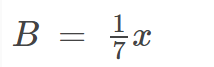
so -7?
static totem
no
 odd edgeBOT
Channel closed
Closed by @feral igloo
Use .reopen if this was a mistake.
odd edgeBOT
Available help channel!
Send your question here to claim the channel.
Remember:
• Ask your math question in a clear, concise manner.
• Show your work, and if possible, explain where you are stuck.
• After 15 minutes, feel free to ping <@&286206848099549185>.
• Type the command .close to free the channel when you're done.
• Be polite and have a nice day!
Read #❓how-to-get-help for further information on how to ask a good question, and about conduct in the question channels.
 odd edgeBOT
 woeful rivet

 static talon
u would assume its true for n=k and prove that its also true for n=k+1
woeful rivet
static talon
u would assume its true for n=k and prove that its also true for n=k+1
what
so i just leave it like tha?
t
static talon
the idea of mathematical induction is proving that the next term is true
so yes u would assume n=k is true
1+2+3+4+...+k = [k(k+1)/2] is true
now ur job is to prove that the next term is also holds true which is k+1
woeful rivet
im confused
static talon
so basically u proved that its true for 1 right
woeful rivet
ye
static talon
and u probably dont want to prove that 2, 3, 4, 5, ..., n is true
thats why too much work
so if we denote a term k and assume that it is true and prove that the next term, k+1, is also true then u basically just proved every term of N is true
 fast junco
Fuck
static talon
so imagine k is 1 and u prove that k+1 is true so 2 is true, and what if k is 2, we also prove that k+1, which is now 3 is true

 proven beacon
- Show it is true for base case.
- Assume it is true for some number n.
- Prove it is true for n+1.
Are you still working on the 1+2+3+...+n=n(n+1)/2 problem or is this something new?
static talon
proven beacon
1. Show it is true for base case.
2. Assume it is true for some number n.
3. Pro...
this is the process
woeful rivet
