#help-17
1 messages · Page 97 of 1
 vocal sleetBOT
 abstract pumice
I don't think I quite get it.
Like, I get it's an empty set but what do I do with it?
Do I just "simplify"?
 covert raft
Yes maybe
 vast shale
U Moroccan ?
covert raft
vast shale
U Moroccan ?
No tunisian
covert raft
abstract pumice
A1 = {}
A2 = {A1}
A3 = {A2}
Plz help
abstract pumice
.close
vocal sleetBOT
Channel closed
Closed by @abstract pumice
Use .reopen if this was a mistake.
 Available help channel!
Send your question here to claim the channel.
Remember:
• Ask your math question in a clear, concise manner.
• Show your work, and if possible, explain where you are stuck.
• After 15 minutes, feel free to ping <@&286206848099549185>.
• Type the command .close to free the channel when you're done.
• Be polite and have a nice day!
Read #❓how-to-get-help for further information on how to ask a good question, and about conduct in the question channels.
 zinc hill
 zinc hill
can someone help me find the range
 pale perch
yeah
vocal sleetBOT
Channel closed
Closed by @zinc hill
Use .reopen if this was a mistake.
Available help channel!
Send your question here to claim the channel.
Remember:
• Ask your math question in a clear, concise manner.
• Show your work, and if possible, explain where you are stuck.
• After 15 minutes, feel free to ping <@&286206848099549185>.
• Type the command .close to free the channel when you're done.
• Be polite and have a nice day!
Read #❓how-to-get-help for further information on how to ask a good question, and about conduct in the question channels.
 unreal sparrow
 vocal sleetBOT
unreal sparrow
vocal sleetBOT
unreal sparrow
 hard atlas
at the last step you can just "plug" in h=0
vocal sleetBOT
Channel closed
Closed by @unreal sparrow
Use .reopen if this was a mistake.
hard atlas
because now you dont end up with dividing by zero or similar bad stuff
vocal sleetBOT
Available help channel!
Send your question here to claim the channel.
Remember:
• Ask your math question in a clear, concise manner.
• Show your work, and if possible, explain where you are stuck.
• After 15 minutes, feel free to ping <@&286206848099549185>.
• Type the command .close to free the channel when you're done.
• Be polite and have a nice day!
Read #❓how-to-get-help for further information on how to ask a good question, and about conduct in the question channels.
zinc hill
 zinc hill
can someone help me w the domain ?
 outer warren
-4 is in the domain
you don't need to split your interval like that
zinc hill
sorry, can you explain ?
outer warren
is there any value between -6 and -1 that isn't in the domain?
vocal sleetBOT
Channel closed
Closed by @zinc hill
Use .reopen if this was a mistake.
Available help channel!
Send your question here to claim the channel.
Remember:
• Ask your math question in a clear, concise manner.
• Show your work, and if possible, explain where you are stuck.
• After 15 minutes, feel free to ping <@&286206848099549185>.
• Type the command .close to free the channel when you're done.
• Be polite and have a nice day!
Read #❓how-to-get-help for further information on how to ask a good question, and about conduct in the question channels.
 uneven wave
Why can we say this?
 vocal sleetBOT
uneven wave
Why can we say this?
uneven wave
vocal sleetBOT
uneven wave
Why can we say this?
uneven wave
I get that a1p1 + … + anpn is itself a linear functional
How does that formulation show all coefficients must be 0
 livid tapir
0 in the equation is 0 function
I. E. Function that sends vector elements to 0 the vector element
uneven wave
livid tapir
I. E. Function that sends vector elements to 0 the vector element
Ok, I now understand that 0 is a linear transformation from V to F and send elements of V to 0 in F. Is that right
Why do we evaluate the map at the v_k’s?
vocal sleetBOT
@uneven wave Has your question been resolved?
vocal sleetBOT
@uneven wave Has your question been resolved?
vocal sleetBOT
Channel closed
Closed due to timeout
Use .reopen if this was a mistake.
Available help channel!
Send your question here to claim the channel.
Remember:
• Ask your math question in a clear, concise manner.
• Show your work, and if possible, explain where you are stuck.
• After 15 minutes, feel free to ping <@&286206848099549185>.
• Type the command .close to free the channel when you're done.
• Be polite and have a nice day!
Read #❓how-to-get-help for further information on how to ask a good question, and about conduct in the question channels.
 boreal niche
 vocal sleetBOT
boreal niche
boreal niche
vocal sleetBOT
boreal niche
boreal niche
I know I have to find the derivative, but im not sure or what / how to start (/set it up)
<@&286206848099549185>
vocal sleetBOT
@boreal niche Has your question been resolved?
 gaunt willow
boreal niche
<@&286206848099549185>
gaunt willow
boreal niche
<@&286206848099549185>
Well
You know y(0) right
And y(0) is just equal to A*e^0
So can’t you use y(0) to get A
boreal niche
gaunt willow
Well
so i dont have to find y'(t) with respect to d/dt ?
gaunt willow
boreal niche
so i dont have to find y'(t) with respect to d/dt ?
I’m not sure to be honest
You can get A without it but idk about k
vocal sleetBOT
@boreal niche Has your question been resolved?
vocal sleetBOT
@boreal niche Has your question been resolved?
vocal sleetBOT
@boreal niche Has your question been resolved?
vocal sleetBOT
Channel closed
Closed due to timeout
Use .reopen if this was a mistake.
vocal sleetBOT
Available help channel!
Send your question here to claim the channel.
Remember:
• Ask your math question in a clear, concise manner.
• Show your work, and if possible, explain where you are stuck.
• After 15 minutes, feel free to ping <@&286206848099549185>.
• Type the command .close to free the channel when you're done.
• Be polite and have a nice day!
Read #❓how-to-get-help for further information on how to ask a good question, and about conduct in the question channels.
 little mantle
in expansion of (1+4px)(1+qx)^n, find the values of p and q. the coefficient of x^2 is -40 and x = 0
vocal sleetBOT
little mantle
in expansion of (1+4px)(1+qx)^n, find the values of p and q. the coefficient of ...
 vocal sleetBOT
@little mantle Has your question been resolved?
vocal sleetBOT
Channel closed
Closed by @little mantle
Use .reopen if this was a mistake.
Available help channel!
Send your question here to claim the channel.
Remember:
• Ask your math question in a clear, concise manner.
• Show your work, and if possible, explain where you are stuck.
• After 15 minutes, feel free to ping <@&286206848099549185>.
• Type the command .close to free the channel when you're done.
• Be polite and have a nice day!
Read #❓how-to-get-help for further information on how to ask a good question, and about conduct in the question channels.
 void roost
when doing minima/maxima questions like these with modulus, is it safe to assume that f'(x) is always dne when everything in the modulus is = 0 then i find the limit?

 vocal sleetBOT
void roost
when doing minima/maxima questions like these with modulus, is it safe to assume...
void roost
vocal sleetBOT
void roost
when doing minima/maxima questions like these with modulus, is it safe to assume...
void roost
finding limit as in:

please ping me if youre here
also, how do i know when to use ≥/> and </≤ in this step

<@&286206848099549185>

vocal sleetBOT
@void roost Has your question been resolved?
 round plover
void roost
when doing minima/maxima questions like these with modulus, is it safe to assume...
round plover
void roost
when doing minima/maxima questions like these with modulus, is it safe to assume...
you can have the derivative exist if the inside of a modulus is zero, like f(x)=|x^2|
so be careful with that
void roost
round plover
you can have the derivative exist if the inside of a modulus is zero, like f(x)=...
so there isnt a fixed way to do it?
round plover
as in, to prove that a derivative doesn't exist?
void roost
i mean im not sure how to do questions with modulus in it
round plover
check the left and right hand limits
void roost
and judging from the examples i was given they both have dne
round plover
and show that they disagree (to disprove)
void roost
so i just assumed
round plover
yeah, it'll often be the case
basically, if the function has a sharp bend at the modulus, it won't be differentiable
but something like |x^2| or |x^3| is sufficiently smooth to have a derivative even at the point where the modulus interior is zero
void roost
wouldnt that always be the case for modulus?
round plover
no
round plover
look at |x^2|
void roost
okay
round plover
graph it if you want to check I guess
void roost
yes i see it
smooth
is it only |x^2| and |x^3| that are smooth? i dont think any other function aside from those two behave like that
round plover
a lot of other polynomials like that will be smooth
void roost
how can you tell without a graphing tool?
round plover
I mean, you could check the limits manually
void roost
sorry i think im a little weak on limits, do you mind guiding me on what you mean by checking?
round plover
the derivative is defined as a limit
void roost
so finding the derivative using the h limit method?
round plover
yes
void roost
how would you apply that on the question above?
round plover
a or b
round plover
so if x is non-zero, f is just a polynomial so it's differentiable
so we only need to check x=0
void roost
this one?
 round plover
 round plover
\begin{align*}
f(x)&=x^2-2|x|+1\
f'(0)&=\lim_{h\rightarrow0}\frac{f(0+h)-f(0)}{h}\
&=\lim_{h\rightarrow0}\frac{(h^2-2|h|+1)-(0^2-2|0|+1)}{h}\
&=\lim_{h\rightarrow0}\frac{h^2-2|h|}{h}\
&=\lim_{h\rightarrow0}h-\frac{2|h|}{h}
\end{align*}
 twin meteorBOT
Desync
 round plover
we'll look at the two one-sided limits
so from the positive direction, the h by itself vanishes as normal, and we have -2h/h -> -2
so the limit is -2 in this case
from the negative direction, the lone h again vanishes, but the term on the right is now - 2(-h)/h -> 2
which is not equal to the right hand limit, so the limit doesn't exist
so it's not differentiable at 0
but note that the derivative is negative on the right and positive on the left, and the function is cts, so we still have a local maximum here
void roost
round plover
so from the positive direction, the h by itself vanishes as normal, and we have ...
for this can i just do h=0.0001
and -0.0001 for the negative
void roost
it wont always work?
round plover
you can't guarantee that the value you choose is sufficiently close to the limit point
and as I said, the main issue is with rigour
not with practicality
void roost
round plover
but note that the derivative is negative on the right and positive on the left, ...
what does this mean?
round plover
derivative is positive on the left
so the function is increasing up to that point from the left
and is negative on the right
so it's decreasing from that point
the whole function is also continuous because it is the composition/sum of continuous functions
so that indicates that there is a local maximum at that point
void roost
oh yea i get it
/ - \
like this
wait so even though this is a cusp, its still considered a local maximum?
round plover
a local maximum is a point such that every other nearby point is less than it
the function looks like an upside down V at this point
the tip of the V is still a local maximum
even if the derivative doesn't exist
void roost
as long as its a tip?
round plover
yes
void roost
okay i understand that now
void roost
void roost
also, how do i know when to use ≥/> and </≤ in this step
what about this?
round plover
I have no idea what that step is
void roost
maybe this will help
 round plover
you can do it either way
void roost
theres another method?
round plover
I mean you could have >= on the top and < on the bottom, as in the picture
or > on the top and <= on the bottom
it's the same definition because they agree at x+1 = 0
and it doesn't matter anyway, because the limit only cares about points near x = -1
and not about the point itself
void roost
so the sign doesnt really matter, just whether x is larger or smaller than 0?
i can put > < as well?
round plover
whether the stuff inside the modulus is zero
well, if you're redefining the function
at least one has to include equals
because the function has to be well-defined at every point
if you used just < and >, then it wouldn't be defined for x+1 = 0
void roost
then what about the derivative part?
isnt it x>=-1 and x<-1?
the equals disappeared
round plover
because the modulus is zero at that point
it has to be checked separately
that's the derivative for every other point
the first time around you're just rewriting the original function
the original function is well-defined for where the modulus is zero
the derivative may not be, so that's being checked separately
 round plover
yes
if the input to the modulus is positive, you can just remove it
if negative, replace it with *-1
void roost
like infront of the modulus (treating it like a bracket)?
round plover
yes
void roost
nice! thats all for now, thank you so much
round plover
np
 vocal sleetBOT
Channel closed
Closed by @void roost
Use .reopen if this was a mistake.
Available help channel!
Send your question here to claim the channel.
Remember:
• Ask your math question in a clear, concise manner.
• Show your work, and if possible, explain where you are stuck.
• After 15 minutes, feel free to ping <@&286206848099549185>.
• Type the command .close to free the channel when you're done.
• Be polite and have a nice day!
Read #❓how-to-get-help for further information on how to ask a good question, and about conduct in the question channels.
 toxic birch
 vocal sleetBOT
toxic birch
vocal sleetBOT
toxic birch
 viral copper
should be $n \neq -1$
toxic birch
that uses an 'a' instead of an 'n'
twin meteorBOT
jan Nejon
 viral copper
toxic birch
viral copper
toxic birch
this one's plain wrong
toxic birch
yeh but assuming the correct one
viral copper
idk why you'd want to restrict x > 0 in the other one
toxic birch

Number 2 and 3
What's rhe difference between them?

a better picture
from the book
viral copper
they probably considered if x = -0.5 or something
 grand frigate
n ∊ N
and
a != -1, x >0
viral copper
because if you integrate you get 2sqrt(x) and x must be greater than 0 for that
but tbh
thats common sense
¯_(ツ)_/¯
all you should remember is $\int x^n \dd{x} = \frac{x^{n + 1}}{n + 1} + C \quad n \neq -1$
twin meteorBOT
jan Nejon
 toxic birch
twin meteor
**jan Nejon**
toxic birch
twin meteor
**jan Nejon**
you just apply this rule?
even if youve got a conditioon
of x < 0
?
@viral copper
 safe wharf
yes I think

 proven spade
it is just x^2/2+C
 safe wharf
oops
proven spade
toxic birch
can you write each term in the form of the form Ax^n and then use the rules
toxic birch
toxic birch
yes but the rules say that x cant be negative
proven spade
safe wharf
the x<0 is just there to avoid complex numbers
I thought it's just for the logs
proven spade
viral copper
x < 0 so that its ln (- x)
yh
toxic birch
viral copper
x < 0 so that its ln (- x)
heh
wait so could someone show me how to do this from beginning to end?
i dont really get it
safe wharf
you can just apply the rules to each term
vocal sleetBOT
Channel closed
Closed by @toxic birch
Use .reopen if this was a mistake.
Available help channel!
Send your question here to claim the channel.
Remember:
• Ask your math question in a clear, concise manner.
• Show your work, and if possible, explain where you are stuck.
• After 15 minutes, feel free to ping <@&286206848099549185>.
• Type the command .close to free the channel when you're done.
• Be polite and have a nice day!
Read #❓how-to-get-help for further information on how to ask a good question, and about conduct in the question channels.
 sage hedge
 vocal sleetBOT
sage hedge
vocal sleetBOT
vocal sleetBOT
sage hedge
vocal sleetBOT
@sage hedge Has your question been resolved?
Channel closed
Closed by @sage hedge
Use .reopen if this was a mistake.
Available help channel!
Send your question here to claim the channel.
Remember:
• Ask your math question in a clear, concise manner.
• Show your work, and if possible, explain where you are stuck.
• After 15 minutes, feel free to ping <@&286206848099549185>.
• Type the command .close to free the channel when you're done.
• Be polite and have a nice day!
Read #❓how-to-get-help for further information on how to ask a good question, and about conduct in the question channels.
 carmine bay
Let △ABC be square at A with M being the midpoint of BC. Let D and E be the projections of M on AB and AC respectively a) Prove that D and E are the midpoints of AB and AC respectively b) Prove that BDEM is a parallelogram c) Take N so that M is the midpoint of NE. Lower EK ⊥ BC. Prove that AK ⊥ KN
help
too hard
c,
helpppp
please
vocal sleetBOT
Available help channel!
Send your question here to claim the channel.
Remember:
• Ask your math question in a clear, concise manner.
• Show your work, and if possible, explain where you are stuck.
• After 15 minutes, feel free to ping <@&286206848099549185>.
• Type the command .close to free the channel when you're done.
• Be polite and have a nice day!
Read #❓how-to-get-help for further information on how to ask a good question, and about conduct in the question channels.
 halcyon quail
 vocal sleetBOT
halcyon quail
halcyon quail
vocal sleetBOT
halcyon quail
halcyon quail
huh
 delicate stirrup
sum table?
vocal sleetBOT
Channel closed
Closed by @halcyon quail
Use .reopen if this was a mistake.
vocal sleetBOT
Available help channel!
Send your question here to claim the channel.
Remember:
• Ask your math question in a clear, concise manner.
• Show your work, and if possible, explain where you are stuck.
• After 15 minutes, feel free to ping <@&286206848099549185>.
• Type the command .close to free the channel when you're done.
• Be polite and have a nice day!
Read #❓how-to-get-help for further information on how to ask a good question, and about conduct in the question channels.
 silent star
 vocal sleetBOT
Channel closed
Closed due to timeout
Use .reopen if this was a mistake.
Available help channel!
Send your question here to claim the channel.
Remember:
• Ask your math question in a clear, concise manner.
• Show your work, and if possible, explain where you are stuck.
• After 15 minutes, feel free to ping <@&286206848099549185>.
• Type the command .close to free the channel when you're done.
• Be polite and have a nice day!
Read #❓how-to-get-help for further information on how to ask a good question, and about conduct in the question channels.
little mantle
can somebody help me solve this answer? because I calculate the wrong one
 vocal sleetBOT
little mantle
can somebody help me solve this answer? because I calculate the wrong one
vocal sleetBOT
little mantle
can somebody help me solve this answer? because I calculate the wrong one
 tough valve
Send what you tried
little mantle
actually I dont know how to solve this
 flat whale
little mantle
can somebody help me solve this answer? because I calculate the wrong one
flat whale
little mantle
can somebody help me solve this answer? because I calculate the wrong one
put everything in a common denominator
vocal sleetBOT
Channel closed
Closed by @little mantle
Use .reopen if this was a mistake.
Available help channel!
Send your question here to claim the channel.
Remember:
• Ask your math question in a clear, concise manner.
• Show your work, and if possible, explain where you are stuck.
• After 15 minutes, feel free to ping <@&286206848099549185>.
• Type the command .close to free the channel when you're done.
• Be polite and have a nice day!
Read #❓how-to-get-help for further information on how to ask a good question, and about conduct in the question channels.
 past tinsel
Please note that hypotenuse of U is not 1/c as that is the smallest number if c is the hypotenuse of T
 vocal sleetBOT
past tinsel
Please note that hypotenuse of U is not 1/c as that is the smallest number if c ...
past tinsel
vocal sleetBOT
past tinsel
Please note that hypotenuse of U is not 1/c as that is the smallest number if c ...
past tinsel
.close
vocal sleetBOT
Channel closed
Closed by @past tinsel
Use .reopen if this was a mistake.
Available help channel!
Send your question here to claim the channel.
Remember:
• Ask your math question in a clear, concise manner.
• Show your work, and if possible, explain where you are stuck.
• After 15 minutes, feel free to ping <@&286206848099549185>.
• Type the command .close to free the channel when you're done.
• Be polite and have a nice day!
Read #❓how-to-get-help for further information on how to ask a good question, and about conduct in the question channels.
vast shale
Hello, I am looking for more problems such as these. Does anyone know their exact quantitative name so I can get more practice?
 vocal sleetBOT
vast shale
Hello, I am looking for more problems such as these. Does anyone know their exac...
vocal sleetBOT
vast shale
Hello, I am looking for more problems such as these. Does anyone know their exac...
 raven jackal
You might get more problem types under this, but this is evaluating algebraic expressions. I'd just go through the results and look for the problem types that align with what you want to practice. Some may emphasize certain methods or foundational skills.
vast shale
Right I'm studying for the wonderlic but I need more problems like 32 and 33
Thanks
.close.
.close
vocal sleetBOT
Channel closed
Closed by @hearty idol
Use .reopen if this was a mistake.
Available help channel!
Send your question here to claim the channel.
Remember:
• Ask your math question in a clear, concise manner.
• Show your work, and if possible, explain where you are stuck.
• After 15 minutes, feel free to ping <@&286206848099549185>.
• Type the command .close to free the channel when you're done.
• Be polite and have a nice day!
Read #❓how-to-get-help for further information on how to ask a good question, and about conduct in the question channels.
 iron talon
Answer comes out to be different than what is expected

 limber wedge

 cyan talon
iron talon
Answer comes out to be different than what is expected
cyan talon
iron talon
Answer comes out to be different than what is expected
you should show what you got then
iron talon
Meaning?
limber wedge
iron talon
Meaning?
Show whatever you have done till now
cyan talon
"Answer comes out to be different than what is expected" does this mean you have your own answer or no ? @iron talon
vocal sleetBOT
@iron talon Has your question been resolved?
vocal sleetBOT
Channel closed
Closed due to timeout
Use .reopen if this was a mistake.
Available help channel!
Send your question here to claim the channel.
Remember:
• Ask your math question in a clear, concise manner.
• Show your work, and if possible, explain where you are stuck.
• After 15 minutes, feel free to ping <@&286206848099549185>.
• Type the command .close to free the channel when you're done.
• Be polite and have a nice day!
Read #❓how-to-get-help for further information on how to ask a good question, and about conduct in the question channels.
 timber marlin
how do I solve sum n=1 to inf [1/(n^2)]
vocal sleetBOT
timber marlin
how do I solve sum n=1 to inf [1/(n^2)]
timber marlin
i tried making a generalized formula to calculate the sum at nth term but i don't see a pattern yet
flat whale
timber marlin
this problem has a whole wiki page?
flat whale
the internet is great
timber marlin
i was just trying to make a simple summation practice problem lmao
 spiral inlet
you picked the wrong series lol
 plain minnow
Might want to try with something like 1/(2^n) instead, then 
vocal sleetBOT
@timber marlin Has your question been resolved?
vocal sleetBOT
Channel closed
Closed by @timber marlin
Use .reopen if this was a mistake.
Available help channel!
Send your question here to claim the channel.
Remember:
• Ask your math question in a clear, concise manner.
• Show your work, and if possible, explain where you are stuck.
• After 15 minutes, feel free to ping <@&286206848099549185>.
• Type the command .close to free the channel when you're done.
• Be polite and have a nice day!
Read #❓how-to-get-help for further information on how to ask a good question, and about conduct in the question channels.
 royal grove
 vocal sleetBOT
royal grove
royal grove
vocal sleetBOT
royal grove
royal grove
is there any fast way to do this
vocal sleetBOT
@royal grove Has your question been resolved?
royal grove
<@&286206848099549185>
 formal nacelle
Can you use a computer?
Or do you need to come up with some sort of generalized expression?
vocal sleetBOT
@royal grove Has your question been resolved?
vocal sleetBOT
Channel closed
Closed due to timeout
Use .reopen if this was a mistake.
vocal sleetBOT
Available help channel!
Send your question here to claim the channel.
Remember:
• Ask your math question in a clear, concise manner.
• Show your work, and if possible, explain where you are stuck.
• After 15 minutes, feel free to ping <@&286206848099549185>.
• Type the command .close to free the channel when you're done.
• Be polite and have a nice day!
Read #❓how-to-get-help for further information on how to ask a good question, and about conduct in the question channels.
 green storm
How can I find the limit of
[ (\frac{2n}{2n+1})^n ]
in +infinity without using l'hôpital's rule?
I tried rewriting it with the help of ln, but simply ended up with
[e^{-n\ln(1 + \frac{1}{2n})} ]
and don't know how to proceed
vocal sleetBOT
green storm
How can I find the limit of
\[ (\frac{2n}{2n+1})^n \]
in +infinity without using...
twin meteorBOT
mippen
 green storm
.close
vocal sleetBOT
Channel closed
Closed by @green storm
Use .reopen if this was a mistake.
Available help channel!
Send your question here to claim the channel.
Remember:
• Ask your math question in a clear, concise manner.
• Show your work, and if possible, explain where you are stuck.
• After 15 minutes, feel free to ping <@&286206848099549185>.
• Type the command .close to free the channel when you're done.
• Be polite and have a nice day!
Read #❓how-to-get-help for further information on how to ask a good question, and about conduct in the question channels.
vast shale
i have a problem
vocal sleetBOT
vast shale
i have a problem
vast shale
if p is a prime
find the number of elements of the set {x^6 with x in Z/pZ}
if p is a prime >=5 then the number of elements is p?
because gcd(6,p)=1?
hard atlas
why does that gcd matter
vast shale
oh sry my bad Z/pZ with * is not group
if it was Z/pZ {0} it was alright
because of a lemma if G is a finite group with n elements and we have p >=2 with (p,n)=1 then {x^p with x in G } = G
hard atlas
thats false
vast shale
how
if we suppose x is not y and x^p=y^p from (p,n)=1 it results that there is h,k integers s.t. ph+nk=1. x=x^(ph+nk)=x^(ph) x^(nk)=x^(ph)=(x^p)^h. Same way we get y=(y^p)^h and from x^p=y^p we get x=y false and we are done
it is a pretty common lemma bro
hard atlas
yes sry I'm not thinking clearly
vast shale
so anyone has an idea on the main problem?
hard atlas
well I mean you are done, no?
vast shale
no
hard atlas
apply it on Z/pZ \{0}
and x=0 is clear
again I am not thinking clearly. that of course only takes care of the case (6,p-1)=1
but well
we know Z/pZ \{0} is cyclic
so for those groups we know the image of power maps
vast shale
this problem is an application at rings of polynomials and legendre gauss theorem
hard atlas
not sure which theorem you mean. but just because of that we suddenly cant apply most basic knowledge about cyclic groups?
vast shale
hard atlas
not sure which theorem you mean. but just because of that we suddenly cant apply...
p and q distinct primes (p/q)(q/p)=(-1)^(((p-1)/2)((q-1)/2)))
where (p/q) legendre sign
hard atlas
so just quadratic reciprocity?
vast shale
yes
hard atlas
yeah not sure how you wanna use that here
vast shale
if p=2 or p=3 it is clear the answ is 2
let p>=5
let a in Z/pZ \ {0}
let A(a)={x in Z/pZ \ {0} with x^6=a^6}
x in A(a) iff (xa^-1)^6=1 iff xa^-1 root of f = X^6-1 in Z/pZ[X]
hard atlas
well you can factor it partly obviously
in the end it has to come down to p=1 mod 3 or p=2 mod 3
cause thats what the cyclic group thing says
vocal sleetBOT
@vast shale Has your question been resolved?
vocal sleetBOT
Channel closed
Closed due to timeout
Use .reopen if this was a mistake.
Available help channel!
Send your question here to claim the channel.
Remember:
• Ask your math question in a clear, concise manner.
• Show your work, and if possible, explain where you are stuck.
• After 15 minutes, feel free to ping <@&286206848099549185>.
• Type the command .close to free the channel when you're done.
• Be polite and have a nice day!
Read #❓how-to-get-help for further information on how to ask a good question, and about conduct in the question channels.
vast shale
- A. - I just need help getting started
 vocal sleetBOT
vast shale
3) A. - I just need help getting started
vast shale
vocal sleetBOT
vast shale
3) A. - I just need help getting started
vast shale
I have it inputted into the main derivative formula that we have learned

not 100% sure if this is correct but I sort of have an idea what to do next just wanted some guidance
 regal bane
Good start!
The two fractions on top, you want to add them together
Btw use h instead of Δx to save your hand. h is more standard anyway
vast shale
when adding the fractions do i follow a/b + c/d = (ad)+(cb) over (b)(d)
vast shale
regal bane
Good start!
The two fractions on top, you want to add them together

I see already that some terms will cancel
Leaving this

something is wrong
I just dont know where its wrong
<@&286206848099549185>
 pliant lintel
@vast shale where is the original equation
vast shale
vast shale
3) A. - I just need help getting started
here
regal bane
vast shale
when adding the fractions do i follow a/b + c/d = (ad)+(cb) over (b)(d)
This is one of those things you shouldn't memorize. Make sure you understand how to get this equation
regal bane
vast shale
Leaving this
You can't cancel as you have here. If you cancel something, it needs to be cancelled from every term.
For example, there's no (x - 2) in the numerator's second term, you can't cancel x - 2
Consider instead simplifying the numerator
vast shale
.close
vocal sleetBOT
Channel closed
Closed by @mild finch
Use .reopen if this was a mistake.
Available help channel!
Send your question here to claim the channel.
Remember:
• Ask your math question in a clear, concise manner.
• Show your work, and if possible, explain where you are stuck.
• After 15 minutes, feel free to ping <@&286206848099549185>.
• Type the command .close to free the channel when you're done.
• Be polite and have a nice day!
Read #❓how-to-get-help for further information on how to ask a good question, and about conduct in the question channels.
 rapid cedar
Let $X_1,X_2,…$ be a sequence of binomial r.v. on a probability space $(\Omega,\mathcal{F},P)$ with pmf $P(X_n=0)=1-P(X_n=1)=1/n^2$, $n\geq 1$. Show $X_n$ converges almost surely to 1.
vocal sleetBOT
rapid cedar
Let $X_1,X_2,…$ be a sequence of binomial r.v. on a probability space $(\Omega,\...
twin meteorBOT
jsidind810
 vocal sleetBOT
Please don't occupy multiple help channels.
rapid cedar
borel-cantelli?
 rugged orchid
Does it mean to say Bernoulli rv? I don’t think it matters but it looks weird to have binomial when it’s only 0 and 1
rugged orchid
You can just rearrange the equation for P(X_n = 0) and P(X_n = 1)
rapid cedar
yes
rugged orchid
Then use the definition of convergence
rapid cedar
The sequence ${X_n}$ converges almost surely to a r.v. $X$ if $P(\lim_{n\to\infty}X_n=X)=1$
twin meteorBOT
jsidind810
 rapid cedar
but im not sure what to do
rugged orchid
Right
rapid cedar
ok so $P(X_n=0)=1/n^2$, $P(X_n=1)=-1/n^2+1$
twin meteorBOT
jsidind810
 rugged orchid
Yes
rugged orchid
What happens when we take limits
rugged orchid
twin meteor
**jsidind810**
By this definition
twin meteorBOT
jsidind810
 rapid cedar
?
rugged orchid
With limits
Yes
So clearly X_n converges to 1
The probability goes to 1
So it almost surely converges
rapid cedar
wait
it cant be that simple
can you just take the limits of the pmf like that
thats not right
rugged orchid
$P(\lim_{n\to\infty} X_n=0)=\lim_{n\to\infty} 1/n^2 = 0$, $P(\lim_{n\to\infty} X_n=1)= \lim_{n\to\infty} 1-1/n^2 = 1$
twin meteorBOT
Frosst
 rugged orchid
rapid cedar
can you just take the limits of the pmf like that
rugged orchid
rapid cedar
can you just take the limits of the pmf like that
Why not
rapid cedar
is the probability of a limit of a random variable equal to the limit of the probability of the random variable
rugged orchid
Yeah I think so
rapid cedar
do you know so
rugged orchid
You define probability as the integral wrt to the measure
The limits kinda just hop in and out at will for lebesgue integrals
I believe it’s this theorem https://en.m.wikipedia.org/wiki/Monotone_convergence_theorem
In the mathematical field of real analysis, the monotone convergence theorem is any of a number of related theorems proving the convergence of monotonic sequences (sequences that are non-decreasing or non-increasing) that are also bounded. Informally, the theorems state that if a sequence is increasing and bounded above by a supremum, then the s...
rugged orchid
I’m not a 100% certain I’m right but I have no reason to believe I’m wrong either
Maybe someone else knows
 hasty lark
I know this works with expectations
Not sure about this:

But I don't know if you really implied that @rugged orchid
rugged orchid
I think so
P for discrete RV is just a sum
Actually since this is = it’s not even a sum
Well, it’s not a sum because the event space (I’m assuming) has only 0 and 1 in it
hasty lark
Yeah, seems fine but I am not 100% sure either
rugged orchid
So asking P(X_n = k) is the same as asking what is the sum of the probability values assigned to the events whose image is 1 under P
hasty lark

Mathematics Stack Exchange
Let ${x_k}$ and $x^$ be a sequence and a point in $\mathbb{R}^n$, respectively. Can we conclude that
$$\lim_{k\to\infty} \mathrm{Prob}(x_k=x^)=1$$
and
$$\mathrm{Prob}(\lim_{k\to\infty} x_k=x^*)...
rugged orchid
Hmm
Isn’t convergence in probability defined to be if $\lim_{n\to \infty} P(|X_n-X| < \varepsilon) = 1$ for all $\varepsilon > 0$ then $X_n$ converges to $X$ in probability?
twin meteorBOT
Frosst
 rugged orchid
I remember there’s like chebychev’s inequality that I used when I did a similar question
hasty lark
rugged orchid
Isn’t convergence in probability defined to be if $\lim_{n\to \infty} P(|X_n-X| ...
this looks right
But is that the same as "almost sure" convergence?
I'm a little rusty, so I will hope someone more sure can help
rugged orchid
Oh that’s stronger than a.s. Convergence
rapid cedar
i need to construct two sequences {X_n}, {Y_n} of r.v. such that X_n converges in distribution to some r.v. X and Y_n converges in distribution to some r.v. Y
but 2X_n + 3Y_n must not converge in distribution to 2X+3Y
idk where to start
A sequence of r.v.s ${X_n}$ \textbf{converges in distribution} to $X$ (denoted $X_n\Rightarrow X$) if
$$\lim_{n\to\infty}F_{X_n}(x)=F_X(x)$$
for every continuity point $x$ of the cdf $F_X$ of $X$.
twin meteorBOT
jsidind810
 rapid cedar
not sure what to do
rugged orchid

Perhaps you want to tweak the conditions required for this theorem
This is from the continuous mapping theorem page
vocal sleetBOT
@rapid cedar Has your question been resolved?
vocal sleetBOT
Channel closed
Closed by @rapid cedar
Use .reopen if this was a mistake.
Available help channel!
Send your question here to claim the channel.
Remember:
• Ask your math question in a clear, concise manner.
• Show your work, and if possible, explain where you are stuck.
• After 15 minutes, feel free to ping <@&286206848099549185>.
• Type the command .close to free the channel when you're done.
• Be polite and have a nice day!
Read #❓how-to-get-help for further information on how to ask a good question, and about conduct in the question channels.
 clever quartz
 vocal sleetBOT
clever quartz
clever quartz
vocal sleetBOT
clever quartz
clever quartz
Is there any hint on how can i prove this?
I already tried to apply the definition of "Equivalence"
I mean this by "Equivalence"

with s>1
 pallid zenith
asymptotic question 😮
clever quartz
Can you clarify more
pallid zenith
oh assuming thats asymptotic equivalence
im not sure i actually know how to do iths
trying to think
pallid zenith
clever quartz
Can you clarify more
can you not just integrate directly?
youll get out two terms
i mean, i guess this shows that the integral is asymptotically equivalent to the final expression
the expansion im not certain
but, you should be able to just integrate, then show that the bottom term dominates asymptotically
vocal sleetBOT
@clever quartz Has your question been resolved?
Channel closed
Closed by @clever quartz
Use .reopen if this was a mistake.
vocal sleetBOT
Available help channel!
Send your question here to claim the channel.
Remember:
• Ask your math question in a clear, concise manner.
• Show your work, and if possible, explain where you are stuck.
• After 15 minutes, feel free to ping <@&286206848099549185>.
• Type the command .close to free the channel when you're done.
• Be polite and have a nice day!
Read #❓how-to-get-help for further information on how to ask a good question, and about conduct in the question channels.
 fervent socket
 vocal sleetBOT
fervent socket
fervent socket
vocal sleetBOT
fervent socket
fervent socket
Idk if this is law of sines or Pythagoras
Or what
Pls I need help, this is the 2nd time I'm coming here, the first time no one helped me
vocal sleetBOT
What step are you on?
1. I don't know where to begin
2. I have begun but got stuck midway
3. I got an answer but I'm told it's wrong
4. I got an answer and would like my work checked
5. I have a question about someone else's worked solution
6. None of the above
Helpers are just people volunteering their time to help you. Be polite and patient.
 lime gorge
There’s no way that’s a quiz right
 sweet flower
This would be law of sines, you don’t have enough info to use Pythagoras on any of these (at least for what you’re trying to find)
lime gorge
Like my eyes are fooling me right
fervent socket
vocal sleet
```
What step are you on?
1. I don't know where to begin
2. I have begun but got...
1
A little updaye
I did A
But I'm unsure about B because I rememebr my teacher telling me my notes were wrong

Is this correct? (My notes)
lime gorge
Homez we can’t help u with quizzes
fervent socket
It WAS a quiz
But it's take home now
Because I was absent
So it's just gonna be graded as homework now
It's just homework
Nvm bro
I figured it out myseld
Great help 👍🏽
.close
vocal sleetBOT
Channel closed
Closed by @fervent socket
Use .reopen if this was a mistake.
vocal sleetBOT
Available help channel!
Send your question here to claim the channel.
Remember:
• Ask your math question in a clear, concise manner.
• Show your work, and if possible, explain where you are stuck.
• After 15 minutes, feel free to ping <@&286206848099549185>.
• Type the command .close to free the channel when you're done.
• Be polite and have a nice day!
Read #❓how-to-get-help for further information on how to ask a good question, and about conduct in the question channels.
 hollow karma
 vocal sleetBOT
hollow karma
vocal sleetBOT
hollow karma

 stoic crystal
1?
hollow karma
why 1?
stoic crystal
I guess as x approaches infinity, 9/x decreases, so you get 1^x/2 and 1 to the power of anything is 1
hollow karma
stoic crystal
I guess as x approaches infinity, 9/x decreases, so you get 1^x/2 and 1 to the p...
nope its incorrect
stoic crystal
Oh welp
flat whale
hollow karma
Need help evaluating this limit as x tends to infinity
Find the log of the limit
Oh you did
flat whale
hollow karma
Simplify the fraction
hollow karma
flat whale
Simplify the fraction

isn't this just equal to 0 and then e^0 is just 1? (its incorrect but idk why)
flat whale
stoic crystal
I’m completely new to limits
...
I don't think virus opened a channel to help people
 stoic crystal
It’s fine
hollow karma
@flat whale ^
flat whale
,w lim x to inf of (1+9/x)^(x/2)
twin meteorBOT


 hollow karma
niice
flat whale
Yup
hollow karma
thats insane that it can do that
flat whale
Another way to do it is to raise your expression to the (2/9) power and substitute t = 9/x
The definition of e will fall out
vocal sleetBOT
Channel closed
Closed by @hollow karma
Use .reopen if this was a mistake.
Available help channel!
Send your question here to claim the channel.
Remember:
• Ask your math question in a clear, concise manner.
• Show your work, and if possible, explain where you are stuck.
• After 15 minutes, feel free to ping <@&286206848099549185>.
• Type the command .close to free the channel when you're done.
• Be polite and have a nice day!
Read #❓how-to-get-help for further information on how to ask a good question, and about conduct in the question channels.
 twin tundra
 vocal sleetBOT
twin tundra
twin tundra
vocal sleetBOT
twin tundra
twin tundra
this question is confusing me
vocal sleetBOT
@twin tundra Has your question been resolved?
 sacred yew
@twin tundra https://www.youtube.com/watch?v=SXRQcxt6jsk
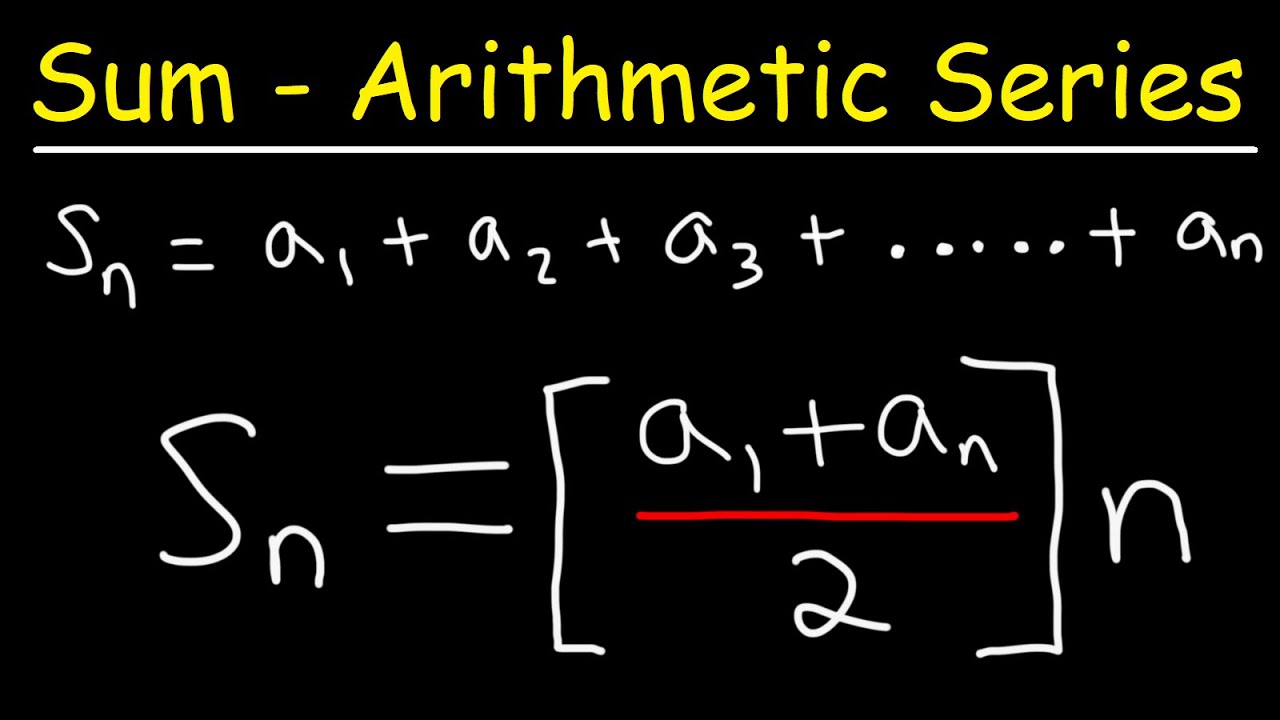
This video explains how to derive the formula that gives you the sum of an arithmetic series. This video also explains the difference between an arithmetic sequence and an arithmetic series as well as identifying the common difference between terms.
More Example Problems:
https://www.youtube.com/watch?v=XZJdyPkCxuE
My Website: https://www.vi...
vocal sleetBOT
Channel closed
Closed due to timeout
Use .reopen if this was a mistake.
Available help channel!
Send your question here to claim the channel.
Remember:
• Ask your math question in a clear, concise manner.
• Show your work, and if possible, explain where you are stuck.
• After 15 minutes, feel free to ping <@&286206848099549185>.
• Type the command .close to free the channel when you're done.
• Be polite and have a nice day!
Read #❓how-to-get-help for further information on how to ask a good question, and about conduct in the question channels.
 thin vale
 thin vale
Could anyone check my proof for this question please?
vocal sleetBOT
@thin vale Has your question been resolved?
thin vale
<@&286206848099549185>
thin vale
 blissful sentinel
Oops I forgot about the question
blissful sentinel
Oops I forgot about the question
that is alright!
should I tag you back to the part where I was confused
blissful sentinel
So like, I don't get why the 1/(2k) is necessary.
There's only finitely many rational numbers you need to avoid.
thin vale
yes indeed
blissful sentinel
List them out r_1, ..., r_n.
Then take delta to be less than |c - r_k| for all k=1,...,n.
And then you're done.
blissful sentinel
In particular, you want to exclude anything with denominator k
So picking delta = 1/(2k) doesn't seem like it should work
You could still have something with denominator k in that interval
thin vale
why? because if we include k then at most it will be 1/k which we chose to be less than epsilon so I don't see why the equality has to be excluded
blissful sentinel
you wrote that it excludes all of them
so delta_k not only excludes all 1/k but it also excludes all 1/m's with 1/m > 1/k since these were excluded by the previous deltas
this claim is false
thin vale
hmm okay, well I'd much rather use your claim then anyyways because I find it much more understandable
Bungo had me convinced earlier, maybe I poorly misrepresented his words
blissful sentinel
👍
thin vale

here is my revision
I am hoping it is right since I basically just used your ideas almost exactly
so I hope I am not able to mess that up
XD
also Ty very much Eric!
blissful sentinel
thin vale
I think you mean |c - r_i| > delta for all i = 1,...,n
but looks good!
vocal sleetBOT
Channel closed
Closed by @thin vale
Use .reopen if this was a mistake.
Available help channel!
Send your question here to claim the channel.
Remember:
• Ask your math question in a clear, concise manner.
• Show your work, and if possible, explain where you are stuck.
• After 15 minutes, feel free to ping <@&286206848099549185>.
• Type the command .close to free the channel when you're done.
• Be polite and have a nice day!
Read #❓how-to-get-help for further information on how to ask a good question, and about conduct in the question channels.
 idle arrow
What are these equations called?
 vocal sleetBOT
idle arrow
What are these equations called?
vocal sleetBOT
idle arrow
What are these equations called?
 river minnow
Quadratic equations
river minnow
I think you meant to reply to the helpee?
I also think they asked just for the name of the equations
 undone pond
well how can he solve them without even knowing their name, or maybe he just randomly forgot their name (happens to me alot, forgets what task I was doing)
 sand hedge
river minnow
Quadratic equations
sand hedge
river minnow
Quadratic equations
aren't they also polynomials?
river minnow
Sure
undone pond
Polynomial Equation, with Degree of 2
sand hedge
yeah
undone pond
A quadratic equation has a standard pattern
ax^2 + bx + c = 0
sand hedge
would a degree of 1/2 be a root function?
undone pond
sand hedge
would a degree of 1/2 be a root function?
root functions also includes cube root 1/3, quartic root 1/4 etc
vocal sleetBOT
@idle arrow Has your question been resolved?
idle arrow
undone pond
well how can he solve them without even knowing their name, or maybe he just ran...
I was trying to remember so that I could find a youtube video to walk me through it
thank youu
vocal sleetBOT
Channel closed
Closed by @idle arrow
Use .reopen if this was a mistake.
Available help channel!
Send your question here to claim the channel.
Remember:
• Ask your math question in a clear, concise manner.
• Show your work, and if possible, explain where you are stuck.
• After 15 minutes, feel free to ping <@&286206848099549185>.
• Type the command .close to free the channel when you're done.
• Be polite and have a nice day!
Read #❓how-to-get-help for further information on how to ask a good question, and about conduct in the question channels.
 winged briar
Stuck and confused what to do, must write in a two-column, statement and reasoning.
 vocal sleetBOT
winged briar
Stuck and confused what to do, must write in a **two-column**, statement and rea...
sand hedge
winged briar
Stuck and confused what to do, must write in a **two-column**, statement and rea...
vocal sleetBOT
winged briar
Stuck and confused what to do, must write in a **two-column**, statement and rea...
sand hedge
winged briar
Stuck and confused what to do, must write in a **two-column**, statement and rea...
im not 100% sure, but im p sure it has to do with turning it into a rectangle
undone pond
sand hedge
im not 100% sure, but im p sure it has to do with turning it into a rectangle
the Z shape angles
sand hedge
undone pond
the Z shape angles
ah
i never memorized those
i always preffered just working it out
but yeah thats right
undone pond
Alternate Interior Angles
undone pond
winged briar
Stuck and confused what to do, must write in a **two-column**, statement and rea...
Follow this pattern
BACD and you will see a Z shape
the interior angles BAC and ACD will be the same
winged briar
So the vertex (angle A and C) would be alternating interior angles?
undone pond
if there are 2 parallel lines, and 1 line intersecting both, you will always get a pair of same angles among them
 winged briar
I see, as you say for interior angles BAC and ACD, it shows alternating interior angles?
Since I need to provide a reason for it
undone pond
yes
winged briar
Okay
winged briar
I see
undone pond
and there is another line AC which is intersecting (if we imaginarily extend it from both ends with dotted lines) both lines AB and CD
winged briar
Then after that, do I show the reflexive being AC is congruent to AC?
Since I am on this topic where I need ASA (Angle-Side-Angle)
2 angles and 1 side
undone pond
winged briar
Stuck and confused what to do, must write in a **two-column**, statement and rea...
its also given that <ABC Approx equal to <CAD
we can use that as well
undone pond
winged briar
Since I am on this topic where I need ASA (Angle-Side-Angle)
is it AAS or ASA
winged briar
ASA for our topic
undone pond
well both mean the same thing
winged briar
So primrarily for my proofs, I want 2 angle statements and 1 side statement maximum?
undone pond
winged briar
Stuck and confused what to do, must write in a **two-column**, statement and rea...
<BAC = <ACD, similarly
<DAC = <ACB
undone pond
winged briar
So primrarily for my proofs, I want 2 angle statements and 1 side statement maxi...
here's your angles
2 different Z shapes 1 sideways and 1 vertical
and for side statement
winged briar
I have <ACB is congruent to <CAD & <BAC is congruent to <ACD for my two angles
And a reflexive saying AC is congruent to AC
undone pond
<ABC ~= <CAD given
winged briar
Yes
undone pond
<ABC is approximately equal to <CAD (given).
<BCA (common angle) is congruent to <CDA (vertical angles are congruent).
Side AC (common side) is the same in both triangles.
vocal sleetBOT
Channel closed
Closed by @winged briar
Use .reopen if this was a mistake.
vocal sleetBOT
Available help channel!
Send your question here to claim the channel.
Remember:
• Ask your math question in a clear, concise manner.
• Show your work, and if possible, explain where you are stuck.
• After 15 minutes, feel free to ping <@&286206848099549185>.
• Type the command .close to free the channel when you're done.
• Be polite and have a nice day!
Read #❓how-to-get-help for further information on how to ask a good question, and about conduct in the question channels.
 vestal comet
Find the values that satisfy the given equation:
 vocal sleetBOT
vestal comet
Find the values that satisfy the given equation:
vocal sleetBOT
vestal comet
Find the values that satisfy the given equation:


 vocal sleetBOT
Channel closed
Closed by @vestal comet
Use .reopen if this was a mistake.
Available help channel!
Send your question here to claim the channel.
Remember:
• Ask your math question in a clear, concise manner.
• Show your work, and if possible, explain where you are stuck.
• After 15 minutes, feel free to ping <@&286206848099549185>.
• Type the command .close to free the channel when you're done.
• Be polite and have a nice day!
Read #❓how-to-get-help for further information on how to ask a good question, and about conduct in the question channels.
 hollow raft
 vocal sleetBOT
hollow raft
hollow raft
vocal sleetBOT
hollow raft
hollow raft
,Rotate
twin meteorBOT
 hollow raft
Problem 17, I’m trying it now
But I don’t understand the last part of the questions

<@&286206848099549185>
hollow raft
hollow raft
<@&286206848099549185>
Im trying to use the discriminants to check how many roots the equation has dependent on a but i don’t really understand
vocal sleetBOT
@hollow raft Has your question been resolved?
hollow raft
<@&286206848099549185>
 proven garden
It is asking how many roots are depending on a
we have x=a-1 or x=2
only x=a-1 is dependent on a
vocal sleetBOT
Channel closed
Closed by @hollow raft
Use .reopen if this was a mistake.
Available help channel!
Send your question here to claim the channel.
Remember:
• Ask your math question in a clear, concise manner.
• Show your work, and if possible, explain where you are stuck.
• After 15 minutes, feel free to ping <@&286206848099549185>.
• Type the command .close to free the channel when you're done.
• Be polite and have a nice day!
Read #❓how-to-get-help for further information on how to ask a good question, and about conduct in the question channels.
vast shale
<@&286206848099549185> I really have no idea how to solve this using the quadratic formula, can you help me?
 vocal sleetBOT
vast shale
<@&286206848099549185> I really have no idea how to solve this using the quadrat...
vocal sleetBOT
vast shale
<@&286206848099549185> I really have no idea how to solve this using the quadrat...
 next bronze
multiply everything by 3x
*6x
18x^2 - 2 = -3x
18x^2 + 3x - 2 = 0
then just app quadratic formula
i have no idea how to use texit sry ahah
vast shale
next bronze
18x^2 - 2 = -3x
18x^2 + 3x - 2 = 0
Ahhh
next bronze
is that good?
vast shale
Okay okay thank you
 round basin
vast shale
<@&286206848099549185> I really have no idea how to solve this using the quadrat...
round basin
vast shale
<@&286206848099549185> I really have no idea how to solve this using the quadrat...
Listen
 flint frigate
It’s weird you use the $ sign
vast shale
next bronze
is that good?
Yes
round basin
I am gonna tell you a very easy method
next bronze
.close
vast shale
round basin
I am gonna tell you a very easy method
Yes?
round basin
Do you know what to do when faced with such types of fractional operations ?
flint frigate
$18x^2 + 3x-2=0$
twin meteorBOT
ikraam
 vast shale
Not really
next bronze
ooh k
 paper depot
the dollars are for marking where math mode starts and ends:L
compare these two
This text looks good. $x^2 = -1$
$This text looks shitty. x^2 = -1$
twin meteorBOT
Ann
 flint frigate
Ahhhhh
twin meteorBOT
i like cheese
 flint frigate
Oh yeah
vast shale
,, hello
twin meteorBOT
catbologan6315
 flint frigate
I guess they work the same way as $ then
next bronze
ye ig
 river kettle
$$\prod\Pi$$
twin meteorBOT
water beam
 paper depot
#latex-testing, y'all.
paper depot
flint frigate
I guess they work the same way as $ then
not quite
single dollars give you an inline formula $x^2 = 2$ while double dollars put a formula on its own line and centered $$\sum_{n=0}^{\infty} \frac{1}{2^n} = 2$$
twin meteorBOT
Ann
 paper depot
also if you want to type an actual dollar sign you do \$
round basin
Just gonna do it directly.
So 3x/2 -1/3x
= (9x square - 2)/6x
Now cross mustliplying the entire term, we bring 2 this side from the RHS and take 6x in the LHS
We get
18x square - 4 = 6x
Bringing 6x this side.
18x square -6x -4 = 0
18 x square -12 x + 6x -4 = 0 (if you don’t k ow what I did here I can explain)
6x(3x -2)+2(3x - 2) = 0
(3x -2)(6x +2) = 0
X = 2/3 or -2/6
round basin
vast shale
,, hello
Here it is
round basin
paper depot
> = (9x square - 2)/6x
please use the symbol `^` for exponents
Ok my bad thank you I’ll keep that in mind
flint frigate
paper depot
single dollars give you an inline formula $x^2 = 2$ while double dollars put a f...
TIL lmao
vocal sleetBOT
@vast shale Has your question been resolved?
vast shale
vast shale
<@&286206848099549185> I really have no idea how to solve this using the quadrat...
<@&286206848099549185> am i doing it right? What should i do next?
 next bronze
uh
lemme read that
nup
thats wrong
ok so
in the implementation of the quadratic formula
the discirimiant
(-3)^2 - 4(18)(-2)
you forgot
2 negatives is equal to positive
so the discirmant is actualy 9+144
which is 153
so it is 3+- sqrt 153 / 36
vast shale
Is that the only one that went wrong? Thank you
next bronze
no problem
by the way, dont say (3)^2
wait
nvm
sry
i thought b = -3
also
you wrote -(3) = 3
watch out for those negatives
@vast shale if you do all that u sould be fine
vast shale
next bronze
watch out for those negatives
Alright thank you
next bronze
np
vast shale
So should i put the 153 there? <@&286206848099549185>
 vast shale
Okay
next bronze
so thats ur solution
ur practically done
u can remove the last 2 steps
u can close now
vocal sleetBOT
Channel closed
Closed by @frozen anchor
Use .reopen if this was a mistake.
next bronze
no probs
vocal sleetBOT
Available help channel!
Send your question here to claim the channel.
Remember:
• Ask your math question in a clear, concise manner.
• Show your work, and if possible, explain where you are stuck.
• After 15 minutes, feel free to ping <@&286206848099549185>.
• Type the command .close to free the channel when you're done.
• Be polite and have a nice day!
Read #❓how-to-get-help for further information on how to ask a good question, and about conduct in the question channels.
 heady ibex
I don't really understand how to prove that the answer i got from an integral $-\frac{\sqrt{2}}{9} + \frac{\sqrt{3}}{8} + \arctan(3 + 2 \sqrt{2}) - \arctan(2 + \sqrt{3})$ is equal to the answer that wolfram alpha gives which is $\frac{1}{72}(-8 \sqrt{2} + 9\sqrt{3} - 12\pi + 36 \arctan(2 \sqrt{2}))$
vocal sleetBOT
heady ibex
I don't really understand how to prove that the answer i got from an integral $-...
twin meteorBOT
Katharine
 vocal sleetBOT
@heady ibex Has your question been resolved?
 calm lantern
,w arctan(3+sqrt(2)) - arctan(2+sqrt(3)) - (-12pi + 36arctan(2sqrt(2)))
,w arctan(3+sqrt(2)) - arctan(2+sqrt(3)) - (-pi/6 + (1/2)arctan(2sqrt(2)))
,w arctan(3+2*sqrt(2)) - arctan(2+sqrt(3)) - (-pi/6 + (1/2)arctan(2sqrt(2)))
twin meteorBOT


 Requested by wlmmm#6240
heady ibex
Requested by wlmmm#6240
heady ibex
what do you mean?
calm lantern
Why does it matter to know why are the answers equivalent?
heady ibex
cuz i don't know if they are
they could be close enough in value that numerical approximations say they are equal
calm lantern
It's a possibility indeed but I doubt it
You would have to be very badlucky
The best way to know if you did right or wrong is to show the integral and your work
Otherwise no one can help
heady ibex
$\int_{2}^{3} \frac{\sqrt{t^2 - 1}}{t^3}dt = -\frac{\sqrt{2}}{9} + \frac{\sqrt{3}}{8} + \frac{1}{2} \int_{2}^{3} \frac{1}{t \sqrt{t^2 - 1}} dt$
twin meteorBOT
Katharine
 heady ibex
i then did a $t = \cosh(x)$ substitution
twin meteorBOT
Katharine
 heady ibex
$\frac{1}{2} \int_{t = 2}^{t = 3} \frac{1}{\cosh(x)} dx$
$\int_{t = 2}^{t = 3} \frac{1}{e^{x} + e^{-x}} dx$

 twin meteorBOT
Katharine
 twin meteorBOT
Katharine
 heady ibex
which is arctan
so the end result is
$\arctan(e^{arccosh(3)}) - \arctan(e^{arccosh(2)})$
twin meteorBOT
Katharine
 heady ibex
,w arccosh(3)
twin meteorBOT

 heady ibex
,w arccosh(3) in ln
twin meteorBOT
 twin meteorBOT
 heady ibex
second to last
 lament yew
Wait. What is the question 😮
vocal sleetBOT
@heady ibex Has your question been resolved?
heady ibex
twin meteor
**Katharine**
this
lament yew
I mean you just use the definition of y:=cosh(x)=(exp(x)+exp(-x))/2
Abusing the fact that ln and exp are inverses
You solve for because: y=cosh(x) <=> x=arccosh(y)
arcccosh=cosh^-1
ln=log
If you need more help just ask
exp(x)=e^x
I meant to say solve for x of course
lament yew
What is your question?
heady ibex
the thing i replied to
lament yew
Then why the cosh stuff 😮
heady ibex
cuz the person wanted me to write what i did
and that's how i got my answer
i found my answer by first integration by parts
then cosh substitution
the ln subsitution
then
lament yew
To check it just use:tan(α+β)=tanα+tanβ/(1−tanαtanβ)
I order to get the same form
Or for the simplest gut check, just put it into a calculator
or this here might even help you more arctanu+arctanv=arctan((u+v)/(1−uv))
I would honestly check first if the value matches up
And then just use the arctan formula I gave you to put into the same form

As you see from desmos the values match up exactly, so we have proven their equality by calculation
To bring it into the same form just use the formulas I gave you
I proved it myself already, just use arctan(a)-arctan(b)=arctan((a-b)/(1+ab)) and you are done

Good luck
vocal sleetBOT
Channel closed
Closed by @heady ibex
Use .reopen if this was a mistake.
Available help channel!
Send your question here to claim the channel.
Remember:
• Ask your math question in a clear, concise manner.
• Show your work, and if possible, explain where you are stuck.
• After 15 minutes, feel free to ping <@&286206848099549185>.
• Type the command .close to free the channel when you're done.
• Be polite and have a nice day!
Read #❓how-to-get-help for further information on how to ask a good question, and about conduct in the question channels.
 naive moon
Can anyone explain to me the difference to divergent and divergent to infinity
vocal sleetBOT
naive moon
Can anyone explain to me the difference to divergent and divergent to infinity
naive moon
since in my knowledge if something is not divergent to infinte it's convergent
 hybrid flicker
Divergent means not convergent
Divergent to infinity means it gets bigger and bigger to infinity
naive moon
But for example why can't this be infinite

in my math book it says its divergent
or this
 hybrid flicker
Yes. It doesn't converge to a finite value
naive moon
hybrid flicker
Yes. It doesn't converge to a finite value
yeah, but it can be infinity right
hybrid flicker
naive moon
But for example why can't this be infinite
And if it had an infinite limit, would it be +infinity or -infinity ?
naive moon
so for it to be divergent to infinte it has to be +infinity or -infinity not both
naive moon
Okay, cool thanks
hybrid flicker
hybrid flicker
A sequence can only have one limit
Or none
If it has one infinite limit, it's divergent to infinity
If it has no limit, it's just divergent
naive moon
.close
vocal sleetBOT
Channel closed
Closed by @naive moon
Use .reopen if this was a mistake.
Available help channel!
Send your question here to claim the channel.
Remember:
• Ask your math question in a clear, concise manner.
• Show your work, and if possible, explain where you are stuck.
• After 15 minutes, feel free to ping <@&286206848099549185>.
• Type the command .close to free the channel when you're done.
• Be polite and have a nice day!
Read #❓how-to-get-help for further information on how to ask a good question, and about conduct in the question channels.
 tame hinge
The teacher was teaching about Span of vectors, but i got lost at W1X1 + W2X2 = [W1 W2 W2]. The link of lecture is: https://uchicago.hosted.panopto.com/Panopto/Pages/Viewer.aspx?id=29842cc5-4e6b-4d2f-aa67-aae200f22401 @ 19.42. Thanks.


Panopto
Lecture 3: Least squares and geometry -- Mathematical Foundations of Machine Learning
vocal sleetBOT
tame hinge
The teacher was teaching about Span of vectors, but i got lost at W1X1 + W2X2 = ...
@tame hinge Has your question been resolved?
vocal sleetBOT
@tame hinge Has your question been resolved?
vocal sleetBOT
Channel closed
Closed due to timeout
Use .reopen if this was a mistake.
vocal sleetBOT
Available help channel!
Send your question here to claim the channel.
Remember:
• Ask your math question in a clear, concise manner.
• Show your work, and if possible, explain where you are stuck.
• After 15 minutes, feel free to ping <@&286206848099549185>.
• Type the command .close to free the channel when you're done.
• Be polite and have a nice day!
Read #❓how-to-get-help for further information on how to ask a good question, and about conduct in the question channels.
 feral light
I need help with question c PLEASE
 vocal sleetBOT
feral light
I need help with question c PLEASE
feral light
vocal sleetBOT
feral light
I need help with question c PLEASE
feral light
i just need help setting up the matrix
flat whale
feral light
i just need help setting up the matrix
if the system is Av = b, do you know what the vector v and b are?
feral light
what 😭
b is like the answer to an equation
like x1+ x2 = b
and v is just the variables
feral light
ye
feral light
u plug in (1,-1,-1,1) to each equation?
flat whale
no
feral light
💀

 flat whale
no
feral light
cuz the question says that that becomes a coefficient matrix
flat whale
yes A is a 3x3 matrix filled with just numbers
feral light
wait are we talkign about question C right
flat whale
no
feral light
oh i was talking about that
flat whale
i asked if you did Av=b already
in part a
you can't do c without doing a and b first
feral light
wait why they are different
flat whale
what are "they"
feral light
question a and c
flat whale
do you know what augmented matrix is ?
flat whale
that's why it's different
feral light
i brb real quick
flat whale
...
feral light
ok im back pls help @flat whale