#help-17
1 messages · Page 54 of 1
 hidden kelp
hidden kelp
hidden kelp
Okay well, a piecewise function is just, different functions depending on the value of the input
 vast shale
ah
hidden kelp
so in your case, if x < -1, then you will have 6x+5
vast shale
hidden kelp
so in your case, if x < -1, then you will have 6x+5
i see
that makes sense
hidden kelp
if you want to graph it, it's just going to be pieces (this is where the name comes from) of different functions
so since they ask you for f(7), find which interval 7 belongs to, and plug in the correct piece
vast shale
hidden kelp
Okay well, a piecewise function is just, different functions depending on the va...
i see
vast shale
hidden kelp
so since they ask you for f(7), find which interval 7 belongs to, and plug in th...
i dont see where f(7) is on the thing
it doesnt list it out for me
it just says find
hidden kelp
yeah I just noticed it too
vast shale
undefined?
hidden kelp
I suppose so? Since the function is not defined at x=7
 dreamy viper
vast shale
dreamy viper
vast shale
it was undefined
 urban edge
Yes, if a number is not in an interval then it is undefined
vast shale
anyways i got this new problem

from what i can see -1 is not listed
on the right side
hidden kelp
it is
hidden kelp
look carefully :)
urban edge
The function literally does not define what the value would be, so it would be undefined (in the case for f(7))
hidden kelp
Alright gotcha
vast shale
hidden kelp
look carefully :)
i still dont see anything
x<-3 can be anything
x=-3 isnt it
hidden kelp
What about the bottom one?
vast shale
what does the underlined < mean?
vast shale
vast shale
anyways i got this new problem
that would still mean it would range from -2 to 2
right
it doesnt specifically identify that it is -1
only around that number
hidden kelp
vast shale
that would still mean it would range from -2 to 2
-3 to 2*. But yeah. Is -1 in that interval?
vast shale
ytes
hidden kelp
then the function exists at x=-1 :D
vast shale
hidden kelp
then the function exists at x=-1 :D
oh okay
random questionm sorta but
doesnt the -3<x mean that it cant be -3
since its only greater than -3
vast shale
i see
real quick could you give me a short explanation on teh difference between a underlined < and non underlined one
 twin meteorBOT
imtyp0
 vast shale
yes
hidden kelp
But the line on the left means that x can be equal to -4. However, since there is no line on the right, x cannot be equal to 4
vast shale
if the line was on the other side that mean it could be 4 too right
hidden kelp
yes
vast shale
ok col
i get it

now that i know that the bottom one is within the range
what would be my next step here?
hidden kelp
So, we agree that -1 is in the bottom one?
vast shale
yes
hidden kelp
then, f(-1) means replace x with -1
vast shale
-3<-1__<__2
hidden kelp
oh not in there sorry, in the function left of it.
hidden kelp
yeah!
vast shale
so -2 would be my answer then i assume
hidden kelp
should be yes
hidden kelp
I can try and graph it for you if you'd like. Maybe that'll help you visualize it more?
hidden kelp
vast shale
i apprecaite it
No problem :L
vast shale
hidden kelp
I can try and graph it for you if you'd like. Maybe that'll help you visualize i...
i think its fine and for this i just do the bottom one right

so my answer would just be 4
?
hidden kelp
yeah
vast shale
i see
hidden kelp
since for the top one, x can't be 0
hidden kelp
exactly
hidden kelp
correct
 vocal sleetBOT
Channel closed
Closed by @ornate lantern
Use .reopen if this was a mistake.
 Available help channel!
Send your question here to claim the channel.
Remember:
• Ask your math question in a clear, concise manner.
• Show your work, and if possible, explain where you are stuck.
• After 15 minutes, feel free to ping <@&286206848099549185>.
• Type the command .close to free the channel when you're done.
• Be polite and have a nice day!
Read #❓how-to-get-help for further information on how to ask a good question, and about conduct in the question channels.
 flat wren
 flat wren
Does anyone know the answer to this
 open spade
!status
vocal sleetBOT
What step are you on?
1. I don't know where to begin
2. I have begun but got stuck midway
3. I got an answer but I'm told it's wrong
4. I got an answer and would like my work checked
5. I have a question about someone else's worked solution
6. None of the above
@flat wren Has your question been resolved?
vocal sleetBOT
@flat wren Has your question been resolved?
 burnt nova
flat wren
burnt nova
flat wren
Thank you 🙏
flat wren
Close
flat wren
.close
vocal sleetBOT
Channel closed
Closed by @flat wren
Use .reopen if this was a mistake.
Available help channel!
Send your question here to claim the channel.
Remember:
• Ask your math question in a clear, concise manner.
• Show your work, and if possible, explain where you are stuck.
• After 15 minutes, feel free to ping <@&286206848099549185>.
• Type the command .close to free the channel when you're done.
• Be polite and have a nice day!
Read #❓how-to-get-help for further information on how to ask a good question, and about conduct in the question channels.
 hearty delta
Hi, I keep getting this problem wrong and I have no idea where I am messing up, can anyone take a look?
 vocal sleetBOT
hearty delta
Hi, I keep getting this problem wrong and I have no idea where I am messing up, ...
flat wren
vocal sleetBOT
hearty delta
Hi, I keep getting this problem wrong and I have no idea where I am messing up, ...
flat wren
 hearty delta
@flat wren ?
hearty delta
.close
vocal sleetBOT
Channel closed
Closed by @hearty delta
Use .reopen if this was a mistake.
vocal sleetBOT
Available help channel!
Send your question here to claim the channel.
Remember:
• Ask your math question in a clear, concise manner.
• Show your work, and if possible, explain where you are stuck.
• After 15 minutes, feel free to ping <@&286206848099549185>.
• Type the command .close to free the channel when you're done.
• Be polite and have a nice day!
Read #❓how-to-get-help for further information on how to ask a good question, and about conduct in the question channels.
 alpine notch
 vocal sleetBOT
alpine notch
alpine notch
vocal sleetBOT
alpine notch
alpine notch
Can someone pls explain where I’m going wrong
 flat whale
the answer is supposed to be 0 i'm guessing?
 flat whale
oh you're asked to calculate the area between the curves
thought you were just calculating the integral
alpine notch
yeah
flat whale
,w int -1 to 0 (4x^3- 4x)
twin meteorBOT


 Requested by rie.mann#0
flat whale
Requested by rie.mann#0
flat whale
,w int 0 to 1 (4x- 4x^3)
twin meteorBOT
 Requested by rie.mann#0
flat whale
Requested by rie.mann#0
flat whale
missing a square on the 2(-1)

 flat whale
right
vocal sleetBOT
@alpine notch Has your question been resolved?
Channel closed
Closed by @alpine notch
Use .reopen if this was a mistake.
vocal sleetBOT
Available help channel!
Send your question here to claim the channel.
Remember:
• Ask your math question in a clear, concise manner.
• Show your work, and if possible, explain where you are stuck.
• After 15 minutes, feel free to ping <@&286206848099549185>.
• Type the command .close to free the channel when you're done.
• Be polite and have a nice day!
Read #❓how-to-get-help for further information on how to ask a good question, and about conduct in the question channels.
hearty delta
Does the order of intigration matter while setting the Jacobian?
hearty delta
With u first im getting 1/7 but with v first I get -1/7 so I was wondering if the oerder mattered while chaninging bounds
 proven knot
<@&268886789983436800>
proven knot
hearty delta
Does the order of intigration matter while setting the Jacobian?
I unfortunately dont quite remember but i believe that the jacobian can be oriented either in the positive or negative direction so the order does matter depending on what you want to do
The result of integration should be the same under 2 different changes of variables
iirc
hearty delta
Ah crap
ok
@proven knot so if im switching the variables for this funtion

For region r
it does matter what i write first, even after the substitution
also how would I know which is the right order?
proven knot
That unfortunately i dont remember
hearty delta
I switched it around really quickly and the answer did not seem to change
so maybe not?
the negitive/pos J is throwing me off however
proven knot
If you do the algebra right the coordinate change should.get you the same integration
iirc if you switch the order it may cancel out
hearty delta
Yeah, my only question is what is the right order according to the basic funtion
proven knot
The extra negative cancels elsewhere in the algebra
hearty delta
Hmm ok
so not safe to assume it will always work out but it just did in this case?

This was kinda my work, but for the last final int where would i know what the right order is
or if J should be post or neg
proven knot
My vague recollection is that it should work out if you do the algebra right but like i said im just trying to offer something from what i remember of calc 3
hearty delta
ah ok no worries
Ill just keep this up incase someone else knows
Thank you so much tho
proven knot
Yw hope you get an answer
proven knot
hearty delta
ah ok no worries

Mathematics Stack Exchange
Let say we're changing the variables and we use the Jacobian to do this. Lets say we integrate in respect to $u$ and $v$, does it matter if we set up the integral like $\int\int,\mathrm{d}u\mathrm...
So this explains that the jacobian is the magnitude of the determinant
So it's always positive
You just take the absolute value if yoi got it negative
And then order of integration doesnt matter
hearty delta
Ah ok perfect
So regardless the Jacobin is always positive
And for the order just follow the normal rules and it works
proven knot
Thats what they said in there and it corroborates my hazy memory of these problems lol
 blissful sentinel
Yeah the Jacobian is always positive
blissful sentinel
hearty delta
also how would I know which is the right order?
It doesn't matter, but one order of integration might be more convenient than another
vocal sleetBOT
@hearty delta Has your question been resolved?
vocal sleetBOT
Channel closed
Closed due to timeout
Use .reopen if this was a mistake.
vocal sleetBOT
Available help channel!
Send your question here to claim the channel.
Remember:
• Ask your math question in a clear, concise manner.
• Show your work, and if possible, explain where you are stuck.
• After 15 minutes, feel free to ping <@&286206848099549185>.
• Type the command .close to free the channel when you're done.
• Be polite and have a nice day!
Read #❓how-to-get-help for further information on how to ask a good question, and about conduct in the question channels.
 crisp rampart
can someone help me with this
vocal sleetBOT
crisp rampart
can someone help me with this
crisp rampart
A sample 15 appliances with standard deviation of .15v. construct a 95% confidence interval for the standard deviation and the variance.
vocal sleetBOT
@crisp rampart Has your question been resolved?
vocal sleetBOT
Channel closed
Closed by @crisp rampart
Use .reopen if this was a mistake.
Available help channel!
Send your question here to claim the channel.
Remember:
• Ask your math question in a clear, concise manner.
• Show your work, and if possible, explain where you are stuck.
• After 15 minutes, feel free to ping <@&286206848099549185>.
• Type the command .close to free the channel when you're done.
• Be polite and have a nice day!
Read #❓how-to-get-help for further information on how to ask a good question, and about conduct in the question channels.
 bleak fractal
An upscale resort has built its circular swimming pool around a central area that contains a restaurant. The central area is a right triangle with legs of 60 feet, 120 feet, and approximately 103.92 feet. The vertices of the triangle are points on the circle. The hypotenuse of the triangle is the diameter of the circle. The center of the circle is a point on the hypotenuse (longest side) of the triangle. The building permit that the resort obtained requires that the resort state how much water the pool will hold so the city can manage the resort’s water rights effectively.
The resort owner wants to line the largest circular edge of the pool with 24K gold leaf. Explain how to determine how many linear feet of gold leaf you need for this task.
vocal sleetBOT
bleak fractal
An upscale resort has built its circular swimming pool around a central area tha...
bleak fractal

is the question asking for the circumference of the whole circle or just half the circle?
i'm confused on what the largest circular edge means
vocal sleetBOT
@bleak fractal Has your question been resolved?
bleak fractal
.close
vocal sleetBOT
Channel closed
Closed by @bleak fractal
Use .reopen if this was a mistake.
vocal sleetBOT
Available help channel!
Send your question here to claim the channel.
Remember:
• Ask your math question in a clear, concise manner.
• Show your work, and if possible, explain where you are stuck.
• After 15 minutes, feel free to ping <@&286206848099549185>.
• Type the command .close to free the channel when you're done.
• Be polite and have a nice day!
Read #❓how-to-get-help for further information on how to ask a good question, and about conduct in the question channels.
 plush shoal
Is this what its asking me to do?

 vocal sleetBOT
plush shoal
Is this what its asking me to do?
open spade
vocal sleetBOT
plush shoal
Is this what its asking me to do?
open spade
Yeah looks right
open spade
Well you already showed x-2 is a factor by polynomial division right?
plush shoal
Yes
open spade
And you factored it further in the work you posted
You should be done with the question assuming you also showed work for the division
plush shoal
So its like that is the final answer and the complete way right?
open spade
yep
plush shoal
Okay then, thank you 
open spade
np :D
plush shoal
.close
vocal sleetBOT
Channel closed
Closed by @plush shoal
Use .reopen if this was a mistake.
vocal sleetBOT
Available help channel!
Send your question here to claim the channel.
Remember:
• Ask your math question in a clear, concise manner.
• Show your work, and if possible, explain where you are stuck.
• After 15 minutes, feel free to ping <@&286206848099549185>.
• Type the command .close to free the channel when you're done.
• Be polite and have a nice day!
Read #❓how-to-get-help for further information on how to ask a good question, and about conduct in the question channels.
 spark cloak
You invested your summer earnings into an annuity from which you can draw expenses while you are at university. If you need to withdraw $1200 each month for 9 months of university, how much do you need to invest in an account, earning 6% per year, compounded monthly, in order to cover your expenses?
vocal sleetBOT
spark cloak
You invested your summer earnings into an annuity from which you can draw expens...
spark cloak
I got an anwser of 855.21
 paper depot
that sounds way too low
how are you gonna make even your first withdrawal of 1200 if you have under a thousand bucks in there
spark cloak
paper depot
that sounds way too low
ill show you my work

also
bi monthly in 6 years
paper depot
,rccw
paper depot
bimonthly??
twin meteorBOT
 paper depot
ffs
spark cloak
lets focus on this one
paper depot
dont try to ask about two different questions at once
spark cloak
alright
paper depot
$PV = R \cdot \frac{1 - (1+i)^{-n}}{i}$ is your formula?
twin meteorBOT
Ann
 paper depot
looks a little sus if you ask me
paper depot
i am not 100% sure if this is the right formula
 clear stirrup
spark cloak
You invested your summer earnings into an annuity from which you can draw expens...
clear stirrup
spark cloak
You invested your summer earnings into an annuity from which you can draw expens...
isn't this the same question from yesterday
paper depot
i am losing interest rather quickly in this
clear stirrup
🤨
spark cloak
How much money would be needed in order to withdraw \large $1000 at the end of every year, for \large 4 years, from an account that earns \large 8% interest per year, compounded annually?
In this problem, we know R=1000, i=0.08, and n=4.
Substituting into the present value formula gives PV=\frac{1000\left [ 1-(1+0.08)^{-4}) \right ]}{0.08}.
This simplifies to give PV=\frac{1000(0.265)}{0.08}.
PV=$3,312.50
This means $3,312.50 would be needed in order to withdraw $1,000 annually for 4 years.
twin meteorBOT
deviousglxy
Compile Error! Click the  reaction for more information.
(You may edit your message to recompile.)
 paper depot
i have a feeling i'm going to spit venom if i continue
spark cloak
clear stirrup
🤨
caught me lackin
paper depot
so im out
clear stirrup
paper depot
i am not 100% sure if this is the right formula
It is the right formula
PV of an ordinary annuity
spark cloak
ok I was too lazy to do It yesterday and just took the pictures for our conversation
but im bugging out
how is the amount so low
i mean it can be right I guess
paper depot
R = 1200, i = 0.005 and n = 9 sounds like what it should be to me
9 compounding periods and interest 0.5% per compounding period (month)
spark cloak
paper depot
R = 1200, i = 0.005 and n = 9 sounds like what it should be to me
0.005
?
oh an error
paper depot
0.5%/mo
spark cloak
mb
clear stirrup
spark cloak
I got an anwser of 855.21
this is not it
spark cloak
mm i plugged in the wrong things
clear stirrup
paper depot
R = 1200, i = 0.005 and n = 9 sounds like what it should be to me
This is correct
spark cloak
i need to divide the rate by the amount of payments
like compounded weekly
monthly
and etc
?
clear stirrup
spark cloak
i need to divide the rate by the amount of payments
Yes divide by the number it is compounded in a year
spark cloak
oh you did but you plugged in a difference question
spark cloak
clear stirrup
Yes divide by the number it is compounded in a year
0.05/12 in this instance
im assuming
clear stirrup
Yes because it's compounded monthly
spark cloak
ok
spark cloak
clear stirrup
Yes because it's compounded monthly
Do i do 9/12
when I insert it
in the formula?
ya for sure
no nvm
clear stirrup
It depends on if you are using 'n' as periods or 'n' as number of times compounded
spark cloak
mmm
clear stirrup
If it's the latter, then you use nt
If the former, you just use periods
which is 9
spark cloak
so what should i do for this one
spark cloak
$1200\frac{\left(1-\left(1+0.005\right)^{-\frac{9}{12}}\right)}{0.005}=896.0804627$
twin meteorBOT
deviousglxy
 clear stirrup
It should just be 9
spark cloak
$1200\frac{\left(1-\left(1+0.005\right)^{-9}\right)}{0.005}=10534.8767$
twin meteorBOT
deviousglxy
 clear stirrup
Just by looking you know it's impossible for it to be 896
spark cloak
yep
- If $25, 000 is invested into an account paying 4.5% per year, compounded bi-monthly, how much money can be withdrawn from the account every two months for the next 6 years?
this uses same formula
only difference
is trying to find
the r
also how is this compounded
clear stirrup
We are trying to find PMT
spark cloak
mmm so it is different
clear stirrup
Well you can use the same formula, just rearrange to solve for PMT
spark cloak
what is the better alternative
clear stirrup
Use a financial calculator/excel
clear stirrup
It's just an easy way of solving time value questiosn
questions
You feed it the known values and it calculates the value you're looking for
spark cloak
ya I used one yesterday to check for anwsers
I dont get the every 2 months
for the next 6 years
so
1/6 multiplied by 6
which is just 1
spark cloak
6
clear stirrup
That's what you use
clear stirrup
Yes
spark cloak
which is 36
I dont know why I tried to divide
so what is going to be the rate
I have 0.045
divide by the 36?
which would be
spark cloak
then im going to have to use 6
clear stirrup
For rate you always divide it in the context of how many times it's compounded in a year
clear stirrup
Mhm
spark cloak
clear stirrup
Mhm
mmm
$25000=x\left[\frac{1-\left(1+0.0075\right)^{-36}}{0.0075}\right]$
twin meteorBOT
deviousglxy

 spark cloak
oh thats what you use
are there actual
calculator
that are meant for finance that arent online?
spark cloak
def should get one
they will make my life much easier
thanks a lot
for all the help
have a great night
.close
vocal sleetBOT
Channel closed
Closed by @spark cloak
Use .reopen if this was a mistake.
Available help channel!
Send your question here to claim the channel.
Remember:
• Ask your math question in a clear, concise manner.
• Show your work, and if possible, explain where you are stuck.
• After 15 minutes, feel free to ping <@&286206848099549185>.
• Type the command .close to free the channel when you're done.
• Be polite and have a nice day!
Read #❓how-to-get-help for further information on how to ask a good question, and about conduct in the question channels.
 tacit hill
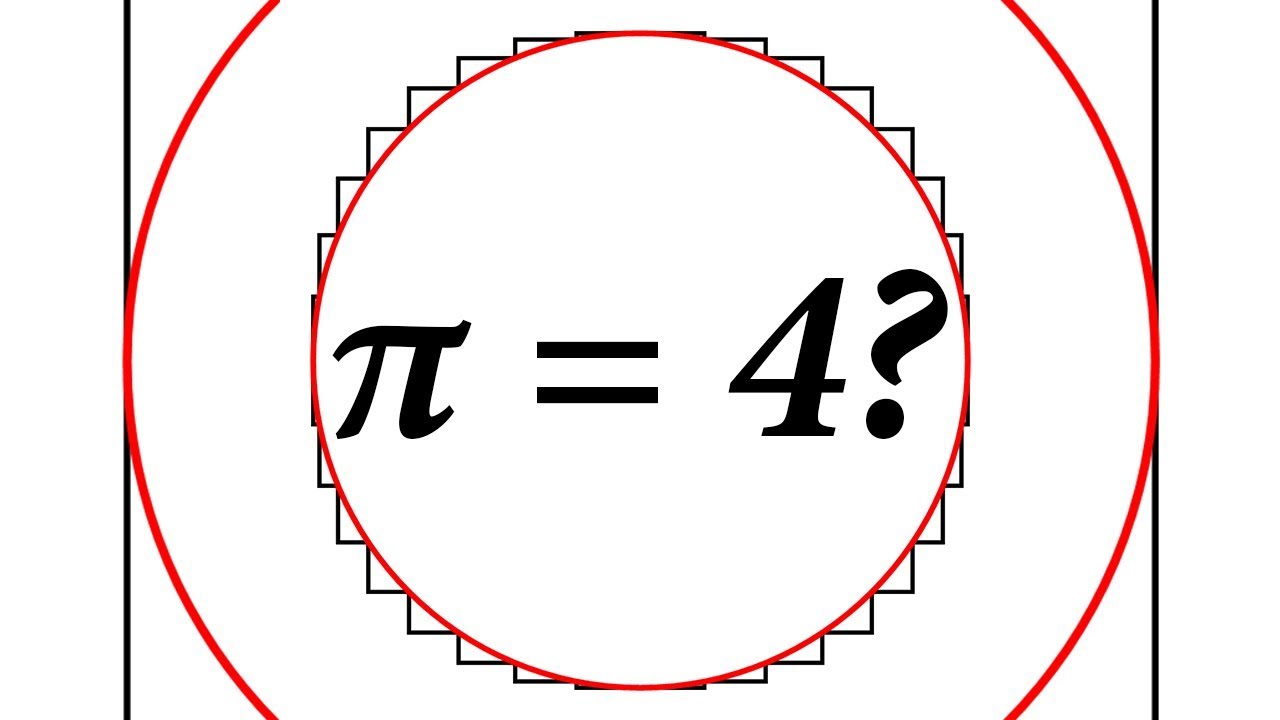
Okay, so I've been working on this problem for a couple days now and I've hit a roadblock and now I'm starting to get desperate. If you haven't seen the meme below, it's a false proof that π = 4. This is obviously wrong; however, folding in the corners actually does more closely approximate the area of the circle, so I was wondering if I could use this to get a new series definition for π.
The graph depicts each of the corners of each iteration of the "square" on a quarter circle. If I can find the coordinates for all the infinite coordinates for each iteration of the "square", and then find the area of the rectangle between that point and where it ends up when you fold it, I can simply subtract the sum of all those rectangles' areas from the unit square to get the area of the quarter circle (π/4). Using a bit of basic geometry, you can get a sort of recursive formula for the corners and the area removed when a corner is folded up (both are shown at the top of the notebook paper). However, this isn't quite good enough to immediately form a series so I've been chasing after a more general form.
I decided to organize the coordinates in a pascal-esque triangle where each corner produces 2 new corners: the one one the left keeps the x coordinate and the one on the right keeps the y coordinate. I've also denoted them as [n, k] where n represents the nth row and k represents the kth column (both indexed at 1 rather than 0). While I have been able to spot that half of the points are just reflections of the other half and I've written down a couple general forms for specific values of k, I still haven't found a general form for [n, k] or noticed any possible patterns. It is here that I ask for help if you have the time.
 vocal sleetBOT
tacit hill
Okay, so I've been working on this problem for a couple days now and I've hit a ...
tacit hill
vocal sleetBOT
tacit hill
Okay, so I've been working on this problem for a couple days now and I've hit a ...
tacit hill

 vocal sleetBOT
@tacit hill Has your question been resolved?
tacit hill
<@&286206848099549185>
tacit hill
Just an acknowledgment of seeing the question would be nice if possible 👍
 plucky spear
i found this on the internet
i can't help you with the problem though just thought the meme was interesting
 frozen bobcat
the problem is it doesn't actually converge to the circumference of the circle.
 molten willow
^
frozen bobcat
there's always intervals where the rectangle is off the circle only scattered points that are on the circle. So the perimeter of the rectangles will always be strictly larger than the circumference of the circle with a measurable difference
tacit hill
I wasn’t asking about the perimeter? I was asking about the area
And I have tested it experimentally, it genuinely does approximate pi/4
frozen bobcat
XD I was just looking at the meme, I didn't scroll up to see the question lol
tacit hill
Bruh moment, I don’t blame ya though lol
frozen bobcat
the area should work if you can write that area as a series.
tacit hill
I need the general form for [n, k] to make a series for that though
So far I’ve only got a recursive form
frozen bobcat
that... is not my specialty, you'll have to get someone else's help for that.
tacit hill
Alright, back to my dwelling chamber
frozen bobcat
it wouldn't surprise me if this is a known series though. so some deep googling might be fruitful.
tacit hill
Don’t really know what to search for though
And it doesn’t look like anything I’ve seen on Wikipedia (granted, I’m famously very bad at googling things)
vocal sleetBOT
@tacit hill Has your question been resolved?
tacit hill
<@&286206848099549185> I don’t mean to push y’all but I haven’t gotten too much help
 pallid forge
found this video about it
Follow me on twitter:
twitter.com/goldplatedgoof
 lyric fossil
tacit hill
<@&286206848099549185> I don’t mean to push y’all but I haven’t gotten too much ...
lyric fossil
tacit hill
<@&286206848099549185> I don’t mean to push y’all but I haven’t gotten too much ...
please ping helpers only once
what you’re doing would converge to the area of a circle, yes
it’s essentially integration
tacit hill
Oh sorry sorry
lyric fossil
whether this is novel or not, i don’t know
but probably not
that’s not a diss
it’s just that these things have been looked at for centuries so it’s unlikely it’s new
tacit hill
lyric fossil
but probably not
I understand but I have no idea how I would begin to look for that
lyric fossil
(in particular this is the limit of a riemann sum on sqrt(1-x^2))
well what’s your goal with this?
is it just to prove to yourself that no one has done it before?
tacit hill
I just wanna know if there is a general form for a given corner
lyric fossil
then this is just a riemann sum
i can give you the general form if you give me a minute
i'll write (S_n) for the area after folding ((n-1))-times
[
S_n = \sum_{i=0}^n \frac{\sqrt{1-\frac{i^2}{n^2}}}{n}
]
let me double check this with a calculator, but i believe it should be it
ok there's a slight issue give me a sec
tacit hill
tacit hill
Aren’t riemann sums equally spaced along the x axis though?
lyric fossil
they don't need to be
but this one i made is
and does your folding not follow an equally-spaced folding pattern?
twin meteorBOT
maximo
 tacit hill
lyric fossil
and does your folding not follow an equally-spaced folding pattern?
tacit hill
lyric fossil
and does your folding not follow an equally-spaced folding pattern?
No they are not equally spaced
lyric fossil
then this is still a riemann sum but of the following form
[
S_n = \sum_{i=0}^n\sqrt{1-x_i^2}\Delta x_i
]
twin meteorBOT
maximo
 lyric fossil
where (\Delta x_i = x_{i+1} - x_i)
twin meteorBOT
maximo
 lyric fossil
there is an obvious off-by-one error here but i can't be bothered to find it
and note that this is only for the first quadrant, but you can just multiply this by 4
tacit hill
twin meteor
**maximo**
I mean this isn’t exactly the same as finding the coordinates for a given corner
lyric fossil
how are you deciding when to fold?
tacit hill
Like sure you get the same area in the end but like plenty of formulas exist for pi
tacit hill
lyric fossil
how are you deciding when to fold?
So you start with a given corner, fold it in such that it makes contact with the normalized point on the circle (keeps same angle), and the two new coordinates keep either the x coordinate or the y coordinate of the original corner
lyric fossil
what is a "normalized point on the circle"
do you have a drawing of this or similar?
tacit hill
So if you have a line going from the origin to a corner, it’s where the line intersects the circle
tacit hill
tacit hill
Okay, so I've been working on this problem for a couple days now and I've hit a ...
I have some specific values and a recursive formula (very top of notebook paper) here if they are of any value
lyric fossil
yeah ok nvm i don't see this having a nice explicit sequence
i mean it might but i don't think i could calculate it
tacit hill
Are there semi-similar problems that I can look to for inspiration?
lyric fossil
probably, but i dont know of any off the top of my head
the good thing here is that we just want to find a sequence of sequences for the x values
the heights will be always solvable via sqrt(1-x^2) from there
tacit hill
Right and also because it’s reflected across y=x
tacit hill
(x, y) -> (x/sqrt(x^2+y^2), y) and (x, y/sqrt(x^2+y^2))
lyric fossil
it also looks like rather than x and y, we just want to find the sequence for the angles
which should make this a whole lot easier
lyric fossil
im struggling here since it's a 2d sequence but once you start with angles it should be more straightforward
tacit hill
Oh I mean the angles don’t look pretty though
lyric fossil
yeah but it should be simpler to make explicit
something like arctan(something with n and m here)
oh my
there's a very nice sequence going on here
tacit hill
Hmm, I’m not sure if I see anything
lyric fossil
let me work on it for a little longer and i'll share
ok so there is a very nice subsequence going on here
the furthermost line will have the form y = x/sqrt(n)
tacit hill
yesyes, that's the k=1 case for [n, k]
tacit hill
tacit hill
Okay, so I've been working on this problem for a couple days now and I've hit a ...
see the middle section: I've calculated them up until k = 4, but I haven't been able to string them together
also, more often than not the denominators are starting to look like a sum of (n-k)^k but 1. I don't know how to prove that and 2. it probably isn't true
lyric fossil
i am inclined to agree with you. it looks like some sort of sum going on, but i can't put my finger on it
it does look like a very nice sequence though
like not completely dubious
tacit hill
yeah, feels just out of reach though unfortunately
I'm gonna look back at this and be so mad at myself lol
from the future: definitely am lmao, this was so much easier than I was making it out to be
it's almost 5 AM here, Imma probably call it a day now. let me know if you find anything!
lyric fossil
there is this mse post about it https://math.stackexchange.com/questions/4485663/calculating-pi-by-subtracting-squares-from-a-circumsquare
Mathematics Stack Exchange
As you all know, when we inscribe a circle (with radius 1) into a square with side length 2, we cannot approximate the circle's circumference by "folding in" the corners of the square bec...
the comments shared a recurrence relation
vocal sleetBOT
@tacit hill Has your question been resolved?
vocal sleetBOT
Channel closed
Closed due to timeout
Use .reopen if this was a mistake.
vocal sleetBOT
Available help channel!
Send your question here to claim the channel.
Remember:
• Ask your math question in a clear, concise manner.
• Show your work, and if possible, explain where you are stuck.
• After 15 minutes, feel free to ping <@&286206848099549185>.
• Type the command .close to free the channel when you're done.
• Be polite and have a nice day!
Read #❓how-to-get-help for further information on how to ask a good question, and about conduct in the question channels.
 white coral
 vocal sleetBOT
white coral
white coral
vocal sleetBOT
white coral
white coral
Can anyone possibly confirm my answer, just telling me if it's right or wrong
vocal sleetBOT
@white coral Has your question been resolved?
white coral
.close
vocal sleetBOT
Channel closed
Closed by @white coral
Use .reopen if this was a mistake.
Available help channel!
Send your question here to claim the channel.
Remember:
• Ask your math question in a clear, concise manner.
• Show your work, and if possible, explain where you are stuck.
• After 15 minutes, feel free to ping <@&286206848099549185>.
• Type the command .close to free the channel when you're done.
• Be polite and have a nice day!
Read #❓how-to-get-help for further information on how to ask a good question, and about conduct in the question channels.
 digital shell
 vocal sleetBOT
digital shell
digital shell
vocal sleetBOT
digital shell
digital shell
i'm annoyed rn
i don't understand this math
the lim(x-9) with x at -3 is limx-lim9
but then they have written -lim-1 here??? isn't this incorrect
paper depot
i think the issue is they typoed an extra minus sign in
which is a mistake on their part
digital shell
is the extra minus on the -1
 whole oasis
ah ye
vocal sleetBOT
@digital shell Has your question been resolved?
vocal sleetBOT
Channel closed
Closed due to timeout
Use .reopen if this was a mistake.
vocal sleetBOT
Available help channel!
Send your question here to claim the channel.
Remember:
• Ask your math question in a clear, concise manner.
• Show your work, and if possible, explain where you are stuck.
• After 15 minutes, feel free to ping <@&286206848099549185>.
• Type the command .close to free the channel when you're done.
• Be polite and have a nice day!
Read #❓how-to-get-help for further information on how to ask a good question, and about conduct in the question channels.
 dim quail
$\int_0 ^\pi \frac{x \sin x}{1 + \cos ^2 x}$
vocal sleetBOT
dim quail
$\int_0 ^\pi \frac{x \sin x}{1 + \cos ^2 x}$
twin meteorBOT
Bettim
 dim quail
How to do this
 viral copper
what have you tried
 astral shadow
The same idea as last question should take you somewhere.
paper depot
missing dx btw
viral copper
This looks like Kings rule
 scenic ravine
dim quail
$\int_0 ^\pi \frac{x \sin x}{1 + \cos ^2 x}$
scenic ravine
dim quail
$\int_0 ^\pi \frac{x \sin x}{1 + \cos ^2 x}$
use I think you asked a very simlar question just now, use the same idea
viral copper
We don't need the anti derivative
Of this specific function atleast
Kings rule and ||adding the integral to itself|| simplifies our job massively, I've spoilered it because I want OP to figure it out.
astral shadow
We just had the op do these exact steps 5 mins ago.
tacit hill
||can't you just use IBP?||
scenic ravine
tacit hill
||can't you just use IBP?||
I don't think so, and even if you can, it's unnecessary
tacit hill
I mean x is an easy derivative, and sin(x)/(1+cos^2(x)) is also a pretty straightforward integral
dim quail
How do I proceed
 tacit hill
simplifies pretty nice too
viral copper
astral shadow
We just had the op do these exact steps 5 mins ago.
ah
 hasty pulsar
tacit hill
simplifies pretty nice too
hasty pulsar
tacit hill
simplifies pretty nice too
it doesnt have an elementary antidervative
i thought ibp first too
viral copper
dim quail
How do I proceed
Wait where did the sine go
astral shadow
sin(x)/(1+cos^2(x)) is doable. But not afterwards.
viral copper
After $2I = \int_0^{\pi} \frac{\pi \sin x}{1 + \cos^2 x} \dd x$
twin meteorBOT
NEON
 dim quail
Good question lol wait I'll bring sine back
scenic ravine
twin meteor
**NEON**
yeah, that makes it an easy u-sub from here
dim quail
What will my u be?
astral shadow
there you go.
dim quail
I get tan inverse?
viral copper
indeed
tacit hill
hasty pulsar
it doesnt have an elementary antidervative
ah wait arctan(cos(x)) ≠ cos(arctan(x)) 💀
viral copper
,w intergate (sin x)/(1 + cos^2 x) from 0 to pi
twin meteorBOT

 Requested by neonperseus
viral copper
Requested by neonperseus
viral copper
pi^2/4?
viral copper
right that seems good
scenic ravine
yup, that's correct
vocal sleetBOT
Channel closed
Closed by @dim quail
Use .reopen if this was a mistake.
vocal sleetBOT
Available help channel!
Send your question here to claim the channel.
Remember:
• Ask your math question in a clear, concise manner.
• Show your work, and if possible, explain where you are stuck.
• After 15 minutes, feel free to ping <@&286206848099549185>.
• Type the command .close to free the channel when you're done.
• Be polite and have a nice day!
Read #❓how-to-get-help for further information on how to ask a good question, and about conduct in the question channels.
 fast quarry
 vocal sleetBOT
fast quarry
fast quarry
vocal sleetBOT
fast quarry
fast quarry

i still cant seem to do this part of the question
im struggling with the partial differentiation of arctan
vocal sleetBOT
@fast quarry Has your question been resolved?
 proven garden
calculate d/dx tan^-1(x)
y = tan^-1(x) then tany = x and do implicit differentiation
vocal sleetBOT
Channel closed
Closed due to timeout
Use .reopen if this was a mistake.
fast quarry
.reopen
vocal sleetBOT
✅
fast quarry
sorry just seen
fast quarry
proven garden
y = tan^-1(x) then tany = x and do implicit differentiation
but im doing partial differentiation so the tan y on the left just goes to 0 as you treat it just like a number or something right?
i dont put a dy/dx in there as its not treated as a variable
proven garden
$\frac{d}{dx}tan(y) =sec^2(y)\frac{dy}{dx}$
twin meteorBOT
WhereWolf
 proven garden
$sec^2(y)\frac{dy}{dx}=1$ and solve for dy/dx
twin meteorBOT
WhereWolf
 fast quarry
yes i understand that, but when doing partial derivatives, with respect to x, doesnt tan(y) go to 0?
proven garden
when x and y are independet we do partial derivative
 proven garden
from tan(y) = x we get sec(y) = sqrt(1+x^2)
so d/dx tan^-1(x) = 1/1+x^2
with that info do your partial derivatives
fast quarry
okay
wait do u mind if i restart from this part, im getting very lost, sorry

im here now, definately something wrong right
hello
@proven garden
sorry to ping
fast quarry
so i need to put the derivative of arctan(yx^-1) into my answer for dh/dx.
but in my answer i get dy/dx = 0? is that the correct answer?

is that correct then?
proven garden
no that's not how you do that
that's what I did to find d/dx tan^-1(x)
that's not applicable here cause y is not a function of x
do the partial derivative normally
fast quarry
i thought that is how to differentiate arctan
proven garden
h = xtan^-1(yx^-1) and find h_x
I told you d/dx tan^-1(x) = 1/(1+x^2)
treat y as a constant and find d/dx h
 proven garden
I think you differentiated tan^-1(yx^-1) wrong
fast quarry
oh wait i see
proven garden
btw d/dx tan^-1(x) = 1/(1+x^2) not x/(1+x^2)
fast quarry
that is u prime just place holder if the x is actually a function of x not just x
right?
meaning derivative of u
u'

better now?

this is where i got that formula from
 modest aurora
lmao
proven garden
when u = sqrt(x)
fast quarry
in my case i replaced it with u = yx^-1
and then continued to do the partial differentiation
yeah u have to use chain rule after the product rule right? sorry im trying this is kinda hard for me icl
proven garden
oh that's fine
fast quarry
i thin im correct now
proven garden
still wrong
fast quarry
damn
fast quarry
let me try again lol
surely this is correct now, pls circle the parts that are wrong if there are

i really cant spot
proven garden
that seem's fine
vocal sleetBOT
Channel closed
Closed by @fast quarry
Use .reopen if this was a mistake.
Available help channel!
Send your question here to claim the channel.
Remember:
• Ask your math question in a clear, concise manner.
• Show your work, and if possible, explain where you are stuck.
• After 15 minutes, feel free to ping <@&286206848099549185>.
• Type the command .close to free the channel when you're done.
• Be polite and have a nice day!
Read #❓how-to-get-help for further information on how to ask a good question, and about conduct in the question channels.
 pearl dragon
i need help with finding the surface area of a cylinder. i know how to find the area of a circle but not the virtical part.
vocal sleetBOT
pearl dragon
i need help with finding the surface area of a cylinder. i know how to find the ...
 daring willow
like do u want the formula for it or do u need help proving the formula?
pearl dragon
i need the formula
pearl dragon
like in this idk how to get the part of the rectangle
 pearl dragon
daring willow
2pi*radius*height + 2pi*r^2
pearl dragon
daring willow
2pi*radius*height + 2pi*r^2
ty
daring willow
np
pearl dragon
pearl dragon
like in this idk how to get the part of the rectangle
how could i find the height?
.close
vocal sleetBOT
Channel closed
Closed by @pearl dragon
Use .reopen if this was a mistake.
Available help channel!
Send your question here to claim the channel.
Remember:
• Ask your math question in a clear, concise manner.
• Show your work, and if possible, explain where you are stuck.
• After 15 minutes, feel free to ping <@&286206848099549185>.
• Type the command .close to free the channel when you're done.
• Be polite and have a nice day!
Read #❓how-to-get-help for further information on how to ask a good question, and about conduct in the question channels.
 marsh coyote
 vocal sleetBOT
marsh coyote
marsh coyote
vocal sleetBOT
marsh coyote
marsh coyote
6.5.1 I'm not too sure what the hint is trying to give me:
Corollary 6.5.1 tells me that (1/n^(1/k)) converges
Theorem 6.1.19 gives me the standard limit laws
How would showing that (n^q) does not converge help me
Ah okay nvm I misread the question oops
.close
vocal sleetBOT
Channel closed
Closed by @marsh coyote
Use .reopen if this was a mistake.
vocal sleetBOT
Available help channel!
Send your question here to claim the channel.
Remember:
• Ask your math question in a clear, concise manner.
• Show your work, and if possible, explain where you are stuck.
• After 15 minutes, feel free to ping <@&286206848099549185>.
• Type the command .close to free the channel when you're done.
• Be polite and have a nice day!
Read #❓how-to-get-help for further information on how to ask a good question, and about conduct in the question channels.
 half sail
I need help solving 47.4 divided by 0.003 on paper
vocal sleetBOT
half sail
I need help solving 47.4 divided by 0.003 on paper
 rugged vortex
if you need to , turn them each into fractions
then use basic fraction division tricks
half sail
when i try to do it i get 158 as my answer and itss supposedly 15,800
i need to solve it just using division not fractions
rugged vortex
each decimal can be represented as a fraction; its a way to eliminate decimal points and you'd be dealing with intergers for the most part
half sail
I am really confused as well because i thought there was supposed to be a decimal point
half sail
rugged vortex
each decimal can be represented as a fraction; its a way to eliminate decimal po...
im not up to that stuff yet lol
rugged vortex
youre telling me you dont know how to represent 0.003 as a fraction?
rugged vortex
no
 copper solstice
3/1000
rugged vortex
half sail
when i try to do it i get 158 as my answer and itss supposedly 15,800
show me your work.
rugged vortex
as long as you dont majorly interfere, sure
copper solstice
Okey
half sail
 half sail
copper solstice
Can i help ?
half sail
copper solstice
Can i help ?
its easy im just dumb
copper solstice
That's 0.003 divided by 158 your problem is the other way around
rugged vortex
youre neglecting the decimal point and youre treating the divisor as 3 instead of 0.003
half sail
copper solstice
That's 0.003 divided by 158 your problem is the other way around
no 158 is the answer i get
half sail
rugged vortex
youre neglecting the decimal point and youre treating the divisor as 3 instead o...
i thought i had to move the decimal to the right 3 times or something
copper solstice
The problem is 158 divided by 0.003 right ?
copper solstice
Sorry 47.4 divided by 0.003
rugged vortex
i mean 0.003 = 3 * 1/1000. If youre gonna divide 47.4 by 0.003 its gonna be the same as 47.4/(3 * 1/1000) = (47.4/3) * 1000
half sail
how do i show it on the paper though
it wants me to solve the problem in the way i was doing
 rugged vortex
you could.
half sail
this is what im going off of
rugged vortex
rugged vortex
i mean 0.003 = 3 * 1/1000. If youre gonna divide 47.4 by 0.003 its gonna be the...
yeah and this is why you gotta multiply your quotient by 1000 at the end
what youre doing is 474/3
you neglected the decimal point
rugged vortex
rugged vortex
i mean 0.003 = 3 * 1/1000. If youre gonna divide 47.4 by 0.003 its gonna be the...
I broke it down for you
so essentially the real work here is for 47.4/3
you multiply that quotient by 1000
since 1 divided by 1/1000 is the same as multiplying by 1000
half sail
im so confused by all this
158 x 1000 is 158,000
the answer is 15800
why is 0.003 3/1000?
copper solstice
 copper solstice
half sail
why is 0.003 3/1000?
copper solstice
half sail
why is 0.003 3/1000?
You add 0.003 one thousand times to itself to get 3
So 0.003 can be written as 3/1000
Hence the 1000 as the denominator
And 3 as the numerator
half sail
i dont think im supposed to solve it like that i never learned this
copper solstice
Where are you from ?
half sail
all the other questions just required me to move decimal points and just divide normally pretty much
half sail
copper solstice
Where are you from ?
usa
half sail
what
half sail
oh ok thank you
copper solstice
 copper solstice
If you myltiply by 1000 you remove the decimals
There is no other way you can remove the decimals exept by multiplying by 1000
half sail
i thought i was supposed to move the decimal in 0.003 to the right 3 times, 47.4 i would move the decimal one time so thats 4 decimal places. I divide 474 by 3 and then move 4 places to the left and put a decimal
half sail
copper solstice
There is no other way you can remove the decimals exept by multiplying by 1000
how do i know when to multiply by 1000
on questions like this
copper solstice
Tbh i just know when i can't exactly explain it,
Sorry but i just know how to do math but not teach it
half sail
i think i did it finally
its ok i appreciate you taking the time to help me

i just had to add zeros in order to move the decimal three places
.close
vocal sleetBOT
Channel closed
Closed by @half sail
Use .reopen if this was a mistake.
Available help channel!
Send your question here to claim the channel.
Remember:
• Ask your math question in a clear, concise manner.
• Show your work, and if possible, explain where you are stuck.
• After 15 minutes, feel free to ping <@&286206848099549185>.
• Type the command .close to free the channel when you're done.
• Be polite and have a nice day!
Read #❓how-to-get-help for further information on how to ask a good question, and about conduct in the question channels.
hearty delta
Hi, so for this question how do we pick the bounds?


 sharp lynx
the bounds from 0 to y would be the standard way of computing P(X < y) for a fixed y, then the outer integral considers all possible values of Y
hearty delta
so if it was y<x would it be 0 and 9 and then 0 and x?
sharp lynx
probably, 1s
hearty delta
hm?
sharp lynx
actually no it wouldn't
hearty delta
oh ok
sharp lynx
perhaps it would help to draw the joint support of X and Y and then look at the particular region X>Y
the geometry is slightly more complicated
sharp lynx
the joint support is a rectangle
hearty delta
ok give me a second
sharp lynx
the line y=x would be included though yes
hearty delta
ohhh
ok so its a rectangle bounded at x=0,9 and y=0,2
and with y=x going through it
and the area is the funtion of F
sharp lynx
the region Y>X is above that line and is just a triangle
the region X>Y is below that line and is a trapezoid
sharp lynx
nope
hearty delta
oh it doesnt go directly through the center
so the geomatry would be more difficult but i see how it would look graphically

tysm
.close
vocal sleetBOT
Channel closed
Closed by @hearty delta
Use .reopen if this was a mistake.
vocal sleetBOT
Available help channel!
Send your question here to claim the channel.
Remember:
• Ask your math question in a clear, concise manner.
• Show your work, and if possible, explain where you are stuck.
• After 15 minutes, feel free to ping <@&286206848099549185>.
• Type the command .close to free the channel when you're done.
• Be polite and have a nice day!
Read #❓how-to-get-help for further information on how to ask a good question, and about conduct in the question channels.
vast shale
 vocal sleetBOT
vast shale
vast shale
vocal sleetBOT
vast shale
vast shale
can someone expalin to me why the final answer isnt 36^11/10
i got everything the same except that its 36^11/10 because you multiply the 6s as well
open spade
What makes you think it's 36?

 mild flower
if you had like $3^2 \cdot 3^2$ do you think that would result in $9^4$?
twin meteorBOT
Hayley
 open spade
You don't multiply the 6's
vast shale
twin meteor
**Hayley**
oh
no i wouldnt
looks similar to when you simplify variables with exponents x^2 * x^2 = x^4
mild flower
yes, it's exactly the same
vast shale
mild flower
yes, it's exactly the same
so as a general rule if it has an exponent and its the same, dont multiply those 2 together
right?
mild flower
correct, $x^a\cdot x^b = x^{a+b}$
twin meteorBOT
Hayley
 vast shale
ok thank you!
mild flower
,tex .exp rules
twin meteorBOT
Hayley
 vast shale
.close
vocal sleetBOT
Channel closed
Closed by @spice ingot
Use .reopen if this was a mistake.
Available help channel!
Send your question here to claim the channel.
Remember:
• Ask your math question in a clear, concise manner.
• Show your work, and if possible, explain where you are stuck.
• After 15 minutes, feel free to ping <@&286206848099549185>.
• Type the command .close to free the channel when you're done.
• Be polite and have a nice day!
Read #❓how-to-get-help for further information on how to ask a good question, and about conduct in the question channels.
vast shale
 vocal sleetBOT
vast shale
vast shale
vocal sleetBOT
vast shale
vast shale
I need help with this question. I feel like its poorly written
 little fossil
ok
paper depot
!status
vocal sleetBOT
What step are you on?
1. I don't know where to begin
2. I have begun but got stuck midway
3. I got an answer but I'm told it's wrong
4. I got an answer and would like my work checked
5. I have a question about someone else's worked solution
6. None of the above
1
paper depot
before you do that, you need to clearly define your variables
here it will be most helpful to make variables to represent the cost per minute and cost per mile.
vast shale
paper depot
here it will be most helpful to make variables to represent the cost per minute ...
c for cost per minute
m for cost per mile
paper depot
as you say.
ok, so:
Ryan's first taxi ride was 3.0 miles, took 7 minutes, and cost $8.50.
can you write this as an equation?
(don't forget the $2 base rate)
vast shale
so it would be c+r+2=8.50?
paper depot
you still don't have any variable named r
vast shale
my apologies
paper depot
and now you've got your own variables backward.
vast shale
done
paper depot
would you like to rename your variables at this point so as to cause less confusion afterward?
or should we stick with these names
@vast shale ?
vast shale
paper depot
or should we stick with these names
we should stick with those names
paper depot
ok, as you say.
so the equation for the first taxi ride is 2 + 7c + 3m = 8.50
the second taxi ride
was 7.0 miles, took 14 minutes, and cost $16.00.
vast shale
7m+14c+2=16
vast shale
im assuming we solver for m and c
and then we use it to solve for the third equation now
yup
will do now
got my answer
its B
thanks
.close
vocal sleetBOT
Channel closed
Closed by @granite otter
Use .reopen if this was a mistake.
Available help channel!
Send your question here to claim the channel.
Remember:
• Ask your math question in a clear, concise manner.
• Show your work, and if possible, explain where you are stuck.
• After 15 minutes, feel free to ping <@&286206848099549185>.
• Type the command .close to free the channel when you're done.
• Be polite and have a nice day!
Read #❓how-to-get-help for further information on how to ask a good question, and about conduct in the question channels.
vast shale
 vocal sleetBOT
vast shale
vast shale
vocal sleetBOT
vast shale
vast shale
studying for math placement test and i wont be allowed a calculator, dont know how id solve 7 root 128 without a calculator
where would i go from here
 solid sage
Well it’s kind of intuitive
Just 2, not really a method but just identifying that 128 is a number that is frequent
vast shale
is there no method i can use to find the answer
i wont have time to experiment on the placement test 😂
nvm lol i found a yt vid
.close
vocal sleetBOT
Channel closed
Closed by @spice ingot
Use .reopen if this was a mistake.
Available help channel!
Send your question here to claim the channel.
Remember:
• Ask your math question in a clear, concise manner.
• Show your work, and if possible, explain where you are stuck.
• After 15 minutes, feel free to ping <@&286206848099549185>.
• Type the command .close to free the channel when you're done.
• Be polite and have a nice day!
Read #❓how-to-get-help for further information on how to ask a good question, and about conduct in the question channels.
 elfin moon
 vocal sleetBOT
elfin moon
elfin moon
vocal sleetBOT
elfin moon
elfin moon
So here in the last line....pi/4 +pi = 3pi/4
Because x,y>0 but x+y/(1-x.y) <0
But my doubt is 3 pi/4 is not in range?
elfin moon
Yes
 timid shell
elfin moon
timid shell
elfin moon
Never trust toppr
elfin moon
U indian
 obtuse sierra
yes
 obtuse sierra
-pi/4
elfin moon
elfin moon
So here in the last line....pi/4 +pi = 3pi/4
Because x,y>0 but x+y/(1-x.y) <0
See
elfin moon
obtuse sierra
-pi/4
Show me how? Why
elfin moon
I know this
timid shell
elfin moon
So here in the last line....pi/4 +pi = 3pi/4
Because x,y>0 but x+y/(1-x.y) <0
What if x and y are <1 then your condition is false
elfin moon
But here x,y so we need to check as we discussed earlier
timid shell
obtuse sierra
but no condition is given
He made the condition
obtuse sierra
just positive
obtuse sierra
timid shell
He made the condition
oh
timid shell
From x,y>0
obtuse sierra
dont do that
if the condition is specifically given, then apply that
cuz most of the time xy is given less than 1
elfin moon
Ni kar rha yar
elfin moon
timid shell
What if x and y are <1 then your condition is false
Is this generally true?
timid shell
elfin moon
Is this generally true?
Konsi condition ki baat kar rha hai likhke Dede
obtuse sierra
the product xy
timid shell
obtuse sierra
the product xy
<1?
obtuse sierra
yes ig
elfin moon
timid shell
Konsi condition ki baat kar rha hai likhke Dede
X,y<1 bola h tumne
timid shell
elfin moon
X,y<1 bola h tumne
Hn ho skta hai kyunki ques mein bas x>y>0 diya hai
Toh ek ko 1/3 dusre ko 1/2 maanle
elfin moon
Ye question me x,y >0 hai and x+y/(1+x,y) <0 hone par pi + karne par
Pi+pi/4 =5pi/4
This is wrong because (-pi/4) hoga so 3pi/4
timid shell
elfin moon
Ye question me x,y >0 hai and x+y/(1+x,y) <0 hone par pi + karne par
Pi+pi/4 =5...
pi+pi/4=5pi/4???
Pi-pi/4=3pi/4
elfin moon
Ohh haaan edited
5 pi/4 range me ni h
Pi- pi/4 = 3 pi/4 hoga toh isme pi/4 ni ho sakta?
@timid shell @obtuse sierra
vocal sleetBOT
@elfin moon Has your question been resolved?
Channel closed
Closed by @elfin moon
Use .reopen if this was a mistake.
Available help channel!
Send your question here to claim the channel.
Remember:
• Ask your math question in a clear, concise manner.
• Show your work, and if possible, explain where you are stuck.
• After 15 minutes, feel free to ping <@&286206848099549185>.
• Type the command .close to free the channel when you're done.
• Be polite and have a nice day!
Read #❓how-to-get-help for further information on how to ask a good question, and about conduct in the question channels.
 narrow olive
Find the first and second derivative of:
 vocal sleetBOT
narrow olive
Find the first and second derivative of:
obtuse sierra
vocal sleetBOT
narrow olive
Find the first and second derivative of:
obtuse sierra
for first derivative apply chain rule
narrow olive
for the chain rule, i'm not sure what to put as the separate functions if that makes sense
paper depot
you've got a composition of three functions here
obtuse sierra
yes
paper depot
and they're all exp
obtuse sierra
the first function is the question one
the e^e^e^x
2nd function is e^e^x
3rd is e^x
 wary mantle
The e-pyramid
vocal sleetBOT
Channel closed
Closed by @narrow olive
Use .reopen if this was a mistake.
vocal sleetBOT
Available help channel!
Send your question here to claim the channel.
Remember:
• Ask your math question in a clear, concise manner.
• Show your work, and if possible, explain where you are stuck.
• After 15 minutes, feel free to ping <@&286206848099549185>.
• Type the command .close to free the channel when you're done.
• Be polite and have a nice day!
Read #❓how-to-get-help for further information on how to ask a good question, and about conduct in the question channels.
 quartz mauve
is |x-1| the same as saying "x-1 or x+1"?
vocal sleetBOT
quartz mauve
is |x-1| the same as saying "x-1 or x+1"?
 hard atlas
no
vast shale
 scenic ravine
quartz mauve
is |x-1| the same as saying "x-1 or x+1"?
scenic ravine
quartz mauve
is |x-1| the same as saying "x-1 or x+1"?
no. x-1 or 1-x
 lethal mauve
It doesn't mean "or", it's a value that depends on x