#help-17
1 messages · Page 17 of 1
 formal rock
 vast sparrow
formal rock
vast sparrow
formal rock


 vocal sleetBOT
Channel closed
Closed by @vast sparrow
Use .reopen if this was a mistake.
 Available help channel!
Send your question here to claim the channel.
Remember:
• Ask your math question in a clear, concise manner.
• Show your work, and if possible, explain where you are stuck.
• After 15 minutes, feel free to ping <@&286206848099549185>.
• Type the command .close to free the channel when you're done.
• Be polite and have a nice day!
Read #❓how-to-get-help for further information on how to ask a good question, and about conduct in the question channels.
 crimson grove
 vocal sleetBOT
crimson grove
vocal sleetBOT
crimson grove
 granite oxide
What’s up
crimson grove
granite oxide
What’s up
Was a mistake not made when calculating the sum of the first series?
C= 2/5, yeah.But according to the sum of the geometric series theorem, it would be (2/5)/(1-2/5)…
crimson grove
granite oxide
Yeah, that’s (2/5) / (3/5) = 2/3
Isn’t it rather 10/15? We take reciprocal of 3/5 and get 2/5*5/3…
 urban edge
and what happens when you simplify 10/15?
crimson grove
urban edge
and what happens when you simplify 10/15?
Snap it’s late, thanks for the catch
vocal sleetBOT
@crimson grove Has your question been resolved?
Channel closed
Closed by @crimson grove
Use .reopen if this was a mistake.
Available help channel!
Send your question here to claim the channel.
Remember:
• Ask your math question in a clear, concise manner.
• Show your work, and if possible, explain where you are stuck.
• After 15 minutes, feel free to ping <@&286206848099549185>.
• Type the command .close to free the channel when you're done.
• Be polite and have a nice day!
Read #❓how-to-get-help for further information on how to ask a good question, and about conduct in the question channels.
 brave shard
this should be b, correct?
 vocal sleetBOT
brave shard
this should be b, correct?
vocal sleetBOT
brave shard
this should be b, correct?
 flat whale
what's the definition of $\binom{-1/2}{k}$
 twin meteorBOT
riemann
 flat whale
just manipulate that as factorials
vocal sleetBOT
Channel closed
Closed by @brave shard
Use .reopen if this was a mistake.
Available help channel!
Send your question here to claim the channel.
Remember:
• Ask your math question in a clear, concise manner.
• Show your work, and if possible, explain where you are stuck.
• After 15 minutes, feel free to ping <@&286206848099549185>.
• Type the command .close to free the channel when you're done.
• Be polite and have a nice day!
Read #❓how-to-get-help for further information on how to ask a good question, and about conduct in the question channels.
 floral cypress
Will parabola of type y = ax^2 + bx + c and line y = kx will always have a intersection (now matter what k ,a,b is )?? (a,b,k != 0)
it looks true to me . Based on intuition . What's your take to it ??
vocal sleetBOT
floral cypress
Will parabola of type ``y = ax^2 + bx + c `` and line ``y = kx`` will always hav...
 fluid obsidian
floral cypress
Will parabola of type ``y = ax^2 + bx + c `` and line ``y = kx`` will always hav...
fluid obsidian
floral cypress
Will parabola of type ``y = ax^2 + bx + c `` and line ``y = kx`` will always hav...
Can k be 0?
floral cypress
fluid obsidian
Can k be 0?
no
fluid obsidian
fluid obsidian
Think about x²+1 and y=x
@floral cypress
floral cypress
fluid obsidian
<@813857994877698078>
yeah i'm here . I was analysing it . Thanks i missed this
fluid obsidian
,w graph y=x²+1 , y=x
twin meteorBOT


 Requested by yes sam#5028
floral cypress
Requested by yes sam#5028
floral cypress
hey but see y = x , always has 45 deg. from y axis. Whereas angle(wideness ) of parabola is always increasing wrt o y axis . So, don't you think these equations after very very large x , will intersect ??
@fluid obsidian
fluid obsidian
floral cypress
hey but see y = x , always has 45 deg. from y axis. Whereas angle(wideness ) of ...
Nope
floral cypress
why ?
fluid obsidian
The slope of x² is 2x which after 1/2 will be > 1 pointwise
 heavy yoke
any parabola will always grow much faster than a line after a certain point
floral cypress
heavy yoke
any parabola will always grow much faster than a line after a certain point
yeah and thats when they'll intersect. will they ?
fluid obsidian
That's why they won't
heavy yoke
that means they can only intersect at fairly small x
fluid obsidian
The difference between them just increases
vocal sleetBOT
Channel closed
Closed by @floral cypress
Use .reopen if this was a mistake.
vocal sleetBOT
Available help channel!
Send your question here to claim the channel.
Remember:
• Ask your math question in a clear, concise manner.
• Show your work, and if possible, explain where you are stuck.
• After 15 minutes, feel free to ping <@&286206848099549185>.
• Type the command .close to free the channel when you're done.
• Be polite and have a nice day!
Read #❓how-to-get-help for further information on how to ask a good question, and about conduct in the question channels.
 barren anvil
 vocal sleetBOT
barren anvil
vocal sleetBOT
barren anvil

 pearl plover
23 people liked coffee
pearl plover
tea and cof
barren anvil
so six in tea and cof?
okay i got all of cofee now
ok so 5 + 7 + 1 = 13
25 - 13 = 12
 merry python
Better name each set
Like coffee- Set A
barren anvil
wait ive done something wrong
oh mb
i see what i did wrong
i forgot about the middle
barren anvil
wdym
pearl plover
21 don't like tea and cof
pearl plover
only choco
barren anvil

ok i got it
probability they like tea is 15/50
and only 1/15 like tea only
ok ty
.close
vocal sleetBOT
Channel closed
Closed by @barren anvil
Use .reopen if this was a mistake.
Available help channel!
Send your question here to claim the channel.
Remember:
• Ask your math question in a clear, concise manner.
• Show your work, and if possible, explain where you are stuck.
• After 15 minutes, feel free to ping <@&286206848099549185>.
• Type the command .close to free the channel when you're done.
• Be polite and have a nice day!
Read #❓how-to-get-help for further information on how to ask a good question, and about conduct in the question channels.
 fresh viper
How do i differentiate 4/x^2?
vocal sleetBOT
fresh viper
How do i differentiate 4/x^2?
 solid zenith
$4 \times [\frac{1}{x^2};\frac{d}{dx}]$
twin meteorBOT
raonicalias
 solid zenith
$4 \times [x^{-2};\frac{d}{dx}]$
twin meteorBOT
raonicalias
 solid zenith
try from here
 outer warren
bad/wrong notation
outer warren
what people
 wary mantle
fresh viper
How do i differentiate 4/x^2?
wary mantle
fresh viper
How do i differentiate 4/x^2?
Using the constant multiple rule, [\frac{d}{dx}\Bigl(\frac{4}{x^2}\Bigr) = 4 \cdot \frac{d}{dx}\Bigl(\frac{1}{x^2}\Bigr)]
 vocal sleetBOT
@fresh viper Has your question been resolved?
vocal sleetBOT
Channel closed
Closed due to timeout
Use .reopen if this was a mistake.
vocal sleetBOT
Available help channel!
Send your question here to claim the channel.
Remember:
• Ask your math question in a clear, concise manner.
• Show your work, and if possible, explain where you are stuck.
• After 15 minutes, feel free to ping <@&286206848099549185>.
• Type the command .close to free the channel when you're done.
• Be polite and have a nice day!
Read #❓how-to-get-help for further information on how to ask a good question, and about conduct in the question channels.
 finite swallow
If W1 and W2 are subspace of space V
vocal sleetBOT
finite swallow
If W1 and W2 are subspace of space V
 vast shale
think about lines in R^2
vast shale
indeed
finite swallow
Cuz like y=x and y=-x will have same dimension right
Yea
Also
Wait
If
A subspace of V
Has the same dimension as V
Then is it V itself
Feels like it shud be
 hard atlas
yes
in general if W1 and W2 are subspace with equal dimension and one is a subspace of the other, then they are equal
finite swallow
hard atlas
in general if W1 and W2 are subspace with equal dimension and one is a subspace ...
In general as in?
There r exceptions?
hard atlas
in math, "in general" means always
hard atlas
or well not exactly "always" but you get the idea
vast shale
maybe things break down in infinite dimensions, not sure tho
hard atlas
yeah fair enough
dimension is only something you really should consider in the finite case tho
finite swallow
Right
Also there's a thing I read
That if Ax=b, is consisten then b is in the column space of A
Column space is like the vector space spanned by all column vectors in A right
hard atlas
yes
finite swallow
Ok so why does b have to be in column space of A
Is there any like
Intuitive explanation
hard atlas
well Ax represent all linear combinations of the columns of A
first column*x_1 + second column*x_2 + ...
and that's exactly the space spanned by the columns
so b should be in that space
finite swallow
I'm having trouble seeing how Ax is all linear combinations of columns of A
A is like a linear transformation in itself
Which works on x
finite swallow
hard atlas
first column\*x_1 + second column\*x_2 + ...
First columns first element into x1 right?
hard atlas
?
Ax = (first column of A)*x_1 + (second column of A)*x_2 + ...
it's literally a linear combination of the columns of A
finite swallow
Ohh
hard atlas
and if you vary x you get all possible linear combinations
hard atlas
well you can do it row-wise and then reorder
finite swallow
hard atlas
well you can do it row-wise and then reorder
Right
hard atlas
or you write A=(a1, a2, a3) where ai are the columns and then A*(x1,x2,x3) = a1x1+a2x2+a3x3 like "usual"
finite swallow
finite swallow
That if Ax=b, is consisten then b is in the *column space* of A
So why does it require being consisten
Consistent
hard atlas
well what does consistent mean
hard atlas
no
finite swallow
none of the xis can be represented as a combination of other xis
hard atlas
consistent means there exists at least one solution
hard atlas
aka one way of writing b as a linear combination of columns of A
finite swallow
When the transformation A can't have any x vector which gets transformed into b
So b doesn't belong in the column space
Rightt
finite swallow
finite swallow
So b doesn't belong in the column space
Right?
hard atlas
which direction do you want right now
Ax=b is consistent iff b is in the column space
finite swallow
And Ax itself is the column space
So like b if falls in the space then has a solution
Otherwise it's inconsistent
Right?
finite swallow
hard atlas
well I wouldnt say Ax "is" the column space
Oh
finite swallow
hard atlas
but yes
Is it or not
Like I'm conused
Cofnuse
It all made sense if Ax is the column space
finite swallow
Like most probably when dealing with Ax is when x is in Rn
hard atlas
we are stating what terms mean
finite swallow
hard atlas
we are stating what terms mean
Ok
Ok so if x is in Rn where A is nxn matrix
Then Ax is the column
Space?
hard atlas
a column space is a set
finite swallow
Yea
hard atlas
you arent talking anything about sets here
finite swallow
What
hard atlas
the set of all possible values Ax for all values x in R^n is the column space
finite swallow
Ax, if x can be any vector from Rn, where A is nxn
finite swallow
hard atlas
the set of all possible values Ax for all values x in R^n is the column space
Yes
Wait it has to be all values?
Of x?
Or some subset of Rn can work?
hard atlas
if some columns of A are linearly dependent then a subset might be enough
finite swallow
hard atlas
if some columns of A are linearly dependent then a subset might be enough
Ok, and A has to be a square matrix right?
finite swallow
hard atlas
if some columns of A are linearly dependent then a subset might be enough
Why this
hard atlas
if eg A=(a1, a2, a3) and a3=a1+a2, then you already get all possible values of A*x for just the vectors x of the form (x1, x2, 0)
finite swallow
Ahhh
Rightt
But even if x is all of Rn
It's still the same
Column space
But can be reduced
But not the other way round
Like if A1 A2 A3 are indepneded
Independent
Then x has to be from R3
But if ther are dependent then it can still be from R3
Right?
hard atlas
its a set so it doesnt care about having a vector "multiple" times
hard atlas
thats not a set
finite swallow
How so
hard atlas
{1,1,2} is the same as {1,2}
finite swallow
Oh brackets
Right thanks
Thanks a lot @hard atlas , also uve helped me before :),
hard atlas
I did?
finite swallow
Yea different account
hard atlas
ah
hard atlas
ok then I will definitely not remember
finite swallow
Yea lOl, I remember cuz u explained using some nice metaphor
It was 3D geometry problem
Anyway thnx should I close the channel
.close
vocal sleetBOT
Channel closed
Closed by @finite swallow
Use .reopen if this was a mistake.
hard atlas
unless you have more questions
finite swallow
hard atlas
unless you have more questions
I definitely will have
But in future
Like 3 hours later maybe💀
Thnx
Bye
vocal sleetBOT
Available help channel!
Send your question here to claim the channel.
Remember:
• Ask your math question in a clear, concise manner.
• Show your work, and if possible, explain where you are stuck.
• After 15 minutes, feel free to ping <@&286206848099549185>.
• Type the command .close to free the channel when you're done.
• Be polite and have a nice day!
Read #❓how-to-get-help for further information on how to ask a good question, and about conduct in the question channels.
 cloud mantle
Hey do you guys do physics
vocal sleetBOT
cloud mantle
Hey do you guys do physics
hard atlas
some people do, you might have luck. but otherwise there is a physics server in #old-network
vocal sleetBOT
@cloud mantle Has your question been resolved?
vocal sleetBOT
Channel closed
Closed due to timeout
Use .reopen if this was a mistake.
Available help channel!
Send your question here to claim the channel.
Remember:
• Ask your math question in a clear, concise manner.
• Show your work, and if possible, explain where you are stuck.
• After 15 minutes, feel free to ping <@&286206848099549185>.
• Type the command .close to free the channel when you're done.
• Be polite and have a nice day!
Read #❓how-to-get-help for further information on how to ask a good question, and about conduct in the question channels.
 grand gazelle
 vocal sleetBOT
grand gazelle
grand gazelle
vocal sleetBOT
grand gazelle
grand gazelle
how did it become 0.75?
 silk hollow
0.25 - 1
 obtuse radish
.close
vocal sleetBOT
Channel closed
Closed by @obtuse radish
Use .reopen if this was a mistake.
vocal sleetBOT
Available help channel!
Send your question here to claim the channel.
Remember:
• Ask your math question in a clear, concise manner.
• Show your work, and if possible, explain where you are stuck.
• After 15 minutes, feel free to ping <@&286206848099549185>.
• Type the command .close to free the channel when you're done.
• Be polite and have a nice day!
Read #❓how-to-get-help for further information on how to ask a good question, and about conduct in the question channels.
 wraith venture
I have a question about the curvature of (infinitely differentiable) parametric curves:
Suppose I want to link two points with a curve, with forced tangents at the endpoints, using a curve whose curvature is defined and continuous everywhere;
For example a curve that does a 90 turn in a circle-like fashion.
Since it has to turn,__ if I limit the length of the turn__, does there exist a sort of lower bound on the maximum curvature ?
Can I hope to find a curve below a certain length with not too much curvature ?
vocal sleetBOT
wraith venture
I have a question about the curvature of (infinitely differentiable) parametric ...
wraith venture
For context, I'm modelling a roller-coaster using Bezier curves by specifying some points and the tangents of the track at these points, then linking them up with bezier curves to produce a natural path (that I hereby simplify by saying I bound the length).
It turns out that g force is proportional to curvature and I want to reduce the maximum g force experienced.
Can I hope to reduce that maximum or is there a bound I'm forced to stay above of, and if so, is there a sort of formula ?
For example, the first turn is 90° upwards to go into the vertical section.
Can I hope to find a natural curve for this that wouldn't have too much curvature ?
 vocal sleetBOT
@wraith venture Has your question been resolved?
vocal sleetBOT
@wraith venture Has your question been resolved?
wraith venture
nvm got it
for anyone wondering, the integral of curvature (wrt distance) is equal to the variation in the direction vector. This gives the average curvature on a segment, which is a lower bound for the maximum curvature (reached for a circle)
vocal sleetBOT
Channel closed
Closed by @wraith venture
Use .reopen if this was a mistake.
Available help channel!
Send your question here to claim the channel.
Remember:
• Ask your math question in a clear, concise manner.
• Show your work, and if possible, explain where you are stuck.
• After 15 minutes, feel free to ping <@&286206848099549185>.
• Type the command .close to free the channel when you're done.
• Be polite and have a nice day!
Read #❓how-to-get-help for further information on how to ask a good question, and about conduct in the question channels.
 fading matrix
 fading matrix
how can you get from the last step on the first line to the firststep on the last line
this is The Kelly Criterion
fading matrix
vocal sleet
and sorry if I already opened a channel but it was gone when I checked a message on another server
 fading matrix
and sorry if I already opened a channel but it was gone when I checked a message...
fading matrix
fading matrix
and sorry if I already opened a channel but it was gone when I checked a message...
oh f, I see it now
 paper depot
.close
vocal sleetBOT
Channel closed
Closed by @paper depot
Use .reopen if this was a mistake.
Available help channel!
Send your question here to claim the channel.
Remember:
• Ask your math question in a clear, concise manner.
• Show your work, and if possible, explain where you are stuck.
• After 15 minutes, feel free to ping <@&286206848099549185>.
• Type the command .close to free the channel when you're done.
• Be polite and have a nice day!
Read #❓how-to-get-help for further information on how to ask a good question, and about conduct in the question channels.
vast shale
students playing chess = 60 (given)
 vocal sleetBOT
vast shale
students playing chess = 60 (given)
vast shale
vocal sleetBOT
vast shale
students playing chess = 60 (given)
vast shale
how did they got answer for n( A intersection B intersection C ) in 18th qn?
 vocal sleetBOT
@vast shale Has your question been resolved?
vocal sleetBOT
Channel closed
Closed due to timeout
Use .reopen if this was a mistake.
Available help channel!
Send your question here to claim the channel.
Remember:
• Ask your math question in a clear, concise manner.
• Show your work, and if possible, explain where you are stuck.
• After 15 minutes, feel free to ping <@&286206848099549185>.
• Type the command .close to free the channel when you're done.
• Be polite and have a nice day!
Read #❓how-to-get-help for further information on how to ask a good question, and about conduct in the question channels.
 hoary pilot
 vocal sleetBOT
hoary pilot
hoary pilot
vocal sleetBOT
hoary pilot
hoary pilot
Tryin gto figure out how to do this
 river minnow
What do you mean by 3 >= 0 >= 2?
river minnow
You have to consider two conditions to solve for the domain here
First of all, the number inside the square root should be nonnegative and, secondly, the denominator shall not be equal to zero
So the domain is going to be the solution to 3 - x >= 0 and 2x + 2 =/= 0
Or 3 >= x and x =/= -1
hoary pilot
.
So we don't have to solve anything, or simplify?
that's it?
So would the interval notation be (-inf,-3] U [0,inf)?
vocal sleetBOT
@hoary pilot Has your question been resolved?
hoary pilot
.
 pastel swan
Are you still here?
For the function g (x) to be defined, quantity inside root should be positive.
This gives x < or equal 3
Also, denominator must not equal zero. This gives x not equal -1.
So your final answer should be x belongs (-inf, -1) U (-1,3].
Is this clear?
hoary pilot
The denominator should not ever be 0, and yet you have the numbers -1 to 3 as your answer
I think that includes 0
I think I might be too stupid for math
vast shale
denominator will be 0 only if u put -1 as x
u can check if u want to
so -1 won't be in the domain
vast shale
hoary pilot
I think that includes 0
even if u put 0 the answer will be 2 in denominator side
@hoary pilot
hoary pilot
So why is it part of this answer?
(-inf, -1) U (-1,3].
if -1 wont be in the domain?
vast shale
(1,3] = 0.9 to 3
(1,3) = 0.9 to 2.9
when u use round brackets the number beside it won't count
when u use square bracket the number beside it will count
u understand the difference?
hoary pilot
i see
vast shale
my english is bad hope u understood
hoary pilot
I do
vocal sleetBOT
@hoary pilot Has your question been resolved?
Channel closed
Closed by @hoary pilot
Use .reopen if this was a mistake.
Available help channel!
Send your question here to claim the channel.
Remember:
• Ask your math question in a clear, concise manner.
• Show your work, and if possible, explain where you are stuck.
• After 15 minutes, feel free to ping <@&286206848099549185>.
• Type the command .close to free the channel when you're done.
• Be polite and have a nice day!
Read #❓how-to-get-help for further information on how to ask a good question, and about conduct in the question channels.
 bleak berry

 vocal sleetBOT
bleak berry
bleak berry
vocal sleetBOT
bleak berry
bleak berry
I have to find all intervals of continuity
can anyone check my answer
(-∞,-3) U (-3,5) U (5,∞)
i forgot if i have to include -1/4 or not since its technically removeable iirc
do i have to include the -1/4 as a discontinuous point?
outer warren
the function isn't defined at -1/4,
is discontinuous there, (type of discontinuity doesn't matter)
and you'll need to split your interval accordingly
vocal sleetBOT
Channel closed
Closed by @bleak berry
Use .reopen if this was a mistake.
Available help channel!
Send your question here to claim the channel.
Remember:
• Ask your math question in a clear, concise manner.
• Show your work, and if possible, explain where you are stuck.
• After 15 minutes, feel free to ping <@&286206848099549185>.
• Type the command .close to free the channel when you're done.
• Be polite and have a nice day!
Read #❓how-to-get-help for further information on how to ask a good question, and about conduct in the question channels.
 thick quarry
let A,B be square matrices of order n , and P another matrix of order n that is invertible that fulfills : P^-1AP = B.(A and B are two similar matrices ) find an invertible linear map T:F^n -> F^n such that : T[N(A)]=N(B)
** i already proved that A and B has the same rank but i am not sure how it would help
vocal sleetBOT
thick quarry
let A,B be square matrices of order n , and P another matrix of order n that is ...
vast shale
Do u still ned help
vocal sleetBOT
@thick quarry Has your question been resolved?
thick quarry
vast shale
Do u still ned help
yes please
thick quarry
hard atlas
N(A) is what?
the null space of A
 half imp
You could just use the same rank thing
Map elements from the basis of N(A) to elements from the basis of N(B)
vocal sleetBOT
@thick quarry Has your question been resolved?
vocal sleetBOT
Channel closed
Closed due to timeout
Use .reopen if this was a mistake.
Available help channel!
Send your question here to claim the channel.
Remember:
• Ask your math question in a clear, concise manner.
• Show your work, and if possible, explain where you are stuck.
• After 15 minutes, feel free to ping <@&286206848099549185>.
• Type the command .close to free the channel when you're done.
• Be polite and have a nice day!
Read #❓how-to-get-help for further information on how to ask a good question, and about conduct in the question channels.
 uneven depot
Propositional calculus, using these 3 axioms as well as Modus Ponens,
 uneven depot
I need to prove
 vocal sleetBOT
@uneven depot Has your question been resolved?
vocal sleetBOT
@uneven depot Has your question been resolved?
uneven depot
<@&286206848099549185>
vocal sleetBOT
@uneven depot Has your question been resolved?
vocal sleetBOT
@uneven depot Has your question been resolved?
 lusty fox
uneven depot
I need to prove
lusty fox
uneven depot
I need to prove
!show
vocal sleetBOT
uneven depot
I need to prove
Show your work, and if possible, explain where you are stuck.
vocal sleetBOT
Channel closed
Closed due to timeout
Use .reopen if this was a mistake.
vocal sleetBOT
Available help channel!
Send your question here to claim the channel.
Remember:
• Ask your math question in a clear, concise manner.
• Show your work, and if possible, explain where you are stuck.
• After 15 minutes, feel free to ping <@&286206848099549185>.
• Type the command .close to free the channel when you're done.
• Be polite and have a nice day!
Read #❓how-to-get-help for further information on how to ask a good question, and about conduct in the question channels.
Channel closed
Closed by @slim hawk
Use .reopen if this was a mistake.
vocal sleetBOT
Available help channel!
Send your question here to claim the channel.
Remember:
• Ask your math question in a clear, concise manner.
• Show your work, and if possible, explain where you are stuck.
• After 15 minutes, feel free to ping <@&286206848099549185>.
• Type the command .close to free the channel when you're done.
• Be polite and have a nice day!
Read #❓how-to-get-help for further information on how to ask a good question, and about conduct in the question channels.
 hushed atlas
 vocal sleetBOT
hushed atlas
hushed atlas
vocal sleetBOT
hushed atlas
hushed atlas
for part d would the lower limit not be t = -2?
i dont see where ms is getting 4 from
nvm
.close
vocal sleetBOT
Channel closed
Closed by @hushed atlas
Use .reopen if this was a mistake.
vocal sleetBOT
Available help channel!
Send your question here to claim the channel.
Remember:
• Ask your math question in a clear, concise manner.
• Show your work, and if possible, explain where you are stuck.
• After 15 minutes, feel free to ping <@&286206848099549185>.
• Type the command .close to free the channel when you're done.
• Be polite and have a nice day!
Read #❓how-to-get-help for further information on how to ask a good question, and about conduct in the question channels.
 peak blaze
hi can anyone please explain to me how this works?
vocal sleetBOT
peak blaze
hi can anyone please explain to me how this works?
peak blaze

because im used to only the form (x-h)^2 + (y-k)^2 = r^2
and when i plugged this into desmos it returned with the values i expected but halved (i.e center point were 10,6 but 10 --> 5 and 6 --> 3) (as in i expected the center to be 10,6 but it was actually 5,3)
If anyones curious what the original question was its
 merry python
peak blaze
If anyones curious what the original question was its
merry python
peak blaze
If anyones curious what the original question was its
Add 9 to both sides
 late ingot
 rugged orchid
on x^2 - 10x first
rugged orchid
on x^2 - 10x first
10x-x^2
rugged orchid
same thing whatever
merry python
peak blaze
If anyones curious what the original question was its
x^2-10x is in form a^2-2ab if you add b^2 then it'll be a perfect square
Same for y^2+6y
rugged orchid
peak blaze
if u complete the square for x and y here you will get it in the form (x-h)^2 + (y-k)^2 = r^2
peak blaze
ohhhhhh
ty all sm
also
hold on

in the last 2 lines of i. how does it turn from 1 to 4?
because to my understanding dont they just double the left and right sides?
merry python
peak blaze
denominator is sent to numerator
merry python
$\frac{\left(x+1\right)^{2}}{4}+\frac{\left(y-2\right)^{2}}{4}=1$
twin meteorBOT
B-eard
 vocal sleetBOT
Channel closed
Closed by @peak blaze
Use .reopen if this was a mistake.
Available help channel!
Send your question here to claim the channel.
Remember:
• Ask your math question in a clear, concise manner.
• Show your work, and if possible, explain where you are stuck.
• After 15 minutes, feel free to ping <@&286206848099549185>.
• Type the command .close to free the channel when you're done.
• Be polite and have a nice day!
Read #❓how-to-get-help for further information on how to ask a good question, and about conduct in the question channels.
 spice wing
How did they end up with this formula?
 vocal sleetBOT
spice wing
How did they end up with this formula?
vocal sleetBOT
spice wing
How did they end up with this formula?
@spice wing Has your question been resolved?
spice wing
Nope
spice wing
|a|<1
a real number
But im interested in the formula
Pretty sure the formula would stay true for any real number
 viral furnace
Yeah and what
hard atlas
well for other real numbers this wouldnt converge
spice wing
Yes
Though I don't get how they found this form
And i could not find a formula on the internet for sum of a^i*a^j for 1≤i<j
spice wing
viral furnace
Yeah and what
?
spice wing
This is the whole context
I am given a triple sum with dependent indices
That goes to infinity
And i somehow have to find that formula so that i can prove that it converges
There is no other information i was given
spice wing
Well then i need a more thorough explanation
Because i dont know what rule/idea they used to expand it
vocal sleetBOT
Channel closed
Closed by @spice wing
Use .reopen if this was a mistake.
vocal sleetBOT
Available help channel!
Send your question here to claim the channel.
Remember:
• Ask your math question in a clear, concise manner.
• Show your work, and if possible, explain where you are stuck.
• After 15 minutes, feel free to ping <@&286206848099549185>.
• Type the command .close to free the channel when you're done.
• Be polite and have a nice day!
Read #❓how-to-get-help for further information on how to ask a good question, and about conduct in the question channels.
 boreal remnant
Given the inconsistent system Ax = b, how are we guaranteed that A^t A x = A^t b is consistent?
vocal sleetBOT
boreal remnant
Given the inconsistent system Ax = b, how are we guaranteed that A^t A x = A^t b...
@boreal remnant Has your question been resolved?
vocal sleetBOT
Channel closed
Closed due to timeout
Use .reopen if this was a mistake.
Available help channel!
Send your question here to claim the channel.
Remember:
• Ask your math question in a clear, concise manner.
• Show your work, and if possible, explain where you are stuck.
• After 15 minutes, feel free to ping <@&286206848099549185>.
• Type the command .close to free the channel when you're done.
• Be polite and have a nice day!
Read #❓how-to-get-help for further information on how to ask a good question, and about conduct in the question channels.
vast shale
Hello, I was doing derivative, I'm not sure I understand this step. I tried multiplying 2*2/3 x^2/3-1 and I got was 4/3x^-1/3
I'm not sure how it got the cube root at the bottom
 vocal sleetBOT
vast shale
Hello, I was doing derivative, I'm not sure I understand this step. I tried mult...
vocal sleetBOT
vast shale
Hello, I was doing derivative, I'm not sure I understand this step. I tried mult...
 viral copper
$x^{\frac 13} = \sqrt[3]{x}$
twin meteorBOT
NEONPerseus
 vast shale
isnt it x^-1/3?
viral copper
$x^{-\frac 13} = \frac{1}{\sqrt[3]{x}}$
twin meteorBOT
NEONPerseus
 vocal sleetBOT
Channel closed
Closed by @marsh topaz
Use .reopen if this was a mistake.
Available help channel!
Send your question here to claim the channel.
Remember:
• Ask your math question in a clear, concise manner.
• Show your work, and if possible, explain where you are stuck.
• After 15 minutes, feel free to ping <@&286206848099549185>.
• Type the command .close to free the channel when you're done.
• Be polite and have a nice day!
Read #❓how-to-get-help for further information on how to ask a good question, and about conduct in the question channels.
 tawdry prawn
hi so im stuck on the last step on proving this inequality...
 tawdry prawn
Im not sure as to how to approach it.
vocal sleetBOT
@tawdry prawn Has your question been resolved?
tawdry prawn
<@&286206848099549185>
 hardy quiver
use induction bruh
ok
i can see that you're using it now
so you have 3^k>=20k
and you want to prove that 3^(k+1)>=20(k+1)
do realize that 3^(k+1)=3(3^k)>=60k
yes i can see that
so what you do here
is to prove that 60k>=20(k+1) for k>=5
which is trivial since lhs-rhs=20(2k-1)>0 for every k>=5
make use of the assumption.
whatever the p(k+1) is greater or equal to
you have to relate it to the original inequality that needs to be proven
hardy quiver
hardy quiver
is to prove that 60k>=20(k+1) for k>=5
so for this case you have to relate it back to this
you see the connection here?
vocal sleetBOT
Channel closed
Closed by @tawdry prawn
Use .reopen if this was a mistake.
vocal sleetBOT
Available help channel!
Send your question here to claim the channel.
Remember:
• Ask your math question in a clear, concise manner.
• Show your work, and if possible, explain where you are stuck.
• After 15 minutes, feel free to ping <@&286206848099549185>.
• Type the command .close to free the channel when you're done.
• Be polite and have a nice day!
Read #❓how-to-get-help for further information on how to ask a good question, and about conduct in the question channels.
 spare wigeon
How do i continue from here
 vocal sleetBOT
spare wigeon
How do i continue from here
spare wigeon
vocal sleetBOT
spare wigeon
How do i continue from here
spare wigeon
 vocal sleetBOT
@spare wigeon Has your question been resolved?
spare wigeon
<@&286206848099549185>
twin meteorBOT
maikelmatica

 shut hamlet
$2^2 +3=7$
twin meteorBOT
maikelmatica
 spare wigeon
eh how did you get that
shut hamlet
spare wigeon
eh how did you get that
Just type beetwen "$"
#latex-help #latex-testing @spare wigeon
spare wigeon
$2^(3k+2) + 3$
twin meteorBOT
Nxthan
 spare wigeon
2^$3k+2$ +3
shut hamlet
$2^{3k+2}$
twin meteorBOT
maikelmatica
 spare wigeon
$2^{3k+2}$ + 3
twin meteorBOT
Nxthan
 shut hamlet
$7|2^{3k-1}+3$
twin meteorBOT
maikelmatica
 shut hamlet
$k = n+1$
twin meteorBOT
maikelmatica
 shut hamlet
$7|2^{3(n+1)-1}+3$
twin meteorBOT
maikelmatica
 shut hamlet
$7|2^{3n + 3-1}+3$
twin meteorBOT
maikelmatica
 shut hamlet
$7|2^{3n + 2}+3$
twin meteorBOT
maikelmatica
 twin meteorBOT
maikelmatica

 granite flicker
it's $2^{3n -1 + 3}+3 = 82^{3n -1}+3 = 72^{3n -1} + 2^{3n -1} +3$, and $2^{3n -1} +3$ is divisible by 7, also $7*2^{3n -1}$ is divisible by 7 this completes the inductive step.
twin meteorBOT
Mohamed Mohsen
 spare wigeon
granite flicker
it's $2^{3n -1 + 3}+3 = 8*2^{3n -1}+3 = 7*2^{3n -1} + 2^{3n -1} +3$, and $2^{3n ...
spare wigeon
granite flicker
it's $2^{3n -1 + 3}+3 = 8*2^{3n -1}+3 = 7*2^{3n -1} + 2^{3n -1} +3$, and $2^{3n ...
ah i understand thanks
do you always have to try get something similar to the first line where n=1 ?
i mean the orginal equation 2^3n-1+3
granite flicker
usually the inductive step shares the same reason as to why the base step is true.
but I can't claim that this is always the case.
I think there are sometimes cases where the base step is too simple to tell you how the inductive step should have been proven
I don't know If I got your question correctly
spare wigeon
granite flicker
I don't know If I got your question correctly
i checked where it shows the answers and it showed two different ones
but i dont see why your answer is not wrong

i dont really understand the way they did it here
with the M
not sure what M means
granite flicker
they are both correct
M is just a number
if I told you that x is divisible by 7.
and you used it in a proof. the information that it's divisible by 7. is lost if you don't use it explicitly
so to turn this implicit truth into explicit one
you say if x is divisible by 7 then x = 7y where why is another integer.
this explicitly shows that it's divisible by 7. and can help you use that fact in the proof.
other examples of this is when you know than n is an even number and you substitute n = 2m where m is some other integer or if it's odd and you know that every odd number is an even number + 1 so you say n = 2m + 1.
 granite flicker
it's also the definition of divisibility
spare wigeon
how did the first line go into the second one
granite flicker
$2^{3n -1 + 3} = 2^{3n -1 } \times 2^{3}$, and $2^3 = 8$.
twin meteorBOT
Mohamed Mohsen
 granite flicker
laws of exponents
spare wigeon
twin meteor
**Mohamed Mohsen**
but they changed it to 2^3k+2 instead of the way you did it with 2^3k-1+3
so shouldnt it be 2^2 (2^3k)
or do they both get the same answer
oh nvm i see why they did it
thanks
.close
vocal sleetBOT
Channel closed
Closed by @spare wigeon
Use .reopen if this was a mistake.
Available help channel!
Send your question here to claim the channel.
Remember:
• Ask your math question in a clear, concise manner.
• Show your work, and if possible, explain where you are stuck.
• After 15 minutes, feel free to ping <@&286206848099549185>.
• Type the command .close to free the channel when you're done.
• Be polite and have a nice day!
Read #❓how-to-get-help for further information on how to ask a good question, and about conduct in the question channels.
 ruby geyser
Couldn’t you cancel out the x and y to get a+w/0
 vocal sleetBOT
ruby geyser
Couldn’t you cancel out the x and y to get a+w/0
hard atlas
vocal sleetBOT
ruby geyser
Couldn’t you cancel out the x and y to get a+w/0
hard atlas
no
ruby geyser
Why
hard atlas
try it with numbers
it just doesnt work like that
(btw if anything it would leave a 1 instead of a 0)
 hybrid flicker
if $x$ and $y$ are $\neq 0$, then $xy \neq 0$
twin meteorBOT
rafilou2003
 ruby geyser
Can I not cancel numbers which are being multiplied
hard atlas
not in the way you are trying to
hybrid flicker
let's check the contraposition. Suppose that $x$ and $y$ are such that $xy = 0$. What can you conclude?
twin meteorBOT
rafilou2003
 granite flicker
cancelling is not a math operation. it's a hoax created by teachers xD, only rules you can use are (addition, subtraction, division, multiplication) and how they interact with each other like distribute law, associative law etc.
ruby geyser
twin meteor
**rafilou2003**
One of them is zero?
hybrid flicker
ruby geyser
One of them is zero?
yes
so if both x and y are different from 0, then their product is different from 0
vocal sleetBOT
Channel closed
Closed by @ruby geyser
Use .reopen if this was a mistake.
Available help channel!
Send your question here to claim the channel.
Remember:
• Ask your math question in a clear, concise manner.
• Show your work, and if possible, explain where you are stuck.
• After 15 minutes, feel free to ping <@&286206848099549185>.
• Type the command .close to free the channel when you're done.
• Be polite and have a nice day!
Read #❓how-to-get-help for further information on how to ask a good question, and about conduct in the question channels.
 placid osprey
Hello everyone,
I am currently working on a math problem and could use some help. The problem is as follows:
"Two of the altitudes in a triangle do not intersect and the acute angle between their extensions is 45°. Then it holds that: (a) one of the triangle's angles is 45°; (b) one of the triangle's angles is 135°; (c) it is not possible to determine; (d) there is no such triangle."
I am struggling to determine the correct answer and would greatly appreciate any insight or guidance you can offer. Thank you in advance for your help!
vocal sleetBOT
placid osprey
Hello everyone,
I am currently working on a math problem and could use some hel...
@placid osprey Has your question been resolved?
vocal sleetBOT
Channel closed
Closed due to timeout
Use .reopen if this was a mistake.
Available help channel!
Send your question here to claim the channel.
Remember:
• Ask your math question in a clear, concise manner.
• Show your work, and if possible, explain where you are stuck.
• After 15 minutes, feel free to ping <@&286206848099549185>.
• Type the command .close to free the channel when you're done.
• Be polite and have a nice day!
Read #❓how-to-get-help for further information on how to ask a good question, and about conduct in the question channels.
 gloomy bough
How can we show that $\sum^{\infty} \frac{1}{n \log(n)}$ diverges? I show that $n \log(n)$ is equal to $n^{1 + \log_n(\log(n))}$ so the exponent is greater than 1 for $n>e$ which means it should converge by the p-test, but apparently it diverges.
vocal sleetBOT
gloomy bough
How can we show that $\sum^{\infty} \frac{1}{n \log(n)}$ diverges? I show that $...
twin meteorBOT
triz
 hybrid flicker
gloomy bough
How can we show that $\sum^{\infty} \frac{1}{n \log(n)}$ diverges? I show that $...
hybrid flicker
gloomy bough
How can we show that $\sum^{\infty} \frac{1}{n \log(n)}$ diverges? I show that $...
there are two ways to do this
One is through doing sum/integral comparison
You would use the fact that $x\mapsto \frac{1}{xlog(x)}$ is decreasing on $[2,\infty)$
twin meteorBOT
rafilou2003
 gloomy bough
hybrid flicker
One is through doing sum/integral comparison
gloomy bough
hybrid flicker
One is through doing sum/integral comparison
This is not a technique taught in my course but this question was on my exam, so I think I'm meant to use the other way but just out of curiosity what are the steps here?
hybrid flicker
twin meteor
**rafilou2003**
first, using the fact that this function is decreasing, if you let $k\in \bN$ such that $k\geq2$, then $\forall x\in [k,k+1]$, $\frac{1}{klog(k)} \geq \frac{1}{xlog(x)}$
twin meteorBOT
rafilou2003
 hybrid flicker
gloomy bough
This is not a technique taught in my course but this question was on my exam, so...
hybrid flicker
gloomy bough
This is not a technique taught in my course but this question was on my exam, so...
integrating over $[k,k+1]$, $\frac{1}{klog(k)} = \int_k^{k+1}\frac{1}{klog(k)}dx \geq \int_k^{k+1}\frac{1}{xlog(x)}dx$
twin meteorBOT
rafilou2003
 hybrid flicker
summing from k = 2 to n, $\sum_{k=2}^n\frac{1}{klogk} \geq \int_2^{n+1} \frac{1}{xlog(x)}dx$
twin meteorBOT
rafilou2003
 hybrid flicker
(the reason for the right hand side is through chasles' integral formula)
finally, $\int_2^{n+1} \frac{1}{xlog(x)}dx = log(log(n+1)) - log(log(2))$
twin meteorBOT
rafilou2003
 hybrid flicker
which diverges to infinity when n goes to infinity
@gloomy bough The second method still involves the fact that $x\mapsto \frac{1}{xlog(x)}$ is decreasing on $[2,\infty)$
twin meteorBOT
rafilou2003
 hybrid flicker
Then, use the fact that for a positive decreasing sequence $(a_n)$, $\sum a_n$ and $\sum 2^n a_{2^n}$ are either both convergent or both divergent
twin meteorBOT
rafilou2003
 hybrid flicker
twin meteor
**rafilou2003**
hybrid flicker
twin meteor
**rafilou2003**
@gloomy bough Try to prove this fact, it is pretty easy to do so and very elegant
gloomy bough
The condensed series becomes $\sum \frac{1}{log(2^n)}}$ and then we need to show that this is divergent right?
twin meteorBOT
triz
Compile Error! Click the  reaction for more information.
(You may edit your message to recompile.)
 gloomy bough
How would you go about doing this?
Sorry to ask you to spell it out so much but my understanding is kind of weak here
And, if you don't mind, could you tell me why my original attempt with the p-test fails? Is it because p is non -constant?
vocal sleetBOT
@gloomy bough Has your question been resolved?
hybrid flicker
twin meteor
**triz**
Compile Error! Click the <:errors:504266556054962196> reaction for more...
use the properties of log with exponents
hybrid flicker
gloomy bough
How would you go about doing this?
using this property mentioned above should be straightforward
hybrid flicker
gloomy bough
And, if you don't mind, could you tell me why my original attempt with the p-tes...
yes p is not constant but that's not the big issue
p converges to 1
so there is nothing you can conclude
gloomy bough
hybrid flicker
p converges to 1
only as $n \to e$ no? as $n \to \infty$, $\log(\log(n)) \to \infty$
twin meteorBOT
triz

 near rose
Guys what’s a segment
vocal sleetBOT
@gloomy bough Has your question been resolved?
hybrid flicker
gloomy bough
only as $n \to e$ no? as $n \to \infty$, $\log(\log(n)) \to \infty$
$1 + log_n(log(n)) = 1 + \frac{log(log(n))}{log(n)} \to 1$ as $n \to \infty$
twin meteorBOT
rafilou2003

 spiral turtle
@near rose see #❓how-to-get-help
vocal sleetBOT
Channel closed
Closed due to timeout
Use .reopen if this was a mistake.
Available help channel!
Send your question here to claim the channel.
Remember:
• Ask your math question in a clear, concise manner.
• Show your work, and if possible, explain where you are stuck.
• After 15 minutes, feel free to ping <@&286206848099549185>.
• Type the command .close to free the channel when you're done.
• Be polite and have a nice day!
Read #❓how-to-get-help for further information on how to ask a good question, and about conduct in the question channels.
 west estuary
Can anyone help me with a physics problem
vocal sleetBOT
west estuary
Can anyone help me with a physics problem
 hushed pewter
 west estuary

H is 30cm
Blue is water
I need to find h
Other is fluid kerosene
So I know p of water is 1000kg/m3
And kerosene is 800kg/m3
Question is how do I find h of kerosene
 dark kiln
h−H is how much water has left the left side
it went to the right side
so the kerosene balances 2(h-H) of water
i'm not certain it works maybe it's a trap
no it's gotta be true
like the picture is not what it would look like

there's a bit more water on the right side in reality
west estuary
I know it's from the student's book
I can't change it
So I know the answer that is in the student's book and that is 50cm but I need the calculations, so I can get there, because it's homework
dark kiln
make up your own calculations
vocal sleetBOT
@west estuary Has your question been resolved?
west estuary
Yes
dark kiln
i mean, maybe it's supposed to show the water at H on the right side
yeah now i see how it's exactly H
so it's not about just adding kerosene
but some water is removed too
but the answer 50 works with just adding kerosene
vocal sleetBOT
Channel closed
Closed due to timeout
Use .reopen if this was a mistake.
Available help channel!
Send your question here to claim the channel.
Remember:
• Ask your math question in a clear, concise manner.
• Show your work, and if possible, explain where you are stuck.
• After 15 minutes, feel free to ping <@&286206848099549185>.
• Type the command .close to free the channel when you're done.
• Be polite and have a nice day!
Read #❓how-to-get-help for further information on how to ask a good question, and about conduct in the question channels.
 lyric latch
this is the mark scheme but i dont understand y he minuses the 3.5 and the 8/3
 vocal sleetBOT
lyric latch
this is the mark scheme but i dont understand y he minuses the 3.5 and the 8/3
lyric latch
vocal sleetBOT
lyric latch
this is the mark scheme but i dont understand y he minuses the 3.5 and the 8/3
lyric latch
if i were to divide 3.5 w 8/3 would that be wrong?
 lime gorge
What would the purpose of that be
lyric latch
to get the percentage diffrence?
lime gorge
The formula of percent difference is as given on that paper
lyric latch
so i will get the formula?
twin meteorBOT
Stephen
 lime gorge
This is the formula for percent difference
Dividing the values of p_1 and p_2 wouldn’t get u percent difference
lyric latch
then what would it get
lime gorge
It would get u 1/ the factor change in pressure? It’s irrelevant
lyric latch
ohhhh i understand thank you
lime gorge
Np
lyric latch
🙂
lime gorge

vocal sleetBOT
@lyric latch Has your question been resolved?
vocal sleetBOT
Channel closed
Closed due to timeout
Use .reopen if this was a mistake.
vocal sleetBOT
Available help channel!
Send your question here to claim the channel.
Remember:
• Ask your math question in a clear, concise manner.
• Show your work, and if possible, explain where you are stuck.
• After 15 minutes, feel free to ping <@&286206848099549185>.
• Type the command .close to free the channel when you're done.
• Be polite and have a nice day!
Read #❓how-to-get-help for further information on how to ask a good question, and about conduct in the question channels.
fresh viper
 vocal sleetBOT
fresh viper
fresh viper
vocal sleetBOT
fresh viper
fresh viper
After i solve for the xe^x 's 4th derivative i just plug the 3 on the x?
 lyric fossil
yes
vocal sleetBOT
Channel closed
Closed by @fresh viper
Use .reopen if this was a mistake.
vocal sleetBOT
Available help channel!
Send your question here to claim the channel.
Remember:
• Ask your math question in a clear, concise manner.
• Show your work, and if possible, explain where you are stuck.
• After 15 minutes, feel free to ping <@&286206848099549185>.
• Type the command .close to free the channel when you're done.
• Be polite and have a nice day!
Read #❓how-to-get-help for further information on how to ask a good question, and about conduct in the question channels.
vast shale
i need help to do my sisters homework
vocal sleetBOT
vast shale
i need help to do my sisters homework
vast shale
flat whale
<:JustAsk:371662163489718273>
How do I draw a rectangle with o = 3.5 cm i dont really understand her math cs i get home schooled
flat whale

i don't know what "o" represents
maybe this will help
https://www.youtube.com/watch?v=3ayhL3880wQ
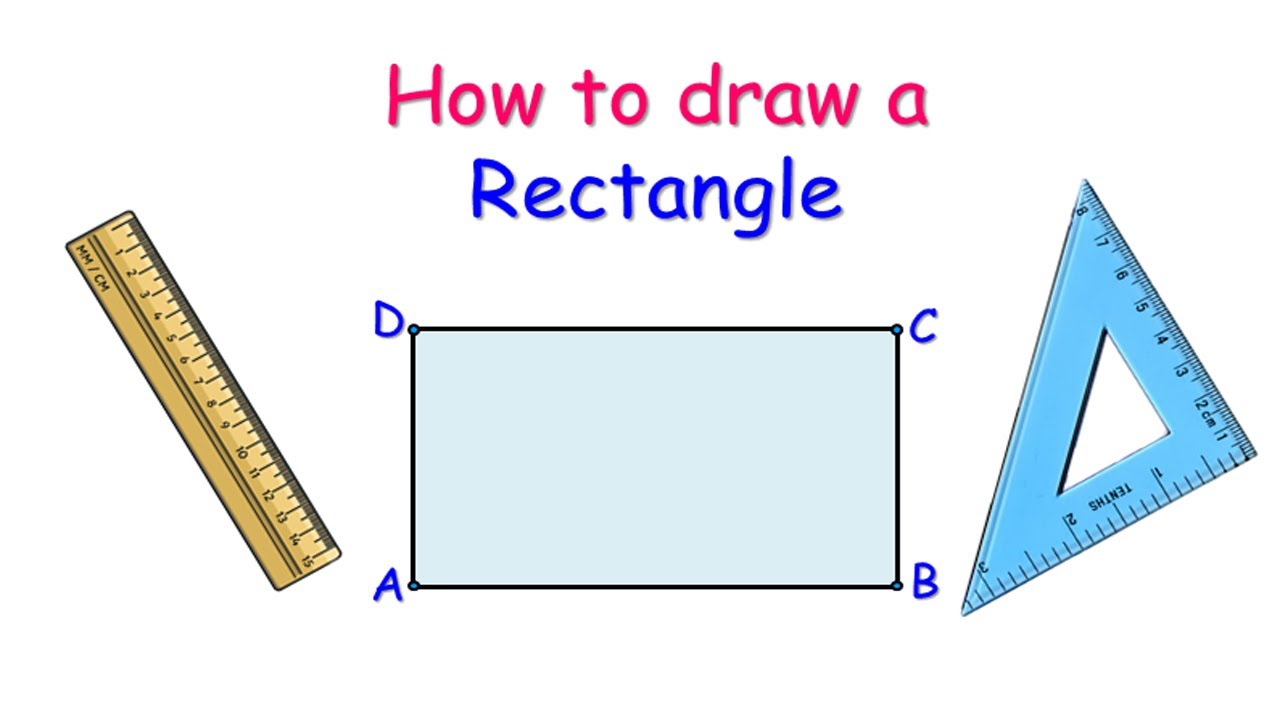
#rectangle #Draw_rectangle
In this video, we will explain how to draw the rectangle by using ruler and set square:
- Drawing a rectangle
- How to Draw a rectangle - VERY EASY - FOR KIDS
- How to draw a rectangle knowing the length and width
- Draw the rectangle (with set square and ruler)
- How to Make a rectangle Shape
- Construction of a recta...
vast shale
flat whale
i don't know what "o" represents
were german thats why
vocal sleetBOT
@vast shale Has your question been resolved?
vocal sleetBOT
Channel closed
Closed due to timeout
Use .reopen if this was a mistake.
Available help channel!
Send your question here to claim the channel.
Remember:
• Ask your math question in a clear, concise manner.
• Show your work, and if possible, explain where you are stuck.
• After 15 minutes, feel free to ping <@&286206848099549185>.
• Type the command .close to free the channel when you're done.
• Be polite and have a nice day!
Read #❓how-to-get-help for further information on how to ask a good question, and about conduct in the question channels.
vast shale
whats a triangle prove it
vocal sleetBOT
vast shale
whats a triangle prove it
vast shale
does anyone know about congurence and similarity
vast shale
flat whale
<:JustAsk:371662163489718273>
find the ratio of areas of two similar triangles if their perimeters are 294cm 336cm
@flat whale
flat whale
when it says "the ratio" that means you can make up any triangle that satisfies those perimeter conditions. then calculate areas that way
once you have two sets of b and h, you can take the ratio of their products to get the ratio of the areas
vast shale
i dont quite get it can u make it a bit clearer im really dumb sorry
flat whale
did you do this?
vast shale
flat whale
did you do this?
yes
flat whale
and this?
vast shale
flat whale
and this?
yes
flat whale
tell me your 4 numbers
flat whale
ah crap i got this backwards
vast shale
vast shale
2*147
3*112
vast shale
flat whale
ah crap i got this backwards
so u explained wrong
flat whale
flat whale
when it says "the ratio" that means you can make up any triangle that satisfies ...
this part is still right
i deleted the stuff that was wrong
vast shale
flat whale
this part is still right
okay
vast shale
flat whale
i deleted the stuff that was wrong
whats the right version of it then
flat whale
flat whale
when it says "the ratio" that means you can make up any triangle that satisfies ...
try doing this with an isosceles right triangle
a simpler way would be to know that areas increase by the square of the ratio of how the side lengths / perimeter scales
but i don't know if you can just assume that
vocal sleetBOT
@vast shale Has your question been resolved?
vocal sleetBOT
Channel closed
Closed due to timeout
Use .reopen if this was a mistake.
vocal sleetBOT
Available help channel!
Send your question here to claim the channel.
Remember:
• Ask your math question in a clear, concise manner.
• Show your work, and if possible, explain where you are stuck.
• After 15 minutes, feel free to ping <@&286206848099549185>.
• Type the command .close to free the channel when you're done.
• Be polite and have a nice day!
Read #❓how-to-get-help for further information on how to ask a good question, and about conduct in the question channels.
 hallow schooner
Q: Find relations from {0,1} to {1} that are not functions.
The book says (and I also got this right) that the relations are {(0,1)} and {(1,1)}. However, I was wondering. Can we say an empty set {} can be considered a relation but is not a function?
Because I answered: {(0,1)}, {(1,1)}, {}
vocal sleetBOT
hallow schooner
Q: Find relations from {0,1} to {1} that are not functions.
The book says (and ...
dark kiln
yeah that makes sense to me
supposedly (0,1) is not a function because it doesn't cover the domain
so it's totally the same with empty set
unless we're supposed to think that empty set is not a relation
vocal sleetBOT
Channel closed
Closed by @hallow schooner
Use .reopen if this was a mistake.
Available help channel!
Send your question here to claim the channel.
Remember:
• Ask your math question in a clear, concise manner.
• Show your work, and if possible, explain where you are stuck.
• After 15 minutes, feel free to ping <@&286206848099549185>.
• Type the command .close to free the channel when you're done.
• Be polite and have a nice day!
Read #❓how-to-get-help for further information on how to ask a good question, and about conduct in the question channels.
 low meadow
If you were to hypothetically have a number n, which is a product containing one factor of "every" prime, and generate a list of all numbers from 1 to n which are coprime with n, would all numbers in the list also be prime? Obviously anything coprime with "all" primes would need to be a prime itself (or 1, but that doesn't matter in my context), suggesting the infinitude of them which is obvious, but 121 is coprime with 210 (2x3x5x7) despite 121 not being prime, so I'd assume there continue to exist examples of coprimes but not primes like this as n gets larger. Does that mean this is just a logical paradox derived from the assumption that one could have a product of every prime to begin with?
vocal sleetBOT
low meadow
If you were to hypothetically have a number n, which is a product containing one...
 onyx condor
If n is the product of "every" then no prime number can be coprime to n by assumption
low meadow
But, the formula for Euler's totient function suggests that the number of terms coprime with n is equal to the product of all those primes minus 1 (as in the product over (p-1) for all p), which contradicts that.
Which is why I assume it must just be a logical paradox
Because if it were true that no prime could be coprime with such a number n, then we'd be suggesting that the product of all (p-1) for every prime p is equal to 1, as Euler's totient function would return 1 because 1 is the only number in the list
onyx condor
Yeah i think i see what youre saying. But if we are assuming n to exist, can we even use eulers totient function?
low meadow
I see no reason why not. There's an explicit formula defined for the totient function assuming you know the factors of its input, which we technically do because we are assuming we had a list of all primes with which to generate n to begin with. That's why I think it would just make more sense to say no such n exists
The reason I ask is because there is a relatively simple extension of this logic that would instantly suggest the twin primes conjecture is true. If such an n COULD exist, I have an explicit formula for a NEW type of totient function which would say say exactly that, which doesn't seem right.
onyx condor
even if the formula exists, we cant say that it counts the number of coprimes for all primes anymore
becuase of n
low meadow
I suppose, but what DOES it return then?
onyx condor
it will return one
low meadow
I guess. It still just seems like a logical flaw that any such n could exist to me, but I'm not sure
 empty frigate
...well really the answer is that there is no product of every prime, so obviously if you assume you have one you're going to get strange results
low meadow
That's what my thought was. A lot of paradoxes arise when you say "all primes", because n+1 would also have to be prime by the logic of this question.
empty frigate
i suspect most of the "numbers" coprime to it that euler's totient function is counting are numbers larger than every prime number or something weird like that
they're not numbers that actually exist, they're numbers that don't exist but do exist if n exists which it doesn't
low meadow
Yeah. I just have a feeling that I can use this modified totient function I have to say something about prime pairs, but it obviously isn't by these means.
As it also would have relied on a product of "all" primes
onyx condor
now that i think about it, im not sure what eulers totient function would return for n
i was just trying to say that is we assume n to exist then some theorems about prime numbers might not be true anymore
empty frigate
tbh i think the answer is it depends on what a "number" is
onyx condor
so they cant necessarily be used
empty frigate
if n exists then we're not dealing with natural numbers, we're dealing with some new type of number where it makes sense for a number to have infinitely many factors
onyx condor
if thats the case, dont we still have to prove the function to be true for these new numbers before it can be used
empty frigate
well tbh i'd look at far more foundational features of these numbers first
like, does addition exist?
if addition does exist, is it still true that adding 0 doesn't change anything? is there even a number named "0" in this system?
is a + b = b + a? is a + (b + c) = (a + b) + c?
since we're multiplying together all the primes, presumably multiplication exists
but is there a "1" that you can multiply by and nothing changes?
currently we can't really answer any of these questions because we haven't actually defined what this number system is
just "it contains the product of all primes"
onyx condor
if its an infinite cyclic group can we say that since its isomorphic to N then it fails in there too?
empty frigate
...what do you mean by "cyclic"?
onyx condor
that the group can be generated by a single element
empty frigate
well that would be isomorphic to Z because it's a group
so yeah i don't think that would work
whatever the product of all primes is, you presumably can't get there by adding together some finite number of copies of 1
you'd probably need to break comparison
n + 1 is prime, but n is the product of all primes, therefore n+1 is a factor of n
which is... fine i guess, but makes it a bit unclear what euler's totient function would actually count, since we can't ask for numbers "less than n" anymore
wait hang on couldn't we technically just
n = 0
that's divisible by every prime
onyx condor
if the product of nonzero numbers is zero, then it cant be a field or an intergal domain right?
empty frigate
well
in an integral domain, the product of any two nonzero numbers is nonzero
we didn't do that, we took the product of infinitely many numbers
onyx condor
true
what about 1?
is n +1 is a prime, then wouldnt 1 being a prime be a contradiction?
empty frigate
why would n+1 being prime imply 1 is prime
there are a lot of numbers that are 1 less than a prime in the actual natural numbers and none of those imply that 1 is prime
onyx condor
if we insert n= 0
vocal sleetBOT
@low meadow Has your question been resolved?
vocal sleetBOT
Channel closed
Closed due to timeout
Use .reopen if this was a mistake.
Available help channel!
Send your question here to claim the channel.
Remember:
• Ask your math question in a clear, concise manner.
• Show your work, and if possible, explain where you are stuck.
• After 15 minutes, feel free to ping <@&286206848099549185>.
• Type the command .close to free the channel when you're done.
• Be polite and have a nice day!
Read #❓how-to-get-help for further information on how to ask a good question, and about conduct in the question channels.
 pallid lance
MN biscets ∠IMD, IN=(5x-20) and DN=(2x+4). Find the measure of MI.
I already tried pythagorean theorem to solve this but it somehow goes to negative values ?
 vocal sleetBOT
pallid lance
MN biscets ∠IMD, IN=(5x-20) and DN=(2x+4). Find the measure of MI.
I already t...
half imp
vocal sleetBOT
pallid lance
MN biscets ∠IMD, IN=(5x-20) and DN=(2x+4). Find the measure of MI.
I already t...
half imp
that doesn't seem like enough info to solve the problem
pallid lance
are you sure ?
pallid lance
exactly!
half imp
so it doesn't give us any additional info about the right triangle
we can find one leg and that's it
pallid lance
one leg? how so
pallid lance
yes, but we still won't get the value
half imp
now use the x thing
pallid lance
x thing? How woud we use x in there
their relationship would just be congruent so it'd be 0
Thankss, im thinking so too. I'd turn a few more then I'll give up haha. I appreciate it, i've been stuck here longg
 errant bay
With the given information there's no way to find MI. Are you able to send the original problem?
pallid lance
yup, it's from a book im pretty sure, it's just like a practice exercise but I'm starting to think there's an error in here so i'll just skip this for a moment
thank you though
.close
vocal sleetBOT
Channel closed
Closed by @pallid lance
Use .reopen if this was a mistake.
vocal sleetBOT
Available help channel!
Send your question here to claim the channel.
Remember:
• Ask your math question in a clear, concise manner.
• Show your work, and if possible, explain where you are stuck.
• After 15 minutes, feel free to ping <@&286206848099549185>.
• Type the command .close to free the channel when you're done.
• Be polite and have a nice day!
Read #❓how-to-get-help for further information on how to ask a good question, and about conduct in the question channels.
 viscid ore
 vocal sleetBOT
viscid ore
viscid ore
vocal sleetBOT
viscid ore
viscid ore
I don't think this map is even well defined.
Let's say we have
[ 1 x ]
[ c 1]
amd
[1 x]
[d 1]
If we take x from R+, the map can send x to both of these
 cobalt crypt

viscid ore
I hate books sometimes
cobalt crypt
is R^+ additive group of reals?
viscid ore
yes
cobalt crypt
checks out
viscid ore
if it's 0 it's absolutely obvious
cobalt crypt
lol
 maiden iron
cobalt crypt
is R^+ additive group of reals?
maiden iron
cobalt crypt
is R^+ additive group of reals?
positive reals nah ?
viscid ore
hai.
fluid obsidian
The form can be just of one type so the blank can be just one thjng
cobalt crypt
maiden iron
positive reals nah ?
ive seen R^+ be positive reals a lot
fluid obsidian
maiden iron
positive reals nah ?
Yah
cobalt crypt
but here it doesnt really make sense
you'd have multiplicative structure then which is not going to make an isomorphism
its gotta be additive group
viscid ore
cobalt crypt
but here it doesnt really make sense
Artin uses R+ and Rx to denote the addition and multiplication groups
cobalt crypt
ye
viscid ore
Rx does not have 0
fluid obsidian
cobalt crypt
but here it doesnt really make sense
For the G' to stay group I guess
maiden iron
viscid ore
Artin uses R+ and Rx to denote the addition and multiplication groups
you should write it like that : (R, +) or (R, x)
cobalt crypt
$\R^+ = (\R, +)$
twin meteorBOT
 viscid ore
maiden iron
you should write it like that : (R, +) or (R, x)
viscid ore
maiden iron
you should write it like that : (R, +) or (R, x)
that's what I do, honestly. It's just this book
cobalt crypt
$\R^\by = (\R, \by)$
twin meteorBOT
 cobalt crypt

maiden iron
i dont agree with this notation tho but anyway
viscid ore
cobalt crypt
its not like bad notation is something we arent used to in maths <:opencry:58607...
Graph Theory intensifies 💀
cobalt crypt

maiden iron
If i see R+, ill say set of all positive real numbers
cobalt crypt
tmw the french go $\R_+$
twin meteorBOT

 tepid plinth
What would you think of R^×
cobalt crypt
thats obviously the set of functions from × to R
maiden iron
cobalt crypt
tmw the french go $\R_+$
yes
cobalt crypt
🇫🇷
viscid ore
cobalt crypt
thats obviously the set of functions from × to R
wait 🙂
maiden iron

cobalt crypt
viscid ore
wait 🙂

maiden iron

viscid ore

cobalt crypt
viscid ore
wait 🙂
im referring to the notation where $A^B$ denotes the set of functions $B \to A$
twin meteorBOT
 viscid ore
cobalt crypt
im referring to the notation where $A^B$ denotes the set of functions $B \to A$
viscid ore
cobalt crypt
im referring to the notation where $A^B$ denotes the set of functions $B \to A$
Yes I know, I use that in Metric Spaces 🥲
cobalt crypt


viscid ore
Real Sequences are written like $\mathbb{R}^\mathbb{N}$
twin meteorBOT
rikusp2002
 cobalt crypt
$\R^\infty$
twin meteorBOT
 cobalt crypt
real sequences 
maiden iron
Ive never seen this one
cobalt crypt
it makes perfect sense
maiden iron
I should read more books in english maybe
cobalt crypt
$\R^\infty = \ds\lim_{n \to \infty} \R^n$
maiden iron
💀
twin meteorBOT
 cobalt crypt

viscid ore
maiden iron
Then what about infinitely differentiable
 viscid ore
wait how to write it in LateX fuk
twin meteorBOT
 viscid ore
yeah that
cobalt crypt
where M is a smooth differentiable manifold
maiden iron
$C^{\infty} = \bigcap_{n\in \mathbb{N}} C^n$
twin meteorBOT
Herels
 maiden iron
🤔
cobalt crypt
viscid ore
we only know $C^\infty(\mathbb{R})$ till now though
twin meteorBOT
rikusp2002
 viscid ore
haven't read about manifolds yet 🙂
cobalt crypt
R is a smooth differentiable manifold 
maiden iron
Im sad ill never see manifold at school
cobalt crypt
not enough folds
cobalt crypt
fewfold
viscid ore
oh you did engineering?
maiden iron
im doing rn
maiden iron

cobalt crypt

viscid ore
I wanted a slightly easier life (even though it kind of isn't) so I opted for math major
cobalt crypt
slightly easier life
 cobalt crypt

cobalt crypt
maiden iron
I see
viscid ore
also I'm terrible at physics
maiden iron
You don't want to deal with thermodynamics i swear
viscid ore
maiden iron

viscid ore
maiden iron
You don't want to deal with thermodynamics i swear
I kind of liked it in 1st Sem tbh but then again it was the easy part I guess
Also Idk how physcs people use math stuff and never explain why does it even pop up
maiden iron
I struggle with thermodynamics more than mechanics
viscid ore
I regret taking two Mathematical Methods courses in two semesters
genuinely the worst course I ever appeared in
cobalt crypt
maiden iron

viscid ore
MM had some "group theory" in it and you know they started with Free Groups
💀
what about everything else
cobalt crypt
maiden iron
lmao
viscid ore
They did complex analysis and I still don't know why the contours are like those while integrating stuff
Thankfully we have Complex Analysis as a Mathematics Core
we'll learn it anyway
cobalt crypt
every group lives inside a free group in some sense 
maiden iron
I havent done complex analysis yet :((
viscid ore
cobalt crypt
every group lives inside a free group in some sense <:cheeto:1074397590805823582...
the famous theorem
cobalt crypt
viscid ore
what about everything else
so there is nothing else
viscid ore
maiden iron
I havent done complex analysis yet :((
dw it's good only if you yourself read it or some good teacher guides you
maiden iron
viscid ore
dw it's good only if you yourself read it or some good teacher guides you
the thing is, I'll never do real maths again
not that I dont want to, but its pointless
cobalt crypt

viscid ore
Agree if your field of work doesn't demand it
maiden iron
and the maths in engineering is just tools to use
viscid ore
cobalt crypt
<a:sobroll:1049721589194829967>
same
sometimes I feel like that's everywhere tbh
except in maths itself
maiden iron
but I started learning relativity alone and goddamn manifolds are pain
viscid ore
lol
cobalt crypt
tmw no field of work i might do will use any of the maths im learning rn
viscid ore
if you learn maths properly, you can fully apply those in only academic careers I think