#help-13
1 messages · Page 249 of 1
 small dust
 small dust
idr how to do 17 but I can do 18
 plush wharf
Bruh
 glad kestrel
for 18, your angle is on the wrong side
 hollow trail
for 17 it seems to be correct other than not being fully simplified (could have canceled out the 13)
 loud elbow
17 should have just flipped the sign no?
small dust
glad kestrel
for 18, your angle is on the wrong side
wym
oHHHHH
between ladder and building
glad kestrel
the angle he labeled is the angle between the ground and the ladder
small dust
not between ladder and floor
hollow trail
hollow trail
for 17 it seems to be correct other than not being fully simplified (could have ...
may also be points off for writing "sin" rather than sin(x)
small dust
hollow trail
may also be points off for writing "sin" rather than sin(x)
 no way........... has that ever happened to you? I'd be livid 😭

 somber lantern
small dust
find ur own channel
somber lantern
small dust
find ur own channel
What do u mean
I am new to this server can u explain
plush wharf
glad kestrel
the angle he labeled is the angle between the ground and the ladder
So I was suppose to use cosine?
small dust
somber lantern
What do u mean
I am new to this server can u explain
these channels are open for you to post in

once u post there, u "claim" it for some time
somber lantern
Ok
plush wharf
hollow trail
for 17 it seems to be correct other than not being fully simplified (could have ...
Wdym i cant simplify it more
small dust
this channel is claimed by somebody else rn
glad kestrel
plush wharf
So I was suppose to use cosine?
technically you could use any trig function as all angles can be discovered, but most simply, yes, relocate your angle to the correct location and use cosine
hollow trail
$\frac{-5}{13} \cdot \frac{13}{12}$ you can simplify this without multiplying it out first
 wraith daggerBOT
cloud
 plush wharf
Oh right
 cedar kilnBOT
@plush wharf Has your question been resolved?
cedar kilnBOT
Channel closed
Closed due to timeout
Use .reopen if this was a mistake.
cedar kilnBOT
 Available help channel!
Send your question here to claim the channel.
Remember:
• Ask your math question in a clear, concise manner.
• Show your work, and if possible, explain where you are stuck.
• After 15 minutes, feel free to ping <@&286206848099549185>.
• Type the command .close to free the channel when you're done.
• Be polite and have a nice day!
Read #❓how-to-get-help for further information on how to ask a good question, and about conduct in the question channels.
 wary estuary
 cedar kilnBOT
wary estuary
wary estuary
cedar kilnBOT
wary estuary
wary estuary
How come I can somehow cancel the tans?
I am awful in trigonometry, maybe I’m missing something
 untold torrent
That doesn't seem right
wary estuary
Idk, answer is supposed to be sec(x)
 wraith daggerBOT
 cedar kilnBOT
Channel closed
Closed by @wary estuary
Use .reopen if this was a mistake.
Available help channel!
Send your question here to claim the channel.
Remember:
• Ask your math question in a clear, concise manner.
• Show your work, and if possible, explain where you are stuck.
• After 15 minutes, feel free to ping <@&286206848099549185>.
• Type the command .close to free the channel when you're done.
• Be polite and have a nice day!
Read #❓how-to-get-help for further information on how to ask a good question, and about conduct in the question channels.
 ivory finch
wuts spanning tree and how can i rememberr it? graph theory
 odd lagoon
so given a graph G
with vertices and edges however messy it may be
a spanning tree is a subgraph of it that follows two properties:
- It has every vertex
- It is a tree
spanning trees are not unique, so a graph can have multiple
aight check out this ms paint

this is my graph G
ivory finch
sure
odd lagoon

in blue is some random spanning tree
you can check its a tree by viewing the right vertices as the base
also the blue has no cycle / loop

another spanning tree (there isnt one answer is the point of this)

this is a subgraph but not a spanning tree because it doesnt have all the vertices
that is to say, it doesnt span

this fails in two ways: it doesnt have all the vertics and also isnt even a tree. the red loop goes in a circle
ivory finch
odd lagoon
that is to say, it doesnt *span*
so basically spanning in graph theory means it SPANS all the vertices?
odd lagoon
yep (and in general, span will mean everything is attained)
ivory finch
except edges
odd lagoon
so a spanning tree is a subgraph that hits all the vertices and is a tree
yes
spanning all the edges means you probably wont have a tree
so thats implicit in the use of the word tree
ivory finch
why they call it tree?
i get that a perfect binary tree looks like a nice xmas tree but other than that i dont think it looks like a
odd lagoon
trees look wonky sometimes
a working definition of a tree is that there are no cycles
loops is another word for cycle
trees grow in whatever shape
but they do not connect branches (at least mathematically)
i dont think trees connect branches irl either but
ivory finch
odd lagoon
i dont think trees connect branches irl either but
is BFS and DFS a spanning tree?
odd lagoon
yes!

 odd lagoon
no clue whats going on here tbh
yellow are both trees
ah
first is BFS
second is DFS
ivory finch
odd lagoon
yellow are both trees
how do i find the radius and diameter of this graph (ignoring the yellow subgraphs?
cedar kilnBOT
@ivory finch Has your question been resolved?
cedar kilnBOT
Channel closed
Closed due to timeout
Use .reopen if this was a mistake.
cedar kilnBOT
Available help channel!
Send your question here to claim the channel.
Remember:
• Ask your math question in a clear, concise manner.
• Show your work, and if possible, explain where you are stuck.
• After 15 minutes, feel free to ping <@&286206848099549185>.
• Type the command .close to free the channel when you're done.
• Be polite and have a nice day!
Read #❓how-to-get-help for further information on how to ask a good question, and about conduct in the question channels.
 wheat atlas
My question:
Express the quantity without using absolute value:
|2-(sqrt)6|
cedar kilnBOT
wheat atlas
My question:
Express the quantity without using absolute value:
|2-(sqrt)6|
Please don't occupy multiple help channels.
 digital cliff
what have you looked for so far
digital cliff
you should be using exact values
wheat atlas
So is it a case like the last question where I had to go
-(2-sqrt(6))
digital cliff
yup
wheat atlas
Okay. I guess that makes sense, the prof. Also said exact values but wouldn’t elaborate on what that meant. Thank you.
digital cliff
it just means for example if i had 1/3 id write it like that rather than 0.3333
or if i had sqrt(2) i leave it like that rather than writing 1.414
no rounding basically
wheat atlas
Okay. I appreciate the help I think I finally get it.
cedar kilnBOT
@wheat atlas Has your question been resolved?
Channel closed
Closed by @wheat atlas
Use .reopen if this was a mistake.
Available help channel!
Send your question here to claim the channel.
Remember:
• Ask your math question in a clear, concise manner.
• Show your work, and if possible, explain where you are stuck.
• After 15 minutes, feel free to ping <@&286206848099549185>.
• Type the command .close to free the channel when you're done.
• Be polite and have a nice day!
Read #❓how-to-get-help for further information on how to ask a good question, and about conduct in the question channels.
 halcyon granite
Say we do 30 trials of throwing a die. The question is: what's the theoretical median (not mean)?
cedar kilnBOT
halcyon granite
Say we do 30 trials of throwing a die. The question is: what's the theoretical *...
halcyon granite
And how would one go about finding it?
tbh, this is from our «intro to stats» [for pure math students] course, and I have no idea how they got this value:
> qbinom(1/2, 30, 1/6)
5
 muted timber
i would expect the median to be the same as the mean on this case
halcyon granite
halcyon granite
tbh, this is from our «intro to stats» [for pure math students] course, and I h...
by the way, I just tried to simulate it: I've got ~3.5 [not anywhere near close to 5]
halcyon granite
muted timber
i would expect the median to be the same as the mean on this case
hm, still no clue
muted timber
i dont know how to go and formally prove it.
However, we're assuming a fair die, so each value has 1/6 probability of appearing, so half the values will be 3 or lower, and half will be 4 or higher.
So the median would be any value between 3 and 4
halcyon granite
halcyon granite
by the way, I just tried to simulate it: I've got ~3.5 [not anywhere near close ...
well, according to the simulation, sounds reasonable
muted timber
you should not trust any "simulation" you cant verify yourself by hand given enough time.
because that same simulation gave you a 5 previously as you stated
halcyon granite
muted timber
because that same simulation gave you a 5 previously as you stated
nope, that was not simulation. that code invoked some math functions
and I didn't write the code that split a 5, so I cannot explain how it works (in fact, I came here exactly to understand why it doesn't work 😆 )
halcyon granite
muted timber
you should not trust any "simulation" you cant verify yourself by hand given eno...
I mean, the same thing I do by hand can be done on a computer 
muted timber
precisely. Computer should be only used for things that you CAN do, but are annoyingly slow
okay, i know what the thing is doing
muted timber
halcyon granite
tbh, this is from our «intro to stats» [for pure math students] course, and I h...
looking at the documentation of qbinom, you're calculating the 50% percentile of a binomial distribution of 30 tries and success probability p=1/6.
since a binomial B(30, 1/6) has a 42% of being below 5, and 61% of being 5 or lower, 5 is the median (also obtained from n*p)
halcyon granite
but why does 50% of percentile of bin dist give us the median?
I mean, it tells us that the probabilit of getting 5 or lower is 42%, but I just don't see how it's presicely connected to the notion of median
like, how do we even define the median when we don't have a particular sample?
muted timber
halcyon granite
but why does 50% of percentile of bin dist give us the median?
I mean, it tells ...
No. I'm telling you that the probability of lower than 5 is 42%, and the probability of 5 or lower is 61%.
halcyon granite
oh, ok
muted timber
In the binomial distribution, the probability of being exactly value k is given by this formula, with n being the number of trials, k the number of successes, p the probability of success

lower than 5 means it's equal to 0, 1, 2, 3 or 4.
5 or lower means it's equal to 0, 1, 2, 3, 4 or 5.
adding the 5 terms is 42%. Adding the 6 is 61%.
halcyon granite
ok, good. no questions on that
halcyon granite
halcyon granite
like, how do we even define the median when we don't have a particular sample?
then this
muted timber
the median is such a value where half are below, and half are above
halcyon granite
muted timber
the median is such a value where half are below, and half are above
but in a sample, innit? (at least that's what I'm familar with)
halcyon granite
muted timber
same as you can obtain the theoretical mean
u mean the expected value? (sorry if that's a dumb question; we didn't have a probability class yet)
yes, we had problems involving concepts from probability without knowing probability 😐
muted timber
halcyon granite
u mean the expected value? (sorry if that's a dumb question; we didn't have a pr...
i recall there being a technicality there that prevents me from saying "yes"
i'd recommend you go and look up the exact definition you were given
halcyon granite
 halcyon granite
muted timber
i'd recommend you go and look up the exact definition you were given
halcyon granite
muted timber
i'd recommend you go and look up the exact definition you were given
we weren't
halcyon granite
muted timber
adding the 5 terms is 42%. Adding the 6 is 61%.
here
muted timber
it's a binomial distribution, computing probabilities on it is pretty easy
there's also a bunch of online calculators that do it for you.
Cuz i know how to do it, but it's annoyingly slow :)
halcyon granite
muted timber
it's a binomial distribution, computing probabilities on it is pretty easy
huh? is that a side note or a reply to my last question?
muted timber
halcyon granite
but yeah, this is the definition of the median. The probability of being at or below the median is higher or equal to 50%, and the probability of being at or above the median is higher or equal to 50%.
which depending on the distribution, means that the median is not necessarily unique
cedar kilnBOT
@halcyon granite Has your question been resolved?
cedar kilnBOT
Channel closed
Closed due to timeout
Use .reopen if this was a mistake.
Available help channel!
Send your question here to claim the channel.
Remember:
• Ask your math question in a clear, concise manner.
• Show your work, and if possible, explain where you are stuck.
• After 15 minutes, feel free to ping <@&286206848099549185>.
• Type the command .close to free the channel when you're done.
• Be polite and have a nice day!
Read #❓how-to-get-help for further information on how to ask a good question, and about conduct in the question channels.
 halcyon thunder
Question: Compute the absolute angle and value of z = sin(i).
I've tried moving sine to the left hand side and using Euler's form but when I continue, I get undefined behavior. When I tried to find the angle, I would be dividing by zero so I don't know what to do.
cedar kilnBOT
halcyon thunder
Question: Compute the absolute angle and value of z = sin(i).
I've tried moving...
 upper abyss
How did you use Euler's?
If you take e^(it) and e^(-it), then solve them for sin and cos, you get these:

These are often called "the complex definition of sin(z) and cos(z)"
Weird how I found a picture with sin(i) in it
Google is listening
halcyon thunder
I tried converting i = re^theta(i) but the angle became theta = arctan(1/0)
hmmmm
wait that actually is really helpful, let me try and see if I get anywhere
upper abyss
halcyon thunder
I tried converting i = re^theta(i) but the angle became theta = arctan(1/0)
Note that sinθ ≠ i
cedar kilnBOT
Channel closed
Closed by @halcyon thunder
Use .reopen if this was a mistake.
Available help channel!
Send your question here to claim the channel.
Remember:
• Ask your math question in a clear, concise manner.
• Show your work, and if possible, explain where you are stuck.
• After 15 minutes, feel free to ping <@&286206848099549185>.
• Type the command .close to free the channel when you're done.
• Be polite and have a nice day!
Read #❓how-to-get-help for further information on how to ask a good question, and about conduct in the question channels.
 fervent pike
hello, is this not right?
cedar kilnBOT
fervent pike
hello, is this not right?

 burnt vapor
fervent pike
burnt vapor
fervent pike
You can't go from 1=tn mod sm to 1=tn
fervent pike
hmm?
wait Ill send the question

so If m is prime and we say n != 0, and n in {1,....,m-1}
then gcd(m,n)=1
so then by bezouts theorem I get gcd(m,n)= sm+tn
1=sm+tn
and you can get rid of sm to show that 1=tn
so that means n has to be a multiplicative inverse of t, which satisfies one of the field axiom property
but if you dont have m as prime then you cant have 1=tn
burnt vapor
fervent pike
Well, if you want to prove it for m and not for sm you should do (mod m) instead of (mod sm)
burnt vapor
fervent pike
so that means n has to be a multiplicative inverse of t, which satisfies one of ...
But you can't write tn=1, it's not true
You can only say tn=1 (mod m)
And that's enough to prove that it is a field
fervent pike
should I state that we assume s to be 1 then? so instead of mod sm I write mod m
burnt vapor
fervent pike
should I state that we assume s to be 1 then? so instead of mod sm I write mod m
You don't need to
burnt vapor
Yes
fervent pike
how is it enough to show that tn = 1mod m
shows that t is a multiplicative inverse of n
i can see that m divides tn-1
burnt vapor
fervent pike
shows that t is a multiplicative inverse of n
Because you are not considering the product of integer numbers
fervent pike
or tn mod m = 1 mod m
burnt vapor
But a new product
burnt vapor
fervent pike
This says that the product of two numbers will be another number between 0 and m-1
So if the product of two numbers equals 1 for that definition of product, then they are inverses
fervent pike
fervent pike
or tn mod m = 1 mod m
if this holds, why cant I just say that tn=1?
burnt vapor
Because you have to specify what tn means
fervent pike
well n in {1,...,m-1}
burnt vapor
For example, if m=11 and n=8, we can choose s=-5 and t=7, then sm+tn = -55+56 = 1
Then tn = 1 (mod m) means 7×8 = 1 (mod 11). You can't just say that this implies 7×8=1
Because 7×8 is 56, not 1
fervent pike
ohhh I can just say m divides tn-1 and 1-1 =0, so you have remainder of 0
so thenn tn=1
burnt vapor
burnt vapor
For example, if m=11 and n=8, we can choose s=-5 and t=7, then sm+tn = -55+56 = ...
But when you write (mod m) at the end, you are specifying that the product you are using is the one that is defined in the question
fervent pike
so how can I show that tn = 1mod m satisfies field axiom?
burnt vapor
It is the field axiom
The field axiom is: for all n (except for 0), there exists t such that n times t equals 1
fervent pike
yea
burnt vapor
If tn=1 (mod m), then the product n times t equals 1 because of the definition of the product
But if you just write the equation tn=1 without any more context, you are saying that tn=1 with the usual product
fervent pike
 burnt vapor
fervent pike
burnt vapor
fervent pike
You should still add what nt means at the end
The problem is that there are two products, but they are written the same way
burnt vapor
Just write
nt = 1, where nt denotes the multiplication modulo m
burnt vapor
burnt vapor
For example, if m=11 and n=8, we can choose s=-5 and t=7, then sm+tn = -55+56 = ...
Look at this example
nt = 56 with the usual product
nt = 1 with the product mod m
cedar kilnBOT
@fervent pike Has your question been resolved?
cedar kilnBOT
Channel closed
Closed by @fervent pike
Use .reopen if this was a mistake.
cedar kilnBOT
Available help channel!
Send your question here to claim the channel.
Remember:
• Ask your math question in a clear, concise manner.
• Show your work, and if possible, explain where you are stuck.
• After 15 minutes, feel free to ping <@&286206848099549185>.
• Type the command .close to free the channel when you're done.
• Be polite and have a nice day!
Read #❓how-to-get-help for further information on how to ask a good question, and about conduct in the question channels.
 violet trout
 cedar kilnBOT
violet trout
violet trout
cedar kilnBOT
violet trout
violet trout
I know that this can be written as (w-1)(1 + w + w²... + w⁶)
Not sure what to do after
Looked at the answer, confused by this part

Yeah I am confused overall with this
Can someone explain:
a) How we can say w⁷ - 1 = 0 implies (1+w + w² ... w⁶)(w-1)
b) How it is factorized
c) The remaining steps essentially
<@&286206848099549185>
I just dont understand how any of this works
despite spending some time on it
Help will be appreciated
 warm crescent
w = 1 is an obvious solution
then divide w^7-1 by w-1
nevermind
I didn't read everything
violet trout
warm crescent
then divide w^7-1 by w-1
ok but what about the rest
and how do I solve this
warm crescent
rewrite 1 in exp complex form
cedar kilnBOT
@violet trout Has your question been resolved?
violet trout
No
cedar kilnBOT
Channel closed
Closed by @violet trout
Use .reopen if this was a mistake.
Available help channel!
Send your question here to claim the channel.
Remember:
• Ask your math question in a clear, concise manner.
• Show your work, and if possible, explain where you are stuck.
• After 15 minutes, feel free to ping <@&286206848099549185>.
• Type the command .close to free the channel when you're done.
• Be polite and have a nice day!
Read #❓how-to-get-help for further information on how to ask a good question, and about conduct in the question channels.
 north smelt
Why they put “ +0x “ ?
 cedar kilnBOT
north smelt
Why they put “ +0x “ ?
cedar kilnBOT
north smelt
Why they put “ +0x “ ?
 slate lintel
becuase they're about to do long division
north smelt
❓
slate lintel
polynomial long division
slate lintel
well you should watch what they do
north smelt
Ok
north smelt
slate lintel
well you should watch what they do
Ok I did and it’s to line everything up correctly but where did 0x come from
slate lintel
it's to line everything up correctly
cedar kilnBOT
@north smelt Has your question been resolved?
Channel closed
Closed by @north smelt
Use .reopen if this was a mistake.
Available help channel!
Send your question here to claim the channel.
Remember:
• Ask your math question in a clear, concise manner.
• Show your work, and if possible, explain where you are stuck.
• After 15 minutes, feel free to ping <@&286206848099549185>.
• Type the command .close to free the channel when you're done.
• Be polite and have a nice day!
Read #❓how-to-get-help for further information on how to ask a good question, and about conduct in the question channels.
 willow haven
The base function 𝑓 ( 𝑥 ) = √ 𝑥 is transformed by a vertical reflection in the 𝑥 - axis, followed by a vertical stretch by a factor of 2, a horizontal compression by a factor of , 1/3 , a horizontal translation of 2 units to the left, and a vertical translation of 1 unit down.
can someome see if my answer is right
i got -2/3(√x+2)^2-1
am i correct
cedar kilnBOT
willow haven
The base function 𝑓 ( 𝑥 ) = √ 𝑥 is transformed by a vertical reflection in th...
slate lintel
i see √x unmodified in the center there which makes me think no
also that ^2 which seems to come from nowhere
willow haven
slate lintel
also that ^2 which seems to come from nowhere
in vertex form isnt it supposed to be like that
willow haven
slate lintel
i see √x unmodified in the center there which makes me think no
wdym unmodified?
slate lintel
i mean it's not like √(17x + 3)
slate lintel
willow haven
in vertex form isnt it supposed to be like that
vertex form
that applies to quadratic functions, which you don't have
willow haven
oh ur right
willow haven
slate lintel
> vertex form
that applies to quadratic functions, which you don't have
mb im in grade 10 trying some grade 11 questions 😭
in that case i dont think i need to worry about this
thanks tho
cedar kilnBOT
@willow haven Has your question been resolved?
cedar kilnBOT
Channel closed
Closed due to timeout
Use .reopen if this was a mistake.
Available help channel!
Send your question here to claim the channel.
Remember:
• Ask your math question in a clear, concise manner.
• Show your work, and if possible, explain where you are stuck.
• After 15 minutes, feel free to ping <@&286206848099549185>.
• Type the command .close to free the channel when you're done.
• Be polite and have a nice day!
Read #❓how-to-get-help for further information on how to ask a good question, and about conduct in the question channels.
 shadow carbon
Please help me get a. I need help
 cedar kilnBOT
shadow carbon
Please help me get a. I need help
shadow carbon
cedar kilnBOT
shadow carbon
Please help me get a. I need help
shadow carbon
Im really lost.
I think it’s
y = mx + 35.4 but idk what the other numbers r
(0, 35.4)
(10, 33.6)
(20, 28.3)
(30, 27)
(40, 22.4)
(50, 20)
<@&286206848099549185>
Sorry I’m in a huge rush
 clear umbra
shadow carbon
I think it’s
y = mx + 35.4 but idk what the other numbers r
clear umbra
shadow carbon
I think it’s
y = mx + 35.4 but idk what the other numbers r
just find the slope
you have a bunch of points
shadow carbon
 shadow carbon
clear umbra
just find the slope
shadow carbon
clear umbra
just find the slope
Each slope is different though
clear umbra
use the first and last point
shadow carbon
y =-0.3x + 35
Is that right
clear umbra
yeah
shadow carbon
Thanks
cedar kilnBOT
@shadow carbon Has your question been resolved?
Channel closed
Closed by @shadow carbon
Use .reopen if this was a mistake.
Available help channel!
Send your question here to claim the channel.
Remember:
• Ask your math question in a clear, concise manner.
• Show your work, and if possible, explain where you are stuck.
• After 15 minutes, feel free to ping <@&286206848099549185>.
• Type the command .close to free the channel when you're done.
• Be polite and have a nice day!
Read #❓how-to-get-help for further information on how to ask a good question, and about conduct in the question channels.
 vale musk
this should be a rlly easy question to answer for some reaon it's showing incorrect
cedar kilnBOT
vale musk
this should be a rlly easy question to answer for some reaon it's showing incorr...
 vale musk
fuck pemdas
 supple flume
everything right except you needed to divide first lol
cedar kilnBOT
@vale musk Has your question been resolved?
Channel closed
Closed by @vale musk
Use .reopen if this was a mistake.
Available help channel!
Send your question here to claim the channel.
Remember:
• Ask your math question in a clear, concise manner.
• Show your work, and if possible, explain where you are stuck.
• After 15 minutes, feel free to ping <@&286206848099549185>.
• Type the command .close to free the channel when you're done.
• Be polite and have a nice day!
Read #❓how-to-get-help for further information on how to ask a good question, and about conduct in the question channels.
 maiden harness
can someone help me solve these type of questions

 crimson sedge
have you tried anything ?
cedar kilnBOT
@maiden harness Has your question been resolved?
maiden harness
crimson sedge
have you tried anything ?
i was able to start off question a by useing trig identities but dont know how to solve it
crimson sedge
okay then share your progress here
cedar kilnBOT
@maiden harness Has your question been resolved?
cedar kilnBOT
@maiden harness Has your question been resolved?
cedar kilnBOT
Channel closed
Closed due to timeout
Use .reopen if this was a mistake.
Available help channel!
Send your question here to claim the channel.
Remember:
• Ask your math question in a clear, concise manner.
• Show your work, and if possible, explain where you are stuck.
• After 15 minutes, feel free to ping <@&286206848099549185>.
• Type the command .close to free the channel when you're done.
• Be polite and have a nice day!
Read #❓how-to-get-help for further information on how to ask a good question, and about conduct in the question channels.
 dreamy fern
how can i prove this
 cedar kilnBOT
dreamy fern
how can i prove this
dreamy fern
cedar kilnBOT
dreamy fern
how can i prove this
dreamy fern
?
cedar kilnBOT
@dreamy fern Has your question been resolved?
cedar kilnBOT
@dreamy fern Has your question been resolved?
cedar kilnBOT
@dreamy fern Has your question been resolved?
cedar kilnBOT
@dreamy fern Has your question been resolved?
cedar kilnBOT
Channel closed
Closed due to timeout
Use .reopen if this was a mistake.
cedar kilnBOT
Available help channel!
Send your question here to claim the channel.
Remember:
• Ask your math question in a clear, concise manner.
• Show your work, and if possible, explain where you are stuck.
• After 15 minutes, feel free to ping <@&286206848099549185>.
• Type the command .close to free the channel when you're done.
• Be polite and have a nice day!
Read #❓how-to-get-help for further information on how to ask a good question, and about conduct in the question channels.
 native elm
Hey I got a nitpicky question about something that seems skipped over in Folland's real analysis book
cedar kilnBOT
native elm
Hey I got a nitpicky question about something that seems skipped over in Folland...
native elm

Basically I'm just asking about prop 2.16, because it makes sense to me but after it is proven the book basically seems to refer to this prop as if the statement is f=g a.e. iff their integrals are equal, and it seems to m that makes sense but I'm trying to figure out the simple explanation of how to get from 2.16 to that
(thats why I included 2.17 because it kind of uses it that way)
It also refers to 2.16 as giving us that we can modify a function on a null set and the integral stays the same which seems to be what I stated earlier.
L+ is measureable fcns to [0,inf]
Guess where I am mostly confused is, it seems like we can get this result pretty obviously by replacing f with f-g in the theorem statement but that implies f-g would need to be in L+ so g<f
 crimson delta
well, g<=f
native elm
Right
crimson delta
2.17 doesnt even seem to use 2.16
native elm
The first and last equalities in the last part of it does, right?
which is why they show that the difference is 0 a.e. for those two functions
 mental trail
yeah they apply 2.16 to f - fchiE
native elm
Which this one makes sense I guess because fn increases to f so f-fn would be nonegative
mental trail
but that's about it
crimson delta
if they wanted to be precise they would need to show that the differences are in L^+
native elm
Yeah and I was reading ahead, they straight up prove what I was looking for in the next section so I think they were just using that temporarily in L^+
crimson delta
I mean int f=int g iff f=g a.e. is completely false
mental trail
they kinda skipped the fact that f - fchiE >= 0 everywhere but that's because f >= fn on E for all n
crimson delta
well, one direction is
native elm
crimson delta
I mean int f=int g iff f=g a.e. is completely false
Oh is it not true?
mental trail
crimson delta
I mean int f=int g iff f=g a.e. is completely false
oh yes we need f <= g or g <= f as a presupposition
native elm
Oh at least in L^+ it is
mental trail
that's why f in L+ is important
crimson delta
otherwise its very easy to come up with counterexamples
cedar kilnBOT
Channel closed
Closed by @native elm
Use .reopen if this was a mistake.
cedar kilnBOT
Available help channel!
Send your question here to claim the channel.
Remember:
• Ask your math question in a clear, concise manner.
• Show your work, and if possible, explain where you are stuck.
• After 15 minutes, feel free to ping <@&286206848099549185>.
• Type the command .close to free the channel when you're done.
• Be polite and have a nice day!
Read #❓how-to-get-help for further information on how to ask a good question, and about conduct in the question channels.
 twin panther
Find the remainder when 3737373737373737373 is divided into 36
slate lintel
!status
cedar kilnBOT
What step are you on?
1. I don't know where to begin.
2. I have begun but got stuck midway.
3. I got an answer but I was told that it's wrong.
4. I got an answer and would like my work checked.
5. I have a question about someone else's work/solution.
6. I have completed the problem and don't need help anymore. Thank you.
7. None of the above
@twin panther Has your question been resolved?
twin panther
i think we should do it with mod but i am not sure @slate lintel
slate lintel
just do the long division
cedar kilnBOT
@twin panther Has your question been resolved?
 raven shard
twin panther
Find the remainder when 3737373737373737373 is divided into 36
raven shard
twin panther
Find the remainder when 3737373737373737373 is divided into 36
what's the remainder when 3737373737373737373 is divided by 9?
what about 4?
you can uniquely determine the remainder (mod 36) with these two values
cedar kilnBOT
Channel closed
Closed due to timeout
Use .reopen if this was a mistake.
Available help channel!
Send your question here to claim the channel.
Remember:
• Ask your math question in a clear, concise manner.
• Show your work, and if possible, explain where you are stuck.
• After 15 minutes, feel free to ping <@&286206848099549185>.
• Type the command .close to free the channel when you're done.
• Be polite and have a nice day!
Read #❓how-to-get-help for further information on how to ask a good question, and about conduct in the question channels.
 wind nexus
hi
cedar kilnBOT
wind nexus
hi
wind nexus
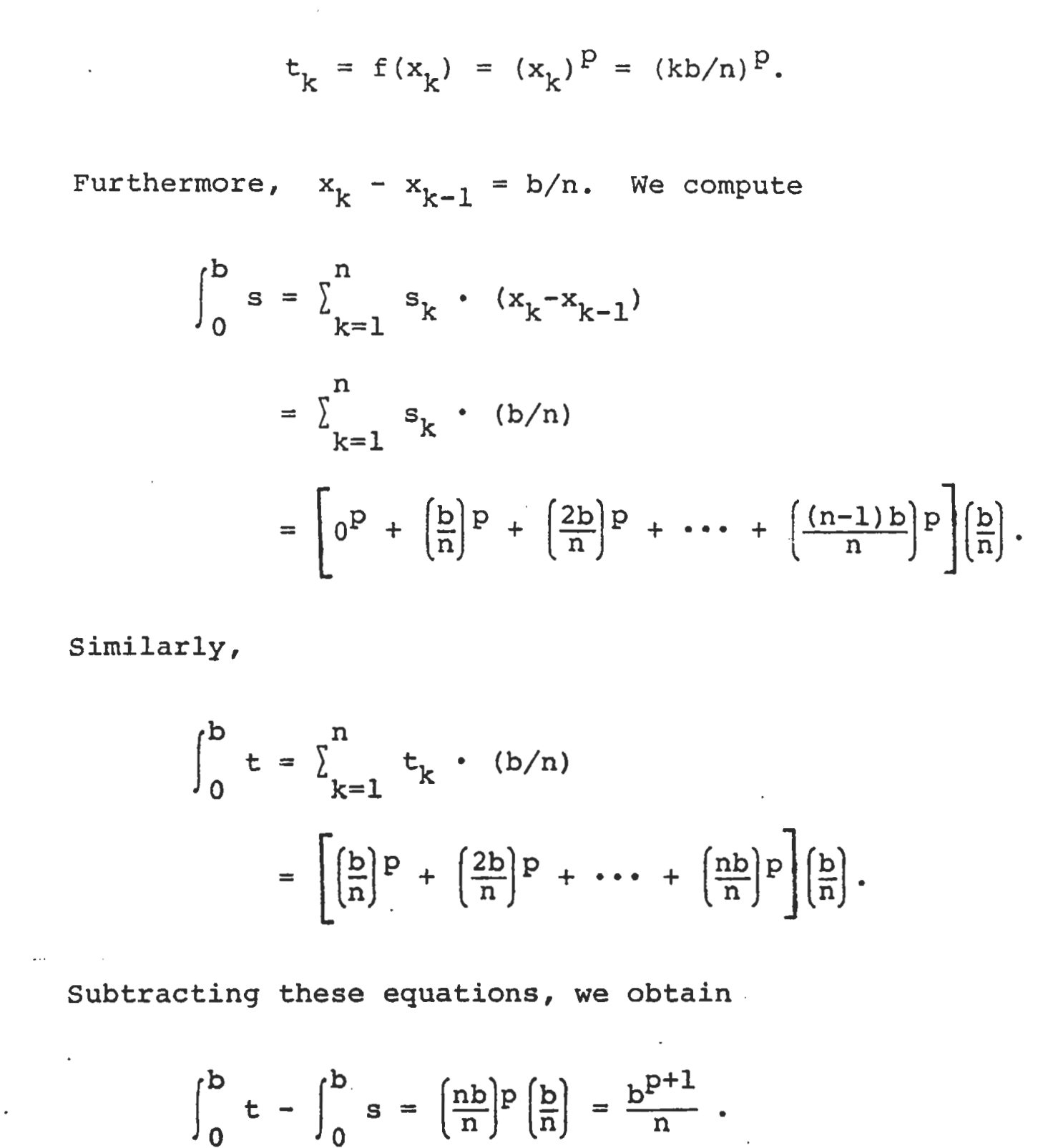
I'm confused about the last line
its clear how we got to (nb/n)p(b/n)
I don't see how that is equal to b^(p+1)/n
holy shit nevermind its not times p
its to the power of p
freaking font
.close
cedar kilnBOT
Channel closed
Closed by @wind nexus
Use .reopen if this was a mistake.
Available help channel!
Send your question here to claim the channel.
Remember:
• Ask your math question in a clear, concise manner.
• Show your work, and if possible, explain where you are stuck.
• After 15 minutes, feel free to ping <@&286206848099549185>.
• Type the command .close to free the channel when you're done.
• Be polite and have a nice day!
Read #❓how-to-get-help for further information on how to ask a good question, and about conduct in the question channels.
 rotund dawn
Am i right in saying that if one value is directly proportional to another, then whatever happens to one value then must happen to the other?
cedar kilnBOT
rotund dawn
Am i right in saying that if one value is directly proportional to another, then...
 ancient lodge
I think you have at least kind of the right idea, but your statement needs to be more precise
can you give an example of what you're talking about
rotund dawn
so if y=10 and x=-2
when the value of x=15 then y=-75?
ancient lodge
so y=-5x
so do you mean to say "If I multiply one quantity by some amount, the other quantity must also be multiplied by the same amount"?
rotund dawn
Thats what im assuming
ancient lodge
yeah that's right then
let's say you multiply by k, then you have x become kx
and substituting that in, y=-5(kx) = (-5x)(k) in this case
See if you can justify it in general (the logic is very similar)
cedar kilnBOT
Channel closed
Closed by @rotund dawn
Use .reopen if this was a mistake.
Available help channel!
Send your question here to claim the channel.
Remember:
• Ask your math question in a clear, concise manner.
• Show your work, and if possible, explain where you are stuck.
• After 15 minutes, feel free to ping <@&286206848099549185>.
• Type the command .close to free the channel when you're done.
• Be polite and have a nice day!
Read #❓how-to-get-help for further information on how to ask a good question, and about conduct in the question channels.
 latent rover
How would you solve a following problem:\
Suppose there's 5 ports numbered from 1 to 5 and three days. Ships that travel between ports in these three days can spread the epidemic. Rules of contracting epidemic: \
- the epidemic emerges by itself only once during the 3 days in one of the ports with equal probability \
- an adjecent port contracted epidemic day before. in this case the probability of contracting epidemic is $\frac{1}{2}$\
- port stays infected after epidemic was contracted previous day\
On the third day epidemic was detected in 1st port. On day 1 and 2 there ware no checks, so we don't know where epidemic emerged and when.\
a) what is the probability of epidemic emerging in port 2 on the first day\
b) what is the probability of port 4 being infected with epidemic
cedar kilnBOT
latent rover
How would you solve a following problem:\\
Suppose there's 5 ports numbered from...
wraith daggerBOT
ta
 slate lintel
make a tree diagram ig
latent rover
what would that diagram look like
The answer is supposed to be 1/6 and no matter what I try I can't reach it
slate lintel
basically every level is a day
cedar kilnBOT
@latent rover Has your question been resolved?
latent rover
.close
cedar kilnBOT
Channel closed
Closed by @latent rover
Use .reopen if this was a mistake.
Available help channel!
Send your question here to claim the channel.
Remember:
• Ask your math question in a clear, concise manner.
• Show your work, and if possible, explain where you are stuck.
• After 15 minutes, feel free to ping <@&286206848099549185>.
• Type the command .close to free the channel when you're done.
• Be polite and have a nice day!
Read #❓how-to-get-help for further information on how to ask a good question, and about conduct in the question channels.
 quasi imp
what does forward and back slash mean in set theory? smthng like
A/B , A\B
cedar kilnBOT
quasi imp
what does forward and back slash mean in set theory? smthng like
A/B , A\B
crimson sedge
quasi imp
what does forward and back slash mean in set theory? smthng like
A/B , A\B
hey
it means division
quasi imp
Hi
quasi imp
crimson sedge
it means division
How r we supposed to divide set A from set B
crimson sedge
quasi imp
How r we supposed to divide set A from set B
(A)/(B)
quasi imp
i thought its smthng to do with addition subtraction of sets
crimson sedge
quasi imp
i thought its smthng to do with addition subtraction of sets
Hmmmmmmmmmmmmmm, n o.
/ means divide
quasi imp
crimson sedge
(A)/(B)
and what does backslash A\B mean
crimson sedge
quasi imp
and what does backslash A\B mean
Ummmm
It means:
B(A-B)^B(-A)
Since thats the opposite of forward slash
 wheat ocean
quasi imp
what does forward and back slash mean in set theory? smthng like
A/B , A\B
wheat ocean
quasi imp
what does forward and back slash mean in set theory? smthng like
A/B , A\B
A\B means difference of sets probably
quasi imp
wheat ocean
A\B means difference of sets probably
A-B right?
wheat ocean
quasi imp
A-B right?
not exactly
A\B is notation for set that contains all elements from A that isn't in B
crimson sedge
quasi imp
r u messing with me or smthng
???no
this is how to do math
It’s very simple
wheat ocean
wheat ocean
not exactly
if you talk about notation, then difference of sets can also be written as A-B, yes
quasi imp
wheat ocean
if you talk about notation, then difference of sets can also be written as A-B, ...
hmm and what about A/B is it B-A ?
cedar kilnBOT
@quasi imp Has your question been resolved?
cedar kilnBOT
Channel closed
Closed due to timeout
Use .reopen if this was a mistake.
Available help channel!
Send your question here to claim the channel.
Remember:
• Ask your math question in a clear, concise manner.
• Show your work, and if possible, explain where you are stuck.
• After 15 minutes, feel free to ping <@&286206848099549185>.
• Type the command .close to free the channel when you're done.
• Be polite and have a nice day!
Read #❓how-to-get-help for further information on how to ask a good question, and about conduct in the question channels.
 spring gulch
Hi i have a problem determing if this sentence is true : if corr(X,Y) >0 then : D2(X+Y) >D2(X-Y)
cedar kilnBOT
spring gulch
Hi i have a problem determing if this sentence is true : if corr(X,Y) >0 then : ...
spring gulch
<@&286206848099549185>
cedar kilnBOT
@spring gulch Has your question been resolved?
spring gulch
<@&286206848099549185>
crimson sedge
spring gulch
Hi i have a problem determing if this sentence is true : if corr(X,Y) >0 then : ...
What do you mean by corr and D2?
And is your bday by any chance on October 18th?
spring gulch
crimson sedge
~~And is your bday by any chance on October 18th?~~
no its not
spring gulch
crimson sedge
What do you mean by corr and D2?
corr is corelation and D2X is D^2X and its variation
i think the other symbol for it is σ2
crimson sedge
spring gulch
no its not
Sad
crimson sedge
spring gulch
corr is corelation and D2X is D^2X and its variation
Okay it went over my head, mb
spring gulch
crimson sedge
Sad
why tho? its such a specyfic question
crimson sedge
spring gulch
why tho? its such a specyfic question
Idk i saw 1810 and asked you so
spring gulch
crimson sedge
Idk i saw 1810 and asked you so
ooooo nah it was my old discord number b4 they changed the way the nicknames worked, i got used to the numbers so i kept it like that
crimson sedge
spring gulch
ooooo nah it was my old discord number b4 they changed the way the nicknames wo...
Aye aye
cedar kilnBOT
@spring gulch Has your question been resolved?
cedar kilnBOT
@spring gulch Has your question been resolved?
cedar kilnBOT
@spring gulch Has your question been resolved?
cedar kilnBOT
Channel closed
Closed due to timeout
Use .reopen if this was a mistake.
Available help channel!
Send your question here to claim the channel.
Remember:
• Ask your math question in a clear, concise manner.
• Show your work, and if possible, explain where you are stuck.
• After 15 minutes, feel free to ping <@&286206848099549185>.
• Type the command .close to free the channel when you're done.
• Be polite and have a nice day!
Read #❓how-to-get-help for further information on how to ask a good question, and about conduct in the question channels.
 coral jewel
Given the equation $f(x)=x^4-4x^2+m$. There exists a value of m such that f(x) intersects with the x-axis at 4 separate points and the total areas formed by the x-axis and the graph above the x-axis is equal to the area below the x-axis. The m value is a simplified fraction under the form $m=\frac{a}b$. Find a + 2b
cedar kilnBOT
coral jewel
Given the equation $f(x)=x^4-4x^2+m$. There exists a value of m such that f(x) i...
wraith daggerBOT
FungusDesu
 coral jewel
the original question is in vietnamese, so this is my best translation
i find that 0 < m < 4 in order for the equation to have 4 real roots
from there im stumped
cedar kilnBOT
@coral jewel Has your question been resolved?
coral jewel
<@&286206848099549185>
cedar kilnBOT
@coral jewel Has your question been resolved?
cedar kilnBOT
Channel closed
Closed due to timeout
Use .reopen if this was a mistake.
Available help channel!
Send your question here to claim the channel.
Remember:
• Ask your math question in a clear, concise manner.
• Show your work, and if possible, explain where you are stuck.
• After 15 minutes, feel free to ping <@&286206848099549185>.
• Type the command .close to free the channel when you're done.
• Be polite and have a nice day!
Read #❓how-to-get-help for further information on how to ask a good question, and about conduct in the question channels.
 static sorrel
 cedar kilnBOT
static sorrel
cedar kilnBOT
static sorrel

 peak minnow
the figures are similar so that means the ratios of the sides should be same
peak minnow
x : x+3 = 18 : 20
solve the rest
peak minnow
u can just change them into fractions and solve
$$\frac{x}{x+3} = \frac{18}{20}$$
wraith daggerBOT
JustToPro
 static sorrel
is it 27?
static sorrel
static sorrel
is it 27?
?
peak minnow
no
static sorrel
oh
peak minnow
actually yes
peak minnow
".close"
static sorrel
.close
cedar kilnBOT
Channel closed
Closed by @static sorrel
Use .reopen if this was a mistake.
cedar kilnBOT
Available help channel!
Send your question here to claim the channel.
Remember:
• Ask your math question in a clear, concise manner.
• Show your work, and if possible, explain where you are stuck.
• After 15 minutes, feel free to ping <@&286206848099549185>.
• Type the command .close to free the channel when you're done.
• Be polite and have a nice day!
Read #❓how-to-get-help for further information on how to ask a good question, and about conduct in the question channels.
 digital star
Sorry for two questions today, I'm not really sure how to start with this question?
 cedar kilnBOT
digital star
Sorry for two questions today, I'm not really sure how to start with this questi...
cedar kilnBOT
digital star
Sorry for two questions today, I'm not really sure how to start with this questi...
 flint plinth
what does the denominator look like when n is large
digital star
I'm not sure I really follow
slate lintel
if n is really big then it's wayyyyy bigger than 1
and n^4 is definitely way bigger than 1
so we can just pretend it's not there when we're thinking about big n
flint plinth
like say n is 100
then n^4 is 100000000
and n^4 + 1 is 100000001
the n^4 part is dominating
digital star
So I could say n = 0 in this case?
flint plinth
wha
n = 0 is not large
you're taking the limit as n->infinity, that's why we're considering what things look like for large n
what happens at n=0 is irrelevant for this purpose
digital star
Right, would you be able to give me a hint on how to apply that to the problem
Or if there's a video on Khan that would explain the concept more thoroughly?
flint plinth
i tried to hint above... if n is very large, what does the denominator look like
let me elaborate on that
if n is much bigger than 1, then n^4 + 1 is basically the same as n^4
the 1 only makes a tiny difference
like imagine this example but with a million zeros instead of 8
if n = 100
then n^4 is 100000000
and n^4 + 1 is 100000001
digital star
Does it not break any rules to discard the 1?
flint plinth
we can make it more formal
this is just for getting some intuition about what the limit should be
i guarantee most people think about it this way before proceeding with a more formal argument
but if you don't like this way, i can suggest another way
try dividing the numerator and denominator by n^2
digital star
No I would like to actually understand the concept behind this
flint plinth
ok
digital star
Knowing how to solve this equation is one thing but if I can't apply it I'm stuck in a circle
flint plinth
let me just proceed with that line of thinking then
we'll justify it later
i claim that for large n, the difference between n^4 +1 and n^4 is so slight that we can just pretend the denominator is sqrt(n^4), which is n^2
and then your sequence (for large n) looks like (13n^2 + 2n) / n^2
which is the same as 13 + 2/n
now what's the limit of that as n -> infinity?
digital star
15/n or 15/infinity?
flint plinth
13 + 2/n
not (13 + 2)/n
13 + 2/n means 13 + (2/n)
so it's the number 13 plus the fraction 2/n
the fraction 2/n becomes very small as n grows large
in fact it goes to zero in the limit
so what are we left with?
digital star
13?
flint plinth
yes
digital star
So more formally had I divided everything by n^2 it would make the 1 even less significant because it would be 1/n^2 and thus discardable?
flint plinth
yea if you divide everything by n^2, you will have:
$$\frac{13 + 2/n}{\sqrt{1 + 1/n^4}}$$
wraith daggerBOT
Bungo
 flint plinth
which makes it clear that when n is large, the 2/n in the numerator goes to zero and the 1/n^4 in the denominator go to zero, leaving you with 13/sqrt(1) = 13
digital star
Okay I think I got it
Thank you sm for taking the time to explain things, this is all very new to me rn so I'm sure my grasp on it is flimsy at best
.close
cedar kilnBOT
Channel closed
Closed by @digital star
Use .reopen if this was a mistake.
cedar kilnBOT
Available help channel!
Send your question here to claim the channel.
Remember:
• Ask your math question in a clear, concise manner.
• Show your work, and if possible, explain where you are stuck.
• After 15 minutes, feel free to ping <@&286206848099549185>.
• Type the command .close to free the channel when you're done.
• Be polite and have a nice day!
Read #❓how-to-get-help for further information on how to ask a good question, and about conduct in the question channels.
 grave halo
can someone help me with this problem
 cedar kilnBOT
grave halo
can someone help me with this problem
grave halo
cedar kilnBOT
grave halo
can someone help me with this problem
grave halo
<@&286206848099549185>
wraith daggerBOT
futureneverlands
 grave halo
you’re a life saver thank you 🙏🙏
wraith daggerBOT
futureneverlands
 cedar kilnBOT
@grave halo Has your question been resolved?
cedar kilnBOT
Channel closed
Closed due to timeout
Use .reopen if this was a mistake.
Available help channel!
Send your question here to claim the channel.
Remember:
• Ask your math question in a clear, concise manner.
• Show your work, and if possible, explain where you are stuck.
• After 15 minutes, feel free to ping <@&286206848099549185>.
• Type the command .close to free the channel when you're done.
• Be polite and have a nice day!
Read #❓how-to-get-help for further information on how to ask a good question, and about conduct in the question channels.
 dim elbow
Is 1/1+cosx equal to 1/1-cosx?
cedar kilnBOT
dim elbow
Is 1/1+cosx equal to 1/1-cosx?
crimson sedge
no
dim elbow
But if you had 1/1+cosx and you multiple top and bottom by 1-cox
You get 1-cosx/1-cosx^2
Then cancel and get 1/1-cosx
crimson sedge
so?
,,\f1{1-\m\cos x} = \f1{1-\m\cos x} \c b{\cd \f{1+\m\cos x}{1+\m\cos x}} = \f{1+\m\cos x}{1-\m{\cos^2}x}
wraith daggerBOT

 crimson sedge
1- cos²x doesnt decompose like that
clear umbra
1 - cos^2(x) = (1+cosx)(1-cosx)
crimson sedge
yeah
clear umbra
1-cos^2(x) is not (1-cosx)^2
cedar kilnBOT
@dim elbow Has your question been resolved?
cedar kilnBOT
Channel closed
Closed due to timeout
Use .reopen if this was a mistake.
Available help channel!
Send your question here to claim the channel.
Remember:
• Ask your math question in a clear, concise manner.
• Show your work, and if possible, explain where you are stuck.
• After 15 minutes, feel free to ping <@&286206848099549185>.
• Type the command .close to free the channel when you're done.
• Be polite and have a nice day!
Read #❓how-to-get-help for further information on how to ask a good question, and about conduct in the question channels.
 waxen tartan
What is difference between geometry and planimetry?
cedar kilnBOT
waxen tartan
What is difference between geometry and planimetry?
@waxen tartan Has your question been resolved?
cedar kilnBOT
Channel closed
Closed due to timeout
Use .reopen if this was a mistake.
Available help channel!
Send your question here to claim the channel.
Remember:
• Ask your math question in a clear, concise manner.
• Show your work, and if possible, explain where you are stuck.
• After 15 minutes, feel free to ping <@&286206848099549185>.
• Type the command .close to free the channel when you're done.
• Be polite and have a nice day!
Read #❓how-to-get-help for further information on how to ask a good question, and about conduct in the question channels.
crimson sedge
can someone help me with this differential equation?

 royal loom
What're the points for?
crimson sedge
from an old exam
cedar kilnBOT
@crimson sedge Has your question been resolved?
 brittle stag
crimson sedge
can someone help me with this differential equation?
brittle stag
crimson sedge
can someone help me with this differential equation?
what have you tried
did you get the homogenous solution
crimson sedge
brittle stag
what have you tried
no
that's the point I have looked at countless examples on how to do it and I still don't understand how I do it
brittle stag
get the homogenous solution, the HDE is the form of euler's equation, you take y=x^r
crimson sedge
and this is where u lost me lol
brittle stag
what's the problem with what i said
crimson sedge
"euler's equation, you take y=x^r"
How do I do that?
brittle stag
you substitute y with x^r?
brittle stag
not exactly... you have a first derivative, you have to differentiate f(x)=x^r
crimson sedge
so rxx^(r-1) = ..
brittle stag
right
also we are solving the homogenous differential equation
so r x^r - x^r = 0
brittle stag
right
crimson sedge
and now solve for x?
brittle stag
we solve for r, (r-1) x^r = 0, x^r can never be zero
crimson sedge
r = 1?
brittle stag
right so we can say y=x is a particular solution
crimson sedge
alr
brittle stag
y_h = c x
we have our homogenous solution now
we want to finish it with a particular solution, to get the general solution
you know method of variable coefficients?
crimson sedge
"knowing" yea
again, seen many examples
still don't know how to do it myself lol
brittle stag
aight, in method of variation of constants, we take c = z(x), the constants in our homogenous solution are now functions of x, we substitute y=zx into our DE and solve for z
brittle stag
you misunderstood, ig y = z(x) * x is more accurate
brittle stag
add necessary parentheses
brittle stag
mhm, continue
crimson sedge
and now we can solve for z'(x)
which is z'(x) = sin(x)
integrating that yields -cos(x) + C
brittle stag
correct
crimson sedge
means the general solution is y = C_1 * x - cos(x) + C_2
crimson sedge
but isn't the general solution y_h + y_p
brittle stag
right but z isn't the particular solution
crimson sedge
ah yea
so
y = C_1 * x + (-x * cos(x) + xC_2)
something like that?
and then we have y = x(C_1 - cos(x) + C_2)
brittle stag
f(x) = (C - cos x) * x
brittle stag
yah but idk what you did
crimson sedge
had constants from hom. and part. solution
and then we merge them together
but yeah I know what i did and got the same result so everything is fine
brittle stag
just replace z(x) with the expression you got
brittle stag
crimson sedge
y = C_1 * x + (-x * cos(x) + xC_2)
don't do whatever this is
brittle stag
right
brittle stag
🫡
crimson sedge
.close
cedar kilnBOT
Channel closed
Closed by @rain oxide
Use .reopen if this was a mistake.
cedar kilnBOT
Available help channel!
Send your question here to claim the channel.
Remember:
• Ask your math question in a clear, concise manner.
• Show your work, and if possible, explain where you are stuck.
• After 15 minutes, feel free to ping <@&286206848099549185>.
• Type the command .close to free the channel when you're done.
• Be polite and have a nice day!
Read #❓how-to-get-help for further information on how to ask a good question, and about conduct in the question channels.
 wanton pecan
Hi, I am having trouble calculating this with logs, is there a simpler way?
 cedar kilnBOT
wanton pecan
Hi, I am having trouble calculating this with logs, is there a simpler way?
cedar kilnBOT
wanton pecan
Hi, I am having trouble calculating this with logs, is there a simpler way?
 candid mason
wanton pecan
Hi, I am having trouble calculating this with logs, is there a simpler way?
candid mason
wanton pecan
Hi, I am having trouble calculating this with logs, is there a simpler way?
So what have you tried
wanton pecan
I tried graphing it (I can't do logs)

I put the 7.6bn years, in red, then one half life, should be 1,25 (about 1 1/4 of the red) (for the first 50% of the Potasium to decay.
Then there is 50 percent (which I thought would be 10^10
Half of 1.25 bn years should be 0.62 rem 5 bn years...(going to an 1/8 of the original...
candid mason
wanton pecan
I tried graphing it (I can't do logs)
I don't think logs is the issue. It is interpreting the problem
candid mason
wanton pecan
Then there is 50 percent (which I thought would be 10^10
This is not correct review exponent rules
wanton pecan
So, 10^20 / 2 = was wrong, it is :
 candid mason
Refer to this. Answer is basicallly given in the article. no logs required. https://en.wikipedia.org/wiki/Half-life
Half-life (symbol t½) is the time required for a quantity (of substance) to reduce to half of its initial value. The term is commonly used in nuclear physics to describe how quickly unstable atoms undergo radioactive decay or how long stable atoms survive. The term is also used more generally to characterize any type of exponential (or, rarely, ...


So we have 10^20 * 2 ^-(t/t_(1/2)) where t_(1/2) = 1.25 and you let t= 7.6
wanton pecan
Ah, I am going to study this article, and I will show my workings when I am done. Thank you so much. I thought I was never going to get it!
cedar kilnBOT
@wanton pecan Has your question been resolved?
Channel closed
Closed by @wanton pecan
Use .reopen if this was a mistake.
cedar kilnBOT
Available help channel!
Send your question here to claim the channel.
Remember:
• Ask your math question in a clear, concise manner.
• Show your work, and if possible, explain where you are stuck.
• After 15 minutes, feel free to ping <@&286206848099549185>.
• Type the command .close to free the channel when you're done.
• Be polite and have a nice day!
Read #❓how-to-get-help for further information on how to ask a good question, and about conduct in the question channels.
 kindred hornet
how would i do this? im confused on where to start

 quiet plover
that's interesting
 dusty hazel
Consider \
$S = \sum x_i^2 = \sum (x_i + 1)^2$
Then expand.
wraith daggerBOT
! What the hell am I doing here?
 dusty hazel
Well you only have yo expand (a+b)^2 here and keep the summation.
And the sum splits.
 wild ocean
I’m pretty sure this means you add 1 to the numbers before squaring them again, (A+1)^2, not afterward, (A^2)+1. Consider the case if there are only just two numbers written on the board.
For two numbers A and B, you get the equation A^2 + B^2 = A^2 + 1 + 2A + B^2 +1 + 2B, which can just apply to every number on the board arbitrarily.
cedar kilnBOT
@kindred hornet Has your question been resolved?
kindred hornet
dusty hazel
And the sum splits.
What do you mean by this?
dusty hazel
$\sum (a+b) = \sum a + \sum b$
wraith daggerBOT
! What the hell am I doing here?
 wild ocean
The equation I mentioned would show that for any two numbers A and B, the sum of their squares wouldn’t be changed if you added 1 to both of them, if B is the negative of (A+1). Adding yet another 1 to each will change the sum of their squares though, where the difference between the old sum and the new sum is simple to find by plugging in (A+2) ^2 and (-A-1+2)^2 and comparing that to (A)^2 and (-A-1)^2.
cedar kilnBOT
@kindred hornet Has your question been resolved?
cedar kilnBOT
@kindred hornet Has your question been resolved?
cedar kilnBOT
@kindred hornet Has your question been resolved?
kindred hornet
wild ocean
For two numbers A and B, you get the equation A^2 + B^2 = A^2 + 1 + 2A + B^2 +1 ...
what do you mean by this?
the problem is each x_i is not the same
im kind of confused
cedar kilnBOT
@kindred hornet Has your question been resolved?
kindred hornet
Anyone
cedar kilnBOT
Channel closed
Closed by @kindred hornet
Use .reopen if this was a mistake.
cedar kilnBOT
Available help channel!
Send your question here to claim the channel.
Remember:
• Ask your math question in a clear, concise manner.
• Show your work, and if possible, explain where you are stuck.
• After 15 minutes, feel free to ping <@&286206848099549185>.
• Type the command .close to free the channel when you're done.
• Be polite and have a nice day!
Read #❓how-to-get-help for further information on how to ask a good question, and about conduct in the question channels.
 magic solar
i can't seem to do 3
 cedar kilnBOT
magic solar
i can't seem to do 3
magic solar
cedar kilnBOT
magic solar
i can't seem to do 3
magic solar
specifically, i can't find the number of arrangements where 2 second years are together and the other one is not
i tried 2 different ways but they both seem to be wrong
<@&286206848099549185>
 lucid stump
magic solar
i can't seem to do 3
lucid stump
magic solar
i can't seem to do 3
Take.them as 1 term and use permutations
magic solar
i tried doing that, but it didn't work because you need to consider the cases when the 3rd second year is the next to the 2 others
which would invalidate it as an arrangement
raven shard
magic solar
i can't seem to do 3
there is a general solution to this problem that one can find by starting with this line of reasoning (or something similar):
consider a line with 5 first year students. in how many ways can we place 3 second year students in this line such that no two second year students are next to each other?
magic solar
i dont understand, is that not just the question
raven shard
yes but imo it sort of reframes it in a way that's easier to understand
magic solar
well initially, 6 places to place the first person
then it gets more complicated, because the next person's spots depend on where the first person is: if the first person was on the very edge then the second person would have more spots to be
compared to if the first person was somewhere in the middle, then there would be less spots for the second person to be which i find hard to do
raven shard
magic solar
then it gets more complicated, because the next person's spots depend on where t...
the trick is that this is not actually true
raven shard
magic solar
well initially, 6 places to place the first person
nice yes
magic solar
raven shard
the trick is that this is not actually true
could you explain?
raven shard
with our 6 initial slots, we can see that each slot is independent of the other slots
if we have our first second-year on the very edge, that leaves us with 5 slots to put our next second-year
but if we have our first second-year somewhere in the middle, that also leaves us with 5 slots to put our next second-year
magic solar
ah yeah counting again, i think i just counted wrong
does the next person simply have 4 slots?
raven shard
yeah it goes 6 5 4
magic solar
ah yep i got the answer
tysm, on second thought, ur rewording is super helpful
.close
cedar kilnBOT
Channel closed
Closed by @magic solar
Use .reopen if this was a mistake.
cedar kilnBOT
Available help channel!
Send your question here to claim the channel.
Remember:
• Ask your math question in a clear, concise manner.
• Show your work, and if possible, explain where you are stuck.
• After 15 minutes, feel free to ping <@&286206848099549185>.
• Type the command .close to free the channel when you're done.
• Be polite and have a nice day!
Read #❓how-to-get-help for further information on how to ask a good question, and about conduct in the question channels.
 kindred adder
Yeah I don't even know where to start
 cedar kilnBOT
kindred adder
Yeah I don't even know where to start
cedar kilnBOT
kindred adder
Yeah I don't even know where to start
 dire geode
Well did you learn contour integration
kindred adder
yeah but im not sure what the best way to start is
like i found the poles
i went from there
i am doing hte limits
but im not sure if its right
this is what i did

 vagrant elbow
probably better to use $f(z) = \frac{ze^{iz}}{9z^2 + 4}$
wraith daggerBOT
NEON
 vagrant elbow
semicircular contour
take the imaginary part of the result
because that will give you the sine part
cedar kilnBOT
@kindred adder Has your question been resolved?
cedar kilnBOT
@kindred adder Has your question been resolved?
Channel closed
Closed by @kindred adder
Use .reopen if this was a mistake.
cedar kilnBOT
Available help channel!
Send your question here to claim the channel.
Remember:
• Ask your math question in a clear, concise manner.
• Show your work, and if possible, explain where you are stuck.
• After 15 minutes, feel free to ping <@&286206848099549185>.
• Type the command .close to free the channel when you're done.
• Be polite and have a nice day!
Read #❓how-to-get-help for further information on how to ask a good question, and about conduct in the question channels.
cedar kilnBOT
dusty hazel
<@&268886789983436800>
cedar kilnBOT
Channel closed
Channel closed due to the original message being deleted.
If you did not intend to do this, please open a new help channel,
as this action is irreversible, and this channel may abruptly lock.
Available help channel!
Send your question here to claim the channel.
Remember:
• Ask your math question in a clear, concise manner.
• Show your work, and if possible, explain where you are stuck.
• After 15 minutes, feel free to ping <@&286206848099549185>.
• Type the command .close to free the channel when you're done.
• Be polite and have a nice day!
Read #❓how-to-get-help for further information on how to ask a good question, and about conduct in the question channels.
 lapis kiln
I just need help with this im a bit dumb and ik its probably easy for you guys
 cedar kilnBOT
lapis kiln
I just need help with this im a bit dumb and ik its probably easy for you guys
dusty hazel
cedar kilnBOT
lapis kiln
I just need help with this im a bit dumb and ik its probably easy for you guys
dusty hazel
!status
cedar kilnBOT
What step are you on?
1. I don't know where to begin.
2. I have begun but got stuck midway.
3. I got an answer but I was told that it's wrong.
4. I got an answer and would like my work checked.
5. I have a question about someone else's work/solution.
6. I have completed the problem and don't need help anymore. Thank you.
7. None of the above
Break it into multiple rectangles.
Then individually calculate their areas.
And add them.
lapis kiln
.close
cedar kilnBOT
Channel closed
Closed by @lapis kiln
Use .reopen if this was a mistake.
cedar kilnBOT
Available help channel!
Send your question here to claim the channel.
Remember:
• Ask your math question in a clear, concise manner.
• Show your work, and if possible, explain where you are stuck.
• After 15 minutes, feel free to ping <@&286206848099549185>.
• Type the command .close to free the channel when you're done.
• Be polite and have a nice day!
Read #❓how-to-get-help for further information on how to ask a good question, and about conduct in the question channels.
 dry swallow
Probability - basics
Given a bag with 2 black balls and 2 white balls
- Person 1 picks a ball at random and throws it in the trash
- Person 2 takes a ball at random and puts it back in
- Person 3 takes a ball at random
Question: What is the probability that person 2 and person 3 both took black balls?
So I got 5/18. Supposedly, that’s correct. But I don’t understand why it isn’t 1/4 intuitively. Any help?
cedar kilnBOT
dry swallow
# Probability - basics
Given a bag with 2 black balls and 2 white balls
1. Perso...
dry swallow
Basically I don’t understand why step 2 and step 3 are suddenly dependent when you add step 1, whereas if you remove step 1, step 2 and step 3 are independent
 nova glacier
Because the outcome of step 2 reveals which color is more likely to be picked
Without step 1, the outcome of step 2 reveals nothing
With step one it is unkown whether you are in the case of 2 black balls and 1 white ball or 2 white balls and 1 black ball
And, for instance, given that step two is black, it is more likely that you are in the case - 2 blacks, 1 white
@dry swallow
That's my intuition.
dry swallow
That’s really hard to grasp, just a moment
dry swallow
nova glacier
And, for instance, given that step two is black, it is more likely that you are ...
But step two isn’t really “given” that it’s black, the question asks what’s the chance that both person 2 and person 3 got black balls in their pick
What’s given is the fact someone threw a ball out no?
nova glacier
You asked why step 2 and 3 aren't independent
So they aren't independent given step 1
Intuitively, one way to see that two event's aren't independent, is to see that given the first event, the probability of the second changes...
And here we are looking at the events of step 2 and 3
Now given that step 2 is black
the probability of step 3 to be black gets larger
So step 2 and 3 aren't independent
dry swallow
When you say it like that it makes sense
And still, the answer to the original question still feels like it should just be 1/4. Is this just really unintuitive or am I lacking some fundamental knowledge?
nova glacier
I don't see why it feels like it should be 1/4
Here, let me show you why I think intuitively it shouldn't be 1/4
without throwing anything out you have equal probabilities for (b,b),(b,w),(w,b),(w,w)
If you throw a ball out
You are more likely to have two same colored balls
so the outcomes of (b,b),(w,w) are more likely than (b,w),(w,b)
It skews the probabilities
dry swallow
Huh. Okay that’s a new perspective I haven’t seen
I’ll contribute it some more thought, thank you very much. I’ve been bashing my head on this for about an hour now lol
.close
cedar kilnBOT
Channel closed
Closed by @dry swallow
Use .reopen if this was a mistake.
nova glacier
You are welcome
cedar kilnBOT
Available help channel!
Send your question here to claim the channel.
Remember:
• Ask your math question in a clear, concise manner.
• Show your work, and if possible, explain where you are stuck.
• After 15 minutes, feel free to ping <@&286206848099549185>.
• Type the command .close to free the channel when you're done.
• Be polite and have a nice day!
Read #❓how-to-get-help for further information on how to ask a good question, and about conduct in the question channels.
cedar kilnBOT
@crimson sedge Has your question been resolved?
cedar kilnBOT
Channel closed
Closed due to timeout
Use .reopen if this was a mistake.
Available help channel!
Send your question here to claim the channel.
Remember:
• Ask your math question in a clear, concise manner.
• Show your work, and if possible, explain where you are stuck.
• After 15 minutes, feel free to ping <@&286206848099549185>.
• Type the command .close to free the channel when you're done.
• Be polite and have a nice day!
Read #❓how-to-get-help for further information on how to ask a good question, and about conduct in the question channels.
Channel closed
Channel closed due to the original message being deleted.
If you did not intend to do this, please open a new help channel,
as this action is irreversible, and this channel may abruptly lock.
 digital umbra
<@&286206848099549185>
 livid hound
Please read the message above concerning channel closure.
cedar kilnBOT
Available help channel!
Send your question here to claim the channel.
Remember:
• Ask your math question in a clear, concise manner.
• Show your work, and if possible, explain where you are stuck.
• After 15 minutes, feel free to ping <@&286206848099549185>.
• Type the command .close to free the channel when you're done.
• Be polite and have a nice day!
Read #❓how-to-get-help for further information on how to ask a good question, and about conduct in the question channels.
crimson sedge
I need help. (Arithmetic Progression Series)
- Given that the first and second terms of an arithmetic sequence are 6 and 12 respectively and the last term is 162, find the sum of the whole series.
cedar kilnBOT
crimson sedge
I need help. (Arithmetic Progression Series)
1. Given that the first and second...
crimson sedge
I know the formula Sn = n/2(a+l)
i have a(first term) and l(last term) but im struggling to figure out how i could find the total number of terms(n) given this information
livid hound
do you know the general expression for the nth term of an AP
crimson sedge
yes a+(n-1)d
livid hound
are you able to determine d?
crimson sedge
yes its 6 because the first term is 6 and second term is 12
livid hound
set the general expression equal to 162
plug in your a,d
solve for n
crimson sedge
ah thank you
i got it
when my teacher done it in class, they done it in a different way however
he done
162 - 6 = 156
156 / 6 = 26 gaps
n = 27 (26+1)
s27 = 27/2[6+162]
 twin ivy
that is faster way to get answer :)
livid hound
that's literally the same
crimson sedge
ok
livid hound
just more broken up
crimson sedge
but when they divided 156 by 6
livid hound
so its actually harder to read/follow
crimson sedge
is that 6 the first term or common difference
livid hound
which demonstrates my point
crimson sedge
lol
livid hound
highlighting their steps in bold
starting with
a_n = a+(n-1)d
162 = 6 + 6(n-1)
subtracting 6 from both sides:
162 - 6 = 6(n-1)
156 = 6(n-1)
dividing both sides by 6
156/6 = n - 1
26 = n - 1
adding 1 to both sides
26 + 1 = n
27 = n
most of that don't really need to be written for efficiency
crimson sedge
thank you
livid hound
162 = 6 + 6(n-1)
156 = 6(n-1)
26 = n- 1
n = 27
starting witht he full equation, instead of unnecessarily splitting that into smaller sections
its easier to keep track of where n is, what's happening to the equation
crimson sedge
yeah
livid hound
something like: \
$y = 3(1 + 2 + 4)( 7 + 3 \times 2) \
1 + 2 +4 = 7 \
3 \times 2 = 6 \
7 + 6 = 13 \
3 \times 7 = 21 \
21 \times 13 = 273 \
\therefore y=273$ \
is extremely hard to follow
wraith daggerBOT
ℝαμΩℕωⅤ
 crimson sedge
yeah you're right
i think he used that example because he wanted to show us the number of "gaps" between each term
like methodically
livid hound
its essentially what the general expression does
structuring work like that is more suited if there's a diagram showing what the calculations are intended to do
crimson sedge
right
ok thank you, understood i made my own question with smaller numbers to help me understand it and i got it
!done
cedar kilnBOT
If you are done with this channel, please mark your problem as solved by typing .close
crimson sedge
.close
cedar kilnBOT
Channel closed
Closed by @placid glacier
Use .reopen if this was a mistake.
cedar kilnBOT
Available help channel!
Send your question here to claim the channel.
Remember:
• Ask your math question in a clear, concise manner.
• Show your work, and if possible, explain where you are stuck.
• After 15 minutes, feel free to ping <@&286206848099549185>.
• Type the command .close to free the channel when you're done.
• Be polite and have a nice day!
Read #❓how-to-get-help for further information on how to ask a good question, and about conduct in the question channels.
 abstract pollen
Prove $ln(x)$ is uniform continuous on $[1,\infty)$
abstract pollen
But the caveat is I have to do it without any results that come from differentiation
$e^x$ is defined as $$\lim_{n \to \infty} (1+\frac{x}{n})^n$$
wraith daggerBOT
Xetrov
 abstract pollen
and $\ln$ is the inverse of $\exp$
wraith daggerBOT
Xetrov
 mental trail
uniform continuous?? on which domain?
wraith daggerBOT
Xetrov
 abstract pollen
i'm trying to first prove lipchitz continuity
abstract pollen
mental trail
uniform continuous?? on which domain?
sorry, fixed
But I also hit a roadblock when I'm trying to prove that $|\ln x - \ln y| \leq |x-y|$
wraith daggerBOT
Xetrov
 mental trail
start from $e^x \geq ...$
wraith daggerBOT
rafilou2003
 abstract pollen
i'm assuming that's 1+x
mental trail
correct
abstract pollen
I don't know how to prove that without differentiation
is the issue
so no taylor series
abstract pollen
yes please
abstract pollen
binomial theorem
mental trail
k
cedar kilnBOT
Channel closed
Closed by @abstract pollen
Use .reopen if this was a mistake.
cedar kilnBOT
Available help channel!
Send your question here to claim the channel.
Remember:
• Ask your math question in a clear, concise manner.
• Show your work, and if possible, explain where you are stuck.
• After 15 minutes, feel free to ping <@&286206848099549185>.
• Type the command .close to free the channel when you're done.
• Be polite and have a nice day!
Read #❓how-to-get-help for further information on how to ask a good question, and about conduct in the question channels.
 paper cloud
This is a small question but how come -1^2 is -1 even though -1 times -1 is 1?
cedar kilnBOT
paper cloud
This is a small question but how come -1^2 is -1 even though -1 times -1 is 1?
cedar kilnBOT
Channel closed
Closed by @paper cloud
Use .reopen if this was a mistake.
Available help channel!
Send your question here to claim the channel.
Remember:
• Ask your math question in a clear, concise manner.
• Show your work, and if possible, explain where you are stuck.
• After 15 minutes, feel free to ping <@&286206848099549185>.
• Type the command .close to free the channel when you're done.
• Be polite and have a nice day!
Read #❓how-to-get-help for further information on how to ask a good question, and about conduct in the question channels.
hollow trail
let's say i have a coin, and i want to test whether it's "fair" (if you flip it it has a 50% chance of heads), or it's somehow unfair (it has some different chance). You can flip it a whole bunch of times, and record the result. Note that if it was a fair coin, you can calculate that it's extremely likely that if you flipped this coin 100 times, it would get somewhere around 50 heads. so if you were to flip it 100 times and got 97 heads, then it's technically possible for that to happen with a fair coin, but so unlikely that it would be more reasonable to conclude that it is actually unfair.
hollow trail
hollow trail
let's say i have a coin, and i want to test whether it's "fair" (if you flip it ...
(note that we would usually consider both the chance of getting 97 heads and the "more extreme" cases of 98 heads, 99 heads, and 100 heads with a "fair coin" at the same time)
cedar kilnBOT
Channel closed
Closed by @peak zinc
Use .reopen if this was a mistake.
cedar kilnBOT
Available help channel!
Send your question here to claim the channel.
Remember:
• Ask your math question in a clear, concise manner.
• Show your work, and if possible, explain where you are stuck.
• After 15 minutes, feel free to ping <@&286206848099549185>.
• Type the command .close to free the channel when you're done.
• Be polite and have a nice day!
Read #❓how-to-get-help for further information on how to ask a good question, and about conduct in the question channels.
 lapis arrow
compute the integral of f(x.y) = (ln y)^-1 over the region D:
D bounded by the cures y=e^x, y=e^square root(x), y=1 and y=2
cedar kilnBOT
lapis arrow
compute the integral of f(x.y) = (ln y)^-1 over the region D:
D bounded by the c...
lapis arrow
<@&286206848099549185>
cedar kilnBOT
@lapis arrow Has your question been resolved?
cedar kilnBOT
Channel closed
Closed due to timeout
Use .reopen if this was a mistake.
Available help channel!
Send your question here to claim the channel.
Remember:
• Ask your math question in a clear, concise manner.
• Show your work, and if possible, explain where you are stuck.
• After 15 minutes, feel free to ping <@&286206848099549185>.
• Type the command .close to free the channel when you're done.
• Be polite and have a nice day!
Read #❓how-to-get-help for further information on how to ask a good question, and about conduct in the question channels.
 lost osprey
How do I do this?
 cedar kilnBOT
lost osprey
How do I do this?
flint plinth
cedar kilnBOT
lost osprey
How do I do this?
flint plinth
do you know what (f + g)(-1) means?
lost osprey
I have a small understanding of this, I just wanted to make sure I'm doing it right.
lost osprey
flint plinth
do you know what (f + g)(-1) means?
So, since it says (F+G)(-1), that means I take that (-1) which is a X coordinate. That would be 1, and 4 on the Y-Axis. So, I would add 1 and 4 and then get 5?
flint plinth
yes
(f+g)(1) means f(1) + g(1), which means add the value of f at x=1 to the value of g at x=1
cedar kilnBOT
Channel closed
Closed by @lost osprey
Use .reopen if this was a mistake.
Available help channel!
Send your question here to claim the channel.
Remember:
• Ask your math question in a clear, concise manner.
• Show your work, and if possible, explain where you are stuck.
• After 15 minutes, feel free to ping <@&286206848099549185>.
• Type the command .close to free the channel when you're done.
• Be polite and have a nice day!
Read #❓how-to-get-help for further information on how to ask a good question, and about conduct in the question channels.
crimson sedge
@tacit spade yer killin me man
cedar kilnBOT
crimson sedge
<@203481792118784001> yer killin me man
 flint plinth
wait what happened to the other channel
crimson sedge
some guy and i opened it at the same time. he typed in it again and it just shut it randomly
flint plinth
crimson sedge
<@761155030513352705> `𝑃(𝐴∩𝐵)= 5/36 * 5/36` since they are not mutually excl...
and because they are independent
that's the condition for P(A ∩ B) = P(A)P(B)
ok, how about the union
(d)
crimson sedge
ok so P(𝐴∪𝐵)= P(A)+P(B)-𝑃(𝐴∩𝐵) = 0.1389*2 - 0.0193 = 0.2585
flint plinth
yep

 flint plinth
nice!
crimson sedge
thank you sir
flint plinth
yw, cheers!
cedar kilnBOT
Channel closed
Closed by @chrome ledge
Use .reopen if this was a mistake.
cedar kilnBOT
Available help channel!
Send your question here to claim the channel.
Remember:
• Ask your math question in a clear, concise manner.
• Show your work, and if possible, explain where you are stuck.
• After 15 minutes, feel free to ping <@&286206848099549185>.
• Type the command .close to free the channel when you're done.
• Be polite and have a nice day!
Read #❓how-to-get-help for further information on how to ask a good question, and about conduct in the question channels.
Please don't occupy multiple help channels.
 queen jackal
What have you tried so far?
cedar kilnBOT
@crimson sedge Has your question been resolved?
cedar kilnBOT
@crimson sedge Has your question been resolved?