#help-13
1 messages · Page 173 of 1
 proven fable
so c is (-2,0)
 fallen moat
done
proven fable
now I need to calculate the area of apb
fallen moat
first find B
proven fable
I can find it
fallen moat
good
fallen moat
proven fable
for some reason I cannot come up with an answer
what have you tried?
proven fable
fallen moat
what have you tried?
it comes 8/7 as m
fallen moat
sorry, was ordering food
now, we have 8/7, then we plug it into
(y-0)=8/7(x+2)
and find what's y when x=0
proven fable
fallen moat
now, we have 8/7, then we plug it into
(y-0)=8/7(x+2)
I got it y = 8/7+b
ok
fallen moat
so, what's b?
fallen moat
nah
fallen moat
fallen moat
now, we have 8/7, then we plug it into
(y-0)=8/7(x+2)
do you know how this come from?
proven fable
fallen moat
do you know how this come from?
yeah you put y1 in y and the incline which is 8/7(-2) that is x1
no?
fallen moat
we plug y=0
fallen moat
proven fable
isn't it just -2
no
fallen moat
it's x-(-2)
proven fable
wait what is the equation
fallen moat
and that's y-coordinates of B
fallen moat
proven fable
wait what is the equation
y=8/7(x+2)
proven fable
so y=8/7(+2)+b?
fallen moat
yes
proven fable
so how do we continue?
fallen moat
Time to find A so that we have baseAB
fallen moat
good
proven fable
idk what is b
fallen moat
B is (0,16/7)
proven fable
My brain just stop wroking after the (-2,0(5,8) fuss
fallen moat
yes
fallen moat
,calc 18*7-16
 wraith daggerBOT
Result:
110
yes
proven fable
ok and how can i find the height
proven fable
fallen moat
it's given
8?
fallen moat
nah
proven fable
5 is x
fallen moat
yes
proven fable
so 5
fallen moat
yes
proven fable
550/7
fallen moat
,calc 39*7+2
wraith daggerBOT
Result:
275
yes
 cedar kilnBOT
Channel closed
Closed by @proven fable
Use .reopen if this was a mistake.
cedar kilnBOT
 Available help channel!
Send your question here to claim the channel.
Remember:
• Ask your math question in a clear, concise manner.
• Show your work, and if possible, explain where you are stuck.
• After 15 minutes, feel free to ping <@&286206848099549185>.
• Type the command .close to free the channel when you're done.
• Be polite and have a nice day!
Read #❓how-to-get-help for further information on how to ask a good question, and about conduct in the question channels.
 marsh glade
How do you solve this question?
 cedar kilnBOT
marsh glade
How do you solve this question?
marsh glade
cedar kilnBOT
marsh glade
How do you solve this question?
marsh glade
I don't get the concept
 hot axle
@marsh glade are you having trouble understanding the questions ?
marsh glade
hot axle
<@1097417413814931507> are you having trouble understanding the questions ?
Yeah
hot axle
Honestly I find them pretty unclear as well
marsh glade
Oh
marsh glade
Yeah
hot axle
the other numbers are indications ok
so
The concept is you're presented with "axioms" of geometry and the exercise wants you to put them in practice
marsh glade
hot axle
The concept is you're presented with "axioms" of geometry and the exercise wants...
Oh
So do I need to know the "axioms" to solve this question?
hot axle
The weird thing is it's not regular geometry, it's a "Fano Plane" so you have to use only the last 3 rules, not your own intuition
marsh glade
hot axle
The weird thing is it's not regular geometry, it's a "Fano Plane" so you have to...
Yeah its confusing
hot axle
Ok that explains it haha
marsh glade
hot axle
Ok that explains it haha
Yeah haha
hot axle
It's very niche geometry topic
marsh glade
hot axle
It's very niche geometry topic
It is
If this question is too confusing can I ask about another question?
hot axle
the weird thing is I think l6 is a circle 😂
hot axle
marsh glade
If this question is too confusing can I ask about another question?
Don't worry I can help
marsh glade
Oh ok thanks so much
hot axle
So if I understood correctly, you have 6 lines and seven points on the Fano Plane presented
The lines also include a circle which is confusing
marsh glade
Yeah
hot axle
Yeah
marsh glade
hot axle
So if I understood correctly, you have 6 lines and seven points on the Fano Plan...
That should be right
hot axle
So what you need is to find out how the lines and points connect thanks to the drawing on the right
marsh glade
hot axle
So what you need is to find out how the lines and points connect thanks to the d...
Oh
hot axle
Honestly this feels more like graphs than actual geometry, are you familiar with graphs a bit?
marsh glade
hot axle
Honestly this feels more like graphs than actual geometry, are you familiar with...
Kind of
Not too well though
hot axle
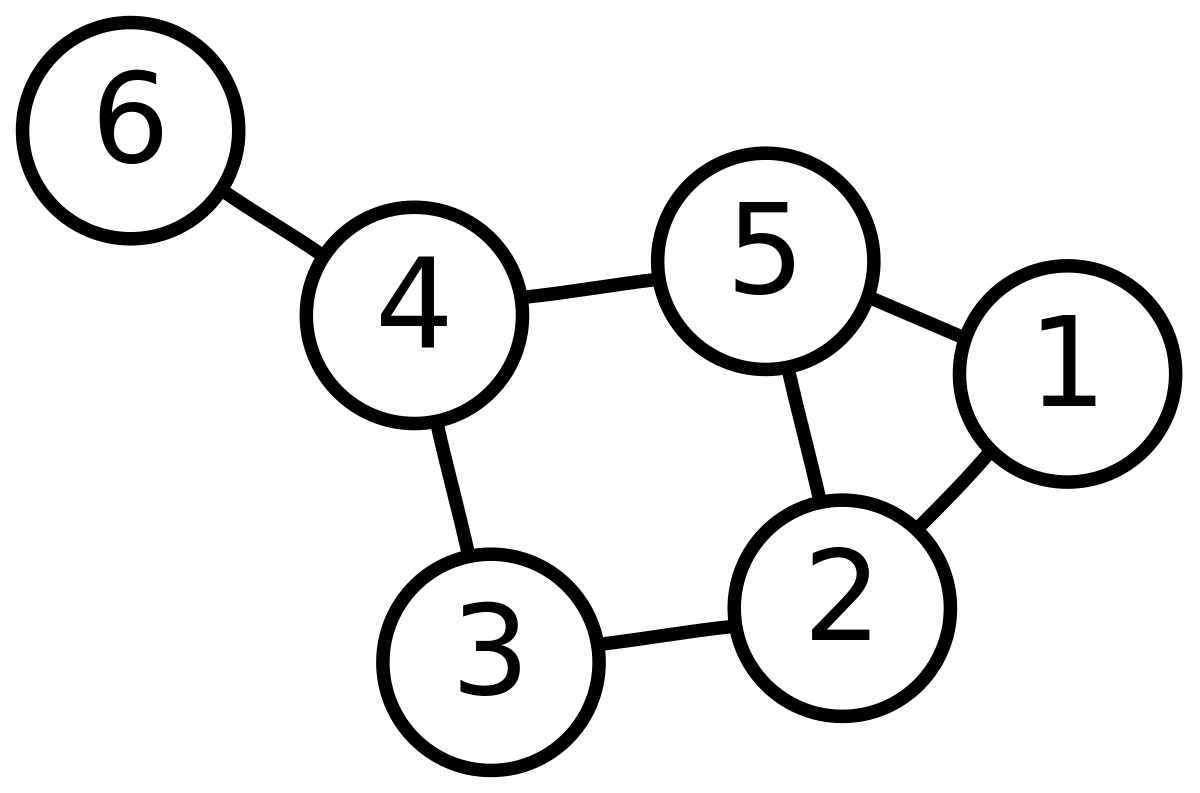
In discrete mathematics, and more specifically in graph theory, a graph is a structure amounting to a set of objects in which some pairs of the objects are in some sense "related". The objects correspond to mathematical abstractions called vertices (also called nodes or points) and each of the related pairs of vertices is called an edge (also ca...
it looks like this
 high coyote
It's the typical exercise of projective geometry
marsh glade
hot axle
https://en.wikipedia.org/wiki/Graph_(discrete_mathematics)
Oh
Its just even if I try to use everything I learned it doesn't work
hot axle
Your Fano Plane is basically a graph where lines can have more than 2 points on them
high coyote
It's not graph theory
marsh glade
I can't seem to solve it
marsh glade
hot axle
Your Fano Plane is basically a graph where lines can have more than 2 points on ...
Oh
hot axle
high coyote
It's the typical exercise of projective geometry
Ok I haven't heard about it thanks!
hot axle
marsh glade
Oh
I mean this as a way to picture it, it's not really a graph ok
high coyote
@marsh glade what have you tried for 1.?
marsh glade
high coyote
<@1097417413814931507> what have you tried for 1.?
I got some answers
So for points 1 and 2 I did line 1 contains both, for points 2 and 7, I did line 5 contains both, and for points 5 and 6, I did line 2 contains both
I still don't get the violations of the first axiom part
hot axle
The first axiom being that only one line goes through 2 points, none of the examples you gave violate it right?
marsh glade
hot axle
The first axiom being that only one line goes through 2 points, none of the exam...
Yeah
It can't violate it
marsh glade
Because theres no multiple lines that goes through 2 points at least from what I see
marsh glade
hot axle
It means the drawing seems to not violate axiom 1
Oh
hot axle
marsh glade
Because theres no multiple lines that goes through 2 points at least from what I...
Right, exactly
marsh glade
But then the thing is question 2 starts to get me confused
high coyote
marsh glade
I still don't get the violations of the first axiom part
Why should you? The axiom 1 holds
marsh glade
I don't get question 2: Which point is the intersection of line 1 and line 2? 3 line 4 and line 2? line 3 and line 6? Are there any violations of the second axiom?
Because there is no point that intersects line 1 and 2
marsh glade
high coyote
Why should you? The axiom 1 holds
Oh
marsh glade
marsh glade
Because there is no point that intersects line 1 and 2
I don't think there is any points unless I'm wrong
hot axle
marsh glade
But then the thing is question 2 starts to get me confused
I would assume you get the intersection of l1 & l2 ; as well as l4 & l2. In practice they look like regular lines and the drawing shows they do in fact intersect right ?
hot axle
marsh glade
I don't think there is any points unless I'm wrong
Oh you don't see a point where they cross ?
high coyote
marsh glade
I don't think there is any points unless I'm wrong
Look at the picture and see which lines 1 belongs to.
marsh glade
hot axle
I would assume you get the intersection of l1 & l2 ; as well as l4 & l2. In prac...
Yeah
Ohhhh
I get it now
hot axle
Awesome
marsh glade
Now question 3 and 4
Is making my life difficult
Q3: Why is it that regardless of which four points you choose, one point will not be on the same line as the other three?
Wait
hot axle
The weirder one is l3 & l6 for question 2
marsh glade
hot axle
The weirder one is l3 & l6 for question 2
Isn't the point where they intersect point 3
Not sure
marsh glade
marsh glade
Q3: Why is it that regardless of which four points you choose, one point will no...
would the answer be that 4 points are only coplanar but not colinear?
So since there is only 3 points for side of the triangle,
4 points cannot be all on the same line
hot axle
marsh glade
would the answer be that 4 points are only coplanar but not colinear?
They are ALL "coplanar" it's a Fano Plane haha
marsh glade
hot axle
They are ALL "coplanar" it's a Fano **Plane** haha
Oh
But no four points would be collinear right?
hot axle
marsh glade
would the answer be that 4 points are only coplanar but not colinear?
Yeah you're right that's the idea
hot axle
marsh glade
So since there is only 3 points for side of the triangle,
exactly
hot axle
I have never seen projective planes in geometry I'll check
marsh glade
Oh ok
hot axle
Or maybe @high coyote can help
hot axle
Oh wait I'm an idiot
The definition of a projective plane is the 3 axioms we saw
I thought that was the definition of the Fano Plane
hot axle
marsh glade
Thanks so much guys for all of your help
You're welcome <3
hot axle
marsh glade
But whats a projective plane?
So what you really want is to verify all 3 axioms on the Fano Plane, that way you will know that it is in fact a projective plane
marsh glade
hot axle
So what you really want is to verify all 3 axioms on the Fano Plane, that way yo...
Oh
But then would question three verify the third axiom?
hot axle
Yes precisely
Fano Plane basically overkills the 3rd axiom by having all sets of 4 points non colinear
high coyote
(1) (2) (3) is a possible definition of projective plane
I'd say it's a projectivization of a third-dimensional afine space tho. 😋
marsh glade
hot axle
Fano Plane basically overkills the 3rd axiom by having all sets of 4 points non ...
Oh
marsh glade
high coyote
(1) (2) (3) is a possible definition of projective plane
I'd say it's a project...
Oh ok thanks a lot
hot axle
high coyote
(1) (2) (3) is a possible definition of projective plane
I'd say it's a project...
cool words :)
hot axle
Awesome !! You did it
marsh glade
hot axle
Awesome !! You did it
Yeah!!!!
Now I get what this question is
Thanks a lot guys
hot axle
marsh glade
Its just even if I try to use everything I learned it doesn't work
And about this - that's precisely the point of the exercise, so don't worry
marsh glade
hot axle
And about this - that's precisely the point of the exercise, so don't worry
Oh okay
hot axle
Next time try to treat something new like you don't know anything and try to piece it out from scratch, then you should find similarities to other things you've done
marsh glade
hot axle
Next time try to treat something new like you don't know anything and try to pie...
Oh ok
Thanks
Also I have one more math question I want to ask
hot axle
That way you're sure to not go in blindly thinking you know stuff you don't
marsh glade
hot axle
That way you're sure to not go in blindly thinking you know stuff you don't
Oh yeah
marsh glade
marsh glade
Also I have one more math question I want to ask
Should I ask it here?
hot axle
sure
marsh glade
Its this

All of the questions I do are complicated
The thing is I feel like I can use a protractor, and at the same time, I feel like I don't need it
hot axle
Yeah you're not supposed to
marsh glade
Oh ok
hot axle
All the info is in the runway numbers
marsh glade
hot axle
What about 1 and 2 ?
I still don't get
hot axle
I think in this situation you need to get out a paper a pencil and draw out examples so you know you get it
marsh glade
hot axle
I think in this situation you need to get out a paper a pencil and draw out exam...
Oh ok yeah I have a paper and pencil out
Wait for question 1, will the runway number be 21?
hot axle
first you need to draw North because everything is based off of that
marsh glade
Oh
hot axle
marsh glade
Wait for question 1, will the runway number be 21?
yeah I think you got the main idea
Try to draw 1, 36 and 27 for example
and 18
marsh glade
Oh ok
hot axle
I'll give you an answer on my magnicent paint drawing 🙃
hot axle
Are you good ? should i send my png ? @marsh glade
marsh glade
hot axle
Are you good ? should i send my png ? <@1097417413814931507>
Yeah it would be great if you could

 hot axle
Thanks
marsh glade
I get it now
but I'm now stuck on question 2 and I have to get the value for angle 3 and 4
I got 1 and 2
which are 30 degrees and 150 degrees
Not sure if I am correct
hot axle
What's the easiest way to calculate them with what you know already ?
marsh glade
hot axle
What's the easiest way to calculate them with what you know already ?
You get the runway number and then you multiply it by 10 and then subtract it from 360?
Not sure
hot axle
marsh glade
which are 30 degrees and 150 degrees
Yep I agree with those answers as well
hot axle
Yeah so what's so different about 3 and 4?
marsh glade
hot axle
Yeah so what's so different about 3 and 4?
Wait
I still can't solve 3 and 4
marsh glade
hot axle
What is it you don't know that you need to know to answer? <@1097417413814931507...
I don't get how the runway number will work using the same method I did for the other runways
The numbers are bigger
so like runway 33
hot axle
yeah
Ok I see you're intuition, you're careful to not make a mistake by overgeneralizing
marsh glade
hot axle
Ok I see you're intuition, you're careful to not make a mistake by overgeneraliz...
Yeah
hot axle
So here it's fine as long your angles don't go over 360 and reset to 0
hot axle
Because that's the only way your angle substractions will not work
marsh glade
hot axle
Because that's the only way your angle substractions will not work
Oh okay
Then for 3
like angle 3
will it be like 50?
50 degrees?
Because if the unknown runway number is 21,
hot axle
the runway numbers are 15, 21 and 33 right ?
hot axle
So if you put it all clearly like that you're unlikely to mess up
hot axle
Was it really 50 ? between runways 15 and 21
marsh glade
I think I'm getting confused of finding the degrees
marsh glade
hot axle
Was it really 50 ? between runways 15 and 21
Wait no
hot axle
Yeah it seems that way
marsh glade
60 degrees for angle 3 and 120 degrees for angle 4?
Because if you subtract 330 from 210 you get 120, and if thats angle 4 then angle 3 is 60?
hot axle
marsh glade
I think I'm getting confused of finding the degrees
(it seemed like you're measuring discrete intervals like between 1 and 3 strictly you have one integer but 3-1 is 2)
marsh glade
hot axle
(it seemed like you're measuring discrete intervals like between 1 and 3 strictl...
Oh
hot axle
marsh glade
Because if you subtract 330 from 210 you get 120, and if thats angle 4 then angl...
Yup perfect
marsh glade
hot axle
Yup perfect
Ohh okay
hot axle
You need to crosscheck things when you get the chance, it lowers your amount of mistakes
marsh glade
hot axle
You need to crosscheck things when you get the chance, it lowers your amount of ...
Oh okay
Question 5 is just a lot of drawing: Airports are designed with more than one runway so that pilots landing planes will not have to deal with the difficult situation of landing in a strong crosswind. Design a runway system with the fewest number of runways so that a pilot will never have a crosswind angle of more than 30 degrees. Number each of the runways in your plan
I have to make my own runway system
hot axle
Yeah the hard part is to interpret the question
marsh glade
hot axle
Yeah the hard part is to interpret the question
Yeah I agree
hot axle
"the fewest number of runways so that a pilot will never have a crosswind angle of more than 30 degrees"
marsh glade
hot axle
"the fewest number of runways so that a pilot will never have a crosswind angle ...
Hmm
hot axle
what spacing does that suggest you try
marsh glade
hot axle
what spacing does that suggest you try
30 degrees spacing or less?
hot axle
yeah
perfect
you can try and see if it works, and if you can prove it's the fewest amount of runways you won
marsh glade
hot axle
you can try and see if it works, and if you can prove it's the fewest amount of ...
Oh ok
Give me a minute
Let me try it out
hot axle
Honestly it's been so fun helping you out, I'm really happy to do this
marsh glade
hot axle
Honestly it's been so fun helping you out, I'm really happy to do this
Thanks so much
I learned so much from today
hot axle
That's awesome, my pleasure
 hot axle
yes that's the idea
marsh glade
Oh okay
hot axle
but what about wind coming from the West?
marsh glade
hot axle
but what about wind coming from the West?
Oh yeah
Then I would need to make one more?
marsh glade
hot axle
Do you see where this is going ?
Yeah

Would it be like this?
Or more like
this
 marsh glade
hot axle
Prove to me that it works for wind coming from the west
marsh glade
hot axle
Prove to me that it works for wind coming from the west
Oh wait there is still a area
hot axle
what about, wind at 61 degrees from North
marsh glade
that is larger than 30 degrees
hot axle
marsh glade
Oh wait there is still a area
yeah exactly
 marsh glade
yeah?
hot axle
marsh glade
this
this one actually works
try 61 degrees wind, which track would that be?
marsh glade
Hmm
marsh glade
hot axle
try 61 degrees wind, which track would that be?
like which runway?
hot axle
ie smallest angle from wind
marsh glade
Or
hot axle
marsh glade
the horizontal runway
Yeah because 90-61 = 29
hot axle
so you get wind at 29 degrees
marsh glade
hot axle
so you get wind at 29 degrees
Oh yeah
hot axle
marsh glade
Wait so it works?
Yeah ! Weird right?
marsh glade
hot axle
Yeah ! Weird right?
Yeah!
Wait so it will still work if the angles are 30 degrees right?
hot axle
So maybe our first idea for a solution wasn't the minimum amount of runways
marsh glade
Oh
hot axle
marsh glade
Wait so it will still work if the angles are 30 degrees right?
Yeah of course, but is it minimal?
marsh glade
hot axle
Yeah of course, but is it minimal?
Maybe?
hot axle
Well
hot axle
marsh glade
this all 30 degree angles
marsh glade
hot axle
this all 30 degree angles
Yeah
hot axle
So which one is better, ie minimal amount of runways?
marsh glade
hot axle
So which one is better, ie minimal amount of runways?
the minimal amount of runways?
hot axle
Yeah which has less runways
marsh glade
hot axle
This has some 30 and some 60 degrees
This one
hot axle
Yep
marsh glade
Ohhhhh
hot axle
So then the other can't be our final answer yeah
marsh glade
hot axle
So then the other can't be our final answer yeah
Yeah
hot axle
It's disproven to be our final answer
marsh glade
hot axle
It's disproven to be our final answer
Yeah
Because while it works theres too many runways
hot axle
Exactly
hot axle
Any ideas to make our current best one even better? Is it really the best it can be?
marsh glade
hot axle
Any ideas to make our current best one even better? Is it really the best it can...
I don't see any which can work to be even better
There might be a way
hot axle
All right
marsh glade
But you need to consider wind from all four directions
hot axle
marsh glade
There might be a way
That's good thinking
marsh glade
hot axle
That's good thinking
👍
hot axle
marsh glade
But you need to consider wind from all four directions
Actually, is there only just 4 directions of wind?
marsh glade
hot axle
Actually, is there only just 4 directions of wind?
No theres a lot more
From like southeast, northwest, southwest, northeast
marsh glade
hot axle
In this model we can just think of the wind as an angle
Yeah
hot axle
So any angle can be a wind angle
marsh glade
hot axle
So any angle can be a wind angle
Yeah I agree
hot axle
right
Honestly it's the kind of question where if you can find the best answer immediately you can justify that it's the best one
And the hard part is finding it
marsh glade
hot axle
Honestly it's the kind of question where if you can find the best answer immedia...
Oh yeah
Because even with our current runway system I feel like there is a way to get even less runways
hot axle
It's kinda hard to brute force your way, but you can probably do it analytically
marsh glade
hot axle
It's kinda hard to brute force your way, but you can probably do it analytically
Yeah
Because what I drew is it all intersects at one point, but what if they intersect at different points?
hot axle
It's just going to be more complicated
hot axle
marsh glade
Because what I drew is it all intersects at one point, but what if they intersec...
Nah we don't do that, remember runways are just angles and wind is just an angle so it doesn't matter
marsh glade
hot axle
Nah we don't do that, remember runways are just angles and wind is just an angle...
Oh yeah
marsh glade
hot axle
Nah we don't do that, remember runways are just angles and wind is just an angle...
Oh yeah
hot axle
if you take another runway that runs parallel it will still have the same angle with the wind
marsh glade
hot axle
if you take another runway that runs parallel it will still have the same angle ...
Oh yeah so that won't work
hot axle
Yeah
I can either give you a solution
or help you do it analytically (takes alot more time)
marsh glade
hot axle
Let me write out my model in LaTeX
Thanks
hot axle
So let n be the number of tracks, you have tracks $t_1, t_2, \cdots t_n$ integers between 1 and 36 that represent the track numbers (note : you can't have more than 36 tracks)
wraith daggerBOT
Mathospondylus
 marsh glade
Yeah
I think even if you just give me a solution I can try to figure out how you got to that solution
hot axle
The tracks are already in growing order so our problem translates to having the space between tracks ie $t_k -t_{k-1} \quad \forall k \in {2, \cdots n}$ to verify an equation
wraith daggerBOT
Mathospondylus
 hot axle
marsh glade
I think even if you just give me a solution I can try to figure out how you got ...
hot axle
marsh glade
I think even if you just give me a solution I can try to figure out how you got ...
ok if you want
marsh glade
hot axle
ok if you want
Sure but after you give me the solution can you just explain it to be simply?
marsh glade
Oh yeah haha
I would take the analytical approach if I had more time
But I need to go shower and to go sleep soon
haha
Thanks
marsh glade
hot axle
it is quite arduous
I agree
 hot axle
marsh glade
I would take the analytical approach if I had more time
hot axle
marsh glade
I would take the analytical approach if I had more time
actually it's algebraic my bad
marsh glade
hot axle
actually it's algebraic my bad
Oh
marsh glade
hot axle
because it uses letters haha
Oh yeah haha
I get it now
Thanks so much!
I learned so much today
hot axle
Sorry I gave you a red herring, I would have made the same mistakes on my own haha
starting from 30 degrees and realising it's not actually minimal
marsh glade
hot axle
Sorry I gave you a red herring, I would have made the same mistakes on my own ha...
Oh no its fine haha
marsh glade
hot axle
starting from 30 degrees and realising it's not actually minimal
Oh yeah
hot axle
marsh glade
I learned so much today
Perfect! I'm glad I could help
marsh glade
I think thats all the questions today!
Before we go can I just send a friend request
cedar kilnBOT
Channel closed
Closed by @marsh glade
Use .reopen if this was a mistake.
cedar kilnBOT
Available help channel!
Send your question here to claim the channel.
Remember:
• Ask your math question in a clear, concise manner.
• Show your work, and if possible, explain where you are stuck.
• After 15 minutes, feel free to ping <@&286206848099549185>.
• Type the command .close to free the channel when you're done.
• Be polite and have a nice day!
Read #❓how-to-get-help for further information on how to ask a good question, and about conduct in the question channels.
 simple bane
 cedar kilnBOT
simple bane
simple bane
cedar kilnBOT
simple bane
simple bane
how to simplify
 violet brook
theres a few ways u can simplify
wraith daggerBOT
张元英
 simple bane
and then i cancel the threes?
violet brook

the other way i can think of
is
u can split 8^(4/3) into 8^(3/3) * 8^(1/3)
which becomes 8 * 8^(1/3)
8^1/3 is the same as cuberoot of 8 which is 2
8*2 = 16
simple bane
$8^\frac{4}{3}=8^\frac{3}{3}*8^\frac{1}{3}$
violet brook
i think u meant to write 8^(3/3) lmao
wraith daggerBOT
张元英
 simple bane
violet brook
u get why that works right
simple bane
violet brook
u get why that works right
uhm, $\frac{3}{3}*\frac{1}{3}\neq\frac{4}{3}$
wraith daggerBOT
张元英
 wraith daggerBOT
张元英
 simple bane
oh
wraith daggerBOT
taro
 violet brook
violet brook
violet brook
anyway using this method ur thing would be
3sqrt(8^4)
simple bane
i kinda forgot i got the unstable foundation
violet brook
think of it this way
simple bane
wraith dagger
**张元英**
does this work?
violet brook
$2^3 * 2^4 = (2 * 2 * 2) * (2 * 2 * 2 * 2) = 2^7$
simple bane
ah
wraith daggerBOT
taro
 violet brook
thats why we add the powers
violet brook
simple bane
does this work?
idk why u cubed the 2 tho
its sll good exxept for the 2^3
wait no
ur right
wait
now im confusing myself
simple bane
so what is $$\frac{8^{\frac{4}{3}}{8^{\frac{3}{3}}$$
violet brook
oh right ur right
u just changed 8 to 2^3
yeye that works
👍🏻
so u can turn it into a root
or play around w index laws
until u get smth easy to work with
up to you
wraith daggerBOT
张元英
Compile Error! Click the  reaction for more information.
(You may edit your message to recompile.)
 violet brook
simple bane
so what is $$\frac{8^{\frac{4}{3}}{8^{\frac{3}{3}}$$
violet brook
simple bane
so what is $$\frac{8^{\frac{4}{3}}{8^{\frac{3}{3}}$$
hmm?
simple bane
violet brook
hmm?
so what is (8^(4/3))/(8^(3/3))
wraith daggerBOT
taro
 violet brook
fgs good enough
simple bane
yes
simple bane
o
wraith daggerBOT
taro
 violet brook
simple bane
o
violet brook
simple bane
o
have u learnt these index laws before?
simple bane
$2^3^2$?
wraith daggerBOT
张元英
Compile Error! Click the reaction for more information.
(You may edit your message to recompile.)
 violet brook
${2^3}^2$
wraith daggerBOT
taro
 violet brook
this?
simple bane
violet brook
${2^3}^2$
yesyes
simple bane
2^6
 surreal cave
Is it $2^{(3^2)}$ or $(2^3)^{2}$? Parentheses matter when doing these problems
violet brook
$({2^3})^2 = 2^3 * 2^3 = 2^6$
wraith daggerBOT
taro
 simple bane
2^5
violet brook
surreal cave
Is it $2^{(3^2)}$ or $(2^3)^{2}$? Parentheses matter when doing these problems
im hoping he means the second one
wraith daggerBOT
MrFancy
 simple bane
whats the diffrence
violet brook
if theres brackets
simple bane
2^9
surreal cave
parentheses first :)
violet brook
yep
violet brook
npnp
simple bane
great help
violet brook
those r called the index laws if u need to learn them all
cedar kilnBOT
Channel closed
Closed by @simple bane
Use .reopen if this was a mistake.
cedar kilnBOT
Available help channel!
Send your question here to claim the channel.
Remember:
• Ask your math question in a clear, concise manner.
• Show your work, and if possible, explain where you are stuck.
• After 15 minutes, feel free to ping <@&286206848099549185>.
• Type the command .close to free the channel when you're done.
• Be polite and have a nice day!
Read #❓how-to-get-help for further information on how to ask a good question, and about conduct in the question channels.
 peak bough
is the inner function here (x^2+1) or sqrt(x^2+1)?

 mighty shuttle
Wdym by inner function? If you mean under the root it's $x^2 +1$
wraith daggerBOT
physicsrocks
 peak bough
mighty shuttle
Wdym by inner function? If you mean under the root it's $x^2 +1$
peak bough
mighty shuttle
Wdym by inner function? If you mean under the root it's $x^2 +1$
is that what I should substitute the u?
mighty shuttle
What's the question? Is this an integral?
cedar kilnBOT
Channel closed
Closed by @peak bough
Use .reopen if this was a mistake.
Available help channel!
Send your question here to claim the channel.
Remember:
• Ask your math question in a clear, concise manner.
• Show your work, and if possible, explain where you are stuck.
• After 15 minutes, feel free to ping <@&286206848099549185>.
• Type the command .close to free the channel when you're done.
• Be polite and have a nice day!
Read #❓how-to-get-help for further information on how to ask a good question, and about conduct in the question channels.
 hot sigil
Hello! I have a question in discrete calculus. For a finite set of natural numbers S, where |S| is the number of elements in S and σ(S) is the sum of all elements in S, find
cedar kilnBOT
hot sigil
Hello! I have a question in discrete calculus. For a finite set of natural numbe...

 wintry pier
!status
cedar kilnBOT
What step are you on?
1. I don't know where to begin
2. I have begun but got stuck midway
3. I got an answer but I'm told it's wrong
4. I got an answer and would like my work checked
5. I have a question about someone else's worked solution
6. None of the above
2
cedar kilnBOT
Show your work, and if possible, explain where you are stuck.
hot sigil
I started finding the possible partitions of the sums and find the ones where it would cancel out to eventually find a pattern
For example {1,2,3} and {1,5} would cancel out in that expression
Since they have the same sum but the parity of the number of elements is different
I looked for the sums of the first 12 numbers but it’s very random
hot sigil
The ones where the sums don’t cancel out are 2,5,7,11, and 12
hot sigil
 vagrant elbow
what the hell is discrete calculus
vagrant elbow
what the hell is discrete calculus
It’s calculus for integers
I know it doesn’t add much lol
wintry pier
Where did you find this exercise ?
hot sigil
Did you solve it?
Btw I’m not asking for a solution I’m just trying to find a hint to move forward
hot sigil
Yeah I tried to reason using the clue but should I do it on sigma(S)?
wintry pier
What did you find with the clue
hot sigil
Well there would be 10 derivatives and since the maximum degree is also 10 it means that I should only reason on x^10
All the other ones with a degree less than 10 would just disappear
wintry pier
hot sigil
Well there would be 10 derivatives and since the maximum degree is also 10 it me...
Aren’t you copying the forum ?
hot sigil
I checked the forum later on but I kinda got that on my own
I already have a good background in calculus
I know how derivatives work
I’m just really new to discrete calculus
wintry pier
You find the degree of the polynomial try finding the dominant coefficient
Think of Ponchammer polynomial
cedar kilnBOT
@hot sigil Has your question been resolved?
cedar kilnBOT
Channel closed
Closed due to timeout
Use .reopen if this was a mistake.
Available help channel!
Send your question here to claim the channel.
Remember:
• Ask your math question in a clear, concise manner.
• Show your work, and if possible, explain where you are stuck.
• After 15 minutes, feel free to ping <@&286206848099549185>.
• Type the command .close to free the channel when you're done.
• Be polite and have a nice day!
Read #❓how-to-get-help for further information on how to ask a good question, and about conduct in the question channels.
 crimson sedge
Triangle ABC is an isosceles triangle in which AB = AC. Side Ba is produced to D such that AD = AB. Show that angle BCD is a right angle.
 cedar kilnBOT
crimson sedge
Triangle ABC is an isosceles triangle in which AB = AC. Side Ba is produced to D...
cedar kilnBOT
crimson sedge
Triangle ABC is an isosceles triangle in which AB = AC. Side Ba is produced to D...
Please don't occupy multiple help channels.
 deep oriole
please delete either this channel or the other channel you are occupying
crimson sedge
<@&286206848099549185>
cedar kilnBOT
Please only use the <@&286206848099549185> ping once if your question has not been answered for 15 minutes. Please do not ping or DM individual users about your question.
crimson sedge
Bruh
 nimble veldt
name the angle at B as alpha. write the angle BAC in terms of alpha, writhe angle CAD in terms of alpha, write angle ACD in terms of alpha. then it is obvious.
crimson sedge
What is term of alpha
 silent finch
note A is circumcenter of ABC and midpoint is only circumcenter when triangle is right by Thales
nimble veldt
if angle aBC = alpha what is angle BAC?
crimson sedge
Bruh this is the Triangle lesson question
nimble veldt
crimson sedge
Bruh this is the Triangle lesson question
and what do you want to tell us with this?
crimson sedge
That I don't know who is alpha ; - ;
nimble veldt
name it x, or s or whatever you want.
nimble veldt
the angle at B
nimble veldt
ABC is isoceles, right?
crimson sedge
Yes
nimble veldt
what does this mean?
crimson sedge
Abc and acb are equal
nimble veldt
ok. and what else?
crimson sedge
Don't know
wintry pier
What about triangle ADC
crimson sedge
Acd and adc are equal
nimble veldt
isoceles means: two sides are equal, and therefore the opposite angles are equal. and its a triangle. su the sum of all angles is ...?
wintry pier
What else ?
crimson sedge
nimble veldt
isoceles means: two sides are equal, and therefore the opposite angles are equal...
180
nimble veldt
so the angle at BAC = ....?
nimble veldt
angle ABC = angle BCA (as isoceles) and angle ABC + angle BCA + angle BAC = 180, so you get angle BCA = 180 - 2 x angle ABC
wintry pier
I think you also have angle bac=angle dac ?
crimson sedge
nimble veldt
angle ABC = angle BCA (as isoceles) and angle ABC + angle BCA + angle BAC = 180,...
Wat
nimble veldt
what do you not understand?
crimson sedge
But it is coming bac is equal to 180 - 2x
nimble veldt
thats what i said.
nimble veldt
now, what does this mean for angle CAD?
crimson sedge
Angle cad is equal to 180 - 2y
nimble veldt
what the fuck is y?
crimson sedge
Variable
nimble veldt
forget it. BAC = 180-2x, BD is a straight line, so CAD = 180-(180-2x) = 2x
crimson sedge
Ok ok got
Wait
I think I can solve it now
Gimme 5 min
@nimble veldt hey
I cant
Find it
nimble veldt
you have one angle in CAD (2x), triangle CAD is isoceles, so two angles (the 2 unknows) are equal, and the sum is 180. so the angle ACD is ,,,,
crimson sedge
X?
nimble veldt
CAD + ACD + CDA = 180, now use CAD = 2x and ACD = CDA, so you get 2x+2ACD=180 -> ACD = ...
crimson sedge
90 - 2x
nimble veldt
no
crimson sedge
45 - x
nimble veldt
no, 2x+2ACD = 180 -> 2ACD = 180 - 2x -> ACD = 90-x
nimble veldt
and for the final step. sum up ACD and ACB.
cedar kilnBOT
Channel closed
Closed by @drowsy apex
Use .reopen if this was a mistake.
Available help channel!
Send your question here to claim the channel.
Remember:
• Ask your math question in a clear, concise manner.
• Show your work, and if possible, explain where you are stuck.
• After 15 minutes, feel free to ping <@&286206848099549185>.
• Type the command .close to free the channel when you're done.
• Be polite and have a nice day!
Read #❓how-to-get-help for further information on how to ask a good question, and about conduct in the question channels.
 mint viper
My lecturer asks us to "Discuss" theorems such as the Mean value theorem. I am not sure what this means, but he says he does not want us to define it or calculate the MVT for a function. What must we do when he asks us to "Discuss"
cedar kilnBOT
mint viper
My lecturer asks us to "Discuss" theorems such as the Mean value theorem. I am n...
nimble veldt
think about what it means. try to find interpretations. try to understand for what each of the prerequisites is necessary.
 tropic oxide
so you asked him what he wants you to do, but he ONLY told you what NOT to do?
mint viper
tropic oxide
so you asked him what he wants you to do, but he ONLY told you what NOT to do?
Exactly
tropic oxide
sounds like a purposefully unhelpful teacher who wants you to fail.
mint viper
nimble veldt
think about what it means. try to find interpretations. try to understand for wh...
Thank you this helps, but I feel like he still might want more than this.
nimble veldt
mint viper
Thank you this helps, but I feel like he still might want more than this.
he wants you to learn and understand the mean value theorem. do you have qeustions? ask them in a group with your colleagues. and discuss them.
there are no qeustions for you? try to explan the questions from your colleagues.
cedar kilnBOT
Channel closed
Closed by @mint viper
Use .reopen if this was a mistake.
Available help channel!
Send your question here to claim the channel.
Remember:
• Ask your math question in a clear, concise manner.
• Show your work, and if possible, explain where you are stuck.
• After 15 minutes, feel free to ping <@&286206848099549185>.
• Type the command .close to free the channel when you're done.
• Be polite and have a nice day!
Read #❓how-to-get-help for further information on how to ask a good question, and about conduct in the question channels.
 tacit mulch
How to solve the equation set 2x + 3y = 2, -3x+2y=10?
tacit mulch
do I begin like 5(2x+3y)=-3x+2y or?
because that becomes "13y=-13x", thusly y=-x
well i found the solution, x=-2 and y=2
😅
.close
cedar kilnBOT
Channel closed
Closed by @tacit mulch
Use .reopen if this was a mistake.
Available help channel!
Send your question here to claim the channel.
Remember:
• Ask your math question in a clear, concise manner.
• Show your work, and if possible, explain where you are stuck.
• After 15 minutes, feel free to ping <@&286206848099549185>.
• Type the command .close to free the channel when you're done.
• Be polite and have a nice day!
Read #❓how-to-get-help for further information on how to ask a good question, and about conduct in the question channels.
 misty notch
am i correct?
 cedar kilnBOT
misty notch
am i correct?
misty notch
cedar kilnBOT
misty notch
am i correct?
misty notch
ping me when you reply plz
 umbral dew
csc is cosec?
umbral dew
misty notch
ping me when you reply plz
.
 cobalt granite
yes
umbral dew
misty notch
am i correct?
yes, youre correct
misty notch
umbral dew
csc is cosec?
yes
misty notch
umbral dew
yes, youre correct
alr ty
cedar kilnBOT
@misty notch Has your question been resolved?
Channel closed
Closed by @misty notch
Use .reopen if this was a mistake.
Available help channel!
Send your question here to claim the channel.
Remember:
• Ask your math question in a clear, concise manner.
• Show your work, and if possible, explain where you are stuck.
• After 15 minutes, feel free to ping <@&286206848099549185>.
• Type the command .close to free the channel when you're done.
• Be polite and have a nice day!
Read #❓how-to-get-help for further information on how to ask a good question, and about conduct in the question channels.
crimson sedge
Why is (b) is not a partial order and (c) is not a total order ?
crimson sedge

I found that b is reflexive, transitive and anti-symmetric thus it shall be a partial order ?
 radiant mulch
help i need to submit tomorrow
cedar kilnBOT
radiant mulch
help i need to submit tomorrow
Please read #❓how-to-get-help
 obsidian coral
crimson sedge
why are you writing in an occupied channel ?
obsidian coral
crimson sedge
why are you writing in an occupied channel ?
Because people don't read server instructions
tropic oxide
obsidian coral
Because people don't read server instructions
some people read the server instructions and actively choose not to follow htem
crimson sedge
 south tundra
|x| = |y| doesn't mean x = y
south tundra
|x| = |y| doesn't mean x = y
I need some time to process your answer
south tundra
Could you show your reasoning behind why the relation in b is anti-symmetric?
crimson sedge
Well if for instance |1| =< |2| then not |2| =< |1|
The only case when that happens is when a = b
For instance |1| = |1|
south tundra
How about the fact that |-1| <= |1| and |1| <= |-1|?
south tundra
Yeah so in b if you have xRy and yRx then you have |x| <= |y| and |y| <= |x|
Meaning |x| = |y|
But that is as far as you can go
|x| = |y| means x = y or x = -y
crimson sedge
Yes I see
For c I see that it is transitive, reflexive and for symmetry...
Well it looks anti symmetric
south tundra
For anti-symmetry assume xRy and yRx meaning (|x| < |y| or x = y) and (|y| < |x| or x = y)
crimson sedge
And I am trying to see if it's a total order
south tundra
Now, we can't have |x| < |y| because it would contradict |y| < |x| and x = y at the same time
Meaning x = y is forced
south tundra
crimson sedge
Well it looks anti symmetric
Generally try to come up with a rigorous proof
crimson sedge
Ok I am gonna do that next time
south tundra
Hm, the answer sheet says that the relation in c is not a total order?
 south tundra
Ah I see
crimson sedge
I found
south tundra
You can't compare the nonzero numbers with opposite signs
E.g. you can't verify whether (-1)R(1) or (1)R(-1)
So it's not total
cedar kilnBOT
Channel closed
Closed by @sweet mica
Use .reopen if this was a mistake.
Available help channel!
Send your question here to claim the channel.
Remember:
• Ask your math question in a clear, concise manner.
• Show your work, and if possible, explain where you are stuck.
• After 15 minutes, feel free to ping <@&286206848099549185>.
• Type the command .close to free the channel when you're done.
• Be polite and have a nice day!
Read #❓how-to-get-help for further information on how to ask a good question, and about conduct in the question channels.
crimson sedge
 cedar kilnBOT
crimson sedge
crimson sedge
cedar kilnBOT
crimson sedge
crimson sedge
I don't understand how to progress at all
 pliant wedge
We want to take notice to "If the least amount of material is to be used", which means we will be needing the surface areas of a cylinder as well
crimson sedge
OH
lemme try

@pliant wedge I did this.. abomination

this was my idea initially
i got it through getting the area of each can
adding it all up together
pliant wedge
right
crimson sedge
then
substituted
h1 and h2 in respect to r

with these
I got those off of the volume formula
 pliant wedge
I'm not quite sure how to get to here now
But I think it might have something to do with min values of the function
pliant wedge
Yeah that makes sense
cedar kilnBOT
@crimson sedge Has your question been resolved?
cedar kilnBOT
Channel closed
Closed due to timeout
Use .reopen if this was a mistake.
Available help channel!
Send your question here to claim the channel.
Remember:
• Ask your math question in a clear, concise manner.
• Show your work, and if possible, explain where you are stuck.
• After 15 minutes, feel free to ping <@&286206848099549185>.
• Type the command .close to free the channel when you're done.
• Be polite and have a nice day!
Read #❓how-to-get-help for further information on how to ask a good question, and about conduct in the question channels.
 misty venture
find a linear transformation T:R^3 -> R^3 that maintains
I don't know how to solve this please help
 cedar kilnBOT
misty venture
find a linear transformation T:R^3 -> R^3 that maintains
I don't know how to sol...
cedar kilnBOT
cedar kilnBOT
misty venture
find a linear transformation T:R^3 -> R^3 that maintains
I don't know how to sol...
cedar kilnBOT
Channel closed
Closed by @misty venture
Use .reopen if this was a mistake.
Available help channel!
Send your question here to claim the channel.
Remember:
• Ask your math question in a clear, concise manner.
• Show your work, and if possible, explain where you are stuck.
• After 15 minutes, feel free to ping <@&286206848099549185>.
• Type the command .close to free the channel when you're done.
• Be polite and have a nice day!
Read #❓how-to-get-help for further information on how to ask a good question, and about conduct in the question channels.
crimson sedge
Pick a number between 1 to 1000 at random. Find the probability
that is neither divisible by 12 nor 15.
How i solve this? or learn to solve this
cedar kilnBOT
crimson sedge
Pick a number between 1 to 1000 at random. Find the probability
that is neither ...
 prisma gull
So we have to first find which all are divisible by 12, 15, 12 and 15 then substract from the total
does that sound good?
 toxic bison
Every 4th and 5th multiple of 3 is a number divisible by 12 or 15
You have to find out how many such multiples there are, and then subtract that value from 1000. Dividing that value by 1000 would give you your answer
crimson sedge
@toxic bison I found this youtube video, let me try that, send you the pic of the solution.
toxic bison
Sure
prisma gull
No of multiples of 15= $\lfoor{1000/15}$
crimson sedge
oh okaqy
toxic bison
prisma gull
No of multiples of 15= $\lfoor{1000/15}$
Yes, but that will not work. This is because there will be common multiples of 12 and 15
For example 60, 120, etc
prisma gull
I didn’t complete
toxic bison
My bad
prisma gull
You have find multiple of 15
similarly for 12
and substract their common multiples
To find common multiples= floor(1000/lcm(15,12))
cedar kilnBOT
@crimson sedge Has your question been resolved?
 toxic bison
crimson sedge
toxic bison
crimson sedge
The LCM of 12 and 15 would be 60
crimson sedge
so?
crimson sedge
this driving me nuts, i am gonna go outside after this and get some food.
crimson sedge
toxic bison
My bad
have i solved it correctly?
toxic bison
Just understand the logic first please
crimson sedge
ok
toxic bison
crimson sedge
have i solved it correctly?
I do not think so
So every 12th number is a multiple of 12
Every 15th number is a multiple of 15
Every 60th number has both factors
Makes sense?
crimson sedge
yes
crimson sedge
60?
toxic bison
Number of 12 multiples: 83
Number of 15 multiples: 66
Number of 60 multiples: 16
toxic bison
crimson sedge
60?
It is the LCM of 12 and 15
toxic bison
So total number would actually be 83+66-32
We are subtracting 16 because when we add the multiples of 12 and 15, we are adding 60 twice
crimson sedge
arent we going to multiply 83 by 12?
crimson sedge
toxic bison
We are subtracting 16 because when we add the multiples of 12 and 15, we are add...
got it
toxic bison
crimson sedge
arent we going to multiply 83 by 12?
I don't see what that will get you
Can you share the question again please
crimson sedge
 toxic bison
This is your solution right. I need the question
crimson sedge
Pick a number between 1 to 1000 at random. Find the probability
that is neither divisible by 12 nor 15.
toxic bison
Yes
toxic bison
toxic bison
So total number would actually be 83+66-32
So 117 of them are not divisible
Which means the answer is 117/1000 or 0.117
Did you understand the solution?
crimson sedge
So, we are going to multiply the 12 and 15 by 83 and 66 respectively. Then subtract 60x16=960 which is the lcm of (12 and 15)
toxic bison
Why do you want to multiply them lol
See, we just need the number of factors right
We don't need to multiply for that
toxic bison
Every 12th number is a multiple of 12
How many such "12th numbers" are there in a 1000? Well, it is 83
crimson sedge
yes
toxic bison
crimson sedge
so 12 and 15 minus 60?
Number of factors of 12 + Number of factors of 15 - 2(number of factors of 60)
toxic bison
crimson sedge
yes
The same you can do for 15 and 60
That gets you the number of multiples
crimson sedge
83 + 66 = 154
toxic bison
toxic bison
Number of factors of 12 + Number of factors of 15 - 2(number of factors of 60)
Then you can use this formula
Yes
crimson sedge
154 - ?
toxic bison
crimson sedge
154 - ?
2*16
toxic bison
We are multiplying 2 and 16
See
It depends on the question
Every multiple of 60 is a multiple of 12 and 15
Right?
crimson sedge
yes
toxic bison
You need to make sure that the number is neither divisible by 12 or 15
Because if it is divisible by 12 and not 15, it does not fulfill the condition of the question
Because it states "neither"
Makes sense?
crimson sedge
yes
toxic bison
The only time a number is divisible by 12 and 15 is when it is divisible by 60
True?
toxic bison
So you have to remove all 60 multiples
toxic bison
crimson sedge
and how we do that?
When you add the multiples of 12 and 15, multiples of 60 come with both of them
toxic bison
crimson sedge
60 and 16 multiple
Leave 16 for now, I'll get to that part
crimson sedge
toxic bison
When you add the multiples of 12 and 15, multiples of 60 come with both of them
yes
toxic bison
toxic bison
When you add the multiples of 12 and 15, multiples of 60 come with both of them
But you do not want mutliples of 60, so you have to subtract them twice
crimson sedge
yes
toxic bison
Coz one for 12 and one for 15, because they both bring the 60 multiples with them
crimson sedge
yes
toxic bison
Now how many multiples of 60 are between 1 and 999?
crimson sedge
16
toxic bison
Well, the answer is 16
Yes
So you multiply 16 and 2, and then you subtract that value from the number of multiples of 12 and 15
Makes sense?
crimson sedge
yes, it does 🙂
crimson sedge
83 + 66 - 32 = 117 is the answer?
toxic bison
Yes
But you need to find the probability right
So you need to divide that by 1000, because it is the total possible outcomes
crimson sedge
yes
crimson sedge
why
toxic bison
117 is the number of values that are divisible by both 12 and 15
We want the rest of the values
So we subtract it from the total
Get it?
crimson sedge
117 divided by 883 is my answer
crimson sedge
yes
toxic bison
That should be your answer
toxic bison
Anytime!
cedar kilnBOT
Channel closed
Closed by @warm copper
Use .reopen if this was a mistake.
Available help channel!
Send your question here to claim the channel.
Remember:
• Ask your math question in a clear, concise manner.
• Show your work, and if possible, explain where you are stuck.
• After 15 minutes, feel free to ping <@&286206848099549185>.
• Type the command .close to free the channel when you're done.
• Be polite and have a nice day!
Read #❓how-to-get-help for further information on how to ask a good question, and about conduct in the question channels.
 swift fossil
I am having trouble with questions C F and G
 cedar kilnBOT
swift fossil
I am having trouble with questions C F and G
cedar kilnBOT
swift fossil
I am having trouble with questions C F and G