#help-13
1 messages · Page 146 of 1
 south tundra
 jaunty mural
that's the first thing you should clear up for yourself
 crimson sedge
because 1+2 makes 3 and not 2
jaunty mural
yes and just "crossing out the 2's" does not get you the correct answer
,,\frac{1+2}{2}=\frac12 + \frac22
 wraith daggerBOT
 jaunty mural
Are you aware of this?
crimson sedge
yeah
jaunty mural
You can distribute division over addition
That's what you should be doing in the original
and eventually end up with this
wraith daggerBOT
 south tundra
crimson sedge
1-sin^2x/cos^2x?
south tundra
crimson sedge
1-sin^2x/cos^2x?
You mean (1 - sin^2)/cos^2 ?
crimson sedge
yes
south tundra
Yeah and just replace 1 - sin^2 with cos^2
crimson sedge
cos^2/cos^2?
south tundra
a/a = 1 for nonzero a in general
south tundra
crimson sedge
but how does that happen?
How does what happen exactly?
crimson sedge
south tundra
How does what happen exactly?
I meant to ask how do you get to that point
 cedar kilnBOT
@crimson sedge Has your question been resolved?
Channel closed
Closed by @mossy socket
Use .reopen if this was a mistake.
cedar kilnBOT
 Available help channel!
Send your question here to claim the channel.
Remember:
• Ask your math question in a clear, concise manner.
• Show your work, and if possible, explain where you are stuck.
• After 15 minutes, feel free to ping <@&286206848099549185>.
• Type the command .close to free the channel when you're done.
• Be polite and have a nice day!
Read #❓how-to-get-help for further information on how to ask a good question, and about conduct in the question channels.
 hollow pewter
please factorise x^3 pluse 6x^2 pluse 12x pluse 16
 sinful ocean
Use photomath
hollow pewter
how can you tell
 solemn torrent
x^3+6x^2+12x+16
hollow pewter
it is 12 x
solemn torrent
Rational root theorem?
 crude gale
he means use a calculator to solve this kind of question. or you get try (x+a)(x+b)(x+c) and slowly guess out what are a,b and c.
solemn torrent
nah don't use no calculators you won't learn or you could
but RRT it
or equate (x+a)(x+b)(x+c) to your expanded cubic
sinful ocean
Youre right i forgot rrt existed lol
 dusk finch
solemn torrent
or equate (x+a)(x+b)(x+c) to your expanded cubic
dusk finch
solemn torrent
or equate (x+a)(x+b)(x+c) to your expanded cubic
How would this help?
two of those constant will be complex btw
so it's really uneasy
and unhelpful
hollow pewter
please help
dusk finch
To speeden up the RRT process, notice that every term of x^3+6x^2+12x+16 is positive for positive x, hence all the roots will be negative.
Do you know what's rational root theorem?
hollow pewter
you can solve this by identities but which identity i dont know .yes i know
dusk finch
by identities? What kind of identities
I dont know any identity that could be applied to this
hollow pewter
i mean algebric identities like a pluse b the whole square
wraith daggerBOT
methisalwaysright
 dusk finch
It's quite non-trivial way to solve cubics though
hollow pewter
yes brother thank you.
actually yes but there is factor theorem which can also help
solemn torrent
in order to apply the factor theorem you'd need to have a root
cedar kilnBOT
@hollow pewter Has your question been resolved?
 uneven garden
cedar kilnBOT
uneven garden
cedar kilnBOT
Channel closed
Closed by @hollow pewter
Use .reopen if this was a mistake.
cedar kilnBOT
Available help channel!
Send your question here to claim the channel.
Remember:
• Ask your math question in a clear, concise manner.
• Show your work, and if possible, explain where you are stuck.
• After 15 minutes, feel free to ping <@&286206848099549185>.
• Type the command .close to free the channel when you're done.
• Be polite and have a nice day!
Read #❓how-to-get-help for further information on how to ask a good question, and about conduct in the question channels.

 hearty oak
how does that get b
 crystal raptor
Well how did you get E
hearty oak
i had like 2 seconds left on timer i guessed randomly
 eager crypt
wait i was trying to get one leg of CFB
i think bc it's 45-45-90
wait no that's not it
hearty oak
i just assumed since cb is 8 that b had to be 8 above since the distance was that long but i guess tahts the hyptonuse
eager crypt
actually idk i'm going to go again
yeah i think it's because 8 is root 2 * one of the legs
so you find the sides and follow it to where it would go on the plane
eager crypt
no cfb is a triangle itself
hearty oak
i meant cfeb
hearty oak
do they split in fb?
hearty oak
i get that when we do that fb becomes 4sqrt 2
eager crypt
yeah
hearty oak
ohh it has to be same if its origin
hearty oak
when we split triangles does it have to be one point to another what if we split it from f to 8
eager crypt
then it would just be more steps to find fb
since we still would need to split fb into a line i think
eager crypt
oh well i was doing the exact same steps just on cfb i didn't know you wre on the other one
hearty oak
nvm i just figured out we just divide 8 by sqrt 2 then ti gives side
eager crypt
yes that was exactly what i was going to say
hearty oak
and its same as 4 sqrt 2
eager crypt
yes
hearty oak
thanks for help
eager crypt
alr now i have to do my own work
hearty oak
.close
cedar kilnBOT
Channel closed
Closed by @hearty oak
Use .reopen if this was a mistake.
Available help channel!
Send your question here to claim the channel.
Remember:
• Ask your math question in a clear, concise manner.
• Show your work, and if possible, explain where you are stuck.
• After 15 minutes, feel free to ping <@&286206848099549185>.
• Type the command .close to free the channel when you're done.
• Be polite and have a nice day!
Read #❓how-to-get-help for further information on how to ask a good question, and about conduct in the question channels.
hollow pewter
eager crypt
alr now i have to do my own work
can i help you i have found theanswer
cedar kilnBOT
hollow pewter
can i help you i have found theanswer
@hollow pewter Has your question been resolved?
cedar kilnBOT
@hollow pewter Has your question been resolved?
 dire geode
hollow pewter
can i help you i have found theanswer
dire geode
hollow pewter
can i help you i have found theanswer
don't open a channel to help other people who aren't available
.close
cedar kilnBOT
Channel closed
Closed by @dire geode
Use .reopen if this was a mistake.
cedar kilnBOT
Available help channel!
Send your question here to claim the channel.
Remember:
• Ask your math question in a clear, concise manner.
• Show your work, and if possible, explain where you are stuck.
• After 15 minutes, feel free to ping <@&286206848099549185>.
• Type the command .close to free the channel when you're done.
• Be polite and have a nice day!
Read #❓how-to-get-help for further information on how to ask a good question, and about conduct in the question channels.
 haughty python
how would you do this
 cedar kilnBOT
haughty python
how would you do this
cedar kilnBOT
haughty python
how would you do this
@haughty python Has your question been resolved?
dire geode
!show
cedar kilnBOT
Show your work, and if possible, explain where you are stuck.
haughty python
dire geode
!show
ummmmm thing is i dont even Know how to start this
dire geode
haughty python
ummmmm thing is i dont even Know how to start this
use definitions of consistent estimator
haughty python
like i know u gotta get plim y = y
but like
i dont know how to like approach it
haughty python
dire geode
use definitions of consistent estimator
should i start by expanding the summation or
 haughty python
dire geode
use the weak law to find the limit of this
haughty python
dire geode
use the weak law to find the limit of this
ok so then itd be limn-> infinity P(|yn-y| >e) = 0
(where lambda = y cuz idk how to type it on the keyboard)
dire geode
the second definition of consistent estimator here is the more useful one
 haughty python
dire geode
the second definition of consistent estimator here is the more useful one
haughty python
dire geode
the second definition of consistent estimator here is the more useful one
Ok Wait but then what 😭
dire geode
haughty python
ok so then itd be limn-> infinity P(|yn-y| >e) = 0
plug your definition of gamma_n into this
use all the information you're given from the problem
haughty python
ok one sec
haughty python
dire geode
plug your definition of gamma_n into this
but like even when you do that like what are u supposed to like simplify it
dire geode
Simplifying is generally a good thing to do in math
haughty python
oops i meant how*
lmao
so like expand and then sub in gamma into wherever theres a exi^3
wait wait
hang on
Nvm 😦
cedar kilnBOT
@haughty python Has your question been resolved?
cedar kilnBOT
Channel closed
Closed due to timeout
Use .reopen if this was a mistake.
cedar kilnBOT
Available help channel!
Send your question here to claim the channel.
Remember:
• Ask your math question in a clear, concise manner.
• Show your work, and if possible, explain where you are stuck.
• After 15 minutes, feel free to ping <@&286206848099549185>.
• Type the command .close to free the channel when you're done.
• Be polite and have a nice day!
Read #❓how-to-get-help for further information on how to ask a good question, and about conduct in the question channels.
eager crypt
alr so the way i think of it is like
its 3:1 which is 4 total
20 is divisible by 4 easily
with the model they do that times 20/4 bc that's how many times you can fit it
that's how the model works basically if taht's what you were asking
pretty sure
cedar kilnBOT
@leaden shore Has your question been resolved?
eager crypt
alr cool
cedar kilnBOT
Channel closed
Closed by @leaden shore
Use .reopen if this was a mistake.
Available help channel!
Send your question here to claim the channel.
Remember:
• Ask your math question in a clear, concise manner.
• Show your work, and if possible, explain where you are stuck.
• After 15 minutes, feel free to ping <@&286206848099549185>.
• Type the command .close to free the channel when you're done.
• Be polite and have a nice day!
Read #❓how-to-get-help for further information on how to ask a good question, and about conduct in the question channels.
 native shuttle
 cedar kilnBOT
native shuttle
native shuttle
cedar kilnBOT
native shuttle
native shuttle

im working on d)
i cant seem to get the induction step right
i need to show the last part of the inequality to then link it back to the start to show that its valid for K+1
 inland fossil
okay so you know what you have to show right
wraith daggerBOT
 native shuttle
yes exactly
so i expanded the left
and got this

but i dont know how to proced from here
maybe squaring both sides?
inland fossil
yeah thats worth a try
 inland fossil
okay yeah this problem is a bit annoying


 inland fossil
ur prof is using products?
native shuttle
he just use sigma notation cause thats what we were working on at the momment
so he used it as a example of how it can be summed up as a summation
inland fossil
yeah it looks like ur prof just rewrote the problem
didnt really provide anything useful past that
native shuttle
wraith dagger
everything from before is restating this
 slate lintel
okay i don't want to give you too much but this can be done with relatively simple algebra
note that everything here is positive
native shuttle
yeah thats what i was thinking
is just state that $2 \sqrt(k+1)$ is greater then $\sqrt(k)$
omfg how do u use this
close enough
but the issue is, is that you need to show that the statement is true for the 1/sqrt(k+1) case
,help
wraith daggerBOT
A brief description and guide on how to use me was sent to your DMs!
Please use ,list to see a list of all my commands, and ,help cmd to get detailed help on a command!
inland fossil
i found a way thats horrible but works so rn im looking for a nice elegant way
native shuttle
wraith dagger
@inland fossil
just so we are on the same page
this is all we need to show right
inland fossil
yea
its a ridiculously tight bound
i cant find any nice inequality approximation tricks that work
native shuttle
ill email my prof
inland fossil
if you want i can show you my horrible way
but i doubt thats what ur prof is looking for
native shuttle
yeah he really wants elegance
native shuttle
inland fossil
but i doubt thats what ur prof is looking for
ill tag u in #discrete-math once i get a solution if u want lol
native shuttle
hmmm yeah idk if thts exactly what we are looking for
he did it in those pictures and it was super clean when he did
ofcourse he scribbled it and skipped steps in his writing lol
inland fossil
¯_(ツ)_/¯
cedar kilnBOT
Channel closed
Closed by @native shuttle
Use .reopen if this was a mistake.
Available help channel!
Send your question here to claim the channel.
Remember:
• Ask your math question in a clear, concise manner.
• Show your work, and if possible, explain where you are stuck.
• After 15 minutes, feel free to ping <@&286206848099549185>.
• Type the command .close to free the channel when you're done.
• Be polite and have a nice day!
Read #❓how-to-get-help for further information on how to ask a good question, and about conduct in the question channels.
 eager grove
hello i just need someone to verify my solution
cedar kilnBOT
eager grove
hello i just need someone to verify my solution
eager grove
one second

this is the question

this is the solution for a

this is the solution for b
the answer for B was 1.51 for anyone who is confused on the hand wriring
slate lintel
hmm why do you have a different formula for P in part b than you do in part a?
eager grove
eager grove
because it says to begin at 12
for B
oh shoot
i jus realized
i think B is incorrect
but what about A
wraith daggerBOT
Result:
1.9978307742067
but you have $P = 100(2.9)^{t/0.65}$ in part b which isn't what you had before
wraith daggerBOT
Hayley
 slate lintel
you start with 12g, so after one half-life there would be 6g left
eager grove
the equation
slate lintel
what
no, do it by percent because itll be easier
if you have 1g left over out of 12 starting grams, what percent do you have left?
eager grove
8.3 percent
slate lintel
okay, so forget about problem (a), look at the question and set up your eqn
slate lintel
there's a negative sign but yes
wait no
P is percent left over after t days
why did you replace 100 with 8.3?
$P = 100(2.9)^{-t}$
wraith daggerBOT
Hayley
 slate lintel
and you said there would be 8.3% left over right?
eager grove
wraith dagger
**Hayley**
so its this but P = 8.3
slate lintel
yeeeeee
eager grove
thanks a lot 🙏
slate lintel
,calc 100*2.9^-2.3
wraith daggerBOT
Result:
8.6394203453389
,calc 100*2.9^-2.4
wraith daggerBOT
Result:
7.7668479839676
yea
cedar kilnBOT
@eager grove Has your question been resolved?
Channel closed
Closed by @eager grove
Use .reopen if this was a mistake.
Available help channel!
Send your question here to claim the channel.
Remember:
• Ask your math question in a clear, concise manner.
• Show your work, and if possible, explain where you are stuck.
• After 15 minutes, feel free to ping <@&286206848099549185>.
• Type the command .close to free the channel when you're done.
• Be polite and have a nice day!
Read #❓how-to-get-help for further information on how to ask a good question, and about conduct in the question channels.
 jovial snow
 cedar kilnBOT
jovial snow
jovial snow
cedar kilnBOT
jovial snow
jovial snow
Its on non-homogeneous poisson process. This is an assignment Question. I did part (a). I would like a hint or blue print to get started on (b). I am completely lost.
cedar kilnBOT
@jovial snow Has your question been resolved?
cedar kilnBOT
@jovial snow Has your question been resolved?
cedar kilnBOT
Channel closed
Closed due to timeout
Use .reopen if this was a mistake.
Available help channel!
Send your question here to claim the channel.
Remember:
• Ask your math question in a clear, concise manner.
• Show your work, and if possible, explain where you are stuck.
• After 15 minutes, feel free to ping <@&286206848099549185>.
• Type the command .close to free the channel when you're done.
• Be polite and have a nice day!
Read #❓how-to-get-help for further information on how to ask a good question, and about conduct in the question channels.
@quartz salmon Has your question been resolved?
cedar kilnBOT
Channel closed
Closed due to timeout
Use .reopen if this was a mistake.
cedar kilnBOT
Available help channel!
Send your question here to claim the channel.
Remember:
• Ask your math question in a clear, concise manner.
• Show your work, and if possible, explain where you are stuck.
• After 15 minutes, feel free to ping <@&286206848099549185>.
• Type the command .close to free the channel when you're done.
• Be polite and have a nice day!
Read #❓how-to-get-help for further information on how to ask a good question, and about conduct in the question channels.
 quartz salmon
I'm currently working on a problem involving a water tank that contains 30,000 liters of pure water. The tank is being supplied with water containing 0.008 g/l of a contaminant at a rate of 600 liters per minute. Additionally, 800 liters per minute of the well-mixed contaminated water is being removed from the tank.
I'm seeking assistance in graphically representing the variation of the contaminant's quantity in the tank over time. Specifically, I would like to create a graph that illustrates how the contaminant's concentration changes within the tank as a function of time.
cedar kilnBOT
quartz salmon
I'm currently working on a problem involving a water tank that contains 30,000 l...
@quartz salmon Has your question been resolved?
cedar kilnBOT
@quartz salmon Has your question been resolved?
cedar kilnBOT
@quartz salmon Has your question been resolved?
cedar kilnBOT
@quartz salmon Has your question been resolved?
 edgy oyster
err
 fallen moat
quartz salmon
I'm currently working on a problem involving a water tank that contains 30,000 l...
fallen moat
quartz salmon
I'm currently working on a problem involving a water tank that contains 30,000 l...
what have you tried?

hmmm how to add spoiler to picture?
cedar kilnBOT
@quartz salmon Has your question been resolved?
 austere hull
fallen moat
hmmm how to add spoiler to picture?
austere hull
fallen moat
hmmm how to add spoiler to picture?
when you send an image you click to the eye button then it makes it as spoiler
fallen moat
austere hull
when you send an image you click to the eye button then it makes it as spoiler
oh thanks!
👁️

 grizzled geyser
.close
cedar kilnBOT
Channel closed
Closed by @grizzled geyser
Use .reopen if this was a mistake.
cedar kilnBOT
Available help channel!
Send your question here to claim the channel.
Remember:
• Ask your math question in a clear, concise manner.
• Show your work, and if possible, explain where you are stuck.
• After 15 minutes, feel free to ping <@&286206848099549185>.
• Type the command .close to free the channel when you're done.
• Be polite and have a nice day!
Read #❓how-to-get-help for further information on how to ask a good question, and about conduct in the question channels.
 fluid anchor
Shivangi deposits Rs. 500 every month in a recurring deposit scheme and receives Rs. 16550 at the end of 5/2 years. The rate of interest given by the bank is ?
cedar kilnBOT
fluid anchor
Shivangi deposits Rs. 500 every month in a recurring deposit scheme and receives...
cedar kilnBOT
@fluid anchor Has your question been resolved?
fluid anchor
<@&286206848099549185>
 somber valve
"Stop that."
fluid anchor
?
cedar kilnBOT
@fluid anchor Has your question been resolved?
cedar kilnBOT
@fluid anchor Has your question been resolved?
fallen moat
fluid anchor
Shivangi deposits Rs. 500 every month in a recurring deposit scheme and receives...
is it compounded monthly?
cedar kilnBOT
@fluid anchor Has your question been resolved?
cedar kilnBOT
Channel closed
Closed due to timeout
Use .reopen if this was a mistake.
cedar kilnBOT
Available help channel!
Send your question here to claim the channel.
Remember:
• Ask your math question in a clear, concise manner.
• Show your work, and if possible, explain where you are stuck.
• After 15 minutes, feel free to ping <@&286206848099549185>.
• Type the command .close to free the channel when you're done.
• Be polite and have a nice day!
Read #❓how-to-get-help for further information on how to ask a good question, and about conduct in the question channels.
 wicked brook
I'm trying to prove the forwards direction of Wilson's theorem: if p is prime then (p-1)! = -1 mod p.
My argument is that if I take all the elements of $\mathbb{I}_p^x$ and multiply them, I'll get the class [-1] since [-1] is the only order two element in the group. The result follows immediately.
cedar kilnBOT
wicked brook
I'm trying to prove the forwards direction of Wilson's theorem: if p is prime th...
wraith daggerBOT
zander_a
 wicked brook
Does this work?
 crimson delta
why does order two have anything to do with that?
wicked brook
Cause I'm multiplying everything together, a = a^-1 iff <a>=2. Thus, the other elements will be cancelled by their inverses
crimson delta
ok and why is -1 the only order two element?
wicked brook
Cause If I'm squaring to 1 mod p I'm either 1 or -1, and the identity is special
crimson delta
why are those the only two?
wicked brook
Hmmm.
My first thought is to look at it as a class like if [a]^2 = 1 then [a^2]=1, so like a^2 = 1 mod p. Or (a-1)(a+1)=0 mod p. As far I see, this implies that it's just 1 and -1 cause division mod p is nice
cedar kilnBOT
@wicked brook Has your question been resolved?
cedar kilnBOT
Channel closed
Closed due to timeout
Use .reopen if this was a mistake.
Available help channel!
Send your question here to claim the channel.
Remember:
• Ask your math question in a clear, concise manner.
• Show your work, and if possible, explain where you are stuck.
• After 15 minutes, feel free to ping <@&286206848099549185>.
• Type the command .close to free the channel when you're done.
• Be polite and have a nice day!
Read #❓how-to-get-help for further information on how to ask a good question, and about conduct in the question channels.
crimson sedge
 cedar kilnBOT
crimson sedge
crimson sedge
cedar kilnBOT
crimson sedge
crimson sedge
Would this be correct?
 rare vault
i think they want you to use numbers, not a, b, c
because right now i could say (a=-2) and this wouldnt be right
crimson sedge
it says sketch tho-
Why wouldn't -2x be right?
As long as its the ax^2+bx+c formula, wont it be all good?
slate lintel
if a = -2 in your eqn then it would point up not down
rare vault
^^
slate lintel
just pick some numbers
rare vault
or bound your variables but thats harder
rare vault
does that go up or down?
rare vault
does that have any x intercepts?
slate lintel
I think it does
rare vault
it absolutely does
crimson sedge
oh-
rare vault
its upside down and you shifted it up
crimson sedge
it shouldn't
hmm, how about -2x^2 + 4x - 7?
I think that works
Cause its no x-int
slate lintel
it's quadratic so it's a parabola
it's not centered at the axis like your drawing but whatever
rare vault
Do you know how to check?
you want to see when its equal to 0
so does 0 = x+3 have any solutions?
rare vault
then it does have an x int
crimson sedge
wont there always be a solution for it to equal 0 tho?
slate lintel
lines will always have both a y and an x intercept unless they're horizontal or vertical
 cunning forum
the coefficient of x^2 should be negative
b=0 for it to be centered at the y-axis
discriminant must be negative
crimson sedge
slate lintel
lines will always have both a y and an x intercept unless they're horizontal or ...
It says no x-int tho?
crimson sedge
rare vault
whats the solution to
0 = -2x^2 + 4x - 7
there would be 2 solutions
cunning forum
cunning forum
the coefficient of x^2 should be negative
b=0 for it to be centered at the y-axi...
these three combined will give a solution
rare vault
crimson sedge
there would be 2 solutions
okay this is true but they are both imaginary so they are not x intercepts
slate lintel
crimson sedge
y=x+3?
right this is a line though (but I think you just forgot the ² symbol maybe)
crimson sedge
cunning forum
these three combined will give a solution
-2x^2 + (-3)?
crimson sedge
yep a=-2
cunning forum
(since the original thing was -ax^2+bx+c)
cunning forum
crimson sedge
yep a=-2
no
crimson sedge
oh
cunning forum
you put -ax^2+bx+c for some reason?
crimson sedge
i thought x^2 was negative?
cunning forum
ah either way put it such that the coefficient of x^2 is -2
cunning forum
crimson sedge
i thought x^2 was negative?
yeah so if a=-2 (-ax^2) works out to 2x^2
crimson sedge
cunning forum
yeah so if a=-2 (-ax^2) works out to 2x^2
OHHH
cunning forum
ok first are you going with y=ax^2+bx+c or y=-ax^2+bx+c
crimson sedge
So -2x^2 + (-3) is the equation that would work?
Does it satisfy the other condition tho-
cunning forum
what other condition
cunning forum
crimson sedge
Does it satisfy the other condition tho-
any quadratic with negative coefficient of -x^2 satisfies the x->inf, y-> -inf thing
dont worry about it
crimson sedge
cunning forum
what other condition
as x approches negative infinity, y will too
cunning forum
crimson sedge
as x approches negative infinity, y will too
yeah that too
crimson sedge
cunning forum
yeah that too
does -2x^2 + (-3) satisfy that?
cunning forum
as x approaches plus minus inf, y will approach -inf
it will approach inf instead of coefficient of x^2 is positive
crimson sedge
but x should only aprroch -inf
cunning forum
crimson sedge
does -2x^2 + (-3) satisfy that?
yes since the coefficient of x^2 is engative
cunning forum
crimson sedge
but x should only aprroch -inf
yeah im saying IF the coefficient was positive
its like additional info
crimson sedge
OHH, that makes sense
Ty! :>
Its just a downwards parabola right?
Because its supposed to be a function
And a parabola wont count as that
cunning forum
crimson sedge
Its just a downwards parabola right?
yeaah
cunning forum
crimson sedge
And a parabola wont count as that
wait what why not
its a quadratic function
crimson sedge
cunning forum
wait what why not
it says on google that a parabola isnt a function-
cunning forum
what
wrong kind of parabola
those that open left or right are not
@crimson sedge dont be confused
crimson sedge
OHHHH
cunning forum
it says those arent functions
crimson sedge
Okayyy! Thanks!
cedar kilnBOT
@crimson sedge Has your question been resolved?
Channel closed
Closed by @next raptor
Use .reopen if this was a mistake.
Available help channel!
Send your question here to claim the channel.
Remember:
• Ask your math question in a clear, concise manner.
• Show your work, and if possible, explain where you are stuck.
• After 15 minutes, feel free to ping <@&286206848099549185>.
• Type the command .close to free the channel when you're done.
• Be polite and have a nice day!
Read #❓how-to-get-help for further information on how to ask a good question, and about conduct in the question channels.
crimson sedge
im supposed to explain why this is false but do not know how: Let n ∈ N. If n is not prime, then it has a divisor d with 1 < d < n
cedar kilnBOT
crimson sedge
im supposed to explain why this is false but do not know how: Let n ∈ N. If n is...
rare vault
crimson sedge
im supposed to explain why this is false but do not know how: Let n ∈ N. If n is...
If n is not prime, then its composite
or
||its 1||
 golden sundial
crimson sedge
im supposed to explain why this is false but do not know how: Let n ∈ N. If n is...
golden sundial
crimson sedge
im supposed to explain why this is false but do not know how: Let n ∈ N. If n is...
contradiction
assume that there exists a natural number n that is not prime, but it does not have any divisors d with 1 < d < n.
because n is not prime, it must be composite (product of integers). consider n the product of two primes, p and q.
since n = p * q and we implied to not have divisors then n must be also prime and not composite but this goes against our initial assumption that n is not prome
cedar kilnBOT
Channel closed
Closed by @cunning tangle
Use .reopen if this was a mistake.
Available help channel!
Send your question here to claim the channel.
Remember:
• Ask your math question in a clear, concise manner.
• Show your work, and if possible, explain where you are stuck.
• After 15 minutes, feel free to ping <@&286206848099549185>.
• Type the command .close to free the channel when you're done.
• Be polite and have a nice day!
Read #❓how-to-get-help for further information on how to ask a good question, and about conduct in the question channels.
 hard pawn
in this example, we did we add pi instead of subtracting pi like what we do with sine and cosine?
 cedar kilnBOT
hard pawn
in this example, we did we add pi instead of subtracting pi like what we do with...
rare vault
hard pawn
in this example, we did we add pi instead of subtracting pi like what we do with...
cedar kilnBOT
hard pawn
in this example, we did we add pi instead of subtracting pi like what we do with...
rare vault
hard pawn
in this example, we did we add pi instead of subtracting pi like what we do with...
Is this asking why you added pi?
rare vault
it has nothing to do with the trig function, you just need all the answer between [0,2pi)
and since tan has a periodicity of pi, you can add and subtract pi to get more valid answers
so in this case we need to add it to get another valid answer in the domain
hard pawn
and in what case do we need to subtract pi?
rare vault
When you do part b, you will find that there are infinite solutions
you need to only find the ones between 0 and 2pi
1.3... + pi is less than 2pi
but 1.3 - pi is less than 0 so its not valid for this
and 1.3 + 2pi is greater than 2pi so its not valid answer
cedar kilnBOT
@hard pawn Has your question been resolved?
cedar kilnBOT
Channel closed
Closed due to timeout
Use .reopen if this was a mistake.
Available help channel!
Send your question here to claim the channel.
Remember:
• Ask your math question in a clear, concise manner.
• Show your work, and if possible, explain where you are stuck.
• After 15 minutes, feel free to ping <@&286206848099549185>.
• Type the command .close to free the channel when you're done.
• Be polite and have a nice day!
Read #❓how-to-get-help for further information on how to ask a good question, and about conduct in the question channels.
 fallow oracle
 cedar kilnBOT
fallow oracle
cedar kilnBOT
fallow oracle
 vestal bear
!status
cedar kilnBOT
What step are you on?
1. I don't know where to begin
2. I have begun but got stuck midway
3. I got an answer but I'm told it's wrong
4. I got an answer and would like my work checked
5. I have a question about someone else's worked solution
6. None of the above
1
 bitter obsidian
i think u should start by simplifiing the fractions
 livid hound
first step would be to sub in your values
fallow oracle
bitter obsidian
i think u should start by simplifiing the fractions
to decimals?
livid hound
no
keep fractions as they are
don't feel the urge to convert everything to decimals
fallow oracle
livid hound
first step would be to sub in your values
so 2 x (4/5) x (2/7) + root (4/5)(2/7^2)
fallow oracle
livid hound
don't feel the urge to convert everything to decimals
okay
fallow oracle
livid hound
missing ()
where?
fallow oracle
livid hound
also avoid using x for multiplication
so 2(4/5) (2/7) + root (4/5)(2/7^2)
livid hound
$2\br{\frac 45}\br{\frac 27} + \sqrt{\br{\frac 45}\br{\frac 27}^2}$
wraith daggerBOT
ℝamonov
 fallow oracle
wraith dagger
**ℝamonov**
fallow oracle
wraith dagger
**ℝamonov**
yes
livid hound
2(4/5) (2/7) + root**((4/5)((2/7)^2))**
missing those bolded () to clearly reprsent that in text
bitter obsidian
u must put ur answer in a single fraction
livid hound
$\frac{16}{35} + \frac{4}{7\zqrt{5}}$
wraith daggerBOT
ℝamonov
 vestal bear
use $
livid hound
yes, whether you factored out that 4 is optional
vestal bear
$\frac{4\left(4+\sqrt{5}\right)}{35}$
fallow oracle
$\frac{4\left(4+\sqrt{5}\right)}{35}
wraith daggerBOT
Arctic
 cedar kilnBOT
Channel closed
Closed by @fallow oracle
Use .reopen if this was a mistake.
Available help channel!
Send your question here to claim the channel.
Remember:
• Ask your math question in a clear, concise manner.
• Show your work, and if possible, explain where you are stuck.
• After 15 minutes, feel free to ping <@&286206848099549185>.
• Type the command .close to free the channel when you're done.
• Be polite and have a nice day!
Read #❓how-to-get-help for further information on how to ask a good question, and about conduct in the question channels.
 short crater
I have absolutely no idea where I am going wrong I keep getting 3.66460663 but since i round to two decimals i get 3.37 which is still wrong
 cedar kilnBOT
short crater
I have absolutely no idea where I am going wrong I keep getting 3.66460663 but s...
cedar kilnBOT
short crater
I have absolutely no idea where I am going wrong I keep getting 3.66460663 but s...
 royal loom
are you sure your answer is also in radians
 spare trout
3.664 rounds to 3.66
short crater
Apologies i get 3.3664
short crater
royal loom
are you sure your answer is also in radians
Im actually so dumb
thank you
royal loom
np
short crater
.close
cedar kilnBOT
Channel closed
Closed by @short crater
Use .reopen if this was a mistake.
short crater
.reopen
cedar kilnBOT
✅
short crater
So I got 0.00102548 and I dont know if i just risk it and put 0
and this is my last try on the question
royal loom
no don't do that
the angle in between them is very small
so it could be correct
but I'll check first
short crater
Thank you so much
royal loom
you can also just visualize the angle to give yourself a sanity check

something like this could never hurt
royal loom
short crater
So I got 0.00102548 and I dont know if i just risk it and put 0
this is wrong
short crater
so what would it be then?
wraith daggerBOT
austinu
 short crater
That one
royal loom
ok
plug in
and then take arccos
the result is not 0.001
tell me what you got for u dotted with v
and for the magnitudes
wraith daggerBOT
austinu
 royal loom
now take arccos of the right hand side to find theta
short crater
so arccos=17/sqrt29 times sqrt10?
royal loom
what
short crater
wdym right hand side
royal loom
wraith dagger
**austinu**
^
short crater
Oh wait so you want me to put all that into an arccos?
royal loom
if $$\cos{(\theta)}=\frac{17}{\sqrt{29}\sqrt{10}}$$ Then $$\arccos{\cos{(\theta)}}=\arccos{\frac{17}{\sqrt{29}\sqrt{10}}}$$ Then $$\theta=\arccos{\frac{17}{\sqrt{29}\sqrt{10}}}$$
wraith daggerBOT
austinu
 royal loom
note that in all cases arccos(cos(x)) is not necessarily equal to x, but in this case it doesn't matter
royal loom
Do you understand the difference between degrees and radians?
short crater
not really to be completely honest I always thought it was just another way to put degrees in
or vice versa
royal loom
short crater
0.05875582?
if you put arccos(whatever) into a calculator in radians mode
then the result will tell you the degree in radians
it doesn't "become" the radians
like that is just the angle
if you wanted to see if your result makes sense
you could confirm that 0.0587... radians is about 3 degrees
and then you can look back to your picture

and be like
yah that's about 3 degrees
short crater
Ohhhhhh alrighty that makes alot more sense actually thank you
royal loom
mhm
short crater
.close
cedar kilnBOT
Channel closed
Closed by @short crater
Use .reopen if this was a mistake.
cedar kilnBOT
Available help channel!
Send your question here to claim the channel.
Remember:
• Ask your math question in a clear, concise manner.
• Show your work, and if possible, explain where you are stuck.
• After 15 minutes, feel free to ping <@&286206848099549185>.
• Type the command .close to free the channel when you're done.
• Be polite and have a nice day!
Read #❓how-to-get-help for further information on how to ask a good question, and about conduct in the question channels.
 night forum
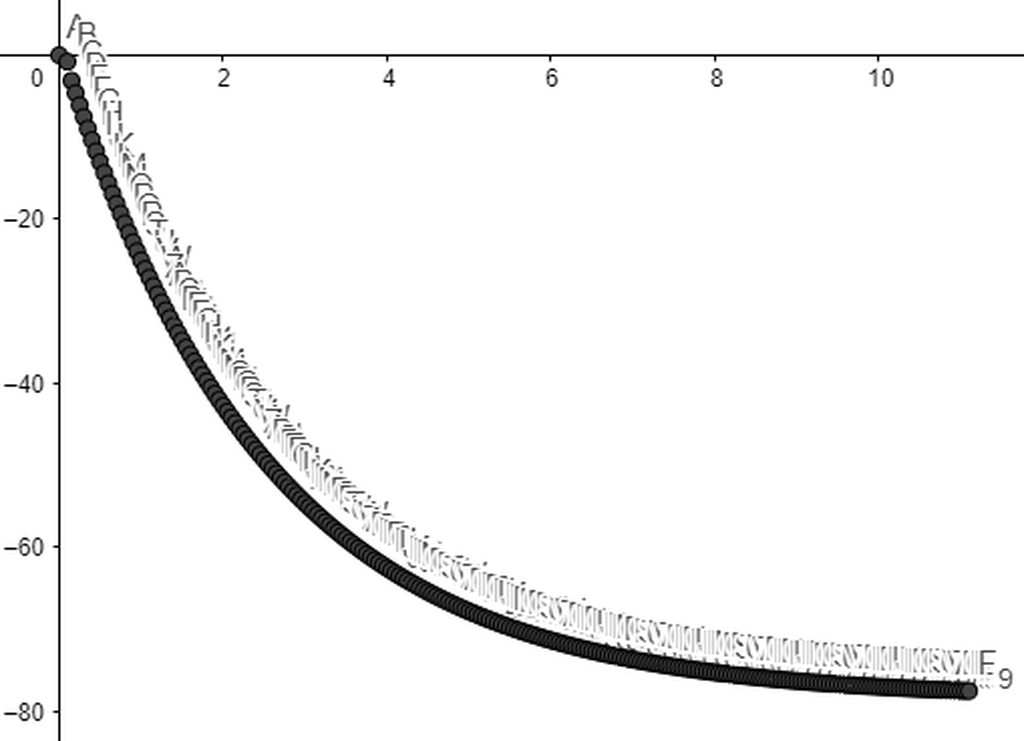
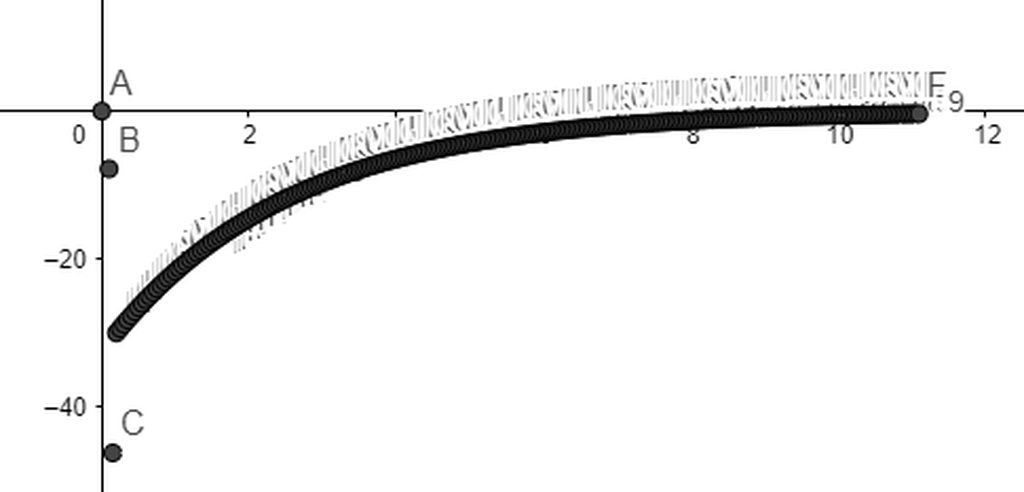
I have tried to study the functions my points made, like when they intersected and etc., to maybe combine some expressions to get the value of the parameters (I checked those with Wolfram Alpha again and again, of course).
The problem is, I got an expression for the x value of the inflection point of f(x), and an expression for the intersection point of f(x) and f'(x).
I got a domain of both of them and when I combine them, there is no solution. I am right in both expression, I can see with my eyes that these 2 conditions can co-exist, but somehow the equation says they can't. Where am I wrong?
f(x) = a/(1+be^(-cx+d))
An expression for the x value of the inflection point of f(x): 0.15 ≤ ln(be^d)/c < 0.2
An expression for the x value of the intersection point of f(x) and f'(x): 0.85 < ln(b * e^d * (c-1))/c < 0.9
f(x): https://imgur.com/a/opSSyLM
integral of f(x): https://imgur.com/a/5Ik7HxB
f'(x): https://imgur.com/a/fSm7ov9

 cedar kilnBOT
night forum
I have tried to study the functions my points made, like when they intersected a...
cedar kilnBOT
night forum
I have tried to study the functions my points made, like when they intersected a...
@night forum Has your question been resolved?
night forum
<@&286206848099549185>
cedar kilnBOT
@night forum Has your question been resolved?
 flat oracle
can you explain what the problem is again? i cant really understand
you got f(x)=a/(b+e^(-cx+d)) and you have found (somehow) an expression for the inflection and intersection point
night forum
flat oracle
you got f(x)=a/(b+e^(-cx+d)) and you have found (somehow) an expression for the ...
Indeed
I will try to explain it
f(x)=a/(b+e^(-cx+d))
The x value of it's inflection point is when f''(x)=0
So I found the second derivative of f(x), made it equal to zero, and got the value of x (which is ln(b*e^d)/c)
Now from the points I have, I can see that the inflection point is between 0.15 (or equal to) and 0.2
Same for the intersection, calcualted the first derivative of f(x), made it equal to f(x), got the value of x, and from the points I can see it's between 0.85 and 0.9
ln(b * e^d * (c-1))/c
Now I can get a range of values for d from both equation:
ln(e^0.15c/b) ≤ d < ln(e^0.2c/b)
ln(e^0.85c/b(c-1)) < d < ln(e^0.9c/b(c-1))
But there is no value for d that can satisfy both ranges of values
And I can't understand how
flat oracle
from this you conclude that the inflection point is between 0.15 and 0.2?
 night forum
flat oracle
from this you conclude that the inflection point is between 0.15 and 0.2?
night forum
flat oracle
from this you conclude that the inflection point is between 0.15 and 0.2?
Not from this
Inflection point of f(x) = Extrema point of f'(x)
This is f'(x)

You can see pretty clearly that there is a minimum point
Maybe it's on 0.15, and it can be after that, but it's before 0.2 for sure
flat oracle
i dont see any 0.15 or 0.2 on the numberline...you do that just by looking at it?
night forum
flat oracle
i dont see any 0.15 or 0.2 on the numberline...you do that just by looking at it...
Right because it's really zoomed out, but I have the exact coordinates of every point, so I can check
flat oracle
alright
flat oracle
night forum
Inflection point of f(x) = Extrema point of f'(x)
i dont think this is completely true
if the minimum you are talking about (which i cant see) is at the edge of the interval (or whatever than means for a function that consists only of points) then f'' isnt necessarily defined at that point
and also
night forum
flat oracle
if the minimum you are talking about (which i cant see) is at the edge of the in...
Wait I will draw it
Ignore my drawing skills
The extrema can be on this exact point

But it's also can be a little bit after that
Like that
 flat oracle
yeah that is an inflation point ok
night forum
flat oracle
yeah that is an inflation point ok
You mean inflection?
flat oracle
yeah lmao
night forum
flat oracle
and also
and also?
flat oracle
what i was going to say is that if f'(x) has a minimum or maximum at the edge of the interval then it isnt an inflection point
but thats not the case so
night forum
flat oracle
what i was going to say is that if f'(x) has a minimum or maximum at the edge of...
Oh right
But this is not the case
Do you have any idea why I get this weird situtaion? Of no solutions for d?
I must be wrong somewhere, because there is clearly a solution
flat oracle
so this is 0


considering a,b,c,d arent 0
a=0 and c=0 dont make sense anyway
so as you said x=ln(be^d/c)
so e^0.15<=be^d/c<=e^0.2
night forum
flat oracle
considering a,b,c,d arent 0
They aren't
I can tell you more, all of them are positive except of a which is negative
I can tell by how they change the shape of the function
night forum
flat oracle
so e^0.15<=be^d/c<=e^0.2
How you got this?
flat oracle
0.15<=x<=0.2
flat oracle
night forum
ln(b * e^d * (c-1))/c
i dont see how you got this for the intersection point though
night forum
flat oracle
i dont see how you got this for the intersection point though
I asked wolfram alpha
He said so
I trust him
Try it yourself
 night forum
flat oracle
oh it s the same alright
night forum
flat oracle
oh it s the same alright
Is it?
flat oracle
flat oracle
so e^0.15<=be^d/c<=e^0.2
how do you get the expression for d from this?
yeah it is
night forum
night forum
Is it?
I am sorry I have a feeling I am really weak at log rules
night forum
flat oracle
how do you get the expression for d from this?
Again, wolfram alpha
I wrote
0.85 < expression < 0.9
And it gave it to me
flat oracle
flat oracle
i dont see how you got this for the intersection point though
this is =ln(b/(c-1)*e^d)/c so ln(ab)=lna+lnb
 night forum
Wtf
I don't get it
How
I will trust you that you wrote the same but in different form
But how you got a solution and I didn't?
flat oracle
no idea
but u got 3 variables it s kind of weird if you couldnt just choose some for it to work
let me try to find some values to make it work ig to make sure we got it
night forum
flat oracle
let me try to find some values to make it work ig to make sure we got it
Imma do the same
flat oracle
 flat oracle
it s the same
night forum
Or maybe I am dumb?
flat oracle
i checked
night forum
Oh fuck
flat oracle
 night forum
I wrote the original function I was trying to work with
flat oracle
i was confused too u just multiply up and down with e^2cx
night forum
I changed it a little but I didn't write it here
So the function and the range of d don't match in what I wrote
Ok fine
night forum
flat oracle
Wait where the range of c came from?
Something during the calculation?
I mean c must be in these intervals or it's just some of the solutions?
 flat oracle
it just gives values for when the 2 inequalities are true at the same time
it says we got 3 cases
b>0 1.47<c<1.49 and the restriction of d
night forum
So they are true at the same time just in those values of c?
flat oracle
and then the other case for c=1.49...
well yes it seems so
if c is below 1.49759 or above 1.52205 we dont have any solutions
night forum
Understandable

 night forum
Why you wrote b=1 and c=1.48? just as an example?
flat oracle
flat oracle
let me try to find some values to make it work ig to make sure we got it
yes
night forum
Ohhh ok
flat oracle
so yeah everything makes sense
night forum
Yea
flat oracle
weird problem
night forum
You just did some kind of witchcraft and wolfram decided to work
flat oracle
you gotta check if wolfram is doing what you are telling it to do...most times it s pretty easy to realise something is wrong
but for example wolfram may decide that a is dependant on x or something crazy
and then you gotta realise that it s doing that and type the question in an other way
cedar kilnBOT
Channel closed
Closed by @flat oracle
Use .reopen if this was a mistake.
Available help channel!
Send your question here to claim the channel.
Remember:
• Ask your math question in a clear, concise manner.
• Show your work, and if possible, explain where you are stuck.
• After 15 minutes, feel free to ping <@&286206848099549185>.
• Type the command .close to free the channel when you're done.
• Be polite and have a nice day!
Read #❓how-to-get-help for further information on how to ask a good question, and about conduct in the question channels.
 ember geyser
can someone explain to me why 8 isnt correct?
 cedar kilnBOT
ember geyser
can someone explain to me why 8 isnt correct?
cedar kilnBOT
ember geyser
can someone explain to me why 8 isnt correct?
 dreamy sleet
if t is 8
then t + 1 is 9
try drawing a triangle with sides 8, 9, and 17
because that’s what triangle D would look like if t were 8
dreamy sleet
dreamy sleet
try drawing a triangle with sides 8, 9, and 17
have you done this?
cedar kilnBOT
As a helper, please do not give out answers that could be copied as a homework solution. Have the student work through the problem themselves and guide them along the way.
night forum
dreamy sleet
try drawing a triangle with sides 8, 9, and 17
Good luck in that, a triangle like that doesn't exist
dreamy sleet
night forum
Good luck in that, a triangle like that doesn't exist
That was the point of my message
cedar kilnBOT
@ember geyser Has your question been resolved?
Channel closed
Closed by @ember geyser
Use .reopen if this was a mistake.
cedar kilnBOT
Available help channel!
Send your question here to claim the channel.
Remember:
• Ask your math question in a clear, concise manner.
• Show your work, and if possible, explain where you are stuck.
• After 15 minutes, feel free to ping <@&286206848099549185>.
• Type the command .close to free the channel when you're done.
• Be polite and have a nice day!
Read #❓how-to-get-help for further information on how to ask a good question, and about conduct in the question channels.
 steady fossil
😭
 cedar kilnBOT
steady fossil
😭
steady fossil
cedar kilnBOT
steady fossil
😭
steady fossil
Could anyone tell me how +infinity works in integrals?
wraith daggerBOT
northsteve

 runic garnet
lol
steady fossil
these integrals fucking me up in statistics, why they gotta be so hard
runic garnet
U using speed of light in statistics?
steady fossil
c is just a parameter, but wolfram thinks its that
 silent finch
cedar kilnBOT
silent finch
cedar kilnBOT
@steady fossil Has your question been resolved?
cedar kilnBOT
Channel closed
Closed due to timeout
Use .reopen if this was a mistake.
cedar kilnBOT
Available help channel!
Send your question here to claim the channel.
Remember:
• Ask your math question in a clear, concise manner.
• Show your work, and if possible, explain where you are stuck.
• After 15 minutes, feel free to ping <@&286206848099549185>.
• Type the command .close to free the channel when you're done.
• Be polite and have a nice day!
Read #❓how-to-get-help for further information on how to ask a good question, and about conduct in the question channels.
hard pawn
is it really necessary to do all this working just to prove this identity?
 cedar kilnBOT
hard pawn
is it really necessary to do all this working just to prove this identity?
hard pawn
cedar kilnBOT
hard pawn
is it really necessary to do all this working just to prove this identity?
hard pawn
since tan is sin/cos, could i just do
(sin/cos)^2 + 1 = (1/cos)^2
therefore tan^2 + 1 = sec^2?
i dont see how the first and second steps are necessary
south tundra
Sure but you then need to show why (sin/cos)^2 + 1 = (1/cos)^2
south tundra
Yes you start with sin^2 + cos^2 = 1
hard pawn
the one that says cos^2 + sin^2 = 1
hard pawn
south tundra
Yes you start with sin^2 + cos^2 = 1
so for the 3rd property, will we also have to use this property to prove it?
why choose the first property to prove this tan property(the one in the ss)?
also, sorry if im asking too many questions
i need to get a solid understanding
south tundra
hard pawn
so for the 3rd property, will we also have to use this property to prove it?
Yeah
south tundra
hard pawn
why choose the first property to prove this tan property(the one in the ss)?
In a proof you usually start with what is known/assumed to be true
And the fastest way here would be to start from the Pythagorean identity
hard pawn
i see
south tundra
Cuz you just divide by cos^2 and simplify
hard pawn
wait
 sand cradle
hard pawn
hard pawn
is it really necessary to do all this working just to prove this identity?
sand cradle
hard pawn
hard pawn
is it really necessary to do all this working just to prove this identity?
in the first step, whyd we only use cos^2 + sin ^2 for the left side, and not the entire first property? (cos^2 + sin ^2 = 1)
is it because the cos and sin are relevant to the equation, and not the 1 from the first property?
south tundra
hard pawn
in the first step, whyd we only use cos^2 + sin ^2 for the left side, and not th...
 Not sure what you mean by that
hard pawn
ok so like
sand cradle
sand cradle
<https://math.stackexchange.com/a/2688641>
If sin^2(x) + cos^2(x) = 1 can be used
hard pawn
south tundra
<:thonk:406575732563902485> Not sure what you mean by that
in the first property, the cos and sine squared is equal to 1. so im wondering why we didnt bring back that 1 into the left side. as in, the '1' from the first property isnt used to prove the 2nd property
hard pawn
sand cradle
<https://math.stackexchange.com/a/2688641>
ill take a look at this
south tundra
hard pawn
in the first property, the cos and sine squared is equal to 1. so im wondering w...
The 1 is still there though, it's just divided by cos^2
a = b -> a/c = b/c (for nonzero c)
sin^2 + cos^2 = 1 -> (sin^2 + cos^2)/cos^2 = (1)/cos^2
hard pawn
wait
hard pawn
hard pawn
is it really necessary to do all this working just to prove this identity?
so is the 1 in the 3rd step the same '1' from the first property?
south tundra
If you are talking about the second '1' then yes
The first '1' is just a result of cos^2 cancelling itself out in cos^2/cos^2
hard pawn
OHHH
I get it now
the 1 has been there all along
thank you sir
or ma'am
.close
cedar kilnBOT
Channel closed
Closed by @hard pawn
Use .reopen if this was a mistake.
Available help channel!
Send your question here to claim the channel.
Remember:
• Ask your math question in a clear, concise manner.
• Show your work, and if possible, explain where you are stuck.
• After 15 minutes, feel free to ping <@&286206848099549185>.
• Type the command .close to free the channel when you're done.
• Be polite and have a nice day!
Read #❓how-to-get-help for further information on how to ask a good question, and about conduct in the question channels.
 versed fjord
help
 cedar kilnBOT
versed fjord
help
sinful ocean
cedar kilnBOT
versed fjord
help
sinful ocean
x^3(x-7)(x+7)
crimson sedge
A polynomial of the form [
\map f x = a_nx^n + a_{n-1}x^{n-1} + \hdots + a_1 x + a_0 ]
Is said to have degree $n$
wraith daggerBOT
 cedar kilnBOT
@versed fjord Has your question been resolved?
cedar kilnBOT
Channel closed
Closed due to timeout
Use .reopen if this was a mistake.
Available help channel!
Send your question here to claim the channel.
Remember:
• Ask your math question in a clear, concise manner.
• Show your work, and if possible, explain where you are stuck.
• After 15 minutes, feel free to ping <@&286206848099549185>.
• Type the command .close to free the channel when you're done.
• Be polite and have a nice day!
Read #❓how-to-get-help for further information on how to ask a good question, and about conduct in the question channels.
crimson sedge
 cedar kilnBOT
crimson sedge
https://media.discordapp.net/attachments/1127334904229789727/1129752609482354791...
crimson sedge
cedar kilnBOT
crimson sedge
https://media.discordapp.net/attachments/1127334904229789727/1129752609482354791...
crimson sedge
So i calculated the formulas and also resulted in x -5 v x 3 and i also understand the <= sign but i do not understand where the 0 <=x comes from
if the formula is needed to explain do let me know but it's kinda hard time typing it over and i've seen this coming back literally every time
 ornate sequoia
@crimson sedge wait uh do we know f(x) and g(x) or
or what exactly do you need to do
crimson sedge
ornate sequoia
<@456226577798135808> wait uh do we know f(x) and g(x) or
yea
ill send them i guess thats easier for sure
but it's not really related to this question
i'm more needing to understand as to how 0<=x<=3 came to be
i understand the x<=3
but not the 0<=x
ornate sequoia
well i suppose the 0<=x can only be explained if we have the functions right
crimson sedge
like i dont know how to calculate it or whatever how it works i dont knwo what it is at all
ive only worked with x<=3 v x<=-5 kind of format
but one sec
ill send u the formulas
crimson sedge
i alreayd got them
ornate sequoia
great
crimson sedge
f(x)=x^3+2x^2-8x
g(x)=7x
i understand i put them like
x^3+2x^2-8x=7x
and then sqrt
x^2+2x-8=7
x^2+2x-15=0
i put them in the abc formula, got -5 and 3
i reckon i see the mistake rn
sqrt so - or +
it's 7 or -7
so -1 or -15
but i still don't really get where the 0 comes from
ornate sequoia
sqrt?
crimson sedge
ornate sequoia
sqrt?
yea i used that i think
i am told i can just make x disappear everywhere
ornate sequoia
sqrt (x³) is not x²
ornate sequoia
I suppose in this case it's <= right? instead of =
crimson sedge
yes
so that's where the 0<=x from?
because 2 solutions
so solution 1 <= x <= solution 2
ornate sequoia
uh i'm not entirely sure, i'm doubting myself
crimson sedge
Hm okay yeah i've never got teached anything so self taught but this is kinda the problem of it
cause these tiny must know things i dont know
ornate sequoia
self taught? gl
crimson sedge
yea
it's not great idea
but it is what it is
no other options
i do have an exercise book with answers
they do list the steps
but the 0 is nowhere to be found in there either
ornate sequoia
urgh i wish i had a piece of paper i hate doing stuff in my head
crimson sedge
 ornate sequoia
if you have f and g, you can calculate where f is above (so >=) g or vice versa
i'm belgian i can read it dw
crimson sedge
oh that's great
uh yea so the 0 <= x <= 3 is the problem
i know now the 0 where it comes from okay
ornate sequoia
crimson sedge
oh you can use the graph?
crimson sedge
but i dont understand how the heck it ended up in the answer at that place
crimson sedge
ornate sequoia
oh you can use the graph?
yea but i never do that
i dont know how to 😭
ornate sequoia
crimson sedge
i dont know how to 😭
u don't know what website to use?
crimson sedge
Wdym what website to use
ornate sequoia
for graphs
ornate sequoia
oh
ornate sequoia
can you show me the graph if possible?
crimson sedge
ill need to take a pic with phone idk how good that is
i only got the answers online
the book is on paper
ornate sequoia
dw just try your best it'll be more than fine

 ornate sequoia
crimson sedge
ornate sequoia
crimson sedge
the x³+2x²-15x = 0 stuff just calculates the places where f=g equals 0
crimson sedge
ornate sequoia
the x³+2x²-15x = 0 stuff just calculates the places where f=g equals 0
I know how to calculate all the numbers
like the 0 is just a stupid mistake
i couldve known
like finding the numbers is fine
ornate sequoia
f=g means that on the graph, they cross
crimson sedge
the answering format with ...<=x<=... i dont understand
ornate sequoia
so f<=g means that the y value for g is bigger than the y value for f
look at the functions between x = 0 and x = 3
ornate sequoia
yea
crimson sedge
ornate sequoia
look at the functions between x = 0 and x = 3
Yea
it's below
and after 3 it's up
is that how th ey answer the format
0 <= x <= 3
ornate sequoia
crimson sedge
Yea
you see that the blue line is under the red, so f<=g
crimson sedge
ornate sequoia
you see that the blue line is under the red, so f<=g
Yes
ornate sequoia
crimson sedge
0 <= x <= 3
yeah this means
f(x) is less than or equal to g(x) when x is between 0 and 3
i could write it out better in dutch if it helps for u
crimson sedge
Yes
ornate sequoia
idt it's allowed here
crimson sedge
that's much better
ornate sequoia
okay
ornate sequoia
sure
ornate sequoia
crimson sedge
0 <= x <= 3
dit betekent dat de functie f(x) op de grafiek onder de functie g(x) ligt wanneer x tussen de 0 en 3 ligt
crimson sedge
Oke dat snap ik dus maar om op deze manier te beantwoorden heb je de grafiek ook echt nodig
visueel
anders zou je het niet kunnen beantwoorden?
ornate sequoia
ik denk dat je het zelf kan berekenen ook
crimson sedge
of moet je hem anders gewoon tekenen
ornate sequoia
nee je kan een verschilfunctie opstellen
verschilfunctie is f(x) - g(x)
dus per toeval is dat die x³+2x²-15x
snapje?
crimson sedge
Ja
crimson sedge
Dus vul je 0 in bij y en x?
ornate sequoia
wacht benje nederlander of belg want het heeft misschien een andere naam
crimson sedge
nederlands
ornate sequoia
je kijkt of de functie negatief is of positief in een tabel
crimson sedge
daar heb ik ook nooit iets van gehoord
ornate sequoia
uhhh ik kan proberen het te tekenen in m'n notes alsje wilt
ornate sequoia
brb
crimson sedge
ik heb wel 5 jaar les gehad in wiskunde
havo diploma gehaald
maar moet nu certificaten vwo wiskunde b halen
ornate sequoia
 ornate sequoia
crimson sedge
maar moet nu certificaten vwo wiskunde b halen
ornate sequoia
crimson sedge
maar moet nu certificaten vwo wiskunde b halen
heb geen idee wat dit betekent sorry hahaha
ornate sequoia
ornate sequoia
dit ding dus
crimson sedge
ornate sequoia
heb geen idee wat dit betekent sorry hahaha
geen probleem
dus je vult de formule op je rekenmachine in bij de table functie
en dan krijg je dit
en met die nummers kan je zien wanneer het boven of onder is
ornate sequoia
en als die positief is, dan is f(x) > g(x)
en als die negatief is dan is f(x) < g(x)
dus jij had f(x) < g(x) nodig
crimson sedge
Ja
ornate sequoia
dus je kan in die tabel zien dat dat is tussen 0 en 3, en alles onder 5
ornate sequoia
ornate sequoia
hoe je dit doet:
- nulwaarden berekenen en die erbij zetten ( de -5, 0 en 3)
- een testwaarde (dus iets dat er tussen ligt, bij 0-3 bijvoorbeeld 1) invullen in de functie
crimson sedge
het antwoord geeft aan wanneer f(x)<=g(x) is
ornate sequoia
ja de <= of de < is gewoon of je de nulwaarden erbij neemt of niet
crimson sedge
en dit is wanneer x is tussen 0 en 3 of kleiner is dan -5
ornate sequoia
ja