#help-13
1 messages · Page 31 of 1
 snow grail
 upbeat pond
Idk 90
snow grail
Yep, the x and y axis make a right angle
upbeat pond
Oh okay i was overthinking that question
snow grail
No worries
Now, how many degrees does the line from red to blue take away from this angle?
upbeat pond
20
snow grail
And how many are left?
upbeat pond
70
snow grail
Now use the parallel angle theorem with the horizontal lines to find the interior angle at blue
snow grail
Let me draw out what we just did to just red

Here’s where we are now, put that at red on your diagram
And use the parallel angle theorem using horizontal lines this time
upbeat pond
So we r trying to find interior of blue angle
 snow grail
Yes
upbeat pond
?
 upbeat pond
Hold upwhich dist are we trying to find
snow grail
Sailor to blue
upbeat pond
OH
Ok wait ill write out this next step
Wait
Is it even possible to find x if its three angles
snow grail
There’s the distance given from red to blue
snow grail
No problem
upbeat pond
 snow grail
That only works for right triangles
snow grail
Do you know how to convert an isosceles triangle to a right triangle?
upbeat pond
Nope
Dude wth I just searched up my teachers answer and his was done so fast I took like 40 minutes
 snow grail
Been a hot minute since I’ve done trig or geometry, sorry
upbeat pond
Lol its ok ur still really good at it
snow grail
I personally prefer right triangles
 snow grail
This is why I prefer splitting an isosceles triangle into two right triangles
 upbeat pond
Ohhh thats smart
snow grail
Since the vertical line bisects the angle and the base, you get two identical right triangles
To solve the distance from blue to sailor, you would need twice the distance from blue to midpoint
upbeat pond
I see
snow grail
Which would be 2(20sin(20))
Remember, if you have any triangle with two equal angles OR two equal sides, you have an isosceles triangle, meaning that the other condition is true
upbeat pond
Okay ill remember
I have a question how'd he get 13.7?

Mb if u dont know my trig is rusty too
snow grail
I recall very little about non right triangle Pythagorean theorem
upbeat pond
Ah okay its fine
snow grail
Also the answer that you got is equivalent to the answer he got
He just fully evaluated it using a calculator
upbeat pond
When i typed mine in the calc i got 19.25
strange
Oh WAIT
im In radians mode
I gott the right answer now
snow grail
$\frac{20\sin{40}}{\sin{70}}=13.681$
 wraith daggerBOT
Helmfirth
 snow grail
Yeah, radians and degrees can kill a test
upbeat pond
Ugh im screwed then
snow grail
Don’t worry, just pay attention to the mode your calculator is in
upbeat pond
Theres a specific question that involves switching to radian mode
snow grail
I had an intro modern physics test where we had to constantly switch between radians and degrees
upbeat pond
snow grail
I had an intro modern physics test where we had to constantly switch between rad...
Jeez they're setting u up for failure
Are u good at physics
snow grail
I actually got a 96 on it so I’m pretty happy with it
I’d say I’m pretty good at physics
upbeat pond
Wow for physics thats crazy
snow grail
It was the final, so I’ll have to live with not knowing what I didn’t know
snow grail
I don’t recall exactly how much but our professor let us take it open notes
upbeat pond
I doubt open note even helped
upbeat pond
What was the topic the test was on i wanna google it and see how difficult it looks
upbeat pond
Intro Modern Physics
snow grail
Special relativity, quantum mechanics, Schrödinger’s wave equation, and hydrogen wave functions
upbeat pond
 snow grail
You had your finger on the trigger with that image
upbeat pond
Idk cause looking at that image makes me want to cry
snow grail
Don’t worry, I can explain them
snow grail
The first one describes how time passes for you when you move
upbeat pond
snow grail
The first one describes how time passes for you when you move
Im confused already
How is v c and 1/2 and a triangle telling me how time passes for me
snow grail
There’s no triangles here
upbeat pond
DELTA I mean
snow grail
Just physics trying to make sure you don’t go the speed of light
Oh delta just indicates a change in time
So t2-t1
upbeat pond
what does the t mean
snow grail
Delta t0 is the time that passes in the reference frame that is not moving, and delta t is the time that passes for the person that is moving
upbeat pond
Ok i didnt take physics for a reason
snow grail
This stuff is hard
Don’t worry too much about it
But just wait until you look at Schrödinger’s wave equation
 snow grail
Oh that’s not the whole thing
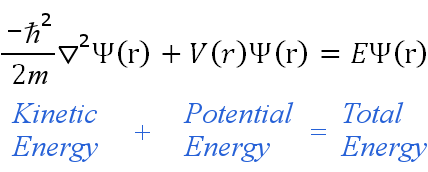 upbeat pond
WHAT 😭 😭
snow grail
The way to solve this is using differential equations, which is basically algebra except you use calculus instead of arithmetic
upbeat pond
What is that trident letter
Please i could barely figure out what a bearing was how am i supposed to know what ψ is
upbeat pond
Oh
snow grail
Basically, you use the wave equation and methods of solving second order differential equations to solve for the wave function
snow grail
A little bit of python and a touch of matlab, and I’m learning LaTeX just to use the TeXit bot
upbeat pond
I aspire to have ur intelligence .
snow grail
It all comes down to loving math
If you can’t get enough of it, you’ll get farther in math then you ever thought possible
upbeat pond
What if i like math but i process information at a slower speed than everyone else
snow grail
Practice, and find ways to think about it so that you can solve it quickly
upbeat pond
Were u slow when U were younger or were u always quick to understand ?
snow grail
Admittedly I always tend to learn quickly
upbeat pond
Do u know other languages?
snow grail
I took Spanish in high school but I’ve fallen out of practice
upbeat pond
Oh i see
snow grail
What math are you in now btw
Like what’s the class called
Is that high school or college?
upbeat pond
Highschool
snow grail
Fair enough, it is hard work
upbeat pond
Im an average student lol
snow grail
Are you interested in more complex mathematics?
upbeat pond
Idk, i'm not that good at math, my average right now is 88 which isnt good for grade 11
snow grail
That’s still an A
upbeat pond
snow grail
That’s still an A
Is it ?
snow grail
Yeah, I’m pretty sure you’re on the boundary of A and B
upbeat pond
Oh ok then its not bad
upbeat pond
Nope thats an american thing
upbeat pond
snow grail
I shouldn’t have assumed
its ok
snow grail
I was mostly looking for a standardized way to compare you to others other than making a guess based on a letter grade
But an A is still probably top 25 to 40 percent
Very rough estimate
upbeat pond
snow grail
I was mostly looking for a standardized way to compare you to others other than ...
The class average in functions is 79%
Is 88 good compared to it?
snow grail
Although if you want to go into game design you will definitely need to learn calculus
upbeat pond
snow grail
Although if you want to go into game design you will definitely need to learn ca...
💔
snow grail
An 88 is good compared to a 79, but to know exactly how good, do you know the standard deviation of the scores
snow grail
Keep it up then
upbeat pond
Thanks
snow grail
Don’t really have much more advice so I guess this channel can be closed
Anything else you need?
upbeat pond
I kinda do need help still
But Ill just see if u know this one question and if u dont thats fine
snow grail
Let’s do it
upbeat pond
A wheel with a radius of 1 metre picks up a nail on the ground. The wheel is traveling 108km/hour. What is the height of the nail at a time of 10 minutes after the wheel picks up the nail? Round your answer to the nearest tenth of a centimeter
upbeat pond
All ik so far is that you draw a circle and then a graph with the parent function y = -cosx
upbeat pond
snow grail
I love weird questions like this
I dont ☝🏻
snow grail
The first step is to solve for the circumference of the circle
upbeat pond
Isnt it two pi r
snow grail
Yes
snow grail
Next step is to convert 10 minutes to seconds
upbeat pond
600 seconds
snow grail
Now multiply the speed by the time
snow grail
What did you get for speed?
snow grail
That's 108000 meters per hour
snow grail
I would fear the wheel that travels at 108km/s
upbeat pond
i mean
upbeat pond
snow grail
I would fear the wheel that travels at 108km/s
Fr wth
didnt even think about that
snow grail
So just divide by 60 twice to get m/s
upbeat pond
30
upbeat pond
18000
snow grail
Perfect
Now, we assume this wheel has perfect traction
Divide the distance travelled by the circumference to find out how many rotations it did
upbeat pond
9000/pi ?
upbeat pond
2864.788976
snow grail
Good
Now subtract 2864 to get just the decimal
This is the partial rotation at the end of the ten minutes
upbeat pond
genuine question how do you know this stuff 😭
snow grail
Honestly, I just kinda picture it in my head and then I figure out how to get there
My first thought was how to get to the end of the ten minutes, so first I converted everything to manageable units and then found the distance and circumference, divided to find rotations, subtracted for that partial rotation, and did the steps I'm about to say
Do you have just the decimal now
upbeat pond
Yes
snow grail
Multiply by 2pi to get how many radians that is
upbeat pond
4.957282411
upbeat pond
Into x or y ?
snow grail
That maps the y value of the nail for the whole journey
Into x
Actually this is a good time to practice my latex
upbeat pond
I got 0.757547063 but idk if thats right
snow grail
$y=1+\sin(x-\frac{\pi}{2})$
wraith daggerBOT
Helmfirth
 snow grail
That's what I got
upbeat pond
Wowwo
snow grail
The way I got that equation is this:
- The nail starts at y = 0, and never goes below that (or else it would be underground), which means the equation must be shifted 1 up
- The nail starts at 0 and goes to 2, which means the sin function must start at -1, meaning the shift is minus pi/2 (This also could be -cosx but I was thinking of sin at the time)
I actually only just thought of the -cosx because I was thinking that cos is +pi/2, and the integral of sin is -cos, meaning the shift is in the opposite direction
Which is very inefficient but it works for me
snow grail
Yeah, wheel height functions will be y = r - rcosx
Also you need to round the answer
I just looked back at the question
Nearest 10th of a centimeter, or nearest millimeter
so just round to 3 decimal places and divide by 100
upbeat pond
Okay
snow grail
Fun question though
upbeat pond
In what world
snow grail
It isn't really that straightforward
You need to go from distance to rotations to radians to height
upbeat pond
I feel like its maybe not that bad
I just forgot my conversions
or i dont know where to convert at what time
snow grail
It's fine, always good to practice
upbeat pond
True
snow grail
Anything else you need help with?
upbeat pond
Do u have the time? Cause damn
snow grail
I've got plenty of time
upbeat pond
Ok cause i'd rather not struggle on my own
Two roads intersect at an angle of 9 degrees. Bailey travels down one road at a speed of 20km/h, and Carmela travels down the other road at a speed of 32 km/h. Fifteen minutes later, a police helicopter above and between Bailey and Carmela is at an elevation of 500m and sees bailey at an angle of depression of 16 degrees. What is the straight-line distance from Carmela to the helicopter?
snow grail
This has a similar start to the nail wheel
First, convert the speeds to m/s and time to seconds
snow grail
I prefer working in seconds honestly, but yes we can work in minutes
snow grail
I mean you get the same answer
upbeat pond
Distance =speed x time
snow grail
Yes
upbeat pond
20 km /h x 15 min
snow grail
Also do you know if straight line distance is referring to the direct line from car to helicopter or the ground distance between them
 upbeat pond
No immma be honest idk how to get them
snow grail
$d = (\frac{20 km}{h}*\frac{1 h}{60 min}*\frac{1 min}{60 s}*\frac{1000 m}{1 km})*(15 min*\frac{60 s}{1 min})$
wraith daggerBOT
Helmfirth
 snow grail
Those are all multiplied btw
Alternatively:
$d = (20 km/h)(15 min * \frac{1 h}{60 min})$
wraith daggerBOT
Helmfirth
 upbeat pond
Hmm'
Im gonna see how my teacher approached it
This is what he did

Is it the same thing ?
snow grail
Essentially, yes, he did it $d = (\frac{20 km}{1 h} * \frac{1 h}{60 min})(15 min)$
wraith daggerBOT
Helmfirth
 snow grail
Which is converting to km/min and then multiplying by minutes
Which is what you suggested a little while back
snow grail
Yes
snow grail
Yes
upbeat pond
Then at thispoint we have side angle side
snow grail
Let's work in km since it's a bit better with number length
Yes we do
I've made another right triangle because that
is what I'm used to
I sent that prematurely mb
upbeat pond
Its ok
upbeat pond
snow grail
I've made another right triangle because that
Dont teach me how u did this cause im going to use the method my teacher wants
Im gong to do
upbeat pond
x^2 = 5^2 + 8^2 - 2(5)(8)cos9
25 + 64 - 80cos9
89 - 80cos9
ngl idk what im doing now
hold on
snow grail
That's actually very very close to what I got, my answer's difference is likely due to rounding error
upbeat pond
What was ur answer?
snow grail
I got 3.160279734, I evaluated yours to be 3.159894421
upbeat pond
Oh but its just rounded
snow grail
He got that and rounded to 2 decimal places
upbeat pond
Oh okay
upbeat pond
upbeat pond
89 - 80cos9
What do you do from this step cause my calculator gave me weird answers
snow grail
Is your calculator in radians
upbeat pond
Im def gonna accidently be on radians the whole time just watch me
snow grail
In my high school I know some teachers gave partial credit for having the right method but the wrong calculator setting
upbeat pond
(during my test)
upbeat pond
snow grail
In my high school I know some teachers gave partial credit for having the right ...
Oh thats good to know atleast
snow grail
So now we need to find the distance from one car to the helicopter using the angle of depression
Remember that the helicopter's sightline has an angle of depression of 16 degrees and a height of 0.5 km
 snow grail
That works
I used the tree analogy from before but that does create a rectangle on both sides with those triangles as the complementary triangles
So use tan(16) to find the adjacent line
upbeat pond
0.28674
snow grail
How did you solve for that?
upbeat pond
I typed tan(16) into my calculator 😓
upbeat pond
the hypotenuse
snow grail
$\tan(\theta) = \frac{opposite}{adjacent}$
wraith daggerBOT
Helmfirth
 snow grail
I'm getting the hang of this
snow grail
Man your teacher hates right triangles
upbeat pond
LOL
snow grail
Oh wait that is a right triangle lmao
It's just the sine of the two angles under the opposite side, that's equal to the hypotenuse
sin(74) = y/hyp, hyp = y/sin(74)
sin(16) = 0.5/hyp, hyp = 0.5/sin(16)
y/sin(74) = 0.5/sin(16)
That is definitely one way to do it
Tangent is much easier
upbeat pond
Yeah
 tight hull
I just do sohcahtoa
snow grail
That is what happened
tight hull
Sin=opposite/hypotenuse
snow grail
So once you solve for the distance to Bailey, you need to subtract that from the total distance between the two cars and then you have your answer
snow grail
3.16-1.74=1.42
upbeat pond
ARE YOU SERIOUS
snow grail
Yeah
 cedar kilnBOT
Channel closed
Closed by @upbeat pond
Use .reopen if this was a mistake.
cedar kilnBOT
 Available help channel!
Send your question here to claim the channel.
Remember:
• Ask your math question in a clear, concise manner.
• Show your work, and if possible, explain where you are stuck.
• After 15 minutes, feel free to ping <@&286206848099549185>.
• Type the command .close to free the channel when you're done.
• Be polite and have a nice day!
Read #❓how-to-get-help for further information on how to ask a good question, and about conduct in the question channels.
 cloud birch
i got 1.28/4 down but i forgot how to simplify the negative number
 cedar kilnBOT
cloud birch
i got 1.28/4 down but i forgot how to simplify the negative number
cedar kilnBOT
cloud birch
i got 1.28/4 down but i forgot how to simplify the negative number
@cloud birch Has your question been resolved?
cedar kilnBOT
Channel closed
Closed by @cloud birch
Use .reopen if this was a mistake.
cedar kilnBOT
Available help channel!
Send your question here to claim the channel.
Remember:
• Ask your math question in a clear, concise manner.
• Show your work, and if possible, explain where you are stuck.
• After 15 minutes, feel free to ping <@&286206848099549185>.
• Type the command .close to free the channel when you're done.
• Be polite and have a nice day!
Read #❓how-to-get-help for further information on how to ask a good question, and about conduct in the question channels.
 unique ravine
Hi i have a question:
cedar kilnBOT
unique ravine
Hi i have a question:
unique ravine

lg = log_2 right?
and then how would i even solve for the inverse for this
do i distribute first or?
cause i switched the variables already n stuff
and i subtracted the 1
but then what?
unique ravine
i have that part
 lusty grotto
thats the inverse
lusty grotto
so?
unique ravine
cause im getting the inverse currently as
unique ravine
-1/lg(-2x) if i dont right?
unique ravine
lusty grotto
what exactly di u mean by distribute
like uh
log_2(-2) + log_2(x) kinda..
lusty grotto
log(ab) = log a + log b?
lusty grotto
well u can write log(-2x) = log (2 * (-x))
lusty grotto
unique ravine
log_2(-2) + log_2(x) kinda..
i dont get this
btw log_2(-2) does not make sense coz negative numbers dont have logarithms
unique ravine
oh
lusty grotto
ah right i get what u r saying
unique ravine
wait is log_2 = ln?
lusty grotto
ln is log_e
lusty grotto
idk what lg means, some use it for log_10
unique ravine
oh
lusty grotto
what did u learn
lusty grotto
okay then use that
unique ravine
and nothing shows up as lg
lusty grotto
right if ur tchr said log_2, use that
lusty grotto
so u wrote log_2(-2) + log_2(x) this is not really valid coz log_2(-2) is not defined
unique ravine
y=-1/-lg(-2x)?
lusty grotto
lusty grotto
well u can write log(-2x) = log (2 * (-x))
can u "distribute" tihs
unique ravine
lusty grotto
can u "distribute" tihs
i dont think so
lusty grotto
its the same thing u just did
unique ravine
oh
lusty grotto
so log(some number * another number) = log(some number) + log(another number)
when u first distributed, u took some number = -2, another number = x
now im asking u to take some number = 2, another number = -x
lusty grotto
but now u have log_2(2) + log_2(-x) right
lusty grotto
the log_2(-x) does make sense for negative x
unique ravine
not really
lusty grotto
for example if x = -10, then log_2(-x) = log_2[-(-10)] = log_2(10)
but if x is positive, then it wont make sense
btw u dont have to do this "distribution" to find the inverse
unique ravine
then how else would i find it..
cause im getting the wrong answer every time i do it
unique ravine
unique ravine
-1 + lg(-2x)?
^ so like this
lusty grotto
lg(-2x) = what
lusty grotto
so we started with y = 1 - lg(-2x)
unique ravine
mhm
unique ravine
because when finding inverse, dont we switch variables
lusty grotto
not yet
unique ravine
oh
lusty grotto
so what is lg(-2x) = ?
unique ravine
idrk..
lusty grotto
if y = 1 -x, then x = ?
lusty grotto
yes solve for x
unique ravine
lg(-2x)
lusty grotto
the inverse tells u what value u must input to the function to get a certain output
unique ravine
oh ok
lusty grotto
so suppose when we input some value x, we get the output 5
unique ravine
yeah
unique ravine
yeah
lusty grotto
yeah
lusty grotto
what is this
lusty grotto
no
unique ravine
im so confused..
lusty grotto
okay forget lg for a while
unique ravine
ok
unique ravine
i subtracted then divided
unique ravine
not really..
lusty grotto
unique ravine
i subtracted then divided
why did u do this
okay
so if f(x) = 2x + 5
what u can do is
u can input various values, and find outputs
unique ravine
yeah
lusty grotto
maybe u input 2, then it outputs f(2) = 2*2 + 5 = 9
unique ravine
yes
unique ravine
mhm
lusty grotto
lets say somebody asks u "what must u input, if u want the output to be 10?"
how would u answer this
lusty grotto
yeah we solve for x
lusty grotto
exactly
so thats what we must input to get 10 as output
if u wanted to find out what u must input to get 100 as the output
unique ravine
yes
lusty grotto
u do the same thing right
unique ravine
mhm
lusty grotto
now lets say i am very interested in finding inputs which produce various given outputs
so i am going to define a function
unique ravine
ok
lusty grotto
lets call it g
now to this function i can input any number, and its output tells me what i shud input into f, to get that number as the output
do u understand that
unique ravine
yeah i understand that
unique ravine
yes
lusty grotto
yeah that sort of function is called an inverse
so g is the inverse of f
its a functino which tells u what values u must input to a certain function, to get a given output
lusty grotto
okay now i want to find a formula for g
unique ravine
oh
lusty grotto
so when u input something into g, we know that it must subtract 5 from that number, and then divide it by 2
and output that
unique ravine
yeah
lusty grotto
lusty grotto
lets say somebody asks u "what must u input, if u want the output to be 10?"
and we know this because thats what we must do if i asked u this question
lusty grotto
so if f(x) = 1 - lg(-2x)
when x = -10, f outputs 1 - lg[-(-10)] = 1 - lg(10)
etc
maybe i ask u what must u input for x, so that the output is 10 say
how would u do that
unique ravine
i dont know..
lusty grotto
u must do exactly what u did when i asked u abt the 2x + 5 thing
lusty grotto
yeah i guess thatll be less confusing
unique ravine
and what we input?
lusty grotto
unique ravine
so 10 = 1-lg(-2x)
exctly
unique ravine
to get that?
lusty grotto
yeah
unique ravine
how do i even solve for that tho
lusty grotto
what must x be so that u get 10 as the output
lusty grotto
unique ravine
how do i even solve for that tho
so move all stuf with x to one side
and all other stuff to the other side
unique ravine
oh right
lusty grotto
so lg(-2x) = 9 right?
unique ravine
yes
lusty grotto
right so now do u know what log means?
unique ravine
yes i think
lusty grotto
so log_2 (8) means "what number must u raise 2 to,to get 8"
unique ravine
3
lusty grotto
lusty grotto
somebody tells u log_2 (x) = 5
so the answer to "what number must u raise 2 to, to get x", is 5
is that clear
unique ravine
yes
unique ravine
yes
lusty grotto
lusty grotto
so lg(-2x) = 9 right?
so here we have lg(-2x) = 9
if we take lg as log_2 coz ur teacher says that
log_2(-2x) = 9
so the answer to "what number must u raise 2 to, to get -2x"
is 9
9 is the number u must raise 2 to, to get -2x
so what is -2x?
unique ravine
-4.5?
lusty grotto
what
unique ravine
wait
lusty grotto
read that carefully
lusty grotto
no 9 is the number u must raise TWO to
raise TWO to the power of nine
do u get it
unique ravine
oh
lusty grotto
are u sure u get it
lusty grotto
yeah
unique ravine
ok..
lusty grotto
lusty grotto
because when u write log_2(-2x) = 9
so the log notation is like this, if u write
log_B(C)
this asks the question "what is the power u must raise B to, to get the number inside brackets"
do u get it
unique ravine
mhm
lusty grotto
u sure?
unique ravine
yes
lusty grotto
-2x = 2^9
lusty grotto
so x is?
lusty grotto
yeah
unique ravine
oh right
unique ravine
mhm
lusty grotto
so u must input -512/2 = -256
what if i asked what u must input to get 20 as the output
unique ravine
it would be 2^19 = -2x
lusty grotto
okay right?
lusty grotto
okay so now u want to define a function which does this for u
call it g for now
u want to be able to input a number to g
unique ravine
ok
lusty grotto
and the output must be te number u must input to f, to get that number as output from f
so what must this functino be doing
so for example, g must output -256 when u input 10
unique ravine
yeah
lusty grotto
how did u arrive at -256 in terms of 10
unique ravine
basically inverse
lusty grotto
g must output -(2^19)/2, when u input 20
unique ravine
yeah
unique ravine
dividing -2
lusty grotto
what else
lusty grotto
u input 20, g somhow turns it into -(2^19)/2
lusty grotto
unique ravine
from 20
exactly
so if u input a number y, to g
what must it do to y
unique ravine
subtract and divide?
unique ravine
1
lusty grotto
lusty grotto
u input 20, g somhow turns it into -(2^19)/2
do u see a log thing here
unique ravine
no
lusty grotto
so why did u say that
unique ravine
because we used it
lusty grotto
g is not doing any log thing
unique ravine
before
lusty grotto
to 20
lusty grotto
unique ravine
before
yeah what did we do to get rid of the log thing
unique ravine
mhm
lusty grotto
?
lusty grotto
so again, g outputs -256 when u input 10, and -256 is just -(2^9)/2
it outputs -(2^19)/2, when u input 20
do u see a pattern
lusty grotto
unique ravine
2^19 =
yeah
unique ravine
g?
lusty grotto
for 20 u get -(2^19)/2
for 10 u get -(2^9)/2
for y u get?
lusty grotto
unique ravine
g?
yeah
unique ravine
so
lusty grotto
lusty grotto
for 20 u get -(2^19)/2
for 10 u get -(2^9)/2
for y u get?
can u answer this
unique ravine
ohh ok
unique ravine
yes
lusty grotto
now theres some specific notation we use to denote the inverse
we dont call it g, we call it $f^{-1}$
wraith daggerBOT
SilverSoldier
 unique ravine
mhm
lusty grotto
so $f^{-1}(y) = -\dfrac{2^{y-1}}{2}$
wraith daggerBOT
SilverSoldier
 lusty grotto
now u can just replace the y with x
unique ravine
oh ok
lusty grotto
and wite $f^{-1}(x) = -\frac{2^{x-1}}{2}$
wraith daggerBOT
SilverSoldier
 lusty grotto
are u sure u understood this
unique ravine
yes i understood that much
lusty grotto
so just to see if u got it, if u had f(x) = log(1/x) + x
how might u find the inverse?
say log means log_2
unique ravine
ok so
lusty grotto
dont do this
unique ravine
ok so first
lusty grotto
$f(x)=\log\left(\dfrac{x}{x+1}\right)-10$
wraith daggerBOT
SilverSoldier
 lusty grotto
uhmmm
unique ravine
is log = 10?
lusty grotto
why did u take 10 = log(x/x+1)
unique ravine
because i subtracted 10
lusty grotto
unique ravine
is log = 10?
idk take it as 2
unique ravine
from the left
unique ravine
lusty grotto
idk take it as 2
ok
lusty grotto
what is the left
lusty grotto
what did u add it to
unique ravine
y + 10
lusty grotto
okay so keep the y
unique ravine
ok
unique ravine
2^y+10 = x/x+1
unique ravine
now we uhm
unique ravine
ok
lusty grotto
then?
lusty grotto
yeah u can do it
unique ravine
then we switch the signs?
lusty grotto
what
unique ravine
idk what to do after..
lusty grotto
u r supposed to find x
lusty grotto
wraith dagger
**SilverSoldier**
so i give u this, ur supposed to come up wth a function that can find what u must input into this to get a give number as output
lusty grotto
unique ravine
wait how do i do that.. if theres two x's
mutliply thru by t
in the t * (x+1)
so i might have to go now
dm me if u want or maybe somebody else will help you
unique ravine
ok
lusty grotto
ill be back in idk an hour or half hour
cedar kilnBOT
Channel closed
Closed by @unique ravine
Use .reopen if this was a mistake.
unique ravine
.reopen
cedar kilnBOT
✅
unique ravine

can someone help me understand this
i think ive got the inverse down with silvers help
but how do i move on from after that
 crimson sedge
Hi @unique ravine
unique ravine
hi
crimson sedge
Sooo what do you know about the domain and range between the inverse and its function
Also, what was your inverse
Also is that base 10?
crimson sedge
unique ravine
base 2
Okay doesn't matter for this tbh
crimson sedge
Well anyways the domain of a log is always x > 0
unique ravine
so horizontal asymptote at 0?
crimson sedge
But since your log has a negative in it, the thing needs to be in reverse
Like if you have x = 2 you get log(-4) which is undefined
So your defined points are when that thing is positive
Soo what makes a negative positive?
crimson sedge
unique ravine
so horizontal asymptote at 0?
Not horizontal
unique ravine
i lost u on x = 2 i get log(-4)
oh wait
if u plug into original
function
then thats log_2(-4)
crimson sedge
Yeah
unique ravine
which isnt possible
unique ravine
that makes sense
crimson sedge
So that domain is just x < 0 in this case
crimson sedge
Nope
unique ravine
oh
crimson sedge
That would mean x > 0
crimson sedge
Yee
unique ravine
sorry its like 3 am and im just trying to understand this stuff :')
but yes
(-infinity, 0)
crimson sedge
unique ravine
sorry its like 3 am and im just trying to understand this stuff :')
Lmaoo its okay dw
crimson sedge
unique ravine
(-infinity, 0)
But yeah that's right
Now for the range
Actually log(-2x) is more or less the same thing as say log(2x)
unique ravine
ok
crimson sedge
The difference is that it is "reflected" And accepts negative values only
unique ravine
mhm
crimson sedge
So what is the range of a normal log function?
unique ravine
isnt it -infinity, infinity?
crimson sedge
Yeeee
It is the same thing here because
You can input any number you would normally have in a normal log function
unique ravine
yeah
crimson sedge
Like you can have log(100000), log(0.001), etc. As long as you are multiplying it appropriately with the negative x domain we talked about
unique ravine
so when does the range ever change?
crimson sedge
In this case you are just reflecting the thing across the y axis so it will be the same range, but it will be different if you had say, extra conditions you needed to put on it
wraith daggerBOT
♡LexQa♡
 unique ravine
o
crimson sedge
I don't think the range of a log changes unless you are doing something to the whole function like taking the square root of the entire thing
unique ravine
ok
crimson sedge
Or raising the whole thing to a power and so on
crimson sedge
Okay so that's cool and all, but also
unique ravine
so domain and range is there for f(x)
then for inverse
uh
my -2^x-1/2
isnt the domain supposedly 2, infinity?
i have no clue how this works..
crimson sedge
Here is what I was going to get into
So actually, if you have a one-to-one function, and you find the inverse of that, the domain and range of the function interchange for the inverse
unique ravine
oh
oh wait rly
so that would mean
the range is (-infinity, 0)
while domain is (-infinity, infinity) ?
crimson sedge
So basically:
[
f(x) = 1- \log(-2x) \quad D: (-\infty, 0), R: (-\infty, \infty)
]
[
f^{-1}(x) = -2^{x-2} \quad D: (-\infty, \infty) R : (-\infty, 0)
]
wraith daggerBOT
♡LexQa♡
 crimson sedge
[
\frac{-2^{x-1}}{2} = -2^{x-2}
]
wraith daggerBOT
♡LexQa♡
 unique ravine
oh
unique ravine
o
crimson sedge
[
\frac{a^n}{a^m} = a^{n-m}
]
wraith daggerBOT
♡LexQa♡
 crimson sedge
unique ravine
while domain is (-infinity, infinity) ?
crimson sedge
unique ravine
while domain is (-infinity, infinity) ?
Yeee and actually, u couldve found the domain and range of our function using that procedure
As well
crimson sedge
unique ravine
isnt the base 2?
Yes
unique ravine
crimson sedge
Yeee and actually, u couldve found the domain and range of our function using th...
actually i rly never knew that it was just switched so ty
so when i graph this
unique ravine
wait one -to - one?
crimson sedge
For not one to one functions the inverse won't have the same domain and range, you have to restrict the domain
crimson sedge
unique ravine
wait one -to - one?
Uhh have u ever heard of the horizontal line test
crimson sedge
U mean x^2 but yeah
unique ravine
yea
crimson sedge
Because x^2 ain't injective
unique ravine
mhm
crimson sedge
Are u confused by anything doe, I can explain in a different way if u r wondering about something
crimson sedge
Ayeee that's amazing
unique ravine
but u said a reflection right