
#help-10
1 messages · Page 581 of 1
 tranquil arch
 charred remnant
 dreamy forge
yeah
 obtuse pebbleBOT
@dreamy forge Has your question been resolved?
 obtuse pebbleBOT
Channel closed
Closed by @dreamy forge
Use .reopen if this was a mistake.
Please take a minute to participate in [our survey](#changelog message) if you haven't already!
 Available help channel!
Send your question here to claim the channel.
Remember:
• Ask your math question in a clear, concise manner.
• Show your work, and if possible, explain where you are stuck.
• After 15 minutes, feel free to ping <@&286206848099549185>.
• Type the command .close to free the channel when you're done.
• Be polite and have a nice day!
Read #❓how-to-get-help for further information on how to ask a good question, and about conduct in the question channels.
obtuse pebbleBOT
 nocturne minnow
What about it?
The formula?
You can google it
Google exists
No one us here have to google things for you
But you are capable of googling, are you not?
If you can google things on your own, you don't need to open a channel to ask
 tardy epoch
Disabled people can Google too
nocturne minnow
Speech to text
So then why can't you google the formula for length of a curve?
As mentioned, speech to text
tardy epoch
Making a discord account and figuring out how channels / math server works seems harder than googling. Like they probably had to use Google to find this discord
 grizzled shore
I feel like I’ve recently heard an ad for google accessibility features
nocturne minnow
Within the 9 minutes that was just spent, this question would have been resolved by now
tardy epoch
And how did you find the first discord server you joined?
nocturne minnow
You seem very incompetent for not being able to google the solution to your answer
tardy epoch
And how to install it?
Alright this isn't going anywhere. Reopen after you're done googling and need help with a problem
.close
obtuse pebbleBOT
Channel closed
Closed by @tardy epoch
Use .reopen if this was a mistake.
Please take a minute to participate in [our survey](#changelog message) if you haven't already!
✅
nocturne minnow
The solution has been given to you, Google it
One, that is horrible English. Two, as mentioned, you can google the formula for length of a curve
grizzled shore

Arc length is the distance between two points along a section of a curve.
Determining the length of an irregular arc segment by approximating the arc segment as connected (straight) line segments is also called rectification of a curve. If the rectification of a curve results in a finite number (so the curve has a finite length), then the curve ...
nocturne minnow
Look at that, someone had to google for you
tardy epoch
lmgtfy in full effect
grizzled shore
Man no need to make a big drama out of it
nocturne minnow
Well, it seems like your question as been answered so feel free to close this channel using, .close
grizzled shore
Looks like a piece wise function
 royal basin
what kind of disability prevents searching things on google but not chatting on discord 
@sour gate are you asking for an equation that would describe the graph you showed just now?
tardy epoch
royal basin
what kind of disability prevents searching things on google but not chatting on ...
The same disability that causes people to be too proud to admit they've been proven wrong
royal basin
i mean like, i don't know of any such disability that SPECIFICALLY prevents you from using Google. what is it called?
but ok, this graph here is described by something that looks like this:
$$g(x) = \begin{cases}
... & x < -3 \
... & -3<x\leq -2 \
... & -2<x \leq 0 \
... & 0 < x \leq 2 \
... & 2 < x
\end{cases}$$
where each of the ...'s is a linear function that i'm too lazy to fill in at the moment
 warm shaleBOT
Ann
 nocturne minnow
Does it make you struggle with typing too?
tardy epoch
They've already admitted they were wrong here and clearly aren't going to answer any more questions to avoid being exposed of their bs any further
royal basin
which brackets are you talking about
oh, so you want a definition that isn't piecewise...
well i guess you could try to write something down involving absolute values and/or the unit step function
but it won't be pretty
and it may be more trouble than it's worth depending on what you're asked to do with the function
idk your actual goal here
maybe you don't need an equation at all
the unit step function is the function that returns 0 when its input is negative and 1 when its input is positive
(and at x=0 it returns one of the two, convention deciding which)
tardy epoch
I was trying to help you get help. But go ahead and keep pretending like your condition is real to not seem lazy
royal basin
convention isn't a who, it's a what
nocturne minnow
It honestly seems like the OP is just trolling now
royal basin
 tardy epoch
No, just against people who lie about having them like you're doing
nocturne minnow
So you're agreeing that you're trolling?
tardy epoch
nocturne minnow
So you're agreeing that you're trolling?
Yeah...
royal basin
"search engine light"?
nocturne minnow
Yet you have not stated what that disability is
nocturne minnow
royal basin
"search engine light"?
I think it's their weird way of saying light mode
royal basin
this is a screenshot from Wiktionary
nocturne minnow
Very specific
royal basin
i no longer understand what you're talking about.
no, i decidedly do not get your drift.
obtuse pebbleBOT
Channel closed
Closed by @tardy epoch
Use .reopen if this was a mistake.
Please take a minute to participate in [our survey](#changelog message) if you haven't already!
✅
grizzled shore
warm shale
**Ann**
.
royal basin
the question "What is the function of x?" doesn't make any sense as written
tardy epoch
.close
obtuse pebbleBOT
Channel closed
Closed by @tardy epoch
Use .reopen if this was a mistake.
Please take a minute to participate in [our survey](#changelog message) if you haven't already!
✅
tardy epoch
Alright you guys have fun wasting your time. I'll just block this troll
grizzled shore
<@&268886789983436800> I think it’s pretty obvious this guy is just trolling as per rule 4
 hot hazel
.close
obtuse pebbleBOT
Channel closed
Closed by @hot hazel
Use .reopen if this was a mistake.
Please take a minute to participate in [our survey](#changelog message) if you haven't already!
Available help channel!
Send your question here to claim the channel.
Remember:
• Ask your math question in a clear, concise manner.
• Show your work, and if possible, explain where you are stuck.
• After 15 minutes, feel free to ping <@&286206848099549185>.
• Type the command .close to free the channel when you're done.
• Be polite and have a nice day!
Read #❓how-to-get-help for further information on how to ask a good question, and about conduct in the question channels.
 jaunty stirrup
hi
obtuse pebbleBOT
jaunty stirrup
hi
jaunty stirrup
uhm
@nocturne minnow sorry im back again
im sorry if im not allowed to ping
but like
he was just helping me
so im sorry
nocturne minnow

This pre-algebra video tutorial explains the process of solving two step equations with fractions and variables on both sides. It also explains how to solve 2-step equations with parentheses and decimals. This video contains plenty of examples and practice problems.
My Website: https://www.video-tutor.net
Patreon: https://www.patreon.com/Ma...
jaunty stirrup
wait
sorry
ik that
athts like simple
but im terrible with fractions
here
last question
i promise
nocturne minnow
That's same concept that you are using
jaunty stirrup

before u say anything
i was able to isolate z's onto both sides
so now its
3/5 = z/5-z
nocturne minnow
Except you want to get rid of the fractions by multiplying by the LCM
jaunty stirrup
but, i think im supposed to multiply 5
but like u helped me before,
u said
i had to multiply everything
by 5
like the entire equation
is that the same case for this problem?
nocturne minnow
Yes
nocturne minnow
Whatever you do to one side, you need to do to the other hence multiply everything by 5
jaunty stirrup
right
but do i need to do it
to the side it was originally on
so if its like
for example
nocturne minnow
Yes
nocturne minnow
You multiply everything
nocturne minnow
You multiply everything
nocturne minnow
Is 3 part of everything?
obtuse pebbleBOT
Channel closed
Closed by @jaunty stirrup
Use .reopen if this was a mistake.
Please take a minute to participate in [our survey](#changelog message) if you haven't already!
Available help channel!
Send your question here to claim the channel.
Remember:
• Ask your math question in a clear, concise manner.
• Show your work, and if possible, explain where you are stuck.
• After 15 minutes, feel free to ping <@&286206848099549185>.
• Type the command .close to free the channel when you're done.
• Be polite and have a nice day!
Read #❓how-to-get-help for further information on how to ask a good question, and about conduct in the question channels.
 brazen condor
 obtuse pebbleBOT
brazen condor
brazen condor
obtuse pebbleBOT
brazen condor
brazen condor
I have not got that much trig lessons so you might have to explain a little more than usual if that’s okay
 uneven palm
brazen condor
uneven palm
brazen condor
Do you know about half angle identities?
brazen condor
I do not
uneven palm
alright I recommend seeing this video, he explains it nicely in 2 minutes
https://youtu.be/4eqCKF2BkJs
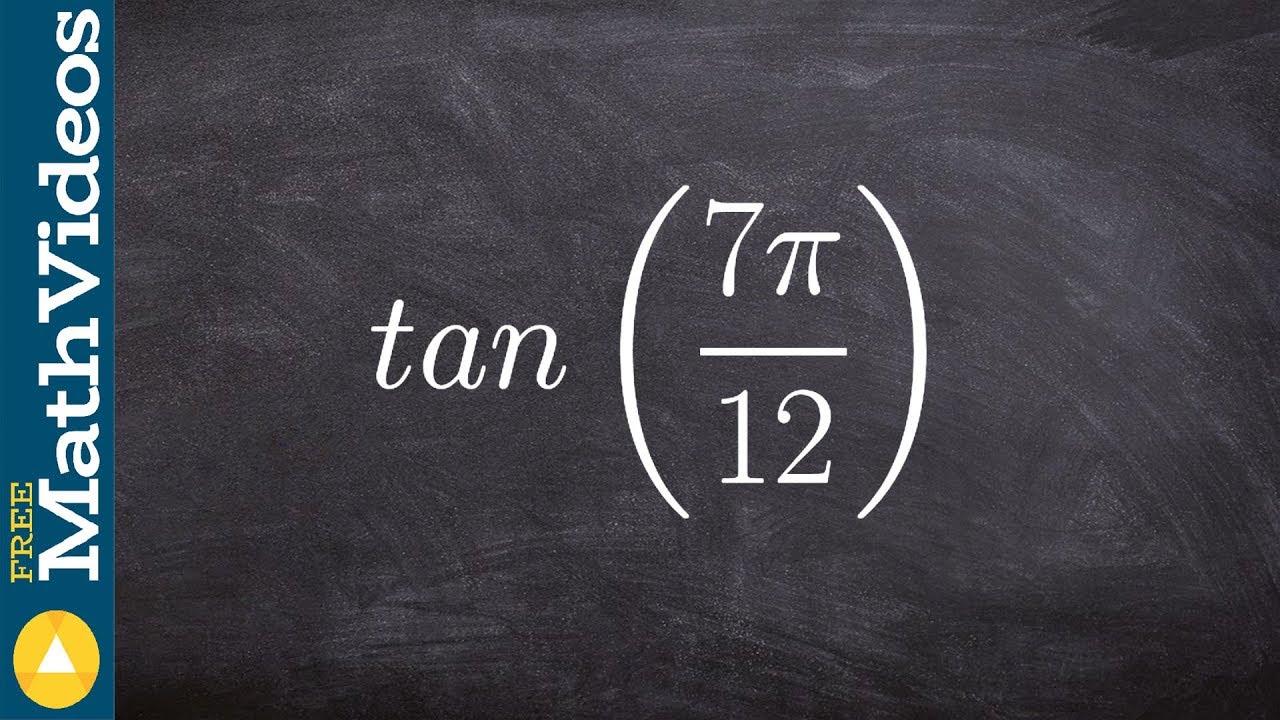
👉 Learn how to evaluate the Sine of an angle using the half-angle formula. The half-angle formula for Sine is helpful when you need to determine the exact value of function given an angle but cannot use a calculator or the angle is not on the unit circle. To evaluate all we need to do is enter the angle into the formula and simplify. Rationali...
tell me if you have any questions
brazen condor
Alright thanks!
obtuse pebbleBOT
@brazen condor Has your question been resolved?
obtuse pebbleBOT
Channel closed
Closed due to timeout
Use .reopen if this was a mistake.
Please take a minute to participate in [our survey](#changelog message) if you haven't already!
Available help channel!
Send your question here to claim the channel.
Remember:
• Ask your math question in a clear, concise manner.
• Show your work, and if possible, explain where you are stuck.
• After 15 minutes, feel free to ping <@&286206848099549185>.
• Type the command .close to free the channel when you're done.
• Be polite and have a nice day!
Read #❓how-to-get-help for further information on how to ask a good question, and about conduct in the question channels.
 hybrid thicket
Hello i got quick question. I know that x^2+1 is reducible over Z_2. Is it possible to show that this polynomial is irreducible over Z_2? or not?
obtuse pebbleBOT
hybrid thicket
Hello i got quick question. I know that x^2+1 is reducible over Z_2. Is it possi...
royal basin
"is it possible to prove this false statement?"
hybrid thicket
I think so
obtuse pebbleBOT
Channel closed
Closed by @hybrid thicket
Use .reopen if this was a mistake.
Please take a minute to participate in [our survey](#changelog message) if you haven't already!
Available help channel!
Send your question here to claim the channel.
Remember:
• Ask your math question in a clear, concise manner.
• Show your work, and if possible, explain where you are stuck.
• After 15 minutes, feel free to ping <@&286206848099549185>.
• Type the command .close to free the channel when you're done.
• Be polite and have a nice day!
Read #❓how-to-get-help for further information on how to ask a good question, and about conduct in the question channels.
 sullen ravine
 obtuse pebbleBOT
sullen ravine
obtuse pebbleBOT
sullen ravine
 tawdry walrus
 obtuse pebbleBOT
@sullen ravine Has your question been resolved?
sullen ravine
yes
obtuse pebbleBOT
Channel closed
Closed by @sullen ravine
Use .reopen if this was a mistake.
Please take a minute to participate in [our survey](#changelog message) if you haven't already!
obtuse pebbleBOT
Available help channel!
Send your question here to claim the channel.
Remember:
• Ask your math question in a clear, concise manner.
• Show your work, and if possible, explain where you are stuck.
• After 15 minutes, feel free to ping <@&286206848099549185>.
• Type the command .close to free the channel when you're done.
• Be polite and have a nice day!
Read #❓how-to-get-help for further information on how to ask a good question, and about conduct in the question channels.
 muted bear
so i need to prove this is differentiable over R
obtuse pebbleBOT
muted bear
so i need to prove this is differentiable over R
muted bear
$\sqrt[3] {x-\sin x}$
warm shaleBOT
Eno54
 muted bear
i know how to do it in a point but not over R
 novel knoll
Multiple ways depending on what you can/want to use
Can use difference of differentiable functions are differentiable
And composition
Or compute derivative from definition
muted bear
whats the most simple then?
i tried with composition but idk if its correct
i just said that h(x) is cube root which is differentiable then i said f(x) is x-sin(x) which is also differentiable so (h o f ) is differentiable
lol
novel knoll
novel knoll
And composition
Yes
novel knoll
Why is it not convincing
 charred plume
It's not quite correct.
novel knoll
If you don’t have this result then you obv can’t just say it
muted bear
because i didnt prove x-sin(x) is differentiable
i assumed it
because i know its true
but i didnt prove it
and i dont know how to
lol
charred plume
x - sin(x) is definitely differentiable. But the cube root isn't differentiable at x = 0.
novel knoll
To show x-sin(x) is
muted bear
charred plume
x - sin(x) is definitely differentiable. But the cube root isn't differentiable...
then what do i do?
muted bear
novel knoll
Show from definition then
so with that limit?
with h?
i cant compute those for the life of me
charred plume
Yep. You'll have to do it by hand at that one point. But the argument you said earlier works for every point other than x=0.
muted bear
charred plume
Yep. You'll have to do it by hand at that one point. But the argument you said...
so do what do i do with x=0
it has to be differentiable over R since it tells me to prove it lol
charred plume
Honestly I don't see anything extremely clean and simple.
Are you familiar with Taylor series?
muted bear
charred plume
Are you familiar with Taylor series?
its not supposed to be used for that problem
 charred plume
You want to show that $\lim_{h\to 0} \frac{f(0+h) - f(0)}{h}$ exists (with $f(x) = (x-\sin x)^\frac{1}{3}$).
warm shaleBOT
daveamayombo
 charred plume
Well, first just write out the limit you're trying to find. I.e. replace 'f' with the actual expression.
muted bear
charred plume
Well, first just write out the limit you're trying to find. I.e. replace 'f' wi...
and then?
l'hospital rule
or?
charred plume
Since $f(0) = 0$, it becomes $\lim_{h\to 0} \frac{(h-\sin h)^\frac{1}{3}}{h}$. And yeah, you can l'hopital that.
warm shaleBOT
daveamayombo
 muted bear
man this is nasty
charred plume
(I think!)
muted bear
i really have to differentiate that
charred plume
Oh! What about rewriting it as $\frac{(h-\sin h)^\frac{1}{3}}{h} = \left(\frac{h-\sin h}{h^3}\right)^\frac{1}{3}$?
warm shaleBOT
daveamayombo
 muted bear
mmmmm\
charred plume
Now it's easy to do l'hopital on the stuff inside the parens.
And since cube root is continuous, the cube root of the limit is the limit of the cube root.
charred plume
👍
obtuse pebbleBOT
Channel closed
Closed by @muted bear
Use .reopen if this was a mistake.
Please take a minute to participate in [our survey](#changelog message) if you haven't already!
Available help channel!
Send your question here to claim the channel.
Remember:
• Ask your math question in a clear, concise manner.
• Show your work, and if possible, explain where you are stuck.
• After 15 minutes, feel free to ping <@&286206848099549185>.
• Type the command .close to free the channel when you're done.
• Be polite and have a nice day!
Read #❓how-to-get-help for further information on how to ask a good question, and about conduct in the question channels.
 sly trellis
say that dot is at the centre of face of a cube
how can you add identical cubes around it so that the dot is at centre of everything?
 obtuse pebbleBOT
sly trellis
say that dot is at the centre of face of a cube
how can you add identical cubes ...
sly trellis
obtuse pebbleBOT
sly trellis
say that dot is at the centre of face of a cube
how can you add identical cubes ...
sly trellis
if the dot was here then i just need to add 7 more cubes,
one on the right, one below, you get it

 frosty river
Do you need the final shape to be cube?
sly trellis
not sure lmao, are you familiar with Gauss's law (in physics)
its for that
i don't think its possible if the final shape is cube(?)
ok nvm, apparently just one more cube works
.close
obtuse pebbleBOT
Channel closed
Closed by @sly trellis
Use .reopen if this was a mistake.
Please take a minute to participate in [our survey](#changelog message) if you haven't already!
Available help channel!
Send your question here to claim the channel.
Remember:
• Ask your math question in a clear, concise manner.
• Show your work, and if possible, explain where you are stuck.
• After 15 minutes, feel free to ping <@&286206848099549185>.
• Type the command .close to free the channel when you're done.
• Be polite and have a nice day!
Read #❓how-to-get-help for further information on how to ask a good question, and about conduct in the question channels.
 cedar lichen
MVT states that if f(x) is a function that is continuous on [a, b] and differentiable on (a, b), then for some c in (a, b), f'(c) = (f(b) - f(a))/(b - a). Why do we require continuity on the closed interval? Can't we say this: if f(x) is a function differentiable on (a, b) and if A = lim x -> a^+ f(x) and B = lim x -> b^- f(x), then for some c in (a, b), f'(c) = (B - A)/(b - a)?
obtuse pebbleBOT
cedar lichen
MVT states that if f(x) is a function that is continuous on [a, b] and different...
cedar lichen
I can't for the life of me think of a counterexample
But then again, my imagination is limited
<@&286206848099549185>
novel knoll
cedar lichen
MVT states that if f(x) is a function that is continuous on [a, b] and different...
f: [0,1] -> R with f(0)=1, f(x)=0 for x in (0,1]. Then (f(1)-f(0))/(1-0)=-1 but f’(x)=0 on (0,1)
cedar lichen
novel knoll
f: [0,1] -> R with f(0)=1, f(x)=0 for x in (0,1]. Then (f(1)-f(0))/(1-0)=-1 but ...
But the lim x->0^+ f(x) = 0 and lim x->1^- f(x) = 0. So under this "revised" theorem, the value we're looking for is (0 - 0)/(1 - 0) = 0
cedar lichen
Because with this revised theorem, it's more general. We don't require continuity at the endpoints. Which is why I assume it must be wrong somehow
novel knoll
The continious extension of f on (a,b) to [a,b]
You are forcing continuity by using the limit like that as endpoints a,b
Which is equivalent to applying MVT on this new function
(Except if its unbounded at a or b it now doesn’t even work)
cedar lichen
But we need to create a new function. The MVT, strictly based on how its worded by default, doesn't apply to any function that's discontinuous on the endpoints. But if we just consider the limits, then it does. Sure, this is equivalent to applying the default MVT to a different function, but isn't the point to have a theorem that can be applied to the function you're given?
cedar lichen
novel knoll
(Except if its unbounded at a or b it now doesn’t even work)
We could simply require the limits to be finite
novel knoll
Because its equivalent
cedar lichen
Sure, computationally, we can just make another function and apply MVT to that, but rigorously, it feels like to me that requiring continuity on the bounds is an unnecessary restriction
cedar lichen
But let's take your previous discontinuous function. MVT, by default, does not apply to f(0) = 1, f(x) = 0, x ≠ 1. It applies to f(x) = 0, but not to the given function. This other definition does apply to f(0) = 1, f(x) = 0, x ≠ 1
novel knoll
Seems counterintuative
When its easy to just define g to be continious extension and work on that
cedar lichen
I suppose so. But it still feels less general to me since we have to apply it to a different function than the given one
.close
obtuse pebbleBOT
Channel closed
Closed by @cedar lichen
Use .reopen if this was a mistake.
Please take a minute to participate in [our survey](#changelog message) if you haven't already!
Available help channel!
Send your question here to claim the channel.
Remember:
• Ask your math question in a clear, concise manner.
• Show your work, and if possible, explain where you are stuck.
• After 15 minutes, feel free to ping <@&286206848099549185>.
• Type the command .close to free the channel when you're done.
• Be polite and have a nice day!
Read #❓how-to-get-help for further information on how to ask a good question, and about conduct in the question channels.
 winged ibex
is there a rule to get the second derivative. I dont get how there can be a square root of sin in the second derivative
 obtuse pebbleBOT
winged ibex
is there a rule to get the second derivative. I dont get how there can be a squa...
winged ibex
obtuse pebbleBOT
winged ibex
is there a rule to get the second derivative. I dont get how there can be a squa...
winged ibex
i get how the first derivative can be solved but not the second one.
nocturne minnow
There is no square root though
 warm shaleBOT
 winged ibex
warm shale
winged ibex
warm shale
middle question
nocturne minnow
So you're starting from -4sin(2x)cos(2x)?
winged ibex
i started from cos^2 (2x) then i made derivative of that would be -4sin(2x)cos(2x)
winged ibex
nocturne minnow
So you're starting from -4sin(2x)cos(2x)?
now i need to derivative this answer
nocturne minnow
winged ibex
yes but its cos x -4 sin
So then where this statement coming from?
winged ibex
but i dont get how it would get to the second derivative
winged ibex
nocturne minnow
So then where this statement coming from?
sorry i meant -4sin(2x)cos(2x)
nocturne minnow
Do you understand that you need product rule for this
-4sin(2x)cos(2x)?
winged ibex
yes
but that would mean -8cos (2x) -2sin(2x)
but the answer is -8cos(2x) +8sin^2(2x)
nocturne minnow
That's not properly applying product rule
winged ibex
winged ibex
but that would mean -8cos (2x) -2sin(2x)
this was what i thought*
nocturne minnow
Product rule is $$\frac{d}{dx} f(x)g(x) = f'(x)g(x) + f(x)g'(x)$$
warm shaleBOT
dldh06
 winged ibex
oh okay i will try again
obtuse pebbleBOT
@winged ibex Has your question been resolved?
Channel closed
Closed by @winged ibex
Use .reopen if this was a mistake.
Please take a minute to participate in [our survey](#changelog message) if you haven't already!
winged ibex
.reopen
obtuse pebbleBOT
✅
winged ibex

do you also need to use the product rule here?
the derivative of cos^2(2x)
i thought 2 cos (2x) to get rid of the ^2
nocturne minnow
Yes, you need product rule for -4sin(2x)cos(2x) but not sure where your logic for the last two statements is coming from
winged ibex
nocturne minnow
Yes, you need product rule for -4sin(2x)cos(2x) but not sure where your logic fo...
im talking about this

i was taught that to get rid of cos^2 you need to multiply 2 with cos
so you get 2 cos (2x)
but on the answer sheet you need to multiply with the product rule?
but theres only 1 product
nocturne minnow
That's because the original problem was cos^2(2x) and you needed to apply chain rule
nocturne minnow
winged ibex
im talking about this
This is for the first derivative for the expression $cos^{2}(2x)$
warm shaleBOT
dldh06
 nocturne minnow
Recall that $cos^{2}(2x) = (cos(2x))^2$
warm shaleBOT
dldh06
 obtuse pebbleBOT
Channel closed
Closed by @winged ibex
Use .reopen if this was a mistake.
Please take a minute to participate in [our survey](#changelog message) if you haven't already!
obtuse pebbleBOT
Available help channel!
Send your question here to claim the channel.
Remember:
• Ask your math question in a clear, concise manner.
• Show your work, and if possible, explain where you are stuck.
• After 15 minutes, feel free to ping <@&286206848099549185>.
• Type the command .close to free the channel when you're done.
• Be polite and have a nice day!
Read #❓how-to-get-help for further information on how to ask a good question, and about conduct in the question channels.
 still needle
hello
obtuse pebbleBOT
still needle
hello
 grizzled shore
where are you stuck?
tardy epoch
still needle
i need help please
^
• Show your work, and if possible, explain where you are stuck.
grizzled shore
well is he stuck on part a?
tardy epoch
i was responding to wise
still needle
sorry
grizzled shore
do you know the transformations of sinusoidal functions?
still needle
yes
grizzled shore
ok what does sin(x-a) do?
grizzled shore
what does sin(ax) do?
grizzled shore
which direction
still needle
vertically
warm shaleBOT


 Requested by Frosst#1111
grizzled shore
Requested by Frosst#1111
grizzled shore
,w graph sin(2x)
warm shaleBOT
 Requested by Frosst#1111
still needle
Requested by Frosst#1111
still needle
yup
grizzled shore
so sin(ax) doesn't stretch it vertically
grizzled shore
and what about sin(x) + a
still needle
ok but it asks for the graph when t is 0 to 3
grizzled shore
yeah well graph the function then just cut out the 0 <= t <= 3 part
still needle
ok
ok
i finsihd
@grizzled shore
so the period is?
i found the period
nvm
its pi/180
correct?
or 1
grizzled shore
$P(t_0)=20sin(360t_0)+100\$
$P(t_1)=20sin(360t_0+2\pi)+100=20sin(t_1)+100\$
$t_1=360t_0+2\pi=360(t_0+\frac{2\pi}{360})$ is 1 period later, you've shifted over $\frac{\pi}{180}$ so that's the period
warm shaleBOT
Frosst
 grizzled shore
👍
grizzled shore
of course
still needle
grizzled shore
of course
actually i do got a question
for c
it says sin720t
but wouldnt it be the same graph as the first
since 360x2 =720
so it took two rounds
sorry 4
warm shaleBOT
Frosst
 still needle
ya
oh shit
im dumb
ok thanks
@grizzled shore
they would have the same amplitude right
which is 20
grizzled shore
yep
still needle
alr
yo @grizzled shore
i am on another question

this is it
can u help me with part a
so i can do the rest my self
grizzled shore
you need help graphing it?
still needle
no the amplitude period such
grizzled shore
well we know that sin x looks like how you know it to be
still needle
period would be pi right
grizzled shore
the first time sin x hits 0 after x = 0
grizzled shore
still needle
period would be pi right
i think so yeah
still needle
actually i understand it all expect the range
would it just be between 0 and 180
thats it?
grizzled shore
yeah
still needle
ah ok
grizzled shore
that's "domain" btw
still needle
ah
grizzled shore
range of x values in this is the domain of x
grizzled shore
yes
still needle
alr got it
thanks
@grizzled shore for the second one
the period is 4pi right
since its 1/2 factor
grizzled shore
is it?
still needle
part b
grizzled shore
oh yeah it is
still needle
ok making saure thanks
@grizzled shore could you look at part c
what would be the range
cus normally it would be between 2 and -4
but since it asks between 180 and 360 degrees
for domain
would range then be between 0 and -4?
grizzled shore
well idk didn't you graph it?
,w graph y=-3sin(2x deg+180 deg) - 1 for -180 deg <= x <= 360 deg
,w graph y=-3sin(2x+pi)-1 for -pi <= x <= 2pi
warm shaleBOT
 Requested by Frosst#1111
still needle
Requested by Frosst#1111
still needle
u as in union
so like (-1,2)U(2,-4)
actually that doesnt make sense
what would u say the range would be then?
grizzled shore
-4 <= y <= 2
grizzled shore
$-4\leq y\leq 2$
warm shaleBOT
Frosst
 still needle
ah ok
grizzled shore
usually people will write <= or >= i think because that's how code usually gets written
still needle
ahhhh ok
im on my last question for today lets gooo
hopefully its not hard
@grizzled shore

this is the last question
sorry for it being snall
but the equation would be 3sin[20(x)]-1 right
grizzled shore
,calc 3sin(20*0)-1
warm shaleBOT
Result:
-1
shouldnt it be -4
grizzled shore
think so
still needle
ok
could u graph it for me
so i can see
i dont know how to use the commands here
@grizzled shore
still needle
ok
warm shaleBOT
 Requested by Frosst#1111
grizzled shore
Requested by Frosst#1111
grizzled shore
and an equation of the axis y = -1tbh i dont understand what this means
still needle
hmmm
maybe its just saying a line passig through y=-1
for the graph
let me try smth
,w graph 3sin(20x)-1
warm shaleBOT

 Requested by WiseDolphin7032#9897
grizzled shore
Requested by WiseDolphin7032#9897
grizzled shore
well it has to pass through (0, -4)
grizzled shore
no?
you see that tip on the bottom
next to the -y axis
on the left of the -y axis
still needle
ya
grizzled shore
yeah it will
if you move it
right now that tip is (x0, -4)
you need to move that x0 to 0
still needle
0 and -7
grizzled shore
,w graph 3sin(20(x-4))-1
warm shaleBOT
 Requested by Frosst#1111
grizzled shore
Requested by Frosst#1111
grizzled shore
you moved it too much
still needle
i am so confused
grizzled shore
i didn't understand the last sentence before
but now i realise what it means
so yes it should be -1
grizzled shore
yup
grizzled shore
you inverse sin it
i mean like
there's a better way to do it
look at sinx
what's the x value when y reaches a minimum on the left of the y axis
still needle
-pi/20
grizzled shore
then u move the graph to the right by that amount
still needle
ah ok so -pi/20?
grizzled shore
also
still needle
for horizontal shift
grizzled shore
i mean
grizzled shore
still needle
-pi/20
look at the sinx graph first
still needle
what abt it tho
 untold forge
grizzled shore
you need to find f(x)= 3sin(20(x-a))-1 where f(0) = -4
untold forge
grizzled shore
you need to find f(x)= 3sin(20(x-a))-1 where f(0) = -4
||but there is no solution to that…||
grizzled shore
what is this point
 still needle
wait so ur saying the function is y=3sin(20[x-pi/20])-1
still needle
grizzled shore
what is this point
ok
grizzled shore
that is not what i said
still needle
my dude im so confused hahahhaha
still needle
like -1.5,-1
still needle
-1.75,-1
grizzled shore
no
still needle
how
untold forge
grizzled shore
it's a typo
||sin has a range of [-1,1] so it just doesn’t work
3*1-1=2||
grizzled shore
untold forge
||sin has a range of [-1,1] so it just doesn’t work
3*1-1=2||
what?
3*-1 -1 = 4
still needle
i it -1.76,-1
untold forge
grizzled shore
3*-1 -1 = 4
3*-1 -1 = -4
grizzled shore
sorry yes
still needle
grizzled shore
dont use a calculator
from where that is what i am confused on
grizzled shore
that's how u get -4
untold forge
i notice now you were going for -4 and not +4
grizzled shore
i circled it
still needle
ok from the graph
grizzled shore
what is the exact coordinate
still needle
i see -1.75 and -1
grizzled shore
untold forge
i notice now you were going for -4 and not +4
yes it was the typo
the question says the curve goes through 0, -4
sorry im sleepy lol keep mistyping 4 and -4
grizzled shore
still needle
i see -1.75 and -1
it's not -1.75
still needle
howwwww
grizzled shore
there's an exact value for this
still needle
can u just tell me cus i got no clue
untold forge
where does sin x = -1
grizzled shore
have u not learned exact values of trig functions
still needle
it literally isnt
grizzled shore
it is
still needle
ok which is it
grizzled shore
...
if you have a circle on the origin
from the origin to some point on the circle
that line and x axis has the angle theta
the point on the circle (cos theta, sin theta)
at what angle would the y value be at its lowest?
still needle
dude i got no clue what ur on abt

 still needle
270
grizzled shore
In radians?
still needle
3pi/2
grizzled shore
So that’s the minimum
still needle
ok
grizzled shore
grizzled shore
what is this point
So what is this point then
still needle
3pi/2
grizzled shore
A point should look like this $(x_0, y_0)$
warm shaleBOT
Frosst
 grizzled shore
still needle
3pi/2
grizzled shore
still needle
3pi/2
This is just a value not a point
 still needle
dude i dont know what u want
grizzled shore
this point is definitely not (0, -1)
still needle
cus that fucking point is not a speical angle
yes i have been saying its -1.75 and -1
and there is no speical angle that is fucking near -1.75
grizzled shore
,calc -pi/2
warm shaleBOT
Result:
-1.5707963267949
you sure?
grizzled shore
do you see that -pi/2 is the same as 3pi/2
grizzled shore
so that's the horizontal shift u need
either you move it right by -pi/2
or left by 3pi/2
still needle
ah ok
grizzled shore
both will make your point go through 0, -4
because it puts a minimum on the y axis
still needle
so final function is 3sin[20(x-pi/2)-1?
grizzled shore
yes
still needle
ok
grizzled shore
,w graph 3sin[20(x-pi/2)]-1
still needle
but it doesnt pass through 0,-4
warm shaleBOT
 Requested by Frosst#1111
still needle
Requested by Frosst#1111
still needle
ya
grizzled shore
but the period here isn't 2π
grizzled shore
what's the period here?
still needle
since we move 20 to the otherside
well in the question it says the period is 20 tho
no ok ok
it has a period of 20
grizzled shore
so when you have sin 1x
you move it by π/2
when u have sin 20x
you move it by π/2/20
same factor
grizzled shore
i am so tired rn im sorry
still needle
its ok i appericate the help but this question is so confusing
,w graph 3sin[20(x-pi/40)]-1
warm shaleBOT
 Requested by WiseDolphin7032#9897
grizzled shore
Requested by WiseDolphin7032#9897
grizzled shore
sorry maybe this combination of graph and algebra is not too easy to understand
still needle
there we goooooooo
still needle
grizzled shore
sorry maybe this combination of graph and algebra is not too easy to understand
nah i got it now
grizzled shore
i just hope you can figure out why each of the steps were taken and not just guess and check till you get it right
obtuse pebbleBOT
@still needle Has your question been resolved?
Channel closed
Closed by @still needle
Use .reopen if this was a mistake.
Please take a minute to participate in [our survey](#changelog message) if you haven't already!
Available help channel!
Send your question here to claim the channel.
Remember:
• Ask your math question in a clear, concise manner.
• Show your work, and if possible, explain where you are stuck.
• After 15 minutes, feel free to ping <@&286206848099549185>.
• Type the command .close to free the channel when you're done.
• Be polite and have a nice day!
Read #❓how-to-get-help for further information on how to ask a good question, and about conduct in the question channels.
uneven palm
 obtuse pebbleBOT
uneven palm
uneven palm
obtuse pebbleBOT
uneven palm
uneven palm
Four?
I'm just imagining a rectangle and 3 lines cutting it so there's 4 regions but that also seems way too straightforward lol
nocturne minnow
Did you draw a diagram?

 drifting wraith
yep
uneven palm
.close
obtuse pebbleBOT
Channel closed
Closed by @uneven palm
Use .reopen if this was a mistake.
Please take a minute to participate in [our survey](#changelog message) if you haven't already!
obtuse pebbleBOT
Available help channel!
Send your question here to claim the channel.
Remember:
• Ask your math question in a clear, concise manner.
• Show your work, and if possible, explain where you are stuck.
• After 15 minutes, feel free to ping <@&286206848099549185>.
• Type the command .close to free the channel when you're done.
• Be polite and have a nice day!
Read #❓how-to-get-help for further information on how to ask a good question, and about conduct in the question channels.
 empty quiver
I don't understand how (2,1,1) and (2,1,0) are part of the subspace U
 obtuse pebbleBOT
empty quiver
I don't understand how (2,1,1) and (2,1,0) are part of the subspace U
obtuse pebbleBOT
empty quiver
I don't understand how (2,1,1) and (2,1,0) are part of the subspace U
 pseudo swift
ouais wtf
pseudo swift
yep
if you take (2, 2, 1) and (2, -2, 0) they're in U at least
petite typo je pense
empty quiver
pseudo swift
if you take (2, 2, 1) and (2, -2, 0) they're in U at least
(2,2,0) plutot nn?
pseudo swift
si tu veux
pseudo swift
j'essaie juste de garder le (4,0,1) de la fin
c'est pas 2x-y² = z l'équation qui définit l'ensemble
c'est 2x-y²=0
z on s'en tape
empty quiver
pseudo swift
z on s'en tape
ah je vois donc ca pourrait etre (2,2,8) et ca change rien car z n'apparait pas
pseudo swift
yep
obtuse pebbleBOT
Channel closed
Closed by @empty quiver
Use .reopen if this was a mistake.
Please take a minute to participate in [our survey](#changelog message) if you haven't already!
pseudo swift
.reopen
obtuse pebbleBOT
✅
pseudo swift
@empty quiver si jamais t'as d'autres questions je laisse ouvert un peu
empty quiver
okok merci
obtuse pebbleBOT
@empty quiver Has your question been resolved?
Channel closed
Closed by @empty quiver
Use .reopen if this was a mistake.
Please take a minute to participate in [our survey](#changelog message) if you haven't already!
Available help channel!
Send your question here to claim the channel.
Remember:
• Ask your math question in a clear, concise manner.
• Show your work, and if possible, explain where you are stuck.
• After 15 minutes, feel free to ping <@&286206848099549185>.
• Type the command .close to free the channel when you're done.
• Be polite and have a nice day!
Read #❓how-to-get-help for further information on how to ask a good question, and about conduct in the question channels.
 hazy rose
 hazy rose
From step 3 —> 4 why is it that the x value goes from 0–> 1 to 16–>17
 brave bramble
Part of a u-sub
nocturne minnow
hazy rose
From step 3 —> 4 why is it that the x value goes from 0–> 1 to 16–>17
Those are the bounds in terms of u
hazy rose
Could you explain that part to me, I’m learning u substitution but it doesn’t explain that part
nocturne minnow
0–> 1 are bounds in terms of x
brave bramble
Give this a shot
https://brownmath.com/calc/usubst.htm
u-substitution or change of variables in definite and indefinite integrals
nocturne minnow
When you do u sub, you can change the bounds to be in terms of u
hazy rose
Is it that the constant is the lower bound ?
hazy rose
brave bramble
Give this a shot
https://brownmath.com/calc/usubst.htm
Ok, I’ll check it out 🙂
nocturne minnow
So $u = \sqrt{x} + 16$
warm shaleBOT
dldh06
 nocturne minnow
The original bounds was 0–> 1 for terms of x
So you plug in those bounds to get the bounds in terms of u
hazy rose
Oh, that makes so much sense
nocturne minnow
So u(0) = sqrt(0) + 16, meaning that u = 16
hazy rose
Thanks for explaining that, it helps a lot : )
nocturne minnow
Same idea for the upper bound
hazy rose
.close
obtuse pebbleBOT
Channel closed
Closed by @hazy rose
Use .reopen if this was a mistake.
Please take a minute to participate in [our survey](#changelog message) if you haven't already!
Available help channel!
Send your question here to claim the channel.
Remember:
• Ask your math question in a clear, concise manner.
• Show your work, and if possible, explain where you are stuck.
• After 15 minutes, feel free to ping <@&286206848099549185>.
• Type the command .close to free the channel when you're done.
• Be polite and have a nice day!
Read #❓how-to-get-help for further information on how to ask a good question, and about conduct in the question channels.
hazy rose
 hazy rose
In step 4–> 5
How is the anti derivative calculated?
How does the Constant not turn into 32x?
 sage iron
everything is divided by u^4
I think they skipped some intermediate steps
but yeah you’d have to split the fraction
obtuse pebbleBOT
@hazy rose Has your question been resolved?
obtuse pebbleBOT
Channel closed
Closed due to timeout
Use .reopen if this was a mistake.
Please take a minute to participate in [our survey](#changelog message) if you haven't already!
Available help channel!
Send your question here to claim the channel.
Remember:
• Ask your math question in a clear, concise manner.
• Show your work, and if possible, explain where you are stuck.
• After 15 minutes, feel free to ping <@&286206848099549185>.
• Type the command .close to free the channel when you're done.
• Be polite and have a nice day!
Read #❓how-to-get-help for further information on how to ask a good question, and about conduct in the question channels.
 median warren
hi
obtuse pebbleBOT
median warren
hi
median warren
I would like to know if the function is continuous at x=1, according to me it is not because the limit does not exist...
 brave bramble
Doesn't look continuous to me
 limber quartz
median warren
I would like to know if the function is continuous at x=1, according to me it is...
limber quartz
median warren
I would like to know if the function is continuous at x=1, according to me it is...
👍
existence != continuity
 harsh lantern
it is not continious...?
novel knoll
Yes it is
novel knoll
novel knoll
Check definition of continious
.
median warren
novel knoll
.
f is continuous on "a" if for every epsilon greater than zero there is a delta greater than zero such that:
if x belongs to the Neighborhood (a,delta) then f(x) belongs to the Inner (f(a),epsilon)
median warren
In this case, that delta is big, but it doesn't matter, right? because any epsilon that I take I will always get a delta whose images are between f(a)-e<f(x)<(fa)+e
novel knoll
Just look in a small enough neighbourhood
And you get there are no points in that neighbourhood even
So yes it is true
obtuse pebbleBOT
Channel closed
Closed by @median warren
Use .reopen if this was a mistake.
Please take a minute to participate in [our survey](#changelog message) if you haven't already!
cedar lichen
novel knoll
Yes it is
How is it continuous if the limit doesn't exist?
obtuse pebbleBOT
Available help channel!
Send your question here to claim the channel.
Remember:
• Ask your math question in a clear, concise manner.
• Show your work, and if possible, explain where you are stuck.
• After 15 minutes, feel free to ping <@&286206848099549185>.
• Type the command .close to free the channel when you're done.
• Be polite and have a nice day!
Read #❓how-to-get-help for further information on how to ask a good question, and about conduct in the question channels.
novel knoll
cedar lichen
How is it continuous if the limit doesn't exist?
From definition?
obtuse pebbleBOT
novel knoll
From definition?
cedar lichen
Isn't the definition that f(x) is continuous at a iff lim x->a f(x) = f(a)?
But lim x->1 f(x) doesn't exist
 next dagger
um, yes?
cedar lichen
So how is it continuous?
novel knoll
I mean I only know that from reading random stuff online on calculus - not anything ever used in analysis
So either they don’t allow such functions with isolated points in definitions
Or smth else
cedar lichen
I'm pretty sure an isolated point is discontinuous
cedar lichen
Because it doesn't meet the definition
next dagger
who is claiming that function is continuous?
novel knoll
Or open neighbourhoods if more general
next dagger
there does not exist any bounded ball containing 1 on which f is defined, so f cannot have a limit at 1
novel knoll
Limit is not definiton
cedar lichen
novel knoll
Definition is epsilon - delta
Like, the ε δ definition of a limit? But the limit doesn't exist, so there can't be a δ that puts us within a distance ε from f(1) for all ε > 0
 solar trellis
novel knoll
Definition is epsilon - delta
solar trellis
novel knoll
Definition is epsilon - delta
if it is continuous by definition, what delta would you choose for a given epsilon?
next dagger
i don't understand what you're trying to argue
novel knoll
There are no points
It is vacussly true
Given small enough choice of delta
So yes that is definition
next dagger
that function is discontinuous for all x between -2 and 3
novel knoll
No it isn’t
novel knoll
novel knoll
Read definiton
.
next dagger
says who?
novel knoll
novel knoll
Or google
.
cedar lichen
Let's say I pick ε = 0.1. What's my δ?
novel knoll
Delta =1?
cedar lichen
δ = 1 doesn't work
novel knoll
Give me a point
next dagger
f(0) is undefined
next dagger
f(2) is undefined
novel knoll
Hence if you read definition
You can’t pick those
Why not try and google definition and google continuity isolated points
Before saying more false stuff?
cedar lichen
We need 0 < |x - 1| < δ to imply |f(x) - 2| < 0.1
next dagger
first, itt does not matter if the limit is defined or not
the function is not defined
a fuinction cannot be continuous at a point at which it is not defined
that covers evey point between -2 and 3 excluding the endpoint and the point 1
novel knoll
My function is defined at 1
cedar lichen
0 < |x - 1| < 1 does not imply |f(x) - 2| < 0.1, because f(x) isn't defined for 0 < |x - 1| < 1
next dagger
at 1, the limit is undefined because there is no open interval containing 1 on which f is defined at every point on the interval
cedar lichen
So 1 does not work as δ
next dagger
since there is no such open interval, the limit cannot exist
next dagger
you can't talke about continuity iwithout talking about limits
cedar lichen
What do you think ε δ is?
novel knoll
novel knoll
Why not try and google definition and google continuity isolated points
And try and do this
Yes you can
novel knoll
novel knoll
Before saying more false stuff?
.
next dagger
ok, then you're doing nonstandard analysis
next dagger
what is your definition of continuity?
novel knoll
cedar lichen
0 < |x - 1| < 1 does not imply |f(x) - 2| < 0.1, because f(x) isn't defined for ...
Google vascously true
There are no such points to even look at
next dagger
 cedar lichen
Because continuity only assumes |x - a| < δ, not 0 < |x - a| < δ
So Scape seems to be correct
next dagger
that;'s from Spivak, Calculus, 2nd Ed, p. 101
cedar lichen
 next dagger
that is na interpretation i've not seen before
and it;'s problematic for continuity in higher dimensional spaces
novel knoll
It follows from any definition
solar trellis
dude it's not even defined around a neighbourhood of 1, it's not continuous
novel knoll
Stop saying wrong stuff
Check epsilon delta or topological definiton
And come back
solar trellis
how about giving a proof?
novel knoll
I did
next dagger
no you gave a website
next dagger
true,. you gave a screenshot, and didn't fully source it
novel knoll
Not me either
next dagger
i gave you a defionition from a well-respected source for univariate calculus
cedar lichen

Every source I find seems to go with the convention that isolated points are continuous
novel knoll
And I suggest you check definition for example on wiki
next dagger
yeah,. that's a different definition of continuity than the classic one that is taught in most univariate classes
solar trellis
we already know the definition
novel knoll
Clearly not
solar trellis
solar trellis
if it is continuous by definition, what delta would you choose for a given epsil...
.
novel knoll
novel knoll
Delta =1?
.
cedar lichen
Wikipedia says isolated points are continuous too

I need to make a call
This wasnt a discovery I wanted to make today
Thinking of isolated points as continuous makes me feel icky
solar trellis
novel knoll
.
f isn't even defined for all |x-1|<1
novel knoll
Indeed so if you checked definiton
You can only pick x in domain
Hence you actually can’t pick a single x such that |x-1|<1
So we have it is true
cedar lichen
The only values of x in |x - 1| < 1 is x = 1, and since we don't require that 0 < |x - a| (for some reason) thats allowed. Thus |f(x) - 2| = 0 which is less than all ε > 0
solar trellis
i'm going to throw up
novel knoll
Take some topology and it makes better sense
solar trellis
the moral is when the defn says for all x st |x-c| < δ, it really means for all x in the domain, a subtle point
cedar lichen
Thanks obama
cedar lichen
It's always obamas fault. There's no other explanation as to why isolated points are continuous /s
@novel knoll We took the L, time to close the channel
solar trellis
atleast we learnt something
cedar lichen
Some things are better left in the dark 
obtuse pebbleBOT
@novel knoll Has your question been resolved?
obtuse pebbleBOT
Channel closed
Closed due to timeout
Use .reopen if this was a mistake.
Please take a minute to participate in [our survey](#changelog message) if you haven't already!