#help-10
1 messages · Page 568 of 1
 wraith lion
 tranquil arch
$$\begin{aligned}\sin x -\cos x &=\sqrt{2}( \frac{1}{\sqrt{2}} \sin x - \frac{1}{\sqrt{2}} \cos x)\
& = \sqrt{2} (\sin x \cos 45^\circ - \cos x \sin 45 ^\circ)\
&= \sqrt{2} \sin(x-45^\circ )
\end{aligned}$$
 warm shaleBOT
秋水

 obtuse pebbleBOT
Channel closed
Closed by @wraith lion
Use .reopen if this was a mistake.
 Available help channel!
Send your question here to claim the channel.
Remember:
• Ask your math question in a clear, concise manner.
• Show your work, and if possible, explain where you are stuck.
• After 15 minutes, feel free to ping <@&286206848099549185>.
• Type the command .close to free the channel when you're done.
• Be polite and have a nice day!
Read #❓how-to-get-help for further information on how to ask a good question, and about conduct in the question channels.
wraith lion
What do I do with the +4x in transformations?
 obtuse pebbleBOT
wraith lion
What do I do with the +4x in transformations?
obtuse pebbleBOT
wraith lion
What do I do with the +4x in transformations?
 wraith lion
How do you complete-square g(x)
There is no x^2
Should we multiply out again and try?
 radiant mauve
CALCULATE THE VOLUME OF THE SKETCHED workpiece (dimensions in centimeters) help pls

 frosty river
Expand (x-1)² then you gave x², x and 1 and you can complete square
wraith lion
radiant mauve
CALCULATE THE VOLUME OF THE SKETCHED workpiece (dimensions in centimeters) help ...
D: try #help-17
.close
obtuse pebbleBOT
Channel closed
Closed by @wraith lion
Use .reopen if this was a mistake.
Available help channel!
Send your question here to claim the channel.
Remember:
• Ask your math question in a clear, concise manner.
• Show your work, and if possible, explain where you are stuck.
• After 15 minutes, feel free to ping <@&286206848099549185>.
• Type the command .close to free the channel when you're done.
• Be polite and have a nice day!
Read #❓how-to-get-help for further information on how to ask a good question, and about conduct in the question channels.
 acoustic pawn
is the sum of 2 subspaces U and W of the vectorspace V always a subspace of V?
obtuse pebbleBOT
acoustic pawn
is the sum of 2 subspaces U and W of the vectorspace V always a subspace of V?
 kind hawk
yes
obtuse pebbleBOT
Channel closed
Closed by @acoustic pawn
Use .reopen if this was a mistake.
Available help channel!
Send your question here to claim the channel.
Remember:
• Ask your math question in a clear, concise manner.
• Show your work, and if possible, explain where you are stuck.
• After 15 minutes, feel free to ping <@&286206848099549185>.
• Type the command .close to free the channel when you're done.
• Be polite and have a nice day!
Read #❓how-to-get-help for further information on how to ask a good question, and about conduct in the question channels.
 exotic herald
 obtuse pebbleBOT
exotic herald
exotic herald
obtuse pebbleBOT
exotic herald
exotic herald
is this correct

 nocturne minnow
exotic herald
is this correct
nocturne minnow
exotic herald
is this correct
Yes
obtuse pebbleBOT
Channel closed
Closed by @exotic herald
Use .reopen if this was a mistake.
Available help channel!
Send your question here to claim the channel.
Remember:
• Ask your math question in a clear, concise manner.
• Show your work, and if possible, explain where you are stuck.
• After 15 minutes, feel free to ping <@&286206848099549185>.
• Type the command .close to free the channel when you're done.
• Be polite and have a nice day!
Read #❓how-to-get-help for further information on how to ask a good question, and about conduct in the question channels.
 zenith sky
hi, i have this limit but i found 2 ways of solving it which give 2 different values and the teachers answer is yet another value
 obtuse pebbleBOT
zenith sky
hi, i have this limit but i found 2 ways of solving it which give 2 different va...
zenith sky
obtuse pebbleBOT
zenith sky
hi, i have this limit but i found 2 ways of solving it which give 2 different va...
zenith sky
this is the first way i tried solving it

and the second is by doing the same but multiplying with (1+ln(x))/(1+ln(x))
kind hawk
(x^2-e^2)(x^2+e^2)=x^4-e^4
obtuse pebbleBOT
Channel closed
Closed by @zenith sky
Use .reopen if this was a mistake.
Available help channel!
Send your question here to claim the channel.
Remember:
• Ask your math question in a clear, concise manner.
• Show your work, and if possible, explain where you are stuck.
• After 15 minutes, feel free to ping <@&286206848099549185>.
• Type the command .close to free the channel when you're done.
• Be polite and have a nice day!
Read #❓how-to-get-help for further information on how to ask a good question, and about conduct in the question channels.
 white spade

 obtuse pebbleBOT
white spade
white spade
obtuse pebbleBOT
white spade
white spade
For what s does the integral converge?
The problem I have is that if I want to use the criteria, i will need x to the power of a number bigger than 1, but then s needs to be more than bigger than 2
obtuse pebbleBOT
@white spade Has your question been resolved?
obtuse pebbleBOT
Channel closed
Closed due to timeout
Use .reopen if this was a mistake.
Available help channel!
Send your question here to claim the channel.
Remember:
• Ask your math question in a clear, concise manner.
• Show your work, and if possible, explain where you are stuck.
• After 15 minutes, feel free to ping <@&286206848099549185>.
• Type the command .close to free the channel when you're done.
• Be polite and have a nice day!
Read #❓how-to-get-help for further information on how to ask a good question, and about conduct in the question channels.
obtuse pebbleBOT
warm shaleBOT
Rœmer
Compile Error! Click the  reaction for more information.
(You may edit your message to recompile.)
 obtuse pebbleBOT
Channel closed
Closed due to the original message being deleted
obtuse pebbleBOT
Available help channel!
Send your question here to claim the channel.
Remember:
• Ask your math question in a clear, concise manner.
• Show your work, and if possible, explain where you are stuck.
• After 15 minutes, feel free to ping <@&286206848099549185>.
• Type the command .close to free the channel when you're done.
• Be polite and have a nice day!
Read #❓how-to-get-help for further information on how to ask a good question, and about conduct in the question channels.
 half light
How was equation 9 derived ?
 obtuse pebbleBOT
half light
How was equation 9 derived ?
half light
obtuse pebbleBOT
half light
How was equation 9 derived ?
half light
I have redrawn this figure on the right to get a better picture of the terms b and theta

Let's just say that I have no problem in equation 8
φ = 4π/λ . bll
And , bll = - b sin (θ – α)
How come did bll = - b [sin(θo – α) + cos(θo – α)(θ - θo)]
obtuse pebbleBOT
@half light Has your question been resolved?
Channel closed
Closed by @half light
Use .reopen if this was a mistake.
half light
.reopen
obtuse pebbleBOT
✅
obtuse pebbleBOT
@half light Has your question been resolved?
half light
obtuse pebbleBOT
@half light Has your question been resolved?
obtuse pebbleBOT
@half light Has your question been resolved?
obtuse pebbleBOT
@half light Has your question been resolved?
obtuse pebbleBOT
Channel closed
Closed by @half light
Use .reopen if this was a mistake.
Available help channel!
Send your question here to claim the channel.
Remember:
• Ask your math question in a clear, concise manner.
• Show your work, and if possible, explain where you are stuck.
• After 15 minutes, feel free to ping <@&286206848099549185>.
• Type the command .close to free the channel when you're done.
• Be polite and have a nice day!
Read #❓how-to-get-help for further information on how to ask a good question, and about conduct in the question channels.
 undone hinge
Hello
obtuse pebbleBOT
undone hinge
Hello
undone hinge
Hello?
 haughty coyote
undone hinge
haughty coyote
undone hinge
HEELOOO?
nocturne minnow
undone hinge
HEELOOO?

 nocturne minnow
,rotate
undone hinge
Is this correct and also I’m stuck on question B
warm shaleBOT
 obtuse pebbleBOT
@undone hinge Has your question been resolved?
 brave bramble
Yes that's correct
undone hinge
.end
obtuse pebbleBOT
Channel closed
Closed by @undone hinge
Use .reopen if this was a mistake.
Available help channel!
Send your question here to claim the channel.
Remember:
• Ask your math question in a clear, concise manner.
• Show your work, and if possible, explain where you are stuck.
• After 15 minutes, feel free to ping <@&286206848099549185>.
• Type the command .close to free the channel when you're done.
• Be polite and have a nice day!
Read #❓how-to-get-help for further information on how to ask a good question, and about conduct in the question channels.
 timid silo
Any help pls
 obtuse pebbleBOT
timid silo
Any help pls
obtuse pebbleBOT
timid silo
Any help pls
 grizzled shore
,rotate
warm shaleBOT
 grizzled shore
when looking at these "at least x happening" kind of questions
you want to do 1 - P(opposite)
it usually results in less calculations and simpler thinking required
so first you want to consider the chance there is no defects at all
grizzled shore
opposite of what you're finding
what you want to find is P(at least 1 defect)
opposite is P(no defects)
P(at least 1 defect) = 1 - P(no defects)
timid silo
grizzled shore
P(at least 1 defect) = 1 - P(no defects)
And what if it said at least 2 defects how would we do that here?
Or we dont have enough info
grizzled shore
then we do P(at least 2 defects) = 1 - P(no defects) - P(only 1 defect)
timid silo
grizzled shore
then we do P(at least 2 defects) = 1 - P(no defects) - P(only 1 defect)
Ohhh
So how would we calculate no defects?
Kinda confused on that part
grizzled shore
ok so fail rate is 0.02 per mm^2
so it's 2% chance for fail per mm^2
so success rate is 98%
98% success rate for 6.4 mm^2 is what?
timid silo
grizzled shore
98% success rate for 6.4 mm^2 is what?
The probably it wont have a defect?
But wouldn't that be for 0.02 per mm^2
grizzled shore
if there's a 98% chance to succeed for 6.4 tries
the probability it succeeds always is...?
timid silo
grizzled shore
the probability it succeeds always is...?
6.272?
grizzled shore
timid silo
6.272?
the probability is greater than 1?
timid silo
grizzled shore
the probability is greater than 1?
Ohh mb I meant 0.06272
grizzled shore
there's a 98% chance for it to work once
there's a 6% chance for it to work 6 times?
you flip a coin, 50% heads
you flip a coin 6 times, how do you calculate the chance of it all being heads
timid silo
6×50% right?
grizzled shore
so 300% chance to flip 6 heads in a row?
grizzled shore
what 3 times
grizzled shore
grizzled shore
you flip a coin 6 times, how do you calculate the chance of it all being heads
im asking for a probability here, that means i want either a number from 0 to 1 or 0% to 100%
timid silo
Ohhh yeh
 brave ravine
warm shale
brave ravine
warm shale
probablitiy 50 percent
timid silo
50%?
grizzled shore
what's the probability of flipping 2 heads in a row
timid silo
0.5^6
grizzled shore
what's the probability of flipping 6.4 heads in a row
timid silo
0.015625
timid silo
grizzled shore
what's the probability of flipping 6.4 heads in a row
0.5^6.4
grizzled shore
what if flipping heads as a 98% chance instead of 50%
timid silo
0.98^6.4
grizzled shore
yes
grizzled shore
grizzled shore
P(at least 1 defect) = 1 - P(no defects)
now use this
btw have u learned binomial theorem
timid silo
grizzled shore
btw have u learned binomial theorem
That equation right?
grizzled shore
which equation
timid silo
For binomial distribution?
grizzled shore
yeah
timid silo
I dont think they're the same though
grizzled shore
 timid silo
I'll keep it, when I learn it you mind if I come back?
grizzled shore
but without learning binomial theorem it's basically impossible to do past "at least 3 defects" or "at most 3 defects"
timid silo
grizzled shore
but without learning binomial theorem it's basically impossible to do past "at l...
Which part of maths is it in, further or yr 2 stats?
grizzled shore
u can just open a new channel and ask im sure there will be people to help you
timid silo
grizzled shore
u can just open a new channel and ask im sure there will be people to help you
True yeah
grizzled shore
timid silo
Which part of maths is it in, further or yr 2 stats?
i dont know, it's in combinatorics
timid silo
grizzled shore
i dont know, it's in combinatorics
Probably further
Thanks though, really helped
grizzled shore
my school called it "counting techniques, probability, combinatorics and permutations"
 hidden remnant
Hi guys, can i have a quick question?
timid silo
grizzled shore
my school called it "counting techniques, probability, combinatorics and permuta...
Yeah I havent seen those in stats, probably further stats
hidden remnant
grizzled shore
<#488120190538743810>
It will be quick just question where u can say only yes or no
grizzled shore
hidden remnant
It will be quick just question where u can say only yes or no
still use a new channel please
hidden remnant
Okay sorry
timid silo
grizzled shore
it's probability
Isn't probabilty in stats though?
It's a sub topic I'm pretty sure
grizzled shore
they're kinda related
either way it's a very fundamental understanding needed to do a lot of these basic probability stuff
timid silo
grizzled shore
either way it's a very fundamental understanding needed to do a lot of these bas...
Yeah I'll have to do the same, thanks
Does anyone know if this is correct?

For ii
grizzled shore
,rotate
warm shaleBOT
 grizzled shore
in terms of exam technique
this is what i would write
v = u + at, u = 5.12m/s, a = -9.81m/s^2, when the water is at its highest point, v = 0.00m/s
0 = 5.12 - 9.81t
9.81t = 5.12
t = 0.52s
with equations being used, value of the variables, clear steps and units everywhere that's needed
you arent wrong but if i was the marker you'd get 1 out of 3 marks
1 loss mark for lack of working out, 1 loss mark for missing units
timid silo
What would you do with the 5 seconds though?
grizzled shore
also wrong sig figs but you got the answer so you get 1 mark
timid silo
grizzled shore
also wrong sig figs but you got the answer so you get 1 mark
Oh yh tru
grizzled shore
u dont do anything it says find the time taken
when u are in an exam you dont care about being right, you care about ticking the marker's boxes
so he gives u marks
timid silo
grizzled shore
u dont do anything it says find the time taken
So you dont add it onto the time you get?
grizzled shore
no
if u needed to the question would when does the water reach its highest point
then you would be counting from t = 0
but this asks how long it takes to reach the top so from when it first starts going up
is there part 3?
timid silo
grizzled shore
but this asks how long it takes to reach the top so from when it first starts go...
Ahhhh that makes sense
timid silo
grizzled shore
is there part 3?
Nope
obtuse pebbleBOT
@timid silo Has your question been resolved?
Channel closed
Closed by @ripe heron
Use .reopen if this was a mistake.
Available help channel!
Send your question here to claim the channel.
Remember:
• Ask your math question in a clear, concise manner.
• Show your work, and if possible, explain where you are stuck.
• After 15 minutes, feel free to ping <@&286206848099549185>.
• Type the command .close to free the channel when you're done.
• Be polite and have a nice day!
Read #❓how-to-get-help for further information on how to ask a good question, and about conduct in the question channels.
 subtle whale
Translation
Description: With the graph of a function belongs the following tabel
Question 4: calculate f(1) in the instance f(0)=4
Question 5: take f(2) = 6 and express f(5) in "a".
Question 6: For what value of "a" applies f(2) = f(5)
I've tried doing this myself but with no luck everything else on the practice test was doable but i truly don't understand this set of problems.
 obtuse pebbleBOT
subtle whale
Translation
Description: With the graph of a function belongs the following tabe...
obtuse pebbleBOT
subtle whale
Translation
Description: With the graph of a function belongs the following tabe...
 thick oracle
This looks so much like german
subtle whale
thick oracle
This looks so much like german
Haha it's dutch actually
thick oracle
Maybe translate it for us?
subtle whale
thick oracle
Maybe translate it for us?
I have
 vocal portal
Hey are you guys active 24/7?
I need someone to help me with multiple choice but at a later date
if anyone can please dm me
thick oracle
Yeah we are
thick oracle
Just so you know
subtle whale
Mike do you think you understand the set of problems?
thick oracle
We cant help you with tests
vocal portal
^ yeah that I know it’s homework for a new unit next week
thick oracle
subtle whale
Mike do you think you understand the set of problems?
Idk what "in the instance" means
subtle whale
thick oracle
Idk what "in the instance" means
in the case of
vocal portal
#help
 thick oracle
vocal portal
#help
thick oracle
vocal portal
#help
I told you to read #❓how-to-get-help
vocal portal
sorry
subtle whale
subtle whale
Translation
Description: With the graph of a function belongs the following tabe...
<@&286206848099549185> Does anyone know how to do this set of problems?
 summer spire
oof sorry cant help you, ive never encountered this before
obtuse pebbleBOT
@subtle whale Has your question been resolved?
obtuse pebbleBOT
@subtle whale Has your question been resolved?
obtuse pebbleBOT
@subtle whale Has your question been resolved?
obtuse pebbleBOT
Channel closed
Closed due to timeout
Use .reopen if this was a mistake.
Available help channel!
Send your question here to claim the channel.
Remember:
• Ask your math question in a clear, concise manner.
• Show your work, and if possible, explain where you are stuck.
• After 15 minutes, feel free to ping <@&286206848099549185>.
• Type the command .close to free the channel when you're done.
• Be polite and have a nice day!
Read #❓how-to-get-help for further information on how to ask a good question, and about conduct in the question channels.
 warped cape
How do you find the quadratic formula for this
 obtuse pebbleBOT
warped cape
How do you find the quadratic formula for this
warped cape
obtuse pebbleBOT
warped cape
How do you find the quadratic formula for this
warped cape
This is the answer but how do you get from the table to the equation

 sacred oak
the quadratic formula is ax^2+bx+c
sacred oak
warped cape
How do you find the quadratic formula for this
here is telling you
warped cape
Sorry I didn’t mean the quadratic formula I meant exponential
Sorry about that
Exponential Formula
timid silo
warped cape
This is the answer but how do you get from the table to the equation
that's not an exponential
that's a quad
tho
warped cape
Oh
sacred oak
sacred oak
here is telling you
the values that h(x) gets when x its a certain value
sacred oak
sacred oak
the quadratic formula is ax^2+bx+c
if its a quad formula then what i would do its just using this form and just putting the values of x and youll get a system of equations
timid silo
sacred oak
if its a quad formula then what i would do its just using this form and just put...
or a lagrange interpolation
sacred oak
and then just find the values of a b and c
sacred oak
timid silo
or a lagrange interpolation
yea
timid silo
@warped cape what topic exactly is that? Exponential modelling?
Since you mentioned about exponential
warped cape
timid silo
<@841518112616087562> what topic exactly is that? Exponential modelling?
We’re supposed to write an explicit equation for the table
timid silo
Well then
Given that it's quadratic and 0 is a root of that
Then it can be represented like h(x) = (x-a)x = x^2 - ax
Now you have only one unknown variable. Put whatever value you want from that table other than 0 and solve it
warped cape
But my question is how can I find the equation to plug in the points from the table
warped cape
warped cape
This is the answer but how do you get from the table to the equation
This is the answer to it but I just want to know HOW I get there with just the information on the table
obtuse pebbleBOT
@warped cape Has your question been resolved?
obtuse pebbleBOT
Channel closed
Closed due to timeout
Use .reopen if this was a mistake.
obtuse pebbleBOT
Available help channel!
Send your question here to claim the channel.
Remember:
• Ask your math question in a clear, concise manner.
• Show your work, and if possible, explain where you are stuck.
• After 15 minutes, feel free to ping <@&286206848099549185>.
• Type the command .close to free the channel when you're done.
• Be polite and have a nice day!
Read #❓how-to-get-help for further information on how to ask a good question, and about conduct in the question channels.
 sly grotto
i'm not sure how and where to start solving this :// i'd appreciate some help a lot
 obtuse pebbleBOT
sly grotto
i'm not sure how and where to start solving this :// i'd appreciate some help a ...
sly grotto
obtuse pebbleBOT
sly grotto
i'm not sure how and where to start solving this :// i'd appreciate some help a ...
sly grotto
Topic: Angles Formed by Tangents and Secants
<@&286206848099549185>
help pls huhu
<@&286206848099549185>
obtuse pebbleBOT
@sly grotto Has your question been resolved?
sly grotto
<@&286206848099549185>
 devout solar
Tf is m
sly grotto
ohh m refers to measurement pretty sure
devout solar
cool
sly grotto
u know how to answer this?
sly grotto
nah i think we use degrees
sly grotto
so uh you can't help me? :/
sly grotto
hmm
obtuse pebbleBOT
Channel closed
Closed by @sly grotto
Use .reopen if this was a mistake.
sly grotto
.reopen
obtuse pebbleBOT
✅
 timid silo
sly grotto
https://cdn.discordapp.com/attachments/779602052619173898/983570419124666398/Doc...
timid silo
sly grotto
https://cdn.discordapp.com/attachments/779602052619173898/983570419124666398/Doc...
told anything about the radius?
sly grotto
no i don't think so
timid silo
oh ok
sly grotto
you got any idea how to solve this?
timid silo
 I am trying to see
obtuse pebbleBOT
@sly grotto Has your question been resolved?
 crimson horizon
Since arc BC is 40, you know the measure of angle BOC.
Do you know the relationship between angle BOC and AOD?
After this we'll focus on triangle AOP to find angle APB
Also we know line PA is tangent at the endpoint of the diameter segment AC, so you would know that angle as well
sly grotto
ahhh sorry for the late reply, i'm currently in a meeting
sly grotto
crimson horizon
Also we know line PA is tangent at the endpoint of the diameter segment AC, so y...
i understand
i'll get back to you
crimson horizon
Gotcha
obtuse pebbleBOT
@sly grotto Has your question been resolved?
 glossy basalt
sly grotto
https://cdn.discordapp.com/attachments/779602052619173898/983570419124666398/Doc...
glossy basalt
sly grotto
https://cdn.discordapp.com/attachments/779602052619173898/983570419124666398/Doc...
Hello @sly grotto
Do you still need help with your question?
sly grotto
yep it's in degrees
glossy basalt
Okay, and we have to find M∠APB
I would suggest you to take a look that the triangle AOP
Recall, angle sum of triangle = 180°
Got anything nice?
sly grotto
uhh sorry, what do you mean?
sly grotto
glossy basalt
Recall, angle sum of triangle = 180°
mhm I understand
glossy basalt
I mean, I can go through step by step, but I also wanna know did you think of anything
Like in triangle AOP
Got any idea on how to find the 3 angles?
sly grotto
some sort of formula or multiplication? i'm not entirely sure
glossy basalt
Okay, no problem, let's go through step by step then 😁
sly grotto
sure thanks man! I really appreciate this 
glossy basalt
To find angle APB, the easiest way I think is to consider the angles inside triangle APO
We have 3 (interior)angles in this triangle APO, let's name it A, P and O
P is what we are finding, so let's leave it at the end
A looks good, and recall, PA is a tangent to the circle and AO and a radius of the circle
Ring any bells on what to use now?
Hint: relationship between radius and it's corresponding tangent
sly grotto
hmm, is it PO?
I'm not sure, sorry if I get things wrong—I missed a lot of lessons on this topic
wait, it just said that m∠APB is 30°
 glossy basalt
Oh, it's because it's an "IF"
sly grotto
oh, right
glossy basalt
For a question, if there are subquestions with if, that means, each subquestion has it own measurement
sly grotto
I see, understood
glossy basalt
I think rather than tell you the relationship one by one, I would tell you what keywords to search
glossy basalt
glossy basalt
Hint: relationship between radius and it's corresponding tangent
Google "tangent radius"
sly grotto
Okay

This is what showed up
So, what's the next step in solving for m∠APB?
I really need your help, are you still there? @glossy basalt
glossy basalt
Okay, I'm back
glossy basalt
sly grotto
So, what's the next step in solving for m∠APB?
Do you know what is perpendicular?
sly grotto
Lines that intersect which form right angles?
glossy basalt
sly grotto
Lines that intersect which form right angles?
Bingo!
sly grotto
Alright cool!
glossy basalt
Right angle = 90°
sly grotto
AO = 90° from what I've searched
glossy basalt
Lemme draw something
sly grotto
Aight sure thing
glossy basalt

So, from our previous notation,
Angle A=90° (tangent perpendicular to radius)
Angle P (this is what we have to find)
Angle O (we will do it now)
All good till now?
sly grotto
Mhm I'm following
glossy basalt
Okay, for O
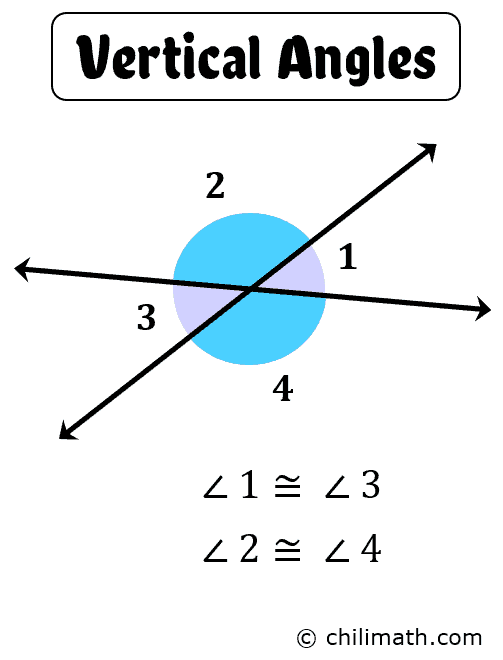
Search "vertically opposite angles"
sly grotto
Vertically opposite angles are angles that are opposite one another at a specific vertex and are created by two straight intersecting lines. Vertically opposite angles are equal to each other. These are sometimes called vertical angles.
glossy basalt
Yey!
sly grotto
Yeah! So what I get from this is that Angle O is also 90°
glossy basalt
Nope
glossy basalt

When there's a cross
The opposite angles will be equal
For angle O, what which angle does it equal to?
sly grotto
So angle O is 40° then?
glossy basalt
Yep
sly grotto
Ah I knew it
glossy basalt
So finally, angle P
sly grotto
Right
glossy basalt
glossy basalt
Recall, angle sum of triangle = 180°
This
glossy basalt
Yesssss
Correct!
I think I don't have time to go through all others
But I will give you tips on the questions
14. Use angle A in 13, find O and search (angle on a straight line)
15. Reversed thinking of 14.
16. Use angle A in 13, and angle sum of triangle
Good luck!
@sly grotto
obtuse pebbleBOT
Channel closed
Closed by @sly grotto
Use .reopen if this was a mistake.
Available help channel!
Send your question here to claim the channel.
Remember:
• Ask your math question in a clear, concise manner.
• Show your work, and if possible, explain where you are stuck.
• After 15 minutes, feel free to ping <@&286206848099549185>.
• Type the command .close to free the channel when you're done.
• Be polite and have a nice day!
Read #❓how-to-get-help for further information on how to ask a good question, and about conduct in the question channels.
 leaden shoal
help
 obtuse pebbleBOT
leaden shoal
help
obtuse pebbleBOT
leaden shoal
help
 royal basin
 leaden shoal
oh im meant to answer it without using desmos

im stuck on deciding which solution i should use
royal basin
leaden shoal
oh im meant to answer it without using desmos
my screenshot was not intended as giving away the answer anyway
but you may find that you can use it to inform yourself as to which solution you want
also you would have done better to not convert 9/40 into a decimal
but that's just a style thing
leaden shoal
royal basin
also you would have done better to not convert 9/40 into a decimal
why do u mean?
royal basin
did you mean why or what
leaden shoal
yes what do u mean
royal basin
i mean that you would've done better to keep 9/40 as 9/40 as opposed to converting it into a decimal like you did
unless you're deathly allergic to fractions
leaden shoal
why?
royal basin
fractions are cleaner
leaden shoal
i need decimal to plot it on the unit circle
royal basin
no you don't
leaden shoal
 royal basin
and what stopped you from labeling that as -9/40?
leaden shoal
royal basin
but you may find that you can use it to inform yourself as to which solution you...
but i dont get this
use what to inform myself to use which solution i want
royal basin
use my graph
and observe that you want the second positive solution
which corresponds to the lower point on your circle graph
leaden shoal
whats a second positive solution?
royal basin
do you know what the words "second" and "positive" mean
leaden shoal
-1.798 on the graph?
royal basin
thank you for not answering my question
i now assume you don't know what the words "second" and "positive" mean
leaden shoal
basically the second angle on the graph
leaden shoal
royal basin
i now assume you **don't** know what the words "second" and "positive" mean
yes
tell me
what is a "second positive solution" mean?
leaden shoal
so its just the second point of the unit circle
leaden shoal
ok
what should i do with 2pi - 1.798

do i isolate t from here?

im stuck
what should i do with 2pi - 1.798?
hey Ann
im curious on why we need the second positive solution and not the first one
<@&286206848099549185>
obtuse pebbleBOT
@leaden shoal Has your question been resolved?
timid silo
cos(x) is an even function, where cos(x) = cos(-x).
So cos(1.79773) = cos(-1.79773) = -0.225 or -9/40
Now it has asked time.
So think which solution will fit here. 1.79773 or -1.79773
timid silo
leaden shoal
the negative one
timid silo
Interesting that time can be negative
leaden shoal
hmm i dont get it
timid silo
Like length, time can never be negative
It's just like solving a quadratic formula to find length of something, then you exclude the negative solution because length can never be negative
timid silo
When you take -1.79773 as the answer to calculate the time, it will result negative time. Negative time would essentially mean going backwards in time, which nothing in existence has ever done this (it breaks causality, that is why).
What I'm saying is that there are some things that cannot be negative at all, or else it would break the logic, or is not experimentally observed at all. Have you ever seen something having negative length? It's not possible at all in reality. Same goes for time.
leaden shoal
oh ok
leaden shoal
timid silo
When you take -1.79773 as the answer to calculate the time, it will result negat...
but we can rewrite it
timid silo
As 2π-1.79773 right
leaden shoal
yes
timid silo
Check both of them
leaden shoal
6.28+1.79
timid silo
Please do not change the values like 2π or 9/40 to decimals in calculations
It can give errors
leaden shoal
yes
timid silo
Two positive solutions
Check which when inputting in the function parameters gives -80
Why is the distance given in "-80cm" 
leaden shoal
wait
timid silo
leaden shoal
wait
Just check
timid silo
👍
 warm shaleBOT


 Requested by Pencil#9129
timid silo
Requested by Pencil#9129
timid silo
There
leaden shoal
wait what
timid silo
,w calc 40 cos(2π - 1.797793) - 71
leaden shoal
why
warm shaleBOT
 Requested by Pencil#9129
 timid silo
Yeah
Well u can keep t as 3/2π × 1.79773
It makes calculations easier
For rechecking purposes
leaden shoal
oh its just that its been a while since i did the question and i just wanna do it for recall
if u dont mind
i mean its fine if u dont want me to do it
leaden shoal
ok
timid silo
👍
leaden shoal
:)
timid silo
So uh here's how this goes. To frame your answer, use the principal value 1.79773 seconds
Positive because all the stuff I explained earlier ^
Within the cos(2π/3 t) function, t can take any 2nπ±t values
leaden shoal
ok
warm shaleBOT
 Requested by Pencil#9129
leaden shoal
Requested by Pencil#9129
leaden shoal
 timid silo
,w calc cos(2π + π/6)
warm shaleBOT
 Requested by Pencil#9129
leaden shoal
Requested by Pencil#9129
leaden shoal
oo
warm shaleBOT
 Requested by Pencil#9129
leaden shoal
Requested by Pencil#9129
leaden shoal
hmm i dont understand
timid silo
Cosine is a periodic function
Like sine
So at every interval of 2nπ
It repeats itself
U can check it on a graph
,w graph cos(x)
warm shaleBOT
 Requested by Pencil#9129
timid silo
Requested by Pencil#9129
timid silo
See
 leaden shoal
timid silo
So t = 2π ± 9/40
leaden shoal
timid silo
So t = 2π ± 9/40
is it 2πn ± 9/40?
timid silo
I just wanted to make you clear the distinction between principal and arbitrary values, and that cosine is periodic
leaden shoal
oh ok
leaden shoal
timid silo
I just wanted to make you clear the distinction between principal and arbitrary ...
hmm im not clear
leaden shoal
yes!
timid silo
Likewise -1.79773
leaden shoal
mhm
timid silo
2π + 1.79773 is your another answer
leaden shoal
both is cos(-9/40)
timid silo
Likewise 2π - 1.79773
leaden shoal
one full rotation
timid silo
Kind of
Due to that
cos(theta) = cos(2nπ ± theta)
theta is ur principal value here
leaden shoal
mhm
timid silo
And ± here is only for cosine function since it's an even function
I hope you've understood
In your actual answer in the box
leaden shoal
what does even function mean?
timid silo
Well
leaden shoal
does it mean same amplitude?
leaden shoal
oh okay i get it
timid silo
See this
leaden shoal
both has the same value
timid silo
,w cos(30°)
warm shaleBOT
 Requested by Pencil#9129
warm shaleBOT
Requested by Pencil#9129
warm shaleBOT
 Requested by Pencil#9129
leaden shoal
Requested by Pencil#9129
leaden shoal
one will be negative and another positive
leaden shoal
ok
timid silo
Keep the properties of sine, cosine and tangent functions clear in mind
They help a lot
leaden shoal
yep i have it
timid silo
👍
So after all this
What is your final answer of t?
In the box
What will u write
leaden shoal
hmm i still dont know how this will help me to distinguish if i should use either -1.7 or 1.7
timid silo
Okay see
This is related to Physics actually
You see
Time always moves forward
It can never move backwards
leaden shoal
yep i think its positive
leaden shoal
what if the x variable isnt time and its something else instead
timid silo
Which breaks causality
leaden shoal
timid silo
Moving backwards in time
ye breaks the timeline
timid silo
leaden shoal
what if the x variable isnt time and its something else instead
Pardon?
leaden shoal
timid silo
Pardon?
hmm ill show you
timid silo
Sure
 timid silo
Distance, time, length are always positive
And never negative
Height, distance fall under length
leaden shoal
oo
timid silo
Which can never be negative
leaden shoal
so it never reverses
leaden shoal
negative as in never goes to the left
timid silo
It's just not defined
leaden shoal
ok
timid silo
So
leaden shoal
hmm so i use 1.7 as a solution?
timid silo
Yes
timid silo
Absolute value, which results in 1.7 only
leaden shoal
-1.7 is going clockwise but we can just write it in anticlockwise
timid silo
Nono
2π-1.7 is positive
But
It's not the principal value
You only consider the principal value
Which is 1.7 seconds
leaden shoal
principal value as in orginal value right?
timid silo
Yes
leaden shoal
ok
timid silo
Basically "your first answer" in informal terms
leaden shoal
 leaden shoal
timid silo
Basically "your first answer" in informal terms
leaden shoal
timid silo
Basically "your first answer" in informal terms
ok
hmm so what should i do with 1.7 now?
timid silo
arccos(-9/40) has solutions -1.7 and 1.7 too
Regarding to your question asked
It will be 1.7 only (you discard -1.7)
Just want to make clear
leaden shoal
 leaden shoal
timid silo
Just want to make clear
leaden shoal
timid silo
Just want to make clear
ok
 leaden shoal
 timid silo
Yes
timid silo
Weird
leaden shoal
the answer is this


i just dont understand why they wanted the second positive solution

help me
i've been stuck on this question for hours
timid silo
I apologise for not correctly helping you out...
I also don't really know why, I suspect it must be due to the derivative, but I'm also not really sure.
Derivative (of this function) at 0.9 is negative, while at 2.1 is positive and so on
But I suggest you to clarify this with someone else...
Sorry once again
leaden shoal
ok i got it

I am creating videos that cover all the practice exercises on Khan Academy for Trig. These videos are available for download on Google Drive and Internet Archive.
You can find them on Drive here:
https://drive.google.com/drive/folders/1Ucurfh6eEE3eNf7EOR6fm7XPAlOkAtai?usp=sharing
You can find them on Internet Archive here:
https://archive.org/...
this video helps alot
leaden shoal
timid silo
I apologise for not correctly helping you out...
I also don't really know why, I...
its fine
timid silo
Ah I see it asked what's the time taken when it goes all the way down from its peak and rises back up to 80 cm from her hand
Hence the second positive solution
leaden shoal
yep
summer spire
@leaden shoal do you still need a question answered?
leaden shoal
summer spire
<@801338293241118771> do you still need a question answered?
sure
actually nvm its fine
but thanks for asking
.close
obtuse pebbleBOT
Channel closed
Closed by @leaden shoal
Use .reopen if this was a mistake.
leaden shoal
sorry for the ping
summer spire
no worries
obtuse pebbleBOT
Available help channel!
Send your question here to claim the channel.
Remember:
• Ask your math question in a clear, concise manner.
• Show your work, and if possible, explain where you are stuck.
• After 15 minutes, feel free to ping <@&286206848099549185>.
• Type the command .close to free the channel when you're done.
• Be polite and have a nice day!
Read #❓how-to-get-help for further information on how to ask a good question, and about conduct in the question channels.
 polar socket
If I'm finding the average value using integration and the integration requires substitution do I still need to recalculate the bounds like I would in a normal substitution problem? none of my practice questions had us redo the bounds so I just wanna confirm
obtuse pebbleBOT
polar socket
If I'm finding the average value using integration and the integration requires ...
obtuse pebbleBOT
Channel closed
Closed by @polar socket
Use .reopen if this was a mistake.
obtuse pebbleBOT
Available help channel!
Send your question here to claim the channel.
Remember:
• Ask your math question in a clear, concise manner.
• Show your work, and if possible, explain where you are stuck.
• After 15 minutes, feel free to ping <@&286206848099549185>.
• Type the command .close to free the channel when you're done.
• Be polite and have a nice day!
Read #❓how-to-get-help for further information on how to ask a good question, and about conduct in the question channels.
 obtuse pebbleBOT
 devout lark
devout lark
devout lark
can someone help me with this
I got a final today and smoked through the review
but this one stumped me
ping if u respond cause this servers deep in my folders
warm shaleBOT
Umbraleviathan

 fierce lagoon
@devout lark
obtuse pebbleBOT
Channel closed
Closed by @devout lark
Use .reopen if this was a mistake.
obtuse pebbleBOT
Available help channel!
Send your question here to claim the channel.
Remember:
• Ask your math question in a clear, concise manner.
• Show your work, and if possible, explain where you are stuck.
• After 15 minutes, feel free to ping <@&286206848099549185>.
• Type the command .close to free the channel when you're done.
• Be polite and have a nice day!
Read #❓how-to-get-help for further information on how to ask a good question, and about conduct in the question channels.
 reef loom
The figure shows three circles of centers O, P, and Q, each tangent to the others at points A, B and C, as indicated. The diameter AD of the circle of center O touches the circle of center Q at E. The radii of the circles of center O and center P measure 1 and 2/3, respectively. What is the radius of the circle of center Q? (A) 1/5 (B) 6/25 (C) 7/25 (D) 8/25 (E) 9/25
obtuse pebbleBOT
reef loom
The figure shows three circles of centers O, P, and Q, each tangent to the other...
reef loom

i tried many things
but i cant progress here
does someone have any idea of what path should i try to use? (preferably, don't write the answer, I still want to try)
(sorry for my english btw, im not an american)
 steep harness
this is interesting. here's a question that might help: what is the largest circle you could make in the space outside circle P but inside circle O?
steep harness
Q has an extra restriction on it, making it smaller
right now we're solving an easier problem to then modify into the desired problem
steep harness
It is tangent to AD at point E
steep harness
if we think logically, the biggest possible circle will have a center somewhere on AD, right?
reef loom
yes
steep harness
because any shift off will squeeze it smaller
reef loom
steep harness
because any shift off will squeeze it smaller
yeah
ok, makes sense until now
steep harness
if we can find that biggest possible circle, then start shifting it until it becomes tangent with AD, we'll have found our answer. I have no idea if that's easy to do, but it might give you some ideas
reef loom
hmmmmmmm
reef loom
steep harness
if we can find that biggest possible circle, then start shifting it until it bec...
but how could i know the size it might get after shifting?
theres like, a formula for it?
steep harness
there might be, I don't have any idea, We would have to build it ourselves
reef loom
but i have no proof of it
reef loom
steep harness
there might be, I don't have any idea, We would have to build it ourselves

thinking
steep harness
that's the fun part of math: formulas aren't just already invented things to memorize, sometimes we have to make our own to do what we want
I seem to remember some facts about angles of lines that pass through the center of a circle and some other point within it. I'm not sure if this is the right direction at all
obtuse pebbleBOT
@reef loom Has your question been resolved?
obtuse pebbleBOT
Channel closed
Closed due to timeout
Use .reopen if this was a mistake.
Available help channel!
Send your question here to claim the channel.
Remember:
• Ask your math question in a clear, concise manner.
• Show your work, and if possible, explain where you are stuck.
• After 15 minutes, feel free to ping <@&286206848099549185>.
• Type the command .close to free the channel when you're done.
• Be polite and have a nice day!
Read #❓how-to-get-help for further information on how to ask a good question, and about conduct in the question channels.
 warm frigate
 obtuse pebbleBOT
warm frigate
warm frigate
obtuse pebbleBOT
warm frigate
warm frigate
Hey ive been struggling a lot with this question
so what i did was

this is what i got up to so far
can someone check if this is even right
=close
.close
obtuse pebbleBOT
Channel closed
Closed by @warm frigate
Use .reopen if this was a mistake.
Available help channel!
Send your question here to claim the channel.
Remember:
• Ask your math question in a clear, concise manner.
• Show your work, and if possible, explain where you are stuck.
• After 15 minutes, feel free to ping <@&286206848099549185>.
• Type the command .close to free the channel when you're done.
• Be polite and have a nice day!
Read #❓how-to-get-help for further information on how to ask a good question, and about conduct in the question channels.
 heady zenith
My physics professor just wrote this in the recorded video and I don't know why, I do understand the integral of a conservative vector field, however, I do not know what steps did he take to reach this part
obtuse pebbleBOT
heady zenith
My physics professor just wrote this in the recorded video and I don't know why,...
heady zenith
$-df = \vec{F}.d\vec{r}$
warm shaleBOT
Sir Isaac
 heady zenith
f is the potential
F vector is the force vector
I especially don't get the - sign
I'll be gone working on other problems in the meantime
 sage iron
dot product of force and displacement is just work right
sage iron
so if the field is doing work it will lose potential energy I think
that's why df is negative
heady zenith
The question in the worksheet we have, state this problem as purely mathematical
So I'm not exactly sure
But if the field is conservative, the work will only depend on the end point
 robust sleet
Begin and end point
heady zenith

The notation is a bit different, because this is in French system
But
V in the book is f is the American system
heady zenith
robust sleet
Begin and end point
Yeah right
robust sleet
What u need help with
heady zenith
Part b, the professor just started with this expression and solved for f

I don't get from where did he get it
I know this

But I don't know how to solve it without endpoints
 tardy epoch
,rotate
warm shaleBOT
 tardy epoch
heady zenith
tardy epoch
heady zenith
look in your book for the definition of conservative vector field
heady zenith
There's and I understand it
tardy epoch
heady zenith
There's and I understand it
then what are you stuck on
heady zenith
heady zenith
Professor just brought this equation out of thin air, and I don't get how did he get here
tardy epoch
that physics notation is garbage
A discussion of the ways to determine whether or not a vector field is conservative or path-independent.
Should be $\grad f = \mathbf{F}$
warm shaleBOT
riemann
 heady zenith
Where did the dr go
tardy epoch
You don't need it
tardy epoch
tardy epoch
that physics notation is garbage
.
 tardy epoch

.close to free up the channel
obtuse pebbleBOT
Channel closed
Closed by @heady zenith
Use .reopen if this was a mistake.
obtuse pebbleBOT
Available help channel!
Send your question here to claim the channel.
Remember:
• Ask your math question in a clear, concise manner.
• Show your work, and if possible, explain where you are stuck.
• After 15 minutes, feel free to ping <@&286206848099549185>.
• Type the command .close to free the channel when you're done.
• Be polite and have a nice day!
Read #❓how-to-get-help for further information on how to ask a good question, and about conduct in the question channels.
 final sky
 final sky
does this work?
 supple basin
 pallid flame
final sky
pallid flame
final sky
um? you’re gonna be multiplying by values pretty close to just i as n increases
since i - 1/i^2 -> i
so it’s not gonna stay below 1
did you mean 1 - 1/i^2? @final sky
just use induction
prod (i^2 - 1)/i^2
final sky
Hm...
wait what
Oh
Bruh
im stupid
hold on
$\prod_{i=2}^{n}1-\frac {1}{i^{2}} \implies \frac {n+1}{2n}$
warm shaleBOT
Javaan T aka Lil Plum
 final sky
There we go.
pallid flame
$\prod_{i=2}^{n}1-\frac {1}{i^{2}} = \frac {n+1}{2n}$
warm shaleBOT
jnmwn
 final sky
indeed
pallid flame
$\prod_{i=2}^{n}\frac {i^2 - 1}{i^{2}} = \frac {n+1}{2n}$
warm shaleBOT
jnmwn
 final sky
true true
pallid flame
assume it’s true for n, then prove it’s true for n+1
using induction
then verify the base case n=2
pallid flame
assuming $$\prod_{i=2}^{n}1-\frac {1}{i^{2}} = \frac {n+1}{2n}$$
prove $$\prod_{i=2}^{n+1}1-\frac {1}{i^{2}} = \frac {(n+1)+1}{2(n+1)}$$
warm shaleBOT
jnmwn
 final sky
Alright let's see this
final sky
$1-\frac {1}{4}\
\
(1-\frac {1}{2})(1+\frac {1}{2})\
\
(\frac {1}{2})(\frac {3}{2})\
\
\frac {3}{4}$
warm shaleBOT
Javaan T aka Lil Plum
 obtuse pebbleBOT
Channel closed
Closed by @final sky
Use .reopen if this was a mistake.
Available help channel!
Send your question here to claim the channel.
Remember:
• Ask your math question in a clear, concise manner.
• Show your work, and if possible, explain where you are stuck.
• After 15 minutes, feel free to ping <@&286206848099549185>.
• Type the command .close to free the channel when you're done.
• Be polite and have a nice day!
Read #❓how-to-get-help for further information on how to ask a good question, and about conduct in the question channels.
 hardy holly
Hi!! i need help with an exercise i saw yesterday in classes
hardy holly
 obtuse pebbleBOT
@hardy holly Has your question been resolved?
hardy holly
<@&286206848099549185>
 alpine raven
hmm if f € Θ(g) then a|g(n)| <= |f(n)| <= b|g(n)| with a,b>0, right ?
hardy holly
yes yes
alpine raven
h(n) = min{f(n), g(n)}
hardy holly
Yeah i was trying that
But tbh i'm pretty bad for this class ahaha so idk what to do next... i don't want it like "solved" and that, i wanna understand it ahhaha
hardy holly
yes yes
alpine raven
im trying to find a way to express h
hardy holly
yeah yeah i wait hehhe, btw the statement can be false too
hardy holly
oke oke
 hexed agate
@alpine raven Kabuto is that you?
alpine raven
who is kabuto
f(n) >= a*g(n), if a>=1, then f(n) is greater than g(n), but if 0<a<1, i cant see how to compare them
hardy holly
hey @alpine raven
if f € Θ(g) then g € Θ(f) (i can show that), and i can also prove that | f € Θ(g) ^ g € Θ(h) --> f € Θ(h)
i know the answer is there but i can't seem to connect those two ideas ahahha
let me think it a bit more
let h be max {f,g} maybe?=
alpine raven
but they said h = min{f,g} right ?
hardy holly
ah ye ye
but i can do like k = max{f,g} and replace h by min{f,g}
h is not really important like
as a concept
alpine raven
wdym
hardy holly
what i'm trying to prove is that doesn't matter which one is the min , the other one will be either one in the max
alpine raven
hmm ok try it
alpine raven
👍



 hardy holly
hardy holly
hardy holly
i know that if f € Θ(g) then g € Θ(f)
also, trivially, f € Θ(f) and g € Θ(g)
doesn't that mean i have all cases and problem is solved?
considering i have to show min{f,g} € Θ(max{f,g})
obtuse pebbleBOT
@hardy holly Has your question been resolved?
obtuse pebbleBOT
Channel closed
Closed by @hardy holly
Use .reopen if this was a mistake.
Available help channel!
Send your question here to claim the channel.
Remember:
• Ask your math question in a clear, concise manner.
• Show your work, and if possible, explain where you are stuck.
• After 15 minutes, feel free to ping <@&286206848099549185>.
• Type the command .close to free the channel when you're done.
• Be polite and have a nice day!
Read #❓how-to-get-help for further information on how to ask a good question, and about conduct in the question channels.
reef loom
The figure shows three circles of centers O, P, and Q, each tangent to the others at points A, B and C, as indicated. The diameter AD of the circle of center O touches the circle of center Q at E. The radii of the circles of center O and center P measure 1 and 2/3, respectively. What is the radius of the circle of center Q?
(A) 1/5 (B) 6/25 (C) 7/25 (D) 8/25 (E) 9/25
obtuse pebbleBOT
reef loom
The figure shows three circles of centers O, P, and Q, each tangent to the other...
reef loom

My first thought was to make a triangle like this:

and them do:
PQ = 2/3+x
QE = x
PE^2= PQ^2-QE^2
PE^2= (2/3+x)^2 - (x)^2
PE^2= (x)^2+(2x(2/3))+(2/3)^2 - (x)^2
them a got that PE must be -1/3 and by here i think things started falling apart
if the base of PQE is truly -1/3, then we have
(2/3+x)^2-(1/3)^2=x^2
and from this: x=-1/4
totally wrong, i mean, even if it was positive, theres still no option of 1/4
obtuse pebbleBOT
@reef loom Has your question been resolved?
obtuse pebbleBOT
Channel closed
Closed due to timeout
Use .reopen if this was a mistake.
Available help channel!
Send your question here to claim the channel.
Remember:
• Ask your math question in a clear, concise manner.
• Show your work, and if possible, explain where you are stuck.
• After 15 minutes, feel free to ping <@&286206848099549185>.
• Type the command .close to free the channel when you're done.
• Be polite and have a nice day!
Read #❓how-to-get-help for further information on how to ask a good question, and about conduct in the question channels.
 cerulean heart
Why am I getting #9 wrong? What’s wrong with my work?
 obtuse pebbleBOT
cerulean heart
Why am I getting #9 wrong? What’s wrong with my work?
nocturne minnow
obtuse pebbleBOT
cerulean heart
Why am I getting #9 wrong? What’s wrong with my work?
nocturne minnow
,rotate
warm shaleBOT
 obtuse pebbleBOT
@cerulean heart Has your question been resolved?
cerulean heart
<@&286206848099549185>
obtuse pebbleBOT
@cerulean heart Has your question been resolved?
cerulean heart
<@&286206848099549185> anyone able to take a look? It’s a line integral