#help-10
1 messages · Page 393 of 1
 crisp marten
 obtuse pebbleBOT
Channel closed
Closed by @crisp marten
Use .reopen if this was a mistake.
obtuse pebbleBOT
 Available help channel!
Send your question here to claim the channel.
Remember:
• Ask your math question in a clear, concise manner.
• Show your work, and if possible, explain where you are stuck.
• After 15 minutes, feel free to ping <@&286206848099549185>.
• Type the command .close to free the channel when you're done.
• Be polite and have a nice day!
Read #❓how-to-get-help for further information on how to ask a good question, and about conduct in the question channels.
 bitter echo
I am enable to find the slope help..........
 obtuse pebbleBOT
bitter echo
I am enable to find the slope help..........
obtuse pebbleBOT
bitter echo
I am enable to find the slope help..........
 high lily
first identify two points on that line
bitter echo
high lily
first identify two points on that line
(-5,-2) and (-7,1)
 craggy tundra
and it passes through a point below x=0 so the intercept negative
bitter echo
craggy tundra
it's going downwards so gradient must be negative
whats gradient slope ?
craggy tundra
gradient = slope
bitter echo
craggy tundra
and it passes through a point below x=0 so the intercept negative
didnt knew that
damn
ur trick solved it without atually solving
craggy tundra
bitter echo
ur trick solved it without atually solving
yes
high lily
(-5,-2) isn't a point on that lime
 bitter echo
high lily
(-5,-2) isn't a point on that lime
bitter echo
high lily
(-5,-2) isn't a point on that lime
its clearly there wdym its intersecting isnt it
craggy tundra
(x1, y1) are the coordinates of one point on the line and (x2, y2) are the coordinates of the other line
craggy tundra
note that you cannot have (y1-y2)/(x2-x1)
bitter echo
craggy tundra
(x1, y1) are the coordinates of one point on the line and (x2, y2) are the coord...
well ik that much
bitter echo
high lily
can you show me where you think (-5,-2) is
i mean the blue line is intersecting those two perfect spots so shouldnt it be ?
high lily
no
if you are referring to the intersection with the axes, those are two separate points
bitter echo
craggy tundra
note that you cannot have (y1-y2)/(x2-x1)
yeah ik that
so if the intersecting line is above x that means y intercept is + ? @craggy tundra
high lily
(-5,-2) is somewhere else
bitter echo
high lily
if you are referring to the intersection with the axes, those are two separate p...
oh
craggy tundra
bitter echo
yeah ik that
yes
high lily
if you want the coordinates of a certain point, pick one point one the line
and identify it's x and y coordinate
bitter echo
high lily
if you are referring to the intersection with the axes, those are two separate p...
but why is that
wait
so (-7,1) is corret ?
high lily
the graph quality is too poor, but based on the intercepts which they supposedly want you to use, (-7,1) won't be on the line, it'd be very close though
obtuse pebbleBOT
Channel closed
Closed by @bitter echo
Use .reopen if this was a mistake.
Available help channel!
Send your question here to claim the channel.
Remember:
• Ask your math question in a clear, concise manner.
• Show your work, and if possible, explain where you are stuck.
• After 15 minutes, feel free to ping <@&286206848099549185>.
• Type the command .close to free the channel when you're done.
• Be polite and have a nice day!
Read #❓how-to-get-help for further information on how to ask a good question, and about conduct in the question channels.
 thin thistle
can someone tell me how we got this
 obtuse pebbleBOT
thin thistle
can someone tell me how we got this
obtuse pebbleBOT
thin thistle
can someone tell me how we got this
 warm shaleBOT
:D

 azure wraith
u can prove this using the sum of angle for cosine
then u do something with that formula and trig identity to derive that
thin thistle
yes i am familiar with this
but is it like a play on formulas
or is it deeper than that
thin thistle
how did we get it from cos2x = cos^2x - sin^2x and sin^2x + cos^2x = 1
obtuse pebbleBOT
Channel closed
Closed by @thin thistle
Use .reopen if this was a mistake.
obtuse pebbleBOT
Available help channel!
Send your question here to claim the channel.
Remember:
• Ask your math question in a clear, concise manner.
• Show your work, and if possible, explain where you are stuck.
• After 15 minutes, feel free to ping <@&286206848099549185>.
• Type the command .close to free the channel when you're done.
• Be polite and have a nice day!
Read #❓how-to-get-help for further information on how to ask a good question, and about conduct in the question channels.
 tender aurora
What would be the quickest way to prove this has no solution, I really want to teach my friends how to solve this question as quickly as possible as it is a college entrance test practice question, and part of CETs are time management. Do I just tell them to skip it or what?
 obtuse pebbleBOT
tender aurora
What would be the quickest way to prove this has no solution, I really want to t...
tender aurora
obtuse pebbleBOT
tender aurora
What would be the quickest way to prove this has no solution, I really want to t...
tender aurora
personally i just tried substitution and found nothing from the choices worked but that kinda takes way too long and how fast you do it mentally or on paper lol
 worthy cargo
well if u substitute from the choices it’s easy to see A and B don’t work because it makes a denominator undefined and then plugging in 0 is always relatively easy
because if you plug in 0 you
immediately get
-1/2 = 3/2
which is false
so it must be D
tender aurora
yeah i found substition to be the fastest, i guess I'll just tell them to substitute
thanks, really needed a second opinion on it lol thanks
.close
obtuse pebbleBOT
Channel closed
Closed by @tender aurora
Use .reopen if this was a mistake.
 torn gazelle
guys i need help
obtuse pebbleBOT
torn gazelle
guys i need help
To ask for mathematics help on this server, please open your own help channel or help thread. See #❓how-to-get-help for instructions.
 tranquil geyser
 plucky rivet
<#488120190538743810> <@1043973524961902612>
plucky rivet
<#488120190538743810> <@1043973524961902612>
What
tranquil geyser
plucky rivet
You typed too fast

torn gazelle
How many real roots (counted with their multiplicities) can a monic polynomial P(1)=−3
, P(2)=2, P(3)=−4, P(4)=1 et P(5)=−5 does it have ?
plucky rivet
#❓how-to-get-help @torn gazelle
torn gazelle
torn gazelle
How many real roots (counted with their multiplicities) can a monic polynomial ...
.
 sweet gulch
You might want to copy and paste that question into an unoccupied help chat
torn gazelle
wdym
plucky rivet
Are you even reading? Hello
 nocturne bronze
!da2a
obtuse pebbleBOT
No need to ask “Can I ask…?” or “Does anyone know about…?”—it’s faster for everyone if you just ask your question! See https://dontasktoask.com/
nocturne bronze
!original
obtuse pebbleBOT
Please show the original problem, exactly as it was stated to you, with the entire original context. A picture or screenshot is best. If the original problem is not in English, then post it anyway! The additional context might still be helpful. Do your best to provide a translation.
nocturne bronze
!nogpt we are here
torn gazelle
plucky rivet
Are you even reading? Hello
i already send it
obtuse pebbleBOT
Please do not trust ChatGPT or similar AI tools for mathematical tasks, as they often generate output which "sounds correct" but has numerous factual or logical errors. Use of these AI tools to answer other people's help questions is strictly against server rules (see #rules).
plucky rivet
obtuse pebble
To ask for mathematics help on this server, please open your own help channel or...
This isnt your channel
 rocky goblet
torn gazelle
wdym
rocky goblet
torn gazelle
wdym
this channel is being used by someone else, you should go to an available channel
sweet gulch
Like #help-21|아리스킨충1 is unoccupied, type your message there and it will reserve that channel for you
plucky rivet
If you want help do read first
sweet gulch
It's closed, there is a gap time before it goes to open channels
rocky goblet
yeah it's closed, it just takes some time after it's closed for it to actually stop you from sending messages
 grizzled portal
sweet gulch
You might want to copy and paste that question into an unoccupied help chat
grizzled portal
sweet gulch
You might want to copy and paste that question into an unoccupied help chat
😂😂😂
rocky goblet
that way if you like, realise three minutes later that actually you're still confused, you can come back and .reopen it
and also you don't lose any messages you were in the middle of typing when someone else closed it
nocturne bronze
torn gazelle
wdym
your worthiness will be explained when a new help occupied help channel comes
rocky goblet
rocky goblet
that way if you like, realise three minutes later that actually you're still con...
(or if it gets closed by the bot when you weren't done)
nocturne bronze
funfact, you can type in a channel without claiming it by using:
.close [message]
rocky goblet
more specifically the condition is just putting a . at the start, so . hello works too, it doesn't have to be .close
nocturne bronze
english teachers will think otherwise
obtuse pebbleBOT
Available help channel!
Send your question here to claim the channel.
Remember:
• Ask your math question in a clear, concise manner.
• Show your work, and if possible, explain where you are stuck.
• After 15 minutes, feel free to ping <@&286206848099549185>.
• Type the command .close to free the channel when you're done.
• Be polite and have a nice day!
Read #❓how-to-get-help for further information on how to ask a good question, and about conduct in the question channels.
 rare cargo
can someone check my answer
 obtuse pebbleBOT
rare cargo
can someone check my answer
obtuse pebbleBOT
rare cargo
can someone check my answer
 latent walrus
show your working
 restive gorge
no double working here
rare cargo
 latent walrus
youre suffering a bit from early rounding
but the process is correct
try keep your values exact in the midst of calculations or the final answer can be slightly off
obtuse pebbleBOT
Channel closed
Closed by @rare cargo
Use .reopen if this was a mistake.
obtuse pebbleBOT
Available help channel!
Send your question here to claim the channel.
Remember:
• Ask your math question in a clear, concise manner.
• Show your work, and if possible, explain where you are stuck.
• After 15 minutes, feel free to ping <@&286206848099549185>.
• Type the command .close to free the channel when you're done.
• Be polite and have a nice day!
Read #❓how-to-get-help for further information on how to ask a good question, and about conduct in the question channels.
 limber pawn
I'm stuck on the 'deduce that the three altitudes of triangle ABC are concurrent' part - I've done the first part of i) and can't figure out where this second part of i) comes from.
 obtuse pebbleBOT
limber pawn
I'm stuck on the 'deduce that the three altitudes of triangle ABC are concurrent...
obtuse pebbleBOT
obtuse pebbleBOT
limber pawn
I'm stuck on the 'deduce that the three altitudes of triangle ABC are concurrent...
obtuse pebbleBOT
@limber pawn Has your question been resolved?
obtuse pebbleBOT
@limber pawn Has your question been resolved?
obtuse pebbleBOT
Channel closed
Closed due to timeout
Use .reopen if this was a mistake.
Available help channel!
Send your question here to claim the channel.
Remember:
• Ask your math question in a clear, concise manner.
• Show your work, and if possible, explain where you are stuck.
• After 15 minutes, feel free to ping <@&286206848099549185>.
• Type the command .close to free the channel when you're done.
• Be polite and have a nice day!
Read #❓how-to-get-help for further information on how to ask a good question, and about conduct in the question channels.
 timid silo
how do i go about calculating the second half of this equation? i've gotten the first part by reversing the numbers and doing 350% of 8 or 3.5 x 8 to get $28 of interest but im not sure what to do next
 obtuse pebbleBOT
timid silo
how do i go about calculating the second half of this equation? i've gotten the ...
obtuse pebbleBOT
timid silo
how do i go about calculating the second half of this equation? i've gotten the ...
 dire locust
5 year 4 month
 lone echo
!noans
obtuse pebbleBOT
The purpose of this server is to help you learn, not to hand out answers. Do not ask someone to give you the answer directly.
lone echo
timid silo
how do i go about calculating the second half of this equation? i've gotten the ...
first off, is it simple or compound interest?
dire locust
I = Prt/100
therefore,t=100 i/pr
Where:
P = Principal Amount=350
I = Interest Amount=150
R = Rate of Interest per year as a percent=8%
t = Time Periods involved=?
obtuse pebbleBOT
@timid silo Has your question been resolved?
obtuse pebbleBOT
Channel closed
Closed due to timeout
Use .reopen if this was a mistake.
obtuse pebbleBOT
Available help channel!
Send your question here to claim the channel.
Remember:
• Ask your math question in a clear, concise manner.
• Show your work, and if possible, explain where you are stuck.
• After 15 minutes, feel free to ping <@&286206848099549185>.
• Type the command .close to free the channel when you're done.
• Be polite and have a nice day!
Read #❓how-to-get-help for further information on how to ask a good question, and about conduct in the question channels.
 floral siren
hi
obtuse pebbleBOT
floral siren
hi
floral siren


what is the difference here? they are the same theorem
what does B_j mean?
whats the difference of B and B_j
obtuse pebbleBOT
@floral siren Has your question been resolved?
Channel closed
Closed by @floral siren
Use .reopen if this was a mistake.
Available help channel!
Send your question here to claim the channel.
Remember:
• Ask your math question in a clear, concise manner.
• Show your work, and if possible, explain where you are stuck.
• After 15 minutes, feel free to ping <@&286206848099549185>.
• Type the command .close to free the channel when you're done.
• Be polite and have a nice day!
Read #❓how-to-get-help for further information on how to ask a good question, and about conduct in the question channels.
@fading zodiac Has your question been resolved?
obtuse pebbleBOT
Channel closed
Closed due to timeout
Use .reopen if this was a mistake.
Available help channel!
Send your question here to claim the channel.
Remember:
• Ask your math question in a clear, concise manner.
• Show your work, and if possible, explain where you are stuck.
• After 15 minutes, feel free to ping <@&286206848099549185>.
• Type the command .close to free the channel when you're done.
• Be polite and have a nice day!
Read #❓how-to-get-help for further information on how to ask a good question, and about conduct in the question channels.
 zenith mango
is this done correctly?

 obtuse pebbleBOT
zenith mango
is this done correctly?
obtuse pebbleBOT
zenith mango
is this done correctly?
@zenith mango Has your question been resolved?
obtuse pebbleBOT
@zenith mango Has your question been resolved?
Channel closed
Closed by @zenith mango
Use .reopen if this was a mistake.
Available help channel!
Send your question here to claim the channel.
Remember:
• Ask your math question in a clear, concise manner.
• Show your work, and if possible, explain where you are stuck.
• After 15 minutes, feel free to ping <@&286206848099549185>.
• Type the command .close to free the channel when you're done.
• Be polite and have a nice day!
Read #❓how-to-get-help for further information on how to ask a good question, and about conduct in the question channels.
obtuse pebbleBOT
@timid silo Has your question been resolved?
obtuse pebbleBOT
@timid silo Has your question been resolved?
Channel closed
Closed by @fluid sandal
Use .reopen if this was a mistake.
Available help channel!
Send your question here to claim the channel.
Remember:
• Ask your math question in a clear, concise manner.
• Show your work, and if possible, explain where you are stuck.
• After 15 minutes, feel free to ping <@&286206848099549185>.
• Type the command .close to free the channel when you're done.
• Be polite and have a nice day!
Read #❓how-to-get-help for further information on how to ask a good question, and about conduct in the question channels.
 cerulean tulip
let's say you have a plane defined by f(x,y) = z. You know the directional derivative of f(x,y) in 2 arbitrary (different) directions. How do you find the maximum value of the derivative across all directions given that info?
obtuse pebbleBOT
cerulean tulip
let's say you have a plane defined by f(x,y) = z. You know the directional deriv...
cerulean tulip
I am not quite sure where to start
 dark stirrup
The derivative a specific point, or through the entire domain?
cerulean tulip
dark stirrup
The derivative a specific point, or through the entire domain?
its a plane so same direction = same derivative no matter where it is right?
dark stirrup
Oh so it's of the form z=ax+by+c?
obtuse pebbleBOT
@cerulean tulip Has your question been resolved?
obtuse pebbleBOT
Channel closed
Closed due to timeout
Use .reopen if this was a mistake.
Available help channel!
Send your question here to claim the channel.
Remember:
• Ask your math question in a clear, concise manner.
• Show your work, and if possible, explain where you are stuck.
• After 15 minutes, feel free to ping <@&286206848099549185>.
• Type the command .close to free the channel when you're done.
• Be polite and have a nice day!
Read #❓how-to-get-help for further information on how to ask a good question, and about conduct in the question channels.
 near kraken
am i being dense
 obtuse pebbleBOT
near kraken
am i being dense
obtuse pebbleBOT
near kraken
am i being dense
 obtuse pebbleBOT
Channel closed
Closed by @near kraken
Use .reopen if this was a mistake.
obtuse pebbleBOT
Available help channel!
Send your question here to claim the channel.
Remember:
• Ask your math question in a clear, concise manner.
• Show your work, and if possible, explain where you are stuck.
• After 15 minutes, feel free to ping <@&286206848099549185>.
• Type the command .close to free the channel when you're done.
• Be polite and have a nice day!
Read #❓how-to-get-help for further information on how to ask a good question, and about conduct in the question channels.
 hollow ridge
how do i do this without cacl
 obtuse pebbleBOT
hollow ridge
how do i do this without cacl
obtuse pebbleBOT
hollow ridge
how do i do this without cacl
 gloomy vector
do you know what something raised by a fraction means
obtuse pebbleBOT
@hollow ridge Has your question been resolved?
 uneven otter
You could write it as $(16^\frac{1}{4})(16^\frac{1}{4})(16^\frac{1}{4})$
warm shaleBOT
Calc III Victim
 hollow ridge
well yes
uneven otter
should b easy from there
 limpid eagle
you could also rewrite 16 as 2^4
uneven otter
o ye thats better
limpid eagle
and use the rule $(a^x)^y = a^(xy)$
warm shaleBOT
AwesomeRat
 uneven otter
a^{xy} should work
hollow ridge
limpid eagle
I don't get latex
latex has too much of a learning curve
 uneven otter
I learnt it from seein other ppl use it on discord lol
hollow ridge
wth
uneven otter
I used to think it was complicated but its rlly not
hollow ridge
alr bro
limpid eagle
mhm
hollow ridge
.close
obtuse pebbleBOT
Channel closed
Closed by @hollow ridge
Use .reopen if this was a mistake.
obtuse pebbleBOT
Available help channel!
Send your question here to claim the channel.
Remember:
• Ask your math question in a clear, concise manner.
• Show your work, and if possible, explain where you are stuck.
• After 15 minutes, feel free to ping <@&286206848099549185>.
• Type the command .close to free the channel when you're done.
• Be polite and have a nice day!
Read #❓how-to-get-help for further information on how to ask a good question, and about conduct in the question channels.
 crisp ember
 obtuse pebbleBOT
crisp ember
crisp ember
obtuse pebbleBOT
crisp ember
crisp ember
hi could i get help with the start, i have come across a few of these questions where the derivative is geiven and a function at o is equal to zero but i always forget hoe to solve them
here is what i have done

 safe ravine
Ok
crisp ember
any ideas @safe ravine
safe ravine
Do u know minima maxima
In first part they have asked when potential becomes minimum
crisp ember
yeah, do a double derivative
safe ravine
I mean they asked to show
safe ravine
crisp ember
yeah, do a double derivative
No
crisp ember
oh
safe ravine
We begin simply
crisp ember
ok
crisp ember
the derivative is 0
safe ravine
crisp ember
yeah ive done that in my working
safe ravine
for maxima f''(x) should be -ve and for minima f''(x) should be +ve
crisp ember
yeah
safe ravine
Now as u have found the points
Where f'(x)=0
To prove maxima minima
Just check the above condition at that points
crisp ember
what should i do with the -1
crisp ember
cos it only says 1 in the question
crisp ember
ok
obtuse pebbleBOT
@crisp ember Has your question been resolved?
 short spire
safe ravine
for maxima f''(x) should be -ve and for minima f''(x) should be +ve
short spire
safe ravine
for maxima f''(x) should be -ve and for minima f''(x) should be +ve
That only shows local maxima/minima and not global..
short spire
Yes (if the domain is closed and bounded).
safe ravine
But the question asked simple things
So told it simply
It said to prove
(Mainly it wants u take the second derivative)

short spire
Well you don’t even have to take second derivative if the point is so to check for global maxima and minima
Just pick the largest and smallest one between the candidates
short spire
I didn’t even read the question and yeah I see your point now, since we’re only given the derivative then that’s okay in this instance I suppose
short spire
safe ravine
No domain given
Wouldn’t matter, you can still show
safe ravine
;-;
So what u want
I should directly put it in the f'(x) for it to be zero
We don't have f(x)

short spire
Well if you can show that the derivative after the maximum is always negative and likewise positive at the left (up to the minimum) then I would say that’s a better route to really ensure it’s not just a local maximum
And you can argue through the given point aswell
short spire
safe ravine
So what u want
I don’t want anything, I agreed with you in this case that it’s sufficient (if one is lazy)
obtuse pebbleBOT
Channel closed
Closed due to timeout
Use .reopen if this was a mistake.
Available help channel!
Send your question here to claim the channel.
Remember:
• Ask your math question in a clear, concise manner.
• Show your work, and if possible, explain where you are stuck.
• After 15 minutes, feel free to ping <@&286206848099549185>.
• Type the command .close to free the channel when you're done.
• Be polite and have a nice day!
Read #❓how-to-get-help for further information on how to ask a good question, and about conduct in the question channels.
 smoky bear
Suppose that I have a very small sample (n = 4) and from it, I get a sample proportion p'=1.0 (all successes). What would be an appropriate statistical test for me to do for me to say with statistical significance that it is greater than another proportion (p=0.75)? I've tried deriving the p-value by calculating the exact null distribution and I get a p-value of 0.0. I'm not sure this is correct though--
obtuse pebbleBOT
smoky bear
Suppose that I have a very small sample (n = 4) and from it, I get a sample prop...
smoky bear
I've constructed the distribution through a discrete binomial probability distribution for numbers 0-4 (possible values given the sample size)
Sorry if my statistics jargon is a bit off;;; It's been a while since I've formally learned stats
 viral blade
well ig you want the probability of getting a result at least as strong (all successes) under the assumption that p=0.75
so that would be 0.75^4
smoky bear
hmm i think i didnt include that in when i was minusing from the 1 since its a greater than
means that p > 0.05 though, a shame
oh well, much thanks+
.close
obtuse pebbleBOT
Channel closed
Closed by @smoky bear
Use .reopen if this was a mistake.
obtuse pebbleBOT
Available help channel!
Send your question here to claim the channel.
Remember:
• Ask your math question in a clear, concise manner.
• Show your work, and if possible, explain where you are stuck.
• After 15 minutes, feel free to ping <@&286206848099549185>.
• Type the command .close to free the channel when you're done.
• Be polite and have a nice day!
Read #❓how-to-get-help for further information on how to ask a good question, and about conduct in the question channels.
 onyx girder
how did they find the imaginary part
 obtuse pebbleBOT
onyx girder
how did they find the imaginary part
obtuse pebbleBOT
onyx girder
how did they find the imaginary part
 sudden sage
the isin(theta) and -isin(theta) in numerator cancel out
onyx girder
so should i convert it to cartesian form first
onyx girder
sudden sage
the isin(theta) and -isin(theta) in numerator cancel out
^
im not sure where the 0/2+0 is coming from exactly
but i do see that the isin cancel out if i do it in cartesian form
sudden sage
onyx girder
so should i convert it to cartesian form first
yeah
timid silo
why did they write 0/(2+0)? Specifically, why 2+0 in the denominator. It doesn't matter though, as the numerator is clearly 0, but I think they send the wrong message.
onyx girder
timid silo
why did they write 0/(2+0)? Specifically, why 2+**0** in the denominator. It doe...
oh ok
i think ill just ignore it then since there is a clearer method
thanks
.close
obtuse pebbleBOT
Channel closed
Closed by @onyx girder
Use .reopen if this was a mistake.
onyx girder
.reopen
obtuse pebbleBOT
✅
onyx girder
sudden sage
yeah
similar question sorry but is this a mistake they made eitheta = costheta it seems

shouldnt the real part be 1/2+2costheta in this case
nvm
.close
obtuse pebbleBOT
Channel closed
Closed by @onyx girder
Use .reopen if this was a mistake.
obtuse pebbleBOT
Available help channel!
Send your question here to claim the channel.
Remember:
• Ask your math question in a clear, concise manner.
• Show your work, and if possible, explain where you are stuck.
• After 15 minutes, feel free to ping <@&286206848099549185>.
• Type the command .close to free the channel when you're done.
• Be polite and have a nice day!
Read #❓how-to-get-help for further information on how to ask a good question, and about conduct in the question channels.
 weak nymph
hey, can someone explain to me why in step 3 the 3 becomes a -3 in the equations?
 obtuse pebbleBOT
weak nymph
hey, can someone explain to me why in step 3 the 3 becomes a -3 in the equations...
weak nymph
obtuse pebbleBOT
weak nymph
hey, can someone explain to me why in step 3 the 3 becomes a -3 in the equations...
weak nymph
(im trying to do the elimination method for this)
 ionic oar
weak nymph
hey, can someone explain to me why in step 3 the 3 becomes a -3 in the equations...
ionic oar
weak nymph
hey, can someone explain to me why in step 3 the 3 becomes a -3 in the equations...
they subtracted 3 from both sides
/moved the 3 over
ionic oar
final step for step 2
ionic oar
weak nymph
and why
to make it solvable for y
for example if i gave you the equation 2x + 3 = 1, how would you solve it?
 tidal isle
weak nymph
hey, can someone explain to me why in step 3 the 3 becomes a -3 in the equations...
tidal isle
weak nymph
hey, can someone explain to me why in step 3 the 3 becomes a -3 in the equations...
also just saying, ChatGPT is an idiot. It often makes mistakes and presents them like facts. And while it is becoming better with the newer models, i wouldn't trust it with anything, you can't verify to be correct yourself
tidal isle
weak nymph
hey, can someone explain to me why in step 3 the 3 becomes a -3 in the equations...
this is still correct tho
ionic oar
dang didnt realise it was gpt
obtuse pebbleBOT
@weak nymph Has your question been resolved?
 glacial ocean
 obtuse pebbleBOT
Channel closed
Closed due to timeout
Use .reopen if this was a mistake.
glacial ocean
can someone tell me how i make that like the perfect answer
or like u know
it is supposed to be 2,7... but i can't figure out how
obtuse pebbleBOT
Available help channel!
Send your question here to claim the channel.
Remember:
• Ask your math question in a clear, concise manner.
• Show your work, and if possible, explain where you are stuck.
• After 15 minutes, feel free to ping <@&286206848099549185>.
• Type the command .close to free the channel when you're done.
• Be polite and have a nice day!
Read #❓how-to-get-help for further information on how to ask a good question, and about conduct in the question channels.
 north bolt
I’m not sure if this is the best place to ask but I need to take a screenshot of a road from google maps and turn it into a set of co-ordinates. I was thinking of using GeoGebra but I’m unsure on how to scale it ?
obtuse pebbleBOT
north bolt
I’m not sure if this is the best place to ask but I need to take a screenshot of...
ionic oar
pretty sure the scale is on the bottom right corner or something
north bolt
Yeah but how can I scale the screenshot once I insert it into GeoGebra
obtuse pebbleBOT
@north bolt Has your question been resolved?
obtuse pebbleBOT
@north bolt Has your question been resolved?
obtuse pebbleBOT
Channel closed
Closed due to timeout
Use .reopen if this was a mistake.
obtuse pebbleBOT
Available help channel!
Send your question here to claim the channel.
Remember:
• Ask your math question in a clear, concise manner.
• Show your work, and if possible, explain where you are stuck.
• After 15 minutes, feel free to ping <@&286206848099549185>.
• Type the command .close to free the channel when you're done.
• Be polite and have a nice day!
Read #❓how-to-get-help for further information on how to ask a good question, and about conduct in the question channels.
 tame vigil
what are the possible things you can use the expected value formula for a discrete random variable?
as in $\sum_{i=1}^{n} x_i p(x_i)$?
is it sufficient to say "this can be used to compute the average trials per success for anything with a consistent probability"
consistent probability
being the key phrase for "possible things" you can use it on
obtuse pebbleBOT
tame vigil
what are the possible things you can use the expected value formula for a discre...
warm shaleBOT
AggressiveNooby
 obtuse pebbleBOT
@tame vigil Has your question been resolved?
obtuse pebbleBOT
@tame vigil Has your question been resolved?
obtuse pebbleBOT
@tame vigil Has your question been resolved?
 brazen viper
tame vigil
is it sufficient to say "this can be used to compute the average trials per succ...
brazen viper
tame vigil
is it sufficient to say "this can be used to compute the average trials per succ...
I think you're thinking a little too narrowly about what a discrete random variable can be, considering you're framing it in terms of successes. You're phrasing it as if you are constructing a geometric distribution (or maybe poisson? it's unclear) out of a repeated trial of bernoulli distributions. But you can also use the expected value formula to find (for instance) the expected roll of a die. Or the expected point value for a game of plinko, and so on.
warm shaleBOT
AggressiveNooby
 brazen viper
ok, this would be an example of a discrete random distribution, but one that has infinite possible outcomes.
tame vigil
right
so basically im tryna ask
suppose you had a trial with a 1% chance of a success
brazen viper
We can construct such a number by choosing a uniformly distributed value on (0, 1], then cubing it, inverting it, and then taking the floor.
tame vigil
and you could run that trial infinity times
tame vigil
warm shale
**AggressiveNooby**
this would compute the average trails per success, which in this case, would be 100
right
brazen viper
You would agree that this would give you a valid discrete probability distribution on the natural numbers
tame vigil
sure
brazen viper
and it would be equal to 1/1^2 + 1/2^2 + 1/3^3 and so on?
the expected value, in this case, assuming I constructed it correctly
would be pi^2 / 6 (basel problem)
and would represent the value that you expect to pull, on average
obtuse pebbleBOT
Channel closed
Closed by @tame vigil
Use .reopen if this was a mistake.
obtuse pebbleBOT
Available help channel!
Send your question here to claim the channel.
Remember:
• Ask your math question in a clear, concise manner.
• Show your work, and if possible, explain where you are stuck.
• After 15 minutes, feel free to ping <@&286206848099549185>.
• Type the command .close to free the channel when you're done.
• Be polite and have a nice day!
Read #❓how-to-get-help for further information on how to ask a good question, and about conduct in the question channels.
 violet stream
I figured out everything in order to be able to graph it though I do not know how to use the information I solved for to graph it and I have questions as how do I know if I'm above the x axis or below the x-axis when the concavity is down or up or when it's decreasing and increasing. Thank you for your time and help
obtuse pebbleBOT
violet stream
I figured out everything in order to be able to graph it though I do not know ho...
@violet stream Has your question been resolved?
violet stream


 winter isle
Hi
To know if the function is above or below the x-axis, you must do a sign table
To know if the function is increasing or decreasing, you must do the sign table of the derivative of the function. If f'(x)>0, the function is increasing and if f'(x)<0, the function is decreasing. If f'(x)=0, it depends of which signs the derivative have. If f'(x)<0 then f'(x)=0 then f'(x)>0, the function has a minimum. If f'(x)>0 then f'(x)=0 then f'(x)<0, the function has a maximum.
violet stream
so if f'(x) is increasing it's above the x-axis? if its decreasing f'(x) it's below the x-axis?
winter isle
That's it, if f'(x)>0 : f(x) increases and if f'(x)<0 : f(x) decreases
winter isle
Yes, more or less
You need the second derivative
If f''(x) < 0 : f(x) has its concavity down and if f''(x) > 0 : f(x) has its concavity up
violet stream
oh ok
winter isle
And it is the same thing for inflection points
The second derivative must be equal to zero with a change of sign around
violet stream
oh ok I see now
winter isle
Good, macte animo !
obtuse pebbleBOT
Channel closed
Closed by @violet stream
Use .reopen if this was a mistake.
obtuse pebbleBOT
Available help channel!
Send your question here to claim the channel.
Remember:
• Ask your math question in a clear, concise manner.
• Show your work, and if possible, explain where you are stuck.
• After 15 minutes, feel free to ping <@&286206848099549185>.
• Type the command .close to free the channel when you're done.
• Be polite and have a nice day!
Read #❓how-to-get-help for further information on how to ask a good question, and about conduct in the question channels.
 arctic shard
<@&286206848099549185>
obtuse pebbleBOT
arctic shard
<@&286206848099549185>
timid silo
arctic shard
<@&286206848099549185>
Why do you need help?, ur kenny
 plucky trail
 obtuse pebbleBOT
Channel closed
Closed by @arctic shard
Use .reopen if this was a mistake.
obtuse pebbleBOT
Available help channel!
Send your question here to claim the channel.
Remember:
• Ask your math question in a clear, concise manner.
• Show your work, and if possible, explain where you are stuck.
• After 15 minutes, feel free to ping <@&286206848099549185>.
• Type the command .close to free the channel when you're done.
• Be polite and have a nice day!
Read #❓how-to-get-help for further information on how to ask a good question, and about conduct in the question channels.
 dawn vale


 wary badger
write sin^2 in terms of cos
dawn vale
i know thats what i need to do but i dont think i know how to
wary badger
well if sin^2+cos^2=1 what is sin^2
 fossil crag
dawn vale
i know thats what i need to do but i dont think i know how to
fossil crag
dawn vale
i know thats what i need to do but i dont think i know how to
by the looks of it, you clearly know the identity you must be using
 dawn vale
wary badger
well if sin^2+cos^2=1 what is sin^2
dawn vale
wary badger
well if sin^2+cos^2=1 what is sin^2
oh
im dim
1-cos^2
ive seen my self miss easy things like this alot recently
any tips
obtuse pebbleBOT
@dawn vale Has your question been resolved?
Channel closed
Closed by @dawn vale
Use .reopen if this was a mistake.
Available help channel!
Send your question here to claim the channel.
Remember:
• Ask your math question in a clear, concise manner.
• Show your work, and if possible, explain where you are stuck.
• After 15 minutes, feel free to ping <@&286206848099549185>.
• Type the command .close to free the channel when you're done.
• Be polite and have a nice day!
Read #❓how-to-get-help for further information on how to ask a good question, and about conduct in the question channels.
 sleek trail
OpenOpen!
obtuse pebbleBOT
sleek trail
OpenOpen!
 timber fox
obtuse pebbleBOT
timber fox
obtuse pebbleBOT
@sleek trail Has your question been resolved?
obtuse pebbleBOT
Channel closed
Closed due to timeout
Use .reopen if this was a mistake.
Available help channel!
Send your question here to claim the channel.
Remember:
• Ask your math question in a clear, concise manner.
• Show your work, and if possible, explain where you are stuck.
• After 15 minutes, feel free to ping <@&286206848099549185>.
• Type the command .close to free the channel when you're done.
• Be polite and have a nice day!
Read #❓how-to-get-help for further information on how to ask a good question, and about conduct in the question channels.
 latent frost
 obtuse pebbleBOT
latent frost
latent frost
obtuse pebbleBOT
latent frost
latent frost
Solve the equation sin(2x) = -cos(x)
so my idea was to

but umm, seems like my solution aint it
latent frost
so 2sinxcosx + cosx = 0
wary badger
because the right hand side will be zero
latent frost
cosx(2sinx + 1) = 0
wary badger
mhm
latent frost
and then say sinx = -1/2
obtuse pebbleBOT
Channel closed
Closed by @latent frost
Use .reopen if this was a mistake.
obtuse pebbleBOT
Available help channel!
Send your question here to claim the channel.
Remember:
• Ask your math question in a clear, concise manner.
• Show your work, and if possible, explain where you are stuck.
• After 15 minutes, feel free to ping <@&286206848099549185>.
• Type the command .close to free the channel when you're done.
• Be polite and have a nice day!
Read #❓how-to-get-help for further information on how to ask a good question, and about conduct in the question channels.
 solemn isle
 obtuse pebbleBOT
solemn isle
solemn isle
obtuse pebbleBOT
solemn isle
solemn isle
can anyone help me find some videos that explain how to solve these types of questions where there are graphs that relate to other graphs for polar eqautions
limpid eagle
solemn isle
can anyone help me find some videos that explain how to solve these types of que...
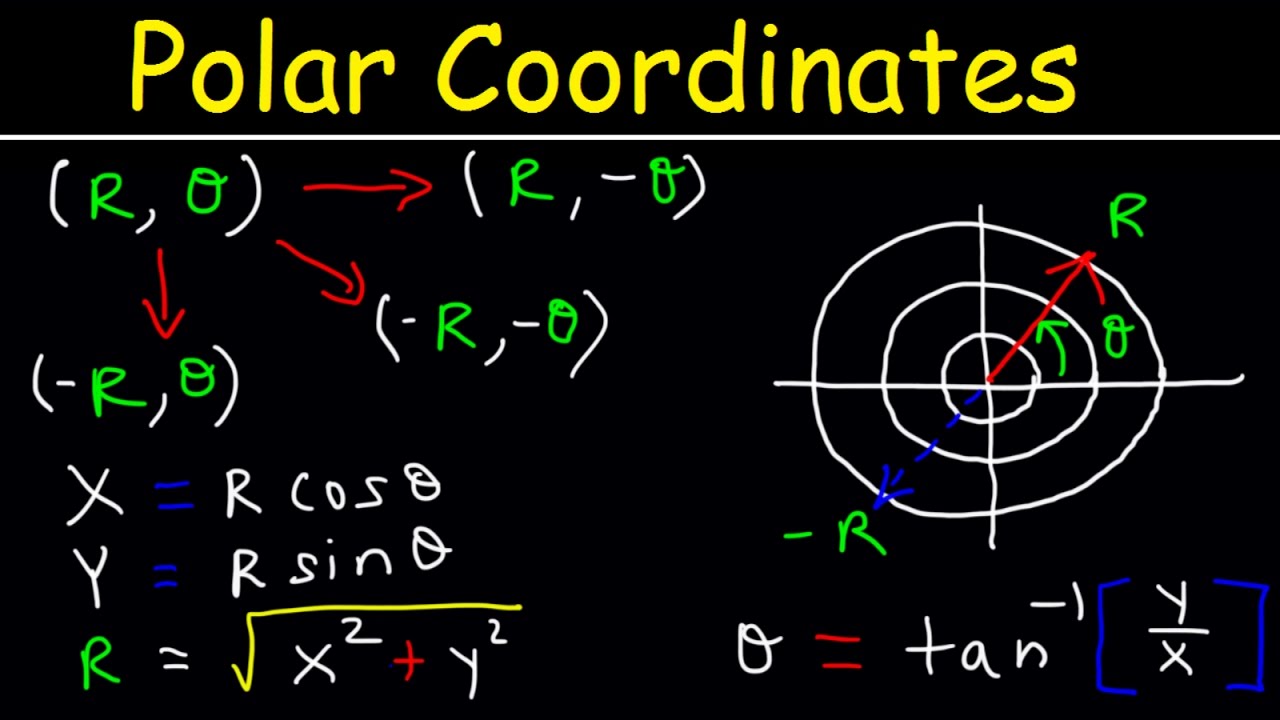
This Precalculus video tutorial provides a basic introduction into polar coordinates. It explains how to convert polar coordinates to rectangular coordinate...
it's not definitive of the relation
but it teaches you how to transform polar to cartesian and vice versa (I think)
obtuse pebbleBOT
Channel closed
Closed by @solemn isle
Use .reopen if this was a mistake.
Available help channel!
Send your question here to claim the channel.
Remember:
• Ask your math question in a clear, concise manner.
• Show your work, and if possible, explain where you are stuck.
• After 15 minutes, feel free to ping <@&286206848099549185>.
• Type the command .close to free the channel when you're done.
• Be polite and have a nice day!
Read #❓how-to-get-help for further information on how to ask a good question, and about conduct in the question channels.
 fallen inlet
Howw?
I’ve tried x / 2 * 2/9 / x
 obtuse pebbleBOT
fallen inlet
Howw?
I’ve tried x / 2 * 2/9 / x
obtuse pebbleBOT
fallen inlet
Howw?
I’ve tried x / 2 * 2/9 / x
 worn yoke
the geometric mean of two numbers is the square root of their product
worn yoke
yes
fallen inlet
Okay Tysm
obtuse pebbleBOT
@fallen inlet Has your question been resolved?
obtuse pebbleBOT
Channel closed
Closed due to timeout
Use .reopen if this was a mistake.
Available help channel!
Send your question here to claim the channel.
Remember:
• Ask your math question in a clear, concise manner.
• Show your work, and if possible, explain where you are stuck.
• After 15 minutes, feel free to ping <@&286206848099549185>.
• Type the command .close to free the channel when you're done.
• Be polite and have a nice day!
Read #❓how-to-get-help for further information on how to ask a good question, and about conduct in the question channels.
 slender dirge
I can’t seem to figure out what I did wrong.
Pls help
 obtuse pebbleBOT
slender dirge
I can’t seem to figure out what I did wrong.
Pls help
warm shaleBOT
obtuse pebbleBOT
slender dirge
I can’t seem to figure out what I did wrong.
Pls help
warm shaleBOT
 timid silo
slender dirge
I can’t seem to figure out what I did wrong.
Pls help
timid silo
slender dirge
I can’t seem to figure out what I did wrong.
Pls help
is the triangle right, first of all?
you are solving for a, correct?
You only use Pythagorean theorem when the triangle has a right angle
If it’s implied then
You foiled (a-5)^2 wrong
and (a+2)^2 wrong
as well as (a+3)^2
I think your foiling was the main error here
timid silo
I think from there his steps are correct, his foiling is incorrect that’s all
Like the process
not the numbers or coefficients
slender dirge
timid silo
is the triangle right, first of all?
Ye it’s right angled
timid silo
slender dirge
Ye it’s right angled
Yea, just fix your foiling, if you need any help you can ping me
The process is right, it’s just your foiling at the start that kinda messed it up
 magic geyser
slender dirge
oh so the a-5^2 should be a^2 -10a + 25?
magic geyser
slender dirge
oh so the a-5^2 should be a^2 -10a + 25?
correct
timid silo
slender dirge
oh so the a-5^2 should be a^2 -10a + 25?
Yep
slender dirge
Thanks!
timid silo
slender dirge
Thanks!
Yw, make sure to fix the other foiling
and then try seeing where that gets you
obtuse pebbleBOT
@slender dirge Has your question been resolved?
obtuse pebbleBOT
Channel closed
Closed due to timeout
Use .reopen if this was a mistake.
Available help channel!
Send your question here to claim the channel.
Remember:
• Ask your math question in a clear, concise manner.
• Show your work, and if possible, explain where you are stuck.
• After 15 minutes, feel free to ping <@&286206848099549185>.
• Type the command .close to free the channel when you're done.
• Be polite and have a nice day!
Read #❓how-to-get-help for further information on how to ask a good question, and about conduct in the question channels.
 dense storm
Hello! I don't really understand strong induction, I was wondering if someone could help me break it down?
obtuse pebbleBOT
dense storm
Hello! I don't really understand strong induction, I was wondering if someone co...
dense storm
Strong induction from discrete mathematics for clarification
obtuse pebbleBOT
@dense storm Has your question been resolved?
dense storm
hi if we could just like talk about it in general, because i think i udnersatnd the overarching idea but i dont understand e.g how to determine the base cases
obtuse pebbleBOT
@dense storm Has your question been resolved?
obtuse pebbleBOT
@dense storm Has your question been resolved?
 cunning burrow
dense storm
hi if we could just like talk about it in general, because i think i udnersatnd ...
cunning burrow
dense storm
hi if we could just like talk about it in general, because i think i udnersatnd ...
You determine base case from the question provided
Sometimes you might need be a bit clever an determine how you going represent the problem but generally speaking it is straightforward
obtuse pebbleBOT
@dense storm Has your question been resolved?
obtuse pebbleBOT
Channel closed
Closed due to timeout
Use .reopen if this was a mistake.
Available help channel!
Send your question here to claim the channel.
Remember:
• Ask your math question in a clear, concise manner.
• Show your work, and if possible, explain where you are stuck.
• After 15 minutes, feel free to ping <@&286206848099549185>.
• Type the command .close to free the channel when you're done.
• Be polite and have a nice day!
Read #❓how-to-get-help for further information on how to ask a good question, and about conduct in the question channels.
 stone holly
2nd ques
 obtuse pebbleBOT
stone holly
2nd ques
stone holly
obtuse pebbleBOT
stone holly
2nd ques
stone holly
I have find f(x) is inc function now what
 past sand
Then you already know it doesn't have two roots, right?
 royal swallow
then a and c are down
past sand
If a>0, what's f(0)?
past sand
So f(0) < 0
stone holly
yes
past sand
So if f is increasing, the root is on the right of that
stone holly
what are approach to solve such ques?
past sand
When a > 0
past sand
stone holly
what are approach to solve such ques?
 the main thing is to find where the function is increasing or decreasing
past sand
Idk, draw the graph to get an idea of what to look for
It really depends on the question
stone holly
true
I thought of keeping x= -infinite here
just like in 1
which didn't work
as it wouldn't give us idea of a
past sand
In this case they are asking for positive roots, so of course you'll need to do something with 0
past sand
Whether you actually compute the root (a function of a) or just check f(0), it's up to you
stone holly
does points of inflection has anything to do with such kind of ques?
stone holly
fair enough
past sand
Like x^2 - 1 has a local minimum at x=0 and it is negative, and the limits at both -inf and +inf are positive (+inf), so that function has two roots
Of course you can just solve x^2 - 1 = 0 but for more complex functions the same principle applies, as long as the function is continuous
obtuse pebbleBOT
Channel closed
Closed by @stone holly
Use .reopen if this was a mistake.
obtuse pebbleBOT
Available help channel!
Send your question here to claim the channel.
Remember:
• Ask your math question in a clear, concise manner.
• Show your work, and if possible, explain where you are stuck.
• After 15 minutes, feel free to ping <@&286206848099549185>.
• Type the command .close to free the channel when you're done.
• Be polite and have a nice day!
Read #❓how-to-get-help for further information on how to ask a good question, and about conduct in the question channels.
 wintry cloud
I need to find a sum, but simplifying it doesn't bring me anywhere

 old lily
Are the C^k_n binomial coefficients?
 wooden cipher
based on how ive seen this notation be used, a lot of the terms are 0
wintry cloud
old lily
Are the C^k_n binomial coefficients?
yup
wintry cloud
old lily
i think you can integrate or smth
This is a very beginning of a calculus book, I think it must be solved without integrating. And.. I don't know how to integrate yet.
 rose scroll
how does kCn work when k is smaller than n?
shouldnt k always be larger than n to compute the binomial coefficient?
wintry cloud
rose scroll
how does kCn work when k is smaller than n?
that's the formula
 rose scroll
yeah, but arent k and n swapped in the problem?
wintry cloud
rose scroll
shouldnt k always be larger than n to compute the binomial coefficient?
nope, in this notation n is at the bottom
I guess
I think this can help me solve it
 fossil crag
wintry cloud
that's the formula
fossil crag
wintry cloud
that's the formula
use that formula
and see how (k+1) and k! get multiplied together...
wintry cloud
fossil crag
and see how (k+1) and k! get multiplied together...
that brought me to the sum of n!/(k+1)!(n-k)!
but I don't know where to go next
wintry cloud
wintry cloud
I think this can help me solve it
Now I am trying to apply this formula
fossil crag
wintry cloud
that brought me to the sum of n!/(k+1)!(n-k)!
try to not change the denominator
and change the numerator
to find some ...C...
(hint : what do k+1 and n-k sum to)
wintry cloud
wintry cloud
I think this can help me solve it
using this I got: n(2^n + 2n), but not sure if it's correct
fossil crag
I don't think it's correct
wintry cloud
fossil crag
and change the numerator
hmm, okay, will try again
fossil crag
go back to n!/(k+1)!(n-k)!
wintry cloud
fossil crag
go back to n!/(k+1)!(n-k)!
got you
fossil crag
which aCb has the exact same denominator?
wintry cloud
fossil crag
which aCb has the exact same denominator?
(k+1) C (n+1) I guess
wintry cloud
that's
(n+1)!/(k+1)!(n-k)!
wintry cloud
((k+1) C (n+1)) / (n+1) ?
fossil crag
yesss
wintry cloud
wintry cloud
I think this can help me solve it
now I should probably use this formula and get the denominator out of the sum?
fossil crag
yep
wintry cloud
so the answer is 2^(n+1) / (n + 1) ?
obtuse pebbleBOT
@wintry cloud Has your question been resolved?
obtuse pebbleBOT
Channel closed
Closed due to timeout
Use .reopen if this was a mistake.
Available help channel!
Send your question here to claim the channel.
Remember:
• Ask your math question in a clear, concise manner.
• Show your work, and if possible, explain where you are stuck.
• After 15 minutes, feel free to ping <@&286206848099549185>.
• Type the command .close to free the channel when you're done.
• Be polite and have a nice day!
Read #❓how-to-get-help for further information on how to ask a good question, and about conduct in the question channels.
 slim mortar
I know that 1/3 of those numbers are divisible by 3 as the some of their digits are divisible by it but the others I don’t know how to prove it. We can express it as a sequence a_n=100a_(n-1)+1, and a_1=101. I don’t know if that helps
 obtuse pebbleBOT
slim mortar
I know that 1/3 of those numbers are divisible by 3 as the some of their digits ...
fossil crag
obtuse pebbleBOT
slim mortar
I know that 1/3 of those numbers are divisible by 3 as the some of their digits ...
fossil crag
notice the second number has 101...
if you wanna find a way to show all of those are not prime
notice that a_n = .../99 through geometric sum
slim mortar
fossil crag
notice that a_n = .../99 through geometric sum
999….9?
fossil crag
a_n = 101...01 with n 1s is probably the best way
so a_1 = 1
a_2 = 101
a_3 = 10101
etc
notice that 101 = 100 + 1
10101 = 10000 + 100 + 1
1010101 = 1000000 + 10000 + 100 + 1
etc...
fossil crag
slim mortar
I know that 1/3 of those numbers are divisible by 3 as the some of their digits ...
so use geometric sum formula
slim mortar
fossil crag
so use geometric sum formula
how we do it?
fossil crag
yes
fossil crag
slim mortar
Ahh but I only know how to do it when r smaller than 1
oh I'm not talking about infinite sum
I'm talking about finite sum
slim mortar
fossil crag
I'm talking about finite sum
Is it with the same equation?
 warm shaleBOT
rafilou2003
 slim mortar
So we need to prove that 100^n-1 =0 (mod99)
fossil crag
no need
we already know a_n is an integer
it's a given
(also 100 = 1 mod 99 so not much trouble)
slim mortar
fossil crag
we already know a_n is an integer
Oh my bad
slim mortar
fossil crag
(also 100 = 1 mod 99 so not much trouble)
Yes
fossil crag
alright so just to verify
a_1 = (100 - 1)/99 = 1
a_2 = (10000 - 1)/99 = 9999/99 = 101
so seems good
slim mortar
Yes
fossil crag
we wanna show
that for n > 2
a_n is not prime
any ideas?
(what happens when n is even)
slim mortar
fossil crag
(what happens when n is even)
It can be factorised into 100^n/2+-1
slim mortar
Yes
slim mortar
Yes so it is composite
fossil crag
slim mortar
Yes so it is composite
yes we just have to make sure that both of those factors are > 1
it's the case because p > 1
so 100^p - 1 > 99
otherwise imagine p = 1
the first factor would be = 1
and no composite
slim mortar
Oh that’s a good point
fossil crag
so
when n is even > 2 we're good
so otherwise n > 2 is odd
hint:
99 = 9 * 11
and 100^n = (10^n)^2
see if you can find the composite
slim mortar
We got 10^n+1 that is divisible by 11 so therefore 10^n-1 is divisible by 9 because it is 2 less
And we have to terms multiplying
That are not 1
slim mortar
fossil crag
so otherwise n > 2 is odd
Could we prove with this proof for the even as well?
fossil crag
slim mortar
Could we prove with this proof for the even as well?
well no
when n is even
10^n+1 is not divisible by 11
10^n + 1 = (-1)^n + 1 mod 11
slim mortar
Ahh
slim mortar
fossil crag
10^n + 1 = (-1)^n + 1 mod 11
When n is odd wouldn’t it be the same?
Oh nothing
Didn’t thought of the parity there
obtuse pebbleBOT
Channel closed
Closed by @slim mortar
Use .reopen if this was a mistake.
obtuse pebbleBOT
Available help channel!
Send your question here to claim the channel.
Remember:
• Ask your math question in a clear, concise manner.
• Show your work, and if possible, explain where you are stuck.
• After 15 minutes, feel free to ping <@&286206848099549185>.
• Type the command .close to free the channel when you're done.
• Be polite and have a nice day!
Read #❓how-to-get-help for further information on how to ask a good question, and about conduct in the question channels.
 dense schooner
 obtuse pebbleBOT
dense schooner
dense schooner
obtuse pebbleBOT
dense schooner
dense schooner
im not really sure what P(x,y)=0 means? can someone give an example
 slate sparrow
its a function where the inputs are x and y
this specific one requires the coefficient of y^2 to be 9
so something like
P(x,y) = x^2 + 2y + 9y^2
it can have as many terms of x and y
you know one of the terms is 9y^2
dense schooner
how do i get 9y^2 from y=6cos(6t)
slate sparrow
well you know what y is
so try find out what 9y^2 is
square it and multiply by 9, see what you get
dense schooner
ohh i see
 stoic yacht
you could also get a polynomial using the pythagorean identity, that's a common technique with these problems
if x = 3sin(6t), then sin(6t) = x/3, and cos(6t) = y/6
and you know sin^2(6t) + cos^2(6t) = 1
dense schooner
right
stoic yacht
then just multiply whatever you get by whatever constant you need to have the coefficient be 9
safe ravine
Jub they simply want u to eliminate t
dense schooner
so like this then
 safe ravine
And get a equation in terms of x and y
Just eliminate t
You can use the relation sin^2t+cos^2t=1 for this
stoic yacht
dense schooner
so like this then
not exactly
safe ravine
Hi neil
stoic yacht
if sin^2 + cos^2 = 1, then (x/3)^2 + (y/6)^2 = 1
safe ravine
Right
Wait she might be trying
Ok nvm
This gives us a crispy vertical ellipse
b>a
,w draw (x/3)^2+(y/6)^2=1
warm shaleBOT


 Requested by oppailol.
safe ravine
Requested by oppailol.
safe ravine
Crispy 😋
dense schooner
right
safe ravine
Multiply by a suitable no so we get 9y^2
dense schooner
324
warm shaleBOT
 Requested by oppailol.
warm shaleBOT
Requested by oppailol.
warm shaleBOT
 Requested by oppailol.
dense schooner
Requested by oppailol.
dense schooner
right
safe ravine
So we get 9y^2+36x^2-324=0
dense schooner
yeah
dense schooner
ok thats what i thought
safe ravine
Ok
dense schooner
just multiply every term by 324 then subtract right side
 dense schooner
do i just disrregard the polynomial we just found and just find dy/dx
dense schooner
yeah
dense schooner
ok i will try
dense schooner
should just be -2√3 right
safe ravine
What?
 dense schooner
wow omg 3/18 is 1/6 not 1/3
warm shaleBOT
 Requested by oppailol.
safe ravine
Requested by oppailol.
safe ravine
Ok i see
warm shaleBOT
 Requested by oppailol.
dense schooner
Requested by oppailol.
dense schooner
i did that
warm shaleBOT
 Requested by oppailol.
safe ravine
Requested by oppailol.
safe ravine
-2/√3
Oh wait
Crap
@dense schooner sry
y=6cos(6t) and x=3sin(6t(
Sry
-36sin(6t)/18cos(6t)
,w -2tan(6t) at t=π/18
warm shaleBOT
 Requested by oppailol.
obtuse pebbleBOT
Requested by oppailol.
obtuse pebbleBOT
Channel closed
Closed by @dense schooner
Use .reopen if this was a mistake.
 obtuse pebbleBOT
Available help channel!
obtuse pebbleBOT
Available help channel!
Send your question here to claim the channel.
Remember:
• Ask your math question in a clear, concise manner.
• Show your work, and if possible, explain where you are stuck.
• After 15 minutes, feel free to ping <@&286206848099549185>.
• Type the command .close to free the channel when you're done.
• Be polite and have a nice day!
Read #❓how-to-get-help for further information on how to ask a good question, and about conduct in the question channels.
 gleaming berry
,w system invertible y[n] = x^2[n] - 2
obtuse pebbleBOT
gleaming berry
,w system invertible y[n] = x^2[n] - 2
gleaming berry
,w y[n] = x^2[n] - 2
,w y[n] = (x^2) [n] - 2
,w y[n] = x^2 [n] - 2
,w y(t) = cos(t)
warm shaleBOT

 Requested by thisdream
gleaming berry
Requested by thisdream
gleaming berry
,w y[n] = x^2*[n] - 2
warm shaleBOT
 Requested by thisdream
gleaming berry
Requested by thisdream
gleaming berry
,w y[n] = x^2 * [n] - 2
warm shaleBOT
 Requested by thisdream
obtuse pebbleBOT
Requested by thisdream
obtuse pebbleBOT
@gleaming berry Has your question been resolved?
gleaming berry
safe ravine
What is the point?
I wanna know if that invertible system or not
safe ravine
Which system
A system of equations is invertible is not invertible
1.No solutions
2.infinite solutions
I spoke it clear
Check if your system has solutions or not?
If it has are they finite or infinite
gleaming berry
It has
obtuse pebbleBOT
@gleaming berry Has your question been resolved?
obtuse pebbleBOT
Channel closed
Closed due to timeout
Use .reopen if this was a mistake.
obtuse pebbleBOT
Available help channel!
Send your question here to claim the channel.
Remember:
• Ask your math question in a clear, concise manner.
• Show your work, and if possible, explain where you are stuck.
• After 15 minutes, feel free to ping <@&286206848099549185>.
• Type the command .close to free the channel when you're done.
• Be polite and have a nice day!
Read #❓how-to-get-help for further information on how to ask a good question, and about conduct in the question channels.
 west delta
im not sure as to why order matters in the way you transpose the polynomial to have roots 1/a - 2 instead?
 obtuse pebbleBOT
west delta
im not sure as to why order matters in the way you transpose the polynomial to h...
west delta
obtuse pebbleBOT
west delta
im not sure as to why order matters in the way you transpose the polynomial to h...
west delta
the sol says that u first take the f(x+2) transformation first and then take reciprocal
but i did the other way around and got a diff polynomial, does anyone know as to why the two polynomials differ?
obtuse pebbleBOT
@west delta Has your question been resolved?
 woeful torrent
Consider
$$ f(x) = \sum_{n=1}^3 f_n x^n = \prod_{n=1}^3 (x - r_n) $$
which has roots $r_n$. Clearly
$$ F(x) = f(x+2) $$
has roots $R_n = r_n - 2$. So, by transforming first, our desired goal becomes
$$ \sum_{n=1}^3 \left(\frac{1}{r_n-2}\right)^2 = \sum_{n=1}^3 \left(\frac{1}{R_n}\right)^2 $$
which is just
$$ \frac{ \sum_{n=1}^3 R_n }{ \prod_{n=1}^3 R_n } = \frac{F_1}{F_3} $$
In other words, transforming first allows the machinery to correctly construct the roots $R_n = r_n - 2$.
obtuse pebbleBOT
Channel closed
Closed due to timeout
Use .reopen if this was a mistake.
warm shaleBOT
Shuba
 obtuse pebbleBOT
Available help channel!
obtuse pebbleBOT
Available help channel!
Send your question here to claim the channel.
Remember:
• Ask your math question in a clear, concise manner.
• Show your work, and if possible, explain where you are stuck.
• After 15 minutes, feel free to ping <@&286206848099549185>.
• Type the command .close to free the channel when you're done.
• Be polite and have a nice day!
Read #❓how-to-get-help for further information on how to ask a good question, and about conduct in the question channels.
 tribal scaffold
 obtuse pebbleBOT
tribal scaffold
tribal scaffold
obtuse pebbleBOT
tribal scaffold
tribal scaffold
hi
tribal scaffold
tribal scaffold
There's few parts to the question and I've gotten down to this, lmk if my handwriting is too messy
It's a question on polynomials

Here's the full question, I don't really know how to solve c
O ok
safe ravine
What
tribal scaffold
Srry if I offended u in anyway for u to act this way
safe ravine
No bro
Like huge stuff
!nospam
!spam
Aah we don't have these commands
It's simple but let's see
@tribal scaffold is ur doubt resolved?
tribal scaffold
safe ravine
<@664733568827654186> is ur doubt resolved?
I don't know how to prove part c :[ , I've tried couple of methods but didn't work
I'm in the right channel right??
tribal scaffold
yes
tribal scaffold
Yeah that's what I'm trying to
safe ravine
As M is mid point of chord AB
tribal scaffold
yeah
safe ravine
And AB are intersection points of circle and parabola
See u find y coordinates of A and B
Then simply add them and divide by 2
U will get the y coordinate of M
tribal scaffold
Uhh wait 1 sec lemme try
safe ravine
Ok
tribal scaffold
y is prob negative of the x value but I don't really know how to prove it, and the question wants to use something similar to part a and b
safe ravine
See
A and b
Parts have done what
They have solved simultaneously
To get x
Then u can put the x in any of the curves to get y
After getting y they simply added both the values and divided by 2
tribal scaffold
safe ravine
Then u can put the x in any of the curves to get y
That's what I did at first but it doesn't equal to negative of x
safe ravine
What
tribal scaffold
So I thought I'm doing something wrong
safe ravine
How do u know it's equal to -x
If u know it is
Then u are doing some calculation error
tribal scaffold
Cuz PQ has gradient of -1
Then OM needs a gradient of -1 too since its asking to prove its paralellel
And if I get m and origin, the gradient should be -1 right?
So the y/x of M should be -1
safe ravine
Ook
tribal scaffold
 safe ravine
Aah
obtuse pebbleBOT
@tribal scaffold Has your question been resolved?
stoic yacht
<@&268886789983436800>
obtuse pebbleBOT
@tribal scaffold Has your question been resolved?
tribal scaffold
I give up
obtuse pebbleBOT
Channel closed
Closed by @tribal scaffold
Use .reopen if this was a mistake.
Available help channel!
Send your question here to claim the channel.
Remember:
• Ask your math question in a clear, concise manner.
• Show your work, and if possible, explain where you are stuck.
• After 15 minutes, feel free to ping <@&286206848099549185>.
• Type the command .close to free the channel when you're done.
• Be polite and have a nice day!
Read #❓how-to-get-help for further information on how to ask a good question, and about conduct in the question channels.
plucky trail
 obtuse pebbleBOT
plucky trail
plucky trail
obtuse pebbleBOT
plucky trail
plucky trail
How to solve this using linear algebra
Status is I don't know where to begin because I have no experience with matrices or linear algebra
And someone said this would be simple with linear algebra
Answer is 25
 static furnace