#help-10
1 messages · Page 222 of 1
 shy salmon
 brittle bobcat
I'm keeping up 🙂
brittle bobcat
I'm keeping up 🙂
Sound good! Let me contiune then.
Now, change the 25 into 5^2:

(It'll be important for the next step.)
brittle bobcat
okay
 vestal ingot
how can i get better at math since i have a learning disabilaty
?
and it is hard for me to learn
shy salmon
vestal ingot
how can i get better at math since i have a learning disabilaty
I would recommend pratice, maybe having a friend to help you get ahold of the patterns
shy salmon
brittle bobcat
okay
So, now we need to familiarize ourselves with trig subsitution.
brittle bobcat
shy salmon
So, now we need to familiarize ourselves with trig subsitution.
i've done it before in other easier exercises, but i don't quite get when to use it and how to use it in this case
shy salmon
Alright, so
So, in this instance, we can write that x = 5sin(u), and we're choosing 5 because:

And with the great joys of u-substitution, comes with the great joys of taking a derivative to get du since we can't deal with u and x at the same time.
shy salmon
shy salmon
So, in this instance, we can write that x = 5sin(u), and we're choosing 5 becaus...
In the meantime, do you get why I chose sine?
shy salmon
shy salmon
And with the great joys of u-substitution, comes with the great joys of taking a...

 obtuse pebbleBOT
@brittle bobcat Has your question been resolved?
brittle bobcat
shy salmon
In the meantime, do you get why I chose sine?
That’s ok?
 shy salmon
brittle bobcat
That’s ok?
shy salmon
brittle bobcat
That’s ok?
Hm, that's not exactly why.
brittle bobcat
😢
shy salmon
Though
Okay, so
Our main goal here is to turn the stuff inside the square root into a square
Because we hate square roots here (kidding, but we do want to get rid of it in this instance)
brittle bobcat
Yes😂
shy salmon
One way we can do that is to remeber our good friend, trig identities.
Do you know sin^2(x) + cos^2(x) = 1?
brittle bobcat
Yess
shy salmon
So, remember, technically we have sin^2(x) + cos^2(x) = 1^2 per the pygorathous therom
And if we move sin^2 to the other side, we would have a setup that seems similar to what we have inside the square root.
 brittle bobcat
okay, now it makes sense
shy salmon
So, for the time being, we'll say that x = 5sin(x) so we can get a setup that resembles 1^2 - sin^2(x) more.

Looks basically like the same thing, with a different coeffectient on the side.
So now, when we simplify this a bit more
obtuse pebbleBOT
Channel closed
Closed due to timeout
Use .reopen if this was a mistake.
 obtuse pebbleBOT
 Available help channel!
Send your question here to claim the channel.
Remember:
• Ask your math question in a clear, concise manner.
• Show your work, and if possible, explain where you are stuck.
• After 15 minutes, feel free to ping <@&286206848099549185>.
• Type the command .close to free the channel when you're done.
• Be polite and have a nice day!
Read #❓how-to-get-help for further information on how to ask a good question, and about conduct in the question channels.
shy salmon
Wait, can you reopen the channel?
obtuse pebbleBOT
shy salmon
Wait, can you reopen the channel?
brittle bobcat
.reopen
shy salmon
I guess so haha
shy salmon
shy salmon
And with the sutff we mentioned earlier (sin^2(x) + cos^2(x) = 1^2)
We can rearrange this to match what we have
 urban patrol
shy salmon
Wait, can you reopen the channel?
urban patrol
shy salmon
Wait, can you reopen the channel?
no
shy salmon
cos^2(x) = 1^2 - sin^2(x)
shy salmon
urban patrol
no
Eh, I guess I'll carry on the discussion.
Now, we have the following inside the integral:
 brittle bobcat
yes we do 🙂
shy salmon
And guess what we can do with the square root?
shy salmon
Yep!
Now, we have to deal with converting the dx to a du
Though I'll assume you're familiar with the process and we'll have the results down here:

Sounds good so far?
brittle bobcat
yes, took me a bit but i got it
shy salmon
shy salmon
(The limits of integration is not quite correct, let me fix that)
brittle bobcat
yess, we forgot that
shy salmon
Got a few point taken off because of that during the days where I was taking calculus haha
brittle bobcat
Same, i always forget it too
shy salmon
shy salmon
Are you allowed to use a calculator for this question?
Never mind, that would defeat the pupouse.
brittle bobcat
shy salmon
Are you allowed to use a calculator for this question?
yes
brittle bobcat
scientific only :/
shy salmon
Oh okay, gotcha.
So, we got this lovely equation.

Some simplification later, we have:
 brittle bobcat
yes
shy salmon
Do you know how to integrate cos^2(u)du?
If so, we just plug in our values and we get our answer!
brittle bobcat
is it with the cos^2(u)=1+cos(2u)/2?
brittle bobcat
i'm making your work a bit harder than it should, sorry🥲
shy salmon
Nonono, it's ok
I'm here to explain, so it's all right :)
So, do we remeber our double angle formula?

 shy salmon
shy salmon
shy salmon
From this equation:

 brittle bobcat
we do this process inside the integral or as an auxiliary calculation?
shy salmon
brittle bobcat
we do this process inside the integral or as an auxiliary calculation?
auxiliary calculation at the moment
brittle bobcat
ok
 brittle bobcat
oh
shy salmon
Wait
brittle bobcat
yes
shy salmon
Sorry, that's not quite correct. Let me double check.
brittle bobcat
okay
shy salmon
Alright, so.
shy salmon
shy salmon
Some simplification later, we have:
let's go back to here
Considering the two equation mentioned
brittle bobcat
yes
brittle bobcat
take ur time, i'll be studying all night
shy salmon
Okay.
shy salmon
shy salmon
Rearranging the organs:
The combination of the equation should result in:
 shy salmon
shy salmon
shy salmon
Oh wait, yeah
shy salmon
shy salmon
The combination of the equation should result in:
We should get this equation
Are you okay?
brittle bobcat
yess
brittle bobcat
shy salmon
Some simplification later, we have:
integrating this one?
shy salmon
Well, integrating it's equalivant
shy salmon
shy salmon
The combination of the equation should result in:
This
brittle bobcat
oh
shy salmon
 brittle bobcat
i think we get 1/2(u + 1/2sen(2u))?
shy salmon
(You should get ~11.1823)
brittle bobcat
yes, that's another question, why is it in this case allowed a negative result for the area?
shy salmon
brittle bobcat
yes, that's another question, why is it in this case allowed a negative result f...
Oh, the area shouldn't be negative.
shy salmon
shy salmon
(You should get ~11.1823)
It's a squiggley, not a negative symbol.
It means: about 11.1823
brittle bobcat
oh, sorry, my bad
brittle bobcat
Yessss, thank u so so so much🥹
shy salmon
No worries! :) feel free to reach out to me if you have more questions!
I'll be hiding deep into the calculus corners. (kidding)
brittle bobcat
shy salmon
No worries! :) feel free to reach out to me if you have more questions!
thankss, that's very kind, but for now u can rest a little😂
brittle bobcat
shy salmon
I'll be hiding deep into the calculus corners. (kidding)
no, trust me, i'll be there all night hahaha
shy salmon
brittle bobcat
thankss, that's very kind, but for now u can rest a little😂
I'm available for more questions still lol so let me know!
brittle bobcat
okayy, thank u
obtuse pebbleBOT
Channel closed
Closed by @shy salmon
Use .reopen if this was a mistake.
Available help channel!
Send your question here to claim the channel.
Remember:
• Ask your math question in a clear, concise manner.
• Show your work, and if possible, explain where you are stuck.
• After 15 minutes, feel free to ping <@&286206848099549185>.
• Type the command .close to free the channel when you're done.
• Be polite and have a nice day!
Read #❓how-to-get-help for further information on how to ask a good question, and about conduct in the question channels.
 timid silo
 obtuse pebbleBOT
timid silo
obtuse pebbleBOT
timid silo
 tardy epoch
timid silo
how to find radius
tardy epoch
timid silo
how to find radius
Find dV/dt in terms of dr/dt
timid silo
sorry im lost, how do i do this
should i use the dV/dt=dr/dt x dV/dr still?
 polar fossil
yeah
timid silo
like this?? i used the value of d V/dr from (a)
 polar fossil
timid silo
like this?? i used the value of d V/dr from (a)
polar fossil
timid silo
like this?? i used the value of d V/dr from (a)
(a) has nothing to do with this problem
polar fossil
(i mean, they're the same scenario but different times)
timid silo
oh hmmm
polar fossil
it says "when the rate of change of its radius is one third the rate of change of its volume"
ignoring the unit conversion issues there, I'd say try and figure out when that is
or figure out how big the balloon is when that's true
 timid silo
i was confused withe 1/3
polar fossil
you have (the rate of change of its radius) is equal to one third times (the rate of change of its volume)
can you translate that into symbols?
polar fossil
idk where you're getting 32 and 96 from
timid silo
from a
timid silo
ok so just the symbols
timid silo
ok what next?
polar fossil
so you have this equation that relates dV and dr
you also have the volume equation
which you could differentiate
 timid silo
polar fossil
which you could differentiate
timid silo
polar fossil
which you could differentiate
is this ok?

 obtuse pebbleBOT
@timid silo Has your question been resolved?
timid silo
polar fossil
and this (specifically the part i have here) is right
i actually got confused with the last 3 lines
polar fossil
these lines? i don't think they're right
 polar fossil
and this (specifically the part i have here) is right
polar fossil
polar fossil
and this (specifically the part i have here) is right
use these two to figure out dv/dr = 3
timid silo
ah i thought it would come from the volume itself
polar fossil
well we also know that this is true
 timid silo
polar fossil
use these two to figure out dv/dr = 3
timid silo
polar fossil
use these two to figure out dv/dr = 3
ok so should i equate them?
polar fossil
yeh
timid silo
oki
timid silo
polar fossil
yeh
 polar fossil
timid silo
polar fossil
polar fossil
timid silo
polar fossil
ohhh ok thanks! should i continue with the surface area then?
dA/dt = dr/dt x dA/dr
polar fossil
yep and evaluate that when the radius equals that thing you just calculated
 obtuse pebbleBOT
@timid silo Has your question been resolved?
obtuse pebbleBOT
Channel closed
Closed due to timeout
Use .reopen if this was a mistake.
Available help channel!
Send your question here to claim the channel.
Remember:
• Ask your math question in a clear, concise manner.
• Show your work, and if possible, explain where you are stuck.
• After 15 minutes, feel free to ping <@&286206848099549185>.
• Type the command .close to free the channel when you're done.
• Be polite and have a nice day!
Read #❓how-to-get-help for further information on how to ask a good question, and about conduct in the question channels.
 errant oracle
what even is C^n, and how do u take the conjugate of something in C^n
 obtuse pebbleBOT
errant oracle
what even is C^n, and how do u take the conjugate of something in C^n
obtuse pebbleBOT
errant oracle
what even is C^n, and how do u take the conjugate of something in C^n
@errant oracle Has your question been resolved?
obtuse pebbleBOT
Channel closed
Closed due to timeout
Use .reopen if this was a mistake.
obtuse pebbleBOT
Available help channel!
Send your question here to claim the channel.
Remember:
• Ask your math question in a clear, concise manner.
• Show your work, and if possible, explain where you are stuck.
• After 15 minutes, feel free to ping <@&286206848099549185>.
• Type the command .close to free the channel when you're done.
• Be polite and have a nice day!
Read #❓how-to-get-help for further information on how to ask a good question, and about conduct in the question channels.
 hard citrus
can someone help me with this?
 obtuse pebbleBOT
hard citrus
can someone help me with this?
obtuse pebbleBOT
hard citrus
can someone help me with this?
 candid yarrow
hard citrus
can someone help me with this?
candid yarrow
hard citrus
can someone help me with this?
Yes
candid yarrow
You have to find the area of the rectangle
hard citrus
yes
candid yarrow
Have you found it?
candid yarrow
Note that the function is even
hard citrus
mhm
candid yarrow
So you can use the x and y coordinates of the points P and Q
hard citrus
yeah
but I still don't understand how
oh wait
OR is x
i thought it was QR
wait so you just sub in x to the function
which gives u QR
then u multiply them together
candid yarrow
Yes
obtuse pebbleBOT
Channel closed
Closed by @hard citrus
Use .reopen if this was a mistake.
Available help channel!
Send your question here to claim the channel.
Remember:
• Ask your math question in a clear, concise manner.
• Show your work, and if possible, explain where you are stuck.
• After 15 minutes, feel free to ping <@&286206848099549185>.
• Type the command .close to free the channel when you're done.
• Be polite and have a nice day!
Read #❓how-to-get-help for further information on how to ask a good question, and about conduct in the question channels.
urban patrol
I dont know what any of this means
 obtuse pebbleBOT
urban patrol
I dont know what any of this means
urban patrol
obtuse pebbleBOT
urban patrol
I dont know what any of this means
urban patrol
my professor just defined vector spaces and then gave me this
what is doubly infinite
 glossy basalt
urban patrol
what is doubly infinite
obtuse pebbleBOT
glossy basalt
urban patrol
what is doubly infinite
obtuse pebbleBOT
Channel closed
Closed by @urban patrol
Use .reopen if this was a mistake.
 balmy mortar
urban patrol
what is doubly infinite
balmy mortar
urban patrol
what is doubly infinite
a function from N to your set is your ordinary sequence
a function from Z to your set for doubly infinite
is how id recommend thinking about it
urban patrol
oh yeah that makes sense
obtuse pebbleBOT
Available help channel!
Send your question here to claim the channel.
Remember:
• Ask your math question in a clear, concise manner.
• Show your work, and if possible, explain where you are stuck.
• After 15 minutes, feel free to ping <@&286206848099549185>.
• Type the command .close to free the channel when you're done.
• Be polite and have a nice day!
Read #❓how-to-get-help for further information on how to ask a good question, and about conduct in the question channels.
 reef grotto
Suppose you live in 2 dimensions in the surface of a sphere, moving through your world would move you around the 3d ball even when your world is 2d.
Let's take this analogy to 4d, if you live in 3 dimensions inside a ball (https://en.wikipedia.org/wiki/Ball_(mathematics)), would moving through this ball move you through the 4th dimension around a 3-sphere ?
Also I'm guessing the geometry inside the 3d ball is euclidian, is that right ? I'm asking because as far as I know the geometry of a sphere is hyperbolic.
obtuse pebbleBOT
reef grotto
Suppose you live in 2 dimensions in the surface of a sphere, moving through your...
@reef grotto Has your question been resolved?
 sage geode
Geometry on the surface of a sphere (and hence any higher dimensional ball I think) is not Euclidean
reef grotto
sage geode
Geometry on the surface of a sphere (and hence any higher dimensional ball I thi...
does moving inside a ball would move you in the 4th dimension without you knowing ?
like moving through a sphere moves you in 3 dimensions even if you are a 2d being
assuming your 2d world is a 2-sphere
sage geode
reef grotto
does moving inside a ball would move you in the 4th dimension without you knowin...
I think the analogy must work, yeah
obtuse pebbleBOT
@reef grotto Has your question been resolved?
Channel closed
Closed by @reef grotto
Use .reopen if this was a mistake.
Available help channel!
Send your question here to claim the channel.
Remember:
• Ask your math question in a clear, concise manner.
• Show your work, and if possible, explain where you are stuck.
• After 15 minutes, feel free to ping <@&286206848099549185>.
• Type the command .close to free the channel when you're done.
• Be polite and have a nice day!
Read #❓how-to-get-help for further information on how to ask a good question, and about conduct in the question channels.
 spring lantern
 spring lantern
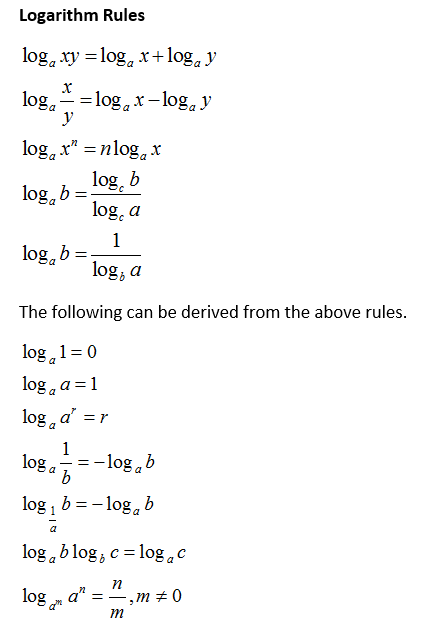
i did a question like this befroe
it was log_a(y)
but dont know what to do to a quesiton with another subscript
glossy basalt
$\log_ay=\frac{\log y}{\log a}$
 warm shaleBOT
biscuityxd
 glossy basalt
nah
urban patrol
see how the base is 10 now
spring lantern
yes
 spring lantern
oh i never thought there was a rule like that
urban patrol
and if you didnt close out the last channel you could use change of base to get log_y(a)
continuing on we know log_a(y)=2m
use change of base to get log_y(a)
spring lantern
so that would equal logy/loga
spring lantern
so 1/logya
spring lantern
divide by 2
urban patrol
what
spring lantern
get rid of 2
urban patrol
no
urban patrol
no we want to keep the log
spring lantern
wt do we want to change
urban patrol
and thats not valid since the log is in the denom
urban patrol
spring lantern
wt do we want to change
make log not be in the denom
since we were asked for log_y(a)
spring lantern
wt is a denom
urban patrol
instead we have its reciprocal
urban patrol
denominator
spring lantern
then just do to power of negative
urban patrol
yeah
spring lantern
so (log_y(a))-1/1=2m
urban patrol
no
have to do it to both sides
and the log_y(a) would still be in the denom
its what you do now that it is to the power of -1
$A^{-1}=\frac{1}{A}$
warm shaleBOT
Arctic
 urban patrol
but you kept the exponent
spring lantern
u cant remove it
urban patrol
yes you can
spring lantern
you ahve to put to power of positive to the whole equaiton?
urban patrol
$\frac{1}{A^{-1}}=A^1$
warm shaleBOT
Arctic
 spring lantern
so log-1 if u wann put it above the denom
so u want me to remove the -1
my Power of positive 1?
hellooooo
@urban patrol
 mossy spear
what's your question
urban patrol
no keep this one
spring lantern
goodnight
spring lantern
mossy spear
what's your question
 mossy spear
find x from y=x^2 which gives you |x|=sqrt(y)
since the log's argument (x) has to be positive (for equation 1) sqrt(y)=x
now substitute the x you just found into the first eqn
what do you get?
mossy spear
forget that, from the 2nd eqn you have x=sqrt(y)
substitute that x into the first equation
spring lantern
substitude x=sqrt(y) into log_a(x)?
mossy spear
yes
spring lantern
log_a(sqrty)??
mossy spear
yeah
log_a(sqrt(y))=m
taking square root of a number is the same as having that number to the power of 1/2
log_(y^(1/2))=m
use log properties to get 1/2 to the front
what do you get?
obtuse pebbleBOT
Channel closed
Closed by @spring lantern
Use .reopen if this was a mistake.
Available help channel!
Send your question here to claim the channel.
Remember:
• Ask your math question in a clear, concise manner.
• Show your work, and if possible, explain where you are stuck.
• After 15 minutes, feel free to ping <@&286206848099549185>.
• Type the command .close to free the channel when you're done.
• Be polite and have a nice day!
Read #❓how-to-get-help for further information on how to ask a good question, and about conduct in the question channels.
 tardy turtle
Hello, is someone able to help me with number 11?
 obtuse pebbleBOT
tardy turtle
Hello, is someone able to help me with number 11?
obtuse pebbleBOT
tardy turtle
Hello, is someone able to help me with number 11?
 slim cove
tardy turtle
Hello, is someone able to help me with number 11?
slim cove
tardy turtle
Hello, is someone able to help me with number 11?
Sure, what have you tried so far?
tardy turtle
i cant even find the abscissa proper
 robust sleet
intersection points?
tardy turtle
I think its supposed to be 0 and 4 but i dont know how he got it
robust sleet
what have you tried to find them
tardy turtle
Solving y^2=16x and y^2=x^3 simultaneously
robust sleet
how did you do it
tardy turtle
Actually I'm getting +-4 so x=4 and x=-4 as the intersection point but i think the book it telling me it should be 0 and 4
slim cove
It's a little tricky
There is an easy mistake to make
Can you show us how you solved simultaneously?
tardy turtle
X^3=16x , so i got x=+-4
robust sleet
You divided by x?
 dire plinth
so you divided both sides by x then took the root right
slim cove
Yeah, if you divide by x you need to make sure x is not zero first
In this case, zero is also a valid solution
tardy turtle
Ooooo
robust sleet
And also note that it's y squared
tardy turtle
But how do i get the value of x? And also how do i antidifferentiate these functions?
slim cove
Yeah so once you find your values of x = -4, 0, 4
Next it's useful to find the y values that correspond to them
So that you can draw a picture of what's going on
Can you find the relevant y values?
tardy turtle
Becuse I'm finding the area would this mean finding relevant y values between -4 and 4?
slim cove
So like for example if x = -4, what are the y value(s) corresponding to that?
Because if you're solving
y^2 = 16x
y^2 = x^3
your solution should have both the x-values and the corresponding y-values
tardy turtle
I tried that but it takes half the area in -ve
tardy turtle
Appologies, i meant that drawing it in a graph with the corresponding y value the figure would look like this i think
 tardy turtle
No, could you explain it to me?
robust sleet
plug in x=-4 to both equations
slim cove
tardy turtle
No, could you explain it to me?
Try plugging in x = -4 to the equation y^2 = 16x and solving for y
What problem do you face?
tardy turtle
Ohh ok
Now that i have x value as 0 and 4 how do i calculate the area between these 2 funtions by definite integrals
slim cove
Okay so you correctly noticed that half of the area is in quadrant I and half of it is in quadrant IV
So we only have to calculate one of those, and then we can just double it at the end, right?
tardy turtle
No, actually the solution sates that both functions are bounded at x=0 and x=4 it does not mention the figure in the -ve quadrant
 robust sleet
ahh then you dont have to worry about it
slim cove
Wow that is a badly written question then
But anyways, can you solve y^2 = x^3 for y, assuming that we are in the first quadrant?
tardy turtle
It is a very old book
slim cove
Yeah I guess they just overlooked half of the graph
 tacit scarab
I mean there's only one region with converging area between the functions
slim cove
tacit scarab
I mean there's only one region with converging area between the functions
There's two because the graph is symmetric about the x-axis
But I guess let's assume we only care about when y > 0
tardy turtle
No it converges in other quadrant
Ok, what integration technique we can use for y^2=16x ?
slim cove
First, can you solve it for y?
As in, put it in the form y = ...
Again, assume that y is positive
tardy turtle
Ohh right.... cuz we doing it in the first quadrant
slim cove
Yup, so can you solve it for y?
obtuse pebbleBOT
Channel closed
Closed by @tardy turtle
Use .reopen if this was a mistake.
slim cove
No problem! :)
obtuse pebbleBOT
Available help channel!
Send your question here to claim the channel.
Remember:
• Ask your math question in a clear, concise manner.
• Show your work, and if possible, explain where you are stuck.
• After 15 minutes, feel free to ping <@&286206848099549185>.
• Type the command .close to free the channel when you're done.
• Be polite and have a nice day!
Read #❓how-to-get-help for further information on how to ask a good question, and about conduct in the question channels.
 carmine hawk
If you have a random variable that could take a value (say 0) with probability (0), how would you describe that rv?
obtuse pebbleBOT
carmine hawk
If you have a random variable that could take a value (say 0) with probability (...
carmine hawk
essentially the question I have is, I have a rv that takes the value 1 with prob. 4/9, -1 with prob -5/9, and 0 with (theoretically) prob 0
it takes on discrete values, but it makes no sense to put 0 in the support of this rv
 runic void
write a piecewise function
carmine hawk
and just say that it takes prob. 0?
carmine hawk
interesting, so you'd suggest something like
$X: \begin{pmatrix} -1 & 0 & 1 \ 5/9 & 0 & 4/9 \end{pmatrix}$
warm shaleBOT
peaceGiant
 carmine hawk
sure
runic void
Thanks for waiting
$P_{X}(x) =[ \begin{cases}
4/9 & X=1 \
3/9 & X=-1 \
0 & X=0 \text{ or Otherwise}
\end{cases}
]$
idk where the TeX error is
carmine hawk
right, that is just a different notation to what I had written
runic void
To be a pmf, it has be $p(x) \geq 0$ and $\sum p(x)=1$
warm shaleBOT
.doc
 runic void
If both holds, yes it is a pmf
warm shaleBOT
.doc
Compile Error! Click the  reaction for more information.
(You may edit your message to recompile.)
 runic void
I think it should be fine to use capital X inside
carmine hawk
hmm, x=1 and x=-1 and x=0 or otherwise however would be better, right?
since at the end of the day, it is a function of x
runic void
yes
obtuse pebbleBOT
Channel closed
Closed by @carmine hawk
Use .reopen if this was a mistake.
Available help channel!
Send your question here to claim the channel.
Remember:
• Ask your math question in a clear, concise manner.
• Show your work, and if possible, explain where you are stuck.
• After 15 minutes, feel free to ping <@&286206848099549185>.
• Type the command .close to free the channel when you're done.
• Be polite and have a nice day!
Read #❓how-to-get-help for further information on how to ask a good question, and about conduct in the question channels.
 regal flax
Use the equation to determine the value of the car after 8 years.
General Equation: A=P(1−r)^n
Equation: A=25000(1−0.085) ^8
A is the value of the car after n years passed.
P is the original purchase price of the car
r: depreciation of price per year
n: number of years passed.
obtuse pebbleBOT
regal flax
Use the equation to determine the value of the car after 8 years.
General Equati...
tacit scarab
What do you need help on?
regal flax
im still writing the thing, give one minute
tacit scarab
Ok sorry
regal flax
(1−0.085)=0.915
(0.915)^8 = 0.49132
Equation: A=25000(0.49132)
A= $12283.
now, i just wanted to know if that is right.
cause ive gotten different answer.
because sometimes (0.915)^8 give me 0.437308 for some reason. i have checked multiple online calculators. and most of them give me 0.49132.
so i just wanted to make sure
 kindred valley
its is right, i wonder how you got 0.437308
regal flax
regal flax
(1−0.085)=0.915
(0.915)^8 = 0.49132
Equation: A=25000(0.49132)
A= **$12283**.
no...
yeah, same. i don get it either, thats i just checking 😅 .
so A is right?
kindred valley
A is right
obtuse pebbleBOT
Channel closed
Closed by @regal flax
Use .reopen if this was a mistake.
Available help channel!
Send your question here to claim the channel.
Remember:
• Ask your math question in a clear, concise manner.
• Show your work, and if possible, explain where you are stuck.
• After 15 minutes, feel free to ping <@&286206848099549185>.
• Type the command .close to free the channel when you're done.
• Be polite and have a nice day!
Read #❓how-to-get-help for further information on how to ask a good question, and about conduct in the question channels.
 stoic token
i have a confusion with sign of derivative , in mathematics if the sign of derivative is {-ve} then it mean the value of the function in decreasing , but in PHYSICS in POSITION , TIME graph if the derivative comes out to be -ve we say that velocity is moving OPPOSITE TO OUR POSITIVE DIRECTION .
obtuse pebbleBOT
stoic token
i have a confusion with sign of derivative , in mathematics if the sign of deri...
 civic zealot
yes
in calculus there's no reference frame, there's just up and down. So a negative derivative means you're function is going down. Notice though, that 'up' on a graph is in the positive direction on the y-axis and 'down' is in the negative direction on the y-axis (the opposite direction of positive.
in physics, there's an application. The car is going in a direction, a negative derivative means it's going the opposite direction. What those directions are depends on your frame of reference for 'positive direction'
If north is positive, then the negative derivative means the car is going south.
if south is positive, then the negative derivative means the car is going north.
what you call 'positive' can depend entirely on what you're doing and in some cases is arbitrary.
stoic token
ok sir , but for eg if the radius is decreasing at the rate of 3cm/sec then its negative right
the rate is negative ?
civic zealot
seems reasonable, yeah.
stoic token
this means that if we would draw the graph of this situation its tan𝞱 would be -ve
and i wouold be a st.line
it *
stoic token
civic zealot
seems reasonable, yeah.
?
civic zealot
I don't know what situation you're referring too or where tan is coming from.
stoic token
stoic token
ok sir , but for eg if the radius is decreasing at the rate of 3cm/sec then its ...
this one
civic zealot
that just says to me that the rate of change of the radius is -3. or the derivative of the radius function is -3.
stoic token
yeah but if we let that this change is constant (remains same ) it will make a st.line but the angle with +ve x axis would be obtuse
stoic token
civic zealot
that just says to me that the rate of change of the radius is -3. or the derivat...
i mean to say that the graph of this situation would be a st.line and it would make an obtuse angle ith it
with*
obtuse pebbleBOT
@stoic token Has your question been resolved?
obtuse pebbleBOT
Channel closed
Closed due to timeout
Use .reopen if this was a mistake.
Available help channel!
Send your question here to claim the channel.
Remember:
• Ask your math question in a clear, concise manner.
• Show your work, and if possible, explain where you are stuck.
• After 15 minutes, feel free to ping <@&286206848099549185>.
• Type the command .close to free the channel when you're done.
• Be polite and have a nice day!
Read #❓how-to-get-help for further information on how to ask a good question, and about conduct in the question channels.
 versed stratus
Give him these hints
the slope is defined as ∆y/∆x=m
and the equation of a line is y-y1/x-x1=m
where y1 and x1 are the coordinates of a point on the line
sure, give me a couple of minutes
the first line should be x-4y=4
the second line is y=-2x
np
when you're done, remeber to close this channel by typing close and prefixing a dot before it
obtuse pebbleBOT
@gentle summit Has your question been resolved?
Channel closed
Closed by @gentle summit
Use .reopen if this was a mistake.
obtuse pebbleBOT
Available help channel!
Send your question here to claim the channel.
Remember:
• Ask your math question in a clear, concise manner.
• Show your work, and if possible, explain where you are stuck.
• After 15 minutes, feel free to ping <@&286206848099549185>.
• Type the command .close to free the channel when you're done.
• Be polite and have a nice day!
Read #❓how-to-get-help for further information on how to ask a good question, and about conduct in the question channels.
Please don't occupy multiple help channels.
 shadow tangle
obtuse pebbleBOT
shadow tangle
obtuse pebbleBOT
Channel closed
Closed by @shadow tangle
Use .reopen if this was a mistake.
Available help channel!
Send your question here to claim the channel.
Remember:
• Ask your math question in a clear, concise manner.
• Show your work, and if possible, explain where you are stuck.
• After 15 minutes, feel free to ping <@&286206848099549185>.
• Type the command .close to free the channel when you're done.
• Be polite and have a nice day!
Read #❓how-to-get-help for further information on how to ask a good question, and about conduct in the question channels.
 cerulean tulip
x, y, and z are positive real numbers such that x + y + z = 1. Show that for any positive integer n, x^n + y^n + z^n >= 1/3^(n-1)
obtuse pebbleBOT
cerulean tulip
x, y, and z are positive real numbers such that x + y + z = 1. Show that for any...
cerulean tulip
using AM-GM directly seems promising but i tried and it doesnt work
 rotund willow
you first need to notice that x^n + y^n + z^n is minimal if x = y = z
cerulean tulip
yeah I did notice that
but how do you prove that
sorry i didnt mention that earlier
If i can get that the problem is basically solved because x = y = z = 1/3 gives equality to the original statmnet
rotund willow
I'll try to whip up something real quick just wait a few minutes
cerulean tulip
oh okay, thanks
rotund willow
Okay, I think I got something
suppose without loss of generality that x >= y >= z
let x = 1/3 + a
then we have y >= 1/3 - a/2
and z =< 1/3 - a/2
and I think that with the binomial expansion of x^n, y^n and z^n, you find that it is always larger if x > 1/3
You may need to verify that yourself, but it seems right to me
cerulean tulip
hmm
alright
idk it seems very computational though
this was a course on the cauchy schwarz inequality, so im thinking it could be related to that
but it doesnt seem like you can apply that here ngl
rotund willow
@cerulean tulip I'm stupid, you can just use the Bernoulli Inequality to prove it
No need for binomial expansions
cerulean tulip
rotund willow
<@687838064084910125> I'm stupid, you can just use the Bernoulli Inequality to ...
yeah i guess
but its kind of weird for the hw to test something that wasnt even taught
obtuse pebbleBOT
@cerulean tulip Has your question been resolved?
obtuse pebbleBOT
Channel closed
Closed due to timeout
Use .reopen if this was a mistake.
Available help channel!
Send your question here to claim the channel.
Remember:
• Ask your math question in a clear, concise manner.
• Show your work, and if possible, explain where you are stuck.
• After 15 minutes, feel free to ping <@&286206848099549185>.
• Type the command .close to free the channel when you're done.
• Be polite and have a nice day!
Read #❓how-to-get-help for further information on how to ask a good question, and about conduct in the question channels.
 cloud sparrow
 obtuse pebbleBOT
cloud sparrow
cloud sparrow
obtuse pebbleBOT
cloud sparrow
cloud sparrow
cant LHS be divisible by 4 even if y and z are odd and x is even?
cloud sparrow
how tho?
 severe reef
Something that is divisible by 4 + something that is not divisible by 4. The result won't be divisible by 4
if x is even x² is divisible by 4
cloud sparrow
what if y^2 + z^2 is divisible by 4
severe reef
And sum of squares of two odd numbers will always leave a remainder 2 when divided by 4
severe reef
cloud sparrow
what if y^2 + z^2 is divisible by 4
It cant be
 errant lark
y and z are of form (2m + 1),
So, y^2 + z^2 will be of form 4(m1^2 + m2^2 + m1+ m2) + 2. Only divisible by 2.
cloud sparrow
errant lark
y and z are of form (2m + 1),
So, y^2 + z^2 will be of form 4(m1^2 + m2^2 + m1+...
got it!
errant lark
Cool
cloud sparrow
.close
obtuse pebbleBOT
Channel closed
Closed by @cloud sparrow
Use .reopen if this was a mistake.
Available help channel!
Send your question here to claim the channel.
Remember:
• Ask your math question in a clear, concise manner.
• Show your work, and if possible, explain where you are stuck.
• After 15 minutes, feel free to ping <@&286206848099549185>.
• Type the command .close to free the channel when you're done.
• Be polite and have a nice day!
Read #❓how-to-get-help for further information on how to ask a good question, and about conduct in the question channels.
cerulean tulip
rotund willow
<@687838064084910125> I'm stupid, you can just use the Bernoulli Inequality to ...
bruh, it turns out the solution was to use cauchy with induction
cerulean tulip
i guess that shouldve been expected because it only asks you to prove it for positive integers
.close
obtuse pebbleBOT
Channel closed
Closed by @cerulean tulip
Use .reopen if this was a mistake.
obtuse pebbleBOT
Available help channel!
Send your question here to claim the channel.
Remember:
• Ask your math question in a clear, concise manner.
• Show your work, and if possible, explain where you are stuck.
• After 15 minutes, feel free to ping <@&286206848099549185>.
• Type the command .close to free the channel when you're done.
• Be polite and have a nice day!
Read #❓how-to-get-help for further information on how to ask a good question, and about conduct in the question channels.
 spice chasm
if you have $-4<x<2$ and you square each side you get $16<x^2<4$ which doesnt make sense
obtuse pebbleBOT
spice chasm
if you have $-4<x<2$ and you square each side you get $16<x^2<4$ which doesnt ma...
warm shaleBOT
Jash
 spice chasm
so how to fix it
 fringe rivet
mm depends on how its squared honestly
if its
(-4)^2
then its 16
but if its
-4^2
then its going to be -16
spice chasm
im trying to find the range of a function on a closed interval
errant lark
fringe rivet
-4^2
Lol. You always square the whole side, not without the sign - so this will never happen in this case.
 kind hawk
well remember how if you multiply an inequality with a negative number you have to switch the inequality sign
spice chasm
but besides that this doesnt make sense
kind hawk
and this is more or less what you are doing if you just square stuff
fringe rivet
errant lark
Lol. You always square the whole side, not without the sign - so this will never...
im just saying if the question is like -4^2 in smaller than x and 4^2 is larger
square the terms
kind hawk
you have to be really careful with doing that when both negative and positive numbers are involved
spice chasm
but on the left of the inequlity u multiply by negative and on the right ur multiplying by positive
kind hawk
lets phrase this a bit more abstractly. you want to take an inequality a<b and apply a function f on both sides to get f(a) < f(b). but this is only possible if f is monotone on the relevant interval [a,b]
which x^2 is not on any interval which includes both positive and negative numbers
spice chasm
x^2 isnt monotone
kind hawk
but if you are just on one side of 0 you can do it
spice chasm
kind hawk
lets phrase this a bit more abstractly. you want to take an inequality a<b and a...
does f have to be monotonically increasing or does it not matter
kind hawk
increasing for f(a) < f(b). decreasing for f(a) > f(b)
spice chasm
so how do you get the correct interval
kind hawk
you split it at 0
for 0<x<2 you can apply square to get 0<x^2<4
and for -4<x<0 you can do it and get 16 > x^2 > 0
errant lark
cerulean tulip
using AM-GM directly seems promising but i tried and it doesnt work
AM-GM actually does work.
spice chasm
kind hawk
you split it at 0
so more abstractly you would split it up at the point where it changes from inc to dec or dec to inc?
kind hawk
yes
spice chasm
kind hawk
and for -4<x<0 you can do it and get 16 > x^2 > 0
what do you do from here
is that the asnwer
spice chasm
kind hawk
for 0<x<2 you can apply square to get 0<x^2<4
what happened to this inequality
kind hawk
well I squared everything
obtuse pebbleBOT
Channel closed
Closed by @spice chasm
Use .reopen if this was a mistake.
errant lark
@spice chasm Make sure to include zero in one of the inequalities so that you don't lose zero from answer.
obtuse pebbleBOT
Available help channel!
Send your question here to claim the channel.
Remember:
• Ask your math question in a clear, concise manner.
• Show your work, and if possible, explain where you are stuck.
• After 15 minutes, feel free to ping <@&286206848099549185>.
• Type the command .close to free the channel when you're done.
• Be polite and have a nice day!
Read #❓how-to-get-help for further information on how to ask a good question, and about conduct in the question channels.
 sharp pecan
help:\
I have to make the following composite function steady/continuous in R:\
[f(x)=\frac{ae^{x+1}-b}{x-2}; for;x<-1]
[f(x)=\sqrt{x^2+3}; for;x>=-1]
my current progress follows
obtuse pebbleBOT
sharp pecan
help:\\
I have to make the following composite function steady/continuous in R:\...
warm shaleBOT
Jigglyproff
 sharp pecan
I determinted f(-1) to be 2 (sqrt of 1+3)
then did the limit condition for the first part to ensure continuity:\
[ \lim_{x\to -1}(f(x))=2]
warm shaleBOT
Jigglyproff
 sharp pecan
so\
[\lim_{x\to -1}(\frac{ae^{x+1}-b}{x-2})=2]
warm shaleBOT
Jigglyproff
 sharp pecan
with some steps I have decided that
[ae^{x+1}-b = 2*(x-2)]
warm shaleBOT
Jigglyproff
 sharp pecan
which gives me b=4; but now I am dogstuck at\
[ae^{x+1}=x]
warm shaleBOT
Jigglyproff
 sharp pecan
are my previous steps correct so far, and if so, how would I continue
 elfin burrow
warm shale
**Jigglyproff**
elfin burrow
warm shale
**Jigglyproff**
where did the limit go
you can evaluate the limit by direct substitution
sharp pecan
put it in the fractions, and then to receive 2 as a result I am aiming for something like $\lim_{x\to -1}(\frac{2t}{t})=2$
warm shaleBOT
Jigglyproff

 north smelt
sharp pecan
north smelt
sharp pecan
I see a small issue
sharp pecan
yes
elfin burrow
so what’s the issue?
elfin burrow
differentiable?
sharp pecan
ah yes
differentiable
Guess I will leave this channel open for now
ok got it
.close
obtuse pebbleBOT
Channel closed
Closed by @sharp pecan
Use .reopen if this was a mistake.
Available help channel!
Send your question here to claim the channel.
Remember:
• Ask your math question in a clear, concise manner.
• Show your work, and if possible, explain where you are stuck.
• After 15 minutes, feel free to ping <@&286206848099549185>.
• Type the command .close to free the channel when you're done.
• Be polite and have a nice day!
Read #❓how-to-get-help for further information on how to ask a good question, and about conduct in the question channels.
timid silo
 obtuse pebbleBOT
timid silo
timid silo
obtuse pebbleBOT
timid silo
timid silo
hi, I sketched both equations and found the intersecting points
on 3a but unsure what to do next
obtuse pebbleBOT
@timid silo Has your question been resolved?
obtuse pebbleBOT
Channel closed
Closed due to timeout
Use .reopen if this was a mistake.
Available help channel!
Send your question here to claim the channel.
Remember:
• Ask your math question in a clear, concise manner.
• Show your work, and if possible, explain where you are stuck.
• After 15 minutes, feel free to ping <@&286206848099549185>.
• Type the command .close to free the channel when you're done.
• Be polite and have a nice day!
Read #❓how-to-get-help for further information on how to ask a good question, and about conduct in the question channels.
 hollow canopy
 obtuse pebbleBOT
hollow canopy
hollow canopy
obtuse pebbleBOT
hollow canopy
hollow canopy
How do we know we have to consider the angles alpha and beta? Or like, what is going on overall even?
What properties of vectors are we using
obtuse pebbleBOT
@hollow canopy Has your question been resolved?
 high lily
they were applying cosine rule/law
mossy spear
I can't read the text in the picture but to prove that you'd find (d_1)^2 and (d_2)^2 in terms of ab and theta (using the cosine rule), then adding (d_1)^2 and (d_2)^2 should prove it
obtuse pebbleBOT
Channel closed
Closed due to timeout
Use .reopen if this was a mistake.
Available help channel!
Send your question here to claim the channel.
Remember:
• Ask your math question in a clear, concise manner.
• Show your work, and if possible, explain where you are stuck.
• After 15 minutes, feel free to ping <@&286206848099549185>.
• Type the command .close to free the channel when you're done.
• Be polite and have a nice day!
Read #❓how-to-get-help for further information on how to ask a good question, and about conduct in the question channels.
 onyx river
Probably a simple one yet I couldn't formulate the right google request.
So, probability.
Expectation E of the number of trials to first occurence of event is 1/p. And cumulative probability of one occurence in a series of events is 1-(1-p)^n, where n is the number of attempts.
Why does 1-(1-p)^E give different answers depending on initial p?
I can draw a graph of this function yet I must be missing something, because I can't quite understand how expected number of trials can give different cumulative probabilities of one occurence.
obtuse pebbleBOT
onyx river
Probably a simple one yet I couldn't formulate the right google request.
So, pro...
 plain stag
1-(1-p)^E?
onyx river
I take expected number of trials and calculate the probability of 1 successful event using this number
1-(1-p)^(1/p)
plain stag
Ah ok
onyx river
And it gives different answers depending on p. I understand that the formula does I just can't make sense of it
plain stag
I'm trying to think of a non formulaic argument then
The best answer I can give is that the expectation doesn't show up at the same point in every distribution
Like if you took the median, your cumulative probability would be 0.5 by definition
onyx river
I probably place too much weight on the word expected. Like for p1=0.05. E=20. P1(20)~64%. And for p2=0.1. P2(10)~65%.
But thank you, I didn't think about in in these terms, now I feel something turning in my brain, maybe it'll work out. Lol
How do I mark it closed?
plain stag
.close
obtuse pebbleBOT
Channel closed
Closed by @plain stag
Use .reopen if this was a mistake.
Available help channel!
Send your question here to claim the channel.
Remember:
• Ask your math question in a clear, concise manner.
• Show your work, and if possible, explain where you are stuck.
• After 15 minutes, feel free to ping <@&286206848099549185>.
• Type the command .close to free the channel when you're done.
• Be polite and have a nice day!
Read #❓how-to-get-help for further information on how to ask a good question, and about conduct in the question channels.
 fluid cargo
 obtuse pebbleBOT
fluid cargo
obtuse pebbleBOT
fluid cargo

 obtuse pebbleBOT
@fluid cargo Has your question been resolved?
obtuse pebbleBOT
@fluid cargo Has your question been resolved?
obtuse pebbleBOT
@fluid cargo Has your question been resolved?
Channel closed
Closed by @fluid cargo
Use .reopen if this was a mistake.
Available help channel!
Send your question here to claim the channel.
Remember:
• Ask your math question in a clear, concise manner.
• Show your work, and if possible, explain where you are stuck.
• After 15 minutes, feel free to ping <@&286206848099549185>.
• Type the command .close to free the channel when you're done.
• Be polite and have a nice day!
Read #❓how-to-get-help for further information on how to ask a good question, and about conduct in the question channels.
timid silo
anyone have advice for doing these types of questions
 obtuse pebbleBOT
timid silo
anyone have advice for doing these types of questions
timid silo
obtuse pebbleBOT
timid silo
anyone have advice for doing these types of questions
timid silo
proof stuffs
im getting like 60% in my lin algebra, i can do all the computational stuff but cant do any of these
 brisk matrix
do you know how to write a proof in general?
timid silo
kind of
from discrete math
like here i would write assume Bx = (lambda)x
P^-1 A Px = (lambda)x
and then im lost
brisk matrix
don't assume Bx = lambda x
we are trying to show P^-1 x is an eigenvector of B with eigenvalue lambda
so start with BP^-1x
and do computations to end up with
lambda x
would you like to walk through this proof together?
brisk matrix
make sure you're:
- not assuming the conclusion
- applying the definitions correctly
a lot of the proofs you see in linear algebra are symbol pushing
you just apply definitions and move letters around in the "obvious" ways, and you arrive at the conclusion
timid silo
i miss calculus
brisk matrix
you miss computation in general, and that's fine
but proof writing is a good skill to have. the arguments you will make in this class will help you tackle different problems
timid silo
its all practice for discrete math II i guess
brisk matrix
if your discrete 2 class is anything like mine, then this should all get you into the right mindset yes
obtuse pebbleBOT
Channel closed
Closed by @astral night
Use .reopen if this was a mistake.
obtuse pebbleBOT
Available help channel!
Send your question here to claim the channel.
Remember:
• Ask your math question in a clear, concise manner.
• Show your work, and if possible, explain where you are stuck.
• After 15 minutes, feel free to ping <@&286206848099549185>.
• Type the command .close to free the channel when you're done.
• Be polite and have a nice day!
Read #❓how-to-get-help for further information on how to ask a good question, and about conduct in the question channels.
timid silo
un confused by this step
 obtuse pebbleBOT
timid silo
un confused by this step
obtuse pebbleBOT
timid silo
un confused by this step
 restive acorn
The equations in the top have only one set of solutions
However
You can describe the solutions with so called free variables
The way to find the solutions is by putting the equations into a system
When you have 2 equations in the system
Both are true simultaneously
So you can use either equation to find the relationship between x1 and x2
restive acorn
Basically pick either equation and use it to represent x1 or x2 in terms of the other
Because both equations are true in the system
So you can choose the one you want to work with at this step
timid silo
right now i have an equation
(-7+i)x1 - x2 = 0
restive acorn
Solve for x2
timid silo
so i can write it as (-7+i)x1 = x2
timid silo
and then put it as a vector [-7+i, 1] ?
timid silo
oh i see
timid silo
alright that seems easier than i thought it would be
restive acorn
So the answers are really of the form
x1 * [ 1 , -7 + i ]
Where x1 is some constant
And [1, -7 + i] is a vector that encapsulates the "direction" of correct answers
restive acorn
timid silo
alright that seems easier than i thought it would be
Most of linear algebra is xD
But damn does it seem hard until it clicks
 brittle basalt
.close
obtuse pebbleBOT
@timid silo Has your question been resolved?
Channel closed
Closed by @astral night
Use .reopen if this was a mistake.
Available help channel!
Send your question here to claim the channel.
Remember:
• Ask your math question in a clear, concise manner.
• Show your work, and if possible, explain where you are stuck.
• After 15 minutes, feel free to ping <@&286206848099549185>.
• Type the command .close to free the channel when you're done.
• Be polite and have a nice day!
Read #❓how-to-get-help for further information on how to ask a good question, and about conduct in the question channels.
 regal latch
About arithmetic series pls help
obtuse pebbleBOT
regal latch
About arithmetic series pls help
regal latch
 versed stratus
Hint:- The sum is given by this formula

 sacred root
You can assume the first three terms as
a-d, a, a+d
@regal latch Has your question been resolved?
 steel parcel
@regal latch what part are you stuck on?
versed stratus
regal latch
what have you tried?
regal latch
versed stratus
Hint:- The sum is given by this formula
Sry how is it 2a in n[2a+ (n-1)d] ?
versed stratus
regal latch
Sry how is it 2a in n[2a+ (n-1)d] ?
there's a proof. If you want I'll send a link to a proof
regal latch
Is 2a from A_1 + A_n from the arithmetic series equation?
sacred root
sacred root
You can assume the first three terms as
```
a-d, a, a+d
```
I think better is to assume things...its a lot faster... ig
versed stratus
regal latch
Is 2a from A_1 + A_n from the arithmetic series equation?
yes! Sort of. You're adding the first and last term
regal latch
Ohh I thought they're different tho
versed stratus
regal latch
Ohh I thought they're different tho
what's different ?
regal latch
A_1 and* A_n
versed stratus
yeah, but when you derive the formula, this is what you get.
regal latch
Ohh Okayy ima try
 shrewd swift
sacred root
I think better is to assume things...its a lot faster... ig
shrewd swift
sacred root
I think better is to assume things...its a lot faster... ig
I agree
versed stratus
Actually, you better use @sacred root 's method, it's faster. Way faster
regal latch
versed stratus
Actually, you better use <@925042255427948564> 's method, it's faster. Way faste...
Can't seem to find the terms though
Ima try yours
regal latch
sacred root
You can assume the first three terms as
```
a-d, a, a+d
```
How can you find the a? I mean like I can't find the a to do this
What I did was divide 309 to 6* rather
sacred root
a-d+a+a+d=165
3a=165
regal latch
So that's both the D and the first term I think
sacred root
You got a
regal latch
Shoot dang I see
regal latch
sacred root
a-d+a+a+d=165
3a=165
Btw that's the sum of 6 terms
Can I also do it on the sum of 3 terms which is 165? I feel like that's what I gotta do for that one or na
regal latch
regal latch
Okay erm I think I got the answer here, the question being what's the value of 10th term
Is it actually just 55 as well? @versed stratus @sacred root
regal latch
versed stratus
Hint:- The sum is given by this formula
When i find the difference where given are:
a = 55
n = 3
Using this formula
I got d = 0
And then I looked up for the 10th term using the arithmetic equation formula:
a_10 = a_1 + (n-1) d
Where I think:
a_1 = 55
n = 10
a_10 = 55 + (10-1) 0
a_10 = 55
Thanks and sry I rly had hard time
versed stratus
regal latch
I got d = 0
That seems off
the sum of the 4th , 5th and 6t term is 309, so the common difference is obviously not 0
versed stratus
sacred root
Where'd get 0 from
if you use the sum formula you get 165=3/2*{110+2d}.
which implied d=0
regal latch
sacred root
Where'd get 0 from
I used your equation
regal latch
versed stratus
Hint:- The sum is given by this formula
1st one
Then I put 55 as the a there, and the 3 for n since the sum of term (S) I put is 165
versed stratus
Yeah, but d cannot be zero, as the next 3 terms suggest
are you sure the question is right?
I think it's wrong
regal latch
The question itself?
sacred root
versed stratus
if you use the sum formula you get 165=3/2*{110+2d}.
Are you sure 55 is a?

a-d,a,a+d
Clearly a is the second term
The first term is 55-d
versed stratus
oh yeah. Sorry
regal latch
Ohhh shoot
sacred root
Ima sleep now
obtuse pebbleBOT
Channel closed
Closed by @regal latch
Use .reopen if this was a mistake.
obtuse pebbleBOT
Available help channel!
Send your question here to claim the channel.
Remember:
• Ask your math question in a clear, concise manner.
• Show your work, and if possible, explain where you are stuck.
• After 15 minutes, feel free to ping <@&286206848099549185>.
• Type the command .close to free the channel when you're done.
• Be polite and have a nice day!
Read #❓how-to-get-help for further information on how to ask a good question, and about conduct in the question channels.
timid silo
 obtuse pebbleBOT
timid silo
versed stratus
obtuse pebbleBOT
timid silo
versed stratus
what ahve you tried?
versed stratus
I think expanding the sin and cos terms may help too
timid silo
versed stratus
I think expanding the sin and cos terms may help too
wym?
versed stratus
using sin(k-a)=sin(k)cos(a)-cos(k) sin(a)
timid silo
ehh
id rather do it the traditional way of eliminating cos

i know the answer is c or d but i really dont know
versed stratus
you can find k too
that would be enough to solve it , think
as k-a-b=pi/2-k
but you also know that a+b=90
timid silo
versed stratus
but you also know that a+b=90
how?
it says a and b are acute
not both of them combined are 90
obtuse pebbleBOT
@timid silo Has your question been resolved?
obtuse pebbleBOT
Channel closed
Closed by @mellow aurora
Use .reopen if this was a mistake.
Available help channel!
Send your question here to claim the channel.
Remember:
• Ask your math question in a clear, concise manner.
• Show your work, and if possible, explain where you are stuck.
• After 15 minutes, feel free to ping <@&286206848099549185>.
• Type the command .close to free the channel when you're done.
• Be polite and have a nice day!
Read #❓how-to-get-help for further information on how to ask a good question, and about conduct in the question channels.
 rugged escarp
 obtuse pebbleBOT
rugged escarp
rugged escarp
obtuse pebbleBOT
rugged escarp
rugged escarp
someone pls give it a try
i dont know answer so pls explain ur logic and solution
<@&286206848099549185>
tacit scarab
I would do this algebraically
tacit scarab
calculate all the coordinates of the rectangles
tacit scarab
where are you stuck
 quasi glen
shouldnt be rational if its about diagonals
tacit scarab
yee
rugged escarp
by coordinate and by casual way of calculating area and by geometry it is messing up whole the asnwer, and a very long way ,
so i guess there should be some progreesion series , whose sum gives area
 static furnace
what part do you get stuck on
glossy basalt
rugged escarp
by coordinate and by casual way of calculating area and by geometry it is messin...
Please do show your work or else it's hard for us to help. 🙂
obtuse pebbleBOT
Show your work, and if possible, explain where you are stuck.
timid silo
rugged escarp
i dont know how to continue with this
Yo modi, wsg man
rugged escarp
yeah
rugged escarp
timid silo
Yo modi, wsg man
yo buddy
rugged escarp
glossy basalt
Please do show your work or else it's hard for us to help. 🙂
3 page work man
even i cant figure out now
where im stuck
 unborn zinc
@rugged escarp cant you just do it with literally just the pythagorean theorem?

or does that not work?
rugged escarp
what do you mean ?
unborn zinc
cuz its half off each rectangle no?
each rectangle bites exactly half off the next except for the 1st
which would be your progression ig?
with the sides getting smaller based on that calculation of the pythagorean theorem
glossy basalt
good call
unborn zinc
like correct me if im wrong, im not a math nerd
like take everything i say with a grain of salt but it just looks like you can manually calculate it with the pythagorean theorem, and form a progression off of that
glossy basalt
i think this would be the easiest method
rugged escarp
unborn zinc
each rectangle bites exactly half off the next except for the 1st
ig it should not be half
rugged escarp
glossy basalt
i think this would be the easiest method
me too
unborn zinc
is it not?
rugged escarp
unborn zinc
is it not?
idk but ig my brain got lagged
unborn zinc
no its half right?
glossy basalt
R1 cut off half of R0
static furnace
it does yea
unborn zinc
why wouldnt it be half
glossy basalt
and vice versa
timid silo
hold
glossy basalt
you don't even need pythagorean in such case
timid silo
bro check dm @rugged escarp
rugged escarp
oggy gonna explain
rugged escarp
timid silo
bro check dm <@618728059192868879>
wth
glossy basalt
rugged escarp
wth
lol
rugged escarp
timid silo
bro check dm <@618728059192868879>
hold on
unborn zinc
static furnace
it does yea
#help-12 message
when you said his question was much more difficult i had to look for it and check lol i got super curious
unborn zinc
glossy basalt
you don't even need pythagorean in such case
how would you do it without? cuz you still need to account for the lengths getting shorter no? even if you know half of each next rectangle gets cut off?
rugged escarp
unborn zinc
https://canary.discord.com/channels/268882317391429632/903430333888884736/113440...
it is mindblowing , i tried this ques 2 years ago , and still got no answers
glossy basalt
unborn zinc
cuz its half off each rectangle no?
this is a very good observation, this is a very big hint
glossy basalt
unborn zinc
<@618728059192868879> cant you just do it with literally just the pythagorean th...
this drawing is real good, and we can just consider the area of "halved" regtangles, without deal with the length and width of R1,2,3
rugged escarp
glossy basalt
this is a very good observation, this is a very big hint
im still confusing R1 cutts off R0 in half but how R0 cutt off R1
im bad at geometry
ah got it
glossy basalt
rugged escarp
ah got it
good
rugged escarp
unborn zinc
<@618728059192868879> cant you just do it with literally just the pythagorean th...
but it is still mystery how u gonna use this hint
unborn zinc
rugged escarp
but it is still mystery how u gonna use this hint
i mean, you can just calculate all the side lengths if your end goal is just the 4 rectangles
how @glossy basalt means to consider the area of the halved rectangles, on the other hand, is a mystery to me as well, theres probably a way i can figure that out though
because if theres a theorem to calculate the side lengths there gonna be a way to make a progression after all
of the area
integrate or something
idk
rugged escarp
unborn zinc
because if theres a theorem to calculate the side lengths there gonna be a way t...
i will try ur method after some work
btw good observation
appreciable
unborn zinc
yay ive helped someone here for the first time
glossy basalt
unborn zinc
cuz its half off each rectangle no?
as you have said, R1 cuts off half of R0, but with the same diagram, we can also see that R0 cuts off half of R1, using the line you have constructed above
unborn zinc
glossy basalt
as you have said, R1 cuts off half of R0, but with the same diagram, we can also...
in hindsight yeah no yeah its just 5((4x3)/2) innit
lmfao
timid silo

unborn zinc
tacit scarab
calculate all the coordinates of the rectangles
i love how complex it looked at the start
obtuse pebbleBOT
@rugged escarp Has your question been resolved?
obtuse pebbleBOT
@rugged escarp Has your question been resolved?
obtuse pebbleBOT
Channel closed
Closed due to timeout
Use .reopen if this was a mistake.
Available help channel!
Send your question here to claim the channel.
Remember:
• Ask your math question in a clear, concise manner.
• Show your work, and if possible, explain where you are stuck.
• After 15 minutes, feel free to ping <@&286206848099549185>.
• Type the command .close to free the channel when you're done.
• Be polite and have a nice day!
Read #❓how-to-get-help for further information on how to ask a good question, and about conduct in the question channels.
 hoary sleet
hey, I am new to this server, I am like really average in maths and find it quite interesting I just want to improve in maths, what resources do I follow especially which books