#serious-discussion
1 messages · Page 140 of 1
 gusty sinew
 vast surge
Yeah, exactly!
gusty sinew
You genuinely clarified like a billion questions I had
gusty sinew
Empty set?
vast surge
Empty set is always closed, yes
Think of closed sets as complements of open sets
That is, if $G$ is open then $X\backslash G$ is closed
 fathom swallowBOT
Abelian Grapes
 gusty sinew
Yeah
gusty sinew
Yeah, because it's complement E\F will be open because it's a set and sets in the discrete metric are open so F itself is closed
vast surge
X\F, but yeah
gusty sinew
Sorry mb
vast surge
No worries
So, what we've shown is, with the discrete metric:
Every subset is open
Every subset is closed
Compact sets are exactly the finite sets
gusty sinew
Yep
vast surge
Any other properties worth exploring?
vast surge
Do you know density?
vast surge
Okay. What are the dense subsets of X?
gusty sinew
Every point is a limit point => dense
None? Because for balls with radius smaller than 1, you'll have finitely many points in the ball
vast surge
Well there's one, but it's obnoxiously trivial
gusty sinew
Since there are no limit points you can't check density
Or does that mean vacuously true
vast surge
You're correct for all subsets of X but one
vast surge
X is, of course, dense in itself
gusty sinew
vast surge
X is, of course, dense in itself
Oh, thats a thing I've learnt too
Just forgot
vast surge
No worries
gusty sinew
I need to revise this stuff
vast surge
So our list of properties so far is:
Every subset is open
Every subset is closed
Compact sets are exactly the finite sets
The only dense subset of X is X
gusty sinew
I mean will i need this if I decided to do real analysis in the future? This topology seems to be just hyperformalising everything rn
vast surge
For the discrete metric in particular? No. It's ultimately not a very exciting place to do analysis.
However, taking a metric and asking these basic questions about the topology it generates is a useful skill
gusty sinew
gusty sinew
gusty sinew
Anything else you'd like me to think about?
Bump
vast surge
And there's a bunch of other properties we can ask about - T2, T3, T4, first countable, second countable, connected, etc.
gusty sinew
Not learnt that stuff yet
vast surge
It's also a matter of identifying which notions are useful in our specific case
gusty sinew
vast surge
It's also a matter of identifying which notions are useful in our specific case
Mhm
Anyways, thanks for all the help
gusty sinew
Sure
vast surge
In addition to what Rudin is asking, for the ones that are metrics, I want you to try and describe the open, closed and compact sets.

And any other interesting properties you stumble upon along the way
Getting your hands dirty and working with a bunch of different metrics is the best way to build familiarity with this topic.
gusty sinew
Okay, will do. If I have questions, would a ping along with the question I have in #math-discussion be okay?
gusty sinew
Bye
gusty sinew
vast surge
In addition to what Rudin is asking, for the ones that are metrics, I want you t...
Alr so the first and second ones are just the Euclidean metric but squared or square rooted.so they should be metrics(you can sub in d1(x,y)=(d(x,y))^2 and d2(x,y)=sqrt(d(x,y)) to check triangle ineq. And ofc the other properties hold.).Coming to describing compact, closed and open sets, all sets with some property x (x=compactness or closeness or openness) in R with the Euclidean metric should also preserve that property x in these two new metric spaces, since we're just scaling our distances by some amount .The fourth one obviously isn't a metric due to the lack of symmetry and the distance b/w the same point being nonzero for all points except 0.
EDIT:The third one isn't a metric because d(-x,x)=0 as pointed out down below, and the fifth one is a metric, as we also figured out below. Il tell you about compactness and closedness and openness for the fifth one tomorrow, have to sleep rn.
Also the third one is actually like the Euclidean metric but you restrict your set from R to only R≥0,so triangle should hold
 tender tulip
gusty sinew
Alr so the first and second ones are just the Euclidean metric but squared or sq...
tender tulip
gusty sinew
Alr so the first and second ones are just the Euclidean metric but squared or sq...
||Hint for 3: d_3(x,y) = |x - y| * |x + y|||
Fuck
gusty sinew
Yeah no i knew that
I just wanted to check triangle inequality
Im pretty sure it holds now
tender tulip
No,
gusty sinew
Oof
tender tulip
Wait nvm
gusty sinew
gusty sinew
Also the third one is actually like the Euclidean metric but you restrict your s...
Whats wrong with this line of reasoning?
tender tulip
d(-x,x) = 0
gusty sinew
Oh ofc, annoying properties
tender tulip
yeppers
gusty sinew
Last one is 1-1/(1+d(x,y))
tender tulip
1/(1+1/d(x,y)) ye
gusty sinew
Time to check triangle
gusty sinew
I have an exotic idea, but idt itll help (binomially expand it)
tender tulip
gusty sinew
I have an exotic idea, but idt itll help (binomially expand it)
i thought that immediately but idk if that would help
gusty sinew
1/(1+d(x,y)) = 1-d(x,y)+O(d(x,y)^2) so
1-(1/(1+d(x,y)))= d(x,y)-O(d(x,y)^2)hmm
The individual terms satisfy triangle, so the whole thing satisfies triangle, but I think now you want a proof of why (d(x,y))^n satisfies the triangle, but I think the easiest way to see it is by the binomial theorem: (d(x,y)+d(y,z))^n =d(x,y)^n+d(y,z)^n + (some nonnegative junk) ≤ d(x,y)^n+d(y,z)^n
tender tulip
by induction you could try to show triangle inequality on (d(x,y))^n and I suppose yeah
gusty sinew
Alr, about compactness etc for the fifth one, il be answering tomorrow
 leaden crown
Is anyone good with math based on equations and/or graphing sine waves and sound based stuff? I'm taking a class in Acoustics and I'm struggling with the math.
 quasi jettyBOT
leaden crown
Is anyone good with math based on equations and/or graphing sine waves and sound...
quasi jettyBOT
leaden crown
Is anyone good with math based on equations and/or graphing sine waves and sound...
To ask for mathematics help on this server, please open your own help channel or help thread. See #❓how-to-get-help for instructions.
gusty sinew
A bit wishy washy i must admit, but my excuse is that I'm learning real analysis rn as a side thing whenever I get free time
vast surge
gusty sinew
Alr so the first and second ones are just the Euclidean metric but squared or sq...
$d_{1}$ is not a metric. Consider $d_{1}(5,0)=25$, but $d_{1}(3,0)=9$ and $d_{1}(5,3)=4$.
fathom swallowBOT
Abelian Grapes
 gusty sinew
These are the consequences of wishy washy 
vast surge
Saying "you can check the triangle inequality" is not a substitute for checking the triangle inequality.
Work it all out again, more rigorously.
gusty sinew
I just did in my mind, d(x,y)≤d(x,z)+d(z,y) and happily squared the inequality
d(x,y) is the Euclidean metric
gusty sinew
d(x,y)^2+d(y,z)^2+some nonnegative stuff
vast surge
What's (a+b)^2?
gusty sinew
A^2+b^2+2ab
vast surge
Right
gusty sinew
gusty sinew
d(x,y)^2+d(y,z)^2+some nonnegative stuff
Which is smaller than or equal to d(x,y)^2+d(y,z)^2
vast surge
That doesn't matter.
If you're going to actually study real analysis, even just in your own time for fun, you need to use a pen and paper and work out everything that you claim, and make sure everything works. Inequality-wrangling can be finnicky and unexpected, especially if you're new to it, and so should not be handwaved.
gusty sinew
Yeah, currently trying to figure out where what I did fell apart
vast surge
There is an acceptable level of maturity where you can be handwavy with regards to these arguments; learning them for the first time is not that level.
gusty sinew
I did the triangle inequality in reverse: the correct statment is |x+y|≤|x|+|y|
vast surge

gusty sinew
Ive been trying to prove the following |x+y|≥|x|+|y|
Which is wrong
Il be sending you a readable document in a few days
Instead of a discord message
You don't have to check it, but il send it to make myself feel a bit better xD
vast surge
What book are you following for your self-study?
gusty sinew
I typed real analysis course filetype:pdf into Google and clicked on the first pdf, il have to check
Introduction to real analysis by William f. Trench
I should also say Im really doing this to understand what differentials are-for some reason when my teacher said x=u(t) => dx=u'(t)dt and I asked him what dx and dt meant on their own, he said they're just symbols so i went down the rabbit hole and apparently differential forms is the thing I'm supposed to get to
 prisma plinth
Do you typically try to just look for a simple contradiction for these kinds of problems or do you just try to formally prove where it does fail
vast surge
gusty sinew
Introduction to real analysis by William f. Trench
Not familiar with it, give me a sec to look it up.
Ah, so you're near the end of the book already
vast surge
Metric spaces are chapter 8
Is this the right one? http://ramanujan.math.trinity.edu/wtrench/texts/TRENCH_REAL_ANALYSIS.PDF
gusty sinew
No, its like a scanned copy
vast surge
Okay, I didn't mean "is this the exact same copy", I was clearly asking if it was the correct book
Same table of contents, etc.?
gusty sinew
vast surge
Okay, I didn't mean "is this the exact same copy", I was clearly asking if it wa...
Yeah I know xD, still the book looks quite different
gusty sinew
gusty sinew
I should also say Im really doing this to understand what differentials are-for ...
Also, this stuff is at the end of the book
Differential forms
I know what something like dx/dt means, its nicely defined with a limit
vast surge
In that case you'll need to show me the book
gusty sinew
When I get to my laptop I will, also I can't send screenshots in any of these channels
gusty sinew
gusty sinew
Introduction to real analysis by William f. Trench
Forgot to credit youtube here too
I always go there when I don't understand something

prisma plinth
vast surge
In addition to what Rudin is asking, for the ones that are metrics, I want you t...
@vast surge hey homie for these kinds of analysis problems do you seek to immediately find a contradiction or do you try to formally prove it abides by some of the more tricky-to-show properties such as triangle inequality
since symmetry, strict positivity are kinda easy to show or contradict
vast surge
Depends.
For d_1 and d_2 I looked to find a contradiction, because they seem like at least one wouldn't work. d_5 looks like it should work.
prisma plinth
Like off the top of my head I have no clue how to show d2 or d5 abide or contradict triangle ineq
without just throwing pasta at the wall to see if it sticks
prisma plinth
i.e manually adding them and considering they are f(x) = sqrt(x) or 1/(1- 1/x) applied to d(x,y)
gusty sinew
The d(x,y) being in the deominator is just wierd
 storm sage
prisma plinth
<@326954635287855104> hey homie for these kinds of analysis problems do you seek...
storm sage
prisma plinth
<@326954635287855104> hey homie for these kinds of analysis problems do you seek...
Alternate between trying both
prisma plinth
I mean for the case of f(d(x,y)) you can try showing f(a) =< f(b) + f(c) if a =< b + c
 weak wren
Does anyone know about Bayesian probabilities or bayes theorem
 jagged forge

personally im going amd next time
the power draw & heat on the 14900k was more than i expected… had to upgrade to water cooling
 vivid halo
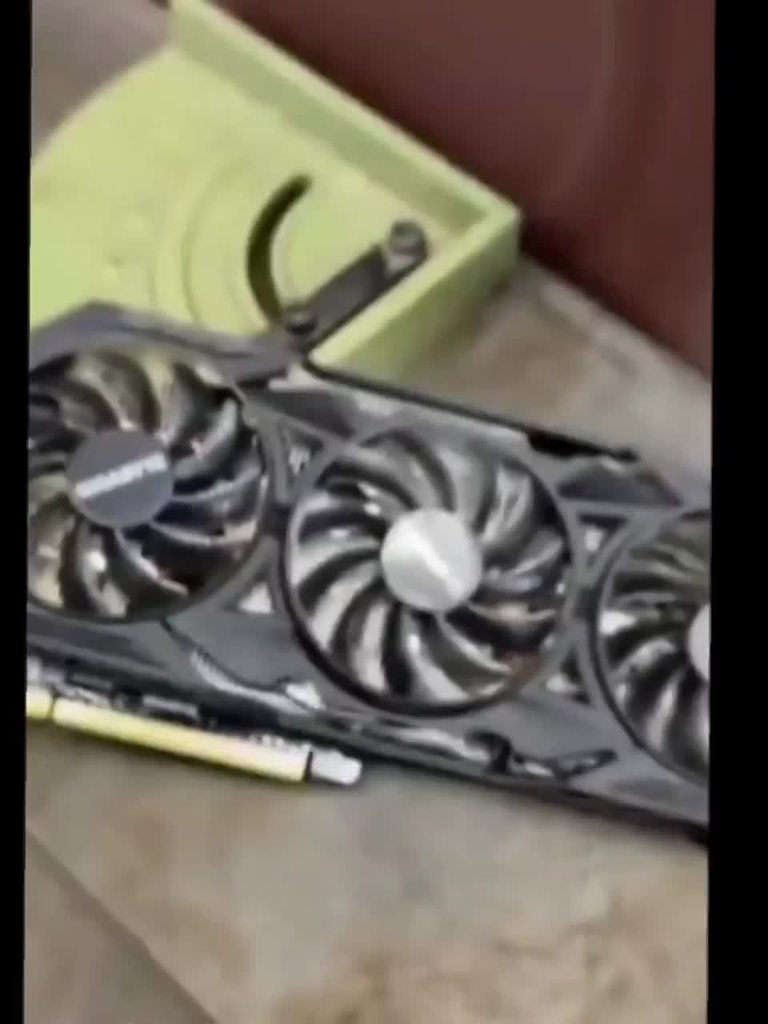
 plain owl
vivid halo
https://imgur.com/GqowZiI
plain owl
vivid halo
https://imgur.com/GqowZiI
I get very angry at content like that
vivid halo
lol
plain owl
people destroying expensive things
vivid halo
how do you know it's expensive
maybe it's bricked and worthless
and that's why they're fucking around with it lol
 ocean harbor
weak wren
Does anyone know about Bayesian probabilities or bayes theorem
ocean harbor
weak wren
Does anyone know about Bayesian probabilities or bayes theorem
google it
 dark obsidian
Hello, i have just watched this video talking about the infinite hotel(https://youtu.be/OxGsU8oIWjY?si=qQB2ldXHqXDHbSQU) and i have a question about it. At the end he say that if you take a bus with an infinite amount of people with name that are a sequence of infinite A and B, you cant fit them all because there is a name which isnt in any room because he is different of all the names in every room of the hotel (sorry if i dont explain it well, i dont speak english very well maybe eatch the end of the video if u don’t understand)
But here is the problem i dont understand. If u replace A and B with 0 and 1, u can obtain some kind of binary numbers(0= AAAAAA…, 1=BAAAAA…, 2=ABAAAA… and so on. If u do that you can create a bijection between naturals numbers ( N ) and the names. So basically you could give everyone a room according to his name. I mean there is a bijection between the set of hotel rooms numbers and the set of people so it should be possible no? So the problem is that it contradict what the video say. Can someone explain me if im wrong or not?
weak wren
ocean harbor
google it
I did but in the help thing I need help for a calculation
 ripe needle
jagged forge
the power draw & heat on the 14900k was more than i expected… had to upgrade to ...
ripe needle
jagged forge
the power draw & heat on the 14900k was more than i expected… had to upgrade to ...
Yeah its becoming an issue
ocean harbor
weak wren
I did but in the help thing I need help for a calculation
that's understandable but I don't know anything about this
so I can't help
weak wren
Oh ok
weak wren
ocean harbor
that's understandable but I don't know anything about this
Do you know someone who might know
ocean harbor
not really
ocean harbor
ye
 next schooner
dark obsidian
Hello, i have just watched this video talking about the infinite hotel(https://y...
next schooner
dark obsidian
Hello, i have just watched this video talking about the infinite hotel(https://y...
Diagonal argument
You cannot assign a binary number to each sequence like you say
plain owl
dark obsidian
Hello, i have just watched this video talking about the infinite hotel(https://y...
they don't correspond to natural numbers, you constructed an irrational
plain owl
next schooner
You cannot assign a binary number to each sequence like you say
you can, there are just more than naturals
next schooner
plain owl
you can, there are just more than naturals
I mean binary integer
As they were setting out
plain owl
what's a binary integer
next schooner
A binary number that is an integer
plain owl
well the fundamental problem here is that binary number is not a thing, it's binary representation
so it's all about whether you have unique naturals or not
and whether you're even representing one
next schooner
Uh huh
plain owl
the argument looks like it's appealing to rationals while forgetting that those are in fact not rational
next schooner
I mean it looked to me like they were recasting each sequence as a binary number to obtain a corresponding natural number
No rationals involved
In any event, diagonal argument
Or construct 2-adics
For fun
dark obsidian
Thx for the explanation 👍🏻
 uncut turtle
k
 ionic belfry
Hello
 vestal silo
did anyone do a project outside classes in first year, looking for project ideas that would actually help in some way
like idk, dont you need a portfolio or something for postgrad
classes are free rn so i have time
math major *
 sly bear
😆
 surreal sapphire
help in what?
 fervent flame
some way
surreal sapphire
well, helping with academic career would just be learn more math
other than that, a programming portfolio (github) certainly wont hurt
 lean sinew
quick question, if I go through calculus by Spivak, will i be able to go through real and complex analysis by Rudin? (i already took cal 1,2 but i need a refresher)
 tacit magnet
No
Rudin RC starts with measure theory in a mmmm well I dont know how to express it
tacit magnet
lean sinew
quick question, if I go through calculus by Spivak, will i be able to go through...
Rudin is like this

If wanna study measure theory I recommend Bartle
Also, Idk if Spivak talks about Lebesgue integral
 woven whale
i read the first two chapters of rudin and it was honestly what i was looking for
its in the style of a+m kinda
plain owl
next schooner
I mean it looked to me like they were recasting each sequence as a binary number...
what does that even mean
what do you mean by recasting a sequence
vast surge
lean sinew
quick question, if I go through calculus by Spivak, will i be able to go through...
No. Frankly even if you read baby Rudin first, I'd recommend reading something else before getting to daddy Rudin. Something like Royden-Fitzpatrick maybe, which spends a lot of time building up the theory of Lebesgue integration.
 alpine kindle
tacit magnet
Rudin is like this
alpine kindle
tacit magnet
Rudin is like this
why did you send a picture of serre lie theory
serre lie theory is so funny because there are 2 sections and each basically has the other as a prerequisite
tacit magnet
Lol
woven whale
alpine kindle
serre lie theory is so funny because there are 2 sections and each basically has...
average serre moment
 digital galleon
Guys, quick question, can a pdf file contain a virus?
digital galleon
woven whale
yes
how?
ocean harbor
digital galleon
how?
depends on the pdf
like don't download the pdf if it says a virus
digital galleon
Well, thanks for letting me in on the big secret lmao 🤣
ocean harbor
don't mention it lmao
 trail granite
hi
 oak stream
Hey, why are these cycles not isomorphic?:
0 -> 1 -> 2 -> 3 -> 0
0 -> 2 -> 3 -> 1 -> 0
 chilly hull
wdym "not isomorphic"
oak stream
do you know what graph isomorphism is?
 glass peak
A graph isomorphism has to preserve connections between vertices
I’m guessing that your issue here is that 3 is not connected to 1 in the first cycle but is in the second, but the way you have written it is utterly unclear
 leaden surge
Isomorphic means same structure, right? So those graphs wouldn’t be isomorphic since it has a different set of connections. Both graphs are a simple loop, but the nodes appear in a different order.
oak stream
Okay, but (2 -> 1 -> 0 -> 3 -> 2) is isomorphic to the original graph (0 -> 1 -> 2 -> 3 -> 0) right? Here, the nodes appear in a different order too. By the way, sorry for the late notice: the cycles are actually simple and not directed as I have written them. Sorry, I have been studying this whole night and I am wasted.
I will draw them in paint if it helps.
glass peak
oak stream
Okay, but (2 -> 1 -> 0 -> 3 -> 2) is isomorphic to the original graph (0 -> 1 ->...
Your connections are preserved in that case, it’s not about the order it’s the fact that 1 is connected to both 0 and 2
So in your first example where the graphs are not isomorphic you have an edge between 3 and 1 in the second cycle which doesn’t exist in the first
Hence there’s no isomorphism
oak stream
but isn't isomorphism all about renaming the vertices and preserving the degree sequence?
glass peak
An isomorphism is a bijection between vertices which preserves edges
oak stream
So is it not an automorphism but it could have been an isomorphism if we had another graph like 0 -> 2 -> 3 -> 1 -> 0?
automorphism: self-isomorphism
glass peak
I’m not sure I follow what you’re saying there, but a graph isomorphism is defined to be a bijection between the vertices such that f(u) and f(v) are adjacent iff u and v are adjacent
oak stream
glass peak
I’m not sure I follow what you’re saying there, but a graph isomorphism is defin...
Okay, so couldnt my bijection be like this then, (using 2 line notation):
0 2 3 1
0 1 2 3
glass peak
There is no connection between 2 and 0 in the second line but there is in the first, so no those graphs aren’t isomorphic
leaden surge
oak stream
Okay, but (2 -> 1 -> 0 -> 3 -> 2) is isomorphic to the original graph (0 -> 1 ->...
Well, no, the nodes don’t actually appear in a different order. They are written in a different order, but the actual graph represented by your notation still has the nodes in the same order.
 naive bone
uhmmmm HI?
 solar hawk
omg ru guys doing graph ISOs
 sick karma
I am going to be taking calculus III next year as a highschool student and am wondering what advice people can give me. Some questions I have: since calculus III is a semester class, what should I take as a follow up for the next semester; if anyone knows any unis or tech schools in Wisconsin that would be good for this sort of thing as an online class; and would it be better to take the class/classes at a uni or tech school.
solar hawk
do do isomorphic graphs have similar matrices
like the same matrix under difference bases similare
glass peak
sick karma
I am going to be taking calculus III next year as a highschool student and am wo...
If they offer a class in like intro. Diff geo or an analysis class that uses differential forms I’d recommend that, it follows in by showing you all of calc 3 in a much nicer theory
sick karma
glass peak
If they offer a class in like intro. Diff geo or an analysis class that uses dif...
Ok, I will consider that
ripe needle
sick karma
I am going to be taking calculus III next year as a highschool student and am wo...
If you haven't done Linear Algebra that that would be the follow up, it's normally taken just before, during, or right after Calc III...after that, Differential Equations is normally the 4th class in a calculus sequence. Which textbooks just depends on your personal level and knowledge, which you can check in #book-recommendations
It's always better to take at a university, but everywhere is different and it depends what you want to do. For example where I live, our community college offers Linear Algebra but it only transfer as a lower division class for applied students like engineers, the pure math major students at the university have their own upper division linear algebra course. Someone with better knowledge of Wisconsin might be able to answer that for you, you can also just stop in your local university and community college and ask advisors there what the best plan is. That's literally what they get paid to do.
sick karma
ripe needle
If you haven't done Linear Algebra that that would be the follow up, it's normal...
Thanks a ton 👍
glass peak
solar hawk
do do isomorphic graphs have similar matrices
Without thinking about it too hard I would expect that isomorphic graphs would have similar adjacency matrices
solar hawk
yeah it sounds like something that would naturally arrise
maybe there is some graph to matrix theory field i have yet to see where they do problems like that
or maybe thats just graph theory
glass peak
You use matrices in graph theory quite a bit, you can describe graphs by their adjaceny and incidence matrices.
You also have matroid theory which is a bridge between graph theory (I believe more generally combinatorics but I’m not 100% sure) and LA. I only know the very basics about matroids because most of the section in my graph theory course was cut due to strikes
solar hawk
glass peak
You use matrices in graph theory quite a bit, you can describe graphs by their a...
that sopunds very epic
ima search up matroid theory
 river moon
indeed matroid theory is very cool
glass peak
Yeah it was cool, it was one of the only 2 sections in my graph theory course that felt like actual maths 
solar hawk
lol
a graph is uniquely determined by its adj matrix right
whats the time complexity of checking similar matrices too what if u could use it to efficiently solve graph iso
glass peak
I imagine someone has thought of that lol
glass peak
It is interesting to me that the time complexity of the graph iso problem is unknown though, It seems like everything else in graph theory is super easy or NP-complete
solar hawk
glass peak
It is interesting to me that the time complexity of the graph iso problem is unk...
well i mean
there are bad complexity algorithms
so i guess it is known just not good  😭
😭
 olive owl
guys what comes first abstract alg or real analysis
 slow jewel
what is the difference between probability and statistics?
slow jewel
vivid halo
they are pretty independent topics
for some reason I notice a lot of people going calc --> real analysis when it comes to self studying
but not that much noise for studying abstract alg
vivid halo
slow jewel
for some reason I notice _a lot_ of people going calc --> real analysis when it ...
I mean it makes sense, that's a natural progression
linear algebra -> abstract algebra is similarly natural
 visual breach
People do not like linear algebra and idk why 😢
 bronze wedge
visual breach
People do not like linear algebra and idk why 😢
bronze wedge
visual breach
People do not like linear algebra and idk why 😢
linear algebra without proofs is... highly computational
(most people have different reasons i suspect)
visual breach
Imo 'Linear algebra without proof' is not linear algebra, it's just 'Multiplication table but for matrix'
bronze wedge
visual breach
Imo 'Linear algebra without proof' is not linear algebra, it's just 'Multiplicat...
it still is "linear algebra", but by this logic "algebra" should only be reserved for "abstract algebra" etc
visual breach
Yeah I am not fond of pre-uni 'algebra' classes.
leaden surge
bronze wedge
linear algebra without proofs is... highly computational
that's what computers are for
just please don't make me multiply a matrix by hand
just why
bronze wedge
leaden surge
just please don't make me multiply a matrix *by hand*
i dont like doing computations, but it is not unreasonable to want your typical math undergrad to at least know how to invert a matrix by hand!
leaden surge
well yeah it's important to know algorithms I guess
although I say that from more of a computer science perspective
if I had to write a program right now to invert a matrix I could do it
visual breach
What I am sad with is that so many typical people despise proof-based linear algebra
 clear parcel
visual breach
Imo 'Linear algebra without proof' is not linear algebra, it's just 'Multiplicat...
clear parcel
visual breach
Imo 'Linear algebra without proof' is not linear algebra, it's just 'Multiplicat...
I just called it multiplication with extra steps 😂
visual breach
hahaahaha
clear parcel
stuff about dual vector spaces and tensors is still linear algebra right? I did not know anything about those until recently.
 cinder zephyr
yea
dual spaces come up everywhere
truely one of the most useful things to see
dual of a dual is the original space 
 heady ermine
cinder zephyr
dual of a dual is the original space <:hypersully:796617995522277376>
heady ermine
cinder zephyr
dual of a dual is the original space <:hypersully:796617995522277376>
Infinite-dimensional vector spaces be like
 cinder zephyr
ik ik there are a ton, was joking
visual breach
Wait, is C(X) notation coming from algtop
heady ermine
heady ermine
L^2(anything)…
Amusingly, this is equal to its double (topological) dual
visual breach
Since continuous function X -> R can be regarded as a cycle C_0(X; R)
visual breach
Maybe not
 deep mango
visual breach
Wait, is `C(X)` notation coming from algtop
deep mango
visual breach
Wait, is `C(X)` notation coming from algtop
Just c for continuous
visual breach
Hm
visual breach
Ah right, C^0 (X; R)
deep mango
Ya
deep mango
In that case, probably a coincidence
fathom swallowBOT
Absta
 visual breach
Caveat: Idk what the base ring is
olive owl
is set theory hard
visual breach
fathom swallow
**Absta**
When is A-module equivalent to just a set, what A is this
cinder zephyr
olive owl
is set theory hard
if you've never done proof based math it can be
not because basic set theory is hard, but first learning proofs is hard
visual breach
fathom swallow
**Absta**
@vivid halo, do you happen to know?
vivid halo
what
visual breach
Is there a ring A where Mod(A) is equivalent to category of sets?
vivid halo
uhh no
visual breach
Huh, why not
vivid halo
Set is not an Abelian category lol
visual breach
Oww, I was this close to describing C_0 (X; R) as a tensor product
vivid halo
lol
 winter cave
 fringe summit
 proven karma
Anyone here in 7th grade
proven karma
Anyone here in 7th grade
Are you at least 13
 split pawn
visual breach
<:sadcat:547124024585486359> Oww, I was this close to describing C_0 (X; R) as a...
split pawn
visual breach
<:sadcat:547124024585486359> Oww, I was this close to describing C_0 (X; R) as a...
Absta!
split pawn
proven karma
shouldve been in 8th by now
It's okay
proven karma
split pawn
It's okay
thanks man
split pawn
proven karma
thanks man
You can move up a grade and even if u don't it's still okay
proven karma
split pawn
You can move up a grade and even if u don't it's still okay
thank you
 vague peak
ANYBODY TOOK THE AMC 8 MATH TEST YET?
visual breach
split pawn
Absta!
Oh, hi muhammad!
visual breach
Pretty busy recently
split pawn
SHOOT WE HAVE A SERVER RAID
visual breach
There are studies that I want to do
split pawn
See discussion
 sonic sentinel
let's suppose, hypothetically, that me and my friend were chosen from the school for a selection exam for the country's international physics olympiad team. let's also clarify, in our hypothetical, that none of the grade 12 students, few of which actually studied an entire semester of physics, can attend because of age, and me and my friend have only studied one semester of physics (units 1-5 of ap physics 1). let's also suppose that this is happening ON the day of the last exam, so we're deferring one exam, and we have only one free day and like two hours at school to study. what would i do? what resources would i use to cram?
fervent flame
hypothetically, you would ask in a physics server
sonic sentinel
fervent flame
hypothetically, you would ask in a physics server
good call
oh mb didn't mean to ping
 honest badge
sonic sentinel
good call
honest badge
sonic sentinel
good call
Is there a rule for pinging people
honest badge
sonic sentinel
let's suppose, hypothetically, that me and my friend were chosen from the school...
New episode of mission impossible
plain owl
honest badge
Is there a rule for pinging people
why would there be?
honest badge
plain owl
why would there be?
He asks for sorry
surreal sapphire
its just discord etiquette
 tribal slate
honest badge
Is there a rule for pinging people
tribal slate
honest badge
Is there a rule for pinging people
theres no rule for being annoying too i think
not that i am implying anything i just only saw this sentence only
 quick beacon
@neat lintel
Is there a limit to how long questions are allowed to stay up
Not to my knowledge
 surreal laurel
just overheard some classmates saying the fundamental theorem of calculus is the most obvious thing ever, like “no sh—! Taking one step forward and one step back keeps you in the same place!”
we’re in week 1 of calc 2
 magic dawn
surreal laurel
just overheard some classmates saying the fundamental theorem of calculus is the...
magic dawn
surreal laurel
just overheard some classmates saying the fundamental theorem of calculus is the...
Well that includes you proved that the integral is the inverse of the derivative (the proof of which is the fundamental theorem of calculus)
 solid snow
surreal laurel
just overheard some classmates saying the fundamental theorem of calculus is the...
solid snow
surreal laurel
just overheard some classmates saying the fundamental theorem of calculus is the...
Idk about “most obvious”
surreal laurel
i know
solid snow
It’s not apriori obvious that an antiderivative has anything to do with the limit of a sum
surreal laurel
school tends to treat integration and differentiation as inverse operators
so students look at the ftc like “duh! why do you need to spend a whole class on it!”
magic dawn
Tell your classmate to proof the ftc... that should make it obvious how obvious it is
surreal laurel
The flaw in my profs course outline is that he introduced the anti derivative before the idea of “taking the area under the curve”
plain owl
surreal laurel
just overheard some classmates saying the fundamental theorem of calculus is the...
because they don't understand the actual definitions and only what they do
what sudo_lsroot said
 neat lintel
surreal laurel
school tends to treat integration and differentiation as inverse operators
neat lintel
surreal laurel
school tends to treat integration and differentiation as inverse operators
Do I have to learn ftc to do these operations things quickly
I take a very long time especialy for quotient rule
plain owl
operation things?
being fast at calculating anti-derivatives is a practice thing and having a large bag of tricks
it's not really the same as good math theory knowledge
 scenic bridge
I'm trying to determine what I'm doing wrong with my spending. I spent $24 today. Earlier I spent $10 on a cheesesteak and energy drinks. I must spend $8 a day on energy drinks.
Why shouldn't I factor in the energy drink on the equation for cheesesteak + energy drink in relation to "what is going wrong with my spending"?
solid snow
???
plain owl
that doesn't sound like a genuine question
neat lintel
plain owl
being fast at calculating anti-derivatives is a practice thing and having a larg...
So i dont have to understand the concept but I need to remember which number goes where using tricks that are not related to the actual theory?
plain owl
neat lintel
So i dont have to understand the concept but I need to remember which number goe...
that's a bit vague for me to agree with that statement
understanding FTC is important
solid snow
knowing FTC doesn't impart a buff to your computation, but it's the bare minimum to grasp what it is that you're doing
scenic bridge
plain owl
that doesn't sound like a genuine question
Y = 2, B = 10, X = 24
B = 8 + Y
B = 10
X = 10 + B + 6
X = 24
Why can't I use Y and B to determine X?
scenic bridge
 wicked zodiac
Where are you pulling that random 10 from?
wicked zodiac
Where are you pulling that random 10 from?
I spent $10
wicked zodiac
And I would assume thats B is it not?
solid snow
could you not just list what you bought and the price of each item
scenic bridge
wicked zodiac
And I would assume thats B is it not?
It is
solid snow
no idea what you're trying to do
wicked zodiac
scenic bridge
It is
So why are you adding B twice?
scenic bridge
wicked zodiac
So why are you adding B twice?
B is included in another equation
solid snow
total amount spent today = sum of cost of things you purchased
wicked zodiac
What do X, Y, and B represent?
scenic bridge
solid snow
total amount spent today = sum of cost of things you purchased
I'm trying to keep track of individual purchases and ascribe meaning, without looking at the big picture, so I can have an even bigger picture. Fuck.
scenic bridge
solid snow
what does this even mean
There exists 3 sums
Sum 1, the sum of things purchased
Sum 2, the sum of an individual purchase
Sum 3, the sum of each individual object by category 1
Sum 4, the sum of indiviual object by category 2
Sum 5
Sum 6
Sum 7 ect
solid snow
???????????????????????????????????????????????????
plain owl
I can't believe this is an actual discussion
solid snow
adios brochacho
plain owl
don't get baited into this josemom2
wicked zodiac
scenic bridge
There exists 3 sums
Sum 1, the sum of things purchased
Sum 2, the sum of an indi...
Sum 1 = Sum 3 + Sum 4 + Sum 5 + ...
scenic bridge
wicked zodiac
Sum 1 = Sum 3 + Sum 4 + Sum 5 + ...
The goat
wicked zodiac

wicked zodiac
wicked zodiac
Sum 1 = Sum 3 + Sum 4 + Sum 5 + ...
I would assume "Sum" 2 would just fall under one of the categories
neat lintel
how do i find out what two numbers divid with a remainder of exactly 250?
Is that all the info u have
visual breach
let Sum n = Sum 1 + Sum 2 + Sum 4 in n
7
 ripe mango
Help-28
ocean harbor
ripe mango
Help-28
!noadvert
quasi jettyBOT
ripe mango
Help-28
Please do not advertise your help channel or thread in other parts of the server. There are many people who need help, so advertising can quickly turn into spam.
 versed axle
how can i self study for math olympiad or other math tests
 sour timber
help someone
Transformations of Functions (A1)
now
i have 57 minutes left
before my assignment closes
quasi jettyBOT
To ask for mathematics help on this server, please open your own help channel or help thread. See #❓how-to-get-help for instructions.
visual breach
Also isn't this cheating
neat lintel
scenic bridge
There exists 3 sums
Sum 1, the sum of things purchased
Sum 2, the sum of an indi...
This guy is under the effects of drugs
neat lintel
Oh my god the new android discord is so trash
It's so bad just wow
The previous updates were just minor annoyances but now they've really messed things up
scenic bridge
neat lintel
This guy is under the effects of drugs
They expand the mind apparently
 sage prawn
Hello
neat lintel
I need an inexpensive / free "talking machine", a machine that either runs an LLM & TTS (best option), or uses an LLM API & runs TTS, or uses LLM & TTS API, + some programming, to "talk" as a charachter. The purpose of this is to provide such a device for my friend who is a sculptor. They will then create talking heads!
DM if you can provide programming or hardware or engineering (for battery, water proofing et cetera design).
fervent flame
have you considered gooogling
 glacial crystal
Frlfrl
neat lintel
neat lintel
I need an inexpensive / free "talking machine", a machine that either runs an LL...
I can do that for $20/hr
I know to yap
 south arch
hello, I am currently an undergrad student in uni and I'm considering switching majors to applied math. ik it's a really hard major though so I was wondering could anybody share their uni experiences so I can better understand what I'm in for?
south arch
I'm a computer science student
I could probably share a couple core classes, give me a sec
off the top of my head, all the base math courses like diff eqs lin alg up to calc 3
ik there's a real analysis course, pdes, numerical methods, one other advanced course on diff eqs
a lot more I can't remember
surreal sapphire
mainly trying to get an idea about how proof-based the degree will be
because that would be the biggest adjustment probably
the classes you mentioned could go either way, except real analysis which i would expect to be proof based definitely
but i dont think its necessarily harder than CS, its just a different kind of thing
south arch
well to be more accurate I'm considering double majoring in cs and math, so I have a couple cs math classes I'm taking like discrete
south arch
surreal sapphire
but i dont think its necessarily harder than CS, its just a different kind of th...
really? I've heard otherwise lol
people complaining about the difficulty of math courses
surreal sapphire
sure, but those complaints mainly come from non-math majors in my experience
south arch
ah that's fair
surreal sapphire
i think a lot of it is just attitude
now getting used to proof-based mathematics takes a bit of time
maybe up to a year
so if you havent seen that and you want to get a taste, i would recommend reading a bit about it to get an idea
south arch
alright thanks, give me a couple mins I'll be able to send the math courses in the curriculum
surreal sapphire
(if you want to read an intro to proofs, i recommend https://math.hawaii.edu/~pavel/Aluffi_notes.pdf or alternatively i have written a small intro myself that is pinned in #proofs-and-logic)
south arch
ah, alright thanks
by proofs is it very different from the stuff you see in discrete math?
well actually reading thru a bit of that document, the intro is exactly what I learned in class so well see lol
surreal sapphire
ah ok nice
fervent flame
discrete usually is the intro to proofs for most students
surreal sapphire
south arch
by proofs is it very different from the stuff you see in discrete math?
this depends a lot on the class
discrete is sometimes used as an intro proofs
too slow...
so if you enjoyed that class, why not go for it
south arch
so here are the class names, lmk if u want further clarification bc some of these names are vague
diff eqs
linear algebra
applied numerical methods
introductory mathematical analysis
intro to pdes
intro to functions of a complex variable
methods of applied math
intermediate diff eqs
methods of applied math II
and a couple of electives I wanna take like maybe a grad course on applied statistics
these are the math courses I've yet to take
fervent flame
these are required for the program?
fervent flame
do you know if the linear algebra class is the same that pure math students would take? otherwise only the numerical methods, and 2 applied math classes seem potentially non proof based
well, diffeqs too
south arch
my college is an engineering college so def not
surreal sapphire
my main complaint with this would be its very analysis-heavy (not a single class in algebra for example)
do you have an idea of what kind of job you want to do later?
fervent flame
surreal sapphire
my main complaint with this would be its very analysis-heavy (not a single class...
isn't this the norm for applied?
south arch
honestly, i would be fine with most jobs in CS, and most jobs that the applied math major would open like maybe something in fintech, another interest of mine was AI and ik R&D is hard to break into
but ive heard of undergrads doing it so
¯_(ツ)_/¯
btw, my college doesnt have a pure math major
fervent flame
both fintech and ml require a strong stats background
south arch
surreal sapphire
my main complaint with this would be its very analysis-heavy (not a single class...
i might be able to take an elective, but is it very neccesary? and by algebra what classes do you mean? bc ive heard of scary things like abstract algebra, algebraic topology etc and i have no clue what those are and if they are good for applied math
fervent flame
ml specifically would be great to take optimization/modeling classes
south arch
fervent flame
both fintech and ml require a strong stats background
i was gonna cover the ML within my cs courses but yeah I should prolly take more stats courses
surreal sapphire
and if that is the goal, the applied math major will help
fwiw my background is degrees in math (pure though i guess) and computer science
but i work in roughly cryptography
south arch
ah, okay cool
what would you guys say i should expect from courseload, like how much time on hw
surreal sapphire
its weird to imagine a math major without at least a class in abstract algebra, but 🤷
south arch
bc ive heard of some demon hw problems which is one of the things that makes me a little nervous about switching
surreal sapphire
eh, probably ask other students at your college
fervent flame
south arch
what would you guys say i should expect from courseload, like how much time on h...
thats both individual and school (and prof) dependent
surreal sapphire
i spent probably 10 hrs per week per class on homework
but i live on another continent so ...
south arch
surreal sapphire
i spent probably 10 hrs per week per class on homework
oh wow
fervent flame
for me, most of my hw time was spent on hw for non math classes
i went to a no name liberal arts school fwiw
south arch
ah okay, so there is an applied abstract algebra class i could take as an elective
surreal sapphire
would probably recommend that for well roundedness
south arch
my school like many others im sure is known for weedout classes so thats the main thing that scares me
surreal sapphire
it might also help if you ever happen to care about cryptography or coding theory
south arch
i dont know a lot about cryptography or coding theory i dont think, but i am interested
thats why i said id prolly be fine with any job in the field, but id need to gain more experience and see
fervent flame
south arch
my school like many others im sure is known for weedout classes so thats the mai...
do you know which ones they are? for cs, id assume its DS/algo
deep mango
south arch
ah okay, so there is an applied abstract algebra class i could take as an electi...
Coming from an analysis / applied math perspective i definitely recommend it as an elective, a lot of the ideas and methodologies are still useful
fervent flame
id imagine proof based LA or diffeq would be a math weeder, but im unaware
deep mango
Plus it only sounds scary, it's not actually that much crazier than the discrete math stuff
south arch
fervent flame
do you know which ones they are? for cs, id assume its DS/algo
nah, the DSA course was fine, im taking one of the weedouts for cs rn so ill lyk (its a linux class and a computer architecture class)
south arch
deep mango
Plus it only sounds scary, it's not actually that much crazier than the discrete...
ah alright, thanks for the advice
south arch
south arch
nah, the DSA course was fine, im taking one of the weedouts for cs rn so ill lyk...
so just maybe like 2 or 3 main courses that are way more difficult in comparison with the rest of the curriculum
im familiar with those classes, its that im not familiar with any of the higher lvl math classes that makes me nervous
bc i dont wanna switch and realize im not cut out for this
fervent flame
did you do well in discrete?
south arch
im taking it rn, so far im enjoying it a lot
but then again its only been like 2 weeks
fervent flame
ah new semester right
south arch
yep
fervent flame
if you continue to enjoy it and do well, thats a good sign
south arch
all the math subjects and classes for the most part interest me, however im just worried thats not enough
alright, ill just see how the classes im taking go and do a bit more reading on the side about math to see if its what i wanna pursue
thanks for the advice everyone
scenic bridge
How can math be real if our eyes aren't real --Jaden Smith
neat lintel

solar hawk
ocean harbor
day 147 of hating java, let's go
lol
fervent flame
i love overwriting pickle files when trying to read them
literally 2 days in a row
dont be lazy kids
ocean harbor
solar hawk
lol
there won't be a java exam now yeeeeeeey!!
I cant imagine tell you how happy I am rn 
solar hawk
ocean harbor
I cant imagine tell you how happy I am rn <:satisfiedblob:547119756768182282>
lol
ocean harbor
 neat lintel
ocean harbor
there won't be a java exam now yeeeeeeey!!
neat lintel
ocean harbor
there won't be a java exam now yeeeeeeey!!
in which year r u
neat lintel
ocean harbor
highschool <:bleakkekw:913344117981999125>
oooohh
thought u were in uni
ocean harbor
uni is gonna be tough i believe
haven't gotten any response from uni apps
except college
neat lintel
what r u planning to study in uni
ocean harbor
computer science and mathematics
vivid halo
tfw computer science jobs get completely replaced by GPT prompt engineering jobs by the time you graduate
neat lintel
Guys, if you learn coding/programming, then what will you be doing?
I mean what will you be coding?
leaden surge
I program things I want to
Mostly like physics simulations or other simulation related things
ocean harbor
neat lintel
Guys, if you learn coding/programming, then what will you be doing?
building apps
or creating games
leaden surge
But can be anything, if you want to do it, and know how, and have the self-motivation
neat lintel
leaden surge
Mostly like physics simulations or other simulation related things
Oh okay
neat lintel
ocean harbor
building apps
that’s it?
ocean harbor
like ive been interested in programming because I think it's a good career for me
ocean harbor
neat lintel
that’s it?
a lot more
leaden surge
“apps” and “games” are very broad categories
I’m planning to get a job as a programmer in a few years
neat lintel
I have absolutely no clue what to study
neat lintel
My passion is gaming, but I’m really not keen on streaming or content creation
ocean harbor
leaden surge
I’m planning to get a job as a programmer in a few years
good for you

@solar hawk
leaden surge
Idk if entertainment counts as a passion
I mean that would mean my passion is watching anime lol
But I guess if you’re really serious about games or something it can count
neat lintel
Wait how would you define passion?
leaden surge
Something you have an unusual or exceptional interest in such that you devote a lot of time to it, I think
Not a super accurate definition
I’m no good at describing words
Merriam-Webster has:
a strong liking or desire for or devotion to some activity, object, or concept
neat lintel
leaden surge
Something you have an unusual or exceptional interest in such that you devote a ...
Oh then gaming is definitely my passion
neat lintel
Currently i’ve quit gaming due to my studies, but when I do game I game for hours
leaden surge
Honestly I think that’s pretty normal
neat lintel
leaden surge
Is there anything exceptional you’ve done?
Hmm, well I have like over 2000 hours on a game called tf2
does that count?
leaden surge
A lot of people spend large portions of their free time on games
leaden surge
neat lintel
Hmm, well I have like over 2000 hours on a game called tf2
lol I have 800 hours there
Or maybe approaching 900
I forget
neat lintel
Oh
But I’ve been gaming tf2 ever since I was 8
made multiple accounts so i don’t know the exact number
leaden surge
I have like 10k+ hours on anime
neat lintel
That’s crazy
But yeah anyways, my passion is tf2 I guess
It’s the only game I’ve ever truly loved playing
can’t get enough of it
it’s like crack for me ya know
leaden surge
I’ve loved multiple games, but tf2 is the only one I’ve loved that’s designed for endless play
neat lintel
Yes, it’s a timeless masterpiece
leaden surge
Definitely a wonderful game
ocean harbor
leaden surge
I have like 10k+ hours on anime
weeb
neat lintel
I main spy, so I’m trying to reach a thousand hours on that class
Currently have 600 hours
leaden surge
ocean harbor
weeb
Yes, akira
neat lintel
Still not on the level I want to be yet, but i’ll get there soon
leaden surge
(I can read hiragana/katakana lol)
ocean harbor
leaden surge
(I can read hiragana/katakana lol)
good for you
anyway thats what I want for programming

 leaden surge
What’s the three dots one?
ocean harbor
julia
leaden surge
And the atomic symbol?
ocean harbor
react
leaden surge
Seems like you like the languages good at data processing and number crunching
Whereas the market wants web-dev
Or generic c++
leaden surge
C is like C++ just fewer features
ocean harbor
ah I see
leaden surge
99% of C programs can successfully compile as C++, sometimes with minor modifications
leaden surge
My favorite/most-used language is JS, simply because I find the browser to be the most convenient platform to develop for
ocean harbor
oh interesting
leaden surge
Mostly I make programs that display stuff on the html <canvas> element
I don’t really do anything UI related, usually
I also have some experience with C#, because of a school project I did that required Unity game engine
And right now I’m actually working on the server-side of a web app, and I chose python
Because the server uses apache, doesn’t have node.js installed, and no way am I using perl or php
ocean harbor
anyone can use python cuz python is always the best
languages ive done python, java, cpp, julia, react html, css and just a little bit js
leaden surge
I’ve also done a bit of Lua too
Because of a Minecraft mod called OpenComputers
Which uses Lua
ocean harbor
I did use lua in roblox studio but not that much
leaden surge
Also I have like a tiny amount of experience/knowledge of a handful of other miscellaneous languages, but not to any useful extent
Including C++, but it’s incredibly vast and I only know the very basics and the parts that are shared between most languages in general
Actually I did write a fluid simulation in cpp once
By modding an open source game that had an existing (but unrealistic) air simulation
ocean harbor
leaden surge
Including C++, but it’s incredibly vast and I only know the very basics and the ...
I did that too
but never made something good in cpp, only basic projects like integral area etc
i made a geometry dash game using java and took me a lot time to make it look good
I think it's my first time doing something that I don't like but it still looking good for me so i hope my teacher likes it too
would you say anything about it? because I kinda feel the jumping isn't good enough lol
i've heard that in university they will teach python first year or c, I just need to get prepared for c tho 
leaden surge
ocean harbor
would you say anything about it? because I kinda feel the jumping isn't good eno...
looks good, I guess
idk, I never played gemoetry dash
obviously level design could use some more... variety
might be a good idea to sync the level design with the music
ocean harbor
geometry dash game is already created by robtop so I decided to make this for my final proposal project then I realized that it's hard to make menu and stuff using JFrames in java but I guess this is my best I can do
at the first ive struggled making the sound work and it finally worked after a few days
pround of myself for doing it!!
ocean harbor
leaden surge
looks good, I guess
but yea thanks for this^^
leaden surge
I've struggled making my Linux laptop work lol
seriously, random things in linux just stubbornly don't work right
once you've got it working though it's generally pretty stable
ocean harbor
true
leaden surge
oh yeah unless you do something funny and break something
now my laptop can't fall asleep or else I have to reboot it
it's what I get for messing with nvidia drivers and shit
so I just disabled my computer's automatic fall asleep function
it just dims the screen and stops there
solar hawk
@light horizon im taking a shower RN
 fair mural
 fair mural
what's the context
 light horizon
solar hawk
<@1121799937001267230> im taking a shower RN
light horizon
solar hawk
<@1121799937001267230> im taking a shower RN
bruh
solar hawk
fair mural
what's the context
Well, just that
fair mural
so context isn't key
solar hawk
light horizon
do you have any idea how weird that is out of context
See quwu
There is context
Ur just missing it
fair mural
solar hawk
Well, just that
.
solar hawk
L bozo moment L
fair mural
you answered as if there was no context
solar hawk
fair mural
you answered as if there was no context
Ok and why did you believe me
light horizon
the context is that amukh showers so little its actually disturbing
light horizon
so he expects praise for actually showering
solar hawk
Not praise I’m just telling u so yk
fair mural
i'm still up for believing that you're andrei's alt for trolling
solar hawk
THAT I’m a clean frog
light horizon
fair mural
i'm still up for believing that you're andrei's alt for trolling
real
neat lintel

solar hawk
Can I get skin cancer from not showering
neat lintel
solar hawk
Hypothetically
fair mural
solar hawk
Can I get skin cancer from not showering
is that your only concern or
solar hawk
Like in the extreme case
fair mural
oh my god just shower
 sonic field
solar hawk
Can I get skin cancer from not showering
sonic field
solar hawk
Can I get skin cancer from not showering
HUH?
fair mural
you're not clean if you don't shower for a week
solar hawk
I have waited longer but that is irrelavent
fair mural
i'm trying to do my homework but amukh is just too entertaining
solar hawk
sonic field
where did you get this from?
Today in bio
My teacher said we can die from skin cancer or smthn
sonic field
solar hawk
Today in bio
... did they tell you WHY THAT'S TRUE?
solar hawk
 sonic field
-amukh not payin attention in bio-
solar hawk
 solar hawk
sonic field
-amukh not payin attention in bio-
solar hawk
sonic field
-amukh not payin attention in bio-
Grownups commit meiosis, body cells do mitosis
Done bio finished
100% passing grade
sonic field
I guess mitosis is gonna give you cancer too huh?
sonic field
also
fair mural
like i said, amukh is gonna be learning from stuff like this
sonic field
y are u still on the shower thing??
solar hawk
fair mural
like i said, amukh is gonna be learning from stuff like this
We already leaned that shit
solar hawk
sonic field
y are u still on the shower thing??
I’m waiting for it to warm

Alr bue
Bye
neat lintel
fair mural
like i said, amukh is gonna be learning from stuff like this
"Domain Expansion: Cellular Respiration" still gets me lmao
fair mural
fair mural
like i said, amukh is gonna be learning from stuff like this
wait @native oriole watch this biology edit
solar hawk
fair mural
like i said, amukh is gonna be learning from stuff like this
The reason the mitochondria would win
Is fermentation.
sonic field
here we go
fair mural
nah i'd win
solar hawk
It could do alcohol fermentation, or lactic acid fermentation
Wait fuck
Nvm
I’m stupid
Fuck that bye
 sonic field
LOL
ripe needle
fervent flame
thats definitively bio
ocean harbor
biochemistry, metabolic processes, molecular genetics, hometasis, and population dynamics
biology gives me a headache
fair mural
neat lintel
fair mural
like i said, amukh is gonna be learning from stuff like this
Metabolism 
 latent edge
the shenanigans of the Krebs cycle
I remember making a category out of the cycle
top tier crankery
 limber thunder
latent edge
I remember making a category out of the cycle
limber thunder
latent edge
I remember making a category out of the cycle
wha
neat lintel
fair mural
like i said, amukh is gonna be learning from stuff like this
damn this is fire
 naive gate
ok so
@crimson nebula almost forgot what we were talking about
uhh
for example integral from 0 to 3 of 1/(x-1) dx
is undefined at x=1
so we were talking about using limits to determine divergence/convergence
 crimson nebula
naive gate
is undefined at x=1
crimson nebula
naive gate
is undefined at x=1
yeah
 rose dawn
The integral if it exists is, $$\lim_{\varepsilon \to 0} \int_{0}^{t-\varepsilon} \frac{1}{x-1}dx +\int_{t+\varepsilon}^{3} \frac{1}{x-1} dx$$
crimson nebula
piecewise it
naive gate
so we choose a value for the limit to approach based on the undefined?
crimson nebula
$$\int_{0}^{3}f(t)dt=\int_{0}^{1}f(t)dt+\int_{1}^{3}f(t)dt$$
fathom swallowBOT
Cycadellic
 crimson nebula
hes less lazy than me
crimson nebula
around the discontinuity
rose dawn
and actually
crimson nebula
then if it converges, the discontinuity converges
rose dawn
those should be the same limit
crimson nebula
rose dawn
those should be the same limit
not necessarily, i dont think
for example, the floor(x) has a convergent area function
yet the one sided limits arent the same
naive gate
so what if a function doesn't have a discontinuity?
fathom swallowBOT
Austin
 naive gate
crimson nebula
so you can integrate it normally
naive gate
crimson nebula
so you can integrate it normally
so once u integrate it normally
then do u do that comparison?
crimson nebula
yeah
so, with the example from earlier, it was $$\big\int_{1}^{\infty}{e^{-x}}dx>\big\int_{1}^{\infty}\frac{e^{-x}}{x}dx>0$$
fathom swallowBOT
Cycadellic
Compile Error! Click the  reaction for more information.
(You may edit your message to recompile.)
 crimson nebula
its kind of like using the squeeze theorem
naive gate
crimson nebula
so, with the example from earlier, it was $$\big\int_{1}^{\infty}{e^{-x}}dx>\big...
can u also use limits here to prove?
crimson nebula
but with a finite distance instead of an infinitesimal distance
naive gate
crimson nebula
its kind of like using the squeeze theorem
i c
crimson nebula
well, by definition $\big\int_{1}^{\infty}f(t)dt=\lim_{x\rightarrow\infty}\big\int_{1}^{x}f(t)dt$
fathom swallowBOT
Cycadellic
Compile Error! Click the reaction for more information.
(You may edit your message to recompile.)
 crimson nebula
then, its easy to apply the fundamental theorems, if mvt
naive gate
crimson nebula
then, its easy to apply the fundamental theorems, if mvt
that's right
ok
naive gate
crimson nebula
then, its easy to apply the fundamental theorems, if mvt
and if i want to use the comparison theorem also?
crimson nebula
fathom swallow
**Cycadellic**
Compile Error! Click the <:errors:504266556054962196> reaction fo...
for this one, you would simply need to show that $\lim_{x\rightarrow\infty}\big\int_{1}^{x}e^{-t}dt$ converges
fathom swallowBOT
Cycadellic
Compile Error! Click the reaction for more information.
(You may edit your message to recompile.)
 crimson nebula
then the convergence of $\lim_{x\rightarrow\infty}Ei(x)$ would follow
fathom swallowBOT
Cycadellic
 naive gate
crimson nebula
for this one, you would simply need to show that $\lim_{x\rightarrow\infty}\big\...
naive gate
crimson nebula
for this one, you would simply need to show that $\lim_{x\rightarrow\infty}\big\...
i recall that it splits into integral from 0 to 1 of e^-x dx + integral of 1 to ∞ of e^-x dx
another way
i mean?
crimson nebula
naive gate
i recall that it splits into integral from 0 to 1 of e^-x dx + integral of 1 to ...
if we wanted to talk about Ei(0), we would need to consider -1 to 0, and 0 to 1 seperately, and see if the total converges
turns out, it diverges, though
cause the degree of the denominator is 1
naive gate
crimson nebula
it has a pole at x=0
wdym

 crimson nebula
some people also say singularities instead of discontinuities
naive gate
crimson nebula
some people also say singularities instead of discontinuities
never heard that before
interesting
naive gate
yea
crimson nebula
for the same reason
naive gate
makes sense
 exotic reef
Yeah they are discontinuities
naive gate
crimson nebula
if we wanted to talk about Ei(0), we would need to consider -1 to 0, and 0 to 1 ...
so instead of 0 to 1 and 1 to ∞, it would be -1 to 0 and 0 to 1?
crimson nebula
einstein made a differential equation, which schwarzchild solved and find a singularity called the swarzchild radius
i think theyre called the einstein field equations, but dont quote me
leaden surge
Well no the singularity is at the center
The schwarzchild radius is the point of no return, the event horizon
But the event horizon isn’t a singularity
crimson nebula
black holes have a size, they just perpetually collapse
maybe
continuous postulate
no
i mean, this specific solution causes a singularity in density
it shoots off to infinity
naive gate
crimson nebula
black holes have a size, they just perpetually collapse
infinite density at the singularity
crimson nebula
but it will never become infinitely dense
leaden surge
Yeah but you said “the schwarzchild radius is the singularity”, which is wrong. The schwarzchild radius is the distance of the event horizon from the center, and at the center is the singularity
 rocky shuttle
blackchild radius 
crimson nebula
crimson nebula
i mean, this specific solution causes a singularity in density
this is what i mean concretely
naive gate
crimson nebula
if we wanted to talk about Ei(0), we would need to consider -1 to 0, and 0 to 1 ...
ok so what about integral from 0 to ∞ of e^-x^2 dx?
could that not use 0 to 1 and 1 to ∞?
naive gate
naive gate
could that not use 0 to 1 and 1 to ∞?
why can't e^-x work with these?
crimson nebula
it wont work on 0 to 1 because e^-x^2 > e^-x for x on [0,1]
so, e^-x is not an upper bound
it is a lower bound, but so is 0
but you can pick a constant like 2 and itll hold
just because we arent dealing with infinity in this integral
naive gate
crimson nebula
but you can pick a constant like 2 and itll hold
what are the guidelines for picking the bounds?
crimson nebula
f and h bound g in some interval when, for all x on that interval, f(x)>g(x)>h(x)
if f and h have finite area, then the theorem is applicable
naive gate
i mean can u arbitrarily pick them?
crimson nebula
yeah
split pawn
Hi disussy
naive gate
naive gate
ok so what about integral from 0 to ∞ of e^-x^2 dx?
so why woould one choose 0 to 1 and 1 to ∞ for this one?
split pawn
Help channel in disussy
crimson nebula
because e^-x was the first thing that came to mind which has a convergent area
the problem was that the inequality didnt hold for 0 to 1
but it does hold for 1 to infinity
naive gate
crimson nebula
the problem was that the inequality didnt hold for 0 to 1
for e^-x^2?
crimson nebula
that e^-x > e^-x^2
crimson nebula
crimson nebula
that e^-x > e^-x^2
this is only true for all x > 1, and all x < 0
naive gate
ok i think i have too many threads going on. let's start back at the beginning step
so given the integral from 0 to ∞ of e^-x^2 dx, what's the first step for one to show convergence
crimson nebula
turn it into a limit
this way, we can use a variable instead of the indeterminable infinity
then we need to find an upper and lower bound
we know 0 is a lower, then i gave the piecewise {2, if x in [0,1); e^-x, if x in [1, infinity)} as the upper bound
naive gate
crimson nebula
we know 0 is a lower, then i gave the piecewise {2, if x in [0,1); e^-x, if x in...
so why 2 here?
crimson nebula
arbitrary choice which converged and was greater than the function
in fact, the whole thing is an arbitrary choice which has a converging area and is greater than the function
naive gate
greater than because negative exponents puts it on denominator which makes it less than 1?
crimson nebula
we could do 20e^-x on 0 to infinity, now that i think about it
1 integral is faster than 2
naive gate
crimson nebula
1 integral is faster than 2
so in what scenario would you use 2?
naive gate
crimson nebula
piecewise functions
ok well when would u use piecewise?
crimson nebula
i think youre over thinking this part a little
we simply care about finding any function which has a converging area, which is an upperbound
naive gate
crimson nebula
we simply care about finding *any* function which has a converging area, which i...
so by any function
u mean
hmm
well any function that is bigger than 1 would work right?
crimson nebula
the problem with that is the infinity boundary
a rectangle with height 1 and infinite length would not help us
naive gate
why
crimson nebula
you would end up showing the upper bound diverges, which is not useful
its strictly
if upperbound area converges, and lower bound area converges, then integral converges
if upperbound area does not converge, or lower bound area does not converge, then we dont know anything
naive gate
crimson nebula
its strictly
*if* upperbound area converges, and lower bound area converges, *th...
so both bounds have to converge for the integral to converge and both bounds have to diverge for the integral to diverge?
crimson nebula
yeah
naive gate
crimson nebula
if upperbound area does not converge, or lower bound area does not converge, the...
this is not talking about diverging right?
crimson nebula
there is a similar theorem for divergence
but the theorem we are using means nothing if the bounds diverge
naive gate
crimson nebula
but the theorem we are using means nothing if the bounds diverge
why? aren't we trying to find out whether the function diverges or converges?
or is it that if it doesn't converge, it's automatically divergent?
crimson nebula
in this specific theorem, think about the boundaries as saying the area cannot be bigger than the area of the upper - area of the lower
you end up saying the area cannot be bigger than infinity if both diverge
which, yeah, its true, but that applies to everything
so that particular theorem is useless in the divergent case
whereas, if they converge to some value L
you say the unsigned area cannot be bigger than L
which is meaningful
naive gate
crimson nebula
so that particular theorem is useless in the divergent case
so would this not be a divergent case?
since the integral is to infinity?
crimson nebula
the integral of e^-x^2 from -infinity to infinity is sqrt(pi)
i think
yeah
clever solution there
with polar integrals
nothing fancy
naive gate
from 0 to ∞
crimson nebula
i mean, if it converges on -infinity to infinity, it converges on 0 to infinity
but yeah
naive gate
how did you conclude convergence?
crimson nebula
its even, so itll turn out to be sqrt(pi)/2
naive gate
crimson nebula
its even, so itll turn out to be sqrt(pi)/2
howd u get that
crimson nebula
its a famous integral
the gaussian error function
its a consequence of the conversion between polar and rectangular integrals
i think i remember the proof
naive gate
crimson nebula
we simply care about finding *any* function which has a converging area, which i...
and are u saying u use 2 functions for an upper and lower bound?
crimson nebula
not to solve it
this just shows convergence which is what you care about
the specific solution doesnt matter, i was just making a point that it did actually converge
naive gate
ok
crimson nebula
this is totally irrelevant to the point, but in case youre curious
given $x^2+y^2=r^2$, $\tan^{-1}{\frac{y}{x}=\theta$ $dydx=rdrd\theta$
$$\big\int_{-\infty}^{\infty}e^{-x^2}dx$$
consider
$$\big\int_{-\infty}^{\infty}\big\int_{-\infty}^{\infty}e^{-(x^2+y^2)}dydx$$
$$=\big\int_{-\infty}^{\infty}e^{-x^2}\big\int_{-\infty}^{\infty}e^{y^2)}dydx$$
$$=\big\int_{-\infty}^{\infty}e^{-x^2}dx\big\int_{-\infty}^{\infty}e^{y^2)}dy$$
$$=(\big\int_{-\infty}^{\infty}e^{-x^2}dx)^{2}$$
but
$$\big\int_{0}^{2\pi}\big\int_{0}^{\infty}e^{-(r^2)}rdrd\theta$$
$$=\pi$$
so
$$=(\big\int_{-\infty}^{\infty}e^{-x^2}dx)^{2}=\pi$$
fathom swallowBOT
Cycadellic
Compile Error! Click the reaction for more information.
(You may edit your message to recompile.)
 crimson nebula
but again, totally irrelevant
crimson nebula
naive gate
and are u saying u use 2 functions for an upper and lower bound?
yea
but 0 is a function with 0 area, so its really useful if we can get f>0
crimson nebula
naive gate
and are u saying u use 2 functions for an upper and lower bound?
i would stay up longer and explain, but im struggling to stay awake rn, so im going to go to bed
naive gate
crimson nebula
i would stay up longer and explain, but im struggling to stay awake rn, so im go...
Haha sry. Im also on the brink of falling asleep. Would you be available tomorrow morning or noon? I’d like to clarify things if u dont mind. U’ve been a huge help
crimson nebula
naive gate
Haha sry. Im also on the brink of falling asleep. Would you be available tomorro...
Depends on homework, but i may
Wont wake up until pretty late, though
naive gate
crimson nebula
Wont wake up until pretty late, though
Ok i see. Around what time?
And I’ll try to keep the time limited so i don’t spiral down too long lol
crimson nebula
Idk tbh, i have a very capricious sleep schedule when i dont have to wake up
 foggy mason
Does anyone have tips on how to study for their math courses? For reference I took pure math courses in my first year and while I really enjoyed them, I thought the difficulty was a bit much for me and I also wasn't really planning to go into mathematical research, so I dropped down to slightly less pure mathy courses in second year. Still very much a proofs based course but they spend a bit more time getting you to understand definitions and theorems and gain some intuition. I thought that maybe I'd do better this time but I really haven't. A lot of the questions on the test are multiple choice and true or false questions (e.g determining what the tangent plane is of a particular set at a particular point) which I keep bottling. My theory was that I didn't develop the skill in first year because the pure math courses pretty much had only proofs on the tests. But it feels like a dumb excuse because coming up with examples and counterexamples is an essential skill regardless, and it's not like I'm doing great on the problem sets either and those are supposed to be all proofs. We get weekly worksheets so I pretty much did as many as I could to study for the test in preparation for those objective type questions but somehow I did worse than before. I'm not really sure where to go from here
The course is a multivariable calculus course. My other math course is combinatorics which seems to require a different skillset altogether so I guess its a little different for that one
 restive field
anybody online?
neat lintel
no
 narrow hamlet
foggy mason
Does anyone have tips on how to study for their math courses? For reference I to...
narrow hamlet
foggy mason
Does anyone have tips on how to study for their math courses? For reference I to...
I have a question. Let's say that you are correct and the problem is the lack of understanding from your first year. Is there a way to remedy this? I'm just wondering because you say it's a dumb excuse, but if it is a possibility then it should probably be explored a little bit. Just an idea.
 karmic sandal
foggy mason
Does anyone have tips on how to study for their math courses? For reference I to...
karmic sandal
foggy mason
Does anyone have tips on how to study for their math courses? For reference I to...
Why do you think it can be not as hard as it is?
foggy mason
I dont think its lack of understanding, I meant I don't really have the skill of looking at multiple options and determining what is correct, since we never really had tests like that in first year. I thought it was a dumb excuse because I was still taught to think of examples and counterexamples to results and so just saying that I'm not used to multiple choice and true or false questions is a poor excuse :)
foggy mason
karmic sandal
Why do you think it can be not as hard as it is?
That is a fair question. I guess it comes down to feeling like I've had a year under my belt to make mistakes in some really difficult first year courses, and now is my chance to apply those lessons in a less intense setting
karmic sandal
foggy mason
That is a fair question. I guess it comes down to feeling like I've had a year u...
Learning grammar and writing effectively are two very different skills, learning definitions and theorems is a different skill than applying them.
I'm not sure there's a way around it being difficult and it's hard to say what you could be doing differently to make it not harder than it needs to be. The first time I really struggled with something similar was in a Discreet Math course and I found that the best way through was to find many different problems to think about. It didn't really matter if I was able to prove or solve anything on my own (I asked other students and the professor for help often) but I was able to think more clearly on exams as a result.
foggy mason
Thank you so much! I'll keep that in mind
 livid spoke
I am here to rant
 limber depot
hi