#book-recommendations
1 messages · Page 278 of 1
 grand thistle
 grand thistle
i havent used axler at all so like take what i say with a grain of salt
but determinants were pretty cool
idk how u do eigen stuff without determinants tho
 hasty turret
Read Down with Determinants to find out
 gray gazelle
determinants are for the weak
 heady ember
 frosty girder
we all hate axler here
frosty girder
we all hate axler here
Friedberg, Insel, Spence gang
hasty turret
axler is a ok guy
 fervent lava
I am starting to like hoffman and kunze. I could read rudin without me complaining but for hoffman and kunze initially I could not get into it even with my linear algebra background from ladw. Then I told myself to stop being a little bitch and read it. Liking it so far.
 smoky zephyr


frosty girder
heady ember
Friedberg, Insel, Spence gang
based
 wispy owl
Does someone knows a book or a paper on random variable taking values in cartesian product of sets, such as $\mathbb{R}^2$, $\mathbb{C}^2$, or more generally in $\mathbb{R}^n$ ?
 hasty eagleBOT
TimourX
 wispy owl
I struggle with the properties of random variable like this
 cursive orbit
wispy owl
Does someone knows a book or a paper on random variable taking values in cartesi...
cursive orbit
wispy owl
Does someone knows a book or a paper on random variable taking values in cartesi...
So a random vector?
gray gazelle
I work in a 3-2 alternating cycle.
For a given week, 3 days for book 1, 2 days for book 2. Next week 3 days for book 2, 2 days for book 1. Just continue doing that.
 sterile remnant
Is Loring Tu a good first book on manifolds? No prior knowledge regarding differential geometry or topology
Should I do Lee's Topological Manifolds on parallel?
 fluid skiff
First do spivak calculus on manifolds
 earnest fable
loring tu refers to two books one of which is good with no prior knowledge the other is impossibl
i liked his introduction to manifolds book
whereas lee seems to go on and on about topology which im sure is necessary at some point but it takes a while to get to the interesting material
sterile remnant
earnest fable
loring tu refers to two books one of which is good with no prior knowledge the o...
I'm talking about his An Introduction to Manifolds book
earnest fable
yeah i read that as a first introduction but it didn't click for me until i was reading sean carolls intro to his relativity book discussing motivations behind it. There's a lot of weird constructions that just seem like they are over complicating it at first
thats differential geometry though, youll get that with all books
would just say look for multiple perspectives
so yeah maybe lee
sterile remnant
I don't mind if Lee talks about topology a lot since basic point-set/general topology is also a subject I'd like to get familiar with. But I'm not sure if it'd be better to get a separate intro to topology before diving into Lee
earnest fable
lee has a book that introduces all the topology needed for manifolds lemme see if i can find it
yeah intro to topological manifolds
 regal wasp
You can’t go wrong with Lee or Tu but I usually recommend Lee since he’s a little less straight to the point which helps which intuition
 slow roost
I'm reading Tu's differential geometry book now
which the manifolds one is prerequisite for
it's really crisp
might be more readable than Lee's
maybe not for a first intro though
good to have both
gray gazelle
what are the most important pure maths modules a pure maths major takes, and what books would you recommend for them, respectively?
(excluding analysis I and II)
slow roost
I would argue the most important subjects for a pure math major are linear algebra, abstract algebra, and real and complex analysis
gray gazelle
complex analysis
important
slow roost
followed closely behind by topology
 sturdy sail
gray gazelle
>complex analysis
>important
sturdy sail
gray gazelle
>complex analysis
>important
Come on TTerra
It is important for some Kahler Geometry memery tho 
 lime sapphire
TTerra really TTerrarising
sturdy sail
Which is pretty nice DG
slow roost
yeah, the subject behind the most pressing millennium problem is unimportant, ok
gray gazelle
does anyone know a good algebra book that teaches algebra 1 e.g. algebra basics?
sturdy sail
slow roost
yeah, the subject behind the most pressing millennium problem is unimportant, ok
TTerra is meming tho 
lime sapphire
I like to call them millennium puzzles just for yugioh sake
gray gazelle
sturdy sail
TTerra is meming tho <:froggy:814180861615931472>
am i?
sturdy sail
lime sapphire
You can use the openstax algebra book
slow roost
all algebra 1 books are fine
regal wasp
I’ve never take a linear algebra course as a pure math and physics major
Very easy and intuitive to pick up after analysis in R^d, manifolds, and a course on rings/modules/fields
I guess the latter course was basically linear algebra
gray gazelle
slow roost
I would argue the most important subjects for a pure math major are linear algeb...
doing analysis rn, finished linear algebra; could you recommend a book for CA and abstract algebra?
I might be missing some pre requisites because I am still in school, so if there are any for CA or abstract algebra then kindly lmk
slow roost
I really like Visual Complex Analysis by Needham, but it's not as formal and rigorous and comprehensive as other books
but it's just beautiful
for algebra I like Dummit and Foote
gray gazelle
which one is more noob friendly?
gray gazelle
slow roost
I really like Visual Complex Analysis by Needham, but it's not as formal and rig...
I'm guessing this offers more geometric interpretations right?
gray gazelle
 quiet forge
Michael Artin's abstract algebra book is great.
quiet forge
Michael Artin's abstract algebra book is great.
ty! will check it out
slow roost
yeah, it's full of pictures
gray gazelle
ahlfors is old but good. stein and shakarchi is modern and very analysis-focused. gamelin has a lot of yummy geometry
for complex analysis
slow roost
it can be a bit loose with proving things
gray gazelle
Gamelin for CA?
gray gazelle
and may I ask what you used for Abstract Algebra?
quiet forge
Apostol's analysis covers both real and complex analysis.
gray gazelle
if you did it
quiet forge
gray gazelle
and may I ask what you used for Abstract Algebra?
As an undergraduate? Hungerford's undergraduate book.
But I wouldn't recommend that.
gray gazelle
ah
gray gazelle
quiet forge
But I wouldn't recommend that.
you'd recommend Artin?
gray gazelle
is it noob friendly?
quiet forge
But of course.
gray gazelle
what pre reqs would I need?
gray gazelle
thank you! I'll check all of these out
quiet forge
Generally, with books, you want to layer things.
gray gazelle
is there anything else apart from CA and AA you would recommend studying?
I'm planning on doing a lot of math over the summer
quiet forge
quiet forge
Generally, with books, you want to layer things.
Do easy books first, so that you can get a handle of the main ideas.
More advanced books tend to leave much more unsaid.
gray gazelle
gray gazelle
is there anything else apart from CA and AA you would recommend studying?
(for a prospective math major)
quiet forge
For example, they expect you to understand and appreciate the significance and applicability of various theorems.
gray gazelle
quiet forge
More advanced books tend to leave much more unsaid.
yeah.. I noticed that in Tao's analysis II
quiet forge
Gamelin & Greene's Introduction to Topology.
There's a lot of overlap with it and the point-set topology in Rudin, but it takes things further, being a topology book.
The Stein-Starkarchi (sp?) books are all nice.
gray gazelle
will check that out too, ty again
quiet forge
No problem.
Another really fun book, though a little specialized, is Steven Strogatz's book on non-linear dynamics.

This textbook is aimed at newcomers to nonlinear dynamics and chaos, especially students taking a first course in the subject. The presentation stresses analytical methods, concrete examples and geometric intuition. The theory is developed systematically, starting with first-order differential eq...
This is the kind of book you can actually read like an ordinary book.
It's by no means "core content", but it's totally worth reading.
gray gazelle
will add that to my reading list!
 vital bane
quiet forge
Apostol's analysis covers both real and complex analysis.
vital bane
quiet forge
Apostol's analysis covers both real and complex analysis.
does it cover real analysis in general metric spaces or only in R^n?

 misty wyvern
I should actually check out Rudin RCA's take on complex, I just stop reading it when the real analysis stops.
 junior mantle
I have a massive gap in my knowledge when it comes to geometry and trig, can someone recommend me some resources please?
 compact crypt
junior mantle
I have a massive gap in my knowledge when it comes to geometry and trig, can som...
compact crypt
junior mantle
I have a massive gap in my knowledge when it comes to geometry and trig, can som...
do you need problem solving skills
or just the concepts
junior mantle
compact crypt
or just the concepts
Im most interested in the theoretical part but problems help me understand concepts usually
compact crypt
tbh I'd recommend for dummies series
if you do not need it explicitly for school exams or thigns like that
if you need it explicitly for school exams then I'd recommend precalculus by stewart or openstax textbook on precalc
has anyone here read freitag's complex analysis btw?

All needed notions are developed within the book: with the exception of fundamentals which are presented in introductory lectures, no other knowledge is assumed Provides a more in-depth introduction to the subject than other existing books in this area Over 400 exercises including hints for solut...
the book says that this should not be the first exposure to complex/topology on complex
so I am wandering what are the prereqs
junior mantle
compact crypt
if you need it explicitly for school exams then I'd recommend precalculus by ste...
Precalc by Stewart sounds good
Ill find it online
junior mantle
Also
Where do you guys find cheap books?
Like
All of these textbooks are so expensive
Ive heard you could get them use for a few dollars but even used theyre expensive
 stray veldt
i think abebooks is good
heady ember
junior mantle
Where do you guys find cheap books?
Just find a copy online
junior mantle
heady ember
~~Just find a copy online~~
Yeah but i feel like i dont learn as well from a screen
Idky why
heady ember
Hm I see
Well one solution is
Printing out your "totally legal" copies of the books
hasty turret
Assuming the printing doesn't cost more than the actual book itself
heady ember
Well yeah
 runic hatch
Do you not have access to a university library?
If you're not a student you can try sneaking in and using a physical copy during the day
junior mantle
heady ember
Printing out your "totally legal" copies of the books
That was exactly my idea
Are xerox companies ok with it?
Lol
Well Im Romania anyways so nobody cares
 lime sapphire
fluid skiff
But people are printing illegally
lime sapphire
fluid skiff
But people are printing illegally
Printing the book is legal as long as you don't distribute it or use it for commercial use
frosty girder
junior mantle
Well Im Romania anyways so nobody cares
well try seeing if there are some companies that print out these books for u, its usually cheaper to get them printed that way
junior mantle
lime sapphire
Printing the book is legal as long as you don't distribute it or use it for comm...
compact crypt
in my country i haven't had troubles with it
the problem is cost though
I advise you to download some type of pdf editing software and remove things like answer keys index or units that u don't need
vital bane
niceeee
compact crypt
my friend recommended me to just go to manifolds directly
as soon as learning ift
that way is easier
at least thats what he said
btw is hubbard& hubbard's appendix rigorous/well written enough as a alternative for spivak or rudin?
lime sapphire
i mean can you really use an appendix as a substitute for whole textbooks?
compact crypt
it states in intro that
it could be used as an analysis textbook
since the proof in the book already are on spivak calculus level+appendix is more than 150 pages
but since I've never heard of somebody actually reading appendix I asked here
junior mantle
compact crypt
I advise you to download some type of pdf editing software and remove things lik...
Oh yeah thats a good idea
Thx
 marble solar
junior mantle
Where do you guys find cheap books?
marble solar
junior mantle
Where do you guys find cheap books?
Used book stores
junior mantle
marble solar
Used book stores
Ill try
smoky zephyr
junior mantle
Where do you guys find cheap books?
the internet 
junior mantle
smoky zephyr
the internet <:smugCatto:612338787695067270>
 misty wyvern
I learned on this server that you can use your institutional access to Springer to just DL textbooks for free
Legally.
Springer has so many books that in all likelihood you can get something on any topic you want.
lime sapphire
misty wyvern
I learned on this server that you can use your institutional access to Springer ...
DL?
misty wyvern
deez luts
lime sapphire
are you fr
gray gazelle
misty wyvern
I learned on this server that you can use your institutional access to Springer ...
I've learned this from my topology prof
Not that I need it 
 manic cairn
compact crypt
my friend recommended me to just go to manifolds directly
manic cairn
compact crypt
my friend recommended me to just go to manifolds directly
I'd make sure that you know a good deal of topology first, though
 forest sleet
you can also save on some print costs by printing 2 pages side by side per page, as long as the book is a normal small-ish size book so the font is still big enough to read (so 4 pages per sheet after double siding). you can even go ahead and bind the printed pages yourself if you want. Surprisingly the "gold standard" of sewn book bindings is also the easiest to do by hand at home if you have enough patience
 slow matrix
hasty turret
Assuming the printing doesn't cost more than the actual book itself
slow matrix
hasty turret
Assuming the printing doesn't cost more than the actual book itself
depends on where you live
I actually do this a lot, since the difference between original copies and "totally legal" printed copies cost is about you save at least half the cost, or even more.
it's in 3rd world tho, also be sure to print it in special printing service since some printing service in 3rd world don't use special printing machine that lower the cost, actually might inflate the cost instead
also the bookbinding might not be as good as special printing ones
slow matrix
lime sapphire
Printing the book is legal as long as you don't distribute it or use it for comm...
I feel like this one depends on where you live
 timber mesa
forest sleet
you can also save on some print costs by printing 2 pages side by side per page,...
timber mesa
forest sleet
you can also save on some print costs by printing 2 pages side by side per page,...
true about the binding by hand at home
it's a good hobby 
slow matrix
what's sewn book binding
timber mesa
the bit about printing in e.g. half-letter is also true, I actually usually print each chapter that way when I can't buy the book
timber mesa
slow matrix
what's sewn book binding
basically, the way most commercial books are made
slow matrix
forest sleet
you can also save on some print costs by printing 2 pages side by side per page,...
oh this mean booklet option printing in ms office right?
timber mesa
a bunch of small brochures sewn together
slow matrix
I think this is equivalent of A5, if the default (often used) paper is A4.
timber mesa
slow matrix
I think this is equivalent of A5, if the default (often used) paper is A4.
yep
depending on your country either letter or A4 will be the standard, though usually you can buy both
slow matrix
yeah
slow matrix
the annoying things with printing service is figuring out the terms, also maybe editing the pdf out yourself since, at least in my place, they only accept "print only no editing"
timber mesa
true
slow matrix
timber mesa
see e.g. <https://www.ibookbinding.com/blog/sewing-the-book/>
wew I'm always shet at handicraft
slow matrix
slow matrix
the annoying things with printing service is figuring out the terms, also maybe ...
editing pdf is surprisingly annoying lol
timber mesa
slow matrix
editing pdf is surprisingly annoying lol
yeah it can be lol
slow matrix
from my experience, adobe acrobat is gold standard I think. Its feature is fairly complete and quite accessible.
I tried other pdf editor, but the experience really isn't as pleasant
or some things even flat out can't do
timber mesa
I use a (totally legally acquired >.> <.<) program named PDF XChange Editor
but adobe acrobat is good too
slow matrix
I think I tried that one too, but couldn't get it to work for my purpose lol
timber mesa
timber mesa
I use a (totally legally acquired >.> <.<) program named PDF XChange Editor
basically I like how it has an option to print as booklet
slow matrix
-adding and cropping whitespace margin
-changing ratio
timber mesa
here's Hatcher's pointset topo notes printed as a half-letter booklet
 forest sleet
pdfjam will output pdf in booklet form even with signatures
timber mesa
slow matrix
-adding **and** cropping whitespace margin
-changing ratio
adding whitespace isn't always easy in my program but I eventually figured it out
forest sleet
i'm trying pdfcrop but it seems to be a bit buggy
slow matrix
timber mesa
adding whitespace isn't always easy in my program but I eventually figured it ou...
yeah lol, I had quite a pain with that too
forest sleet
either that or my pdf from springer is buggy
slow matrix
timber mesa
here's Hatcher's pointset topo notes printed as a half-letter booklet
hatcher is nice, tho from my pdf copy, I would maybe clip a bit more of the margin
lime sapphire
Is white space needed cus otherwise the text on the inner side would be obstructed?
slow matrix
tho my most serious problem is one where the book have different left and right margin for odd and even pages
timber mesa
lime sapphire
Is white space needed cus otherwise the text on the inner side would be obstruct...
yes, I'd say some margin space is important
forest sleet
if you do sewn binding there is essentially no inner text obstruction
but having margins makes it easier to read
slow matrix
yea some whitespace margin is important
forest sleet
if you just do booklet form without checking you might get uneven margins which looks bad
timber mesa
forest sleet
but having margins makes it easier to read
yeah, it's important not just for binding but for design and practical reasons
slow matrix
for standard printing I guess, springer truepdf is the gold standard
timber mesa
(particularly if you want, well, space to write margin notes)
slow matrix
springer ones, at least from my experience, just order to print and forget lol
but not all the best books (but a lot, maybe most?, of math ones seem) are published by springer so
timber mesa
there's cambridge U press, AMS, Dover etc
slow matrix
timber mesa
there's cambridge U press, AMS, Dover etc
I feel like one of these got the left and right margin odd-even pages difference problem.
It's a pain figuring out how it will come out depending on the printing service
timber mesa
probably, it's usual to have these even in some LaTeX templates
forest sleet
a lot of springer ones are not sewn any more
lime sapphire
Oxf U press 
timber mesa
slow matrix
I feel like one of these got the left and right margin odd-even pages difference...
doesn't adobe acrobat let you apply certain changes to even/odd pages only?
my program certainly does
slow matrix
I mean theoretically the seem nice, it's just ordering to print them at printing service can be quite a pain to get it right
lime sapphire
timber mesa
doesn't adobe acrobat let you apply certain changes to even/odd pages only?
Yea it does
timber mesa
though it can be a pain if you have e.g. a pdf that has the blank pages removed
forest sleet
I think the more popular/standard springer books are still good quality, but the print on the demand ones vary a lot
slow matrix
timber mesa
doesn't adobe acrobat let you apply certain changes to even/odd pages only?
maybe I haven't tried hard enough
but it does seem they do have that option
lime sapphire
If you provide a book pdf to a printing service, do they adjust margins for you?
slow matrix
timber mesa
though it can be a pain if you have e.g. a pdf that has the blank pages removed
this too, I needed to manually add "blank pages here" pages
slow matrix
lime sapphire
If you provide a book pdf to a printing service, do they adjust margins for you?
maybe, but the one I'm having is no nonsense just print it out kind
it's a pain to switch to new one who you don't know well enough yet
at least with this one, I know where the pitfalls might be and how to handle them
slow matrix
lime sapphire
~~I have yet to find a printable spivak copy~~
what's your best copy look like?
lime sapphire
Its just
slow matrix
screens?
lime sapphire
The text is so very thin
slow matrix
ah it's calculus and not the one on manifold?
lime sapphire
Yea
timber mesa
he's better known for his calculus book rather than CoM lmao
 slow matrix
yeah I think for small letters you gotta have to bite and print it on big sized paper lol, like A4
or letter
and not do booklet printing
timber mesa
iirc that Calculus book is typeset for a larger page size
as many calculus books are really
lime sapphire
Hmm true
slow matrix
timber mesa
he's better known for his calculus book rather than CoM lmao
didn't know that 
timber mesa
timber mesa
iirc that Calculus book is typeset for a larger page size
larger than half-letter or A5 I mean
you can usually find the book's size in e.g. Amazon
slow matrix
yeah, books titled calcullus are usually for intro course, and these tend to be large in content for breadth
timber mesa
timber mesa
iirc that Calculus book is typeset for a larger page size
this is mostly due to the amount of pages I guess
slow matrix
so just gotta bite it and print it on large paper size
timber mesa
when you have a 600> page book it's best to use a larger page size for better reading and maybe even to save paper
slow matrix
timber mesa
when you have a 600> page book it's best to use a larger page size for better re...
^this
that or split it in 2
actually my concern is more on the bookbinding lol
600 pages with B5 size, feels a bit weird
timber mesa
timber mesa
you can usually find the book's size in e.g. Amazon
for instance this says it's 10 x 9.2 inches, which is slightly smaller (edit: actually, about the same area but in a square ratio) than A4 but bigger than A5: https://www.amazon.com/Calculus-4th-Michael-Spivak/dp/0914098918
forest sleet
for anyone looking for an easy cropping/margin script, this one appears to work well: https://tex.stackexchange.com/a/42259
then for reorganizing into booklet form with signatures of a given size there is: https://askubuntu.com/a/833534 edit: the number 40 in the example is the number of pages per signature, for standard 20lb printer paper 16 or 20 is probably a good number
I recall pdfjam also runs on windows
fervent lava
If I am looking for a good website for printing/binding pdfs what do you guys recommend?
forest sleet
local print shop?
you can also take a look at their past bindings probably
for doing it yourself I just found some videos on youtube
slow matrix
yeah local print shop, I'm in 3rd world so can't really recommend people here
slow matrix
in my case it's not really local, since it's hundred kms away tho , but technically local since it's still one country
forest sleet
if the local print shop does bindings too, then they should handle all the booklet/signature thing
since it varies depending on what binding method they use
slow matrix
btw what's signatures?
forest sleet
if you're in the US local print shops should exist, especially near universities since people have to bind thesis
for a sewn hardcover book, signature = group of pages that you fold and sew together. Then you make a bunch of signatures and sew the signatures together
lime sapphire
fervent lava
I didn't think about local print shops. Thanks.
You'll usually find these shops are called "studios" or "printing press" or "printing services"
slow matrix
yeah near university seems like good option to see if there's good local printing service
lime sapphire
lime sapphire
You'll usually find these shops are called "studios" or "printing press" or "pri...
Or smth along those lines
fervent lava
I see thanks.
slow matrix
seems like binding thesis is universal thing in higher ed lol
lime sapphire
forest sleet
for a sewn hardcover book, signature = group of pages that you fold and sew toge...
Whats the biggest book youve sewn
forest sleet
I only started recently, so I've only done one book
lime sapphire
Uh huh
forest sleet
but the signatures are roughly the same size regardless of book length
so you just make more signatures and continue stitching them together
in a pile
slow matrix
nice GL
forest sleet
good luck! It is kinda fun and now I'm planning to do this for a few sets of long lecture notes
it is very nice because with sewn binding, the books lay flat
so you can make a paperback that actually lays flat. or you can make it into a hardcover but that is a bit more work
slow matrix

Bibguru
Get your Harvard YouTube video citation 100% correct! Here is how: • owner • year • title • date • url • date of access
I wonder how acceptable is youtube video of a scientific conference for citation purpose.
like these days especially during and post pandemic, some conference moved online, many of them are in youtube, on official channel
runic hatch
What’s this for
slow matrix
just wondering
like say you want to cite the corollary here https://www.youtube.com/watch?v=4CBFUojXoq4&t=286s for your thesis or smth
tho acceptability of citation source seems depend strongly on your thesis defense judge and advisor.
at least for nontraditional source (non published in book form)
forest sleet
I've seen someone cite an ICM talk
not for like a theorem
but for a perspective, idea, or observation
if it is for an actual theorem statement, probably the author has a preliminary version that you can contact them about
 quick hornet
i'd probably phrase it as citing the talk instead of citing the video
but include a link to the video if one exists
gray gazelle
book for probability (I'm a 12th grader)
 solemn rover
i have no idea if it would be appropriate for your level but when i was a college sophomore I think I was taught out of the book by Hogg, Tanis and Zimmerman
Probability and Statistical Inference
gray gazelle
k
 halcyon garden
If one wanted to study manifolds(to get into geometry) after Pugh's analysis, is it a good idea to do Munkres analysis on manifolds before jumping into other standard books?
compact crypt
I plan on going directly into manifolds
instead of r^n manifolds
my friends told me that is easier
but I think you should know inverse function theorem
halcyon garden
compact crypt
my friends told me that is easier
Oh, any idea why that is so?
compact crypt
they told me that stokes theorem proof on R^N is very complicated with painstaking detials
but its proof on manifolds are much smoother
halcyon garden
I see
timber mesa
halcyon garden
If one wanted to study manifolds(to get into geometry) after Pugh's analysis, i...
doesn't Pugh's analysis cover multivariable calculus already
I think reading e.g. Lee's topo. manifolds book after that might be feasible
compact crypt

We learn by doing. We learn mathematics by doing problems. This book is the first volume of a series of books of problems in mathematical analysis. It is mainly intended for students studying the basic principles of analysis. However, given its organization, level, and selection of problems, it w...
is this book good to use as problem book for analysis
since my textbooks does not have solutions
halcyon garden
timber mesa
doesn't Pugh's analysis cover multivariable calculus already
Yup, but not in great depth.
 finite thorn
Found this in my local library, but it says it assumes I know field theory and whatnot, which I don't. Should I use it anyway?

My only other option is to use ebooks (ew) or print a pdf for artin's algebra
 night prism
Artin’s algebra really is a dream text. I’m with you and much prefer physical copies, but that one looks more like specialized topic coverage
finite thorn
Gotcha
So ig I'll print myself the pdf
Especially since the hardcover is going for like 400 bucks in Amazon for my country
night prism
Yeah it’s kinda crazy here too for that particular book
finite thorn
Wait, I found the first edition of that series
Which covers basic algebraic structures
There is no part 2 (unless it's the linear algebra one)
 sage python
Jacobson is weird
There's the three volume "Lectures in Abstract Algebra"
And then there's the newer two volume "Basic Algebra"
heady ember
Hi Sloths
sage python
I'm not super familiar with the three volume series, try it and see if you like it.
What's up grass
gray gazelle
I've read the first one
It tries to be general and doesn't go on a lot of tangents
It also covers lattices and Boolean algebras a little, which is curious 
The notation is bad fraktur everywhere
There's better series of lectures out there
I also read a little of the second one about linear algebra, but I don't like it. Idk, maybe it's the topic itself, or maybe the presentation
finite thorn
Yeah I see the notation isn't stellar, but it's preferable to printing my own copy
night prism
Dover has some nice algebra books; they’re not D&F, but the price is right snd there are some quality pieces they offer (with regular sales if you subscribe to their emails).
 modern stone
Is Pinter a good book to get into AA or should I begin with something like Artin or D&F?
 flint forge
Pinter is nice for a leisurely first pass
i recommend it often to people who are self learning
but its not ideal for e.g. an actual class
night prism
That’s a really good take, actually
His set theory is probably likewise, which I have a copy of
He’s very good at breaking things down in beginner-friendly ways
slow roost
Pinter is very beginner friendly
a lot of the exposition happens in guided exercises which is a nice approach
 hearty steppe
Yea but I prefer more exposition in the chapter leading to the exercises. It’s an interesting approach
Def gona look more at it
I was recommended another abstract algebra book I haven’t looked at yet
compact crypt
is herstein topics in algebra beginner friendly?
timber mesa
I don't particularly like it (bit dated, weird notation) but I've seen it used as an intro text
 subtle mango
prereqs of Advanced Modern Algebra by Rotman? (besides lin alg)
slow roost
compact crypt
is herstein topics in algebra beginner friendly?
it's a bit old school but well written. I would recommend supplementing it with a more recent text
 eager sandal
hi, where are 'linear algebra done right' solutions?
timber mesa
eager sandal
hi, where are 'linear algebra done right' solutions?
I don't think there's any official solution manual but there's a few unofficial ones made by students. A quick search yields
https://linearalgebras.com/
https://github.com/celiopassos/linear-algebra-done-right-solutions
https://toanqpham.github.io/notes/linear_al_done_right_note.pdf
(also TIL Axler offers a free copy of LADR with a small catch: there's no proofs, examples nor exercises so it's basically just for review https://linear.axler.net/LinearAbridged.html)
lime sapphire
people hate on axler's book but i have to admit that his typesetting certainly is sexy
 pale scarab
modern stone
Is Pinter a good book to get into AA or should I begin with something like Artin...
pale scarab
modern stone
Is Pinter a good book to get into AA or should I begin with something like Artin...
I like that pinter forces you do the exercises and all solutions are online so it's ideal for self study. It's one of the best budget books I own I highly recommend a copy. I would get something like Artin or DF also as reference and it goes further than pinter.
gray gazelle
Is Rotman's introduction to homological algebra a good book
cursive orbit
lime sapphire
people hate on axler's book but i have to admit that his typesetting certainly i...
ye his typesetting makes the typical definition, example, theorem, proof structure significantly more palatable to the eye
lime sapphire
If only we had more aesthetic higher math books 
 primal summit
gray gazelle
Is Rotman's introduction to homological algebra a good book
primal summit
gray gazelle
Is Rotman's introduction to homological algebra a good book
I think rotman is an amazing author and a fantastic pedagogue and I'd highly recommend anything he writes. I've read a few chapters of the book and they were great as always but I can't comment on the later material, though I have no reason to believe it's not presented in a good fashion
Well, was. He passed away a few years ago
subtle mango
i hear conflicted opinions on Tao Analysis I and II, and ditto for Baby Rudin. If not one of those two, then which book should I use for Real Analysis?
gray gazelle
primal summit
I think rotman is an amazing author and a fantastic pedagogue and I'd highly rec...
Alright. I like it as well so far.
I think I'm going to learn from it, it's probably my favourite part of algebra
primal summit
Homalg is pretty cool
One gripe for me is the exercises are a bit easy
You can find exercises in weibel. Tho
That's the other big homalg book
The chapter ordering is different tho
night prism
primal summit
I think rotman is an amazing author and a fantastic pedagogue and I'd highly rec...
I initially thought you wrote “Roman” and was going to say he is definitely alive and well
The same goes for him, though, I’d say
lime sapphire
subtle mango
i hear conflicted opinions on Tao Analysis I and II, and ditto for Baby Rudin. I...
Go with an author you like the style of
Every book has its haters
night prism
True; I remember loving the first couple chapters of Tao the first time I picked it up
 sage kelp
subtle mango
i hear conflicted opinions on Tao Analysis I and II, and ditto for Baby Rudin. I...
sage kelp
subtle mango
i hear conflicted opinions on Tao Analysis I and II, and ditto for Baby Rudin. I...
What kind of real analysis book do you want? Like something introductory, second round?
subtle mango
sage kelp
What kind of real analysis book do you want? Like something introductory, second...
this would be my first go through of real analysis but ideally something thorough
maybe a bit unrealistic but something that i can just read and it would suffice
suffice as in not have to read another real analysis textbook afterwards
sage kelp
subtle mango
suffice as in not have to read another real analysis textbook afterwards
I see. I mean, I would say it depends on one's background, motivation and what not. I can only speak for myself of course, and the experience I just had last year. I think I checked tons of RA books to see what was a better fit for me.. For example, I read Bartle & Sherbet and found it an excellent book. I tried Tao, and while I enjoyed a lot his exposition, I was not so sure about his problem sets. Personally I felt like the exercises didn't match the chapter itself (Tao also has very few exercises). Baby Rudin is tough, tbh I only read the first chapter, it was mind blowing and I loved the ellegance of his proofs, so I hope I can read the whole book later, but like half of the exercises killed me
 brittle breach
subtle mango
suffice as in not have to read another real analysis textbook afterwards
brittle breach
subtle mango
suffice as in not have to read another real analysis textbook afterwards
undergrad book
night prism
Hoffman’s analysis is underrated, I always say
runic hatch
Apostol’s analysis is also an option
night prism
I have that and it’s good too; haven’t made it far yet but was a fan of his style
brittle breach
subtle mango
suffice as in not have to read another real analysis textbook afterwards
Rudin PMA is the standard, first 8 chapters
subtle mango
sage kelp
I see. I mean, I would say it depends on one's background, motivation and what n...
i see, thanks
subtle mango
brittle breach
Rudin PMA is the standard, first 8 chapters
what should i read after the first 8?
brittle breach
what ever interests you
subtle mango
ty
gray gazelle
just finished single variable calculus, any recommended books into building good intuitive understanding for the next few stages of math, no particular topic planned out but i would like to learn stuff to compete into integration bees finales and more
 junior merlin
gray gazelle
just finished single variable calculus, any recommended books into building good...
junior merlin
gray gazelle
just finished single variable calculus, any recommended books into building good...
"all the math you missed but need to know for graduate school" and "the princeton companion to mathematics" are good for getting an overview of a lot of math
after single variable calculus you'll probably do multi variable calculus and linear algebra
gray gazelle
i see isee
compact crypt
is zorich's mathematical analysis good book for learning undergraduate analysis?
for first time self learner
I plan on using it with lang's analysis for problems with solutions to check myself
heady ember
Heard Apostol is good
runic hatch
it's got quite a bit more detail than rudin
compact crypt
also why are there so many analysis books btw
loomis, buck, rudin, zorich, lang, apostol, abbott, ross, spivak, kolmogorov, simmons, etc
heady ember
Spivak???
He has an analysis book?
I only heard of his calculus book and his calculus on manifolds book
heady ember

Its actually quite far off from real analysis, more like in between normal calculus and anal, from what I have heard
compact crypt
I haven't read the whole book
but I found it to be harder than ross's textbook
and more thorough
heady ember
I mean...
Spivak is known to be a challenging book and more rigorous than most calculus books so of course
compact crypt
btw are there any analysis textbooks that you'd recommend?
preferably with solutions to at least some problems
heady ember
Im not the guy to ask
compact crypt
at least the book you used?
heady ember
Im doing Spivak's Calculus right now bruh
heady ember
I just suggested Apostol cos I have heard its a good analysis book and since you asked about book recs on RA, I thought I'd bring it to your attention
 sick ledge
book recommendations for general problem solving and insight
like for example, preparing for the IMO needs you to get insight
heady ember
compact crypt
you must be in very demanding college
Self-studying for fun lol, still in highschool 
 hollow shore
sick ledge
book recommendations for general problem solving and insight
hollow shore
sick ledge
book recommendations for general problem solving and insight
The Art and Craft of Problem Solving by Paul Zeitz
sick ledge
hollow shore
The Art and Craft of Problem Solving by Paul Zeitz
Thanks, it might help me :D
gray gazelle
compact crypt
is zorich's mathematical analysis good book for learning undergraduate analysis?
arnold recommended it, so it must be good!
gray gazelle
This is #book-recommendations
heady ember
sick ledge
that's a problem, not a book
exactly bruh
You literally asked a question in #book-recommendations
heady ember
hollow shore
it's okay bruh
lime sapphire
subtle mango
suffice as in not have to read another real analysis textbook afterwards
if this is the case, have a look at garling's A Course in Mathematical Analysis volumes or Amann and Escher's analysis volumes
 rancid ivy
Hey guys do you know any book for vectors in the level of 10th grade and more ?
TO train my level to its full potential.
 tardy walrus
rancid ivy
TO train my level to its full potential.
tardy walrus
rancid ivy
TO train my level to its full potential.
Wat
And what do you mean by vectors? Do you want linear algebra books or books on HS vector geometry?
gray gazelle
tardy walrus
And what do you mean by vectors? Do you want linear algebra books or books on HS...
Same interest here.
Need more like a Principia for dummies 😂
tardy walrus
Wat
runic hatch
That not really vectors lol
tardy walrus
Principia was written to rigorously prove like foundations, I think a principia for dummies would totally ruin the point of principia. I don’t think such a thing exists.
What exactly do you want?
You say “same interest here” but I was asking what the interest was
gray gazelle
rancid ivy
TO train my level to its full potential.
https://eric.ed.gov/?id=ED184834 will this help? Quote: “This volume is an experimental edition for a high school course in the theory of matrices and vectors. One of the basic aims is to demonstrate the structure of mathematics. Another criterion is to provide some tools that will be useful in the student's transition from school to college”
This volume is an experimental edition for a high school course in the theory of matrices and vectors. One of the basic aims is to demonstrate the structure of mathematics. Another criterion is to provide some tools that will be useful in the student's transition from school to college. A last objective is that the intellectually vigorous studen...
It says its an ‘experimental edition’ so that may or may not be desirable, but it does sound intriguing definitely!
Its also aimed at high schoolers so theres that
Ohh its a preliminary edition
Download it and take a look at the preface to see what the author wanted with the book id say
I'm looking at both versions of Rotman's into to hom algebra, and it's pretty surprising how much content was added
not sure which version I prefer though, the first one was pretty simplistic
 carmine musk
"Humble pi" very good book
rancid ivy
gray gazelle
Same interest here.
Need more like a Principia for dummies 😂
Yes, more or less
rancid ivy
gray gazelle
https://eric.ed.gov/?id=ED184834 will this help? Quote: “This volume is an exper...
Thanks

 atomic hound
well i know this is math server, but you guys have book that teaches you all about mechanics?
newtonian mechanchs
night prism
Feynman’s lectures Vol 1 are the best, in my opinion. It makes you feel like you’re in a solo silent lecture
gray gazelle
atomic hound
well i know this is math server, but you guys have book that teaches you all abo...
take a look at kleppner and kolenkow's an introduction to mechanics. could be what youre looking for
subtle mango
taylor is a well known book for mechanics
though i think it's more towards a second course in mechanics
 waxen sorrel
anyone have a recommendation for maths books that are inspiring / ignite the flame for math?
slow roost
Mathematics: A Very Short Introduction by Timothy Gowers
quick hornet
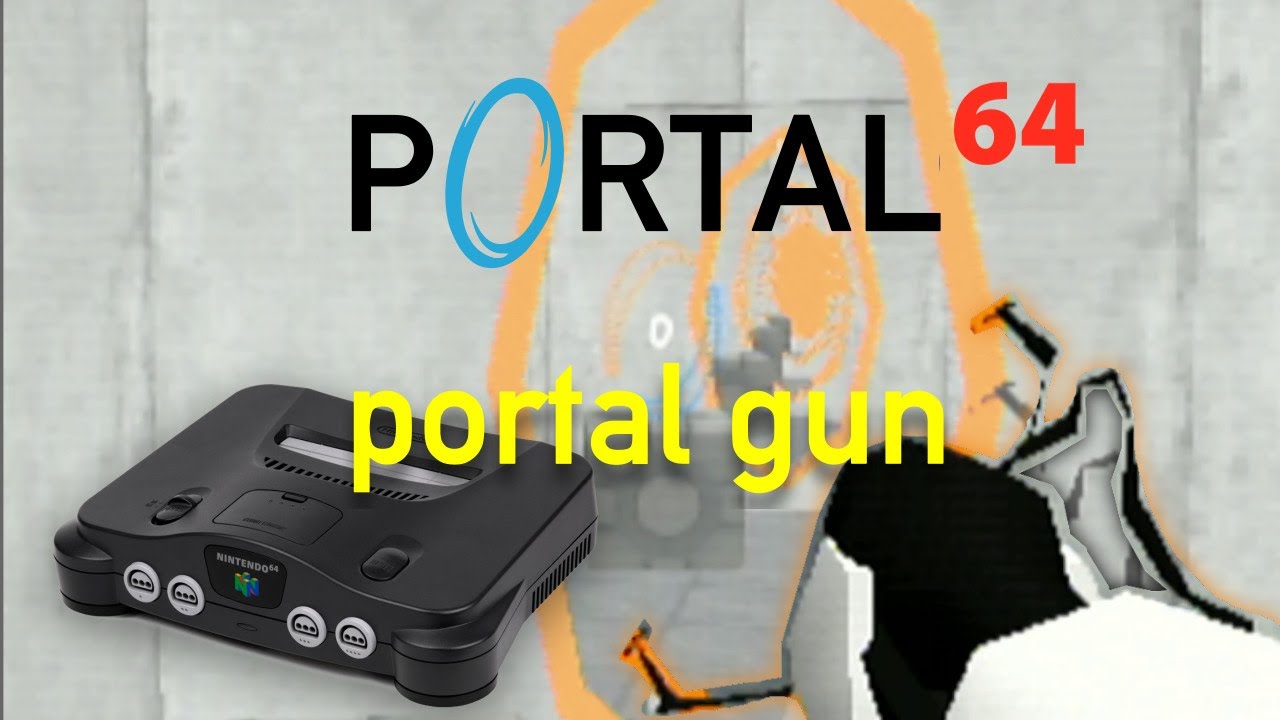
Portal running on real N64 hardware.
In this update I got the portal gun working with recursive portal rendering. I also made some huge strides behind the scene on the game engine. You can download the latest version here.
https://github.com/lambertjamesd/portal64/releases/tag/v0.3
modern stone
waxen sorrel
anyone have a recommendation for maths books that are inspiring / ignite the fla...
Burn Math Class and Reinvent Mathematics for Yourself, by Jason Wilkes
gray gazelle
atomic hound
well i know this is math server, but you guys have book that teaches you all abo...
This is a channel about any book recommendations, physics included
 tight crag
modern stone
Burn Math Class and Reinvent Mathematics for Yourself, by Jason Wilkes
tight crag
modern stone
Burn Math Class and Reinvent Mathematics for Yourself, by Jason Wilkes
Is this book actually good?
waxen sorrel
ill check it out, thanks
modern stone
tight crag
Is this book actually good?
It depends on what are your expectations
quick hornet
 broken meadow
whsat**
broken meadow
whsat**
ima be honest i meant to post that in #chill
and didnt notice it was in #book-recommendations till now
 gusty smelt
no its not fine! what an unforgivable mistake
 coarse frost

 hasty marsh
Hey, anyone know of a book like N piskunov differential and integral calculus? (or even better if someone knows if that thing has any solution manual)
 tepid prairie
hasty marsh
Hey, anyone know of a book like N piskunov differential and integral calculus? (...
tepid prairie
hasty marsh
Hey, anyone know of a book like N piskunov differential and integral calculus? (...
Consider the book Ordinary Differential Equations by Morris Tenenbaum. The books are written at a similar time and cover many of the same things in surprisingly similar ways (can even use both).
Solutions can be found for this entire book too.
hasty marsh
tepid prairie
Consider the book Ordinary Differential Equations by Morris Tenenbaum. The books...
Let me check it out!
tepid prairie
hasty marsh
Let me check it out!
When I found Piskunov's book I literally compared the two and they use the same terminology and everything.
hasty marsh
tepid prairie
Consider the book Ordinary Differential Equations by Morris Tenenbaum. The books...
This book does not have Partial differentiations? 
I am kinda done with ODE's already. Needed something along the lines of PDE's and using maxima and minima and taylor series. And then geometrical integration (double integrals and all). Piskunov have these a lot
and honestly, questions in piskunov are so good (it's not like evrything is hard, but it keeps rewarding you with easy questions so the motivation is always up)
such an intuitive way to space questions imho
tepid prairie
hasty marsh
I am kinda done with ODE's already. Needed something along the lines of PDE's an...
I see. I'm not sure the book was/is popular enough to have many solutions. Chegg doesn't seem to have them. I'm not sure what to recommend now. :'(
hasty marsh
tepid prairie
I see. I'm not sure the book was/is popular enough to have many solutions. Chegg...
Well you know any book which has lots of limits problems? (of indeterminate forms)
tepid prairie
Advanced Calculus by David V. Widder.
hasty marsh
tepid prairie
Advanced Calculus by David V. Widder.
Alrightyy
hasty marsh
tepid prairie
Advanced Calculus by David V. Widder.
This is exactly what I need!
It has PDE and it's applications and multiple integrals and everything!
tepid prairie
hasty marsh
It has PDE and it's applications and multiple integrals and everything!
I love this book. It's currently what I'm studying. I hope you enjoy it as much as I do. :)
hasty marsh
waiit, it there a solution manual thing for this? 
I don't wanna spend 30 mins finding an answer
tepid prairie
No, sadly. This book is probably the least talked about book I've personally ever seen.
Answers are in the back though. Sometimes the questions are linked so the answer is actually there but it's almost like a two part question.
hasty marsh
tepid prairie
Answers are in the back though. Sometimes the questions are linked so the answer...
tepid prairie
I'd imagine you only need the worked answers in the material to do the problems though.
hasty marsh
tepid prairie
I'd imagine you only need the worked answers in the material to do the problems ...
Well I'll just ask you if I get stuck upon a problem for a particularly long time
apart from that, I guess it's good to spend a few 10 mins on a question
tepid prairie
I'll try not to discuss too much further here but I won't be able to do those problems as I'm on chapter 5.
gray gazelle
abstract algebra book in the same style as rudin.
gray gazelle
maybe lang
 proven wedge
any recommendations for an absolute beginner in trigonometry?
gray gazelle
khan academy.
 hollow drum
What should I read to learn about any of these topics tropical geometry, enumerative geometry, Schubert calculus, and intersection theory.
I have seen those terms and suspect they are vaguely related but not sure how. I'd like recommendations of historical papers or problems or textbooks. I apologize that this is such an open ended question.
If there happened to be a casual read on any of these topics I would also appreciate that
manic cairn
gray gazelle
abstract algebra book in the same style as rudin.
i love lang
but hate rudin
maybe it's just because I don't like analysis
gray gazelle
there are no prerequisits for learning LA right?
manic cairn
hollow drum
What should I read to learn about any of these topics tropical geometry, enumera...
i've only heard of intersection theory, and if you want to learn that, I recommend you read Lang (Algebra, Undergraduate Algebra), Munkres (Topology), Mac Lane (Categories for the Working Mathematician), Hartshorne (Algebraic Geometry), and Fulton (Intersection Theory). You'll also probably want to pick up matsumura or eisenbud for commutative algebra if you didn't read all of Lang's algebra Part I, II, and IV.
actually, pick up matsumura either way
manic cairn
gray gazelle
there are no prerequisits for learning LA right?
depends on what type of linear algebra you're doing
gray gazelle
lang
manic cairn
gray gazelle
lang
lang's introduction to linear algebra, or lang linear algebra
gray gazelle
just LA
manic cairn
neither really have prerequisites, although you'll want some experience writing proofs for LA.
gray gazelle
and where would I learn that?
manic cairn
but that just comes with time
manic cairn
gray gazelle
and where would I learn that?
just by doing la
or abstract algebra, or analysis, or logic
gray gazelle
what is the difference between thos 2 books
manic cairn
gray gazelle
what is the difference between thos 2 books
one doesn't have any proofs, and is targeted towards a more general audience
the other one emphasizes linear maps, jordan normal form, etc.
gray gazelle
what would be the equivlant of first year LA
manic cairn
gray gazelle
what would be the equivlant of first year LA
either, but more common is "introduction to linear algebra"
gray gazelle
so should i read the entire book (LA)
manic cairn
i would recommend reading the entire book
gray gazelle
Ok thanks
gray gazelle
have you ever read a book not by lang?
gusty smelt
lang is actually a horrible writer lol
gray gazelle
gray gazelle
have you ever read a book not by lang?
I have never ever read a book
gray gazelle
gusty smelt
lang is actually a horrible writer lol
how come?
gusty smelt
just read anything he has written, its not written with pedagogy in mind
i read his famous algebra book for some exposition and his algebraic number theory book
fluid skiff
Do math grad books are written with pedagogy in mind?
gusty smelt
depends on the book.
i mean its written with pedagogy thats appropriate for grad students in mind
ig
 queen beacon
great books to learn linear algebra?
brittle breach
queen beacon
great books to learn linear algebra?
queen beacon
brittle breach
https://www.math.ubc.ca/~carrell/NB.pdf
ty
brittle breach
np
 warm glen
gusty smelt
just read anything he has written, its not written with pedagogy in mind
warm glen
gusty smelt
just read anything he has written, its not written with pedagogy in mind
im reading his linear algebra book rn actually (the proof based one) and it's very easy to understand, and i barely have any background in computational linear algebra
so at the very least i wouldn't discount that book of his
 glad arch
Can someone give me a recommendation for an analysis book?
brittle breach
glad arch
Can someone give me a recommendation for an analysis book?
Rudin PMA (baby rudin)
Abbot Understanding Analysis
I personally prefer rudin
glad arch
brittle breach
Rudin PMA (baby rudin)
oh okay thx c:
heady ember
glad arch
Can someone give me a recommendation for an analysis book?
You can try rudin, but its renowned for its difficulty as well. So you might want to try Apostol also, then see which you like best
junior mantle
is geometry for dummies good if i want to learn geometry?
im most interested in the theory
but i wanna be able to solve some problems
 grand osprey
Does anybody have any book recommendations on an introduction to hyperbolic geometry/spaces; and more specifically on non Euclidean crystallographic groups of the hyperbolic plane?
 livid ermine
What is the difference between Miranda Algebraic Curves and Riemann Surfaces and Fulton's Algebraic Curves. Is there a lot of overlap between the two books?
I know one covers Algebraic Curves from a complex analytic pov.
But does this mean if I read Fulton's book, Miranda's will be less interesting afterwards?
The Miranda book seems to go more in depth. Covering sheaves, more complex analytic stuff and diff geo. However. I really like the way Fulton is organised with very short sections of text followed by 5-10 problems.
 gaunt bobcat
A good book for “proofs and logic”?
compact crypt
gaunt bobcat
A good book for “proofs and logic”?
book on proof

Book of Proof
I found this book to be more consistent/organized than how to prove it by velleman
compact crypt
does anyone have recommendation on topology book with solutions?
any book would do because I am looking for problems to test myself
 south valve
compact crypt
does anyone have recommendation on topology book with solutions?
south valve
compact crypt
does anyone have recommendation on topology book with solutions?
The one with steve warner is pretty good
I liked it
compact crypt

Topology for Beginners: A Rigorous Introduction to Set Theory, Topological Spaces, Continuity, Separation, Metrizability, Compactness, Connectedness, Function Spaces, and Algebraic Topology
this?
 karmic thorn
Any recommendations (preferably an expository article, lecture notes, or a compact textbook) that roughly talks about propositional logic, boolean algebras and Stone representation theorem?
compact crypt
are there any set theory textbooks
with bare minimum content that is necessary for studying other subjects?
rather than covering all the way through axiomatic set theory?
runic hatch
compact crypt
with bare minimum content that is necessary for studying other subjects?
Naive Set Theory by Halmos should suffice
gaunt bobcat
modern stone
https://www.people.vcu.edu/~rhammack/BookOfProof/Main.pdf
Thx
compact crypt
runic hatch
Naive Set Theory by Halmos should suffice
how long do you expect to take me to cove rit
I wouldn't want to spend a lot of time for it
atomic hound
two books, one for calc2 and other for cal3
brittle breach
compact crypt
with bare minimum content that is necessary for studying other subjects?
book of proofs or
how to prove it
compact crypt
hmm is the content there really enough?
stray veldt
to do mathematics? yes
there is an even shorter intro (written by me) pinned in #proofs-and-logic and i am of the opinion that this suffices to do more stuff (given a sufficiently beginner friendly book)
 lusty perch
Cheaper alternative to Basic Mathematics by Serge Lang? Or just generally a alternative?
ping when replying
manic cairn
gray gazelle
have you ever read a book not by lang?
munkres and axler
oh yeah, and mendelson's logic book
 main void
any nice books on network flows/integer programming? I know about bertsimas & tsitsikilis but would really like another reference
bonus points if its more of a “mathyish” book, ie. with a greater focus on theory rather than concrete applications
 unreal elm
I dunno if its any good but recently got this pop math book where a mathematician talks about his work on the langlands project

 sudden kindle

I discuss H.M. Edwards' Galois Theory, a fantastic book that I recommend for anyone who wants to get started in the subject of abstract algebra and Galois theory, the algebraic theory of solving polynomial equations. I give a guide to the contents of the book, and explain what makes this book so radically different from and superior to the most ...
Very interesting nonstandard reccomendation
sudden kindle
Harold M Edward's Galois Theory not just as a recommendation for Galois Theory, but for an introduction to Abstract Algebra in general
subtle mango
this would ideally be followed with a more rigorous aa book, i assume?
sudden kindle
Yeah , thats what he says
subtle mango
kk
 fading goblet
Hello, everyone.
Is there anyone here that have a fair amount of experience in dealing with Fermi-Pasta-Ulam-Tsingou problem? If so, could you recommend me resources for starting studying these phenomena?
Most of my background are Dynamical Systems and Hamiltonian Systems from perspectives of mathematics. If there is any physics prerequisites that I need studied first, feel free to tell me..
slow roost
that galois theory book looks super interesting, thanks for the rec nyamin
livid ermine
What is the difference between Miranda Algebraic Curves and Riemann Surfaces and Fulton's Algebraic Curves. Is there a lot of overlap between the two books?I know one covers Algebraic Curves from a complex analytic pov.But does this mean if I read Fulton's book, Miranda's will be less interesting afterwards?The Miranda book seems to go more in depth. Covering sheaves, more complex analytic stuff and diff geo. However. I really like the way Fulton is organised with very short sections of text followed by 5-10 problems.
gray gazelle
Hey , i am 20 year old and i wanna start algebra from scratch . I researched some book ( according to my budget ) and i finalized these two book from which i wanna pick one .
-
Elementary Algebra For Schools


- Algebra For Beginners


From these two books which should i choose , it will be great help 👍🏻
LINKS : 1) Elementary Algebra For Schools = https://www.amazon.in/Elementary-Algebra-Schools-H-S-Hall/dp/9350943255/ref=sr_1_1?qid=1652854284&refinements=p_27%3AS.R.+Knight&s=books&sr=1-1

The Classic Texts Series is only one of its kind selections of classic pieces that started off as a bestseller and continues to be the same today as well. These classic texts have been designed to work as elementary textbooks, which help the students in building the concepts to prepare for variou...

The ‘Classic Texts Series’ is the only of its kind selection of classic pieces of work that started off as best seller and continues to be the bestseller even today. These classic texts have been designed so as to work as elementary textbooks which play a crucial role in building the concepts fro...
help me please !
modern stone
gray gazelle
Hey , i am 20 year old and i wanna start algebra from scratch . I researched som...
You can also check Khan Academy if you haven’t done already. It has videos and exercises from pre-algebra to calculus and it’s all free
 vivid bridge
https://artofproblemsolving.com/community/c5h2847328p25234767 An Integration Article
gray gazelle
Can someone recommend a book?
fervent lava
Water Is wet by Penny Pollock
gray gazelle
Thanks
 vapid harbor
Has anyone read "Basic Mathematics" by Serge Lang, and would you recommend it?
 obtuse prairie

Freenode Math Wiki
Incomplete list of books that people on ##math have bought, sold, tried, read, taught, suffered through and would feel like suggesting.
If you are a self-learner and are looking for a few books to get started, the first section contains exclusively such books.
Other useful such lists on the web: [1] [2] [3]
and for physics: [4]
gray gazelle
vapid harbor
Has anyone read "Basic Mathematics" by Serge Lang, and would you recommend it?
its a great pre-calculus text-- in the literal sense of the stuff you should know before studying calculus (not the strange assortments of topics in a standard american precalculus course). It hints at the axiomatic way of thinking about math which is excellent imo. Strongly recommended if you are interested in eventually studying math more seriously, lays a great foundation for a more mature studying of single variable calculus.
can double as an intro to proofs book imo if you really get everything out of it
only complaint is that it doesnt treat topics like injectivity surjectivity etc
but that can easily be covered when studying calc
vapid harbor
alright, thank you! I'm currently in high school at the moment and I really enjoy math so I'm just trying to pursue it more and find some good resources. I was using Khan academy for a while but it just feels odd learning with it sometimes.
 frosty carbon
Anyone have a recommendation for graph theory and probability? My discrete math course kicked my butt in those topics
gray gazelle
killer textbook
 sage python
 gray gazelle
i self studied this, all 800 pages and I was able to pass 4th grade!
this looks very hard

owl is scary compared to racoon
yk
gray gazelle
gray gazelle
Hey , i am 20 year old and i wanna start algebra from scratch . I researched som...
i might try out the aops prealgebra or introductory algebra textbooks if i were you
let me try to pull up the table of contens

books look like these btw

even though it says prealgebra or intro algebra these books go very in depth into certain topics which helps you gain a solid intuition for what you are doing
Intro Algebra table of contents
Prealgebra table of contents
i would lean more towards the intro to algebra book as i don't think they go too fast
the aops (art of problem solving) books and website as a whole are very well known for making a lot of high school mathematicians truly excellent.
like this isn't necessary but just to show how in depth the aops books are this is from the table of contents of the intermediate probability book which has graph theory generating functions, and all this crazy stuff which is very advanced but these books are able to explain it in such a seemless way where too many ideas are not thrown at you at once
 gray gazelle
i might try out the aops prealgebra or introductory algebra textbooks if i were ...
gray gazelle
gray gazelle
i might try out the aops prealgebra or introductory algebra textbooks if i were ...
thanks for telling , gonna look at both books! 👍🏻
gray gazelle
Is Calculus by Apostol(volume I) good for beginners?
gray gazelle
gray gazelle
?
mit open courseware has past MIT lectures including calculus lectures that are very thorough and are likely a better subsitute than a textbook
gray gazelle
gray gazelle
mit open courseware has past MIT lectures including calculus lectures that are ...
Where can I get them?
gray gazelle
gray gazelle
Where can I get them?
just search her up
her
*here
MIT OpenCourseWare is a web-based publication of virtually all MIT course content. OCW is open and available to the world and is a permanent MIT activity
here is one for multi as well
MIT OpenCourseWare is a web-based publication of virtually all MIT course content. OCW is open and available to the world and is a permanent MIT activity
@gray gazellei dont agree
they are hs level at best
gray gazelle
gray gazelle
they are hs level at best
its a good intro tho
u can go deeper if u want '
for calculus ? yes
for analysis ? no
oh they asked for an analysis textbook?
shoot
they asked if it aposotl's calculus is good
they asked for a beginers book no?
runic hatch
Apostol’s calc series seems pretty decent
It’s like intro analysis (similar to spivak)
gray gazelle
gray gazelle
just search her up
thx
 waxen badge
Could anybody recommend any entry level books/material for any of these subjects? (doesn't need to cover all)
Starting my CompSci degree after the summer so I'd like to get a little head start because my math isn't the best

 mild cedar
I have been learning calculus 1 recently and I have learned linear algebra long time ago.. As a highschooler, I can't use pdf books cuz, I can't take my phone or pc to school. So I want a hardcopy of books. I was learning calculus 1 from the "calculus for dummies" book printing all pages with my printer. But I am not sure if I can afford doing this for every book I want to read. So, I want a book that comprehensively include necessary math's concepts for AI and machine learning. Is this book worth it?
 gray gazelle
mild cedar
I have been learning calculus 1 recently and I have learned linear algebra long ...
gray gazelle
mild cedar
I have been learning calculus 1 recently and I have learned linear algebra long ...
after a brief look through the textbook you should certainly have studied calc 1,2,3 and linear algebra before reading it. probably probability theory and some discrete math course as well
gray gazelle
waxen badge
Could anybody recommend any entry level books/material for any of these subjects...
take a discrete math class at a comm college?
mild cedar
gray gazelle
after a brief look through the textbook you should certainly have studied calc 1...
Hmm... I thought the book has included linear algebra and probability.
waxen badge
gray gazelle
take a discrete math class at a comm college?
I'm in the UK we don't have that choice sadly
 vapid harbor
I'm considering getting a few books from The art of problem solving but I'm not sure where to start. Considering their prices and whatnot I'm not sure. I would say I have a pretty good understanding of all the core math concepts but I'm not sure how they structure the content. I'm currently in highschool so should I start from intro to pre algebra or would I be fine with jumping into something like Vol.1 The Basics?
gray gazelle
vapid harbor
I'm considering getting a few books from The art of problem solving but I'm not ...
what are your goals? if u are trying to go the comp math route what have you accomplished.
vapid harbor
Well mainly just to study more math, I find it enjoyable and also because of computer science and how it's kind of limiting me not knowing a lot of mathematical topics.
lime sapphire
waxen badge
Could anybody recommend any entry level books/material for any of these subjects...
A concise introduction to pure mathetics by Liebeck looks good for students just finishing A levels
waxen badge
lime sapphire
A concise introduction to pure mathetics by Liebeck looks good for students just...
I didn't take maths at A Level, I do have basic knowledge of differentiation and integration though. Would you still recommend?
lime sapphire
Yea of course
Is your algebra up to scratch?
If so you should be fine with the book
waxen badge
I think my algebra is pretty good and I can always refresh if not, thank you I'll give it a read
gray gazelle
vapid harbor
Well mainly just to study more math, I find it enjoyable and also because of com...
oh my bad i kinda just assume people who mention aops are from comp math 😅 . Vol 1 is more geared towards competiiton math specficalyl and has practice problems from comp math.
maybe try intermediate alg, it may be a bit of a strech the intermediate books are somewhat harrd
i think the most interesting book for a cs person would be intermediate counting and prob bc it starts to get into recursion and stuff like that
oh wait you haven't done prealg yet
i don't think that taking aops prealg is a necessity and i will recomend intro alg
its not that diffiicult and goes in depth
vapid harbor
gray gazelle
oh my bad i kinda just assume people who mention aops are from comp math 😅 . Vo...
I should have mentioned it, but I've already taken trig. Though in our school we haven't learned things such as Series and Summations yet so its quite odd. I was mainly just looking into the Vol. 1 book because it has a ton of topics, not sure how much more condensed the information would be vs other books that might explain it better such as their pre calc book or the intermediate algebra.
gray gazelle
vapid harbor
I should have mentioned it, but I've already taken trig. Though in our school we...
i mean
aops vol 1 is very broad
and is geared more towards competition techniques
do you want to learn algebra?
you talked about the prealg book
hmm
i think volume 1 can do the trick for you
but this may also be a good intro to math competitions
it sets you up for sucsess
vapid harbor
you mentioned earlier that people asking about aops are usally comp math. Are the other books also pushing towards competition in a slow manner or is it just for general learning?
Im just going to read the Intro to Algebra one I think, that way I can have a more solid foundation and come back to the Vol.1 eventually
Thanks Gabreil
gray gazelle
vapid harbor
Im just going to read the Intro to Algebra one I think, that way I can have a mo...
👍
gray gazelle
vapid harbor
you mentioned earlier that people asking about aops are usally comp math. Are th...
it pushes towards competition stuff in a slow manner
but i think you should have general intuition in the topics that lead up to those results
comp math is more about using and weaponizing the tools and thereoms at your disposal rather than deriving and understanding them
mad respect if u decide to do intermediate alg
it will definitely be possible but you may have to put a lot of effort that may not be worth it
vapid harbor
I might jump straight to the intermediate one to be honest, the only thing I'm worried about missing in the intro to algebra book is the self-symmetry and the information towards the end, but luckily most, if not all of that is included in the intermediate
gray gazelle
vapid harbor
I might jump straight to the intermediate one to be honest, the only thing I'm w...
wdym self symetry
vapid harbor
Ive never read any of the art of problem solving books so im not sure what the content will look like
1 sec
 vapid harbor
sure
gray gazelle
one second
log (x+4) - log(x) = log(x+2)
this is a harder problem
but if u can do this u are def ready
if you don't know log propertie don't worry
u will learn it in intermediate alg
vapid harbor
alright, ill try it out
vapid harbor
yeah
vapid harbor
Its just one of the properties, I'm not entirely sure what the reason behind it is besides making a proof or something
gray gazelle
like i wouldn't say i remmeber a lot of formulas but intuition with these things definitely saves a lot of effort
ok
so basically
you know that 10^(log(x)) = x right
vapid harbor
yup
vapid harbor
xy
gray gazelle
ok
vapid harbor
or would it be x+y?
gray gazelle
one second
10^(log(x)+log(y)) = 10^log(x) * 10^log(y)
this is by breaking up the exponents
logx+logy=logxy
gray gazelle
gray gazelle
logx+logy=logxy
i'm trying to explain to him/her/them why it works
vapid harbor
that makes sense\
then the base of the log is canceled out and you are left with x*y
gray gazelle
yep
and you can trace back your steps and basically you get what you want which is logx+logy=logxy
so my verdict as of now is that you can prob do the intermediate alg book but you would get so much more if you understand the derivations/proofs of the things you are doing. It gives a much much deeper understanding
vapid harbor
how well do the books explain them? Do they show proofs etc or something of the sort like you did? Or just descriptions
gray gazelle
vapid harbor
how well do the books explain them? Do they show proofs etc or something of the ...
yep they do things the way i like em
they don't just give you a formula to remember they give you a proof
and they make you understand that
like i absolutely did not take effort memorizing that "proof"
but it just comes naturally to you
i think those books really helps you conceptualize these ideas and help you use them effectively
this in turn makes more advanced topics and harder problems much much easier imo
vapid harbor
alright thanks Gabriel. You helped me a ton, I guess I'll see how it goes when I start reading it
gray gazelle
ok
i just wanted to show you the sharp contrast of being able to think on your feet that you will learn versus remembering formulas and grinding uninspired practice problems (which thankfully you will not see in this book)
this book does increase in difficulty near the second hald
in the first half i would say that some of the stuff (50%) is standard stuff you will see in a hard high school class
then there is def a difficulty curve that you will have to get over

lol was just looking at this
and they have a section called when formulas fail
but these books are amazing and really thrusts you into truly interesting topics imo
vapid harbor
yeah I think its really interesting, things like telescoping etc.
gray gazelle
here is a link to questions that you will learn how to solve by reading the book
and if you are able to survive this book i highly recomend checking math competitions out
vapid harbor
alright, will do. Sounds pretty fun actually
gray gazelle
no problem
good luck with everything
there is also a class for this book on the aops website
that costs a bit of money + its online and is easy to get distracted
but it is still a pheonomenal book
vapid harbor
yeah I like paper books more mainly just because I can travel with them and not get distracted etc. Also taking them to school etc
 warped kayak
If I wanted to get a rigorous understanding of Gödel's Incompleteness theorem, what books/math topics would be a prerequisite?
mild cedar
I have been learning calculus 1 recently and I have learned linear algebra long time ago.. As a highschooler, I can't use pdf books cuz, I can't take my phone or pc to school. So I want a hardcopy of books. I was learning calculus 1 from the "calculus for dummies" book printing all pages with my printer. But I am not sure if I can afford doing this for every book I want to read. So, I want a book that comprehensively include the necessary math's concepts for AI and machine learning. Is this book worth it?
 quick hornet
you might have better luck asking in a place more catered to CS; i'm not sure many mathematics students would have read a book targeted at programmers
(and my impression is that "the necessary math concepts" depends heavily on what you want to do/how far you want to go with the theory)
mild cedar
quick hornet
(and my impression is that "the necessary math concepts" depends heavily on what...
I want to go with the theory but I will also do practical ml sometimes
 hollow lark
Hey guys I want to study the philosophical and conceptual side of mathematics, What are the best books in that regard?
quick hornet
a cute intro text to philosophy of math is shapiro's thinking about mathematics
it's more like a particularly in-depth survey than a proper source on anything it talks about
but it's good
 quick hornet
unfamiliar with it.
hollow lark
well it's the first thing that popped up on google so i thought it was quite famous lol
hasty turret
Well, It's Springer. So probably good
quick hornet
seems less like a philosophical text and more like a survey text of various fields intended to build mathematical maturity?
but im not entirely sure
hollow lark
Probably introductions to concepts?

 quick hornet
kinda reminds me of the princeton companion
hollow lark
That's what I'm reading currently
but it is so broad however I can just search specific books for specific subjects for detailed In-depth study
compact crypt
All needed notions are developed within the book: with the exception of fundamentals which are presented in introductory lectures, no other knowledge is assumed Provides a more in-depth introduction to the subject than other existing books in this area Over 400 exercises including hints for solut...
does anybody here have experience with this book?
sudden kindle
Looks good
compact crypt
stray veldt
i used this and liked it a lot
how difficult is this book in your opinion? like is it approachable for undergrads?
stray veldt
yes, i used it in undergrad
standard intro to complex analysis (after 2 semesters of real analysis)
tbf we covered roughly the first 4 chapters
compact crypt
oh okay
stray veldt
sequences and series, metric space stuff, topology of R, continuity and differentiability, riemann integral, differentiability in higher dimensions, implicit function theorem
compact crypt
would you recommend it as a self study book?
stray veldt
maybe
i took a class roughly based on this and then used it for review a year or so later
it worked well for that
compact crypt
stray veldt
it worked well for that
one last question: how would you rank the level of difficulty of the exercises/problems
stray veldt
i dont think i have a useful answer to that
its the only complex analysis book i know, but they were easier than the ones in my class
but that might just be because i had spent more time with the subject by then
compact crypt
oh okay
livid ermine
What is the difference between Miranda Algebraic Curves and Riemann Surfaces and Fulton's Algebraic Curves. Is there a lot of overlap between the two books?I know one covers Algebraic Curves from a complex analytic pov.But does this mean if I read Fulton's book, Miranda's will be less interesting afterwards?The Miranda book seems to go more in depth. Covering sheaves, more complex analytic stuff and diff geo. However. I really like the way Fulton is organised with very short sections of text followed by 5-10 problems.
marble solar
I don't think that it's one or the other yoohoo
I really liked Fulton's text, but I only got up to the proof of bezout's
I didn't take the class that was based on Miranda's book during my grad program because it conflicted with other commitments
but many of my friends took both, and they said the two point of views were helpful
slow roost
hollow lark
Hey guys I want to study the philosophical and conceptual side of mathematics, W...
Mathematics, Form and Function is a survey of the whole of mathematics, including its origins and deep structure, by the American mathematician Saunders Mac Lane.
sage python
@livid ermine Not a lot of overlap iirc. Fulton's more like
Mostly an intro to affine/projective varieties over an algebraically closed field
The main content that's specific to curves is a bit on intersection multiplicity, Bezout's theorem, resolution of singularities, and some chit chat about divisors
Miranda goes more into the analysis, talks about cohomology, and does a lot more with divisors/Riemann-Roch
hollow lark
slow roost
https://en.m.wikipedia.org/wiki/Mathematics,_Form_and_Function#:~:text=Mathemati...
this is a buried treasure thank you very much
 drifting elm
warped kayak
If I wanted to get a rigorous understanding of Gödel's Incompleteness theorem, w...
drifting elm
warped kayak
If I wanted to get a rigorous understanding of Gödel's Incompleteness theorem, w...
a perfect place to start. https://www.logicmatters.net/resources/pdfs/LogicStudyGuide.pdf
godels incompleteness theorem simply states that any system of axioms will be either inconsistent (some paradox can be made in that system) or it is incomplete (there will exist some true statement for which a proof can not exist).
but it is also important to know that godel did much more than the incompleteness theorem.

Axiomatic Set Theory (Dover Books on Mathematics)
which is basically a book about zermelo frankel with the axiom of choice. ZF or ZFC as it is named. This is the most widely used system of axioms today in mathematics. The book is actually very difficult to understand if it is your only book on the subject. There are better books on first order logic. I think it runs through things too fast. not enough examples. all the references in the book you need to pull from other sources.
subtle mango
goldrei set theory is also a good text
drifting elm
I happen to have this axiomatic set theory with me at all times. I'm finally at the level where I can understand the book after going through 10 other books to prepare.
warped kayak
@drifting elm and @subtle mango thank you so much for your thoughts! I truly appreciate it!
mild cedar
Is there any book you recommend for calculus. I want the book to have calculus 1, 2 and 3 as well as some pre-requisite chatpers for calculus 3.
Calculus 2 and 3 only also works for me
hasty marsh
mild cedar
Is there any book you recommend for calculus. I want the book to have calculus 1...
N Piskunov differential and integral calculus
for pure mathematics btw
mild cedar
ohok. thank you let me have a look at it
mild cedar
hasty marsh
for pure mathematics btw
Oh. This book has all pre-requisites lol
Is there just a calculus book?
By pre-requisites I mean, forexample for calculus 3, just about vectors and matrices...
hasty marsh
mild cedar
Is there just a calculus book?
Calculus by Spivak
hasty marsh
mild cedar
Oh. This book has all pre-requisites lol
You can just skip the pre-requisites really for the starting things.
mild cedar
hasty marsh
You can just skip the pre-requisites really for the starting things.
Yeah. I actually want a hardcopy book.. and with all those useless pre-requisites, it will be expensive for me.
hasty marsh
mild cedar
Yeah. I actually want a hardcopy book.. and with all those useless pre-requisite...
well there is calculus by spivak which will be more expensive than N piskunov vol 1 and 2 combined
mild cedar
hmm
mild cedar
hasty marsh
well there is calculus by spivak which will be more expensive than N piskunov vo...
I am actually trying to grind through calculus and all other machine learning pre-requisites. I think, I better start with practical machine learning and I will learn the math on my way. Since, I am just a grade 10 student, I will have a lot of time in the future.
hasty marsh
mild cedar
I am actually trying to grind through calculus and all other machine learning pr...
You definitely don't need calculus textbooks for that. Try going over some basic calculus course and that should be about it.
Machine learning does not really need much maths at all to be honest. (personal experience on OpenCV)
mild cedar
hasty marsh
You definitely don't need calculus textbooks for that. Try going over some basic...
I am already getting done with the calculus for dummies book.. but I feel lost now. So, I will stop it 😅
hasty marsh
Yeah, that should be about it. If there is something you don't understand, you can ask in help or wherever. You don't need that much calc to get started in machine learning.
mild cedar
hasty marsh
Machine learning does not really need much maths at all to be honest. (personal ...
Yeah. I did train some models in summer. I just wanted to learn the math cuz, I like to go low level most of the time.
mild cedar
hasty marsh
Yeah, that should be about it. If there is something you don't understand, you c...
I am just realizing that these days. Thanks anyway 👍
 misty current
Any book recommendations to develop good intuition of the mathematics behind econometrics?
Preferably grad level + prerequisite to see if I am at the appropriate level
 west bramble
Ayo
I need book recommendations to my friend abt sequences
arithmetic/geometric progressions/ sequences in general/ limits/ sums/recurrence relations/series
heady ember
Spivak's Calculus for maximum pain and suffering
 mossy portal
are there any prerequisites for getting into multivariable calculus?(except real analysis) and if so which books would u recommend for a highschool student…☺️
 cursive gust
For the spanish speaking people here, one of baldor's books. They are more like testbooks but yeah same thing. They range from arithmetic to geometry and trigonometry, basically precalculus.
sorry if bad english
I haven't invested enough time into multivariable calculus, sorry I couldn't help.
mossy portal
cursive gust
I haven't invested enough time into multivariable calculus, sorry I couldn't hel...
no worries!
coarse frost
mossy portal
are there any prerequisites for getting into multivariable calculus?(except real...
u dont need real analysis for multivariate
mossy portal
well ive done analysis and thats abt it
mossy portal
ill try them out
coarse frost
i was also recced this book

 coarse frost
 hallow oriole
my final is on monday 👀
coarse frost
oof