#book-recommendations
1 messages · Page 269 of 1
 restive falcon
 hollow peak
I wouldn't call real analysis "riddled with pathology", that's kind of the point
 gray gazelle
thats just cuz complex analysis is trivial
 foggy relic

restive falcon
gray gazelle
thats just cuz complex analysis is trivial
go on
prove the riemann hypothesis
gray gazelle
I know this isn't a physics server but can anybody recommend a good physics resource that'll give me a good general overview/knowledge of physics?
 severe rune
Halliday & Resnick - Fundamentals of Physics is pretty good
gray gazelle
severe rune
Halliday & Resnick - Fundamentals of Physics is pretty good
awesome, ill note that down, thanks
 thorn canyon
gray gazelle
I know this isn't a physics server but can anybody recommend a good physics reso...
thorn canyon
gray gazelle
I know this isn't a physics server but can anybody recommend a good physics reso...
University physics - freedmen is great too
gray gazelle
thorn canyon
University physics - freedmen is great too
great, thanks. will note that down too.
thorn canyon
:)
gray gazelle
☺️
 pale scarab
severe rune
Halliday & Resnick - Fundamentals of Physics is pretty good
pale scarab
severe rune
Halliday & Resnick - Fundamentals of Physics is pretty good
The 5th edition in particular has really good problems compared to the newer ones.
gray gazelle
 analog horizon
any good probability theory books
analog horizon
any good probability theory books
Resnick, A probability path
analog horizon
gray gazelle
Resnick, A probability path
is that book rigourous enough?
gray gazelle
yeah
 inner token
Any suggestions on complex analysis books?
analog horizon
inner token
Any suggestions on complex analysis books?
ahlfors
inner token
Thanks
analog horizon
or rudins complex analy booky
restive falcon
inner token
Any suggestions on complex analysis books?
see pins
inner token
Thanks
gray gazelle
you re welcome
gray gazelle
is there any good math books for year 8/ grade 7 I’m tryna revise to get a higher set in math
 cyan prism
cambridge textbooks?
idk any other textbooks
lol
i mean u could also review class notes
any good number theory undergraduate books
i know a little number theory from maths olympiad books and problems but idk how much overlap there is with undergraduate nt
 brittle breach
cyan prism
any good number theory undergraduate books
brittle breach
cyan prism
any good number theory undergraduate books
Hardy and Wright introduction to the theory of numbers
cyan prism
thanks
 sudden kayak
Hello, do guys have a book recommendation for mathematical proof. I'm not looking for a textbook type of book but something that is fun to read yet full of information.
 karmic thorn
sudden kayak
Hello, do guys have a book recommendation for mathematical proof. I'm not lookin...
karmic thorn
sudden kayak
Hello, do guys have a book recommendation for mathematical proof. I'm not lookin...
Proof and the Art of Mathematics by Hamkins
 grand wren
Hi guys, Is it necessary to learn Calculus before Learning Analysis? I really wanna do Tao's Analysis but feel bummed that I would have to go through something like Apostol's Calculus prior to touching Tao's Analysis. I heard Analysis teaches Calc from scratch too.
sudden kayak
karmic thorn
*Proof and the Art of Mathematics* by Hamkins
Thanks! will definitely check it out.
karmic thorn
grand wren
Hi guys, Is it necessary to learn Calculus before Learning Analysis? I really wa...
If you have at least done some calculus before (computed limits, derivatives, integrals), you can start learning analysis from any introductory text. That said, Tao's Analysis may be suboptimal, I'll insist on something like Abott's Understanding Analysis instead.
 loud cradle
In theory, analysis is self-contained, but the motivation may be missing if you haven't already been exposed to calculus. Also, the focus is probably different. In calculus you learn how to differentiate specific functions using the chain rule, etc., and various techniques for integrating specific functions. You don't typically spend much if any time on this in analysis.
 gentle siren
any good number theory books?
brittle breach
grand wren
Hi guys, Is it necessary to learn Calculus before Learning Analysis? I really wa...
no it is not necessary.
and I second Abott's Understanding Analysis
he does go over many of the motivations
gray gazelle
gentle siren
any good number theory books?
theory of numbers
 sick wigeon
Any suggestions for rigorous numerical analysis books for a math undergrad? (Rigorous in the sense, contains formal proofs for all the algorithms etc)
Is the book by Kincaid and Cheney appropriate?
 slim peak
@glad prairie May probably know
sick wigeon
I just wanna start reading a bit of it to gauge whether i have any interest for it
Just to know whether i like applied math or not😂
restive falcon
grand wren
Hi guys, Is it necessary to learn Calculus before Learning Analysis? I really wa...
I'm a bit late but if you want something a bit more fast-paced than abbott, i recommend pugh (or rudin, but rudin is really just pugh without diagrams)
karmic thorn
sick wigeon
Any suggestions for rigorous numerical analysis books for a math undergrad? (Rig...
Burden's Numerical Analysis is nice.
 iron granite
any problem books in calculus/ sources of calc1/2 problems?
sick wigeon
karmic thorn
Burden's *Numerical Analysis* is nice.
Thanks! Will check it
thorn canyon
Just wanna confirm, gillbert strang would be good for linear algebra?
Basics
 keen blade
iron granite
any problem books in calculus/ sources of calc1/2 problems?
keen blade
iron granite
any problem books in calculus/ sources of calc1/2 problems?
Thomas' and Stewart's
iron granite
Already got thomas, the problems aren't that varied imo.
gray gazelle
baby rudin has exercises
iron granite
gray gazelle
baby rudin has exercises
Rudin's kinda fking overkill for calc 2, don't you think?
gray gazelle
no
gray gazelle
all of them
gray gazelle
Why is concrete Mathematics not considered a "true" discrete math book?
 fervent lava
gray gazelle
Why is concrete Mathematics not considered a "true" discrete math book?
fervent lava
gray gazelle
Why is concrete Mathematics not considered a "true" discrete math book?
Probably it doesn't have a propositional logic chapter/section that most discrete math books have.
 polar mango
Hey guys this is kind of a weird request but i have a trig book that is online provided by the school, is there anyway you know that i can download the book?
polar mango
yeah the book is has given access to me though a website
gray gazelle
what format
 rare sinew
Would you recommend Undegraduate Analysis by Serge Lang over Calculus by James Stewart?
restive falcon
rare sinew
Would you recommend Undegraduate Analysis by Serge Lang over Calculus by James S...
read principles of mathematical analysis by walter rudin
you'll enjoy it
 broken meadow
huh
 modern stone
For multivariable calc, is Shifrin a good choice?
fervent lava
@ gristbundle have said good things about it.
 slender maple
inner token
Any suggestions on complex analysis books?
slender maple
inner token
Any suggestions on complex analysis books?
I am a fan of gamelin
 sage python
Gamelin's the best beginner book I'd say
Also someone told me of a book which at a glance might actually be better than Baby Rudin tbh
gray gazelle
what book
sage python
Browder
 lime sapphire
Just waiting for all the rudin fans to come at you
sage python
Hey I'm a Rudin fan too lol
Except for maybe Browder and maybe Igor Kriz's book
I don't really think any analysis book thus far written holds a candle to Rudin
gray gazelle
Any books that really covers how to seutp " differential equaitons" and not just how to solve them?
I am at the point where I know how to solve differential equations but have no clue on how to set the equation up nor its meaning
My textbook and teacher are not helpful in this sense
gray gazelle
Essentially yes
slim peak
If yes, then check the Introduction of Viorel Barbu's book called "Differential equations"
gray gazelle
Will do so, thank you Anatole
 gray gazelle
slim peak
The Introduction contains a list of model from Physics
gray gazelle
slim peak
The Introduction contains a list of model from Physics
Sweet!!!!!!1
 sturdy sail
Are there introductory books/papers which cover the main tools and methods in the Langlands Program?
 fossil arch
@slim nacelle Sorry to ping, thought you might be able to respond
 split moon
automorphic normies
 slim nacelle
sturdy sail
Are there introductory books/papers which cover the main tools and methods in th...
slim nacelle
sturdy sail
Are there introductory books/papers which cover the main tools and methods in th...
yeah, this https://arxiv.org/pdf/1511.04265.pdf
this is a nice book survey of the Langlands program with a focus on the analytic parts of this
so it ends up covering automorphic Eisenstein series and you can get some idea of the spectral decomposition problem for L^2
- fun application of counting black hole solutions

there are other more specific texts for different parts of the Langlands program if you want to learn them in full generality but these can be hard to motivate and hard to read
I don't know of any book that does everything in one place, the thing I linked is the closest thing I know to that
also requires very little background, it starts with p-adic and adelic groups and then covers Tate's thesis
sturdy sail
I know Stephen Gelbart has a few books on the Langlands Program which are supposed to be introductory, have you ever read any of them?
Or at least know some opinions on his books?
sturdy sail
slim nacelle
yeah, this https://arxiv.org/pdf/1511.04265.pdf
Oooh
Ok, it looks really promising.
Thanks!
sage python
Lol string theory
gray gazelle
What is the Langlands Program?
 sudden kindle
Langlads program is a generalization of class field theory and modularity theorem
brittle breach
sudden kindle
Langlads program is a generalization of class field theory and modularity theore...
Class field theory?
Modularity theory?
sudden kindle
I don't know either of these things well enough to describe them but basically two L functions are equal
brittle breach
sudden kindle
I don't know either of these things well enough to describe them but basically t...
what is an L-series in general,
an L-function is the analytic continuation of that correct?
I should be running upon my first L-function soon, so this is cool
 hexed rain
I still don't really get double categories and topoi
Would really appreciate some very basic stuff for absolutely baby computer programmer nonmathematicians
 prime oak
whats a good text for multivariate calculus?
gray gazelle
advanced calculus by folland
 remote ginkgo
calculus on manifolds
 runic hatch
I used Analysis on manifolds by munkres
gray gazelle
Any good algorithms/data structures book written in c?
 gray jungle
prime oak
whats a good text for multivariate calculus?
gray jungle
prime oak
whats a good text for multivariate calculus?
langs ok
 dapper root
gray gazelle
advanced calculus by folland
dapper root
gray gazelle
advanced calculus by folland
WOOOOOO
 south salmon
Folland 
gray gazelle
I found that a lot of material covered in rosen's discrete math is also covered in knuth's concrete Mathematics, which one is better should I study?
gray gazelle
why not both
gray gazelle
does stein and shakarchi II require I?
 round falcon
@gray gazelle try cengage it's for advance maths
 frosty girder

gray gazelle
please
 rapid cairn
Would anyone have any recommendations about non Euclidean geometry or other theoretical mathematics?
:3
gray gazelle
Other theoretical mathematics?
gray gazelle
gray gazelle
Other theoretical mathematics?
A way I have to recommend that
Look at Springer books
You can find there books about any math field
rapid cairn
Ooo
gray gazelle
I already know formal logic, should I skip the sections that go over that?
gray gazelle
i feel like my algebraic skills are lacking - any book recommendations?
am in year 13 if that helps
round falcon
round falcon
And even Bernard childs higher algebra
Hall& knight have 3 algebra books higher algebra, elementary algebra, algebra for beginners
 grim narwhal
Does anyone know where i can find worksheets on high school math like kuta software?
foggy relic
@\moderators?
 steel viper
 hearty steppe
Hey max I started going thru Munkres not long ago
 marble solar
Are you enjoying it cat man?
hearty steppe
Yea I’m gona be doing more Casella and Berger today and tomorrow though
Might sneak a few sections of Munkres in if they’re short enough though. I’m almost done with chapter 1 soon
modern stone
What are some good topology books that balance rigour and intuition?
 flint forge
Hatcher
This is a rant i've given a number of times
but there is no topology textbook that is not rigorous
many people claim that hatcher or other books are "less rigorous" but this is largely nonsensical
marble solar
modern stone
For general topology what would you recommend?
Munkres is good
 stone storm
I’ve been reading Lee’s intro to topological manifolds, and I’ve been liking it quite a bit. It’s basically an intro topology book with intro to manifold theory
 bleak canopy
 smoky zephyr
oof
slender maple
gray gazelle
does stein and shakarchi II require I?
no, there are independent
flint forge
S&S is a common one
 cursive orbit
this message has some commentary #book-recommendations message
flint forge
Stein and Shakarachi if im not making a spelling error
I should try narasimhan
@sage python would i like it
be hoenst
 hearty sluice
i think ill try narasimhan
at several points in conway ive had the questions: Why arent we just doing this topologically
sage python
It's more topological than the others, it does introduce all the basic covering space stuff it needs which might be slow for you
And eventually (perhaps inevitably) it gets into analysis heavy stuff
But it's probably less boring than Conway
Tbh for Max you might just prefer reading Forster or Donaldson Riemann surfaces
 sage python
oo
 timber garnet
is this a good book for analysis 1 (course after 'intro to analysis')
this seems like a lot of content
runic hatch
I liked it myself, but yeah it’s a lot of content
Analysis in general just kind of has a lot really
I ended up using both Apostol and Rudin for analysis
timber garnet
thx ab
brittle breach
timber garnet
http://www.ru.ac.bd/wp-content/uploads/sites/25/2019/03/205_04_Apostol-Mathemati...
I prefer Rudin
brittle breach
timber garnet
this seems like a lot of content
chapters 3 to 9 is topically whats covered
marble solar
hearty sluice
any complex analysis recommendations?
Marshall's
marble solar
flint forge
S&S is a common one
I think my biggest issue with Stein and Shakarchi Volume 2 is the toy contour business
I'm not a big fan of how it presents that information, but the rest of it is great
round falcon
@gray gazelle i think so karpov have written one book on Caro kann
gray gazelle
What is a good first book on differential equations
frosty girder
timber garnet
http://www.ru.ac.bd/wp-content/uploads/sites/25/2019/03/205_04_Apostol-Mathemati...
apostol? yeah its noice imo, im doing this myself 
doing rudin and apostol together seems nice, tho i havent really tried to do any rudin
frosty girder
timber garnet
but the content is interesting
It is!
the proofs arent easy to come up with urself, but the content is 😋
sick wigeon
hearty sluice
any complex analysis recommendations?
Priestley's book is nice i have heard
 lapis sundial
personally preferred S&S to priestley by a lot
priestley has bad typesetting and decent number of typos 
sage python
I'm gonna follow up and say S&S kinda rubs me the wrong way a bit. Toy contours are 🤮 and a lot of ideas are not done topologically when they should be
brittle breach
sage python
I'm gonna follow up and say S&S kinda rubs me the wrong way a bit. Toy contours ...
what is good for complex analysis
sage python
Gamelin if you're starting, Narasimhan if you're more advanced
And... tbh I wish there was a book at the "I just did Rudin-level analysis" tier, kinda like S&S but with more topology discussion and whatnot
brittle breach
me too
gray jungle
sage python
And... tbh I wish there was a book at the "I just did Rudin-level analysis" tier...
hear me out
this is your moment to write and publish that book 👀
restive falcon
be the change you want to see in the world
sage python
Lol maybe I should but it feels like it'd just be a more concise Gamelin
 forest sleet
I liked the Barry Simon complex analysis book although it assumes a bit more real analysis than normal
But none of those toy contours
rectifiable contours instead
restive falcon
sage python
Lol maybe I should but it feels like it'd just be a more concise Gamelin
still
some people might want that
also you could go a bit deeper into the topological side
brittle breach
sage python
Lol maybe I should but it feels like it'd just be a more concise Gamelin
A lot of books spawn from lectures so maybe you should teach a course on it
frosty girder
i want an invitation to those lectures 
 graceful lynx
Any recommendations on linear algebra?
frosty girder
friedberg and spencers book is nice
marble solar
sage python
I'm gonna follow up and say S&S kinda rubs me the wrong way a bit. Toy contours ...
It's buried in an exercise
That toy contours can be done properly
It's the one thing that turns me off from the book, I think it's an excellent resource for problems though
graceful lynx
does anyone have a book recommendation on mathematical notation they found insightful? I find that the math im attempting is unapproachable at times since I cant interpret the actual notation at hand
 stray veldt
that is odd, books should either introduce notation, have it listed in some appendix, or it is so standard that the notation itself should be the least problem in being able to understand it
that being said, i also dont think such a book exists: notation differs by field and author and probably other things
if its just standard that are literally used everywhere i think there is a glossary on wikipedia
A mathematical symbol is a figure or a combination of figures that is used to represent a mathematical object, an action on mathematical objects, a relation between mathematical objects, or for structuring the other symbols that occur in a formula. As formulas are entirely constituted with symbols of various types, many symbols are needed for ex...
(this even has a lot of more niche things now that i look at it)
 subtle mango
best book for lin alg coming from multivar calc?
 fluid bay
I don’t think there are any Lin alg books that leverage much multivariable calc knowledge
But my usual rec is linear algebra done wrong by sergei treil
 late plinth
subtle mango
best book for lin alg coming from multivar calc?
late plinth
subtle mango
best book for lin alg coming from multivar calc?
i like strang
that being said tho
there is very little connection to multi except for maybe projections
and stuff like determinants
gray gazelle
Good audiobook for a road trip?
marble solar
fluid bay
I don’t think there are any Lin alg books that leverage much multivariable calc ...
Williamson & Trotter does, and I think so too does Ted Shifrin's text
fluid bay
ah okay, nice. There you go @subtle mango
sick wigeon
lapis sundial
priestley has bad typesetting and decent number of typos <:bleak:877093280905592...
Wait really?
The type setting is good i think 🤔
 frosty girder
subtle mango
best book for lin alg coming from multivar calc?
frosty girder
subtle mango
best book for lin alg coming from multivar calc?
i am using friedberg and spencers book and i like it
 heady ember
What prerequisites are there for Thomas Jech's Set Theory book, or should I read Enderton's Mathematical Introduction to Logic first as an intro first before trying Thomas Jech's book
lapis sundial
sick wigeon
Wait really?
Oh well the version i have at least then oops
 zinc iron
heady ember
What prerequisites are there for Thomas Jech's Set Theory book, or should I read...
zinc iron
heady ember
What prerequisites are there for Thomas Jech's Set Theory book, or should I read...
The formal prerequisites are some basic topology and some basic model theory. That being said, Jech serves best as a reference book. There are better introductions to set theory e.g. Kunen.
heady ember
Ah I see, so what are some good introductions to set theory (other than the Kunen book you just suggested)? Also, what do you think of Enderton's Mathematical Intro To Logic
zinc iron
It depends on what you want to learn in set theory. If you want to learn set theory at the level of what's traditionally a graduate course then Kunen, Jech, Schindler are the books worth looking at (Kunen is the most readable though by a significant margin imo).
If you want something simpler then you can look at Enderton's set theory book or Jech and Hrbacek's book.
heady ember
Ohh ok thanks!
zinc iron
I've heard that Enderton's intro to logic is good from others, but I've never read it.
heady ember
I see
gray gazelle
Anyone have opinions on "Chebyshev polynomials" by Rivlin?
Why not use two separate books
I used ahlfors for complex iirc
And for real analysis I used apostol and rudin
Pirate them or borrow from the university library
The rules say "links or files may not be posted"
I didn't post either
Buy international student editions, they're cheaper
Which country are you in?
Oh
Make good friends with someone from mainland China
Aren't there a bunch of math department students from China? One of them can definitely hook you up
Or pirate it and go to a printing shop
karmic thorn
You should be able to find cheaper paperback "international editions" for most of the popular/classic textbooks.
gray gazelle
In Canada?
always thought those books said "not for sale in north america"
try checking if there are any good dover texts for analysis
those are a lot cheaper
 urban herald
Can anyone recommend a good book for linear algebra?
fervent lava
urban herald
Can anyone recommend a good book for linear algebra?
Friedberg, insel, and Spence linear algebra book or ladw.
urban herald
what is ladw?
fervent lava
sorry Linear algebra done wrong, it available for free online.
urban herald
:0 thanks a lot
subtle mango
marble solar
Williamson & Trotter does, and I think so too does Ted Shifrin's text
bless
 crude iris
Is the art and craft of problem solving a good book to learn beginner graph theory?
karmic thorn
I think it should be okay but I wouldn't expect it to cover much in terms of breadth
timber garnet
to learn beginner graph theory probably just any intro to combinatorics book should have it
crude iris
I tried to learn it from vitaly I voloshin and dienhard diestel and mathematical Olympiad series but couldn't finish even their first chapters
karmic thorn
I'll recommend the relevant sections from Bona's A Walk Through Combinatorics, mostly because I simp for his exposition. 😛
crude iris
I want a book which is fun to read and not too hard i.e. I don't want to give up too soon
 half mountain
you may think its weird or newb, but is there a book for algebraic topology without prerequisite from general topo?? i know there will be a bit of real analysis but must be able to read it after standard algebra courses
gray gazelle
fervent lava
Friedberg, insel, and Spence linear algebra book or ladw.
Who is insel
gray jungle
gray gazelle
Who is insel
Arnold J. Insel is one of the authors
he seems to be affiliated with Illinois State University according to researchgate but nothing else on him (that i could find)
dapper root
Lol incel
frosty girder
gray gazelle
Who is insel

hearty steppe
If you lack experience with foundations then I think the regular Linear Algebra text by friedberg et al is pretty solid. I find myself going back to it occasionally. The exercises in the text are a bit too easy for me though generally speaking
I think I’ve noticed it’s pretty difficult to 100% a math text. Just find select books of interest that are important to you and focus on completing those exercises overtime
gray jungle
this might be an odd question but is there a book with just a very long list of integrals and there answers?
 shy compass
engineering textbook
 dusky minnow
Can anyone recommend good resources for learning topology? (with exercises if possible)
fluid bay
munkres is solid. So are hatcher's notes on point set topology
these are hatchers notes: https://pi.math.cornell.edu/~hatcher/Top/Topdownloads.html
A downloadable textbook in algebraic topology
dusky minnow
thanks
fluid bay
np
 silent cloak
Can someone please recommend me good book for stochastic processes
 buoyant spire
gray jungle
this might be an odd question but is there a book with just a very long list of ...
buoyant spire
gray jungle
this might be an odd question but is there a book with just a very long list of ...
Try the CRC Standard Mathematical Tables and Formulae
 humble bluff
dusky minnow
Can anyone recommend good resources for learning topology? (with exercises if po...
humble bluff
dusky minnow
Can anyone recommend good resources for learning topology? (with exercises if po...
algebraic or normal
by normal ı mean general
if algebraic
hatcher and j.p may is good
but use both of them
if general
every textbook is really good
dusky minnow
what is general topology and algebraic topology?
humble bluff
general topology deals with sets while algebraic topology deals with algebra
general topology is the first to go with
if you havent taken a course or read a book on it
dusky minnow
alright, thanks
gray gazelle
gray jungle
this might be an odd question but is there a book with just a very long list of ...
You can find tables of integrals
I'm partial to this: https://en.m.wikipedia.org/wiki/Gradshteyn_and_Ryzhik
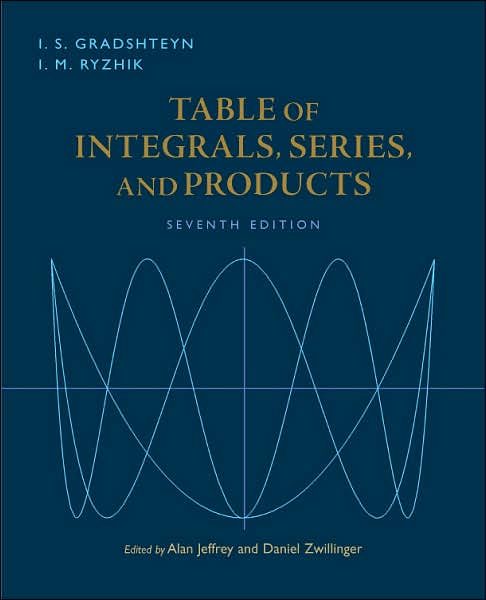
Gradshteyn and Ryzhik (GR) is the informal name of a comprehensive table of integrals originally compiled by the Russian mathematicians I. S. Gradshteyn and I. M. Ryzhik. Its full title today is Table of Integrals, Series, and Products.
Since its first publication in 1943, it was considerably expanded and it soon became a "classic" and highly re...
 elder cape
Beside Rudin and Pugh in #books, is there any other book on analysis? I read their descriptions and they seem to be on extreme sides ^^;
cursive orbit
abbott and tao are other options you could look at
tao starts from the naturals and constructs the reals before he starts doing any analysis, and that may or may not be your cup of tea
but I'd recommend at least looking at the exercises in Rudin
elder cape
And abott?
cursive orbit
basically a relatively gentle introduction to analysis
cursive orbit
well it's also a good book lol
but it's not really that unique in that it covers a pretty standard set of topics
 hallow knoll
Is there a book or handout that covers basic/advanced functional equalities well?
Trying to grasp the intuition behind solving them better, so any material would be appreciated!
slim peak
hallow knoll
Is there a book or handout that covers basic/advanced functional equalities well...
Can you give me some example of what you call exactly functional equalities ?
hallow knoll
Indeed, Olympiad style functional equations where nice properties are assumed and require tricky substitutions and/or other tools to solve. Here is an example:
 hasty eagleBOT
peaceGiant
 slim peak
hallow knoll
Indeed, Olympiad style functional equations where nice properties are assumed an...
slim peak
hallow knoll
Indeed, Olympiad style functional equations where nice properties are assumed an...
oh this kind
I cannot help, since I know none of those
hallow knoll
No worries, thanks either way
 tawny copper
hallow knoll
Is there a book or handout that covers basic/advanced functional equalities well...
tawny copper
hallow knoll
Is there a book or handout that covers basic/advanced functional equalities well...
Maybe Cristopher G. Small, "Functional equations and how to solve them". The book I think is nice, but is the only one I know of this type
I don't think this type of equations require a lot of theory though
Does someone have Dummit and Foote algebra text in pdf with bookmarks btw? There are pdf available in google, but without bookmarks
cursive orbit
tawny copper
Does someone have Dummit and Foote algebra text in pdf with bookmarks btw? There...
There's one on the site comprised of the first 3 letters of liberal and genetics.
gray gazelle
elder cape
Beside Rudin and Pugh in <#873809533615628308>, is there any other book on analy...
Halsey Royden
tawny copper
cursive orbit
There's one on the site comprised of the first 3 letters of liberal and genetics...
thank you!
hallow knoll
tawny copper
Maybe Cristopher G. Small, "Functional equations and how to solve them". The boo...
Thanks! I'll check it out.
 pallid knoll
is there a good introductory book on representation theory that someone recommends
dapper root
Deadass the intro to rep theory in D&F is pretty good
pallid knoll
dapper root
Deadass the intro to rep theory in D&F is pretty good
ah i never read D&F so i'll check it out thanks!
dapper root
Swag
pallid knoll
faithful matrix 🙏
 balmy phoenix
does anyone know a good (hopefully free) introduction to proofs?
sick wigeon
Any book recommendations on Harmonic analysis?
How's Grafakos?
Is it well written?
I am starting to learn measure theory
After i learn some measure theory, will i be able to read the book directly?
slim peak
sick wigeon
After i learn some measure theory, will i be able to read the book directly?
No, you will need to be familiar with complete metric spaces, and to be more specific Hilbert, and also Banach spaces, then Lp spaces (Banach spaces of measurable functions)
(And some multi var Calculus)
sage python
I will probably be using some of Schlag's book
slim peak
Grafakos is a very good book but not gentle for an Introduction to Harmonic Analysis
Here is a free book available online
The point of view is fully Euclidean so that it contains no tools for some futher generalization like Non-commutative Harmonic Analysis
sage python
slim peak
The point of view is fully Euclidean so that it contains no tools for some futhe...
😭
slim peak
But this is probably, in my opinion, the best Introduction to Harmonic Analysis
slim peak
sage python
😭
The content is already really heavy
slim peak
Non-commutative Harmonic Analysis require a LOT of background, generally "shorts introduction to non-com. HA" is a scam
It is either not short, or not a Intorduction
sage python
Haha, so the plan-ish I've got is
Prob either Folland or Deitmar-Echterhoff for the more rep theory side of harmonic analysis
And Schlag for more standard business
slim peak
To me a good thing would be to start from euclidean case
Then go on non-com HA on a specific case
like on the Heisenberg group
like Thangavelu
sage python
Heisenberg group seems like good shit, at least one prof here's big thing is rep theory of Heisenberg group
And actually it's coming up for me now since I'm learning about something called theta lifting
slim peak
sage python
Heisenberg group seems like good shit, at least one prof here's big thing is rep...
That's the point this gives you a bridge between no rep Theory to some rep Theory in a simple case
I was personnally introduced to it by the mean of Pseudo Differential Calculus/Semiclassical Analysis
But I dropped non-com. HA I have already too much to learn/to do in another fields
sage python
That's fair yeah. Because of automorphic forms the non-commutative stuff is p central to me :p
sick wigeon
slim peak
Grafakos is a very good book but not gentle for an Introduction to Harmonic Anal...
Oh i see
Actually i am planning to read Axler fully and then proceed to grafakos
The measure theory text
gray gazelle
hallow knoll
No worries, thanks either way
Evan Chens handouts are a pretty decent group for FEs, other than that I have this book by VK Venkatachala named Functional Equations, you can find that on b-ok.as
Any good coordinate geometry books? I just want to learn most of the theory up to K12/Elementary UG Level with some challenging problems. Something like SL Loney's text (I cant use that)
sick wigeon
What do you think about stein and Shakarchi?
Many say it doesn't do certain stuff fully rigorously
As it's not a measure theory based text
And thanks for the PDF!
slim peak
sick wigeon
Actually i am planning to read Axler fully and then proceed to grafakos
I do not recommend Grafakos as a first read on Harmonic Analysis
gray gazelle
sick wigeon
And thanks for the PDF!
slim peak
gray gazelle
b-ok.as or libgen.is if you didnt know
The pdf is a free one available online
hence no need to
gray gazelle
but just in case
slim peak
sick wigeon
What do you think about stein and Shakarchi?
Many say it doesn't do certain stuf...
Concerning other references, since I'm new to the English world of undergrad/pre grad references, so i can't tell. Mine are essentially French ones, except Rudin.
slim peak
But this is not a measure Thoery book
sick wigeon
So you are saying it's better to learn Fourier analysis after measure theory?
And not using the Riemann integral
slim peak
I don't get how you can properly defined the Fourier Transform and its proeprties without the Lebesgue integral
You need to do measure Theory and complete Metrics spaces (as Lp spaces) before
dapper root
You can do Fourier Analysis without the Lebesgur integral, I learned some my freshman year using the Darboux integral
slim peak
If the review tells true then this book is not appropriate to start on C.Hao lecture notes.
dapper root
It wasn’t particularly refined or anything, but you can still get at the ideas
slim peak
dapper root
You can do Fourier Analysis without the Lebesgur integral, I learned some my fre...
Oh you prove L² is complete space, the the Fourier Transform is a isometry from L² to it self ?
dapper root
You don’t need all that to get at the basics of what the Fourier transform does lol
slim peak
dapper root
It wasn’t particularly refined or anything, but you can still get at the ideas
The plan here is to check out Harmonic Analysis, which needs very deep properties
dapper root
I see
slim peak
And I think this the wrong way to be introduced to the Fourier Transform btw
sick wigeon
So you are saying if i wanna go deeper into it, a measure theory based approach is "the" way
slim peak
There is no other way
sick wigeon
I see
slim peak
Oherwise you'd better do Physics, without proof, just do computations with no rigor
sick wigeon
Can i discuss this alone in dm, anatole?
slim peak
I'm not comfortable with it
slim peak
sick wigeon
Ok
To me you should check :
1 - Rudin, Real and Complex Analysis, (Chapters 1, 2 + 8 (for Fubini-Lebesgue Theorem)) -> Measure Theory and Integration
2 - Brezis, Functional Analysis, Sobolev Spaces and Partial Differential Equations (Chapters 4, 5) -> Lp Spaces, and Hilbert Spaces.
3 - Hao, Lecture notes on Harmonic Analysis, the whole thing if you want. -> Harmonic Analysis with all properties of the Fourier Transform in earlier chapters
The order is really important
I think this is best and quicker road map
this gives you less than 350 pages to read
which is pretty honest
this can be achieve in less than 3 months with something like 4hours a week
maybe less
sick wigeon
I see
The first 2 are all present in the book i am reading
So i will continue to read
Thanks for the lecture notes!
slim peak
np
gray gazelle
@slim peak you think I can make it far in math while learning on my own in English?
My studies are actually in french
slim peak
gray gazelle
<@254338913492008970> you think I can make it far in math while learning on my o...
The two first books are available in French
gray gazelle
I see but that doesn't answer my question, suppose I used rosen's discrete math book can i use that in my studies?
slim peak
I don't know that's not how I've done my grad, so i can't tell
gray gazelle
I see, thanks
slim peak
gray gazelle
I see, thanks
But until my 3rd Uni year, everything I've done was fully in French
 odd spade
Do you switch to English for your thesis
 winter hearth
Where we can get videos or courses on topology
slim peak
odd spade
Do you switch to English for your thesis
I did during my last year just before starting my PhD. Every lecture was in English
odd spade
oh i see
 misty wyvern
Anyone have a good book for light reading but otherwise at the graduate math level?
Think "I wanna do math but I'm too lazy to compute anything right now"
marble solar
misty wyvern
Anyone have a good book for light reading but otherwise at the graduate math lev...
I found historical expositions to be really enlightening
Boyer's History of Calculus
Stillwell's Mathematics and its History
misty wyvern
I have almost no interest in science history to be honest.
marble solar
RIP
misty wyvern
While I do read history, it's mostly annales stuff.
I keep my math and history separate.
marble solar
I don't have much then lol
Grad math that's just good for casual browsing
Korner's Fourier Analysis book has interesting applications
If you've read that
Lots of results at a pretty beginner level
Should be pretty light reading for you
If you're at all interested in Topology ~ Thurston has a book on 3 manifolds
and then there's the wild world of 4 manifolds
that are lighter, but still interesting
marble solar
misty wyvern
Anyone have a good book for light reading but otherwise at the graduate math lev...
Garnett & Marshall's Harmonic Measure isn't overly complicated
But it is interesting
 hearty steppe
winter hearth
Where we can get videos or courses on topology
hearty steppe
winter hearth
Where we can get videos or courses on topology
You read Munkres
Topology is where math gets to a point where you need to read the standard books
Like it’s just very abstract that just trying to learn it by watching videos and taking an online course does a disservice to understanding what your working with
Munkres has some pedantic wordiness in it at times but it seems quite approachable to me so far. I started studying math rigorously almost 2 years ago
Btw I started Munkres barely a month ago
MAKE sure you go through the entirety of the first chapter. It’s not quite topology yet but trust me. Completing all the exercises is not necessary. You might be able to fly through the first 7 sections like I am
Make sure it’s not the elementary linear algebra book. The one that is titled “linear algebra” is the one you want.
Personally that book is a bit easy for me, but I’m confident you shouldn’t struggle much with it. If your not struggling a lot with the exercises, just pick one or two that are different enough from eachother and before you know it, you might fly through the book too
Lots of redundant exercises in that book, and I think you’ll be able to notice when it gets redundant and you can skip ahead
balmy phoenix
anyone know a good book on introduction to proofs?
smoky zephyr
book of proof by hammack
it’s what i’m using, i’m almost halfway done and i really like it
marble solar
misty wyvern
thanks for the rec
Tell me what you think when you find a PDF or something
and you've read some of it
@misty wyvern https://arxiv.org/pdf/2202.03594.pdf
This packing article by Terry is amusing
 hardy junco
any books on information theory?
 steel harness

Statistics With Julia: Fundamentals for Data Science, Machine Learning and Artificial Intelligence.
 grand thistle
balmy phoenix
anyone know a good book on introduction to proofs?
grand thistle
balmy phoenix
anyone know a good book on introduction to proofs?
how to prove it by velleman
best intro to proofs like ever
taught me the basics to proofs and like rules of inference etc in a week or so
even just reading chapter 1-3
fervent lava
Loch's intro proof pdf in #proofs-and-logic pin is also nice. That what I used.
 warm glen
 solemn rover
hardy junco
any books on information theory?
solemn rover
hardy junco
any books on information theory?
the standard textbook is Thomas and Cover
fluid bay
any good texts on operating systems?
winter hearth
hearty steppe
You read Munkres
Topology is where math gets to a point where you need to read...
Thank you
just ispired n dimensions and going to study it
😂 
gray gazelle
hey guys does anyone have any book recommendation for maths competitions
 hollow shore
gray gazelle
hey guys does anyone have any book recommendation for maths competitions
hollow shore
gray gazelle
hey guys does anyone have any book recommendation for maths competitions
Zeitz's The Art and Craft of Problem Solving is really nice
gray gazelle
hollow shore
Zeitz's The Art and Craft of Problem Solving is really nice
thx :)
 azure frigate
balmy phoenix
anyone know a good book on introduction to proofs?
azure frigate
balmy phoenix
anyone know a good book on introduction to proofs?
+1 for Velleman, it's fantastic
stray veldt
-1 for velleman, +1 for aluffi notes 
lime sapphire
stray veldt
-1 for velleman, +1 for aluffi notes <a:catwiggle:667391296452952084>
Algebra: Notes from the Underground by Paolo Aluffi ?
stray veldt
lime sapphire
i see
crude iris
-1 for aluffi notes, +1 for velleman
lime sapphire
lime sapphire
*Algebra: Notes from the Underground* by Paolo Aluffi ?
also btw i just stumbled upon this at the mention of aluffi, could someone check it out and let me know what they think? it looks like a rather unusual algebra book with rings first then modules and groups and fields after
also seems to cover a tiny bit of category theory?
someone made a rather bold claim on goodreads 👀

will possibly replace... Artin.
frosty girder
stray veldt
why did aluffi write two undergrad algebra books
fluid bay
I think the category pilled one is intended as a grad text
stray veldt
weird
i think giving modules a more prominent role in intro abstract algebra is a good idea
although i wonder how he will draw from a large enough example pool of rings
odd spade
Chapter 0 is generally used as a graduate level text IME, yeah
Problem difficulty alone is higher than advanced undergrad books
Or are we not talking about chapter 0
lime sapphire
odd spade
Or are we not talking about chapter 0
Talking about Algebra: Notes from the Underground by Aluffi
odd spade
maybe i will check it out i think aluffi is a good writer
sometimes a little extravagant but i like the exposition
stray veldt
why did he not write chapter 1 
dapper root
It does ring theory first
Which is something I think more and more departments are embracing
 dense wren
Hungerfords undergrad algebra book also does rings first
sudden kindle
dapper root
Which is something I think more and more departments are embracing
I like this too
I did group theory first, but I think ring theory first would be a nice approach to AA
stray veldt
my AA class had like an intro chapter that did both rings and groups at the same time and talked about what subobjects and quotients are
 graceful dawn
Give me some recommendation
cursive orbit
graceful dawn
Give me some recommendation
For?
sage python
I'm not sure what I think about groups first vs rings first
I could see a case both ways
Naively, groups are simpler objects, but a lot of the theory of abelian groups is wrapped up in the theory of modules over a PID
Also ring theory doesn't rely a ton on group theory
I guess some kinda integrated approach might be a good idea tbh
Maybe you focus for a while on this topic or other but you define groups, rings, and fields from the very beginning
And you can talk about quotients in both, etc
marble solar
I don't think it matters that much: just don't teach the sylow theorems
slim peak
marble solar
I don't think it matters that much: just don't teach the sylow theorems
Sylow's are neat
flint forge
this seems odd to me but i would be curious to learn why people think its a good idea
lots of theorems are neat but should not be part of curriculum
slim peak
Because this a simple, deep, and non-trivial application of Group actions, which have also deep application in other subfields
marble solar
I dunno, I think they kinda suck. I found algebraic curves and commutative algebra more interesting
Also applications of algebra in different topological settings
Don't require the sylow theorems
I haven't learned any Galois Theory
So if they're useful there, I wouldn't know
flint forge
Sylow theorems would be more reasonable if they took up a much smaller portion of a group theory course
But a lot of schools spend like
marble solar
There are other important examples of group actions
flint forge
weeks on them and various tricks for like, proving there are only 14 groups of order 43243
slim peak
flint forge
weeks on them and various tricks for like, proving there are only 14 groups of o...
This kind of stuff sucks
marble solar
Aren't like Finite Simple groups pretty much all sorted out
slim peak
Sylow's are useful to prove unicity of simple groupe of order 60
which is A5
(then yes Galois theory)
marble solar
See now you're going to the Galois stuff
But for a pleb like me that got filtered by algebra before making it to Galois
sudden kindle
Groups are a step up in abstraction than rings imo. This is why ring theory might be more suitable to introduce to undergrads first maybe
slim peak
sudden kindle
Groups are a step up in abstraction than rings imo. This is why ring theory migh...
I did group first, then algebra and ring theory.
flint forge
Or I guess not
it is literally true
But its also like, more structure to wrap ones head around
seems like groups are very straightforward
slim peak
lemme check out
sage python
Sylow theorems could be like
One or two lectures, or even a subset of a pset
And I'd say that's the right way to go about it
slim peak
2 lectures is too short but more than 3 or 4 is litterally overkill
sage python
PTY: So, groups are less familiar than rings but they are "simpler" in the sense of, fewer axioms going on
I do think a lot about how algebra classes are done should be changed
split moon
I think familiarity is a more relevant aspect than simplicity in this sense
slim peak
marble solar
But for a pleb like me that got filtered by algebra before making it to Galois
They are also usefull to identify subgroups of GLn(Fp)
split moon
at least when it comes to the order of teaching
sage python
Like, at most you'll be like oo I recognize Euclidean domains
marble solar
It's useful for students to be put in something abstract nonsense land so they learn to think via axioms, definitions
and not just examples
sage python
And maybe the idea of unique factorization a little bit
But otherwise there's not a ton of intuition that you have that's specific to rings and not groups. And in fact you might be inclined to overapply ideas from Z
To rings where it's not good. Also what Moonbears said
 sage python
Yup, I don't agree with knocking Sylow completely, it's more important than people realize. But these applications should be emphasized instead of like
Spending time in class being like classify groups of X order
split moon
marble solar
and not just examples
I think undergrad underemphasizes examples
my experience is the opposite problem
people even have difficulty coming up with examples sometimes
marble solar
I mean coming up w/ examples is genuinely a difficult thing to do
sage python
Algebra is the one subject where I feel examples aren't underemphasized tho
Also like
sudden kindle
To me sylow theorems are just used to answer algebra qualifying exam questions
Kol
sage python
Eventually students have to learn how to do shit themselves rather than be spoonfed lol
slim peak
For a non-trivial abstract Theorem, proving something is good example or counter-example is generally very very long and technical
which is against pedagogy
sage python
But yeah I think I'd shift emphasis around a little bit in algebra. Let's say for intro to group theory, quarter long course
I'd probably do
split moon
well
I see those two aspects as fairly distinct
working out in full generality facilitates specific things but it does not give them for free
sometimes that coming back from the more sophisticated concepts and tools a ton of work
that comes as a trade off of simple proofs sometimes
I still think both things are important on their own
slim peak
Finite group examples are either, trivial, too classical (but you want doable exercises to give to your student at the exam), or very difficult
sage python
- Categories
- Monoids, groups, submonoids, subgroups
- Homomorphisms, kernel/image, normal subgroups, quotients
- Isomorphism theorems
- Automorphism groups, group actions and representations (biggest part of it)
- Free groups, adjoint functors, presentations
- Finite groups (Sylow, classification of groups of order blah)
- Solvable and nilpotent groups?
Throughout have examples like cyclic groups, S_n, A_n, D_n, matrix groups,
odd spade
imo galois theory and finitely generated groups are the most urgent issues of algebra like that, but it definitely depends on what you are doing
i never use modules or monoids
but people who scale category-geometry-algebra mountain seem to like all that
free groups are really important actually and their introduction felt really sudden to me
 wise umbra
I would say that modules are more important than Galois theory, if you had to choose
Modules are generalized vector spaces
Of course Galois theory is important as well, and close in spirit to covers and the fundamental group in algebraic topology
odd spade
i would say my perspective is biased
if you are doing certain things you would be crazy not to do modules
i stay near group/semigroup stuff
also yeah its further connection with topology and number theory is big
you can avoid galois theory in number theory for a long time technically, i have a book that does this
but i dont think you can do advanced L functions without it
it's actually (extremely) nontrivial to avoid it entirely but in spots it's feasible and even time saving
balmy phoenix
grand thistle
how to prove it by velleman
this looks great thanks! thanks everyone who +1 velleman looks exactly like what i need thanks
wise umbra
odd spade
you can avoid galois theory in number theory for a long time technically, i have...
Really depends about what you're working on but Galois theory is quite used in number theory 😄
odd spade
yeah i think the book i have that does this is by alan baker so
it's pretty cool
it's just a book though, i dont know how far you could take it
 main sonnet
Recommended books only for problems for abstract algebra? My class is currently going through Herstein's abstract algebra, but I would like some practice problems I can do with solutions
sudden kindle
Galois theory is extremely important to number theory
Algebraic number theory is synonymous with galois theory over Q
odd spade
yeah i am not suggesting a program of no galois theory number theory haha
quite the contrary, galois theory rules
i say invade every field with galois theory
spread the word of our lord galois
 patent mango
is there any good books for Mersenne primes?
 quick hornet
'algebra' meaning?
that term is quite vague at the uni level
there are a ton of options and a lot of people have shockingly strong opinions
LA helps going in but it isnt mandatory for all texts, though i'd at least recommend knowing what a determinant of a matrix is
the only thing you "need" is comfort with proofs
but some books will assume you know LA so you need to make sure your choice doesnt
frosty girder
be a chad and do artin, he covers a ton of LA as well
based

i was also doing artin, didnt do too much but i enjoyed what i did 😌
not really ig
i mean, i havent done any amount of maths to properly comment on this
but there isnt an order really, u just do what u like while exploring stuff
dapper root
Correct order:
Linear algebra -> abstract algebra -> commutative algebra + homological algebra -> algebraic geometry
Not biased btw
frosty girder
dapper root
Correct order:
Linear algebra -> abstract algebra -> commutative algebra + homol...
wheres k theory?
quick hornet
the last 3 entries
i feel like my presence here makes people think k theory is a lot more prominent than it is
which is bizarre given i never talk about it
frosty girder
quick hornet
i feel like my presence here makes people think k theory is a lot more prominent...
it does make me think that tbh
dapper root
Sorry, I don’t encourage people to learn K theory, I think the world has bough depression in it already
frosty girder
i mean it just sounds cool
k theory, m theory (ik they arent exactly related, but still)
quick hornet
its a letter
dapper root
Yeah Nami like, with how little you talk about K theory I’m surprised ppl know you study it
frosty girder
quick hornet
its a letter
still 
quick hornet
didnt get any postdocs
dapper root

quick hornet
i could try again but nah
dapper root
Wtf
quick hornet
going into industry instead
dapper root
I thought ur thesis was big poggers
quick hornet
its good but i only applied to really good postdocs
frosty girder
quick hornet
didnt get any postdocs
how does stuff after PhD work exactly?
dapper root
What’s the like lowest you applied to?
quick hornet
because i figured, with how competitive AG faculty positions are, i dont wanna bother unless i get a really good one
dapper root
Did you not stray out of like… UMich territory?
quick hornet
yeah mich was my lowest lmao
dapper root
Couldn’t even get a Mich postdoc even tho they have like 1 billion of those named postdocs
quick hornet
i only applied for 4
dapper root
Rip
quick hornet
f
quick hornet
i wouldnt be too scared, i think part of it is that my advisor, while very respected, is more a C*/OA guy than purely K theory
sage python
What kinda industry jobs are you going for?
quick hornet
so wasnt the best connection to the places i applied
sage python
K theory but in finance?
dapper root
Where did you end up applying? Princeton, Harvard, IAS…?, Mich?
Idk if you apply for IAS postdocs
quick hornet
princeton toronto berkeley mich
toronto weird choice i know since im a student here
but eh
quick hornet
sage python
What kinda industry jobs are you going for?
dunno, havent started looking really
dapper root
Does Toronto send graduates to top tier postdocs with any sort of frequency?
Or is it just the rare one that makes it through
quick hornet
still have to actually get my doctorate yknow
quick hornet
dapper root
Does Toronto send graduates to top tier postdocs with any sort of frequency?
it does
more than any other canada school i believe
dapper root
Gotcha
quick hornet
logically i couldve applied for more but honestly like
i was already kinda wavering on academia long term anyway
so i decided to just hail mary it
if i get a real good one then go for it
dapper root
Man
quick hornet
otherwise settle into a comfy tech job or whatever
way less time commitment for more $
dapper root
I know I said this before and Buncho ripped into me a bit but
It’s hard to imagine from where I am rn
Not shooting for a job in academia
quick hornet
yeah
frosty girder
quick hornet
otherwise settle into a comfy tech job or whatever
can you still publish papers if felt like it? or do u have to be a prof or something to do those?
quick hornet
(of my phd)
dapper root
It feels like I’d be sunk cost fallacying it 2 years into a PhD
Let alone after graduating
quick hornet
this is a bit slow which might also contribute to not getting a postdoc
though in my defense i skipped a masters
which is abnormal for a canadian
sage python
Wait do they care how long you took to get a PhD?
sage python
I thought that was literally irrelevant data
dapper root
Yeah if it’s > 3 years you’re out
sage python
Tbh a less ballsy version of that is my angle Namington. I'm prob gonna gun for like, vaguely top schools
quick hornet
frosty girder
can you still publish papers if felt like it? <:catThin4K:811354320460578896> or...
in theory, no you dont have to be a prof/affiliated with academia, in practice yes
industry people publishing papers is not really a thing
like they could do it, journals wouldnt reject you just for not having an institution
and a few people have
but its very rare
i certainly dont know of any cases in my subfield
dapper root
So true
 quick hornet
4-5 years is the standard in places where youre expected to have a master's first
maybe 3
 rancid ivy
Do you have a book recommendation for an INTRODUCTION to statistics ?
I say introduction because I want to start
humble bluff
rancid ivy
I say introduction because I want to start
I thought you asked for a research level book when you Said “INTRODUCTION”
rancid ivy
No, mate I'm in middle school and I'm not C.F Gauss.
grand thistle
rancid ivy
Do you have a book recommendation for an INTRODUCTION to statistics ?
if i were you id do algebra first
cant do that much with stats without some algebra knowledge
rancid ivy
Oh I see, thanks !
grand thistle
idk much tho
about stats
maybe you could
from what ive seen ap stats needs only algebra 1 and 2 i think
and college stats needs calc/real analysis and LA
but take what i say with a grain of salt i done probably as much stats as u
rancid ivy
everything in math is interesting
 gray relic
Hey can i get arts of problems solving introductory geometry ?
sudden kindle
What books can I learn automorphic forms from?
Daniel Bump's book is pretty rough going
@slim nacelle @sage python
slim nacelle
Bump is really the book for learning this properly. If you want a more casual exposure you can try https://arxiv.org/abs/1511.04265

arXiv.org
We provide an introduction to the theory of Eisenstein series and automorphic
forms on real simple Lie groups G, emphasising the role of representation
theory. It is useful to take a slightly...
You can skip the physics stuff
sage python
Goldfeld-Hundley is easier than Bump
slim nacelle
Yeah that’s another good recommendation
sage python
If you don't need adelic theory there's also Borel
slim nacelle
Lmfao
sudden kindle
sage python
If you don't need adelic theory there's also Borel
Automorphic Forms on SL2 (R)?
rancid ivy
At this moment, I'm studying all the school math program, so 10th, 11th and 12th-grade, when I finish it what should I study first ?
brittle breach
rancid ivy
At this moment, I'm studying all the school math program, so 10th, 11th and 12th...
Linear algebra?
Maybe number theory
rancid ivy
frosty girder
depends on what u wanna do
It's a hard question to ask myself.
rancid ivy
brittle breach
Linear algebra?
Why not.
frosty girder
if u are in 8th grade, u dont have to worry about that question for now
rancid ivy
Number theory is a good idea.
rancid ivy
frosty girder
if u are in 8th grade, u dont have to worry about that question for now
I'm in 9th.
frosty girder
Oh, still, my point stands
brittle breach
rancid ivy
I'm in 9th.
You are late to the party man
frosty girder
brittle breach
You are late to the party man

brittle breach
Do you know how to prove stuff
rancid ivy
I respect your opinion but I refuse to be so slow in the learning because of school.
rancid ivy
brittle breach
Do you know how to prove stuff
What kind of stuff.
frosty girder
rancid ivy
I respect your opinion but I refuse to be so slow in the learning because of sch...

wdym
i dont mean do it with school
brittle breach
Have you proven anything before
A math proof
rancid ivy
Helped yes.
But I don't know how to prove.
Didn't learn and I think it's complicated to know where to start, don't you think ?
brittle breach
Your are studying calc now correct
frosty girder
well if u plan to do maths, u gotta do a lot of proofs
rancid ivy
brittle breach
Your are studying calc now correct
I don't understand
runic hatch
you could start with a super gentle intro to uni math
rancid ivy
I didn't finish my learning of the math school program but elaborate, what do you mean by gentle intro to uni math ?
runic hatch
like maybe How to Prove It by Velleman
frosty girder
it basically means learning how to do proofs
runic hatch
frosty girder
it basically means learning how to do proofs
yeah mostly just this
without needing much prior knowledge
rancid ivy
Thank you for the book recommendation.
runic hatch
learning how to think mathematically is more important than knowing a list of concepts
rancid ivy
For example I could prove that a line is asymptotic to a curve of a function.
Well, it's been a while since I've done it, but I could do it before and I will when I'll finish the math program of school study.
brittle breach
rancid ivy
I don't understand
I was assuming you did or are doing calculus
brittle breach
rancid ivy
For example I could prove that a line is asymptotic to a curve of a function.
But I agree with ab knowing how to prove stuff is the gateway to real maths
You could use a book/etc on how to prove things
rancid ivy
brittle breach
I was assuming you did or are doing calculus
I did, but really simple, just the basics
brittle breach
Or linear algebra or analysis and pick it up as you go, some book teaches both proof and an area were to use proofs
humble bluff
I recommend starting math with naive and axiomatic set theory
And after that
Everything about the construction of Numbers up to reals
subtle mango
what are good calculus-based physics textbooks for undergrad level (mechanics, electromagnetism, etc)
 rain hound
subtle mango
what are good calculus-based physics textbooks for undergrad level (mechanics, e...
rain hound
subtle mango
what are good calculus-based physics textbooks for undergrad level (mechanics, e...
The best ones to my knowledge are:
John Taylor Classical Mechanics
David Griffiths Electrodynamics
McIntyre Quantum Mechanics
Schroeder Thermodynamics
And of course supplement with Feynman lectures
subtle mango
bless thank you
rain hound
Yep, happy to help, a bit of a disclaimer tho, that first and last one are a bit pricy
subtle mango
unfortunately as to be expected when buying textbooks
rain hound
Yeah it’s regrettable, I looked into some other mechanics books options that are cheaper and there’s legit no other option before grad school level, they just suck (other than Feynman lectures ig)
Not quite physics but you will probably also like James Nearing Math Tools for physics, covers basically all the math you need, and absolutely wonderful exposition
And it’s very cheap LaTeX typeset, open source ftw
rain hound
I’m looking for a good rigorous beginning graduate complex analysis textbook. I am familiar with computational based complex calculus I should perhaps call it thanks to math methods texts, and I have analysis under my belt after working through Tao. So I’d like something that dives into the theory properly and has good exposition.
brittle breach
sage python
Gamelin if you're starting, Narasimhan if you're more advanced
This
brittle breach
rain hound
I’m looking for a good rigorous beginning graduate complex analysis textbook. I ...
Check this out
gray gazelle
any good advanced python book ?
rain hound
The official documentation would be the best I imagine
gray gazelle
rain hound
The official documentation would be the best I imagine
i already know that
i need something that is a bit higher level
rain hound
brittle breach
Check this out
Thanks I’ll check them out
rain hound
gray gazelle
i need something that is a bit higher level
Hmm in that case I’d suggest looking for something more specialized than just a generic advanced python book. For whatever you intend to be doing.
fervent lava
gray gazelle
any good advanced python book ?
Normally if someone wants an advanced programming language book, it would be best to look at the spec instead.
gray gazelle
spec ?
fervent lava
That depends how far your in your current language. Sorry I meant documentation.
gray gazelle
I just want to know enough for data science and manim animations
fervent lava
If your comfortable using python right now then refer to your docs. If you want book towards data science and the other thing for python then look towards that instead.
lime sapphire
what are some good rings first algebra books other than aluffi's
lime sapphire
is it an introductory text? cus thats what im looking for
runic hatch
What approximate level are you at
lime sapphire
idk much except for basic LA
karmic thorn
Should be accessible, yeah
 vernal steeple
Hii, i would like to ask if anyone has any resource(website, book) on axiomatic set theory proof questions that have answer to them(undergrade level) smtg like this question thankss
 karmic thorn
Velleman, How to Prove It
vernal steeple
Alritee I'll go search it upp, thankss
frosty girder
vernal steeple
Hii, i would like to ask if anyone has any resource(website, book) on axiomatic ...
i almost linked #❓how-to-get-help
prime oak
recommendations on good intro to NT books?
brittle breach
prime oak
recommendations on good intro to NT books?
Serre a course in arithmetic
Or Hardy and Wright
sudden kindle
I want to read the 1-2-3 of modular forms by Don Zagier
slim nacelle
Yeah that’s a good book
pale scarab
rain hound
Not quite physics but you will probably also like James Nearing Math Tools for p...
Do you feel its necessary to work through a seperate math methods book or just learn as you go? It seems most physics textbooks have a review of the math necessary in the book.
rain hound
pale scarab
Do you feel its necessary to work through a seperate math methods book or just l...
Learning as you go is completely fine. A math methods textbook is the best companion to have for it though because it’ll give you a fair bit more than a physics textbook will as well as exercises for you to practice and develop comfort and finesse computing and seeing concepts. It’s a lot nicer to be learning physics when you’re only wrapping your head around the physics, and math methods texts make that goal much more feasible. I’d suggest reading both at the same time.
sudden kindle
i kinda hate Bump's exposition in Automorphic Forms and Representations
sage python
@sudden kindle having not read much of Bump, what in particular do you dislike?
sudden kindle
its so technical
doesnt emphasize the important things
i feel like im reading a book in techniques in automorphic forms rather than a book that introduces why i should care about them
sage python
I see
I'll be honest you'll get similar vibes from Goldfeld-Hundley
It's easier but there's not much motivation iirc
sudden kindle
right now im in the section about converse theorems, and i'm like, why the hell do you want converse theorems?
sage python
Hmm
sudden kindle
 sage python
Oh this isn't bad. It's like okay modular forms are of the form sum a_n q^n
If I just manufacture the a_n randomly when is it that a modular form? And the answer is when the L functions have the functional equations you expect
sudden kindle
okay so your able to get information about modular forms from just their L functions
cool
also I these twisted modular forms were introduced in the exercises from the previous section and i didnt do those so when i got to this ssection and it all of a sudden talks about modular forms twisted by some dirichlet character im like wtf, idk why you care about these either
sage python
Oh that's yeah. Honestly I think a book should make a clear delineation of exercises that need to be solved for the sake of continuity
sudden kindle
sage python
If I just manufacture the a_n randomly when is it that a modular form? And the a...
This is very helpful motivation, thanks
sage python
🙂
 slender surge
Hlo
 halcyon hornet
Any good and Easy to understand Intuitive Elementary Number theory resources please.
timber garnet
halcyon hornet
Any good and Easy to understand Intuitive Elementary Number theory resources ple...
Kenneth H. Rosen: Elementary number theory
David M. Burton: Elementary Number Theory
J. H. Silverman: A friendly introduction to number theory
 indigo relic
I want a book that cover the proof of the area under the graph is computed using the primitive because it still didn't make sense to me
indigo relic
quick hornet
this is often taken as a _definition_ of area
but people didn't define it this way randomly, i mean there's a theory behind it
quick hornet
see e.g. https://en.wikipedia.org/wiki/Jordan_measure, in which case the proof is available at https://math.stackexchange.com/questions/2787850/jordan-measure-and-riemann-integral/2788075

Mathematics Stack Exchange
I am studying Riemann integral, and I haven't understood what is the relation between the concepts of Riemann integral and Jordan measure. Is Riemann integral a special case of Jordan Measure? What...
i do think jordan measure probably matches your intuition here
the idea is that "area" is defined as the "accuracy limit" of an approximation of the shape by rectangles (whose area is just defined as base * height), and then we can see that, for curves f on the plane, this corresponds to integrating the indicator function on the subset {(x, y) | 0 < y < f(x)} of the x-y plane (flipped if f is negative, im leaving out details)
turns out this becomes the "infinitely many thin rectangles" intuition of the riemann integral
and so we have our correspondence, at least where jordan content is well-defined.
the connection to indefinite integration is now just the fundamental theorem of calculus which any text should cover
indigo relic
@quick hornet makes sense man thank you !!!
 outer ledge
what book should i refer for vector space ?
 covert oxide
Any good books introducing proofs and how to write them?
 compact owl
an books particularly related to quadratic residues?
grand thistle
covert oxide
Any good books introducing proofs and how to write them?
How to Prove it, Velleman
foggy relic
halcyon hornet
Any good and Easy to understand Intuitive Elementary Number theory resources ple...
levesque
halcyon hornet
?
subtle mango
halcyon hornet
?
Fundamentals of Number Theory by LeVeque is what invictus meant i assume
halcyon hornet
Oh.
covert oxide
grand thistle
How to Prove it, Velleman
Thanks, I’ll have a look on it
brittle breach
compact owl
an books particularly related to quadratic residues?
Serre arithmetic has a nice proof
Hardy and wright's is not too bad either
outer ledge
any good references for Olympiad maths?
frosty girder
try asking out the olympiad server in #old-network
foggy relic
outer ledge
any good references for Olympiad maths?
AoPS books
crude iris
outer ledge
any good references for Olympiad maths?
(Draft, I'll update it soon and when final, I'll update this to a page instead of post.) Here is a relatively comprehensive list of resource...
prime oak
any recs for books as introduction to category theory?
outer ledge
crude iris
https://rgtdfg.blogspot.com/2022/02/recommendations-feb-22-version.html
Thanks! I'll check it out
 dull bluff
Any book recommendations for calc 2?
If you can, can you list some that would be more so about practice problems
Thank you so much
gray gazelle
Here is a set of notes used by Paul Dawkins to teach his Calculus II course at Lamar University. Topics covered are Integration Techniques (Integration by Parts, Trig Substitutions, Partial Fractions, Improper Integrals), Applications (Arc Length, Surface Area, Center of Mass and Probability), Parametric Curves (inclulding various applications)...
 plucky edge
Recommendation for books on undergrad probability and stochastic processes?
sick wigeon
People i really need help regarding multivariable analysis
I tried reading Munkres analysis on manifolds
It feels incredibly slow and pedantic and i don't understand it at all
And spivak and Rudin are too terse for me
Can someone recommend a good multivariable analysis text?
marble solar
sick wigeon
People i really need help regarding multivariable analysis
I tried reading Munkr...
Try like Ted Shifrin's Multivariable Calculus
There's also youtube lectures by Shifrin to go along with them
foggy relic
prime oak
any recs for books as introduction to category theory?
This is a pretty niche book, but I like Aluffi's book Chapter 0 (im still working through it)
odd spade
it is a good book for understanding introductory category stuff via algebra, i agree
sick wigeon
marble solar
Try like Ted Shifrin's Multivariable Calculus
Cool i will try
marble solar
Do you need a link to the youtube series?
The first vid has bad video quality
but the second one on is good
restive falcon
prime oak
any recs for books as introduction to category theory?
I've heard good things about riehl
 marsh cedar
 timber mesa
covert oxide
Any good books introducing proofs and how to write them?
timber mesa
covert oxide
Any good books introducing proofs and how to write them?
aside from Velleman which was already mentioned, I really like Hammack's Book of Proof. It's freely available at http://www.people.vcu.edu/~rhammack/BookOfProof/
fervent lava
Aluffi’s into proof is nice too. http://www.math.hawaii.edu/~pavel/Aluffi_notes.pdf. Not as long as the other mentioned ones.
foggy relic
foggy relic
This is a pretty niche book, but I like Aluffi's book Chapter 0 (im still workin...
the man literally includes categories in the prelim chapter
brittle breach
sick wigeon
People i really need help regarding multivariable analysis
I tried reading Munkr...
I had the same experience with Munkres and I found spivak confusing.
I think Shifrin would be too slow as well ( his prove of the inverse function theorem is just a stretch out version of Rudins.
My strategy was/is to use rudin up to inverse/implesit function theorem then switch to an intro manifolds book.
fluid bay
Honestly all of the multi variable analysis the average person needs is in the appendix of lee’s ISM
runic hatch
Yeah I found the manifolds section for both Munkres/Spivak to be pretty poor honestly
gray gazelle
runic hatch
Yeah I found the manifolds section for both Munkres/Spivak to be pretty poor hon...
why
runic hatch
Maybe it’s just me, but I found it hard to get a good intuition for it just in the books
 grave goblet
Hi everyone. Physics Final year undergrad here. I am looking for a good book on spin geometry which is accessible to physics students as well. Could someone suggest me such a book?
 mortal ore
good textbooks for linalg?
foggy relic
then triel should be fine
foggy relic
its available as a pdf for free online (legally) so look through the 1st chapter, see if you understand
mortal ore
Ok
foggy relic
if not, try an easier book
mortal ore
Thx
sick wigeon
brittle breach
I had the same experience with Munkres and I found spivak confusing.
I think Shi...
So the thing is i learnt the differentiation part of Munkres well... But no matter how hard I try i can't derive the inverse function theorem and implicit function theorem at one go without looking at the text
Those two theorems are intuitive but still the proof is so lengthy to be lost
sick wigeon
marble solar
Do you need a link to the youtube series?
Shifrins?
I found it.. thanks
timber mesa
sick wigeon
Those two theorems are intuitive but still the proof is so lengthy to be lost
yeah it's easy to get lost in trying to prove these two theorems
the best/most elegant way is probably by using Banach's fixed point theorem, dunno if Munkres introduces that at any point in the text
brittle breach
sick wigeon
So the thing is i learnt the differentiation part of Munkres well... But no matt...
Was the same for me
sick wigeon
timber mesa
the best/most elegant way is probably by using Banach's fixed point theorem, dun...
No
Munkres wanted to spoonfeed ppl
timber mesa
but I remember e.g. Spivak's proof of inverse fn. thm. in CoM didn't assume that and it was pure hell
brittle breach
That was when I decided to slug through rudin
sick wigeon
I hate Munkres
I hope his topology book is different atleast
timber mesa
sick wigeon
I hate Munkres
I hope his topology book is different atleast
I hate his topo book lmao
brittle breach
I still haven't done the implicit function theorem as yet
timber mesa
you'll find it even more spoonfeed-ey than his multivar book