#book-recommendations
1 messages · Page 261 of 1
 dapper root
Bruh
 craggy sapphire
@dapper rootu know any?
craggy sapphire
yea this guy wants me to learn from a lemma theorem book
😂
idek how people learn from books like those
 gray gazelle
jokes aside Davenport(?)
dapper root
I think any book you’re dealing with is going to be definition theorem proof
craggy sapphire
the only books like that are uni level books afaik
dapper root
But just… not like those two books
…
Number theory is kind of a university level subject
craggy sapphire
how? it's usually on high school math comp exams and stuff
let me check khan academy
nothing 😦
 solemn rover
i learned basic number theory out of Numbers, Groups and Codes
@craggy sapphire
it's free also
craggy sapphire
solemn rover
i learned basic number theory out of Numbers, Groups and Codes
Thanks. Is it newbie friendly?
solemn rover
it's newbie friendly
this is not a prank answer
number theory is a pretty advanced topic so newbie friendly and "solid treatment of number theory" are kind of mutually exclusive, so this is arguably a very superficial intro, just scratching the surface.
but it is newbie friendly
not sure how useful it is for comp math. i've never done any of that kind of comp math stuff
craggy sapphire
solemn rover
this is not a prank answer
yea thanks a lot read the first few pages looks really good intro.
 junior merlin
http://www.hpmor.com/ not math, but great

Petunia married a professor, and Harry grew up reading science and science fiction.
 smoky zephyr
literally posts harry potter in #book-recommendations
 crystal lion
percy jackson guys 👍
 fervent lava
crystal lion
percy jackson guys 👍
fervent lava
crystal lion
percy jackson guys 👍
In middle school I read all the percy jackson series even the ones involving the roman side.
then I read the Egyptians ones by the same author. I haven't been able to find more books like that since then. I used to rush home from school just to read it.
All I demand is a proper movie on those book similar to Harry Potter. The movie on lightning thief was interesting but it sucked according to the books.
smoky zephyr
how about that, i just checked the channel description and this channel isn’t just for math books
fervent lava
Same I had to double check first before going on about Percy Jackson.
 fathom elk
How come I cannot find an explanation of Zadeh’s Extension Principle online? I read that it is well known, but cannot find it on StackOverflow or Reddit. Can someone recommend a reading?
Never mind. removing zadeh's name worked
gray gazelle
Oyestein Ore's An Invitation to Number Theory seems to fit the bill
It's a part of multitudes of brief volumes written with high school students as the target audience
 fluid nebula
Hello there,
I was wondering which books should I read to understand the behavior of hysteresis curves in terms of differential equations.
I already know how to fit DE models to lab data. I want to have better insights into the mathematics of DE that governs the phenomena.

PS: Thank you.
 gray crystal
craggy sapphire
yea this guy wants me to learn from a lemma theorem book
gray crystal
craggy sapphire
yea this guy wants me to learn from a lemma theorem book
Math comp books you encounter will also be of this form at some point
If you want specifically for beginning math comp number theory
I'd recommend Paul Zeitz's book, art and craft of problem solving
If you want something harder, you can try this book called Modern Olympiad Number Theory
 remote nova
Hey folks, I'm looking for texts on special functions, and on hyperbolic 3-manifolds
Anything on algebraic number theory would be great, too
 split portal
How do DF, Jacobson and Artin compare for self studying algebra? I just finished Pinter's book and I'm curious what book would be most beneficial to follow that book with some time in the future.
 remote ginkgo
split portal
How do DF, Jacobson and Artin compare for self studying algebra? I just finished...
remote ginkgo
split portal
How do DF, Jacobson and Artin compare for self studying algebra? I just finished...
honestly, i like rotman's Advanced Modern Algebra the most
it's the most clearly-written i've seen
i have not checked out jacobson though
though lang is quite good too
split portal
remote ginkgo
though lang is quite good too
What's the difficulty jump from Pinter to Rotman like? I will probably buy a copy of it either way since I know I've seen it mentioned a couple times too.
remote ginkgo
well
i must be honest
the difficulty is about the same
in terms of clarity of writing
however the topics are obviously more involved
just grab a pdf and skim some sections (see for example the Homology chapter)
split portal
I'll poke around in it :)
 dense wren
how is brown & churchill's complex analysis book? I was able to pick up a 3rd edition for $5, but i guess its on its 9th edition now. Does anyone know how if theres a huge difference between the two?
 iron granite
Does Pugh get Dedekind cuts right?
Because it seems too simple.
And I understand it.
 sage python
@remote nova hahaha I've got something for you
This is in my "I should read this eventually" list
For the past 25 years, the Geometrization Program of Thurston has been a driving force for research in 3-manifold topology. This has inspired a surge of activity investigating hyperbolic 3-manifolds (
remote ginkgo
dense wren
how is brown & churchill's complex analysis book? I was able to pick up a 3rd ed...
theres enough difference in the 8th and 9th editions to be annoying if you are in a class using one or the other
so i would imagine its pretty substantial, going back to the 3rd
remote nova
sage python
<@621845271633985547> hahaha I've got something for you
Actually, this is the book I'm trying to prepare for
I've got it checked out from the library and on the table upstairs
 slender dragon
Yes, but it's not fake I think (I read some proofs not all the book lol) hahha
remote ginkgo
yeah its fine
its totally fine
A proof of this fuckin’ theorem is given in some other
mother fuckin’ freaky math book by some mother fucker
FUCKIN' ALGEBRA
67
asshole, using the fucky fact from fucking analysis that a
sticky cubic real fucked polynomial has a sucky real root.
It could be fucked by some fucky unsucked theorem that
the pounded complex sexy roots of so real funky-fucky
polynomials occur in unfucked conjugate pairs
slender dragon
😂
remote ginkgo
i once wrote P[R] to denote the polynomial ring with real coefficients
and i want to die because of that fact
i literally was so sleep deprived i could hardly hold my eyes open and had to do a pop quiz
sage python
@remote nova so if you want a raw algebraic number theory book, there are a few choices
Neukirch and Lang are prob the titans here. Vibe I get is Neukirch has more AG, Lang has more analysis. Milne is also an alternative, has a volume on intro stuff and one on class field theory
At lower level, people seem to like Marcus for its exercises. Samuel's "Algebraic Theory of Numbers" is what my undergrad used for that class
I don't know dedicated books about hyperbolic 3-manifolds though, maybe some general "Hyperbolic geometry" book? And about special functions... I've heard @marble solar shill for "A Course in Modern Analysis" by Whittaker and Watson (modern = 115 years ago lol) which seems to do such stuff
In that general vein, there's also a book about the 2D case
"The Spectrum of Hyperbolic Surfaces" by Bergeron
I reference that a fair bit rn
remote nova
Thanks a ton
gray gazelle
anyone read Thomas Jech?
 frail sail
oi fellas recommend me some physics texbooks. Right now im doing precalc (will be doing calc in a few weeks) and basic physics such as mechanics, waves, optics and circuits. Any textbook recommendations to strengthen my physics
frail sail
whats it called?
solemn rover
"Physics for scientists and engineers" by Randall D. Knight
sorry i edited the post
ok we are good lmao
frail sail
👍
smoky zephyr
In this chapter we will start looking at three dimensional space. This chapter is generally prep work for Calculus III and we will cover equations of lines, equations of planes, vector functions and alternate coordinates systems.
does anyone know a book explaining stuff like this, but more detailed?
 quick hornet
what do you mean by "stuff like this"
thats just standard calc 3 content
so any multivariable calculus book
if you want exposition on ℝ³ (and ℝ^n) more specifically with none of the calculus content
just explaining vectors and etc.
the first few chapters of a linear algebra textbook
(a non-proof-based one is more likely to focus on ℝ^n specifically)
smoky zephyr
ok thanks
 subtle siren
I don't know how good Paul's notes are on R^3, but they seem fine. Seeing as the topics are labelled, you can try to google specifically if you think the notes there are lacking on any specific topic
smoky zephyr
yeah some of the sections in there just didn’t explain what exactly to do before i got some questions on it
maybe i didn’t think hard enough, idk
 main void
Hi guys,
Any algebra book with a categorical perspective? Serge Langs “Algebra” does this a bit, but I was looking for something else
quick hornet
aluffi does elementary algebra (like first group/ring theory course level) categorically
any text written for advanced graduate courses will use categories where appropriate
but maybe not a fully categorical perspective unless youre doing like
homological algebra
gray gazelle
I think the usual suspects for commutative algebra use some diagrams as well
main void
yeah looking for ring/field and module theory type stuff so i ll take a look at aluffi
 storm sleet
Everyone has an opinion on aluffi, I personally like it, but I know some people have mentioned the exercises leave a lot to be desired
main void
issue is im defo not at graduate level lol, its just that I have a group theory course with a categorical perspective I really enjoy so i was looking fir an “extension” of this
gray gazelle
Extending to more abstract nonsense 
main void
oh wait a sec I already have aluffi on my computer, completely forgot about it lol
main void
gray gazelle
Extending to more abstract nonsense <:catThin4K:811354320460578896>
heck im a math student, thats all i do anyway lol
sage python
How much categorical stuff actually appears in intro group theory?
Aside from just saying oh blah is a category/morphism/natural transformation, maybe free vs forgetful are adjoints, and Yoneda possibly
solemn rover
very little in my experience
split portal
gray gazelle
anyone read Thomas Jech?
The undergrad set theory book, the big grad set theory book or some other book by Jech?
gray gazelle
the big one
split portal
Ah, I have a copy but haven't worked seriously out of it.
If it's like the small undergrad one I bet it's excellent.
I know I've seen the big one get recommended more than a couple times in diff places.
Also whenever I do poke around in it it seems very clear and well written. Though that might not count for much.
main void
sage python
How much categorical stuff actually appears in intro group theory?
I guess not really intro but group actions have nice categorical interprentation as functors, G equivariiant morphisms can be seen as natural tranaformations
Also, free actions are left adjoints of forgetful functors. Free abelian group is a left adjoint, etc etc etc
Also I guess its just nice to have a new perspective on already known concepts (group quotients etc)
 rocky nebula
any good textbook to learn the induction principle?
 abstract ginkgo
rocky nebula
any good textbook to learn the induction principle?
abstract ginkgo
rocky nebula
any good textbook to learn the induction principle?
Hey man! https://www.youtube.com/watch?v=sraSn2MPCfU here is a video which I have reccomended to many friends of mine.
If you are looking for examples, you can look this up https://math.usu.edu/rheal/online1050/Precalculus/Section_8.5.pdf
rocky nebula
abstract ginkgo
Hey man! https://www.youtube.com/watch?v=sraSn2MPCfU here is a video which I hav...
thank you!
gray gazelle
main void
Also I guess its just nice to have a new perspective on already known concepts (...
this sounds more like
trying to phase group theory things in the language of categories to have more examples for category theory
rather than making use of category as a tool
but if there is some nice application of category theory to group theory that makes something easier to understand than without using category theory
i’d love to hear it
gray gazelle
is mathematical analysis by tom apostol a good book?
 little horizon
Anyone know a wheel algebra book
 marble solar
sage python
I don't know dedicated books about hyperbolic 3-manifolds though, maybe some gen...
marble solar
sage python
I don't know dedicated books about hyperbolic 3-manifolds though, maybe some gen...
It's hard to get a good text on hyperbolic 3 manifolds. You can look at them from different aspects, I think a good starter book on 3-manifolds are: Thurston's Three-Dimensional Topology and Schulten's Intro to 3 manifold topology
 halcyon hornet
Thomas Calculus or Stewart Calculus? I want to study Physics after this and also do Spivak after this because Spivak will be rigorous for first.
 fluid bay
probably just try spivak first tbh
 sinful glade
halcyon hornet
Thomas Calculus or Stewart Calculus? I want to study Physics after this and also...
sinful glade
halcyon hornet
Thomas Calculus or Stewart Calculus? I want to study Physics after this and also...
try the aops calculus book actually that's quite nice
halcyon hornet
Uh no.
Not AoPs for Calculus.
I used AoPs Algebra 1, PreAlgebra and half of Algebra 2.
 forest sleet
Why not for calculus? I thought it was much nicer to read than mainstream calculus books
gray gazelle
anyone has some short gentle soft introduction to honological algebra for undergraduate
gray gazelle
id like one that does it in abelian categories tho
solemn rover
it's really not hard to translate it all into the language of abelian categories. furthermore by the freyd mitchell embedding theorem, to prove something in an abelian category it often suffices to prove it for modules
that said, the standard textbook by weibel does abelian categories, it is neither soft, nor gentle, nor for undergraduates
i think you should be aware that "uses sophisticated categorical machinery to treat things in full generality" and "gentle, soft, for undergraduates" are slightly in tension
halcyon hornet
Does Stewart Calculus cover Multivariable Calculus? Or does Thomas Calculus cover Multivariable Calculus?
halcyon hornet
Oh thanks!
So after Stewart I can study real Physica and more Analysis, Linear Algebra and basically higher mathematics?
gray gazelle
If you wanna study real physics you sign up for lab courses, friend
iron granite
rocky nebula
any good textbook to learn the induction principle?
induction by titu andreescu
slender dragon
halcyon hornet
Oh thanks!
Just read Spivak or Apóstol instead of Stewart
halcyon hornet
halcyon hornet
So after Stewart I can study real Physica and more Analysis, Linear Algebra and ...
@solemn rover.
iron granite
halcyon hornet
So after Stewart I can study real Physica and more Analysis, Linear Algebra and ...
Thomas does cover Multivariable Calculus. It's a good book.
gray gazelle
halcyon hornet
So after Stewart I can study real Physica and more Analysis, Linear Algebra and ...
Instead of picking up Stewart I suggest you try Spivak
halcyon hornet
I do not really have all the prerequisites down well.
Like I am not so fluent in Trigonometry, Geometry and some parts of PreCalculus
gray gazelle
I worked through Stewart and it has lots of redundant exercises and lacks rigour
spivak calc on manifolds i heard is good
yeah it's in my list
halcyon hornet
halcyon hornet
Like I am not so fluent in Trigonometry, Geometry and some parts of PreCalculus
So that is the thing.
I will check Spivak after Stewart.
gray gazelle
halcyon hornet
Like I am not so fluent in Trigonometry, Geometry and some parts of PreCalculus
I sent you a mse post. It contains a very good reading list for precalc.
gray gazelle
halcyon hornet
I will check Spivak after Stewart.
That's unnecessary. You can jump right in with Spivak.
halcyon hornet
gray gazelle
I sent you a mse post. It contains a very good reading list for precalc.
Ohhhhh.
I will check it out.
 halcyon scaffold
Thomas is very wordy
 scarlet steeple
halcyon hornet
Like I am not so fluent in Trigonometry, Geometry and some parts of PreCalculus
scarlet steeple
halcyon hornet
Like I am not so fluent in Trigonometry, Geometry and some parts of PreCalculus
I also lack in hs geometry, I want to go through euclids elements though and relearn it from there.
 mint isle
halcyon hornet
Does Stewart Calculus cover Multivariable Calculus? Or does Thomas Calculus cove...
mint isle
halcyon hornet
Does Stewart Calculus cover Multivariable Calculus? Or does Thomas Calculus cove...
If you want to get your concepts clear inside your head then you have to choose this Larsen
Larson
halcyon hornet
scarlet steeple
I also lack in hs geometry, I want to go through euclids elements though and rel...
Damn.
 past ice
halcyon hornet
I do not really have all the prerequisites down well.
past ice
halcyon hornet
I do not really have all the prerequisites down well.
Spivak requires the same or even fewer prereqs than Stewart, and out of the two, Stewart probably expects more fluency with trigonometry right off the bat. If I recall correctly, Spivak develops the trig functions rigorously halfway through the book in a purely analytic way, and before then he only relies on their very basic properties for some examples. Waiting to finish a whole other nonrigorous calculus book before Spivak seems like a waste of time if your goal is to read Spivak. You will not learn rigorous math from Stewart, nor will you gain much mathematical maturity.
halcyon hornet
past ice
Spivak requires the same or even fewer prereqs than Stewart, and out of the two,...
Oohh.
 burnt vessel
scarlet steeple
I also lack in hs geometry, I want to go through euclids elements though and rel...
burnt vessel
scarlet steeple
I also lack in hs geometry, I want to go through euclids elements though and rel...
I would say going through elements itself is probably not incredibly helpful in learning modern geometry, although there are some great companion texts that put Elements in more modern terms.
halcyon hornet
My goal is not Spivak.
My aim is to study Real Physics with Mathematics, and study Higher Mathematics.
I can do analysis after Calculus anyway, and Linear Algebra.
Also, Spivak is very rigorous people say.
But I do not understand challenging problems at my level itself.
Also I am not Terence Tao like prodigy, I just skipped some stuff, I am in 8th grade.
If still Spivak will be not too irritating, frustrating, un-do-able, challenging af, etc., then till me and Spivak it is then.
Because I do not have much budget left RN for 2 books, I bought lots of book already(Story books, Some Pop-Science and mostly Olympiad Mathematics).
@past ice.
burnt vessel
halcyon hornet
My aim is to study Real Physics with Mathematics, and study Higher Mathematics.
I would argue you'd be better off getting the prerequisites down. It can be very difficult to jump into higher math and physics without them. But, that said, Spivak is a fine text to start with, it will get you what you need.
solemn rover
halcyon hornet
<@340405629111894016>.
Calculus is a prerequisite for any kind of sophisticated physics, and definitely a prerequisite for analysis.
It's not a prerequisite for linear algebra. You might be able to read the book by Lay on linear algebra now, if your algebra is strong.
halcyon hornet
solemn rover
Calculus is a prerequisite for any kind of sophisticated physics, and definitely...
Exactly.
That is why I need to do Calculus, for Physics and more lit af/cool Mathematics.
solemn rover
Stewart is the book studied by like 90% of college freshmen who take calculus. Spivak and Apostol are more sophisticated and deal with rigorous proof, whereas Stewart is easier and teaches you how to do more computations
 analog pollen
halcyon hornet
That is why I need to do Calculus, for Physics and more lit af/cool Mathematics.
analog pollen
halcyon hornet
That is why I need to do Calculus, for Physics and more lit af/cool Mathematics.
just do spivak
stewart is a waste of time if ur going through spivak anyway
halcyon hornet
solemn rover
Stewart is the book studied by like 90% of college freshmen who take calculus. S...
Oohh.
 fast zealot
Any good recommendation about the history of some famous mathematicians? I get really interested in them
 karmic thorn
This isn't about history of mathematicians per se, but development of mathematics itself.
fervent lava
The people who are recommending spivak left and right have you actually gone through the book? It is a genuine question. I just have a feeling that people who haven’t gone through it are like someone who doesn’t take care of his health then proceeds to recommending someone else the best way to get healthy. Note I have nothing against spivak.
dapper root
fervent lava
The people who are recommending spivak left and right have you actually gone thr...
Nope 
I mean my recommendation is to just do a shitty calculus book like Stewart then just go do real analysis
Lol
 surreal phoenix
if I had a buck for every time someone recommended spivak for a first course in calculus

fervent lava
dapper root
I mean my recommendation is to just do a shitty calculus book like Stewart then ...
I did a shitty calculus 1 course now I doing abbot understanding analysis.
surreal phoenix
It's like recommending Rudin for a first course in analysis. It's doable, surely, but why?
Torture?
dapper root
Yeah I feel like that’s better lol, Like just go learn how calculus operates so you know what shit should be
Then go show that it actually is
 brittle latch
baby rudin has not been helpful in my analysis class tbh
burnt vessel
Spivak isn't great, but it gets the job done. I feel like that in combination with all of the online resources about Calculus gets you a pretty good understanding of the subject
gray gazelle
hey, what do you think is the best book for general topology and what for geometric topology?
burnt vessel
But if I had to do calculus over, I'd just use online resources and skip paying for a textbook and class altogether lol. I got almost nothing from my calc classes, except calc 3
brittle latch
burnt vessel
Spivak isn't great, but it gets the job done. I feel like that in combination wi...
obligatory 3b1b recommend
fervent lava
gray gazelle
hey, what do you think is the best book for general topology and what for geomet...
I haven’t done topology but I have seen people here recommend topology by munkres
gray gazelle
burnt vessel
But if I had to do calculus over, I'd just use online resources and skip paying ...
i absolutely aggree, textbook isnt necessary for calculus. in fact, i didn't even use a textbook for real analysis (though i did have some great lecture notes from the professor=
fervent lava
There also the one by lee called topological manifolds, there Hatcher point set topology notes in #book-recommendations .
gray gazelle
fervent lava
I haven’t done topology but I have seen people here recommend topology by munkre...
yeah, it's the most recommended one, im wondering if there is some less mainstream but great book you would recommend
fervent lava
I am not adequate to answer that.
gray gazelle
or anyone else whos online
brittle latch
go see what MIT OCW might have
as in, find a class on topology on there and see if they have any notes or a textbook they follow and try that
also mainstream books are usually mainstream for a reason
dapper root
gray gazelle
hey, what do you think is the best book for general topology and what for geomet...
If you are interested in geometry try Lee’s Introduction to Topologcal Manifolds
It doesn’t cover as much general point set as something like Munkres
But it covers what you need for differential topology / geometry
fervent lava
Lee 3 books is what I plan to go through in the future.
gray gazelle
i'm using my professor's textbook, i find it great with lots of pictures and intuitive explanations, but its very brief and has almost no exercises, so i would like if there was some more detailed option that goes slower
dapper root
And it introduces topological manifolds so you’re already seeing some amount of geometry in a sense
gray gazelle
his book only has around 80 pages
gray gazelle
oh great i'll take a look at it
i mean my professors book is also written very verbose
i imagine it's just his flow of thoughts
dapper root
How is it 80 pages then 
gray gazelle
idk hahah it's so unusual
it's 80 pages, full of pictures
but he also has all the theorems and short proofs
for intro to geometric topology, this is the syllabus: Quotient topology, continuous maps on
quotients, projective spaces. The Brouwer fixed
point theorem, the Jordan theorem, the
Brouwer invariance of domain theorem.
Simplicial complexes and polyhedra,
subdivisions, picewise linear maps, the Euler
characteristic. Topological manifolds, one and
two dimensional manifolds, classification of
compact, boundaryless surfaces
does lee cover that too or should i take a look at another book
dapper root
I think it does like most everything in there
It might be just a little lacking on the AT part like simplicial complexes and Euler characteristic stuff
gray gazelle
ok i can always look somewhere else if it's just one topic thats lacking
dapper root
I think he only talks about CW-complexes?
gray gazelle
ok thank you for your help
 brittle breach
gray gazelle
yeah, it's the most recommended one, im wondering if there is some less mainstre...
brittle breach
gray gazelle
yeah, it's the most recommended one, im wondering if there is some less mainstre...
General Topology by Stephen Willard
Has an understandably and in-depth treatment of point set topology. Lots of exercises
I continued reading it because of how good the writing was.
I was originally looking for more geometric top stuff
remote nova
I would generally suggest Hatcher's notes for a brief study (and do problems, as I think there are a few), and then for further reading/reference you can look at another text like Munkres.
You can also go through the first chapter of something like Bredon's Topology and Geometry or the second chapter of Principles of Mathematical Analysis. Again, brief studies and should help you out for basic stuff.
 torn aspen
May I have a recommendation for a book on group theory? I'm about undergraduate level in mathematics although I'm still in highschool, so looking for some extra reading to expand my horizons
 manic cape
Any good algebra book should have that covered
I believe there is a list pinned in this channel
torn aspen
manic cape
Any good algebra book should have that covered
I’m assuming this is abstract algebra
manic cape
Yes
torn aspen
okay, awesome, and also how much should i expect to be spending?
I don’t see any books on algebra in pins?
burnt vessel
Id recommend Fraleigh. Its the book Im currently using in my 4th year abstract algebra course.
Which you can get for like $20
torn aspen
does it explain from basics?
gray gazelle
torn aspen
May I have a recommendation for a book on group theory? I'm about undergraduate ...
Armstrong
burnt vessel
Depends on what you mean by basics. It doesnt explain all of set theory no, but yes it starts very fundamental
torn aspen
prerequisites?
burnt vessel
Set theory, functions, and some linear algebra/vector spaces in the later chapters.
But if you just want to know the fundamentals of group theory, really just set theory and functions
torn aspen
how much set theory do i need?
i’m just a highschooler dipping my feet into maths thats not calc or alg or geometry
burnt vessel
A decent amount. You need to understand binary operations over sets, subsets, and what a set is. Group theory(and most of other modern mathematics) is built upon set theory
torn aspen
Okay, so I’ll likely be wanting set theory first
burnt vessel
Yes, if you haven't got experience with that yet, I would recommend learning it before delving into most higher level math topics.
torn aspen
is there any books on that you’d recommend
surreal phoenix
most introductory books offer a section or two on set theory anyway to make sure you're prepared, but try Naive Set Theory by Halmos
burnt vessel
tbh for the fundamentals of set theory, you probably don't need a textbook. Khan Academy or some other online resource likely has great explanations on it
torn aspen
what do you define as fundamentals?
surreal phoenix
Khan has videos on set theory?
torn aspen
In the UK, we do a bit of set theory in school
burnt vessel
Yeah last I checked they do. I remember tutoring someone and finding them
surreal phoenix
Xetrov you probably already know most of what you need, just an extra bit of refining
burnt vessel
They at least have stuff on like what a set is, how to union and intersect sets, and most likely functions as well
surreal phoenix
Oh sweet, I guess that makes sense since school covers set theory to some degree
burnt vessel
I do kind of wish there were like a more refined version of Khan Academy for upper level topics tho lol
surreal phoenix
Imagine.... Life would be so much easier
burnt vessel
Like if I could just watch a Khan Academy on all of Galois Theory..
torn aspen
i’m having to purchase books for quantum mechanics 
 orchid musk
Does the edition of Gallian for abstract algebra matter all that much?
torn aspen
Expensive
orchid musk
Right so I’m just wondering if the content isn’t all that different across the editions
torn aspen
Oh no, I wasnt saying expensive to you
burnt vessel
For the most part content doesnt differ between editions of textbooks. Mostly correcting small errors and mixing up problems
torn aspen
I’m just saying higher level textbooks are bank breaking
orchid musk
Dover for the win
torn aspen
should i learn set theory to a greater depth first
burnt vessel
I havent bought a single textbook since my freshman year of college
surreal phoenix
you don't need too much
burnt vessel
You just need to refine the fundamentals of what sets and functions are
orchid musk
Have you taken an intro to proofs class? Sometimes called discrete mathematics?
surreal phoenix
If you wanna go overboard for set theory itself, that's fine, but you won't be using much of that for a while
And like I said, you'll probably find a preliminaries chapter covering set theory in many introductory textbooks for any field that uses it
torn aspen
Okay, I've been told that group is built on set but I won't necessarily need it. Do I take the plunge or stay in shallow waters for now?
ok
orchid musk
Xetrov if you haven’t read a book on proofs I’d recommend starting there, it’ll also have the required sets and function prerequisites
torn aspen
on proofs?
surreal phoenix
Oh yeah, if you're not used to proofs, it could be a tough ride
torn aspen
I'm fine with proofs
surreal phoenix
Done any proof based courses?
torn aspen
nope
orchid musk
You can take a look at Richard Hammack’s book of proof, free online
surreal phoenix
Well, I won't discourage you from trying, but I suggest getting more familiar with that part
torn aspen
but school in the uk also has a whole module on it
surreal phoenix
What kinds of proofs did you do
torn aspen
if that's enough lol
orchid musk
If you understand it you can skip it but at least check if you’ve learned it before
torn aspen
Let me get the syllabus
burnt vessel
Yeah group theory relies on having good knowledge of logic(ie proofs) and set theory. It'd be challenging to explain some of the concepts without them
torn aspen
one that pops up the most is induction though
surreal phoenix
well you seem to have some level of familiarity, so you might be fine
Give it a shot
 stray veldt
(if you want a intro proofs review, check #proofs-and-logic message)
 gray gazelle
Any book about propositional logic, first order logic or both?
I'm interested in reading some in detail
 foggy relic
whats a good book to learn mathematica
burnt vessel
foggy relic
whats a good book to learn mathematica
Depending on your familiarity with programming in general I can only really recommend their documentation. Its really good.
I also read that as mathematics at first and was SUPER confused
halcyon hornet
Very well then as you all said, I will start with Spivak instead of Stewart. So I will be ready to bang my head so many times!
karmic thorn
@gray gazelle This might come in handy
craggy sapphire
I want to go through spivak, but I don't feel like I am mathematically strong enough yet to go through that book. Is there any prerequisite material that I can go through that might prepare me for Spivak's calculus
halcyon hornet
Damn you guys were right Spivak start's right through the basics.
Literally starting with grade 5 stuff.
And skipping around here and there much okay.
gray gazelle
can you stop ghost pinging goddammit?
halcyon hornet
Just on page 11.
halcyon hornet
Hush thank god.
 prisma snow
You were quite rude, and you know that, that's why you deleted your message.
halcyon hornet
Oh.
Well.
FYI.
You do not know our previous chats.
What she/they has DMed me.
And a bit of the previous stuff in the server too.
halcyon hornet
halcyon hornet
What she/they has DMed me.
This was nothing in front of that.
prisma snow
Okay?
halcyon hornet
I am generally not rude to anyone nor block or like to be blocked by anyone in this server.
prisma snow
About Me has blocked me too, so it's not like I want to stand up for them. Just saying there's a reason you deleted your message.
craggy sapphire
spivak prerequistes pls
halcyon hornet
halcyon hornet
I just wrote "Can you stop being irritating goddammit".
And I do not think this is that bad.
halcyon hornet
craggy sapphire
spivak prerequistes pls
Check out the Prerequisites section in Thomas Calculus. Enough I think.
Also, what level are you at?
craggy sapphire
I've glazed over the problems in spivak and there is no way that I am solving those with my current knowledge
craggy sapphire
halcyon hornet
Also, what level are you at?
uhhh are you familiar with uk education system?
I mean, I know calculus
halcyon hornet
Then Idk I have not even started Calculus.
gray gazelle
craggy sapphire
I've glazed over the problems in spivak and there is no way that I am solving th...
you aquire the knowledge by reading th book first
craggy sapphire
gray gazelle
you aquire the knowledge by reading th book first
yes ofc, but is there any point even going through the book when i probably won't even be able to get started on most of the problems
hence why i was wondering if there is any other book where i can develop the type of problem solving skills that spivak demands
instead of just being thrown straight into the deep end
gray gazelle
theres only one way to check - read and understand like just the first chapter and see truly if you cant solve them.
halcyon hornet
Depends on your goals.
For Engineering, Physics or So, Stewart's or Thomas is enough.
For Mathematics, Spivak they say.
gray gazelle
craggy sapphire
I want to go through spivak, but I don't feel like I am mathematically strong en...
A standard Pre Calculus course should suffice to tackle Spivak. I am working through it myself and it doesn't really assume you know anything besides PreCalc.
If you wanna refresh your precalc concepts then I would recommend Axler's text on the same. It's quite concise and doesn't throw a lot of redundant computational problem at you like most other American textbooks do.
gray gazelle
stray veldt
(if you want a intro proofs review, check https://discord.com/channels/268882317...
Also you want to familiarize yourself with proofs for which refer to this
craggy sapphire
gray gazelle
A standard Pre Calculus course should suffice to tackle Spivak. I am working thr...
How do you tackle all the proofy type questions with only PreCalc?
Oh
thx
gray gazelle
craggy sapphire
How do you tackle all the proofy type questions with only PreCalc?
you will get used to proving things after a while
craggy sapphire
the only proof technique i am fine with is induction
and perhaps direct proof
but everything else is a blur lol
gray gazelle
I don't think you should spend time with big books about proofs tbh
craggy sapphire
How big is that book you linked?
gray gazelle
Just use them as reference
gray gazelle
craggy sapphire
How big is that book you linked?
that one is a brief and very good handout
I used it myself
craggy sapphire
gray gazelle
that one is a brief and very good handout
Alright. I'll give it a shot. Thanks for all the help
gray gazelle
np :))
You can also find proofs in precalc tbh. Like say you wanna prove an inequality $a<b$ holds. One way to go about it would be to assume that $a\geq b$ and then logically deduce a contradiction out of that assumption
 hasty eagleBOT
死んでいる
 gray gazelle
This method is called proof by contradiction
Anyone has got a nice pdf for geometry (just 1, 2 and 3 dimensions, mainly) which starts from the very basic in a rigorous way?
I have found some already which seem nice, but I'd appreciate any suggestion
High school geometry?
halcyon scaffold
You could try Hilbert's foundations of geometry
gray gazelle
Yeah
halcyon scaffold
If by geometry you mean euclidean geometry
halcyon hornet
gray gazelle
Anyone has got a nice pdf for geometry (just 1, 2 and 3 dimensions, mainly) whic...
Euclid's Elements  .
.
gray gazelle
I don't quite know what you understand by highschool geometry, but I suppose? Just basic 2d, 3d geoemtry and with rigour etc
smoky zephyr
2000+ year old book lol
gray gazelle
The problem is, I don't know how to read geoemtrical proofs I think
Neither write them
Although I haven't studied Geometry much but Kiselev's 2 volumes on geometry are quite standard
You can also refer to Coxeter's Geometry revisited
I just know cartesian coordinataes (which do suck in some cases) and the basic high school stuf
gray gazelle
halcyon scaffold
If by geometry you mean euclidean geometry
Yeah
halcyon hornet
Ghost pinger who.
halcyon scaffold
halcyon hornet
Euclid's Elements <:smugsmug:812884290282848266> <:opencry:586078614865444865>.
IMO this is very outdated and not really rigorous by today's view.
gray gazelle
geometric proofs are quite simple and ||cute||. You would get used to it after you grind on some problems.
halcyon hornet
halcyon scaffold
IMO this is very outdated and not really rigorous by today's view.
Oh oh.
gray gazelle
halcyon hornet
Ghost pinger who.
Me, wanted to ping the message above yours, sorry.
Thanks
halcyon hornet
Okay no problem.
 wintry edge
Long shot, but does anyone know if there exists some pdf of the book "an atlas of graphs" by Ronald Read online?
I might have to get it at a library as it seems pretty hard to obtain
 flat bay
"Linear Algebra: Pearson New International Edition PDF eBook" is this the correct one?
 flat bay


 frosty girder

gray gazelle
Get an earlier edition
iron granite
that's 18000 rupees, and it's like half my quarter-annual school fees.
frosty girder
,w 300 dollars to INR
hasty eagleBOT


 Requested by Samsyet#6969
frosty girder
Requested by Samsyet#6969
frosty girder
it should be 21k
frosty girder
iron granite
that's 18000 rupees, and it's like half my quarter-annual school fees.
also ur school is expensive 
iron granite
frosty girder
also ur school is expensive <:stare:831952585186869258>
LKSEC, one of the top schools in the country. /s
Wait, is this doxxing?
 frosty girder
iron granite
LKSEC, one of the top schools in the country. /s
frosty girder
iron granite
LKSEC, one of the top schools in the country. /s
i was in the "worlds biggest school" for about 4 years
sage python
@iron granite welcome to the self dox gang
iron granite
Happy to be here.
 nocturne sky
Anyone got a recommendation for a calculus book?
I’m a hs student and I’ve gotta self study calc - I’m already pretty familiar with broader concepts and I use calc pretty often in problems I come across, but have never sat down to really learn it.
I’m gonna be taking the BC exam in may. Should I grab something more suited to that or one of the ones in #books-old?
gray gazelle
solemn rover
nocturne sky
Anyone got a recommendation for a calculus book?
I’m a hs student and I’ve got...
Stewart should be fine.
gray gazelle
nocturne sky
Anyone got a recommendation for a calculus book?
I’m a hs student and I’ve got...
Japanese final exam textbooks
manic cape
Any recommendations for probability theory or a roadmap for studying modern probability?
I don't have any background with the theoretical stuff
gray gazelle
i liked A probability path
marble solar
Rick Durrett's probability book looks good
slender dragon
nocturne sky
Anyone got a recommendation for a calculus book?
I’m a hs student and I’ve got...
Spivak
surreal phoenix
please stop saying spivak, he needs a book for freakin BC calculus
slender dragon
surreal phoenix
please stop saying spivak, he needs a book for freakin BC calculus
Someone says Ruin and you don't say nothing 🧐
Spivak is difficult yes, but it's more accesible than Rudin, Apostol or related books. I would say
surreal phoenix
Oh no, I just assumed that one's a troll reply from how absurd it was
You're right for sure, but it's still overkill for BC calculus
slender dragon
surreal phoenix
Oh no, I just assumed that one's a troll reply from how absurd it was
Yes, maybe 
BC Calculus is High School?
surreal phoenix
Yeah
remote ginkgo
nocturne sky
Anyone got a recommendation for a calculus book?
I’m a hs student and I’ve got...
Khan academy
Books take way too long
surreal phoenix
Professor Leonard 
remote ginkgo
If you're just doing calculus, proofs are likely beyond you
Leonard is too slow
Grind the exercises on khan
Consult vids only as needed
gray gazelle
yeah I would say just do the problems and listen to the teacher, if theres a particular topic you struggle with, either look in your school textbook (or any other) if you have one, or on the internet
remote ginkgo
Do lots of derivatives
Wolfram alpha has a problem generator
Do endless derivatives
Master them
gray gazelle
wait what, aren't derivatives just around 5 rules constantly applied?
i would say do endless integrals
marble solar
surreal phoenix
please stop saying spivak, he needs a book for freakin BC calculus
Spivak
It's unironically the best Calculus book
remote ginkgo
gray gazelle
wait what, aren't derivatives just around 5 rules constantly applied?
People mess them up
Constantly
You did too, you just don't remember it
gray gazelle
remote ginkgo
People mess them up
ok, but still, i would say for one derivative, you should do at least 30 integrals to be somewhere equally good at both
remote ginkgo
Well he's not there yet
remote ginkgo
One should learn calculus by reading euler
slender dragon
remote ginkgo
One should learn calculus by reading euler
🧐
I tried. I got bored
In the first page
 lime seal

gray gazelle
slender dragon
gray gazelle
Who wouldn't want to read his book?
sage python
Spivak is the correct answer for someone who wants to learn calculus and proofs simultaneously
nocturne sky
Yeah I mean that sounds like a good choice honestly
The stronger knowledge of calc I have the better
If I was just worried about the exam khanacademy might be aight but I’d like to learn higher level math and shit so having that duality is probably helpful
sage python
If you have no interest in proofs it's too much of a diversion to likely be worth it. If you're more advanced it's probably too basic and you can jump to analysis
nocturne sky
Nah I’ve hardly done any proofs and I’d like to be able to and eventually I’ll take analysis and shit which the proof writing from spivaks would help a lot with I assume
orchid musk
Is there a point in doing Spivak after Abbott?
slender dragon
I don't think so
 broken meadow
No
remote nova
Introductory text on automorphic forms?
remote nova
sage python
Spivak is the correct answer for someone who wants to learn calculus and proofs ...
Have you seen Zorich's Mathematical Analysis I, II texts? It seems like a really good alternative to Spivak, though it is a bit large. I've only seen a few people say they like it, but I've also only seen those review for the book.
remote nova
orchid musk
Is there a point in doing Spivak after Abbott?
No, but in general I'd say they exist for two different purposes. Spivak is for learning calculus with a rigorous foundation. Abbott is a really caring introduction to mathematical analysis. In other words, Spivak tells you how to do calculus and know what you're doing. Abbott is built for the second purpose, but removes the concern for the first purpose.
orchid musk
Hmm okay, thanks
sage python
remote nova
Introductory text on automorphic forms?
Goldfeld-Hundley is good as an intro, Bump is more advanced, Bergeron is more the real side, as well as Iwaniec
slender dragon
remote nova
Have you seen Zorich's _Mathematical Analysis I, II_ texts? It seems like a _rea...
These seem very good too.
 misty wyvern
Spivak is really well-written, the only alternative I would consider is Apostol

 junior merlin
calculus early readers edition
brittle breach
is there a AG version
brittle latch
i know a well renowned doctor in the field, i hear goes by the name seuss these days
past ice
remote nova
Have you seen Zorich's _Mathematical Analysis I, II_ texts? It seems like a _rea...
Zorich is great but it's way harder than Spivak.
fervent lava
I know I should not be doing this until I finish my 2 book I have but I was wondering what would be the multivariable analysis book after I finish doing understanding analysis abbot and friedberg linear algebra. Looking online I hear of calculus on manifolds, vector calculus, linear algebra, and differential forms by hubbard, and there also another one called analysis on manifold forgot the author.
 glad prairie
READ SPIVAK READ SPIVAK READ SPIVAK!!!!!
glad prairie
marble solar
It's unironically the best Calculus book

manic cape
gray gazelle
Guys , is IA Maron calculus good for competitive exams like JEE
brittle breach
glad prairie
READ SPIVAK READ SPIVAK READ SPIVAK!!!!!
why such a strong recommendation
brittle breach
calc or calc on mfds
foggy relic
mfds is very difficult fwik
brittle breach
not sure if ryc response was for plegasus question or the earlier question
foggy relic
perhaps both
halcyon hornet
glad prairie
READ SPIVAK READ SPIVAK READ SPIVAK!!!!!
You too Ryc?
glad prairie
no i think spivak is silly
i would just use paul's notes or stewart or something and then move onto an actual analysis textbook afterwards.
well
what i actually read was this and i liked it a lot but it's kind of old and not very modern https://calculusmadeeasy.org/
paul's notes + 3blue1brown is probably optimal
sage python
Eh if you want proofs
Then I prefer Spivak -> Royden tbh
Like if you're taking ordinary calc and then decide wait I like math
Then no need for Spivak, just do Rudin-level analysis
But if you know you want proofs why waste a bunch of time doing it half-assed
glad prairie
because if you try to do it full assed you'll end up very confused
halcyon hornet
glad prairie
no i think spivak is silly
You too!!!!
sage python
Not necessarily, Spivak succeeds fairly often lol
halcyon hornet
glad prairie
i would just use paul's notes or stewart or something and then move onto an actu...
Daymmmm.
halcyon hornet
glad prairie
paul's notes + 3blue1brown is probably optimal
I see I see.
glad prairie
citation needed
i have never heard someone actually say they learned calculus from spivak
sage python
Many people at UChicago lol
glad prairie
only people grinning and going "yeah, i totally had a great time learning calculus from spivak" while hiding an obvious grimace
sage python
Since that's how it's taught
halcyon hornet
So just do Calculus from anywhere but well, and then do Analysis from good sources and really well, Ryc? .
solemn rover
hahaha
glad prairie
that's what i would do
solemn rover
i'm grimacing rn at this convo
halcyon hornet
So the pattern continues.
sage python
Do whichever you prefer at the end of the day lol
glad prairie
whatever, everyone has their own opinions on this
halcyon hornet
The people with honorable role, or rather, people with more experience say that while the others say SPIVAK SPIVAK.
solemn rover
O.o
sage python
Yeah v inexperienced tru
But yeah my overall thing is, I enjoyed it, and some people say it's too hard to start with but... Just toughen up a bit and it's not lol. It's not for everyone
But it works for its crew fairly well so to suggest it's categorically bad is pretty dumb
solemn rover
we're talking to an 8th grader dami
halcyon hornet
solemn rover
we're talking to an 8th grader dami

fervent lava
broken meadow
i didn't even know calculus existed in the 8th grade
I did not even know there was more math after calculus in high school.
I thought calculus was the end goal of things.
solemn rover
no offense dude i'm just suggesting that maybe a book meant for college freshmen at very competitive colleges is not good for a random 8th grader
you have not yet been accepted to the University of Chicago, so i'm not sure why i would recommend a book for you based on the University of Chicago's preferred teaching materials
halcyon hornet
solemn rover
no offense dude i'm just suggesting that maybe a book meant for college freshmen...
Thank you for adding the word random.
There are other 8th graders who are doing Topology and Advanced Physics and so many competitions and all, and I am no what like them, yet.
halcyon hornet
Dude what.
halcyon hornet
solemn rover
i'm not trying to denigrate you
You are not.
You just did what I would have liked.
 halcyon hornet
Nvm.
sage python
Clerk I wasn't actually responding to the suggestions to Senku here lol
I was responding to the sentiment that Spivak is not suitable at all
Which was more ryc
karmic thorn
Spivak might be a challenging read for you as it stands, Senku, but that should not hinder you from trying to read it. The best thing to do here is to pick any calculus textbook you can find, read it, and see if it clicks with you.
sage python
I'm not suggesting Spivak is the be all end all. For some people the extra effort of having Spivak as your starting point isn't likely worth it
halcyon hornet
karmic thorn
Spivak might be a challenging read for you as it stands, Senku, but that should ...
Yes I have understood the way to study Calculus right now.
karmic thorn

 frigid comet
 sage python
I think if someone's really unable to approach Spivak at all, at least given sufficient effort
 sudden kindle
In 8th grade I learned about the quadratic formula
halcyon hornet
frigid comet
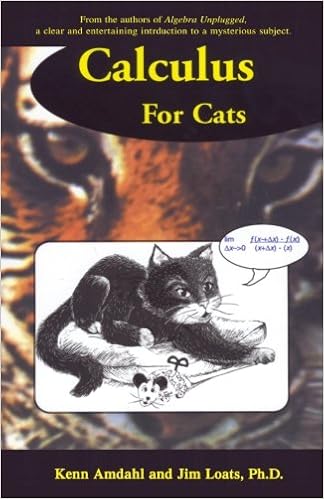
https://images-na.ssl-images-amazon.com/images/I/51abyqKuy8L._SX322_BO1,204,203,...
PIN THIS PIN THIS.
broken meadow
mouse
fervent lava
I hate cats, is there one for dogs.
sage python
Then maybe they're not ready for calculus
halcyon hornet
fervent lava
I hate cats, is there one for dogs.
sage python
But it might be that you could start with calculus but you'd be faster if you did Paul's notes then analysis. In which case maybe that's the better option
sudden kindle
Learning calculus is overrated
sage python
This is all geared toward math people who eventually need to learn the theory. If you don't then Spivak's main selling point isn't worth much
sudden kindle
Learn combinatorics and some group theory
halcyon hornet
sudden kindle
Learn combinatorics and some group theory

sage python
And maybe you'd rather learn proofs through linear algebra or some other subject and then just jump right to Rudin tbh
halcyon hornet
Then Become a professional counter and puzzle maker.
sudden kindle
I count for a living
fervent lava
sage python
And maybe you'd rather learn proofs through linear algebra or some other subject...
that what you recommended on some reddit post. The guy had the same name as you.
halcyon hornet
sudden kindle
I count for a living
How many worshippers do you have then?
sage python
I kinda like linear algebra more than calc because the logic is easier
Like calc has nested quantifiers
Which take a minute to wrap your head around
And I think there's less of a gap between practice and theory than there is in calculus
halcyon hornet
I will study the theory well, build the intuition, do exercises and solve problems.
halcyon hornet
halcyon hornet
I will study the theory well, build the intuition, do exercises and solve proble...
For Calculus.
sage python
Definitely hard disagree with the nonsense about calc 3 before linear algebra
That this is apparently common suggests to me that a lot of people who design curricula are kinda smooth brained
halcyon hornet
Proofs come after Calculus then .
sage python
Proofs come whenever you want them to come lol
Don't underestimate or overestimate yourself
frigid comet
I hope the proof for my current problem comes soon.
halcyon hornet
sage python
That this is apparently common suggests to me that a lot of people who design cu...
Are you scientifically speaking or joking here, because brains should be soft and wet instead of rock hard.
halcyon hornet
frigid comet
I hope the proof for my current problem comes soon.
What is that, may I know?
sage python
Smooth brained is an expression for stupid, the joke being that you're smarter if your brain has more wrinkles
halcyon hornet
Oh okay.
frigid comet
It's a microlocal scattering theory problem, related to the nonlinear time dep. schrodinger eq.
nice
sage python
For now an easier case which might already be publishable. Eventually gonna generalize quite a bit
frigid comet
have you solved the easier case yet? what is the actual problem?
if it takes a while to describe, i'll read it a little later. have a meeting shortly.
halcyon hornet
frigid comet
It's a microlocal scattering theory problem, related to the nonlinear time dep. ...
Oh damn I understand nothing.
Never-mind I need to learn A LOT of stuff before to understand that.
sage python
Nah he just gave the easy case Friday lol
frigid comet
🐱
sage python
Paper by Cowling and Nevo that I could improve upon and/or generalize
They do it for complex ss Lie groups
For now just SL(2,C) and SL(3,C)
karmic thorn
 ripe granite
Why is nobody recommending "Motivic Integration and its Interactions with Model Theory and Non-Archimedean Geometry: Volume 1 "
Everyone at harvards learned calculus from that book
fervent lava
why aren't people recommending stewart calculus? I heard if you do every problem in the book you be better than most mathematicans.
 covert lotus
Hello, any good book that explains how to partition an integer into "n" parts where we specify the decomposition content (for example 3+2+1=6) (I need it for some very big numbers...)
I guess some good book on combinatorics or number theory?
sage python
Stewart isn't really anything special as far as calc books go, def not enough to justify its price
Just pick up any $50 calc book and the quality is practically the same
I didn't know about the non-standard terminology bit even, that's a double oof
sage python
Also "better than most mathematicians" claim is pretty garbo lol
solemn rover
overpriced?
how can a book be overpriced if doing every problem in it makes you better than most mathematicians
karmic thorn
covert lotus
Hello, any good book that explains how to partition an integer into "n" parts w...
Miklos Bona, A Walk Through Combinatorics, Chapter 5 or 6 I guess.
solemn rover
surely such a book would be worth a fortune
covert lotus
karmic thorn
Miklos Bona, *A Walk Through Combinatorics*, Chapter 5 or 6 I guess.
Thanks
sage python
Being the best mathematician isn't worth that much money is the thing Clerk
halcyon hornet
fervent lava
why aren't people recommending stewart calculus? I heard if you do every problem...
ripe granite
sage python
Being the best mathematician isn't worth that much money is the thing Clerk
idk dami you get a lot of money if you win the breakthrough prize
like 3 mil
halcyon hornet
What.
frigid comet
until stewart calculus edition 15: early transcendentals version drops and a new wave of mathematicians overtake you
broken meadow
fetal transcendentals
frigid comet
actually, without checking. how many distinct versions of stewarts calculus books do you think currently exist?
ripe granite
6
fervent lava
a lot.
frigid comet
I would think closer to 20
broken meadow
we will make the distinction between early transcendentals and the normal one right
karmic thorn
They have distinct covers
broken meadow
i think around 20 as well
ripe granite

broken meadow
since there are 10 or so of each kind
early and normal
i think the last one i saw of each was 8 or 9
so maybe by now we're at 10 of each
karmic thorn
Seriously, why do some authors have such a temptation to keep pushing new editions with almost nothing new?
fervent lava
and there no difference with each version except fancier cover. maybe that were the 200 dollars is going.
karmic thorn
There are some standard textbooks here running in 50+ editions
ripe granite
khan academy is very good
broken meadow
i learned from school and khan academy
karmic thorn
I learnt from a mix of school, Khan, Thomas, winging it
broken meadow
and then at the end i did several exercises from the "problems plus" section of each problems part in stewart
halcyon hornet
karmic thorn
I learnt from a mix of school, Khan, Thomas, winging it
You used Thomas?!!?
karmic thorn
Yeah
ripe granite
Thomas is good
karmic thorn
Even MIT OCW a bit
fervent lava
those authors are actual mathematicans that are scamming the system. Alright let make the instructor require the students to get the new version each year.
halcyon hornet
ripe granite
Thomas is good
Better than Stewart?
karmic thorn
And Herb Gross' lecture series 😌 Love the man
ripe granite
never read stewart so idk
broken meadow
Thomas has an actually okay proof of the divergence theorem for its level
halcyon hornet
Nvm I will buy Stewart or Spivak since school library has Thomas and I am going to school from next year I guess.
sage python
Are they scamming the system or are they using the system to scam students?
fervent lava
using the system.
halcyon hornet
ripe granite
youre not in school?
Corona.
ripe granite
ah
halcyon hornet
So online school.
ripe granite

frigid comet
So I think there are 9 editions of calculus, each with an "early transcendentals" version, thats 18 already. Then there"s essential calculus, at least two editions, each with an early transcendentals version, thats 22. Then theres "Calcululus concepts and contexts" at least 4 editions, "Brief applied calculus", and two "biocalculus" books, giving a preliminary count of 29.
I haven't checked this too carefully though.
ripe granite

fervent lava
it every similar to my other books for other course. We must buy the new edition which isn't available online yet for free, just the old edition.
halcyon hornet
frigid comet
So I think there are 9 editions of calculus, each with an "early transcendentals...
Daym sire.
I do not understand the hate for Stewart.
karmic thorn
Christ
sudden kindle
I learned calculus from mooculus
halcyon hornet
karmic thorn
Christ
Me leaving the chat bye-bye.
frigid comet
well publishing 29 essentially identical books to beat the used book market and build a fancy house for himself is one reason at least.
halcyon hornet
karmic thorn
Stewart empire will collapse!

 fervent lava
only illegal if your not caught.
halcyon hornet
Oh.
karmic thorn
Yeah, you'd be better off trying to actually dig in.
Don't fall into analysis paralysis.
ripe granite
wise old slim
sudden kindle
Do a healthy bit of everything
Analysis, algebra, geometry, its all the same thing
ripe granite
halcyon hornet
I do literally the same thing for anything new I am trying to learn, so get good resources first and then study it all.
ripe granite
someone sully bomb
sage python
There's a case both ways
halcyon hornet
Now you are going to get Sully bombed.
fervent lava
wtf a sully?
sage python
Not a sully bombable suggestion tbh
halcyon hornet
Yes yes I agree.
sage python
Maybe like
ripe granite
someone sully bomb dami
sudden kindle
Linear algebra > calculus
sage python
Idk Senku do you say crank shit a lot? Be honest
Idk you well so I have no idea if you're one of the server cranks
halcyon hornet
What is crank shit?
sage python
I don't think you are but whenever someone young is shooting high you have to wonder
frigid comet
we need a definitive server crank list
ripe granite
senku is not a crank
frigid comet
with tiers and colours
sudden kindle
I'm just kidding, linear algebra = calculus
halcyon hornet
ripe granite
senku go learn calc
Yes sir!
sage python
If someone needs to get their ego toned down a bit I will say they should do calculus first
karmic thorn
Don't spend so much time looking for the "best" resources that you compromise on the time that could have been spent learning. Get a rec, run with it. If it doesn't work for some reason, ask around again. @halcyon hornet
sage python
Because if you don't know what you're doing calculus will make that painfully obvious and humble you a bit
sudden kindle
sage python
If someone needs to get their ego toned down a bit I will say they should do cal...
Whst
halcyon hornet
karmic thorn
Don't spend so much time looking for the "best" resources that you compromise on...
Okay!
sage python
Otherwise it's a matter of preference imo
ripe granite
 wtf js tbhs
fervent lava
"to be honest" i think.
halcyon hornet
halcyon hornet
What is crank shit?
.
ripe granite
ignore it
orchid musk
yeah don't get "paralysis by analysis" jumping in and getting your feet wet is more important
sage python
People who think they can prove big unsolved problems that are way over their heads
And just end up blabbering idiotic shit about the zeta function or whatever
halcyon hornet
sage python
People who think they can prove big unsolved problems that are way over their he...
Yes I do not think that, definitely not.
sage python
Yeah then just do what you want
karmic thorn
I'm something of a crank myself
orchid musk
dunning kruger at its finest lol
gray gazelle
ripe granite
senku go learn calc
even if you want the best resources, i would suggest paul's notes for a beginner, they are very beginner friendly and also 3b1b Calculus videos are very good with paul's notes atleast for a 8th graer i guess
sage python
Dunning Kruger is fine if you're right lol. People rarely are with math especially lol
gray gazelle
i dont think you can get any "better" resources than these
eventually the content is the same
sage python
Paul's notes strike me as the smoothest way to do it and it's free
gray gazelle
yeah
sage python
Otherwise grab the first calc book you see that's not too expensive and just roll with it
If you really need a physical copy that much
gray gazelle
its just that 3b1b provides some intuition and for a beginner that is the best yo can get
sage python
(Also get it smoothest? hahahahaha)
orchid musk
also realize learning isn't a linear process, somedays you'll be able to proceed and learn much more than other days in the same amount of time
gray gazelle
sage python
If you really need a physical copy *that much*
i bought a physical copy and realised i cant keep 2 notebooks and 1 book on my desk at the same time 💀 because its too small
ripe granite
sage python
(Also get it smoothest? hahahahaha)
ripe granite
maffz
manic cape
thanks 
gray gazelle
lol as if i got 50000 currencies to spare
ripe granite
do not bring up ipads
people will start asking about which version is the best one instead of learning calc
fervent lava
intuition for calculus, isn't calculus itself the intuition.
gray gazelle
kinda
but you need some form of where it came from as a begginer
that moment when your savings total up to 1/3rd the price of an ipad
sage python
F in respects
fervent lava
I finally found a book for multivariable analysis, functions of several variables wendell fleming.
sage python
Does it cover wending numbers of curves?
fervent lava
basically equivalent to hubbard book but not the extra linear algebra in it.
that is what I was looking for, since friedburg covers that for me.
karmic thorn
Do introductory books on algebraic topology assume you know category theory?
Or do they introduce whatever notions are necessary on the go?
remote nova
Most books won't do the former
karmic thorn
Like, they won't use categorical jargon?
remote nova
They often teach you what it means
karmic thorn
Sounds good.
subtle siren
Billingsley is probably standard for advanced probability.
There are actually a lot of more recently-published probability books (Billingsley, Feller are really old), but I don't know of how good they are, because I don't really read advanced probability
https://math.stackexchange.com/questions/156165/good-books-on-advanced-probabilities
This SE post recommends Klenke, Kallenberg, and also Resnick as already mentioned above

Mathematics Stack Exchange
what are some good books on probabilities and measure theory?
I already know basic probabalities, but I'm interested in sigma-algrebas, filtrations, stopping times etc, with possibly examples of "...
karmic thorn
@livid garnet Please don't post pirated books here, Discord disapproves. And of all things you chose some literature...
 livid garnet
karmic thorn
<@312019883879825409> Please don't post pirated books here, Discord disapproves....
livid garnet
karmic thorn
<@312019883879825409> Please don't post pirated books here, Discord disapproves....
im like 90% sure copyright has expired on labyrinths
karmic thorn
||The copy you shared explicitly mentioned not sharing without permission, I think.||
It is unfortunate that publishers continue to leech off of these works
livid garnet
karmic thorn
||The copy you shared explicitly mentioned not sharing without permission, I thi...
that restriction doesn't apply anymore once the work is in the public domain
karmic thorn
Then probably share the version that doesn't stipulate a copyright 
In any case
Why post that out of the blues lmao
It isn't even math I suppose
livid garnet
karmic thorn
Then probably share the version that doesn't stipulate a copyright <:catshrug:56...
magazine, radio, or television review, no part of this book may be
reproduced in any form or by any means, electronic or mechanical, including
photocopying and recording, or by any information storage and retrieval
system, without permission in writing from the Publisher. ``` is an incredibly standard disclaimer to put with copyright informationits like the blue screen fbi warning on films from a certain era
karmic thorn
Ah, okay, my bad then.
 hollow spoke
Any review about TM Apostal Mathematical Analysis book .
frosty girder
I would say its a pretty good book
i am doing it myself, and i like it quite a bit
hollow spoke
frosty girder
I would say its a pretty good book
Thankyou for your response
frosty girder
marble solar
glad prairie
<:sully:651816820122189834>
Name a better Calculus book
glad prairie
it's the best calculus book, that doesn't mean that it's the best book to recommend someone who wants to actually understand calculus for the first time
it's the best book for a second read, or even if you've seen the ideas before elsewhere and are really comfortable with all the prereqs
NOT the best general use book.
marble solar
I disagree, I think it's fine for a first read under guidance
quick hornet
sorry liberals, best calc book is
marble solar
I learned Calculus through Spivak my first time through
I had an experienced instructor who was sure to give us plenty of computational homework so we learned how to take derivatives and integrals quickly
But we also learned how to prove things at a basic level
gray gazelle
Anyone read p-adic numbers and their functions by Kurt Mahler?
Working through it now and it's dense but yummy, it's so cool how much general stuff there is besides the g-adic/p-adic stuff
My community college library has a very small selection of math texts and this happened to be one of them which is very lucky
gray gazelle
quick hornet
sorry liberals, best calc book is
12 pages long
that's too short
I prefer calculus for dummies
marble solar
quick hornet
sorry liberals, best calc book is
This is pretty neat
quick hornet
why would your calc book have more than 12 pages, calc consists of like 4 definitions and 3 facts
marble solar
lmao
quick hornet
- limit/continuity
- derivative
- antiderivative
- definite integral
and then: - all these are linear
- MVT
- FTC
thats literally it
gray crystal
Can someone recommend me a book for rep theory of groups
In particular, one with some nice problems (say equal to or slightly harder than Herstein level)
I've tried Steinberg but it has too few problems and most problems seem to be just calculations
sage python
First part of Fulton and Harris
 pine trellis
frigid comet
we need a definitive server crank list
pine trellis
frigid comet
we need a definitive server crank list
#1: nG
Think about it. None of us understand what he does so the only proof we have that he's not a crank is faith.
subtle siren
quick hornet
sorry liberals, best calc book is
Risky click of the day
solemn rover
quick hornet
sorry liberals, best calc book is
interesting read
 polar tulip
looking for an intro to brownian motion at the early grad/advanced undergrad level. Assuming a general measure theory background is fine
quick hornet
tracing mathoverflow gives me https://arxiv.org/abs/1802.09679

arXiv.org
This is a guide to the mathematical theory of Brownian motion and related
stochastic processes, with indications of how this theory is related to other
branches of mathematics, most notably the...
that is to say, a lot of mathoverflow posts cite it as a reference
idk if thats because its good or just because its convenient
but probably worth a look regardless
polar tulip
this looks great, ty!
sage python
@polar tulip smh not reading Lawler
halcyon hornet
quick hornet
sorry liberals, best calc book is
GG.
subtle siren
quick hornet
tracing mathoverflow gives me https://arxiv.org/abs/1802.09679
Both Pitman and Yor have huge reputations, that's probably why
After taking a look, it looks really comprehensive. Wow
subtle siren
polar tulip
looking for an intro to brownian motion at the early grad/advanced undergrad lev...
I don't think that arxiv is an intro as much as it is a serious comprehensive recent review. A more typical intro might be one of the textbooks
 storm hatch
Do you guys have any recommended free ebook in the topic of number theory for year 12 or high school student, because when i searched at google it was all for collage
solemn rover
you could try "Numbers, groups and codes", that's what i learned out of in college. i don't remember how good it was.
 twilit crystal
Nothing on #books-old for stats and probs?
gray gazelle
Could someone recommend me a problem book on elementary number theory (prime numbers, divisibility, Eulers theorem, Fermat...)? With challenging but doable problems. (first year undergrad)
karmic thorn
@gray gazelle Here's a rather big list
gray gazelle
karmic thorn
<@456226577798135808> Here's a rather big list
@gray gazelle
oh it pinned
whatever
thanks!
subtle siren
twilit crystal
Nothing on <#556194300912861205> for stats and probs?
What level? If undergraduate, probabilitycourse.com and its textbook.
If graduate, scroll up
twilit crystal
subtle siren
What level? If undergraduate, probabilitycourse.com and its textbook.
If gradua...
thanks
twilit crystal
subtle siren
What level? If undergraduate, probabilitycourse.com and its textbook.
If gradua...
does it cover triple?
I'm not sure what level
im asking for a friend, he is a programmer, but kinda bored and is looking for learn some probs and stats
twilit crystal
subtle siren
What level? If undergraduate, probabilitycourse.com and its textbook.
If gradua...
by scroll up you mean the brownian stocahstic proc?
subtle siren
subtle siren
https://math.stackexchange.com/questions/156165/good-books-on-advanced-probabili...
This is advanced probability
Brownian is specific to Brownian, it's a core stochastic process for sure but it's not all of probability
subtle siren
twilit crystal
does it cover triple?
What do you mean by triple?
twilit crystal
subtle siren
This is advanced probability
thanks
twilit crystal
subtle siren
What do you mean by triple?
In probability theory, a probability space or a probability triple {\displaystyle (\Omega ,{\mathcal {F}},P)}(\Omega ,{\mathcal {F}},P) is a mathematical construct that provides a formal model of a random process or "experiment". https://en.wikipedia.org/wiki/Probability_space
In probability theory, a probability space or a probability triple
    (
    Ω
    ,


        F


    ,
    P
    )


{\displaystyle (\Omega ,{\mathcal {F}},P)}
is a mathematical construct that provides a formal model of a random process or "experim...
subtle siren
twilit crystal
> In probability theory, a probability space or a probability triple {\displayst...
That's typical in a measure-theoretic course, or essentially advanced probability
twilit crystal
subtle siren
This is advanced probability
Ah I think that's too advanced.
subtle siren
That's weird, I don't know why you would need to care about the probability triple unless you are into advanced probability
twilit crystal
subtle siren
That's weird, I don't know why you would need to care about the probability trip...
I think that's coz I'm weird lol.
I don't care about advanced rigor, but I care about the "true" narrative of math.
I want to have a feel of how things are actually defined, minus suffering the proofs
subtle siren
"true" narrative of math is very difficult to say. If you want conceptual understanding of things I think you might want to search for different books to find a fitting style than to really have someone else find it for you, unless you specifically can define "true" narrative for others to help you
twilit crystal
I think I like something like Terrence Tao Analysis 1. self-contained, no pre-req, gentle on proof, but solid conceptual understanding.
subtle siren
I think the undergraduate stuff might still work. They don't define it but there's a still a lot of conceptual ideas
Essentially most probability textbooks could discuss some form of the triple or aspects of it, but generally only advanced textbooks care about exact definitions since they want to be axiomatic and build up
twilit crystal
subtle siren
Essentially most probability textbooks could discuss some form of the triple or ...
I see, I'll start with this: probabilitycourse.com thanks
 craggy dome
Are there any good lectures on analytic number theory online? Would really appreciate it 🙂
halcyon scaffold
by lecture do you mean videos, lecture notes or books?
craggy dome
Videos if possible
gray gazelle
storm hatch
Do you guys have any recommended free ebook in the topic of number theory for ye...
Oyestein Ore's Invitation to Number theory might be a suitable read. It's written with high school students in mind.
solemn rover
twilit crystal
Nothing on <#556194300912861205> for stats and probs?
i learned basic probability and statistics out of the book by Hogg, Tannis and Zimmerman
junior merlin
storm hatch
Do you guys have any recommended free ebook in the topic of number theory for ye...
@gray gazelle all ebooks are free if you try hard enough
solemn rover
numbers groups and codes is free online
smoky zephyr
can you guys recommend a multivariable calculus book that is very detailed in the multiple integrals section
i absolutely suck at these
gray gazelle
smoky zephyr
can you guys recommend a multivariable calculus book that is very detailed in th...
I think there is spivak's calc on manifolds, maybe that'll be good
surreal phoenix
I think that might be a different kind of detailed than he was looking for
smoky zephyr
this is definitely not for me
by detailed i meant, explains everything
because with double integrals i basically have no clue what i’m doing
surreal phoenix
I learned them from professor Leonard, see if that helps
smoky zephyr
well i don’t usually use youtube videos but this one time might be an exception
i’ll try it
woah these videos are like 2 hours long, don’t know if i can do that
surreal phoenix
They're full lectures, so if you're already familiar with the ideas, you can skip to the examples
Either way, highly recommend them
smoky zephyr
tterra, do you think that will be a good book for someone that understands basically nothing about double integrals
because i’ve been insanely lost after i’ve gotten to this point
gray gazelle
surreal phoenix
I don't think advanced calculus is what he's looking for either
gray gazelle
the book has many examples and exercises
surreal phoenix
just basic stuff you'd find in a multivariable calculus course
How rigorous is it though
gray gazelle
yeah, advanced calculus (the book) is basic stuff you'd find in a multivariable calculus course
surreal phoenix
Usually advanced calculus means analysis, so maybe that's where I'm confused
gray gazelle
surreal phoenix
Usually advanced calculus means analysis, so maybe that's where I'm confused
depends tbh, I have a book called advanced calc which has stuff like PDE's and multivar
surreal phoenix
Oh I see, nevermind then
gray gazelle
the book is rigorous.
surreal phoenix
yeah, but its presence isn't something he's asking for, either
surreal phoenix
still, if you're not even sure if it'll help with his problem with double integrals, why recommend a rigorous book
gray gazelle
how can i be absolutely certain any of my recommendations will help anyone?
rigorous book or not
i just chose one i liked and found helpful when i learned that stuff
i don't know quantum well. i can't pick a book specifically tailored to their interests and past education
surreal phoenix
Impossible, of course, but still, it's like recommending spivak for someone that doesn't get derivatives. Sure, it works, but it'll probably end up confusing them more
Well, either way, this discussion is getting off track, you can try it and see if it works for you, quantum
quick hornet
this is gonna sound a bit elitist but like
what is there to get confused by if youre doing double integrals nonrigorously
you literally just... integrate twice
wrt different variables
surreal phoenix
not sure myself tbh, but hey
quick hornet
i feel thats why a more rigorous recommendation makes sense
surreal phoenix
How come
quick hornet
if a student asked for more detail i'd assume they want rigour
since there isnt really much more detail in a nonrigorous course?
surreal phoenix
If he has a problem with something you find so simple, I don't think complicating it more is his remedy
smoky zephyr
there are questions i know how to do and questions i have no clue how to do
surreal phoenix
I don't think rigor is the problem here
 gray jungle
smoky zephyr
can you guys recommend a multivariable calculus book that is very detailed in th...
gray jungle
smoky zephyr
can you guys recommend a multivariable calculus book that is very detailed in th...
most calculus books fit that
surreal phoenix
he can't do some computations, he doesn't need rigor
surreal phoenix
Give us an example, quantum, can you do that
gray jungle
i was looking for a good calc 3 book as well
settled with jerrod marslen and alan weinstien calc 3 book+munkres for more rigorous reference
surreal phoenix
Munkres has a calculus book?
gray gazelle
oh no
surreal phoenix
or are you talking about his topology one
gray jungle
analysis on manifolds is along calc 3
surreal phoenix
I see
smoky zephyr
@quick hornet stuff like this
