#book-recommendations
1 messages · Page 260 of 1
 karmic thorn
karmic thorn
karmic thorn

 gray gazelle

 stray veldt
those names though

 quick hornet
the naming is really dumb
i will forever be mad that "regular" and "normal" are not equivalent
they sound like words that should be equivalent
and the definitions seem really similar
but nope
stray veldt
i like how they were like "damn we forget something"
and now there is T2.5
also T2 and completely T2, wtf??
 iron granite
Do all Topology books adopt the Naive Theory of sets?
stray veldt
well, point-set topology basically only talks about sets, so
iron granite
And how can you have an incomplete metric space?
stray veldt
iron granite
And how can you have an incomplete metric space?
Q with standard metric
3, 3.1, 3.14, 3.141, ... is cauchy but doesn't converge, bcs pi is not in Q
iron granite
He got you there.
stray veldt
ignore nami, he is a known shitposter
iron granite
Ah, so basically, for distance we need the reals
quick hornet
no?
iron granite
Suppose the distance is pie, but since Q doesn't have pie, it isn't possible.
Something like that?
stray veldt
distances between rationals will be rational
quick hornet
review the definition of "complete"
it doesnt rely on a metric at all
(intrinsically)
(it does in defining cauchy ofc)
stray veldt
i just remembered i have a related meme, mods dont ban me
 gray gazelle
lmao
iron granite
Stupid question but, do Abstract Algebra and Topology ever intersect?
iron granite
k, thanks for the answer.
 novel obsidian
algebraic topology channel when?
 supple folio
hello, does anyone here knows where to read some parts of From five fingers to infinity : a journey through the history of mathematics by Frank Swertz?
 livid ermine
stray veldt
those names though
livid ermine
stray veldt
those names though
normal hausdorff
completely normal hausdorff
perfectly normal hausdorff

sus
 graceful egret
has anyone read discrete mathematics with applications by susanna epp? i've heard great things about it but it's pretty lengthy
ima give it a try but ive never dedicated myself to 993 entire ass pages
iron granite
It's nice.
You obviously don't have to read it all.
Some stuff I feel is just for CS people.
 craggy sapphire
Good books to learn basic high school geometry? A book that explains things well, is easy to grasp for a noob and has good practice problems? Please don't recommend me euclid's elements man 
karmic thorn
craggy sapphire
Good books to learn basic high school geometry? A book that explains things well...
Not particularly basic but maybe first few chapters from Coxeter's Introduction to Geometry?
iron granite
craggy sapphire
Good books to learn basic high school geometry? A book that explains things well...
I've heard good things about Kiselev's books, check him out if you want to.
 strange vine
does anyone know any books about the philosophy of statistics (e.g. bayesian epistemology)?
and which covers different interpretations like bayesian, frequentist and information-theoretic probability
craggy sapphire
iron granite
I've heard good things about Kiselev's books, check him out if you want to.
looks good thanks
 wintry lotus
Hi! Just wondering if Stein and Shakarchi's book on Fourier Analysis is a good book for the topic?
wintry lotus
Also, if anyone's studied it before, how much can I aim to cover in a month, assuming no prior background in Fourier Analysis? Just trying to plan something for the month of December, want to learn Fourier Analysis. I was thinking about first 4 chapters?
 broken meadow
according to daminark and some older ppl you wanna learn some more math and do a different book if u wanna do fourier analysis a lot more solidly
yeah
up to ch4 sounds doable in a month
wintry lotus
broken meadow
new to analysis
I have done courses on Measure Theory, Real Analysis, Complex Analysis, Functional Analysis, so I'm certainly not new right? Not sure
wintry lotus
LMAO what
wintry lotus
ok what's a better book then
broken meadow
it wouldn't hurt to look at stein shakarchi for sure
i just think that you'd find it is very very easy
wintry lotus
Okay at least it'd be a good starting point
broken meadow
hopefully daminark will give you a secondary source
yeah
he might provide a book so that you could continue
wintry lotus
Yep! Cool
 gusty smelt
i think their fourier analysis book doesnt have like, lebesgue integral
broken meadow
it doesn't
gusty smelt
so its a bit wierd
broken meadow
it assumes only riemann integration 
wintry lotus
Eventually, I want to be able to read Koldobsky's book on Fourier Analysis in Convex Geometry
That's what I'm doing this
wintry lotus
gusty smelt
i think their fourier analysis book doesnt have like, lebesgue integral
That's true, because they teach Measure Theory in a later volume
gray gazelle
riemann integration 
 sage python
Yeah Stein Fourier is prob on the easy side if you know measure theory
@frigid comet prob has better recommendations, one of my friends swears by Schlag for harmonic analysis and it's likely what I'll use
Grafakos is also supposed to be good
sage python
@remote ginkgo this covers very little Fourier analysis and Hausdorff later indicated having background in subjects like measure theory that go far beyond this document
sage python
It does seem good at a glance but yeah that's why the other recs were Stein+
 remote ginkgo
i have a russian translated dover book
and ofc i have stein which i havent read yet
 frigid comet
Yeah I'd say Grafakos classical fourier analysis is what you want.
 marble solar
I think Stein's volume 4 is really good intro to harmonic
The first 3 or 4 chapters
 misty wyvern
Stein also has a literal book on harmonic analysis.
marble solar
misty wyvern
Stein also has a literal book on harmonic analysis.
He has 3: Singular Integrals, Fourier Analysis on Euclidean Spaces, and his mammoth harmonic analysis
The thing is that volume 4 has a lot of the same sections contained in some of the books
But the exposition/arguments are cleaner, and they have exercises to solve
So I think as far as getting a grounding in the material, I think volume 4 does a better job
Than the other texts by stein, which are classics
iron granite
but he's a guy...
 dapper root
iron granite
but he's a guy...
dapper root
iron granite
but he's a guy...
だが男だ
sage python
I should say about Schlag's books that my friend, whose opinions I'd say tend to be good, has referred to it as the best textbook ever written
And tbh I will likely use that when it's time for me to learn the stuff
I'm gonna make @orchid agate read it
Oh wrong one
@ionic wren
Since you like automorphic forms you wanna learn some Fourier analysis eventually
sage python
Lol F. Had any time to do some fun math?
gray gazelle
excuse me, could anyone recommend me some good AA book other than Herstein?
hardcore one*
 ionic wren
sage python
Lol F. Had any time to do some fun math?
ionic wren
sage python
Lol F. Had any time to do some fun math?
nah not really, i had been practicing for exams
i did 124/62 (each exam had 2 parts to it) exams in practice for maths
i hope i did well
 reef wolf
any good book for 3d coordinate geometry
gray gazelle
gray gazelle
excuse me, could anyone recommend me some good AA book other than Herstein?
Hungerford homie
Besides the classic d&f but its not h4rdc0r3
 prisma snow
Rotman 
 frosty girder
i liked artin for as much as i did it
pretty nice it is
 cobalt arch
Knapp is really good too
Or if you are really hardcore Lang with the supplementary notes by Bergman
iron granite
what is the most comprehensive group theory book?
gray gazelle
Rotman
iron granite
Full name?
karmic thorn
Advanced Group Theory by Joseph Rotman, I think
gray gazelle
The advanced one is advanced modern algebra
The group is introduction to the theory of groups
wintry lotus
frigid comet
Yeah I'd say Grafakos classical fourier analysis is what you want.
Great, thanks!
 solemn panther
I found it, Plane Trignometry is very good, it gives a conceptual understanding of every concept along with practise problems.
iron granite
Have any of you read Measures, Integrals and Martingales?
 cunning notch
The Art of the Deal
 raven patio
Not many math books are there tho
cunning notch
The Bible
raven patio

stray veldt
i have a good recommendation for the history of mathematics: https://link.springer.com/book/10.1007/978-1-4939-3264-1
This book explores some of the major turning points in the history of mathematics, ranging from ancient Greece to the present, demonstrating the drama that has often been a part of its evolution. Stud
@karmic thorn because you might care
misty wyvern
why, is that your book?
Well I'm looking at the TOC and it actually looks really good. I know Schilling's book on BM so I like his writing style.
karmic thorn
stray veldt
<@!697848465819959388> because you might care
Thanks!!
misty wyvern
If you want to learn measures this way I'd say it looks good.
karmic thorn
stray veldt
i have a good recommendation for the history of mathematics: https://link.spring...
They forgot to list my birth smh
iron granite
misty wyvern
why, is that your book?
Heard good things about it and wanted to know whether it lived up to it's rep
remote ginkgo
stray veldt
i have a good recommendation for the history of mathematics: https://link.spring...
I love you
iron granite

Pythagoras' theorem is both the oldest and the most important non-trivial theorem in mathematics.
This is the first part of the first lecture of a course on the History of Mathematics, by N J Wildberger, the discoverer of Rational Trigonometry. We will follow John Stillwell's text Mathematics and its History (Springer, 3rd ed). Generally the e...
Don't know how useful this is to you but I found this guy decent.
It's an entire playlist.
iron granite
yeah he says that there is a hole at the bottom of analysis (paraphrasing) but im too analysis illiterate to understand.
karmic thorn
iron granite
btw what is a finitist?
karmic thorn
Finitism is a philosophy of mathematics that accepts the existence only of finite mathematical objects. It is best understood in comparison to the mainstream philosophy of mathematics where infinite mathematical objects (e.g., infinite sets) are accepted as legitimate.
karmic thorn

I don't know much
Maybe there's some genuine work being done with that perspective
iron granite
I'll just wait for the Veritasium video.
misty wyvern
Veritasium is the worst
iron granite
I thought his godel video was really good
misty wyvern
His best video is the day he didn't upload one
iron granite
damn, did he do something? what's this hatred? lol
misty wyvern
He is the reason why every math grad student gets 10000 crank emails about solving the collatz
iron granite
Not much of a reason to hate him
What is he supposed to do? Not make a video on an interesting problem and earn mone?
misty wyvern
yes
iron granite
Maybe I'll empathize when I'm a grad student.
misty wyvern
I'm just memeing, most pop sci folk aren't bad, just cringe
iron granite
What are they supposed to do except be pop tho
you can't expect most folk to be able to understand technicalities
although I guess Vsauce did do this better.
sage python
So idk about Veritasium, we'v definitely had debates about Numberphile though that was less about popularizing and more about the fact that the thing he was trying to popularize was the zeta function
But he was playing games with divergent series in order to do so, at which point you've pretty much tossed out the irl content/what's interesting about it
 foggy relic
Veritasium is interesting imo
like he combines math and history
i especially liked his vid on equations of higher degrees
we all know 3b1b is the best mathtuber
sage python
Eventually the Numberphile discussion did go the crankery direction. Like okay he's wrong, and in an irreparable way, but he's making people interested in math and that's good, right? To which a number of people responded "He probably created more cranks than he did people who would engage in math in a quality manner". Which is an empirical question rather than pure reason so obv it couldn't be resolved
I think Vsauce's video on Banach-Tarski is the best pop math video there is. 3b1b feels slightly less pop math and more, introducing cool math to people who were probably interested in math already.
karmic thorn
I agree with the take on 3b1b
 grim pivot
Like you said, popularizing an idea/subject often requires exposing people to the cool parts and and far-reaches of that subject. This will get a lot of people thinking and will naturally increase the number of newbies who think they’ve solved something amazing. It’s honestly just part of getting people interested in a topic
misty wyvern
Thanks primarily to pop sci I had no interest in hard sciences until I accidentally studied it rigorously.
grim pivot
3b1b does a good job at not luring people into thinking they can solve something amazing with just a little thought, but that laid back-ness also is less likely to get new people super interested in a subject
sage python
So the thing that I am more inclined to believe based on my experience is that "X video introduced more people to math" being correlated with "X video leads to more math crankery" is less that the individuals who end up getting into math through these videos have a newbie/crank stage and is more a general statement about accessibility
misty wyvern
I don't care about more or fewer people getting into math, I do care about people butchering my work aieeeeeeeeeeEEEE
sage python
I think there are a wide variety of reactions one can have to a piece of content like this. Tbh I'd wager most people who would find the video interesting are already vaguely into math anyway. If those people play around with it further I doubt they become "permanent cranks", feels like they have enough mathematical common sense that eventually someone can get it through to them that shit's harder than they think. In which case either they continue to learn or the momentum is stuffed out
Others will watch it and be like oh that's cute
And not continue
Then you have the people who had little interest in math before but actually get into it somewhat seriously because of this video. My guess is that this group is much smaller, and it's not clear to me what the distribution is of cranks vs people who actually run with the math in a positive way
So that's where it's like 🤷
gray gazelle
karmic thorn
I just hope he didn't mix finitist takes here as well
its an old playlist
I dont think he does
karmic thorn
Aah, I see
I've just grown more reluctant to actually watch his videos to learn stuff
Because as a novice I can never tell if he just mixes his own agenda and affects my own understanding that way
gray gazelle
thats fair, but I know some of those vids use stillwell's book
karmic thorn
Ahh
 brittle latch
thoughts on Proofs from THE BOOK
just checked it out of the library and im excited
quick hornet
@sage python youre giving a pretty generous treatment to a video with a title that says math has a "fundamental flaw" or some shit
like maybe the content is fine but you know how many people dont read articles past the headline
foggy relic
sage python
I have no idea who Veritasium is

Derek Alexander Muller (born 9 November 1982) is an Australian-Canadian science communicator, filmmaker, television personality and inventor, who is best known for his YouTube channel Veritasium. Muller has also appeared as a correspondent on the Netflix web series Bill Nye Saves the World since 2017.
and this is one of his best vids imo https://www.youtube.com/watch?v=cUzklzVXJwo
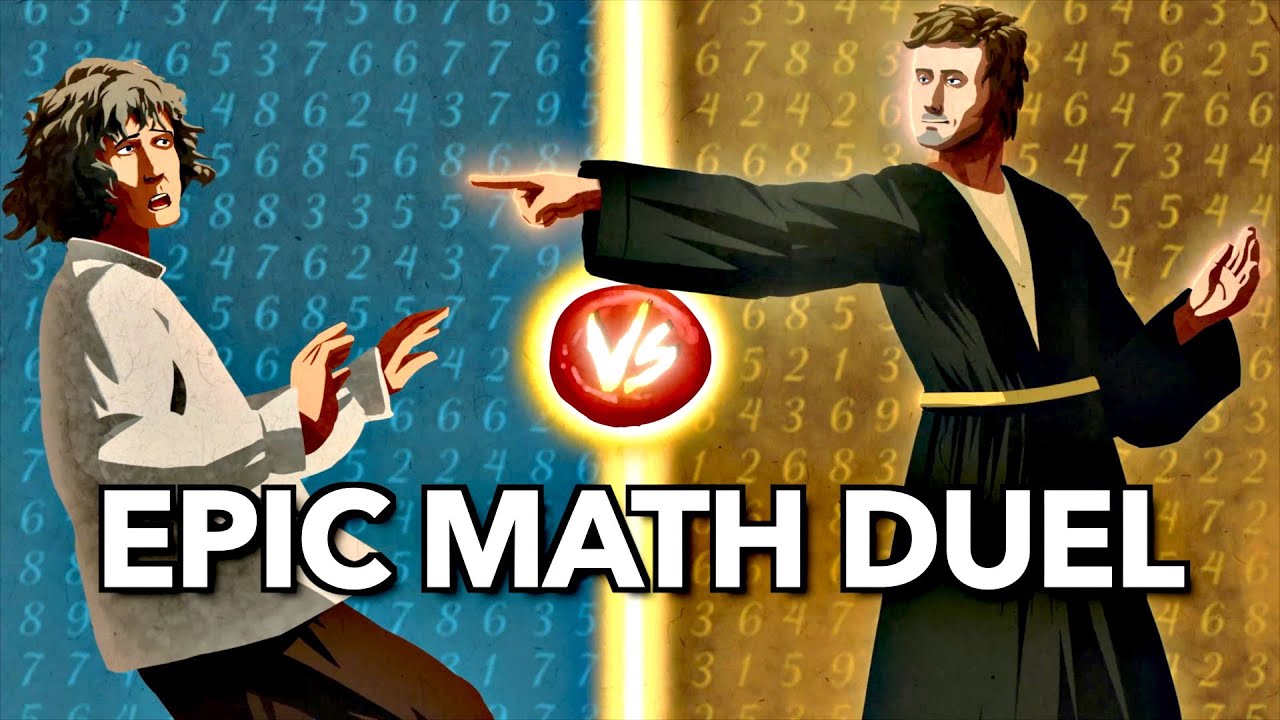
A general solution to the cubic equation was long considered impossible, until we gave up the requirement that math reflect reality. This video is sponsored by Brilliant. The first 200 people to sign up via https://brilliant.org/veritasium get 20% off a yearly subscription.
Thanks to Dr Amir Alexander, Dr Alexander Kontorovich, Dr Chris Ferrie,...
quick hornet
how not to read a room
brittle latch
vid was interesting but god that title makes me squirm
stray veldt
another interesting book: https://press.princeton.edu/books/hardcover/9780691199221/do-not-erase

A photographic exploration of mathematicians’ chalkboards
stray veldt
remote ginkgo
I love you
you're more like a sibling to me
remote ginkgo
The love is platonic, not fraternal
remote ginkgo
stray veldt
another interesting book: https://press.princeton.edu/books/hardcover/9780691199...
Ok now it's fraternal.
 dapper zenith
should i know something before reading concrete maths by knuth i am finding it quite difficult after 1st chapter
misty wyvern
Just keep bashing your head against it, it's dense but I don't think it has a high barrier to entry.
iron granite
brittle latch
thoughts on *Proofs from THE BOOK*
I have it
It's good so far though Ive only read 4 chapters
 glad prairie
"is popmath GOOD or BAD?" volume 837272737743
 cursive orbit
gray gazelle
cursive orbit
gray gazelle
Anyone knows a book that develops synthetic geometry for the plane rigorously and like talks about linear spaces, ordered geometry and neutral geometry, and euclidean and hyperbolic? preferably without using real numbers for axioms
gray gazelle
Robin Hartshorne's Geometry: Euclid and Beyond seems interesting so far
marble solar
glad prairie
"is popmath GOOD or BAD?" volume 837272737743
GOAD
glad prairie
Greatest Of All Dime
gray gazelle
people in this server are so unserious
 gray jungle
is there any good concise books on probability
and what are the standards for proba in general?
marble solar
Rick Durrett's text on probability looks good
gray gazelle
Resnick, A probability path is nice imo
gray gazelle
gray jungle
is there any good concise books on probability
and what are the standards for p...
I liked Shiryaev's approach
gray jungle
what about YA rozanov probability theory a concise course ?
gray gazelle
of course
broken meadow
people in this server are so unserious
gray gazelle
ikr right
 buoyant eagle
Never seen “A Comprehensive Introduction to Differential Geometry” recommended alongside “Goodnight Moon” and “Green Eggs and Ham” before

But apparently Spivak wrote a children’s book?
gray jungle
what do you guys think of Basic probability theory by robert B ash
 subtle siren
gray jungle
is there any good concise books on probability
and what are the standards for p...
subtle siren
gray jungle
is there any good concise books on probability
and what are the standards for p...
What level are you talking about?
subtle siren
marble solar
Rick Durrett's text on probability looks good
The most standard, though I think more for applied math than for those who like Analysis-Probability
subtle siren
gray jungle
what about YA rozanov probability theory a concise course ?
Amazon says it is concise, which might be what you want.
subtle siren
gray jungle
what do you guys think of Basic probability theory by robert B ash
No clue on this. Though TBH I am not sure why you are looking for books that old. Personally I am more of a published-later-is-better than earlier is better. i.e. if possible I rather not read Feller+Billingsley
Actually as a segue, I'd like to know people here's opinions on more modern alternatives to Feller/Billingsley
gray jungle
this is the content of rozanov

tho i might go with rober b ash book
im looking for intro proba that bridges into more advanced concepts eventually
subtle siren
gray jungle
tho i might go with rober b ash book
im looking for intro proba that bridges in...
TBH I would recommend a book on intro and then a specific book on advanced things, but up to you. I'm not sure on those
gray jungle
subtle siren
TBH I would recommend a book on intro and then a specific book on advanced thing...
what would you recommend
gray gazelle
can someone recommend valuable resources for Combinatorics?
karmic thorn
gray gazelle
can someone recommend valuable resources for Combinatorics?
Do you have something more specific in mind?
subtle siren
gray jungle
what would you recommend
Durrett for the intro, you'd need something more specific for the advanced stuff
Wait apparently Durrett is into grad, for my own digital library of undergrad probability I have Blitzstein Hwang and Wagaman Dobrow, though I have not actually read them in detail, but they seemed undergrad-ish to me
For harder stuff you would probably need to ask for specifically. I have seen Schilling's Measures/Martingales book for that sort of thing
This is I think a standard for undergrad prob
https://www.amazon.com/First-Course-Probability-10th/dp/0134753119
(replaced 9th ed with 10th ed)
Other than the less-than-stellar amazon reviews, also
https://news.ycombinator.com/item?id=18429429
and
https://www.reddit.com/r/statistics/comments/is3o5t/q_looking_for_good_intro_to_probability_books/
TBH I realised my uni provided me with the lecture notes and stuff, so I can't quite comment on just using one book. Also I suppose it should be good to try various books
gray gazelle
karmic thorn
Do you have something more specific in mind?
I wanna recap what I have been learned during high school.
karmic thorn
Oh, then probably the concerned parts in any discrete math or introductory combinatorics book
You can look up Art of Problem Solving and the likes for slightly more challenging problems (mostly with solutions) as well
gray gazelle
I can see books like this one: https://www.amazon.com/dp/1441927239

Combinatorics and Graph Theory (Undergraduate Texts in Mathematics)
and this: https://www-math.mit.edu/~rstan/ec/
gray gazelle
gray gazelle
and this: https://www-math.mit.edu/~rstan/ec/
I think this is well suited for me
gray gazelle
karmic thorn
You can look up Art of Problem Solving and the likes for slightly more challengi...
it's very basic to be honest
gray jungle
subtle siren
For harder stuff you would probably need to ask for specifically. I have seen Sc...
i don't want to spend more than whats needed on non-measure theory proba its just required so im gonna use romanovs concise book for intro proba (and suppliment when needed) and then use other books to bridge for measure theory and advanced concepts
thanks for the help
karmic thorn
gray gazelle
I think this is well suited for me
Oh, yeah, if you consider AoPS to be basic then undergraduate textbooks on combinatorics would be much more handy
I shill Miklos Bona's A Walk Through Combinatorics
 bitter raptor
i swear manan has read every book
gray gazelle
karmic thorn
Oh, yeah, if you consider AoPS to be basic then undergraduate textbooks on combi...
I wanna recap Olympiad-level Combinatorics
subtle siren
bitter raptor
i swear manan has read every book
"every" is actually just Vakil, I'm pretty sure
karmic thorn
bitter raptor
i swear manan has read every book
*ToC and Preface of every book ;)
karmic thorn
gray gazelle
I wanna recap Olympiad-level Combinatorics
I suppose undergraduate texts like Bona are near that level, even a bit beyond
gray gazelle
karmic thorn
I suppose undergraduate texts like Bona are near that level, even a bit beyond
great, I'll have a look
karmic thorn

gray gazelle
got it, thanks
 steel temple
any good books for an intro to combinatorics?
gray gazelle
Serre - a course in arithmetic
gray gazelle
I started Graduate Lang and I didnt expect it to be so dense
but the examples are cool af
 dark orbit
i think it's assumed by the time you're reading lang that you actually enjoy this for some reason
gray gazelle

 uncut zealot
My school's library only has Munkres first edition, which only has 8 chapters. Is it worth looking elsewhere for a copy of the 2nd edition?
karmic thorn
Chapter 9 onwards is the bit on algebraic topology right? And I guess that's not particularly recommended either
karmic thorn
steel temple
any good books for an intro to combinatorics?
A Walk Through Combinatorics, Miklos Bona
 quick crypt
steel temple
any good books for an intro to combinatorics?
quick crypt
steel temple
any good books for an intro to combinatorics?
Principles and Techniques of Combinatorics
marble solar
karmic thorn
Chapter 9 onwards is the bit on algebraic topology right? And I guess that's not...
It's actually pretty good
In that it does a lot of details slowly
karmic thorn
Ah, I see
 grim lion
Hi, does anyone have a recommendation for a good book that explains precalc
(high school level) well? Not just examples, but steps and repeatable processes, as well as explanations why? I know the info can be found online for free, but the problem with that is the info is not organized cohesively or in order. I'd like a book where everything I need to learn the concepts is in one place
Something I can use to kind of teach myself precalc because I feel my class explanations aren't very helpful to me, with easily understandable resources (also please ping if you have a suggestion, thank you for your time!)
karmic thorn
Have you tried Khan Academy?
The organisation and content are both very clean and standard.
grim lion
Yes, but I feel that it is helpful to a point- it teaches things the basics, which are too simple compared to what my teacher wants us to know- he assigns homework that uses the same concept in more difficult and in depth ways to test understanding, rather than steps
and doesn't really explain the reasoning
Thank you though
karmic thorn
I see. There's a precalculus textbook by OpenStax I think, you could check it out (it's available for free online); another common recommendation given here is Serge Lang's Basic Mathematics-bear in mind this doesn't adhere to standard curriculum in a lot of places and emphasises mathematical rigour much more than usual.
grim lion
Okay, I will have to check those out, thank you so much! They sound promising :)
 craggy radish
Any suggestions for a linear algebra book?
As complement to linear algebra 2 im taking rn
sage python
@craggy radish proof based? What topics are you covering?
craggy radish
So far we covered vector spaces, linear transformations, and change of basis.
And its a mix of proofs and computation
 sharp latch
People's opinions on Linalg textbooks vary wildly so I'd wait to hear from other people than just me. But my take is: Friedberg is pretty based if the course has a lot of proofs, otherwise pretty much any linalg textbook will do
craggy radish
I did some googling and people are mainly saying Linear Algebra Done Right by Axler and Strang's "Linear Algebra and its applications"
craggy radish
sharp latch
People's opinions on Linalg textbooks vary wildly so I'd wait to hear from other...
Ill take a look at this as well
sharp latch
Yeah I personally didn't like axler but havent checked out strang before
 slow matrix
marble solar
It's actually pretty good
slow matrix
marble solar
It's actually pretty good
how is it compared to brown's topology and groupoid? since both seems aimed at pointset topology and a bit algebraic too in the latter half
I'm thinking of printing one of these, munkres seems to be more standard, while brown has better pdf source
 glad grail
Like are there any online resources I can use to practice uni level problems? books are very expensive and I can't keep on buying so many because of the variety of stuff included in electrical Engineering
 versed bough
does anyone wanna rate my essay
karmic thorn
glad grail
Like are there any online resources I can use to practice uni level problems? bo...
You'll have to scavenge good resources but you should be able to find lots of lecture notes, problem sets, etc. on MIT OCW.
glad grail
karmic thorn
You'll have to scavenge good resources but you should be able to find lots of le...
I heard david tong's notes contain good problems, any similar math notes
karmic thorn
MIT OCW has a ton of stuff, but usually "(topic name) lecture notes" will show up a lot of results on Google.
gray gazelle
finance math book recommendations?
 oak pecan
gray gazelle
finance math book recommendations?
oak pecan
gray gazelle
finance math book recommendations?
what level? Shreve vol 2 is probably the standard thing to start with for a math major
iron granite
uhh is Complex Variables by Kasana a bad book? @karmic thorn
karmic thorn
I've never heard of it, I have no opinions
iron granite
the emojis had me scared
it had almost 4.4 on Amazon so I thought that I might as well buy it...
karmic thorn

frosty girder
iron granite
it had almost 4.4 on Amazon so I thought that I might as well buy it...
dont judge books by their amazon rating 
iron granite
I know, I judge them by their prices first because most math books are fucking expensive.
slow matrix
I judge them by their page count since I simply print them.
gray gazelle
You can't judge a cover of a book by its look.
sharp latch
But you CAN cover a compact book by a finite subcover
dark orbit
frankly this raises the spectre of a non-compact book and I'm not especially thrilled to imagine what that might look like
karmic thorn
Ultra's puns are always on point.
 drifting wigeon
lmao
 slender dragon
Do you know some Inquiry Base Learning books on Mathematics?
An example of book is like Linear Algebra Problem Book of Paul Halmos
gray gazelle
Hello!!!🤗 So... I'm studying Newton-Cotes Formulas, Guassian Quadrature, ... , (a lot of fancy names😅) so any books you guys would recomend? My teacher is just using his powerpoint to explain and... that sucks so much ;-;
 limpid gazelle
What do you guys suggest to read for dynamics? I want to read both continuous and discrete dynamics and a gentle introduction is probably better
dapper root
Calling in @gray gazelle and @glad prairie
limpid gazelle
Lmao
 atomic hound
So, what would be a good and rigoruous book on calculus 1?
gray gazelle
atomic hound
So, what would be a good and rigoruous book on calculus 1?
well you could try calculus james stewart don't know if it's the best book ;-;
atomic hound
gray gazelle
well you could try calculus james stewart don't know if it's the best book ;-;
Man, james stewart seems very good,but i wanna a rigoruous one,you know?
limpid gazelle
Oh haha those two are the two books I have in mind actually
Alright I'm going to checkout both I guess
gray gazelle
atomic hound
Man, james stewart seems very good,but i wanna a rigoruous one,you know?
no idea sorry mate
atomic hound
gray gazelle
no idea sorry mate
Alright,thanks for trying!
 timber mesa
limpid gazelle
What do you guys suggest to read for dynamics? I want to read both continuous an...
timber mesa
limpid gazelle
What do you guys suggest to read for dynamics? I want to read both continuous an...
Robinson's Dynamical Systems: Stability, Symbolic Dynamics, and Chaos is very complete but at the same time fairly gentle. Another is Katok-Hassenblatt's A first course in dynamics (not to be confused with their larger and far more advanced dynamics book) which is more of an overview that doesn't go too in depth
there's also Hirsch-Smale-Devaney which is basically an ODE book that also contains a chapter on discrete dynamics
limpid gazelle
The larger book is called "Introduction to the Modern Theory of Dynamical Systems" right
timber mesa
yep
my rec would be Robinson, as I said it's fairly gentle and contains detailed proofs of most things
yet it covers many topics in both discrete and continuous systems
limpid gazelle
Alright cool
I just found out about sharkovskii theorem yesterday which got me really excited
And Hirsch-Smale-Devaney's book is "Differential Equations, Dynamical Systems, and an Introduction to Chaos"?
 low turtle
Does anyone know of any upper level undergrad or intro grad level books that use pictures? iirc ive seen a few before but I can't remember what they are, id really like to look through and read parts of them though. Currently wrapping up my first semester of analysis and modern alg, I definitely like modern algebra better thus far, which I wasnt expecting
 fluid bay
atomic hound
So, what would be a good and rigoruous book on calculus 1?
fluid bay
atomic hound
So, what would be a good and rigoruous book on calculus 1?
spivak calculus is the usual recommendation for this
fluid bay
low turtle
Does anyone know of any upper level undergrad or intro grad level books that use...
a lot of geometry/topology books have some kind of pictures. Like Lee's introduction to smooth manifolds or Hatcher's algebraic topology
timber mesa
limpid gazelle
And Hirsch-Smale-Devaney's book is "Differential Equations, Dynamical Systems, a...
yep that one
timber mesa
limpid gazelle
I just found out about sharkovskii theorem yesterday which got me really excited
yeah it's a pretty intriguing result, chap 3 in Robinson has a section dedicated to it
karmic thorn
slender dragon
Do you know some Inquiry Base Learning books on Mathematics?
There's a combinatorics book whose title is something like "An Inquiry Based Approach to Enumerative Combinatorics", you could check it out.
gray gazelle
atomic hound
So, what would be a good and rigoruous book on calculus 1?
Spivak
Don't pick up something trashy like Stewart or Thomas.
gray gazelle

 analog pollen
atomic hound
Man, james stewart seems very good,but i wanna a rigoruous one,you know?
analog pollen
atomic hound
Man, james stewart seems very good,but i wanna a rigoruous one,you know?
spivak calculus
analog pollen
gray gazelle
Don't pick up something trashy like Stewart or Thomas.
those books aren't that trash lol, depends on the context
 surreal phoenix
I love looking at its price, especially
analog pollen
i got it pretty cheap so i don't have that bias
gray gazelle
Stewart is made for edgy High schoolers xd
quick hornet
edgy high schoolers
username: Ted Kaczynski
analog pollen
lmao
quick hornet
those in glass houses...
gray gazelle
Lmao
surreal phoenix
I need to look up that name brb
quick hornet
unabomber
surreal phoenix
Oh, right.. Him
gray gazelle
iron granite
on discord
via Netflix
gray gazelle
analog pollen
those books aren't that trash lol, depends on the context
Yeah I hear this sentiment all the time online. 'Only way to learn calculus is by Apostol or Spivak.'
analog pollen
Wut
gray gazelle
'Only through the degeneracy of the multitudes do we use of Stewart or Thomas etc.'
analog pollen
I don’t see anything wrong with those 2 books lol
It worked fine for me
I see why ppl like spivak or apostol more but depends on preference
karmic thorn
They just have different audiences
Most people who learn calculus aren't math majors
And Spivak is not exactly the best fit for them
surreal phoenix
I mean, would you recommend spivak to anyone who's not doing analysis in the future? I feel like there's a lot in there people just don't need to know
analog pollen
Agree
gray gazelle
quick hornet
>edgy high schoolers
>username: Ted Kaczynski
Good complex analysis specialist idk whats the deal
gray gazelle
atomic hound
So, what would be a good and rigoruous book on calculus 1?
Rudin
atomic hound
fluid bay
spivak calculus is the usual recommendation for this
Oh yeah i gonna ccheck out.
atomic hound
gray gazelle
Don't pick up something trashy like Stewart or Thomas.
Lol,really?
atomic hound
gray gazelle
Rudin
Rudin,huh?
slow matrix
people are calling on which and which book is best read, and here I am just innocently looking which book has best pdf source to print to decorate my room.
gray gazelle
atomic hound
Rudin,huh?
Spivak/Apostol if youre in math major, Stewart if not
major.....
atomic hound
gray gazelle
Spivak/Apostol if youre in math major, Stewart if not
i am computer science major,but i wanna be rigouous about math so i´ll take it.
thanks Guys for the recommendations
 gentle wharf
hello anybody here who can recommend me a book for complex numbers
for a undergraguate level
 tropic gulch
iron granite
tropic gulch
iron granite
any problem books in Abstract Algebra?
 crude sable
dummit foote
 distant bobcat
any recs for abstract algebra?
broken meadow
scrll up
 manic cape
livid ermine
manic cape
livid ermine
iron granite
DONT LOOK UP THE NAME OF THE AUTHOR OF CAT IN A HAT
frosty girder
distant bobcat
any recs for abstract algebra?
i almost forget that there exists a pinned message here
This one
iron granite
Has anyone read Induction by Adreescu Titu?
gray gazelle
Could someone suggest a problem book which deals with functions and relations? undergrad level
brittle latch
frosty girder
i almost forget that there exists a pinned message here
and an entire channel full of recommendations
gray gazelle
distant bobcat
any recs for abstract algebra?
Bourbaki
frosty girder
brittle latch
and an entire channel full of recommendations
 cedar ridge
gray gazelle
Don't pick up something trashy like Stewart or Thomas.
cedar ridge
gray gazelle
Don't pick up something trashy like Stewart or Thomas.
apostol?
nvm George B. Thomas, not Tom Apostol
what books can be considered "a rigorous course in epsilon-delta (real) analysis"
frosty girder

baby rudin, apostols book (which im doing currently), Taos books, bartle, abbott (recommended for new people a lot, seems pretty good)
stray veldt
amann escher 
karmic thorn

frosty girder
stray veldt
amann escher <:catking:860735617042219008>
frosty girder
karmic thorn
<:catKing:812386361297862747>
what happened to ur notes manan 
gray gazelle
cedar ridge
apostol?
Spivak might be a good fit
iron granite
The Foundations Of Mathematics by Kenneth Kunen is really readable.
gray gazelle
cedar ridge
apostol?
Another one which someone here recommended was Calculus: A rigorous course by Velleman
karmic thorn
frosty girder
what happened to ur notes manan <:sotrue:826971355542192148>
I'll get back to them tomorrow
frosty girder
:nice:
stray veldt
manan textbook author arc?
karmic thorn
I'm reading notes, not writing yet
I did start a blog but Just never got back to it after a post
Might consider dumping some logic as I learn it over there
cedar ridge
frosty girder
baby rudin, apostols book (which im doing currently), Taos books, bartle, abbott...
abbott or taos better 🧐
gray gazelle
cedar ridge
abbott or taos better 🧐
Abbott
iron granite
karmic thorn
<:KEK:586240877358350341> I'm reading notes, not writing yet
Manan, coaching center arc when?
I want to see degredation.
cedar ridge
gray gazelle
Abbott
whys that 🧐
gray gazelle
cedar ridge
whys that 🧐
I have heard things about Tao like lacking quality amount of problems, unclear exposition, etc
cedar ridge
ty🙇♂️ ill look into it
gray gazelle
👍
karmic thorn
iron granite
Manan, coaching center arc when?
Never
gray gazelle
Mooching off of some poor mother selling her jewellery to get money to educate her kid in some fancy ass coaching isn't very satisfying I suppose
frosty girder
cedar ridge
abbott or taos better 🧐
i would say abbott
frosty girder
karmic thorn
Might consider dumping some logic as I learn it over there

put it so that someone like me can understand as well
livid ermine
atomic hound
So, what would be a good and rigoruous book on calculus 1?
If I were you I would skip calculus and real analysis, and go straight to topology. And then differential geometry.
prisma snow
And if I were you, I would be a clown 
frosty girder
livid ermine
If I were you I would skip calculus and real analysis, and go straight to topolo...
⭐
karmic thorn
Nothing changed
prisma snow
You've done this like 5 times today...
frosty girder
more actually
idk why but the star is the top emoji whenever i type sta
im not doing it on purpose
And im used to just typing sta and pressing enter so i cant even stop it
 prisma snow
just type stare and don't be so lazy, jfc
 prisma snow
Is having to edit every message quicker?
 prisma snow
It's the closest match
gray gazelle
frosty girder
I want to be quick
just make a keyboard shortcut to type :stare: when you press it
simple
marble solar
gray gazelle
Another one which someone here recommended was Calculus: A rigorous course by Ve...
Is it any good?
atomic hound
livid ermine
If I were you I would skip calculus and real analysis, and go straight to topolo...
Wait this seems conterintuitive.
@livid ermine and why go straight to topology?
You got me curious.
atomic hound
prisma snow
And if I were you, I would be a clown <:8901_honker_clown:725776152614141962>
Very random
livid ermine
more compact and efficient. if you know diff geo well you know calculus, but if you know calculus you don't know diff geo. takes less time to learn 1 subject than to learn 3
prisma snow
That's actually false
Since you are not taking into account how much longer it would take to learn it without knowing any prereqs
analog pollen
is "An introduction to Manifolds" by Tu good?
atomic hound
livid ermine
more compact and efficient. if you know diff geo well you know calculus, but if ...
That is why i should go to topoly?
atomic hound
prisma snow
Don't listen to them
What?
atomic hound
prisma snow
That's terrible advice
Yeah, it sounds like one.
atomic hound
prisma snow
Since you are not taking into account how much longer it would take to learn it ...
Oh yeah, i think you are smart person.
prisma snow
I agree
analog pollen
analog pollen
is "An introduction to Manifolds" by Tu good?
bump
timber mesa
prisma snow
Since you are not taking into account how much longer it would take to learn it ...
yeah, literally every topology or diffgeo book assumes you're already proficient with calculus and some analysis, and most people don't grasp these things instantly.
timber mesa
atomic hound
So, what would be a good and rigoruous book on calculus 1?
spivak is the usual rec for "rigorous calculus"/real analysis
 sand crescent
what do people feel about algebraic number theory by neukirch?
frosty girder
gray gazelle
just make a keyboard shortcut to type \:stare\: when you press it
thats a nice idea
atomic hound
timber mesa
spivak is the usual rec for "rigorous calculus"/real analysis
Thanks, bro. And thanks to everyone here the recommended the book.
gray gazelle
marble solar
Is it any good?
Dunno. Haven't tried it.
marble solar
Based
 sudden kindle
Fuv
sage python
sand crescent
what do people feel about algebraic number theory by neukirch?
I like it!
dapper root
I like it!
broken meadow
Good morning!
gray gazelle
broken meadow
Good morning!
good afternoon
gray gazelle
gray gazelle
good afternoon
good evening
 regal wasp
analog pollen
is "An introduction to Manifolds" by Tu good?
regal wasp
analog pollen
is "An introduction to Manifolds" by Tu good?
IMO yes but in general the subject is a bit dry to me so Idk if I’m evaluating it correctly
atomic hound
broken meadow
Good morning!
Good morning. Northing is more good than start the day with math.
For me,it is 8:30pm
grim pivot
atomic hound
For me,it is 8:30pm
How’s the Atlantic Ocean?
atomic hound
grim pivot
How’s the Atlantic Ocean?
I don't live that close on the coast.
broken meadow
Florida
 smoky zephyr
est zone gang
atomic hound
smoky zephyr
est zone gang
What?
atomic hound
broken meadow
Florida
Humm,miami.
smoky zephyr
at least part of florida is est then, didn’t known that
grim pivot
This server is slowly just turning into 5 discussion channels
 rain birch
I wanted to recommend "Mathematics for the Nonmathematician" by Morris Kline.
sand crescent
sage python
I like it!
 arigato, I'll give it a read
cedar ridge
cant remember the name of the book but anyone know of a undergrad prob book that uses/based on real analysis?
iron granite
any rigorous books on counting?
dark orbit
i hear this teaches you how to count pretty rigorously

less jokingly, can you be more specific?
seems like a general discrete math introductory text if it's just general counting, no?
iron granite
like you define permutation using 3 cycles and translocations etc
quick hornet
im not sure if id consider an algebraic approach to combinatorics "more rigorous"
iron granite
certainly it's interestin
quick hornet
the point is to offer an alternate perspective thats sometimes useful for reasoning
not necessarily a "rigorous" one
since if you want to make that approach fully rigorous, you have to introduce a shitton of group action stuff to justify everything to the point where it just gets tedious
karmic thorn
A book on combinatorics?
frosty girder
Bona's "A walk through Combinatorics"
 crystal lion
Bona is the new Rudin
gray gazelle
Pughs book is massive damn
analog pollen
regal wasp
IMO yes but in general the subject is a bit dry to me so Idk if I’m evaluating i...
ok ill see thanks!
 halcyon garden
What would you consider to be a good book that's pretty damn representative of undergraduate math. Like what book would you recommend a person who is confused between a physics and math major and has done proof based linear algebra, analysis and elementary differential geometry to gauge their interests in a better way.
Right, that makes sense. What book would you recommend ? Something that doesnt require too much math maturity
I see, thank you
regal wasp
Linear algebra + diff geo + analysis+physics sounds like a natural precursor to differential manifolds if you know topology as well
analog pollen
halcyon garden
What would you consider to be a good book that's pretty damn representative of u...
Maybe nakahara’s “geomtery, topology and physics” might be fun
See if u like it
 sage kelp
Has anyone heard about Krantz's book on Real Analysis?
marble solar
I think Krantz has
remote ginkgo
quick hornet
im not sure if id consider an algebraic approach to combinatorics "more rigorous...
Have you seen the book on analytic combinatorics
remote ginkgo
analog pollen
Maybe nakahara’s “geomtery, topology and physics” might be fun
I've been recommended this book before for topics in geometry
cedar ridge
one of my lecturers mentioned being very engaged by "an axiomatic approach to linear algebra" during his undergrad. what does this mean and what books teach this way
frosty girder
any non engineer oriented book will teach this i suppose
like Axlers book, or insel and spencers book
etc etc
cedar ridge
frosty girder
like Axlers book, or insel and spencers book
so LA w/out determinants?
or just learning about vector spaces/inner products
frosty girder
cedar ridge
so LA w/out determinants?
No not that
LA without determinants doesnt mean axiomatic on itself
it just means learning LA properly
defining and proving stuff
frosty girder
cedar ridge
or just learning about vector spaces/inner products
learning and using what u learn to prove other stuff, yeah
cedar ridge
dont quite get it

 sterile cedar
i dont think learning LA without determinatns makes it rigourous or proper
gray gazelle
cedar ridge
one of my lecturers mentioned being very engaged by "an axiomatic approach to li...
Advanced linear algebra by Bruce cooperstein.
It weird I never see this book mentioned here.
frosty girder
sterile cedar
i dont think learning LA without determinatns makes it rigourous or proper
Axler btfo
 fresh nest
You all fucking suck
surreal phoenix
frosty girder
fresh nest
You all fucking suck
no u
sterile cedar
frosty girder
Axler btfo
module theory makes LA rigorous, not the removal of determinants, axler can go btfo
frosty girder
gray gazelle
first order logic makes LA rigorous
removing determinants has nothing to do with rigor btw. both approaches should be correct.
analog pollen
remote ginkgo
I've been recommended this book before for topics in geometry
nice its a great book for physics students
doesn't assume knowledge in analysis/topology and diff geo
iron granite
Pugh has sinned for he uses the epsilon of belonging rather than the epsilon of curvature.
gray gazelle
$\varepsilon \epsilon \mathbb R^+$
 hasty eagleBOT
Carla_
 crude sable
$\epsilon$ supremacist
hasty eagleBOT
Ryuzaki
 gray gazelle
gray gazelle
gray gazelle
 polar mango
hey does anyone know any good books for clac 1
polar mango
hey does anyone know any good books for clac 1
a lot of people here suggest spivak's calc
gray gazelle
gray gazelle
polar mango
ok
analog pollen
polar mango
hey does anyone know any good books for clac 1
Depends, rigourous or less formal?
polar mango
For now a less formal
But in the future I would like for formal so I need a strong foundation
analog pollen
polar mango
But in the future I would like for formal so I need a strong foundation
Spivak then
You a math major?
polar mango
No I’m in engineering
analog pollen
Ah
polar mango
Mechanical to be exact
analog pollen
Idk they are all the same
polar mango
Ok thanks
analog pollen
Cheapest is best ig
polar mango
Alr
analog pollen
Or just download a pdf
polar mango
Are there any free ones
polar mango
Ok
analog pollen
Or hol up
polar mango
?
polar mango
Ok
polar mango
Tysm
 modern stone
atomic hound
Who ping?
modern stone
atomic hound
Who ping?
I’ve pinged. I answered to your question about calc 1 recommandations but I’ve seen that I’ve just repeated what other said
smoky zephyr
interesting how it introduces differential equations before partial derivatives @analog pollen
analog pollen
smoky zephyr
interesting how it introduces differential equations before partial derivatives ...
Yes?
Pretty standard approach lmao
smoky zephyr
i actually didn’t know that
analog pollen
No need for partial derivatives when only covering seperation of variables and linear eqs
smoky zephyr
what i’m using only introduces differential equations after calculus 3
but that makes sense
analog pollen
Ye it just introduces basic methods cuz they overlap well in a mechanics class ig
smoky zephyr
yeah that makes sense
craggy sapphire
Is it just me or is most uni level maths books just a constant stream of theorem, proof, lemma, corollary? with no other explanations... what's up with that?
gray gazelle
craggy sapphire
Is it just me or is most uni level maths books just a constant stream of theorem...
I'd assume that the explanations come from the college courses these books are supposed to be studied with
but that just depends on the book
there are great ones out there, with great explanations
craggy sapphire
gray gazelle
I'd assume that the explanations come from the college courses these books are s...
I see
gray gazelle
craggy sapphire
I see
are you looking for something specific? Cause overall I do agree with you, at least YouTube exists 😩
 pale scarab
craggy sapphire
Is it just me or is most uni level maths books just a constant stream of theorem...
pale scarab
craggy sapphire
Is it just me or is most uni level maths books just a constant stream of theorem...
I mean the D&F is a standard algebra book and it has a ton of exposition. There are plenty of books like you describe but the point is to fill in the details yourself. Then use the exercises to motivate the importance of the theorems which are often used to solve the problems.
Tao is another standard analysis book which has a lot of exposition. I honestly like a little of both which is why using multiple texts is important especially for self study where you don't have your professor to help you
 serene falcon
which book would be better for a senior in high school doing an independent study in PDEs: PDEs by strauss or elementary applied PDEs by haberman?
 tulip blade
serene falcon
which book would be better for a senior in high school doing an independent stud...
tulip blade
serene falcon
which book would be better for a senior in high school doing an independent stud...
You need to tell us about your math background. For all we know you can be a senior in high school that is familiar with measure theory or a senior in high school that only has knowledge through basic calculus.
serene falcon
by the time my senior year starts, i'll have taken classes in calc 1-3, linear algebra, and ODEs @tulip blade
i've heard really good things about both books, so i don't know which one to invest in
remote ginkgo
serene falcon
i've heard really good things about both books, so i don't know which one to inv...
Look at the table of contents of each, skim through a 'legitimate' pdf of each to see which one you like the language of more
You can always read the other one on your own time
 late spear
Hello, does anyone have a recommendation for an excellent linear algebra textbook?
remote ginkgo
late spear
Hello, does anyone have a recommendation for an excellent linear algebra textboo...
Georgi Shilov
craggy sapphire
prerequistes for spivak calc?
quick hornet
high school algebra (and trig)
also spivak teaches basic proof techniques but some students will benefit from seeing a proper exposure to proofs first
so not necessary but, if you struggle, might be good to look into
craggy sapphire
quick hornet
also spivak teaches basic proof techniques but some students will benefit from s...
Thank you
gray gazelle
Hi guys! Can anyone suggest me a book for geometry with tough proofs
quick hornet
hartshorne
quick hornet
vakil
analog pollen
gray gazelle
Like the one which is easily available as pdf yk
l*bgen
 gray gazelle
Like is there a geometry book where the are more questions than theory?
karmic thorn
Maybe a problems book
analog pollen
gray gazelle
Like is there a geometry book where the are more questions than theory?
Schaums outline of geometry has alot of problems/worked out solutions ig (haven’t read it tho)
 atomic nova
h. m. schey div grad curl and all that
crude sable
pretty sure you are not allowed to share pirated digital copy of books
gray gazelle

 paper stratus
A lot of university professors like to throw around the phrase "mathematical maturity". If you could recommend 1 or 2 books you found helpful in building that "maturity", what would they be?
quick hornet
its more like... a skill you develop over your studies
so the best book to read will be a (proof-based) book of the appropriate level
quick hornet
crude sable
pretty sure you are not allowed to share pirated digital copy of books
also, yeah, echoing this
paper stratus
quick hornet
so the best book to read will be a (proof-based) book of the appropriate level
lmao yeah i'm about to take a part2 , grad level, class in which I kinda blew off the part1,ugrad level, class. It is proof based though but I'll probably have a lot of catching up to do before the semester starts
remote ginkgo
paper stratus
A lot of university professors like to throw around the phrase "mathematical mat...
Baby rudin
And papa rudin
And lang and hartshorne
gray gazelle
this book is good for building mathematical maturity
 smoky zephyr
what comes after 8
modern stone
quick hornet
Does religion mean something different in this context?
sudden kindle
Opinions on Rick Miranda Algebraic Curves and Riemann Surfaces?
subtle siren
quick hornet
vakil
Did you really just Hartshorne Vakil someone who's new
sudden kindle
I will never read Hartshorne
sudden kindle
No
I will forever read other books
There are a million other good AG books anyway
 solemn rover
Hartshorne isn't that bad lol
 crimson pagoda
Gabe's algebraic geometry book
foggy relic
gray gazelle
Hi guys! Can anyone suggest me a book for geometry with tough proofs
what type of geometry
quick hornet
subtle siren
Did you really just Hartshorne Vakil someone who's new
i answered the question as given
also yeah, hartshorne is tough but not terrifying
like, there a bigger gap between rudin and other analysis books than there is between hartshorne and other AG books imo
dapper root
I don’t know how it is in ANT or arithmetic geometry, but if you go into algebraic geometry hartshorne is unavoidable
You don’t have to use the book but at a certain point it’s assumed you’re familiar with everything in it and all the results in the exercises
It’s perfectly reasonable for someone to say “it’s in Hartshorne” as a reference for a result and then it ends there
remote ginkgo
||I found rudin to be the only one i could understand||
 wise umbra
sudden kindle
I will forever read other books
wise umbra
sudden kindle
I will forever read other books
The book by Liu is really great
And half of the books is not in the exercices like in Hartshorne
gray gazelle
remote ginkgo
||I found rudin to be the only one i could understand||
Stop gaslighting !!!!11!!!11!!1!111
 tacit abyss

Always nice to see when opening a book
It's Lang analysis II and looked quite good?
gray gazelle
tacit abyss
It's Lang analysis II and looked quite good?
Jej I dont doubt nobody cared to proof read a lot of Lang books
iron granite
rudin is what nightmares are made of...
surreal phoenix
Rudin is the nightmare
crude sable
i remember hating rudin's book
surreal phoenix
And then what happened
Did you revisit the beast's den after a first course in analysis?
 atomic stag
I'm looking for a good video on topic
continuity and differentiability of a function
I'm currently in grade 12 India
any video in either English or Hindi would be fine
gray gazelle
Hi, where can I find (not too easy) exercises on relations, functions and sets (egg. prove an equivalence relation, prove two sets are equal....)? thanks
tacit abyss
gray gazelle
Jej I dont doubt nobody cared to proof read a lot of Lang books
would you recommend it? Was planning on reading over it next summer to solidify some things
not sure if I've looked at rudin, apostol was pretty good
 obtuse hull
Recommend me any book that's either related to math/physics that you liked (Currently doing physics MSc). Could be literature as well.
Just recommend me anything you liked
analog pollen
obtuse hull
Recommend me any book that's either related to math/physics that you liked (Curr...
Schwartz qft or nakahara
obtuse hull
I may read nakahara actually, qft is next sememster so gonna wait for that 😛
gray gazelle
tacit abyss
would you recommend it? Was planning on reading over it next summer to solidify ...
Why not? I havent read it myself. I only said that cause Lang wrote well... a lot, so editors might have just gave up at one point
 topaz kayak
Chéri by Colette
dark orbit
got Conway I. excited for Conway I
Functions of One Complex Variable
bit off more than I could chew on the last book, realized I need a better understanding of some thms in complex analysis
if anyone has supplemental recs let me know. i know Conway's exercises aren't amazing
brittle latch
just found Sierpinski's book full of problems in number theory in my library, im excited
i only knew him as the triangle dude until i walked down a certain bookcase in the library :D
gray gazelle
niceee he has a lot of cool books I think Ive used the one you mentioned it had cool problems and I managed to find solutions online too
brittle latch
edition i found has soln's in the back
most of the thing is solutions actually but it's like 250 problems
gray gazelle
brittle latch
wonder how many of them i can do without any kind of actual study in number theory lol
gray gazelle
He wrote pretty good NT books as well, might help solve those
 gray gazelle
Is this the actual book cover?
gray gazelle
tacit abyss
It's Lang analysis II and looked quite good?
That's Hahn-banach in analysis II, nice
 misty eagle
anyone knows any books that sort of develop the concepts needed for a maths sophomore by problems? like it does teach you the definitions but the theorems would simply be problems themselves
tacit abyss
gray gazelle
Why not? I havent read it myself. I only said that cause Lang wrote well... a lo...
cant find an ebook unfortunately so would have to let it out which'd be a bit awkward, might have to find another book
but it looked pretty good
gray gazelle
tacit abyss
cant find an ebook unfortunately so would have to let it out which'd be a bit aw...
Awkward?
gray gazelle
tacit abyss
but it looked pretty good
Try Knapp
There are many good analysis books, see Munkres as well
analog pollen
tacit abyss
cant find an ebook unfortunately so would have to let it out which'd be a bit aw...
L*bgen
gray gazelle
I recommend percy jackson battle of the labyrinth
brittle latch
I hear Dr. Seuss is also at the forefront of his study
modern stone
Is khan academy and other online resources enough to (self) learn single and multi variable calc?
 manic fox
dude im feeling some analysis vibes but idk what to do. The usual real analysis intro course feels boring and i dont feel like trodding thru it 😔
 lapis sundial
rudin
manic fox
i prescribe death
frosty girder
manic fox
dude im feeling some analysis vibes but idk what to do. The usual real analysis ...
use apostols book 
surreal phoenix
modern stone
Is khan academy and other online resources enough to (self) learn single and mul...
Yeah, it's enough
Professor Leonard doe 
 toxic basalt
Does anyone know any good books for 8th grade math high level?
stray veldt
try looking at khan academy
tacit abyss
analog pollen
L*bgen
not on there that I could find
tacit abyss
gray gazelle
Awkward?
wouldnt be able to let it over the summer because i might be going to a different uni for my masters so would have to do it during term
 grand thistle
do you guys think this linear algebra textbook is a good one

for someone who's just starting linear algebra with only knowledge up to like precalc
so far its been pretty intuitive and the explanations are good
and easy
to understand
modern stone
surreal phoenix
Professor Leonard doe <:frogN:813948272069705799>
What’s with him?
surreal phoenix
modern stone
What’s with him?
Self studied calc 1, 2 and 3 by watching his videos, he uploads full lectures
Would recommend checking him out alongside Khan
 blissful badge
anyone here know some good source for hard problems in calculus
I just cleared my high school and my counsellings are about to end, I feel like my brain is slowing down
I feel the need for solving some challenging problems and I really like calculus and PnC
karmic thorn
blissful badge
anyone here know some good source for hard problems in calculus
Spivak's Calculus is nice
For combinatorics, you can look up Art of Problem Solving website
blissful badge
ok 👍 😄
gray gazelle
what's a good self-contained intro to measure theory book?
 rocky jay
Hello could anyone tell me a good source for matrices?
I have to start it from scratch.
Thank you.
remote ginkgo
rocky jay
Hello could anyone tell me a good source for matrices?
I have to start it from s...
Shilov linear algebra
gray gazelle
rocky jay
Hello could anyone tell me a good source for matrices?
I have to start it from s...
Greub linear algebra
analog pollen
rocky jay
Hello could anyone tell me a good source for matrices?
I have to start it from s...
Gilbert strang has nice lectures abt it
rocky jay
Yes, been planning to watch him.
gray gazelle
rocky jay
Hello could anyone tell me a good source for matrices?
I have to start it from s...
gray gazelle
gray gazelle
what's a good self-contained intro to measure theory book?
??????
prisma snow
You need to know intro real analysis already, but if you do, Folland
gray gazelle
hm okay thanks
karmic thorn
Is anyone familiar with a (preferably short) introduction to universal algebra and lattice theory?
gray gazelle
Guys, who has the pdf for it?

I have the book itself but not the instructor's manual.
I'd really appreciate it. Please PM. :)
gray gazelle
Mathematics A Discrete Introduction by Edward A. Scheinerman
You know, I'm something of an instructor myself.
gray gazelle
gray gazelle
You know, I'm something of an instructor myself.
you heard of me?
gray gazelle
gray gazelle
you heard of me?
yo wuzgud
sudden kindle
Anyone have a good reference to learn about theta functions and the solution to the jacobi inversion problem?
Specifically interested in genus 2
sudden kindle
I'm liking Mumford's Tata Lectures on Theta I so far
dapper root
Hahahaha tata like boobs
 primal mica
Any good book gift recommendations for someone who is interested in higher-dimensional geometry? They've got a background in proofs (basic set and number theory stuff) and the general calculus track, but it doesn't necessarily have to be immediately approachable.
 grand breach
hi,is there any good number theory book u guys can rec for me :>
not too academic ;-;
pale scarab
rocky jay
Hello could anyone tell me a good source for matrices?
I have to start it from s...
I really liked the first chapter from Artins algebra
 whole rain
grand breach
hi,is there any good number theory book u guys can rec for me :>
whole rain
grand breach
hi,is there any good number theory book u guys can rec for me :>
there's a pinned list of recommendations
gray gazelle
I to continue my linear algebra studies, so I need a book to study. I have went through intro analysis by bartle and Vector Calculus, Linear Algebra, and Differential Forms by Hubbard. @gray gazelle i know you have a great deal of experience, I want to eventually start smooth manifolds by lee, is the LA from Hubbard I learned ok enough for lee. If not what book would you recommend?
 teal junco
I dunno about you but if you want to understand Gödels incompleteness theorem then i would recommend this book
quick hornet
principia predates incompleteness
which is disqualifying on its own
but also, principia is really fucking hard for no reason
theres a reason no one uses russellian ramified type theory today
teal junco
Hmmm ok
sage python
primal mica
Any good book gift recommendations for someone who is interested in higher-dimen...
"Differential Topology" by Guillemin and Pollack
gray gazelle
gray gazelle
you heard of me?
Who are you ? 👀
livid ermine
People say that baby rudin ch 9 and 10 are bad
What is a good replacement for those?
 remote nova
livid ermine
What is a good replacement for those?
remote nova
livid ermine
What is a good replacement for those?
The equivalent chapters of Munkres's "Analysis on Manifolds" or all of Spivak's "Calculus on Manifolds"
gray gazelle
Linear algebra book after Hubbard vector calculus, linear algebra and differential form book.
gray gazelle
Axler maybe
tulip blade
gray gazelle
Linear algebra book after Hubbard vector calculus, linear algebra and differenti...
Linear algebra by friedberg et al
 visual echo
Hey guys my sister has dyscalculia! She wants to learn math! Anyone got a good book that explains tough concepts in a ELI5 manner…? She wants my help but I’m not the best at explaining stuff
She was not taught math beyond 6 grade because of an exemption
She wants to give competitive exams now
Just ping me if you respond
brittle latch
grand breach
hi,is there any good number theory book u guys can rec for me :>
i just borrowed sierpinski's book of problems from the library and it's been rly fun
 brittle breach
visual echo
Just ping me if you respond
brittle breach
visual echo
Just ping me if you respond
I think you would want to aim for more conceptual math books,
"HOW TO PROVE IT by Velleman ", comes to mind for proofs and logic
others here might be able to recommend books on other topics
gray gazelle
brittle breach
I think you would want to aim for more conceptual math books,
"HOW TO PROVE IT b...
uhh did you read what he wrote? "She was not taught math beyond 6 grade", this is a bad recommendation imo
brittle breach
maybe , but is the only conceptual book I can think for high school
visual echo
Yea she doesn’t know much at all
If anyone has any recommendations please tell me :)
visual echo
gray gazelle
I'd recommend khan academy I guess
I recommended that only to her, besides that she wanted some other books
brittle breach
I heard persons with dyscalculia tend to do better at advance math than earlier math, hence the recommendation
visual echo
Also in case someone comes across this in the future, Math Doesn’t Suck by Danica McKeller is a good book acc to some sources
visual echo
brittle breach
I heard persons with dyscalculia tend to do better at advance math than earlier ...
I completely understand! Thanks I’ll be sure to recommend that to her too
:)
brittle breach
you might want to see what kind of books those in math-competition likes
gray gazelle
Its a very good book but assumes high school math
visual echo
Nah she asked me for help, so I’m gonna teach her in a way that she can understand. Atleast enough that she can get through daily life.
She is even doing CS as a part of her course so the preliminary knowledge for that is there too
 rapid hearth
i'm into books like Mathematical Circles By Dmitri Fomin , any book similar to this?
sudden kindle
I highly recommend anything written by David Mumford
gray gazelle
could someone suggest me a problem book on mathematical induction?
gray gazelle
gray gazelle
could someone suggest me a problem book on mathematical induction?
book of proof has a bunch of exercises on it.
gray gazelle
gray gazelle
book of proof has a bunch of exercises on it.
thank you!
 sleek sand
Anyone have a good book for high school comp math that covers most topics
 molten linden
what's a good book for a very basic and introductory course for discrete maths
or any books that build from the basics really
plz ping when answer
gray gazelle
molten linden
what's a good book for a very basic and introductory course for discrete maths
Rosen is pretty much the standard introductory Discrete Mathematics textbook.
A little more challenging and rigorous cousin of Rosen is Knuth et al's Concrete Mathematics
molten linden
gray gazelle
Rosen is pretty much the standard introductory Discrete Mathematics textbook.
oh that's the textbook our teacher recommended
 mystic orbit
I'm trying to pick a proof writing book and by far the most recommended ones are velleman's "how to prove it" and "Mathematical Proofs: A Transition to Advanced Mathematics"
can you guys help me pick?
stray veldt
the latter is even longer than the former
that is impressive
i dislike velleman but reading a 600+ page book for intro to proofs seems way, way overkill
i guess you really only need the first 10 chapters, but still
quick hornet
"Mathematical Proofs: A Transition to Advanced Mathematics"
2 pages on proofs
700 pages on how to write a research grant application
if any textbook publishers wanna take my idea, im open for negotiations
mystic orbit
uhm
mystic orbit
quick hornet
"Mathematical Proofs: A Transition to Advanced Mathematics"
2 pages on proofs
70...
can you elaborate?
stray veldt
nami is shitposting
quick hornet
yeah im joking, ignore me
mystic orbit
oh
stray veldt
(i should write a chapter on relations at some point i think...)
im advocating for reading neither but if you choose, skip the later chapters
stray veldt
i guess "Mathematical Proofs: A Transition to Advanced Mathematics" could serve as an introduction to wtv topics the last chapters are about
maybe its good, but still 200-300 pages for intro proofs is a lot
well, if you want to learn mathematics you can do "intro proofs" in a week or so (assuming a decent highschool education) and then read an actual (easy) math book
i am advertising my intro to mathematics (#proofs-and-logic message) which will in theory suffice to then just read an (easy) analysis or linear algebra textbook
stray veldt
you mostly need to be ok with algebra
symbolic manipulation
if you pick velleman, skip the last chapter unless you are really interested
and be aware that some of the later exercises are horrible
i have no opinion on the other book other than that it is very long but in your case it might be good maybe
mystic orbit
ok thanks
karmic thorn
stray veldt
(i should write a chapter on relations at some point i think...)
Your book could be a best-seller for a suitable choice of the word relation
sage kelp
Point-set topology book? Something lighter than Munkres?
stray veldt
topology without tears?
modern stone
How is Book of Proof by Hammack compared to Velleman?
timber mesa
Hammack is clearer and provides more motivation tbh
then again I've only read some of Hammack and skimmed through Velleman
so take what I say with a grain of salt
sage kelp
stray veldt
topology without tears?
Thanks, I will check it out
sage kelp
modern stone
How is Book of Proof by Hammack compared to Velleman?
I worked on Velleman and found it quite useful
 modest chasm
does anyone know if Computing Through Combinatorial Topology is a good book?
smoky zephyr
does anyone know a pdf or book for a good intro to proofs?
i’ve looked stuff up but i don’t know if the stuff i’ve found is good enough, too long or too short or something else
solemn rover
have you checked out "How to Prove it" by Velleman
smoky zephyr
wow i actually looked this up earlier lol
yeah i’ve seen it
thanks
this will work
 late plinth
has anyone read Grimaldi Combo/Discrete
need good book for applied combo to study over break
 opal magnet
sage kelp
Point-set topology book? Something lighter than Munkres?
opal magnet
sage kelp
Point-set topology book? Something lighter than Munkres?
Just wanted to add on that I tried self learning from Top Without Tears and was extremely confused until I learned about metric space topology first
So if you haven't yet I'd suggest reading briefly about metric spaces for motivation, before diving into the more general point-set theory
gray gazelle
smoky zephyr
does anyone know a pdf or book for a good intro to proofs?
steven roman has a book on it.
wait not a book but a youtube series on the book.
sage kelp
opal magnet
So if you haven't yet I'd suggest reading briefly about metric spaces for motiva...
Yeah, I see that the bok doesn't start with metric spaces. Any recommendation for metric spaceS?
brittle breach
baby rudin
karmic thorn
Chapter 2 from Amann-Escher's Analysis 1.
Even 3 or beyond, I guess 3 talks about continuity.
fluid bay
sage kelp
Yeah, I see that the bok doesn't start with metric spaces. Any recommendation f...
carother's real analysis has everything you need to know about metric spaces
gray gazelle
gray gazelle
steven roman has a book on it.

YouTube
My goal is to post a series of courses on advanced mathematics, backed by books available on my web site www.sroman.com. Please check my Playlists for the current offerings. Also, please visit my web site www.sroman.com for more information on me and my work.
Currently I am working on a comprehensive video series on abstract algebra for advanc...
is that his channel?
 fervent lava
smoky zephyr
does anyone know a pdf or book for a good intro to proofs?
fervent lava
smoky zephyr
does anyone know a pdf or book for a good intro to proofs?
I have one it a decent 139 pages by Paolo Aluffi. It called Introduction to Advanced Mathematics Course notes.
iron granite
send notes
fervent lava
iron granite
send notes
huh? like send it here. I don't think that allowed here since I got it off zlibrary.
iron granite
okay
iron granite
Is someone here an instructor and eligible to get solution manuals off of springer and other websites?...
 tender vault
anyone have a recommendation for a tensor analysis book THAT IS NOT BORISENKO AND TARAPOV that covers introductory tensor analysis without requiring topology? i just need more practice problems on covariant derivatives, tensor algebra, etc
Borisenko and Tarapov is the Dover text on tensor calculus
gray gazelle
open up a riemannian geometry book and pretend everything is an inner product space
craggy sapphire
idk why i haven't learned number theory yet, but i would like to learn about it. need some easy books to get me started please
tender vault
thanks i'll look into it! i'd never heard of it before so im glad someone could find me a helpful book
gray gazelle
craggy sapphire
idk why i haven't learned number theory yet, but i would like to learn about it....
well obviously Serre - A first course in arithmetic. The name says it all
craggy sapphire
gray gazelle
well obviously Serre - A first course in arithmetic. The name says it all
book too advanced for me. i just want something high school level