#book-recommendations
1 messages · Page 228 of 1
 steel viper
 narrow talon
I know that topology does have applications to rigid bodies, especially manifold theory
But I am not especially well versed in physics so don't ask me
steel viper
from a non physics perspective it proves that pi_3(S^2) is non trivial
it generates pi_3(S^2) actually
narrow talon
Ehh, that’s definitely less interesting to me haha
steel viper

idk i just think the amount of structure and relative deepness of literally just maps from spheres to spheres is kinda crazy
i still dont know anything tho
F
narrow talon
steel viper
idk i just think the amount of structure and relative deepness of literally just...
Yeah for sure!
My mathematical tastes completely lean towards things where I can see the application though, even if I'm not actually planning to ever apply it. So just keep that in mind when I throw shade at algebra/topology
steel viper
to like physics?
narrow talon
I actually DO find them intrinsically interesting, just not something I'm really down to do
narrow talon
steel viper
to like physics?
No actually, though it does tend to lean that way. I'm more interested in sociology/polysci actually
steel viper
oh ok
dont worry im sure you can scam some dumbass investor off a few million bucks by telling them TDA is a serious thing

narrow talon
But physics is slowly seducing me, so many results in probability are geared towards physics and interesting as heck
narrow talon
steel viper
dont worry im sure you can scam some dumbass investor off a few million bucks by...
Oh god, freaking TDA
steel viper
simply wave the shiny math thing in front of the people with money until they throw it at you
narrow talon
Though I have used ideas from persistent homology before in practice actually
Usually for prototyping certain clustering results/tuning hyperparameters
steel viper
hes taken the pill
narrow talon
If done correctly it can get you a vague idea of what the optimal hyperparameters are without any metrics. But it's not super accurate
steel viper
theres actually neat theory behind persistent homology
narrow talon
Yeah I'm sure, applied homology theory in general is pretty cool. Anything graph theory is also pretty cool
steel viper
TDA is like objectively conceptually cool as fuck
narrow talon
Mathematical finance is somewhat seductive, but also don't want to become a leech
steel viper
like if i was going to go into data sci and i knew TDA was a serious thing id definitely do TDA
but i dont plan on that and i also dont know anything about TDA 
narrow talon
I am hoping to get into a program which is half data science (other half math), don't know much about TDA though
And probably wouldn't do TDA even if I did know something about it
Just not the types of problems I really like thinking about
narrow talon
Instead I'll just spend 5 hours trying to prove basic ass results about the Brownian Bridge 
steel viper

 steel viper
tterra moment
 gray gazelle
every moment is a tterra moment
 flint forge
i need to talk to someone who is into like
neuro/cs
so i can be sure once and for all
that tda is a meme
 karmic thorn

 wooden sparrow
A-thon?
 sudden granite
Too many acronyms
steel viper
this is like the math equivalent of those brand advice seminars for social media influencers
utilize time-boxed tutorials to optimize engagement and maximize your platforms reach!
 silk quartz
Why are you using the catking pfp? I was confused and thought you were mniip for a moment.


 static crest
mniip and moth like swapped pfps
karmic thorn

 sterile cove

 river rock
What are some math books that follow a "discovery" approach to math? Asking questions and telling a story instead of "area of a triangle is ½bh bye"
A more elementary topic would be preferable so I can read with my younger brother but you can recommend any book which have that approach to math
School textbooks that I can see doesn't quite tell me the why of things imo that's why I'm asking
 buoyant spire
On that note, are there any youtubers that introduce math in a digestible manner for children?
 quick hornet
borcherds
 marble solar
Spivak's Calculus
 golden cargo
not sure if this is the right place to ask this, but is there some internal formating that arXiv does to Latex/pdf files in order to format them to their style standard? I've never published there but I would assume there's either a standard format or some internal program they use to make all their publications in the same style
 tranquil ocean
No, but basically everyone submits a latex document so it ends up looking pretty similar
 timber mesa
yeah, there's some guidelines but they aren't too restrictive formatting-wise: https://arxiv.org/help/submit_tex
arXiv also puts a watermark over all tex submissions so that might be partly why they seem to follow a fixed style
golden cargo
timber mesa
arXiv also puts a watermark over all tex submissions so that might be partly why...
yeah, that's what I was wondering about
 winged palm
any realistic fiction books that are highly recommended?
 novel iris
river rock
What are some math books that follow a "discovery" approach to math? Asking ques...
novel iris
river rock
What are some math books that follow a "discovery" approach to math? Asking ques...
it's not a book per se but UTAustin's Discovery Precalculus (on edx.org) was pretty great
also Visual Group Theory lets you explore things a bit too
 warm glen
river rock
What are some math books that follow a "discovery" approach to math? Asking ques...
warm glen
river rock
What are some math books that follow a "discovery" approach to math? Asking ques...
i havent tried it but "combinatorics through guided discovery" sounds exactly like the kind of thing u want and it's free online
also there's "algebraic geometry: a problem solving approach" but working through the entire thing requires some abstract algebra
 dapper root
Lol, the problem solving approach to algebraic geometry is just trying to learn it through Hartshorne
narrow talon
Hey anyone know a complex analysis book which assumes grad reals but not a ton of topology?
I’m only aware of Narasimhan
Or Rudin i guess, is that actually a good presentation of complex? I thought it was pretty nonstandard
By topology I mean algebraic, point set stuff is fine
gray gazelle
Oh, I thought topology in complex analysis was more of a meme
narrow talon
Nah, there are a number of books which use (usually pretty light) AT
gray gazelle
I guess like a sort of "complex analysis done right" with no winding numbers, maybe we can get axler to write a book 🙂
 raven citrus
winged palm
any realistic fiction books that are highly recommended?
raven citrus
winged palm
any realistic fiction books that are highly recommended?
11 22 63
 fossil island
Anyone have lecture series recommendations for a rigorous first course in dynamical systems? Ideally the course uses Brin and Stuck.
 molten wave
gray gazelle
Oh, I thought topology in complex analysis was more of a meme
molten wave
gray gazelle
Oh, I thought topology in complex analysis was more of a meme
there's a bit of topology you could involve
with like covering spaces
and windings of course
 sage python
@narrow talon anything wrong with Narasimhan? I heard it's pretty solid actually
narrow talon
I was under the impression that it was a bit too sophisticated or otherwise used a lot of AT
sage python
It introduces the algebraic topology it uses I'm pretty sure
But yeah looking around I don't see too many ones tbh
Hmm
Okay idk if these are good at all
But note they exist
Textbooks, even excellent ones, are a reflection of their times. Form and content of books depend on what the students know already, what they are expected to learn, how the subject matter is regarded in relation to other divisions of mathematics, and even how fashionable the subject matter is. It...
This book is an outgrowth of lectures given on several occasions at Chalmers University of Technology and Goteborg University during the last ten years. As opposed to most introductory books on complex analysis, this one as sumes that the reader has previous knowledge of basic real analysis. This...
Stumbled on these which seem like they are willing to rely on a lot of real analysis but less topology. So yeah see if you like these or Rudin I guess?
marble solar
I think Marshall's text doesn't have a lot of topology
narrow talon
I’ll check them out thanks!
 molten vine
are there some good books that can help with high school maths
 junior merlin
anyone have any graph theory books (or lectures) you'd recommend? I'm interested in the proofs but I have basically no proofs background
quick hornet
harary
although admittedly idk how approachable it is with no proofs background
its also dated, i think it calls the four colour theorem a conjecture lmao (though this leaves it in the interesting position of teaching all of the "tools" used in the proof in the form of "x implies the four colour theorem"; that is, you can read the proof paper and immediately understand it just with what harary already gives)
but its good
its also very mathematics-focused rather than computational/algorithmic; like it doesnt cover djikstra's
junior merlin
cool ill look into it, yeah i'm more interested in the math then the algorithms (ironic since i'm a cs student :l)
quick hornet
again its a very dated presentation but its what i learned out of
if someone has a more modern text, feel free to recommend it
river rock
What are some good books that teach proofs? A level somewhere between high school calculus and real analysis, linear algebra, etc. I don't think I have a rigorous understanding of proofs. I can understand most of them by reading it though, I just need more experience by doing exercises and stuff.
karmic thorn
How to Prove It by Vellerman and Book of Proofs by Hammack seem pretty standard.
Other than that there's one called A Transition to Advanced Mathematics by Zhang?
But I don't really suggest diving too much into these books if you can prove basic set theory results. Learning to prove things in context is more efficient Ig.
narrow talon
quick hornet
if someone has a more modern text, feel free to recommend it
Diestel is what graph theorists always recommend to me
quick hornet
oh yeah diestel
its a very good source but seems even less appraochable than harary lmao
narrow talon
There’s lots of good probabilistic graph theory books too, though that’s def more specialized lol
quick hornet
but yeah i totally forgot about diestel
its the "standard" modern text
i just recall it being very "slick"
at least when i reference results out of it
its no rudin but still, the proofs often seem really succinct and like they wouldnt be great for someone unfamiliar with them
narrow talon
I definitely got that vibe as well, at least for those minimal parts I've needed for tangentially related work
 hearty steppe
narrow talon
Diestel is what graph theorists always recommend to me
hearty steppe
narrow talon
Diestel is what graph theorists always recommend to me
Try Voloshin
Errr sorry Chartrand and Zhang have a more introductory book. But I’m assuming Voloshin is around there, being a bit easier than Diestel. I think I skimmed a bit of Voloshin
If Voloshin too hard, then Chartrand and Zhang definitely the way to go. It might be a bit too introductory though depending where you are in graph theory
hearty steppe
karmic thorn
But I don't really suggest diving too much into these books if you can prove bas...
Wdym
karmic thorn
Learning to write proofs from a proper subject(linear algebra or advanced calculus/analysis are good starting points, imo)
narrow talon
I’m not actually the one requesting a graph theory book haha
hearty steppe
I think the relations chapters are pretty important too but I hear a decent amount of people pick that up in analysis
I didn’t quite pick it up intuitively in analysis texts as I hoped too. So I’m spending a little more time rn with relations
karmic thorn
Most analysis texts pre-suppose basic knowledge about sets and stuff, but some intro analysis texts do cover it.
wooden sparrow
Isn't it best to go from intro, like Tao, then after a few chapters, jump to Rudin?
hearty steppe
I mean Tao is not the closest when it comes to friendly Intro analysis books from what I hear
Most people that jump into a book like that, already have decent math maturity built up
wooden sparrow
is there like a friendlier intro to analysis book?
hearty steppe
Try Abbott
hearty steppe
I avoided Tao based on what several people here had to say about it compared to other texts
wooden sparrow
Oh okayy
hearty steppe
But everyone likes certain flavors of textbooks
Abbott is probably the most hand holdy of the real analysis texts. There are some other texts like Ted mentioned that are more intro level covering proofs like Bartle, Marsden, Aubrey, or Alcock
Then there are books like Velleman or Chartrand and Zhang which basically are as intro as it gets for proof writing and pre analysis
Velleman has the hardest problems of all the more intro level books tho. The psets are way harder than in Chartrand and Zhang for example
But to be Frank, the actual learning experience per chapter/section is probably best illustrated in Velleman. Chartrand and Zhang doesn’t feel as clean
narrow talon
sage python
https://www.springer.com/us/book/9780387947549
So this book is really weird so far. It assumes more than Rudin, but seems to keep things at a rather concrete level when it can
hearty steppe
Diestel is pretty nicely written I’ll be honest but still a little over my head
narrow talon
And covers similar, though slightly better selected, topics to Rudin
hearty steppe
Like it would be the perfect graph theory book for me if I had already taken a course in graph theory
Instead I kinda half baked learned it from discrete math second semester, and like two algorithms based courses lol
narrow talon
narrow talon
And covers similar, though slightly better selected, topics to Rudin
Also uses differential forms, which is a no-go from me
narrow talon
It could! But not today 
sage python
I feel like if you're not into differential forms then just roll with Rudin probably
Or pick a book that doesn't assume measure theory
narrow talon
I’ll probably use S&S actually
Save Rudin for a second read
The actual course text is Brown and Churchill, so the disconnect between something like Rudin and B&C is just too large
sage python
I mean if you know real analysis then that's probably fine?
Like, the gap between the course and you is just too large in that case 😛
(I assume "real analysis" = measure theory, if you just had Baby Rudin then yeah use Stein (or Freitag which I like better tbh)
narrow talon
sage python
Like, the gap between the course and you is just too large in that case 😛
Lol, it is indeed a little painfully easy
Makes for an easy A but not necessarily a lot of learning
The only thing with Rudin is that I really don’t recall a ton of that general measure theory stuff, I’ve mostly remembered those results useful in probability. It’d be worthwhile to spend time on it, just not sure I have that time to spend atm
sage python
Gotcha
warm glen
do y'all have opinions about the complex analysis book by cartan
i bought it a couple weeks ago bc it was cheap and i heard it explained things pretty well, but i can't judge it for myself yet bc i dont have enough background
in a few months i'll prolly be ready to read it
where would y'all place it among the other commonly suggested CA texts
timber mesa
it's pretty fast-paced and only the first 3 chapters are single-variable complex analysis, the whole idea of the book is to see several complex variables, spaces of holomorphic functions and diff eqs in C
I'd read Ahlfors first or parallel with that one
The Math Sorcerer on YT has a review of Cartan's book: https://www.youtube.com/watch?v=5JJzHUKyxrE
and correspondingly one of Ahlfors': https://www.youtube.com/watch?v=LsYs-lIhwiY&t=12s
warm glen
timber mesa
it's pretty fast-paced and only the first 3 chapters are single-variable complex...
thanks for the rundown
would u say it covers all or most of a grad level sequence on complex analysis?
i actually dont know what the usual topics are that everyones expected to know from such a class
timber mesa
probably more than what you'd expect to see in such a grad course -- several variables and DEs are not usual topics
but the first chapters might skip some topics; I haven't read the book. That's why your best bet would be to complement it with a standard reference like Ahlfors
warm glen
gotcha gotcha, thanks again
marble solar
am I the only simp for Marshall's book?
 zealous elbow
Books on optimization geared towards machine learning/statistics?
Do I need functional analysis to understand optimization?
At the very least I want to understand optimization enough to be able to recognize it's use/setup in an applied context.
 willow pecan
It depends on how well you want to understand optimization theory
gray gazelle
just learn what a lagrange multiplier is and you're set for the future
willow pecan
Things like Hahn-Banach hyperplane separation are essential for optimization theory
But you usually don't need the full functional analytic statement
zealous elbow
I don't need full abstract beauty.
For instance, understanding how optimization plays into this: https://en.wikipedia.org/wiki/Expectation–maximization_algorithm

would be nice.
Learning functional analysis would be hard enough on my own as is.
 sudden kindle
I literally cant learn math on my own
zealous elbow
It's do-able
dapper root
marble solar
am I the only simp for Marshall's book?
Rohde is also a simp for Marshall's book
This is how I feel with Aluffi
marble solar
It's ok Chmonkey, I didn't get into UW, Davis, or Irvine
I just took my job offer out in the south
Gonna wait out the pandemic funding
dapper root
So many people I know got rejected from UW
It actually like... scares the shit out of me
 broken meadow
oh no
zealous elbow
Anyone have recommendations?
 hollow peak
uw is the harvard of washington
willow pecan
UW is the only university in Washington
 hasty turret
hollow peak
uw is the harvard of washington <:catThink:526983414226747393>
hasty turret
hollow peak
uw is the harvard of washington <:catThink:526983414226747393>
Is it as expensive,tho?
 normal rain
What is the best introductory textbook to game theory?
I have taken introductory classes in combinatorics, junior level probability, and junior level statistics.
Not sure what else is relevant that I should take first.
I was told Osborne's isn't really math intensive, not sure if I'd be better off with something else having a little math under my belt.
gray gazelle
Does anyone have book recommendations related to algebraic independence?
sudden kindle
Transcendence?
willow pecan
Isn't this usually covered by Galois theory?
sudden kindle
Idk why you need a book on it, it's just a definition
 noble pebble

 valid moth
@gray gazelle i gotchu fam https://www.amazon.com/Savage-War-Peace-1954-1962-Classics/dp/1590172183
book on algerian independence
willow pecan

gray gazelle
Blocked
dapper root
You can find that kind of stuff in a field theory book
there's a few that I've seen, but I don't know one off the top of my head
my impression of Lang is that it has more field theory than a lot of similar books, D&F, Artin, etc.
you might be able to find some stuff relevant to transcedental extensions in there
sudden granite
😍
sudden kindle
Books I wanna read:
• A Gentle Course in Local Class Field Theory by Pierre Guillot
• The Arithemtic of Elliptic Curves by Joseph Silverman
• Ergodic Theory with a View Towards Number Theory by Manfred Einsiedler Thomas Ward
sage python
I've got you hooked on this stuff 😛
 ionic wren
sage python
I've got you hooked on this stuff 😛
ionic wren
sage python
I've got you hooked on this stuff 😛
how many victims?
sudden kindle
sage python
I've got you hooked on this stuff 😛
Well, I've heard it mentioned once before
And I was curios what it's about
sage python
Yeah so pretty much everything I told you about I learned in like
A few days
To write my NSF research statement
sage python
I didn't go into much detail lol
Or okay there's this talk by Peter Humphries
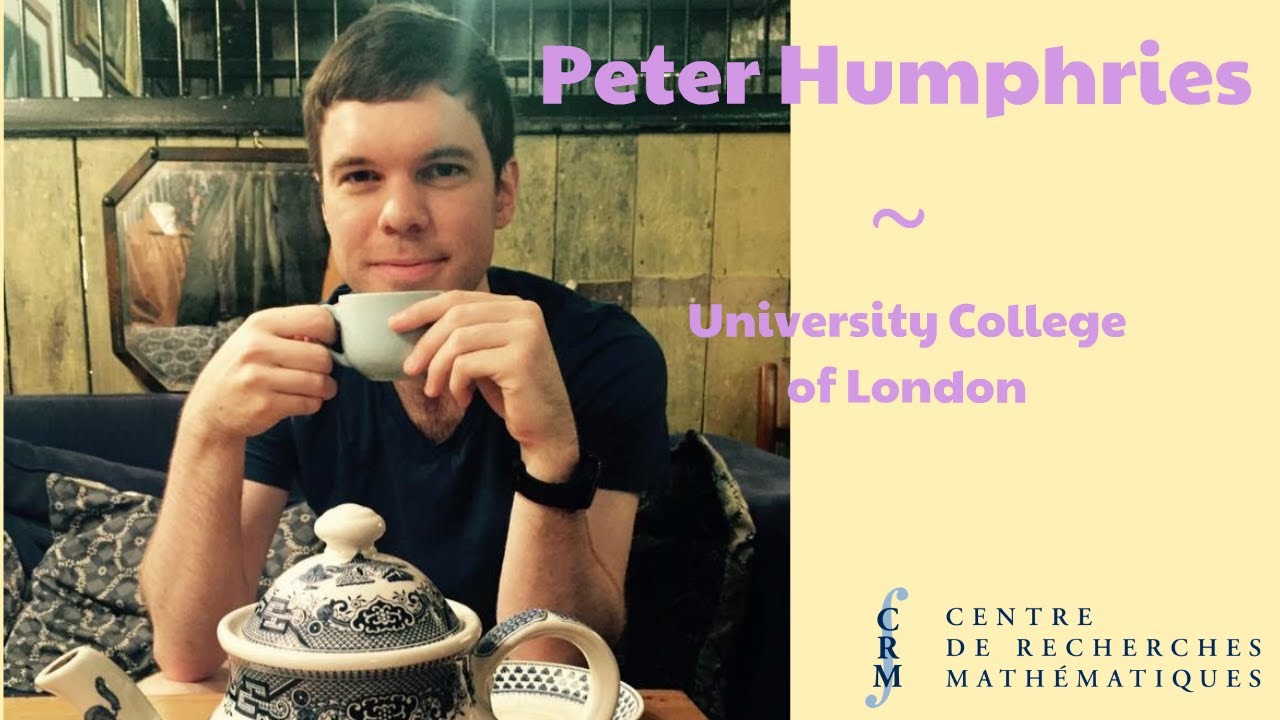
The random wave conjecture and arithmetic quantum chaos
Peter Humphries (University College of London)
https://sites.google.com/view/peterhumphries/
8 juin 2020 / June 8 2020 (Spectral geometry in the clouds)
Abstract:
Berry’s random wave conjecture is a heuristic that the eigenfunctions of a classically ergodic system ought to display Gaussia...
ionic wren
what
sage python
At some point in time I watched this and understood nothing
ionic wren
sage python
At some point in time I watched this and understood nothing
me rn
sudden kindle
Then this dude who does mathematical physics gave a talk in which he talked about eigenfunctions of laplacian on hyperbolic manifolds and how it's related to number theory. I'm like,why do you care about this, what's the physics. So it's cool to see it explained AND related to AQUE
sage python
And then I was like yo this could be something I could talk about in my research statement right Simon?
ionic wren
man
sage python
And he was like yeah coo
sage python
Oh yeah there's something called a non-abelian black hole
And at that point I'm like
sage python
Alright somebody's shitposting
sage python
Honestly when I first heard of arithmetic quantum chaos I thought it was a meme
ionic wren
wat
sage python
I remember in my last year of undergrad
ionic wren
wait is that a real thing
sudden kindle
sage python
To write my NSF research statement
I feel that! I learned a lot about elliptic curves and arithmetic statistics in a short period to write my NSF proposal
sage python
I was going through some prof webpages at Madison with a friend
And I stumbled upon my current advisor's webpage
ionic wren
oh my god its a real thing
sudden kindle
Too bad my personal statement wasn't as polished as it could be
sage python
Originally I was like eh analytic NT
But then I realized it wasn't like
Additive BS
It was more topological
sudden kindle
I was mainly stumped with writing the research statement
sage python
arXiv.org
We extend the results of Watson, which link quantum unique ergodicity on
arithmetic hyperbolic surfaces with subconvexity for the triple product L
function, to the case of arithmetic hyperbolic...
And I'm like
ionic wren
if i need glasses, the physics shouldnt work
sage python
Wow this guy has actually cracked the NSF
 sudden kindle
You posted this already
sudden kindle
Yeah writing the NSF grant proposal was surprisingly helpful
I should do more mathematical writing
sage python
Yeah the NSF statement I wrote in undergrad was quite bad
I just mumbled about bounding ranks of elliptic curves
ionic wren
sage python
https://arxiv.org/abs/1006.3303
wtf i cant even read the abstract
sage python
And like yeah you know there's BSD but that's hard but maybe something about Tate-Shafarevich group
ionic wren
ok so ill be clever and talk about cranks
sudden kindle
Tbh I'm not even interested in elliptic curves that much, I wanna see how it's related to galois representations tho
ionic wren
 sage python
Complex multiplication on elliptic curves is kinda cool
sage python
So idk the details whatsoever here
Pretty much all my knowledge of elliptic curves is contained in this paper I wrote summer after third year of college
sudden kindle
Haha
ionic wren
ok imma turn ur paper into a meme dami
sage python
No my NSF proposal was baaaaaaad
ionic wren
gn
sage python
Yeah the only open conjectures I talked about in my undergrad NSF were BSD and finiteness of Tate-Shafarevich group
And I didn't even hint at a plan of attack lol
"While BSD itself is a very difficult open problem, a rather tractable intermediate goal is finding bounds on the rank. There is always the potential for smaller steps to eventually lead to a full proof of BSD, and the bounds in themselves often allow for important information, such as special cases of its corollaries. For example, the Tate-Shafarevich group is already known to be finite for a certain class of elliptic curves with rank at most 1."
Like that's it lol
Jesus this is bad
sudden kindle
I mean
I still think it's useful to write as NSF GRFP proposal
Because it forces you to think about what you may be interested in
For a lot of us, this is the first time we ever really think hard about what we want to research
And not just some enormously large and unspecific field like "number theory"
You actually have to propose a specific problem, we were not used to thinking about those
So it's very helpful to try to figure out what those are and write about it :)
gray gazelle
As they say, sleep is for the weak
sudden kindle
I got a few hrs of sleep
"In addition, formulae such as that of Waldspurger and Ichino-Ikeda connect period integrals of arithmetic eigenfunctions to central values of L-functions."
How does this work?
Are the eigenfunctions of the laplacian for an arithmetic surface going to be rational functions?
@sage python
 willow pecan

sudden granite

fossil island
Thoughts on James Meiss: Differential Dynamical Systems?
hearty steppe
Never heard of it
 blazing wyvern
I am looking for books that have a general overview of mathematics, as a reference to understand mathematical symbols. I can handle it being aimed at grad or above students. I am considering buying Handbook of Mathematics for Engineers and Scientists By Manzhirov because it seems very complete and detailed, however, if there are better options I would like to kow about them.
 obsidian valley
understand mathematical symbols.
what does this mean
it's pretty hard to find good references for math as a whole but you can always get field-specific ones
I think stanford? has a big math reference though
sorry no
The Princeton Companion might be what you're looking for
blazing wyvern
noted, thanks
Mostly as a reference for self study, instead of having to look through the internett
having a clear concise explanation of a term or a refresher of a subject
tranquil ocean
maybe the infinite napkin by Evan Chen
obsidian valley
yeah if you're studying something like the napkin will be better
quick hornet
though napkin is very pure-biased
blazing wyvern
Currently studying fluid dynamics on my own, but I quickly realized I have to remember parts of multivariable calculus
quick hornet
whereas id expect a "handbook [...] for engineers and socialists" to be more applied-focused
blazing wyvern
that napkin book has an unusual name, but seems nice
quick hornet
("biased" makes it sound negative, but that's not my intention; it's just a different target audience)
honestly though whenever i forget a definition i just wikipedia it
blazing wyvern
that handbook is very nice yeah, I am gonna probably buy it, but I wanted to have more just in case, no one book can suffice for reference
wikipedia can get very dry or technical at times
steel viper
quick hornet
whereas id expect a "handbook [...] for engineers and socialists" to be more app...
engineers and socialists
 hollow current

 fluid bay
engineers and socialists
karmic thorn
Need recommendations for an introductory topology text which has lots of geometric motivation. I'm currently reading chapter 2 from Pugh's analysis, and I would probably like to take a second look at the idea of homeomorphisms, continuity, etc.
hollow peak
also munkres
and if you're a real fucking hotshot, I've been reading analysis now by pederson and he does a very comprehensive review of point set topology in like 40-ish pages, although it's extremely dense and most material is in exercises
(he even covers nets. goddamn nets.)
karmic thorn
Nice
steel viper
hollow peak
(he even covers nets. goddamn nets.)
bredon moment
i still honestly dunno why people care about nets but i also dont know why people care about sequences so thats not surprising
flint forge
a lot of topological properties can be tested for with sequences in nice situations
in less nice situations nets suffice
(for a good example, you can see a convo in topology-geometry between me sham and some other guy talking about annoying function continuity stuff and it turned out that the problem was trivial if we stopped thinking about open sets and used sequences instead)
timber mesa

 zinc basalt
Can anyone recommend a group theory book to me? Specifically, the course I am in is mostly about linear representation theory of SO(3) and SU(2) and others, and the Jordan-Wigner representation. I'm having trouble finding a book that covers that concepts and yet isn't far more advanced than I can read (this is only a third-year uni course). Yet I kinda need to, since the notes the professor provided are short, hard to understand and (I'm pretty sure) entirely wrong in places.
hollow peak
 bleak canopy
is linear algebra done wrong gud book
bleak canopy
is linear algebra done wrong gud book
I haven't used it for any of the more advanced linear algebra I know but it's a very good pass for a lot of intro material
hollow peak
it's very succinct and the exercises are good as well
tranquil ocean
@zinc basalt wait so are you looking for a introduction to group theory book? Or a representation theory book?
zinc basalt
tranquil ocean
<@266216750876459008> wait so are you looking for a introduction to group theory...
Closer to representation theory, probably - the course is called group theory, and we started with a bit of classical stuff like examples of finite groups and conjugacy classes and stuff (and that I don't need materials for), but then went straight into linear representations and characters and how to find irreducible representations. I essentially want to have a second source on all of the latter.
sage python
If you're doing rep theory of finite groups, Serre
tranquil ocean
@zinc basalt You might be interested in Hall's Lie Groups, Lie Algebras, and Representations, since it seems the class is mostly focused on matrix groups
zinc basalt
tranquil ocean
<@!266216750876459008> You might be interested in Hall's Lie Groups, Lie Algebra...
Indeed, it's almost all rotation groups relevant to physics, so SO(3), SU(2), SU(3). Thanks!
gray gazelle
How many hours should you take by page on a book like, says, rudin principles of analysis?
Is 10 pages an hour realistic?
How many hours would it take for me to go through such a book? (i generally work 10 hours a day)
thanks
marble solar
It also depends on how many exercises or what level of understanding you're going for
If you're going for passing familiarity with some exercises solved, maybe around 6-8 weeks
For chapters 1-9?
If you're going for complete mastery of each chapter (which is nigh impossible) and almost every exercise, could take around 20-30 weeks
Math isn't really a subject you can sit down and just "put hours in"
You have to put hours in for sure, but putting more hours in one day won't necessarily get you through more material or understanding
It's some combination of time spent reading, time spent thinking, time spent solving problems, time spent discussing, and then time spent away from it
e.g. you might be more productive if you work on it for 3-4 weeks intensely
take a two-three week break, come back to it
And you'll probably be better
@gray gazelle
karmic thorn
Long breaks between studying are under-rated
karmic thorn
Revisiting stuff after several weeks or months always tremendously boosts my understanding
broken meadow
i am my own cause of suffering though
karmic thorn
Just start with random stuff now Metal
broken meadow
i should not complain
karmic thorn
Then revisit it in summers
broken meadow
yeah i am doing a lot of random stuff rn lol
and yea definitely i will be revisiting especially cus i have to
ill be getting a second look at linear algebra next fall and a proper course in algebra in fall as well
which should boost my understanding
hasty turret
Group theory again?
broken meadow
er
drake this semester is a 1 semester course using gallian
so it doesn't really count
next fall and spring constitutes a 2 semester course using d&f
so yeah
hasty turret
Do it in one semester
hasty turret
broken meadow
one whole semester for da whole book
o my
idk man i can't do that since i also have other classes 😭
i am trying Not to repeat what i did this semester
like
karmic thorn
Overloading classes?
broken meadow
it was permissible this semester because everything is relatively low level
yeah ted
karmic thorn
Aahhhh
broken meadow
all of my courses this semester are just first courses in stuff and they mostly have second and third courses which i do plan to take
so it shouldn't be Too bad
but i am in Pain
karmic thorn
I often overestimate how much I can take at once as well 😛
hasty turret
karmic thorn
I often overestimate how much I can take at once as well 😛
Same
karmic thorn
:(
broken meadow
it is the dream though
karmic thorn
But yeah
broken meadow
this is what i envisioned college might be like and i realize that this is my limit
karmic thorn
Even a half-baked understanding now could be reinforced later
broken meadow
yeah
still im just
amazed at how much ppl can do in 4 years
i must be ready to meditate
on the material i learn
broken meadow
yea
karmic thorn
When I looked at Thomas' back in HS it looked like a ginormous tome
marble solar
I think 4 years isn't enough time
karmic thorn
Now it just feels like a few days of speedrun
broken meadow
yeah i can totally see that moonbears
marble solar
I was fortunate enough to have it spread out over 5.5 years for undergrad
broken meadow
like i looked thru the coursework of my school
and im like
how does an undergrad do all of the important parts in 4 years
crazy
sage python
Overall goal is to prove that invariants are iso to coinvariants for completely reducible guys
broken meadow
but some ppl are able to do it
sage python
And if you know shit splits under direct sum you just cheese it
karmic thorn
I think LA, AA, RA, CA, some topology, and maybe some understanding of graph theory/combinatorics/basic set theory are sufficient for an undergrad?
Or is specialising in something the norm now?
hasty turret
Is that it?
sage python
Depends on what you're trying to do
hasty turret
That feels doable
sage python
I think that's about the gcd of what I think a decent graduate applicant should know
karmic thorn
I think so, at least this is what I've always thought the theoretical minimum of mathematics is.
sage python
Now it seems the more time goes on and the higher up you're aiming
broken meadow
and then the rest is just standing out i suppose
learnin gmore stuff
reading courses in fun stuff
sage python
The more important it is to go beyond that somehow. But then there's less of a specific direction
hasty turret
Where do things like projective geometry fall under?
sage python
e.g. the analysis inclined folk will put measure theory and functional analysis on top
karmic thorn
Classic geometry
hasty turret
The point line duality and stuff
sage python
Perhaps algebraic/differential topology
More advanced algebra
etc
But there's no specific thing on that list that everyone needs to know
karmic thorn
Not a lot of unis seem to offer courses on classical geometries, big sad.
Sufficient to explore more advanced/specialised topics, Ig
Since ideas from these seem to be pervasive
So advanced analysis and algebra as well?
sage python
slim you could argue that eventually people should know it but I'm saying as of when you apply
If it were expected that all applicants new measure theory then they wouldn't have first year grad be measure theory
I'm assuming in the context that it's just, what undergrads are expected to know
steel viper
sage python
Perhaps algebraic/differential topology

karmic thorn
Like, I consider these topics to be the Theoretical Minimum for maths, analogous to physics if you're familiar, but now I feel grad level understanding is indeed indispensable.
Yeah, I'm not saying there shouldn't be extras
But there should be atleast this much
sage python
Hmm? I think 2 semesters each of algebra and analysis lol
And a semester of complex
Oh 1.5 years meaning
If you're doubling up
I thought you meant the pure course count
Yeah I mean it's one of those things where, if someone misses that then it's fair to say their background is almost deficient tbh
karmic thorn
Is Aluffi good for a first look at AA?
hearty steppe
karmic thorn
Is Aluffi good for a first look at AA?
Pinter and Fraleigh
karmic thorn
Pinter is too baby
hearty steppe
Two Diff books
karmic thorn
Oh
hearty steppe
What? I love pinter lol
You want a first look I don’t think you can do better than Pinter
karmic thorn
I'm looking for something more comprehensive, I can slowly work through it
karmic thorn
hearty steppe
You want a first look I don’t think you can do better than Pinter
I've worked through Gallian and it felt okay haha
I'm just wondering if I could keep working through something like Aluffi for a year to get a better and deeper understanding of algebra.
Lang is far too intimidating, Aluffi claims to be self-contained and accessible to advanced undergrads.
hearty steppe
Yea only reason I recommend some of these books is cuz I was able to get thru some of the introductory chapter stuff and I really liked what I was reading
Compared to other books people suggested
karmic thorn
I think I have worked through the first 2 chapters or sth in Pinter in the past
hearty steppe
And I am still working with a limited background to proofs exposure
karmic thorn
And yeah, it's excellent as an intro, but I think I have some more experience writing proofs now
So I can struggle through a more standard textbook
hearty steppe
Yea I think it was the intro and first two actual chapters I hit in Pinter but I didn’t do the psets yet
karmic thorn
Ah, I see.
marble solar
I feel pinter is solid
karmic thorn
broken meadow
painter
karmic thorn
🖌️
 tribal kernel
karmic thorn
Is Aluffi good for a first look at AA?
tribal kernel
karmic thorn
Is Aluffi good for a first look at AA?
I think so but there are several who disagree with me on that. I’m doing my first real algebra course with it and I feel like I get things
karmic thorn
I see. I think I'll keep going with it for now.
 brave kayak
Hi, there is some Schaum book that everyone keeps suggesting. I dont know which books he has, but whats the title of the one that touches basic calculus (not including integrals) but with lots and lots of proofs and definitions, including series, functions and so on. I hope im making some sense
static crest
karmic thorn
Is Aluffi good for a first look at AA?
d&f 
hearty steppe
Schaum is kinda half baked imo your not missing much @brave kayak
brave kayak
hearty steppe
Schaum is kinda half baked imo your not missing much <@605679844684201997>
good to know, any good practice book on all these basic definitions? I mean the stuff I mentioned, and stuff like supremum, limsup and more...
I have a test in less than 2 weeks, looking for some good book to practice with
gray gazelle
Does anyone have a good recommendation for a topology book? I tried Munkres, but I didn’t jive with it
tranquil ocean
What didn't you like about Munkres?
flint forge
gray gazelle
Does anyone have a good recommendation for a topology book? I tried Munkres, but...
hatchers notes
gray gazelle
flint forge
hatchers notes
Thank you, these look very nice
hearty steppe
gray gazelle
Does anyone have a good recommendation for a topology book? I tried Munkres, but...
Try Mendelson
Sorta started reading that and I enjoy it so far
gray gazelle
Okay, thanks!
karmic thorn
static crest
d&f <:catGun:628256355135782913>
 Aluffi feels good so far
gray gazelle
i haven't read aluffi but i am also a fan of d&f. i'm not sure why people shit on it
sudden granite
can we get a calc book review
sage python
Idk many calc books
So this isn't likely pinnable but
Stewart: standard, kind of a ripoff
Spivak: the correct proof-based calc book
Apostol: older, weirder Spivak
Courant: older, more applied-y Spivak
sage python
Idk those
gray gazelle
I've heard strange things about Apostol. Doesn't he start with integral calculus?
karmic thorn
Yes.
sudden kindle
Yes and I like that approach
Integrals are better than derivatives
Upper Integral is inf of areas under step functions which upper bound the function
Lower integral is sup of areas under step functions which lower bound the function
Integral exists when upper integral and lower integral are equal, and equals that common value
karmic thorn
 old jasper
is there a good book/workbook for functions (stuff like 1/f(x), sqrt(f(x)), f(|x|), |f(x)|, etc)
im a high school student in year 11
karmic thorn
Lang's Basic Mathematics
sudden granite
can we add langs basic maths to #books-old
i feel like that would be a good decision
we seem to be forgetting about the little guys
old jasper
karmic thorn
Lang's *Basic Mathematics*
it doesn't go over y=1/f(x)
y=sqrt(f(x)), y^2=f(x), y=f(|x|), etc
karmic thorn
old jasper
it just skims over what functions and polynomials are
not specific types of graphs
¯_(ツ)_/¯
karmic thorn

old jasper
i have to learn how to graph them
obsidian valley
 this is a very specific thing to want
look up "graphing functions" on the internet
karmic thorn
I haven't used it myself, just heard good things about it. ¯\_(ツ)_/¯
 frosty ermine
old jasper
not specific types of graphs
frosty ermine
old jasper
not specific types of graphs
Such a shame! I was really hoping it'd have an infinite number of graphs 😆
old jasper
:/
wooden sparrow
karmic thorn
I haven't used it myself, just heard good things about it. ¯\\_(ツ)\_/¯
I used it
It's good, but some precalc stuff like inverse trig is missing in it
frosty ermine
tbh, It'd be interesting to learn the formula for inverse trig functions in pre-calc.
They have all the tools they need to get it
No one would use it, but it would be interesting
karmic thorn
But likely every calculus book skims these topics in a preliminary
So you don't lose much anyway
frosty ermine
Indeed, but if the student's algebra game is weak, they tend to struggle really hard in calc.
karmic thorn
Yeah, I think Lang does a fine job at drilling the algebra though
I definitely owe a lot of ease I had at doing calculus at school to a very thorough background in preliminary algebra
wooden sparrow
frosty ermine
tbh, It'd be interesting to learn the formula for inverse trig functions in pre-...
or just fill in that using khan academy
One thing I regret doing is sticking to one source for studying
no matter how many times ted told me to not do that
wooden sparrow
Yeahh... though I'm still sticking to apostol for calc now 
karmic thorn

old jasper
narrow talon
Yeaaa boi lax ftw
 tiny goblet
I have Hoffman-Kunze LA book and I am still sticked to him
timber mesa
don't know about friedberg, but myself I learnt from Hoffman-Kunze and liked it
static crest
gray gazelle
i haven't read aluffi but i am also a fan of d&f. i'm not sure why people shit o...
it's really long, that's pretty much the biggest issue I've seen anyone have with it
people find it a drag to read, since d&f basically assumes the reader is borderline stupid
(which is a good assumption in my case)
static crest
the exercises still really let you learn a lot, I think d&f exercises are 11/10 outside 3 sections
4.5, 6.2, and 9.6
sage python
Yeah pretty much that was my only complaint with D&F, it's just boring to read lol
 fossil imp
Hi everyone! I'm very new to the server so I hope I'm writing in the right channel. I recently became very interested in manifolds. I'm a graduate student in France (for those who are familiar with the French system, classes prépa MP + engineering school), and I think I've been taught the basics in maths, though I don't really have an idea of the portion of maths I explored so far to be honest (very little i'm sure though). I was looking at some books on manifolds to get started, and I heard multiple times about Munkres' book on topology, and Lee's books Topological Manifolds (ITM) and Smooth Manifolds (ISM). From what I understood, Lee's ITM is very specific on manifolds and rushes a bit the global topological concepts outside of this notion. But Munkres seems to partially repeat what I already know and doesn't really explore manifolds I guess. Apparently ISM is much more difficult to read and might need Munkres?
If any of you has some comment about this I'd be really happy to read it!
Thanks all!
flint forge
Read hatcher's notes
they are designed to prepare you for like
all the point set you need to study what topologists care about
without too much extra stuff
Importantly they are also short
@fossil imp
 cobalt arch
Is there a book on the different properties sets can have or not have. So for example there exist dense sets, posets, powersets, etc. Is there a book that covers all of that? I know it is insane on the one hand since these are defined in different branches of math but on the other hand I am curious to know if such a book exists, that is a book with all the various characteristics sets can have.
flint forge
Strictly speaking such a book is probably impossible
obsidian valley
A set theory book 
flint forge
That wouldn't cover what they want though jesse
obsidian valley
It's sort of unclear what Forsaken wants most of the time
flint forge
A set theory book would cover a lot of them
karmic thorn
@cobalt arch Please don't fall for the foundations first approach again. 😬
karmic thorn
You'll likely get all the required set theory for each subject in a book on that subject.
obsidian valley
Read a set theory book if you want to learn set theory
If you just want some compilation of "set characteristics" I think you're SOL
cobalt arch
What does SOL stand for?
fossil imp
flint forge
all the point set you need to study what topologists care about
ok nice, so hatchers then ITM then ISM and then I'm a topology master?
seems like a good plan
karmic thorn
...or Wikipedia
obsidian valley
cobalt arch
What does SOL stand for?
"shit out of luck"
flint forge
fossil imp
ok nice, so hatchers then ITM then ISM and then I'm a topology master?
not quite haha
lmfao
manifolds are a subset of the spaces
topologists in general care about
fossil imp
yes well I'll accept being only a manifolds master
flint forge
there is still more to learn just about manifolds
they are disgusting
thats for sure
gray gazelle
give it a month and it'll be my complex analysis notes 
steel viper
.pin
 hybrid sparrowBOT
marble solar
hybrid sparrowBOT
marble solar
Terry tao 246C, 2018
 ripe granite
"On Riemann's Theory of Algebraic Functions and Their Integrals" had some interesting stuff
you don't have to read all of it
chapters 1-4 are on basic riemann surface stuff
flint forge
all based textbooks have dependency diagrams
ripe granite
5-6 is Riemann Roch iirc
marble solar
Terry has like two weeks worth of notes
marble solar
Honestly his whole 246ABC sequence is solid
I'm surprised you didn't even try 246 this past year bro
I think you'd like complex
marble solar
Does differential equations really count?
ripe granite
idk
marble solar
What is that 2 hours/week
ripe granite
im also doing algebraic algebra
ripe granite
and the algebra seminar
ripe granite
merk
marble solar
Either way, one hell of a class
ripe granite
and I might do a gelfand and manin reading course
hearty steppe
Algebraic Algebra is a thing? That sounds like funny wording
marble solar
It's topics in Algebra
hearty steppe
Oh
marble solar
It's like 211?
hollow peak
are 200+ grad level at ucla?
hollow peak
that explains why the tao notes I've been reading are obscenely difficult
marble solar
hollow peak
that explains why the tao notes I've been reading are obscenely difficult
Some are harder than others. His 245ABC isn't that good, the 246ABC are better. His analytic number theory notes are great
hollow peak
I've been reading 247A
ripe granite
is that harmonic?
hollow peak
yeah real analytic harmonic
marble solar
Yeah, that one is hard
hollow peak
B is when he goes in torus stuff and rep theory
so I'll either do that next or go through some of stein
marble solar
You need all the 245ABC, 246ABC, and some Fourier/PDE background
I audited his 246B last year
ripe granite
I think the only prereq is 245A moonbears
marble solar
247B**
marble solar
ripe granite
I think the only prereq is 245A moonbears
There are formal pre reqs
And there are the real pre reqs
ripe granite
true
hollow peak
I haven't found it impossible without that level of background
I think the way he writes makes it clear what gaps you need to fill
ripe granite
noice
ripe granite
lmao Visan's harmonic class would be scary
marble solar
That's what John did, he said he loved it
ripe granite
ye I know a few people who did that class
marble solar
AA as well?
marble solar
I took harmonic at Irvine
That was substantially easier
Than the UCLA version lol
ripe granite
have you ever been in Visan's class?
it's terrifying lmao
on the first day of 131bh
she was explaining some stuff
marble solar
I had totaro/garnett/gangbo for 131abc
The worst was gangbo
The best was garnett. Totaro was good, but too stressful
I've heard he's calmed down
ripe granite
and then suddenly says, "Hey new guy, what's [insert question]"
I blanked for a few seconds lmao
marble solar
Yeah that's what they do in Romania
I work for Russian School of Math, and we're constantly encouraged to do that to students
hollow peak
it's so unappealing that math is so oriented around suffering and trial by fire
and so much more so than like every other field
it just gets obnoxious after a point
flint forge
okay i think that that type of teaching is cool and good as long as people don't suffer like
significant consequences
for fucking up
or having an off day
ripe granite
2 off days and the quarter is done lol
flint forge
wait what?
marble solar
At UCLA, one of my friends had a schizophrenic break down, hospitalized and everything. Another person had a rash from the stress/insomnia, dropped 40 pounds. Had to drop classes
hollow peak
I feel like I can't fuck up at least
marble solar
The pace at UCLA for Honors/grad courses is insane
ripe granite
nah I meant a quarter is pretty short
flint forge
i mean im at uchi
ripe granite
you dont have too much room to fuck up
hollow peak
and I'm sure a lot of math students feel the same
flint forge
im familiar
ripe granite
ye
marble solar
The competition is always there, and you can't really take too much off. The professors just keep pushing/piling on material and give very little wiggle room for mental health issues
flint forge
thats cancer
marble solar
I had night terrors for the first time in my life after my first year at UCLA, I woke up shrieking in my sleep
My now wife and mother in law were very concerned
ripe granite
marble solar
The pace at UCLA for Honors/grad courses is insane
I don't think it's as bad as the chicago honors analysis tho
flint forge
chicago HA is just a dumb class lol
marble solar
ripe granite
I don't think it's as bad as the chicago honors analysis tho
It varies a lot from instructor to instructor
marble solar
Like Totaro's course was just impossible
flint forge
Like of every person I've surveyed who took HA not one of them feels like they remember the majority of the material
or even main ideas
hollow peak
my friend in it atm says the same things
flint forge
Dami is the only person I know who is both sane (arguably) and seems to have a somewhat positive association w the class
marble solar
This is why I decided to go to CSULB for my Masters in Math, the profs were really good, and gave a lot of time for mental health/emergency
ripe granite
I thought 132H (complex analysis) was a lot harder than 131AHBH
marble solar
When my father unexpectedly passed away, I got a year to finish InCompletes, almost no questions asked
marble solar
ripe granite
I thought 132H (complex analysis) was a lot harder than 131AHBH
I had Gieseker, so my 132H was just...not very coherent
The only people that seem to get a good end of the deal at LA for Math are the post-docs or applied math PhD/Post-Docs
The PhD students are mostly unhappy since they make nothing (with rent being too high) and courses/quals being exceptionally difficult
ripe granite
marble solar
The only people that seem to get a good end of the deal at LA for Math are the p...
undergrads?
marble solar
Undergrads only get a good deal if they aren't paying for tuition
Cuz they could have gone to literally any other school, graduated near top of their class, completely debt free, got research elsewhere, and moved on with their lives
ripe granite
lol that's almost certainly not true
marble solar
e.g. schools like Irvine, SB, SD, etc.
ripe granite
maybe
marble solar
or even Fullerton/Long Beach
flint forge
i do think if ur paying sticker price at a top school
it almost certainly isnt economically worth it
i say that as someone paying sticker price at a top school
flint forge
No uchicago is good w financial aid
ripe granite
chicago seems like a super cool place to be tho
flint forge
i just dont qualify for the obvious snd therefore not worth concern reason
chicago is a great city
with godawful weather
hollow peak
I would hate my college if they forced me to take french as well
willow pecan

ripe granite
you need to do a foreign language at LA as well 
hollow peak
I had 65 in german for three years straight
it singlehandedly tanked my gpa
luckily I somehow passed the state exam and they released me from my shackles
willow pecan
ripe granite
rip
hollow peak
I think I said that in correct grammar
ripe granite
the verb is supposed to come second
hollow peak
yours translates to "I speak no german" whereas I said "I don't speak german."
ripe granite
I think
ich spreche deutsch nicht
maybe that works?
or perhaps ich spreche nicht deutsch
the verb definitely needs to come second in this case iirc
hollow peak
basic sentence structure is similar to english: subject (cancellation) verb object
at least that's how I remember it
hollow peak

ripe granite
es tut mir leid
hollow peak
sounds like something I definitely should have memorized by second year german but never memorized at all by the end of third year
flint forge
i have creatively managed to learn almost no french
and still get an A- so far
by purely memorizing sounds
and patterns
quick hornet
my french pronunciation is dogshit
somehow i pronounce "il y a" wrong
i have no clue what i do wrong
static crest
it could just be how you stress the words
static crest
if you actually pronounce it like the english word "ill", I'm pretty sure it'd sound kinda really off
flint forge
i do
steel viper
its more like eel
valid moth
i imagine it's the same as spanish
there's probably a name for it but im not an ipa nerd
@ fiona
marble solar
eel-e-ah
 paper finch
ich spreche ein bisschen Deutsch
timber mesa
valid moth
i imagine it's the same as spanish
I think the French "a" is more nasal? I might be making things up tho
broken meadow
friedberg
 pseudo forge
Looks good!
 slate spire
broken meadow
friedberg
slate spire
broken meadow
friedberg
can vouchfor this
warm glen
does friedberg seem alright as a 2nd/proof based course in linear alg
like, easy enough to self study
karmic thorn
Yes
karmic thorn

hearty steppe
Peter lax? Haven’t heard of him
karmic thorn
 clear sail
pseudo forge
Looking to learn proof based linear algebra
clear sail
pseudo forge
Looking to learn proof based linear algebra
hoffman kunze
 buoyant flare
nice blue balls dami
warm glen
would anyone b willing to skim thru the linear alg book by liesen and mehrmann and tell me how it compares to the standards (axler, h&k, friedberg)
i saw some reddit comment saying it was better than axler and it seems like an interesting book
cos it starts out w some basic facts ab what groups, rings, and fields are
then it introduces matrix groups and rings
THEN it does echelon form and stuff
karmic thorn
Does anyone happen to have a concise set of notes covering elementary number theory?
Something that covers this content

(Equivalent to first 10 chapters in Burton's book)
hearty steppe
warm glen
would anyone b willing to skim thru the linear alg book by liesen and mehrmann a...
just look at the table of contents
and best to compare that to university syllabi of various courses in the subject.
warm glen
ok i should have been clearer
hearty steppe
then finally, read and have your own opinion
warm glen
i wanted a comparison in terms of difficulty, readability, etc to the others
hearty steppe
I won't hesitate on recommending Elementary Linear Algebra by Friedberg et al
warm glen
i, in fact, am able to read a table of contents
hearty steppe
Everyone has diff preferences for books. Try what I recommended along with Linear Algebra by Janich, also check out Intro to Linear Algebra by Lang
I like those books a lot personally from reading them so far
warm glen
yea probably i asked for too much by saying i wanted full on comparison to other books
what id for sure like to know is what people think of the approach taken in the liesen book pedagogically speaking
like some ppl in this server would say that axler doesn't teach u in a very good way bc of the fact that he banishes determinants to the end and then doesn't give a great treatment of them
so what would the opinion be on a book that starts w algebraic structures, then goes into matrix groups, and only then starts going into usual linear algebra stuff
gray gazelle
karmic thorn
Something that covers this content
you can just study those topics individually i guess
karmic thorn
I have an oral exam based on this stuff scheduled for day after tomorrow. Need to speed-learn this stuff, so a concise set of lecture notes would have been easier to work with.
gray gazelle
ah i see
karmic thorn
Would keep scrounging the web till I find something. Thanks anyway!
 lucid hazel
flint forge
but like I memorize wholesale sentences
lucid hazel
flint forge
but like I memorize wholesale sentences
have you heard of the guy who memorized all french words to win at scrabble without knowing the language?
wooden sparrow
Did he get some big money prize?
quick hornet
dont most like, top scrabble players memorize dictionaries regardless
i dont think it being in a different languaeg would change much
itd make it a bit harder of courses
but same "study" process id imagine
top scrabble strategies are weird, you intentionally make small words in order to try and set up your letters to make a scrabble (a word where you use your entire rack) because they get a ton of bonus points
so most scrabble pros can recognize "oh, i have two Ses, an E, and a T, if I get rid of this Q and W im pretty close to a scrabble"
i looked into this when i was way younger
weird metagame
steel viper
seek help
quick hornet
doesnt seem that fun at a high level TBH
flint forge
the only good meta is civ meta
honestly i really wonder what civ meta would look like if the scene were bigger
gray gazelle
hlo
flint forge
ive never had the like
input ability
to play fighting games
i just cant press button good

 flint forge
it depends largely on what knowledge you seek
quick hornet
thats a bit vague.
gray gazelle
i m indian i want to crack JEE
quick hornet
flint forge
i just cant press button good
then either get good at pressing buttons
or play ganondorf
flint forge
 gray gazelle
mathematics in it is really hard
karmic thorn
gray gazelle
i m indian i want to crack JEE
You won't get the best recommendations here.
steel viper
flint forge
to play fighting games
im not good at it either
but its still fun
well i also play spacers for this reason
flint forge
maybe if i got into it i'd like it
karmic thorn
With JEE, it's mostly consistent practice of the same stuff. Any standard book series(Cengage/Arihant) would suffice @gray gazelle .
quick hornet
you see the secret is
gray gazelle
karmic thorn
With JEE, it's mostly consistent practice of the same stuff. Any standard book s...
looks hard
quick hornet
play top tiers with lots of options so you look smart
the secret is
becauses theyre top tiers
flint forge
you could also get away with just buying the second book I listed above as they spend very little time on the JEE at havard business school
quick hornet
all their options are good
quick hornet
ew
flint forge
i just want to master isabelle
karmic thorn
gray gazelle
looks hard<:PepoG:586237872957292574>
It's a lot of work for sure.
flint forge
is that too much to ask
flint forge
fuck villager
quick hornet
wow i hate yall
flint forge
i only want to play isabelle
steel viper
copium
flint forge
oh i played a lot of duckhunt too
steel viper
duck hunt dog is hard
gray gazelle
@karmic thorn maybe I'll try in December for Jee till then i will read almost all suggested books
steel viper
he seems like hed be really fun though
quick hornet
duck hunt has some serious tech in ultimate
gray gazelle
or maybe Hc verma