#book-recommendations
1 messages · Page 227 of 1
 cyan rapids
 gray gazelle
munkres
 cobalt arch
What about jänich?
I found the book by dugundji to be good
Thank you for the recommendations nonetheless

 hollow peak
cobalt arch
What about jänich?
hollow peak
cobalt arch
What about jänich?
janich I own mostly because I like to collect some math books, it's okay I guess
not really great
 pine igloo
books about order theory?
gray gazelle
Like ordinals?
I guess I imagined the theory of literal orders to be somewhat uninteresting
pine igloo
no, not ordinals
order theory, like the general theory of orders, by order I mean a binary relation that is an order relation
but if you know books about ordinals (or cardinals), I would also be interested
 ocean flame
please suggest a good starter textbook for differential equations 🙂
 narrow talon
Lol, I wish I knew a good book on ODEs, every one I’ve tried is never as good as I’d want
I’ll read Hirsch Smale eventually, looks like what I’d want more of less, but I’ve been disappointed by everything so far
 timber mesa
depends on whether you want an engineering recipebook kind of approach or a dynamical systems one. For the latter Hirsch-Smale's, Teschl's and Perko's are all good yet substantially different approaches
Gerald Teschl's is perhaps a good bridge between what's usually seen in an undergrad course and what you'd see in a dynsys course, a draft is freely available on his webpage: https://www.mat.univie.ac.at/~gerald/ftp/book-ode/ode.pdf
on another hand the engineering recipebook sort of books are all pretty much the same lmao
cobalt arch
@narrow talon
This is an advanced textbook in theoretical ODEs
There is another book by coddington that is introductory but I don't know if it is as good as that or up to par with it. It is worth checking it out.
gray gazelle
narrow talon
Lol, I wish I knew a good book on ODEs, every one I’ve tried is never as good as...
whatever you do, stay far away from Boyce DiPrima
literally the worst math book I have ever come across and it was our textbook for ODEs
there's circular references and half the time it didn't bother to give any explanation for anything
"clearly by method of inspection"
today's book:

 marble solar
gray gazelle
whatever you do, stay far away from Boyce DiPrima
marble solar
gray gazelle
whatever you do, stay far away from Boyce DiPrima
I thought it was pretty good
What edition sucks
gray gazelle
marble solar
What edition sucks

looks like the one we used
idk if they fixed stuff in the later editions
 sudden kindle
Math Bookwork
Why do you always share the more unaesthetic textbooks
GTM or GTFO
gray gazelle

 warm glen
has anyone given sagan's combinatorics: the art of counting a try
there's a class i wanna take next quarter that uses it but i havent taken abstract algebra and i have no idea how much it uses and whether a rly strong background is needed or i jus need to know some definitions and theorem statements
also i'd ask the prof teaching it but it's the weekend so .-.
 peak trout
Can someone help me
find ICE-EM Year 9 Mathematics Third Edition Textbook
PDF online?
gray gazelle
I take it you tried libgen?
 pearl imp
I've completed single var calc except for some advanced subject and I am starting multi var calculus. I wanted to read a linear algebra book to help me better understand multi var calc.
What are some most introductory linear algebra textbooks?
 buoyant spire
https://ocw.mit.edu/courses/mathematics/18-06-linear-algebra-spring-2010/video-lectures/
I loved Gilbert Strang's video series (he also has a textbook on linear algebra)
https://linear.axler.net/ <-- I haven't read through this, but it seems like a good book on linear algebra
https://textbooks.math.gatech.edu/ila/ <-- an interactive linear algebra textbook. I found this pretty cool

This section contains a complete set of video lectures on linear algebra along with transcripts and related resource files.
gray gazelle
Do you need LA to understand MC though?
i think so
Hi, What's LA and MC?
how do you study calculus - a large part of which is the study of linear approximations - without knowing linear functions?
gray gazelle
gray gazelle
Hi, What's LA and MC?
LA = linear algebra
MC = multivariable calculus
granted, you don't need a deep knowledge of linear algebra to get by in multivariable calculus
but you'd be missing a lot if you weren't already comfortable with linear algebra
pearl imp
^ yeah, this is what I was told. Also, having read a little bit on vector calculus, it was clear to me that there is a deeper connection between the two.
pearl imp
buoyant spire
https://ocw.mit.edu/courses/mathematics/18-06-linear-algebra-spring-2010/video-l...
Thanks, Zimon
gray gazelle
MC = minecraft
pearl imp
Mortal Combat
gray gazelle
Massive cunt
pearl imp
Misogynistic Cosine
 frigid flare
gray gazelle
frigid flare
gray gazelle
I agree it’s no good but it is popular.
frigid flare
pearl imp
I've completed single var calc except for some advanced subject and I am startin...
Lay’s Linear Algebra
frigid flare
ocean flame
please suggest a good starter textbook for differential equations 🙂
If you have Stewart Calculus take a look in there first.
pearl imp
frigid flare
Lay’s Linear Algebra
thanks, will have a look at it
gray gazelle
pearl imp
thanks, will have a look at it
i've been researching a lot about introductory la textbooks, i haven't read any yet, so take this with a grain of salt: the most recommended ones were by shilov, axler, friedberg and lax. And also some people recommended me Cohn's Algebra vol. 1 and Godement Algebra. In the end i chose Lax, mostly because someone here on discord has so many convincing arguments for why it's the best possible choice. Unfortunately, after 3 weeks it still hasn't been delivered to me, I hope I get it soon. I would suggest you to consider these books also and then see what you think is the best option.
you know you can look at books online right
l*bgen
Lubgen
pearl imp
those are godsend
buoyant spire
Also, if you're a student/faculty member (i think?) of a university that has a deal with springer, you can download certain books (like Axler's LA) for free, through your (or at least, in my case) school's library portal
narrow talon
buoyant spire
Also, if you're a student/faculty member (i think?) of a university that has a d...
many books really, as well as journals and such run through springer. They're generally very high quality PDFs too (so do this if you're interested in anything Serge Lang wrote)
narrow talon
gray gazelle
i've been researching a lot about introductory la textbooks, i haven't read any ...
Oh no! I do hope it gets to you soon, shipping is a PITA during COVID
frigid flare
gray gazelle
i've been researching a lot about introductory la textbooks, i haven't read any ...
These are more rigorous books. Lay is closer to a calculus book.
 ripe granite

MathOverflow
It's a common theme in mathematics that, if there's no canonical choice (of basis, for example), then we shouldn't make a choice at all. This helps us focus on the heart of the matter without giving
gray gazelle
Opinions on this book?
 narrow talon
Maybe not the place to ask, but anyone know a Polynesian history book  ?
?
 hearty steppe
@narrow talon https://www.google.com/amp/s/amp.reddit.com/r/history/comments/5wy5l9/the_rhistory_discord_server_is_now_live_talk/

reddit
####The /r/history Discord server is now live! ##What is Discord? Discord is an app that hosts text and voice chat...
narrow talon
👍
 livid ermine
what are the prerequisites for ravi vakil rising sea
 stray veldt
he tells you in the preface
 stray veldt
essentially
why is this book named commutative though
it looks more intimidating that way
 hasty turret
stray veldt
why is this book named commutative though
hasty turret
stray veldt
why is this book named commutative though
What if it's actually about commutative algebra?

stray veldt
i guess it technically is
but at this age it suffices to call it algebra
that's already a scary enough word
 valid moth
no it's commutative algebra
livid ermine
valid moth
do you think you could get by never having done any algebra, just googling terms as they came up?
gray gazelle
no
livid ermine
what is the connection between homotopy type theory and algebraic geometry
 molten wave
gray gazelle
Opinions on this book?
molten wave
gray gazelle
Opinions on this book?
b a d
I mean the guy is great, but the scope of the book is just terrible in my opinion
it doesn't actually teach you any math
gray gazelle
I don't think it's supposed to teach any math
It says in the preface that it lacks rigour to make it more palatable to programmers
gray gazelle
molten wave
it doesn't actually teach you any math
What do you suggest for learning category theory anyway?
 tribal kernel
A(x)=Find(x)
 late harness
Stumbled upon this when looking for a solution to a diagramming problem I was facing. Hadn't heard the term nomogram before: http://myreckonings.com/wordpress/wp-content/uploads/nomography.pdf?bcsi-ac-cde40c890bd19f3d=2719301D00000002d/CnwHsPs9KAf6mJOLWhCnd71pFwMgAAAgAAAM+PvQCEAwAA3QAAAH3kEQA=
gray gazelle
Hi, I need a calculus book where rather than problems,proofs of calculus theorems explained.
livid ermine
gray gazelle
Hi, I need a calculus book where rather than problems,proofs of calculus theorem...
analysis 1 and 2 by terence tao
 karmic thorn
You can skip chapters 2 and 3 if you're acquainted with basic set theory. However, if you have little to no prior exposure to writing proofs, I would suggest following 2, skipping 3, and then study all the subsequent chapters.
hearty steppe
karmic thorn
You can skip chapters 2 and 3 if you're acquainted with basic set theory. Howeve...
What book?
karmic thorn
Tao's Analysis 1
gray gazelle
Do you find it verbose?
karmic thorn
I consider it to be verbose in a good way(as a beginner to the subject).
gray gazelle
gray gazelle
Hi, I need a calculus book where rather than problems,proofs of calculus theorem...
Spivak's Calculus
karmic thorn
Is Arnold's ODEs text feasible as a first read?
 steel viper
stray veldt
why is this book named commutative though
steel viper
stray veldt
why is this book named commutative though
its definitely an edit
stray veldt
turns out i'm not so smart
 winter acorn
hearty steppe
winter acorn
hearty steppe
Nagal Saff Snider worked for me so far
I started with Boyce DePrima but like this book better
karmic thorn
Nice, thanks everyone!
sudden kindle
has anyone read Serre's A Course in Arithmetic
 tranquil ocean
ive read most of it yea
 potent trellis
sudden kindle
has anyone read Serre's A Course in Arithmetic
potent trellis
sudden kindle
has anyone read Serre's A Course in Arithmetic
I’ve used Milnes notes on ant
gray gazelle
I was doing basic mathematics - serge lang and I got into the last section of chapter 9 and feels like I didn't master/grasp all the concepts, and was thinking on re-doing all the book from the beginning, any recommendations?
chapter 9
redo the book
:hypersully:
 obsidian valley

obsidian valley
how do you get to chapter 9 before realizing you don't know what you're doing
nice 1 tterra
broke yoru emotes
what is chapter 9
gray gazelle
wtf my emotes are not working sadcat
valid moth
skip to this instead
 gray gazelle
Operations on Points
obsidian valley
huh
valid moth
operations on fleek
gray gazelle
And before that was Intuitive Geometry
just go do some exercises from previous sections to see if you're rusty, don't waste your time redoing literally everything
sudden kindle
tranquil ocean
ive read most of it yea
Is it good
gray gazelle
Okay, thx
tranquil ocean
yeah i mean
its good but
its pretty short and I feel like you can get most of the material from other places in a more fleshed out way
like there's just 30 some odd pages on modular forms and its pretty nice as an introduction i guess
but you would probably just be better off reading diamond shurman or something
sudden kindle
Ah ok
 sudden granite
valid moth
skip to this instead
sudden granite
valid moth
skip to this instead
"An analytic approach"
hearty steppe
sudden granite
*"An analytic approach"*
What’s that?
sudden granite
i have no idea 😆
 grave egret
 south ferry
gray gazelle
south ferry
gray gazelle
ahlfors
 static crest
ahlfors
can we get the bot to just reply "ahlfors" every time it detects that someone wrote "complex analysis" in this channel
narrow talon
Anyone know a book about complex analysis on the real line?
I believe it’s called real in complex analysis
Maybe I’m misreading that 
gray gazelle

static crest
 broken meadow
uh
sudden granite
😳
 fast portal
All complex analysis textbooks deal with a real line and imaginary line
Literally just pick something
tribal kernel
Is this supposed to be like calculating real analysis problems using complex analysis? Like improper integrals using residue theory?
 odd oracle
narrow talon
I believe it’s called real in complex analysis
odd oracle
narrow talon
I believe it’s called real in complex analysis
Maybe "Real and Complex Analysis" by Rudin?
timber mesa
tribal kernel
Is this supposed to be like calculating real analysis problems using complex ana...
if that were the case most standard textbooks talk about that a bit
and I think Conway has an appendix about line integrals of real domain, complex codomain functions
but anyhow we're left guessing what they meant lol
narrow talon
 I was joking
 sage python
I think complex analysis has a bunch of books that compete awkwardly lol
 lavish ice
Hi everyone, I am a high school student and I am looking for suitable math books for my current knowledge level, any recommendations?
lavish ice
lavish ice
Hi everyone, I am a high school student and I am looking for suitable math books...
Trigonometry and pre calculus prefered
 raven citrus
I mean, why not try learning Calc?
gray gazelle
just read rudin analysis xd 


lavish ice
raven citrus
I mean, why not try learning Calc?
It is alright I would do it if I see a good book
gray gazelle
spivak is a good book but if you haven't seen proofs before then it'll be a bit difficult
lavish ice
gray gazelle
just read rudin analysis xd <:opencry:586078614865444865> <:opencry:586078614865...
Will do
raven citrus
Welcome to my math notes site. Contained in this site are the notes (free and downloadable) that I use to teach Algebra, Calculus (I, II and III) as well as Differential Equations at Lamar University. The notes contain the usual topics that are taught in those courses as well as a few extra topics that I decided to include just because I wante...
gray gazelle
rudin is notoriously terse
lavish ice
Oops😅
raven citrus
I went through these back when I was in High School
I was in roughly the same position as you
broken meadow
me going into real analysis next semester with rudin as the text 🤡
raven citrus
You should be able to go into the calc 1 notes, and then go backwards to the algebra notes as necessary
gray gazelle
sage python
I think complex analysis has a bunch of books that compete awkwardly lol
don't worry, once my course notes are done, no one will ever have to write a complex analysis book again
gray gazelle
i want to share complex notes but it's a super-dox 
broken meadow
is ur name on like evry page or sth lmfao
 lavish ice
Thx, I am also looking for a book that provides proofs for sphere volum and SA also, explaining sin and cos and their relationship with the unit circle, I am also wondering if there is a formula to find the sin, cos of any angle
raven citrus
lavish ice
Thx, I am also looking for a book that provides proofs for sphere volum and SA a...
this book goes through that
sage python
TTerra uses his name instead of z as the general complex variable
raven citrus
since it goes through the power series expansion
gray gazelle
how did you find them wtf dami
lavish ice
raven citrus
this book goes through that
Great
raven citrus
(a way to model sin and cos as polynomials)
broken meadow
lmfao
sage python
🙃
gray gazelle

raven citrus
also you do multi variable calculus
gray gazelle
🦥
sage python
t h e r e i s n o e s c a p e
raven citrus
so you can calculate volumes of spheres, cones, etc.
lavish ice
raven citrus
so you can calculate volumes of spheres, cones, etc.
That is awesome thx for help
sage python
 lavish ice
Thx for helping guys, any helpful book you liked, let me know 🙂
raven citrus
"visual complex analysis"
good after you finish calculus
I enjoyed that book in high school
lavish ice
Sounds good
sage python
Oh yeah people seem to like that book lol
raven citrus
I mean the intuition it gives you is pretty rich
it's more like "complex calculus" than "complex analysis", but the rigor can come later
sage python
Doesn't quite seem like it "cuts it" for complex analysis, you need to learn it for real still when you do it
raven citrus
that is true
sage python
But yeah idk people seem to enjoy it
raven citrus
I like the idea of doing calculus -> analysis
in two phases
build up some intuition, then by the time you come back to the material, you have the mathematical maturity to appreciate a detached technical presentation
in fact, having analysis be one of the first very technical courses you take can be even better if you do it after calculus, because you can see how technical arguments align with intuition
so it helps you bridge the intuitive mode of mathematics you've been familiar with to the technical mode you're starting to develop
sage python
I could see it. What I liked was doing Spivak
It's a good way to simultaneously learn calculus and proofs
And afterwards when you do analysis you'll obv speedrun the "raw calc" bits, focusing more on topology and then multivariable calculus
hearty steppe
I mean maybe reading Spivak is a good flex to get thru analysis quicker even tho I already learned Calc lol
I still haven’t actually looked at Spivak cuz I learned that level of calculus already on a loosely applied level
Essentially what university expects you to know from Calc 1 to multivar
warm glen
speaking of analysis are there any books that follow p much the same order as rudin
i want something i can read side by side that will clarify what rudin says whenever it's too confusing for me
but books like abbott seem to do things in slightly different order or he uses alternative definitions
hearty steppe
warm glen
speaking of analysis are there any books that follow p much the same order as ru...
Ehhh all books are different flavors but if you want to learn about a whole semester of analysis, I think Abbott is enough and you can pair that with Schroder and or Apostol
warm glen
ah the thing is i AM currently learning a whole semester (actually 2 quarters) of analysis and the required text is rudin :/
since they require us to read it that's why i was looking for something similar in order to rudin
but i will check out schroder and apostol, ty for the recs
raven citrus
why not just use Rudin?
warm glen
i do use it
but im stupid so it's hard
i didn't pick this profile pic for nothing
actually looking at apostol's table of contents it seems to cover almost exactly what rudin covers and reviews say it's more accessible so i might use that as a supplement
@hearty steppe thanks again
hearty steppe
raven citrus
why not just use Rudin?
Rudin is just brutal for people with minimal math maturity
gray gazelle
I'm not so sure if it is about maturity, or just already knowing analysis
hearty steppe
gray gazelle
I'm not so sure if it is about maturity, or just already knowing analysis
Yea basically already knowing analysis
 dapper root
True
hearty steppe
I feel like learning enough analysis is that hump to progress further in math
hollow peak
that currently feels like algebra to me at least
picking up a decent repository of analysis isn't too hard
it pretty much only depends on your understanding of linear algebra and other analysis
hearty steppe
I mean like if you want to get through a graduate level text, I think you need to have like a semester of real analysis understanding at least
 slate spire
hearty steppe
I feel like learning enough analysis is that hump to progress further in math
slate spire
hearty steppe
I feel like learning enough analysis is that hump to progress further in math
yeah i think its nice since its somewhat familiar if youve already taken calc but is still rigorous
 robust palm
raven citrus
read Rudin before you read Rudin
robust palm
raven citrus
read Rudin before you read Rudin
Lol that probably sounds like nonsense to someone who hasn’t read Rudin but it’s so accurate
 buoyant flare
if i were to give a book to someone to introduce them to calculus what would you guys recommend
genuine question, probably better texts out there then how i learnt
unless google would give me the same answer
karmic thorn
What is the scope of calculus you're considering-more applied, or more theoretical? What is your target audience-someone fresh in HS or someone with a bit of mathematical maturity?
ripe granite
gray gazelle
<@!351398829238648832> this book is very good
this seems to be actual geometry
buoyant flare
I guess id say fresh out of HS
ripe granite
and not category meming
gray gazelle
not npov'd enough for you? sadcat
karmic thorn
Hmmmm, Spivak should be good.
ripe granite
I was planning on reading mcduff and salamon at some point
buoyant flare
karmic thorn
Hmmmm, Spivak should be good.
ty for the input
spivak is the default
but i mean nothing particularly wrong with that
karmic thorn
Thomas' is the one I continue to use, but I would still recommend Spivak if it's not for self-learning.
ripe granite
ripe granite
I was planning on reading mcduff and salamon at some point
unfortunately, my class stopped doing simp geo after 2 lectures
buoyant flare
karmic thorn
Thomas' is the one I continue to use, but I would still recommend Spivak if it's...
it would be for self learning
hasty turret
ripe granite
unfortunately, my class stopped doing simp geo after 2 lectures <:opencry:586078...
Dad is proud of you,son
karmic thorn
Oh, weren't you going to teach?
buoyant flare
Not completely
Its more for a friend of mine, ill assist them i suppose but majority self learning
karmic thorn
In that case, you can simply live off of MIT OCWs single variable and multivariable calculus courses online.
They have good notes and lengthy PSets
And I think they're really good
buoyant flare
whats the text you use?
karmic thorn
Thomas' Calculus
It's like
Primarily intended for every uni student who's probably taking calculus for the first time
So maybe it's not such a popular choice amongst math majors
karmic thorn
Yeah, it's good otherwise
karmic thorn
buoyant flare
Is there an online pdf of the book i can have a look at
You can get it through completely legal means
tsk tsk
buoyant flare
😉
that textbook was easier to steal than average
ty ted
wait out of curiosity, if you use that text what field are you in?
karmic thorn
Maths
Although my curriculum deceptively looks like...not-math
I've been using Thomas' for speedrunning and skimming parts of Calculus I already know about
buoyant flare
i see
everything available for free on the internet to learn, but sometimes having a collective source for material is helpful
esp for someone self learning
karmic thorn
Agreed
karmic thorn
It's not dense like Spivak lol
buoyant flare
karmic thorn
It's not dense like Spivak lol
im skimming over it now and it seems like itd fit well
karmic thorn
Most of the contents are easy, 1205 pages only amount for the comprehensiveness and truckload of descriptive exercises(largely repetitive)
karmic thorn
sudden granite
someone told me to read it
If you've done precal, go ahead!
buoyant flare
it really starts off the from very beginning
whats precalc for a non american?
i mean the name suggests before calc but whats that include
karmic thorn
Algebra, trig, some basic idea about analytic geometry(conics, straight lines)
buoyant flare
there is a chapter just on functions in this book
i feel like i learnt some of this stuff in grade 10
or before lol
sudden granite
karmic thorn
If you've done precal, go ahead!
it definitely takes some getting used to
buoyant flare
its my state in aus we are made to learn most of it by hand
sudden granite
the book i mean
buoyant spire
^^ If it's alright, I wanted to recommend Professor Leonard channel
I think he's great, and I hope you find him helpful: https://www.youtube.com/channel/UCoHhuummRZaIVX7bD4t2czg
He has some, imo, quite nice playlists regarding calculus
buoyant flare
i love the ability to pirate everything
buoyant spire
Arr, we be good law abiding folk, especially since pirating is against discord TOS
buoyant flare
i mean i said the ability
sudden granite
lmao
buoyant flare
i never said i did it personally
that would be illegal
i follow all laws
yessir
gray gazelle
a good law abiding citizen would be disgusted by the ability to do such a thing
buoyant flare
exactly 8da
karmic thorn
Pirating bad, buy from Springer/Elsevier, fill the pockets of those multinationals-it's our basic obligation as a human to pay ridiculous sums of money to read a damn book. Love you Springer 
buoyant spire
Especially since the authors of those works get a tiny fraction of the cost of the textbooks, despite the proportionally larger amount of work they put into the books
buoyant flare
i also love to pay for all scientific papers and journals
sudden granite
i hate that textbooks are so overpriced
tranquil ocean
is springer even like a bad company, like i don't think its anywhere near elsevier bad
sudden granite
why can't we live in an ideal world
buoyant flare
as we all know it directly goes to the pockets of those who wrote the paper
sudden granite
where textbooks are like $30
gray gazelle
but they are, springer sells $30 textbooks
karmic thorn
Yeah, Elsevier is S-tier pathetic, but I don't really think Springer is being as reasonable either.
buoyant flare
honestly why does paper have to be nicer than digital
i wish i could be sated with just a pdf
tranquil ocean
I mean, when your demand is literally nothing, its hard to make hard cover books to sell for $30
gray gazelle
this is admittedly probably true
karmic thorn
Make them paperback, offer cheaper digital versions
gray gazelle
but springer does make paperback books, for $30
sudden granite
everyone is out there buying calc by spivak
tranquil ocean
Like, I've talked with the head of AMS publishing and they said they're not really trying to make money from their books
buoyant flare
while your reasoning is sometimes valid
sudden granite
and stewarts calc
karmic thorn
E-books are unreasonably costly
buoyant flare
often times there is no way to rationalise some exorbitant markups
such as e books
or scientific journals
gray gazelle
tranquil ocean
Like, I've talked with the head of AMS publishing and they said they're not real...
so are you saying that books cost as much as manufacturing costs?
tranquil ocean
He said something to the effect of that they don't print very many, and so the upfront cost is higher than for other, like normal publishers
karmic thorn
Publishers making ridiculous amounts of profits is a testament to how bad things are, although I think most of the dough comes from institutional subscriptions(which is even more concerning).
hasty turret
karmic thorn
E-books are unreasonably costly
There's always the library that shall not be named
buoyant spire
The public library?
hasty turret
The library of genesis
karmic thorn
karmic thorn
Pirating bad, buy from Springer/Elsevier, fill the pockets of those multinationa...
@hasty turret 
hasty turret
Where you can find holy texts on the genesis
buoyant spire
Great, I love reading about the genesis
Are there any libraries dedicated to the new testement?
gray gazelle
haha, teste-ment
obsidian valley
tranquil ocean
is springer even like a bad company, like i don't think its anywhere near elsevi...
yes
fuck springer
im still out $30 after 20+ emails to their garbage support team

gray gazelle
oh?
hasty turret
Why is God such a douchebag?
sudden granite
why is paperback langs basic maths $70
hasty turret
There's no reason the tower of Babel had to exist
buoyant flare
library of babel different thing
or if you are just commenting on a seperate tangent then yeah i agree
God was a dick but damn it bade for some interesting stories
Biblical canon got some good tales
steel viper
gray gazelle
so are you saying that books cost as much as manufacturing costs?
its not manufacturing costs
per se
its probably an economy of scale problem
when ur making a teeny number of each product the initial costs of every step in the production chain (logistics, transportation, organization, getting the books written at all, etc) that ordinarily would be covered very easily are very significant
like 5000 dollars is nothing if ur selling 45k copies but if ur aiming for like... 500?
thats enormous
late harness
If anyone is interested, I set up a temporary (free) transfer of my e-book entitled "My Little Big Math Book" for someone who wanted it, and I thought I'd make it available here if anyone else wants it? Here's the info on Amazon: https://www.amazon.com/My-Little-Big-Math-Book/dp/9198282603
There's also a recording (in English) of a presentation I gave at the Ministry of Finance in Sweden on this topic: https://www.youtube.com/watch?v=0Mqp1DNUVUw
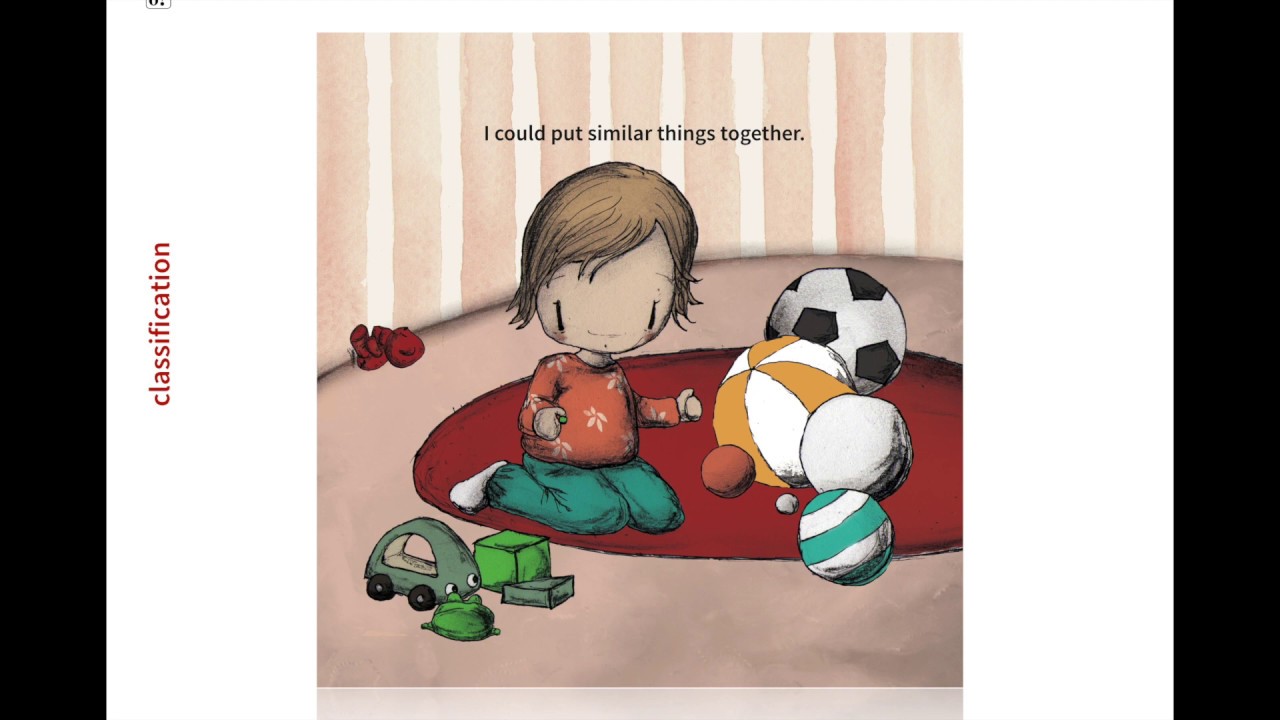
How kids learn to count. Based on the book "My Little Big Math Book" by Lars Rönnbäck.
https://www.amazon.com/My-Little-Big-Math-Book/dp/9198282603
molten wave
interesting, though I question whether members here could be the intended audience 
late harness
Could be, even mathematicians may have forgotten how they learnt to count. Could also be the case that you work as an educator where being aware of the steps kids need to take in order to learn to count is beneficial.
molten wave
fair fair
I work in foundations so counting is a nontrivial construct to me
nuanced, that is
late harness
Cool, I did research in foundations a long time ago. Are you on the FoM mailing list?
And, anyway. Here is the download link to the ePub: https://www.dropbox.com/t/dEYGKZmGQMVRkyUS
molten wave
late harness
Cool, I did research in foundations a long time ago. Are you on the FoM mailing ...
no, is there a mailing list
late harness
To be honest, I haven't looked at it in a long while, but there used to be some really interesting topics there.
molten wave
I mostly specialize in type theories, in particular HoTT, and its applications to foundations of math and software
computational trinitarianism is weirdly complemented by abstract homotopy theory, it's wild
late harness
Interesting, I have to look into it. I'm in information modeling now, and there may be some parallels with my concept of a posit and "propositions as types", from the quick glance I just gave HoTT.
A posit is a syntactical construct that looks like a statement, but has no truth value. Posits are instead ascertained in assertions, where they are given a certainty value in the range [-1,1] by some asserter. We're straying from the topic of the channel though.
 dire comet
molten wave
I mostly specialize in type theories, in particular HoTT, and its applications t...
dire comet
molten wave
I mostly specialize in type theories, in particular HoTT, and its applications t...
haskellor
sudden kindle
PA PA /TU TU /TU TU /TU WA WA.
molten wave
dire comet
haskellor
Yes 
warm glen
i see jacobson recommended often for algebra here, which of his books are y'all referring to tho
lectures in AA vol 1 or basic algebra 1?
narrow talon
Probably BA1

 hollow current
@long anchor kreyszig advanced engineering mathematics
 long anchor
k ill check that out. thnx for the suggestion 
long anchor
@hollow current this book is fking lit 
hollow current

 uncut zealot
Does anyone know any good books for learning ODEs? My class is using Elementary Differential Equations with Boundary Problems by William Trench, and it's not really working well for me.
gray gazelle
https://thalis.math.upatras.gr/~bountis/files/def-eq.pdf this book is good
 novel iris
long anchor
how good is this for learning diff eq ?
novel iris
long anchor
how good is this for learning diff eq ?
I thought it sucked personally
it's full of bs handwaving >:(
long anchor
@novel iris bruh cwab reced it 
novel iris
well her opinion is wrong  [jk don't murder me cowb]
 zinc lichen
Hey! Does anyone know any book similar to Art of Problem Solving Pre Algebra? I found the website exercises quite fun and interesting. Since I'm not from the US the Textbooks are pricey.
gray gazelle
@long anchor yo soapfuck what kind of diffeq course you takin? calculus or theory
long anchor
godelfuck im taking the calc one
@gray gazelle
well self studying so it can be whatever i want 
wait wdym by theory
novel iris
do theory \o/
it's nicer
the difference is like
one is just a recipe book for diff eqs
one is about proving shit
gray gazelle
@long anchor read ODEs basics and beyond
long anchor
gray gazelle
<@!520647458066530304> read ODEs basics and beyond
kk ill check that one out too
gud suggestions godelfuck

this the one right ? @gray gazelle
gray gazelle
yes
long anchor
kk 
fast portal
novel iris
I thought it sucked personally
What is your recommendation then
novel iris
idk, I'm currently taking an analysisy ODE class that doesn't use a textbook
sage python
For ODEs I know two books that are supposed to be good. One by Teschl and one by Perko
Both I think are named something like "Differential Equations and Dynamical Systems"
hearty steppe
Dami in with the FLEX!!! Why did you not tell me about this sooner 
Maybe you did mention it in your Dynamic Systems recs a while ago
sage python
I feel like I haven't seen too many ODE book requests aside from like
Intro stuff
These aren't gonna be suitable if someone wants the sorta "engineering-style" class so I haven't mentioned them much here, I def brought up Perko before
Thing is I don't know either of these well myself. Perko I know of because my analysis class had about 5-6 lectures on ODEs, and it was a bit of a dynamicsy take
One person found Perko and said that a certain part of it corresponded nicely to what we were doing in class. Teschl because I did this summer thing in analysis which did 4 topics, one of which was dynamics
The year after me my classmates were TAs, and they said they switched to more ODE style dynamics (rather than ergodic theory and Anosov business) and used Teschl
fast portal
Math is a never ending ocean and I am glad I never have to deal with its unfathomable depths
sage python
Teschl is free I think if that's relevant to you Cat Man
Ordinary Differential Equations and Dynamical Systems
hearty steppe
just consider anything relevant to me Dami. I'm all in with math. I'm probably one of the only people focusing largely on a theoretical mathematical rigor perspective to biological systems.
sage python
I guess for ODE type stuff there's that, what else do you want recs for?
hearty steppe
I've yet to meet a serious mathematician that studies biology
Not sure yet
I'll let you know
sage python
Obv that's a bit outside my area so there's a good chance I won't have good recs
hearty steppe
I might consider Number Theory soon but not sure yet.
hearty steppe
yup
sage python
I feel like that's something biologists would care about
Stochastic business
etc
So the book my undergrad used for that was by Greg Lawler
Probably just titled "Intro to Stochastic Processes" or something like that
hearty steppe
ye there are a lot of things I'm considering. Millenial got me to openly care more about combinatorics so combinatorics recs are welcomed too
dude, this George Teschl guy is a fucking saint. We need more people like this in academia/mathematics
His page is amazing
hearty steppe
you can download his book for free like on the spot and I'm like wow. This is awesome
sage python
Oh yeah that's def nice
One thing I appreciate Hatcher for lol
As for combinatorics, I didn't really learn it out of a book tbh
My combo prof from undergrad likes "Combinatorial Problems and Exercises" by Lovasz
That's more a list of puzzles that teaches you a ton than a "Let's systematically develop the combinatorics that a given demographic or other ought to know"

This was our recommended class reading list
@strange mulch spit it out!
hearty steppe
Rosen is cool
 strange mulch
 hearty steppe
Rosen not that bad to read. I found it pretty manageable when my math background was pretty shit compared to now
Knuth is more appealing
I mean a book is a book too mate. Gotta keep reading to keep learning xD
gray gazelle
actually Lovasz looks best out of the mentioned so I'll try to read it
although its just exercises with solutions
 calm crane
hearty steppe
its like a perpetual feedback loop. The more you learn, the more you need to learn cuz you know that much less.
hearty steppe
gray gazelle
actually Lovasz looks best out of the mentioned so I'll try to read it
yo hit me up DM about that book.
Question, would it be too pre-emptive for me to dive into functional analysis right now with hardly any exposure to real analysis?
static crest
yes
hearty steppe
Cuz I want to better understand quantum mechanics and everyone who has studied quantum mechanics in depth has said that it is important to know functional analysis.
im not sure in what way I should understand functional analysis tho, like is there a minor short cut to learn it on the surface and get to the theory later?
static crest
like ya, you can understand the fourier and other transform shit
without much knowledge of any analysis, just calc
hearty steppe
but will it give me enough intuition?
I'm assuming yes because there are many people that study physics that don't take a functional analysis course in mathematics?
but ill pick up on the theory eventually, assuming I need to work a bit more on the maturity to get there
static crest
I mean ug physics level functional analysis is probably easy enough
probably hard to even call it analysis
if I'm being honest
hearty steppe
hmmm do you have a curriculum link to refer to on the topics in a ug course for functional analysis?
static crest
more like being a bit loose with what's alowed with calc
hearty steppe
or i should just search it
 mild narwhal
Anyone knows a good problem book to practice Analysis. At the level of a first year grad student
static crest
I don't think there's really "undergrad functional analysis" really
it's just abusing calculus a bit
what they do in ug physics (and engineering)
hearty steppe
ahhh ok so basically screwing around with lagrange
gray gazelle
mild narwhal
Anyone knows a good problem book to practice Analysis. At the level of a first y...
pugh's book has an absolute shitload of problems. it also has some preliminary exam problems that were given to 1st year grad students on exams, which is right up your alley
it's not a problem book but it certainly works as one
mild narwhal
Okay, I’ll have to check it out
frigid flare
mild narwhal
Anyone knows a good problem book to practice Analysis. At the level of a first y...
Not a book but almost 30 years of prelims https://researchguides.library.syr.edu/c.php?g=258216&p=1725292
Research Guides: Prelim Exams in Mathematics for Practice: Analysis
mild narwhal
This look like what i need, exposure to variety of problems in Analysis
narrow talon
hearty steppe
I've yet to meet a serious mathematician that studies biology
Laughs in Charles Peskin
hearty steppe
Well I never met the guy so my point stands
narrow talon
Damn, so many people in my department are math bio
hearty steppe
Are you into it as well?
narrow talon
Not even a little
hasty turret
hearty steppe
I've yet to meet a serious mathematician that studies biology
laughs in Hardy
gray gazelle
now he might object that hardy didn't do real bio, just population genetics
 deft sedge
https://www.amazon.com/Euclids-Elements-Thirteen-Books-Euclid/dp/1420956477/ref=sr_1_1_sspa?dchild=1&keywords=euclid+elements+hardcover&qid=1614955967&sr=8-1-spons&psc=1&spLa=ZW5jcnlwdGVkUXVhbGlmaWVyPUFYNE9ZNFVSSzQ0WDQmZW5jcnlwdGVkSWQ9QTA1MjM3MTUxMEU5N0Q1VlRFVFBVJmVuY3J5cHRlZEFkSWQ9QTA4NjAyNzVNVDZDQjFJVE9RVDImd2lkZ2V0TmFtZT1zcF9hdGYmYWN0aW9uPWNsaWNrUmVkaXJlY3QmZG9Ob3RMb2dDbGljaz10cnVl vs https://www.amazon.com/Euclids-Elements-AU-Euclid-dp-1888009187/dp/1888009187/ref=mt_other?_encoding=UTF8&me=&qid=1614955435
are those identical books just one hard cover one soft or is the second one a up todate revision
buoyant spire
You might be able to find the different editions available for that book on goodreads
gray gazelle
hasty turret
laughs in Hardy
hardy didn't do real bio, just population genetics
gray gazelle
gray gazelle
hardy didn't do *real* bio, just population genetics
bl*cked fuck you!!!
ok
warm glen
eyo so i wanna ask for some book recs for core classes: real and complex analysis, linear and abstract algebra, topology
but not necessarily the best ones to learn from for the first time
i remember seeing advice somewhere that math students should read well written books and try to emulate the way the authors write proofs and stuff
what are some books for the above topics whose authors mathy bois should try to emulate?
timber mesa
Gregory T. Lee's "Abstract Algebra" is a bit dry but I liked how the proofs are written, very thorough and I don't think he skips important things
timber mesa
warm glen
eyo so i wanna ask for some book recs for core classes: real and complex analysi...
can't say recs. for the rest of these topics though
warm glen
timber mesa
Gregory T. Lee's "Abstract Algebra" is a bit dry but I liked how the proofs are ...
oo it's pretty new too
thanks for the rec
fast portal
@molten wave I need textbook recommendations for compiler designs and compilers in general
frigid flare
warm glen
i remember seeing advice somewhere that math students should read well written b...
Consider that Rudin’s POA is widely regarded as a great book but I don’t think you want to write proofs like him as a student since they take thought to understand. Reading those proofs is fairly significant academic endeavor. Your professors don’t usually want you to hand them something they have to go study.
deft sedge
buoyant spire
You might be able to find the different editions available for that book on good...
i want the most recent whicih i thikn its this one bc it says 2017 and it has all 13 books in 1
warm glen
frigid flare
Consider that Rudin’s POA is widely regarded as a great book but I don’t think y...
are there any particular real analysis books you'd recommend that a student can learn to write good proofs from then?
hasty turret
Pugh seems good for that
warm glen
ah yea ive heard lots of good things ab that one
narrow talon
warm glen
eyo so i wanna ask for some book recs for core classes: real and complex analysi...
In terms of "writing like the masters" and using things as reference texts, I'd say take a look at Jacobson's Basic Algebra, Stein is of course a grandmaster of analysis, and has a rather long sequence on analysis (4 books at the undergrad level introducing harmonic analysis, complex analysis, real analysis [not a first course], and functional analysis, as well as 3 very famous monographs on harmonic analysis. There are many books in analysis at a slightly higher level that are written by masters (Riesz, Yosida, Lax, Villani, Varadhan, etc.). As for topology, I am not sure of sort of "introductory" books by experts
hasty turret
Munkres?
narrow talon
Mind you, though Rudin is quite popular, Rudin is not necessarily a master of analysis! Surely not to the level of the others I have mentioned here. He is largely known due to his textbooks
deft sedge
why is euclid so beast mode
narrow talon
hasty turret
Munkres?
I am not sure, I just don't have any idea as to how much influence Munkres has had on topology. Thinking a bit harder, Milnor is a colossal figure in topology with great books, though they don't cover general topology I think
as for linear algebra, Peter Lax has an excellent book on the topic and he is certainly a master of the topic (or rather, functional analysis but same difference)
deft sedge
fav/best mathematican of all time... go ... euclid in the house boom boom boom i have a square room
warm glen
narrow talon
In terms of "writing like the masters" and using things as reference texts, I'd ...
thanks for the recs! i didn't really consider that the books i choose should probably be written by mathematicians who had significant impact on the field they're writing about
do u think books with those types of authors are the best options for the specific goal i have in mind?
for example, would lax be better to emulate than roman, would stein be better than conway, etc
i know there's probably not a definite answer but im curious ab what ur opinion is
narrow talon
Ultimately it depends, both on the book and the level you're at within a given subject. Just because a text is written by a master doesn't necessarily mean that their exposition will help you understand the material, and often these books are best used as a second read because what's really interesting is the perspective.
I think a good example is perhaps Functional Analysis. There is sort of a canon of functional analysis (despite the subject being very far from standardized relative to other fields) heavily influenced by people like Conway and Rudin. However, if you pick up Riesz Nagy, Brezis, Yoshida, or Lax you'll find completely different perspectives on the material. Riesz Nagy emphasizes integral equations and some classical DiffEQ stuff, Brezis offers a more modern perspective on FA in PDEs, Yoshida is abstract and tries to include everything, and Lax is rather applied (but doesn't deal with Sobolev spaces nearly as much as Brezis).
What I'm getting at is that books written by these people often focus on what they think is most important, and getting a glimpse into what a massive figure in a field things is important about that field is definitely a great thing. But it doesn't help so much in understand the intuition behind why things work in any particular proof.
Sorry for the massive (and probably somewhat trivial) message 
sage python
Did someone say functional analysis
narrow talon
Treves is still my goal text for FA, one day I'll read that book cover to cover
I left it in the US though because I wasn't planning on taking FA this year
oops :/
warm glen
thanks for the thorough reply
and yea i figured these kinds of texts would be better as second reads
sage python
My class vaguely worked out of Brezis? Though our prof referenced some other books since Brezis kinda treated functional analysis as a prelude to PDE, and he wanted to do stuff like spectral measures and applications to ergodic theory
warm glen
my idea was to pick a text that's good for first time exposure to learn from, and then a text written by a master to learn more and also learn how to write better
sage python
Sometimes masters write more intro books
narrow talon
warm glen
my idea was to pick a text that's good for first time exposure to learn from, an...
That's what I'd do, though sometimes they overlap
karmic thorn
Tao 😌
narrow talon
sage python
Sometimes masters write more intro books
sage python
My undergrad analysis class used "Elements of the Theory of Functions and Functional Analysis" by Kolmogorov and Fomin
narrow talon
karmic thorn
Tao 😌
Tao, Lax (LA and FA), Stein, and Brezis are all great introductions to subjects, as well as texts by masters
narrow talon
sage python
My undergrad analysis class used "Elements of the Theory of Functions and Functi...
I've heard mixed things about it, that the translation sort of botched Kolmogorov's brilliance
karmic thorn
Nice.
sage python
There are two translations is the weird thing
narrow talon
That is weird
sage python
This caused us a lot of confusion
narrow talon
I could probably find a copy of it in Russian at a market nearby where I'm living
sage python
One was retitled "Introductory Real Analysis"
Translated by Silverman
And he reorganized things a lot
The other keeps the original title and I think is mostly true to the original. Problem is they translate an older edition which doesn't have as much content, and some of the terminology is odd
But it's clean for sure
narrow talon
Found a copy of Механика (L&L Mechanics) a while back
narrow talon
sage python
The other keeps the original title and I think is mostly true to the original. P...
Yeah they're at like edition 4 right?
karmic thorn
Landau
narrow talon
I know Levy has an autobiography too which is dope... except it's all in French 
karmic thorn
I tried reading Mechanics back in HS, had to give up after 3-4 pages but it felt like a very nice text
sage python
Something like that? Our prof was like yeah the newer ones are super thick and contain more about stuff like calculus on Banach spaces
narrow talon
sage python
Something like that? Our prof was like yeah the newer ones are super thick and c...
Oh jeez
sage python
But yeah I'm not gonna say K&F is the correct intro to functional, just that it's very intro among the functional analysis books
Volume 1 doesn't require measure theory, volume 2 introduces it
narrow talon
I tried reading about Martingales in Banach spaces(from a book of the same name). It’s not too bad but I’m not sure what its use is
Lots of connections to harmonic analysis iirc
sage python
So yeah evidence that masters can write intro stuff
narrow talon
sage python
So yeah evidence that masters can write intro stuff
Brezis is intro, so is Stein
sage python
That's true, I guess I meant intro meaning like, you don't even need to finish baby Rudin intro
Compared to Brezis which is more, intro to functional analysis once you know measure theory
narrow talon
Oh yeah, then definitely
Riesz Nagy technically falls in the same category, but doesn’t have exercises
narrow talon
It’s nice, I haven’t read much of it but found the small amount I did read to be interesting if not particularly well motivated
sage python
K&F for undergrad analysis, Brezis for grad, plus occasionally referencing Buhler-Salamon's online notes
Our prof in grad also liked Lax
narrow talon
I’m reading Le Gall right now (master of probability) and the text is not good
sage python
And at the end he found one by Einsiedler and Ward which is what he would've used if he found it at the beginning of the class lol
Since it does literally everything
narrow talon
But the exercises my god
narrow talon
narrow talon
But the exercises my god
Wonderful
narrow talon
sage python
Our prof in grad also liked Lax
Lax and Brezis are pretty similar vibe
Lax is thicc tho
sage python
Makes sense. I'll venture a guess and say you're interested in a lot of the math connected with physics?
narrow talon
Yeah, but I don’t know any physics (like at all)
sage python
I'm mostly inferring that the gcd of mechanics, probability, and functional analysis in my mind is quantum-type stuff
narrow talon
From what I’ve gathered, you sort of pick it up as you go
sage python
Ah gotcha, so you're more math looking at physics than physics looking at math
narrow talon
sage python
I'm mostly inferring that the gcd of mechanics, probability, and functional anal...
Nah, mostly probability
sage python
Good stuff. You like representation theory at all?
Integrable probability? 🙂
(I've so been meaning to learn that)
narrow talon
Not even a little. Had an awful teacher for it and it left a bad taste in my mouth and I know nothing about it
sage python
😦
narrow talon
sage python
Integrable probability? 🙂
Err, what exactly do you mean by that?
sage python
I don't know much about it but there's a guy here who works on the stuff
Vadim Gorin's professional homepage
narrow talon
Interesting, one of the people I applied to PhDs to work with is in the integrable probability group
Probability is tricky because there's a LOT of introductory stuff you have to know
sage python
Yeah for sure. I did this measure theoretic probability class last semester but I was wayyyy too checked out so I just winged it
narrow talon
Yeah, I'm at that point where books that I'm reading along for class are just as much about descriptive set theory as probability
And it's totally introductory
All the weak convergence stuff needed for stochastic analysis
Combinatorial probability has slightly less intense prerequisites, but it's not really where I'm aiming right now
sage python
I didn't expect probability used much more descriptive set theory other than maybe some super basic stuff about the Borel hierarchy
narrow talon
sage python
I didn't expect probability used much more descriptive set theory other than may...
Yeah mostly borel hierarchy/analytic sets and some of the harmonic analysis associated with all that
sage python
Even that's more than I thought
But yeah eventually I wanna learn a lot more probability lol
narrow talon
sage python
Even that's more than I thought
You can avoid it for sure
There's sort of two canonical books on weak convergence, one uses borel heirarcy/analytic sets, the other avoids them a bit more
But since everything is done over Polish spaces in probability, it's sort of unavoidable
narrow talon
But to be honest I definitely need to work on my measure theory still. Lots of very sticky results in basic measure theory when dealing with abstract spaces. Very easy to run into problems when things like separability aren't assumed
gray gazelle
This sounds sort of like "one man's trash is another man's treasure", shitty set theoretic details of analysis being something that set theorists are interested in
narrow talon
narrow talon
But to be honest I definitely need to work on my measure theory still. Lots of v...
The classic example is Kolmogorov's theorem when we get the existence of a stochastic process with prescribed finite marginals but don't have continuity a.s. because the set of $\omega$ where $t \mapsto B_t(\omega)$ isn't necessarily measurable
 hasty eagleBOT
Probably_Jason
 narrow talon
And then have to either create a continuous sequence which converges uniformly, or prove Kolmogorov's lemma which gives us a modification that's continuous a.s.
Err, I guess that's not really a statement about separability. Oh well
narrow talon
sage python
Yeah for sure. I did this measure theoretic probability class last semester but ...
I did jack shit all of last semester, was super rough
 soft terrace
what are some typical graduate level statistics theory books?
 vague mason
Mandelbrot set
gray gazelle
Some books I hear about are schervish, shao, maybe lehman. Not that I have read these, but I own schervish book, for what it's worth
 wooden sparrow
So in Apostol's contents, there's no mention of riemann sums anywhere
frigid flare
wooden sparrow
So in Apostol's contents, there's no mention of riemann sums anywhere
He mentions them in chapter 7
wooden sparrow
Oh okay thanks
gray gazelle
is there a good book on the history of pi?
gray gazelle
Any recommendations for a stats book that assumes (or covers) measure theory? Preferably a 'wordy' book (with examples and shit)
 compact snow
lol if you want a lot of examples you're in the wrong field 🙂
You may have to write your own book.
compact snow
fair.
livid ermine
Have anyone read any good books on the big picture of mathematics, philosophy of mathematics, interesting history of mathematics etc?
 warped cedar
a book literally called proofs from THE BOOK
tranquil ocean
try reading the Weil conjectures by Olsson
livid ermine
warped cedar
a book literally called proofs from THE BOOK
thjat looks pretty cool
what are the prerequisites in it?
sudden kindle
tranquil ocean
try reading the Weil conjectures by Olsson
whats this
tranquil ocean
kinda a historical biography of the weil siblings combined with an autobiography of Olsson's own journey through math
gray gazelle
yo any recs for functional analysis book? Heard of Conway's and Pedersen's book, not sure what I should stick with, maybe you know of something else you enjoyed.
narrow talon
gray gazelle
yo any recs for functional analysis book? Heard of Conway's and Pedersen's book,...
Brezis
or Lax, they're both pretty great
gray gazelle
any of you read the ones I mentioned?
narrow talon
More applied (to PDEs/analysis that is)
narrow talon
gray gazelle
any of you read the ones I mentioned?
I've heard of Conway through reputation (which is not a good reputation). Not familiar with Pedersen
gray gazelle
yeah conway didnt look good to me, brezis seems like not what im looking for tbh
narrow talon
gray gazelle
yeah conway didnt look good to me, brezis seems like not what im looking for tbh
What are you looking for?
gray gazelle
1.normed spaces, hahn-banach, mazurs theorem
2.banach spaces, comapct operators, riezs-schauder thm
3.hilbert spaces, orthogonal shit, radon theorem, dual spaces to L^p
4.Unitary and Self-adjoint operators, spectral theorem
5. Banach-steinhaus theorem
6.weak and *weak convergence in banach spaces
this is the syllabus
narrow talon
Is there no listed course text? Or is it the two books you mentioned?
gray gazelle
rudin and conway and some notes
narrow talon
gray gazelle
1.normed spaces, hahn-banach, mazurs theorem
2.banach spaces, comapct operators,...
Kreyszig seems to match all or almost all of that, and Lax, but probably best with multiple expositions
I'm in a FA course right now and my approach is to use a book from sort of three different levels of abstraction for different stuff. So one book from each of the sets {Kreyszig, Brezis, Lax}, {Rudin, Conway}, {Yoshida, Treves}. Brezis and Treves are overall some of my favorite math texts overall
narrow talon
gray gazelle
1.normed spaces, hahn-banach, mazurs theorem
2.banach spaces, comapct operators,...
Lax will also cover all of that I believe, it's a long book though. Maybe look at it next if Pedersen ends up being off
lol
gray gazelle
ye although I have no clue if what I will read will be off since all this stuff is new to me lol
but Ill switch from one to toerh one
ye
I mean I will ahve notes of my course
which I guess hsould be ebnough
but idk
narrow talon
gray gazelle
ye although I have no clue if what I will read will be off since all this stuff ...
There's lots of good stuff in Functional Analysis, what other stuff you're interested in should pretty heavily dictate what book you'll end up enjoying and learning most from
gray gazelle
this course seems hard af after 1st class tbh
narrow talon
Bobrowski isn't in this list because it's not really a general FA book, but is very probability focused. Riesz-Nagy is pretty focused on integral equations (so is Brezis, but not until much later in the book)
narrow talon
gray gazelle
this course seems hard af after 1st class tbh
My class took 5 weeks to get through chapter 1.1 and 1.2 of Brezis, I hate it
gray gazelle
i hope I wont see pdes in my course
narrow talon
gray gazelle
i hope I wont see pdes in my course
Naaaaaah, PDEs are really nice motivation for FA, I don't know shit about them but it's still really helpful
gray gazelle
although this year an analyst is running the course, instead of probabilists that do usually 
but not the converse


 gray gazelle
ok by analysis I mean pdes
and shit
I dont think probabilists deal with a lot of pdes but idk
narrow talon
gray gazelle
I dont think probabilists deal with a lot of pdes but idk
Depends on thee area of probability
narrow talon
narrow talon
Oh no a PDE <a:honkhonk:637833438270849045>
This is used to prove a result in convergence of stochastic gradient descent
And Markov processes are extremely closely tied to potential theory
gray gazelle
I once thought what if you have a diffeq and the IVP depends on the probability
and someone told me this is stochastic diffeq or sth I remember cause I like that word
narrow talon

I think SDEs are DEs with a Wiener measure/measure of infinite variation, but don't quote me on that
I'll get there later this semester
dapper root
WIENER HAHAHAHA
sudden kindle
 quick hornet
"brownian" is an unfortunate adjective, given the context
narrow talon
Definition: we define a $\textbf{Brownian Motion}, B$ as the terminal byproduct of a class of destructive foods $\mathcal{F}$.
Theorem: Chipotle $\in \mathcal{F}$.
Corollary: $P(B | \text{Chipotle}) = 1$
hasty eagleBOT
Probably_Jason
 sage python
Lmao
Does Chipotle cause brownian motion? I have more frequently heard this associated with Taco Bell, though it's never happened to me lol
broken meadow
irritable bowel syndrome theorem
hearty steppe
irritable bowel theorem
broken meadow
intermediate bowel theorem
buoyant flare
if anyone has good physics or math podcasts lmk
hearty steppe
@buoyant flare try Dark Horse, I think that is Eric Weinstein’s podcast channel
buoyant flare
hearty steppe
<@210333241293537280> try Dark Horse, I think that is Eric Weinstein’s podcast c...
Ty for the suggestion
buoyant flare
 sonic vessel
which book is good for learning trigonometry and geometry
sonic vessel
which book is good for learning trigonometry and geometry
be more specific
sonic vessel
wdym
 gilded zodiac
Whats a good book i can get for challenging linear algebra questions?
like for vectors and vector geometry

Questions like these
buoyant flare
gilded zodiac
Whats a good book i can get for challenging linear algebra questions?
like for v...
@sonic vessel this is how U ask for book recommendations
Unfortunately Idk how to help you Mani
gray gazelle
gilded zodiac
Putnam problems
 timid vector
buoyant flare
if anyone has good physics or math podcasts lmk
timid vector
buoyant flare
if anyone has good physics or math podcasts lmk
victor blåsjos podcast is pretty epic
buoyant flare
Ty
timid vector
its mostly a history of math podcast
ive listened to a bit of my favorite theorem and its nice as well
buoyant flare
oh that sounds good
Ill check that out now
I'm about to head to sleep
Is it on Spotify?
timid vector
not sure
hearty steppe
gilded zodiac
Whats a good book i can get for challenging linear algebra questions?
like for v...
Ikramov
Blyth
gilded zodiac
hearty steppe
Ikramov
Blyth
are these names of the authors???
hearty steppe
Of two different books yes
 fleet jacinth
Could someone recommend me a good book for:
-Learning basic combinatorics
-Learning descriptive statistics
hearty steppe
Stats - Walpole et al
Still new to combo but start with a good discrete book like Knuth
sage python
Time for the complex analysis book review
Ahlfors: Old school and very chit chatty (in particular, bad as a reference since theorems can just happen in the middle of paragraphs). Decent, but mostly been surpassed by newer books.
Gamelin: Requires extremely little background (calc 3 but tbh you might be able to wing it as you go), covers a whole lot of material (uniformization for Riemann surfaces). Very geometric angle. Probably the correct entry point for beginners.
Stein and Shakarchi: Kind of the standard at this point, requires a bit more background going in than Gamelin (Baby Rudin - epsilon, though I feel it's a bit confused about exactly how much background it wants). Supposed to have good psets, its treatment biases number theory and Fourier analysis. Toy contour business is kinda stupid imo. Overall I don't like it.
Conway: The Dummit and Foote of complex analysis books. Extremely easy to read but slow enough that it gets boring.
Freitag and Busam: S&S with less Fourier and more number theory (including some modular forms). I probably recommend this if you've already had real analysis (which you prob should before starting complex). Has a followup volume (just by Freitag) which covers a fair bit.
Narasimhan: Faster and more sophisticated, takes a topological viewpoint from the start. You should prob know some measure theory and a bit of functional analysis going in, but if you do this is probably the best.
Schlag: Written for the third quarter of graduate analysis at Chicago, where students have to take a full year each of algebra, analysis, and topology/geometry. Thus, and due to the professor's own proclivities, it assumes a good bit of background and moves fast. The advantage is it does cover a lot of material, and emphasizes a geometric viewpoint.
gray gazelle
how the fu k you pin message
 sage python
Yeah you have to use the bot, honorables don't have manage messages anymore
sage python
sage python
Ahlfors: Old school and very chit chatty (in particular, bad as a reference sinc...
I'll just do it lol
gray gazelle
gamelin
sage python
It's not narcissistic since TTerra wanted it pinned anyway
gray gazelle
time to see what schlag is all about
sage python
I know that prof as a person and... yeah
He's intense
His book does non-trivial hyperbolic geometry on page 12 lol
gray gazelle
ah it's got the yellow/blue cover
that means it's good
the table of contents is exciting
 tribal kernel
Schlag has grown on me but it’s a dense book. Pretty small and yet goes through a TON of stuff.
Any thoughts on Churchill?
gray gazelle
oh cool schlag has proofs of some of my homework problems
sudden kindle
I read Ahlfors and I hated it
sage python
@tribal kernel idk it well but Churchill seems to be more of a calculation-based book for engineering students, doesn't quite compete for the same demographic as the other books
gray gazelle
yes but it's due tomorrow and the next one's already out
checking my work takes fucking forever
some of the questions are so long
prove that the infinite product converges uniformly and absolutely on compact subsets of C 
sudden kindle
People told me complex analysis was gonna be elegant and beautiful. I read Ahlfors and just feel like complex analysis is black box magic.
gray gazelle
the best way to learn complex analysis is to come to uoft and take it with my prof 
tribal kernel
sage python
<@!401026344156135436> idk it well but Churchill seems to be more of a calculati...
Wouldn’t doubt it. Never done much but flip through but it’s the book my undergrad university apparently uses for their complex class.
gray gazelle
different class
real analysis is the shitty one
complex analysis is consistently top tier
😌
gray gazelle
real analysis is shitty because im bad at it
static crest
real analysis is bad because it's not as clean as complex analysis
imagine being differentiable but not analytic
cringe
sage python
Wait how's that
static crest
gray gazelle
imagine being differentiable and bounded but not constant <:opencry:586078614865...
also cringe
gray gazelle
sage python
Think about that sentence real quick
gray gazelle
no
sage python
gray gazelle
no
I'm not asking I'm telling
 gilded zodiac
hearty steppe
Of two different books yes
gilded zodiac
hearty steppe
Of two different books yes
I got the two books, but most of the content in them, i havent learnt yet
static crest
gray gazelle
my brain cells are leaking out
you still have some left after algebra and real analysis?
gray gazelle
static crest
you still have some left after algebra and real analysis?
no
another algebra test tomorrow
gray gazelle
good luck
hearty steppe
gilded zodiac
I got the two books, but most of the content in them, i havent learnt yet
You wanted challenging linear algebra problem books mate. Not sure what your looking for then. Why don’t you try Friedberg et al then? Start with problem sets that are manageable for you.
I’ve been working thru Friedberg as of recent. I’d suggest both their books. I’ve been flying through it so far and it gives a nice visual conceptualization of linear algebra.
gilded zodiac
@hearty steppe honestly speaking im not even like a quarter way throught linear algebra, i've only just started, so i was just looking to practice
Ill try the other book out as well
 pure gate
hii does anyone know any books for SAS and R
or like any websites or places
I could look ?
 wet orbit
Hi, does anyone still recommend reading Howard Anton's elementary linear algebra for an LA beginner? I've been trying to follow along with Strang Gilbert on MIT scholar but his lectures seems to build off of his Intro to LA textbook which I can't get hold of a copy atm.
Ah, I should've known this earlier. Thanks mate
dapper root
Required Aluffi plug
If you want harder go to Lang
whereabouts in D&F are you tho?
tranquil ocean
Lang > Aluffi
dapper root
Don't listen to Zoph
Like still the sections on groups?
have u hit like
uhhhh
Sylow and stuff
I feel like group theory is kinda boring until you build up enough machinery
The start is kind of like
definitions constantly
¯_(ツ)_/¯
😩
another soul saved
and sees the light
tranquil ocean
no pls do not read aluffi it is literally a waste of time
dapper root
Zoph mad
mald harder
who did Aluffi and is now mr. algebra man
that's right, chmonkey
gray gazelle
sage python
Aluffi is a waste of time lol
oh, is dami memeing when he says aluffi is a waste of time?
sage python
Nah it's too slow and the exercises I as I recall aren't that good
D&F even is just better
tribal kernel
dapper root
Chmonkey is Aluffi gang till I R.I.P.
I’m with you. Aluffi is good for me
static crest
there were some links to pirated textbooks
I'm a good boy and would never support the use of pirated textbooks of course
calm crane
fake
just dont call out lah
if everyone shut up about it
it'll "secretly" be there
 indigo mural
gray gazelle
indigo mural
gray gazelle
lol that book
compact snow
Luminaire is a lit Disney character ...
buoyant flare
🔵
raven citrus
I like Aluffi 
hearty steppe
I like Lang’s intro LA book
gray gazelle
i haven't read aluffi but lang's algebra is not really interesting to me
narrow talon
I have little feel for what algebra as a topic is even for
Even for AT since I don’t really see what AT is for either
Maybe math history would help there
gray gazelle
read the papers of the pioneering mathematician
steel viper
narrow talon
Even for AT since I don’t really see what AT is for either <:catshrug:5638187350...
its for computing homotopy groups of circles

molten wave
petition to rename S^n into circles
narrow talon
narrow talon
So I can know that one circle is not another circle
But it won't tell me that one circle is another circle sooo
steel viper
memeing less the pi_k(S^n) tells you about the structure of maps from S^k into S^n in a way that does matter
and it can be identified with/connected to all sorts of stuff
narrow talon
Maybe if I touch complex geometry or something I'll start to care
steel viper
they are intrinsically interesting smh
this is what analysis does to ur kids
no appreciation for topological beauty 
karmic thorn
Analysis g u d
sudden kindle
steel viper
they are intrinsically interesting smh
no
sudden kindle
the most meme talk title: Calculating homotopy groups of spheres in dimension 60 to 90
narrow talon
Topology: right but what if squish?
steel viper
cope and seethe
nothing u do will ever be as pretty as the hopf fibration
or as ugly as spectral sequence computations but 
narrow talon
steel viper
nothing u do will ever be as pretty as the hopf fibration
What even is the Hopf fibration? Big sphere is many little spheres?
sudden kindle
"Mahowald’s uncertainty principle states that no finite collection of methods can completely compute the stable homotopy groups of spheres." 🤔
narrow talon
steel viper
from S^3 to CP^1
narrow talon
My mathematical beauty receptors are astounded
steel viper
which describes the 3-sphere in terms of S^1 and S^2
narrow talon
So big sphere is little spheres, no?
gray gazelle
steel viper
do u know what a fiber bundle is
tterra 
top 10 images taken seconds before disaster
 narrow talon
Analysis: one of the first results is that many functions we care about can be written in terms of sums of oscillating functions. Helps solve deterministically a problem which can be seen as a scaling limit of random walks in space.
Topology: big sphere is little spheres but these two spheres aren't the same sphere, sick. Takes a year of study to understand.
steel viper
cope
ok if you have a continuous surjective map p: E -> B we say that p is trivial over U subset B if p^{-1}(U) is homeomorphic to U x F
and it like commutes so basically u have a homeomorphism phi from p^{-1}(U) -> U x F and phi composed with the projection onto U is equal to p
fiber bundle just means its locally trivial i.e every point has an open set U w/ p trivial over U
(and all the F are homeomorphic and we call it the fiber)
so basically the statement is that we have a fibration p: S^3 -> S^2 with fiber S^1
more or less it tells you that S^3 is not globally homeomorphic to S^2 times S^1 but it is locally homeomorphic to S^2 x S^1
sudden kindle
why does discord work but chrome doesnt
narrow talon
Yeah, I'll concede this one. That's pretty cool
But also I must maintain this memey-arrogant persona. Very conflicted
steel viper

fibration stuff is based
i need to learn more about fibrations and cofibrations
this chapter did covering theory basically entirely from that perspective and it was like but also 
narrow talon
Neat, but also like, what do you do after you get this Hopf fibration?
steel viper
i think it has physics applications actually
and others but i assume the physics would be neat to u
rigid body and magnetic stuff somehow
narrow talon
Huh, that is interesting