#book-recommendations
1 messages · Page 222 of 1
 gray gazelle
 mossy flume
@earnest gazelle I don't do every single problem out of textbooks
But also I'm not self studying so idk if you're self studying maybe you should be doing every problem
But also breaks are underrated
Come back to that section the next day
 near hare
Did anybody study Understanding Analysis 2nd edition?
i cannot find any solution manual of the exercises in this book
 calm crane
have faith in your solutions
 silver herald
Until they are wrong
 hollow current
silver herald
~~Until they are wrong~~
hollow current
silver herald
~~Until they are wrong~~
just define your solution to be correct
 hasty turret
My solutions are never wrong
 karmic thorn
don't write solutions and they'll be vacuously correct
hollow current
don't define incorrectness
karmic thorn
Solutions can be temporary, or work in some circumstances and fail in others. 
silver herald
hollow current
~~just define your solution to be correct~~
Unironically the correct opinion
 prisma snow
Don't force your morality on us.
 silk quartz
Forcing a morality on someone is morally wrong.
 carmine geyser
silk quartz
Forcing a morality on someone is morally wrong.
carmine geyser
silk quartz
Forcing a morality on someone is morally wrong.
Godel's incompleteness theorem in a presentation everyone can understand
(I don't seriously claim this is actually a form of Godel's incompleteness theorem)
silver herald
LOL
 cobalt arch
Any books that show the interconnectedness of mathematical branches?
 graceful bridge
I don't think there is any book that is dedicated to showing interconnectedness of many different branches. But there certainly are many subjects that applies one branch of mathematics to a completely different one. You can usually see it in the subjects name, for instance: algebraic topology = applies algebra to topology
graceful bridge
But if there is such a book, I would be very interested myself
cobalt arch
Maybe category theory could come close to that
graceful bridge
cobalt arch
Maybe a historical book would fit the description?
Yes, this is probably true
I guess it is a way of formalizing connections between different fields of math, but I don't know if it always works, I don't know a lot of cat theory
 obsidian valley
cobalt arch
Any books that show the interconnectedness of mathematical branches?
obsidian valley
cobalt arch
Any books that show the interconnectedness of mathematical branches?
This question is probably too vague and general to be answered effectively
hollow current
hi jesse
cobalt arch
I guess this is inherent to the subject in question itself and not a fault on my part
Thank you for the input though
obsidian valley
Yes
karmic thorn
I did suggest Mathematics and its History by Stillwell the last time you asked. Did you check it out?
cobalt arch
No haha:). I will check it out now though.
graceful bridge
There seems to be a lot of subjects that can be applied to combinatorics: https://en.wikipedia.org/wiki/Combinatorics Look at the subfields
Combinatorics is an area of mathematics primarily concerned with counting, both as a means and an end in obtaining results, and certain properties of finite structures. It is closely related to many other areas of mathematics and has many applications ranging from logic to statistical physics, from evolutionary biology to computer science, etc....
There is even smth called topological combinatorics
cobalt arch
That is interesting
cobalt arch
I found some books about the history of math so I will use those.
obsidian valley
mash them together and google them
graceful bridge
In light of that, it's too big of a task to cover all connections in a single book. And it's also a bit unclear what would be the target audience
Terence Tao actually said: "I make my living by understanding one field X and apply it to a field Y". https://www.youtube.com/watch?v=MXJ-zpJeY3E
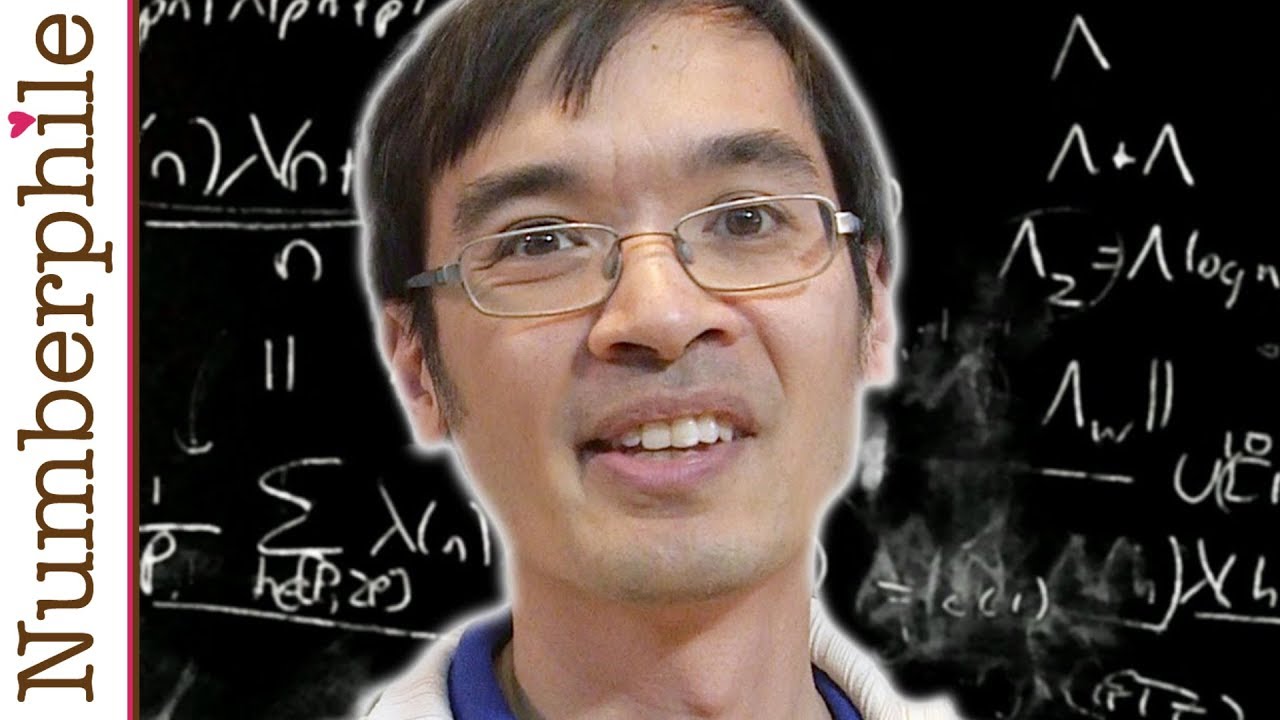
(*) Among current mathematicians, many people regard Professor Tao as the world's finest... Opinions on such things vary, of course.
Professor Tao kindly fielded some of our questions, including many submitted by Numberphile viewers.
EXTRA FOOTAGE: https://youtu.be/48Hr3CT5Tpk (and more extras to come)
The Legend of Question Six: https://youtu...
 undone badger
are there books that introduce how to approach math? (how to think about math) More of a casual read than something heavy into theory 😓
actually found some in the books section ^_^
 sudden granite
Fantastic.
karmic thorn
Is Topology of Numbers by Hatcher a good starting point for learning elementary number theory?
 stray veldt
seems very nonstandard
and it only does quadratic forms?
which is cool, but there is a lot more stuff to NT
karmic thorn
Yeah, it covers only quadratic forms.
I'll probably stick to Burton, then. Would look into it when I have to cover quadratic forms.
stray veldt
it's not like you ever have to do quadratic forms
they have historically been studied a lot and serve as motivation for a lot of modern stuff
i guess my take is just study quadratic fields
karmic thorn
The elementary number theory class this sem would be covering all this, so apparently quadratic forms are not needed.
karmic thorn
stray veldt
they have historically been studied a lot and serve as motivation for a lot of m...
I see.
stray veldt
this is more standard elementary nt
unit III at least
kinda basic
unit iv then has some analysis stuff
karmic thorn
Yeah, I think Burton's book should be more than enough.
stray veldt
i think its more interesting (and worthwhile) to study quadratic forms from a higher point of view
karmic thorn
I'm guessing they'll be skipping proofs at least.
stray veldt
 stray veldt
yeah, at some point you will need that anyway
quadratic forms are related to quadratic number fields, which are finite field extensions of Q
karmic thorn
Hmmm, so add a finite number of elements to Q to give it some kind of closure?
stray veldt
by related i mean
there is a literal isomorphism
yeah
like Q[i]
thats the prototype i guess
karmic thorn
Q[i] is Q+sqrt(-1)?
gray gazelle
Which book should i use for introducty differential eq.?
stray veldt
historically a lot of this NT stuff was the motivation to develop algebra
but i guess this shouldnt be in books channel
karmic thorn
Lol
gray gazelle
any1
sudden granite
👉👈
 sturdy relic
gray gazelle
Which book should i use for introducty differential eq.?
sturdy relic
gray gazelle
Which book should i use for introducty differential eq.?
Apparently G.F. Simmons Differential Equations with Applications and Historical Notes is good. If you google it you can download a pdf
Don't trust me though, I haven't read it
gray gazelle
Thank you moontiger95!
 timber mesa
sturdy relic
Don't trust me though, I haven't read it
timber mesa
sturdy relic
Don't trust me though, I haven't read it
I've sort-of read it (when I was a TA for diffeq actually  ) and it's pretty good even if a bit dated.
another (and the most typically used one I think) is Dennis Zill's but honestly at intro level they're all pretty similar
 livid ermine
karmic thorn
The elementary number theory class this sem would be covering all this, so appar...
livid ermine
karmic thorn
The elementary number theory class this sem would be covering all this, so appar...
are you using burton?
david m burton was the book we used, and we covered almost exactly this
timber mesa
seems like the first 9 chapters of Burton
karmic thorn
livid ermine
are you using burton?
Yes, I'll be using Burton.
karmic thorn
timber mesa
seems like the first 9 chapters of Burton
Aah, seems to cover way more than my curriculum. Neat.
 gritty egret
AOPS
gray gazelle
AoPS
hollow current
aoPS
hasty turret
aops
sudden granite
aoPs
karmic thorn
Aops
gray gazelle

 crystal kraken
hollow current
AopS
 hybrid dawn
Aops?
gray gazelle
Aops indeed
crystal kraken
aOpS
 river birch
AoPs
sudden granite

 ripe granite
are you the real Jim Simons?
 tight crag
If he was he would know the answer to his question
 gusty socket
 quick hornet
gray gazelle
quick hornet
gray gazelle
cobalt arch
any books on financial mathematics?
also do you know what prerequisites such a book has?
 dawn maple
gray gazelle
that hurt
dawn maple
gray gazelle
that hurt
That’s an AoPs moment right there
graceful bridge
cobalt arch
any books on financial mathematics?
Maybe you could give this one a try: https://www.springer.com/gp/book/9781461435815 I have not read any of it myself, but the author is a mathematician and decent textbook writer from what I know
The Mathematics of Finance has been a hot topic ever since the discovery of the Black-Scholes option pricing formulas in 1973. Unfortunately, there are very few undergraduate textbooks in this area. This book is specifically written for advanced undergraduate or beginning graduate students in...
cobalt arch
thank you laffen I will check it out
graceful bridge
Cool, let me know what you think of it
gray gazelle
a few years ago I was googling for random things connected with glibc math implementation, various gnu projects such as mpfr, mpc etc., so I was trying to find a search query for google to give me a list of books on this topic, and I remember that I found a book which had something like "algorithms for arbitrary precision (or multiple-precision) implementation", which I scrolled through with horror and didn't save it somewhere. now I want to find it again, but for the last 30 minutes I'm really struggling to do so. I think it had like actual pseudocode implementations of a lot of algorithms and concepts. I'm not sure whether it was inria or springer, but it wasn't a free book. but that was definitely the best one on the topic. perhaps somebody knows what I'm talking about or is excellent at google-fu? I really browsed all these projects and looked up the literature they are referring to, it's not there as far as I'm aware. it was rather new back then, a few years ago
Handbook of floating-point arithmetic looks very close to what I'm looking for, maybe it was that book, or maybe not. I feel like the one I meant has only one author, but not sure
 unkempt grove
i have a pdf of apostol and its chock full of formatting errors, should i still read it?
gray gazelle
ew
unkempt grove
libgen gave me this unfortunately
if you know of a better pdf, i'd really appreciate it
 storm sleet
my favorite one is poor formatting in Dover ePubs
Where any non-standard math font is terrible
obsidian valley
 novel iris
what's a book that has a nice, pedagogical discussion of the construction of R via cauchy sequences?
novel iris
sounds good, ty!
unkempt grove
unkempt grove
i have a pdf of apostol and its chock full of formatting errors, should i still ...
nvm archive.org has actual book scans up to borrow
 willow adder
epic
sudden granite
@limber hollow
 limber hollow
Thanks!
gray gazelle
Abyone here used "A First Course in Calculus" by Lang?
gray gazelle
I tried and it was pretty difficult. Didn't really feel like a first course. The way my ap calc teacher taught it was way easier and simpler
@gray gazelle
sudden granite
Stewart's Calculus ftw
gray gazelle
Thomas', not Stewart's
sudden granite
😕
gray gazelle
gray gazelle
I tried and it was pretty difficult. Didn't really feel like a first course. The...
Lang's books seem to be harder, yeah.
Maybe less suited for applications compared to Thomas, more suited as a stepping stone to advanced calc.
I'm working slowly through the exercises in Basic Mathematics and they're not easy.
 vapid scroll
Is it a bad idea to try and read and do exercises from the spanish version of a book because you can't find the pdf for the english version of a book you need for class?
im not really fluent but lots of the words look similar
they have the correct number of exercises, but i am not sure if they are the right ones.
prisma snow
@vapid scroll what book?
vapid scroll
Elementary Classical Analysis
vapid scroll
So I can't find the 98 reprint and it looks like im going to use the spanish version for now 🙂
It is very close to googlebooks' 98 scan.
and the spanish doesnt look hard
 halcyon hornet
Hi.
I am in class 7 and I need some recommendations.
I really want to be great at math and can give as much efforts as needed, and also really win the IMO and such.
So I mainly need help with AoPs Books Recommendation for now(I am studying AoPs Prealgebra now, in like chapter 10).
Do I really need to get and study all the books(all 12), or will it be really great only with the 2 volumes(3 with that extra 1, so all 3) of the competition math series(provided that I have studied prerequisites already).
And I live in India.
Your responses are really appreciated, Thank You very much.
karmic thorn
I'd suggest you to tackle one book at a time at the beginning, so maybe start with their prealgebra/algebra book.
halcyon hornet
karmic thorn
I'd suggest you to tackle one book at a time at the beginning, so maybe start wi...
Doing the prealgebra one.
karmic thorn
Alright, follow it up with their algebra book. Then you could digress to geometry and number theory.
halcyon hornet
So I need to study all of them?
The price is the real problem.
Or else I would love to study them all.
gray gazelle
libgen
karmic thorn
You can grab some PDFs online, but AoPS books are signficantly harder to find.
halcyon hornet
I will buy the 2 Volumes of the Competition Math anyway though.
halcyon hornet
gray gazelle
~~libgen~~
It's not good enough.
Most don't have answers, and many have many parts omitted.
karmic thorn
Complement the AoPS books with their website, which is brimming with lots of relevant problems. Questions asked in previous olympiads should be useful as well.
halcyon hornet
karmic thorn
You can grab some PDFs online, but AoPS books are signficantly harder to find.
Exactly, I have hunted a lot for them.
gray gazelle
if you can't find them, make them
gray gazelle
I meant what I wrote.
halcyon hornet
How do I make them?
karmic thorn
Write a Diff Geo book to ace the olympiads
halcyon hornet
gray gazelle
if you can't find them, make them
Wow.
karmic thorn
Regardless, AoPS is not the only place to practice for olympiads.
halcyon hornet
Can you please mention others.
karmic thorn
If I remember correctly, World Scientific has its own olympiad math series which is priced more reasonably.
I suppose you could get more help on the math olympiad server.
halcyon hornet
karmic thorn
I suppose you could get more help on the math olympiad server.
How?
halcyon hornet
karmic thorn
If I remember correctly, World Scientific has its own olympiad math series which...
What is that?
karmic thorn
#old-network has the invite to a math olympiad server.
karmic thorn
halcyon hornet
What is that?
World Scientific is a publisher. 😅
halcyon hornet
Oh yeah I am already there.
karmic thorn
I guess you should be able to find some resources there, or maybe a list of book recommendations relevant for IMO.
cobalt arch
is lang's book a first course in calculus harder than spivak?
gray gazelle
gray gazelle
Maybe less suited for applications compared to Thomas, more suited as a stepping...
Yea, I'd only recommend it if you're really committed
 warped cedar
spivak
cobalt arch
Has anyone read Arthur Engel's Problem-solving Strategies if so is it recommended for learning how to prove?
 waxen elbow
hey, what would you recommand for a first exposure to linear algebra ? my brother want a complete course, i only got Roman's at home but i think this is a bit too advanced. I've heard about LA done right by Axler or LA by friedberg/insel/spence
gray gazelle
friedberg's book is great
roman is too much for a first exposure
and axler has the problem of avoiding determinants
waxen elbow
yes, they are on the last chapter which is weird
waxen elbow
but it covers a lot of things
gray gazelle
axler's proofs are elegant but the determinant is such a fundamental tool
it's too useful to ignore
imo
waxen elbow
ripe granite
We used Hoffman and Kunze
someone told be friedberg's is like H&K but in a modern way
ripe granite
I haven't read friedberg so idk
waxen elbow
well friedberg's seems to be a good option, i'll see h&k
karmic thorn
Friedberg g o o d
gray gazelle
f r i e d c h i c k e n g o o d
 sage python
Yeah Hoffman-Kunze is a bit old school so I wouldn't be surprised if Friedberg is good, I'll check it out
People also seem to like "Linear Algebra Done Wrong" by Treil
 broken meadow
my class is using friedberg and i like it so far but ill see at the conclusion of course how i like it
seems to presume understanding of basic matrix operations and stuff ? not sure
thats fine tho
i like that it starts with vector spaces generically
sage python
Seems like it's got a fairly light hand?
 valid moth
sage python
Yeah Hoffman-Kunze is a bit old school so I wouldn't be surprised if Friedberg i...
valid moth
sage python
Yeah Hoffman-Kunze is a bit old school so I wouldn't be surprised if Friedberg i...
the based combo is axler primary + hk secondary (for det and some other sections as needed)
 hollow peak
I will always shill for LADW
it's a proof based second pass that moves at a sane pace and has simple exercises 
so easy to move at light speed through
only problem is that it's not very dense so you end up only skimming through a lot of more interesting theory on vector spaces
so then read knapp 
 marble solar
The one that I shill for that is Schaum's outline to Linear Algebra
Saved me on rational canonical and jordan canonical form problems
 frosty wyvern
Hi. Where can I find a pdf of Fremlin Measure Theory Vol 4 and 5? I tried downloading the files on his website but they're separated TeX files per section.
graceful bridge
@frosty wyvern All volumes seems to be on libgen
frosty wyvern
Ohhh okay that did not cross my mind. Thank you so much!
gray gazelle
marble solar
The one that I shill for that is Schaum's outline to Linear Algebra
What's the verdict on Schaums? Worth it for calc and LA? Outlines or worked problems?
marble solar
gray gazelle
What's the verdict on Schaums? Worth it for calc and LA? Outlines or worked prob...
Some of them are fantastic, some of them are horrible. The Linear Algebra one is very good
gray gazelle
Will look at that thanks.
 muted hearth
anyone encountered these before?
they're from the 50s/60s
the one I have is such a cute book now I want them all
obsidian valley
I've personally only heard of the Halmos Set Theory text and mendelson logic
marble solar
Projective geometry is something people should learn more about
Rather than a tack on topic
sage python
@hollow peak honestly it feels more like a first pass than a second lol
 weak fossil
Hey guys, can you recommend a calculus book thats not too rigorous and dry, with pictures, glossed over proofs, and 1000+ pages? I'm self studying in high school and I just started, I prefer easy texts with a ton of colours and graphics and stuff like that. I tried Thomas's calculus but it was too dry.
hollow current
prolly silvermann
marble solar
weak fossil
Hey guys, can you recommend a calculus book thats not too rigorous and dry, with...
That's a tough one to hit, cuz the thousand plus pages books are all dry
There's the Humungous books of calculus problems
I used that and they were pretty decent
broken meadow
thomas... too dry... oof
weak fossil
Yeah Ive been studying for just over a year, calc is my third book I'm reading, English isn't my first language, and I need it easy else I'm not succeeding
weak fossil
hollow current
prolly silvermann
How does analytic geometry work with calculus? Silvermanns book seems to be calculus with analytic geometry?
weak fossil
marble solar
That's a tough one to hit, cuz the thousand plus pages books are all dry
Really? I thought the shorter ones would be more concise and rigorous?
 pulsar geode
marble solar
Projective geometry is something people should learn more about
pulsar geode
marble solar
Projective geometry is something people should learn more about
yo just got coxeters book
sage python
@weak fossil more concise yes, but concise is often correlated with dry
weak fossil
Yeah, but Moon said that thousand plus pages books are all dry
which is counter intuitive?
sage python
Sorry sorry
I meant being too drawn out is what's correlated with being dry
If it's concise it's tougher to read but more interesting
If there's too much chit chat it's just dull
cobalt arch
Greub or shilov for linear algebra?
sage python
Unless that chit chat is funny or something
@cobalt arch idk those, what impressions do you have of them?
weak fossil
Well... when I was starting out to self-learn I was recommended langs basic mathematics
That is the definition of dry to me lol
Im a fan of the opposite, lots of colors, pictures, diagrams, etc
sage python
Oh yeah Lang's writing is dry. Colors/pictures/diagrams definitely spice it up, all I was saying is that sometimes too much exposition makes a book start to drag. Like yeah let's get to the point please
cobalt arch
Well greub is a bit dated but it has a rigorous exposition and it is a graduate textbook while shilov is a mix of theory and applications and it is for undergraduate. I really can't decide.. What is considered the bible of la?
sage python
Looking at Shilov it starts with determinants which is... interesting
cobalt arch
Hm is roman too advanced?
sage python
Jesus fuck Greub talks about homology lol
Shilov seems a bit strange, good but strange
quick hornet
i certainly wouldnt consider greub a suitable text for learning out of lmao
its a fine reference
dunno anything about shilov
sage python
I think Shilov is trying to hit this weird balance of theory and computations
Just glancing at the contents
cobalt arch
I like pure theory
 sudden kindle
I like compute
quick hornet
like here's how greub introduces v.s. isomorphisms
sage python
Greub seems advanced but solid
quick hornet
its obviously written as a reference
sage python
If you're good it might be worthwhile
cobalt arch
Isn't roman just better at that then? Being a reference I mean.
sage python
Let me see Roman too then lol
quick hornet
arguably, sure
roman does cover more stuff
but i dont think it goes as deep into the algebra
sage python
Roman is the most advanced of the three it seems
cobalt arch
I don't know I want a text that does not shy away from theory
quick hornet
the second half of roman is like
"almost functional analysis"
its a bit... off
but thats basically what it is
sage python
Roman's probably the least afraid of technology here?
Though I guess there's that homology chapter in Greub
cobalt arch
I can try greub if he goes the deepest of the three into theory.
sage python
Greub strikes me as technically self-contained but sophisticated
If you're smart you can handle it
Roman feels like it's not really trying to pretend like it's self-contained and def has more stuff
cobalt arch
I see I will check them out myself and decide
sage python
What's your current background in linear algebra?
quick hornet
as mentioned its written as a reference
so its assumed youll be able to come up with the eaxmples youreslf
sage python
And how clever do you think you are?
cobalt arch
I don't have any background in linear algebra but I do need a self contained and rigorous exposition that goes deep into theory.
As for being smart I don't know how that can be measured holistically. Sure iq tests have a correlation with g but that is it.
quick hornet
again i would not recommend using greub for a first course.
sage python
Yeah I'm not asking for some strict formal rating here
I'm saying do you think you're a clever person? If I rant without being careful do you think you could follow?
quick hornet
you dont actually see a concrete example of a vector space in the "vector space" chapter like
at all
sage python
Honestly Shilov seems like it covers most of the important parts of Greub?
sage python
Like idk it's hard to compare, I feel like Greub does a bit more by some metric
But it's not totally clear
I'd need to do a more detailed comparison than I'm really willing to
Roman is probably a bad idea if you haven't seen linear algebra before
quick hornet
okay thats not totally true, you do see a polynomial vector space in one example!
hurrah!
sage python
A lot of its fancier stuff is either gimmicky or will come up later anyway
If you take algebra later, or functional analysis
Then you'll learn what's here anyway
quick hornet
and like if you look at the exercises
it assumes you already know how to prove things
and how "proof language" works
like
this is from the first chapter
if you dont know what "replace an axiom" means
(ie show equivalence between the two statements)
youll have no clue what to do
sage python
I'm guessing that this guy knows how to prove stuff if he's trying to optimize for sophisticatedness
Idk I don't have a great read on Greub, it feels like one of those books that's not designed to be learned from but if you're slick you can do it
Shilov looks pretty good
Tbh I could also see a case at that point for just reading Artin's algebra
quick hornet
¯_(ツ)_/¯
you miss a lot of linear algebra theory from just artin, dont you?
like
you learn the essentials
but you miss stuff like orthonormalization
sage python
Does he not do that? I haven't worked much with Artin myself lol
quick hornet
or SVD or whatever
sage python
SVD I haven't seen come up too much really, just in finding low rank approximations to matrices
Which you apparently like for ML purposes or smth
quick hornet
perhaps not from a pure perspective but its very important for applications
quick hornet
like MIT has begun cutting a lot of the content on gaussian elimination from their course in order to focus on more SVD stuff
gray gazelle
i still don't understand SVD
sage python
I mostly learned linear algebra from lectures in a summer thing, and then later my analysis class had us read and do problems from Hoffman-Kunze
quick hornet
ew imagine doing geometry
sage python
Earlier people said that Friedberg et al is a more modern Hoffman-Kunze, honestly at a glance seems like it's mildly nerfed by comparison
cobalt arch
Is hoffman-kunze the standard text?
sage python
Idk if there is a standard text lol, I liked HK
quick hornet
i just wikipedia'd the SVD and it has this fantastic line:
Mathematical applications of the SVD include computing the pseudoinverse, matrix approximation, and determining the rank, range, and null space of a matrix.
sage python
Thing about these books is that I don't feel they're very linear
quick hornet
"dude i want to compute the rank of this matrix"
"okay hold on let me spend 2 motnsh on the theory of complex unitary matrices"
sage python
Lmaooooo I just realized how that sounds
I meant like
You can't linearly order them
quick hornet
"at the end you'll be able to find the rank by computing 500 determinants/eigenvalues"
sage python
Like each book does some stuff that another book doesn't, they sorta alternate in focus
Corollary is that it probably doesn't matter a whole lot which one you use
Eventually you'll learn what you need to know so just choose one that isn't Axler and go with it
cobalt arch
Hm I see thank you I will probably try HK and shilov.
hasty turret
sage python
Eventually you'll learn what you need to know so just choose one that isn't Axle...
Strang
quick hornet
honestly i have no intuition for SVDs either
re 8da
like i was told the geometric intuition
sage python
Strang isn't quite suitable for Forsaken lol
quick hornet
"its a rotation then a scaling then a rotation"
"and we can describe all (complex) linear functions like this"
but idk
sage python
Forsaken wants something serious
cobalt arch
Is strang too advanced?
quick hornet
its like the geometric intuition of the determinant for me
sage python
Nah it's for children lol
quick hornet
like yeah you CAN think of determinant as an area
cobalt arch
Haha
hasty turret
But it isn't useful?
quick hornet
is that actually useful for anything
it feels like something they say just so the determinant seems like less of a random construction
but "random construction that gives powerful invariants" ends up being a theme in mathematics
see cohomology (or, hell, K-theory)
so... meh
why bother
sage python
The main flowchart I can give you is:
Shilov seems non-standard but gets to good material
HK is good but a bit old-school
Greub seems rough but it's got content
Roman is a bit excessive
Namington: I mean change of variables in integration
gray gazelle
i thought LADR is a fairly standard text
quick hornet
what about it?
sage python
It's a setting where determinant as area actually does something for you
cobalt arch
I will try greub wish me good luck 
gray gazelle
although i haven't read these other books so i can't comment how it compares to them
sage python
LADR is bad
gray gazelle
LADR is bad? no! you're bad!
sage python
Axler thinks about determinants like a fucking moron
quick hornet
i mean
i can honestly say i never used that intuition
when doing change of variables stuff
sage python
And it makes his treatment of stuff like characteristic polynomials stupid
quick hornet
i just saw determinants of jacobians as magic fancy numbers
where if your determinant is 0 or if its nonzero you can use certain theorems
cut-and-paste
maybe this is why i never got analysis 🤔
sage python
Yes but you can black box anything like that lol
gray gazelle
yeah, this is my understanding of determinant
it's just some number, either 0 or not
sage python
I think multilinear alternating stuff is the way to think about it
sage python
And that linear algebra students need to just stop being sissies
quick hornet
at all
i have 0 intuition for them
"either the linear approximation of your function is invertible or it isnt"
"and depending on whether it is or isnt, you can sometimes make conclusions about its extrema or whatever"
sage python
In my mind it's just like
quick hornet
"kinda like the fact that an invertible cts function on R is monotone except worse"
sage python
Locally how much does your function scale volume?
sage python
Well no, think dimensions
If you collapse somebody to a hyperplane
Its measure in ambient space is 0
quick hornet
yeah chief im sorry im not sure how this visualization is supposed to help
sage python
Wait just think of a linear map right
What happens to the unit square?
If your map is singular then the image lives in a proper subspace so its Lebesgue measure is 0
Also the determinant is 0
Jacobian determinant is that but locally for a smooth function
quick hornet
oh so youre doing like
dimensionality arguments on the rank of the jacobian
or what
quick hornet
meh i feel like if i tried to actually think about that i'd get my brain all twisted up
sage python
And it kinda indicates why it pops up in change of variables
Like I think if you work through the proof geometrically or something that's basically what's up
quick hornet
i honestly majorly blackboxed the proof of change of variables
sage python
I mean same
sage python
I think it's less garbage if you have Lebesgue differentiation theorem
quick hornet
well "rederive" is the wrong term
since like
i still dont know the exact statement of change of variables
its a fucking mess
with like 40 hypotheses
which come up only when the planets align every 40 exercises
sage python
Lmao, I'm pretty sure there are even sharper versions than the standard
Pretty sure the statement is not too bad
As given in normal multivariable calculus
But there's probably some super super minimal one in Federer
quick hornet
well i remember it took literally an entire page to state in my intro multivar analysis course
and we werent doing diff geo or calc on manifolds or anything
just multivar on R^n
quick hornet
yeah but you can sharpen it by like
let phi be defined on some compact subset of your open-set domain with jordan content
and then if there is a measure 0 set such that phi restricted to its domain minus that measure 0 set is injective
or whatever
sage python
Yeah I think most of the time people don't go that deep lol
quick hornet
and the jacobian determinant of phi is either nonzero
or is subject to certain niceness conditions with its rank and the local behaviour of phi
for all values in the aforementioned set difference except potentially points on teh boundary or something
or something like that
it was a nightmare
sage python
Yeah this is the statement in Spivak
quick hornet
and then you get the famous int_phi(S) f = int_S (f circ phi)|jacobian determinant of phi|
sage python
quick hornet
for all cts phi(U) -> R^n
sage python
Again sharper things are out there but I think a typical multivariable calculus class doesn't bother too much with that
quick hornet
¯_(ツ)_/¯
sage python
Lol yeah wikipedia has a pretty oof statement
quick hornet
i was trying to find it on wikipedia but i couldnt
just the diff geo version
which is somehow nicer
marble solar
hey look it's spivak
quick hornet
actually thats unsurprising
diff geo makes every statement from multivar nicer
see stokes
quick hornet
okay we didnt build up quite that much theory
and i think our resulting statement was longer lmao
sage python
Yeah so I'd wager that was a very particular feature of what you guys did lol
quick hornet
¯_(ツ)_/¯
i remember in practice we just used like
the main 3 or so transforms
without bothering to check that they worekd
ie cylindrical, polar, the other one
sage python
I don't know that stuff well lol
sage python
That's the thing I know a good number of the theorem statements in calculus through differential forms or measure theory but
quick hornet
i remember there was a final exam question that expected we use it
but instead i just cited
the proof of a random theorem from our notes
(it was an open note final)
which did the hard work for me
sage python
I've never really worked with these sorts of fancy coordinates
quick hornet
and as ar esult i never invoked change of variables whatsoever on that final exam
😎
sage python
Nice nice
quick hornet
i forget what the exact question is but it was some weird set
like
a 4-cylinder with a hole through the middle or something?
and we had to compute a certain integral over it
sage python
Nerd
quick hornet
and we were expected to use cylindrical coordinates because
duh
its a cylinder
but i omegabrained it
and realize we could apply uh
italian name that starts with c
cavareli or something
cavalieri
that's it
which was not whatsoever the intended solution
but it technically worked 😎
quick hornet
so yeah i just applied this
sage python
But your calc class prob isn't using his theorems lol
quick hornet
with a weird ass construction
which again, wasnt the intended solution at all
but it did work
sage python
Lol what'd your TA/prof say?
sage python
"Okay fine but fuck you"
Amazing
Oh Caffarelli is Argentinian
I guess I feel like most vaguely southern European sounding names involving analysis are Italian lol
Prob because of Luigi Ambrosio
marble solar
Caffarelli looks like a fucking boss
Kinda just wanna move to Texas just to meet him
sudden granite
@valid moth I would like to say thank you for recommending Lang’s Basic Mathematics. This book is fantastic 👌
valid moth
np
timber mesa
sage python
Oh Caffarelli is Argentinian
there was tons of Italian immigration in Argentina so probs. not too far off
valid moth
the argentines are wannabe europeans
 wooden sparrow
I wanna be a European
timber mesa
valid moth
the argentines are wannabe europeans
aren't we all
gray gazelle
FUCK YOUR WHITE SUPREMACY
 tacit shadow
does anyone have a pdf of Disquisitiones Arithmeticae in english? I assume there's no copyrights on it but I can find no pdf through google
sudden granite
Considering how many fools can calculate, it is surprising that it should be thought either a difficult or a tedious task for any other fool to learn how to master the same tricks.
Some calculus-tricks are quite easy. Some are enormously difficult. The fools who write the textbooks of advanced mathematics—and they are mostly clever fools—seldom take the trouble to show you how easy the easy calculations are. On the contrary, they seem to desire to impress you with their tremendous cleverness by going about it in the most difficult way.
Being myself a remarkably stupid fellow, I have had to unteach myself the difficulties, and now beg to present to my fellow fools the parts that are not hard. Master these thoroughly, and the rest will follow. What one fool can do, another can.
This book seems like it’s going to be very good (:
(calculus made easy)
 winged palm
@wheat salmon
gray gazelle
valid moth
the argentines are wannabe europeans
My friend never said that
@sudden granite chess?
or y'busy
I mean I got business. I'm a busy man
sudden granite
No
gray gazelle
No?
sudden granite
How can you be 12 hr 20 min ahead
gray gazelle
I'm in the future
sudden granite
Impossible
gray gazelle
,time
 hasty eagleBOT
The current time for Skqwiggl is 12:20 PM (+04) on Mon, 01/02/2021.
gray gazelle
,time 429744723117342732
hasty eagleBOT
The current time for arjun is 12:20 AM (PST) on Mon, 01/02/2021.
Skqwiggl is 12 hours ahead, at 12:20 PM (+04) on Mon, 01/02/2021.
sudden granite
I have like 20 word problems left
sudden granite
i can play tmrw
gray gazelle
what topic
sudden granite
yep
gray gazelle
It's so boring
cause i covered everything
and teacher speaks for all the class, I mean i barely talk so he thinks I'm just averaging like the class
sudden granite
Read Spivak's Calculus
gray gazelle
yessir
marble solar
gray gazelle
FUCK YOUR WHITE SUPREMACY
You ok?
gray gazelle
yes yes, of course. just that i saw some weird things being said in chat
marble solar
Just checking in, seemed out of context for me
hasty eagleBOT
You haven't set your timezone! Set it using the interactive timezone picker with ,ti --set.
gray gazelle
can anyone tell me a good book for game theory beginners?
gray gazelle
Osborne Martin's book is usually recommended
gray gazelle
stuff like this
hollow current
just define f to be zero function
karmic thorn
gray gazelle
book recommendation for olympiad functional equations?
This might be useful: https://web.evanchen.cc/handouts/FuncEq-Intro/FuncEq-Intro.pdf
gray gazelle
ok ill check it out thanks !
tacit shadow
sudden granite
I converted it to PDF for you
Amazing! Thank you so much!
sudden granite
No problem
cobalt arch
Rigorous precalculus books? (Geometry, trigonometry, algebra)
obsidian valley
rigorous precalculus
cobalt arch
Haha I just don't like computation 😩
I have found some books on each of these topics but I would like some more recommendations:)
cobalt arch
Does it cover all of the above?
karmic thorn
But- precalculus is largely about computations.
karmic thorn
And appeal to rigour doesn't mean you can discard computations. Computations are a part of learning.
Lang is pretty good at what it does, from what I've heard.
 static crest
ya, lang is pretty well regarded from what I've seen
sudden granite
Lang has a lot of proofs and covers a wide range of topics
I can send a PDF if you would like
cobalt arch
I can find the PDF but ty:)
static crest

cobalt arch
Interesting
sudden granite
The only thing this book lacks is the basic probability stuff I think
cobalt arch
It does cover a lot of ground
sudden granite
Definitely
cobalt arch
I just hope that he doesn't spread himself too thin by having such a wide ranging exposition of material.
sudden granite
He is very good about the way he covers the topics
cobalt arch
Are you going through the book yourself?
cobalt arch
Oh okay:)
sudden granite
I am in Honors Precal
Thought this would be a good book to read to strengthen fundamentals before I do Calc
sudden granite
Sounds good
This book is from the 1970's and lacks color
I don't feel that it diminishes the quality of the book though
cobalt arch
All the better
gray gazelle
Which book should I read if I want to know mathematics used in physics but not in depth as I am reading physics on my spare time.
Need to cover quantum mechanics and Electromagnetism
sudden granite
I would ask Physics server
in #old-network
They have a section with book recommendations
karmic thorn
Probably get a mathematical methods for physics book? I'm not sure if they're great for exposition since they tend to focus more on being comprehensive, but you could Libgen and try something like Arfken or Riley.
 hearty steppe
They actually don’t have a book discussion channel there tho. Someone should bring that up to their mod team
They have a reading group mini server but I mean... that’s a bit different
hearty steppe
They have like a pinned channel for like recommended intro reads
sudden granite
Yeah
but I asked for which book was better for hs chem in the hs chem discussion channel and they said to put it in off-topic
🤮
sudden granite
karmic thorn
It's currently in its 14th edition, afaik.
karmic thorn
I don't think so, not 12th to 14th at least.
gray gazelle
@sudden granite : hs chem is author?
sudden granite
No
There was a book by pauling and some other guy
I didnt know which one was better
cobalt arch
is advanced trigonometry by durell a good book to self-study trigonometry?
cobalt arch
Is this good for self-study and learning trigonometry?
marble solar
||It was a joke||
cobalt arch
:(
marble solar
Trigonometric series is an advanced math text
That most people would have a heart attack reading
Simple - most people don't read it
quick hornet
damn i need this book
i googled "how to have a heart attack" but nothing useful came up
just some webMD articles about risk factors or whatever
i need short-term solutions
gray gazelle
Wow, ultra making some bold accusations
quick hornet
i googled it before
i was hoping there was
a wikihow article
sadly not
i was planning on making an even less funny joke
gray gazelle
Maybe "how to induce heart attack", although I do agree there is probably no wikihow article
calm crane
gray gazelle
Need to cover quantum mechanics and Electromagnetism
shankar and griffiths
both have math chapter 1s
which covers majority of the necessary math
silk quartz
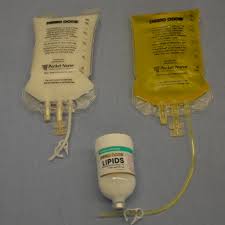
In previous blogs (here and here) I’ve discussed how to construct a murder plot using a drug or medical device that could mimic a heart attack that would be virtually undetectable as a murder—the s…
It's about finding the fiction writers. They research this sort of thing endlessly.
gray gazelle
gray gazelle
Osborne Martin's book is usually recommended
Can u share its pdf?
gray gazelle
What are some interesting mathematics books to read to non mathematicians. I have these many with me.
- The Music of the Primes: Why an Unsolved Problem in Mathematics Matters Why an Unsolved Problem in Mathematics Matters
- Prime Obsession: Berhhard Riemann and the Greatest Unsolved Problem in Mathematics
- Infinite Powers: How Calculus Reveals the Secrets of the Universe How Calculus Reveals the Secrets of the Universe
- The Calculus Story: A Mathematical Adventure A Mathematical Adventure
- How to Solve it - A New Aspect of Mathematical Method: 34 (Princeton Science Library) A New Aspect of Mathematical Method Princeton Science Library
- Journey through Genius: The Great Theorems of Mathematics
ripe granite
fearless symmetry looks pretty good
gray gazelle
Any book for number series ?
marble solar
Apostol's introduction to number theory
marble solar
Rudin Principles isn't that rigorous
If you want to understand, start at Spivak's Calculus
If you want rigor + understanding you go to Pugh's Real Analysis
If you want a painful little book, you go to Spivak's Calculus on Manifolds
If you want to be confused, you read Rudin
cobalt arch
Is pugh really better than Rudin?
marble solar
Yuh
sage python
Lmao, what Moonbears is saying is controversial
I hold Rudin > Pugh
Also wait aren't you supposed to be learning linear algebra? Do that for now lol
sage python
I mean you can't really linearly order books like I mentioned with LA books
Idk Zorich at all tbh
cobalt arch
Yeah I understand that
karmic thorn
I hold Tao>>any other analysis text for intro.
cobalt arch
But I just want some recommendations
I more so seek a book with complete coverage of the literature if that is feasible
for intro
:)
karmic thorn
Both volumes of Tao's Analysis.
hasty turret
Starting with set theory axioms seems weird for a analysis book
cobalt arch
Are you referring to tao?
hasty turret
Yes
I don't know why you would ever need axiomatic set theory,if you are not doing logic
hasty turret
idk, Haven't done analysis
sage python
Forsaken actually there's an analysis book you might like which is super broad
cobalt arch
And rigorous?
hasty turret
Aman Escher?
sage python
It covers a decent ish amount of linear algebra
I mean most of these books are fully rigorous anyway
cobalt arch
Okay
hasty turret
It starts slow
sage python
Idk it
Kriz covers a decent amount of linear algebra, and it does a lot of stuff that's not usually covered in an analysis class. It mostly does Lebesgue, rather than Riemann, integration
Does some complex analysis, calc of variations, functional analysis, Riemannian geo
So it's got a nice survey of things. I think its chapter 1 is a decently self-contained gloss through single variable calc
So yeah idk I think it's fair to just pick that one up and then read it for, tbh probably well over a year lol
And not worry about books for a while
cobalt arch
Yeah I tend to overdo it when it comes to books
Functional analysis in a real analysis book haha
sage python
I mean I def get the sentiment of wanting "the optimal" book
cobalt arch
I mean that is interesting
karmic thorn
If you're talking about comprehensive, Amann-Escher's 3 volume Analysis series covers pretty much all of undergrad analysis+some introductory differential geometry.
sage python
I actually think Kriz is basically that is the thing
karmic thorn
The approach is a bit non-standard, in the sense that Amann-Escher starts off with broad generalities first, which might be hard to digest but if you can stick to it, it's pretty solid imo.
If you haven't done a lot of proof-writing before, I'll continue to push for Tao's Analysis.
hasty turret
I will never understand why intro analysis books start with basic logic and set theory
karmic thorn
I mean
It's a good way to see how things come into beinh
*being
And you can actually skip that part without losing much
Because construction of number systems rarely comes up anywhere, I guess
And it's a good way to write proofs about ideas which seem too obvious, and see how they emerge from bottom up.
cobalt arch
How can I get acquainted with proof writing? Do I need another book entirely or an analysis text that is intro proof based?
 past yew
any books which “start from scratch”? I want to learn math without any assumptions whatsoever, like even if it has a bunch of trivial things I want to have a solid foundation
karmic thorn
I'm not a fan of using books for proof-writing; learning it in context is much more natural.
cobalt arch
I see
karmic thorn
past yew
any books which “start from scratch”? I want to learn math without any assumptio...
Tao's Analysis. 😌
karmic thorn
Kinda. You start by building the natural numbers using the Peano Axioms.
tight crag
second order or first order peano axioms?
cobalt arch
If you want elementary algebra you can read shafarevich's discourses on Algebra.
karmic thorn
Then you cover some axiomatic set theory, followed by construction of integers, rationals, and finally reals. By the time you construct reals through Cauchy sequences of rationals, you already become familiar with a lot of notions underlying completeness, Cauchyness, etc.
cobalt arch
Cauchyness 
past yew
Liquid I was meaning 2nd order
cobalt arch
Hm tao sounds interesting
karmic thorn
tight crag
second order or first order peano axioms?
No idea lmao, Tao lists 5 peano axioms(existence of 0, existence of successors, 0 not being a successor of any natural, equal successors implying equal numbers, and PMI)
cobalt arch
Ted is Amann escher comparable to tao and if so which one is better?
I want complete, rigorous and systematic coverage of real analysis
past yew
multiple books is probably a good idea, looking for a perfect book doesn’t really make total sense imo
karmic thorn
Amann Escher is extremely terse. ¯\_(ツ)_/¯
I prefer readability over rigour for intro.
Especially if you haven't done proofs before.
cobalt arch
I mean in one way it does N-C
karmic thorn
And Tao is fairly comprehensive; you could probably follow up with something terse or advanced.
I keep switching between different sources for learning as well.
cobalt arch
Because reading from multiple sources can be a bit tedious at times and cumbersome.
past yew
Do any of y’all know of a book which derives everything starting from ZFC?
cobalt arch
And you might get more confused
If you want zfc then analysis isn't for you haha I don't think that such a text exists
past yew
I would love such a book, ah darn
tight crag
N-C you are just going from one extreme to another
tight crag

tight crag
lol fair enough
cobalt arch
I mean I am sympathetic to N-C because I want it covered all myself but yeah if you want complete coverage of analysis amann escher is the way and for zfc you have the legendary jech text (the graduate one although the other one is good too).
past yew
Jech sounds cool
cobalt arch
I mean jech might be too much and he might skip a lot of things
tight crag
Jech is far too much
cobalt arch
But his other book is good
past yew
axiomatic set theory would probably be a good book
I just don’t know a good book on this topic
cobalt arch
Karel hrbacek and jech introduction to set theory.
They have written a book together check it out
It is rigorous I think and it is the predecessor to jech's graduate text.
past yew
Huh, will look at it, it starts off with ZFC I’m guessing?
hollow peak
cobalt arch
I want complete, rigorous and systematic coverage of real analysis
kolmogorov
cobalt arch
It starts with them yeah the first chapter is about the axioms
hollow peak
it's terse and somewhat old but very, very thorough
cobalt arch
It goes over relations, functions, orderings, natural numbers, finite, countable, uncountable sets, Cardinal numbers, ordinal numbers, alephs, then it goes on to talk about the axiom of choice then the arithmetic of cardinals, the set of reals, filters and ultrafilters, large cardinals and it closes with ZFC.
It has the axioms in the first chapter though
past yew
Ah I see
hollow peak
I would say it's a very a good second or third pass for real analysis
So it goes through the first semester of real analysis (in rigorous depth, maybe too much for a first pass) in about 70 pages
then it moves into linear spaces and some advanced linear algebra
cobalt arch
70 pages 😩
past yew
Is ZFC 2nd order?
hollow peak
and then advanced measure theory
cobalt arch
Oh what would you expect from kolmogorov 
hollow peak
this is the best pdf I can find
it's a dover book so you can find a physical copy cheap
cobalt arch
Hm
Libgen
If you want full rigorous coverage of precalc I have some recommendations NC
One is the text on algebra I told you about
hollow peak
honestly the approach of "everything from scratch and super rigorous" is kind of a meme nowadays
everyone tries it until they inevitably can't handle it
past yew
oh
hollow peak
take it slow and steady and build upwards
like, that's why rudin is kind of a meme among young people while it's considered the gold standard among academics
past yew
What about just the everything from scratch part?
hollow peak
my personal opinion is that getting bogged down in foundations early is boring
if you're into that, then it's great
past yew
I like foundations tbh
hollow peak
but I personally don't find everything from scratch
cobalt arch
For trig you have sl loney and then durrell and for geometry you have geometry: euclid and above which covers some non-euclidean geometry later on too.
hollow peak
you read some basic stuff once or twice, understand the constructions of the reals, assume ZFC intricacies whatever
then go fast and loose with AoC

cobalt arch
AoC stands for?
past yew
Axiom of choice
hollow peak
^
cobalt arch
Oh xd
past yew
well, I guess this is my OCD talking but is it possible to have also the logical rules included along with ZFC?
cobalt arch
You don't need to know at all Axiomatic set theory to start from scratch most books require only naive set theory and they build up from there.
past yew
like ZFC + 1st order logic axioms
hollow peak
N-C, have you heard of the principia mathematica?
hollow peak

The Principia Mathematica (often abbreviated PM) is a three-volume work on the foundations of mathematics written by the mathematicians Alfred North Whitehead and Bertrand Russell and published in 1910, 1912, and 1913. In 1925–27, it appeared in a second edition with an important Introduction to the Second Edition, an Appendix A that replaced ✸9...
cobalt arch
Principia mathematica is the bible
past yew
is that the one with the 1+1=2 meme, I’ve heard it in that context
tight crag
principia was very important at the time
past yew
Yeah I personally like foundations so I’d be fine with it
like
I have a lot of free time right now as well
hollow peak
tight crag
principia was very important at the time
when people cared significantly more about the basic structure of set theory
tight crag
well it was very important as a target for early computability theorists
hollow peak
I think it's interesting don't get me wrong
I just think for someone learning math
getting into uber rigorous logic and set theory is not the way to go
cobalt arch
Well if you want full coverage of the foundations of math go back to the vienna circle, logical positivism, analytic philosophy and then kant haha.
cobalt arch
Yeah hrbacek and jech is good
tight crag
the more concrete the better early on
cobalt arch
I don't agree
tight crag
so yeah book of proof is good, discrete mathematics and basic number theory and combo are good
hollow peak
in an alternate universe they are teaching school children category theory
tight crag
obviously the best first book is Soare
cobalt arch
Cat theory without preexisting knowledge of math is
hollow peak
how do you teach category theory in a vacuum
it only really makes sense with motivation
cobalt arch
Well that is it if you want to learn the foundations of math learn philosophy
Yeah
It is like the scaffolding without the building
I wanted to learn cat theory but then I realized exactly that which was that it is a tool for tools. If you don't have em you can't need it.
Or shall I say cat

hearty steppe
tight crag
obviously the best first book is Soare
Soare?
obsidian valley
Probably Robert Soare Turing Computability 
cobalt arch
Any books on analytical geometry?
karmic thorn

cobalt arch
Do you want my syllabus?
Maybe it can be of help determining which book to read although I have exams in 4 days but I am burnt out:)))
Yeah I know jesse xd
obsidian valley
Forsaken how do you simultaneously know that Hrbacek & Jech is a good set theory text and also need a reference for analytic geometry
LMAO
Just get Langs Basic Math or something
cobalt arch
A good text is good and that is hrbacek and jech..
cobalt arch
I mean knowing one but not the other doesn't make them mutually exclusive
I have read parts of it and parts of other books and that was the most well structured. I don't understand where you are coming from.
obsidian valley
I'm just confused about your level of mathematical maturity lol
cobalt arch
Can you judge when a book is good if you don't have expertise in the field?
Where do you draw the line between someone that can recommend books and someone that can't?
karmic thorn
Expertise would be a stretch, but having some understanding of the contents, and having consulted other literature on the same contents can help.
obsidian valley
cobalt arch
How can I get acquainted with proof writing? Do I need another book entirely or ...
This contradicts with your ability to read the book (and judge it's quality) as far as I'm concerned 
karmic thorn
Forsaken, I think I can relate to your present situation-you want to study maths bottom up, thinking you should start studying in utter generality and rigour, starting from foundations and building up from there. Am I right?
cobalt arch
I am referring to jesse.
karmic thorn
Oh
obsidian valley
You should not attempt to learn math from axioms up because that is not the way math has been actually created/discovered
karmic thorn
Regardless, I suggest you stick to one topic which isn't very far removed from the maths you already know. This could be linear algebra or real analysis.
Also, you don't have to pick up the "most rigorous" books on either of these subjects.
cobalt arch
That doesn't mean that you can't have such an approach
hasty turret
That approach sucks
karmic thorn
Stick to introductory texts which help you understand the ideas and intuition, while acquaint you with writing proofs.
cobalt arch
Well isn't that subjective?
obsidian valley
It means that the approach will be difficult
The "foundations" of math are not easy to understand
karmic thorn
I agree with MoonBears here. That approach doesn't align with how we learn to pursue abstract subjects like maths. To drive a car, you don't learn its mechanics bottom up.
obsidian valley
You won't even have context for why stuff is done in a certain way
cobalt arch
Well if you think about it every mathematician should read philosophy too to understand fully the underpinnings of foundations.
hasty turret
No
cobalt arch
Yes
obsidian valley
The axiom of union literally makes no sense unless you've worked with sets before, for example