#book-recommendations
1 messages · Page 219 of 1
 quick hornet
 golden halo
I'm looking for an intro abstract algebra book that's good for self-study. I'm familiar with a lot of the basic concepts but haven't covered algebra formally.
Vinberg, Knapp, and Artin all look good - what do you guys think is best?
 hasty turret
As a anti anti recommendation,I suggest dummit and foote
 prisma snow
As an anti recommendation, I do not
hasty turret
Probably artin
 haughty dove
 golden halo
hasty turret
Probably artin
golden halo
hasty turret
Probably artin
tyty I'll go for it
 drifting elm
bourbaki books in english yes or no
 gray gazelle
I want a book on combinatorics .I am confused between chenchuang chon and richard brualdi
 karmic thorn
Let me add to your confusion by suggesting Miklos Bona's A Walk Through Combinatorics.
I suggest you skim through all the three books first, see what suits you, and go with that book(although there's nothing wrong about consulting multiple books, it could be time consuming I guess).
 onyx crown
anyone know a good book to look at alongside strang's intro to linear algebra in order to get a more rigorous understanding of what's being discussed
 civic python
Perhaps axler langleys book?
onyx crown
thanks, i'll take a look
 smoky surge
Don’t do axler
First time around
The determinate treatment is odd
Loved the book but

 marble solar
Unironically not wrong
gray gazelle
@onyx crown the book by K jänich
onyx crown
thanks 👍
 storm sleet
Isn't Pinter a decent starting point for algebra?
 flint forge
yeah i think so
 hearty steppe
Pinter is such a cool book. Although I barely have gotten through it besides the first two chapters cause I’m jumping around a bit between math books and shit
marble solar
I find that I'll be on one or two books for a about 8 weeks
Before I move on
Jumping aroun
 red oasis
I'm studying algebra with a book from kaufmann
Do u guys know?
"Algebra for college students 9ed."
 static crest
lol I thought it would be an abstract algebra textbook
red oasis
well idk whats abstract algebra
 dapper root
static crest
lol I thought it would be an abstract algebra textbook
dapper root
static crest
lol I thought it would be an abstract algebra textbook
If it says 9th Ed. I don’t think it’ll be abstract algebra
quick hornet
maybe its just a really cutting edge algebra book
so they have to update it every year as new papers are published
i'll confess that "algebra for college students" is a weird name for such a text, but hey, look at weil's basic number theory
the point of mathematics textbook names is to talk down to perspective readers so they think "man i'm such an idiot i should pick up this text so im not an idiot anymore"
it's academic negging
hearty steppe
I feel like that sometimes
quick hornet
are you really gonna say "I am not cut out for Basic Number Theory"
imagine saying that to your mother
how disappointed she'll be
hearty steppe
Damn
 valid moth
lol
karmic thorn
dapper root
If it says 9th Ed. I don’t think it’ll be abstract algebra
Gallian is in its 9th edition rn. 
 sage python
@quick hornet well you see my mom doesn't know what number theory is so it's perfect
 sudden kindle
how hard is basic number theroy
static crest
karmic thorn
Gallian is in its 9th edition rn. <:thonkzoom:533366356536721418>
ya but it's gallian, so is it even real algebra
it has like colors and pictures
gallian is to abstract algebra as stewart is to calculus
karmic thorn
I'm liking it as a first book for AA. Has loads of exercises, and they seem to be as good as D&F. ¯_(ツ)_/¯
static crest
it's joke
 calm crane
meanwhile jacobson basic algebra volume 2
 fossil island
in general, is the international edition similar enough to the us edition of a textbook?
quick hornet
and it may be a different edition or w/e
flint forge
whats the book title
you can probably get it illegally if a pdf is okay
nami tell me to do my grad apps
i just need to like
reread them
and hit submit
fossil island
flint forge
you can probably get it illegally if a pdf is okay
i was thinking about that, but i found out that i'd rather dish out the 20-50 bucks and save my eyes from staring at my screen even longer
flint forge
ah, fair enough i guess
ive long since accepted that i will spend most of the day Staring At Screen
static crest
imagine if the int'l edition just ctrl-F swaps imperial units for metric units
fossil island
maybe they swapped the decimal points for commas, too
static crest
ah that annoys me so much
if they use SI notation anyways, with decimals as commas
then it's fine
but if someone writes
123.456.789,123.456.789
my eyes cannot accept it
 hidden robin
ok...i guess ill ask for the 3rd time here lol. anyone know a good place to find calculus 2 life science resources? Just trying to find example questions that show step by step what's going on.
static crest
what do you mean "calculus 2 life science"
gray gazelle
tai's method
static crest
lmfao
valid moth
i believe tai is currently working on rediscovering lebesgue integration
static crest
I cannot wait for the conclusion of the tai's character arc
he will prove hodge
at the end
hidden robin
static crest
what do you mean "calculus 2 life science"
there's calculus for enginnering and calculus for life science i dunno how else to explain it
gray gazelle

static crest
calc is either like rigorously taught, or it's not
I don't know any other divisions of calc
hidden robin
no idea the school isn't open yet and i want to get ahead im guessing its just everything I learned in calc 1 just more advanced but yeah I honestly have the same questions
well my school is retarded
hidden robin
...thats what im asking lol
gray gazelle
static crest
I mean idk any specific lifesci tailored calc resources
static crest
stewart is probably the easiest "comprehensive" calc tb you can find
hidden robin
ok so if i just go thru lets say 100 derivative equations and a 7 hour course on calc 2 on youtube that should cover everything right?
flint forge
hidden robin
well my school is retarded
Don't use this as an insult.
static crest
unless you're a galaxy brain or the calc course is covering like 1/4 of the content of a normal calc course
7 hours is not enough
to even read the calc content
let alone learn it
hidden robin
ok...so where can i find resources for calc 2? or do i have to go chapter by chapter to find resources? i just don't understand how this is so complicated
gray gazelle
rudin 
static crest
lmfao
gray gazelle
(/s)
static crest
forcing a lifesci student to read rudin would be considered a warcrime I think
hidden robin
ok yeah i got the stewart tb book honestly i don't understand what im reading
gray gazelle
static crest
forcing a lifesci student to read rudin would be considered a warcrime I think
well i am being forced to take mat347 with repka so i'm just trying to share the war crime victim experience
hidden robin
i need to figure out the gaps in my understanding. alot of resources are either too simple or only give you answers with no explination how they got it.
static crest
I mean doing exercises is the only real way to get through it
all of stewart has been solved on slader
so if you're really not being able to solve a question in stewart, slader will have a solved version of it
static crest
gray gazelle
well i am being forced to take mat347 with repka so i'm just trying to share the...
no one's forcing you to only learn the algebra in 347 though
gray gazelle

static crest
you're free to learn stuff properly if you want
static crest
I was reading the last chapter of d&f for groups
and they mentioned things called Sylow p-complements and Sylow groups for infinite groups
I didn't want to know these things existed
day ruined tbh
gray gazelle
hidden robin
static crest
all of stewart has been solved on slader
ah yup I was using mathway to help breakdown where I went wrong it seemed to be the best way good to know thanks i forgot how useful it is basically like having a automated tutor.
static crest
as you get ahead in math, you'll have to get used to more and more independent learning
just a sad fact of life
calc still has a ton of resources however
past calc is when you'd really have to be good at independent learning (if you want to go past calc, that is)
hidden robin
static crest
as you get ahead in math, you'll have to get used to more and more independent l...
luckily I'm done after this one.
 crimson wolf
Anybody gone through Calculus (3rd or 4th editions) by Spivak? Trying to figure out if it's worth it for me to go through it. I've got a B.S. in physics so I've gone through typical calculus, diff eq, lin alg. I'm trying to get a better understanding of how to think like a math person or even more so like a theoretical physicist. I do plan on going through Velleman's proofs book and Tarski's mathematical logic book. I might go through Kleene's book as well. Physics grad students don't have mathematical logic or like real analysis courses in their curriculum though so idk. I just find it hard to believe solving problem after problem in regular calculus textbooks for years can result in some hot new physics theory. I figure they must have a better understanding of math than that?
Also considering Analytics on Manifolds by Munkres. From reading reviews it seems like it's at the same level of Spivak's book, but multivariable calculus/analysis.
flint forge
Don't spam this in multiple channels lol
hearty steppe
Yea I have a problem with that too slim because isn’t the goal to bridge math and physics together consistently for all phenomena?
marble solar
That's why their theories are bunk
gray gazelle
just forget the proofs
you could get through a lot of math curriculum by just telling students you don't actually need to prove anything, just do some calculation that seems to make sense
crimson wolf
yeah we just calculate, but I seriously don't feel my critical thinking skills grew much because all i did was calculate, and never learn to understand why we do anything or how we do it.
And this is annoying. I'd really like to better understand the reasoning, not just the calculation.
Urs?
Yeah I went there first
Not much.
We love Quantum Mechanics by Griffiths. That is like nothing but hand-wavy math. We love it I guess. But it doesn't help build intuition for how math works.
Community in general.
Nah haha I didn't quote that from there lol
I don't even remember the discussion, so yeah I don't know if it was very fruitful lmao
hmm ok ok
I wonder if just a proofs book will quench my thirst, if you will. I do have one math logic book so I'll probably go through that too.
But yeah I'll ask that hehe
gray gazelle
but, to go back on topic, i would guess spivak calculus is too simple (although i personally haven't read it), maybe pugh or rudin is more interesting
crimson wolf
I've read good things about these...
Well it's like 3D real analysis or something?
like uhh... multivariable real analysis?
hmm and those are very different?
gray gazelle
No, it relies on knowledge of that
crimson wolf
ok ok
gotcha
is "real analysis" strictly like the proofs version of differential and integral calc?
quick hornet
calculus on manifolds is the bridge between multivariable calculus and differential geometry
if that makes sense
sometimes "real analysis" is used a bit more broadly
it can include measure theory and stuff
at my undergraduate measure theory and funtional analysis was called "real analysis"
crimson wolf
oh wow even topology?
quick hornet
whereas the rudin type stuff was "honors calculus"
quick hornet
basic topology makes analysis a lot easier
crimson wolf
I'm autodidacting this math so I'm scared of going for something really difficult. 🙂
quick hornet
unfortunately it means the topology becomes the hardest part
gray gazelle
i think rudin is good if you already know calculus very well
crimson wolf
@gray gazelle what real analysis book do you like?
Any of you guys read Terrence Tao's books? I'm so buying into the hype haha
He also has Real & Complex Analysis?
Looks like it.
kk
I feel like we don't know, or respect, math though.
I'm just being honest.
flint forge
how so
i meant like in what sense
idk i think most of its in jest
i feel like most math people are aware that the entire field is kinda a meme
i mean 'i hate applications' reworded as 'i don't care about stuff w applications' is a fair personal opinion imo
storm sleet
What about “math in its pure form is more beautiful than applied”
flint forge
idk 'i hate applications' doesnt make any sense to me as a sentence lol
flint forge
storm sleet
What about “math in its pure form is more beautiful than applied”
i think this is true
i think this is silly
storm sleet
That’s how I characterize my dislike of applied math
flint forge
hot take it makes sense to disrespect pure math
flint forge
its a very selfish pursuit imo
i could be doing any number of more beneficial things w my time
i'd probably major in like
phil/related
if i didnt do math
storm sleet
I wouldn't say selfish, its like devoting yourself to any number of things that may not make an appreciable differences to the world
flint forge
which would be more productive imo
 hasty eagleBOT
Send me catgirl pics
storm sleet
For many things, its a matter of time until they find applications
Sometimes, its a very very long time
valid moth
wtf infty cats are gonna cure covid ok
storm sleet
Unless you do computational
valid moth
just give them 100 years
storm sleet
Its funny because the stuff (from what I know) thats the most CS-adjacent is simultaniously the most concrete and most abstract parts of math
But the middle stuff is less relevant
Theoretical Comp sci
storm sleet
I'm a big programming language enthusiast and intend to study it in grad school, so the abstract math is applicable in some areas, but I also realize I'm an intern at a big company and they don't care about TCS
TCS is common yes
valid moth
nah yohan is a boomer
storm sleet
I haven't heard people refer to it as "pure" cs very often
valid moth
hence it is not a thing
storm sleet
How can you claim calculus exists when I've never seen epsilon positive irl
We live in a simulation written in FORTRAN in 1998
Back to the last point, its always interesting to try to find applications of the pure math I'm studying to CS
Like trying to find a connection between topology and CS is quite hard, and makes grounded examples in many fields difficult
storm sleet
Telephone and data systems?
flint forge
Topological Data Analysis
quick hornet
topological data analysis
storm sleet
oh thats the second result
I'm not incorrect
I don't do data related things so explains a lot about my lack of knowledge
Side note: don't invest in TDA their stock is dropping/hovering below consistently in case the graph didn't say it clearly /s
flint forge
yes
flint forge
something something neuroscience
storm sleet
Physics finds a use for it
Something something pure math bad
Wait
Doesn't General relativity is manifolds?
excuse my dumbness lol
Stop bullying the poor undergrads
Category theory is great tf
gray gazelle
Is it
flint forge
- category theory in CS is a meme
storm sleet
It gives a good framework for developing more pure or more provable code
Monads are a plus
flint forge
- category theory in pure math is basically the bread and butter of a ton of fields
storm sleet
crys in cs
flint forge
like you simply couldn't do modern AG/AT/Htpy without CT
storm sleet
It is pretty superficial though
Like in research (mostly PL/"applied" type theory) it has more of a place
The deepest I can imagine any programmer would go is about halfway through the Bartosz Milewski blog
i.e. functors, monads, algebras
maybe even some free constructions if you're feeling adventurous
 uncut zealot
Can anyone recommend any books on number theory interesting and accessible to an undergrad who's already taken a first number theory course? Most books that I can find are either written for a graduate audience and require a whole slew of prerequisites that I don't have yet or are a rehash of the same standard undergrad number theory that I've already learned (modular arithmetic, the prime number theorem, chinese remainder theorem, quadratic reciprocity, linear diophantine equations, etc.)
 warped cedar
A classical introduction to modern number theory by Ireland and Rosen
uncut zealot
Thanks.
quick hornet
note that ireland-rosen does expect you know some ring theory
just basic stuff though
nothing fancy
quick hornet
yeah like
honestly if youre not already familiar
you could probably learn the necessary ring theory in
a week?
or just learn-as-you-go
gray gazelle
Yeah
quick hornet
its not too intense
gray gazelle
Ring theory is a very deep subject though so it's kind of like calling "learning about sets a bit" "set theory"
gray gazelle
Yeah
 silver herald
flint forge
like you simply couldn't do modern AG/AT/Htpy without CT
silver herald
flint forge
like you simply couldn't do modern AG/AT/Htpy without CT
I agree. In fact - I have seen dynamical systems theory making using use of CT quite a lot as well
sudden kindle
I <<learned>> ring theory
gray gazelle
Hi
 red stream
anyone have any good books on chaos
specifically of the readable form, not necessarily looking for a textbook
 hollow peak
chaos by james gleick
red stream
@hollow peak would you say there's any major prerequisites for that?
hollow peak
it's a fun piece of nonfiction reading so you're good
red stream
nice thank you
hearty steppe
I mean that’s like a history book, not really an academic book on chaos theory
hearty steppe
Oof, I’m not quite ready to read a whole book on chaos theory yet that is actually academically packed with content so I can’t quite help you there.
Maybe start with trying to get into stochastic calculus
Not sure how mature your understanding of calculus or probability theory is
But I think that will be very important for learning dynamic systems because that’s basically what chaos theory revolves around?
Tbh I’m open to book recommendations on dynamic systems myself. Would like to know what people prefer
But more or less this idea of “chaos” is essentially that the system under question is highly unstable and seems unpredictable to some extent due to its unstableness?
hollow peak
the standard text I believe is chaos by steven strogatz
I think the only real prerequisite is calculus
red stream
stochastic calculus seems interesting
im doing a research term this semester on stochastic processes and optimization
hearty steppe
I am pretty sure some basic enough understanding of Bayes Theorem from Probability is required at the very least too
Cuz the stability of a system has probabilistic implications
red stream
yea i take probability this term as well, however i had a introductory class on discrete math that covered bayesian stuff just a tad bit
hearty steppe
Right and because unstable implies degree of unpredictability, this implies patterns of randomness via stochastic variation
hearty steppe
Hmmm interesting thanks for the info
 late plinth
Anyone has good book rec for intro combinatorics?
 muted hearth
anyone familiar with Smirnov's Course in Higher Mathematics volumes?
i snuck a look at a pdf and it seemed quite nice
but it's borderline non-existent across any storefront
marble solar
karmic thorn
late plinth
Anyone has good book rec for intro combinatorics?
Miklos Bona, A Walk Through Combinatorics.
gray gazelle
you recommend that book a lot 
one second
i'll dm
👍
basically
every section was thrown together after a lecture
and then i put them all together
😎
 ripe granite
too bad it's on differential geometry
gray gazelle
I would like to see it too if you don‘t mind 
i will dm
though
at some point
i was just doing them for the sake of having a complete set of notes
i could have stopped and like, spent the time doing problems or something
the good part is i don't use these
i just open lee whenever i need to look up something lmao
i used them during the class tho
but now, after the class? nah
i think if i actually went back through them i would want to change everything
gray gazelle
gray gazelle
i was just doing them for the sake of having a complete set of notes <:opencry:5...
.
also for the first class those notes are from, the other students were using them, so i would have felt bad if i had stopped

karmic thorn
gray gazelle
you recommend that book a lot <:catThink:526983414226747393>
Ultra recommended it to me. This book is just too good, I was moved enough to pay for a physical copy. You should take a look sometime.
gray gazelle
at some point
maybe if i can't figure out this lie groups exercise i will download it and skim
karmic thorn
Definitely.
karmic thorn
gray gazelle
i was just doing them for the sake of having a complete set of notes <:opencry:5...
Relatable. The perfectionism is often counterproductive though.
gray gazelle
yup, those notes were a good lesson in that
karmic thorn
I just skim through books for later reference.
gray gazelle
if i had done exercises from lee in the time i spent typing those notes i probably could have done better in the class
not like i did poorly, just i choked on the exams 
karmic thorn
If I would bother reading and studying ahead instead of TeXing the same stuff I've already studied for the sake of completeness, I could have gone a bit ahead. :p
karmic thorn
gray gazelle
not like i did poorly, just i choked on the exams <:pensivebread:556701306169982...
gray gazelle
okay im gonna look at a copy of the book
karmic thorn
Goodluck for your future exams. TeX bad, retvrn to chalkboard.
gray gazelle
return to drawing in the dirt
karmic thorn
Based.
 static crest
I had to make my first commutative diagram today
was a bad day
pretty sure the diagram is wrong too
static crest
d&f making me draw commutative diagrams without teaching how to draw them
static crest
I would love to if I could
gray gazelle
frat boy subgroup
static crest
P/frat P is the largest elementary abelian quotient
so if P/N is also an abelian quotient
static crest
you can make a surjective homomorphism from frat quotient to P/N
hasty turret
Well,d and f also introduces p adics
hasty turret
And direct and Indirect Limits
gray gazelle
are you frat boys
hasty turret
gray gazelle
7 > 6 <:hmmm:773801269532819466>
That's false if I define a>b iff a<b
 hollow current
ttera i also want your notes
karmic thorn
Rn I'm thinking about problem #39
ripe granite
hollow current
ttera i also want your notes
it doesnt work like that
you need to simp for a bit first
gray gazelle
vimes already has
karmic thorn
gray gazelle
what page
Pg.14
gray gazelle
ted we migth have different copies
pdf numbering is a bit off i think
on page 14 it has exercise solutions
hollow current
ripe granite
you need to simp for a bit first
ttera is my edate tho
karmic thorn
Lmaooo
gray gazelle
just picked the one that was highest up on the list, and in pdf format
hasty turret
karmic thorn
The fourth edition has a neat PDF as well
hasty turret
This is clearly cat theory
karmic thorn
Use Z-Lib instead of Libgen
static crest
rip, I went from 192 pages to 190 pages
because I changed my font to the STIX2 fonts
because I need to surpass ttera's 215 pages
gray gazelle
poros they aren't 215 pages anymore
ripe granite
just write down the proof of feit thompson
gray gazelle
i cut down the page size a lot when i messed with the margins
ripe granite
you will surpass 400
static crest
oh I see
static crest
pog
gray gazelle
well i never typed the last lecture since i didn't understand more than 50% of it
but
i don't think it'd go over 190
so yeah you win 👍
static crest
poggers, I didn't even have to do rings
that's half my motivation gone smh
add some pages to it
gray gazelle
Inb4 700 pages
how about i add on the page length of my optimization notes as well
73 + 182
get working buddy
i expect you to be at the representation theory part of d&f by next friday
Add exercises and proofs
static crest
ten
karmic thorn
gray gazelle
the prof for the manifolds course would say "i'm leaving this as an exercise for you" and then i'd type a proof in that lecture's notes, but then he'd put it on the homework
let me find an example
karmic thorn
My notes so far have been taking out contents from the book almost verbatim, with all examples and exercises with solutions.
gray gazelle
prop 2.4.3 was literally on the homework i wonder if the other students copied my solution
Not proofs for the exercises, proofs for the theorems 
karmic thorn
It would be nice if video lectures could be embedded in a text-file format.
gray gazelle
karmic thorn
It would be nice if video lectures could be embedded in a text-file format. <:ca...
Just put a link to yt 
karmic thorn
Hmmm, interesting.
karmic thorn
gray gazelle
Just put a link to yt <:woke:480964061140353036>
That is reasonable, but I'd like to have something internal to the file itself.
gray gazelle
That file's gonna be 10gb
karmic thorn
Maybe a spoiler element in PDFs would be neat.
karmic thorn
gray gazelle
That file's gonna be 10gb
Well, just create seperate file with each lecture and the corresponding notes+exercises.
Hmmm, fair enough.
PDFs could be made more dynamic than they are.
That would be neat.
Your opinions are based Yohan.
karmic thorn
@gray gazelle Did you find the 4th ed or should I DM you the legal copy?
gray gazelle
i went back to doing my lie groups exericse lol
static crest
nice
karmic thorn
Lol, alright.
gray gazelle
inb4 variety or some crap idk
gray gazelle
yeah but it's also a lie group
dapper root
afaik the basic theory is like mianly just for the matrix groups
gray gazelle
well for F = R or C
marble solar
I think geometers/topologiraffes and algebraic geometers think in very different ways
hasty turret
Example?
marble solar
Manifolds don't really deal with singularities whereas varieties do
Ok, that might be a bit of an over simplification
but usually from what I've seen algebraic geometers are more interested in taking some geometry into the land of algebra - commutative rings, numbers, polynomials, etc.
And leveraging those tools to say something about the geometry
Topologiraffes tend to think about the actual manifolds/structures from what I've seen
Again, I'm no expert in either
gray gazelle

drifting elm
in the forward to this it says the prerequisite would be predicate calculus https://www.amazon.com/Lambda-Calculus-Combinators-Introduction-Roger-Hindley/dp/0521898854/
but the book I got for predicate calculus is really hard even though it says no prerequisite
I see sup() without explanation
had to google it finally found it was suprenum
is there something I should read before this or is there an easier book on predicate calc?
gray gazelle
Halmos, naive set theory would probably be sufficient.
To get your elementary mathematical notions
On sets at least
and it needs no previous knowledge in the domain, but only basic notions of mathematical logic
if you are referencing this, then is sounds like you don't need to know the in-and-outs of first order logic, or even as referenced in the book you linked about it, the completeness theorem
@drifting elm
drifting elm
@gray gazelle on the contrary, I would like to know the ins and outs of first order logic but I don't understand why this book would say the prerequisite is HS math but then sup() is in the book without explanation
gray gazelle
If you would like to know those then I'd recommend something like ebbinghaus, very well written book
gray gazelle
drifting elm
<@456226577798135808> on the contrary, I would like to know the ins and outs of ...
I don't know, but you could probably google what sup means if it is just that
Least upper bound of a set is sup
drifting elm
there is something else but I need to write in latex so stand by
$\mathcal{F}=\cup_{n\in\mathbb{N}}\mathcal{F}_n$
hasty eagleBOT
0000000000
gray gazelle

drifting elm
I understand set theory though
I started reading axiomatic set theory
just never seen this notation
gray gazelle
Yeah maybe start with halmos naive set theory. You could probably get some pdf and see if it is elementary enough for you.
drifting elm
what ebbinghaus book were you thinking of?
gray gazelle
Mathematical logic.
It would require naive notions of logic and set theory however.
That is getting to the ins and outs of first order logic usually requires that.
It's not a topic one would do the first time one looks at math.
drifting elm
maybe this is offtopic but why do they define sets with nothing prefixing $\cup$
hasty eagleBOT
0000000000
drifting elm
like as if it was unary
gray gazelle
It's like $\sum_{n\in\bN} \frac 1{n^2}$
hasty eagleBOT
ℋ/𝔄
gray gazelle
One might also write this as $1+\frac 1 {2^2} + \frac 1{3^2}+...$
hasty eagleBOT
ℋ/𝔄
gray gazelle
But the prefix is easier to write down
So like $\bigcup_{n\in\bN}\mathcal F_n=\mathcal F_1 \cup \mathcal F_2\cup\mathcal F_3\cup ...$
hasty eagleBOT
ℋ/𝔄
gray gazelle
@drifting elm
gray gazelle
Yeah
drifting elm
I read a lot of NT books
so sigma is easy but never seen this use of cup
or you prefer union
latex calls it cup
calm crane
$$\subset!!!\bigcup$$
hasty eagleBOT
a cute cat ٩(˃̶͈̀௰˂̶͈́)و
calm crane
clearly a cup!
drifting elm
$$\subset!!!\bigcup \cong \circ $$
hasty eagleBOT
0000000000
drifting elm
it broke
gray gazelle
what were you trying to do
drifting elm
tried to make coffee cup homeomorphic to donut
prisma snow
Ah
gray gazelle
You'd have to write it as \! however
hasty eagleBOT
Lunasong
prisma snow
Cool
drifting elm
ok last one then I stop spamming
$\subset!!!\bigcup \cong \raisebox{0.05 em}{\Huge \circ}$
hasty eagleBOT
0000000000
Compile Error! Click the  reaction for more information.
(You may edit your message to recompile.)
 waxen elbow
any review on Smirnov's collection "higher mathematics" ?
gray gazelle
This is great
hearty steppe
I’m curious about that too adri. You peaked my curiosity
waxen elbow
gray gazelle
This is great
can you please tell more about it ? was it better than some other textbooks you read ?
gray gazelle
Oh lmao I was talking about the mug=doughnut
waxen elbow
hearty steppe
I’m curious about that too adri. You peaked my curiosity
i don't have time to read everything, it looks like a pretty intuitive approach to analysis and algebra. It looks like it's geared towards engineers/physicists and not mathematicians (which is a pity, since I've just changed to a math major... lol)
sorry then : (
hearty steppe
Not a good mentality to have “I don’t have time to read everything”
I mean like sure you don’t have to read everything but I wouldn’t go into learning or self-study with that mindset.
Better to be in the mindset of... “how do I map out what I’m learning for what I want to do or how do I map it with what I’m doing”
waxen elbow
i mean.. today i didn’t have the time 😭
hearty steppe
Cuz you may need to learn shit you never thought you’d have to learn
So it’s important to be open minded
waxen elbow
but yes i was planning to read a bunch of paragraphs to see, i just wanted some reviews because i’m not that familiar with english textbooks in general
muted hearth
where'd you find smirnov?
muted hearth
oh fair enough, lol
I asked about it the other day, I'm trying to snag a physical copy
since it seems cool
waxen elbow
isn’t it like super expensive ?
muted hearth
will be free if it comes to fruition
waxen elbow
did you read a bit on pdf ?
muted hearth
yeah, I downloaded volume 1 to have a look
waxen elbow
whats your impression about it ?
muted hearth
that particular volume seems like a fairly rigorous and not awfully written intro to calc & analysis, and I'm just assuming thst continues through the rest of them
although you can tell it's an oldddd book
especially in the graphical presentations of stuff
waxen elbow
ill give it another look, i thought it lacked of rigour, but i might be wrong
muted hearth
i mean it's not a real anal book but it seemed like a fairly high level for a physicist catered calc book
waxen elbow
i mean i got french textbooks which are suuuuuper rigorous, and i took a look at calc2/3 ans it seems like it’s good for intuition / computations
then it could be good, paired with a real analysis book
muted hearth
i mean I'm not in a position to really want a super proof focused book, spivak is a lovely presentation but heck those exercises
also i think you'd be hard-pressed to find calc through func analysis in any other single set
that seems nice
waxen elbow
yea spivak’s exercices are quite familiar with those i got in class, some are tough
muted hearth
but I'm thoroughly unqualified to judge any of this
waxen elbow
i was on a french forum and some guy said « i want a book to do some more maths in my prepa » which is like intensive college courses, and someone mentioned smirnov’s, the guy wrote that it was super great to get a deep understanding etc
and since i’m struggling to find a good book..... i tried
can you give me the name ?
thank you 😋
btw
since i’m in math major now, i wanted to complete my eng calc courses but i’m not satisfied with the book i have
it’s stewart calc, i feel like it doesn’t go deep enough. any recommendations ?
spivak is for real analysis right ?
oooo
muted hearth
eng calc would need more than just spivak tho yeah
since it probably goes up to calc 3?
waxen elbow
i was in 2nd year, we did calc3
i mean if calc3 is multiples integrals and stuff yes we did
muted hearth
wait I'm an idiot
but that still stands I thinn
so you'd want to do calc 3 again, spivak won't cover it
waxen elbow
oh ):
hasty eagleBOT
Yohan Wittgenstein
muted hearth
isn't this more of a summary than a textbook?
gray gazelle
Any good books on differential algebra?
muted hearth
nvm I read an epub of something similar that was exercise free and kinda weird
 sturdy sail
gray gazelle
Any good books on differential algebra?
sturdy sail
gray gazelle
Any good books on differential algebra?
Wtf is even that?
muted hearth
💍
gray gazelle
Ah no sorry
In mathematics, differential rings, differential fields, and differential algebras are rings, fields, and algebras equipped with finitely many derivations, which are unary functions that are linear and satisfy the Leibniz product rule. A natural example of a differential field is the field of rational functions in one variable over the complex ...
Was the right link
I thought for a sec it was the wrong one
hearty steppe
OH that math book series
sturdy sail
Oh yeah
I've heard once in a differential geometry lecture that ''A linear map that satisfies the leibniz rule is pretty much all the differential of a smooth function is about''
So it kind of makes this notion clear
waxen elbow
hahaha i’ll give it a look
like my courses are more like rudin’s but with many many applications too
muted hearth
i think they're very similar
gray gazelle
sturdy sail
I've heard once in a differential geometry lecture that ''A linear map that sati...
No sure what you mean. I was referring to this
Differential algebra refers also to the area of mathematics consisting in the study of these algebraic objects and their use for an algebraic study of the differential equations. Differential algebra was introduced by Joseph Ritt in 1950.
waxen elbow
but it’s too dense, i need a textbook to help me a bit
sturdy sail
I mean
This is just like a generalization of what I said
instead of studying differentiation on smooth manifolds
muted hearth
i can see why you probably didn't think smirnov was very in-depth if your courses are rudin esque lol
waxen elbow
gonna sleep, may i DM you tomorrow to ask your more about it ?
sturdy sail
you just think about differentiation as an abstract linear map
waxen elbow
muted hearth
i can see why you probably didn't think smirnov was very in-depth if your course...
yes that’s why 💀
sturdy sail
and depending on which algebraic structure you are working with
 sturdy sail
You can study what different properties of this differential operator you can get.
gray gazelle
I'm not sure if we are talking about the same differential algebra.
sturdy sail
I'm not trying to describe it lmao
Just saying that the notion of a derivative being only a linear map that satisfies the leibniz rule is a thing I've already encountered before.
The definition of a derivation on a smooth manifold is pretty much this one
 drifting elm
I noticed there are a lot of books by chaitin. all pretty heavy material. how does he do it.
also, does anyone have a fav book by him?
 hearty pollen
man does anybody have any good book recommendation
hearty pollen
like sci fi
 soft terrace
hearty pollen
soft terrace
hearty pollen
oh ok
 silk quartz
I just finished reading Harrow the Ninth, book two of the Locked Tomb trilogy (bk 3 forthcoming).
It's quite a trip.
For other sci-fi (and this should probably go in #discussion), it might be useful to hear what you've read and enjoyed in the past.
drifting elm
hearty pollen
like sci fi

The Foundation series is a science fiction book series written by American author Isaac Asimov. First published as a series of short stories in 1942–50, and subsequently in three collections in 1951–53, for thirty years the series was a trilogy: Foundation, Foundation and Empire, and Second Foundation. It won the one-time Hugo Award for "Best Al...
drifting elm
this because it contains a short story "repent harlequin!"
but the audio book from the radio show was really better than that with all the sci fi music and fx
hearty pollen
oh thanks
drifting elm
The Maze Runner is a series of young adult dystopian science fiction novels written by American author James Dashner. The series consists of The Maze Runner (2009), The Scorch Trials (2010) and The Death Cure (2011), as well as two prequel novels, The Kill Order (2012) and The Fever Code (2016), a novella titled Crank Palace (2020), and a compan...
this is pretty good because it builds up a world that makes you reflect on your own world as possibly being an illusion constructed by someone playing a game or building a prison
silk quartz
If you liked Foundation, you might enjoy Dune.
drifting elm
my avatar is dune
so yeah
the mentats were a special breed of human that could do math better than people without mentat genetics
 languid galleon
Hey!
I would like to retake all math prerequisites. Like Pre-Algebra etc. Could anyone recommend smth?
I am at university studying CS and already passed all math subjects, like linear algebra, Analysis etc. but I would like to retake the fundamentals because I new my foundation isn't the best.
Could you recommend eventually some books?
drifting elm
this goes over everything from addition and subtraction all the way up to complex numbers around the unit circle
you can get it super cheap on ebay
this would be my other suggestion
I tried using this but it was kinda really big book designed for lower grades so don't get this https://www.amazon.com/Southwestern-Advantage-Math-Moore-2011-08-02/dp/B01K3QDD2C/
vol 2 might be ok I have vol 1
here is a nice free online interactive lesson in pre-algebra https://spot.pcc.edu/math/orcca/ed2/html/orcca.html
languid galleon
I already bought Understanding analysis by abott and linear algebra by axler to g through them again
thanks mate!
I used this as guide:
https://www.youtube.com/watch?v=fo-alw2q-BU&list=FLBFVLV0tT1s1oDsT2ENY1fw&index=2

This video has a list of books, videos, and exercises that goes through the undergraduate pure mathematics curriculum from start to finish.
LINKS:
Watch this for a flavor of what pure mathematics is like:
(Fredrich Schuller’s Lectures on Differential Geometry and Topology)
https://www.youtube.com/watch?v=7G4SqIboeig.
I watched these whe...
fossil island
his pacing is a little interesting
drifting elm
if you went through analysis and calc 1 but you still feel like you don't understand it then you should probably do more differential equations. you will need ordinary differential equations for fourier series and fourier transform.
if this is hard to understand then you need a book on ODE
drifting elm
my books have it listed as a prerequisite. ODE with constant coefficients
very basic ODE
static crest
kinda weird, you don't really use much ODEs knowledge to fourier, past the most basic 2nd order diff eq of all time
drifting elm
I can agree with that
static crest
which doesn't need ODE knowledge at all really
it only needs basic calc
a proper prereq to fourier would be complex analysis
drifting elm
well the books are covering DFT DTFT in one book
static crest
if you want to work with fourier properly
drifting elm
both of my text books
static crest
well signals is a whole different beast than fourier, signals does require ODEs
drifting elm
yes these are signals and systems
what would be the point of learning the fourier transform if you don't actually use it for signals?
fossil island
books for differential geometry? i was thinking about spivak's but are there any other's worth a try?
karmic thorn
TTerra moment 
fossil island
he has books on three kinds of manifolds
i don't really know anything about any
riemannian, smooth, and topological
karmic thorn
I guess the sequence is Topological->Smooth->Riemannian
From what I recall from the preface of Smooth
fossil island
"this text is used for the first third of a year-long course on the geometry and topology of manifolds"
makes sense
gray gazelle
Ted got the sequence right
fossil island
i assume that a study in dynamical systems would be good with a study of topological manifolds first?
gray gazelle
there's spivak's calculus on manifolds, which is like a calc 3 + intro to differential geometry book (great book!). then there's spivak's monstrous 5 volume set, meant to be read after CoM, which covers roughly the same content as lee's intro to smooth manifolds (at least for the first volume)
then you have lee's trilogy
the first book, intro to topological manifolds, is more of a intro to topology book with a focus on manifolds (topological manifolds) as a rich source of examples of topological spaces
the second book, intro to smooth manifolds, is exactly what the name suggests. this book is thicc and good, covers the important content and a lot more
third, intro to riemannian manifolds, continues the study of smooth manifolds by introducing ways to measure area, length, angle, etc. on abstract smooth manifolds (kind of like generalizing classic curve and surface theory)
that's the rough outline
gray gazelle
fossil island
i assume that a study in dynamical systems would be good with a study of topolog...
idk anything about dynamical systems so i can't comment on this, sorry
fossil island
damn, but thanks for that outline
flint forge
dynamical systems has a sub-field called smooth dynamics
which is normally done on smooth manifolds
gray gazelle
oh there's also tu's introduction to manifolds, which is like an easier version of lee's ISM
flint forge
however dynamical systems in general is not restricted to the context of manifolds
and you can take an intro course in dynamics w/o knowing the word manifold
the real prereqs for a good first course are measure theory and point set topology
flint forge
here point set topology is more than a meme requirement
you really want to be comfy w some of the more annoying parts
its a fantastic subject
i recommend everyone take it
flint forge
brin and stuck is good
but very terse
i've heard people like Katok Hasselblatt or whatever
but never read it
brin and stuck is alike a multi-hour per page type book at times lol
and the exercises are quite hard
fossil island
how far do you think one could get without measure theory in brin and stuck
flint forge
like
not that far?
both of those are hard pre-reqs
i don't suggest trying before that
fossil island
ok thanks
marble solar
Dami you scrub
sage python
no u
silk quartz
Hey Dami. Max was pining after you earlier.
flint forge
this is true
 timber mesa
fossil island
is the book that is given in <#556194300912861205> good?
timber mesa
fossil island
is the book that is given in <#556194300912861205> good?
I think it's kind of terse and leaves out a ton of details, I'd recommend Clark Robinson's Dynamical Systems Stability, Symbolic Dynamics, and Chaos instead, plus references on ergodic theory (Brin-Stuck's chapter 4 and Yakov Sinai's Introduction to Ergodic Theory) if you care about that.
timber mesa
fossil island
how far do you think one could get without measure theory in brin and stuck
all chapters but the one on ergodic theory (edit: and the final one on measure-theoretic entropy. Also the chapter on complex dynamics requires complex analysis of course)
if measure theory is a problem for you don't worry, just follow Robinson and see if you want to study ergodic theory later
Robinson even introduces the basics of manifolds right when you need them
which is actually really late on the book, chapter 8
(before that it's simple one-dimensional dynamics, some ODEs and bifurcation theory. Chapters 8-12 are essentially the dynamics of diffeomorphisms on manifolds)
flint forge
side note
Brin and Stuck has like very little reference to ODE/PDE/Bifurcation
and if you're interested in dynamics through the lens of group actions rather than diffeq
brin and stuck does that well (if a little terse)
also Lan Wen Smooth Dynamics
is a great follow up to brin and stuck
but you should learn what a (smooth) manifold is in between
fossil island
I'm doing topology and numerical methods in ODEs this spring so maybe I'll look into dynamical systems after that
 fluid shard
Does this look like a joke or is this reasonable for someone looking to restart mathematical knowledge? (I'm just a Electrical Engineering student)
timber mesa
lmao these guides are 100% meme
fossil island
Idk why they need you to do like 2 or 3 books in proofs/logic
timber mesa
exactly
flint forge
the next iteration of that guide will just have like HTT on it
timber mesa
fluid shard
Does this look like a joke or is this reasonable for someone looking to restart ...
do you just want to review or are you planning to, say, study maths full-time in the future?
fluid shard
Get the basics for a full time transition
timber mesa
out of all /sci/ guides I've saved this is the most decent one I'd say
fossil island
What math classes have you taken, Kolios?
timber mesa
fluid shard
Get the basics for a full time transition
are you accustomed to proofs already? if not perhaps I'd skim through Hammack's Book of Proof and a "rigorous" Calc and LinAlg pair, I'm thinking Spivak and Hoffman-Kunze
maybe Hefferon or Linear Algebra Done Wrong instead of the latter
fossil island
Linear algebra was my intro to proofs and it was fairly good
fluid shard
fossil island
What math classes have you taken, Kolios?
The typical classes for Electrical engineering, so no proof of anything, just applying theorems. Covered Calculus (up to basic Vector Calculus), application using Linear Algebra (matrices and so on), ODE and PDE class to solve oscillator problems (no non linear stuff), numerical methods (more about MATLAB), applied math for signals (Fourier """ analysis """)
timber mesa
you should be good on intuition and computations then, I'd focus on getting the hand of proofs first (which could mean either reading a book on them or going through a "proof-based" Calc or LinAlg, it seems to be a matter of personal preference)
timber mesa
timber mesa
are you accustomed to proofs already? if not perhaps I'd skim through Hammack's ...
Hammack's book is good and it's free, from that meme guide Transition to Advanced Mathematics is also pretty good from the bits I've read
fluid shard
timber mesa
are you accustomed to proofs already? if not perhaps I'd skim through Hammack's ...
Not yet. I will get that book then
fluid shard
timber mesa
Hammack's book is good and it's free, from that meme guide Transition to Advance...
Thanks for the recommandation
fluid shard
Yeah I have a lot of bookmarked papers and sites for my projects, it's a pain lol
timber mesa
timber mesa
maybe Hefferon or Linear Algebra Done Wrong instead of the latter
these two are also freely available in their respective authors' webpages
fluid shard
fossil island
Linear algebra was my intro to proofs and it was fairly good
Now that I remember, I think the mathematician teaching did proof even if the class was just for Engineering students. For other classes, they didn't bother.
fossil island
That's good, just getting the ideas of linear dependence is a huge leap
timber mesa
before changing to math major I somehow passed linalg without understanding the difference between a matrix and a linear map
 obsidian valley
theres a difference?
flint forge
i know some textbooks do
fossil island
gray gazelle
~~modulo basis~~
${e_1,\ldots, e_n} \mod \mathbb{R}$?
hasty eagleBOT
Trichloromethane
flint forge
For finite dimensional vector space a matrix is the data of a linear map and a specified basis
sage python
Lmao
gray gazelle
hey jesse
obsidian valley
hi
fossil island
gray gazelle
hey jesse <:hmmm:773801269532819466>
Breaking bad reference?
gray gazelle
still haven't done this problem
obsidian valley

For our eternal Cameron...
Instagram: https://www.instagram.com/_filipi15/
Twitter: https://twitter.com/_Filipi15?s=09
wtf why not tterra
gray gazelle
it's just frustrating at this point
sage python
This is veering off book discussion lmao
gray gazelle
okay let me make it relevant
obsidian valley
just go to the next problem
sage python
What's your favorite book on insert topic here?
fossil island
obsidian valley
come back when you're more mathematically mature
gray gazelle
i am going to read lee's introduction to smooth manifolds textbook in order to review so that i may do the problem
i mentioned book
it is now on topic
dapper root
timber mesa
out of all /sci/ guides I've saved this is the most decent one I'd say
I remember someone brought one to us and there were like legit 7 proof books and you did like 12 books before touching calculus hahaha
We all said "this is really fucking stupid" and they went "hmmmm, okay. I'm gonna do this tho"
valid moth
what do you mean you can do calculus without googology
 quartz pawn
Anyone have logic book recommendations. I know the standard text is Enderton but I'm just curious if anyone here has some personal favorites you think are good for learning math logic.
gray gazelle
quartz pawn
Anyone have logic book recommendations. I know the standard text is Enderton but...
Amazon.com: Ninja: Get Good: My Ultimate Guide to Gaming (9781984826756): Blevins, Tyler "Ninja": Books
obsidian valley
quartz pawn
Anyone have logic book recommendations. I know the standard text is Enderton but...
The other one that I see recommended is Ebbinghaus I think
I haven't really touched it though
drifting elm
quartz pawn
Anyone have logic book recommendations. I know the standard text is Enderton but...
I tried mathematical logic by cori and lascar but I really didn't like the part about languages and alphabets before it was properly introduced
so you would need another book to talk about languages
but I also think that propositional calculus and predicate calculus is as basic as you can get.
unless you want to learn languages from here for free as a primer for mathematical logic by cori and lascar

MIT OpenCourseWare
This course introduces students to the principles of computation. Upon completion of 6.001, students should be able to explain and apply the basic methods from programming languages to analyze computational systems, and to generate computational solutions to abstract problems. Substantial weekly programming assignments are an integral part of th...
obsidian valley
drifting elm
logic could mean many things, it could be first order logic, boolean algebra, philosophy books about formal logic, prepositional and predicate calculus
drifting elm
yeah all models
obsidian valley
nice
If he's referencing enderton he just means a basic overview of mathematical logic I'm sure lol
drifting elm
this goofy book is for noobs https://www.amazon.com/Discrete-Mathematics-DeMYSTiFied-Steven-Krantz/dp/007154948X/
the book has some questionable themes
obsidian valley
drifting elm
the author uses an example as a woman who only marries a rich man
and the fat girl who never gets married
using discrete math to prove it
calm crane
nice
 dreamy perch
does anyone have advice for how to effectively self study from a book?
notes and whatnot?
static crest
take notes if it helps you retain information, it does for me.
most important thing is to do exercises
however
dreamy perch
Im mainly thinking about format of notes
Im wondering if it makes more sense to do paragraphs or bullets
(or both ig)
gray gazelle
just do a shit ton of exercises
hollow peak
I forgot to ask this yesterday
is there is a good resource for a really basic and quick introduction to the fundamentals of category theory?
I started reading https://arxiv.org/pdf/1612.09375.pdf but I'm not liking it so far
ripe granite
The first few chapters of Emily Riehl's Category theory in context
drifting elm
dreamy perch
Im mainly thinking about format of notes
I write down all the theorems, definitions or the methods for solving a problem. that way my notes replace that entire book.
the stuff that is not short I don't write down.
 opal pumice
guys what's random processes ?
hearty steppe
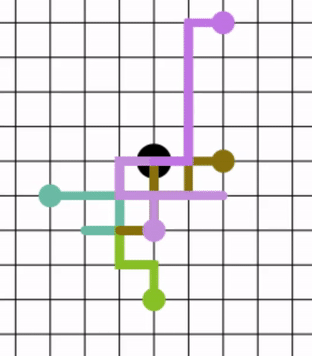
In mathematics, a random walk is a mathematical object, known as a stochastic or random process, that describes a path that consists of a succession of random steps on some mathematical space such as the integers.
An elementary example of a random walk is the random walk on the integer number line,
Z
...
 devout vault
hollow peak
is there is a good resource for a really basic and quick introduction to the fun...
devout vault
hollow peak
is there is a good resource for a really basic and quick introduction to the fun...
For a very basic introduction, I would highly recommend Conceptual Mathematics by Stephen Schanuel and William Lawvere
timber mesa
opal pumice
guys what's random processes ?
a stochastic process is basically a bunch of random variables parametrized by time, there's tons of examples such as Markov chains and random walks
opal pumice
ohh i get it
 wind aspen
Is there any book the good people of this server would recommend that could probably help make Maths click
as in the idea of Maths as a whole, I guess
wind aspen
alright, thanks for the answers!
hearty steppe
Not sure how relevant category theory will be for me but that book seems like a promising first course
 scarlet pumice
Does anyone have any book recommendation for High school mathematics concepts?
gray gazelle
lang's basic mathematics
is apparently alright
you may have to don an eyepatch to get it
scarlet pumice
thanks, I'll have a look at that book
 sudden granite
 wise vine
What's a good textbook for mathematical logic with a specific focus on CS?
hearty steppe
Maybe Rosen
wise vine
His discrete math book? It's not that rigorous for me
gray gazelle
The Bible is pretty good.
 wooden sparrow
Harry Potter is better it seems
gray gazelle
One can atleast understand harry potter
gray gazelle
wise vine
What's a good textbook for mathematical logic with a specific focus on CS?
Have you checked the Open logic text?
It's in #books-old
 frail horizon
Any good books to prepare for the IMO?
gray gazelle
frail horizon
Any good books to prepare for the IMO?
Are you complete beginner or have experience with comp math?
frail horizon
Beginner.
@gray gazelle
I've got experience with analysis though. I'm just a beginner to comp math.
gray gazelle
You can check out Paul Zeitz 'Art and craft of problem solving'. And then follow up with the recommendations at the back.
drifting elm
frail horizon
Any good books to prepare for the IMO?
Buy print or online math books for gifted students. Purchase a full math curriculum plus math contest preparation for elementary through high school.
volume 1 and 2 are competition math books
I think competition math has a lot of number theory in it and a lot of proofs for geometry and algebra
there are also the mind your decision books
warped cedar
It has a lot of number theory, geometry, algebra, and combinatorics mainly
If you are doing something like the IMO
drifting elm
the art of problem solving books are great practice for word problems. you don't realize how much harder these things are as word problems till you actually do it.
I messed up on a basic probability problem because it said balls and urns
so I thought it was a binomial coefficient problem but it was just a basic algebra
warped cedar
If you are doing something like Putnam there is more you need to know
Calculus, linalg, complex, diffeq, probability
wise vine
gray gazelle
Have you checked the Open logic text?
Oof I've been browsing this discord for a year and I haven't seen that one. It looks pretty good, thanks! Though I guess it's pretty long haha.
 stiff sandal
drifting elm
the art of problem solving books are great practice for word problems. you don't...
stiff sandal
drifting elm
the art of problem solving books are great practice for word problems. you don't...
agreed.
stiff sandal
drifting elm
the art of problem solving books are great practice for word problems. you don't...
how to fix that?
 inner sentinel
Strang or Axler?
fossil island
Thoughts on "An Introduction to Abstract Algebra" by Robinson? (https://books.google.com/books/about/An_Introduction_to_Abstract_Algebra.html?id=F9ZkUcWX3WoC). I don't know why profs can't just use d&f
We go all the way up to vector spaces
marble solar
some professors don't like d&f
If you don't like it, you can use d&f, it has everything lol
static crest
d&f is very long and very dry
some people like their texts to be more flavorful I guess?
marble solar
They might want to cover different topics in a different way
e.g. maybe less time on finite group theory
static crest
that book seems extremely brief
I guess d&f might be considered too involved
or that it has too much extra information
I am a bit skeptical about how short that textbook is
marble solar
Short books are the best
static crest
but books only shows a preview, so I can only go off of the table of contents
marble solar
They're too the point
static crest
d&f is also pretty to the point
it's just there's a limit to how much content you can cover
with such few pages
marble solar
If you're learning a subject for the first time, you don't want gobs and gobs of additional topics, long lists of exercises
It's better to introduce it in small batches
and then in grad drop the vehemoths
The monsters
fossil island
i guess the book characterizes itself as a "high level overview"
fossil island
galois theory in 19 pages
but i dont know squat about algebra
except group = symmetry
quick hornet
my calculus course did stokes' theorem in 1 page smh
fossil island
proof: trivial
marble solar
You don't need everything in super hyper detail to get a good education
static crest
from a brief skim through the groups content, it does seem like more of a review book than a book I'd use to actually learn from
marble solar
Sometimes giving students a taste