#book-recommendations
1 messages · Page 83 of 1
 trail hemlock
 mild arrow
by the way... im using the book in conjunction with a course from OCW
trail hemlock
yeah thast all the computations ur gonna need lol
 full pier
watch 3blue1browns playlist on the essence of calculus it could help with intuition around the concepts
 molten mason
Brian McLogan and Professor Leonard have great calc lectures on YouTube. BlackPenRedPen also has hundreds of hours of calc problems being solved
trail hemlock
YES YES
bprp has videoson videos of like "solving 100 integrals" or "solving 100 derivatives"
literally the computation final boss
full pier
molten mason
Brian McLogan and Professor Leonard have great calc lectures on YouTube. BlackPe...
black pen red pen is my lord and saviour
molten mason
trail hemlock
bprp has videoson videos of like "solving 100 integrals" or "solving 100 derivat...
6 hours straight 
mild arrow
molten mason
Brian McLogan and Professor Leonard have great calc lectures on YouTube. BlackPe...
def know them but, i still want a textbook 😭
trail hemlock
trail hemlock
literally the computation final boss
do that for each unit in spivak and you will be golden dude
molten mason
I wonder how much BPRP makes off YouTube. At least 6 figures
trail hemlock
gotta be
mild arrow
trail hemlock
do that for each unit in spivak and you will be golden dude
HELL NO. i've hear about spivak's psets and they are terrifying.
im gonna use stewart's psets and maybe a lil bit of spivak's for the hard ones
btwww, which book should i use for calc 3 after spivak's?
 abstract copper
His calculus on manifolds book is nice
mild arrow
abstract copper
His calculus on manifolds book is nice
does it cover all of calc 3?
abstract copper
Do you want a theoretical approach or just computations?
Cause all of Calc 3 is literally just Stokes' theorem
If the first then Spivaks is one of them
mild arrow
abstract copper
Do you want a theoretical approach or just computations?
theoretical would be great
abstract copper
Another one is Munkres analysis on Manifolds
mild arrow
(that might be a bad idea since im aiming to be an engineer, but the applied approach can be learned in my uni in the future)
abstract copper
But the problem sets are terrible
trail hemlock
mild arrow
HELL NO. i've hear about spivak's psets and they are terrifying.
the point of spivak's book is to be able to do the problems
using spivak to do computations is not only pointless, it defeats the purpose.
if you want to do computations, stewart's book is an excellent choice
as for calc 3, hubbard and hubbard seems to be the standard rec
full pier
just work from both textbooks, that will give you a better understanding anyway
mild arrow
full pier
just work from both textbooks, that will give you a better understanding anyway
alrighttt, i feel like that's the best option for me too
mild arrow
trail hemlock
as for calc 3, hubbard and hubbard seems to be the standard rec
alrr lemme check it outt
 tulip saffron
Is Linear Algebra and its Applications the best book for linear algebra?
 gray gazelle
Any good book to learn about precalculus f with ALOT of exercises and easy to underestand
????
 modern ruin
mild arrow
(that might be a bad idea since im aiming to be an engineer, but the applied app...
modern ruin
mild arrow
(that might be a bad idea since im aiming to be an engineer, but the applied app...
you should allow yourself to explore your interests. there’s nothing wrong with knowing theory (especially since it lends itself well to the “applied style” of engineering lectures or books, but that’s just my opinion, of which i hold many)
mild arrow
modern ruin
you should allow yourself to explore your interests. there’s nothing wrong with ...
that's what i generally thought tbh, but i really like learning the core concept itself in the topics in math, i feel like if i do so, it will be "weaved" into my brain and i can actually see the connections it has on other topics as well. to do so requires me to approach a topic more on the "deriving" side.
mild arrow
gray gazelle
Any good book to learn about precalculus f with ALOT of exercises and easy to u...
i used precalculus by stewart (7th ed.) and it's a solid book to learn precalc
modern ruin
mild arrow
that's what i generally thought tbh, but i really like learning the core concept...
this is exactly why math is so enjoyable
mild arrow
modern ruin
this is exactly why math is so enjoyable
yupp!
gray gazelle
mild arrow
i used precalculus by stewart (7th ed.) and it's a solid book to learn precalc
Thanks! How much did it take you to complete it tho?
It's my first time reading such a big book
mild arrow
gray gazelle
Thanks! How much did it take you to complete it tho?
i just finished it recently xD and I'm moving on to calc, it took me a month to finish, but do note i was studying it for around 3 lessons per day everyday
gray gazelle
And I noticed that there's a student resources section at the beginning of the book. Do you know how can I acces them?
mild arrow
gray gazelle
And I noticed that there's a student resources section at the beginning of the b...
what page was it? never noticed one
gray gazelle
21
gray gazelle
Oh, Okay thank you!
mild arrow
no problem!
also here's a tip, search some video lectures about the book and watch the lecture before reading the lesson itself
it makes things way faster
gray gazelle
Okay!
 tawny copper
What is a good book that discusses Godel's life and his mathematics (not in detail ofc, just the "big picture")?
 willow merlin
rigurous book for real analysis that is not Pugh, baby rudin?
also does measure gets taught in RA course?
tawny copper
willow merlin
rigurous book for real analysis that is not Pugh, baby rudin?
You can search for similar messages
But Abbot is a popular choice
willow merlin
tawny copper
You can search for similar messages
best measure theory book?
 tribal crow
Axler, Papa Rudin, Folland get recommended a lot here 
tawny copper
willow merlin
best measure theory book?
Idk a lot of measure theory but I like Bass/Cohn/Folland, all popular. Bass is less talky and more problems
willow merlin
papa rudin u mean complex analysis? im not ready yet
I will take a look at the recommendations, thanks
 uncut crater
willow merlin
best measure theory book?
uncut crater
willow merlin
best measure theory book?
Federer
 fresh skiff
willow merlin
rigurous book for real analysis that is not Pugh, baby rudin?
fresh skiff
willow merlin
rigurous book for real analysis that is not Pugh, baby rudin?
Abbott is also rigorous
Btw we have other choices too like Amann
fresh skiff
willow merlin
also does measure gets taught in RA course?
Maybe Axler.
I am reading it (CH1) since 2 days lol
 karmic tide
Hi i need a good book which can give me a solid foundation in math,calculus,algebra,trigonometra etc since i graduated from high school and I am going to college in America, and many people say America doesnt give a good curriculum in math. So any advice?
trail hemlock
willow merlin
rigurous book for real analysis that is not Pugh, baby rudin?
tao is a good one
trail hemlock
karmic tide
Hi i need a good book which can give me a solid foundation in math,calculus,alge...
there is no american math cirriculum: it dpeends on the quality of your school.
with that said, Lang's Basic Mathematics (i think its important to mention lang graduated from an AMERICAN high school)
alternatively, the aops series takes you from prealgebra to calculus.
karmic tide
tysm
willow merlin
trail hemlock
tao is a good one
I have a physical copy of I and II I really like it, what do you think of bartle
molten mason
willow merlin
rigurous book for real analysis that is not Pugh, baby rudin?

Internet Archive
xxi, 738 p. ; 23 cm
3rd edition is $82 
Think I'll buy it in a few monthd
 loud cradle
molten mason
https://archive.org/details/realanalysistheo0000yehj
loud cradle
molten mason
https://archive.org/details/realanalysistheo0000yehj
this probably assumes the first 7-8 chapters of baby rudin, no?
modern ruin
trail hemlock
THE REDCOVER IS SO PRETTY
i also have a physical copy of I and II, i really really like the covers as well
really everything about those books is aesthetically pleasing
gray gazelle
willow merlin
rigurous book for real analysis that is not Pugh, baby rudin?
Browder
 normal prairie
Hey guys I just want to get some input on my experience, I've finally finished How To Prove It and it took me 3~4months to read it fully
Is that normal or am I an exceptionally slow reader
trail hemlock
so long as you leaned the material to the best of your ability, what does it matter how fast a reader you are?
 ashen compass
perhaps the only biology textbook with content on category theory
normal prairie
trail hemlock
so long as you leaned the material to the best of your ability, what does it mat...
To have the maximum amount of information in the shortest time possible
loud cradle
normal prairie
To have the maximum amount of information in the shortest time possible
alas, if you go too fast you won't really absorb the knowledge
abstract copper
To quote Axler, 'If you zip through a page in less than an hour, you are probably going too fast.'
trail hemlock
ashen compass
perhaps the only biology textbook with content on category theory
might be wise to remove the site name and not send copyrighted material in a public server
the dmca be everywhere
trail hemlock
normal prairie
To have the maximum amount of information in the shortest time possible
it’s not a competition. i learn it or u don’t. speed has nothing to do with it
(paraphrasing what she said 😭😭😭😭😭)
normal prairie
Well, thanks for The input, but what I meant by as fast as possible is that for example in 1 or 2 y I would love to have a lot of math knowledge ( as much as possible)
modern ruin
normal prairie
Well, thanks for The input, but what I meant by as fast as possible is that for ...
don’t worry about the time frame (i know it’s hard to do that but seriously it’s way better for you)
also what you said wasn’t specific. what do you want to accomplish in 1 or 2 years?
 signal mountain
normal prairie
Well, thanks for The input, but what I meant by as fast as possible is that for ...
signal mountain
normal prairie
Well, thanks for The input, but what I meant by as fast as possible is that for ...
ill say two things:
its not a sprint, its a marathon - youre going to be better off spending the time, however long it may, to ensure you truly understand and learn. you can/will get faster but thatll mostly come from time and experience
set SMART goals - you dont have to use this paradigm, but you should definitely be intetional in some way with how you set goals
- specific, be precise in what it is you want to do and why
- measurable, you should know when you have completed your goal
- achievable, is it possible to meet the goal
- realistic, is it realistic for you to meet the goal
- timed, when do you want to accomplish this by
a good example of a SMART goal in maths could be "i want to work through 'linear algebra done right' doing at least half of the exercises and understanding all of the major theorems. i want to learn LA to better understand the foundations of machine learning. i want to do the first chapter in a month"
note also its likely better to set shorter time goals, as then you can adjust for the next one. also the breaking down of large tasks into more achievable can make it less daunting and easier to start
gray gazelle
signal mountain
ill say two things:
its not a sprint, its a marathon - youre going to be better ...
I have problems with setting the "why's". It's because i think my reasons aren't at a good level my goals.
signal mountain
gray gazelle
I have problems with setting the "why's". It's because i think my reasons aren't...
the why doesnt always have to be super deep, can just be 'because i think its interesting' or 'i enjoy it'
gray gazelle
signal mountain
the why doesnt always have to be super deep, can just be 'because i think its in...
Thx :].
 dense ore
a good book for pre calc trigonometry
 native cradle
dense ore
a good book for pre calc trigonometry
native cradle
dense ore
a good book for pre calc trigonometry
s l loney maybe
Is lang good for undergraduate calculus?
I've heard that name somewhere before
dense ore
thanks
 iron badge
Any introduction to differential equations?
 formal bronze
iron badge
Any introduction to differential equations?
formal bronze
iron badge
Any introduction to differential equations?
If you know linear algebra and some real analysis, then Perko is a great introduction to differential equations
tawny copper
tawny copper
What is a good book that discusses Godel's life and his mathematics (not in deta...
bump
 strange briar
 foggy quest
willow merlin
rigurous book for real analysis that is not Pugh, baby rudin?
foggy quest
willow merlin
rigurous book for real analysis that is not Pugh, baby rudin?
https://mtaylor.web.unc.edu/notes/math-521-522-basic-undergraduate-analysis-advanced-calculus/ single variable book here is good
foggy quest
iron badge
Any introduction to differential equations?
https://mtaylor.web.unc.edu/notes/math-524-second-semester-ode/ good book. Higher level than most introductions.
molten mason
loud cradle
this probably assumes the first 7-8 chapters of baby rudin, no?
Oh yeah, I meant to add some more context with but had to leave discord for something IRL
 pallid gull
Best youtube channel and books to learn mathematics on your own?
signal mountain
what kind of math do you want to learn
 weary mountain
What's a good book for linear algebra. Every book I've seen is so bland and esoteric. And handed down from on high. What's a good book that actually motivates the structures and not just is a book of yapping.
 static prism
been interested in category theory and a bit also in topology (never really learned it). "topology a categorical approach" seems interesting since it seems to potentially cover both.
how much category theory does it assume knowledge of, or does it teach both?
also considering category theory in context, but not sure what kind of requisite knowledge it requires.
 narrow relic
weary mountain
What's a good book for linear algebra. Every book I've seen is so bland and esot...
narrow relic
weary mountain
What's a good book for linear algebra. Every book I've seen is so bland and esot...
The first 150 pages or so of Poole's Introduction to Linear Algebra are pretty good (it might be 200 pages for the 4th edition, the one I used was the 3rd)
 fervent marten
is reading aops geometry good for amc 12/mid aime?
fervent marten
is it better than intermediate alg?
trail hemlock
 trail hemlock
fervent marten
is it better than intermediate alg?
trail hemlock
fervent marten
is it better than intermediate alg?
they are on different topics
fervent marten
yeah but authors are different
foggy quest
weary mountain
What's a good book for linear algebra. Every book I've seen is so bland and esot...
https://mtaylor.web.unc.edu/notes/linear-algebra-notes/ is good. The best books for motivation of linear algebra will not be linear algebra books. They will be books on subjects that apply linear algebra. Two major ones are differential geometry and statistics.
gray gazelle
native cradle
Is lang good for undergraduate calculus?
he has two books afaik, "a first course in calculus" and "calculus of several variables". i've done some of the latter and i can recommend it, but i'm a huge lang fan
so i may be a bit biased
iron badge
Are we able to post about recommendations of quantitative finance books since it contains mathematics and statistics? Or is that another discord chat
 remote sparrow
iron badge
Are we able to post about recommendations of quantitative finance books since it...
remote sparrow
iron badge
Are we able to post about recommendations of quantitative finance books since it...
you can talk about any books
remote sparrow
static prism
been interested in category theory and a bit also in topology (never really lear...
you can look at awodey, leinster, or simmons as well
static prism
thanks! I think I'm gonna do the topology a categorical approach and see how far I can get using riehl as a supplement
remote sparrow
static prism
thanks! I think I'm gonna do the topology a categorical approach and see how fa...
you should consider looking at munkres for topology as well
there are substantially more resources available for it as it is a standard text
static prism
remote sparrow
you should consider looking at munkres for topology as well
yeah I have that one and I looked through it a bit last year before I swapped to being more applied. but now I'm going back for a little summer reading.
I'm using this more as an excuse to learn some category theory and topology than to seriously learn topology
if that makes sense
remote sparrow
static prism
yeah I have that one and I looked through it a bit last year before I swapped to...
feel free to look up what topology is actually necessary for you and pick and choose what to read from munkres
 torn crypt
static prism
thanks! I think I'm gonna do the topology a categorical approach and see how fa...
torn crypt
static prism
thanks! I think I'm gonna do the topology a categorical approach and see how fa...
Easiest answer in looking for prerequisites is to look at what’s cited in chapter 1 or similar introductory sections tbh
(Sometimes they lie because the authors are delusional about what an average undergrad knows, but still)
remote sparrow
torn crypt
(Sometimes they lie because the authors are delusional about what an average und...
there is also pressure from publishers on authors to understate prerequisites so as to appeal to a larger market
torn crypt
Ye of course, but also say “introductory for graduate students” to ego stroke
torn crypt
remote sparrow
there is also pressure from publishers on authors to understate prerequisites so...
But I was referring to authors who make asssumptions that the students know XYZ things
 modest wasp
 strange sentinel
torn crypt
(Sometimes they lie because the authors are delusional about what an average und...
strange sentinel
torn crypt
(Sometimes they lie because the authors are delusional about what an average und...
Who in particular is this a jab at
torn crypt
Ah I read a review of uhhh Sarabadhikari where they said it was delusional to think undergrads would know some valued field tech
strange sentinel
Lmfao
 dapper root
torn crypt
Ah I read a review of uhhh Sarabadhikari where they said it was delusional to th...
dapper root
torn crypt
Ah I read a review of uhhh Sarabadhikari where they said it was delusional to th...
Lmfao
torn crypt
“Lower undergrad” iirc
 strange sentinel
torn crypt
“Lower undergrad” iirc
strange sentinel
torn crypt
“Lower undergrad” iirc
Did he actually advertise it for lower undergrad 😭
torn crypt
If I can pull it up I’ll check
tribal crow
no.
 normal crystal
 desert walrus
can someone join my friends call and torl them
desert walrus
can someone join my friends call and torl them
 zinc thistle
Does anyone have a recommendation for a differential geometry / topology book that is relevant in the scope of quantum field theory? Not looking for something just on curvature or classical geometries
gray gazelle
zinc thistle
Does anyone have a recommendation for a differential geometry / topology book th...
Loring Tu would help for general differential geometry

Differential Topology and Quantum Field Theory
This is good if you don't want to specifically study proofs and just understand theoretical physics in general.
Though there have been developments in diff geo since this book was published so some stuff could be outdated.
Also does anyone know any good books for ergodic dynamics or chaos theory or similar stuff
I kinda like studying this stuff for some stupid reason
 gleaming summit
anybody know a book that i can learn olympiad level algebra from? im looking for something that has problems and solutions/techniques to learn from
native cradle
any suggestions for Undergrad books in algebra?
oh, and combinatronics too( this is an elective at my uni, so please suggest a book that goes into comabinatonics in great depth)
native cradle
gray gazelle
he has two books afaik, "a first course in calculus" and "calculus of several va...
Thanks!
gray gazelle
native cradle
any suggestions for Undergrad books in algebra?
do you want a very gentle introduction or the standard?
gray gazelle
native cradle
oh, and combinatronics too( this is an elective at my uni, so please suggest a b...
is the course leaning more towards enumerative combinatorics or graph theory?
 heady ember
native cradle
any suggestions for Undergrad books in algebra?
heady ember
native cradle
any suggestions for Undergrad books in algebra?
Look in pinned for Dami's recs
native cradle
gray gazelle
is the course leaning more towards enumerative combinatorics or graph theory?
no idea, I'm going to start my UG this year
native cradle
gray gazelle
do you want a very gentle introduction or the standard?
standard
native cradle
heady ember
Look in pinned for Dami's recs
thanks!
gray gazelle
native cradle
no idea, I'm going to start my UG this year
i highly suggest checking the course webpage, provided there is one
gray gazelle
heady ember
Look in pinned for Dami's recs
^ i'd say this though, but i would offer you something more gentle to get an "initial taste" for group theory that's fun to read and covers quite a bit as well
gray gazelle
gray gazelle
i highly suggest checking the course webpage, provided there is one
because you could get away with using two books; one for graph theory and one for enumerative combi
native cradle
gray gazelle
because you could get away with using two books; one for graph theory and one fo...
I'd like to learn as much as possible , so the more the better
gray gazelle
native cradle
I'd like to learn as much as possible , so the more the better
in that case, https://mathweb.ucsd.edu/~ebender/CombText/
this is the book I used when I was studying combinatorics
native cradle
This is legal, right?
native cradle
thanks!
heady ember
Dover
gray gazelle
native cradle
thanks!
no worries!
heady ember
Am I blind or is there not a combined pdf for the whole book
gray gazelle
heady ember
Am I blind or is there not a combined pdf for the whole book
i think there isn't one there, but you can probably find one using other methods
gray gazelle
indeed.
heady ember
The seven seas await
 fierce hedge
One of the iisers?
uncut crater
fierce hedge
One of the iisers?
Yep
fierce hedge
uncut crater
Yep
Mann, studying all science courses for 2 years is sham
uncut crater
It totally is
But can anyone convince the tards at the top that interdisciplinary research is nothing but a fashionable term?
I hate the board and deans
fierce hedge
I mean it exists but random things don't mix, interdisciplinary research requires a very good understanding of both the fields
uncut crater
And, can one expect that from a graduate?
fierce hedge
Lmao, absolutely not
uncut crater
Especially one that has to cram subjects in 2 years
It's totally irrelevant for math
fierce hedge
The most interdisciplinary at niser was my guide using ML in economics survey. Like bruv what was even the point of that
fierce hedge
Good 
fierce hedge
uncut crater
I haven't tried anyone from NISER
I better person to ask will be @novel sluice
She's currently studying there
uncut crater
fierce hedge
I better person to ask will be <@510678173504241669>
What work are you doing assuming you're a postgrad?
@novel sluice hi
dapper root
<@&268886789983436800>
 zinc sundial
why doesn't discord delete messages omg I'm gonna cry
 split portal
Delete seems to work for me 
heady ember
Hi d o o t
 pliant wadi
What can be considered a good book for a review of abstract algebra for someone who has more or less gone through D&F up until the modules section?
There's Herstein for the Group theory part maybe but what about the rest?
 vital bane
why not D&F?
pliant wadi
It's too long...but yea I was looking for something like herstein
vital bane
pliant wadi
It's too long...but yea I was looking for something like herstein
but you've already gone throught it 
pliant wadi
yea I did refer to artin here and there while I was taking the courses
idk
I am looking for a book with a small number of problems for a quick review
but interesting problems
like how you have 'second' course in analysis
I was wondering if there's something like that for algebra
pliant wadi
vital bane
but you've already gone throught it <:catthin4K:811354320460578896>
yea it took me like, a year of coursework to reach that point
 pliant wadi
I mean I was taking other courses too so yea
but yea
it is dry
at times
anyways ig D&F is not leaving me alone anytime soon ig
lovely
time to go back to that tome again I suppose

 lime vessel
pliant wadi
What can be considered a good book for a review of abstract algebra for someone ...
lime vessel
pliant wadi
What can be considered a good book for a review of abstract algebra for someone ...
Aluffi Chapter 0 
pliant wadi
lime vessel
Aluffi Chapter 0 <:pandawow:554697564197486598>
Not what I was looking for but much, much, better!
Thank you for your help, yet again
 outer wing
https://bookstore.ams.org/text-66/
Linear Algebra Gateway to Mathematics Robert Messer
has anyone read this book? It introduces you to proofs through linear algebra
weary mountain
Thanks @narrow relic and @foggy quest
remote sparrow
native cradle
any suggestions for Undergrad books in algebra?
remote sparrow
native cradle
oh, and combinatronics too( this is an elective at my uni, so please suggest a b...
remote sparrow
pliant wadi
What can be considered a good book for a review of abstract algebra for someone ...
review only? are books for a more sophisticated individual okay as well?
you can look at knapp and the 2nd edition of rotman's Advanced Modern Algebra
oh and jacobson i guess
beachy and blair is a little lower-level than dummit and foote, but there are plenty of more routine exercises
it also has an official online study guide associated with it

Geared toward upper-level undergraduates and graduate students, this text surveys fundamental algebraic structures and maps between these structures. Its techniques are used in many areas of mathematics, with applications to physics, engineering, and computer science as well. Author Robert B. Ash...
this book has plenty of problems, and they all have full solutions in the back
remote sparrow
pliant wadi
What can be considered a good book for a review of abstract algebra for someone ...

This is a self-contained text on abstract algebra for senior undergraduate and senior graduate students, which gives complete and comprehensive coverage of the topics usually taught at this level. The book is divided into five parts. The first part contains fundamental information such as an info...
i heard this is good
pliant wadi
remote sparrow
https://www.amazon.com/Basic-Abstract-Algebra-P-B-Bhattacharya/dp/0521466296
Thanks! These look very helpful. I'll check them out.
 earnest wolf
Guyz, got no reply in #real-complex-analysis, so will post here:
where could I read some basic facts about dirichlet's series? (more like a textbook rather than wiki)
gray gazelle
earnest wolf
where could I read some basic facts about dirichlet's series? (more like a textb...
you do know there's multiple series which are referred to as dirichlet series?
if ur a bit serious about what you want

you can try this
do know this book will come with a MASSIVE list of prerequisites

this should also be good
 dusk light
Does anyone know of any good books about algebraic and analytic number theory?
gray gazelle
I just posted two.
dusk light
I was about to say, what a coincidence
trail hemlock
we love quizlet
gray gazelle
molten mason
https://quizlet.com/explanations/textbook-solutions/thomas-calculus-14th-edition...
i saw it but i want the book as pdf
and thx
normal crystal
gray gazelle
i saw it but i want the book as pdf
that's against the policy here, unless it's an open resource
but I'll say, COUGH, you didn't look very hard if that's what you wanted
gray gazelle
ok i'll try harder
 mellow jungle
 vocal violet
Getting back into math for mathematics degree after several years after high school. What do you guys recommend to prepare. I dont really remember anything from high school
fresh skiff
vocal violet
Getting back into math for mathematics degree after several years after high sch...
Maybe calculus
willow merlin
Best book for fun. anal. ??????
willow merlin
vocal violet
Getting back into math for mathematics degree after several years after high sch...
Maybe real anal
And proofs
normal crystal
you realize she said "I don't really remember anything from high school"
willow merlin
normal crystal
you realize she said "I don't really remember anything from high school"
What do u recommend sir
normal crystal
probably needs to review up through precalc then calc
depends on time scale and where she wants to begin in her degree after that
 zenith forum
vocal violet
Getting back into math for mathematics degree after several years after high sch...
zenith forum
vocal violet
Getting back into math for mathematics degree after several years after high sch...
I would start with a precalc book
Brush up on transforming functions/graphs
gray gazelle
willow merlin
Best book for fun. anal. ??????
Haim Brezis
if you wanna focus on how to use functional analysis in PDEs and apply it in different settings, use Haim Brezis' Functional Analysis, Sobolev Spaces and Partial Differential Equations
If you want to focus on pure mathematics theory, then use Real and Functional Analysis by Serge Lang
torn crypt
If you wanna minmax operator algebras, Pedersen
gray gazelle
Hey can someone suggest me the right book for this? I'm not really sure which one would be best for me.
https://link.springer.com/book/10.1007/978-981-16-6577-6

SpringerLink

SpringerLink

SpringerLink
If it's not obvious, I'm looking for something on Lie Algebra.
uncut crater
gray gazelle
Hey can someone suggest me the right book for this? I'm not really sure which on...
Woit is a mathematical physicist
uncut crater
Not really
If your goal is to study quantum theory, go for it
The exposition on lie groups, lie alg and their representations is limited in the text
gray gazelle
My goal is to study Lie Algebra so I can use it in stuff like Hamiltonian dynamics and quantum mechanics.
uncut crater
No idea about the first
gray gazelle
Ah all right
gray gazelle
uncut crater
No idea about the first
Uta, would you also by any chance know any good books for electricity and magnetism that can help me cover the gap between Purcell and Landau?
uncut crater
The standard text is Griffiths
gray gazelle
I was thinking this looks good.

SpringerLink
uncut crater
From a mathematical pov?
gray gazelle
uncut crater
The standard text is Griffiths
Purcell is supposed to be better than Griffiths I'm told.
uncut crater
The index doesn't seem to fit in between Purcell and Landau however
uncut crater
gray gazelle
Purcell is supposed to be better than Griffiths I'm told.
Ignore
Purcell-Morin is lower ug
gray gazelle
uncut crater
The index doesn't seem to fit in between Purcell and Landau however
Hmm, any suggestions then?
uncut crater
Griffiths, Jackson, Zangwill
trail hemlock
anyone read Tao's an introduction to measure theory?
uncut crater
trail hemlock
anyone read Tao's *an introduction to measure theory*?
A bit
trail hemlock
his analysis books are excellent so i assume this is as well?
uncut crater
Yeah, but this one moves faster
trail hemlock
with the red cover 🫶
uncut crater
Being a graduate text
torn crypt
uncut crater
I usually have a problem with Indian authors
Sussy
uncut crater
torn crypt
Sussy
Amogus
 uncut crater
Frfr ong no cap
trail hemlock
its like watching zorn use slang
uncut crater
Lmao
torn crypt
gray gazelle
Hey can someone suggest me the right book for this? I'm not really sure which on...
But yeah, I’ve heard good things about Hall, never seen “Basic Topology 2”
trail hemlock
unnatural
torn crypt
trail hemlock
its like watching zorn use slang
For reasons I will not specify I have a pass
trail hemlock
 gray gazelle
trail hemlock
anyone read Tao's *an introduction to measure theory*?
gray gazelle
trail hemlock
anyone read Tao's *an introduction to measure theory*?
I think Axler or Royden are better on that aspect.
trail hemlock
im just gonna follow the reading group
cuz i cant trust myself to make future-proof decisions
uncut crater
trail hemlock
Heck that's top tier gronk rizz statement of all time absolute cinema 🤲
torn crypt
I’ve not seen Tao’s book, didn’t know he had one on this
trail hemlock
uncut crater
Heck that's top tier gronk rizz statement of all time absolute cinema 🤲
my eyes are burning
in agony
hope ur happy 🙄
uncut crater
gray gazelle
torn crypt
But yeah, I’ve heard good things about Hall, never seen “Basic Topology 2”
Basic Topology 2 is mainly Manifolds and Lie groups.
trail hemlock
shes the only lie group i know (this is the 10th time ive made this joke and i wont stop)
trail hemlock
MAA revies feel copy paste after a while
"this book is aimed at a few students rather than all students, and its rare that you come across a student than can appreciate and fully utilize this book"
torn crypt
That’s not the part you look at
You look at when they call an author delusional, or point at the prevalence of typos, or quality and detail of exposition
trail hemlock
🔍
fierce hedge
remote sparrow
this book has plenty of problems, and they all have full solutions in the back
I wish that the book had slightly harder problems as well. Most problems are pretty easy, I'd say around the level of Judson
fierce hedge
torn crypt
You look at when they call an author delusional, or point at the prevalence of t...
Honestly the quality of reviews varies a lot, some are pretty detailed while others are like, "yeaah, standard treatment, looks okay to me"
torn crypt
Which I mean, gotta take that into consideration, and how common the topic is, etc
gray gazelle
how long did basic mathematics by serge lang took you guys? weeks months?
signal mountain
gray gazelle
how long did basic mathematics by serge lang took you guys? weeks months?
ill refer: #book-recommendations message
basically it doesnt matter how long it takes and it will vary for each person. what matters is that you take the time (however long that may be) to fully learn and understand the content
gray gazelle
signal mountain
ill say two things:
its not a sprint, its a marathon - youre going to be better ...
i want to do 6 chapters in a month...
gray gazelle
gray gazelle
how long did basic mathematics by serge lang took you guys? weeks months?
He doesn't have a basic mathematics book.
signal mountain
he does
gray gazelle
And none of his books are basic in nature, I'm gonna be honest.
😭
Except ig the short calculus one
Never bought a book for that
signal mountain
gray gazelle
i want to do 6 chapters in a month...
whats your background
what are you trying to achieve - e.g. which 6 chapters, is this just for quick recap or to learn this for the first time
gray gazelle
signal mountain
what are you trying to achieve - e.g. which 6 chapters, is this just for quick r...
learn for the first time in basic mathematics by serge lang
well I'm an incoming 8th grade
signal mountain
which chapters
gray gazelle
well i want to do everything in order
signal mountain
ok so chapters 1-6
have you looked at the chapters, or is 6 just an arbitrary number
gray gazelle
just an arbitrary number
i dont know the difficulty of the things
and yea it's really hard
gray gazelle
my highest thing i have done with self study on course from CodeAcademy the College Algebra is Rational Equations
signal mountain
so like (ax + b)/(cx + d) = ex + f or something
gray gazelle
i have stopped actually from the book like i did tried the "preparatory material for calculus and I've struggled on the chapter 4 of quadratic equations"
signal mountain
ok well you can probably skip most of chapters 1-3 then
skim it, do a few exercises just to be sure
gray gazelle
signal mountain
ok well you can probably skip most of chapters 1-3 then
but I've skipped some proof problems like
module 5
modulo 5
idk
the proof
and yea i think I've mostly forgotten things out
it's really giving me a hard time
signal mountain
what is?
gray gazelle
understanding the book
signal mountain
lang?
gray gazelle
yea
signal mountain
which part
gray gazelle
signal mountain
which part
in rational numbers the proofs
signal mountain
then i suppose theres your answer on where you need to put your time
i dont think its reasonable to have the goal of 6 chapters in a month
signal mountain
because either youre putting in unsustainable amounts of work per day and you burn out and quit, or you rush and dont actually learn anything
i think 4 is still even too high
signal mountain
my advice would be to set a smaller goal that you know is achievable
and then you can recalibrate
gray gazelle
or maybe switch to something smaller
signal mountain
ramp up and do more
signal mountain
if you say 'im going to do 1 chapter a week' and it then takes you two weeks to do a chapter then you may feel disappointed or disheartened, lose motivation
gray gazelle
what's a realistic smaller goal then you can suggest?
signal mountain
how much time a day do you think youll want to study
signal mountain
thats too much
gray gazelle
a goal i want
signal mountain
it wont be sustainable
gray gazelle
signal mountain
thats too much
6 or 5
signal mountain
unless you already have been doing 8 hours a day for a long time and know you can
gray gazelle
signal mountain
unless you already have been doing 8 hours a day for a long time and know you ca...
so how do i proceed to 8 hours a day then?
signal mountain
gray gazelle
6 or 5
still too much i would say
see this discussion #serious-discussion message
gray gazelle
my max is 3 hours
signal mountain
gray gazelle
so how do i proceed to 8 hours a day then?
you make studying a habit first
just 30 minutes a day
but you do it everyday
or every other day or whatever, however you want to set it up
gray gazelle
actually i do 3 hours max everyday or maybe 4
signal mountain
and then once its well established as a habit you slowly start to increase the time
ok well then start by saying youll do 1 hour per day for the next week
gray gazelle
I've been changing math topics everytime
and i don't really know shit
I'm pretty lost
and then i found a new one
signal mountain
if on a particular day you feel especially motivated to do more then do more, but dont allow yourself then do say 'ah well i did two hours yesterday so ill skip today' if you dont feel it
thats not a good habit to get into
gray gazelle
and yea think it's not too challenging
gray gazelle
signal mountain
if on a particular day you feel especially motivated to do more then do more, bu...
damn..
signal mountain
then at the end of the week if you feel like you couldve done an hour and a half every day then aim for that in the next week
or just add even 10 minutes per day if thats what feels right
if 1 hour per day felt good then stick with it, reassess the next week
gray gazelle
i see..
i should add 10 mins per day
@signal mountain how do i stick with the book and be consistent with it
signal mountain
sorry i meant that as in if you felt good with 1 hour at the end of the week then you could go to 1hour 10m per day for the next
gray gazelle
like you know never change your mind about changing a book again
this is why i never progress
signal mountain
gray gazelle
<@123599022731689984> how do i stick with the book and be consistent with it
there are many ways, find a study/accountability buddy - so someone you either study with, perhaps the same thing or perhaps different stuff, or just someone who you say 'im going to do X today' or 'this week im going to...' and they just check in and make sure your doing it i.e. theyre keeping you accoutnable for what you say
alternatively you can promise yourself a reward for finishing a study session or a chapter or section or whatever
gray gazelle
signal mountain
there are many ways, find a study/accountability buddy - so someone you either s...
I really don't have a study buddy or whatsoever
signal mountain
there are many discords and etc where people meet for this kind of thing
likely including this one
gray gazelle
but they don't have the same goal as me..
signal mountain
gray gazelle
like you know never change your mind about changing a book again
perhaps also you should be sure of your motivation. write down exactly why you want to study the content
gray gazelle
signal mountain
perhaps also you should be sure of your motivation. write down exactly why you w...
to get into calculus based physics precisely
signal mountain
gray gazelle
but they don't have the same goal as me..
not always important. it can be good of course but even just studing alongside someone else can be good doing different stuff
i used to do pomodoro with a medic, we'd each sit in silence working for 50 mins then chat for 10 about whatever then back to work
gray gazelle
signal mountain
not always important. it can be good of course but even just studing alongside s...
i can't find such thing lol.. i dont have a friend like that they don't like to study at all
signal mountain
gray gazelle
to get into calculus based physics precisely
you dont have to tell me, i mean literally write it down somewhere, with detail. itll help with your motivation that you know why youre doing what youre doing
signal mountain
gray gazelle
i can't find such thing lol.. i dont have a friend like that they don't like to ...
i just met this person on some discord, didnt know them before
not even from the same country
gray gazelle
is there any other way than a study buddy perhaps?
signal mountain
signal mountain
alternatively you can promise yourself a reward for finishing a study session or...
^
signal mountain
signal mountain
you dont have to tell me, i mean literally write it down somewhere, with detail....
^
signal mountain
i have not been exhaustive in the ways to stay motivated on a project, you can find more ideas online im sure
gray gazelle
you really can't understand it for like days now i.e 5 days and you feel like changing your mind
to switching a book
signal mountain
use another resource, have another book that you can look at or use khan academy or anything like that
if youre stuck on some section of the book its likely youll find other explanations of the same content that might be easier for you grasp
gray gazelle
signal mountain
if youre stuck on some section of the book its likely youll find other explanati...
ohh
so it's still an option to find a relevant source for that specific topic
signal mountain
yeah, tbh id say its recommended to use multiple sources
signal mountain
gray gazelle
Anyway what do you search for ideas? for studying
wdym
gray gazelle
signal mountain
wdym
like you said find ideas online
i mostly find my ideas on YouTube
signal mountain
oh i was talking about how to stay motivated
gray gazelle
yea
signal mountain
so you could just search 'how to stay motivated on a large project'
on google, on youtube, reddit, whatever
gray gazelle
I'm really a hater listening to a motivation lol because it doesn't work to me at all..
signal mountain
i dont mean listening to motivational speeches
gray gazelle
hmm?
signal mountain
gray gazelle
I'm really a hater listening to a motivation lol because it doesn't work to me a...
i dont know what you are trying to say
 heady prism
gray gazelle
hmm?
heady prism
gray gazelle
hmm?
Apologies for jumping in but can you summarize the nature of your query? I was reading and it seems like you’re looking for methods to build sustainable habits; am I correct?
gray gazelle
heady prism
Apologies for jumping in but can you summarize the nature of your query? I was r...
yes
and this sustainable habits of mine requires to just stick with that materials never change it because i kept resetting progress everytime i feel demotivated
this actually has been on me since i was doing karate back then
i kept switching sports
and then i truly found my place for a long long time which is math but i don't really know how do i build it
heady prism
There’s actually nothing wrong with switching topics in math but you could employ a systematic process to organize your learning more effectively i.e. try something like the pomodoro technique with 1hr of study 10-20m of break, this could assist in building up your concentration
@gray gazelle
I am “high-functioning ADHD” and I find that utilizing my hyperfocus on structuring my life actually leads to more sustainable and less detrimental habits
(Easier said than done of course, but I’d like to see if this resonates with you first)
Also try and look into implementing systems when confronting failure (because “life is but the shipwreck of our plans,”) such as meditation or even journaling to reflect on what went wrong especially when jumping from topic to topic
remote sparrow
gray gazelle
Hmm, any suggestions then?
i found some recommendations for mathematical treatments of electrodynamics on the web:
Electricity and Magnetism for Mathematicians: A Guided Path from Maxwell's Equations to Yang-Mills by Thomas A. Garrity
Electromagnetic Theory and Computation: A Topological Approach by Paul W. Gross and P. Robert Kotiuga
Foundations of Classical Electrodynamics: Charge, Flux, and Metric by Friedrich W. Hehl and Yuri N. Obukhov
Classical Electrodynamics: A Modern Perspective by Kurt Lechner
remote sparrow
gray gazelle
He doesn't have a basic mathematics book.

Basic Mathematics

Geometry: A High School Course
?
outer wing
remote sparrow
https://www.amazon.com/Basic-Mathematics-Serge-Lang/dp/0387967877
his single var calc book is pretty good for beginners too
native cradle
are there any good affordable alternatives to spivik or lang, they're 300uSD and 100USD here, which is more than I want to spend on a book
loud cradle
get a used copy of spivak?
the older editions are fairly cheap
and more or less equivalent
earnest wolf
gray gazelle
if ur a bit serious about what you want
https://link.springer.com/book/10.1007/...
oh my 😄 \
I honestly just need the \textit{very} basics. Like, kindergarden stuff\
\begin{itemize}
\item Proving that if $\sum_{n=1}^\infty \frac{a_n}{n^x}$ converges at $x_0$ then it converges uniformly on $[x_0, \infty)$
\item The two series $$ \sum_{n=1}^\infty \frac{a_n}{n^x} \quad \text{ and } \quad \sum_{n=1}^\infty \frac{a_n (\ln n)^\delta}{n^x},\text{ where } \delta \in \mathbb{R}$$ have the same abscissae of convergence
\item If $$ F(x):=\sum_{n=1}^\infty \frac{a_n}{n^x} \quad \text{and} \quad G(x):=\sum_{n=1}^\infty \frac{b_n}{n^x}$$ s.t. there is some strictly increasing, unbounded sequence $(x_i)_{i=1}^\infty \subseteq \mathbb{R}$ for which $$ F(x_n)=G(x_n) $$, then $F=G$
\end{itemize}
 hasty eagleBOT
Sweet Tea 🧋🥥🍍🥭
 remote sparrow
native cradle
are there any good affordable alternatives to spivik or lang, they're 300uSD and...
remote sparrow
native cradle
are there any good affordable alternatives to spivik or lang, they're 300uSD and...
see joseph kitchen's Calculus, published by dover
spivak is still a good investment though; it should last for about two semesters worth of study
 loud zephyr
anyone read Visual Group Theory by Nathan Carter. is it good?
 hearty steppe
Anyone heard of this book? https://books.google.com/books?id=YSe4hUBM7uEC&pg=PA1&source=kp_read_button&hl=en&newbks=1&newbks_redir=0&gboemv=1#v=onepage&q&f=false

Google Books
uncut crater
hearty steppe
Anyone heard of this book? https://books.google.com/books?id=YSe4hUBM7uEC&pg=PA1...
Yeah
Interesting book
Not really my cup of tea
hearty steppe
Does it compare to any books?
gray gazelle
remote sparrow
i found some recommendations for mathematical treatments of electrodynamics on t...
oh tysm
 bold bear
Anyone have a type theory book recommandation?
remote sparrow
bold bear
Anyone have a type theory book recommandation?
you can look at pins, there's a logic reading list
i also heard PROGRAM = PROOF is good
there are a couple of type theory recommendations in here
bold bear
thanks
 willow saffron
can I ask here for some linAlg book recommendations? Maybe some of yall favorites when you started off
gray gazelle
heady prism
I am “high-functioning ADHD” and I find that utilizing my hyperfocus on structur...
yes im currently making my life more structured now since I've been rotting
I'm going to get rid of my detrimental habits and yea
thanks for the advice
remote sparrow
willow saffron
can I ask here for some linAlg book recommendations? Maybe some of yall favorite...
willow saffron
preciate it thanks
 analog jasper
willow saffron
can I ask here for some linAlg book recommendations? Maybe some of yall favorite...
analog jasper
willow saffron
can I ask here for some linAlg book recommendations? Maybe some of yall favorite...
i liked linear algebra and its applications by david c lay
modern ruin
vocal violet
Getting back into math for mathematics degree after several years after high sch...
i always diagnose the same thing in this case, use this site, and make sure you know as much as you can from the stuff before calculus https://tutorial.math.lamar.edu
Welcome to my math notes site. Contained in this site are the notes (free and downloadable) that I use to teach Algebra, Calculus (I, II and III) as well as Differential Equations at Lamar University. The notes contain the usual topics that are taught in those courses as well as a few extra topics that I decided to include just because I wante...
foggy quest
willow saffron
can I ask here for some linAlg book recommendations? Maybe some of yall favorite...
willow saffron
foggy quest
https://mtaylor.web.unc.edu/notes/linear-algebra-notes/
ohh 
willow saffron
analog jasper
i liked linear algebra and its applications by david c lay
Ill look into this as well thank you!
gray gazelle
foggy quest
https://mtaylor.web.unc.edu/notes/linear-algebra-notes/
unc by linda green is also great
but not really good enough for deep understanding of the concept since it's just like a review for math majors who didn't take math seriously before
native cradle
remote sparrow
spivak is still a good investment though; it should last for about two semesters...
yeah, but Iit's hard to convince my parents to drop 300 USD on a book
native cradle
remote sparrow
see joseph kitchen's *Calculus*, published by dover
Thanks!
remote sparrow
native cradle
yeah, but Iit's hard to convince my parents to drop 300 USD on a book
spivak's calculus is good, though if you want the fourth edition, don't buy new, buy used, even if the price is about the same
gray gazelle
native cradle
yeah, but Iit's hard to convince my parents to drop 300 USD on a book
a pdf should do it..
loud cradle
remote sparrow
spivak's calculus is good, though if you want the fourth edition, don't buy new,...
what happened, did the binding get worse or something like that?
remote sparrow
loud cradle
what happened, did the binding get worse or something like that?
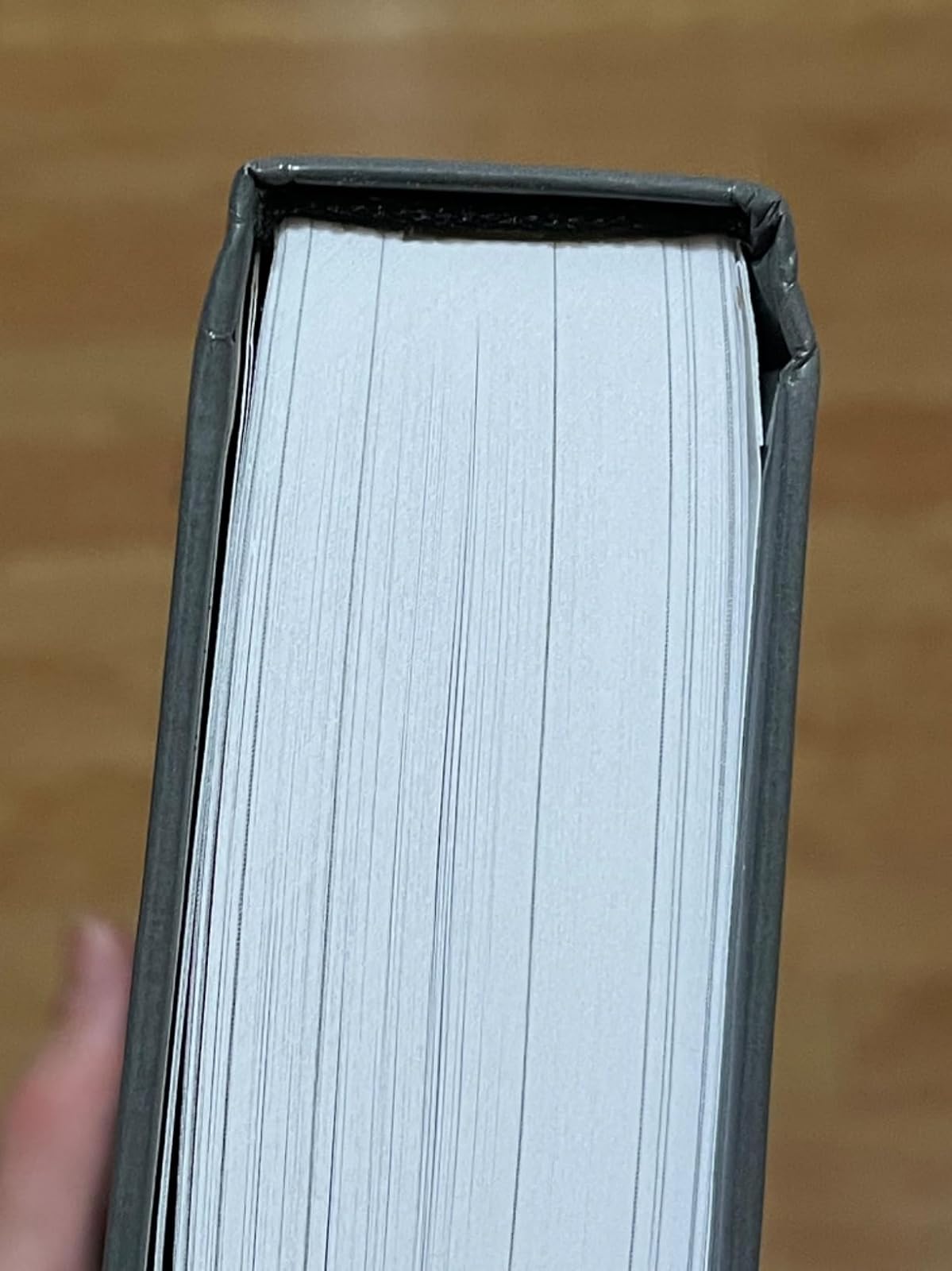
Poor binding quality
according to this customer, yes
remote sparrow
gray gazelle
<@254820329124265984> are you in college, if yes how many books have you read??
i recently completed my bachelor's
native cradle
gray gazelle
a pdf should do it..
legally?
gray gazelle
native cradle
legally?
i can't say legally as you really want the book i say review it before you buy a physical one
gray gazelle
remote sparrow
i recently completed my bachelor's
ohh in what major?
remote sparrow
math
gray gazelle
congrats!
zinc thistle
sorta bouncing off of my question the other day regarding books on diff topology--does anyone also have good material on reading up on lie groups/algebras from a physics pov (not a math major)
gray gazelle
why is this red panda so popular?
zinc thistle
lol not related i guess to this channel so i'll answer in #serious-discussion
 sage python
Someone has asked this before and didn't get a great answer. I'm not certain what precisely is entailed by the physics pov on Lie theory
torn crypt
is Woit's an option?
zinc thistle
sage python
Someone has asked this before and didn't get a great answer. I'm not certain wha...
To be super honest, I can't say. I'm a rising sophomore at berkeley doing a directed reading program on QFT and I see lie groups pop up often. I kinda wanna be more familiar with what i'm actually reading
 glossy zealot
native cradle
yeah, but Iit's hard to convince my parents to drop 300 USD on a book
glossy zealot
native cradle
yeah, but Iit's hard to convince my parents to drop 300 USD on a book
You can borrow a copy if your library has it
gray gazelle
glossy zealot
You can borrow a copy if your library has it
yea definitely
unless you really need it
glossy zealot
I think an even better scenario is borrowing from an instructor/friend/senior student who is not actively using it
Students accumulate old books all the time and at least for me I am willing to lend/sell it for cheaper price
gray gazelle
glossy zealot
I think an even better scenario is borrowing from an instructor/friend/senior st...
yes that's actually a bit better scenario
gray gazelle
hearty steppe
Anyone heard of this book? https://books.google.com/books?id=YSe4hUBM7uEC&pg=PA1...
This looks awesome! I like older books because they really break down the older routes of a problem. I’m all for the shorter versions we evolved into today but looking back into the strong bases sometimes is really great 😄
how do i finish introduction to Algebra by AOPS if i don't have the solutions manual?
gray gazelle
gray gazelle
how do i finish introduction to Algebra by AOPS if i don't have the solutions ma...
Introduction to Algebra Solutions Manual https://a.co/d/0gooxCKP
Looks like they sell it separately 😊
can i have a screenshot first
gray gazelle
gray gazelle
Looks like they sell it separately 😊
I'm sorry im really poor lol
Lol you can try this one https://artofproblemsolving.com/store/book/intermediate-algebra-solutions
I'm freaking dumb so I'll do Introduction to algebra
basic mathematics by serge lang just doesn't seem to suit my taste at all
or any book! at all
gray gazelle
gray gazelle
I'm freaking dumb so I'll do Introduction to algebra
Oh I’m sorry I thought it said intro -either way their website hosts all the solutions manuals. Hope that helps
I'll just ask their community
gray gazelle
gray gazelle
I'll just ask their community
These are an absolute recommendation if you want help. I did these and it helped me through class megafold Algebra DeMYSTiFieD, Second Edition (Demystified) https://a.co/d/04rIYFQ2
modern ruin
i am curious to click on that link but I'm also super sus lol
oh it's amazon (disclaimer i did not click it, i just recognize it as maybe amazon) (update: i clicked it and it was amazon)
molten mason
gray gazelle
how do i finish introduction to Algebra by AOPS if i don't have the solutions ma...
We can't provide or help you find any PDFs online, but we can provide book titles here and however you obtain that book is your own business.
As far as solutions, that's what this discord is for a lot. You can use help channels and you can use #prealg-and-algebra and #precalculus
molten mason
gray gazelle
basic mathematics by serge lang just doesn't seem to suit my taste at all
This is a great book for those who have already done pre-calc and it's been many years and need a refresher.
If it's the first time, you'll need to supplement with the channels I just mentioned and youtube. That book has a whole youtube series that goes over it as well.
If you want another book that covers that type of math, there's dozens of them and they're all mostly the same. Just go through each one and find one that works.
sage python
Dontsuggestrudinchapteronedontsuggestrudinchapterone
tribal crow

sage python
zinc thistle
To be super honest, I can't say. I'm a rising sophomore at berkeley doing a dire...
Yeah I mean, I guess some relevant factors when it comes to Lie theory are, do you wanna focus on just matrix Lie groups and not worry too much about working through technical aspects of manifold theory? That can simplify some stuff, and I'm guessing that you don't necessarily need the full manifoldsy element of Lie theory (compact Lie groups are all matrix groups anyway)
Also my hunch (and this is really a hunch, don't take my word for it) is that in physics you care more about the representation theory aspect than the structure theory aspect
Since something something particles exhibit blah symmetry of blah group sounds more like rep theory
torn crypt
Reps of the gauge group etc
sage python
While classification of simple Lie algebras, Dynkin diagrams, all that jazz feels less relevant
Now I might be entirely full of shit in that regard
torn crypt
Well, what texts are for the structure, and what ones are more rep-y
sage python
In which case you can beat up Sharp
torn crypt
gray gazelle
Hey can someone suggest me the right book for this? I'm not really sure which on...
Also see here
Woit’s book specifically says a QM aspect
Though I can’t exactly certify quality thereof, I don’t touch that
torn crypt
sage python
In which case you can beat up Sharp
Judgement
torn crypt
(Also in the reply I linked)
sage python
He says in the preface he hopes that the book is good both for mathematicians and for physicists. And he has a separate book called quantum theory for mathematicians, which does suggest that he has tried to think about bridging the math/physics gap a fair bit
He does matrix pov which avoids needing as much technical manifold theory
And looking through, he seems to give the statement of the classification of simple Lie algebras without proving it
So this is my best (though uninformed/based on vibes) guess as to a Lie theory book which is good for physicists
outer wing
https://www.ams.org/open-math-notes/omn-view-listing?listingId=110771
terse intro to proof notes
gray gazelle
gray gazelle
outer wing
https://www.ams.org/open-math-notes/omn-view-listing?listingId=110771
terse intr...
This is so great!
outer wing
gray gazelle
This is so great!
This website has a lot of other free notes too https://www.ams.org/open-math-notes/
 oblique hatch
Do any of you know about a good book on holomorphic dynamics?
 hollow shore
@remote sparrow do you know of any lectures online which follows Friedberg's Linear Algebra?
the ones I have looked at are not that good
 static gyro
Anyone got resources for just 1st year undergraduate stuff for now. And possibly proof writing as I heard that's university level
 queen rain
any book recommendation for calculus and precalculus? and what do i need to have learned before entering calculus?
heady prism
native cradle
how to prove it
Likewise, I use How to Prove It by Vellman
Honestly one of the best introductions to proof writing i've used
(I have a good amount of books on the topic)
I also like "Proof's a Long Form Mathematics Textbook" by Jay Cummings
 daring lake
queen rain
any book recommendation for calculus and precalculus? and what do i need to have...
daring lake
queen rain
any book recommendation for calculus and precalculus? and what do i need to have...
James Stewart has books on both
(though most calc and precalc book cover almost same material, so you can pick any tbf)
Or openstax
gray gazelle
openstax is really not good
daring lake
Damn
I never used it so ig I shouldn't have recommended it
What is wrong with it btw?
native cradle
what all does lang's introduction to calculus cover?
power series?
all that with rigour?
native cradle
yeah
 snow valley
Does anyone know a book where it talks about swapping series and integral in a way that isn't too advanced
 remote vortex
I don't think it can get less any advanced than real analysis, in which case Abbott's book is probably the best option
remote sparrow
hollow shore
<@254820329124265984> do you know of any lectures online which follows Friedberg...
no
outer wing
hollow shore
<@254820329124265984> do you know of any lectures online which follows Friedberg...
I know a lecture series which covers linear algebra by Meckes and Meckes https://m.youtube.com/@abstractlinearalgebra6935/videos
Abstract Linear Algebra course taught at UIUC by Pierre Albin out of Linear Algebra by Meckes & Meckes.
outer wing
foggy quest
https://mtaylor.web.unc.edu/notes/linear-algebra-notes/
Are the solutions of these notes available?
remote sparrow
outer wing
Abstract Linear Algebra course taught at UIUC by Pierre Albin out of Linear Alge...
thanks for sharing, though the lecture series seems to go a little further than meckes & meckes
notably, the jordan canonical form is omitted from meckes
 lyric storm
can anyone reccomend me an "elementary number theory book" for someone who has taken a beginning courses in algebra (basics of groups, rings, fields) and analysis. I want to learn algebraic/analytic number theory eventually but cant help but feel I dont know how to use elementary methods
remote sparrow
lyric storm
can anyone reccomend me an "elementary number theory book" for someone who has t...

SpringerLink

The Fifth Edition of one of the standard works on number theory, written by internationally-recognized mathematicians. Chapters are relatively self-contained for greater flexibility. New features include expanded treatment of the binomial theorem, techniques of numerical calculation and a section...
more elementary but still challenging
lyric storm
remote sparrow
https://link.springer.com/book/10.1007/978-1-4757-2103-4
thanks! this one looks like it starts with algebraic number theory, the second one looks great tho
remote sparrow
lyric storm
thanks! this one looks like it starts with algebraic number theory, the second o...
ireland and rosen use algebraic methods, but they cover mostly classical and "elementary" material with more sophistication
so it's not a textbook on algebraic number theory
native cradle
outer wing
There's https://www.amazon.com/How-Why-One-Variable-Calculus/dp/1119043387 also
thanks
lyric storm
remote sparrow
ireland and rosen use algebraic methods, but they cover mostly classical and "el...
I see, what sort of pre requisites material would you recommend for motivating constructions in commutative algebra needed for algebraic number theory and alg. geometry? I have tried to go through a commutative algebra book separately but found it very dry. Are there books that teach commutative algebra "along the way" with alg. number theory or something similar.
 finite gale
I mean I just think comm alg is dry but you kinda just need to get through it
Atiyah Macdonald is standard text for comm alg; chmonkey will probably say something about matsumura
remote sparrow
Aareyan Manzoor's website
The homepage for a Latex group, the TeXromancers. Projects involve Adam’s stable homotopy and generalized homology'' and Matsumurascommutative algebra’’.
it's worth noting that someone has updated the typesetting for matsumura
 crude flame
@remote sparrow
Which book is best for beginners algebra 1
I studied prealgebra
Now I gonna dive into algebra 1
Which is best algebra 1 book for beginnerz
foggy quest
outer wing
Are the solutions of these notes available?
Probably not.
gray gazelle
hello sour drop
gray gazelle
crude flame
<@254820329124265984>
wtf ayo are you that kid in #chill who needs a gf?
 round pelican
What is a good book to learn mathematical logic for a beginner. I want something that reads well and is good for self-study. For context, I’ve learned the basics of propositional and predicate logic from a discrete math course. We learned about things like quantifiers, connectives, and truth tables. I’ve looked at Peter Smiths Guide and read reviews on Amazon but I can’t really pinpoint a book because usually there is something each book doesn’t do great. For example in a lot of the reviews the reviewer usually mentions that a book uses a deduction system that they don’t like.
remote sparrow
round pelican
What is a good book to learn mathematical logic for a beginner. I want something...
round pelican
remote sparrow
https://discord.com/channels/268882317391429632/716264872018706443/1196940993367...
Would Mendelson be a good choice to start with? With all the reviews everything gets confusing on what is the best to learn from. Is it best just to pick a book and stick to it?
remote sparrow
round pelican
Would Mendelson be a good choice to start with? With all the reviews everything ...
i like the chapter on propositional logic, but the chapters after are very dry
leary and kristiansen jumps right into first-order (or predicate) logic, but it's better motivated
i would advise against buying a hard copy of the latest edition of mendelson, though, as the script font he uses for the wffs don't print well often
 lusty escarp
There is 50FLASH coupon working on springer on some books.
zinc thistle
sage python
https://link.springer.com/book/10.1007/978-3-319-13467-3
Great thank you, i’ll skim through it later to see if its what i’m looking for then work thru it
dapper root
remote sparrow
it's worth noting that someone has updated the typesetting for matsumura
This is old Matsumura I prefer new one for first run
dapper root
lyric storm
I see, what sort of pre requisites material would you recommend for motivating c...
There’s a book called like “Algebraic Geometry and Commutative Algebra” by… some German guy I forgot.
Its first 1/2 is comm alg, and then AG. I like it a lot since the AG is detailed, it spells stuff out that others don’t. The comm alg is kinda excessive at times, it has some stuff that’s more general than is really necessary, which is colored by the fact that it’s needed for what that author researches (and idk German ppl tend to like that)
I don’t know anything that really develops things together, except maybe Vakil???
Undergraduate Commutative Algebra by Reid doesn’t do AG properly, but it actually gives you a very geometric perspective, it makes it easy to learn AG after and you’ll realize you secretly learned some
 rigid flint
Are there any good resources on using the polylogarithm in integration?
willow merlin
Biggest book for number theory? Like that has a lot of pages?
For example for RA I have this “The Big Book of Real Analysis” that contains a lot of stuff
 fervent harness
Yall have any recommendations for some good self-study books for topology?
I have about a year left in my math degree and unfortunately may not be able to take a class in topology before I graduate so was going to try and self study it
uncut crater
fervent harness
Yall have any recommendations for some good self-study books for topology?
Viro
Munk is a classic option too
But it hands everything on a silver platter imo
Another weird but enjoyable read is the book by Sasho (Serbian ass surname)
fervent harness
uncut crater
But it hands everything on a silver platter imo
I generally need to be handheld so I wouldnt mind this lol
fervent harness
uncut crater
Munkres and Simmons
ive heard of this
uncut crater
🙂
normal crystal
hollow shore
<@254820329124265984> do you know of any lectures online which follows Friedberg...
gray gazelle
normal crystal
https://youtube.com/playlist?list=PL54Pt_mZzBqinpMAO6-o1vEzZzzPKx57c&si=XIXo9rQO...
how about introduction to Algebra by AOPS
torn crypt
round pelican
What is a good book to learn mathematical logic for a beginner. I want something...
I dunno, Rautenberg
trail hemlock
gray gazelle
wtf ayo are you that kid in <#342850939306246145> who needs a gf?
context plz 😭
im perm studied i cant see the discussion channels
willow merlin
maybe he needs a gf
gray gazelle
trail hemlock
context plz 😭
so this guy started talking about the girl (i forgot her name) and he asked her if he needs a bf
bro started to rizz her up
Anyway this should not be in #book-recommendations
trail hemlock
gray gazelle
so this guy started talking about the girl (i forgot her name) and he asked her ...
😭 oh hell no
willow merlin
he asked her if he needs a bf?
gray gazelle
Anyway @trail hemlock any advice to me how do you careful read umm introduction to Algebra by AOPS?
trail hemlock
willing to bet layla lured another lonely mathcord user in again
willow merlin
💯
gray gazelle
when i searched aops books in the searches you kept popping up lol
trail hemlock
gray gazelle
Anyway <@761252615370965002> any advice to me how do you careful read umm introd...
the best advice for aops books is to do all the challenge problems at the end of the chapter
gray gazelle
trail hemlock
the best advice for aops books is to do all the challenge problems at the end of...
so i don't do the challenge problems for now?
trail hemlock
do them when you reach them
trail hemlock
because the normal problems test your knowledge, but the challenge problesm test your ability to apply them, which is the whole point of aops books
 trail hemlock
if you know concept A and concept B, the challenge problems make you use concpet A and B on a different problem
gray gazelle
nothing more lol
trail hemlock
gray gazelle
Anyway can you help me with it plz<:bearlain:762653539092529182>
you can ask in #prealg-and-algebra for help
gray gazelle
Anyway my understanding of aops books is that they test you with problems then tell you freaking different answers from you
gray gazelle
trail hemlock
you can ask in <#326138737606262786> for help
ah alr
Anyway @trail hemlock why chapter 1 doesn't have challenge problems?
trail hemlock
uhh im not sure
i havent read that book in long time
regardless, just do the challenge problems as they appear, and make sure u do all the regular problems as wlel
trail hemlock
u ask the mods by dming modmail
gray gazelle
trail hemlock
what streak
streak of perma-studying 
trail hemlock
oh theres no streak
you basically get the role as long as you ask for it
i asked for it to end on 7/11
so until then i cant get it off, and i cant access the discussion channels
trail hemlock
trail hemlock
wait this is off topic
anyway, this
fierce hedge
dapper root
There’s a book called like “Algebraic Geometry and Commutative Algebra” by… some...
Eisenbud? Oh the Bosch guy
heady ember
Hi bumpy
fierce hedge
Hi grass
rigid flint
Are there any good resources on using the polylogarithm in integration?
 charred vigil
Can someone recommend me a book that contains everything from 6 grade to the en of HS?
So I can remember and practice
If it can be buy from Amazon and can be purchased physically better.
And with free delivery internacionally.
split portal
That feels like it would be covered by prealgebra, algebra, geometry, trig and precalc.
Some places do more some places do less.
I can prob find my books for all of these except prealgebra
split portal
For algebra we use beginning and intermediate algebra by margaret lial
It's a two volume thing. New editions are expensive but old used ones are cheap. There might be combined versions too.
charred vigil
Ok, I see
split portal
For trigonometry we used trigonometry by mark dugopolski. Same deal. New copies are expensice but used copies are cheap.
My geometry book was kinda old. It was geometry by Ray Jurgensen. It might not be easy to find cheap.
My precalc book was also by Margaret Lial. Ron Larson also has a pretty decent precalc book too.
Also Ron Larson has a decent calc book.
charred vigil
Ok thanks doot
split portal
Just make sure to look for used copies since new ones are expensive.
Maybe somebody else can rec a good hs geometry book.
heady ember
Hoot hoot
tribal crow
🦉
native cradle
for introductory trig, SL loney is supposed to be good
 supple sequoia
For algebra,Hall and Knight is good
gray gazelle
Maths by rd Sharma is all you need to become math god ✨
uncut crater
gray gazelle
Maths by rd Sharma is all you need to become math god ✨
Damn, am i a math god then?
I finished a good portion of the 12th book in 10th grade lmao
gray gazelle
Lmao I mean you need to read it all and understand the concept xD
gray gazelle
uncut crater
I finished a good portion of the 12th book in 10th grade lmao
Damnn u indian too :0
Jee or neet?
gray gazelle
uncut crater
Damn wait are you being serious
Wot
uncut crater
I thought that was sarcasm 🙂
gray gazelle
tribal crow
what is RD Sharma?
A person
tribal crow
yes, I know
uncut crater
tribal crow
what is RD Sharma?
A terrible writer
gray gazelle
uncut crater
A terrible writer
What 💀
tribal crow
uncut crater
A terrible writer
uncut crater
It's a tome of routine high school problems
tribal crow
oh I see
gray gazelle
My math teacher told me that rd Sharma is all you need to crack jee
tribal crow
newsflash: JEE neq math
uncut crater
gray gazelle
My math teacher told me that rd Sharma is all you need to crack jee
Time to change teacherz
uncut crater
I'm beyond jee and neet
gray gazelle
:0
uncut crater
Yeah, funny little world
uncut crater
supple sequoia
For algebra,Hall and Knight is good
Is it tho?
The problems are a bit too challenging for first timers
trail hemlock
alternatively
just spam aops books until calc
read spivak for calc
and see where life takes you from there
tribal crow
linear algebra awaits you
trail hemlock
uncut crater
I'm beyond jee and neet
jee is nothing more then memorizing problem types i fear
my jee prep book is like
1 page memorize next page it’s the same shit with new numbers
uncut crater
Jee gives me ptsd, all the weird tricks to arrive at an answer
tribal crow
you're going to write the JEE too, BB?
trail hemlock
tribal crow
~~linear algebra awaits you~~
i’m doing lang atm
trail hemlock
tribal crow
you're going to write the JEE too, BB?
nope i’m american
tribal crow
uncut crater
Axler da 🐐

trail hemlock
and i detest the indian education system
tribal crow
Dami is here...
sage python
uncut crater
Why not axler
Imagine no finite fields smh
tribal crow
I freaking CALLED IT
uncut crater
sage python
Imagine no finite fields smh
Wait, is there a text that had finite fields in it?
sage python
But yeah the timing worked out so nicely
trail hemlock
dami since when r u pink role
uncut crater
Afaik Golan has it
sage python
Hoffman-Kunze a little bit. Idk Golan
tribal crow
uncut crater
Wait, is there a text that had finite fields in it?
FIS does
uncut crater
tribal crow
FIS does
That's a dummy thicc book
tribal crow
Axler is good, though not my preference
uncut crater
Axler writes dogshit in some parts
trail hemlock
guys any good christmas playlists? dm me 🙏🥺
molten mason
uncut crater
That's a dummy thicc book
FIS I think is the smallest
uncut crater
I hate his writing in dual spaces and quotient spaces
uncut crater
That's 600 LONG PAGES
uncut crater
trail hemlock
uta how aren’t u active role
Good question
tribal crow
uncut crater
Are y'all not reading Serre or stuff like that 😭
I'm reading CoM, so I know what terse is lol
uncut crater
Non trivial answer
molten mason
tribal crow
it's 600 pages
Oh that's decent sized, Roman is only 528
I kept thinking FIS was like 200 lol
tribal crow
molten mason
Oh that's decent sized, Roman is only 528
I was about to mention Roman actually
trail hemlock
molten mason
Oh that's decent sized, Roman is only 528
that’s what she said 😭😭😔
normal crystal
trail hemlock
guys any good christmas playlists? dm me 🙏🥺
just play The Waitresses - Christmas Wrapping on repeat
tribal crow
uncut crater
Are y'all not reading Serre or stuff like that 😭
which Serre book are we talking 
molten mason
I just realized, I have no idea where my FIS book is
uncut crater
Nah Roman is crack material lmao
molten mason
uncut crater
Nah Roman is crack material lmao
so be cracked 
tribal crow
trail hemlock
i wanna read roman as like a long term goal
I do eventually want to do some of it
in particular the stuff I missed in LA
trail hemlock
after abstract algebra i will
uncut crater
trail hemlock
i wanna read roman as like a long term goal
4 years? I bet you can do that after a year


 uncut crater
Spivak?
trail hemlock
i am actually
tribal crow
uncut crater
Diff geo?
I was thinking his CoM, but his DG books are good too I hear
trail hemlock
trail hemlock
i am actually
funny story: i purchased the wrong spivak
i got calc on manifolds by accident
😭😭😭
tribal crow
tribal crow
I was thinking his CoM, but his DG books are good too I hear
they're too much to work through though I think
2000+ pages is better suited for reference, not for self study
molten mason
Roman is on my to-do list but I don't really have a timeline for it
trail hemlock
anyway i read some CoM and its not that bad lol
trail hemlock
molten mason
Roman is on my to-do list but I don't really have a timeline for it
me asf
tribal crow
trail hemlock
anyway i read some CoM and its not that bad lol
Spivak rushes some stuff towards the middle and end, I think
lots of asking the reader to fill in gaps
often non-trivial ones, at that
uncut crater
tribal crow
which Serre book are we talking <:hmmcat:831508801646755850>
Almost all of his books are thin
trail hemlock
i wouldn’t be shocked if the entire book was the statement of generalized stokes theorem and a note that says “the rest is trivial and follows from the above result”
tribal crow
fair enough
trail hemlock
uncut crater
Almost all of his books are thin
spivaks calculus is a fatty tbh
uncut crater
Serre
trail hemlock
that sounds exotic asf
uncut crater
French people are an endangered species fr 🙏
tribal crow
A Course In Arithmetic is one of the most misleading names I've ever heard tbh
idk why Serre called it that
uncut crater
Lmao
So true
I still remember going up to that book in my first semester thinking it might be a book on elementary number theory
I open the book, and lo and behold, modular forms (iirc)
molten mason
tribal crow
A Course In Arithmetic is one of the most misleading names I've ever heard tbh
 uncut crater
molten mason
uncut crater
molten mason
A classic
uncut crater
Damn I don't have image perms
uncut crater
But a prof of mine has a sweet collection of hardbound texts
trail hemlock
uncut crater
But a prof of mine has a sweet collection of hardbound texts
send it in chess channel perhaps
or like the calculus help channel
uncut crater
Oops
trail hemlock
i don’t have access to chill 😔
uncut crater
🫂
gray gazelle
supple sequoia
For algebra,Hall and Knight is good
yes for the high school guy i know
Terence Tao
hasty eagleBOT
J
 gray gazelle
trail hemlock
tao doesn’t have an algebra book does he ?
gray gazelle
trail hemlock
tao doesn’t have an algebra book does he ?
yeap no, but h & k books are pretty hardcore i say
normal crystal
David Morin is releasing two books on HS algebra next month, then Geometry, and Precalculus in following years
anyone used his math, or physics, books?
trail hemlock
normal crystal
David Morin is releasing two books on HS algebra next month, then Geometry, and ...
his classical mech book is super popular from what i understand
 quasi haven
Hello, can you recommend some must-read books among Mathematicians? I'm especially interested in Calculus and Complex Analysis.
I'm an engineer by training but I like reading about mathematics.
gray gazelle
Guys is Real and Functional Analysis by Serge Lang good? I really like the book, but people say Serge Lang is a algebraist instead of analyst, so I wonder whether the book is good according to personal experiences.
sage python
Dead
 bright epoch
gray gazelle
Guys is Real and Functional Analysis by Serge Lang good? I really like the book,...
bright epoch
gray gazelle
Guys is Real and Functional Analysis by Serge Lang good? I really like the book,...
imo this book is good only if you already know the stuff he talks about
this is my experience, if you've read other books by Lang and liked them it's a similar style
gray gazelle
bright epoch
this is my experience, if you've read other books by Lang and liked them it's a ...
Yes I have read his algebra, though didn't finish it, but liked the style very much, and planned ahead to use his algebra after I get done with LA and abstract Algebra
But one thing I am not sure about is can it be everything in Real and Functional Analysis and Complex Analysis (for the respective books)? So that I don't need any other resources aside from this before reading papers?
gray gazelle
trail hemlock
his classical mech book is super popular from what i understand
yes especially the red morin
his langranian method is really popular as it's modern
gray gazelle
normal crystal
David Morin is releasing two books on HS algebra next month, then Geometry, and ...
damn next month!?
i hope it will be next week lol
damn bro
normal crystal
it could be in a week or two, idk
it said June on his website first but he changed it to July
there's no listing on Amazon though
normal crystal
all his self publish books are in the 20+ neighborhood
so 2x that
gray gazelle
yea
gray gazelle
normal crystal
all his self publish books are in the 20+ neighborhood
so 2x that
do you know other mathematicians/physicist who published inexpensive books but really good?
gray gazelle
trail hemlock
cummings books are fairly cheap
ohh
sadly I'm still in lower math's level
but sure soon enough i will buy
if I'm interested in the field of it..
uncut crater
gray gazelle
do you know other mathematicians/physicist who published inexpensive books but r...
Dover books are pretty cheap
gray gazelle
uncut crater
Dover books are pretty cheap
who?
heady ember
Why dive deep into your pockets when you can dive into Dover's book collections
gray gazelle
heady ember
Why dive deep into your pockets when you can dive into Dover's book collections
sometimes the taste doesn't suit us
uncut crater
quasi haven
Hello, can you recommend some must-read books among Mathematicians? I'm especial...
I think classics include Narasimhan's 'Complex Analysis in One Variable' and Nevanlinna's 'Introduction to Complex Analysis'. Read for culture.
Better, more modern reads include Conway and Freitag-Busam. Needham's VCA is a peppy reference. I stayed away from Alhfors most of the time. Berenstein-Gay has more analytical topics expected to be covered in a second course in complex analysis.
I'm yet to begin with algebraic curves but I'll stick to Miranda and Kirwan
uncut crater
gray gazelle
who?
Ben Dover
quasi haven
uncut crater
I think classics include Narasimhan's 'Complex Analysis in One Variable' and Nev...
What about Calculus?
Any recommendations there?
quasi haven
uncut crater
Rudin
Principles of Mathematical Analysis by Walter Rudin
This one?
uncut crater
Or Abbott
uncut crater
quasi haven
Principles of Mathematical Analysis by Walter Rudin
This one?
Yeah
signal mountain
or spivak ? seeing as they said calc
quasi haven
signal mountain
or spivak ? seeing as they said calc
I'm not getting a good quality pdf of this book
uncut crater
There's one