#book-recommendations
1 messages · Page 54 of 1
 trail hemlock
i have no idea, i just own the calc one . its really great, lots of "hand-holding"
trail hemlock
lmao clickbait
 dusk wind
yea a lot of books have unnecessary distractional material+colors (click my link/donate) etc
(I'm going to use this crappy format and you're going to enjoy it)
trail hemlock
lmaoo
trail hemlock
you should remember this form chapter 4, so we will be brief
 remote sparrow
How to understand and remember trig identities
someone mentioned this a few months ago
seems neat
dusk wind
hmm apparently Feynman recommends the practical man series
dusk wind
algebra for the practical man quality scan
this is way more to the point than a lot of books and even khan academy
 hard viper
I am... a practical man
trail hemlock
dusk wind
this is way more to the point than a lot of books and even khan academy
yeah i love this style of books
develop intuition not just present facts to take for granted
 steel cloud
Recommend book for learn group actions
And is there any active reading group for algebra?
dusk wind
As typical with such sequences, College Algebra, Algebra and Trigonometry & Precalculus are essentially the same book with slightly different beginning and endings. So there's no point to owning all of them.

It seems College Algebra contains a strict subset of the chapters of Algebra and Trigonometry, & Precalculus is the same as Algebra-Trigonometry except that it omits the first two chapters ("Prerequisites" & "Equations and Inequalities"), it has slightly different coverage of trigonometry (removed section) and it adds a new chapter called "Introduction to Calculus".

For self-study purposes, Algebra and Trigonometry seems to be the most desirable to have, since the material in the "Introduction to Calculus" chapter from Precalculus can be found in any calculus textbook."```apparently poor students had a good chance of outperforming more well off students
too much technology/progression making math+reading irrelevant lol
 scenic chasm
Any recommendations for book on stochastic processes and stochastic calculus?
 rich sun
remote sparrow
https://www.brownmath.com/twt/index.htm
rich sun
remote sparrow
https://www.brownmath.com/twt/index.htm
TwT
 sick river
scenic chasm
Any recommendations for book on stochastic processes and stochastic calculus?
sick river
scenic chasm
Any recommendations for book on stochastic processes and stochastic calculus?
it's a bit of a tome but cinlar's probability and stochastics is a great book imo
also you can pick it up hardcover for $20 rn during the springer sale
scenic chasm
I’m in Malaysia but thanks
 sick schooner
scenic chasm
Any recommendations for book on stochastic processes and stochastic calculus?
sick schooner
scenic chasm
Any recommendations for book on stochastic processes and stochastic calculus?
Cengage calculas
 gray gazelle
Any good book recs for lie algebra?
remote sparrow
there were some books and sites mentioned earlier if you scroll up a bit
precalculus books are also algebra and trig books in disguise
 mossy flume
steel cloud
Recommend book for learn group actions
mossy flume
steel cloud
Recommend book for learn group actions
Beyond any sort of algebra text?
Like do you know group actions are and the basics and such?
Or do you just need an intro algebra text
 sleek ice
Looking for several types of books:
- books for generally learning all important math (ranging over algebra, calculus, but also stuff like axiomatic approaches to natural, integer, rational, real numbers)
- 3x+1 (most up2date stuff if possible)
- mathematical stuff that is relevant to computer science
 crimson leaf
mossy flume
Or do you just need an intro algebra text
crimson leaf
mossy flume
Or do you just need an intro algebra text
I'm pretty sure this person is just asking for an intro algebra book. They were previously asking for reviews of undergrad books and asking for field theory and module books
crimson leaf
sleek ice
Looking for several types of books:
- books for generally learning all important...
Algebra and calculus pick what you like doesn't really matter what you read though Khan academy should be fine or just see what books colleges use. Then you should pick a book that covers proofs, Lay's analysis with an introduction to proof might be good for you.
As for collatz conjecture the up to date stuff is very far from any of this and I would generally discourage someone new to math to pursue the problem due to it's difficulty.
You could pick up some books on stuff like discrete math or a combinatorics book I'm partial to the one by Guichard.
 vital bane
first 5 chapters of tao's analysis 1 is also good for the axiomatic approach to rationals and reals 
crimson leaf
That's true Tao is also good if you don't know anything yet lol
sleek ice
crimson leaf
Algebra and calculus pick what you like doesn't really matter what you read thou...
- Regarding algebra and calculus: I have no colleagues as I don't study math and am just interested in math. Any books in particular you can recommend?
- Since I'm just interested, I don't mind stumbling upon a problem that is considered very difficult. I'm not interested in solving it (since I don't think a "just having fun learning new stuff" mathematician, if I can even call myself mathematician, will have the knowledge nor intuition to solve it). I'm just interested in seeing how the problem has been approached. Again: just fun learning new stuff.
- What do you mean by "this" (is very far from any of this)? So there aren't any books covering the up2date stuff?
- Discrete math and combinatorics sounds interesting. Any books in particular?
sleek ice
vital bane
first 5 chapters of tao's analysis 1 is also good for the axiomatic approach to ...

vital bane
sleek ice
1. Regarding algebra and calculus: I have no colleagues as I don't study math an...
i wouldnt worry about the collatz conjecture for now lol
just focus on algebra and calculus
crimson leaf
sleek ice
1. Regarding algebra and calculus: I have no colleagues as I don't study math an...
- I said colleges like look at syllabuses (syllabi?) that colleges use. Then use that book
2/3.I mean that the current approaches to the collatz problem are extremely advanced. You can look at Terence Taos paper ( https://terrytao.wordpress.com/2019/09/10/almost-all-collatz-orbits-attain-almost-bounded-values/)
- The one I mentioned is a gentle introduction to combinatorics. As for discrete math Rosen has a good book for beginners.

I’ve just uploaded to the arXiv my paper “Almost all Collatz orbits attain almost bounded values”, submitted to the proceedings of the Forum of Mathematics, Pi. In this paper I re…
vital bane
damn im surprised there are even approaches to collatz conjecture
crimson leaf
Afaik this is the best so far and from what I've heard it's still pretty far off
This is way over my head though
sleek ice
crimson leaf
1. I said colleges like look at syllabuses (syllabi?) that colleges use. Then us...
Oh, there are lists of books that colleges use? Interesting 😄
remote sparrow
sleek ice
Looking for several types of books:
- books for generally learning all important...
You might find Number Systems and the Foundations of Analysis by Elliott Mendelson interesting. It shows all the gory details of constructing the naturals, integers, rationals, reals, and complex numbers.
sleek ice
Yoooooo, exactly my stuff 
 lean pagoda
Numbers by Ebbinghaus et al is a similar survey of the number systems and all that jazz, though it's written more like a handbook
sleek ice
crimson leaf
Algebra and calculus pick what you like doesn't really matter what you read thou...
The Guichard one doesn't seem to sell on Amazon, is that right? 
dusk wind
maybe aops vol 1/2
crimson leaf
sleek ice
The Guichard one doesn't seem to sell on Amazon, is that right? <:thonking:31951...
It's free online by the author
sleek ice
yeah i saw that, kinda just prefer books since it's easier for me to read
but fair enough, will note that down somewhere
 tame tree
@remote sparrow hubbard is so good
remote sparrow
tame tree
<@254820329124265984> hubbard is so good
I'm glad another recommendation went well for you
 remote sparrow

 sudden kindle
 broken meadow
 order of ideas was chill
 modern needle
remote sparrow
Anyone familiar with standalone Galois theory textbooks?
modern needle
remote sparrow
Anyone familiar with standalone Galois theory textbooks?
Brzeziński is good. Also I've used Leinster's Galois Theory and chapter from Aluffi. Leinster has many workshop references: "you will do this in workshops; this is workshop 3.1416 question", but overall theme is still clear — Leinster calculates a lot of examples by himself. Aluffi firstly build algebraic closure and then proof similar theorems with this knowledge
I would combine Brzeziński, Leinster — practice/lectures
remote sparrow
remote sparrow
https://maa.org/press/maa-reviews/galois-theory-4

Galois Theory, David Cox (Wiley-Interscience, 2004). It usually felt like the job of my teachers was to crush my desire to learn things about the world. For example I still remember the math class early in high school where a teacher derived for us the
Footnote 1:
I once had a professor who frequently asserted in class that things were obvious when they were extremely non-obvious to me, but in his case I think he really was a genius and he genuinely didn’t understand why something had to be explained further. I turned this situation to my advantage by answering a question on this final exam with: “it’s obvious”, and got nearly full credit.
dusk wind
Lol where have I read this before
dusk wind
https://amazon.com/Geometry-Its-Applications-Textbooks-Mathematics/dp/0367187981 this seems useable, its previous edition sucked
 steep root
need me a book on applied combinatorics 🙏
 pliant wadi
Any good alternative to Munkres' Analysis on manifolds? Or some interesting book to supplement it as a side reading?
remote sparrow
pliant wadi
Any good alternative to Munkres' Analysis on manifolds? Or some interesting book...

SpringerLink

SpringerLink
information about 5th edition of Vector Calculus, Linear Algebra, and Differential Forms: A Unified Approach by John Hubbard
and Barbara Burke Hubbard, published by Matrix Editions
dusk wind
https://archive.org/details/algebraforuseofc00todhuoft/mode/2up No clickbait in this period
vital bane
pliant wadi
Any good alternative to Munkres' Analysis on manifolds? Or some interesting book...
Multivariable Mathematics by Ted Shiffrin
 earnest wolf
soft question: is there a list of all channels in this server? 🙃
cause when I joined I didn't have #book-recommendations for some reason 🤔 So now I'm curious if there are any other
 left cloud
earnest wolf
soft question: is there a list of all channels in this server? 🙃
cause when I ...
left cloud
earnest wolf
soft question: is there a list of all channels in this server? 🙃
cause when I ...
 remote sparrow
rare slayyla in #book-recommendations
 tender river
what's the secret club 
vital bane
it's a foot fetish channel
 smoky zephyr
tender river
what's the secret club <:thonkzoom:533366356536721418>
smoky zephyr
tender river
what's the secret club <:thonkzoom:533366356536721418>
there’s a few channels that fall under that category
and you literally have access to one of them…

 undone rapids
hey guys, can someone give me a great precalculus book for self studying?
vital bane
undone rapids
hey guys, can someone give me a great precalculus book for self studying?
khan academy is what is usually suggested for precalculus
Also
wow man stein and shakarchi's analysis series seems awesome 
undone rapids
vital bane
wow man stein and shakarchi's analysis series seems awesome <:realshit:586078783...
really?
vital bane
oh I wasn't talking specifically to you, it was more of a comment I wanted to share with the whole channel yk
but ye
those 4 books seem really cool
undone rapids
ok
vital bane
depends on what you mean by "engineering maths" and "applied maths"
engineering uses lots of different fields of math
are you looking for a mathematical methods book meant for engineers?
 fading hatch
yes exactly neamesis
vital bane
if so "Mathematical Methods for Physics and Engineering" by Riely, Hobson and Bence is a really cool book that's used by a lot of physics undergrads
it would be super useful for engineering undergrads as well
fading hatch
i have a book
- advanced engineering maths by kreyzig
have u heard about it
@vital bane
vital bane
I have heard of it but I dont know much about it
undone rapids
vital bane
khan academy is what is usually suggested for precalculus
ok, but what about book?
 quick hornet
just use openstax
at a high school level, textbook quality isnt a big deal
openstax is good, free, and has lots of exercises
vital bane
this is true openstax have good books
quick hornet

OpenStax offers free college textbooks for all types of students, making education accessible & affordable for everyone. Browse our list of available subjects!
undone rapids
quick hornet
https://openstax.org/details/books/precalculus-2e
thanks
 haughty dagger
can someone suggest some good book for differential and integral calculus from the very basics to advanced please?
tame tree
spivak
steel cloud
mossy flume
Like do you know group actions are and the basics and such?
Little bit
mossy flume
define a little bit
steel cloud
Like just defination 🥲
mossy flume
Like what text did you learn group actions out of
ok so just definition
then really any abstract algebra text will cover group actions
I like Artin
work through all the group theory stuff (not just actions) in there
steel cloud
Now I doing group from Artin
mossy flume
yea go through that
steel cloud
Okay
mossy flume
and then if you still want to do more group theory (and not look at other things like ring and field theory)
steel cloud
mossy flume
and then if you still want to do more group theory (and not look at other things...
Then?
mossy flume
sorry Discord crashed on my laptop lol
then if you want to do more
you can look at second courses in group theory
of which there are many books
For the group theory I was doing in my REU I liked Gorenstein's text and Issac's text
steel cloud
mossy flume
For the group theory I was doing in my REU I liked Gorenstein's text and Issac's...
Gorenstein Homological algebra?
mossy flume
no uhhhh
finite groups
But I'd recommend those two texts after going through all the introductory group theory in Artin (or a similar text)
 dapper root
Doesn’t that book use xf to mean f(x) lol
mossy flume
such is the price to pay sometimes
steel cloud
dapper root
Doesn’t that book use xf to mean f(x) lol
Yeah 🥲
mossy flume
ok but in terms of commutative diagrams xf is better
steel cloud
Issac which one?
mossy flume
Finite Group Theory iirc
steel cloud
mossy flume
But I'd recommend those two texts *after* going through all the introductory gro...
Which topics I should cover?
mossy flume
I mean Artin gets decently deep
steel cloud
mossy flume
Finite Group Theory iirc
A graduate course Issac Martin review?
steel cloud
mossy flume
I mean Artin gets decently deep
Okay
mossy flume
steel cloud
A graduate course Issac Martin review?
It's just called "Finite Group Theory"
steel cloud
I think there is another book of Issac Martin
steel cloud
Thanks
 fierce hedge
steel cloud
Then?
fierce hedge
steel cloud
Then?
If you just want group theory, "An Introduction to the Theory of Groups" by Rotman is also good
steel cloud
Okay and for semi-groups?
mossy flume
I mean in what context are you trying to learn about these things
steel cloud
mossy flume
I mean in what context are you trying to learn about these things
May be I like to do this
mossy flume
That's not what I mean
Like are you trying to just learn algebra, or is there a particular area of math you're trying to learn about?
Just trying to understand the focus on group actions and semi groups
steel cloud
Can I DM you?
crimson leaf
Realistically you should probably just read artin first
steel cloud
mossy flume
Like are you trying to just learn algebra, or is there a particular area of math...
Just trying learn algebra not particular
crimson leaf
Get your feet wet before trying to collect 20 different books on groups
steel cloud
mossy flume
Don't focus on groups
Means?
mossy flume
Means like don't try to go down this rabbit hole of only group theory
Just work through Artin
All of it, not just groups
Rings, fields, etc
steel cloud
Yeah I will
mossy flume
And then after with a strong foundation maybe look at second courses
steel cloud
mossy flume
And then *after* with a strong foundation maybe look at second courses
What's second course?
mossy flume
Who knows maybe later down the line you'd rather learn like ring theory, or Galois Theory, maybe group theory, or a different area of math
crimson leaf
You could spend a lifetime reading about groups there's so much literature on the topic
steel cloud
I completed rings and fields but not from Artin
mossy flume
oh what why didn't you say that
crimson leaf
What book did you use?
steel cloud
Gallian, Herstein, Dummit
mossy flume
Wait but you only know the definition of a group action?
Have you learned things like orbit-stabilizer, burnsides lemma?
steel cloud
mossy flume
Have you learned things like orbit-stabilizer, burnsides lemma?
From Gallian , little bit knows about orbit-stabilizer like I did Gallian first then I did rings from Herstein and Dummit
I did not try group theory from Dummit
I think groups actions is not covered in Gallian
mossy flume
Hm ok I still think work through Artin
skip over whatever you already know
and then you'll have a strong foundation to go into more specific areas
steel cloud
Okay
 lime sapphire
what you've chosen isn't bad at all
the main idea is to get started
go at your own pace
stay consistent
there's no pressure of being able to do a certain level of math so fast from anyobe except for yourself
lime sapphire
lime sapphire
the main idea is to get started
a lot of people get lost in finding "the best resource"
phys without calc is mostly there to test your problem solvibg which you can strengthen through your math
Great honestly
no worries
 molten mason
Basic Mathematics is essentially a pre-calc book and would be a great step before Friedberg
 slender cargo
When you go down the math rabbit hole you'll eventually have to decide if you want simply enough math to learn physics, or to go into proofs, which leads to a much deeper study of math (and can help with understanding more advanced physics). Lang's Basic Math gets you more so started on proofs compared to other pre-calc books, so I hear.
crimson leaf
If you're algebra 2 you'll probably be comfortable going straight to precalc
slender cargo
I personally would wait to learn Calculus before opening up a physics book.
Spivak's Calculus is the most well known Calculus book that takes a proof-oriented approach, proving all of the theorems and getting you to become more proficient at proofs yourself. If you would rather go at it faster and not deal with proofs at the time, then I think Stewart is the most well known, although there's probably less expensive alternatives. And if you do study from a book like Stewart, there are dedicated books that will get you up to speed on the proof side of things if you later want to go that route.
Newton's Laws deal with concepts that come from Calculus, so yeah. If you want to go at the subject honestly, you need to know Calculus first.
At a minimum you would study Physics and Calculus side-by-side.
dusk wind
I did Physics without Calculus but it certainly helps
Physics is also much more enjoyable than any other topic in math
vital bane
slender cargo
Newton's Laws deal with concepts that come from Calculus, so yeah. If you want t...
calculus originated with newton's laws lol
newton invented calculus! (of course Leibniz also did at the same time which is crazy)
 median saffron
dusk wind
Physics is also much more enjoyable than any other topic in math
median saffron
dusk wind
Physics is also much more enjoyable than any other topic in math
Nope not electromagnetism
That shit sucks
dusk wind
eh I didnt mind it too much
vital bane
median saffron
That shit sucks

dusk wind
 distant bronze
I’m taking precalc this year and I want to take calc bc next which is basically calc 1 and 2 I’m pretty sure, what would be good books for self study? Wanted to get one so I’d have something to do over winter break
vital bane
distant bronze
I’m taking precalc this year and I want to take calc bc next which is basically ...
calculus books?
 magic hollow
distant bronze
I’m taking precalc this year and I want to take calc bc next which is basically ...
magic hollow
distant bronze
I’m taking precalc this year and I want to take calc bc next which is basically ...
Calc in 15 mins a day is decent for knowing a good chunk of calc AB within a few hours
 tacit heron
distant bronze
I’m taking precalc this year and I want to take calc bc next which is basically ...
tacit heron
distant bronze
I’m taking precalc this year and I want to take calc bc next which is basically ...
 stiff tulip
any reviews on Stochastic Differential Equations by bernt oskendal
 mossy crow
Can anyone recommend me some good books for learning different methods for solving integrals?
vital bane
mossy crow
Can anyone recommend me some good books for learning different methods for solvi...
"Inside Interesting Integrals" by Paul J nahin
mossy crow
I'll check it out
 golden dagger
quick hornet
https://openstax.org/details/books/precalculus-2e
golden dagger
quick hornet
https://openstax.org/details/books/precalculus-2e
isnt that pirating or am i dum
 lime vessel
golden dagger
isnt that pirating or am i dum
lime vessel
golden dagger
isnt that pirating or am i dum
They're publishing them for free
dusk wind
openstax sucks don't use them
quick hornet
dusk wind
openstax sucks don't use them
as opposed to all those high-quality precalculus textbooks out there like...
like i am not a particular fan of openstax either but its not like precalculus demands a high standard of pedagogical rigour lmao
dusk wind
there are critical errors in their books, it is not worth it
quick hornet
like?
dusk wind
like missing information or not fully explained
quick hornet
i wanted examples
dusk wind
You can look at reviews or read the books yourself
quick hornet
i feel like youre consistently more concerned with being "right" than being helpful
whenever you participate in this channel
quick hornet
you provided neither a single example nor an alternate recommendation despite being asked for both multiple times
dusk wind
dusk wind
like missing information or not fully explained
this is an example
their books are public, you can check for more info
quick hornet
i wanted a concrete example of a "critical error" in their precalculus book
dusk wind
for recommendations, don't use content mills for books
quick hornet
that is also not an alternate recommendation lmao
dusk wind
the thing is there are other projects like openstax (which also suck)
quick hornet
i do not care
dusk wind
better to just use some random assigned text for your course as its safer
quick hornet
if you think their precalculus book is significantly worse than other options, either provide an other option or point out something specific that you think the precalculus book does poorly
dusk wind
Ok so I had the misfortune of having been assigned these books before
quick hornet
otherwise your standpoint is impossible to discuss or take away anything concrete from
dusk wind
And you are right that any book is fine, but I have recommended other precalc texts before, just pick any open source or cheap book from your fav professor
pliant wadi
remote sparrow
https://link.springer.com/book/10.1007/978-1-4419-7332-0
Thanks! The suggestion helped.
 modern ruin
sorry like what do precalculus books even contain? i think when i took precalc i didn’t use a book because it was just a sludge fest full of random algebra topics
distant bronze
vital bane
calculus books?
Yep calculus books
vital bane
spivak's "Calculus" is good if you want a hardcore calc book
if you dont like that then you can use Thomas' calculus
distant bronze
vital bane
spivak's "Calculus" is good if you want a hardcore calc book
alr I’ll check them out, also what would be the best place to look for them?
vital bane
I dont condone piracy 🫡 But just google it and you'll find a pdf of the books lol
distant bronze
vital bane
if you dont like that then you can use Thomas' calculus
So for him I noticed that here are like 15 editions, does it matter which one I use?
 marble solar
You can find old copies of Thomas' Calculus for very cheap
I wouldn't even care too much about the edition. Any of them will do
Although early editions are really cool for historical reasons
vital bane
what do you mean?
marble solar
vital bane
what do you mean?
Prior to Thomas' Calculus, Calculus was taught something along the lines of: Analytic Geometry, Calc 1, Calc 2, Calc 3. This required approximately 4 semesters worth of math classes. Often times Green, Gauss' and Stokes' theorems were upper division material
The genius in Thomas' Calculus was finding a way to shove the analytic geometry curriculum into the Calc 1, 2, and 3 material
There are other androgogical differences too, but it is very fascinating
marble solar
vital bane
prior to thomas calculus as in? like before the 40s and 50s?
Yep!
In fact, Calc 3 was an upper division class at many institutions in the 40s and before
vital bane
damn, now 1st and 2nd years take it
marble solar
Granted, it probably had more to it than your standard lower division calc 3 today
vital bane
I wonder what upper division course will become a lower division course in the next 50 years
 vast jackal
hi i think i will go down with serge lang's basic mathematics first
marble solar
vital bane
I wonder what upper division course will become a lower division course in the n...
It's more likely to do with technology that gets moved down. Like computational modelling, using MatLab to do some basic Calculus/DiffyQ/Linear Algebra thing
vast jackal
i need a new book
whether if the topics are on a one book im good
or like many different
since my goal is to learn calc
marble solar
vast jackal
since my goal is to learn calc
Where are you currently at in your math journey?
vast jackal
marble solar
Where are you currently at in your math journey?
integer part
marble solar
Do you know algebra 2, trig, and pre-calculus?
vast jackal
marble solar
Do you know algebra 2, trig, and pre-calculus?
still not
im currently gr 8 (just turned 14 on oct)
marble solar
I wouldn't worry so much. Just pick a book that covers basic algebra and continue from there. Your teachers should be able to guide you
vast jackal
marble solar
I wouldn't worry so much. Just pick a book that covers basic algebra and continu...
i want to go to my dream uni lol so that's why im studying my ass off
 gray jungle
vital bane
I wonder what upper division course will become a lower division course in the n...
gray jungle
vital bane
I wonder what upper division course will become a lower division course in the n...
Category theory for middle school , dont let anyone tell you otherwise
marble solar
It's hard for people on discord to guide you because we don't know your strengths & weaknesses, nor what curriculum you're learning. Talk to some of the teachers at your school and they'll be able to tell you the best approach
marble solar
vast jackal
i want to go to my dream uni lol so that's why im studying my ass off
That's an awesome goal to have! Do you want a career in STEM?
vast jackal
marble solar
It's hard for people on discord to guide you because we don't know your strength...
they will just tell us the topic we need
marble solar
If that's the case, then try to talk to more senior students. They might be able to give you better advice
But in general, Algebra 1 & 2, Geometry, then Trigonometry is a good path for you to follow
vast jackal
marble solar
If that's the case, then try to talk to more senior students. They might be able...
most students in my country are low at the math skills
 grave egret
I did algebra 1->geo-> alg2/trig
vast jackal
marble solar
But in general, Algebra 1 & 2, Geometry, then Trigonometry is a good path for yo...
im interested of Spivak Calc
any rigorous book?
you'd recommend
marble solar
I wouldn't worry about the rigor. Just learn how to solve some problems!
vast jackal
marble solar
I wouldn't worry about the rigor. Just learn how to solve some problems!
nah you need a rigor one since Spivak needs some certain level of understanding in theorems and proofs..
marble solar
So I used Spivak when I was a student, and I've TA'd that class many times
What I can tell you is that the students that know how to solve the problems do the best in that class
You can learn how to prove basic things in Geometry
vast jackal
marble solar
So I used Spivak when I was a student, and I've TA'd that class many times
TA'd?
marble solar
I helped the professors teach the class. Grading assignments, hosting office hours, helping to write exams, etc.
vast jackal
marble solar
You can learn how to prove basic things in Geometry
should i learn trig first or geo?
marble solar
Definitely geometry first
vast jackal
marble solar
I helped the professors teach the class. Grading assignments, hosting office hou...
i did do that in my gr 6
may i ask a question? what did you take in your undergrad?
dusk wind
Leithold, Thomas, Antons
vast jackal
marble solar
Now I'm a PhD Student
thats cool
dusk wind
marble solar
Now I'm a PhD Student
An actual PhD imagine
vast jackal
i mean yeah awesome
marble solar
In math at least. Anyways, let's not flood the book recommendation channel
vast jackal
marble solar
In math at least. Anyways, let's not flood the book recommendation channel
thanks for the advice
i will do Aops
marble solar
dusk wind
tbh you can skip geometry for trig
The biggest thing you learn in geometry are the basic proof structure, and working in a confined list of axioms/postulates & theorems
If Klaus' main interest is learning on how to prove things, a good place to start is Geometry
dusk wind
it might prove to be more interesting later, after they do more algebra
vast jackal
@dusk wind do you have a pdf of the 2nd edition introduction to algebra?
dusk wind
vast jackal
<@882056389227348050> do you have a pdf of the 2nd edition introduction to algeb...
I don't believe so, but its certainly possible to find, otherwise Vol.1-2 should be good enough
vital bane
marble solar
Now I'm a PhD Student
I thought you had a PhD lol
vital bane
gray jungle
Category theory for middle school , dont let anyone tell you otherwise
We need to introduce arithmetic to children via category theory 
 jagged panther
what are some good books on graph theory?
 terse mason
yo thinking of getting this for PreCalculus self study https://www.amazon.com/Precalculus-Mathematics-Calculus-James-Stewart/dp/0357753631/ref=sr_1_1?keywords=Precalculus%3A+Mathematics+for+Calculus&qid=1703356612&sr=8-1
a good choice ? (Precalculus: Mathematics for Calculus 8th edition)
dusk wind
judging by the reviews it doesnt seem good
wow that price is outrageous for just precalculus
dusk wind
maybe try aops or an open source text from a university http://wallace.ccfaculty.org/book/book.html alternatives https://www.opentextbookstore.com/precalc Trig https://mecmath.net/trig or https://math.oit.edu/~watermang/math_100/100book.pdf https://math.libretexts.org/Courses/Kansas_State_University/Your_Guide_to_Intermediate_Algebra (no trig, functions only)
You can either do something with Algebra 2/Trig or a book that does all in one, with an answer key but not really necessary
terse mason
http://wallace.ccfaculty.org/book/book.html this link seems dead
dusk wind
unsecure? maybe search the link it should pop up
opens for me 🤔
some of these professors also go above and beyond in the material and have videos + answer key
none of that password bs
terse mason
yeah tried it on my phone and it worked perfectly fine
dusk wind
okay, let me know which one works best for you
terse mason
honestly this one looks the most appropriate https://www.opentextbookstore.com/precalc
I'm working my way up to this https://ocw.mit.edu/courses/6-042j-mathematics-for-computer-science-fall-2010/
but never touched Calculus
dusk wind
you never know, some writings styles might not mesh well with your learning
Just make sure your Algebra fundamentals are solid and it'll be a breeze
you might also want to study some logic on the side too booleans and such
terse mason
yeah I'II cover that too
dusk wind
people rave about this book but there are probably easier ones https://www.people.vcu.edu/~rhammack/BookOfProof/
terse mason
thanks !
 dense loom
Hello, I'm looking for one or some books that covers the proof of U_{p^α} is cyclic for α>0 (p is an odd prime).
I already have a book from Ireland (it's the name of the author) written in the 80's and another from Vinogradov (1954) but I got stuck in the proof of the result in both books. I need to see more proofs, any of them, of this result.
Thanks a lot in advance
gray jungle
I want to shed light on a lovely book i found on distribution theory :
"Distributions, Partial Differential Equations, and Harmonic Analysis" by Dorina Mitrea
- The book is very detailed and covers all the important topics in just the right amount of conciseness ,while give all the machinery with plenty of detailed examples.
- Throws the more theoretical aspects like the Topology of D(Omega) , D_K and D*(Omega) to the appendix to give more time to more fundamental ideas.
- Appendix is comprehensive and fills the gaps needed for the subject beautifully.
- Long list of exercises after each chapter with selected solutions/hints at the end of the book.
- Builds the subject in a really simple way without glossing over the important details.
This is in comparison with other books i have read on the subject by authors including : Rudin , Folland , François Trèves and Gerd Grubb. They all seem to either cover too little or too much of the subject while missing the essence of distribution theory and why its developed in the first place.
fading hatch
i got my book list ready to read from a friend recommendation
- book of proof
- elementary linear algebra - aton
- Steward Calculus - Early Transcendentals
- Walter Strauss - Differential Equations
what do u guys think of it?
 rare estuary
fading hatch
i got my book list ready to read from a friend recommendation
1) book of proof
2...
rare estuary
fading hatch
i got my book list ready to read from a friend recommendation
1) book of proof
2...
Sounds pretty good to me
I like Anton for computational linear algebra.
gray gazelle
I don't understand math in english.
 marsh ingot
You should try to read more books of things you already know to get used
Because math in english is like 95% common
gray gazelle
marsh ingot
You should try to read more books of things you already know to get used
I've gotten everything explained to me in danish my entire life, it's like learning everything from scratch when I read about it in english.
trail hemlock
💀
gray jungle
bit unrelated to language but i should say that relearning things you already learned is a good thing
but being able to learn math in english is important imo , you lose access to so many beautiful books
gray gazelle
It's painful.
Aristotle: ''You cannot learn without pain''
gray gazelle
gray jungle
but being able to learn math in english is important imo , you lose access to so...
Got like any introductory books to calculus, like for beginners.
trail hemlock
.
gray gazelle
trail hemlock
.
thanks.
trail hemlock
in all seriousness, all of these are good books for intro to calc
https://www.amazon.com/shop/themathsorcerer/list/SKD9TCJQOZAI?ref_=aip_sf_list_spv_s_ofs_mixed_d
Also good references for calc books:
https://archive.org/details/calulusforthepra000526mbp
https://archive.org/details/TarasovCalculus
https://schtschenok.github.io/calculus-made-easy/ (dark mode 😩 )
gray gazelle
thanks bro
gray gazelle
Any book that teaches me how to solve world-problems correctly?
 scarlet steeple
gray gazelle
I've gotten everything explained to me in danish my entire life, it's like learn...
scarlet steeple
gray gazelle
I've gotten everything explained to me in danish my entire life, it's like learn...
I don't know any danish but It is closely related to english so you're quite lucky
 frosty ermine
Hey what's a good differential geometry book to start out with?
haughty dagger
can someone suggest some good book for differential and integral calculus from the very basics to advanced please?
molten mason
rare estuary
I like Anton for computational linear algebra.
I have his 4th edition calculus book and loved it. I didn't realize he also had a linear algebra book, might need to cop it
molten mason
haughty dagger
can someone suggest some good book for differential and integral calculus from t...
Pretty much any calculus book, all the modern ones are basically the same. Spivak and Apostol are more rigorous
trail hemlock
there are:
https://archive.org/details/piskunov-differential-and-integral-calculus-volume-1-mir
and
https://archive.org/details/piskunov-differential-and-integral-calculus-volume-2-mir
which are free 🥳
assuming you mean advanced as rigerous, there is also "Honors Calculus Book by C. R. MacCluer" which assumes prior calc experience, but takes an interesting approach to continuity
vital bane
frosty ermine
Hey what's a good differential geometry book to start out with?
depends on what you mean by differential geometry
do you mean differential geometry of curves and surfaces? if you mean that then "Elementary Differential Geometry" by Andrew Presley is good, or Do Carmo's "Differential Geometry of Curves and Surfaces" as well
But if you mean Differential geometry of manifolds
Then Spivak's "Comprehensive Introduction to Differential Geometry" seems really good you could check that out
frosty ermine
I think I'm particularly interested in the manifold stuff.
vital bane
And Lee's "Introduction to smooth manifolds" is another famous option
vital bane
vital bane
Then Spivak's "Comprehensive Introduction to Differential Geometry" seems really...
the first volume is basically almost entirely differential topology and some algebraic topology
trail hemlock
gray gazelle
Any book that teaches me how to solve world-problems correctly?
i dont think there is a specific book for "word problems" but i assume word problems require problem solving skills, so:
Problem solving through problems, by Loren Larson.
Problem-Solving Strategies, by Arthur Engel.
The Art and Craft of Problem Solving, by Paul Zeitz.
How to Solve It, by George Polya.
are all good books to develop problem solving skills. i think the first two are for higher levels of competition
 unique pumice
One of the books I admired was “one million digits of pi”. This book was awesome, highly recommend. I now know 1 million digits of pi and feel special. “SPOILER ALERT” The book starts off with 3.14, and the moment I layed eyes on that number, I was hooked in. I really recommend this book
haughty dagger
molten mason
Pretty much any calculus book, all the modern ones are basically the same. Spiva...
is thomas' calculus a good book for a beginner?
dusk wind
'Any calculus book' they all teach the same things & you can sample them
dusk wind
gray gazelle
I don't understand math in english.
that's because math isn't english 🤣
Hold up bro is writing us in english this might be a paradox
trail hemlock
unique pumice
One of the books I admired was “one million digits of pi”. This book was awesome...
yeah i read the book, but honestly there was no character development at all. the ending was a jumbled mess and nothing ever seemed to resolve 😦
trail hemlock
dusk wind
that's because math isn't english 🤣
prob means someone explaining something in eng, or maybe the terms?? idk
dusk wind
trail hemlock
prob means someone explaining something in eng, or maybe the terms?? idk
Could be another case of 100 pages
US has a monopoly on a lot of math research, that + other reasons most math texts have no choice but to be in eng at some point
not wanting to read or understand it is pure laziness
from what they wrote their english seems fine also
trail hemlock
yeah that makes sense
i get not understanding a foreign languahe, but maybe either the math is too difficult, or you are using the wrong book
like that one scene in the incredibles, math is math
dusk wind
I mean hell if Asian countries are writing curriculum in English you can't avoid it
dusk wind
trail hemlock
like that one scene in the incredibles, math is math
Syndrome is woke tbh
trail hemlock
lmaoo
trail hemlock
dusk wind
I mean hell if Asian countries are writing curriculum in English you can't avoid...
english 🔛 🔝
and by extension, america (the inventors of english)
dusk wind
Leithold's books seem pretty good
gray gazelle
trail hemlock
prob means someone explaining something in eng, or maybe the terms?? idk
^
 maiden halo
should've been obvious that's what he meant
gray gazelle
can someone recommend a book teach Some logic (at least a course in mathematical logic through Godel's theorem )
gray gazelle
trail hemlock
i dont think there is a specific book for "word problems" but i assume word prob...
Thank you 🙂
remote sparrow
gray gazelle
can someone recommend a book teach Some logic (at least a course in mathematical...
A Friendly Introduction to Mathematical Logic by Leary and Kristiansen
it doesn't cover propositional logic, but you can probably read chapter 1 of mendelson or the first couple chapters of goldrei for that

A Study Guide A re-titled, expanded version of the old Teach Yourself Logic study guide. This is a book length guide to the main topics and some suitable texts either for teaching yourself logic by individual self-study, or to supplement a university course. You only need to read just the first half-dozen pages to see … The Study Guide and Book ...
more recommendations can be found here
dusk wind
Get a book on FOL
remote sparrow
dusk wind
Get a book on FOL
i just gave a book covering first-order logic
 lyric gate
haughty dagger
can someone suggest some good book for differential and integral calculus from t...
lyric gate
haughty dagger
can someone suggest some good book for differential and integral calculus from t...
I second learning formal logic & proofs then pick up Apostol
 balmy crown
I'm curious, does that book go more in depth in logic than the Book Of Proof?
remote sparrow
the book is free online if you want to see for yourself
there is also a review on the blog i linked and one by maa
remote sparrow
balmy crown
I'm curious, does that book go more in depth in logic than the Book Of Proof?
Book of Proof doesn't at all go into territory that would be considered mathematical logic
 heady ember
Are there any (freely avaliable) good lecture series following Jacobson, which you guys would rec? Normally I just read my books, but I'm thinking of doing a bit of experimentation and see what works for me.
fierce hedge
heady ember
Are there any (freely avaliable) good lecture series following Jacobson, which y...
Are you seriously gonna start with Jacobson grass?
remote sparrow
heady ember
Are there any (freely avaliable) good lecture series following Jacobson, which y...
jacobson is a firmly graduate text that begins with monoids rather than groups
heady ember
fierce hedge
Are you seriously gonna start with Jacobson grass?
Yeah, probably gonna read chapter 1 (taking a break rn) before getting back on lin alg and anal
fierce hedge
remote sparrow
jacobson is a firmly graduate text that begins with monoids rather than groups
That's not a big issue but Jacobson is dense, probably slightly more than Rudin also for an abstract algebra book
Not a word is wasted on chit chat
fierce hedge
It's good but again, a bit dense for a beginner
heady ember
Yeah I know its a bit denser than say dnf
fierce hedge
Lmaoo, dnf is very chatty
heady ember
Yeah
fierce hedge
Jacobson is almost the opposite end
It's too efficient for a beginner is what I'd say
heady ember
DnF is as dry as a brick from what some have said
heady ember
fierce hedge
It's too efficient for a beginner is what I'd say
Well, guess I'll find out
remote sparrow
@heady ember if you find jacobson too much for a first pass, you can use pinter or judson
heady ember
remote sparrow
<@560392234952818688> if you find jacobson too much for a first pass, you can us...

 livid bobcat
Is there a book that I can use to complete calculus for my ap exam in 3 months?
cuz I searched up the courses in my country and its gonna take around 8 months to complete the entire calculus
and the other books are quite bulky and will take a lot of time
 daring lake
You do not have to do entire books. Once you complete a topic, try solving problems. You will probably solutions for easier ones without any working, skip those. Do some moderate - difficult ones. Once you feel satisfied in the concept, go to next one. Write down important formulae and derivations which you can use for revision.
Since I do not know the syllabus, I can only provide tips on how to use a calc book.
3 months should be very plenty if you can spend like ~2 hours a day.
 wheat wind
Hello. I'm looking for a guide about inference in first order logic, but I haven't find a good source which I can study. Anyone know anything like this?
 rapid wave
Hi, I want to start studying complex analysis and I am looking for a good textbook one of you might recommend.
I have heard my fair share of classes, such as calculus, multivariable calculus, linear algebra and algebraic topology.
I have two main interests:
-I want to have a good, rigorous introduction into to the fundamental topics, such as differentiation, integration, the residue theorem and more.
-Another motivation of mine to start with complex analysis is qanting to understand modular forms. Therefore it would be nice if the textbook had a part on that or would deal with it.
So far I have found two recommendations:
Complex analysis by Ahlfors and complex analysis by Busam and Freitag. The latter seems to deal with modular forms from what I can gather.
One additional question I have is:
What is the difference between the following two books?
 weary violet
RD SHARMA IS THE BEST!!!!
 novel hound
rapid wave
Hi, I want to start studying complex analysis and I am looking for a good textbo...
novel hound
rapid wave
Hi, I want to start studying complex analysis and I am looking for a good textbo...
The 2005 one is the first edition, the 2009 is the second, as it says on the image of the book cover on those links.
The preface for the 2nd edition doesn't go into details of the changes. Just says that the book has been updated to match the German 4th edition. There is no translation of the German preface.
novel hound
Actually, just realized that the first edition is also based on the German 4th edition, but prior to it's printing. While the English second edition is post the printing of the German 4th...
 gilded veldt
i need book recommendations for jee advanced maths
marsh ingot
Advanced math in what?
mossy flume
marsh ingot
Advanced math in what?
JEE is a set of entrance exams in India
marsh ingot
Ohh I didnt know about them
 jaunty socket
Guys, what do you prefer algebra or geometry?
marsh ingot
No
 graceful moon
marsh ingot
Ohh I didnt know about them
graceful moon
marsh ingot
Ohh I didnt know about them
Really? Everything related to maths on the internet usually has someone saying it’s much easier than JEE
marsh ingot
jaunty socket
Guys, what do you prefer algebra or geometry?
Geometry tbh
 manic tendon
Recommend me a book in Lattice Algebra
marsh ingot
graceful moon
Really? Everything related to maths on the internet usually has someone saying i...
Im from Europe and I didnt interact with ppl about math until i joined the server
🥲
jaunty socket
I'm new here too
I joined bc I like math
So.. hello everyone!
I would like to get to know you guys and make new friends! 🙂
dusk wind
It sucks to find old editions of a book more than a newer one
marsh ingot
Why you want older ones? New ones correct some errors
marsh ingot
jaunty socket
So.. hello everyone!
Hello ^^
dusk wind
you get lost in the sea of editions/ different versions
marsh ingot
I just pick the first one I see I didnt wait to check the edition lol
dusk wind
like this physics book by halliday for example has like 3 different names
 hybrid sparrowBOT
jaunty socket
I would like to get to know you guys and make new friends! 🙂
hybrid sparrowBOT
jaunty socket
I would like to get to know you guys and make new friends! 🙂
This channel is only for on-topic discussion. Please take casual conversation to #discussion or #chill.
marsh ingot
dusk wind
like this physics book by halliday for example has like 3 different names
Ohhh I see
 finite gale
Bot really said no 
marsh ingot
marsh ingot
jaunty socket
Guys, what do you prefer algebra or geometry?
Btw there is smth called algebraic geometry
 stuck zephyr
lmfao
marsh ingot
 dusk wind
do physics actually
dusk wind
looks like Fundamentals of Physics is the one to go for
earnest wolf
jaunty socket
Guys, what do you prefer algebra or geometry?
analysis xD
we dont, we learn real analysis first 😆😆 (in eu at least)

 coral sedge
 hearty steppe
Anyone familiar with this text https://geometricalgebra.org
modern ruin
jaunty socket
Guys, what do you prefer algebra or geometry?
to me algebra is just a tool
that you can use to study geometry
oh boy i can’t wait to enter higher standards of mathematics
 willow adder
b
 torn crypt
hearty steppe
Anyone familiar with this text https://geometricalgebra.org
torn crypt
hearty steppe
Anyone familiar with this text https://geometricalgebra.org
@fickle whale
torn crypt
jaunty socket
Guys, what do you prefer algebra or geometry?
Algebra, since in many cases syntax <-> semantics
But I like studying algebra via geometry via algebra…

willow adder
geltroll
 fickle whale
@slim nacelle do you have a rep theory recommendation that is on the springer sale rn
fickle whale
hearty steppe
Anyone familiar with this text https://geometricalgebra.org
I'm actually not familiar with this but I want to be
 zealous light
Dude are you in one?
fickle whale
It's got one of the few good expositions on conformal geometric algebra, if a bit dated and using the direct space rep
modern ruin
okay if i’m gonna be serious about it then i’ll say that algebra means something a bit different than just “equations”
zealous light
No
modern ruin
it’s more about “structures” abstractly, and studying functions between those things, so not just the number line, but maybe you only care about part of it, like the integers, or complex numbers, or quaternions, or a whole bunch of other, wackier things, like the space of “loops on a shape”, and we want to say some things that are true about all of them at once, like how you can add them together, or sometimes you can multiply them and get nice properties
zealous light
Structures abstractly
modern ruin
well they can sometimes, but that’s sort of missing the point
zealous light
No that’s still missing the point
modern ruin
you don’t always want to even if you could
heady ember
Look up the definition of a monoid, group, ring, or field for some examples.
zealous light
Equations don’t really give you a lot of information
left cloud
describe borel sigma algebras with equations
 sage python
prod_{Borel sets} etc
zealous light
sage python
prod_{Borel sets} etc
Okay that’s an even more insane description than I was going to go with to explain why equations aren’t always useful
zealous light
left cloud
describe borel sigma algebras with equations
Clearly it’s just the sets of countable unions and intersections of open sets  (every measure theory student has thought this at some point)
sage python
Lol
zealous light
Dami’s about to come in like “I’ve never done that”
sage python
My measure theory class actually proved that the Borel hierarchy terminates in omega_1 steps
modern ruin
well, some structures are just too complicated for equations, in the sense that you are better off spending your time trying to just do things with them rather than thinking about them with equations. Also, you can’t actually define the integers with nice equations even
zealous light
modern ruin
well, some structures are just too complicated for equations, in the sense that ...
Yeah, if we have a definition of something without a concrete way to construct it, it’s too much of a headache to try to construct it in such a way
sage python
So yes I've never done that but that's because I learned that fact pretty soon after learning what a Borel set was
Could be axioms
modern ruin
we just use axioms, things that we assume about them
and then we work based off those
we build new statements about them that must be true given the original assumptions we made about them
then, if you can show that a particular structure satisfies those axioms, then you can also conclude all the other statements we’ve built up
how everyday are we talking
you count every day
torn crypt
sage python
My measure theory class actually proved that the Borel hierarchy terminates in o...
Omega based
modern ruin
that uses an incredibly complex structure
the naturals are INCREDIBLY HARD to talk about if you are only allowed to use equations to describe them
torn crypt
Military targeting systems
sage python
torn crypt
Omega based
One step of that proof never made sense to us tho
modern ruin
and studying the naturals requires the use of models (and monoids)
 lapis sundial
Most maths is not going to be too applicable to everyday life in the way you seem to have in mind, but then that extends to most/all academic pursuits lol
modern ruin
which are incredibly abstract
sage python
Something something universal set in the plane with respect to a property
And somehow its intersection with the diagonal is... something
lapis sundial
Poggies
sage python
Okay let me actually try to remember how it went
modern ruin
modern ruin
and studying the naturals requires the use of *models* (and monoids)
sorry sharp you can skin me alive later i don’t know how to describe model theory to someone
torn crypt
How could they define universal laws
heady ember
Wdym by "define universal laws"
sage python
Something about how, if P is some property, a universal subset A of the plane with respect to that property is a subset
(a) which satisfies it
(b) for which every subset of R satisfying it is a horizontal slice of A
I think
heady ember

modern ruin
i think i know what you’re saying, and sort of the answer is yes
well how could you possibly know the laws which define the universe
zealous light
Complex numbers are used extensively wherever electrical signals are used (this is not what you meant by complex, but it still goes)
It can be achieved in a 2d number system, but the structure of the complex numbers make it much easier
heady ember
We are doing math, not physics so why would the relevant mathematical constructs be the laws of the universe
modern ruin
i mean all we can do is say “if these things are true, then this other thing is true”
 gusty smelt
modern ruin
well how could you possibly know the laws which define the universe
gusty smelt
modern ruin
well how could you possibly know the laws which define the universe
cause i made it.
torn crypt
sage python
Something about how, if P is some property, a universal subset A of the plane wi...
If X < R is P, then there’s some x in R such that A_x = X?
sage python
Something like that yeah Sharp
modern ruin
how could you possibly know that
torn crypt
sage python
Something like that yeah Sharp
Sounds very generic
sage python
And then the idea was, if you give me some countable ordinal, call it... idk tau or some shit
modern ruin
how do you know that those don’t break somewhere else in the universe and you just didn’t see it?
sage python
Then you wanna show there's a universal set with respect to the property of being F_{sigma delta... (tau many things here)}
And somehow that guy's intersection with the diagonal will give you something new
torn crypt
sage python
And somehow that guy's intersection with the diagonal will give you something ne...
Therefore not of countable depth
modern ruin
how do you know? the other day i saw the laws of the universe being broken, all the particles were having a little dance party
torn crypt
sage python
Not that it's not of countable depth but
More like, we always have something at least rank tau+1
sage python
Like if it stops at tau, not it odesn't you can go to tau + 1
zealous light
There has been no observed evidence of antimatter, and that is part of what some scientists use to explain discrepancies in gravity
sage python
Yeah
modern ruin
the real answer is that we don’t know, and physics isn’t math!
we just sort of assume that these things are true
and we try really hard to get it right
torn crypt
The countable limit ordinal steps obviously add something from below because union of everything below wtv
sage python
Lemme find it actually
zealous light
He’s getting there
zealous light
Yes, basically
modern ruin
i mean what do you mean? there are a whole bunch of philosophies surrounding the existence or non existence of mathematical things
sage python
If the property P is "membership in a given Borel class"
heady ember
So what if they're not "present" in this world
They're interesting in their own right
heady ember
modern ruin
heady ember
torn crypt
sage python
Then diagonal intersect A satisfies P
Why would it
sage python
While complement of diagonal intersect P doesn't
This is what we have yet to figure out
heady ember
Math \neq irl.
heady ember
You can construct all sorts of groups assuming ZFC
zealous light
You’re trying to conflate abstract mathematical ideas with reality, which leads to things that don’t make sense
heady ember
By assumption, the naturals exist
zealous light
Mathematicians study abstraction because it helps understand less abstract objects
torn crypt
sage python
While complement of diagonal intersect P doesn't
Ok try rotating around 0 to make the diagonal horizontal? Does that rotation preserve borel hierarchy?
modern ruin
integers are when you count things
but they’re an example of a structure called a ring
so rings exist
you can see one
it’s the integers
idk we weren’t having an argument
i was trying to tell you what algebra was
yeah
but studying the ring axioms gives us useful things about the integers
so we study the ring axioms
and then we can count better
this is what algebra does for us
this is a lot!
it’s a really big step in mathematical maturity
torn crypt
torn crypt
Ok try rotating around 0 to make the diagonal horizontal? Does that rotation pre...
If this works, then rotating slicing (via translating) and un-transforming would get you as desired?
 zinc sundial
modern ruin
linear algebra studies vector space axioms
zinc sundial
modern ruin
linear algebra studies vector space axioms
that's just 6 nouns in a row you can't fool me
torn crypt
torn crypt
If this works, then rotating slicing (via translating) and un-transforming would...
@sage python does intersecting with the diagonal get you the next step up, or what gets you the tau+1 rank set?
zealous light
Reacting with a 🤡 emoji requires a well written response as to why you reacted in such a way or swift moderation action will occur
modern ruin
lol
they’re joking of course
i do find it funny that you clown reacted though
sharp is always saying clownable things around here
 lucid shoal
sage python
lucid shoal
sage python
@torn crypt here's the screenshot of the notes from that bit
 torn crypt
sage python
<@218876477146398720> here's the screenshot of the notes from that bit
torn crypt
sage python
<@218876477146398720> here's the screenshot of the notes from that bit
“I don’t know why this is the case” lmfao
 hardy kindle
Calculus for the practical man by tompsan dont know ehich copy but its on amazon and some dude on youtube has it in shorts. One of the first ones
 vapid skiff
i'm a highschooler considering reading baby rudin
is it most likely going to be too advanced for me or should i be good
 crude sage
@sage python Sorry about the ping. In your pinned algebra book review, you mention D&F can theoretically be done without "serious" linear algebra. Does this include anything other than the coverage of a typical intro LA course (up to and including diagonalisation)? If that's too vague, I specifically mean all the LA in chapters 1-4 of Artin
modern ruin
@sage python i’m not sorry about this ping i just wanted to ping you, but you should answer that question it’s a pretty good one
sage python
Oh yeah I'm sure you're fine in that regard
Like... for getting started in D&F you mostly need to know the linear algebra needed to work with matrix groups
So knowing about orthogonal maps, determinants, etc
crude sage
Coolio, thank you 😄
daring lake
vapid skiff
i'm a highschooler considering reading baby rudin
is it most likely going to be ...
I dont think rudin is good for first read, esp. at high school
You can try a proofs book first to get an idea how things work. Something like Jay cummings proofs book is very gentle. If you want to jump to analysis, Tao or Bartle & Sherbert is better for first read
 dim sierra
vapid skiff
i'm a highschooler considering reading baby rudin
is it most likely going to be ...
dim sierra
vapid skiff
i'm a highschooler considering reading baby rudin
is it most likely going to be ...
im in high school as well and its safe to say i dont think rudin would have been good for me as a first read
id recommend u read abbots understanding analysis. its very friendly, also you should supplement ur reading with lectures by francis su (can be found on yt). these lectures follow rudin but abbotts book also does the topics in a similar order to rudin just in a more friendly and less terse manner
daring lake
Its terse. In HS we spend time in computations and formulae, so something very rigorous might be difficult. Though yes, if they can understand rudin's method of writing proofs then yeah, not a issue. I personally really like his writing style.
Funnily enough, I think Rudin's Real and complex analysis (RCA) is less terse than PMA
dim sierra
daring lake
Its terse. In HS we spend time in computations and formulae, so something very r...
what do you like about his writing style
daring lake
I am having a much nicer time with RCA
dim sierra
just trying to understand what people mean when they say this
daring lake
dim sierra
just trying to understand what people mean when they say this
very slick. most authors over explain imo. But rudin just writes enough, that it makes me think for a while and when it finally clicks, i understand the elegance in his proof. Also amazing problem set at end of every chapter
Yes, both PMA & RCA
dim sierra
daring lake
very slick. most authors over explain imo. But rudin just writes enough, that it...
what are some books you think “over explain”
daring lake
idk, Tao, it felt like reading a novel ngl
stiff tulip
What do people think about Zorich's analysis
dim sierra
stiff tulip
What do people think about Zorich's analysis
I haven’t read it but I’ve heard it’s incredibly detailed and rigorous
daring lake
daring lake
very slick. most authors over explain imo. But rudin just writes enough, that it...
Rudin completes his proofs. its not left as an 'Exercise to the reader' which is very huge
stiff tulip
and when i got a new prof, who was pretty dog shit and absent all the time spring quarter, Zorich's had the best explanation of smooth manifolds
daring lake
do not go to google and do not accidentally type book name + pdf
i got hardcopies though
dusk wind
@gray gazelle of those books you read how did the old ones fare against current versions?
trail hemlock
vapid skiff
i'm a highschooler considering reading baby rudin
is it most likely going to be ...
idk if this helps, but when i finished singie variable calc, I started with "Real Analysis: A Long-Form Mathematics Textbook" by Jay Cummings. Baby rudin is very advanced, so I would say go through real analysis at a snails pace because since ur still in high school, your maturity would be a little low (maturity = experience)
dusk wind
If possible try to get really solid in Algebra then branch out into stats, there's no rush to learn calculus but the more subjects you learn the easier it'll be especially if your Algebra is good
vapid skiff
this is helpful ty
trail hemlock
dusk wind
If possible try to get really solid in Algebra then branch out into stats, there...
but calculus is so ✨ cool ✨
dusk wind
There are some really great Calculus books that take an algebraic approach and can serve as an excellent introduction
trail hemlock
honestly to learn intutively and rigerously, i think the Aops Calc book is really good: they force you to prove and derive stuff before presenting shortcuts (which are also derived).
idk tho maybe thats all calc books and im tweakin
dusk wind
vapid skiff
this is helpful ty
A few days ago we literally hunted down some of these books and it turns out some of these older ones are kinda good for that with a low page count/more clarity. Like Calculus for the practical man or https://schtschenok.github.io/calculus-made-easy/ orr https://archive.org/details/calculus7ofsingl0000leit/mode/2up
dusk wind
I noticed theres a lot of clickbait in some of the new books released now
Also other unnecessary nonsense like teacher solution manuals/downloads etc
Old books didn't really have any DLC so you got the full product
that wasnt always the case though
magic hollow
trail hemlock
honestly to learn intutively and rigerously, i think the Aops Calc book is reall...
I’m doing the class
dusk wind
in university the student is punished for lack of efficiency, but little actually occurs to the actual department
magic hollow
They don’t follow the book at all
trail hemlock
luckyyyyy
magic hollow
They ignore all of the rigorous stuff
dusk wind
magic hollow
They ignore all of the rigorous stuff
Yeah this is what modern gaming looks like
trail hemlock
when they derived the definition of the definate integral
shi was revolutionary
for me
dusk wind
skip this you dont need it
magic hollow
trail hemlock
when they derived the definition of the definate integral
They used some random area accumulation thing in class
Idk if they did that in the book
u sub as of last class
magic hollow
We skipped epsilon delta stuff
trail hemlock
:((
what
when the book deals with delta epsilon i think i had a stroke
but its ok my boy blackpenredpen got me
magic hollow
Same
magic hollow
Learning it rn
Know most of calc 1
Precalc I guess
Aops
School won’t let me
Yes
magic hollow
And In person
trail hemlock
to be honest, its not worth it for me. i learned more algebra from a book than than class ever taught me
shi was 100% useless
magic hollow
trail hemlock
to be honest, its not worth it for me. i learned more algebra from a book than t...
I don’t have motivation
So I need classes
trail hemlock
magic hollow
I don’t have motivation
💀 me neither. but my pen and book are infront of my keyboard, so i cant play games
magic hollow
trail hemlock
💀 me neither. but my pen and book are infront of my keyboard, so i cant play ga...
I just end up on discord
magic hollow
Yeah
magic hollow
What are you learning
dusk wind
imagine being able to eat while attempting to learn math
trail hemlock
no cuz ill destroy my paper
magic hollow
dusk wind
imagine being able to eat while attempting to learn math
I can
dusk wind
being stuck on the same page is good its progress
magic hollow
trail hemlock
analysis rn..
Are you going to join zorn’s class?
dusk wind
LOL
magic hollow
trail hemlock
yes i hope so
Same but I’m trying to audit and not actually take it
dusk wind
that movie was animated so well
magic hollow
Nice
dusk wind
great
dusk wind
now you made it past 1.5 pages
trail hemlock
yuhh
dusk wind
now you have to steal all of newtons ideas
trail hemlock
did 50 pages (its been 3 weeks 💀 )
dusk wind
and run him for his lunch money
trail hemlock
LOL
magic hollow
trail hemlock
did 50 pages (its been 3 weeks 💀 )
How many hours of khan academy should I do tomorrow
trail hemlock
i can intuitively prove stuff, but i never understand how to make it rigerous, all my calc experience is competitive calculus so i never needed rigor just intuition
magic hollow
trail hemlock
i can intuitively prove stuff, but i never understand how to make it rigerous, a...
Same
trail hemlock
magic hollow
How many hours of khan academy should I do tomorrow
khan academy fake. lock urself inside attic, dont leave until you have singlehandedly rediscovbered all of single variable calculus
magic hollow
Besides for a little bit of stuff
trail hemlock
magic hollow
Same
bro the proof long form textbook saved me
magic hollow
trail hemlock
khan academy fake. lock urself inside attic, dont leave until you have singlehan...
How will I know if I’m missing something
trail hemlock
i can prove shit now
dusk wind
"I discovered it first"
magic hollow
trail hemlock
bro the proof long form textbook saved me
I can’t prove anything
trail hemlock
magic hollow
How will I know if I’m missing something
good point. u gott start at the star of math and work ur way INTO calc
magic hollow
Can you send example of a proof
magic hollow
trail hemlock
good point. u gott start at the star of math and work ur way INTO calc
What if in this new math calc doesn’t exist
trail hemlock
magic hollow
What if in this new math calc doesn’t exist
u did smth wrong then
ok wait dont lock urself in attic
cuz how are u gon get food?
maybe pantry or supermarket are beter options
remote sparrow
vapid skiff
i'm a highschooler considering reading baby rudin
is it most likely going to be ...
it's not "too advanced" in terms of the formal math, but it's probably too difficult to learn from
magic hollow
trail hemlock
u did smth wrong then
What if this math only contains positive integers and addition
How should I know if I missed something
magic hollow
trail hemlock
cuz u gotta tune the negative haters out
A student in my math class argued against the use of negative numbers for about 30 mins one day
trail hemlock
💀
magic hollow
Teacher kinda agreed
magic hollow
It’s painful being in that class
trail hemlock
fr my math class is pure brainrot
trail hemlock
lmaooo
my school hates me tho
cuz i self studied the ap exam
and they still made me take the clas
😦
magic hollow
trail hemlock
and they still made me take the clas
F
My school might let me skip Ap calc
trail hemlock
luckyy
magic hollow
50 50
trail hemlock
i gotta sit in that brainrot class and listen to the teacher yap all day
magic hollow
trail hemlock
i gotta sit in that brainrot class and listen to the teacher yap all day
What grade are you in?
trail hemlock
10th
magic hollow
My school usually doesn’t let people take any calc until 11th
I am in the worst school
For those who are kinda decent at math
The only good this is the graduation rate
magic hollow
Wait this is book recommendations
I thought this was the chill chat
Mods don’t ban me
trail hemlock
for calc, i "legally purchased" Honors Calculus by C. R. MacCluer cuz its very very terse
magic hollow
F
trail hemlock
oh my school has one of those "advanced placements" thing so we can take classes sooner
magic hollow
My schools stats are in chill
magic hollow
trail hemlock
yoo its the next day for me
You’re from the future
trail hemlock
yeah
trail hemlock
relax the mods are gonna attack us if we keep chatting in #book-recommendations
nah idk if they are but they prob are
seems to be ig
remote sparrow
if not out of concern for moderator action, then at least as a courtesy to people who are here to discuss books
remote sparrow
stiff tulip
What do people think about Zorich's analysis
there aren't that many results for zorich, so you can probably browse through hits for "zorich" in discord search
trail hemlock
aye mb mb
 wise falcon
what the square root of x
trail hemlock
wise falcon
what the square root of x
like 3.6
 cold elbow
book recommendations became discussion-3
gray gazelle
can someone recommend me good lecture resource for learning hyperbolic trigonometry
 thin meadow
Where can I find the answers to the book "Number systems and the foundations of analysis"?
 blazing badge
IS RD SHARMA GOOD FOR CLASS 8?
 mystic orbit

 native cradle
blazing badge
IS RD SHARMA GOOD FOR CLASS 8?
native cradle
blazing badge
IS RD SHARMA GOOD FOR CLASS 8?
examplar or agrwaal is better IMO
when I was in 8th I used RS agrawaal, less problems, higher quality
dusk wind
seems good for precalc https://archive.org/details/beforecalculusfu1989leit
 manic cairn
quick hornet
at a high school level, textbook quality isnt a big deal
manic cairn
quick hornet
at a high school level, textbook quality isnt a big deal
this opinion makes me sad.
i am tired of the 10 billion full-color books in their 10 billionth edition.
i honestly think that the ap test prep books (at least for the stem subjects) are more informative, cheaper, and less busy than reading most textbooks meant to be teaching those subjects. that’s not even mentioning the fact that 30% of those books are just mock exams!
openstax is amazing, but i don’t think it means we should be trying to write better textbooks for hs
finite gale
I think you might as well just say that the ap math curriculum just sucks
dapper root
Hi tubu
finite gale
Hi chmuwu
dusk wind
manic cairn
this opinion makes me sad.
i am tired of the 10 billion full-color books in the...
openstax sucks actually
better off using a regular faculty book
remote sparrow
thin meadow
Where can I find the answers to the book "Number systems and the foundations of ...
This book is somewhat obscure, so I doubt any solutions exist on the web.
 manic cairn
dusk wind
openstax sucks actually
manic cairn
dusk wind
openstax sucks actually
amazing is too strong of a superlative in general, but compared to the books i had to use in school, they are much better.
remote sparrow
there's this guy working through this book; you might be able to ask him for help on a few problems
dusk wind
considering they are glaring with errors your mileage may vary
a lot of their content is also borrowed/remixed too
so not really any different from those other books you mention
manic cairn
dusk wind
considering they are glaring with errors your mileage may vary
i think the princeton review test prep books are the best for learning the subject because they are forced to both
- contain all the requisite material
- contain nothing else other than mock exams and exercises
other books are marketed to everybody, and thus to nobody
at least, compared to school textbooks
quick hornet
manic cairn
this opinion makes me sad.
i am tired of the 10 billion full-color books in the...
it's easy to vaguely say "it should matter", but the reality is that, as it currently exists, it doesnt
all pre-uni math textbooks have largely the same contents presented similarly
exercise volume and quality is the most important thing, but because most are just teaching to some sort of standardized test, their exercise quality ends up being very similar
i.e. problems like that on said test
dusk wind
in general aops or any text written for your uni should be good enough
mystic orbit
 trail hemlock
thin meadow
Where can I find the answers to the book "Number systems and the foundations of ...
trail hemlock
thin meadow
Where can I find the answers to the book "Number systems and the foundations of ...
https://github.com/luifrancgom/number_systems
Notes, exercises and solutions from the book Number Systems and the Foundations of Analysis (2001) by Elliot Mendelson
mabe this?
remote sparrow
@mystic orbit turn this into a quote 👆
trail hemlock
#discussion 🤓 ☝️


 modern ruin
mystic orbit
modern ruin
mystic orbit
 trail hemlock
#chill 🤓 ☝️
thoughts on this book, for anyone who has read it?
https://ia800908.us.archive.org/2/items/ElsgoltsDifferentialEquationsAndTheCalculusOfVariations/Elsgolts-Differential-Equations-and-the-Calculus-of-Variations.pdf
Differential Equations and the Calculus of Variations by Lev Elsgots
molten mason
remote sparrow
https://maa.org/press/maa-reviews/a-course-in-point-set-topology
I was literally staring at that book 5 minutes ago on the Springer website lmao
Only 142 pages is what made me question if I should get it or not
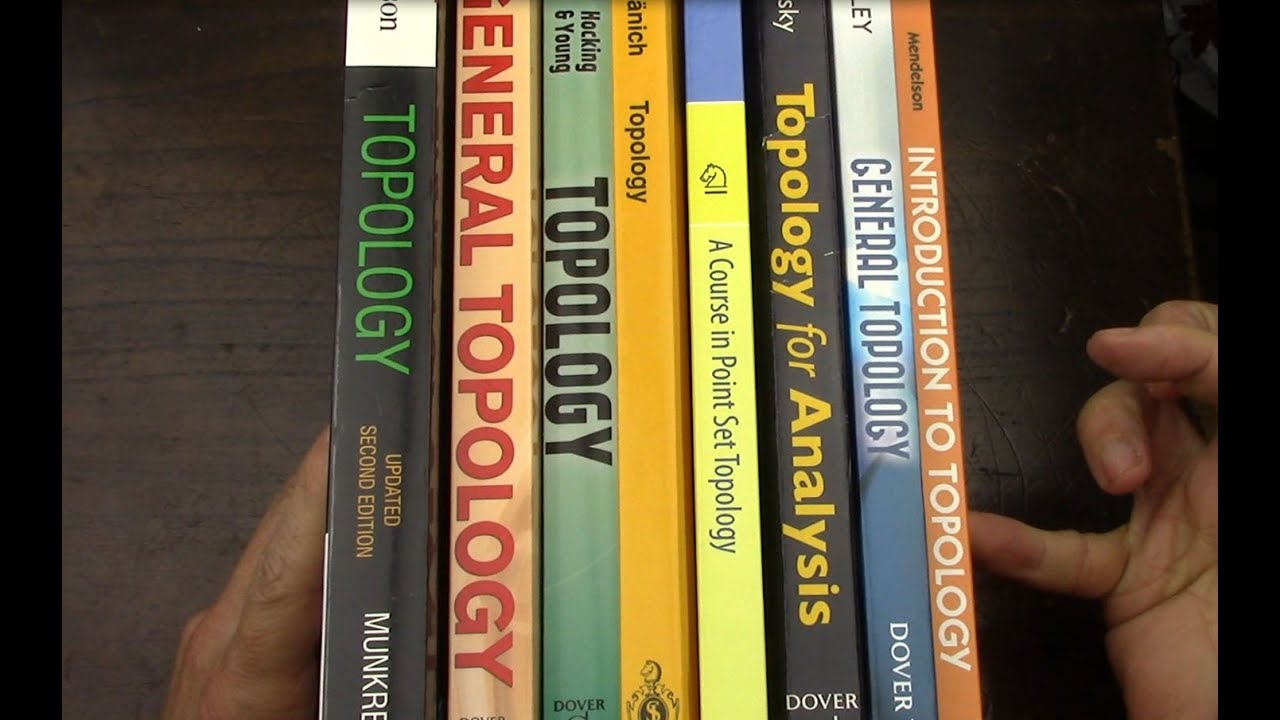 molten mason
remote sparrow
https://www.youtube.com/watch?v=CIQN7H6Km34
molten mason
remote sparrow
https://www.youtube.com/watch?v=CIQN7H6Km34
I was initially confused on why Christopher Walken was talking lmao
I was looking at topology books on the Springer website and I saw Jänich as well. I think that video sold me to pick Jänich instead lol
Thanks for sharing! Was informative
 tawny copper
 long steppe
thx
tender river
long steppe
thx
tender river
👋
modern ruin
ok
sage python
What happened here
 lusty elk
trail hemlock
thoughts on this book, for anyone who has read it?
https://ia800908.us.archive.o...
lusty elk
trail hemlock
thoughts on this book, for anyone who has read it?
https://ia800908.us.archive.o...
I have a physical copy of that book. It's nice, the author states that it's based on lectures that he'd delivered in the physics dept. but it is still fairly rigorous imo (has theorems and proofs, but plenty of examples and some nice vector field diagrams as well). The exercise problems are mostly computational however.
trail hemlock
gotcha, tysm!
will prob go with something a bit more modern and rigorous, prolly use this to supplement.
manic cairn
do you speak english fluently? this comes across like liam neeson on the phone in taken
 fringe torrent
Hi guys i need a good ressources of algebraic structure please
With a lot of exercices
marsh ingot
 long sigil
Does anyone have any good books on Cryptography for beginners to recommend?
I'm currently getting started with Duncan Bell's Fundamentals of Cryptography and Serious Cryptography by Jean-Philippe, but I'm not sure if these are the best for beginners like myself. 🙂
Hopefully this is not off-topic, as if I'm not mistaken, Cryptogaphy has gone from being a purely Mathematical realm to being a cyborg hybrid of computing and higher mathematics.
long sigil
BTW, is there a good place to ask for PDF recommendations
dusk wind
there are plenty of good intro books on cryptography, just pick your favorite I.E finish reading those books
trail hemlock
long sigil
BTW, is there a good place to ask for PDF recommendations
🏴☠️🏴☠️
my fav
long sigil
trail hemlock
🏴☠️🏴☠️
Afriad of 🦠
dusk wind
sounds like a genetic issue
long sigil
dusk wind
sounds like a genetic issue
I just found a good one (Introduction to Mathematical Cryptography, 2nd ed).
But I'm worried because VirusTotal claims that there's a virus hiding inside.
long sigil
dusk wind
this isn't virus support
Yeah, I know
Just asking if you have any resources for that book

long sigil
dusk wind
google.com
Already tried, all had 🦠
It's fine, as long as it's a book you'd recommend
I'll find a way around it LOLOL
trail hemlock
idk if i can recommend🏴☠️🏴☠️ sites on here
long sigil
dusk wind
ability incoherence
Just saying that it's OK if you can't recommend 🏴☠️
dusk wind
read the first sentence
long sigil
What about the book itself, do you think Introduction to Mathematical Cryptography, 2nd ed is good?
dusk wind
idfk
dusk wind
theres too many of those books to count
long sigil
I see
long sigil
dusk wind
anything you can learn from is good
I'm just worried I will end up working with holes in my knowledge. I already made that mistake once before, I don't want to do it again.
dusk wind
that wouldn't be the books fault but your own
long sigil
nvm, it's ok
dusk wind
get a good book
long sigil
dusk wind
get a good book
That's the issue, I'm not sure which is good for a beginner. I know there some excellent phd-level books out there, but that won't really help me.
It's OK, let's just stop here, I get your message
dusk wind
besides that field is very broad so you most likely won't learn everything from just 1 resource
maiden halo
gray gazelle
if i get james stewart which edition is the minimum for it to be good?
I think any "semi recent" one should be fine
molten mason
gray gazelle
if i get james stewart which edition is the minimum for it to be good?
I have a calculus book from 1993 and it's roughly identical to another one I have from 2020.
Any edition is fine, not much has changed.
 dusk wind
molten mason
I have a calculus book from 1993 and it's roughly identical to another one I hav...
dusk wind
molten mason
I have a calculus book from 1993 and it's roughly identical to another one I hav...
@gray gazelle Do what this guy says and get a book from the 90s, no clickbait and probably better than Stewarts
vast jackal
long sigil
BTW, is there a good place to ask for PDF recommendations
internet archive
long sigil
vast jackal
internet archive
Thanks, I'll get on it!
vast jackal
long sigil
Thanks, I'll get on it!
almost all of the books are in there i don't know for the new ones yet
gray gazelle
dusk wind
<@456226577798135808> Do what this guy says and get a book from the 90s, no clic...
rlly? I was considering thomas finney
vast jackal
gray gazelle
rlly? I was considering thomas finney
do ones from Mir publishers
they have lots of good books
maiden halo
gray gazelle
rlly? I was considering thomas finney
found this discussion of Thomas & Finney. I'm sure you can google for many others: https://www.physicsforums.com/threads/thomas-calculus-3rd-edition-vs-9th-edition.811522/

Physics Forums: Science Discussion, Homework Help, Articles
Thomas Calculus and Analytic Geometry: How come the 3rd edition has like half the number of pages that the 9th edition has?Is the 9th edition bigger because it uses gloss pages and has a lot more nonsense in it? What has changed in the 3rd vs 9th edition. Does the 3rd edition still cover all...
dusk wind
thanks to that forum I found some interesting physics books
vast jackal
long sigil
What about the book itself, do you think Introduction to Mathematical Cryptograp...
get a rigorous one or an old book mostly all of the discussed topic is just the same as the old one and much better
long sigil
vast jackal
get a rigorous one or an old book mostly all of the discussed topic is just the ...
Hmm, which would you recommend?
long sigil
vast jackal
get a rigorous one or an old book mostly all of the discussed topic is just the ...
I mean, if Introduction to Mathematical Cryptography is a bad start, what would you recommend then? I'm definitely open to suggestions!
vast jackal
long sigil
Hmm, which would you recommend?
I'm not quite into computers these days since I'm still a high school student but you can do some computer science courses like the Cs50 im quite a fan since i know programming kek
the edx
long sigil
vast jackal
I'm not quite into computers these days since I'm still a high school student bu...
Hmm... they start with cryptography?
vast jackal
cryptography books are a bit bad since i think you only learn some concept stuff try to experience them
dusk wind
depending on their interest they could just write their own stuff
vast jackal
long sigil
Hmm... they start with cryptography?
cryptography usually needed some programming skills so it's a good start to familliarize yourself with programming also
dusk wind
its more historical anyway
vast jackal
its freaking fun
dusk wind
in that sense every book would be different and like... you'd probably learn more from something on the history channel
long sigil
vast jackal
cryptography usually needed some programming skills so it's a good start to fami...
I already know Python, and I'm currently working with Rust. What I need is a book that teaches me Cryptography
dusk wind
lmao
dusk wind
long sigil
I already know Python, and I'm currently working with Rust. What I need is a boo...
this doesnt make any sense