#book-recommendations
1 messages · Page 19 of 1
 narrow fiber
 dapper root
That list is garbage trash
 proper shale
please someone reply me.
dapper root
Like 99% of these lists are garbage trash
narrow fiber
This fast track website is unbelievable lol
This is like half consisting of books that are dedicated to containing a wide breadth of material than presenting in a beginner-friendly way
Points for bott & tu though that book rules
 karmic thorn
I'm omegasceptical of these elaborate pathways to learning esoteric math that start from basic calculus
I'm not sure I know anyone who has earnestly followed such a pre-determined path
narrow fiber
Yeah same here lol
 gray gazelle
That list looks like it was produced by a high schooler lmao
narrow fiber
Like I get the allure of "wow check out my extremely detailed and ground-up learning path" but they all have such glaring pedagogical gaps and are so beginner-hostile it feels like the list author is showing off at a certain point
dapper root
Pretty sure it was made by Gristle 
narrow fiber
Wait who's Gristle
karmic thorn
LMAO
narrow fiber
Oh no is this someone in here lol
dapper root
Sometimes here sometimes not
karmic thorn
narrow fiber
Like I get the allure of "wow check out my extremely detailed and ground-up lear...
I would be surprised if the author's intent was anything but showing-off
Maybe there's a wild chance someone wants to put it out there for the general audience the grounds one has to cover in order to reach mathematics closer to the research frontiers
But that intent is not conveyed, or at least I never interpreted it that way
All this just feels like Math Sorcerer in blogpost format
narrow fiber
I get the vague feeling someone could assemble this list just based off of looking up, in a series of google searches and stackexchange posts, "mathematics for theoretical physics" and then reading enough descriptions at a surface level to assemble them into what they feel is a coherent order
Nothing else justifies these book choices from the ones I'm actually familiar with
Idk any of the physics ones well
karmic thorn
narrow fiber
I get the vague feeling someone could assemble this list just based off of looki...
Right
 onyx wren
 karmic thorn
I see, so this is where the pathbreaking Collatz papers on Vixra come from
narrow fiber
LOL
onyx wren
honestly i dont know how to feel about this
i have met people that invest a lot of ego into things like this and i sort of feel bad because it doesnt seem like they are actually interested in the math
dapper root
Skill diff
onyx wren
ye we can make fun of this but i think it is sad in a lot of ways especially if they dont know how they come off
because its not like they are trying to sell you something so there is no benefit outside of ego boost
karmic thorn
It can't be helped much if they consider legitimate feedback from qualified individuals as adversarial (worse, they cast anyone from "traditional" systems as automatically against their idea, like some conspiracy theorist of sorts)
Anyway, this is starting to go beyond the scope of the channel. Further discussion can be moved to one of the general discussion channels.
 crimson leaf
dapper root
Pretty sure it was made by Gristle <:kekw:752021756650455061>
crimson leaf
dapper root
Pretty sure it was made by Gristle <:kekw:752021756650455061>
It was yes
The other guy around grist used to peddle the portal one iirc
I don't want to misrepresent them but I believe their mentality is something like if you can't follow the fast track then you have no place in math and that following it will be make you smarter than most grad students (might be misrepresenting here will admit) etc
Also known for claiming things should take a ludicrous amount of time like calc 1 taking 1 day to learn all of shilov in 1 month
 strange crater
Linear algebra is usually the next thing, you can read shilov's linear algebra
 unkempt scaffold
https://www.youtube.com/watch?v=mnuAHa2pE8U
Can you guys recommend any book that focuses on Algebra and Trigonometry proofs? Wanted to help my 13 year daughter after watching that video, who is currently struggling to remember them.

Just a short video where I talk about memorization in mathematics. Do you have any advice or opinions? If so, please leave a comment below.
Useful Math Supplies https://amzn.to/3Y5TGcv
My Recording Gear https://amzn.to/3BFvcxp
(these are my affiliate links)
Math, Physics, and Computer Science Books
Epic Math Book List http...
gray gazelle
gray gazelle
Any books on calculus ?
Differential Equations With Applications and Historical Notes by George Simmons.
gray gazelle
gray gazelle
Differential Equations With Applications and Historical Notes by George Simmons.
Thanks
 heady ember
@gray gazelle
 molten mason
gray gazelle
Differential Equations With Applications and Historical Notes by George Simmons.
molten mason
gray gazelle
Differential Equations With Applications and Historical Notes by George Simmons.
I'm a fan of the person selling it for $890 on Amazon lol
gray gazelle
molten mason
I'm a fan of the person selling it for $890 on Amazon lol
Internet exist
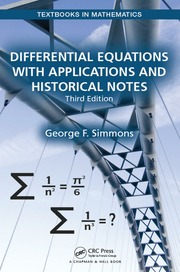
Internet Archive
Differential equations by g.f. simmons
molten mason
gray gazelle
Internet exist
Of course, but the $890 Amazon link was the first one to pop up on Google, and the first thing I noticed lol
gray gazelle

molten mason
Looks like a good book by the way, I'm skimming through it
gray gazelle
molten mason
Looks like a good book by the way, I'm skimming through it
As far as I'm concerned, I'm looking for a recent version of Blitzer's college algebra.
 raven prawn
im doing both igcse maths and additional maths
raven prawn
strange crater
Linear algebra is usually the next thing, you can read shilov's linear algebra
linear algebra as in matrices and vectors?
heady ember
You can also try Friedberg, but its proof-based
raven prawn
heady ember
You can also try Friedberg, but its proof-based
thanks, i’ll check it out
heady ember
Look at Dami's LA recs in pinned
 spare ridge
dapper root
Pretty sure it was made by Gristle <:kekw:752021756650455061>
spare ridge
dapper root
Pretty sure it was made by Gristle <:kekw:752021756650455061>
based list
 onyx field
 subtle mango
unkempt scaffold
https://www.youtube.com/watch?v=mnuAHa2pE8U
Can you guys recommend any book tha...
subtle mango
unkempt scaffold
https://www.youtube.com/watch?v=mnuAHa2pE8U
Can you guys recommend any book tha...
idk about textbooks, but theres good stuff on khan academy
see: “High School Geometry” and “Algebra 1”
unkempt scaffold
subtle mango
idk about textbooks, but theres good stuff on khan academy
Thanks for the response. There is lot of content between the proofs. I am looking for a resource that will show one proof after another. Even a online article is fine, it doesn't have to be a book.
 sage python
What a bad list lol
 alpine rover
unkempt scaffold
https://www.youtube.com/watch?v=mnuAHa2pE8U
Can you guys recommend any book tha...
alpine rover
unkempt scaffold
https://www.youtube.com/watch?v=mnuAHa2pE8U
Can you guys recommend any book tha...
more math sorcerer:
https://youtu.be/didXE0HkSC8?t=324

In this video I will show you how to learn mathematics from start to finish. I will give you three different ways to get started with mathematics. I hope this video helps someone.
Here are the books
Elementary Algebra https://amzn.to/3S7yG0Y
Pre-Algebra https://amzn.to/3TpW8HK
Discrete Mathematical Structures https://amzn.to/3eBYogb
Discrete Ma...
not sure about algebra & trigonometry proofs because most algebra & trigonometry books are targeted at high schoolers
unless you mean proving trigonometric identities, which should be covered in every standard text

 gray jungle
Has anyone read chapter 8/9 of H&K 2nd ed, are they ok? 
 fallow cypress
gray jungle
Has anyone read chapter 8/9 of H&K 2nd ed, are they ok? <:thonk:4065757325639024...
fallow cypress
gray jungle
Has anyone read chapter 8/9 of H&K 2nd ed, are they ok? <:thonk:4065757325639024...
yes all of hoffman+kunze is great
 silver herald
gray jungle
Has anyone read chapter 8/9 of H&K 2nd ed, are they ok? <:thonk:4065757325639024...
silver herald
gray jungle
Has anyone read chapter 8/9 of H&K 2nd ed, are they ok? <:thonk:4065757325639024...
^Agreed. Hoffman-Kunze are kind of like the canonical linear algebra text.
 loud cradle
fallow cypress
yes all of hoffman+kunze is great
loud cradle
fallow cypress
yes all of hoffman+kunze is great
with the exception of one proof in the section on multilinear functions which is completely wrong
fallow cypress
wait which one xD
 novel obsidian
I want to start learning number theory, and I came across borcherd's math 155 lectures on youtube, following niven, zuckerman and montgomery. Can anyone comment on how good a resource this is for a first pass on nt?
 sudden kindle
What do you wanna learn in number theory
novel obsidian
I want to keep doors open, so if one day I decide to become an additive analytic number theorist then we'll be bueno
sudden kindle
Analytic -> Davenport 'Multiplicative Number Theory' (need to be comfortable with complex analysis)
Algebraic -> Marcus 'Number Fields' (need to be comfortable with abstract algebra, needs Galois theory for later chapters)
novel obsidian
sudden kindle
Analytic -> Davenport 'Multiplicative Number Theory' (need to be comfortable wit...
is this after nzm?
sudden kindle
I don't know anything about additive number theory
novel obsidian
it was an example
gray gazelle
niven is good
novel obsidian
I don't have the background for those yet, maybe it'll be better to lay off the nt then
gray gazelle
probably the defacto standard for nt courses, for CS at least
sudden kindle
novel obsidian
I don't have the background for those yet, maybe it'll be better to lay off the ...
No thats not the message i intended to convey
Thats just the path I took to nt
Yours may be different
 solid wadi
Hello! What can I read to understand mathematical theory of systems? Everyone says «systems», «systems» — I want a foundation to talk about this stuff.
 stray veldt
its one of the standard elementary NT books
you cant go wrong with it
its a bit annoying, because there are (at least) two books with this name
novel obsidian
hm. Might just continue doing what I'm doing and later i'll revisit this
or i'll try nzm
i can't decide
i'll think about it tomorrow
solid wadi
solid wadi
Hello! What can I read to understand mathematical theory of systems? Everyone sa...
Or else, explain to me why theory of systems is a pseudoscience and that I should study differential equations instead.
loud cradle
fallow cypress
wait which one xD
The lemma before theorem 7 in section 5.6 (page 170). The lemma is true but the proof is wrong if 2 is a zero divisor in K (the underlying ring). On page 144 there's a discussion where they carefully point out this issue, but then they seem to forget about it when they give the proof on page 170. 😁 Related MSE Q/A: https://math.stackexchange.com/questions/4197043/question-in-proof-of-lemma-before-theorem-7-of-section-5-6-of-hoffman-kunze-line

Mathematics Stack Exchange
I have some question in proof of a lemma in section 'Multilinear Function'.
Lemma before Theorem 7
The proof says that $\pi_r L$ is alternating form because $\pi_r L(\alpha_{\tau 1}, \dots, \alpha...
narrow fiber
gray jungle
Has anyone read chapter 8/9 of H&K 2nd ed, are they ok? <:thonk:4065757325639024...
Yeah they're fine
 gusty smelt
lmao that list is something
narrow fiber
it rly is lol
 slender cargo
"Lang's Algebra is more lucid than D&F" - I heard Lang is usually indecipherable to people who haven't learned abstract algebra
gusty smelt
yeah langs sections on group theory are like, laughably bad pedagogically (probably fine as reference though)
narrow fiber
even for reference I usually haven't had to check farther than Hungerford
 haughty vine
subtle mango
idk about textbooks, but theres good stuff on khan academy
haughty vine
subtle mango
idk about textbooks, but theres good stuff on khan academy
bro no need to waste your time on khan academy, just spend some money for the good stuff
not free but mediocre
 orchid mountain
subtle mango
idk about textbooks, but theres good stuff on khan academy
orchid mountain
subtle mango
idk about textbooks, but theres good stuff on khan academy
Meanwhile Physicswallah laughing in the corner
 solemn rover
you guys are so weird
who knows books by the first initials of their authors
H & K?
D & F
G a L
 remote sparrow
G & L?
 still umbra
solemn rover
who knows books by the first initials of their authors
still umbra
solemn rover
who knows books by the first initials of their authors
Haha, this is how you know you've gone too far down the rabbit hole
solemn rover
remote sparrow
G & L?
get a life
 broken meadow
DF and HK are common though
 delicate hemlock
Yeah, it's a solid book
 sturdy shore
the issue is this depends a lot on 1. what you know, 2. what those books are specifically
a book can be called "set theory" and either be introductory shit or the hardest book you'll ever glance at
heady ember
sturdy shore
no, I'm not committing myself to personalized help
but yeah, names of books reveal very little information beyond rough subject matter
need to know authors
how about uh
telling us your background first
most likely you'd only be able to tackle mathematical proofs or calculus if you don't know much math
if you are lacking in precalc knowledge, people either go towards khan academy or serge lang - basic mathematics
but you can also go through a proofs book, I assume it would be readable to you
but again, idk the author(s) so
gray gazelle
I think ill ask someone else thanks
onyx wren
 swift dome
But is there any good proof book
swift dome
But is there any good proof book
yeah
Rudin is pretty good for intro to analysis
heady ember

narrow fiber
This isn't the most comprehensive resource for proofs but I like this one quite a lot https://deopurkar.github.io/teaching/algebra1/cheng.pdf
broken meadow
for proofs i took a course which used Hammack's book which was very small and to the point
heady ember
Loch has a summary of proofs pinned in #proofs-and-logic as well
sturdy shore
stein shakarchi?
crimson leaf
solemn rover
who knows books by the first initials of their authors
Aren't those technically second or third initials though? Like Dummit's name is Richard M. Dummit so wouldn't the initials be R.M.D so D is third 🤔
silver herald
solid wadi
Hello! What can I read to understand mathematical theory of systems? Everyone sa...
"Mathematical Systems Theory" tends to be name given to the study of Dynamical Systems and Control.
Honestly, if you have the background, Brin & Stuck's Dynamical Systems text is a common entry point
 hazy elk
Just read "dynamics done with your bare hands" thank me later
Although it doesn't do the dynamics you need for control
silver herald
For Control from a Pure Math POV, Sontag is the standard
 mystic orbit
slender cargo
"Lang's Algebra is more lucid than D&F" - I heard Lang is usually indecipherable...
mystic orbit
slender cargo
"Lang's Algebra is more lucid than D&F" - I heard Lang is usually indecipherable...
LOL
omfg that's such a dumb statement
gray gazelle

 manic cairn
slender cargo
"Lang's Algebra is more lucid than D&F" - I heard Lang is usually indecipherable...
manic cairn
slender cargo
"Lang's Algebra is more lucid than D&F" - I heard Lang is usually indecipherable...
I learned group theory from lang 
heady ember
Username checks out 
 grand thistle
manic cairn
I learned group theory from lang <:sully:651816820122189834>
grand thistle
manic cairn
I learned group theory from lang <:sully:651816820122189834>
was it good tho
from a normal person perspective
not a sergelangfan pov
 mystic orbit
grand thistle
from a normal person perspective
mystic orbit
grand thistle
from a normal person perspective
no
lang's graduate algebra is prolly the worst option for a first intro to algebra
it's literally mentioned in the preface that its target audience is graduates and lang expects the readers to have suitably covered some algebra in undergrad (or have read his book on algebra for undergrad)
the stupid thing is that it might actually be more lucid than D&F if it's you're second time covering its content
mystic orbit
 foggy relic
best method is reading Aluffi and doing exercises from Lang
foggy relic
best method is reading Aluffi and doing exercises from Lang
I second this 
mystic orbit
mystic orbit
it's literally mentioned in the preface that its target audience is graduates an...
 foggy relic
mystic orbit
I second this <:sotrue:826971355542192148>
foggy relic
mystic orbit
I second this <:sotrue:826971355542192148>
+Borcherds lectures 🙂
mystic orbit
there are a million other options
thinking the most terse is the best for a first intro is idiotic
mystic orbit
foggy relic
+Borcherds lectures 🙂

foggy relic
based on Lang i think
mystic orbit
does borcherds have lectures on intro algebra?
foggy relic

YouTube
This is an experimental online course on mathematical group theory, corresponding to about the first third of the Berkeley course 250A (introductory graduate...

YouTube
This playlist is for a graduate course in basic Galois theory, originally part of Berkeley Math 250A Fall 2021. The group theory used in the course can be fo...
mystic orbit
oooo
foggy relic
also has commutative and homological algebraic series (what's the plural for this?) but I don't know if you would call that elementary or not
the great thing about lang is that each part is essentially a seperate book and the books are almost entirely self-contained
mystic orbit
foggy relic
also has commutative and homological algebraic series (what's the plural for thi...
those are at least introduced in a second course so prolly not very elementary
mystic orbit
foggy relic
the great thing about lang is that each part is essentially a seperate book and ...
yeah, he does mention that in the preface as well
@foggy relic do you think aluffi is enough to start tackling algebraic geometry?
(other than the pointset pre req ofc)
foggy relic
no clue, im definitely not someone you should ask for that
mystic orbit
why not? lel
foggy relic
because i dont know algebraic geometry
mystic orbit
I thought you were doing hartshorne, no?
mystic orbit
I see
foggy relic
i wouldnt recommend aluffi alone though, the exercises are not very helpful lol
like alot of the time its just writing out stuff
foggy relic
yup
 stray veldt
interesting choice of cover 
molten mason
stray veldt
interesting choice of cover <:monkey:651816857153699840>
1995 was a wild time
gray gazelle
stray veldt
interesting choice of cover <:monkey:651816857153699840>
the book is so thicc
gray gazelle
ye this is older than me
gray gazelle
stray veldt
i ... would suggest a more standard, modern book
like?
gray gazelle
oh i use those already
karmic thorn
Thomas' Calculus (not free legally)
Math Libretexts
MIT OCW 18.01
OSU Ximera Calc 1
heady ember
stray veldt
spivak or something 🤷
Moth would shill Spivak too, probably
gray gazelle
okok ty////
solid wadi
silver herald
For Control from a Pure Math POV, Sontag is the standard
Beautiful book!
mystic orbit
gray gazelle
oh i use those already
I second mit ocw
Especially if you're not used to books
heady ember
Hi DarQ
mystic orbit
Ello grass 
gray gazelle
MIT OCW is a blessing ya
mystic orbit
mystic orbit
Especially if you're not used to books
Also, definitely check out 3b1b's essence of calculus
Tho that one is more of entertainment than a serious intro to the subject but it does a very good job of making a lot of stuff feel intuitive
 carmine cloud
High-school math made understandable by Jeremy Martin ( you could probably find it on amazon)
remote sparrow
stray veldt
i ... would suggest a more standard, modern book
jaime escalante used it, if you know who that is. legendary AP calc teacher in an inner-city neighborhood.
could very well have been dumbed down in later editions, though
gray gazelle
gray gazelle
thoughts on this book?
This book is amazing! It introduces limits straight with the epsilon-delta definition. That's so awesome
solemn rover
crimson leaf
Aren't those technically second or third initials though? Like Dummit's name is ...
yes
I can't remember why I said first
idk
 calm pagoda
is spivak calculus good for someone who never studied calculus before
solemn rover
It's probably doable, it's not necessarily overambitious, could be rough going.
Think of like, an "honors" calculus class in a college. Not necesssarily the best for everyone, but probably ok if you know what you're getting into
calm pagoda
maybe its more motivating to read when you already know what results youre working towards
from a high school class ?
solemn rover
Could be.
calm pagoda
just thikning for someone else
solemn rover
Hm I don't know. I took calculus for the first time in high school and then later in college, and I found college level calculus to be still somewhat challenging, I can imagine it would be more challenging without any prior knowledge of calculus and then doing it rigorously would be more challenging still. but on the other hand you never know, sometimes it's good to stretch a bit beyond your comfort zone
calm pagoda
I see what youre saying
i think you would have to be very ambitious
at which point youve probably already taken a calculus class
remote sparrow
ideally a university would teach it, but most schools do not begin with spivak's calculus. however, if you have absolutely no time pressure and average high school math prep, spivak is a good choice.
heady ember
gray gazelle
such as?
Dami would suggest Schroder probably (for a friendly intro to real analysis)
mystic orbit
heady ember
Dami would suggest Schroder probably (for a friendly intro to real analysis)
grass only suggests what other people suggest lel
heady ember
mystic orbit
grass only suggests what other people suggest lel
Me noob can't suggest anything myself 
 lapis sundial
what is your local time lol
oh okay ouch
i was gonna say 4am isn't that bad but 5am

the fact i don't think it's that bad is evidence that my sleep schedule is also screwed
hope you uhhh will be okay
narrow fiber
my sleep schedule has been a mess
hoping that we're all able to get fulfilling rest soon lmao
I wish my sleep schedule was closer to this
fallow cypress
narrow fiber
I wish my sleep schedule was closer to this
when do you sleep 😭
gray gazelle
heady ember
Dami would suggest Schroder probably (for a friendly intro to real analysis)
this? with the german o?

who or what is dami?
or how
or why
fallow cypress
dami is one of the mods here, grass is talking about Bernd Schröder's book titled "Mathematical Analysis: A Concise Introduction"
for if you want to learn proof-based calculus
 fallow cypress
heady ember
Congrats on the honorable eric!
fallow cypress
heady ember
Congrats on the honorable eric!
thank you!!!
 warm glen
gray gazelle
this? with the german o?
warm glen
gray gazelle
this? with the german o?
why can't all math books have covers this nice
 distant spear
book recommendation for analysis on R^n?
 last spruce
Anyone have any good math book recommendations that are not too heavy reads
karmic thorn
distant spear
book recommendation for analysis on R^n?
Spivak CoM? The take is more geometric but I think that's what anyone would also refer to as multivariable real analysis
There's also a two volume series by Duistermaat and Kolk
karmic thorn
last spruce
Anyone have any good math book recommendations that are not too heavy reads
Do you have any specific areas or interests in mind? And what mathematical background do you already have?
last spruce
karmic thorn
Do you have any specific areas or interests in mind? And what mathematical backg...
Graduate level, algebra / number theory would be nice but willing to explore
gray gazelle
what are the prerequisites for studying pst?
(point set topology)
and what book would you recommend for a complete beginner
mystic orbit
gray gazelle
what are the prerequisites for studying pst?
literally nothing
gray jungle
Its hard to really define the prerequisites , just set theory is really all you "need" , but the ideas are rather abstract and one expects some " mathematical maturity"
Which is roughly speaking the ability to understand and work with mathematical definitions as well as manupilate sets ,functions and so on (as described in one pst syllabus).
mystic orbit
ig proof writing?
mystic orbit
gray gazelle
(point set topology)
and what book would you recommend for a complete beginner
hatcher's notes 100%
they're not too long and they're gonna be all you need for a loooong time
mystic orbit
last spruce
Graduate level, algebra / number theory would be nice but willing to explore
not too heavy reads
graduate level
last spruce
mystic orbit
>not too heavy reads
>graduate level
I mean math books that I don’t have to sit with pencil and pad I guess
mystic orbit
also, I would imagine someone at the graduate level would at least be more particular in their interest than "algebra" and "number theory"
 hasty turret
last spruce
I mean math books that I don’t have to sit with pencil and pad I guess
hasty turret
last spruce
I mean math books that I don’t have to sit with pencil and pad I guess
So you don't want to work out stuff?
mystic orbit
last spruce
I mean math books that I don’t have to sit with pencil and pad I guess
maybe ready about math history?
last spruce
mystic orbit
maybe ready about math history?
Actually this is good thanks
last spruce
mystic orbit
also, I would imagine someone at the graduate level would at least be more parti...
I mean he asked general area so
To be fair I have no idea what I’m doing 
gray jungle
gray gazelle
(point set topology)
and what book would you recommend for a complete beginner
A classical book is munkres which is basically the bible of topology as my professor describes it (altho extreme)
I like simmons book but its a bit old school tbh
But if you just want the topology for other stuff (analysis /geo) then either hatcher or first chapter of bredon : Topology and geometry
last spruce
mystic orbit
also, I would imagine someone at the graduate level would at least be more parti...
I can relate
 indigo mesa
mystic orbit
also, I would imagine someone at the graduate level would at least be more parti...
indigo mesa
mystic orbit
also, I would imagine someone at the graduate level would at least be more parti...
not necessarily tbh
i know several people about to graduate that are very vague about their interests
mystic orbit

lapis sundial
My interests are 12% and 27% depending on the kind of loan
gray gazelle
lapis sundial
My interests are 12% and 27% depending on the kind of loan
can i take a loan but with only 1% interest?
per annum
gray gazelle
Does anyone have textbook recommendations for the following topics:Further Differentiation and Integration Functions of Several Variables Linear Algebra Differential EquationsJust mainly want the practise questions and answer sheet tbh.
mystic orbit
lapis sundial
My interests are 12% and 27% depending on the kind of loan
???
a..
a year?
 pseudo estuary
any good books for IMO?
mystic orbit
pseudo estuary
any good books for IMO?
the art and craft of problem solving
gray gazelle
gray gazelle
Does anyone have textbook recommendations for the following topics:```Further Di...
also does this usually fall under calc 2 or 3
thoughts on Gallian for learning Field theory?
 fierce hedge
Got these printed in Hardbound, the cover looks weird but the print quality is decent enough. Thanks @karmic thorn
 foggy relic
fierce hedge
Got these printed in Hardbound, the cover looks weird but the print quality is d...
foggy relic
fierce hedge
Got these printed in Hardbound, the cover looks weird but the print quality is d...
You bonded them yourself?
mystic orbit
 languid cypress
What good books are there for differential equations?
languid cypress
What good books are there for differential equations?
see #books-old or #books
foggy relic
fierce hedge
Nah, it's a company called Printster that prints and binds them
Mfw cheaper to have Indian cousin buy and ship it to me than buy it legally 
fierce hedge
foggy relic
Mfw cheaper to have Indian cousin buy and ship it to me than buy it legally <:de...
It is what it is although I am surprised there isn't any service like that in US
foggy relic
There is lulu here
fierce hedge
I am guessing it is expensive @remote sparrow is it that?
mystic orbit
foggy relic
Mfw cheaper to have Indian cousin buy and ship it to me than buy it legally <:de...
LOLLLLL
foggy relic
fierce hedge
I am guessing it is expensive <@254820329124265984> is it that?
Not too bad, maybe $25 including shipping and all
The India one would be like $20
karmic thorn
fierce hedge
Got these printed in Hardbound, the cover looks weird but the print quality is d...
Yeah they don't do a great job with covers, I think this is partly due to the fact that the source files are generally made for letter-sized page printing
karmic thorn
last spruce
Graduate level, algebra / number theory would be nice but willing to explore
Since you later indicated an interest in math history, there's Mathematics and its History by Stillwell
For philosophy of math (which I believe is not actually comfortable to read  ), there's Hamkins' Lectures on the Philosophy of Mathematics
spare ridge
mystic orbit
>not too heavy reads
>graduate level
lol
 night knot
gray gazelle
Does anyone have textbook recommendations for the following topics:```Further Di...
night knot
gray gazelle
Does anyone have textbook recommendations for the following topics:```Further Di...
are you taking A-Level Further Mathematics??
gray gazelle
no this is a university level class
gray gazelle
yes
night knot
I guess something like Kreyszig's Advanced Engineering Math would be a decent reference since it contains all you mention
gray gazelle
i'll look it up
night knot
There's also Mathematical Methods for Physics and Engineering by Riley, Hobson, and Bence
these two are fairly comprehensive and should cover what you need
mystic orbit
for a second I thought you guys were the same person monologuing lmfao
night knot
LOL
karmic thorn
gray gazelle
Does anyone have textbook recommendations for the following topics:```Further Di...
See Apostol's calculus, volume 2
gray gazelle
night knot
There's also Mathematical Methods for Physics and Engineering by Riley, Hobson, ...
thank you
night knot
no problem, hope they help!
last spruce
karmic thorn
Since you later indicated an interest in math history, there's *Mathematics and ...
I’m going through Number theory: an approach from Hammurabi to Legendre by Andre Weil
karmic thorn
Interesting, let me know how it is!
 iron granite
I need elementary combinatorics books which will prevent me from putting a pen through my eyehole.
 formal bronze
iron granite
I need elementary combinatorics books which will prevent me from putting a pen t...
formal bronze
iron granite
I need elementary combinatorics books which will prevent me from putting a pen t...
What is it that you look for exactly? And what is elementary combinatorics?
last spruce
iron granite
I need elementary combinatorics books which will prevent me from putting a pen t...
My class used the text by Brualdi iirc
iron granite
Books which will help me solve permutations and combinations problems.
last spruce
AoPS book if there is one is also probably good
iron granite
and not be filled with pointless bijections
iron granite
last spruce
AoPS book if there is one is also probably good
I'll look into that one
last spruce
iron granite
and not be filled with pointless bijections
Bijections are not pointless 
iron granite
They are if you have an MCQ exam in 20 days.
formal bronze
iron granite
and not be filled with pointless bijections
What do you mean by pointless?
iron granite
They just want the result
formal bronze
iron granite
They are if you have an MCQ exam in 20 days.
JEE?
iron granite
Yup
formal bronze
Ah
iron granite
I'm banging my head against the wall and I'm not even making a dent
formal bronze
Are you done with past papers?
formal bronze
Those questions are the best representative of what you will see in the actual exam.
formal bronze
iron granite
and not be filled with pointless bijections
Also, I humbly urge that you do not rudely dismiss the usefulness of things that do not serve your narrow, immediate purpose. This is a math server.
formal bronze
iron granite
Does that count?
I assume that it would.
iron granite
formal bronze
Also, I humbly urge that you do not rudely dismiss the usefulness of things that...
Jeez, okay. But you have to understand
It is discouraging to try and find books and have them be rigorous when I can't afford rigor.
I'd gladly read A Walk Through Combinatorics if it weren't for my deadlines.
formal bronze
We could discuss this on dm if you want to.
iron granite
Sure.
 near wagon
iron granite
It is discouraging to try and find books and have them be rigorous when I can't ...
near wagon
iron granite
It is discouraging to try and find books and have them be rigorous when I can't ...
Discrete Mathematics and its Applications isn’t bad. Solutions are in Quizlet also.
Also Probability for Enthusiastic Beginner has a chapter on Combinatorics.
iron granite
I'll check that one out
swift dome
#books-old and #books got some good stuff too
remote sparrow
fierce hedge
I am guessing it is expensive <@254820329124265984> is it that?
lulu is cheap but apparently many pdfs are not up to its standards or "ready-to-print"
can't just drop them in and have them print for you
gotta fiddle around with stuff
if anyone knows how to make books lulu ready i would appreciate it
 night prairie
Is it just me or does Hoffman Kunze get a bit confusing around section 2.6/2.7? There's just so much back and forth going on with the row/column stuff and it becomes hard to keep track of what exactly is going on. The theory is hard to fully follow at least index for index but the examples seem alright.
Should I be concerned or just keep reading and trying examples/problems until getting to chapter 3?
Any online videos or other resources that can help? It's about row spaces of matrices.
loud cradle
night prairie
Any online videos or other resources that can help? It's about row spaces of mat...
you could try gilbert strang's lectures, in particular look for the one involving the "four fundamental subspaces"
sturdy shore
night prairie
Is it just me or does Hoffman Kunze get a bit confusing around section 2.6/2.7? ...
it is a difficult book and will get more difficult, nobody said it's easy
I recommend looking into other books at the same time, always going to help seeing different perspectives
loud cradle
H&K is pretty dense in general (analogous to Baby Rudin for analysis), it's not unreasonable to expect to have to read some of the material multiple times for it to make sense
sturdy shore
and it's also normal to spend a lot of time on 1 page trying to parse the example, ^
loud cradle
btw, chapter 3 includes dual spaces... probably by the time you get there, you will look back fondly at how "easy" ch 2 was 😀
night prairie
I don't mind the abstraction for dual spaces (I think), it's just getting exhausting trying to keep track of all the indices, rows, columns lol
wondering if that will be an issue moving forward for later chapters
sturdy shore
yeah but you see getting comfortable with index shuffling and tracking is a very underrated skill
and yes you will see a lot of indices once you get to determinants
loud cradle
night prairie
wondering if that will be an issue moving forward for later chapters
it does get more gnarly in some later chapters, particularly the ones with the determinant and multilinear algebra
there are a few confusing index typos here and there as well, just to keep you on your toes
night prairie
yeah I felt I had a good handle of everything all the theorem proofs, examples and problems up until the row space stuff around section 2.6
it just hit me out of nowhere 
sturdy shore
I mean, the oddity is the former not the latter
night prairie
glad to hear, I just wanted to clear 3 pages an hour and I guess that's not realistic anymore
sturdy shore
hell no
loud cradle
oh double hell no
sturdy shore
some sections sure in general forget it
night prairie
yeah, I thought something was wrong with me, glad to hear this is a normal thing lol
heady ember
loud cradle
oh double hell no
I don't remember the last time I cleared 3 pages of a math book in an hour
night prairie
3 pages an hour seemed fine until around page 57 or so
loud cradle
and surely not H&K, which is the hardest of the "basic" LA books
sturdy shore
there is the type of math book that is more chit chatty in which a faster pace is possible
h&k is not that
loud cradle
even LADR, which is considerably more chatty, the author tells you in the preface, if you're going faster than one page per hour you're going too fast
sturdy shore
night prairie
3 pages an hour seemed fine until around page 57 or so
have you seen linear algebra before?
if you haven't, that's very fast
night prairie
yeah I saw linear but don't have a good grasp of it, self studying using hk to learn it properly
heady ember
loud cradle
even LADR, which is considerably more chatty, the author tells you in the prefac...
Oh yeah I saw that before lmao
sturdy shore
night prairie
yeah I saw linear but don't have a good grasp of it, self studying using hk to l...
yeah so that's why right, you had some initial familiarity with LA which meant you were able to cover the initial sections in a faster pace
night prairie
yeah, I mean I have seen row space bla bla somewhere or another but no idea why it seems so hairy
don't recall seeing it like this
sturdy shore
well, a first course likely won't teach row spaces like h&k does
loud cradle
you might benefit from getting a second book with similar coverage, just to get a different exposition / approach.. you could try LADW which is a free download from the author
heady ember
Or pirate FIS 
night prairie
would I be missing out on anything if I just watched GIlbert Strang's videos instead with pencil and paper? asking for a friend
loud cradle
i'm not sure i would advocate "instead" but it'd probably be a good supplement, at least for confusing topics
hasty turret
The HK section on determinants is very good imo
loud cradle
although i may be in the minority in finding strang a bit confusing, at least in his book "linear algebra and its applications", which is the only one i know.. his lectures might be clearer though
night prairie
yeah I think I'll check out all his videos and see if it helps, or just go through this row space stuff carefully
hasty turret
What's your goal exactly
night prairie
learn linear algebra I guess
actually understand it so I can be ready to handle linear algebra as presented in an algebra textbook
for Aluffi let's say
hasty turret
night prairie
Is it just me or does Hoffman Kunze get a bit confusing around section 2.6/2.7? ...
Just try to work out what HK actually means
heady ember
I guess im in a similar state, learning lin alg from FIS to read Jacobson's Basic Algebra I, and eventually, Lee's Introduction to Topological, and Smooth, Manifolds
hasty turret
It becomes clear when you try constructing some examples
night prairie
yeah I'll try that for simple examples
sage python
loud cradle
btw, chapter 3 includes dual spaces... probably by the time you get there, you w...
So we had to use this book in my undergrad analysis class
Like our prof would just assign a pset from chapter n and we'd have to read the associated section, along with our analysis pset
hasty turret
So, 2.6 is literally just "elementary row operations don't change the row space and if it were an RREF,it would be easier to describe"
sage python
When we got to dual spaces it was a bit tricky and one of my friends went to the prof's office hours asking about it
Well... we were taught about weak and weak* convergence in Banach spaces
night prairie
yeah I am wondering, do the specifics of 2.6 really matter later on or nah?
sage python
With linear algebra I'm team, understand everything tbh
hasty turret
Not really
sage python
It's not huge compared to some other sections but linear algebra is the most important topic in math imo
hasty turret
hasty turret
So, 2.6 is literally just "elementary row operations don't change the row space ...
This is literally all the specifics you need. HK just writes this out
novel obsidian
Yes you would be missing out. Read the book @night prairie
night prairie
yeah, I am convinced of all that, Drake. I am just worried that I can't do the proofs myself
sage python
I'd say read through it and try to absorb the ideas contained within, such that later if you had to think about it you'd have some intuition about what to do
night prairie
yeah, I'll spend some more time on it, thanks guys
just have to be okay with having to go at a slower pace as needed
novel obsidian
night prairie
just have to be okay with having to go at a slower pace as needed
Better to go at a slower pace than to not absorb the material
loud cradle
sage python
Well... we were taught about weak and weak* convergence in Banach spaces
ha, is that also the class where they assigned some huge number of exercises for homework every week? like most of the problems in each chapter?
sage python
Yeah
heady ember
Did you manage to complete all your homework then
sage python
Lol no
 jagged panther
what books are best for linear algebra?
loud cradle
jagged panther
what books are best for linear algebra?
there are some reviews in the pinned messages
gray gazelle
jagged panther
what books are best for linear algebra?
are you looking for theoretical or computational? a first or second course?
usually, a first course in linear algebra is computation-based
so if that's the case, I can recommend Introduction to Linear Algebra by Serge Lang
for a second course, Linear Algebra Done Right is a great text and is pretty much viewed as one of the best
however its treatment of determinants is pretty bad
jagged panther
oh ok thanks mate
 worn pecan
i do abstract algebra since kindergarten
i do graph theory when 3 years old
but i study linear algebra at 15, and it's proof-based
 pure rune
Can anyone recommend a dense complex analysis book? I've recently realised how useful those really dense books can be for refreshers if you're already familiar with the content, and I want something like that for complex analysis that I can flip through a few pages to cover everything important I've done in bachelors lmao.
sturdy shore
complex analysis books are pinned
gray gazelle
what are some books for introductory combinatoric?
books that lean on computer science is preferable
gray gazelle
pure rune
Can anyone recommend a dense complex analysis book? I've recently realised how u...
Rudin?
mystic orbit
pure rune
Can anyone recommend a dense complex analysis book? I've recently realised how u...
papa rudin 
 dreamy matrix
Can anyone recommend a book for me, (math used in cs)
gray gazelle

ISBN: 9781260091991 is an International Student Edition of Discrete Mathematics and Its Applications 8th Edition By Kenneth Rosen This ISBN: 9781260091991 is student textbook only. It will not come with online access code. Online Access code sold separately at ISBN: 9781259731242 The content of t...
@dreamy matrix
dreamy matrix
gray gazelle
https://www.amazon.com/Discrete-Mathematics-Applications-Kenneth-author-dp-12600...
thanks man
gray gazelle
np
dreamy matrix
gonna read it through a pdf, since I can't be bothered waiting for it to arrive here
gray gazelle
😉
pure rune
mystic orbit
papa rudin <:hyperhonk:554846385829183508>
Idk how I didn't think of rudin. It's pretty much exactly what I wanted cheers
mystic orbit

 pale kite

Is there a book like this for analysis? (Encyclopedic breadth, not at an introductory level, lots of words, examples, problems)
pure rune
Rudin again?
grand thistle
pale kite
amann and escher's 3 volume series i guess
for intro analysis*, it covers i think all the basics (i.e. stuff in baby and papa rudin), and has a lot of advanced topics like riemannian geometry and stuff i think
though i can only speak on the first volume
pale kite
oh, cool!!!
grand thistle
it's also pitched at a higher level, beginning with a lot of algebra stuff then going into the basic analysis theorems using a lot of topology and discussing banach spaces/ calculus on them pretty early on
pale kite
sounds perfect for me
pale kite
The pinned says Conway is like the dummit and foote for complex analysis, so I guess there's a rec there
grand thistle
no idea abt that, havent done much complex analysis at all myself
 oblique gust
Yo anybody here has the a pdf of the algebra and geometry problem books for the training of the USA national imo team?
night prairie
hasty turret
It becomes clear when you try constructing some examples
this makes me so mad how clear it becomes when writing examples... why couldn't HK just give useful suggestions instead of relatively less useful text just taking up space
 whole cove
any recs for
two things actually
- mathematical logic
- theory of computation
i lied its 3
- programming language theory
pale kite
I am going to provide a recommendation - if you have not taken point set topology, but you're interested in algebra, a good motivation is to try and understand the Zariski topology.
 tawny copper
whole cove
1. mathematical logic
tawny copper
whole cove
1. mathematical logic
Check the pinned comment of Diligent Clerk
whole cove
cheers
night knot
whole cove
2. theory of computation
Introduction to the Theory of Computation by Michael Sipser
night knot
whole cove
3. programming language theory
Types and Programming Languages by Benjamin Pierce
Structure and Interpretation of Computer Programs by Abelson and Sussman
 fervent mist
Hi, hope you are having a happy new year, I want to ask which book or videos can you recommend me to study Affine space of n dimension, conics on the Affine space, Erlangen program :')
karmic thorn
I think the first two are addressed in Shaferavich's Linear Algebra and Geometry, I don't have a recommendation for Erlangen program though
Found this from a Math Stackexchange thread: https://bookstore.ams.org/view?ProductCode=STML/81
worn pecan
mystic orbit
papa rudin <:hyperhonk:554846385829183508>
papa rudin is real analysis and the application of real analysis in complex analysis
mystic orbit
worn pecan
papa rudin is real analysis and the application of real analysis in complex anal...
no, real analysis is baby rudin
papa rudin is complex analysis
worn pecan
in my country, measure theory and lebesgue integral count as undergraduate real analysis
baby rudin is "mathematical analysis"
grand thistle
mystic orbit
papa rudin is complex analysis
no papa rudin begins with real analysis and measure theory then uses those to transition into complex analysis im pretty sure
it has both
mystic orbit
grand thistle
no papa rudin begins with real analysis and measure theory then uses those to tr...
I'm tempted to take a look
gray jungle
Rca starts veeeery weirdly , immediately defines measurable functions before briefly discussing measures and then jumps into integration theory.
The proofs are really compact, this books feels more like a handy reference.
 lost nacelle
@river holly https://craftinginterpreters.com/
would you find this interesting?
 river holly
lost nacelle
<@263540492350783489> https://craftinginterpreters.com/
would you find this inte...
river holly
lost nacelle
<@263540492350783489> https://craftinginterpreters.com/
would you find this inte...
I have never found a book interesting.
lost nacelle
need to find better books 
river holly
lost nacelle
need to find better books <:catThink:526983414226747393>
yeah well I’ve been given the best books according to people here
I need something to physically do in order to get investing in a thing.
lost nacelle
the books does have instructions to make your own programming language
maybe will like
remote sparrow
jagged panther
what books are best for linear algebra?
remote sparrow
gray gazelle
what are some books for introductory combinatoric?
A Walk Through Combinatorics by Miklos Bona is one good choice

 lime sapphire
books are overrated
people should start asking for which lecture notes are the best
 cursive orbit
lime sapphire
people should start asking for which lecture notes are the best
cursive orbit
lime sapphire
people should start asking for which lecture notes are the best
I mean a good reason one would prefer books is the presence of exercises
those are more useful that the content itself
lime sapphire
i was half sarcastic there lol
but yea i mean usually when you can find lecture notes online you can also find the course they were accompanying
mystic orbit
remote sparrow
https://4chan-science.fandom.com/wiki//sci/_Wiki
4chan-science

 sterile harness
what’s the best book for intro abstract algebra
remote sparrow
sterile harness
what’s the best book for intro abstract algebra
pinter or judson are pretty good
hasty turret
The first half is pretty approachable
sterile harness
hasty turret
The first half is pretty approachable
as an intro?
hasty turret
Yes
sterile harness
would you recommend the books sour drop recommended or should i get dummit and foote
mystic orbit
sterile harness
what’s the best book for intro abstract algebra
aluffi
remote sparrow
sterile harness
would you recommend the books sour drop recommended or should i get dummit and f...
pinter and judson are both available as cheap paperbacks. judson is also legally free online
 mossy flume
Can confirm
DnF was super super dry
I wonder what we'll use in my algebra class next sem
 sage kelp
The Way of Analysis. Im actually going to go through it this year
 turbid mural
i want to learn everything on differential geometry
remote sparrow
turbid mural
i want to learn everything on differential geometry
maybe spivak's five-volume series on differential geometry could work?
may not be everything but it sounds like a lot
turbid mural
remote sparrow
maybe spivak's five-volume series on differential geometry could work?
alr
remote sparrow
although the simplest starting points would be do carmo or tapp's Differential Geometry of Curves and Surfaces (different authors, same title)
they are introductory undergrad treatments
i don't know anything much beyond that
spivak iirc is for advanced undergraduates or graduate
sturdy shore
turbid mural
i want to learn everything on differential geometry
you did not answer what your background is, which is by far the more important part of the question
 hollow peak
I don't really like do carmo's geometry of curves and surfaces
I think you're better off just starting with smooth manifold theory and then learning general riemannian geometry
he spends a lot of time talking about "regular surfaces" which are really just immersions of two-dimensional manifolds iirc
this is much more motivated if you actually do manifold theory first to understand why we care about this setting specifically
(I recommend Tu's intro to manifolds, then either do carmo riemannian geo or lee's IRM if you're very comfortable with bundles)
alternatively Tu's differential geometry is a good prep for IRM
swift dome
 fast tangle
does anybody know any calculus books that are actual books and not textbooks?
 hearty steppe
Spivak? Apostol?
karmic thorn
What do you mean by actual books and not textbooks?
Are you looking for a monograph that has no exercises?
fast tangle
yes i think so
hearty steppe
You should just do real analysis
dapper root
Lol
hearty steppe
I mean I love it and I’m not even good at the problems
fast tangle
what is that sorry💀
hearty steppe
Give Schroder’s mathematical analysis a concise introduction a shot.
It’s not as terse as rudin and is friendlier than Apostol
I mean I really like baby rudin. I’m probably going to go back to it one day
I only did the first chapter and half the exercises 😂
Oh man those exercises are really hard too and they pick your brain
hearty steppe
I assumed he didn’t want a standard textbook and wanted to learn the meat of calculus
hearty steppe
But I mean standard pure math textbook it is, instead of one of those university calculus class textbooks
Spivak might be a bit harder to read but Apostol calculus you should still check out I think
I liked what I saw in it at least
karmic thorn
fast tangle
yes i think so
So... what exactly are you looking for in a book like that? Definitions, theorems, proofs and some examples?
Plus history and references for further reading?
fast tangle
I mostly just want a book that’ll teach me calc in a concise way
karmic thorn
Why avoid a textbook, then?
I can understand if you'd like a concise textbook, one that doesn't have dozens of repetitive problems
But learning calculus will inevitably involve solving problems on your own
fast tangle
I wanna be able to read it on the train or just something like that
novel obsidian
you're not going to learn then
fast tangle
I was thinking I could practice on my own time
karmic thorn
That's not how math can be learnt, unfortunately
fast tangle
I did it with probability so I wanted to try it out with calculus
karmic thorn
If you do intend to write down and solve problems, use a textbook (there are many). Even more concise are lecture notes and problem sets combinations that several universities have on their websites.
You can check out MIT OCW 18.01 for instance
swift dome
Internet Archive
We now come to Problems in Mathematical Analysis edited by B. P. Demidovich. The list of authors is G. Baranenkov, B. Demidovich, V. Efimenko, S. Kogan, G....
fast tangle
Ooo okay thank you for the advice and recommendations I appreciate it
karmic thorn
 terse echo
do most books have solutions?
terse echo
do most books have solutions?
Uncommon for undergrad and beyond textbooks to contain solutions
At most they'll have solutions/hints to even/odd numbered exercises
And even that fades away
gray gazelle
where can i find the most difficult problems for conic sections aka coordinate geometry? (aside from imo stuff, i want problems in ellipse, hyperbola etc imo stuff doesnt have any problems relating to that) not sure if this qualifies as book rec
lime sapphire
lmao
gray gazelle
lime sapphire
lmao
what
lime sapphire
its just a funny idea thinking of conic sections at IMO level
lime sapphire
you most likely won't find much
gray gazelle
you can surely make conic sections at imo level (atleast i made 2 probs that are very difficult)
gray gazelle
lime sapphire
you most likely won't find much
hmm, atleast somewhat difficult problem sources?
do you know any
lime sapphire
maybe apendix 2 of spivak's calculus
gray gazelle
i want some practice but my present sources are just too damn easy
thats not difficult
and it doesnt really have much
karmic thorn
Does AoPS not have anything on it
gray gazelle
more of explanation
gray gazelle
karmic thorn
Does AoPS not have anything on it
Some problems scattered here and there
often varying greatly in difficulty and more of (oly) geometry problems from what i have seen
karmic thorn
Oh okay, so you're not looking for things from an olympiad perspective?
lime sapphire
maybe try past papers from the korean high school curriculum, iirc its filled with conics
gray gazelle
lemme, thanks!
gray gazelle
lime sapphire
maybe try past papers from the korean high school curriculum, iirc its filled wi...
oh
thanks for this too
you know where i can find them? @lime sapphire on google?
lime sapphire
yh i think google will get you something
gray gazelle
karmic thorn
See if this fits what you're looking for
russian book, highly likely 💀 thanks a lot
lime sapphire
worth a try
gray gazelle
karmic thorn
https://arxiv.org/pdf/1111.6521.pdf
no problems 🙁
karmic thorn
Create problems by proving the main theorems yourself
gray gazelle
i've already done that
just got a lot of time for conic sections, thought if there was something i could practice
apparently there isnt so nevermind i guess
thanks tho
karmic thorn
There's a book called Geometry by Coxeter
Maybe Introduction to Geometry
I don't remember the exact title
gray gazelle
i know of that book
lime sapphire
why are you looking for material on conic sections anyway?
karmic thorn
I don't think there's more to the theory of conic sections
gray gazelle
lime sapphire
why are you looking for material on conic sections anyway?
jee 💀
lime sapphire
bruh
karmic thorn
If you find geometry interesting you should move on to more interesting topics
Oh JEE
gray gazelle
actually i dont do olympiads anymore so
I did a year ago and like maths a lot (and tough probs)
karmic thorn
Well any of the usual JEE coordinate geo books may have more than enough already
lime sapphire
just keep doing practice problems from jee prep books; if you're looking for more interesting maths its not going to be part of jee prep
gray gazelle
but they easy, for algebra, combinatorics, calculus there is a ton of hard material
gray gazelle
lime sapphire
just keep doing practice problems from jee prep books; if you're looking for mor...
hmm will just ask my teacher for some probs ig
karmic thorn
I'm not sure if there's a lot of room to complicate it without introducing more advanced ideas and tools
gray gazelle
not a lot of room but can be done anyways
lime sapphire
like for the sake of purely doing harder problems just do something other than JEE
iirc CMI entrance test problems are p good
gray gazelle
lime sapphire
like for the sake of purely doing harder problems just do something other than J...
hmm yeah, CMI entrance test is pretty good ISI too
 crisp idol
Platypus police squad
gray gazelle
Anyone has a good online class/lectures that goes through most of Discrete Math by K. Rosen ?
lime sapphire
You could try STEP maths questions on conics @Stotram#9095
crimson leaf
They left the server
lime sapphire
Lol
 mental canyon
any books for questions regarding complex numbers
 empty matrix
gray gazelle
jee 💀
empty matrix
gray gazelle
jee 💀
jee
 lofty gale
sure
 oblique acorn
Hi everyone, I'm looking for a book about basic geometry. Which book would you recommend me?
sudden kindle
Geometry by David Esplen Gray
 granite viper
oblique acorn
Hi everyone, I'm looking for a book about basic geometry. Which book would you r...
granite viper
oblique acorn
Hi everyone, I'm looking for a book about basic geometry. Which book would you r...
Synthetic geometry?
oblique acorn
granite viper
Synthetic geometry?
I think so. Im from Argentina, and I know it as basic geometry. It is the first geometry that we all learn in high school.
granite viper
oblique acorn
I think so. Im from Argentina, and I know it as basic geometry. It is the first ...
Why not just follow the schools course
It's almost always better to start coordinate geometry then
oblique acorn
granite viper
Why not just follow the schools course
Im not in high school. I want to relearn some thing that didn't teach us well in my school, now that I have free time
remote sparrow
oblique acorn
I think so. Im from Argentina, and I know it as basic geometry. It is the first ...
try kiselev's geometry volumes
 fleet void
recommend the book Simplified Mathematics?
granite viper
oblique acorn
Im not in high school. I want to relearn some thing that didn't teach us well in...
Maybe try proving some things in Euclid's elements?
Unless you're looking to apply
 hollow shore
need some recommendations on a good and comprehensive problem book of olympiad problems with solutions
if anyone knows any good books matching the above description, ping me :3
swift dome
Which topics you interested in ?
hollow shore
standard olympiad topics like algebra, number theory, combinatorics, functional equations, etc
narrow fiber
Anyone have suggestions around good books on general relativity from a mathematical perspective? My Riemannian geometry is solid and I'm curious if anyone here has strong feelings for/against certain resources since I've come across a few decently-recommended ones
 digital eagle
hollow shore
standard olympiad topics like algebra, number theory, combinatorics, functional ...
digital eagle
hollow shore
standard olympiad topics like algebra, number theory, combinatorics, functional ...
Oh my god, it is songwriter and Radiohead frontman Thom Yorke
tawny copper
oblique acorn
Hi everyone, I'm looking for a book about basic geometry. Which book would you r...
Stefan Lozanovski or Evan Chen. You can also read Agricola
tawny copper
hollow shore
standard olympiad topics like algebra, number theory, combinatorics, functional ...
you should visit the mathematical olympiads discord server (linked in #competition-math, there you will find a lot of resources). Recently I found a book of combinatorics by Soberon which is so nice. For inequalities, I also really like the one by Kim Hung. For functional equations, I like the notes of Vaderlind and of Evan Chen. There's also a book by Small.
In general, there are many good resources. In that discord server you will find more
uh you already there haha, I thought you would find there what you needed
swift dome
Any good resource for Combinatorics
heady ember
At what level?
swift dome
undergrad
 fickle granite
Has anyone read Halmos's Finite-dimensional Vector Spaces book? I'm coming from linear algebra self-taught from Apostol, and wanted to see if this book is any good to review/expand what I know right now
solemn rover
narrow fiber
Anyone have suggestions around good books on general relativity from a mathemati...
not really what you asked but there's a youtube series on symplectic geometry in classical mechanics you might like https://www.youtube.com/watch?v=pXGTevGJ01o
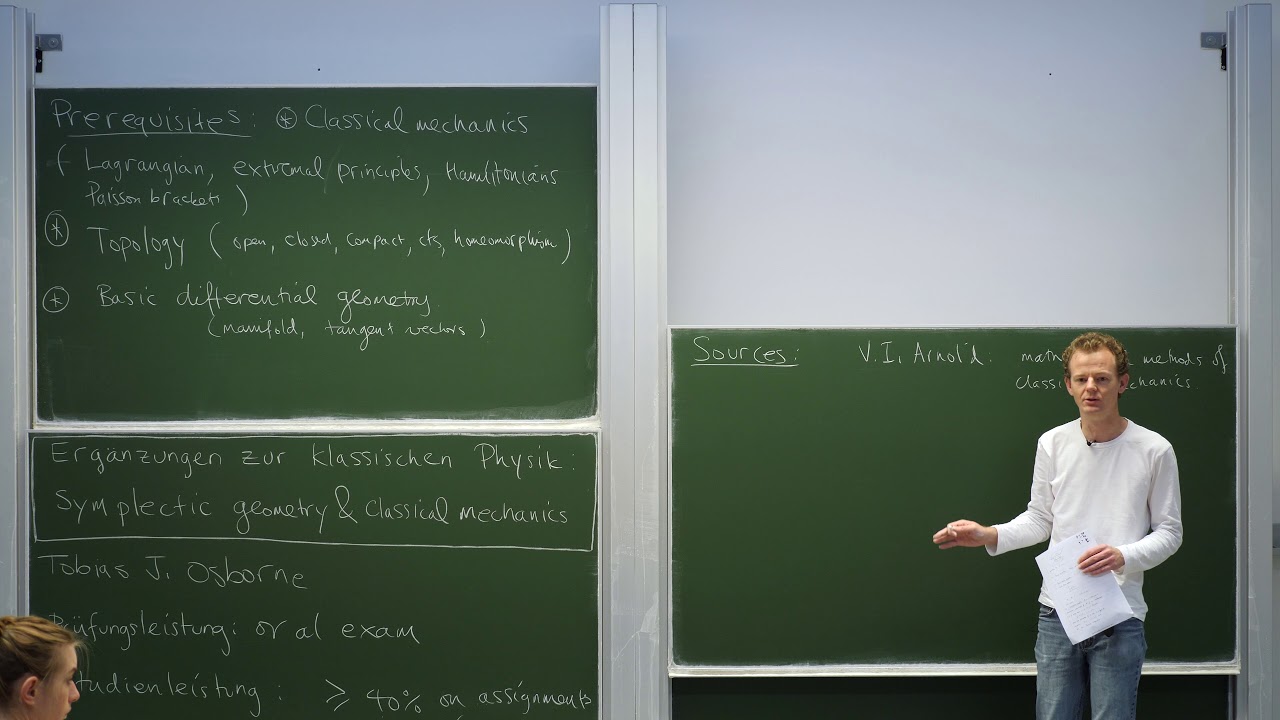
For winter semester 2017-18 I am giving a course on symplectic geometry and classical mechanics. This course is intended for anyone with a familiarity with classical mechanics and basic differential geometry.
Problem sheets will be made available on my blog (https://tjoresearchnotes.wordpress.com/), however solutions will not be distributed....
I have heard "Geometry Topology and Physics" by Nakahara is good, although I have no idea if it covers special relativity
sturdy shore
fickle granite
Has anyone read Halmos's Finite-dimensional Vector Spaces book? I'm coming from ...
a review is pinned, great book but very particular so I'd pair it with a more "traditional" LA book
fickle granite
sturdy shore
a review is pinned, great book but very particular so I'd pair it with a more "t...
Thank you
sudden kindle
Stein and Shakarchi
gray gazelle
thanks!
lime sapphire
sudden kindle
Stein and Shakarchi
what r the prereqs for this if i may ask
solemn rover
it's a graduate level textbook but it's pretty easy to read for a graduate level textbook
You should know like, basic analysis and be comfortable with epsilon delta stuff probably. But you don't need to have a lot of analysis experience
mental canyon
any books for questions regarding complex numbers
NEW
Stotram
jee
remote sparrow
swift dome
Any good resource for Combinatorics
A Walk Through Combinatorics by Miklos Bona
gray gazelle
any recs for category theory that aren't Mac Lane or Awodey? i.e. an undergrad level text
fallow cypress
lime sapphire
what r the prereqs for this if i may ask
probably just being familiar with the definition of infimum, supremum, limit, derivative, riemann integral, etc.; some facts about sequences of functions (pointwise vs uniform convergence)
so the contents of a first-semester analysis class
cursive orbit
gray gazelle
any recs for category theory that aren't Mac Lane or Awodey? i.e. an undergrad l...
riehl?
fallow cypress
I've also been recommended riehl's book
gray gazelle
cursive orbit
riehl?
what would the prerequisites be?
fallow cypress
I've heard it has minimal prerequisites theoretically, but to understand why it's useful, you should take probably a year of abstract algebra
remote sparrow
gray gazelle
any recs for category theory that aren't Mac Lane or Awodey? i.e. an undergrad l...
try The Joy of Abstraction: An Exploration of Math, Category Theory, and Life by Eugenia Cheng

Mathematician and popular science author Eugenia Cheng is on a mission to show you that mathematics can be flexible, creative, and visual. This joyful journey through the world of abstract mathematics into category theory will demystify mathematical thought processes and help you develop your own...
the reviews seemed favorable anyhow

 smoky zephyr
mathematics of mathematics
 lean pagoda
Goldblatt is pretty lucid, though it's not really a replacement for a traditional CT text (i.e. one not focused on Toposes)
solemn rover
gray gazelle
any recs for category theory that aren't Mac Lane or Awodey? i.e. an undergrad l...
Awodey is undergrad level imo
Have you tried it?
The Eugenia Cheng book is a pop math book you would buy in the airport if you had a long flight. it's not a textbook
Tom Leinster has an introductory category theory book
So does Samson Abramsky
gray gazelle
gray gazelle
what would the prerequisites be?
There are no prerequisites in theory, but you should probably be familiar to Algebra
crimson leaf
lime sapphire
what r the prereqs for this if i may ask
The authors state familiarity with the Riemann integral so first course in analysis topics
 honest lance
any differential equation book online? will take this semester
gray gazelle
honest lance
any differential equation book online? will take this semester
adkins
probably will go deeper than what you need though
can you show us the syllabus for your module?
 atomic hound
Good book on euclidean geometry plane?
 tender cedar
hello guys
anyone here familiar with machine learning
I wanted to ask about the book called Mathematics for Machine Learning
what do you guys think of it
 glacial crypt
decent, an ml server im in recommends it a lot
subtle mango
iirc, @glad prairie said that Evans PDE is a more “classical” approach to PDEs — would it be better to read something like Brezis for PDEs then?
though i’m not sure what makes the evans approach “classical” (i havent really read it yet)
 glad prairie
subtle mango
iirc, <@533879085542146059> said that Evans PDE is a more “classical” approach t...
glad prairie
subtle mango
iirc, <@533879085542146059> said that Evans PDE is a more “classical” approach t...
Evans still offers an important set of tools that need to be learned by someone who wants to do pdes. Brezis is fine too, but idk about learning brezis "for pdes"
The point is that evans does not go into the really heavy functional analysis side of PDEs involving distribution theory and hefty harmonic analysis
A lot of his proofs are more "raw" and "hands on", avoiding toolkits that hide some of the nasty analysis (that still happens, but with it's hidden a little better i'd say)
karmic thorn
What all does Evans assume in the way of background
glad prairie
Mostly just linear algebra, real analysis, a little ODEs, and multivariable calculus for chapters 1-4. For chapters 5-end, some basic functional analysis and measure theory is assumed
But stuff you could learn on the way
Chapter 5 is when the book switches from "really classical pdes" to "sorta modern pdes" (in the sense of using functional analysis)
glad prairie
Sure
Or like
Ch 1-4 of evans, brezis, ch5-end of evans. The two halves of Evans are like different books
Whatever you want to do tbh
Evans is fairly standalone aside from those prereqs
remote sparrow
honest lance
any differential equation book online? will take this semester
william trench's book is legally available for free online. there are two versions iirc: one with and one without boundary value problems.
 slim gate
hey guys any good resources that focus on functions and limits?
i really need to learn this concept
 merry sphinx
anyone know any good real analysis exercise books?
gray jungle
rudin has cool exercises
 misty geyser
Hi, don't suppose anyone knows any good books for pre-A-level, or A-Level maths for those GCSE level but willing to learn?
fallow cypress
yeah rudin has good exercises for real analysis
novel obsidian
misty geyser
Hi, don't suppose anyone knows any good books for pre-A-level, or A-Level maths ...
Use Khanacademy. It's what I did
sage kelp
Any thoughts on Mathematical Analysis by Canuto?
 sharp timber
Hall and Knight is good too
remote sparrow
merry sphinx
anyone know any good real analysis exercise books?
look in mathematics > problem books
merry sphinx
thanks!
heady ember
You could probably find free example sheets on Cambridge's website
 tawdry orbit
If somebody’s wanted to learn mathematics from the ground up, what are some rigorous books to accomplish this? I’m currently doing Book of Proofs by Hammack, what would be the next logical step?
crimson leaf
Probably a linear algebra book like the ones in the pins
Then analysis, abstract algebra, and topology would be some standard topics following that not necessarily in that order though
 frosty yarrow
starts at pre alg, ends at topology
gray gazelle
tawdry orbit
If somebody’s wanted to learn mathematics from the ground up, what are some rigo...
keep doing it, it's quite an amazing book
 blazing parcel
I asked this several times but nobody answered. Is Joy of X by Steven Strogatz good?
 warped wave
Hi can anyone recommend me a good Linear Algebra book for mathematicians? I thought Strang's was good, but people said the contents were rather more computation-based as he puts main focus on matrices instead of abstract and rigorous mathematics. Is this right, or is it wrong and I should find a better book than Strang's?
crimson leaf
warped wave
Hi can anyone recommend me a good Linear Algebra book for mathematicians? I thou...
Check the pins
gray gazelle
warped wave
Hi can anyone recommend me a good Linear Algebra book for mathematicians? I thou...
LADR - Linear Algebra Done Right
has an emphasis on abstract mathematical proofs rather than computational LA
it's the industry standard for a second course in LA
gray gazelle
gray gazelle
LADR - Linear Algebra Done Right
the treatment of determinants is often criticised though
silver herald
warped wave
Hi can anyone recommend me a good Linear Algebra book for mathematicians? I thou...
Strang is kinda meh and has very computational matrix-y focus. I personally find something like Hoffman-Kunze or FIS to be much better (LADR is good until it starts eigenvalues and determinants; those are treated much worse than even Strang IMO)
warped wave
So is it a good idea to start with LADR then switch books when it goes into determinants and eigenvectors?
silver herald
Disclaimer - I think starting with row elimination is kinda eh and find a geometrical flavour of linear transforms to be much nicer
grand thistle
warped wave
Hi can anyone recommend me a good Linear Algebra book for mathematicians? I thou...
Morton curtis is good imo
it also covers determinants earlier unlike axler
it's going to be difficult if you arent acquainted with proofs though
gray gazelle
well Axler's whole doctrine is that linear algebra shouldn't rely solely on determinants - he even has a paper written where he builds up the entirety of LA without determinants
silver herald
grand thistle
it's going to be difficult if you arent acquainted with proofs though
Honestly, if one has seen couple of basic proof by contradiction and proof by induction before - it shouldn't be that hard.
grand thistle
silver herald
Honestly, if one has seen couple of basic proof by contradiction and proof by in...
right but again it also presents stuff in a way that might seem more advanced compared to i.e. strang, like it defines groups, fields and their characteristic and other algebraic stuff even before it gets to defining a vector space
karmic thorn
The no-determinant approach seems to be very bizarre because you literally don't learn how to actually compute eigenvalues after reading an entire chapter devoted to them... which is not ideal
I like his presentation of other material though
The definitions, theorems, proofs are all very neatly organized
And the exercises are very nice
silver herald
karmic thorn
The no-determinant approach seems to be very bizarre because you literally don't...
Also, determinants does hold meaning beyond just computations and has useful connections to say - calculus on R^n
silver herald
grand thistle
right but again it also presents stuff in a way that might seem more advanced co...
True. For a person first time reading a proof based math book, it does take time to get used to parsing through the book to find a way to digest information (Then again, most math students starting with anal. and algebra/linear algebra do face this as well)
karmic thorn
silver herald
Also, determinants does hold meaning beyond just computations and has useful con...
I agree
Axler is correct in that the usual treatment of determinants in a linear algebra class is abysmal
But the answer is not to run away from it
Lax treats determinants in his book on linear algebra very well
Where he pushes the geometry to the fore
And the properties fall out nicely
whole cove
metric space question book/source anywhere?
 vital bane
silver herald
Strang is kinda meh and has very computational matrix-y focus. I personally find...
vital bane
silver herald
Strang is kinda meh and has very computational matrix-y focus. I personally find...
doom is that you
silver herald
Yes
gray gazelle
very very very very difficult calculus problems book
just added a few more very
just to be sure
karmic thorn
What is "calculus" for you? Are problem books on mathematical analysis on the table?
karmic thorn
whole cove
metric space question book/source anywhere?
There's a book by Searcold, another very old book by Copson
A set of lecture notes mixing some pointset topology and metric spaces by T.W. Koerner
Also, plenty of standard textbooks on real analysis go through it
See chapter 2 of Pugh's Real Mathematical Analysis, or Rudin's Principles of Mathematical Analysis
gray gazelle
karmic thorn
What is "calculus" for you? Are problem books on mathematical analysis on the ta...
calculus 3
123
 shadow tusk
tawdry orbit
If somebody’s wanted to learn mathematics from the ground up, what are some rigo...
shadow tusk
tawdry orbit
If somebody’s wanted to learn mathematics from the ground up, what are some rigo...
try this out https://github.com/ossu/math

GitHub
🧮 Path to a free self-taught education in Mathematics! - GitHub - ossu/math: 🧮 Path to a free self-taught education in Mathematics!
karmic thorn
Hmm, see Demidovich's Problems in Mathematical Analysis (despite the title, I think the material is closer to the spirit of standard calculus courses)
gray gazelle
by hard i mean cheap tricks and manipulations are fine
gray gazelle
whats a good book for a first course in analysis
mossy flume
I liked Rosenlicht
gray gazelle
i self taught myself some analysis some time ago but ive forgotten most of it by now
mossy flume
Used that for my analysis class this past fall
gray gazelle
so i wanna refresh my memory a little bit
mossy flume
Good explanations and the problems are nice
gray gazelle
oh sweet
 wild fern
Has anybody read this book? I'm writing an essay on this and was wondering if it's worthwhile reading it. I am hoping for a foundational knowledge on ZFC and Gödels Theorem's so that I am able to apply them to something more specific myself rather than just providing already existing proofs and what not (a requirement for the essay)
 warped wave
I know I already asked earlier, sorry to ask again, I'm just trying to plan out what books to read and their prerequisites during my free time for this semester.
-
What are the prerequisites for introduction to real analysis (i.e. Baby Rudin/Bartle and the kind)? I have taken Calculus I and will be taking Calculus II and III this semester.
-
Should I already be able to do Spivak's problems before jumping into real analysis i.e. must I read Spivak before doing introductory real analysis (because frankly I have only been learning from Thomas' and Stewart's Calculus)? I just don't want to start reading a book only to find myself not having the right foundations and stopping midway.
crimson leaf
You really only need knowledge of proofs. Spivak helps but it might be more beneficial to just do analysis. It will be hard and you may feel like you're not going anywhere or that you can't do it but you have to push through that for a gentle introduction I recommend Schroeder or Tao though
sage kelp
shadow tusk
try this out https://github.com/ossu/math
Dude! This is beyond amazing!
 icy knot
blazing parcel
I asked this several times but nobody answered. Is Joy of X by Steven Strogatz g...
icy knot
blazing parcel
I asked this several times but nobody answered. Is Joy of X by Steven Strogatz g...
Yeah I have it, great book.
 twin ridge
Hello guys. I'm an actuary currently working at a media agency and was ask to take on various projects concerning MMM, Atribution models, etc. From what I know this is basically Econometrics, but I was wondering if there were already books that tackles these models from Marketing lens. Any suggestion? Any source of information would be of much help.
sturdy shore
shadow tusk
try this out https://github.com/ossu/math
I don't think any of the actual content here is bad (that I've looked at), but man what a terrible way to describe analysis
 shadow tusk
sturdy shore
I don't think any of the actual content here is bad (that I've looked at), but m...
shadow tusk
sturdy shore
I don't think any of the actual content here is bad (that I've looked at), but m...
why is it terrible?
sturdy shore
analysis is not the "mathematics of mathematics"
that is metamathematics, a field which is far away from analysis as far as math fields go
analysis (specially real) is just rigorous calculus
ofc not a perfect description of the field but as good as you are gonna get when you are describing it to a layman
shadow tusk
sturdy shore
ofc not a perfect description of the field but as good as you are gonna get when...
put the original description to chatgpt and asking it to fix it, how does this sound?
"Intro to Analysis is a course that builds on the concepts of Calculus and provides a rigorous and formalized study of the foundations of Calculus. This course will cover advanced mathematical concepts and will use formal proofs to establish mathematical results. Starting by proving the existence of real numbers, this course will take a foundational approach and will build the foundation of single-variable Calculus from scratch."
sturdy shore
sure, seems like a chatgpt W to me
shadow tusk
sturdy shore
I don't think any of the actual content here is bad (that I've looked at), but m...
tbf, their other curriculums aren't as polished as their computer science one and it's encouraged to make a contribution
slender cargo
shadow tusk
tbf, their other curriculums aren't as polished as their computer science one an...
I feel like there's a ton of opinions on how to approach math education
 bright swallow
if someone hasn't put it here yet, Algebra Unplugged by Kenn Andahl and Jim Loats, Ph.D is an awesome book and totally changed my life
slender cargo
people will likely feel more comfortable just recommending books than a one-size-fits-all approach
shadow tusk
sturdy shore
sure, seems like a chatgpt W to me
what about this? "Analysis is the mathematics of limits and functions. Intro to Analysis is a course that builds on the concepts of Calculus and provides a rigorous and formalized study of the foundations of Calculus. This course will use formal proofs to establish mathematical results, starting by proving the existence of real numbers and building the foundation of single-variable Calculus from scratch."
changed it since it follows the pattern of their other descriptions
 devout fossil
Hi, I'm looking for supplemental resources for self-studying Amann and Escher's analysis book. I wasn't able to find any solution manuals or lecture notes online
sturdy shore
shadow tusk
what about this? "Analysis is the mathematics of limits and functions. Intro to ...
"mathematics of limits" is okay but of functions is innacurate. That's all of math.
you can say sequences and limits, maybe
sturdy shore
devout fossil
Hi, I'm looking for supplemental resources for self-studying Amann and Escher's ...
what kind of resource are you looking for? you may look up solutions to individual questions on stackexchange, probably as good as you are gonna get
or ask here, of course
shadow tusk
sturdy shore
you can say sequences and limits, maybe
alright
devout fossil
sturdy shore
what kind of resource are you looking for? you may look up solutions to individu...
maybe other books to supplement my understanding
would be nice if there were lecture notes, but none seem to be available
sturdy shore
if you were to find any lecture notes on amann escher, they'd probably be german
I'm not sure if they've ever been used in a course in english
sturdy shore
devout fossil
maybe other books to supplement my understanding
if you don't have much previous exposure to algebra, it would do you good to have books on linear algebra and abstract algebra on the side
some recommendations are pinned
in particular, knapp has books on both analysis and algebra that you could take a look at
devout fossil
alright, thanks for the reccomendation
I've also heard it's probably better to skip a portion of the first chapter?
not sure how soon I would need abstract algebra
sturdy shore
you need it within like the first 5 pages lol
it's impossible to skip the first chapter, amann escher is pretty hardcore
iirc by chapter 2.3 you learn what a banach space is
and chapter 2.2 has the phrases "algebra homomorphism" and "ideal"
grand thistle
tbf you can kinda skip the hardcore algebra stuff
i skipped it and i was fine
i just skimmed chapter 1
never really saw the word ‘ideal’
sturdy shore
seems like you also skimmed chapter 2, then!
grand thistle
but knowing some analysis before and some metric space theory really helps
grand thistle
sturdy shore
seems like you also skimmed chapter 2, then!
wait when does it start actually doing analysis?
sturdy shore
chapter 2
grand thistle
because yeah i did skim all the parts that aren’t analysis
and like half the analysis parts
since i did baby rudin before
sturdy shore
grand thistle
never really saw the word ‘ideal’
 grand thistle
sturdy shore
grand thistle
sturdy shore
yeah but if i recall correctly it didn’t come out that much
sturdy shore
polynomials come up a lot, though, which is part of the ring chapter
so all I'm saying is skipping chapter 1 will probably hurt more than help
but it is fine if you don't understand everything about groups/rings/fields perfectly of course
which is why I recommend doing algebra on the side
grand thistle
yeah it refers to the ring of formal power series quite a lot
devout fossil
sturdy shore
if you were to find any lecture notes on amann escher, they'd probably be german...
any idea how I would go about finding german lecture notes for amann?
might wanna google translate them and see if they're any use
sturdy shore
would have to ask a german individual for that
gray gazelle
can anyone express their thoughts on the contents of this book, or, alternatively, if they have read it, provide any thoughts? https://www.amazon.co.uk/All-Mathematics-You-Missed-Graduate/dp/0521797071

Beginning graduate students in mathematics and other quantitative subjects are expected to have a daunting breadth of mathematical knowledge. But few have such a background. This book will help students to see the broad outline of mathematics and to fill in the gaps in their knowledge. The author...
here are the topics
 frosty yarrow
Hey, has anyone used shepley Ross (iirc the name) for DEs? If so, how'd it go?
remote sparrow
gray gazelle
can anyone express their thoughts on the contents of this book, or, alternativel...
math sorcerer has some videos about this book
a friend of mine owns it and they like it
it's supposed to be a way to get the gist of some big ideas in various fields of math
it also lists references for further reading
gray gazelle
remote sparrow
math sorcerer has some videos about this book
gotcha. thanks
 lament crater
Does anyone have a recommendations on topology readings after Bert Mendelson's Introduction to Topology?
Not really looking for anything in particular. I just want a wider scope on the subject.
 oblique dove
 sudden kindle
nice picture
gray gazelle
lament crater
Does anyone have a recommendations on topology readings after Bert Mendelson's I...
Munkres, or Morris
oblique dove
sudden kindle
nice picture
thanks
 sullen spruce
book suggestions for ioqm?
IOQM is an indian Olympiad qualifier in mathematics, one of the most competitive mathematics exams.
Syllabus:
Permutations and combination
Trigonometric Functions
Finite series and complex numbers
Sequence & Series
Mathematical Reasoning
Quadratic equations and expressions
Probability theory
Number theory
Factorization of polynomial
 pine merlin
Hey, I'm a 16 year old student. This is off topic. Could someone please guide me as to how I can learn mathematics from scratch to the college level?
foggy relic
What do you know so far? If functionally none, Khan Academy and Lang's Basic Mathematics are a good start
lament crater
gray gazelle
Munkres, or Morris
Is Murkres that good. Seem to have seen a lot of it. And how does Morris differ?
oblique dove
sullen spruce
book suggestions for ioqm?
IOQM is an indian Olympiad qualifier in mathematics,...
aops books
how much do you already know
hollow shore
sullen spruce
book suggestions for ioqm?
IOQM is an indian Olympiad qualifier in mathematics,...
the art and craft of problem solving by paul zeitz is a pretty solid resource for this
 final wasp
can i get a recommendation for like drawing and stuff?
someone pls i want to get better at drawing 😭
karmic thorn
This is probably not the most useful place to ask about that
 split bluff
@pine merlin precalc, calculus, read a book of proof then study some real analysis and that should be a good base for learning more advanced topics
karmic thorn
Maybe a dedicated art Discord will have better inputs
split bluff
All that i've mentioned can take you about 2 years if you have little experience, so, don't worry about a more extensive path
final wasp
karmic thorn
Maybe a dedicated art Discord will have better inputs
there are like none.. 😭
oh well back to looking
karmic thorn

Maybe Reddit/YouTube channels and their communities
Also see if you can find dedicated blogs/websites
sullen spruce
oblique dove
how much do you already know
I know trigonometry, sequences and series, quadratic and probability. acc to my research number theory has comparitvely more weightage
sullen spruce
hollow shore
the art and craft of problem solving by paul zeitz is a pretty solid resource fo...
"geometry for Americans" damn nice topic name
heady ember
final wasp
there are like none.. 😭
Isn't blender considered one, for example
I heard some people do art projects there
oblique dove
sullen spruce
I know trigonometry, sequences and series, quadratic and probability. acc to my ...
hmm
first check out the MODS discord
they have good resources and more qualified people to answe question
shadow tusk
pine merlin
Hey, I'm a 16 year old student. This is off topic. Could someone please guide me...
https://github.com/ossu/math, but since you wanna learn from scratch, check this out first https://github.com/ossu/math/blob/master/FAQ.md#how-can-i-review-the-math-prerequisites
gray jungle
lament crater
Does anyone have a recommendations on topology readings after Bert Mendelson's I...
Simmons topology and modern analysis is pretty cool but its a bit old school
narrow fiber
lament crater
Does anyone have a recommendations on topology readings after Bert Mendelson's I...
Are you still looking for largely point-set? or algebraic as well
 copper radish
Hi, I need a recommendation on a good book for doing time series analysis (in particular correlation & relationships between different time-series). Any suggestions?
misty geyser
Any good book recommendations for a complete beginners introduction to analysis? Thank you!
 steep oak
misty geyser
Any good book recommendations for a complete beginners introduction to analysis?...
steep oak
misty geyser
Any good book recommendations for a complete beginners introduction to analysis?...
Real analysis, or analysis on metric spaces?
misty geyser
steep oak
Real analysis, or analysis on metric spaces?
Preferably Real, but suggestions for the other welcome if possible :), thanks
steep oak
misty geyser
Preferably Real, but suggestions for the other welcome if possible :), thanks
Bartle and Sherbert's Introduction to Real Analysis
I was taught from here
I quite like it
misty geyser
That's great, thanks so much!
copper radish
Do people like the Understanding Analysis book by Abbott?
I have it and got through the first chapter or two. Good & complicated for someone like me with casual interest in the subject.
remote sparrow
yes, people like it
sage kelp
misty geyser
Any good book recommendations for a complete beginners introduction to analysis?...
Basic Analysis I by Lebl, and it’s actually free. I will go through it this year if you want to chat or something
gray gazelle
How's Douglas B West's book on graph theory ?
 warm sparrow
Good number theory book recs pls
gray gazelle
warm sparrow
Good number theory book recs pls
David Burton, Joseph H silverman
Imo
I like silvermans approach a lot
gray gazelle
David Burton's is a good elementary text too
If you're in Indian subcontinent
You can get cheap SEA version of silvermans book
gray gazelle
gray gazelle
How's Douglas B West's book on graph theory ?
Anyone ?
heady ember
Just wait, its only been ~10 mins
warm sparrow
CBSE or olympiad?
gray gazelle
Ok
warm sparrow
rd and rs are more than enough
mtg foundation series if you wanna do some harder sums
lament crater
gray jungle
Simmons topology and modern analysis is pretty cool but its a bit old school
Old school?
lament crater
narrow fiber
Are you still looking for largely point-set? or algebraic as well
Also including Algebraic. I generally I want to be able to read most topology related papers
narrow fiber
I think if you're solid with your point-set it's worth moving to Hatcher's book then
gray gazelle
sullen spruce
book suggestions for ioqm?
IOQM is an indian Olympiad qualifier in mathematics,...
is it your first time giving the exam
i gave it last year
it was damn hard . i studied few topic from mtg, iit foundation and rd sharma and the rest from FIITIJEE material
misty geyser
Just wondering, any good book recommendations for those whose knowledge is at GCSE level for Maths and Further Maths, but wants to expand?
turbid mural
recommended integral equations books ?
gray gazelle
gray gazelle
it was damn hard . i studied few topic from mtg, iit foundation and rd sharma an...
Is it like Pre-RMO