#book-recommendations
1 messages · Page 17 of 1
 formal bronze
 neon tiger
.
 mystic orbit
How tf are those bad marks?
neon tiger
Well I get above 90 percent usually
mystic orbit
No, being more interested in math than in other subjects isn't bad
neon tiger
mystic orbit
No, being more interested in math than in other subjects isn't bad
But it is affecting the other subjects
 heady ember
In what way is it affecting other subjects
neon tiger
heady ember
In what way is it affecting other subjects
Bad marks?
mystic orbit
neon tiger
But it is affecting the other subjects
I don't give 2 shits about stuff that I'm not interested in tbh
heady ember
neon tiger
Bad marks?
Yeah but how is that directly related? Like do you spend so much time on math that you don't have any to spare for other subjects?
neon tiger
heady ember
Yeah but how is that directly related? Like do you spend so much time on math th...
Ye that
mystic orbit
As long as I'm getting passing marks, i don't spend an ounce more of effort on them lmao
heady ember
mystic orbit
I don't give 2 shits about stuff that I'm not interested in tbh
I wish I could 
 paper plover
mystic orbit
How tf are those bad marks?
paper plover
mystic orbit
How tf are those bad marks?
asian
mystic orbit
We could do without the racial stereotypes
heady ember
Also, at this point its getting a lil' off topic I think
neon tiger
paper plover
asian
technically yes but not south east asian
 quick hornet
paper plover
asian
quick hornet
paper plover
asian
Fuck off
Anyway, please use #book-recommendations to recommend books
neon tiger
ye so algebra books for olympiads
mystic orbit
Sry
neon tiger
high school
neon tiger
mystic orbit
As long as I'm getting passing marks, i don't spend an ounce more of effort on t...
wish i could do that but im expected to be a topper
 gray gazelle
Hi, I need a math book that will explain algebra for beginners.
paper plover
gray gazelle
Hi, I need a math book that will explain algebra for beginners.
david burton
gray gazelle
paper plover
david burton
Can you show a picture?
gray gazelle
paper plover
wait
?
paper plover
whoops
sorry
forgot
im sorry i mixed up the names

but this is the book i was referring to
 languid plinth
gray gazelle
Hi, I need a math book that will explain algebra for beginners.
languid plinth
gray gazelle
Hi, I need a math book that will explain algebra for beginners.
Lang Algebra
gray gazelle
languid plinth
Lang Algebra
Could you send me a picture?
languid plinth
 mystic orbit
gray gazelle
Could you send me a picture?
mystic orbit
gray gazelle
Could you send me a picture?
Don't use lang to learn algebra 
languid plinth
dont use lang to learn anything
he writes books to pay off his mortgage
all of them were written in less than 2 weeks
mystic orbit
Also, please specify whether you mean abstract algebra or HS algebra
gray gazelle
mystic orbit
Also, please specify whether you mean abstract algebra or HS algebra
HS algebra
languid plinth
gray gazelle
HS algebra
any textbook would probably be fine ig
mystic orbit
In that case, DEFINITELY don't use lang lol
gray gazelle
languid plinth
any textbook would probably be fine ig
Where should I find them.
mystic orbit
And you should prolly just use Khan academy
languid plinth
gray gazelle
Where should I find them.
DO NOT USE lib gen BUY IT ON AMAZON OR GO TO JAIL
gray gazelle
mystic orbit
And you should prolly just use Khan academy
Thanks
mystic orbit
languid plinth
DO NOT USE lib gen BUY IT ON AMAZON OR GO TO JAIL
Sigh
This is a partnered discord server
Endorsement of piracy is prohibited
gray gazelle
mystic orbit
And you should prolly just use Khan academy
What should I learn after HS algebra on khan academy.
languid plinth
gray gazelle
What should I learn after HS algebra on khan academy.
anything u want
depends on ur interests
mystic orbit
languid plinth
DO NOT USE lib gen BUY IT ON AMAZON OR GO TO JAIL
Please delete this message before you're banned by one of the mods
languid plinth
ig u could learn analysis or that
gray gazelle
what is analysis?
 restive falcon
gray gazelle
what is analysis?
restive falcon
gray gazelle
what is analysis?
the study of certain kinds of "nice" functions on spaces with both topological and algebraic structure
i think is the most general way you could put it
 delicate shore
I enjoyed The Trial by Franz Kafka
gray gazelle
 rich sun
with bornological structure <:sotrue:826971355542192148>
rich sun
with bornological structure <:sotrue:826971355542192148>
Are you a fellow bornological space enthusiast?

rich sun
gray gazelle
Are you a fellow bornological space enthusiast?
I have come across them in The Convenient Setting of Global Analysis by Kriegl and Michor.
when I tried to study smooth mappings between manifolds
gray gazelle
Prelude to calculus by sheldon axler maybe
 icy knot
languid plinth
he writes books to pay off his mortgage
icy knot
languid plinth
he writes books to pay off his mortgage
Guess I should throw his linear algebra book in the garbage
gray gazelle
On second thought after seeing its rating of 2.66 maybe not
 tawdry orbit
I am interested in learning calculus, rigorously. Which between G.H. Hardy’s a course of pure mathematics, Tao’s Analysis, or Spivak’s calculus better to use? I know spivak’s considered a difficult text.
 mossy flume
tawdry orbit
I am interested in learning calculus, rigorously. Which between G.H. Hardy’s a ...
mossy flume
tawdry orbit
I am interested in learning calculus, rigorously. Which between G.H. Hardy’s a ...
are you interested in learning calculus, or real analysis?
these mean different things, depending on what your level of mathematical maturity is (i.e. have you already taken calculus and maybe an introduction to proofs course?)
tawdry orbit
mossy flume
these mean different things, depending on what your level of mathematical maturi...
I have taken a calculus course. Calculus 1.
 remote sparrow
icy knot
Guess I should throw his linear algebra book in the garbage
remote sparrow
icy knot
Guess I should throw his linear algebra book in the garbage
how about you give me the book instead
tawdry orbit
I don’t want to get into a different text to learn introduction to proofs. That would take too much time, I think. Would any of those books teach me proofs at the same time as their named material?
remote sparrow
you're in an awkward position
some of the calc 1 material would be redundant in spivak, but i guess you can use it
you won't learn calculus from hardy or tao
apostol is good too
hardy is analysis
hubbard and hubbard is good for multivariable calculus
tawdry orbit
Yeah, I don’t want to spend months or weeks reading a 400 page “intro to proofs book” just to read an analysis book.
tawdry orbit
remote sparrow
some of the calc 1 material would be redundant in spivak, but i guess you can us...
Hi, what do you mean by this? Spivak doesn’t use calculus 1?
Thanks.
I saw someone say it was the other way around.
 spare ridge
restive falcon
the study of certain kinds of "nice" functions on spaces with both topological a...
spare ridge
restive falcon
the study of certain kinds of "nice" functions on spaces with both topological a...
lol nice functions
 night nebula
Anybody have any recommendations for books on number theory, set theory, logic, etc.? I am not worried about anything being too advanced (most books no doubt will be, but I like the challege). Thank you
I'm honestly interested in anything that isn't geometry, graph theory, topology, or similar fields that do stuff with shapes
remote sparrow
night nebula
Anybody have any recommendations for books on number theory, set theory, logic, ...
number theory, try burton or dudley's books. set theory you can try enderton (montalban's lectures optional) or hrbacek and jech. logic you can use enderton paired with montalban's online lectures or try a new book by mileti.
night nebula
remote sparrow
number theory, try burton or dudley's books. set theory you can try enderton (mo...
Thanks for the recommendations, I'll take a look!
 sturdy shore
I now shill goldrei's books for both set theory and logic, pedagogically better than enderton imo
from what I've skimmed at least
remote sparrow
lems, you should try mileti. i need the reviews

a draft copy is available online for free if you don't wanna drop money on a physical copy
sturdy shore
I'll just wait for more than a draft copy, in no rush
remote sparrow
the physical copy is available rn

This textbook gives a complete and modern introduction to mathematical logic. The author uses contemporary notation, conventions, and perspectives throughout, and emphasizes interactions with the rest of mathematics. In addition to covering the basic concepts of mathematical logic and the fundame...
sturdy shore
it seems pretty good from what I've read of the notes, better than enderton at least imo (also more self-contained wrt set theory and cardinals) but it is also slightly more advanced than goldrei
but also I'm no logic expert so I hope people don't take what I say too seriously
just had to check out many for my course this term
 lean pagoda
I'll shill Levy Basic Set Theory for an "intermediate" text - something a bit more mature than Enderton or others but still not requiring any knowledge of model theory.
My favorite introductory set theory text is by Ebbinghaus but unfortunately it's the only text of his that hasn't been translated into English (despite it even getting a new edition just last year)
remote sparrow
hmm, a dover
nice
here's the MAA review for levy's Basic Set Theory
i'll put it on my amazon wish list
 severe falcon
tawdry orbit
I am interested in learning calculus, rigorously. Which between G.H. Hardy’s a ...
severe falcon
tawdry orbit
I am interested in learning calculus, rigorously. Which between G.H. Hardy’s a ...
I think Abbott’s intro analysis book would be ideal for you. It includes aspects of proof-writing and it’s very readable.
Also if you’ve never written proofs before, you can find lots of relatively succinct online resources to get familiar with different proof techniques, for example this one: https://math.berkeley.edu/~hutching/teach/proofs.pdf
Once you can comfortably do the exercises in there you’re ready to learn analysis. Definitely don’t skip the exercises!
tawdry orbit
severe falcon
Also if you’ve never written proofs before, you can find lots of relatively succ...
Thanks! I’ll definitely try that out.
remote sparrow
just know you won't solve many computational problems like with spivak or apostol
like calculating derivatives or integrals
if you use abbott
given you still need to learn calc 2 and 3
tangentially, dover should buy the rights to apostol

lean pagoda
remote sparrow
https://www.maa.org/press/maa-reviews/basic-set-theory
Oh jeez that review sounds pretty harsh 
But I think students with a background in (basic) first-order logic might appreciate the careful (almost pedantic) treatment of the basics in the first half of the book
remote sparrow
neverbloom do you happen to have any recommendations for modal logic
or know someone that might
 fierce hedge
One of the mods had a logic reading list are there no modal logic books in the list?
remote sparrow
i've only seen this
remote sparrow
fierce hedge
One of the mods had a logic reading list are there no modal logic books in the l...
diligentclerk wrote they have nothing to offer for modal logic
sturdy shore
the teach yourself logic guy might have some
fierce hedge
remote sparrow
diligentclerk wrote they have nothing to offer for modal logic
Not diligentClark, I think it was Loc... something something
remote sparrow
lochverstarker?
fierce hedge
yeah
lean pagoda
i know very little modal logic but i did end up looking for some books at one point and after having to go through hundreds of philosophy texts found two, gimme a sec
remote sparrow
benthem's Modal Logic for Open Minds seems like it might fit the bill, but do let me know
lean pagoda
is that the guy from the amsterdam school
fierce hedge
I think this is the list, I do see model theory
remote sparrow
lean pagoda
is that the guy from the amsterdam school
yeah
lean pagoda
yea but it looked more like a philosophical text, no?
lean pagoda
but funny you mention that because out of the two texts i saved for later one of them is from one of his students
modal logic by de rijke
looks promising, with a heavy focus on computer science though
the one other that seemed very promising was Tools and Techniques in Modal Logic by Kracht
remote sparrow
interesting, thanks
if anyone with more expertise would like to look at the r/logic post i linked above, i would appreciate that too. there are some more recs for modal logic for the mathematically and computer-science inclined.
lean pagoda
only one i can talk about in that list is the Huth & Ryan book
didnt even think about how it technically contains some modal logic but its absolutely not a book about logic for the sake of learning logic
its a great book in its own right but its targeted at computer science students (and not the ones working on the foundations of computer science)
talks about various applications of logic in computer science (model checking, agents, whatever)
well written book but the logic content is very surface level (it could probably be used for a 2nd year course for computer science students)
 turbid mural
any recommended set theory books ?
heady ember
At what level
turbid mural
undergrad
heady ember
Naive or axiomatic
turbid mural
heady ember
Naive or axiomatic
both
heady ember
So you want one for each?
turbid mural
yes
heady ember
I have never done naive set theory myself (well, other than a little in school) but people here normally rec Halmos
 minor knot
Paul Halmos?
heady ember
I like Enderton for basic axiomatic set theory, rather friendly compared to others. Practically not much mathematical maturity required. Its the first real math book I started doing and hopefully am going to complete.
But if you have more mathematical maturity, you can use Jech's undergrad set theory book
heady ember
minor knot
Paul Halmos?
Yeah iirc
 willow pecan
One does not need a whole book for naive set theory
turbid mural
heady ember
I like Enderton for basic axiomatic set theory, rather friendly compared to othe...
i will try to find enterton's
heady ember
Ok
sturdy shore
willow pecan
One does not need a whole book for naive set theory
halmos's book is like 100 pages I believe
willow pecan
What is there to say for 100 pages about naive set theory?
sturdy shore
and the name naive set theory is a bit misleading, he still goes over the zfc axioms and stuff it's just done a bit more informally and the obvious goal is to get non-foundations people comfortable with ordinals, cardinals, zorn's lemma, transfinite constructions etc
not really how we use the term naive set theory today
willow pecan
Oh so that’s like a brief intro logic book then
sturdy shore
more like intro set theory, but sort of yes
turbid mural
sturdy shore
more like intro set theory, but sort of yes
ah
willow pecan
The point stands that one does not need a book for naive set theory
turbid mural
would you recommend the book by felix hausdorff
 unique ice
I'm reading Concrete Mathematics by Knuth, Graham, Patashnik.
I'm on page 63, grinding the exercises. I don't recommend it, in fact I hate it, but I will finish the book.
 remote slate
please recommend me a good book on first course boolean algebra
formal bronze
remote slate
please recommend me a good book on first course boolean algebra
Try 'Introduction to Boolean Algebras' by Paul Halmos. Great book, I am currently going through it and I find it quite well-written.
remote slate
formal bronze
Try 'Introduction to Boolean Algebras' by Paul Halmos. Great book, I am currentl...
can you tell me how is this one?

Famous for the number-theoretic first-order statement known as Goodstein's theorem, author R. L. Goodstein was also well known as a distinguished educator. With this text, he offers an elementary treatment that employs Boolean algebra as a simple medium for introducing important concepts of moder...
formal bronze
remote slate
can you tell me how is this one?
Unfortunately, I am not familiar with this book, sorry.
remote slate
ok
turbid mural
would you recommend topology by james munkres for point set topology ?
heady ember
I have heard some people here say that it focuses too much on less important stuff at times
 sage python
Yeah that's correct imo
The thing about point-set topology is this
Different generalizations of point-set creep in at different times in math
fierce hedge
Is there a proper alternative to munkres though?
sage python
If you've done real analysis at the level of Rudin, you know about topology of metric spaces. Your main examples being normed spaces, some basic function spaces like C(K) where K is a compact metric space, and submanifolds of R^n
sage python
Two big things you lose when going from metric spaces to general topological spaces are encoded come from the loss of two types of axioms for topological spaces:
(1) Separation axioms - the most important one is the Hausdorff axiom, which is equivalent to the idea that limits are unique.
(2) Countability axioms - the most important idea here is whether the topology of the space can be understood using sequences (is a set closed iff it contains all limits of sequences?) as opposed to nets or filters.
There are examples of spaces which don't satisfy these properties, but understanding/motivating them involves more background than many point-set students have. For example, you lose Hausdorfness when taking Zariski topology in algebraic geometry, or dealing with group actions on spaces. You lose sequentiality often when dealing with functional analysis: weak topology on Banach spaces, spaces of test functions/distributions, etc.
So we have a conundrum. We wanna teach students about non-metric spaces, and give them examples, but the standard examples are things that are hard to understand/appreciate with their background. Munkres' solution is to present a bunch of examples that don't matter. Imo this fails to motivate the ideas and just makes the subject more boring
Honestly my preference is to just not spend that that much time on point-set topology and just pick it up as you go. Folland's Real Analysis has a chapter on the stuff, which is just before it actually uses it to do functional analysis. I learned it from chapter 1 of Bredon's Topology and Geometry (60 pages instead of hundreds). Hatcher's point-set notes are also good for this.
If you want a dedicated book, I recommend Lee's Introduction to Topological Manifolds. Focuses on what's important more
fierce hedge
But how would someone know what's more important. Tbh, what's the big goal of topology? When we say topology do we generally mean point set topology?
What are we trying to study? continuous functions in a more general setups with less structure?
sage python
I mean someone studying doesn't know what is/isn't important, hence why I prefer other books that focus on the important stuff
And... the framework of general topology exists mostly in service of other areas of math
So yeah you're trying to understand the general notion of continuity
gray gazelle
Does anyone have the solutions of the books how to prove it by vellemen
Where can I find the solutions of this book
sage python
If a mathematician studies topology, they probably are interested in understanding interesting/geometric examples of spaces (especially manifolds), and what "separates" it from geometry is that you're studying spaces up to homeomorphism or diffeomorphism, and not considering extra structure such as distance and angle
gray gazelle
 sage kelp
https://www.inchmeal.io/htpi/index.html
sage kelp
https://www.inchmeal.io/htpi/index.html
Tyy brother 😭😭
 thorn cloak
Is Calculus two by Flanigan a good book for learning multi variable for the first time?
That’s the book my class is using but I was wondering if it would be a good idea to get another supplementary book
tawdry orbit
remote sparrow
just know you won't solve many computational problems like with spivak or aposto...
What do you mean?
remote sparrow
tawdry orbit
What do you mean?
as in calculating derivatives or integrals, which i stated directly below the message you replied to. there are also some application chapters in apostol. you know, problems where you aren't asked to prove/disprove or give an example of something with some property.
tawdry orbit
remote sparrow
as in calculating derivatives or integrals, which i stated directly below the me...
Ok, thanks.
 bitter path
Any recommendations on a rigorous calculus textbook (or an introductory real analysis book)? I've completed calc 3 but haven't taken a formal proof course yet. I have some exposure to logic and proofs but also not comfortable with writing proofs yet
remote sparrow
abbott Understanding Analysis
or cumming's Real Analysis: A Long-Form Mathematics Textbook
bitter path
great, thanks for the recommendations! 🙂
 grave thorn
bitter path
Any recommendations on a rigorous calculus textbook (or an introductory real ana...
grave thorn
bitter path
Any recommendations on a rigorous calculus textbook (or an introductory real ana...
Rudin
gray gazelle
bitter path
Any recommendations on a rigorous calculus textbook (or an introductory real ana...
Apostol's calculus is good
it's rigorous calculus, but not analysis
i've heard people usually recommend it after completing calc 1-3 from a book like stewart.
 dire stone
i got this linear algebra book, Linear Algebra Done Right, a while ago and was wondering if it was any good? also, if anyone knows, theogony-like epics about greco-roman mythology
 crimson leaf
dire stone
i got this linear algebra book, Linear Algebra Done Right, a while ago and was w...
crimson leaf
dire stone
i got this linear algebra book, Linear Algebra Done Right, a while ago and was w...
LADR is good minus anything it says about determinants, check the pins
dire stone
crimson leaf
LADR is good minus anything it says about determinants, check the pins
yeah, i was worried about that given the back says it "takes an unorthodox approach" and i typically like orthodox approaches, thanks!
mossy flume
What is the approach to determinants in LADR?
remote sparrow

Mathematics Stack Exchange
Amazon book reviews say it takes unorthodox approach and is for a second exposure to linear algebra. I didn't have a first exposure to linear algebra.
Is this book going to be bad for me, then?
Or,
some other reviews of ladr
mossy flume
Hmmmm
Interesting
I like the FIS approach of doing the axiomatic approach of the determinant
In that it's the unique multilinear alternating function which maps the identity to 1
sturdy shore
 foggy relic
none
foggy relic
none
it "discusses" determinants in its last chapter and defines the determinant as the product of eigenvalues
I think it is a bad book if it's the only resource you will use to learn linear algebra
but I do stand by the opinion that its approach is pretty cool if you pair it with a book like H&K that is more algebraic in nature
sturdy shore
mossy flume
In that it's the unique multilinear alternating function which maps the identity...
this is also the halmos way, pretty cool imo
foggy relic
why do you need axler if you're doing H&K
sturdy shore
they have very different approaches to the subject and knowing both is beneficial
axler comes from the halmos school where his way of teaching linear algebra is meant to be as coordinate free as possible, and the intent is to get students ready for infinite dimensions where a lot of the tools you have for finite dimensions are no longer available
most important one being a basis to work with
remote sparrow
both halmos and axler are functional analysts right
sturdy shore
roughly yes, and I believe halmos was axler's advisor's advisor? but don't quote me on that
remote sparrow
"roughly yes, and I believe halmos was axler's advisor's advisor?"
- lems
sturdy shore
remote sparrow
"roughly yes, and I believe halmos was axler's advisor's advisor?"
- lems
roughly yes was a reply to the functional analysis part, as in they both did/do work in fields related to func. analysis
sage python
Halmos + HK > Axler + HK
 night prairie
Any recommendations for a real analysis problem workbook? Something like Berkeley Problems in Mathematics.
sturdy shore
sage python
Halmos + HK > Axler + HK
I agree with that
remote sparrow
night prairie
Any recommendations for a real analysis problem workbook? Something like Berkele...

/sci/ Wiki
Math at its core is about establishing truths separate from sensual qualities, seeking patterns based upon these truths, systematically removing contradictions/inconsistencies from the patterns, and formulating conjectures with all of the above in mind. It is the one true language apart from reality which makes it ironic that it is so useful. He...
night prairie
remote sparrow
https://4chan-science.fandom.com/wiki/Mathematics#Problem_books
oh jeez, the list is overwhelming but some books on that list definitely seem better organized than the berkeley book
night prairie
Does anyone know where I can find solutions to questions in Pugh?
 heavy kraken
can someone recommend me a book for basic math's
remote sparrow
heavy kraken
can someone recommend me a book for basic math's
can you tell us what you're thinking of when you say "basic" math?
fierce hedge
sturdy shore
axler's advisor was Sarason, whose advisor was Halmos
Is that the same Sarason who wrote a complex analysis book my proff kept quoting?
sturdy shore
never heard of it but I doubt there are many mathematicians with surname Sarason
so probably
I'll check this out actually, maybe similar to Halmos' books
it is similar to Halmos in style
many many subsections, short 150 pages
formal bronze
heavy kraken
can someone recommend me a book for basic math's
What is your mathematical background?
spare ridge
mossy flume
I like the FIS approach of doing the axiomatic approach of the determinant
what is FIS
mossy flume
Linalg text
spare ridge
i see

 molten mason
I came in this channel after specifically googling around for a Linear Algebra textbook to study on my own and saw "LADR" on Amazon. Glad to see other people in this channel talking about this exact text lol
 dapper root
Honestly
LADR, Spivak, and Rudin are the most discussed books here
LADR might be #1
heady ember
Ah yes reminds me of Dami commenting on LADR 
(Iirc he's talking about the parts on determinants and/or characteristic polynomials)
 molten mason
I'm a super part-time math major, just finished Calc II, won't have time for an official course in the Spring due to work. Wanting to start Linear Algebra on my free time.
I think my university uses Linear Algebra, 4th edition Friedberg but I would have to doublecheck, which I saw Spamakin share a little bit ago
dapper root
heady ember
(Iirc he's talking about the parts on determinants and/or characteristic polynom...
Yeah, Dami loves to talk about how stupid the definition of characteristic polynomial is
molten mason
heady ember
Oh but just keep in mind that iirc the 4th ed has a missing chapter
The chapter on Jordan canonical forms is removed, how important is that for the study of LA?
heady ember
molten mason
The chapter on Jordan canonical forms is removed, how important is that for the ...
I'm not the right person to ask lol, at least for now.
crimson leaf
Idk when I asked my prof he said you can worry about that when you need it
sturdy shore
well, I think the JCF is fairly useful conceptually
helped me understand the structure of linear maps better
sturdy shore
crimson leaf
Idk when I asked my prof he said you can worry about that when you need it
but this is right
 onyx wren
molten mason
The chapter on Jordan canonical forms is removed, how important is that for the ...
onyx wren
molten mason
The chapter on Jordan canonical forms is removed, how important is that for the ...
central importance
gray gazelle
willow pecan
Others would argue very
true but also funny how our opinion changes depending on what we are currently doing
gray gazelle
sturdy shore
well, I think the JCF is fairly useful conceptually
I'd say JCF is important if only for the completion sake
I never saw the proof and I think it's long and irrelevant (at least from what the lecturer were telling us), but it's still useful to know it exists
we learned how to compute such things in university
gray gazelle
grave thorn
Rudin
it's not a bad recommendation though
 rugged oriole
If we finish school maths (like yr12 maths in aus) what maths do we learn after that?
willow pecan
Are you asking for a book recommendation
rugged oriole
Ye bro what’s the best calculus book?
 pliant stream
There is no so called best
 vital bane
rugged oriole
Ye bro what’s the best calculus book?
vital bane
rugged oriole
Ye bro what’s the best calculus book?
spivak is pretty good
gray gazelle
Spivak I feel requires a lil bith of prior calc knowledge like a question requires you to know about the power rule beforehand
vital bane
it asks you to do questions needing the power rule before introducing the power rule? 
rugged oriole
What book is great for people who want to learn numerical analysis?
Like I want to learn it
gray gazelle
vital bane
it asks you to do questions needing the power rule before introducing the power ...
1.iv on chapter 5 limits, this is before chapter 9 derivatives
 vital bane
it introduces all the rules in chapter 9 
willow pecan
Where do you need the power rule
gray gazelle
1.iv chapter 5 I've checked the answer book it just says apply the power rule
willow pecan
rugged oriole
What book is great for people who want to learn numerical analysis?
What type of numerical analysis?
gray gazelle
How that's the definition of the power rule solving 1.iv is literally proving the power rule
willow pecan
?
gray gazelle
I suppose but this is question 1
 broken meadow
And
 white laurel
gray gazelle
1.iv on chapter 5 limits, this is before chapter 9 derivatives
white laurel
gray gazelle
1.iv on chapter 5 limits, this is before chapter 9 derivatives
Try applying this bad boy on it\newline $x^n - y^n = (x-y) \cdot (x^{n-1} + x^{n-2}y + ..... + xy^{n-2} + y^{n-1})$
 hasty eagleBOT
edwardborn
 white laurel
vi was somehow easier than this one so there's most likely something I've overlooked
Oh well
white laurel
Ye
It's kind of silly cuz l'hopital gives the same answer but is 10 times easier to do
 vast cave
Can someone recommend a textbook to self study a second course in real analysis? Preferably not too terse with a lot of exercises
foggy relic
browder
foggy relic
or wait do you want measure theory?
vast cave
The last course I took covered Heine borel and integration on Rn
I want to pick up from there
I would also want something that explains Baire category theorem
gray gazelle
Hey! What's the best book for IB AA HL maths?
 brittle breach
vast cave
I want to pick up from there
brittle breach
vast cave
I want to pick up from there
there is Munkres analysis on manifolds,
stein shakarchi fourier analysis is another direction
 deft citrus
Anyone have any recommendations for learning pdes?
icy knot
deft citrus
Anyone have any recommendations for learning pdes?
Either Haberman or Asmar. Others will suggest Strauss, Taylor, or Evans
I'm trying to learn them also.
sturdy shore
quite a large difference between haberman/strauss and evans
and evans is also quite different from taylor
in difficulty
sage python
What's your comparison of those books lems? Maybe it's time someone other than me to have long detailed reviews that get pinned here
sturdy shore
oh my knowledge is far from adequate for that, I just know the difficulty level they each correspond to
haberman/strauss are standard introductory undergrad texts, general focus on R/R^2/R^3 no measure theory a lot of separation of variables stuff (and fourier series)
evans requires a solid grasp on multivariable analysis for its first part, then goes into sobolev spaces for which you'll need measure theory and functional analysis obviously
I know of taylor the least but on top of evans prerequisites he also seems to use quite a lot of differential geometry
severe falcon
deft citrus
Anyone have any recommendations for learning pdes?
what’s your background like/what aspects of PDE do you want to learn?
deft citrus
I essentially want to learn what Dirichlets Problem is and how and when to apply it @severe falcon
willow pecan
Strauss then
deft citrus
willow pecan
Strauss then
sorry what is Strauss?
deft citrus
icy knot
Either Haberman or Asmar. Others will suggest Strauss, Taylor, or Evans
ah ok thanks
I haven’t taken lin Alg yet so prolly gonna struggle
but I’ll give it a shot
deft citrus
willow pecan
Strauss then
Does Strauss talk about Dirichlets problem?
remote sparrow
deft citrus
sorry what is Strauss?
an author of a partial differential equations book for undergraduates
sturdy shore
deft citrus
I haven’t taken lin Alg yet so prolly gonna struggle
yeah you will
sturdy shore
deft citrus
Does Strauss talk about Dirichlets problem?
the "dirichlet problem" is the most obvious way you can pose a PDE problem, any textbook on PDEs will talk about it
very likely in chapter 1
sturdy shore
seems to be a discrete version of the dirichlet problem for laplace
which btw I forgot people also use "dirichlet problem" to talk about laplace specifically
you can see strauss talking about the original dirichlet problem in chapter 6
willow pecan
Strauss will talk a lot about the dirichlet problem
 sudden kindle
Material derivative
deft citrus
thank u guys
 zenith lintel
any large resource for computational geometry-trigonometry problems (oly types)?
 uncut zealot
Calculus would be useful for the complex analysis book.
And the diffeq book
Otherwise, knowing how to write a mathematical proof would be useful for most of those, but that's about it.
Learn LA before the other subjects though.
zenith lintel
zenith lintel
any large resource for computational geometry-trigonometry problems (oly types)?
someone on this?
 sullen raptor
Can anybody recommend me books to use for self-studying after I finish this one? Something that builds on this.
 fierce hedge
<@&268886789983436800> spam account
quick hornet
Thanks
 safe apex
Hi, someone can suggest me some book about mathematical logic and math foundation?
remote sparrow
math sorcerer reviewed saracino very favorably
remote sparrow
sullen raptor
Can anybody recommend me books to use for self-studying after I finish this one?...
look in pinned
remote sparrow
safe apex
Hi, someone can suggest me some book about mathematical logic and math foundatio...
check peter smith's blog. he has recommendations on logic and set theory. also check diligentclerk's pinned message.
sullen raptor
remote sparrow
look in pinned
What am I supposed to look at?
remote sparrow
the algebra recommendations
sullen raptor
aaa ok
remote sparrow
enderton's set theory is good. enderton's mathematical logic is regarded as pretty tough but it could be doable if you pair it with montalban's lectures (who also has lectures for enderton's set theory, but most would say the level he writes at in that book is easier than his logic book). you could also try a new book by mileti.
for an alternative to enderton's set theory, try hrbacek and jech's set theory book.
tawdry orbit
I’m reading spivak’s calculus now, and i like his prose. It’s very well written. Another book that left a similar impression on me is “An introduction to mathematical reasoning” by Boris Iglewicz. I know it’s a weird question, but what are some math books that have nice writing?
A course of pure mathematics by G.H. Hardy was another one with nice writing.
 arctic ruin
any book recommendations for math foundation (high school math and singaporean math books) and for applied math?
night prairie
are there any books which can teach linear algebra and abstract algebra at the same time?
mossy flume
Probably not because they sort of approach the subject in different ways
sturdy shore
uh
mossy flume
linear algebra texts go into a super deep dive on vector spaces
mossy flume
it does?
mossy flume
I thought artin assumed lin alg
sturdy shore
no
mossy flume
huh I must be misremembering
mossy flume
mossy flume
linear algebra texts go into a super deep dive on vector spaces
anyways most introductory algebra btexts (guess not Artin) don't go into as deep a dive into the various structures like groups, rings, and fields
night prairie
yeah I was looking for a book which might cover stuff up to some basic galois theory but also cover what you would learn from Hoffman and Kunze
for example you wanna learn both things but buy only 1 book
sage python
Probably Artin or Knapp
 hearty parcel
Art of War by Sun Tzu
zenith lintel
PEOPLE PLEASE! any large resource for computational geometry-trigonometry problems (olympiad types)?
(resent)
formal bronze
zenith lintel
PEOPLE PLEASE! any large resource for computational geometry-trigonometry proble...
In which olympiads are computational geometry problems asked?
 stiff sentinel
what are ur opinions about munkres vs hubbard for calculus on manifolds?
any other alternatives that are better?
gray gazelle
the book by munkres on manifolds is not very good
in my opinion
it's extremely verbose, spends a lot of time on unimportant material, and has poor exercises
it's good if supplemented with another book like hubbard, but on its own it doesn't hold up
 sand crescent
i felt the same for loring tu
gray gazelle
spivak's calculus on manifolds is the classic here
terse ass book, but you won't find better exercises elsewhere
it gets right to the point and doesn't waste time
folland's advanced calculus is also good for the multivariable calculus stuff, but it doesn't go to deep into the manifolds aspect
the ideal pairing imo is spivak + folland
stiff sentinel
Hmm i see
I'm already familiar with most of the multivariable stuff given in these books
fierce hedge
gray gazelle
spivak's calculus on manifolds is the classic here
How is shrifin's multivariable mathematics?
 still umbra
gray gazelle
spivak's calculus on manifolds is the classic here
still umbra
gray gazelle
spivak's calculus on manifolds is the classic here
it doesn't help much with your intuition though
I think spivak is good if you supplement it with watching the occasional lecture online
gray gazelle
Is Tao’s Analysis I considered a book for a first course?
Books for linear algebra (pls quite basic I am just in highschool, be merciful and tell me easy ones. But I am in senior year so I would love some on like first year linear algebra as well)
Any book ideas ? 
heady ember
Look in pinned btw
 gray jungle
roman I think Introduction to linear algebra by gilbert strange is quite accessible , with lovely video courses available.
gray gazelle
Thanks 💞💞
gray gazelle
gray jungle
~~roman~~ I think Introduction to linear algebra by gilbert strange is quite acc...
I got the pdf yes 💝
Thank you ^°^
Are the questions in it hard but not very hard for me tho ?
gray gazelle
fierce hedge
How is shrifin's multivariable mathematics?
can't comment
gray gazelle
still umbra
I think spivak is good if you supplement it with watching the occasional lecture...
i said to pair it with folland for a reason
wrong reply but whatever
do you have any such lectures in mind?
online video lectures for a math student at the level of spivak's CoM
vital bane
shiffrin has a bunch of lectures (his multivariable calc book covers some of the things spivak's CoM covers)
they're both calc in R^n (but spivak has a bit more stuff i think)

like the last dozen videos of it
gray gazelle
i think my days of recommending spivak are over
if it gets me pinged so much
it is time to retire this channel
vital bane

night prairie
Does Aluffi leave out anything that I would normally see in D&F up to material on fields and basic galois theory?
it looks complete in this sense but I just want to make sure
 finite heath
Does anyone have a pdf version of A First Course in Noncommutative Rings by T Y Lam?
 fallow cypress
You can't ask for illegal copies of books here, sorry
 lapis sundial
If you want to ask for illegal copies of books, use a different channel
jk
just don't
remote sparrow
stiff sentinel
what are ur opinions about munkres vs hubbard for calculus on manifolds?
try zorich's mathematical analysis
fallow cypress
how the garcía girls lost their accents is such a beautiful book
lapis sundial
yeah, they ended up just being the garcia girls instead
remote sparrow
Settlers by J. Sakai is pretty good. It can be read here: https://readsettlers.org/ or purchased as a paperback. A good interview with Sakai that clarifies some points in the text is here: https://kersplebedeb.com/posts/raceburn/.
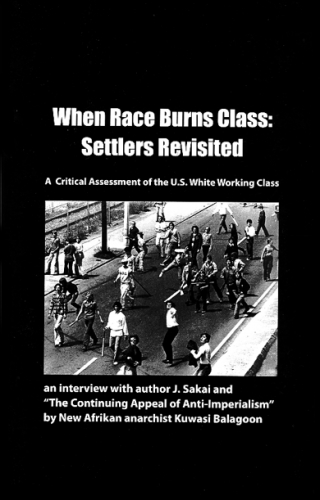
EC: Settlers: Mythology of the White Proletariat is a book which had a major impact on many North American anti-imperialists. How did this book come about, and what was so new about its way of looking at things? JS: Settlers completely came about by accident, not design. And what was so "new" about it was that...
 fallow cypress
lapis sundial
yeah, they ended up just being the garcia girls instead
fallow cypress
lapis sundial
yeah, they ended up just being the garcia girls instead
boooo
brittle breach
night prairie
are there any books which can teach linear algebra and abstract algebra at the s...
https://personal.math.ubc.ca/~jychen/m223/Book.pdf , this is the closes to that approach that I know of
sage python
This doesn't do any abstract algebra it seems
 real veldt
Any recommendations for a rigorous undergrad abstract algebra book?
still umbra
Dummit and foote
sand crescent
check pins
remote sparrow
a book of abstract algebra by charles pinter is good. so is judson
stiff sentinel
remote sparrow
try zorich's mathematical analysis
I'll check it out. I used his book for analysis 1 and it seemed decent
Thanks
remote sparrow
pretty sure zorich does multivariable analysis in greater generality too
than say, spivak
also @stiff sentinel consider submitting a review of Zorich to MetalNinja27 in DMs
stiff sentinel
Okay
 faint nebula
Wholesome book
It's got pictures but it's a good read
Now you have to read from right to left. Idk it's a quirky feature
Now the name might throw you off but don't worry that's intentional
It's called Berserk
fierce hedge
faint nebula
Wholesome book
You mean holesome
faint nebula
fierce hedge
You mean holesome
Exactly. Thanks numbpy. A true life saver
 crude sage
Has anyone read Bartle and Sherbert? How is it in terms of motivation, rigour, clarity, or difficulty?
fierce hedge
We had used it as textbook for intro maths class. My friend used it cover to cover and mostly enjoyed it. Easier compared to most analysis textbooks, beginner friendly
remote sparrow
abbott wrote it was one of his inspirations
it's a pretty standard text for lower level unis
could also be used for intro analysis
crude sage
Wait, so is it comparable to spivak in terms of the material?
crude sage
I see, thanks
Someone actually told me it's "the best math book ever written" so I had to see
fierce hedge
"the best math book ever written" is definitely a stretch but it's beginner friendly
crude sage
fierce hedge
"the best math book ever written" is definitely a stretch but it's beginner frie...
I was surprised too
fierce hedge
That said, it does really help in building proving skills as suggested by my friend.
He did his summer project doing all exercises from half the book if I remember correctly
crude sage
Oh neat
 spice spade
Hello, I've heard mixed things Engel's Problem Solving Strategies. On one hand there are people who say it's one of the best books for olympiad preparation, however, I've seen a few people mention how there are a lot of mistakes in the solutions presented. Does anyone know of an alternative or even just a list of corrections? Thanks
 hasty turret
Well it's a good book for learning the "principles"
You can use those principles in literally any other book
 alpine rover
what's the most beginner-friendly introductory abstract algebra book that is easy to read and that one can read for pleasure?
 sudden dock
Is there any good book with in-detail chapter on "Sequences and Progressions or Series"? high school level.
formal bronze
sudden dock
Is there any good book with in-detail chapter on "Sequences and Progressions or ...
What topics do you want the resource to cover? Are you looking for something on limits and convergence?
sudden dock
formal bronze
What topics do you want the resource to cover? Are you looking for something on ...
I need it to cover ap gp, agp hp, misc series and rms>am inequalities @formal bronze
 tropic jasper
 amber olive
crude sage
Has anyone read Bartle and Sherbert? How is it in terms of motivation, rigour, c...
amber olive
crude sage
Has anyone read Bartle and Sherbert? How is it in terms of motivation, rigour, c...
i've read it, had it for my real analysis class. honestly, I found it really hard to comprehend, and i really wish it had more examples so that the concept would be clearer. as someone who had absolutely 0 experience with analysis it was tough, i'd often refer to solutions online to understand the content. this is just my opinion though T_T
molten mason
I'm looking at Linear Algebra 5th edition (Friedberg) on Amazon and I see that while the hardcover is $175, the paperback is only $32.
Am I correct in assuming this is the international version? Is there any difference in this version?
fierce hedge
Usually, international editions omit the last chapter and have slightly inferior page quality. For last chapter, you can check the preview if it is available or see the number of pages the book has compared to a soft copy.
molten mason
Ah good idea, interestingly the paperback has 8 more pages. I did find near that where it says the paperback is the international economy edition.
fierce hedge
For reference, my copy of Friedberg has around 610 pages and it's an economy edition.
And it has all the 7 chapters
fierce hedge
5th edition
heady ember
Oh nice
turbid mural
what books would you recommend for algbraic topology
gray gazelle
Yo guys
I'm in HS, and I'm interested in doing maths beyond what we do in school
was wondering if anyone had a suitable recommendation that isn't beyond my capacity, but also isn't something that I'll cover in HS
I'm completing GCSEs/IGCSE for reference of my math level
gray gazelle
heady ember
Are you familiar with proofs?
Nope
heady ember
heady ember
GIve us more context?
What have you learnt? E.g.: Linear Algebra
gray gazelle
Ah I see, ok give me a minute I'll share the syllabus of the course I'm soon going to complete
gray gazelle
heady ember
What have you learnt? E.g.: Linear Algebra

I'm in 11th grade so I haven't started final 2 years of HS
heady ember
Have you learnt anything else outside your syllabus?
gray gazelle
heady ember
Have you learnt anything else outside your syllabus?
Nope
other than probability
heady ember
Do you have a rough idea of what you're interested in learning? E.g.: LA or anal
gray gazelle
heady ember
Do you have a rough idea of what you're interested in learning? E.g.: LA or anal
Logic based math I guess
I really enjoyed probability
even though we didn't do much on it
I also enjoyed permutations and combinations
 tawny copper
you can do problems on combinatorics
gray gazelle
tawny copper
you can do problems on combinatorics
Ah I see is there like a book I could use to get better at it
I enjoy just doing problems from a textbook
tawny copper
I don't know a lot of them, but I like Bóna's, a walk through combinatorics
heady ember
"logic based math" is really vague. But either ways, here are some topics you can check out:
1.Intro to proofs (loch has a summary pinned in #proofs-and-logic )
2. Linear algebra (look in pinned)
3. (Real) analysis - Dami suggests either Browder or Schroder, which are more friendly texts. Be warned, real analysis is not an easy topic. E.g.: Some proofs might require like 10 pages literally lol
gray gazelle
heady ember
"logic based math" is really vague. But either ways, here are some topics you ca...
Thank you
tawny copper
gray gazelle
Ah I see is there like a book I could use to get better at it
Look up the math olympiad server https://discord.gg/3sbwZdh for problem recommendations
gray gazelle
tawny copper
I don't know a lot of them, but I like Bóna's, a walk through combinatorics
Thank you
gray gazelle
tawny copper
Look up the math olympiad server https://discord.gg/3sbwZdh for problem recommen...
o didn't know this existed
tawny copper
heady ember
"logic based math" is really vague. But either ways, here are some topics you ca...
What proof requires 10 pages in introductory analysis? xD
heady ember
Or if you're weird like me lmao you can see if you're interested in axiomatic set theory. I'm studying Enderton's Elements of Set Theory right now. However, unless you're sure you want to study axiomatic set theory for its own sake, you're probably better off with something else first.
tawny copper
Enderton is pretty friendly
heady ember
tawny copper
What proof requires 10 pages in introductory analysis? xD
I have heard that, so just giving that as a warning. Though, I haven't done real anal myself yet  . Soon™️
heady ember
tawny copper
Enderton is pretty friendly
Yeah agree
gray gazelle
this is what I'll soon be starting for the next 2 years in HS, and in the IB I also need to do 4000 word essay on something outside of what is taught so I was wondering if proofs might be a good idea to start with then

And it's something I could also write a lot about
tawny copper
Okay I think the most involved proof in introductory analysis I have seen is the Stone-Weierstrass theorem, its some pages, yes. (Not that I know a lot of analysis anyway)
But what you will be mainly facing its definitions and new concepts all the time
heady ember
Yeah there are a lotta defs and theorems in real analysis
gray gazelle
heady ember
"logic based math" is really vague. But either ways, here are some topics you ca...
Well based on the fact that you mentioned there are proofs in real analysis I guess it'll be best to start with intro to proofs, thank you
heady ember
If you want a gentler intro then yeah that's probably the way to go I guess
 grand thistle
tawny copper
What proof requires 10 pages in introductory analysis? xD
grand thistle
tawny copper
What proof requires 10 pages in introductory analysis? xD
construction of reals 
yeah and stone weierstrass
 glacial crypt
gray gazelle
Well based on the fact that you mentioned there are proofs in real analysis I gu...
glacial crypt
gray gazelle
Well based on the fact that you mentioned there are proofs in real analysis I gu...
How to Prove It by Daniel J Velleman
glacial crypt
grand thistle
construction of reals <:devastation:898725325335298088>
mfw its one whole chapter
crude sage
amber olive
i've read it, had it for my real analysis class. honestly, I found it really har...
Good to know, thanks
 plush arrow
tawny copper
plush arrow
tawny copper
yes
It has many nice problems with full solutions
some will be challenging tho, but don't desist
(the pdf is available online btw)
remote sparrow
gray gazelle
Logic based math I guess
For linear algebra, click here: #book-recommendations message
For real analysis, you can try using Abbott, Cummings, or Schroeder. Actually @heady ember is not correct that Dami recommended Browder for beginners.
You can do intro to proofs or discrete math. Click here for suggestions: #book-recommendations message
If you've haven't had multivariable calculus, you can try using Shifrin's or Hubbard and Hubbard's book.
If you want to try elementary number theory, you can read either Burton or Dudley's books.
If you want to try combinatorics, you can use Bona's A Walk Through Combinatorics.
remote sparrow
alpine rover
what's the most beginner-friendly introductory abstract algebra book that is eas...
math sorcerer reviewed saracino's and beachy and blair's books very favorably
sage python
Yeah Schroder is the one that I peg as gentle, even to the point where I wouldn't be surprised if a Calc 1 student (aka no background in proofs or calculus) could use it
Browder is basically Baby Rudin cup Spivak Calc on Manifolds but better
unique ice
non-math book recommendations too?
 wheat cargo
@violet shuttle do u have any books that are similar in content to spivak's calculus on manifolds but are slightly less terse?
 violet shuttle
Does it count if it has way more than spivak?
"Introduction to Smooth Manifolds" is very unterse, but also covers a whole lot
wheat cargo
well i suppose it would, but as long as i can approach it with my current background
violet shuttle
Lee's other book, "Introduction to Riemannian Manifolds", is similar but covers Riemannian Manifolds
i don't know your background
wheat cargo
yeah typoing this right now
violet shuttle
Lee's Smooth Manifolds only really take multivariable calculus, linear algebra, and mathematical maturity
wheat cargo
that background is ug algebra, real analysis (baby rudin ch. 1-7), linear algebra (axler)
wheat cargo
violet shuttle
Lee's Smooth Manifolds only really take multivariable calculus, linear algebra, ...
ok cool that works for me
violet shuttle
note that i do really mean "mathematical maturity"
it's much more well and in depthly explained than baby rudin, but it is harder
wheat cargo
assuming that i have a fairly good understanding of the content mentioned above, do u think it is a good book for me?
violet shuttle
yeah, that makes sense to me
 fluid bay
A lot of the content of spivak’s Calc on manifolds is in the appendix of lee’s ism. I wouldn’t say the actual content of the books intersects very much
Albeit I preferred the exposition in the appendix of lee over spivak
gray gazelle
remote sparrow
For linear algebra, click here: https://discord.com/channels/268882317391429632/...
Thank you for the list! I'll check these out
sturdy shore
violet shuttle
Lee's Smooth Manifolds only really take multivariable calculus, linear algebra, ...
I believe that book also uses a nontrivial amount of topology
 gray gazelle
remote sparrow
what about bottomology
gray gazelle
remote sparrow
what about bottomology
lapis sundial
Classic joke
sturdy shore
so classic it has mold on it tbh
heady ember
violet shuttle
how did i forget about topology...
Just use Lee's first book, intro to topological manifolds, for the required topoplogy 
vital bane
first time im hearing about bottomology
fallow cypress
heady ember
Just use Lee's first book, intro to topological manifolds, for the required topo...
I did that, it was nice
fallow cypress
tbh I don't think there's really much background required
heady ember
fallow cypress
tbh I don't think there's really much background required
Hmm really? I need to finish Linear Alg (e.g.: Friedberg), real anal (e.g. Schroder), and some algebra (e.g.: Basic Algebra I by Jacobson) first right
fallow cypress
you can
I guess knowing topology wouldn't help you much at this stage
I can't think of a reason why you couldn't learn it in principle though
(This is not that I'm telling you to read it, you should finish reading whatever you're reading now first lol)
glacial crypt
Can LADR really not be used as a "first course" for self-study?
fallow cypress
LADR is nice as a second semester imo
Goes through the same stuff but more theoretically with fewer concrete examples
It's very elegant too
The only annoying thing is how it handles determinants, but if you're going through linear algebra for the second time when you read LADR, it shouldn't be too bad
remote sparrow
glacial crypt
Can LADR really not be used as a "first course" for self-study?

In this video I will show you 4 super cheap beginner math books on various subjects. The books cover Algebra, Trigonometry, Single Variable Calculus, and Multivariable Calculus. Here are the books.
Algebra Essentials Practice Workbook With Answers: https://amzn.to/3Gh8IW7
Trigonometry Essentials Practice Workbook with Answers: https://amzn.to/3...
cheap workbooks
 lunar sinew
Hello everyone, please suggest me a good resource/s to cover the following topics, I'm almost newbie to math, and need to study for my grad. Thanks.
- Matrices
- Determinants
- Mathematical Induction
- Sequence and Series
- Complex Numbers
- Equations
- Inequalities
- Differential Calculus
- Integration
- Vectors
- Three Dimensional Geometry
heady ember
Looks like highschool stuff so probably Khan Academy
You can also look at loch's intro to proofs pinned in #proofs-and-logic for induction stuff
 sullen spruce
lunar sinew
Hello everyone, please suggest me a good resource/s to cover the following topic...
sullen spruce
lunar sinew
Hello everyone, please suggest me a good resource/s to cover the following topic...
rd sharma class 11 mathematics
 hasty turret
I wouldn't trust Rd Sharma for anything tbh
sullen spruce
why is that
his books are reliable for high-school atleast
considering they're in high-school
gray gazelle
remote sparrow
https://www.youtube.com/watch?v=Zsib22FFie8
The cover page of those books looks made with MS Paint tho 🤣
minor knot
sullen spruce
why is that
He keeps complaining about the Indian system and is pessimistic, lol
 blazing canopy
Wow that is a lot to cover in one year of high school mathematics
vital bane
This isnt a textbook, this is a problems book so a single chapter is split up into 2 or 3 that's why it seems like a lot 
gray gazelle
hasty turret
I wouldn't trust Rd Sharma for anything tbh
You are pessimistic?
fierce hedge
vital bane
This isnt a textbook, this is a problems book so a single chapter is split up in...
If that is RD Sharma then no, they are actual chapters. The whole book is like 800+ pages
hasty turret
No,I am being realistic. RD Sharma isn't good for learning math
fierce hedge
I have used RD Sharma and it's an ok book but there might be better ones
gray gazelle
blazing canopy
Wow that is a lot to cover in one year of high school mathematics
Usually in the Indian books for highschool
None of that is rigourous so it's hard, and a lot but not that hard for it to be unrealistic.
It's just unrigorous which one might say is good or bad
Individual opinion it, I personally don't it like that
gray gazelle
hasty turret
No,I am being realistic. RD Sharma isn't good for learning math
I mean, everybody thinks they are realistic tbh
¯\_(ツ)_/¯
 acoustic ridge
Is there any site where I can read math and science ebooks without the pdf viewer?
gray gazelle
sounds too comfortable to be true
 pure swallow
hasty turret
No,I am being realistic. RD Sharma isn't good for learning math
pure swallow
hasty turret
No,I am being realistic. RD Sharma isn't good for learning math
Agreed, dont use it
 eager pollen
hasty turret
No,I am being realistic. RD Sharma isn't good for learning math
eager pollen
hasty turret
No,I am being realistic. RD Sharma isn't good for learning math
Agreed. 100%.
It's just to prepare for school exams... u can't actually learn math there
eager pollen
lunar sinew
Hello everyone, please suggest me a good resource/s to cover the following topic...
Pick up math textbooks of those topics instead of exam focus prep books I'd say...
 lime sapphire
i personally don't think thats the best advice if sirius doesn't have a lot of time
eager pollen
Well... he didn't really mention he doesn't have much time
eager pollen
lunar sinew
Hello everyone, please suggest me a good resource/s to cover the following topic...
You may follow any undergrad math fresher course, most of these topics are covered there
lime sapphire
if it's only about a year then its best you stick with prep books that are designed for your exam style as many different books can become quite redundant
eager pollen
I am assuming he wants to learn em in a pure form instead of learning problem solving oriented books which include fast cheap tricks
lime sapphire
eager pollen
You may follow any undergrad math fresher course, most of these topics are cover...
oh look something resembling a single book with many different topics
remote sparrow
@eager pollen ODE, you can use Morris, Tenenbaum, and Pollard's ODE book. For a book that emphasizes qualitative and graphical analyses over analytic solutions, you can try Blanchard, Devaney, and Hall's book. You can pair your reading of this book with Bill Kinney's lectures, which discusses linear algebra as well. Neither of these books cover boundary value problems, a pretty simple class of PDEs, although Kinney covers them in a couple of the final lectures. A book that does cover boundary value problems would be Elementary Differential Equations with Boundary Value Problems by Boyce and DiPrima. I don't know much about dedicated PDE books that only use calc 1-3 and linear algebra. I would imagine Strauss doesn't fit the bill. I think this video could help you, though: https://www.youtube.com/watch?v=-yksoVsb47s. Generally further theoretical study of differential equations, both ordinary and partial, is less about trying to find a closed form solution and more about studying existence, uniqueness, well-posedness, etc, however.

 meager parcel
acoustic ridge
Is there any site where I can read math and science ebooks without the pdf viewe...
meager parcel
acoustic ridge
Is there any site where I can read math and science ebooks without the pdf viewe...
Not entirely sure if that’s what you mean but the PDF viewer is built into your browser most likely
Maybe try downloading the file
 rapid flame
my favorite book just arrived
 gray gazelle
Thoughts on the free e-book Abstract Algebra: Theory and Applications by Thomas W. Judson? I ask being a good way in already. Nice being free but is there a must have paid-for book on abstract algebra out there?
remote sparrow
gray gazelle
Thoughts on the free e-book Abstract Algebra: Theory and Applications by Thomas ...
pinter's abstract algebra book
knapp is free online btw, and according to the mathemagician it's apparently dummit and foote done right
the margins suck though
i guess lang
rotman's second edition i heard is good
third edition has mixed reviews
both are reviewed by MAA
jacobson is cheap
 mossy flume
remote sparrow
knapp is free online btw, and according to the mathemagician it's apparently dum...
mossy flume
remote sparrow
knapp is free online btw, and according to the mathemagician it's apparently dum...
D&F done right?
Sounds interesting
mossy flume
Found it but wdym D&F done right
remote sparrow
pretty sure mathemagician wrote that on his blog
remote sparrow
mossy flume
Found it but wdym D&F done right

My dynamic blog on mathematics,higher education,physical sciences,movies,comic books,food,liberal politics,ethics,and anything else..
alpine rover
remote sparrow
math sorcerer reviewed saracino's and beachy and blair's books very favorably
thank you saracino is good
 cursive orbit
remote sparrow
http://tableschairsandbeermugsmathemagician.blogspot.com/2015/08/normal-0-false-...
cursive orbit
remote sparrow
http://tableschairsandbeermugsmathemagician.blogspot.com/2015/08/normal-0-false-...
holy shit that website is hard to read
sudden kindle
Saracino is the best intro algebra textbook for undergrads
I have no problems with D&F
I think its a good choice for algebra courses
gray gazelle
remote sparrow
knapp is free online btw, and according to the mathemagician it's apparently dum...
Thank you
remote sparrow
sudden kindle
Saracino is the best intro algebra textbook for undergrads
thoughts on judson or pinter?
mossy flume
I agree with the post he wrote about D&F being amazing and extremely dry
God it is dry
 loud cradle
D&F sucks all the joy out of algebra, yet it has a wealth of good examples and exercises
sage python
Yeah D&F is fine as a reference, though it should at least introduce categorical language
Extremely clear, but very boring to read
foggy relic
Lang is a good reference and fun to read
vital bane
gray gazelle
Big Chungus of physics
the true big chungus of physics is MTW gravitation
1340 something page book on graduate GR
 pale slate
anyone have suggestion for beginner theory to calculus books?
loud cradle
pale slate
anyone have suggestion for beginner theory to calculus books?
spivak would be the standard suggestion
pale slate
loud cradle
spivak would be the standard suggestion
o ok thx
 cobalt arrow
pale slate
anyone have suggestion for beginner theory to calculus books?
cobalt arrow
pale slate
anyone have suggestion for beginner theory to calculus books?
Depends on what you’re looking for but Apostol is also great. Spivak’s Calculus on Manifolds is what I’d recommend after (just a personal preference, though)
pale slate
cobalt arrow
Depends on what you’re looking for but Apostol is also great. Spivak’s *Calculus...
thx for the suggestions
ill look into the two books
cobalt arrow
Apostol is a two-volume set. I think it’s just a plain name, like Calculus or something. It has good examples and exercises without getting bogged down in doing the same thing a dozen times in the exercises (I can’t say I’ve worked through all of them but each one I’ve done has had a distinct feel to it which is what I want in a book).
eager pollen
The real math legend is the one who actually reads all the books lmao
remote sparrow
pale slate
anyone have suggestion for beginner theory to calculus books?
have you already learned calculus? if so, then spivak and apostol would be redundant in some places. something like abbott, cummings, schroeder, or tao would work for you instead.
molten mason
remote sparrow
have you already learned calculus? if so, then spivak and apostol would be redun...
Any personal opinion on those last 4 that you mentioned?
heady ember
remote sparrow
have you already learned calculus? if so, then spivak and apostol would be redun...
Schroder 
dami would agree
gray jungle
loud cradle
D&F sucks all the joy out of algebra, yet it has a wealth of good examples and e...
Most of my friends said D&F style of giving a lot of examples was extremely helpful.
Me and a study partner were both using artins book and i thought it was ok but i had to suppliment the book with other references to fully grasp some ideas , so i can definitely see how D&F is the better choice for learning a first course in AA.
Same for exercises, artin has some neat exercises but it often wasn't enough so we had to go to D&F and random psets.
I would definitely recommend D&F if someone told me he is doing a first course in AA.
 main void
Does anybody here have a reference for alpha-densities (and integration of densities) on manifolds? The only reference I could find was “Manifolds, Tensor Analysis and Applications” of Abraham but it doesn’t quite cover it
gray gazelle
which book will be the best if i want to study "Game Theory" (e-book or physical)
lunar sinew
@heady ember @eager pollen @lime sapphire Thank you guys. I will take the exam in June.
sudden dock
Any good book to self study Sequences and Series in depth? looking for topics (A.P, G.P, H.P, A.G.P, AM>GM>HM). Right now I know nothing about it
pale slate
remote sparrow
have you already learned calculus? if so, then spivak and apostol would be redun...
thank u, I'll look into the books after I get more familiar with the inner workings of calculus. Most of the videos I watched about calculus is from 3blue1brown because I won't formally learn calculus at school for a couple of years
crude sage
What are the prereqs for Bona's A Walk Through Combinatorics? I'm trying to read it and I seem to be missing some geometry/number theory background, but I'm not sure if that's important
gray gazelle
murakami hard boiled wonderland
sage python
main void
Does anybody here have a reference for alpha-densities (and integration of densi...
Vector analysis by Janich
remote sparrow
crude sage
What are the prereqs for Bona's A Walk Through Combinatorics? I'm trying to read...
calculus and the ability to read and write proofs
although i think calculus is used mainly in generating functions and analysis of algorithm complexity
scattered throughout the text are mainly just the idea of limits and how certain stuff is asymptotically close to another thing
heavy calculus like derivatives and integrals are pretty infrequent tbh
remote sparrow
pale slate
thank u, I'll look into the books after I get more familiar with the inner worki...
spivak and apostol are good then. if it gets too challenging, you can try reading an intro to proofs book. or you can do something like elementary number theory, combinatorics, or linear algebra.
eager pollen
lunar sinew
<@560392234952818688> <@920359675684339762> <@470232077342605314> Thank you guys...
Bro what exam are u taking?
loud cradle
gray jungle
Most of my friends said D&F style of giving **a lot** of examples was extremely ...
Yeah, the examples in D&F are good and plentiful, and so are the exercises. It's definitely worth owning but I just find the exposition itself very dry and boring. Unfortunately I don't have a good alternative to recommend as my undergrad algebra instructor used his own notes
remote sparrow
pinter and judson are good
crude sage
remote sparrow
calculus and the ability to read and write proofs
Oh wow I did not expect that, thanks!
 split mica
geronimo stilton
pale slate
remote sparrow
spivak and apostol are good then. if it gets too challenging, you can try readin...
o ok thx
fallow cypress
I love D&F
fallow cypress
the picture of dorian gray is so relentlessly funny
tawdry orbit
Great book, with great writing.
gray gazelle
@remote sparrow where are you frm ?
remote sparrow
america
glacial crypt
gallian has a lot of examples too
crimson leaf
I strongly disliked Gallian
 marble solar
loud cradle
Yeah, the examples in D&F are good and plentiful, and so are the exercises. It's...
marble solar
loud cradle
Yeah, the examples in D&F are good and plentiful, and so are the exercises. It's...
Richard Elman's Lectures on Abstract Algebra
Not as dry
But good luck through the orbits section
mossy flume
Anyone have a recommended resource for group extensions and composition series (solvable groups, nilpotent groups, etc) at the level of a first graduate course in Algebra?
I am reviewing my profs notes and I really am not getting any level of intuition from his notes and am hoping some sort of better resource exists
loud cradle
marble solar
Richard Elman's Lectures on Abstract Algebra
Elman was in fact my undergrad algebra prof!
marble solar
Mine was a few years back now
loud cradle
he may be my all time favorite math prof
marble solar
I loved his linear algebra class, but his algebra class was not so great for me
loud cradle
i didn't have him for LA but I would like to have
i had some friends who went to grad school there and said his graduate algebra was insanely fast paced, they didn't seem so thrilled 😁
marble solar
Yeah, I took him for 110H
He tried to do too much to fast for me
I had his academic brother William Murray for algebraic curves
Very similar style, but better at teaching in almost every facet
loud cradle
my only complaint was that i later had to break the habit of using his notation ⊲⊲ for a characteristic subgroup, i had no idea it was not standard and seems to have been his own notation
marble solar
and I know how great Elman could be
I've been spoiled rotten by fantastic professors
loud cradle
much better than the alternative for sure.. can't really complain about most of mine either
loud cradle
taking a look at it now, it's great to see written notes, and these appear to be at least somewhat expanded compared with his lectures (I doubt he'd have time to cover this whole thing in one year)
marble solar
I dipped out after the B part
loud cradle
876 pages!
C was fun and somewhat relaxed as there were no exams, just 50 problems that he handed out near the start of the quarter
marble solar
He got to part 5 in C
loud cradle
you had to do like 40(?) of them to get an A
loud cradle
yea that sounds right
marble solar
I had a time conflict: it was either C or riemannian geometry
I wasn't having fun in algebra so I took riemannian geometry from petersen instead
loud cradle
i recall the 2nd AH midterm was take-home and took many hours as I was still getting my footing in algebra, but I managed to get a 100 on it, I was so damn proud
even though i was still really shaky on quotient groups and a few other topics
marble solar
I found out in the 110H sequence that I fundamentally cannot solve problems the way an algebraist would
loud cradle
on most of the HW's there were at least a couple of problems that I would have to chew on for a few days before I could even think about how to start them
marble solar
I was taking grad complex at the same time, and I'd always just use weird analysis results to get out of doing any algebra
marble solar
Gamelin was retired before I got there
I primarily had Garnett and Tao teach me analysis
(mostly Garnett)
loud cradle
gamelin was fun, iirc there were no exams and you had to pick some number of problems from each chapter and turn them in at the end of the term
and he encouraged you to adorn your submission with anecdotes, biographies, poems, whatever, just to make it more interesting reading for him
ah i was there just before Tao joined
marble solar
That was many moons ago then!
loud cradle
yep!
marble solar
I learned undergrad complex from David Gieseker
He couldn't decide on a book
So he switched half-way thru the course
He also drooled in class while teaching
loud cradle
i seem to recall that i skipped undergrad complex and just did the graduate version? but i might be misremembering
marble solar
Gieseker just retired, Elman is going to soon
loud cradle
end of an era for that generation.. i guess elman must have been born in the 40s because I recall him telling me that a strong motivation for him to go to grad school was to avoid the vietnam draft
i guess it could have been early 50s depending on what stage of the war that was, it did drag on for years
marble solar
I went to community college before LA, and my professor there went to vietnam first
Then went to Berkeley for Math
He was there at the same time as Elman, but as far as I know they didn't meet
loud cradle
damn, i can't imagine what it's like to try to study math or anything that requires a ton of focus after just coming back from getting shot at
marble solar
It's crazy how small the math community is
 dense mantle
what do people like as a second book in harmonic analysis?
I've seen most of pereyra + ward and would like to keep going with it
loud cradle
dense mantle
what do people like as a second book in harmonic analysis?
katznelson is nice, if you know measure theoretic real analysis
dense mantle
yeah that's probably worth mentioning
I've got a semester of measure theory/ RA (95% of folland) and semester of functional (mixture of texts)
loud cradle
that should be adequate background for katznelson
gray gazelle
Anyone read “Mathematics for Human Flourishing” by Francis Su? I really enjoyed “Letters to a Young Mathematician” by Ian Stewart and have been looking around for similar things.
 narrow fiber
dense mantle
what do people like as a second book in harmonic analysis?
narrow fiber
dense mantle
what do people like as a second book in harmonic analysis?
are you familiar with deitmar-echterhoff
I say this because it (Principles) comes off of a gentler first course (Intro) and largely resembles Folland's harmonic analysis text except a little more laid-back in exposition, at least to me
narrow fiber
it's a lovely book, I definitely recommend it
dense mantle
i see i see... thank you
grand thistle
any texts similar to spivak’s physics for mathematicians and hall’s quantum theory for mathematicians that presents e&m at an introductory level from a mathematical pov?
narrow fiber
i've heard good things about garrity's e&m for mathematicians but haven't personally read through it
wow i wish i had these much earlier on lol
hoffman & kunze was my intro and it was not a gentle one
also roman gets bizarre
grand thistle
narrow fiber
i've heard good things about garrity's e&m for mathematicians but haven't person...
ooh cool thanks
gray gazelle
Can someone recommend me a good book on Graph theory
 chrome yacht
maybe Graphs and Digraphs by Chartrand,Zhang?
sage python
narrow fiber
wow i wish i had these much earlier on lol
Thanks for connecting I just noticed some typos, should be better now
gray gazelle
chrome yacht
maybe Graphs and Digraphs by Chartrand,Zhang?
Thanks, I'll check it out
foggy relic
grand thistle
any texts similar to spivak’s physics for mathematicians and hall’s quantum theo...
Landau+Lifshitz the Classical Theory of Fields
Hot take: Roman > Halmos > Hoffman Kunze
sullen spruce
pure swallow
Agreed, dont use it
you must have a reason for being this bold
 errant solstice
Does three volume set of Fundamentals of Mathematics by H. Behnke is good for getting started with math for self-learning?
spare ridge
foggy relic
Landau+Lifshitz the Classical Theory of Fields
bruh he said introductory
 lapis sundial
Are there any nice sources for problems on (baby) functional analysis?
Like on the level of the banach space techniques in papa Rudin or smth
severe falcon
lapis sundial
Are there any nice sources for problems on (baby) functional analysis?
I like the problems in Bressan’s intro to functional analysis
severe falcon
oop i think it’s called lecture notes in functional analysis, he taught my functional class so I’m a bit biased lol. he’s a great expositor tho
crimson leaf
gray gazelle
Can someone recommend me a good book on Graph theory
introduction to graph theory by douglas west
lunar sinew
eager pollen
Bro what exam are u taking?
Graduating (CS)
 proven junco
differential geometry book
narrow fiber
foggy relic
Hot take: Roman > Halmos > Hoffman Kunze
this is definitely a take
cursive orbit
one of the takes of all time
remote sparrow
marble solar
I had his academic brother William Murray for algebraic curves
is he the department chair at cal state long beach? or is it someone else with the same name
 grand ingot
I'm looking for a book (online) with lot of solved questions of integration (calc 1 & 2);
basically I learn easily by looking at how they're solved (ton of questions)
not interested in chit chat book
mossy flume
mossy flume
Anyone have a recommended resource for group extensions and composition series (...
reposting this
remote sparrow
grand ingot
I'm looking for a book (online) with lot of solved questions of integration (ca...
In this video I will show you 4 super cheap beginner math books on various subjects. The books cover Algebra, Trigonometry, Single Variable Calculus, and Multivariable Calculus. Here are the books.
Algebra Essentials Practice Workbook With Answers: https://amzn.to/3Gh8IW7
Trigonometry Essentials Practice Workbook with Answers: https://amzn.to/3...
oh online
well, i guess you could get this online in certain places
remote sparrow
grand ingot
I'm looking for a book (online) with lot of solved questions of integration (ca...
click the relevant books
then click on the problem books
additional calculus resources ^
marble solar
remote sparrow
is he the department chair at cal state long beach? or is it someone else with t...
That's him!
That's where I did my MS
(fully funded too!)
remote sparrow
oh cool
crimson leaf
What's a good intro to harmonics
severe falcon
crimson leaf
What's a good intro to harmonics
stein and shakarchi Fourier Analysis
 woven sparrow
What's a good book on set theory? I'd like to get into ZFC axioms, functions, binary and equivalence relations, and constructing the naturals, integers, rationals, and reals. If the book has exercises that would be great. Also PDF preferred if possible.
heady ember
woven sparrow
What's a good book on set theory? I'd like to get into ZFC axioms, functions, bi...
Enderton's Elements of Set Theory is a friendly introduction that does not require much in the way of mathematical maturity.
Jech's undergrad set theory book is also an introductory one but needs a bit more mathematical maturity.
All of the things you mentioned are covered by Chapter 5 of Enderton. After that its cardinals and ordinals
narrow fiber
Oh man I remember trying to get through Jech's big book
My intro to set theory was Kaplansky but he does it from a naive set theory perspective however well-written
sturdy shore
I recommend goldrei's book, imo best and friendliest intro to set theory
narrow fiber
oh that resource is wonderful
have to sit down and go through it thoroughly one of these days
remote sparrow
i've heard the open logic project books are too easy for math students though
and generally geared to philosophy students

here's the website if anyone's interested
they also have set theory books
grand thistle
good (concise) resources for learning optimization? like lagrange multipliers, duality and all that
i'm aware of boyd's text
but it's a bit too long and complete
i need kind of a straight to the point and simple text, preferably one that is introductory and doesn't require that much math background (probably just some multivariable calc, analysis and linear algebra), so doesn't assume like calculus of variations or something
crimson leaf
Introduction to Optimization by Zak and Chong is what the course I'll be in next semester will be using
grand thistle
crimson leaf
Introduction to Optimization by Zak and Chong is what the course I'll be in next...
cool ill check it out
gray gazelle
remote sparrow
well, i guess you could get this online in certain places
How do u get them online? Ive been trying to find them for months
 hollow shore
grand ingot
basically I learn easily by looking at how they're solved (ton of questions)
hollow shore
grand ingot
basically I learn easily by looking at how they're solved (ton of questions)
check the pins in #calculus
grand ingot
hollow shore
check the pins in <#326138772477575180>
broken link
gray gazelle
Need books on Linear algebra
heady ember
gray gazelle
Need books on Linear algebra
Look in pinned
 mental canyon
Any good text books regarding these topics
The first section deals with events, the axioms of probability, conditional probability and independence. The second introduces discrete random variables including distributions, expectation and variance. Joint distributions are covered briefly
sudden dock
 unborn inlet
which book should I use for Olympiad prepration [INDIA, IOQM type of olympiad]
molten mason
grand ingot
not interested in chit chat book
unborn inlet
which book should I use for Olympiad prepration [INDIA, IOQM type of olympiad]
molten mason
grand ingot
not interested in chit chat book
There's also PDF online
 grand ingot
hello today
I'm looking for pdf to understand vector fields
I'm basically looking for vector analysis to understand physics better
electric, magnetic, gravitational field etc
so i thought it might good ideas to under them from the maths point of view
like understanding how purely vector files
work
 karmic thorn
Are you familiar with calculus and linear algebra?
 leaden cliff
Hi please can anyone record textbooks for epsilon definition under limits
brittle breach
leaden cliff
Hi please can anyone record textbooks for epsilon definition under limits
abbot understanding analysis
gray jungle
leaden cliff
Hi please can anyone record textbooks for epsilon definition under limits
not a textbook but my old professor wrote some nice lecture notes regarding epsilon delta arguments during my freshman course, which i still have if you are interested.
leaden cliff
gray jungle
not a textbook but my old professor wrote some nice lecture notes regarding epsi...
Yes I’m interested thanks.
gray jungle
leaden cliff
Yes I’m interested thanks.
I sent it in dms
 clever mica
Hi. Any recommendations on abstract data types(data structures) or proofs(especially interested in proofing algorithms)? That may sound like CS stuff but I'm interested in those topics from mathematical perspective
sage python
Dam SourDrop tryna compete with my linear algebra book review huh
 indigo mesa
Team Dami!
 versed quiver
grand ingot
I'm basically looking for vector analysis to understand physics better
versed quiver
grand ingot
I'm basically looking for vector analysis to understand physics better
it’s not a whole book on the subject but the start of griffiths electrodynamics provides a decent introduction to vector fields for use in undergraduate physics. a classic book on the subject that physics students tend to use is “div grad curl and all of that” or something similar-sounding
if you want to learn about vector fields properly then you’ll be looking at books in differential geometry but physics students can tend to find that difficult in my experience. it’s definitely worth having a look at though if you can. i like the book titled “manifolds, tensors and forms” but i forgot the author
mental canyon
Any good text books for these topics
events, the axioms of probability, conditional probability and independence. discrete random variables including distributions, expectation and variance.
remote sparrow
mental canyon
Any good text books for these topics
events, the axioms of probability, condit...
blitzstein and hwang's book
 wise spindle
remote sparrow
blitzstein and hwang's book
wise spindle
remote sparrow
blitzstein and hwang's book
Any other recommendations? I’ve looked at this one and it’s a bit more complex than what I am currently studying in probability
remote sparrow
is your class algebra- or calculus-based?
 slim rose
What’s a good book to transition from competition math to Olympiad (aime to usa(j)mo), like an intro to Olympiad math. (Self study)
wise spindle
remote sparrow
is your class algebra- or calculus-based?
Neither it’s a probability class. Intro to probability
remote sparrow
wise spindle
Neither it’s a probability class. Intro to probability
do you use algebra or calculus in that class
blitzstein and hwang is one of the easier books i know of
obviously it's too complicated if you're just using algebra of the solving equations variety
like solve for x if we have the equation x^2 + 2x + 1 = 0
that's what i mean by asking whether your class is algebra- or calculus-based
as in what prerequisite math class does it need
remote sparrow
grand ingot
so i thought it might good ideas to under them from the maths point of view
like...
hubbard and hubbard or shifrin's book are good choices
hubbard and hubbard also has chapters dedicated to discussing electromagnetism
wise spindle
remote sparrow
as in what prerequisite math class does it need
Pre requisite is just an Alevel in maths in the UK. It’s a level 4 undergraduate course
 orchid mortar
Honestly I don't think you can get simpler than Blitzstein
orchid mortar
There's also this
https://services.math.duke.edu/~rtd/EP4A/EP4A.html
remote sparrow
surely you can at least tell me whether your class uses calculus or not
do you see any integrals?
derivatives?
Any of these symbols: $\frac{d}{dx}$ $\int$?
hasty eagleBOT
Sour Drop
 remote sparrow
limits?
heady ember
Pretty sure there is calc in AL
I don't live in the UK but my country's O-Levels already covers some of calc 1
molten mason
A level math goes up to calculus
 rancid abyss
do you have any videos or book recommendations that help ease my way into maths
 oblique dove
what do you guys think of the pre-requisites of Diestel's graph thoery?
slim rose
slim rose
What’s a good book to transition from competition math to Olympiad (aime to usa(...
Any suggestions?
narrow fiber
does anyone have recommendations for intro books on dynamical systems? I'd be totally new to the subject I've just been curious about it
oblique dove
slim rose
What’s a good book to transition from competition math to Olympiad (aime to usa(...
at that point i’d say look at topic based books such as EGMO, MONT, etc…
sage python
narrow fiber
does anyone have recommendations for intro books on dynamical systems? I'd be to...
What's your existing background, and do you have a particular angle on dynamics you enjoy
narrow fiber
I'd especially appreciate a number theory angle - idk exactly what background would pertain to dynamics but to throw out some books I'd say I'm at the level of across various topics that may relate: Folland for analysis, Lee for smooth manifold stuff, Hatcher for AT, Milne for algebraic number theory and some CFT (still studying the latter). I'm also into Lie groups & algebras and I've heard there's an avenue there that connects to dynamical systems
sage python
narrow fiber
I'd especially appreciate a number theory angle - idk exactly what background wo...
Maybe try Einsiedler and Ward
Ergodic Theory with a view toward Number Theory
narrow fiber
Awesome thank you I'll check it out
wise spindle
remote sparrow
do you see any integrals?
We have done calculus; integration differentiation etc. but not limits
sage python
Wat
 signal charm
i mean the definition of the derivative is literally a limit
how can you even use derivatives without properly defining them
orchid mortar
signal charm
how can you even use derivatives without properly defining them
Probably via formulas, like Cavalieri's quadrature formula, remembering integral of sine is minus cosine, etc.
 night knot
sage python
Wat
night knot
sage python
Wat
the A-Level math syllabus has this thing where they mention the idea of a limit, at least on the textbooks, but don't really test you on it
 solid wadi
Hello! I am looking for a book on Constructive Logic and Type Theory for a generic equivalent of a college student. Something that can help getting into Type Theory and Formal Proof: An Introduction by Rob Nederpelt and Herman Geuvers, which is an awesome book but a bit too steep.
heady ember
solid wadi
Hello! I am looking for a book on Constructive Logic and Type Theory for a gener...
Check out Clerk's recs in pinned
grand ingot
karmic thorn
Are you familiar with calculus and linear algebra?
have done calc 1
partial fractions etc
karmic thorn
Hmm, see the Calculus III part of Paul's Online Math Notes
Here is a set of notes used by Paul Dawkins to teach his Calculus III course at Lamar University. Topics covered are Three Dimensional Space, Limits of functions of multiple variables, Partial Derivatives, Directional Derivatives, Identifying Relative and Absolute Extrema of functions of multiple variables, Lagrange Multipliers, Double (Cartesi...
It's good for a first look into the subject, although I think multivariable calculus might make much more sense after going through a class on linear algebra (or at least learning it in parallel).
solid wadi
@solemn rover It seems you have an error?
It is not hard to see that in a proof there may be circuitous or roundabout
reasoning; even redundant reasoning. For example, we may assume A, and go
on to prove A; by this we establish that A =⇒ B. Now we give a direct proof
of B. By modus ponens we conclude B. This is a perfectly legitimate proof of
B, but it is circuitous: we could have started by proving A directly instead of
assuming it, and then continued on to prove B. The circuitous proof introduces
a new application of both the introduction and elimination rules for implication.
It seems you meant to say «… we may assume A, and go on to prove B; by this we establish that A ⇒ B. Now we give a direct proof of A. …».
solid wadi
heady ember
Check out Clerk's recs in pinned
All of those books are too hard.
heady ember
Perhaps you can try asking in #foundations
 novel trail
I have about a month to learn some complex analysis. I’m familiar with multivariable calc I’m looking for a book or resource that has a decently high pace, I don’t really have hours to spend on understanding proofs. Something with exercises would be a bonus, but I don’t mind hunting for those myself
karmic thorn
What topics do you want to cover?
Pete L. Clark has a decent set of lecture notes on introductory complex analysis, and they're pretty compact (~90 pages iirc)
novel trail
Fairly introductory material iirc from the last time I took a look at it
- Function theory of complex variable: differentiability, Cauchy-Riemann equations.
- Complex line integrals, Cauchy integral formula.
karmic thorn
I'm sure those notes have everything you mentioned
And more, which you can gloss over
It also has exercises
novel trail
From a quick google, do you mean this? http://alpha.math.uga.edu/~pete/complex_analysis_supplemental.pdf
novel trail
Perfect, I’ll take a look. Thanks. As topics advance I find it harder and harder to find good material that doesn’t go way too deep into the weeds
karmic thorn
The course he taught apparently used a complex analysis text by Beck, which is also (legally) available online for free
gray gazelle
I know this is a random question
I am trying to buy "Calculus" by Jon Rogawski, because I really like the book and I can't stand reading PDFs.
However I am living in Italy, and it's normal that such books are not existing in our shops. Does someone have experience with buying foreign books in Europe?
sand crescent
novel trail
I have about a month to learn some complex analysis. I’m familiar with multivari...
i have some cute notes from my undergrad >.< it has a more algebraic flavor of complex analysis  i could send them if you wanna give it a try. (they aren't fully complete, but i think they still manage to give a slightly different perspective from many other introductory notes)
around 90ish pages as well
novel trail
sand crescent
i have some cute notes from my undergrad >.< it has a more algebraic flavor of c...
Definitely would love to have them, it does seem most take a very geometric approach, maybe an algebraic version might work better for me given my linear algebra knowledge is pretty stale
gray gazelle
sand crescent
i have some cute notes from my undergrad >.< it has a more algebraic flavor of c...
How do u even make notes for maths tho ? What do u write in it ?