#book-recommendations
1 messages · Page 6 of 1
 floral agate
They might be better (it’s a bit longer but I hope a quick look might summarise where I am)


 remote sparrow
even though you have a very small amount of experience with proofs, many intro to proof books would be okay for you.
In surname alphabetical order:
Proofs: A Long-Form Mathematics Textbook by Jay Cummings
A Bridge to Advanced Mathematics: From Natural to Complex Numbers by Sebastian M. Cioaba and Werner Linde
Introduction to Proof Through Number Theory by Bennett Chow
Book of Proof by Hammack (Very nice explanations, and the PDF is free)
Number Systems: A Path into Rigorous Mathematics by Anthony Kay
A Concise Introduction to Pure Mathematics by Martin Liebeck
Number Systems and the Foundations of Analysis by Elliott Mendelson
Foundations of Mathematics by Sibley (this was the book assigned for my intro to proofs class.)
How to Prove It: A Structured Approach by Velleman
Mathematical Proofs: A Transition to Advanced Mathematics by Chartrand, Polimeni, Zhang (comprehensive and thorough, but a bit dull)
Proof and the Art of Mathematics by Hamkins (Good to learn from and also interesting to read even if you're advanced, though being organized by mathematical topics rather than proof techniques may make it more difficult to use as a reference for particular proof techniques)
Those are books specifically designed for a transition to proof-based math. Discrete math books are frequently used at other institutions, though, like Epp or Rosen (in particular, CS majors learn how to read and write proofs with such books). Sometimes there is no such course and students get put directly into a course like linear algebra or real analysis.
floral agate
The proofs topics for me are tiny, do you have any specific recommendations?
Read my mind 🤣
remote sparrow
you could also feel free to jump into relatively simple books that teach a particular field of math
for example, you could try Elementary Number Theory by Underwood Dudley
floral agate
I think those will be a really good read, from what others said proofs are very different, do you know any books that's like a calculus Intro, I find that topic really interesting from what I'm doing now?
remote sparrow
wdym by calculus intro?
like analysis?
i thought you'd learned calc already?
based on your screenshots
floral agate
Yeh I have, looking at the course content for degrees they seem to have some more but it doesn't give details, so I guess there's more to learn?
remote sparrow
stewart or larson's calculus books have chapters on multivariable calculus. if you want something proof-based, try hubbard and hubbard's vector calculus or shifrin's multivariable mathematics. many intro to ordinary differential equations classes focus on analytic techniques, and my recommendations for those would be tenenbaum and pollard's ordinary differential equations (no coverage of boundary-value problems) or boyce and diprima's differential equations with boundary value problems. for a book that has more emphasis on qualitative and graphical techniques, see blanchard, devaney, and hall's differential equations text.
 tepid prairie
remote sparrow
stewart or larson's calculus books have chapters on multivariable calculus. if y...
tepid prairie
remote sparrow
stewart or larson's calculus books have chapters on multivariable calculus. if y...
That ODE book is amazing! (Morris Tenenbaum and Harry Pollard.)
floral agate
thanks for all those recommendations I will look into them, I’ve been rlly fascinated by mv calc because of its applications in applied maths and physucs and computer science, but I was never had the ability to follow lots of the tutorials I saw on it (I tried to run before walk I guess) so I’m rlly interested in that topic. I wanna see if I enjoy the proof based stuff to see if the maths part is for me or not or wether to just take comp sci which is why I ask
Thank you for all your advice I’ll look into them all, Thanks again for all the help
remote sparrow
floral agate
thanks for all those recommendations I will look into them, I’ve been rlly fasci...
comp sci has proofs too
remote sparrow
remote sparrow
you could also feel free to jump into relatively simple books that teach a parti...
some other books like this would be hefferon's linear algebra (he has solutions to all the exercises and video lectures) or bona's a walk through combinatorics
plus hefferon's book is available free as an ebook
and cheap as a paperback

Linear algebra is perhaps the most important branch of mathematics for computational sciences, including machine learning, AI, data science, statistics, simulations, computer graphics, multivariate analyses, matrix decompositions, signal processing, and so on. The way linear algebra is presented ...
i've not read this book but i've heard good things about this ^
floral agate
That looks rlly good cause it seems quite good fit between both maths and comp sci
remote sparrow
hefferon has some coding exercises and labs on his website
 sudden kindle
Nice!
remote sparrow
Free math texts
Free Texts Mathematics and Computer Science, and more, from Jim Hefferon
floral agate
Thank you so much, I downloaded that one (it’s great that it’s free too) I’ll give that a read, I think I need to implement some concepts into my software project (in order to solve systems of equations) so it’ll be great to learn too
remote sparrow
there are certain less than legal ways to obtain ebooks for free that i won't mention, but yes, i'm a big advocate for free open source books
floral agate
It makes it a lot easier to learn it, some of the books I’ve seen In tbe past are rlly expensive
remote sparrow
any significant difference between 4th and 5th edition of friedberg, insel, and spence's Linear Algebra? planning to add either of these to my library
as in physical library
will go with a used copy of 4th edition if there's no huge change
actually scratch that somehow 4th edition is more expensive???

 ornate shuttle
i have an international version of the 4th edition
apparently an entire chapter is missing in that version
im not sure why
 heady ember
ornate shuttle
i have an international version of the 4th edition
heady ember
ornate shuttle
i have an international version of the 4th edition
Ooohh yeah I see what you mean
The 4th ed doesn't have the chapter on canonical forms
heady ember
Hm nvm I actually found a 4th ed with canonical forms
 upbeat finch
any analysis textbook recommendation for high schoolers 
heady ember
Dami would say Schroder or Browder, probably
as a first course in real analysis
if you want smt easier than that you could try Spivak (single-var) or Abbott
upbeat finch
thx i will look it up :D
 coarse frost
upbeat finch
any analysis textbook recommendation for high schoolers <:catThimc:7320118024596...
coarse frost
upbeat finch
any analysis textbook recommendation for high schoolers <:catThimc:7320118024596...
apostol is awesome
😌
 grand thistle
rudin 
 fierce hedge
ornate shuttle
apparently an entire chapter is missing in that version
fierce hedge
ornate shuttle
apparently an entire chapter is missing in that version
In almost all international editions, the last chapter is left out for some reason. (Probably to cut costs idk)
coarse frost
grand thistle
rudin <:sotrue:826971355542192148>

 gray gazelle
upbeat finch
any analysis textbook recommendation for high schoolers <:catThimc:7320118024596...
gray gazelle
upbeat finch
any analysis textbook recommendation for high schoolers <:catThimc:7320118024596...
Principles of Mathematical Analysis by walter rudin and don't listen to the haters or Anthony Sully Sullivan. Legit opened my eyes
fierce hedge
Would recommend Lang Algebra after rudin
 gray jungle
is this the who recommends the worse book for highschoolers competition , in that case worry not i recommend stable homotopy and generalised homology by frank adam
anw jokes aside , and i know many people love to shit on this book here but for a highschool i think tao analysis would be a good start
gray gazelle
gray jungle
anw jokes aside , and i know many people love to shit on this book here but for ...
I never read that book but I've heard good things about it
fierce hedge
gray jungle
anw jokes aside , and i know many people love to shit on this book here but for ...
I am currently doing Tao's A1 and I would not recommend it to average high schooler as it's a bit slow paced + he leaves quite a lot of things to the reader. Then again, doing most of it would build a solid base for analysis and proof writing
fierce hedge
gray jungle
is this the who recommends the worse book for highschoolers competition , in tha...
How much pre-requisite does one require to read that book?
 smoky zephyr
probably a lot 
 devout sphinx
fierce hedge
Would recommend Lang Algebra after rudin
devout sphinx
fierce hedge
Would recommend Lang Algebra after rudin
I know someone who loves those books
both lang and rudin
remote sparrow
Foundations shouldn't be separate from analysis imo, so i approve of tao's analysis. The onus is on the analyst and not the set theorist.
Tao as a book might seem slow going but Tao reports having successfully covered all the main results in a typical analysis course even when spending the first few weeks on constructing each number system.
 tulip saffron
looking for recommendation about a ML book, for phd interviews and data scientist interviews.
My current choice is PRML. (I dont like ESL and ISLR a bit)
fierce hedge
PRML is very good, would recommend it over ESL
tulip saffron
thank you!
 mystic orbit
smoky zephyr
probably a lot <:opencry:586078614865444865>
mystic orbit
smoky zephyr
probably a lot <:opencry:586078614865444865>
Surprisingly, not a lot
mystic orbit
fierce hedge
How much pre-requisite does one require to read that book?
A bit of category theory which can be covered with a few chapter from riehl
And hatcher
smoky zephyr
mystic orbit
Surprisingly, not a lot
how would you know 
mystic orbit
The prereqs for hatcher are a bit of pointset (which can be covered with hatcher's notes on point set) and some group/ring/module theory
The abstract algebra can be covered by a few artin chapters or similar
mystic orbit
smoky zephyr
how would you know <:hmmCat:831508801646755850>
I did a bit of research and asked around
 hallow oriole
upbeat finch
any analysis textbook recommendation for high schoolers <:catThimc:7320118024596...
hallow oriole
upbeat finch
any analysis textbook recommendation for high schoolers <:catThimc:7320118024596...
get rudin 
nah jk
dami would say schroeder im like 99%
 lime sapphire
Why tf everyone simping for daminark's recs 🤔
Just recommend smth u personally think is good
 grave thorn
upbeat finch
any analysis textbook recommendation for high schoolers <:catThimc:7320118024596...
grave thorn
upbeat finch
any analysis textbook recommendation for high schoolers <:catThimc:7320118024596...
Don't listen to other people
Get an "easier" book
 tardy walrus
Would Tao’s analysis be a good recommendation?
I looked over it and it seemed relatively “easy”/simple
remote sparrow
depends on their skill level, but i agree, i find it quite strange to recommend a book like rudin without knowing anything about their background. just because a book is "less rigorous" and "intuitive" doesn't mean you won't get the same insight. arguably, part of getting good at math is learning how to formalize intuitions yourself. sure, not everyone shares the same intuitions, so picking an austere, rigorous book is something you can recommend to everyone without probing into someone's background, but that doesn't make it the best choice for someone. choosing a book is a highly personal decision.
grave thorn
remote sparrow
depends on their skill level, but i agree, i find it quite strange to recommend ...
Especially given Schroeder spends 2/3 of the book doing very advanced analysis
remote sparrow
tardy walrus
I looked over it and it seemed relatively “easy”/simple
tao's analysis is a pleasant read, but it may be difficult to use as a reference. also, a lot of things (some important) are left to the reader. YMMV on that. all textbooks make a tradeoff between being pedagogical and utility as a reference, however. further, some people aren't interested in foundational topics (like constructing out each number system up to the reals) and those sections may seem tedious to them. i think foundations should be covered in every analysis class, but when it should be taught is something i would allow to be deferred to the end of the course, as foundations historically came after nonrigorous investigation of calculus. some people like me prefer to build things from the ground up, but most people do not. to paraphrase zorich, people tend to "know" more than they can rigorously justify, and to be frank, there's no material harm, only a slight one philosophically.
i guess i don't really share the intuition that "rigorous" (or at the extreme end, Bourbaki-esque) books are the default "best" books to recommend to people. i mean, taken to its logical conclusion, we may as well ditch those rigorous books and just link them here: https://us.metamath.org/ or some other reverse math webpage. perfectly rigorous, but probably not very insightful to most people.
also, these rigorous texts might lull people into a false sense of security of what the frontiers of mathematics might look like. there are no neat solutions out in the field. also, a lot of informal experimentation happens in research. of course they've got a rigorous foundation so that their intuitions don't lead them too far astray. but research problems are rarely like textbook problems, and it may take years before a cutting edge topic is organized neatly into a textbook.
 sage python
@grave thorn you do realize the reason I recommend Schroder is because I think it's on the gentle side
It looks advanced but then the first few chapters are like
Oh yeah some side commentary on why this is a step you should take in the proof. So even though it gets further it might be easier than even Spivak
grave thorn
sage python
<@966150643993690172> you do realize the reason I recommend Schroder is because ...
tbh high schoolers don't have self control
They're gonna zoom through things to get through to the cool stuff
sage python
Browder I wouldn't recommend to a high schooler because as far as difficulty is concerned it's on par with Rudin
Like it's basically Rudin but slightly reorganized and with better multivariable calculus. But Schroder babies you at first
Schroder might not be as easy as Tao or Abbott, it might be easier
 foggy relic
@sage python although it is more gentle, i think it does cover a similar amount of material to like pugh/rudin
but the excercises dont seem to be at that level of difficulty
for a motivated high schooler i think both browder and schroder work
grave thorn
grave thorn
They're gonna zoom through things to get through to the cool stuff
And once they hit the cool stuff
It loses its coolness
foggy relic
a good plan imo is Browder and then Schroder part 3
remote sparrow
are there philosophy of math books that are like hamkins' Lectures on the Philosophy of Mathematics? as in texts that are geared to practitioners of mathematics? i know hamkins wrote his book partly as a response to the lack of such texts, but i'm hoping there are others.
 lean pagoda
I'm not familiar with Hamkins' text, but if you're looking for a survey text on mathematics, I found Mathematics, Form and Function by Mac Lane (yes that Mac Lane) to be quite enjoyable.
Knowing Hamkins, his book probably contains much more philosophical content, whereas Mac Lane only talks about it here and there. So it's only half a suggestion (but it's far from an ordinary textbook)
Wikipedia lists it as a philosophy publication, so maybe not entirely off the mark here
fierce hedge
sage python
Schroder might not be as easy as Tao or Abbott, it might be easier
I am confused by this statement. Is it easier or not? Also, easy refers to the readibility or how hard the exercises are or both?
sage python
I'm saying I don't know exactly how they compare, but it's plausible either way. While e.g. Rudin is obv harder than Abbott
grave thorn
Basic real analysis+basic topology is baby rudin
oh lmao
Well
I like "essentials of integration theory" by Stroock
Or you could go w/ kolmogorov fomin
fierce hedge
I have completed first few chapters of Artin covering Group Theory and basic Matrices. Should I move to proper, different books on abstract algebra and LA or just stick to Artin? I wanna cover things quickly.
remote sparrow
maybe think about Measure, Integration, and Real Analysis by axler. the ebook is free on his website, so it can't hurt to try it.
 livid summit
any recs for an intro to differential geometry?
remote sparrow
do carmo is used by a lot of places, but it seems quite a few hold mixed feelings about it. tapp is nice. both mainly focus on R^3 rather than R^n.
like diffy geo of curves and surfaces
 wary compass
could anyone recommend textbooks/sites that talks about implementing pseudo-spectral method in order to solve some problems related to quantum mechanics?
 sick wasp
Hello
I basically know nothing about number theory and wanted to learn about it.
Is there any particular book that i should start with?
heady ember
Look in pinned
 weak violet
not really asking for a book rec but i'm a highschooler self-studying higher math and i wanted to ask how do you decide on which book you should read for a particular subject
since people will suggest so many different books with so many different teaching styles and varying quality of exercises and for me it's hard to tell if the book is written poorly or if i'm just not being smart enough
and you can't really just skim a book either you have to really dig into it to see how you learn from it
so how do i filter through the variety of options to get to something that works for me?
 molten linden
is defranza's book for LA a good choice
heady ember
weak violet
not really asking for a book rec but i'm a highschooler self-studying higher mat...
I haven't really needed to decide between multiple books that much yet, but I guess just read through a couple pages and see which you like best
Like I originally tried LADR and Friedberg. I ended up choosing Friedberg because I liked its presentation more
lime sapphire
weak violet
not really asking for a book rec but i'm a highschooler self-studying higher mat...
I think the way to go about it is to first skim through the contents of the books you're considering and narrow down the books to a couple or few that you like the look of (or even just one book in which case happy days)
Proceed to use them alongside each other and some number of pages in you'll realise you want to stick to one more than the other(s) or you may want to use more than one till the end
upbeat finch
ooh i read through the discussions above and i just downloaded the pdf of tao analysis.
the intro chapter gave quite a lot of interesting questions. the contents look attractive too. think i'm going to use it.
thanks yall for the recs and i'm gonna mark other books too! 
 placid pollen
This but the opposite. The thing is you're missing a good chapter on actual Topology. Check out Willard's General Topology book about neighborhood systems so that you at least know how to prove different metrics can induce the same Topology. Maybe it's an exercise in baby rudin but I find it easier to get with topology words than with inequalities.
Also realize that you can use the axiom of specification to get a set with any property from an existing set (most importantly through measure theory, the power set of a set), properties of sets like inclusion related to unions and intersections, and probably even sets elevated to a set exponent. But, do all of this having in mind how it will give you an insight to Papa Rudin. You have to close the bridge. Gamelin and Greene intro to Topology chapter 2 is a good way of getting started with topology for analysis and also realizing why some set theory will be important. Willard, and Kelley books have set theory in hand at the beginning of the book too but you will be unmotivated bored to read it as it is, if not for analysis IMO.
After a bit of topology and a bit of set theory, what Rudin does for his proofs in RCA will be a bit of review of basic topology and naive set theory, at least for the first two chapters
 brittle breach
royden is ok, some like folland (but I find rudin easier)
and I second rain's rec of Willard's General topology, I bought just because of how well writing it was
fierce hedge
brittle breach
and I second rain's rec of Willard's General topology, I bought just because of ...
But Wilard only covers mostly point-set topology right? As in doesn't go much into AT and stuff (source: mse)
brittle breach
yeah, mostly stuff to do with analysis
fierce hedge
How does it compare to the standard textbook Munkres?
brittle breach
far better
I wasn't looking to study topology, but started reading because of how good it is
gray gazelle
what are good books to study calculus, discrete mathematics and linear algebra?
fierce hedge
For linear algebra you might wanna have a look at the pinned posts
 tawny copper
Is it okay to talk about piracy in here? (related to math books I mean)
 tawny copper
I just wanted to find Lectures on the philosophy of mathematics by Hamkins. I don't know if someone knows where I can find it to download it (for free ofc).
my browser don't let me enter that site lol. Found it in Zlib though. Couldn't find it in Libgen
thanks
what are other places I can find free books and so on? I would have thought libgen was enough
sounds plausible
thanks
 gentle arrow
piracy
remote sparrow
sick wasp
Hello
I basically know nothing about number theory and wanted to learn about it....
you could try burton's elementary number theory or dudley's elementary number theory.
gray gazelle
whats a good calculus book for self-study and practice?
 inner token
@unkempt gorge https://www.people.vcu.edu/~rhammack/BookOfProof/index.html
Then you can focus on a particular topic of interest
After you get some basics of writing proofs
 unkempt gorge
Alright, thanks:)
remote sparrow
gray gazelle
whats a good calculus book for self-study and practice?
stewart is usually cited as an excellent source of practice problems, but less usable as a self-study text. you could try looking through these websites for free resources and books: https://realnotcomplex.com/analysis/calculus.
another free calculus book
GitHub
Info on resources for studying math, stats, CS, etc. - GitHub - nculwell/MathStudy: Info on resources for studying math, stats, CS, etc.
reddit
r/bibliographies: /r/bibliographies is currently updated to provide verified resources and academic bibliographies in order to learn S.T.E.M. fields …
more book recs here above and below
gray gazelle
thanks a lot!
gray gazelle
Hello.
Any recommendations for texts to help one get better at various series summation techniques?
Say, for example, summations of expressions involving nCr or nPr, factorials, recurrence relations, etc.
 sage kelp
remote sparrow
https://personal.math.ubc.ca/~CLP/
sage kelp
remote sparrow
https://personal.math.ubc.ca/~CLP/
So these 3 textbooks would cover the Calculus sequence?
sage kelp
gray gazelle
whats a good calculus book for self-study and practice?
I was also looking into the three Volumes of Calculus available at https://openstax.org/subjects/math
Haven't checked them out but I gather they should be fine

OpenStax offers free college textbooks for all types of students, making education accessible & affordable for everyone. Browse our list of available subjects!
remote sparrow
sage kelp
So these 3 textbooks would cover the Calculus sequence?
looks like it
 sturdy shore
gray gazelle
Hello.
Any recommendations for texts to help one get better at various series s...
sturdy shore
gray gazelle
Hello.
Any recommendations for texts to help one get better at various series s...
I would assume any combinatorics textbook
I havent read any combinatorics books, but I have read Knuth's book and it has stuff related to summation
gray gazelle
sturdy shore
I would assume any combinatorics textbook
It's true that one could just pick up a combinatorics textbook.
But if someone is more versed in the field and art of combinatorics, then they'd be able to give a finer recommendation, noting which texts have what weaknesses, strengths, and so on.
sturdy shore
yeah I don't have the depth to answer that
gray gazelle
sturdy shore
yeah I don't have the depth to answer that
No worries.
I may give Knuth a look.
Thank you.
gray gazelle
sturdy shore
yeah I don't have the depth to answer that

Art of Computer Programming, The: Combinatorial Algorithms, Volume 4A, Part 1
gray gazelle
sturdy shore
concrete math

Concrete Mathematics: A Foundation for Computer Science (2nd Edition)
sturdy shore
yep
gray gazelle
sturdy shore
yep
Thank you.
sturdy shore
honestly, it is on one hand a great book
but its exposition differs from regular textbooks and it kind of made me suffer
anyway, just give it a try
it is a classic
and definitely heavy on sums, if the sigma on the cover didn't make it obvious enough
gray gazelle
I'm seeing now that it's a classic.
Thank you for the recommendation.
sick wasp
remote sparrow
you could try burton's elementary number theory or dudley's elementary number th...
Thank you <3
 rain birch
Looking for some difficult books on ordinary differential equations
Something like berman with lots of problems
 twin fox
how is the stewart's calculus book and the art of problem solving precalculus book for self study??
 oak inlet
remote sparrow
https://github.com/nculwell/MathStudy/
oak inlet
remote sparrow
https://github.com/nculwell/MathStudy/
this looks really good
livid summit
fundamentals of physics by Halliday, Resnick and Walker is pretty cool
 orchid mortar
livid summit
fundamentals of physics by Halliday, Resnick and Walker is pretty cool
orchid mortar
livid summit
fundamentals of physics by Halliday, Resnick and Walker is pretty cool
Seems like some people don't like HR + Walker
Other possible books:
https://matterandinteractions.org/ (not free online, just a place where you can see related things)
https://openstax.org/details/books/university-physics-volume-1
https://www.feynmanlectures.caltech.edu/
 tame tree
twin fox
how is the stewart's calculus book and the art of problem solving precalculus bo...
tame tree
twin fox
how is the stewart's calculus book and the art of problem solving precalculus bo...
good enough
larson and stewart are generally good enough for a first pass through/learning the methods of calculus
accompanied by some youtube videos, paul's online notes, or w/e else
twin fox
tame tree
good enough
thank you
remote sparrow
feynman lectures are not really usable for a first pass through general/survey/intro calculus-based uni physics
they're something to read and appreciate after having learned some already
other physics books that are comparable with HRW are university physics by young and freedman or physics for scientists and engineers by serway and jewett.
all three of these books are unfortunately expensive but if you're allowed to buy an old edition they tend to be significantly cheaper
and pretty much the same content
 zealous coyote
Tao's analysis 1 starts off doing foundational stuff. If you want to know how to construct everything from scratch, that's the one to go for.
Rudin is more straightforward. I would give more details but it's been a long time since I read it
remote sparrow
just so you know there are a few books dedicated to constructing the number systems from scratch if you'd rather postpone that sort of thing. some of those books are: Foundations of Analysis by Edmund Landau, The Number Systems: Foundations of Algebra and Analysis by Solomon Feferman, The Number System by H. A. Thurston, and Number Systems and the Foundations of Analysis by Elliott Mendelson.
mendelson has the benefit of being cheap and covering both dedekind cuts and the cauchy sequence construction
gray gazelle
I need to read up on some probabilistic methods for determining if a number is a perfect square, mainly based on quadratic residues, can someone provide me some sources?
i'm having trouble finding anything
gray gazelle
I don't know how Tao covers things but it can't be bad. And I haven't really read Rudin, but I did read most of his real and complex analysis, and I hate his style of exposition. So I'd be more towards Tao on this one
 manic cairn
twin fox
how is the stewart's calculus book and the art of problem solving precalculus bo...
manic cairn
twin fox
how is the stewart's calculus book and the art of problem solving precalculus bo...
Use spivak, not Stewart
 limber tiger
I heard Tao was a really good writer for his analysis books
fierce hedge
I am currently doing Tao A1, the start is pretty slow compared to other books. It took me around a month to get to the meaty part. It starts off in Chapter 1 with some motivation as to why do analysis like changing sums and integrals, summing over various sequences etc. Chapter 2 is construction of natural number (yes it starts with 0) using Peano's axioms. Chapter 3 takes a detour where he teaches axiomatic set theory in particular he covers ZF (axiom of choice is covered later). Chapter 4 he introduces integers as formal difference of natural numbers and rationals as formal quotients of integers. Chapter 5 is reals as formal limit of rationals and also introduces exponentiation. Chapter 6 is where I currently am where he defines limits properly and gives an actual definition of real exponentiation.
As previous comment mentioned, it's really good if you want to real know you reals and sets axioms. Plus, exercises are pretty good and really force you thinking axiomatically. There are hints given and it's easy to find solutions to individual problems. Note: I have the 4th edition physical copy. If you use 3rd edition pdf be wary as it contains quite some typos although they are easy to catch.
Compared to that Baby Rudin does zero hand holding and you gotta suck it up and do everything on your own. Tao is much more friendly and mildly annoying cause of the pedantry
remote sparrow
He has a 4th ed. out now?
fierce hedge
Yes, it came out this year

 fierce hedge
I think it's expensive cause it has to be imported from India. Here, it only costed me 17 usd for A1+A2
 dapper root
Must be trash if it’s 31.50 
fierce hedge
Is that low 
fierce hedge
That better be /s cause the full book is in 2 parts and 31.5 is just for the first part
 zealous light
It's not
Textbooks in the US tend to be way more expensive than necessary
International editions are typically much less
remote sparrow
ams, the official distributor for the hindustan book agency (the publisher of tao's book) has ridiculous markups on analysis i and ii
it's $62 for the former and $52.60 for the latter for non-members

i will be ordering tao's book to add to my shelf from amazon
 forest sleet
The usual books like graduate studies in math series that the AMS publishes are very good quality at least
(meaning print quality, since that directly affects the cost)
 balmy phoenix
i understand regular induction, but the next section was strong induction which is way overmy head.
so a recourse that slowly ramps up the difficulty of strong induction instead of starting at 100%
dapper root
Strong and weak induction are the same thing thoigh?
I’m unsure how the idea of weak induction could make sense but strong induction wouldn’t
If by strong induction you mean transfinite induction then that’s actually a bit more confusing and is something you just have to sit and stew on for a bit
balmy phoenix
dapper root
If by strong induction you mean transfinite induction then that’s actually a bit...
i don't know one involved base cases made sense was fun. the next one didn't invovle base cases is absolutely no fun at all (and makes no sense)
dapper root
I mean the base case gets established in strong induction like
Assume P(k) for all k < n then prove P(n), that’s strong induction
Okay, if you can do this take n = 0, then there’s no k < n
So you’re simply proving P(0), so you have the base case
balmy phoenix
well this isn't the space to discuss my difficulties with it im lookin for a book and can open up a discussioon with ya over in proofs
 mossy portal
Any good physics book that includes all these topics

I have 0 physics knowledge, well versed in calculus
orchid mortar
orchid mortar
Other possible books:
https://matterandinteractions.org/ (not free online, just ...
I'm sure all of these do
 hollow peak
mossy portal
Any good physics book that includes all these topics
hollow peak
mossy portal
Any good physics book that includes all these topics
Basically any intro uni level physics text
 wind pecan
Guys, should I get quadrivium? I heard it's a good book.
remote sparrow
wind pecan
Guys, should I get quadrivium? I heard it's a good book.
can you give a link to the book or drop some details about the author, publisher, year published, etc?
quadrivium is also a general historical term

From the time of Plato through the Middle Ages, the quadrivium (plural: quadrivia) was a grouping of four subjects or arts—arithmetic, geometry, music, and astronomy—that formed a second curricular stage following preparatory work in the trivium, consisting of grammar, logic, and rhetoric. Together, the trivium and the quadrivium comprised the ...
 subtle swift

 remote sparrow
 rugged radish
don't really think you need a book for this sort of material specifically. if you really want an outside resource, khan academy is good.
for these sorts of problems, you just need to make the units cancel
for example, for problem 1, 2.00 kg of cheese is 2.00 kg * (1 lb / 0.4536 kg) = 4.41 lb
(strictly speaking, pounds is a unit of force, but in the states it's common to conflate weight and mass)
the american unit for mass is slugs which i'm pretty sure nobody uses
grand thistle
wtf r slugs
 primal mica
There are books on dimensional analysis out there, but I'm not intimately familiar offhand, however I know my department library has a couple sitting around.
Although I feel like such a concept might be more difficult to understand by book than just a dedicated lecture online or a few examples
 keen orbit
What are some recomended physics books to start self studying physics
 fallow cypress
remote sparrow
the american unit for mass is slugs which i'm pretty sure nobody uses
fallow cypress
remote sparrow
the american unit for mass is slugs which i'm pretty sure nobody uses
there's multiple different conventions here
sometimes lb is mass and lbf is weight
 lapis sundial
and sometimes you use real units
 night prism
keen orbit
What are some recomended physics books to start self studying physics
night prism
keen orbit
What are some recomended physics books to start self studying physics
Feynmann Lectures
 drowsy heath
remote sparrow
tame tree
Good website for used math books?
drowsy heath
remote sparrow
tame tree
Good website for used math books?
Amazon is a good first stop
 chilly edge
any recommended books for calculus?
remote sparrow
chilly edge
any recommended books for calculus?
Depends on your needs and background
chilly edge
for a first-year student
i got one by gilber or sumn but it contains 600++ pages bruh
tame tree
That’s gonna be typical of calc books
Needs hella exercises to cement the topic
@remote sparrow You recommended meckes' linear algebra book to me the other day, almost getting it, but i have to ask, is it proof based?
or mostly computations
remote sparrow
tame tree
<@254820329124265984> You recommended meckes' linear algebra book to me the othe...
Proofs, but also usable by applied people. Defers determinants towards the end of the book.
Emphasizes matrices as linear maps
tame tree
alright
ill jump the gun on it and use it as a first pass through for the topic
later on i can just read more advanced ones if i want
gray gazelle
chilly edge
any recommended books for calculus?
cal early trans by briggs and cochran is pretty solid imo
and for practice exercises you can use stewart's
remote sparrow
chilly edge
i got one by gilber or sumn but it contains 600++ pages bruh
people also recommend larson's calculus. for free resources, see my previous post: #book-recommendations message
sudden kindle
Bump's Automorphic Forms and Representations book is growing on me. I kinda love chapter 1 now, wtf?
The more I progress in this book, the more I see the bigger picture and its all clicking for me why we're doing all this in the first place. It's kinda cool
 hollow shore
chilly edge
any recommended books for calculus?
hollow shore
chilly edge
any recommended books for calculus?
This calculus course covers differentiation and integration of functions of one variable, and concludes with a brief discussion of infinite series. Calculus is fundamental to many scientific disciplines including physics, engineering, and economics.
Course Format
 This course h...
this is a solid resource for calculus.
chilly edge
Is it recommended for a first year student?
hollow shore
yes
chilly edge
Ok thx
 gilded coyote
Books for IOQM??
 hybrid sequoia
gilded coyote
Books for IOQM??
hybrid sequoia
gilded coyote
Books for IOQM??
Same question I think pre college mathematics is first choice of most out there and few others are like problem solving approach by Arthur Engel and mathematical circles
But I want a book that starts from very basics all the way upto Olympiad level in geometry
Cause I'm very weak in geometry I need some suggestions
 novel obsidian
anyone have any good first course elementary nt course notes just so I'm caught up? I'd prefer not to read a textbook if I don't have to
gilded coyote
hybrid sequoia
But I want a book that starts from very basics all the way upto Olympiad level i...
sAME HERE
novel obsidian
novel obsidian
anyone have any good first course elementary nt course notes just so I'm caught ...
https://amosunov.files.wordpress.com/2018/11/mosunov-lecture-notes-on-number-theory1.pdf I found these notes, would anyone be willing to have a look if they're appropriate for a first whirl in number theory? thanks 🙂
 stray veldt
looks fine
 whole canyon
Any good documents on Newton raphson method?
 gaunt bobcat
recommendation for ODE?
remote sparrow
gaunt bobcat
recommendation for ODE?
intro or not?
many intro to ordinary differential equations classes focus on analytic techniques, and my recommendations for those would be tenenbaum and pollard's ordinary differential equations (no coverage of boundary-value problems or PDE's) or boyce and diprima's differential equations with boundary value problems (old editions are much cheaper if you want a physical copy). for a book that has more emphasis on qualitative and graphical techniques, see blanchard, devaney, and hall's differential equations text.
i don't know what goes on in an advanced ode class, but i've heard hirsch, smale, and devaney's differential equations, dynamical systems, and an introduction to chaos or arnold's ordinary differential equations are suitable.
remote sparrow
whole canyon
Any good documents on Newton raphson method?
newton's method is briefly covered in many standard calculus books. however, a more sophisticated treatment would probably be found in a numerical analysis text. i've never taken numerical analysis, so i wouldn't know which book covers it.
remote sparrow
hybrid sequoia
But I want a book that starts from very basics all the way upto Olympiad level i...
maybe kiselev's geometry volumes?
you can also check the following links:
GitHub
Info on resources for studying math, stats, CS, etc. - MathStudy/GeomTopo.md at master · nculwell/MathStudy

/sci/ Wiki
Math at its core is about establishing truths separate from sensual qualities, seeking patterns based upon these truths, systematically removing contradictions/inconsistencies from the patterns, and formulating conjectures with all of the above in mind. It is the one true language apart from reality which makes it ironic that it is so useful. He...
you can also look at olympiad problem books
evan chen has done a lot of coaching for olympiads
i've linked to his geometry book for olympiads
@gilded coyote
heady ember
Look in pinned
 warm glen
im liking clark's "elements of abstract algebra"
it's basically a problem book covering groups, then fields/galois theory, then rings and ideal theory
brittle breach
Willard general topology
remote sparrow
Number Systems and the Foundations of Analysis by Elliott Mendelson, A Book of Abstract Algebra by Charles Pinter, and Elementary Number Theory by Underwood Dudley. The various math puzzle books would also be worth recommending to anyone.
e.g. those by Martin Gardner
jacobson's basic algebra i and ii might serve you, and they're dover books. basic algebra ii has the material you probably want.
people also recommend aluffi's algebra chapter 0
whole canyon
remote sparrow
newton's method is briefly covered in many standard calculus books. however, a m...
Ok, thanks for answering.
sudden kindle
@slim nacelle do you have any recommendations to learn about hilbert modular forms and galois representations?
Like good references
 slim nacelle
Van der Geer's book on Hilbert modular surfaces
also Hirzebruch-Zagier's article on intersection numbers of curves on Hilbert modular surfaces
 sterile harness
where should I study abstract algebra from? (introductory)
and what is the opinion on Contemporary Abstract Algebra by Gallian
 prime inlet

Generating functions, one of the most important tools in enumerative combinatorics, are a bridge between discrete mathematics and continuous analysis. Generating functions have numerous applications in mathematics, especially in - Combinatorics - Probability Theory - Statistics - Theory of Markov...
only reccomending this for the funny name lol
 crimson leaf
This book is also free online
My advisor said it's pretty good for a book just on generating functions though he doesn't like the name
prime inlet
yee, those options show up first if you google it
i dont even understand the math yet, still in calc 2
looks cool though
remote sparrow
sterile harness
where should I study abstract algebra from? (introductory)
try abstract algebra by judson (free) or a book of abstract algebra by charles pinter (cheap dover book). do note that pinter puts some key results in the exercises
 tawny crater
remote sparrow
try abstract algebra by judson (free) or a book of abstract algebra by charles p...
tawny crater
remote sparrow
try abstract algebra by judson (free) or a book of abstract algebra by charles p...
It should be common courtesy to atleast highlight which exercises are fundamental
remote sparrow
i found some exercises
don't know if those exercises have those fundamental results but i'd trust a professor's judgment
could always read judson's book to see those key results
which is free
or just work as many exercises as possible if time is not an issue
you can read pinter to just understand stuff whoever reacted to rfish
and do exercises from a different book
 latent dagger
can i get solution manual of Elementary linear algebra 12th solution anton
 idle bobcat
Lebesgue measure ,integral etc book recommendations for beginners with solutions to problems ?
 remote ginkgo
axler has a kinda fun book
i hate it tho
try big rudin
dont worry about solutions youw ill figure it out
heady ember
If you're looking for measure theory, look in pinned
If you're looking for an intro to analysis, i.e. baby rudin level, also look in pinned
 cedar ridge
anyone got Differential Calculus on Normed Spaces pdf
heady ember
cedar ridge
anyone got Differential Calculus on Normed Spaces pdf
Just go to zlib or smt
gray gazelle
Rotman or Fraleigh for an algebra text?
in general, what is considered the best introductory abstract algebra text?
remote ginkgo
gray gazelle
Rotman or Fraleigh for an algebra text?
neither
remote ginkgo
gray gazelle
in general, what is considered the best introductory abstract algebra text?
i like a combination of pinter and aluffi
heady ember
gray gazelle
in general, what is considered the best introductory abstract algebra text?
Look in pinned for Dami™️ reviews
gray gazelle
remote ginkgo
i like a combination of pinter and aluffi
is that an introductory text?
lime sapphire
remote ginkgo
i hate it tho
Why do u say its fun
gray gazelle
on a similar topic, would Herstein qualify as an introductory text?
remote ginkgo
lime sapphire
Why do u say its fun
its easy and exercises are cute
remote ginkgo
gray gazelle
is that an introductory text?
yes, both are
brittle breach
has anyone learned complex analysis from rudin
fallow cypress
gray gazelle
Rotman or Fraleigh for an algebra text?
Fraleigh is easier/covers less material but it's good for a first sem, Dummit-Foote is considered "standard" but can be dry, Aluffi contains more categorical perspective so it can be harder to understand but the tone is very friendly
grand thistle
brittle breach
has anyone learned complex analysis from rudin
RCA? im also curious because it seems to present a unified approach of real and complex analysis
remote ginkgo
brittle breach
has anyone learned complex analysis from rudin
ahlfors bro
gray gazelle
best intro book on combinatorics and GT?
 fluid stirrup
I need a good book to help me grasp a solid precalc/algebra background. I'm taking precalc right now as a freshman in uni (i plan to move on to other calculus courses), and I'm lost since I havent taken a math class in what feels like forever.
gentle arrow
algebra by serge lang 
(on a more serious note, i think khan academy is fine for hs algebra/precalc. do not use lang because while it is called algebra, it is not the algebra you are looking for and is for grad students)
you should also probably work on basic logic/proofs to be able to understand things better (hammack is a pretty good choice)
fluid stirrup
gentle arrow
algebra by serge lang <:catGiggle:912459497954500659>
(on a more serious note, ...
sounds good, and yeah khan academy / yt videos work well for me honestly, my professor just talks really fast and i sit in class for 2 hours not understanding a thing. i think what i really need is more of a book where i can work on a lot of problem sets
or if you have any resources where i can easily practice problems
brittle breach
remote ginkgo
ahlfors bro
I am in the middle of rudin the real analysis section, was wondering what does his approach adds and/is lacking from the usual approach.
remote ginkgo
what
ahlfors has no real analysis section
i have no clue. nobody actually reads the second half of rudin
 tough zealot
fluid stirrup
sounds good, and yeah khan academy / yt videos work well for me honestly, my pro...
tough zealot
fluid stirrup
sounds good, and yeah khan academy / yt videos work well for me honestly, my pro...
they were joking about lang
fluid stirrup
tough zealot
>they were joking about lang
yea ik lol, saw the preview on amazon and was very lost by the first chapter
gray gazelle
remote ginkgo
i have the same birthday as him
self dox
fierce hedge
gray gazelle
in general, what is considered the best introductory abstract algebra text?
Gallian?
smoky zephyr
remote ginkgo
you just self skull reactud
skull issue
coarse frost
gray gazelle
in general, what is considered the best introductory abstract algebra text?
artin 😌
 hearty steppe
I gotta check this out soon https://www.barnesandnoble.com/w/vortex-field-theory-with-new-principles-for-physical-unification-ying-ye/1142102907?ean=9798823111690&fbclid=IwAR1deSN4VOvY_WktzQtqN9B7CRbhAZC3bPB4yotcW774xvQTjNqOX8Ob2_U

Barnes & Noble
Focusing on the issues of dark matter and dark energy, along with two standard models, this book contributes a new concise theory for promoting physical unification. A quantum scalar-vector-spinor (SVS) model as vortex field theory is set up for approaching unified physics without dark sectors,...
I gotta level up quicker now 🤣
 wise crater
hearty steppe
I gotta check this out soon https://www.barnesandnoble.com/w/vortex-field-theory...
wise crater
hearty steppe
I gotta check this out soon https://www.barnesandnoble.com/w/vortex-field-theory...
pirate it
 shut shale
hey, I'm looking for a mathematical statistics textbook. I'd like it to have problems and answers in the back or nicely worked examples in-line with the text. Could be paired with a MOOC or open-ed resource as a potential upside or have the worked examples distributed in the online resource while the text itself is more condensed.
gray gazelle
gray gazelle
best intro book on combinatorics and GT?
?
remote sparrow
shut shale
hey, I'm looking for a mathematical statistics textbook. I'd like it to have pro...
try mathematical statistics with applications by wackerly, mendenhall, and scheaffer
shut shale
remote sparrow
try mathematical statistics with applications by wackerly, mendenhall, and schea...
thanks, ordered this and I'll let you know what I think when I get into it.
remote sparrow
gray gazelle
best intro book on combinatorics and GT?
try a walk through combinatorics by miklos bona
he has a lot of exercises and he has solutions for all of the regular exercises (the supplementary exercises have no solution) in the book
remote sparrow
gray gazelle
in general, what is considered the best introductory abstract algebra text?
depends on your needs and background
and what you like in a book
 broken meadow
inner token
broken meadow
inner token
Artin is freeee on the interwebs
wise crater
dover's website?
wise crater
any books for learning bout universal algebra, with an emphasis on partial algebras?
gray gazelle
Recommend me some profound math books to read, for fun
gray gazelle
wise crater
any books for learning bout universal algebra, with an emphasis on partial algeb...
Universal algebra by George gratzer
gray gazelle
gray gazelle
Recommend me some profound math books to read, for fun
Set theory by jech
wise crater
thanks
 quasi sigil
does aluffi have good problems?
quasi sigil
gray gazelle
Set theory by jech
lol
fallow cypress
quasi sigil
does aluffi have good problems?
I've heard no, but I haven't tried them tbh
 summer moth
Anyone have any good books that give you a brief but solid trigonometry overview of everything for calc along with a solid intro to calc?
 rose geyser
Speaking of which anyone else finding dummit and foote wordy as hell
 warped cedar
that's a common complaint
night prism
Yep
 plucky shell
I require advice:
What would be better for someone who wishes to teach themselves Analysis,
Analysis I by Terence Tao or, Mathematical Analysis I by V. A. Zorich?
zealous coyote
I don't know Zorich, but I have some perspective on Tao
Tao's book also goes through how we construct the naturals, the integers, the rationals, and finally the reals. It explains a lot to do this, but the great thing is at the end you really know how everything is done.
If you're interested in that, Tao Analysis I is the book for you.
If you just want to know analysis, another book will do it faster.
plucky shell
Thanks, appreciate the advice!
fierce hedge
Zorich is more complete, does a lot more things but is significant time investment (if you will be doing both books). Tao is much more thorough and better if you really wanna know the fundamentals
 grand osprey
How is apostol’s analytical number theory? I’m taking a course on it this year
heady ember
plucky shell
I require advice:
What would be better for someone who wishes to teach themselv...
Not directly answering your qns but you can consider schroder and browder too
They are the top picks of Dami™️
plucky shell
Thanks everyone, appreciate the advice.


 worldly sequoia
can someone suggest a good book to learn discrete math? rn im hoping to get more proficient at proofs
heady ember
You could try Rosen if you really wanted to. But it was very boring for the 20-30 pages I read. Which is why I switched to Enderton's EEOS (Elements of Set Theory). You could try this if you have an interest in learning more about set theory, particularly axiomatically. However, do be warned that hours may be needed to solve one question and you might not get anywhere even after hours. Similarly for the content, sometimes you'll get stuck. The longest I have gotten stuck so far was on the cartesian product.
Also, there is a saying "foundations first is active self-mutilation"
Well, now onto more normal proof recs. Personally I did Spivak chapter 1-2 exercises. They are elementary exercises, in the sense that you don't really need any new knowledge to do them for the most part. (First 2 chapters are on numbers) However that does not mean they are easy. They are good exercises that are challenging and can, too, take hours and you may make no progress after hours. But I think that its a good way to practice proofs. And if you like it you can continue on with the books
Also, if you haven't learnt the basic proof techniques yet, look at loch's summary of intro to proofs
hollow shore
there is a very good lecture note which is based on spivak which talks about logic and proofs in the initial chapters
lime sapphire
hollow shore
there is a very good lecture note which is based on spivak which talks about log...
perhaps this is what you're referring to? https://www3.nd.edu/~dgalvin1/10850/10850_F19/HCalc_notes.pdf
and yea i agree
its pretty good
hollow shore
lime sapphire
perhaps this is what you're referring to? https://www3.nd.edu/~dgalvin1/10850/10...
yes yes
lime sapphire
like supplementing these notes with spivak is probs best combination you can find online for it
remote ginkgo
grand osprey
How is apostol’s analytical number theory? I’m taking a course on it this year
analytic
not the same thing
hearty steppe
wise crater
pirate it
I’m not sharing this book here just for me but this is a new book that I think some mathematical physics people in this server other than potentially myself will get to appreciate
Lots of people been trying to understand what the heck is going on with vortex points when we have some weird issues with further deriving quantized behavior in fluid flow problems and thermodynamics
So this is pretty exciting for a lot of people to check out I think 🧐
wise crater
I think its pretty neat how navier stokes is such a simple wquation but encompasses the phenomena you're mentioning
hearty steppe
Maxwells equations are like the first thing the overview mentions.
It is interesting we are coming full circle from E&M based derived behavior here which pretty much a lot of people have a hard time grasping the most when they’re learning physics *
It’s because you have compounding charge behavior happening with the electric field. The electric field is restricted from just being responsible for generating arbitrary voltages
And we haven’t even began to shed light on quantized electric field behavior here, but I was trying to imply that 😂
gray gazelle
remote sparrow
depends on your needs and background
i know group theory and some ring theory, haven;t touched fields other than the whole commutative ring definition
i think i'll just go with fraleigh tbh
 valid kiln
Hey, I wanna learn math, what book should I got?
I've been searching, but I found none. They're all so unknown
 white cedar
valid kiln
Hey, I wanna learn math, what book should I got?
white cedar
valid kiln
Hey, I wanna learn math, what book should I got?
depends on your level, what math you're looking to learn, how in-depth you want the book to be, etc
valid kiln
white cedar
depends on your level, what math you're looking to learn, how in-depth you want ...
I will start from the very bottom
zealous coyote
valid kiln
I will start from the very bottom
Okay well I have

On a more serious note
We really need more information
Perhaps a basic book on mathematical thinking would be in order, but even that may be questionable
 karmic thorn
Yeah, it's ideal that you specify your background knowledge with math and what your goals are (so that something catering to those goals can be suggested).
hearty steppe
I would eventually like to argue that there is not necessarily a right way to learn math if you can do math correctly
That being said I would not put past going through standard text books that give you an idea of the abstraction your dealing with
But I’m increasingly now having a hard time telling people to do what I did
Or… be like… yea so I spent this much time in analysis land and that much time in linear algebra land and… well you see how perplexing that gets?
And to be honest I didn’t really spend that much time rigorously learning linear algebra probably cuz I spent that much more time in analysis land and abstract algebra land for pretty much most of the stuff to just click when I look at definitions
wise crater
zealous coyote
Perhaps a basic book on mathematical thinking would be in order, but even that m...
I thought lang did a well reccommended pre calc book and then other than that all you need for basics would be polya's how to solve it and maybe one of those introductory proof books
as far as "easy hit the ground running" sort of practical teaching books
hearty steppe
Chartrand and zhangs proof book I think is enough and you only have to do up to the relations chapter.
I mean if you want to do pure math, it’s not going to be enough clearly but… I mean. I don’t know what people want to do these days
wise crater
people just want to be able to count the sticks and stones in their backyard and then build stick spaces and stone extensions
simple as
hearty steppe
I don’t do pure math btw but I go thru pure math texts a bit here and there
zealous coyote
Ah yes, the physicality of the zariski topology of affine 10-space over algebraically closed fields of positive characteristic
Very tainted
More pure pls
wise crater
zealous coyote
Ah yes, the physicality of the zariski topology of affine 10-space over algebrai...
are you saying algebraists are the most pure?
hot take
gray jungle
wise crater
nothing's pure about math
wait till you hear about cats 
zealous coyote
wise crater
are you saying algebraists are the most pure?
No.
wise crater
i think you coukd find a physical analogy for the zariski topology, if i could borrow an analogy for varieties
zealous coyote
Lol sure, a physical analogy for a non-hausdorff space.
hearty steppe
wise crater
its all tainted with physicality n shit
Well actually I am not sure we can quite say that.
We can derive physicality with an area of mathematics that im currently studying known as dynamical systems
Topological dynamics anyone?
Brin and stuck chapter 2
I Gotta read that soon haha
zealous coyote
I think most so-called pure mathematics is somewhat inspired by—but ultimately divorced from—anything I would consider 'physicality'.
hearty steppe
You have no idea how excited I am to start that chapter but I’m getting through my Kolmogorov complexity reads first cuz I can finish them in maybe two months which would be quicker for me than the general dynamical systems texts I’m focused on
Brin and stuck is a hard book not gona lie but I been enjoying it
wise crater
zealous coyote
I think most so-called pure mathematics is somewhat inspired by—but ultimately d...
yeah, i guess the thing that makes it seem silly is that people will still jerk it off about being the language of the universe, or being discovered rather than invented, which would make either all that meaningless fluff or your statement seem untrue, which it isnt i agree with you im just doing a funny but at the same time its silly
hearty steppe
I would hesitate to call it an “introductory” book haha
If you consider advanced undergrad in the first chapter then go straight to grad level introductory then sure
zealous coyote
wise crater
yeah, i guess the thing that makes it seem silly is that people will still jerk ...
I do agree it's questionable to call it the language of the universe.
Dare I say silly, yes lol
wise crater
maybe the final solution is to cave in the heads of philosophy majors
cant be told its unethical if there's no ethics
zealous coyote
Philosophy majors are probably the ones questioning this claim that it is the language of the universe!
wise crater
that sounds like the kind of arguement a philosopher would use...
maybe you're right though it should be the heads of the journalists running pop sci mags
wise crater
ay ay
grand osprey
remote ginkgo
not the same thing
Minor error, but u ofc knew what I meant. So any views on analytic number theory by apostol?
 molten wave
you got the studying role
 hushed zephyr
https://www.mathway.com/ if yall need help with math
Free math problem solver answers your algebra homework questions with step-by-step explanations.
wise crater
thanks!
zealous coyote
wow thanks
 gray gazelle
Every time I look at this channel I think of non mathematical book recommendations and I get confused for a sec lol
gray jungle
you lied, it didn't help

 carmine lintel
Lol
remote sparrow
gray gazelle
i know group theory and some ring theory, haven;t touched fields other than the ...
try graduate texts like jacobson's, rotman's, aluffi's, lang's, etc.
zealous coyote
gray gazelle
i think i'll just go with fraleigh tbh
I have read most of fraleigh and I sincerely think it's a bad book if you've already done groups and some ring stuff. I agree with Sour Drop here.
fallow cypress
if you are already coming in with some background knowledge, then fraleigh is not the move
 bright siren
Is it worth reading The Grand Design by Stephen hawking if I read A Briefer history of time?
 golden drum
hey, so im currently a 12th grade student and want to learn like "extended" geometry. Idk if thats the right word for it but do you have any recommendations?
wise crater
golden drum
hey, so im currently a 12th grade student and want to learn like "extended" geom...
read lockhart's geometry, breeze through the first section if you feel comfortable, i found it was a fun read at the end of highschool
golden drum
tysm will def check it out!
fallow cypress
bright siren
Is it worth reading The Grand Design by Stephen hawking if I read A Briefer hist...
I would ask in the physics server, check #old-network
gray gazelle
hushed zephyr
https://www.mathway.com/ if yall need help with math

Well this thing can't do algebra obviously
zealous coyote
GPT3 does better!

 grave thorn
wise crater
i think you coukd find a physical analogy for the zariski topology, if i could b...
grave thorn
wise crater
i think you coukd find a physical analogy for the zariski topology, if i could b...
no
honestly the vast majority of things in math don't have a "physical representation"
gray gazelle
Abstract algebra. And on that topic, would you personally buy Heifetz or Dummit/Foote?
grave thorn
gray gazelle
Abstract algebra. And on that topic, would you personally buy Heifetz or Dummit/...
I am not aware of "Heifetz"
gray gazelle
Did i spell it wrong
ill check
Herstein i mean i think i was thinking of the pianist
Or violinist
Or whatever
gray gazelle
Ive read people calling d/f a ‘classic’ while others responding that ‘its not at all a classic’ and that its inferior to Herstein. On the other hand ive read Herstein makes it more difficult than it is. Ive not read much elaboration.
zealous light
I wouldn't break the bank for buying any textbook unless you feel like physical copies are better for you for whatever reason
Or you know it'll be a reference book later
gray gazelle
Ah yeah
If hypothetically you had to choose tho between the two? Weigh the pros and cons? Ive found free pdf’s so access wont be a problem
zealous light
I've really only ever looked at d&f
gray gazelle
What you think?
zealous light
I don't think I can give a good opinion on it tbh
 proud gazelle
is linear algebra done right a good book for someone who didn't take a course in linear algebra before?
is it rigorous?
sage python
It's rigorous, fine for the first few chapters but it teaches you to think about determinants and characteristic polynomials like an idiot
sage python
Linear Algebra Done Wrong seems decent. Friedberg-Insel-Spence is the standard, kinda long
People seem to like Halmos but I hear it's old and that reflects in the terminology
remote sparrow
proud gazelle
is linear algebra done right a good book for someone who didn't take a course in...
remote sparrow
proud gazelle
is linear algebra done right a good book for someone who didn't take a course in...
you can read the preface or foreword or whatever and see how you feel about it
wise crater
gray gazelle
Abstract algebra. And on that topic, would you personally buy Heifetz or Dummit/...
dummit and foote i always come back to for reference if i dont want to read lang
I think Lang is pretty comprehensive, D/F also acts as a great reference. Hmm
 sturdy sail
What book do you guys recommend for statistical mechanics?
It has to be reasonably mathematically rigorous, but still covering the main topics covered in early graduate courses.
remote sparrow
sturdy sail
What book do you guys recommend for statistical mechanics?
i've heard pathria and beale is good
though are you looking for a physics book or a mathematical physics book
i know some people here might make a big fuss about "rigor" in physics but even as someone who is studying pure math, it can't hurt to take on the physicist's perspective
sturdy sail
remote sparrow
though are you looking for a physics book or a mathematical physics book
I'd like to see both perspectives.
I wouldn't mind reading a physics book.
remote ginkgo
gray gazelle
Ive read people calling d/f a ‘classic’ while others responding that ‘its not at...
lang
hate df
remote ginkgo
sturdy sail
What book do you guys recommend for statistical mechanics?
landau
grave thorn
remote sparrow
i know some people here might make a big fuss about "rigor" in physics but even ...
lol to a physicist every function is integrable
grave thorn
nlab
remote sparrow
grave thorn
lol to a physicist every function is integrable
if it agrees with experiment it doesn't matter
grave thorn
remote sparrow
if it agrees with experiment it doesn't matter
it doesnt though lmao (im talking about theoretical physicists)
remote ginkgo
proud gazelle
is linear algebra done right a good book for someone who didn't take a course in...
this book is terrible. try shilov
wise crater
grave thorn
nlab <:sotrue:826971355542192148>
not really an algebra encyclopedia so much as a category theorist's idea of algrbra
grave thorn
wise crater
not really an algebra encyclopedia so much as a category theorist's idea of algr...
hence the
wise crater
yeah... people might take you seriously though
remote ginkgo
i use nlab a lot
sturdy sail
What about a math-phys book on statistical mechanics tho?
remote ginkgo
and i dont do cat theory
remote ginkgo
sturdy sail
What about a math-phys book on statistical mechanics tho?
the one where the author tells you to kys at the intro page is ok
but landau better
grave thorn
wise crater
yeah... people might take you seriously though
whenever you add "opinion" + "" it becomes a joke
wise crater
remote ginkgo
i use nlab a lot
i do too, its easy to use as a reference for notation
remote ginkgo
yea
 manic cape
i have heard decent stuff about kardar and pathria stat mech books too
wise crater
grave thorn
whenever you add "opinion" + "<:sotrue:826971355542192148>" it becomes a joke
maybe to us regulars but newbs looking for advice wont regard it
wise crater
remote ginkgo
yea
you got a functional analysis book you recc, pi?
grave thorn
I think the only time ive every used nlab is for the def'n of a Gelfand triple
its definition is garbage
remote ginkgo
zealous coyote
Okay well I have
ah yes combinatorial cohomology
remote ginkgo
wise crater
you got a functional analysis book you recc, pi?
halmos
hilbert space problem book
:^)
wise crater
does it talk about sobolev spaces?
remote ginkgo
no
i dont actually have a rec for func analysis
i just know ppl talk about kreyszig a lot
grave thorn
use brezis for FA
remote ginkgo
but i only have rudin
wise crater
i'll note these down
sturdy sail
I like Salamon's book on fun anal
wise crater
i act like i'll be able to understand any of it lmao im still getting a grip with regular pdes and banachs original papers
sturdy sail
Pedersen "Analysis Now" is also pretty good
remote sparrow
sturdy sail
I like Salamon's book on fun anal
is there unfun anal?
grave thorn
remote sparrow
is there unfun anal?
probably nuclear spaces
remote ginkgo
its something very physics flavored
remote sparrow
sturdy sail
What about a math-phys book on statistical mechanics tho?
reddit
4 votes and 6 comments so far on Reddit

MathOverflow
The more math I read, the more I see concepts from statistical mechanics popping up -- all over the place in combinatorics and dynamical systems, but also in geometric situations. So naturally I've...
remote ginkgo
"where does a math person go to learn X physics topic"
how about you change the question
to "where does a math person go to become a physics person"
i think u rly just have to be both.
manic cape
no, physicists dont learn those types of things usually
remote ginkgo
wat
remote sparrow
it's better to think about physics like a physicist would if you really want to do physics
imo
sturdy sail
remote sparrow
is there unfun anal?
When you are doing analysis over:
https://encyclopediaofmath.org/wiki/Tight_measure
remote ginkgo
sturdy sail
When you are doing analysis over:
https://encyclopediaofmath.org/wiki/Tight_meas...
goodness gracious...
wise crater
where does a math person go to learna new language
manic cape
remote ginkgo
like yes there is plenty of value in doing physics like a mathematician
not significantly for the average physicist
remote ginkgo
physics school
wise crater
sturdy sail
When you are doing analysis over:
https://encyclopediaofmath.org/wiki/Tight_meas...
LEWD
grave thorn
sturdy sail
What about a math-phys book on statistical mechanics tho?
I can't give a rec on stat mech but I do have this book on probability that goes over statmech as an application (maybe good as a supplement)
 remote sparrow
@sturdy sail anyway you'll probably get more answers in the physics discord (linked in #old-network)
grave thorn
grave thorn
I can't give a rec on stat mech but I do have this book on probability that goes...
I also have a very theoretical book that goes over statmech as an application
sturdy sail
remote sparrow
<@246402438737821697> anyway you'll probably get more answers in the physics dis...
I will do that
thanks for all the recommendations guys
remote sparrow
wise crater
sturdy sail
you know it is true
thats toooo much man!
 blazing canopy
I'm looking for a comprehensive monograph on classical electrodynamics with a focus on the mathematical aspects from the standpoint of PDE and integral equations. Does anyone know if such a thing exists? There are plenty of resources on aspects of this topic at the research level, but nothing too comprehensive.
grand thistle
sturdy sail
Pedersen "Analysis Now" is also pretty good
is it literally called "Analysis Now"?
funny name
 zealous light
Interesting (pdf downloaded from my institution)


 stable dagger
blazing canopy
I'm looking for a comprehensive monograph on classical electrodynamics with a fo...
stable dagger
blazing canopy
I'm looking for a comprehensive monograph on classical electrodynamics with a fo...
Classical Electrodynamics
Textbook by John David Jackson
 topaz rune
stable dagger
where I can read blowup in differential equations?
topaz rune
stable dagger
where I can read blowup in differential equations?
Like instability or what do you mean
stable dagger
yes, also it's called sigma process
topaz rune
stable dagger
yes, also it's called sigma process
Are you talking about stochastic processes?
stable dagger
for equation y'=y^2, y(0)=1/5 (y=1/(5-t)) you cannot expand solution beyond t<5
no, ordinary differential equations
topaz rune
stable dagger
no, ordinary differential equations
In this context I have never heard about sigma process. But for (in)stability regarding differential equations most ODE books should cover this
stable dagger
it's advanced ODE, I read Vladimir Arnold "ODE", he talks about blowup there without deep explanation
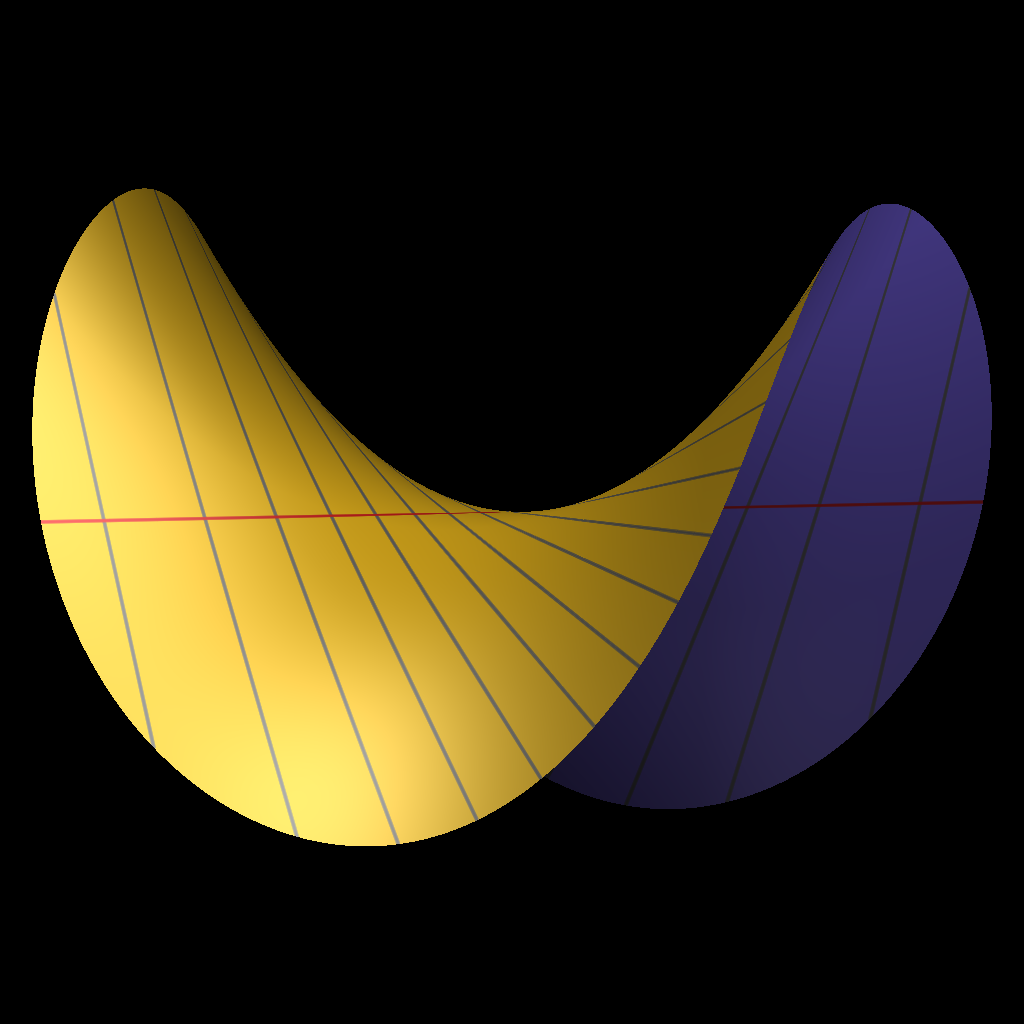
In mathematics, blowing up or blowup is a type of geometric transformation which replaces a subspace of a given space with all the directions pointing out of that subspace. For example, the blowup of a point in a plane replaces the point with the projectivized tangent space at that point. The metaphor is that of zooming in on a photograph to enl...
wise crater
zealous light
Interesting (pdf downloaded from my institution)
why drugs, corruption, and tensors
cause they'rr useful!
 solid wadi
Hello!
I am looking for literature that traces applications of mathematical stuff to real life, in the way that makes knowledge of fancy Mathematics readily appreciable from the economical, pragmatic point of view. Like, «why should I invest in this» point. For example, I want to read why groups are good, why cohomologies are good, why cobordisms are good… in terms of application. You get it.
I do not need an introduction to applied Mathematics here. But ideally not cheesy «groups are good for studying crystals and crystallographers use them a lot» stuff either.
wise crater
I liked reading some mathematical economics manuals, if only cause the interpretation of calculus was kinda neat
solid wadi
wise crater
I liked reading some mathematical economics manuals, if only cause the interpret...
Would you have any specific titles for me?
wise crater
solid wadi
Would you have any specific titles for me?
Mathematical Investigations in the Theory of Value and Prices by Irving Fisher its pretty short and you can probably pirate it
solid wadi
No need to pirate anything, it is on Archive already: https://archive.org/details/in.ernet.dli.2015.84061/page/n15/mode/2up.
Indeed it was written somewhere about 1892.
wise crater
yeah! its rather old timey
i imagine if fisher saw the insanity of the markets today the book would be a lil different
stable dagger
groups are used in tensor analysis, ODEs
many ODE books have groups in introduction
Arnold "ODE", Olver "Applications of Lie Groups to Differential Equations". Ibragimov "Elementary Lie Group Analysis and Ordinary Differential Equations"
topaz rune
solid wadi
Hello!
I am looking for literature that traces applications of mathematical stu...
Just read any physics or engineering book tbh
stable dagger
Algorithmic Lie Theory for Solving Ordinary Differential Equations By Fritz Schwarz
I think he wants application in math
topaz rune
Yes real life applications I think
Not different math that utilises the other concepts
stable dagger
oh ok
solid wadi
Yes, any Physics or Engineering book is going to explain some mathematics, but it will be mostly boring mathematics spread out at unnecessary length. I am not looking to learn how to do Engineering, but rather how to ground fancy Mathematics in pragmatic reality. So I was hoping there is a better fitting set of reading.
One could say I want to avoid doing the work of summarizing what I already know about how Mathematics is handy in daily life.
stable dagger
like to be useful for engineers as mathematicians?
solid wadi
Not sure I understand the question but the answer is likely to be «yes».
I know that Mathematics is handy for Mechanical Engineering, Radio Engineering, Software Engineering, and so on, but I know this because I have at least skimmed several books on these topics. I am looking for a more compact, but not trivializing summary.
stable dagger
not sure if such books exist, it's good to narrow it to some more concrete
solid wadi
Yep, me neither…
https://mathigon.org/applications — maybe something like this but a book.
stable dagger
why you don't want to pick up some specific area and dive into it?
solid wadi
I am already diving into specific areas!
topaz rune
solid wadi
I know that Mathematics is handy for Mechanical Engineering, Radio Engineering, ...
Summary like ‘math used by engineers and scientists + examples’ style or what do you mean?
This will be hard to find when it should have any depth because the applications topics itself are very big
http://www-m6.ma.tum.de/~alt/alt-continuum.pdf
For example this is about continuum mechanics from a more mathematical POV. It is used in the mechanics of deformable bodies, fluid dynamics and thermodynamics
This is about linear systems as studied by control and signal processing engineers https://federico-ramponi.unibs.it/docs/linsys2014.pdf
Maybe also check out the applied mathematics series by springer
Tbh I don’t quite get what you are looking for though
solid wadi
topaz rune
Summary like ‘math used by engineers and scientists + examples’ style or what do...
Yes. Something like that.
The links you sent look good. I am somewhat unexpectedly captivated.
topaz rune
solid wadi
The links you sent look good. I am somewhat unexpectedly captivated.
Ah, nice. I have tons of resources like these just hit me up with a topic and I can see if I have something about it
stable dagger
"Applications of Mathematics publishes original research papers of high scientific level that are directed towards the use of mathematics in different branches of science."
Institute of Mathematics of the Academy of Sciences of the Czech Republic
solid wadi
stable dagger
https://am.math.cas.cz/
Wow, this will be the first Czech web site I am to peruse.
 warm wedge
hello, any recommandation for a graph theory book/pdf ? with a huge emphazis on algorithms etc
stable dagger
for mathematicians or computer scientists, programmers?
Graph Theory with Algorithms and Its Applications: In Applied Science and Technology
Book by Santanu Saha Ray
warm wedge
stable dagger
for mathematicians or computer scientists, programmers?
more for computer scientists i'd say
 oak phoenix
Any math book recommendation for a class 10 student ?
the one i have is not sufficient already finished it
stable dagger
then read a book for another year or university math
topaz rune
oak phoenix
the one i have is not sufficient already finished it
Topic?
Just grab a more rigorous one of the same topic
stable dagger
Quantum: The Magazine of Math and Science was a United States-based bimonthly magazine of mathematics and science, primarily physics, designed for young readers. It was published by the National Science Teachers Association (NSTA) and Springer-Verlag and was headquartered in Washington DC.Quantum was a sister publication of the Russian magazine ...
oak phoenix
more specifically quadratic equation
 scarlet pumice
Hi, I am planning on starting my bachelor of mechanical engineering soon but my math isn't that good. Does anyone have any book recommendations?
stable dagger
are you in first year or just plan?
scarlet pumice
just planning but I will probably start in 4 months or so
stable dagger

This volume features a complete set of problems, hints, and solutions based on Stanford University's well-known competitive examination in mathematics. It offers high school and college students an excellent mathematics workbook of rigorous problems that will assist in developing and cultivating ...

Quora
Answer (1 of 9): I think everyone starts out here:
- The Art of Problem Solving, Vol. 1: The Basics: Sandor Lehoczky, Richard Rusczyk: 9780977304561: Amazon.com: Books
- The Art of Problem Solving, Vol. 2: And Beyond: Richard Rusczyk, Sandor Lehoczky: 9780977304585: Amazon.com: Books
These two...
scarlet pumice
stable dagger
https://www.amazon.com/Stanford-Mathematics-Problem-Book-Solutions/dp/0486469247
thanks for the recommendations
 remote ginkgo
solid wadi
I know that Mathematics is handy for Mechanical Engineering, Radio Engineering, ...
remote ginkgo
solid wadi
I know that Mathematics is handy for Mechanical Engineering, Radio Engineering, ...
kreyzsig has a nice book
'Advanced Engineering Mathematics'
remote ginkgo
topaz rune
Maybe worth a look or two
this book is useless
i bought it years ago and got nothing out of it
either you know the material already and it teaches you nothing new
or you don't know it and the exposition is too poor to learn from
not good even as a reference
topaz rune
remote ginkgo
either you know the material already and it teaches you nothing new
1400 pages and it can’t teach anything? The ratings are pretty good
topaz rune
Maybe it wasn’t for you
remote ginkgo
im approaching this from a statistical learning theory perspective
so its just like
guarantible
im evil like that
remote sparrow
what about boas or arfken
remote ginkgo
dunno them
remote sparrow
would that help?
remote ginkgo
bofas
remote sparrow
deez nuts
remote ginkgo
@topaz rune i also gifted copies of that book to multiple friends
none of them got anything out of it
kreyszig made a difference tho
topaz rune
I wouldn’t use a book this big as a copy, just pdf
remote sparrow
zill also has a big engineering math book
remote ginkgo
topaz rune
I wouldn’t use a book this big as a copy, just pdf
regardless
has too few actual computations and very little remunerative discussion
just not a good book
reviewers are just captivated by 'breadth'
topaz rune
Actual computations as in examples?
remote ginkgo
not actual mathematicians/physicists
yep
kreyszig is chock full of em
and covers the material in a much better way
try it out u will see what im talking ab
topaz rune
Too many examples can get annoying though
remote ginkgo
no it cant
topaz rune
I don’t use this book anyway I prefer shorter and more topic specific books
But that guy was about to start engineering and this book gives a good overview about the topics he’ll learn
remote ginkgo
i dont agree
i think its like
structure doesnt mimic actual engineering math
kreyzsig does
i think kreyzsig is just a better author in general
everything hes written is good
functional analysis from him is good
so is his diff geo book
hes just good
topaz rune
remote ginkgo
structure doesnt mimic actual engineering math
How so?
topaz rune
Often engineering math is taught way too hand wavey and crappy, especially in the US
remote ginkgo
i agree
and i think the book u linked does precisely that
kreyzsig is more careful in his writing
topaz rune
Idk never read it but it does give a good topic overview and that was my intention
When recommending
remote ginkgo
ok i have read it front to back
its not good
i like what it wants to do
but the execution is crap
kreyzsig does it better
topaz rune
Does krezsig pay you to say this
remote ginkgo
no i pay kreyzsig
topaz rune
Btw can you link the book I wanna check it out
remote ginkgo
sure
remote sparrow
there's also a book called advanced engineering mathematics by michael greenberg. dunno if that's good

 topaz rune
remote ginkgo
topaz rune
remote ginkgo
Hmm I don’t really like the topic layout tbh
He does ODEs before linear algebra
remote ginkgo
2 bad
presumably you should study linear algebra outside this book
i have a list of books i actually recommend
kreyzsig is not on it
topaz rune
Doesn’t load
remote ginkgo
yes it does
remote sparrow
https://www.amazon.com/dp/1498777805
https://www.amazon.com/gp/product/0486612724/ref=ox_sc_saved_title_5?smid=ATVPDKIKX0DER&psc=1
https://www.amazon.com/Table-Integrals-Products-Daniel-Zwillinger/dp/0123849330/

CRC Standard Mathematical Tables and Formulas (Advances in Applied Mathematics)

Handbook of Mathematical Functions: with Formulas, Graphs, and Mathematical Tables (Dover Books on Mathematics)

Table of Integrals, Series, and Products
these may be interesting splurge buys if an engineer wants to build a library of references
but not necessary
solid wadi
@remote ginkgo You have SSH problems. It loads only over HTTP.
solid wadi
Ah, SSL.
remote ginkgo
yes, there are no SSL certs
solid wadi
HTTPS.
remote ginkgo
hence i didnt link https
topaz rune
I have much bs turned off on my phone and it doesn’t load the page
remote ginkgo
i think your browser is messing up the url
solid wadi
This can be a problem. Some browsers do not like to connect without encryption.
remote ginkgo
solid wadi
This can be a problem. Some browsers do not like to connect without encryption.
ik
solid wadi
No, it is me who is messing up the URL.
topaz rune
solid wadi
This can be a problem. Some browsers do not like to connect without encryption.
Yep mine won’t
stable dagger
just ignore if it has no ssl, press agree
remote ginkgo
need to get a webmaster to fix that for me
topaz rune
Send a screen shit here with the list @remote ginkgo
remote ginkgo
bc too lazy
topaz rune
Screenshot


 topaz rune
I see much landau lifshitz
remote ginkgo
ya
topaz rune
topaz rune
Theory of elasticity volume is fine too for engineers researching or studying continuum mechanics
stable dagger
AI researches is very progressive and it's need and payable
If i were good mathematician I would look there
remote sparrow
does anyone know if Analytical Mechanics by Antonio Fasano and Stefano Marmi is a good book for a mathematically oriented treatment of lagrangian and hamiltonian mechanics?
topaz rune
stable dagger
AI researches is very progressive and it's need and payable
‘AI’ is just an umbrella term
Used mainly by marketing departments
Machine learning research pretty much boils down to optimization and data processing
wise crater
its topped out outside of a lot of work on what if
 bitter path
does anyone have suggestions on a calc 3 textbook that isn't primarily focused on computations (i.e not stewart lol)? im somewhat familiar with proofs, logic, and set theory
remote sparrow
bitter path
does anyone have suggestions on a calc 3 textbook that isn't primarily focused o...
try hubbard and hubbard or shifrin's text
crimson leaf
bitter path
does anyone have suggestions on a calc 3 textbook that isn't primarily focused o...
This course is a continuation of 18.014 Calculus with Theory. It covers the same material as 18.02 Multivariable Calculus, but at a deeper level, emphasizing careful reasoning and understanding of proofs. There is considerable emphasis ...
remote ginkgo
topaz rune
Machine learning research pretty much boils down to optimization and data proces...
you forget control
remote ginkgo
remote sparrow
try hubbard and hubbard or shifrin's text
agreed on both
if they are married would you call them hubbard & hubby
hearty steppe
Hubby and hubby
gray gazelle
remote ginkgo
http://sheafification.com/index.php/2022/08/14/the-fast-track/
2-3 years
gray gazelle
remote ginkgo
http://sheafification.com/index.php/2022/08/14/the-fast-track/
How do you get the free time to do this whole list in 2-3 years
remote ginkgo
magic
gray gazelle
Any good introductory texts for getting projective geometry at a senior undergrad / early grad level?
 sick river
Check out this projective geometry book. Most introductions are synthetic so for me I preferred this book when learning the subject the first time. https://www.amazon.com/Analytic-Projective-Geometry-Textbooks-Mathematics/dp/3037191384

Projective geometry is concerned with the properties of figures that are invariant by projecting and taking sections. It is considered one of the most beautiful parts of geometry and plays a central role because its specializations cover the whole of the affine, Euclidean and non-Euclidean geomet...
 zinc jewel
Hello guys! What do you all think of book called ''A survey in modern algebra'' is it a good book for highschooler?
remote sparrow
zinc jewel
Hello guys! What do you all think of book called ''A survey in modern algebra'' ...
depends on your needs and background
pinter is pretty good for the average highschooler though
zinc jewel
remote sparrow
depends on your needs and background
just for like understanding algebra deeper
remote sparrow
abstract algebra or just that solving equations stuff
zinc jewel
i wanna find what i truly like in maths
zinc jewel
remote sparrow
abstract algebra or just that solving equations stuff
ig so
zinc jewel
solving eq
remote sparrow
a survey in modern algebra is not appropriate for you
zinc jewel
remote sparrow
do you know what abstract algebra is?
i have read in wiki😂
i know there aint no eq but it still can be amazing
remote sparrow
do you know how to read and write proofs?
zinc jewel
kinda
not bad at it but not pro
i just wanna explore math yunno starting with algebra bc i like algebra but not the olympiad one
remote sparrow
well, i can certainly tell you that abstract algebra has very little to do with "solving" equations like quadratics (but it can tell you about the nonexistence of a quintic formula)
but nonetheless you would be better off with something like lang's basic mathematics if you're looking for a deeper look at algebra of the solving equations sort
zinc jewel
remote sparrow
well, i can certainly tell you that abstract algebra has very little to do with ...
i dont really care if there aint no equations but like i just want to find something more than equations solving i mean i love it but
remote sparrow
as to your experience with reading and writing proofs, would you mind telling me what materials you've gone over already?
zinc jewel
remote sparrow
as to your experience with reading and writing proofs, would you mind telling me...
olympiad math
and lots of lots a4 papers of writing why apple belongs to the 3rd path not 1st
remote sparrow
are you familiar with any of the methods outlined in this table of contents?
that's what i want to know about your experience with reading and writing proofs
zinc jewel
idk man im not learning in english nor i am learning the names
i mean
in like regions
remote sparrow
i've never participated in a math olympiad, so i wouldn't know
zinc jewel
😂
remote sparrow
i also don't know your native language, so i'm not sure how else i can further advise you
zinc jewel
ill just read it and see if i like it
but it is abstract algebra right?
with linear
remote sparrow
undergraduate abstract algebra textbooks may discuss linear algebra (a prominent example is artin's algebra text) but it does not need to
zinc jewel
i meant this exact book
remote sparrow
may you remind me what book you are referring to?
zinc jewel
A survey in modern algebra
remote sparrow
i've never read it myself, so i wouldn't know whether linear algebra is specifically discussed in the text
i do know what it is about
zinc jewel
ah man
remote sparrow
it's an abstract algebra textbook, as i've previously implied.
 loud cradle
zinc jewel
A survey in modern algebra
loud cradle
zinc jewel
A survey in modern algebra
birkhoff/maclane? it has about 200 pages (4 chapters) of linear algebra up to and including jordan canonical form
remote sparrow
and it likely has very little to do with the olympiad math you've already done
zinc jewel
remote sparrow
and it likely has very little to do with the olympiad math you've already done
i dont need olympiad math
remote sparrow
i know. but i tried to assess your background, and so far i haven't received a satisfactory answer. this could be due to your language barrier, but i do not feel i could in good conscience, with the information i have now, recommend you birkhoff/maclane's text.
zinc jewel
yeah all i can tell you is i have written a lot of prooffs in math olys
like not olys but preps for olys under teachers look ig
gray gazelle
sick river
Check out this projective geometry book. Most introductions are synthetic so for...
Thank you!
 hasty eagleBOT
You already have the selfroles studying!, do you want to remove them? (y(es)/n(o))
(Tip: use ,iamnot to remove roles without this prompt.)
Removed the studying! role from you.
Session timed out waiting for user response.
 hidden apex
Good math book for calculus?... i will start learning calculus next week
solid wadi
hidden apex
Good math book for calculus?... i will start learning calculus next week
Differential and Integral Calculus by Richard Courant is a classic.
hidden apex
solid wadi
_Differential and Integral Calculus_ by Richard Courant is a classic.
is it easy to read and understand?
i am dumb
 frigid burrow
if you think you are dumb then you are looking for a book with a lot of examples and a lot of explanation
https://math.stackexchange.com/questions/322892/calculus-book-recommendations-for-complete-beginner
but to be honest, if you want to master calculus you need to change your mind about yourself being dumb :)
solid wadi
hidden apex
is it easy to read and understand?
You can do it if you try. If something is not working, you can always ask on the Internet! Trying for a while and then talking to someone leads me to understanding every time I try.
Yo! I am looking for literature that talks about Abstract Algebra in concrete examples and problems. For example, instead of saying that a group is a set with such and such operations and laws, I want it to tell me about symmetries of physical bodies, Platonic solids, tilings, graphs, and then introduce stuff like stabilizers on these examples and apply the fancy abstractions to concrete problems, like say how to find solutions for Rubik's cube. There must be computational content and if some results are given without proof that is fine — I already have all the proofs I need. Ideally I want it to go on to other algebraic settings like rings, modules, fields, vector spaces, topological groups, and so on.
hidden apex
frigid burrow
if you think you are dumb then you are looking for a book with a lot of examples...
oh okk
hidden apex
solid wadi
You can do it if you try. If something is not working, you can always ask on the...
i understand. i just every time want to finish theory as quick as possible(as these make me sleep) and then try a lot of problems
solid wadi
I see. Well, what I do when I want to learn something is blaze my own path — find something that can in principle be done with the theory I want to learn, and then try to do some chunk of it. So, you need a task that requires Differential and Integral Calculus that you want to see done. Say, you can try to build a robot.
Both Electrical and Mechanical Engineering need some integration. So you will have any number of problems on your hands right away.
hidden apex
solid wadi
I see. Well, what I do when I want to learn something is blaze my own path — fin...
👍
 safe aspen
Anyone know where I can buy a license key for this book?
University Physics with Modern Physics, 15th edition
 pseudo zodiac
solid wadi
Yo! I am looking for literature that talks about Abstract Algebra in concrete ex...
pseudo zodiac
solid wadi
Yo! I am looking for literature that talks about Abstract Algebra in concrete ex...
carter visual group theory does some of this
remote sparrow
solid wadi
Yo! I am looking for literature that talks about Abstract Algebra in concrete ex...
This probably occurred to you already, but i at least know there are dedicated group theory textbooks for chemists, and thus possibly for other scientists.
topaz rune
,iam dying
hasty eagleBOT
Gave you the studying! selfrole.
 charred roost
anyone have a good book recommendation for an introduction to probability for a mathematically mature student?
remote ginkgo
charred roost
anyone have a good book recommendation for an introduction to probability for a ...
billingsley
 finite thorn
I'm looking to get into combinatorics after I'm done with Artin's Algebra. What is a good book for Probabilistic Combinatorics and what are the requirements for that?
remote sparrow
finite thorn
I'm looking to get into combinatorics after I'm done with Artin's Algebra. What ...
i don't quite know any such books for that, but an introductory book to combinatorics that gives a survey of the probabilistic method (i.e. positive probability implies existence) would be A Walk Through Combinatorics by Miklos Bona. i also found a few syllabi for courses that do specifically teach probabilistic combinatorics (though they may or may not be suitable for your background), and they list a textbook. my limited search indicates alon and spencer's text is most commonly used. i also found a couple of miscellaneous PDFs.
https://www.math.uni-frankfurt.de/~acoghlan/probcomb.pdf
https://courses-archive.maths.ox.ac.uk/node/151
https://yufeizhao.com/pm/
https://impa.br/wp-content/uploads/2017/04/28CBM_04.pdf
https://math.gatech.edu/courses/math/7018
https://sites.math.washington.edu/~rothvoss/lecturenotes/ProbabilisticCombinatorics-15-MAR-2019.pdf
 old elk
frigid burrow
if you think you are dumb then you are looking for a book with a lot of examples...
old elk
frigid burrow
if you think you are dumb then you are looking for a book with a lot of examples...
A first course in calculus Serge lang
 dim hound
Anybody have a discrete math book that has a lot of good practice problems? Specifically in Set theory, logic and counting?
 unique ice
dim hound
Anybody have a discrete math book that has a lot of good practice problems? Spec...
unique ice
dim hound
Anybody have a discrete math book that has a lot of good practice problems? Spec...
kenneth rosen?
dim hound
Thanks, I'll check it out 🙂
unique ice
Just wanted to put this out there: I’ve read Claus Tondering’s Intro to Surreal numbers some years back https://tondering.dk/download/sur.pdf and I liked it
dim hound
Skimming through it, there seems to be a lot of really well explained proofs on it. So I'll check that out as well
Discrete is a lot harder than I expected it to be lol
unique ice
dim hound
Discrete is a lot harder than I expected it to be lol
It’s v useful
remote sparrow
epp is a common alternative (though taking a glance at its table of contents, it doesn't seem to cover as many computer science applications as rosen)
hammack is adopted at some institutions for discrete math classes (plus its PDF is free)
concrete mathematics by knuth technically fits the bill but it's probably too hard for you

Open Textbook Library
Discrete Mathematics: An Open Introduction is a free, open source textbook appropriate for a first or second year undergraduate course for math majors, especially those who will go on to teach. The textbook has been developed while teaching the Discrete Mathematics course at the University of Northern Colorado. Primitive versions were used as th...
this free book seems to have good reviews
it'd help if you could send us a syllabus
unique ice
remote sparrow
concrete mathematics by knuth technically fits the bill but it's probably too ha...
I am planning on doing it, we can do it if you want
remote sparrow
if you feel confident then go ahead
dim hound
remote sparrow
it'd help if you could send us a syllabus
We cover chapters 1-14 on Hammack's book of proof.
remote sparrow
common alternatives to hammack would be velleman's How to Prove It or chartrand's Mathematical Proofs: A Transition to Advanced Mathematics. books that i personally enjoyed were Foundations of Mathematics by Thomas Q. Sibley and Proof and the Art of Mathematics by Joel David Hamkins. do note that hamkins organizes his content by mathematical topic rather than specific proof techniques, so it may be difficult to use as a reference.
dim hound
I'll check them out. Thanks dude :^)
plucky shell
Any recommendations on books that would useful as I attempt to self learn knot theory?
forest sleet
Adams The Knot Book
 granite viper
Knots and Physics; On Knots; Formal Knot Theory (Dover Books) by Kauffman
forest sleet
if you want more algebraic topology (don't think Adams' book uses it since it's an intro) I've heard Rolfsen recommended
plucky shell
I'll be sure to check them out, thanks for the advice.
 hollow dome
Any good books for linear algebra?
granite viper
hollow dome
Any good books for linear algebra?
hollow dome
Ty
gray gazelle
Which proof book would be better for me? How to Prove it by Velleman or Transition to Higher Mathematics by Chartrand? (CS major but I want to really learn real/functional analysis)
heady ember
unique ice
kenneth rosen?
Rosen was too boring for me personally. I read only like the first 20-30 pages. But i mean if you like it, there's no problem continue using it.
then i tried Enderton and liked the pain and suffering
 shadow crown
is isaac asimov an ok book
I just found it
it's kinda Babylon kind of numeral
it's like Roman numerals but different letter
hearty steppe
Hey if your learning knot theory, maybe try ordering some of these too https://www.tavernpuzzle.com
They’re really really really really really hard but I love them. I own two disentanglements and solved one so far
 lethal fox
does someone know good introduction or overview to semidefinite programming?