#math-pedagogy
1 messages · Page 48 of 1
 quasi musk
Since most of math is streamlined
Even if the thing useful in research is comfortability with trial and error
 wispy slate
In the realm of "how do we productively talk about math" and teaching people how to choose positive rhetoric towards math in general, I struggle a lot when trying to amend statements that might have been false or over-complicated.
I don't want to use that same performative self-hating language in front of the people I am tutoring because I know it will just influence them to do the same
 brisk ruin
Do you have an example?
wispy slate
Yeah like say I explain something wrong and then follow up with "sorry I am a dumbass, this is the right thing"
Then they go on to do the same thing cause in a lot of uni environments making mistakes is shameful especially when people are trying to be perceived as having some kind of "prestige"
And that is not good, but I am definitely just bolstering the problem and want some better ways to say "oh that was wrong" without apologizing or shaming myself
So that they also do not feel like they have to do that to themselves
wispy slate
that's a good one
if anyone has any other things they use like that please do mention
 dawn walrus
I think maybe in my case, I still want to apologize whether or not I'm going to say something self-deprecating.
brisk ruin
Oh hello ranyakumoschalkboard
Anyways
I think this is a good point
Certainly there is a culture of excessive self-depracation
And one would want to avoid perpetuating it
However, an apology is not necessarily an example of excessive self-depracation
wispy slate
brisk ruin
However, an apology is not necessarily an example of excessive self-depracation
tru
brisk ruin
Of course, it would depend on how you go about with the apology
dawn walrus
For me when tutoring it comes down to the student. If I feel that the student finds too much confidence intimidating and responds well to a funny self-deprecating joke, then I'll do that once in a while because it can help them to lighten up. But I always try to throw in a little quip about growth and how it's completely normal to make mistakes. Obviously I'm not like the best tutor ever or anything so maybe I could do better by being completely positive.
I also think there's an aspect to the authenticity which helps someone who already thinks this way to connect with you a little better.
But I can also see where it would be harmful.
brisk ruin
Yeah making mistakes and owning up to them in an honest manner can definitely help with approachability esp. with people who might be intimidated
But it seems to be quite nuanced
Like it might have the opposite effect of "Oh no [smart person] makes mistakes how could I possibly get it right?"
dawn walrus
Yeah, you need to be ready to u-turn it away from that and toward "they're just like me" which is sort of what the growth thing does.
For me, I think the toughest sort of mistake to tackle is not when I do something wrong solving a problem or presenting an idea, but when I do something wrong while formulating a problem.
Like I get halfway through the solution and go "wait this isn't right, I meant to add this condition"
And that seems to really throw people off. When it comes to other mistakes, at least the person you're working with might spot it before you which can be really good for their confidence.
(That's another thing: If THEY spot it before I do, I definitely don't call myself stupid, because that's removing the credit from them for spotting the mistake. Instead, I thank them and compliment their attentiveness.)
 shadow basalt
for it is definitley inverse to the mistake
brisk ruin
Are you missing a pronoun
shadow basalt
like if I make a mistake that is really easy to make or not obvious
yes i am
then I will just be like
Oh whoops that was silly
I think framing it as "careless" is also better than "stupid"
lots of the mistakes math teachers make are do to a lack of being careful
dawn walrus
shadow basalt
I think framing it as "careless" is also better than "stupid"
Ooh, I like that.
shadow basalt
and even the best mathematicians fail to be constantly careful
I think the carefulness focus strikes an importance balance between like
dawn walrus
We need more anecdotes of great mathematicians making silly errors. Can't use the Grothendieck prime one more than a dozen or so times on the same person.
shadow basalt
you shouldn't be hard on yourself for mistakes
but at the same time
you can try hard to avoid them
and you want to encourage that
shadow basalt
dawn walrus
We need more anecdotes of great mathematicians making silly errors. Can't use t...
a lot of them are a lot harder to appreciate
which is why the groth example is infamous
dawn walrus
That's sensible
shadow basalt
bc even a young kid can see why its a mistake
When I tell you "wow John McCleary wrote surjective when he meant injective in a spectral sequence computation"
its the same level of carelessness, really just a typo
but its harder to see why that ruined my afternoon
lol
brisk ruin

 meager bronze
during my 2nd year of grad school I "proved" that the only odd prime number was 3
I like to bring that up as an example of how everyone makes mistakes hahaha
meager bronze
it all checks out
brisk ruin
 kind salmon
Hello fellow didacts and pedagogues!
I have a student whom I am 99.9% sure has synesthesia.
Now i struggle to aid her further and barely find useful scientific research on that topic. Since I am obviously not much qualified but hesitate to send her to a neurologist right away:
Do you know any reliable sources or social platforms to recommend to her (in english, french or german)?
shadow basalt
I would be very surprised if there were not a few discords about synesthesia and for people with it
Would there be a purpose to the neurologist? It's kinda cool to confirm the diagnosis I guess but I am not sure if there is anything a neurologist would actually do for her?
kind salmon
Ty, that's a good idea. Will check discord further.
And yeah, I don't think a neurologist would be a wise approach. It's just the only reliable I found yet.
wispy slate
Any advice for how to be a better tutor? I currently tutor CS courses at a community college.
It seems like students generally come to my university tutor department after they are already several weeks or a month behind, to give context.
A student will ask about something like iterating through an array that sort of reveals a lack of understanding about loops, but then they'll have some knowledge gaps with loops, and so we have to go into control flow, and then from control flow to variable assignment sometimes.
This happens quite often and it seems as though the students get pretty frustrated or it makes them even less confident than when they arrived. The actual subject can change but it's still kind of a one issue becomes a lack of understanding of another, and you have to trace it back, sometimes revealing a lack of understanding in multiple things.
I'm not sure if this is a bad approach. Students generally get frustrated when I do this but I don't think it's a good idea to just "fix" their code for them, I think tackling the understanding issues is more important if they exist.
At this point I generally give them a realistic time frame and study plan and ask them to come back if they need help during my office hours, but they sort of recoil at that time commitment. I.e. if a student is a month behind with no prior programming experience (common) I tell them that they're going to want to be studying 2-3 hours a day.
Any advice is appreciated.
brisk ruin
I definitely agree that tackling the underlying issues is the correct solution as opposed to just fixing their code
wispy slate
So like there will be a question that comprises multiple "primitive chunks" i.e. loops, control flow, variable assignment, and usually the problem is they don't know one of those "primitive chunks" for lack of a better word, a basic concept.
It's rarely a simple issue.
brisk ruin
Providing simple code fixes seems to be setting someone up for failure in the future
 austere inlet
it's like a math tutor just giving students the answers or algorithmic solutions to some exercises
I think suggesting a study routine for them is good, often problems like that stem from people not having such a routine (it doesn't even need to be something set and rigid, just them dedicating some time each day to studying) or not expecting to study much or at all in their higher education (I think this is pretty common since you can pass in HS by barely doing anything)
dawn walrus
I think sometimes making people feel a little frustrated is not a bad thing, because it is indicative of a realization of what they don't understand. The first step to understanding something is realizing what precisely it is you don't understand, so that you can focus on it and not skip over it with an incomplete understanding. Maybe there's some way to get across to your students that their frustration about this is actually a healthy sign of progress, because it involves a sort of meta-realization with regard to their relationship with the material. (Sure, maybe not as great as a non-meta realization, but usually those come afterwards).
brisk ruin

dawn walrus
And once you get that across I guess it provides a gateway into grinding in some of those foundational concepts haha.
 lethal leaf
I mean there are some hard truths you just gotta deal with
They're only coming to you as a reactive, not preventative measure
And like there's only so much time in a session
It's hard to fix every underlying issue in an hour or two
But yes you're right you shouldn't just feed answers
 winged urchin
Yeah, as much as I try to lead them down the path to learn something, sometimes I admit I find I have to take the simpler path. Just showing how I might go through a practice problem for instance. And sometimes I do believe this is okay, sometimes students do just need to see how it's done and they don't have the time (or money) for the longer explanations
dawn walrus
I agree
I don't think that it's helpful to think about pedagogy in a "NEVER do this!!!" way, well besides the obvious things.
There are situations in which it will help someone tremendously to just see a problem done in front of them
With the thought process fully explained
 wise lodge
This is just my two cents
Perhaps at the beginning of your first session, you could ask your tutee what they want out of the tutoring so you can adapt your teaching style. Sometimes tutees get frustrated because what they get out of the session is not what they expected. Some students just want to pass their course and want to learn math hacks. We may not agree with this strategy (they’re going to get screwed in later courses!) but as the saying goes, the customer is always right.
wispy slate
wise lodge
This is just my two cents
Perhaps at the beginning of your first session, you c...
Well the issue is that it's programming so you can't just grind formulas the same way, even in an intro class, while in my uni's calc 1 course you certainly can.
I don't tutor mathematics, sorry if I gave that impression.
But I feel like they might be similar enough to where asking the question here is beneficial.
wise lodge
I brought up mathematics because of the nature of this server and my own personal experience. I never studied computer science, so I wouldn't know how applicable my advice would be, but I thought it was worth a shot.
wispy slate
I tutor in community college so yeah, we already have a 50% drop out rate or something, and then I assume worse for STEM
I just wanted to ask if I was doing anything wrong because I've yet to have a student actually go and, do the study plan that I've given them or return after 1-2 tutor sessions
so I assume they're just coming to me reflexively when they begin to panic, then withdrawing or dropping out
and I'd really prefer that at least some of them this doesn't occur, it's happened like four times
wise lodge
Is it free tutoring?
wispy slate
then they never come back for another session (which is free to them), I'm the only CS tutor rn oddly enough
yeah
included with the college
I get paid out of work study
But sounds like from what you guys have said I just have sort of limited influence on a student, I can only provide them materials and plans that, if they listen will rectify their situation, I have no real ability to make them do it
wise lodge
Its not your fault and if the drop out rate is that high, then I have a feeling the same reasons why the students are behind in their courses is the same reason why they do not follow the study plan.
wispy slate
Yeah, it's open enrollment
I just wanted to check with you guys and see if I'm objectively worsening their situation or doing things badly because I have no pedagogical training whatsoever.
wise lodge
I have some tutees that literally do not do any studying outside of the tutoring sessions.
wispy slate
Yeah, that is most of them
wise lodge
They end up doing well but not because of my teaching per say, its just a trick to get them to study.
wispy slate
I think CS might also be one of the majors where people seem to really uh
They get into it because of this promise of a career but have no idea what it is, get in, don't like it, they don't study, but are afraid to swap majors
So of course there is a natural attrition that occurs because people realize they simply do not enjoy it along with the base level attrition for STEM programs at my college
Well at this point I'm more sort of ranting, but thanks for the advice and thoughts.
I will continue doing what I am because I am entirely sure if people did what I said they'd easily pass the course with an A or at worst B
I think a lot of them just realize they don't want to study CS
wise lodge
haha not sure how strict the rules are about on-topic, but I would wager as long as its in the spirit of the channel, its gucci. It's a good idea to rant sometimes.
wispy slate
The same thing happened to me for chemical engineering
I thought I was having trouble in courses but really I just did not enjoy chemistry or chemical engineering in any way
wise lodge
They get into it because of this promise of a career but have no idea what it is, get in, don't like it, they don't study, but are afraid to swap majors
I think often times people like the idea of what they're studying more then actually doing that thing.
winged urchin
Also I mean, to be an academic I think you need to be comfortable with some length of time where you're not enjoying it
Like I don't necessarily enjoy doing long calculations that you don't necessarily know how to navigate
Its a lot of trying things, failing, then trying other things
And you only REALLY get that sense of joy and satisfaction when it (hopefully) finally clicks and you figure it out or get the result you were looking for
When the program finally compiles and does what you want
There's also a pretty huge disconnect between school and research in this way
In school you can be relatively sure that even if a problem is giving you trouble, there IS a relatively nice solution you just need to find how to get there
Sometimes in research you're simply asking the wrong question or thinking the wrong way. There is no guarantee of a nice solution. And furthermore you can't really determine whether you just haven't tried hard enough or whether your approach or question is fundamentally unsolvable
shadow basalt
Okay so unsurprisingly #chill was very cringe about this, but I had a question for (primarily) people educating highschool-early college students
Do you think including simple memes that convey somewhat complicated ideas can help students?

This was the image in question. Obviously tons of boring graphs and polygons can give you the same idea, but to me if a student was already bored and half paying attention, I could see a meme sort of "breaking through" that
But I also already understood the concept before seeing the meme, so its hard to know if it would actually make sense to someone learning it
 rapid kettle
i guess it would make a lot of sense for students familiar with software development
or just familiar with graphics and rendering
 round robin
i have no idea wtf the meme is trying to convey tbh
dawn walrus
yes but it can also be cringe
but like
that's probably fine
if you're confident enough in being cringe then you can gain the respect of highschool age students, but they will ignore the point of the meme if you're timid-cringe
 molten urchin
I think I like this meme. It seems to convey the idea really well.
Although one would still need to explain the meme itself, it is catchy, and for a younger audience this seems to matter a lot.

 dawn walrus
wait i dont really get why sums are bumpy and integrals are smooth
oh i guess if you're thinking about riemann integrals of continuous functions
sure
brisk ruin

 real mauve
me likey
 stark pine
 turbid zenith
Same energy https://twitter.com/howie_hua/status/1246205490444431360
turbid zenith
Same energy https://twitter.com/howie_hua/status/1246205490444431360
I think this photo is much clearer than the one max sent tbh
real mauve
it's not as funny tho, it kinda takes itself too seriously
i'd put the cat one on my slides when presenting stuff both to students and professors
round robin
turbid zenith
Same energy https://twitter.com/howie_hua/status/1246205490444431360
tbh i feel this is clearer
lethal leaf
dawn walrus
oh i guess if you're thinking about riemann integrals of continuous functions
that's the exact context ya
molten urchin
Max's post above has more of a meme vibe; Ashura's post actually just seems to convey the idea. Depending on the audience and occassion, one may be preferred over the other.
 teal kelp
i like the floppa one more
turbid zenith
I like both!
 mint lark
hmm.
So I was recently grading a homework in an introductory analysis course (so they've taken linear algebra with proofs but no other proof courses) and someone wrote something like C_n = {V \ closed ball of radius 1/n about v} for some fixed v in V. They then claimed without proof that the union of all the C_n was V \ {v}. I counted off 1 pt/15 for this, because it was critical for the proof to work (it was a proof that compact => closed). The student submitted a regrade request and I'm trying to figure out like what people expect when they submit work
I try to grade with the intent that like, barring very hard problems, everyone in the class should be able to read the proof and understand it, and claiming set equalities like this without any proof or explanation seems to inhibit that. Do yall think this is a fair assessment? I did something similar when they claimed that a union from n = 1 to N of C_n would just be C_N
ofc this would be acceptable in further courses, but for now it seems like something they should verify
especially considering some students wrote false equalities or wrote things like C_n = {V \ open ball of redius 1/n about v}, which meant it wasn't an open cover, etc. etc.
shadow basalt
I would give the point honestly
i think its hard and a judgement call
and your point removal was very small
mint lark
it was 1pt for that and 1pt for the other thing
maybe should take 1.5pts overall
wait no it was 1.5 pts overall that I took off :)
shadow basalt
I would say like
if you believe the student understands what they are doing
then only take off points once
for effectively the same mistake
mint lark
ye
shadow basalt
bc you haven't given them a chance to correct it yet
mint lark
yeah
shadow basalt
I think as much as you want newer students to be more explicit
figuring out the correct level of explicitness is especialy hard for new students haha
and for some statements like the above are so obvious that it might not even occur to them
(fwiw, I don't plan on grading with your "other students" framework, but more of a "am I convinced you understand it" framework)
(this probably has its own disadvantages)
mint lark
The way I see it is that there are two equally important components that the homeworks test
- Mathematical Understanding
- Mathematical Communication
I'm convinced this student had 1
But for 2 I think there wasn't enough
Where we assume the target audience is the same level of student or slightly higher
shadow basalt
Well
Who does the student think they are communicating to
Have you told them that their audience is their peers rather than you?
You clearly understood their communication
mint lark
This is something I've /the professor has stated in class a few times. Though I don't think it's written down.
It's something I would include in a syllabus if I were writing it but I'm not lol
shadow basalt
Fair
Yeah idk it certainly isn't poor communication in my mind
just not detailed enough
for what the prof wants
you're like halfway through the sem right?
shadow basalt
Ah
mint lark
we're on homework like 10 and this was homework 6?
mint lark
and we're a few weeks from finishing semester
brisk ruin
I think I would agree with your initial assessment
Just based on my experiences grading intro real analysis
brisk ruin
Sure, but the point of proof is communication
brisk ruin
Rudin is a pedagological disaster
mint lark
^^^
brisk ruin
And if the class has previously communicated
shadow basalt
idk it seems very harsh and arbitrary to me
to act like this student did anything wrong
brisk ruin
That proofs should be targeted for classmates
shadow basalt
Idk to me this is worth like
red-penning on the paper
without any reduction
but i also think a 1/15 reduction is fairly harmless
mint lark
the class is heavily curved. Like everyone gets an A in the end if they've been submitting homeworks essentially
so my grading is essentially
brisk ruin
No one pays attention to feedback if there isn't a point deduction
mint lark
and more an indication of how serious I think the thing is
brisk ruin
Where people weren't stapling their homework together
There was no issue with the math
But literally pages were being lost
And regardless of how many times I asked for stapling and the instructor announced it in class, nothing changed
brisk ruin
Yes there were staplers
There are many staplers around campus
I wasn't losing papers
shadow basalt
in the room?
brisk ruin
The student was losing papers
shadow basalt
oh lol
brisk ruin
But the point of this isn't about stapling
The point is to demonstrate that people don't listen to feedback if there isn't point deductions
On gradescope it's even worse
You open gradescope, see the grade, if it's a perfect score you don't even bother to open it and see if there's feedback
shadow basalt
in fairness that feedback will be useless pretty soon though
like the students argument would be perfectly fine in the future
I guess I am just not sure what one is trying to teach
by saying that argument wasn't good enough
lethal leaf
mint lark
The way I see it is that there are two equally important components that the hom...
See here I think is the disconnect
IMO
they are both important
but not equally important
shadow basalt
Yeah I guess I am not convinced there was an issue in communication
lethal leaf
I think understanding > communication but some amount
and that getting better at communication
shadow basalt
This is the sort of thing an oral exam could immediately clear up
lethal leaf
will come with time
shadow basalt
or a course with corrections
lethal leaf
as you write more proofs
shadow basalt
Idk like consider how this would actually work in research
You would submit an article to an editor
and they would be like
I am not convinced by this proof
and you'd flesh it out and return it
There isn't any parallel in the grade once and done pset scheme
mint lark
research isn't the only thing mathematicians do though
shadow basalt
Replace article and editor with expository and audience
mint lark
they also teach and write expositories and communicate to the public (at least some do)
what about textbooks?
mint lark
true
mint lark
mhm
shadow basalt
and it seems weird to me to take off points
when the correct solution in reality would be like
"why is this true" "oh heres the easy lemma" "okay great"
mint lark
I mean I have general problems with psets. But I can see why this would be a good thing
For now I think I'm going to keep it as is considering the context of how the class is graded and how few points it is
shadow basalt
The real issue is that grading-with-corrections is like
impossible to implement
bc of time constraints on graders
mint lark
but in the future what I might do is like. If I take off points for minor details, ask them to submit a regrade request for details
major details / big mistakes wouldn't get this treatement
mint lark
mint lark
but in the future what I might do is like. If I take off points for minor detail...
with a description of how to prove it in the regrade request
shadow basalt
I would just say as policy at the beginning like
If I mark off points for a lack of details
you can resubmit within idk 48hrs
and if you fix it
or just email me the details
ill give the regrade
something like that
dep. on how big the class is ig
brisk ruin
At least at Berkeley, the students are not supposed to know who the grader is
mint lark
so that's not hard to do
brisk ruin
So there is no direct communication
mint lark
I don't just grade I also course assist
brisk ruin
Ah ok
mint lark
so that means like I'm in class 2/3 times a week
brisk ruin
That is sensible then
mint lark
and stuff
also gradescope has like regrade requests where you could put in details
if grader was anon
dawn walrus
it's so nice to be grading a class where the prof doesnt allow regrades
like just trust me i know what i'm doing
i have never gotten a legit regrade request
stark pine
brisk ruin
At least at Berkeley, the students are not supposed to know who the grader is
at my school lower division courses don't do that, but small upper year classes will often list which TA graded which problem so you can just talk to them directly
brisk ruin
Oh
We have the instructors deal with regrade requests
However this is only for graders
stark pine
yeah some courses do that
brisk ruin
If the grader is also the course assistant then the students will know them
stark pine
dawn walrus
it's so nice to be grading a class where the prof doesnt allow regrades
not allowing regrades is kinda ass - what if there's legitimately a major grading mistake? I've had graders like... miss a page of solutions
brisk ruin
Yeah there are definitely times where regrade requests are proper
But I feel like Gradescope makes requesting a regrade request too easy
So you get buried in them
Where as when grading in person
I think regrade requests are more reasonable
stark pine
What I've heard has worked well is profs saying "We will grade more harshly and there is a good chance your mark goes down unless there was a major error"
brisk ruin
I feel like this can intimidate students, especially if they aren't super confident
shadow basalt
ugh thats so gross imo
a student asking for a regrade shouldnt be worried about reducing their own grade
might as well just not offer it
shadow basalt
stark pine
not allowing regrades is kinda ass - what if there's legitimately a major gradin...
i feel like even in a regrade free class you could email the prof about this an get an exception
stark pine
shadow basalt
a student asking for a regrade shouldnt be worried about reducing their own grad...
but the point is to prevent frivolous regrades
shadow basalt
I think its just a dick move hahaha
stark pine
I've also seen "we will regrade your entire paper not just one specific question, so if there were any errors in your favour they'll be fixed too"
same idea
shadow basalt
yeah those are all bad policies
i care a lot more about helping students w legit regrades
dawn walrus
I usually would allow regrades, but I dont set up the gradescope, the prof does
shadow basalt
than i care about trying to hamper students w frivolous regrades
dawn walrus
However if I make a mistake and someone contacts me some other way / mentions it to the prof I'll obviously fix it
It's not that the policy is that "grades are final" (which is stupid)
It's that the button is just disabled
Every regrade request I'd ever gotten prior to this was someone complaining that I took off points for an actual error, and trying to tell me the error was a mistake and that they didn't mean to make it
Which like... Yeah, that counts as an error! Sorry.
Obviously it's tougher to get to the prof about a grading mistake during covid (well, actually its probably easier due to virtual office hours, but my point is that it's different from usual)
mint lark
I've had students send me regrade requests just to vent
the context was like we had stated Heine-Borel at some point, because our progress in the worksheets / the homework can be different
 strange bronze
regrade request: i couldve gotten a 100 on this if i just didnt make any mistakes
please revise
mint lark
and someone used Heine-Borel to prove compact => closed which was the whole problem
and I was like "this trivializes the problem and you weren't supposed to be able to do this"
and gave them 4/15 (4 points of completion on that problem since it was hard)
and they were just like "damn this is 1/4 of the homework grade...."
But like idk there was nothing else I could do
turbid zenith
Hot take: All of this stems from pointmongering and is why I'm against traditional grading in the first place 😛
mint lark
that is an extremely tepid take :P
turbid zenith
I mean
"Get rid of traditional grading" makes a bunch of people hiss
But in this company yeah thinking about it it's pretty tepid
Problem is incorrect? 0/1.
Fix it for full credit.
mint lark
I'm very glad that the course I do grading for is like
so curved
bc otherwise it would be depressing
feeling of: what right do I have to make these people stress out by hitting a button
turbid zenith
Yup
shadow basalt
turbid zenith
Problem is incorrect? 0/1.
I've seen a few problems on psets where even coming close to a solution is worth full credit
but honestly regrades can be logistically quite painful
turbid zenith
shadow basalt
I've seen a few problems on psets where even coming close to a solution is worth...
That's respectable depending on the problem I think
shadow basalt
I am not sure what the correct solution is
turbid zenith
I think with mastery grading you can hold them to a high standard without worrying their grade will tank
"This isn't right. Fix it."
I'm going to see how that works next semester when I teach intro proofs ... basically the way I was taught intro proofs a couple semesters ago (required course in my program but it was still good to see how it was done)
But logistically it would be difficult at large universities without the right structure
And I'm not 100% sure how they could do it
shadow basalt
turbid zenith
"This isn't right. Fix it."
This is probably intentionally terse but I would feel remiss if I didn't point out that you should probably explain why its wrong at least a little
turbid zenith
Of course.
On the actual feedback you'd point out what exactly is the issue -- give a counterexample to their statement, point out something they forgot to consider, etc
But "This isn't right. Fix it." is kind of the underlying mantra I guess
dawn walrus
In lieu of not having regrades, I have opted to try to explain somewhat to every student why I'm taking off points for any given thing and give them suggestions on how to remedy it
sometimes that's easy like "I think you copied this definition down incorrectly"
sometimes that's pretty tough to do if they show a conceptual misunderstanding
or if they don't "see" how to prove something and flounder around a lot
what i will say is that i did have one grad class where the grading was, hand in a homework, prof grades meticulously and asks for us to fix them and resubmit them, sometimes more than once if needed.
that was definitely my favorite style, but it was also a small class with like 6 psets
i can imagine it would be too much logistically to grade and regrade and regrade in a standard weekly pset class with like 30-40 students.
brisk ruin
That does seem very ideal
shadow basalt
i also really think a good class has weekly psets
esp if it moves quickly in material
brisk ruin
Weekly homework is fairly standard
brisk ruin
I don't think I've had a class that assigns homework less frequently than that
Except grad classes I guess
shadow basalt
dawn walrus
that was definitely my favorite style, but it was also a small class with like 6...
this is what i was talking about
dawn walrus
these psets were biweekly and usually had one or two problems which took the whole 14 days, so i'm kind of glad we had those tougher problems as opposed to more easy problems
i also don't think there are that many reasonable but also unique questions you can ask a late undergrad/early grad student when it comes to certain topics
brisk ruin
This is also true
dawn walrus
it's kind of this tough transition phase which lies between the early undergrad "still has difficulty doing proofs" and the mid grad "can handle larger scale problems"
brisk ruin
Simple problems have probably been seen before and aren't very insightful
Hard problems easily become research level
dawn walrus
which i found that almost all the "second year" grad courses I took at berkeley suffered from
yeah
brisk ruin
Yeah
dawn walrus
258 harmonic analysis definitely suffered from this
brisk ruin
That homework was a mess
dawn walrus
a lot of the problems were either trivial with the notes, or way way too hard
brisk ruin
Yeah
dawn walrus
christ's strategy was clearly "throw everything at the wall and see what sticks"
brisk ruin

Hopefully the notes undergo a few series of revisions
Before they make it into a book
dawn walrus
i was referring to C* algebras with rieffel when i was talking about biweekly psets
two of those psets were just one problem each lol
terribly hard problems
oh well
brisk ruin
Yeah
dawn walrus
278 noncommutative euler equations was the worst with this
brisk ruin
dawn walrus
because voiculescu literally only gave us trivial problems
brisk ruin
I mean
dawn walrus
and they were weekly
brisk ruin
Why are topics courses giving homework
I'm not sure they should be
Maybe they should
dawn walrus
but like wow. they were essentially just verifying proofs /computations from class in 2 or 3 dimensions.
brisk ruin
Oh well that's fine then
dawn walrus
in the sense that you don't have any clue what's going on when he's babbling about infinite dimensional lie algebras
but once you get your hands on a nice one and run the calculations for it you "see" why the noncommutativity matters more directly
like on the ax+b group and stuff like that
brisk ruin
Yeah
dawn walrus
i dont mind the problems being easy for sure, i didn't need them to be hard for them to do their job which was to illuminate the material
which WAS hard was
his way of grading them
brisk ruin
dawn walrus
which was that every week someone would have to volunteer to present their homework
and he would critique you while you did so in front of the class
which was honestly very healthy but still was stressful to no end, especially since the volunteer process was literally us sitting there awkwardly each week until someone said they'd do it
and we assumed that we had to somehow give everyone a go in this way
then he collected the homeworks and looked at them but didn't mark them at all, and then when covid started he just gave up and the only person whose homework he saw was the presenters
that was funny
214 differentiable manifolds had weekly homeworks and they were so hard
oh god
that class i spent 20 hours per week on the psets
dawn walrus
i guess 10-15 some weeks
brisk ruin
214 homework sounds like my 118 homework
dawn walrus
yeah
brisk ruin
Asking undergrads right out of multivar/lin alg to compute distributional derivatives
Is something
dawn walrus
the worst was when he decided he thought the homework problems one week were too easy and decided to add a 6th one
brisk ruin
dawn walrus
and none of them were easy!
the next week he made up for it by only assigning 4
and one of them was like 4 parts
but whatever
anyway: in conclusion, i think biweekly problem sets for a suitably high level class are often better if not almost necessary.
brisk ruin
Yes
dawn walrus
OTOH my problem sets for undergrad real analysis / undergrad diff top / undergrad fourier analysis were all very reasonable in length and just difficult enough to make them worth doing, and those were classes where I think the weekly format was good.
stark pine
shadow basalt
i also really think a good class has weekly psets
yeah, this is one of my problems with my course that only posts notes. There are only 5 assignments in the whole term, and no other assessments. It's really hard to stay on top of the material
and the assignments are pairwise disjoint in content
shadow basalt
yeah thats rough
dawn walrus
i feel like as long as i take physical notes and fill in any skipped steps later i tend to stay on top of material for a course without needing as many exercises
definitely when i get lazy and don't take notes, then i need more consistent exercises to keep me on top of things
real mauve
sounds about right. as much as people love the convenience of having recordings and taking screen shots, actually writing stuff by hand helps you retain the information more easily
dawn walrus
I also find that TeXing during class is not nearly as helpful for me.
And yet writing notes on a drawing tablet is totally fine.
There's got to be something about the hand movement there. Indeed, I wonder if young kids who grow up on keyboards will have them inextricably linked to learning in their minds in the way I have pen and paper linked. Perhaps liveTeXing will become commonplace in a decade.
austere inlet
I definitely grew up on keyboard and yet I feel the same way, I take notes on my tablet too. I feel like it gives me greater liberties and it's much easier to sketch stuff or draw diagrams
 stray crane
I also tend to understand concepts better when writing them on paper. It gives me the freedom of creating a few quick sketches, and visualise. That just isn't possible with LaTeX.
 vagrant sundial
Does anyone know how to troubleshoot LaTeX on overleaf I am having an issue where I cannot compile two pieces of JavaScript
@wispy slate do you have a link?
molten urchin
I can DM an invite if you'd like.
Or maybe share it here, if that's okay with the server rules.
vagrant sundial
@molten urchin just dm me
molten urchin
Sure.
wise lodge
Could you please DM me for the LaTex Server as well?
molten urchin
Sure.
 wintry ravine
Has anyone had any experience in homeschooling? Perhaps knows of a curriculum that is accessible online that can be shared?
wispy slate
Current 4th year math undergrad, very passionate
I was homeschooled for a semester of high school in a small group of other kids by a tutor, and one thing I can tell you is that the "sit down and calculate" approach made me hate what I thought math was. Eventually got into a transfer school and a collaborative environment with lots of project-and-inquiry-based learning had me falling in love with math. Just one person's experience tho @wintry ravine
shadow basalt
Thoughts on giving students (a small amount of) bonus points for writing their problem sets in latex, w plenty of support for learning how to do that if they wanted? Let's assume that I implement the bonus properly so it doesn't affect curves etc. and is actually a bonus.
Twofold objectives for this
brisk ruin
Yeah sure
shadow basalt
- Getting kids to learn latex w for stem majors is essential
brisk ruin
This sounds pretty reasonable
shadow basalt
- I hate handwritten stuff
shadow basalt
I really really really hate
reading handwriting
and this seems like the most innocent way to reduce it
brisk ruin
Are these calc students stem majors?
shadow basalt
Not necessarily
dawn walrus
shadow basalt
Thoughts on giving students (a small amount of) bonus points for writing their p...
my current class does this
that i'm grading for
i think it's warranted
brisk ruin
Your current class is also a real analysis class for math majors
dawn walrus
out of the 35 person class
dawn walrus
most of them still don't know how the fuck to use latex
dawn walrus
no
brisk ruin
No
shadow basalt
Okay so the question ig is how I can make that assumption true
dawn walrus
huh
brisk ruin
 tame lion
shadow basalt
Thoughts on giving students (a small amount of) bonus points for writing their p...
tame lion
shadow basalt
Thoughts on giving students (a small amount of) bonus points for writing their p...
I would fully support that
brisk ruin
Seems difficult
dawn walrus
that depends pretty deeply on the expectations of the school
brisk ruin
How is it curved
shadow basalt
Does it matter?
dawn walrus
you could do something different with it than just applying bonus points, like give the students that latex all their homeworks an extra homework drop
hmm
that's kind of weird
shadow basalt
Well of course how I curve matters in the sense that like
i should choose a decent curving scheme
dawn walrus
i mean if you're not already doing one homework drop
brisk ruin
Hmmmm
shadow basalt
it might help them less
brisk ruin
What if
shadow basalt
but im ok w that
brisk ruin
LaTeX
shadow basalt
if you latex all ur psets you get a free A
tame lion
max's take is colder than my take in discussion general a while back
that latex should be mandatory
brisk ruin
Meant that you would alter the grade breakdown from homework/tests/other stuff in a favorable manner
tame lion
for certain courses
shadow basalt
tame lion
that latex should be mandatory
I think this is true above calculus (i.e. analysis)
But im gonna be grading/teaching calc
most likely
tame lion
true, there are a lot of calc students who're not in STEM
I think a fixed post-curve boost is fine
dawn walrus
well
latex is not mandatory for the core upper divs at berkeley usually
i guess sometimes a prof decides to require it
(analysis, abstract algebra, complex analysis, etc)
tame lion
if I were a prof for basically any math course other than a general first calc course
I'd mandate latex
ngl
dawn walrus
most of the time for upper div electives, it's highly encouraged
i had grad classes where it wasn't mandatory
but that was a terrible decision on the prof's part when that happened
and anyone who wasn't latexing, let's be honest
wasn't doing too well in the class i bet
for other reasons, but still
tame lion
most of the people I know latex basically everything, because it just works well
I know some google docs users, but it's pretty fringe
lethal leaf
I'd mandate latex in any proof based course
Cause as someone with shit handwriting I'd rather die than read my own handwriting
But also like my probability class is mostly numerical, not proof based and I'd want latex for that
But I think expecting people in a calc class to use latex is overboard
Especially since most of those classes use software like cengage and stuff
dawn walrus
ok
here's a take that should be ice cold
if you make your students pay for software to submit their work, you should be fired and forced to go find a job in industry. bye!
lethal leaf
facts
dawn walrus
i don't think i'd be able to stop myself from giving the prof a piece of my mind
mint lark
lethal leaf
I'd mandate latex in any proof based course
this is bad imo
lots of students don't have the time during semester to devote to learning latex
dawn walrus
i mean like
if you're taking proof based math
then using latex is an invaluable skill
lethal leaf
but I mean plenty of courses here mandate it
mint lark
mmm
lethal leaf
even the CS Algo class mandates it
mint lark
lots of people at my school
dawn walrus
that you will need whether in industry or academia
shadow basalt
mint lark
lots of students don't have the time during semester to devote to learning latex
latex is easy to learn
mint lark
have to take 217, which is proof based linear algebra
you underestimate how much people have trouble with it
mint lark
I have tried to teach many people latex
lethal leaf
I can see how it's hard
mint lark
and they have struggled
shadow basalt
ive never met anyone who struggled w latex
mint lark
very hard
lethal leaf
I know people who struggle
dawn walrus
i would say latex should be mandated in any class that is only a requirement of math majors
lethal leaf
but no one who never gets it eventually with a little work
shadow basalt
i can't imagine learning latex would take like
more than one or two psets
to get the hand of
for basic math?
dawn walrus
well like theres a difference between learning and typing fluently
lethal leaf
it doesn't but I wouldn't throw them full in the deep end
shadow basalt
not asking for tikz lol
lethal leaf
give them a reference, a template
dawn walrus
for a year or so it took me a lot longer to type my hws
dawn walrus
than to write them
lethal leaf
wtf is Lyx
dawn walrus
but the problem is that if you don't learn it in undergrad
then are you really gonna have more time to learn it wherever you are next?
shadow basalt
lmfao
the thought of not learning latex in ug
is so cringe i cant imagine being a grad student
and not knowing it
that would suck
dawn walrus
ok i think the argument here isn't so much about learning in ug vs not
i think it's more about what year of ug
shadow basalt
asap
dawn walrus
so i'm being misrepresentative
shadow basalt
college only gets harder
dawn walrus
sorry
shadow basalt
imo
dawn walrus
agreed (for the most part)
dawn walrus
if there was some way to mandate every math major learn it in year 1 or 2
that would be nice
lethal leaf
you do not need a whole class
dawn walrus
well you know how some schools have a class about intro to proofs
lethal leaf
just record some videos using pirated bandicam
dawn walrus
shouldn't that also be about writing mathematics
lethal leaf
I think an intro to proofs class is a perfect place to require latex
dawn walrus
i think we were talking about a proofwriting class before that wasn't just about how to think about proofs
i agree that a proof-based linear algebra class isn't necessarily a great place to introduce people to latex (though the people outside math taking that are usually EE/CS who should also know latex)
shadow basalt
idk if ur writing proofs
they should be in latex
i think i would need to really see some firsthand examples of ppl struggling w latex
to change that opinion
stark pine
shadow basalt
i think i would need to really see some firsthand examples of ppl struggling w l...
a friend of mine has dyslexia, and it took her a long time to learn LaTeX properly, and she still often struggles to use it well. She sometimes gets someone to transcribe what she says, and doing that with LaTeX is impossible. Handwriting works much better. If you go through with this, I would check how it affects students with accessibility needs
That concern aside I like the policy, but it's a pretty big concern
shadow basalt
That hadn't occured to me, why is transcribing harder with latex out of curiosity? Is the dyslexia worse too? I guess it would be a big issue with easily messed up markup langs
stark pine
shadow basalt
That hadn't occured to me, why is transcribing harder with latex out of curiosit...
she's said that taking the commands and turning them into words is hard. She mostly only transcribes actual essays, no math, so she can just like give a speech. With latex, you need to articulate how to spell the commands because you can't just say the word, since not all commands are phonetic. I think she's said even when dictating mathy stuff for typing in word or whatever, you can just say the plain words for the mathematical expression. "the sum of a sub n from 0 to 10" is easier to say out loud than "backslash sum underscore open curl brace n = 0 close curl brace up arrow open curl brace 10 close curl brace a underscore n", and when the commands are weird things that aren't words, spelling them is also hard
if you were transcribing to someone who knew latex I guess it may work since you could say plain english, but during the pandemic she's been using friends and parents, so that's not a guarantee. If your uni provides transcribes who do know latex this may not be an issue
@shadow basalt I hope that's sufficiently clear, if you want more details I can ask her sometime
dawn walrus
i do think it's important to account for accessibility accommodations with this
and also for the possibility of limited technology access, though that is less of a question nowadays
austere inlet
definitely
my own experience as a student required to hand over (and now grade) TeX-ed assignments is that pretty much anyone can learn enough to be able to type their work, but you often see a ton of hack-ish workarounds and bad typesetting, and sometimes even glaring compile errors which are ignored by e.g. Overleaf. I've even seen this in notes written by my professors. Guess it's harder to get proficiency than learning the basics. I don't think it's a huge issue though
 tawny slate
I feel like somewhere there exists an app in which you could scan in a picture of a handwritten math thing and it would spit out the latex transcription
Could've sworn I've seen this before
real mauve
by latex transcription you mean latex code or the typeset output?
wispy slate
tawny slate
I feel like somewhere there exists an app in which you could scan in a picture o...

Do you spend a lot of time typing equations in LaTeX? Try Mathpix Snip for iOS, Android, macOS, Windows or Linux and start converting images to LaTeX instantly!
tawny slate
yep that's it
 alpine wyvern
God mathpix has saved me so much time 🙏
 craggy atlas
has anyone take the math content exam (TeXes) from grade 7-12
brisk ruin
Why do you ask
craggy atlas
just want to hear their experience
austere inlet
brisk ruin
Why do you ask
and why here 
turbid zenith
I assume because it's a test for teachers, @austere inlet
Unfortunately no I have not @craggy atlas
I took Georgia's version, GACE
craggy atlas
yeah test for teachers
molten urchin
How do you motivate the idea of irrational numbers to someone who has very basic knowledge of algebra(~at the level of American Algebra 1, and knows what the rationals are)?
brisk ruin
We want polynomials to have solutions
sqrt(2) is a solution to x^2-2=0
sqrt(2) is not rational
Thus, we need more numbers
molten urchin
The problem is Ange, it is not immediately obvious why sqrt(2) shouldn't be rational. To patch this up, I presented a proof of this, but I still feel I somehow didn't do justice to the idea of irrationals-I remember the first time I was given a proof of this, it felt like symbol pushing.
Is there not an alternate path to talk about irrationals in general, without diving into too much technicality?
brisk ruin
Hmmmmm
molten urchin
Is the only half-convincing way to achieve this, at this stage of education, to say that rationals have terminating or eventually repeating decimal expansions, while it is not so for irrationals?
molten urchin
In a way, yeah. It's hard to tell someone why something like \pi can't be the ratio of two integers, but I can probably circumvent to say that \pi is known to have non-recurring non-terminating decimal expansions or sth. Not the best way to put it, but it probably captures the intuition of someone at that stage better.
Hmmmm
The problem with "not rational" characterisation is that it is definitional and not constructive. If I'm showing someone there exist numbers which are not rational, then definitions don't help.
 clever jetty
Well,Irrational numbers are supposed to be annoying
You have to live with them because lub
molten urchin
I agree, irrationals do not have as many interesting properties.
molten urchin
clever jetty
You have to live with them because lub
I'm addressing a Grade 10 student here lol.
Even building up to the machinery for something like that would take a year or more.
clever jetty
idk,Took me about 3 days
molten urchin
clever jetty
I think Pugh is kinda good at that section
molten urchin
Drake, this is literally a grade 10 student who still doesn't know how to solve a system of two linear equations at this stage.
clever jetty

molten urchin
If I could go into that knee-deep technicality, then it would be a non-issue obviously.
clever jetty
What does he know
molten urchin
Suffice it to say he knows what naturals, integers and rationals are and understands the motivation for them.
 worthy latch
maybe use geometry?
molten urchin
Has little knowledge of algebra(solving linear equations in one variable, or quadratic equations)
worthy latch
length of diagonal of a unit square?
molten urchin
The problem is still the same det
brisk ruin
This is the first thing I brought up
molten urchin
It doesn't address why sqrt(2) can't be rational
You still have to prove that
And the proof seems rather artificial at first glance
clever jetty
Why not do rational roots theorem
Let's suppose √2 is rational
√2 is a rational root of x^2-2
Which means √2=a/b(a,b integers) would imply a divides 2 and b divides 1
But clearly √2 is not 2
worthy latch
molten urchin
And the proof seems rather artificial at first glance
maybe look at some visual proofs?
i remember this guy mathologer on youtube doing a lot of visual proofs
molten urchin
Hmmm, rational root theorem would be a major digression. Would have to take up a treatment of polynomials in greater generality.
molten urchin
worthy latch
maybe look at some visual proofs?
That's what I was hoping to get too
I suppose I should look up for visual proofs

worthy latch
we want to look for some naturals such that a^2 = b^2 + b^2
So we want to cover the area of a square with 2 smaller squares
place these two smaller squares diagonally in the larger square
so that they overlap in center
molten urchin
This is slick!
worthy latch
but then the section left out are 2 smaller squares and we have an overlap of a square
so you get a smaller solution
molten urchin
So we either get an overlap, or we don't get a complete covering for integer values
This is neat
I'll be using this tomorrow. Thanks a ton!
worthy latch
algebraiclly,
a^2 = 2b^2
(2b-a)^2 = 2(a-b)^2
molten urchin
Gotcha
worthy latch
worthy latch
so you get a smaller solution
we can't keep on getting smaller and smaller solutions because the lengths are supposed to stay integers.
molten urchin
 tidal topaz
molten urchin
Is there not an alternate path to talk about irrationals in general, without div...
tidal topaz
molten urchin
Is there not an alternate path to talk about irrationals in general, without div...
It's definitely a technical subject, I think a good way to introduce it is a historic one
Show why the Pythagoreans liked rational numbers so much, and why the existence of irrationals came out as such a shock to them
mint lark
I agree with the historical approach
molten urchin
Okay, I'll look more into the history. It is likely that the Greeks had discovered some visually convincing argument about existence of numbers other than rationals, which might help.
 sinful thistle
worthy latch
we can't keep on getting smaller and smaller solutions because the lengths are s...
sinful thistle
worthy latch
we can't keep on getting smaller and smaller solutions because the lengths are s...
Oh, this proof's pretty 
tawny slate
An interesting observation I made a while ago but couldn't figure out how to really explain the difference (which could also mean that I don't fully understand the difference):
In modal logic, by default you assume things are true until they are shown to be false
For instance the statement "If A, then B." This statement makes no claim about what happens if A is false, and yet if A is false we just say this is vacuously true, not vacuously false.
And yet, in epistemic logic, we assume things are false until proven true, because of the null hypothesis
I feel like the difference here is that the point of modal logic is to check whether something is consistent, if something is reasonable, or valid, while the point of epistemic logic is to make sure that all of the premises or axioms are also true, that the argument is sound
But that doesnt really explain why we assume modal logic in say digital logic design, which doesn't have anything to do with logical arguments, but as simply operations on boolean algebra
I would think this is based on convention, that either one would be valid, but is there any basis for that convention then?
brisk ruin
I think this is better in #foundations
 ocean hinge
Agreed
 lethal leaf
Oooo
brisk ruin
Ah
Pascal's triangle
Dating from 1303
The characters used for the numbers are counting rod numerals
round robin
:o
is this old chinese numbers
if so then anything above 4 must have changed so much
brisk ruin
Not necessarily old
These rod numerals come from counting rods which were sort of abacus-like counting/calculation tools
Which is why all the strokes are straight lines
round robin
:o cool
 modern solstice
tawny slate
An interesting observation I made a while ago but couldn't figure out how to rea...
modern solstice
tawny slate
An interesting observation I made a while ago but couldn't figure out how to rea...
I think the distinction you're making is rather between procedural processes and proofs
If A then B is a command
tawny slate
how exactly does that explain the truth tables for conditionals then?
modern solstice
Its just a different framework with different end goals
 spark thorn
brisk ruin
Dating from 1303
spark thorn
brisk ruin
Dating from 1303
in fact 1261
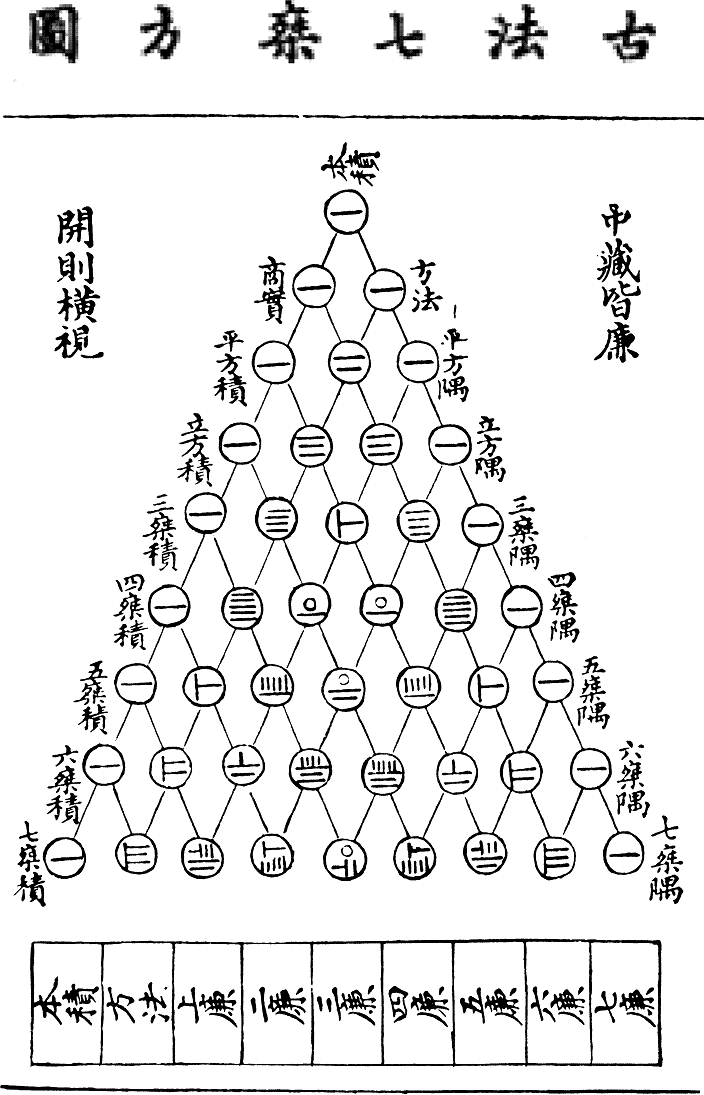 spark thorn
brisk ruin
https://commons.wikimedia.org/wiki/File:Yanghui_triangle.gif
spark thorn
brisk ruin
https://commons.wikimedia.org/wiki/File:Yanghui_triangle.gif
from wiki article
The earliest extant Chinese illustration of 'Pascal's Triangle' is from Yang's book Xiangjie Jiuzhang Suanfa (詳解九章算法)[1] of 1261 AD, in which Yang acknowledged that his method of finding square roots and cubic roots using "Yang Hui's Triangle" was invented by mathematician Jia Xian who expounded it around 1100 AD, about 500 years before Pascal
brisk ruin
Sure but is the image you sent the earliest one?
spark thorn
brisk ruin
Sure but is the image you sent the earliest one?
I think so
turbid zenith

So I just realized last night that the AP Calculus test is tomorrow.
Then I realized how blissful it was to not have the looming pressure of a test on which the entirety of my teaching effectiveness would soon be based.
I do NOT miss teaching AP. (1/n)
 Twitter
·
Twitter
·
 civic tree
ap calculus 
 trim violet
what do the a and p mean ?
 potent ether
algebraic projective calculus
mint lark
Interesting article on teaching calculus
http://rtalbert.org/the-semester-that-was-a-3x3x3-reflection-on-calculus/

Robert Talbert, Ph.D.
What I learned, what surprised me, and what I still don't know about the Calculus class that just finished up.
 pastel epoch
Hi, I hope this is the right place to ask (if it isn’t please direct me to the proper channel 😅):
What should someone who wants to teach themselves something be doing in order to properly develop intuition and skills in said subject?
I have been blessed with incredible teachers most of my years, and I spent some time mentoring students in calculus for a while. And I noticed that a lot of the times a student relies on the teacher/professor/mentor to guide the development of intuition.
I am planning on attempting some self-study soon, and wanted to get some tips on how to properly approach this in a rigorous way without taking a formal class on it.
Any thoughts on the philosophy of teaching that apply to this are also very welcome.
Thank you
dawn walrus
The most important thing is always to do exercises
the second most important thing is to try to explain / talk about what you're learning with other people
austere inlet
mint lark
Interesting article on teaching calculus
http://rtalbert.org/the-semester-that-...
I'm not sure I entirely agree with
If you do a problem asking to find and classify the critical numbers of a function, and you are allowed to check this with Desmos by throwing up a quick graph to see whether the local extreme values are where you say they are, to me it seems like manna from heaven — a pathway to mistake-free work.
since a graph is not proof, bluntly put. But a "conceptual" rather than "algorithmic" calculus is a very attractive idea and one that should be put into practice more often.
winged urchin
Does anyone ever think that algebra gets a bad rap? Like I just mean, 'pushing symbols' kinda thing of just manipulating an equation or expression to see how else you can express it. Just sorta leapfrogging with the current discussion
I do find value in students seeing graphs and ultimately having more interactivity
But I also feel like sometimes we demonize just... playing with equations to see what we can turn them into
Also @pastel epoch
If you're by yourself I'd say make sure you approach every topic very multiple angles. You shouldn't be happy with just one way to verify a claim until you're much more comfortable with the material. Since you have no teacher or resource to bounce back off of other than possibly answer keys
But ultimately I think approaching problems from different angles can be very enlightening overall
round robin
pastel epoch
Hi, I hope this is the right place to ask (if it isn’t please direct me to the p...
intuition develops overtime as you see and use it more often
if you think of something hard enuf, for long enuf, you'll likely get an intuition
round robin
winged urchin
Does anyone ever think that algebra gets a bad rap? Like I just mean, 'pushing s...
i feel like main issue is that most people just learn how to do it and then just practice it, to the point they probably think math is all about increasingly complicated symbol pushing
round robin
winged urchin
I do find value in students seeing graphs and ultimately having more interactivi...
agreed, less mundane practice more intuition = better
pastel epoch
Thanks for all the input everyone, appreciate it 🙂 I’ll try it out!
 strong carbon
winged urchin
Does anyone ever think that algebra gets a bad rap? Like I just mean, 'pushing s...
strong carbon
winged urchin
Does anyone ever think that algebra gets a bad rap? Like I just mean, 'pushing s...
This is what happens when the people push too much on numbers and symbols but not for the insight itself.
turbid zenith
DONE TEACHING
Also here, have a thing, related!
It's time for the COR 314 Meme Review!
My Mathematics and Human Nature classes made memes related to the course for our last day today, and BOY DID THEY DELIVER.
Here are some of the memes, along with what we studied that prompted them.
 Twitter
·
Twitter
·
 balmy iris
Guys, do you think average highschool students, that are not going to mainly study theoretical math, need to know strict definitions and be strict in their work? For example i gave 2 of my student a task to make presentation on translation rotation and 2 symetries and one of the studends found a strict definition of one of them in terms of maps, with right notation and everything, propaply they found some properties that are not tought in high school too. So i told them not to learn that since in real world they dont need it and that intuition of how that all looks in practice is just much more important than formal stuff. What do you think about it?
strange bronze
well, i certainly wish more students came into calc 1 knowing how functions work
the amount of students who see notation like $(f \circ g)' = (f' \circ g) \cdot g'$ and just have no clue how to parse it
 burnt vesselBOT
Namington
 strange bronze
is really concerning
and the idea that we typically represent mathematical "processes" and "constructions" as functions is a good one to teach, even for very basic applied stuff
a proper formal definition, though, is almost certainly unnecessary
i wouldnt dissuade a student from pursuing that though
although id perhaps recommend they leave it out of a presentation
but i mean... the formal construction here isnt very complicated
unless i misunderstand what you mean
balmy iris
Oh, I didnt mean only in this case, but in high school math in general. I was tought a lot in high school becouse i wanted to know those stuff, but for students that doesnt want to do math i think there is really no need to preasure them.
I agree with you, when students come to calculus or even subject called "Elementary math" in my uni ( Mostly high school.math in there just more strict in solving equations and proofs) they need to know some stuff and have some solid foundations but for those who doesnt go for math... i mean just learn the basic intuition that you may need sometimes and dont bother with math more than you need to.
Its just the same when some like biology teacher force us to learn some latin names and memorize becouse "you need to know this" :/ i am honest with my students, in real life, you can live without knowing trigonometry
 wise onyx
Dont discourage anyone from learning anything. You could recommend the student to omit technical details in their presentation. That's fine. But the student should still be free to learn those details if they want to.
 frosty flame
balmy iris
Its just the same when some like biology teacher force us to learn some latin na...
frosty flame
balmy iris
Its just the same when some like biology teacher force us to learn some latin na...
This is horrifying. Trust me, your students already think math is useless and they're bad at it so they just need to pass. You don't need to encourage that.
mint lark
how do you teach topology to someone with aphantasia (an inability to visualize aka form mental pictures)
wikipedia for reference https://en.wikipedia.org/wiki/Aphantasia
Aphantasia is the inability to voluntarily create mental images in one's mind.The phenomenon was first described by Francis Galton in 1880 but has since remained relatively unstudied. Interest in the phenomenon renewed after the publication of a study in 2015 conducted by a team led by Professor Adam Zeman of the University of Exeter. Zeman's te...
austere inlet
some links that may be relevant:
https://mathoverflow.net/questions/237243/mathematicians-with-aphantasia-inability-to-visualize-things-in-ones-mind
https://carma.newcastle.edu.au/brailey/pdf/apantasia.pdf
interestingly both seem to mention geometry and topology, aphantasia doesn't seem to be an impediment at all. It even eases the process of abstraction for some, it seems
frosty flame
Fun fact: I used to think I have aphantasia, lol.
turbid zenith
balmy iris
Guys, do you think average highschool students, that are not going to mainly stu...
Going back to this, I think formalism is eventually necessary, but I think it's best if it's saved until later when the student has a good "feel" for the topics. Nothing makes a topic inaccessible like an overabundance of formal notations.
I understand that as mathematicians we often think in terms of "definitions first, and the examples will follow", but pedagogically I'd argue it usually needs to be the reverse if you want it to stick.
real mauve
especially when introducing topics in lower level maths, i think this goes a long way
 weak bane
How is this server so based 
stark pine
turbid zenith
I understand that as mathematicians we often think in terms of "definitions firs...
And I mean when doing research math, you don't pull definitions out of your ass, they show up because of examples/patterns you've seen (at least that's what I've heard). Doing examples then definitions can lead students to feeling like they could discover the definition or come up with it themselves, which is really helpful for conceptual understanding
brisk ruin
I feel like in the context given though when students are exploring on their own, they shouldn't be discouraged from presenting the formal definitions though?
wispy slate
turbid zenith
Also here, have a thing, related!
https://twitter.com/solidangles/status/139185...
(A+B)² = A²+B² over any ring of characteristic 2
stark pine
brisk ruin
I feel like in the context given though when students are exploring on their own...
I think that a formal definition might be a natural culmination to such a presentation? like once the intuition/exploration is done you can talk about how it's formally defined, or introduce the formal definition at the start and work towards it making sense based on exploration/intuition
brisk ruin
Yes this is very sensible
I guess what I'm trying to say is that if the students want to present the formal definition, I don't see anything wrong with it, especially if they have examples to build intuition
stark pine
brisk ruin
Yes this is very sensible
oh wait I read "shouldn't they be" not "they shouldn't be"
I am much more literate with food in myself
brisk ruin
balmy iris
turbid zenith
Going back to this, I think formalism is *eventually* necessary, but I think it'...
Agreed 100%
strong carbon
stark pine
And I mean when doing research math, you don't pull definitions out of your ass,...
I imagine a toddler seeing 3 animals of different breeds. The child notices that all of the animals have similar snouts, have 4 feet, hanging their tongues out, barks, and wagging their tails. The parent points to one of the 3 animals and says "dog", and the child repeats "dog"... and they do it three times.
turbid zenith
 austere inlet
provocative title huh. I do agree with the sentiment that proofs are best left at the end of a lecture/chapter, after exploration and motivating examples have been presented
stark pine
turbid zenith
TOPICAL.
https://mathwithbaddrawings.com/2021/05/12/against-mathematical-proof/
I think there often isn't time to do as many examples as are needed, and that's left to the students. My first year math courses and profs focused a lot on how useful examples were in forming conjectures and developing proofs, and it's something that profs have consistently encouraged we do on our own, before lecture/when reading the notes/after lecture/when studying, I just don't think there's always time
 inner turtle
Apart from the time factor which I think is important, I'd argue that it is quite an important skill to be able to navigate a „dry“ text that doesn't start with examples.
Due to the time factor, there's always gonna be material that isn't pedagogically polished, so it's important to be able to construct examples and ask questions yourself even if the text/presentation doesn't provide that.
And at least for me, being confronted with a lack of examples in lectures has driven me to develop that skill.
tawny slate
In regards to teaching about the formal definition of transformations, it is also much more practical in the digital age, as are many other math concepts. Whether you're working with image processing, coding, coordinate geometry, games, etc. they could all use these concepts. Just because it's may not be useful to everyone or may not be useful now doesn't mean it doesn't have value. Imagine if we were talking about calculus instead
Also, isn't there also something said to just be learning math for the sake of learning math? I get that there are a lot of students that may not find it practical and useful, but what if they just find it beautiful?
When I teach combinatorics, there are 3 main epiphany moments my students have during teaching:
- bijections are not only a powerful problem solving tool, they are necessarily required to count, by definition
- the relationship between the "choose" numbers and pascal's triangle and why
- after introducing and proving many different combinatorial identities, show that a large subset of them can be proven in one step using the binomial theorem
Each of those "aha" moments are checkpoints which motivate the students to explore more and learn more, out of sheer curiosity and intrigue. Prior to introducing these, they find combinatorics very dry because they primarily have two mindsets: "I know how to count already" and "it's still just adding, subtracting, multiplying, dividing"
Why do we learn math? Because it's practical and useful. But being interested or passionate about it motivates that learning
wise onyx
abstractions without examples are like souls without bodies

 frigid crest

Lex Fridman Podcast full episode: https://www.youtube.com/watch?v=6z1JwZbX4dQ
Please support this podcast by checking out our sponsors:
- The Jordan Harbinger Show: https://jordanharbinger.com/lex/
- Onnit: https://lexfridman.com/onnit
- BetterHelp: https://betterhelp.com/lex to get 10% off
- Eight Sleep: https://www.eightsleep.com/lex and use c...

Lex Fridman Podcast full episode: https://www.youtube.com/watch?v=6z1JwZbX4dQ
Please support this podcast by checking out our sponsors:
- The Jordan Harbinger Show: https://jordanharbinger.com/lex/
- Onnit: https://lexfridman.com/onnit
- BetterHelp: https://betterhelp.com/lex to get 10% off
- Eight Sleep: https://www.eightsleep.com/lex and use c...
frigid crest
Lex Fridman Podcast full episode: https://www.youtube.com/watch?v=6z1JwZbX4dQ
Please support this podcast by checking out our sponsors:
- The Jordan Harbinger Show: https://jordanharbinger.com/lex/
- Onnit: https://lexfridman.com/onnit
- BetterHelp: https://betterhelp.com/lex to get 10% off
- Eight Sleep: https://www.eightsleep.com/lex and use c...
brisk ruin
Are you going to continue posting these videos
inner turtle
“Hmmm, the first two unsolicited clips didn't spark any discussion, so a third one will do the trick for sure!”
brisk ruin
I mean like
I'm sure this videos are relevant
But
If you want to have a discussion about them, it may be helpful to briefly summarize the content contained in the video
As well as express a viewpoint about them
Otherwise, you're just hoping that somebody else will be interested enough to watch a random video
Like
Lots of people may be interested in discussing ideas contained in these videos
And they might not necessarily want to watch a video in order to discuss them
wise lodge
I for one I'm glad that they shared these videos despite having no discussion about it.
I am fan of both Lex and Po-Shen Loh, and had no idea that they collaborated. Thank you for sharing.
Actually maybe posting three is excessive and having a small summary would definitely be appreciated.
tawny slate
another one of the disadvantages to discord channels is that without pins things just get buried over time
 acoustic wadi
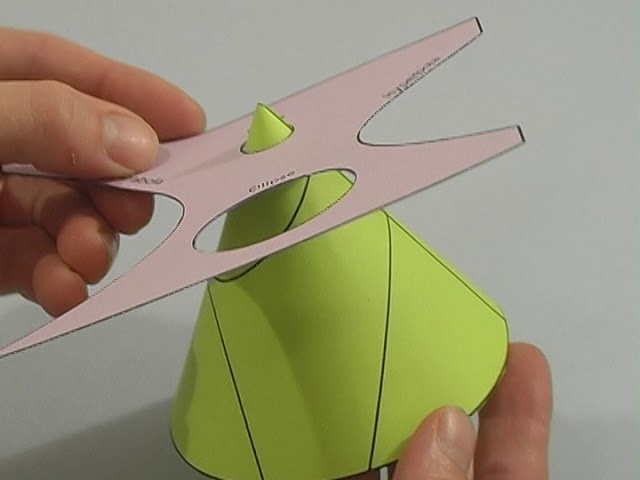
Visualizing sections of a cone with a model made out of paper. The templates to make the cone and the card are in the book Amazing Math Projects You Can Build Yourself and at https://drive.google.com/file/d/1Iq6anLZ9Ky55dq9kDRt1biAB45X23REJ/view?usp=sharing or https://1drv.ms/b/s!ApKCqZkYyb3ditRd5uCgy6alxbUGlA?e=HzkLTj
Buy the book at at http...

While searching for a conic sections GIF the other day to show my students, I ran across this awesome video (https://t.co/n6Erqr8j4H) for visualizing conic sections from CutOutFoldUp.
I decided to blow up the free template and make a giant version. LOVE it!
#mtbos #iteachmath
Likes
104
 Twitter
·
Twitter
·


 strange bronze
does visualizing conic sections as cut from a cone actually help pedagogically?
genuine question since my high school (canadian) never covered conic sections
so idk how theyre typically presented
civic tree
im not sure cus like
while visually it makes sense
the algebra doesn't seem to follow?
like im remembering the kinds of questions i used to do with conic sections and i never really had to think about the cone much
it's nice to know though i guess
wise lodge
strange bronze
does visualizing conic sections as cut from a cone actually help pedagogically?
I also study in Canada, and I was not formally introduced to conic sections until Advanced Calculus I (multivariable calculus) in University. The paper model is neat, especially since its easily craft-able, but in a lecture setting (which is often when conics are introduced), I feel like computer 3D graphics will go a long way and be much more useful. Something akin to the 3B1B video on ellipses IMO is a lot more helpful.
tawny slate
does anybody here have a framework for how to teach ratios/proportions? I don't have any problems teaching the concepts themselves, but for me it feels a bit unmotivated and uninspired compared to other topics. obviously there are lots of practical applications and such, but I haven't figured out many approaches that aren't very dry, like just setting up an equation and solving
the only interesting things I can come up with that are somewhat interesting are as follows:
- percent being literally "per-cent" or "divide by 100"
- concept behind conversion factors/dimensional analysis
- constant of proportionality (for direct, inverse, joint proportions)
- rate problems and common traps (and by extension, arithmetic mean vs harmonic mean)
- relation between rate and slope
does anyone have comments or anything to add to this?
I also appreciate problems which challenge students to not fall into traps such as "if 5 students finish 5 problems in 5 min, how long does it take 100 students to finish 100 problems?"
brisk ruin
Ratios and odds in probability are also interesting I guess
acoustic wadi
strange bronze
does visualizing conic sections as cut from a cone actually help pedagogically?
it nurtures curiosity? i was mystified by that pattern and it made dig deeper. learned about dandeline spheres.
acoustic wadi
tawny slate
does anybody here have a framework for how to teach ratios/proportions? I don't ...
if you want to measure the height of a flag pole but can only measure its shadow. take a ruler and measure its shadow. the solution comes down to solving a proportion.
also certain basic stoichiometric calculations in chemistry (or baking) requires ratios to solve more easily.
in cooking and in baking, halving or doubling recipes are very common.
 cedar garden
would it make sense to restructure the math ladder so that students learn linear and matrix algebra before taking calculus?
wise lodge
cedar garden
would it make sense to restructure the math ladder so that students learn linear...
I think it would. At my school, you can learn calculus and linear algebra in any order you like (even concurrently).
turbid zenith
Throwing an idea out there to see what y'all think. Say you wanted high school students to get their feet wet with SageMath, plotting implicit and parametric curves in 2D and 3D. What kind of activity might you do?
My idea so far has been to give a few examples to have them try out and turn it into a matching activity, then give some room for them to try tweaking them to make their own
brisk ruin
Any reason for sage in particular?
turbid zenith
Because it's free
And it's what I used in my Computational Algebraic Geometry course, so that's what I'm gonna use for my own CAG-for-high-schoolers course
tawny slate
cedar garden
would it make sense to restructure the math ladder so that students learn linear...
i don't see math topics as a ladder, i see it as a graph, and in that sense I think they can be learned in parallel, until around calc 3 where I think both intro to calc and lin alg are both prerequisites
 tulip badge
acoustic wadi
it nurtures curiosity? i was mystified by that pattern and it made dig deeper. l...
tulip badge
acoustic wadi
it nurtures curiosity? i was mystified by that pattern and it made dig deeper. l...
I would probably just show the students a similar video or maybe pre-build a few and pass them around for a few minutes with some prepared explanatory notes. (To me, the above video wasn't clear enough on the distinction between a parabola and hyperbola.) Anything more than that seems like an ineffective use of class time in my milieus.
acoustic wadi
the video itself was actually kinda lackluster. but it gives links to the templates for the cut outs.
wise onyx
turbid zenith
Throwing an idea out there to see what y'all think. Say you wanted high school s...
I first used Sage to play around with partitions
You could have them try to verify known facts about partitions using sage to compute/test small examples
For example, you could have them verify/test Euler's partition theorem for specific values of n:

How would you write a computer program to compute these two sets of partitions? That's an activity that would get students to learn how sage works
Writing a general function to test this for arbitrary n, and the letting the computation run for all n up to 100 would build confidence in the fact that this statement is actually true
And that's how a lot of conjectures are actually made: you test out examples, and these days a lot of examples of are computed with computers, and then formulate conjectures based off those computations
round robin
wise onyx
How would you write a computer program to compute these two sets of partitions? ...
feels more like learning how python works than sage ngl
but just throw any project euler problem and add additional stuff should suffice
wise onyx
round robin
feels more like learning how python works than sage ngl
Yeah thats basically it
If you know python you know sage pretty much
 charred dust
Hi guys, wondering if any of you could provide me with some numbers games to create a 25 minute lesson for a 6 y.o
shes currently ok with 2 digit + 2 digit addition, the parent wants emphasis on partitioning past the tens threshold and wants to see some work around 3 digit + 2 digit addition
Also, any general advice for teaching children will be super super welcome.
 stone tusk
 charred dust
oh that looks so good!
 magic minnow
Hi! I wanted to share my software for making interactive educational videos: https://ractive-player.org/math/
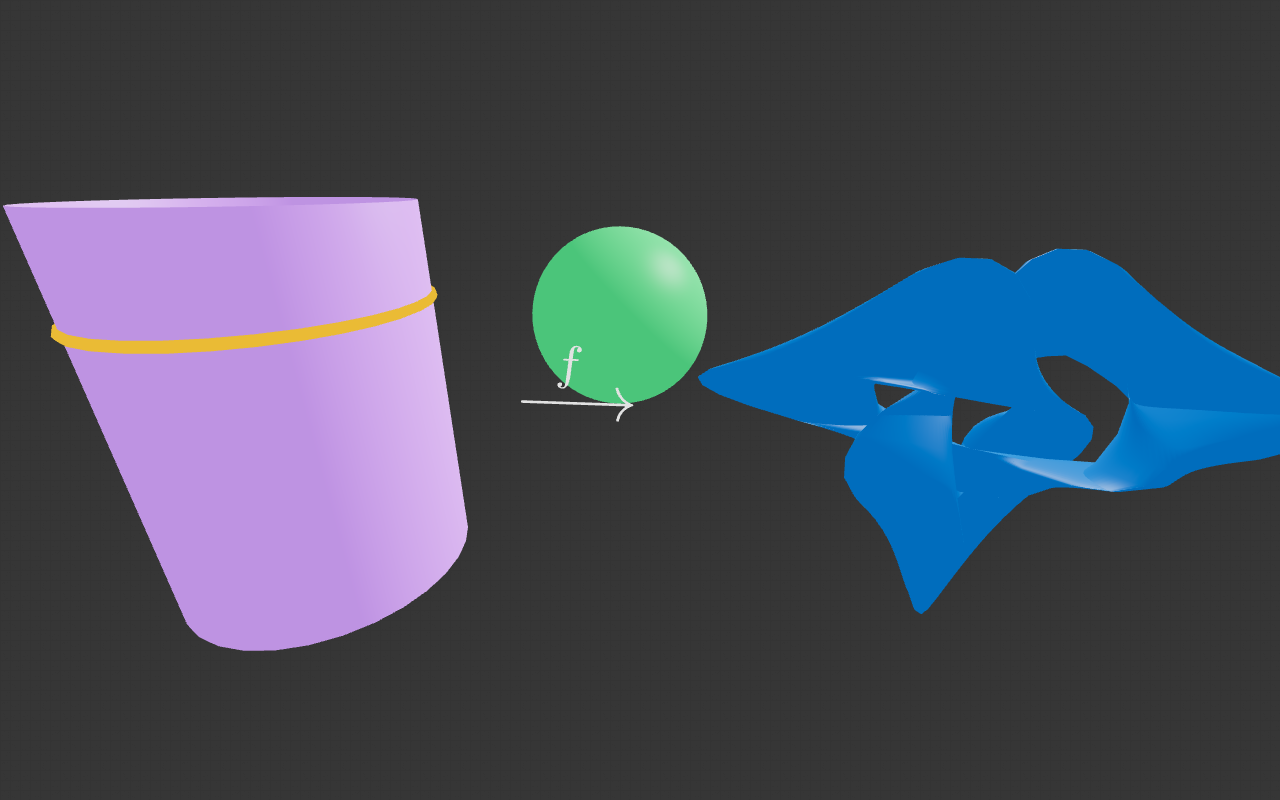
Math tutorial for ractives (equations and 2d/3d graphics)
Here are some full-length examples of things made with this: https://epiplexis.xyz/m/9s7/elementary_functions

Learn to compute the elementary functions
and a couple days ago I added the ability to embed Desmos in videos; here's an example (with source!) explaining function composition/chain rule https://ractive-player.org/blog/2021/06/01/desmos-react/
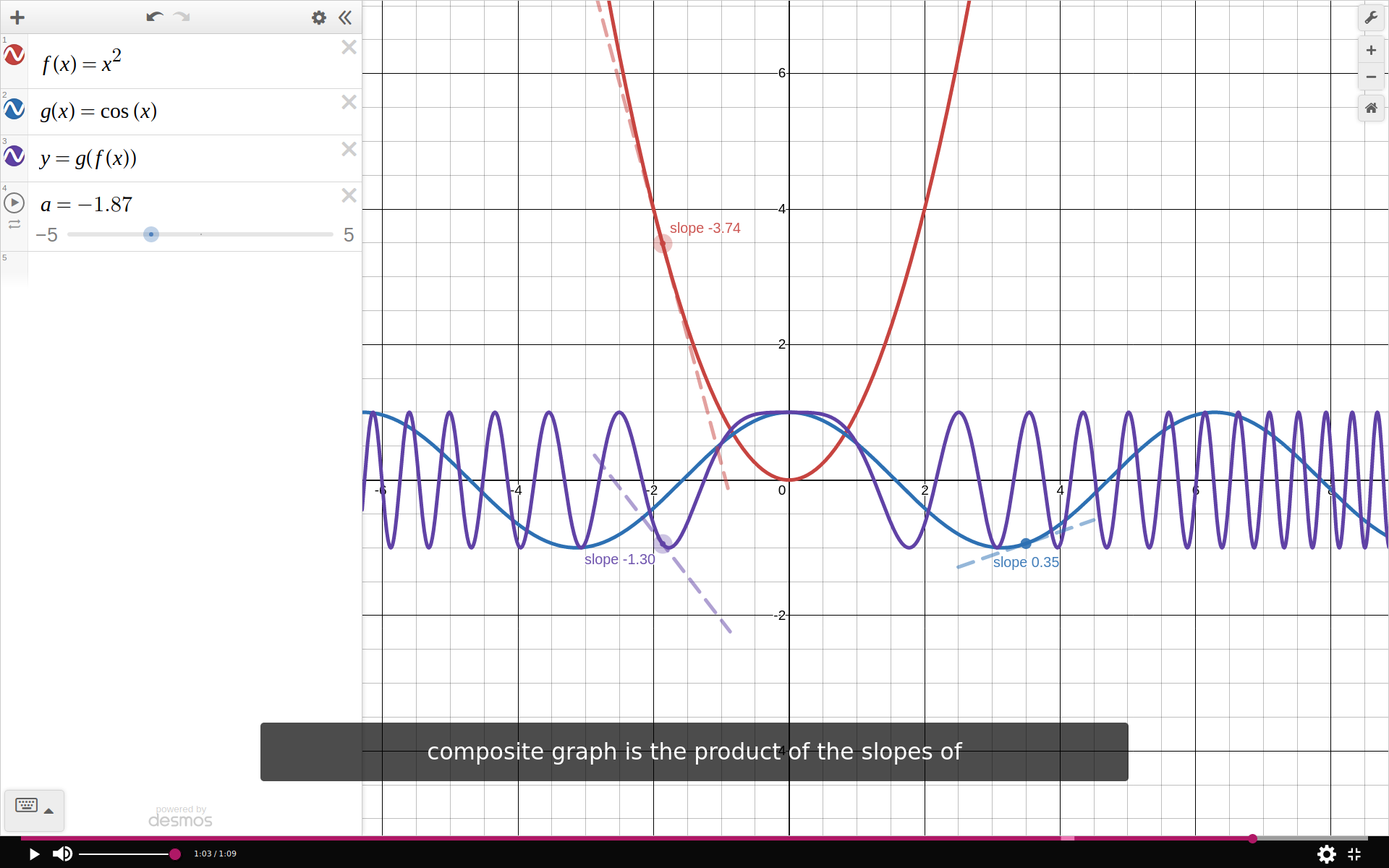
Embed the Desmos graphing calculator in interactive videos
shadow basalt
can it do latex
magic minnow
shadow basalt
can it do latex
yes, via either KaTeX or MathJax. The first link demonstrates this functionality
anything you can put in a webpage, this lets you put in a video
e.g. THREE.js for 3d graphics, d3 for graphs/charts, CodeMirror for coding tutorials, etc
turbid zenith
@magic minnow Do you mind if I PM you asking more questions about RactivePlayer?
magic minnow
turbid zenith
<@!229654241243824128> Do you mind if I PM you asking more questions about Racti...
not at all!
tawny slate
are there any plans for performance improvements in the future?
the more intensive parts lag really badly on my computer, and my computer isn't that weak 😦
 small quartz
magic minnow
Hi! I wanted to share my software for making interactive educational videos: htt...
small quartz
magic minnow
Hi! I wanted to share my software for making interactive educational videos: htt...
Woah, very cool
I submitted this 'graded' math portfolio while I was in Grad school to get my NCTM certification 🙂 I want to share it with y'all.^
round robin
I'm wondering anyone has a decent setup for like 1-1 teaching over zoom? Particularly how should one check the student's understanding other than like "could you take pic/point camera at work or smt"
shadow basalt
You could always ask them to prepare some of their work to present to you / walk through with you? I think working together on problems can be helpful? My gf had a one-on-one course this semester and she just did work during the week, emailed it to the prof a few days before the meeting or something, and then they met to talk about what was hard, what she understood etc
quasi musk
round robin
I'm wondering anyone has a decent setup for like 1-1 teaching over zoom? Particu...
It's much more difficult to look at procedural understanding/mastery over zoom
It's easier to assess conceptual questions, or have students talk through the set up of the question, and how to work through it
e.g. "In this problem, what is the relevant information? How does this relate to the things we've learned lately?"
And so on
round robin
shadow basalt
You could always ask them to prepare some of their work to present to you / walk...
ohh thats possible yea jus like take pic send solutions before meeting
round robin
quasi musk
e.g. "In this problem, what is the relevant information? How does this relate to...
mm yea thats true maybe should focus more on this type of qns for now
lethal leaf
The hardest part is definitely seeing their work yea
Especially if you give them a problem during the session
It's bad
Well not bad
Just hard to deal with
dawn walrus
My method when doing physics tutoring was to have them share screen with me with their problems/work, and I would use the Annotate feature to draw on their screen with my input. Of course, if they're not doing their work electronically that makes things tough.
Another way I did this was to share my own screen, and have them dictate their ideas to me. I'd write what they were saying (say, in onenote), and draw pictures of it. This was good because when they'd get stuck I'd throw in a suggestive picture that might get them to the next step. It also helped me to focus on conceptual understanding of how to solve problems (instead of wasting time waiting for them to do a bunch of arithmetic), they have plenty of homework to go through the details on their own but my goal was trying to help them to understand intuitively what they were actually doing when they'd solve problems.
 topaz scarab
round robin
I'm wondering anyone has a decent setup for like 1-1 teaching over zoom? Particu...
topaz scarab
round robin
I'm wondering anyone has a decent setup for like 1-1 teaching over zoom? Particu...
why not just do the work on the computer?
- ms paint / any kind of online whiteboard
- I like one note
- ms word equations
- overleaf latex
plus anotate like what RYC said
i find anotating with mouse is not too hard
LOL.
lower your mouse sensitivity, that helps a lot
lower it way down than what's normal
round robin
dawn walrus
My method when doing physics tutoring was to have them share screen with me with...
oo the second is not too bad actly
molten urchin
I personally use the ask-along-as-I-do strategy, since it is not feasible for the person I'm tutoring to share their work. (I do think I could ask them to submit the stuff I ask them to do).
 severe kelp
yeah thats kind of where I am, depending on the student i ask them what to do or other probing questions while sharing the screen of my tablet
if they have a tablet or w/e i make them do the problems with like either probing questions or pushes in the right direction
winged urchin
Also another useful thing I find sometimes is changing up the current question they're working on
Like maybe they're solving sinx = .5
Once they seem to get that I might ask to solve sinx=1.5
Usually it's those kind of... Can they see the problem with this new question?
Kind of vibe
And it can test or reinforce their understanding


 hard badger
I don’t know if this is an appropriate place to ask this, but:
I just graduated undergrad with degrees in math and physics, and while I’m in grad school I want to be a private tutor to make some money on the side. I have experience being a TA, being a volunteer tutor for my undergrad physics department, and minimal experience as a private tutor. I was planning on tutoring math and physics, and was wondering how to figure out an hourly rate that is fair to both myself and clients.
Things that seem like good ideas (I could be wrong though)
- Charge slightly more for GRE prep (or other standardized tests)
- If I’m not finding clients, reduce the price
austere inlet
sounds good to me, these are common sense rules really, supply and demand
try looking into the market as if you were a client, i.e. find out what the usual rates are for the topics you want to offer
wise lodge
hard badger
I don’t know if this is an appropriate place to ask this, but:
I just graduated...
I would not charge too low because that could have the opposite effect. Potential customers might assume that cheap rates equals not great service.
hard badger
wise lodge
I would not charge too low because that could have the opposite effect. Potentia...
That’s a fair point, thanks
quasi musk
hard badger
I don’t know if this is an appropriate place to ask this, but:
I just graduated...
You charge more for k-12
Charge less for college/grad students
They are broke
You can charge the most for AP Calc/Physics/SAT/ACT since the value they get out of it is better than other htings
hard badger
quasi musk
You can charge the most for AP Calc/Physics/SAT/ACT since the value they get out...
Ah, okay
So in terms of how much to charge:
1.) AP Exams, SAT, ACT, SAT Subject Tests
2,) K-12 Classes
3.) College/Grad Classes
Where would GRE prep go?
quasi musk
The highest are number 1
the second highest is probably GRE prep, third highest is k-12
Last is the college material
hard badger
Okay, cool! I appreciate the feedback
Do you know of any good places to look online to see what others are charging?
quasi musk
It'd have to be your area
hard badger
I’ll be in the NYC metropolitan area
hard badger
But also i imagine most things will be remote anyways
quasi musk
If you don't get hits, just lower by $5 till you get hits
k-12, you can probably go for like $35-40 easy
hard badger
Makes sense
So the highest I should reasonably be charging in your eyes is like $50/hour
quasi musk
SAT ACT you should be gunning $65
hard badger
Ah ok
hard badger
quasi musk
they are broke
Relatable
Thanks for the feedback and actual concrete recommendations. I’ll also be looking at other things and whatnot, but this is a great start 🙂
lethal leaf
What what it's worth I've done HS and College tutoring for 30 an hour just when I was in high school
It all depends on the surrounding area
There were some richer areas around me and I could charge more
round robin
Any tips as to how does one like structure a class in the sense like
How does one figure how much content is "an hour worth of content" instead of jus running through everything lol
real mauve
i have not yet found an effective system for that. even when stopping and asking straight up if anyone has any questions, i usually get no response and jsut keep going. at the end, students just say their brains are fried and it went too fast
maybe having frequent stops where the student has to try using the stuff they just learned might help
round robin
i usually get no response and jsut keep going. at the end, students just say their brains are fried and it went too fast
this tbh
round robin
real mauve
maybe having frequent stops where the student has to try using the stuff they ju...
hmm perhaps a small "exercise break" could help 🤔
 grand laurel
yes, ask frequent questions
although this has to be taught to a class especially if they are "early" in their education
i also try to be honest with my students and tell them that it's not a problem if they ask "dumb" questions and that it's hard for me to tell if i am being too fast
to make this more easy you can have small 5 min breaks with a question and have them discuss it with other students first and then continue with an answer from a student