#math-pedagogy
1 messages · Page 18 of 1
 tight star
 tardy ember
the fact that p -> p is provable from those axioms is actually fairly complicated
tight star
tight star
to me this is true cause of the geometric proof
or say that A x B is naturally iso to B x A
tardy ember
i mean sure but that's just a case where two different proofs exist
like i'm pretty sure you can use "A x B is isomorphic to B x A" to prove the commutativity of multiplication
tight star
yeah, and I’d say that the induction one doesn’t tell you the moral reason why multiplication is commutative
At least for me it felt very unsatisfying
like I could do the induction just fine
but I felt like id just manipulated symbols on a page
tight star
tight star
yeah, and I’d say that the induction one doesn’t tell you the moral reason why m...
but again Prof. Cheng probably discusses this a lot better than I can
tardy ember
tight star
I think a good explanation should be easy to read
well then some theorems just aren't going to have good explanations at all, which i think makes that somewhat of an unhelpfully high standard...?
tight star
idk I think in general people put too little effort into making their explanations easy to read
tardy ember
like that proof isn't much harder to read than it actually has to be given the underlying complexity of the theorem
tight star
terseness is valued a lot
tardy ember
tardy ember
like that proof isn't much *harder* to read than it actually has to be given the...
or i guess this depends who you are actually
 wispy ridge
After you prove deduction theorem, you can just skip those formalisms
tight star
wispy ridge
After you prove deduction theorem, you can just skip those formalisms
I vaguely remember what that is…
 twin lichen
I feel this example is poorly chosen.
- Among people who actually do formal reasoning, Hilbert systems are not used to prove theorems, because they are extremely simplistic. Their chief utility is in proving meta-theoretical results about proof systems, such as establishing that the set of theorems of the system is computably enumerable, i.e., we can just write a simple algorithm that spits out all provable theorems of the theory in order, and to see if a proposed sentence is a theorem we can simply wait until it appears in the list, so the problem is "semi-decidable." Gentzen sequent calculus and natural deduction are much more practical for formal proofs.
- In current proof systems like Coq and Lean there is a great deal of emphasis placed on generality of a theorem, which might be more technically called 'polymorphism' - i.e. you can write one theorem which can be plugged into many situations. For example, Coq 8.19 has just added something called "sort polymorphism" which lets you write one single function which can operate both on data types and logical propositions, here's an example (I've never used this feature before so it took me a minute to understand how to use it.)
Polymorphic Definition s_combinator@{s | u |} (A B C: Type@{s|u}) : (A -> B -> C) -> (A -> B) -> A -> C :=
  fun f g a => f a (g a).

Definition myfunction (f : nat -> bool -> Z) (g : nat -> bool) (a : nat): Z := s_combinator _ _ _  f g a.
Definition mytheorem (f : 0=0 -> 2 < 3 -> 3 >= 1) (g : 0=0 -> 2 < 3) (a : 0=0): 3 >= 1 := s_combinator _ _ _  f g a.
So one should recognize that for such fundamental theorems as p => p we can use them in many places, both as the identity function from a set to itself, and for this tautological implication.
With good centralization of mathematics into large repositories on github ideally such theorems are made widely available and we only have to prove them once and then everyone can use them.
In that regard, a simple four line proof does not seem so bad.
tight star
This is a simple four line proof…?
I can’t really follow it
I also don’t really understand why it even has to be proved
twin lichen
tight star
I can’t really follow it
The original proof due to Cheng was four lines, that was in a Hilbert system.
In Coq I chose to do a different example, what Cheng calls A2 and what many textbooks call the S combinator, namely the theorem:
(A => B => C) => (A => B) => A => C
I'll explain how to read the Coq proof so it doesn't seem overwhelming, I see that the notation is not familiar.
The word "Polymorphic" is a keyword meaning that the theorem applies to both sets and logical propositions.
"s_combinator" is just a name I choose to refer to the theorem later. @{s | u|} is just special syntax which is part of the bureaucratic overhead of getting the compiler to accept that the function can operate on either logical propositions or sets.
The bit (A B C : Type@{s | u}) means "Let A, B, C be types (sets) or logical propositions."
Then after the colon is the actual theorem statement, as I said.
The second line is the proof/definition, it says that given f a function of type A -> B -> C (note the currying) and g a function A -> B, and a an element of A, then f(a, g(a)) is an element of set C, which was what is to be demonstrated.
The last two lines just demonstrate that this same theorem can be specialized to both sets (like nat, bool, Z) and logical propositions (0 =0, 2 < 3, 3 >= 1).
Is that okay?
tight star
um…
where does this S combinator come from?
or, wait
im confused whether it’s something we’re assuming or something we’re proving
twin lichen
tight star
im confused whether it’s something we’re assuming or something we’re proving
The s combinator is being proved here. It is not an axiom in Coq.
Coq's logic is a little different in that it kind of has no axioms, you just have to give explicit descriptions of how to combine assumptions to give proofs of theorems. For example a proof of A => B can be "applied" to a proof of A to give a proof of B, which is like modus ponens.
And given a proof of (A /\ B) you can treat it like an ordered pair of proofs (p, q) where p is a proof of A and q is a proof of B, and talk about the "first proof" and the "second proof", so you can prove A and B respectively
twin lichen
This is kind of diverging from the broad thrust of her essay but I just think that there are better examples
 cosmic ibex
tight star
To me it just seems like a function definition
cosmic ibex
tight star
To me it just seems like a function definition
In formalisms that adopt the propositions-as-types approach, a proof of an implication is just a function definition.
tight star
Oh
Oh this is propositions as types
Right
Riiight
Ok that makes a bit more sense
Though I don’t see how this relates to the screenshot I sent
Is the first line the S combinator?
Or, wait, no, we’re not assuming the S combinator, we’re proving it
From no axioms, apparently..
twin lichen
tight star
To me it just seems like a function definition
yeah, you are right. This is definitely the correct way to read it, like it is a function definition, that's why we are allowed to plug in sets and functions other than logical propositions.
Coq's logic (and Lean, etc.) is based on a system where a logical proposition is kind of encoded as a set or data type, the set of valid proofs of the proposition.
You can think of the set as either a singleton (if the theorem is true) or empty (if the theorem is false) because we don't really care about distinguishing between different proofs of the same proposition.
Basic logical operations are kind of translated into set operations, like if [-] denotes this translation function that associates to a logical proposition the set of proofs of the proposition then you can define
[A /\ B] := [A] x [B] - that is, by definition, a proof of A /\ B is a pair (p, q) where p is a proof of A and q is a proof of B
[A \/ B] := [A] \cup [B] - proofs of A \/ B are the disjoint union of proofs in A and proofs in B
[A => B] := the set of functions from [A] to [B]
and so on
sorry tropo already explained this giving more context
twin lichen
tight star
Is the first line the S combinator?
the first line of Cheng's proof is the S combinator axiom with each of A, B, C specialized to p
Maybe I should have changed it, I just felt that in Coq the proof of p=>p is so trivial that it is not a good example.
using the propositions as types correspondence it is equivalent to giving the identity function from proofs of p to proofs of p
so the proof is just fun proof_p => proof_p
tight star
twin lichen
yeah, you are right. This is definitely the correct way to read it, like it is a...
Hmm that sounds interesting
twin lichen
sorry that was a typo. fun proof_p => proof_p is coq notation for what in lambda calculus notation would be denoted
tight star
Actually lean was an example I had in mind here
twin lichen
$\lambda x.x$
 burnt vesselBOT
diligentClerk
 tight star
I remember playing the natural numbers game years ago
And proving literally everything using induction
And it felt like “ok I know this proves it but it doesn’t feel like it tells me why it’s true”
Which kind of turned me off proof assistant stuff
So… p => q means you can convert a proof of p into a proof of q?
And is also a function
Right
cosmic ibex
I think it's a common failing of logic texts that they don't really emphasize the transition from "look, our formal system can prove these things we already know are true" to "let's use it to prove something we were not already sure of".
tight star
Perhaps… I mean to be fair I hadn’t actually known the proofs of Commutativity, associativity etc before the natural numbers game
Or at least
I knew the geometric reasons why they were true
cosmic ibex
But you didn't really doubt they were true nevertheless.
tight star
Yeah
twin lichen
tight star
So… p => q means you can convert a proof of p into a proof of q?
In Coq's notation, A -> B can denote either:
- the set of functions from A to B, if they are sets
- logical implication, if A and B are propositions
=> is used in function defintiions and it means the same thing as the dot in a lambda abstraction in the lambda calculus, that is
fun a b c => (stuff with a, b, c) would be, in lambda calculus, \lambda a b c. M where M is a term that depends on a, b, c.
In python it would be a colon. \lambda a : M. I don't know what languages you use most
burnt vesselBOT
Pseudonium
 tight star
means you can convert a proof that x = 4, into a proof that x^2 = 16?
and - how would that actually work in practice?
twin lichen
Well you would use single arrow -> rather than thick => in Coq syntax.
this would be expressed as
$x = 4 -> x^2 = 16$
burnt vesselBOT
diligentClerk
 tight star
if you’re not treating $\implies$ like a logical connective
burnt vesselBOT
Pseudonium
 cosmic ibex
One of the subtle insights behind the system is that -> can be both of those at once, and the system doesn't really need to know which of the interpretations you're thinking at.
tight star
right…
so - how would one prove that “x = 4 => x^2 = 16”?
also sorry I guess this convo got derailed from its original purpose
twin lichen
The proof I would give is using the step by step tactic mode.
Theorem sq_4 (x : nat) : (4 = x) -> 16 = (x * x).
Proof.
  intro eq_pf.                  (* Name the assumption "eq_pf"*)
  destruct eq_pf.               (* Apply the assumption, replacing x with 4 everywhere *)
  reflexivity.                  (* Theorem is now true by direct computation on both sides, 4 *4 = 16 *)
Qed.
But that's as much about details of the language you use to instruct that particular prover, as it it's about how propositions-as-types works on the bare logic level.
twin lichen
Here is a more "Functional" proof:
Definition sq_4' (x : nat) : (4 = x) -> 16 = (x * x) :=
  fun eq_pf => match eq_pf with
                 | eq_refl 4 => eq_refl 16
                 end.
This one is a lot harder to read if you're not familiar with how it works so I apologize for the technicalities.
But for a little bit of background, the definition of equality in Coq says something like:
- for any set A, there is a family of sets Eq(x,y) indexed by x, y in A; Eq(x,x) contains a special element called eq_refl x (the reflexivity axiom that x = x); eq_refl x is the only element of Eq(x,y) for any x, y.
So here we assume eq_pf is some element of the set Eq(4, x). Since the only element of Eq(x,y) for any x, y is eq_refl x in Eq(x,x), we can assume that x is 4 and that eq_pf is eq_refl 4, and proceed while replacing x with 4 everywhere in sight. That's what the
match eq_pf with
| eq_refl 4 => ??
end
is doing - any code that is written in the ?? is now operating in an environment where x has been replaced with 4 everywhere. Now I just have to give a proof that 16 = 4 *4, but these are the same by an immediate computation, so we can just say that eq_refl 16 is an element of Eq(16, 4 * 4).
 halcyon glade
(Why is this in #math-pedagogy ? I'm a bit confused)
 midnight scarab
Cause the discussion started with that before it derailed lol
tight star
twin lichen
Here is a more "Functional" proof:
```coq
Definition sq_4' (x : nat) : (4 = x) ...
Yeah unfortunately this has now passed the point I can follow, but that’s ok we got offtopic anyway
 spice matrix
tight star
but as an assertion that a function exists
spice matrix
tight star
but as an assertion that a function exists
=> is being used as notation for an anonymous function.
instead of λx.f
or x \mapsto f if we prefer
we type fun x => f
same thing though. If you’ve used haskell they would do \x -> f. or in python, lambda x : f.
 autumn axle
I'm curious, is there a general consensus on when (or if) one should stop requiring students to write down answers in most reduced form?
My current professor said at the start of the semester "I don't care if your answer is in reduced form. And I don't care if you have square roots in the denominator. I won't mark it wrong. That's just petty." It has been probably the most enjoyable homework/exams I've ever done for this reason alone.
Do you professors require reduced solutions? Rationalizing the denominator?
 shadow flower
there’s a perspective in linear algebra where leaving the roots in the denominator is more helpful since you can quickly determine the length of a vector.
 tawny slate
i think it's highly contextual
 rapid tusk
autumn axle
I'm curious, is there a general consensus on when (or if) one should stop requir...
rapid tusk
autumn axle
I'm curious, is there a general consensus on when (or if) one should stop requir...
I think they stopped requiring it around calculus in my school
which is around where I would draw the line too
whenever you get to the point that you can assume mastery of basic computational stuff
tight star
yeah I think “put into a simplified form” can be a bit too ambiguous anyway
rapid tusk
typically I would consider “simplified” to be
all fractions simplified, denominators rationalized
everything fully expanded
any nontrivial constants expressed in exact form (pi, e, sin(1), etc)
 daring gulch
autumn axle
I'm curious, is there a general consensus on when (or if) one should stop requir...
daring gulch
autumn axle
I'm curious, is there a general consensus on when (or if) one should stop requir...
I agree with the others. Reduced form, rationalizing, etc. is pretty much just for mathematical maturity. Beyond that point there's no need to abstract it anymore; you can just do it at that point.
tight star
Anyone had luck trying to teach quantifiers using introduction and elimination rules? Or is it usually not the right way to go about things?
tawny slate
in what context, like for what class or to what kind of student?
i would teach the intuition before the syntactical stuff
tight star
tawny slate
in what context, like for what class or to what kind of student?
Hmm so
I was helping someone out earlier with showing
If U and W are subspaces of a vector space V
Then U + W = W + U
And they were having a lot of trouble…
I didn’t try out the intro/elim rules but I was very tempted to introduce them
tight star
tawny slate
i would teach the intuition before the syntactical stuff
I mean, what is the intuition?
cosmic ibex
My immediate thought is that introduction and elimination rules would be extremely confusing to students who are not already intimately familiar with formalized proof systems.
I'd expect a more informal explanation of the semantics of quantifiers rather than the syntactical proof rules for them to be much more helpful.
The proof rules themselves only really make sense once you have a good intuitive understanding of how ordinary prose proofs about quantified claims go.
tight star
I see I see - but how does one go about explaining the semantics of quantifiers?
Like… the most I can do is “forall is souped-up AND, there exists is souped-up OR”
I’m not actually sure what to do beyond that without getting precise about how to manipulate them syntactically
tight star
tight star
Like… the most I can do is “forall is souped-up AND, there exists is souped-up O...
And im not sure this actually says more than just “forall means for all, there exists means there exists”
tawny slate
yeah thats pretty much it
tight star
tawny slate
yeah thats pretty much it
Clearly its not sufficient for actually using quantifiers though
tight star
tight star
And im not sure this actually says more than just “forall means for all, there e...
So essentially I’m asking - what’s between this and working with intro/elim rules
Is there a nice middle ground?
 blazing sedge
Would things like "how do I present my math work" come here?
 modern trench
Does presentation in general count as pedagogy
 lethal leaf
modern trench
Does presentation in general count as pedagogy
lethal leaf
modern trench
Does presentation in general count as pedagogy
presentation in what context?
like how to present material to students? sure
In a seminar? Probably not? But I could maybe see the case depending on the target audience
blazing sedge
modern trench
Does presentation in general count as pedagogy
Yeah I am curious
 cloud zealot

Teaching tip: When explaining, pretend there is a wall between you and your students. Here's what I mean:
 tawdry venture
oh i already do that
 vagrant meadow
cloud zealot
https://fixupx.com/howie_hua/status/1811024861478932542
vagrant meadow
cloud zealot
https://fixupx.com/howie_hua/status/1811024861478932542
so basically assume you have a blind student? 🧐
this is interesting. thanks for sharing
 plain valve
tight star
And im not sure this actually says more than just “forall means for all, there e...
plain valve
tight star
And im not sure this actually says more than just “forall means for all, there e...
Why not just say this
Lol
tight star
plain valve
Why not just say this
It wasn’t sufficient
For them to actually work with quantifiers
If it was I wouldn’t have asked the question…?
plain valve
I mean all you really need to "work with them" is to understand what they roughly mean and be aware of the few "rules" which you can easily prove
I don't see how introducing elimination rules is going to be helpful for someone who cannot see that U+W=W+U, as there is a sort of underlying ability to think you need rather than rules to apply or whatever
tight star
plain valve
I don't see how introducing elimination rules is going to be helpful for someone...
Right, so how do I help them with that underlying ability to think?
Like, I wanted a middle ground between “forall is forall, there exists is there exists” and the intro/elim rules
So far no one has offered me a suggestion like this
plain valve
Probably just some examples
Statements where it holds for all x, or not for all x, etc and distinguishing them or coming up with new examples and stuff w two quantifiers too
I guess basic statements you do in real analysis are good candidates like for all x there's y with x < y, but flipping round quantifiers is false, stuff like that
 unborn sundial
I recently made some videos going over (at a high level, I’ll be going over exam problems later) what’s on the applied math PhD quals at Stanford https://m.youtube.com/watch?v=slQEegbywDY&feature=youtu.be

Have you ever wondered what’s on the Applied Math PhD Qualification Exam At Stanford?
Well this video is going over that! This is Part One Of Two, covering the analytical section. Please like and subscribe for more videos!
Twitter: @jacobrintamaki
Link To Part Two: https://youtu.be/4zJ3MtnikuE
Link To Stanford Math PhD Qualifying Exam Sylla...
 mint lark
@tight star I have a meeting soon, but I have a good way to use what amounts to game-theoretic semantics for logic to teach proofs with quantifiers. Of course I don't tell the students that in that exact language, but it helps to know it's formal :)
tight star
ooh ok how do you do that?
mint lark
Say you have a statement P in first order logic, with for alls and there exists (quantified in certain sets)
There are two players, True and False (sometimes I play it up as Angel / Devil). They take turns in the game as follows:
The statement is read from left to right, when the players see a for all statement, the Devil gets to pick the element in the set. When the players see a there exists statement, the Angel gets to pick the element in the set. After all the quantifiers have been dealt with, the players evaluate the statement at the end. The Angel wins if the statement is true, and the devil wins if the statement is false
A proof that P is true is the same as a winning strategy for the Angel
and a proof that P is false is the same as a winning strategy for the Devil
(I will sometimes have students play this game with each other, to demonstrate how it goes and how a winning strategy can be constructed)
One advantage of this is it mirrors how mathematicians will talk with each other when evaluating the truth of mathematical statements (I can do this, but then there's this thing that could happen, but maybe this can deal with that...)
and so it slots into a broader cultural thing of mathematics as a sort of "language game" (mathematics is I think a bit more than that, but it's a good analogy)
tight star
This seems really cool! I’ll try it out
 vocal phoenix
Yeah, I've seen existential quantifier described in terms of "I (the proof writer) get to choose the x", and the universal quantifier as "the other person gets to choose the x"
tawny slate
i really like that too, clever
cosmic ibex
It also works for propositional connectives. If you get to an "and", the Enemy gets to choose which of the conjuncts to continue in; if you get to an "or", the defender gets to choose, and for a "not" the players swap roles.
tight star
so now i have three levels i can try - the definitions, game theory, and the intro/elim rules
 minor turtle
mint lark
There are two players, True and False (sometimes I play it up as Angel / Devil)....
minor turtle
mint lark
There are two players, True and False (sometimes I play it up as Angel / Devil)....
i used to use something similar to this analogy when i first started learning analysis
except it was “me vs god” because i used to be a bit pretentious
but it helped me a lot :P
it reminds me a bit of duplicator-spoiler games from model theory
cosmic ibex
No teaching of analysis should be without an "imagine your worst enemy picks an epsilon ..."
mint lark
cosmic ibex
No teaching of analysis should be without an "imagine your worst enemy picks an ...
One of my favorite tropes
lethal leaf
Adversarial arguments are great
They're common in CS (this specific framing)
And I've seen it used to great effect in teaching discrete math when first learning quantifiers
 tepid smelt
https://www.ams.org/notices/201010/rtx101001303p.pdf. What are your thoughts on this article? It suggest teaching general problem solving skills is not really helpful.
I feel it goes counter to every math class I have taken in college. Where we are just given definitions/theorems and almost all problems we are expected to solve look different then what is presented in class. I guess I'm having a hard time understanding what they are trying to critique or who. I do generally agree that explicit instruction is helpful at the lower levels especially. I think as you go further this starts to go away.
cosmic ibex
I guess I'm having a hard time understanding what they are trying to critique or who.
Exactly they point I was trying to phrase when you posted ...
minor turtle
tepid smelt
https://www.ams.org/notices/201010/rtx101001303p.pdf. What are your thoughts on...
idk i have never heard of these guys and i don't really know what they're claiming
cosmic ibex
They seem to be spending more energy on polemics than on defining operationally what it is they're arguing against.
tight star
tepid smelt
https://www.ams.org/notices/201010/rtx101001303p.pdf. What are your thoughts on...
This is interesting because it’s kind of similar to the route I took for my math degree
I just made a huge number of flashcards for everything
cosmic ibex
And their claim that all there is to being a chess grandmaster is to memorize the best move in each of a gazillion board positions sounds, frankly, insulting.
tight star
Focusing on memorizing a huge amount of stuff
cosmic ibex
If there's any position they're clearly taking it seems to be an assertion that "seeing worked examples" is more helpful for learners than solving things by oneself, which sounds ... bizarre. It feels rather like the underlying agenda is, "it's okay to simply hand helpees full solutions to their homework immediately; they'll actually learn more that way than if they have to think about the problems themself".
tepid smelt
I think honestly that was the hardest thing to learn, which is how long should you work on a problem before seeking help or even giving up and looking at a solution. I agree I think its absurd to suggest that just giving the solution with no attempt being as helpful or more helpful then struggling though seems counter intuitive to everything I understand. I remember in college having to 'memorize' difficult theorems at first before I really understood them.
tight star
Yes this was very difficult for me to tell as well
cosmic ibex
I suppose it's possible that they're merely arguing against someone (not named or cited) who honestly thought math students should see no examples of how to reason within a field but instead should be expected to invent everything from scratch themself. But surely that has to be a strawman argument.
tardy ember
ok yeah "seeing solutions means you learn more than coming up with solutions yourself" does just seem... odd
i can sort of see it? you do need both
if you don't have enough underlying knowledge of like, how reasoning works, then sitting down and throwing random words at a page is not actually going to help you learn that
it has to be something that you actually can solve, or at least solve enough of to be useful practice
but also just seeing examples clearly isn't sufficient by itself either
 long pelican
I saw this on hacker news, promoted by Justin Skycak (maybe he’s in this discord too?)
One of the things I noticed was that it seemed like an overreaction to another previous paper about the benefits of “minimally guided instruction”
cosmic ibex
How do people solve problems that they have not previously encountered? Most employ a version of means-ends analysis in which differences between a current problem-state and goal-state are identified and problem-solving operators are found to reduce those differences. There is no evidence that this strategy is teachable or learnable because we use it automatically.
Here I think the authors underestimate how much students need to unlearn the artificial strategy of "remember what the teacher said The Correct Steps for this kind of problem are".
Even if the authors are correct that actually working out a solution oneself is an innate/"automatic" capability and not learnable, verbalizing something about what happens during a search for solutions can be crucial for reassuring students that it is okay to think for oneself.
tawny slate
cosmic ibex
No teaching of analysis should be without an "imagine your worst enemy picks an ...
omg, when you put it that way, ive been using this technique this whole time and didnt realize it 😂
sometimes someone just needs to explicitly put the generalization in front of your face for you to see the connection
mint lark
mint lark
There are two players, True and False (sometimes I play it up as Angel / Devil)....
This game is also sometimes called 3-SAT. The algorithm which determines what player wins with only Boolean players and logical connectives is PSPACE-COMPLETE
A complexity class much bigger than NP-complete
(PSPACE stands for polynomial space)
Comparing algorithms or decision problems to 3-SAT is a great way to prove computational complexity
This trick was used by my friend to write a small paper of ours. I don’t think ever published
But it’s cracked imo
burnt vesselBOT
Pseudonium
 tight star
so - the devil gets to pick a number x
and then - you need to find a winning strategy for the angel…?
the issue is that the angel doesn’t get to do anything
so how do they have a strategy
cloud zealot
the angel can divide the problem into cases
x > 0, x = 0, x < 0
multiply x by itself for each case to obtain the result
tight star
and - that’s a winning strategy…?
i don’t quite follow
wouldn’t a winning strategy just be to do nothing
tawdry venture
ig it's more like
the devil can't win
the angel only has one move: to do nothing
and because the devil is guaranteed to lose, that move wins
modern trench
A player has a winning strategy if they are "guaranteed to win"
minor turtle
tight star
$\forall x \in \mathbb{R}, x^2 \geq 0$
the game isn't interesting if there's a single quantifier, since the game only lasts for one turn. As you said, the devil picks a number x, and then.. the game ends, because there are no quantifiers left, and we can determine who wins by seeing whether x^2 is greater than or equal to 0
minor turtle
tight star
wouldn’t a winning strategy just be to do nothing
the winning strategy for the angel is indeed to do nothing, becuase the devil will lose no matter what number they choose.
 lethal hornet
as long as a proof exists, the angel doesn’t necessarily have to choose anything.
the only time the the angel needs to do something is when they need a really specific element from the set they are choosing in order to trump the devil
 jade hearth
 cosmic ibex
mint lark
This game is also sometimes called 3-SAT. The algorithm which determines what pl...
cosmic ibex
mint lark
This game is also sometimes called 3-SAT. The algorithm which determines what pl...
(Huh. Usually in my experience 3SAT is the name of the canonical NP-complete problem: given a propositional formula in conjunctive normal form and exactly 3 disjuncts in each conjunct, determine whether it has a satisfying truth assignment.
I think you're misremembering the acronym for the quantified Boolean formula problem, which is sometimes known as QSAT and is indeed PSPACE-complete.)
tight star
minor turtle
the winning strategy for the angel is indeed to do nothing, becuase the devil wi...
But then - the angel still has to justify that they always win…?
In the game-theoretic semantics i mean
Like it’s not enough for the angel to just sit back and do nothing
They have to provide a proof that, no matter what number the devil chooses, they win
cosmic ibex
Note that we're not talking about semantics for proofs here.
tight star
And… that amounts to a winning strategy?
cosmic ibex
It's merely a semantics for whether the formula evaluates to true or false.
tight star
Maybe i got mixed up..
Ah, i see
So you can have a winning strategy without having a proof it works
cosmic ibex
Yes.
tight star
That makes more sense, thank you
cosmic ibex
Proof came into the picture because the game informs the canonical proof structure: To prove a quantified formula (e.g. such and such function has such and such limit), we can describe a strategy for the angel and argue that it is a winning strategy.
The argument for winning is not a part of the strategy itself, but it is of course part of the proof.
tight star
I see, yeah i think I didn’t realise there was still this separation
cosmic ibex
There's a game-theoretic notion of proof that builds on this, where essentially a "formal proof" is interpreted as a symbolic notation for strategies, and the syntactical rules for valid proofs guarantee that every strategy that has a notation will win.
But that's definitely an extension of the basic idea, and is unlikely to be helpful at the intuitive undergraduate stage.
tight star
Ooh interesting!
lethal leaf
I've also seen some proofs of NP completeness by reducing to this game of "adversary chooses variables quantified by for-all and player chooses variables quantified by there-exists"
mint lark
cosmic ibex
(Huh. Usually in my experience 3SAT is the name of the canonical _NP-complete_ ...
Oops yep you’re right!
lethal leaf
Oh I completely missed that above convo lol
tight star
What’s the game-theoretic semantics for implication?
Or - is there a place where I can read more generally about game-theoretic semantics for logic?
cosmic ibex
Classically P -> Q is the same game as Q or not P.

 cosmic ibex
I'm not aware of any non-classical interpretation of implication in these "truth games".
If I remember correctly, it needs different additional rules to make "proof games" for classical vs. intuitionistic proofs, though. (But I don't immediately recall the details of either of them.)
tight star
How does one do tutoring?
Specifically, I would rather give deeper explanations for things when I can.
But when I’m getting paid I feel like there’s more of a pressure to just cover drilling and problem solving skills, because thats what I’m getting paid to do. And I’m not quite sure how to handle that?
It’s different to just helping people out in the discord here because I’m not getting paid, so I’m comfortable to go as deep as I want to.
midnight scarab
Maybe discuss that with the one you're tutoring (and/or their parents)
I'd say that to some extent deeper explanations are an investement that pays in the long-term
But it's better if everyone's on the same page
tight star
I see I see
tepid smelt
tight star
How does one do tutoring?
Specifically, I would rather give deeper explanation...
I think it depends a lot on the kid. In college I worked for a private tutoring company and my job was basically to make sure they finish the HW. Also that they can understand some basic algorithms we would drill to do fine on a test.
I mean you probably don't want to avoid conceptual understanding but also realize they really are paying you to help improve their grade. So sometimes that means just drilling with them.
I think of it like a personal trainer. You can go into a lot of theory on why this particular workout/diet works or you can just ensure they do it correctly and offer motivation.
A lot of the kids just needed someone to keep them focused and offer motivation.
The most important thing honestly is more socially that they are comfortable with you rather than how well you explain a concept.
tight star
Wow, that’s an aspect I hadn’t really thought about before, but yes making sure they’re comfortable with you must be crucial. The personal trainer analogy is good!
tepid smelt
Yeah in teaching the most important thing they stress is making sure you are building relationships with your students. It's kinda obvious but also difficult so don't neglect to just get to know them a little. They are likely going to have some anxiety early on so easing that early helps a ton.
tight star
I see I see… how can one help ease that anxiety?
tepid smelt
That's hard to say as all kids are different. I remember asking if they are doing any sports/clubs or other interests and asking about it next time I see them or try and include it in an example. Just general motivation like I know this is difficult but you can do this offering positive reinforcement often. I guess similar to a personal trainer again just helping to push them to stay engaged.
You will figure out what works for you with time. I guess just in the back of your mind remember they are likely struggling more with confidence around math in general. I guess just be relaxed and yourself and try to keep them engaged.
 wispy slate

MathOverflow
I am currently using Russian Textbook Mathematical Analysis by Zorich. But the more I use it, the more I feel it is making problems too hard or too advanced for the subject and it is unnecessary. For
tawdry venture
tight star
How does one do tutoring?
Specifically, I would rather give deeper explanation...
drilling is better relegated to homework, imo.
tawdry venture
like during a sesh you would go over the concepts and explanation, look at 1-2 examples, and then assign a bunch as homework and then go over those next sesh
 drowsy otter
I have a question.
So, I'm planning on teaching functional skills maths in a few months (if possible), so I'm making a presentation. As shown below, one of the learning objectives is to "sort and classify objects using a single criterion", but I'm struggling to define and/or explain the steps on how to do so in a way that is engaging to adults studying Functional Skills Maths Entry Level 1, educationally sound and easy to implement
This might be due to my relative inexperience in teaching this level of mathematics, as I am still trying to figure out a way to get accredited as a tutor, but I want to be able to explain/define everything correctly.
I have seen past papers of Functional Skills Maths at Entry Level 1 and I understand what kind of questions there are on this topic (for example, circle all the tomatoes), but how do I define a step-by-step guide to sorting and classifying objects using a single criterion in a way that is rigorous, clear and easy to understand?
Thank you
 cosmic ibex
I have no answer for you, but it sounds fishy to me to want there to be any "the steps" for such as skill.
Those objectives all sound like they are very understanding-oriented (wich is good!) and breaking them down as step-by-step activities would seem to obscure the fact that once you understand what the goal of the activity is, there's basically nothing more to achieving the goal.
drowsy otter
cosmic ibex
I have no answer for you, but it sounds fishy to me to want there to be any "the...
I'm sorry that my question comes across as fishy. I just wanted to figure out a way to understand how to teach people to reach the learning objectives.
Thanks for your answer anyway.
cosmic ibex
Hmm, perhaps "fishy" sounded unnecessarily critical, sorry.
drowsy otter
Thanks anyways. I figured out a way to teach that concept using examples (for example, sort the red tiles from the yellow ones) rather than definitions.
After all, understanding comes from stuff that's easy to implement first and foremost.
tawny slate
tight star
How does one do tutoring?
Specifically, I would rather give deeper explanation...
so some other people gave really good high level answers, gonna give some more specific points that have helped me personally
first find out who is the one asking for tutoring, whether it is the parents or the student themselves, and find out what it is they want. that should generally be your primary goal, but not your only one
there are also unspoken goals that should ideally be achieved as well, such as what oldandslow described as being a personal trainer, inspiring confidence or passion in math, or providing them with a deeper understanding, etc
most of the time they will say they just want better grades, but a more extended conversation, if at all possible, could provide important insights. not only do you need to know the obvious, like what the students knows or doesnt know, but an extended casual conversation about their schooling may also provide insight into their philosophy on education. so for example, if they think grades are the end all of schooling, even if they say that they only care about improving their grades, perhaps you can try to demonstrate the usefulness of math outside of school. if the student only cares to improve grades to get out of trouble, then maybe you can try to inspire a little bit of passion by showing some cool things. these are just a few examples of some of the more explicit examples, but thats the gist
but of course, there is a balancing act. you have to factor in the psychological and emotional needs of the student, and if you push too hard in a particular direction and start getting absorbed into your own understanding rather than the student's understanding (sigh, my most painful tutoring mistakes are generally all of this category), you'll end up only making backwards progress
daring gulch
tight star
How does one do tutoring?
Specifically, I would rather give deeper explanation...
Perhaps stereotyping a little bit but chances are the student that wants to learn the more conceptual parts of math doesn't need a tutor, i.e. they're more than capable of learning on their own.
tepid smelt
wispy slate
https://mathoverflow.net/questions/475004/how-to-choose-a-good-textbook-that-is-...
Justin skycak makes some good points in the attached link. I'm in agreement with a lot of what he is saying l..
I have personally found the most growth mathematically going through textbooks with difficult problems.
I find in teaching I have had success giving a difficult problem after having built up a lot of prior knowledge and with groups. I had a lot of fun this past year with 'group participation quizzes' as part of prep for a test where I would give a group some conceptual questions and a non standard problem.
In general finding the sweet spot with good problems is one of the more challenging aspects of teaching imo.
wispy slate
tepid smelt
Justin skycak makes some good points in the attached link. I'm in agreement with...
Thanks for your response! I like challenging problems too, but sometimes I don't use them right. I don't go from simpler to harder.
long pelican
https://www.mathvalues.org/masterblog/the-mathematics-of-growth-mindset
Whoa just randomly found this, fresh out of the oven (June 25, 2024). This is very surprising

MATH VALUES
By Dave Kung ( LinkedIn ) True or False: Does sugar make kids hyperactive? We’ve all been there: a little extra Halloween candy and the kids are bouncing off the walls. When a psychologist friend asked his students, they unanimously agreed: True! So they were surprised to discover that s
Well, not surprising to me, but very surprising relative to beliefs entrenched in western culture and the education community
tepid smelt
I tend to agree. I think it's easy to think of extreme outliers but the reality is most people are similar. I remember this being studied in fitness also around metabolism and the belief that some people just can't gain weight or put on weight easily. The research tends to show metabolism among people isn't that different and body composition is primarily from what you consume.
I don't think the research is there yet around cultural differences. I have absolutely seen a stark difference from say east asian students to say black or brown students in my class and a lot of this is economic reasons but also just culturally many east asian families value mathematics and as a result these kids take it more seriously from a younger age and like the article mentions have got more reps in.
I think the polga sisters showed this also in that lots of deliberate practice can make you a master at something. It's more comfortable for people to just believe that some people just have certain gifts instead of the reality which is to get good at anything you need a lot of practice.
I think we will begin to learn more how important this practice is at a young age.
wispy slate
tepid smelt
I tend to agree. I think it's easy to think of extreme outliers but the reality ...
I think Intelligence definitely has its place in a person's interaction with the world that leads to achievements.
It matters especially significantly in terms of how much information can one retrieve given the same opportunity (resources) and time. I think intelligence matters when you are doing a comparison between similar skill-level pairs, and when you contrast people of different skill levels, I think then that would be quite obvious that deliberate practice make more contribution, so I think it just depend on the scenarios.
For example, when we compare students' achievement, they most likely have the same practice time (excluding those that are very interested in subjects), and take math for instance, people who do tests faster in my opinion tend to be smarter(a wild approximation admittedly), while people who give higher scores in these tests tend to be having more practice in terms of the topics concerned.
So ideally, one can rise to expert level with deliberate practice, and the one I am referring to can be almost everyone, given adequate resources and motivation, whether it be environmental, innate. But, the achievements after people achieve the skill level of an expert would vary widely being proportional to the innate intelligence, or say, fluid intelligence.
They are all my personal opinions, I'd be really glad if you can point out flaws in the reasoning
vagrant meadow
tight star
How does one do tutoring?
Specifically, I would rather give deeper explanation...
yeah one time a student refused to let me explain the basic concepts and only let me cover the practice exam. and then she started reading the practice exam solutions, pretending it was her own work. when I asked her to explain why her answer was correct, she just froze up.
needless to say, she did not do particularly well.
long pelican
I’ve been cold emailed with requests by parents to tutor students many times. Each time I did a sniff test using the email text to filter out students who are too goal-oriented (with respect to grades). Because I hate tutoring such students. No one passed the test.
tawny slate
yo money is money
i gotta eat
also you never know, ive had a small handful of students who developed an appreciation for math through tutoring
probably also because my style of tutoring explicitly has a pretty strong philosophical lean but my point is its not unworkable
as a tutor youd be in the best position to directly show them the light, if they have any hope of choosing to walk towards it
long pelican
tawny slate
i gotta eat
Well, obviously, if you are doing something because you need it to survive, then discussion of principles and whatnot are gonna take a backseat. I'm tacitly assuming you have the means to be able to say no to such offers.
What I fear is that, being one person, you might at in the median case get your student to show the signals of appreciating math to make you happy, and in the upper quartile case they actually temporarily get inspired, but social pressures (as well as lack of people like you in their life) after they stop meeting you quickly cause them to revert. This doesn't apply to everyone; you can probably tell on first meeting how susceptible they are to social pressure
Most requests I've gotten were from Chinese immigrant mothers, and while I have nothing against them personally, they never fail to mention maximizing college acceptance chances as their primary motivation
cosmic ibex
Where do those people even find your contact info?
long pelican
Grad student directories, or otherwise faculty directories
tawny slate
long pelican
Most requests I've gotten were from Chinese immigrant mothers, and while I have ...
ooooh thats probably the bias i have then
being chinese myself, i find it pretty easy to directly talk to the parents
they are probably much more receptive to my discussion about their attitude towards education as a whole due to not having the language barrier and being first gen born in the US
i probably have a leg up here
long pelican
The question is do you actually change their mind or do they go along with it to get you to say yes?
The mindset they adopt is very entrenched in their culture
tawny slate
it obviously depends on the parents, but generally speaking i think they seem to accept what i say
i try to explain the historical roots of the culture difference and the facts pertaining to how society actually works here
so i believe it helps??
if they dont actually accept what i say then they are pretty good at hiding it
long pelican
(P.S. I'm Chinese too, child of first generation immigrants. My parents are Exhibit A of the culture I grew up to dislike 🤣)
tawny slate
oh hahahaha
then we are similar in that sense wow
except my parents are much more liberal
long pelican
Huge
tawny slate
they didnt give one damn what i did
as long as i was happy and healthy
the immense pressure i experienced throughout my schooling that caused me to break down mentally was all self-inflicted
i learned myself how awful those kinds of goals were but also had the luxury to let go whenever i felt like it
it was traumatic at first but liberating later once i accepted it
oh and it also helps if like
when you explain that your teaching methodology doesnt necessarily conflict with their values
so even if they disagree its not like im shoving it down their throats
for instance, i prioritize passion > habits > skills > grades
and one reason i do this is because i can then say that
if the kid ends up liking math, you dont really have to worry or pressure them, they will choose to study on their own, and will study more efficiently
in addition to being happier and healthier
its a better long term solution
what parent wouldnt be happy to hear that?
long pelican
I mean, the parent just wants you to agree to tutor their kid lol
tawny slate
oh right thats the context
i keep forgetting haha
in my case, its usually that the parents have plenty of options for a tutor and im trying to upsell myself, trying to convince them im worth the extra dough
so totally different situation yeah
long pelican
I'm the kind of person who values my time (and the quality of my time) much much much more than any material possessions
So yeah
tawny slate
i agree, id rather be making youtube videos or teaching full classrooms instead of tutoring but
im doing a 9-5 instead
🥹
long pelican
I trust your brain knows what it's doing
long pelican
That's what friends are for
 drowsy hawk
Anybody knows the link to the discord for CSET math subtest 3?
 lyric lotus
long pelican
What I fear is that, being one person, you might at in the median case get your ...
lyric lotus
long pelican
What I fear is that, being one person, you might at in the median case get your ...
Ok, but it seems to me that by only taking students who are already actually interested you’re just not making a difference because the vast majority of those students don’t need tutors
Even if they’re the ones interested in getting them
It’s the classic office hours problem
The people who go aren’t the ones who need them
Therefore even if you just want to help and don’t care about money
It can still be positive EV to take goal oriented students with a hope to change their outlook
Like if you’re only taking students who already love math you can’t exactly pat yourself on the back because all your students love math
long pelican
The reality is that if you agree to tutor someone for a period of time, such change is unlikely to happen from your efforts alone
You are one person and their social circle and parents and wider culture are a much greater force
lyric lotus
Sure but then why are we even talking about morals over money
We both agree that you’re probably not making a difference lol
Maybe a better way to phrase it would be that it’s more personally enjoyable to tutor students who already like math
Even though they’re the ones who need it least
long pelican
I don't think we've talked about morals over money
At least I didn't make any commentary about morals vs. money
CosmoVibe tutors for money and I didn't criticize it
lyric lotus
long pelican
Well, obviously, if you are doing something because you need it to survive, then...
I guess that’s implicitly what I took away from this part of the convo
long pelican
I didn't mention it but of course there can be other reasons you want to do something primarily for money even if you don't strictly speaking need it to survive
but in that scenario you will value principles to some extent
lyric lotus
Anyway the overall point I kinda want to make is that if one is tutoring with the goal of improving peoples’ knowledge of math/relationship to math one should be careful to not be too selective with choosing students because you can accidentally just self select only students who don’t actually need you
long pelican
It's not binary
lyric lotus
IMO even improving the math ability of students who don’t like math but do need math is a pretty large positive
long pelican
There are students on the fence
They will need you
There are students who have approximately equal social forces in either direction
I've taught undergraduates 5 times and I've reached many such students each time
lyric lotus
In my experience tutoring and teaching freshman calc sections over 3 years the majority of people are not on the fence
The most impact I feel I’ve had has been on students who disliked math before and after I helped them
Because I helped them use the math they needed for their life/majors
As opposed to highly motivated students who I maybe enjoyed tutoring more but definitely would’ve been fine without me
long pelican
lyric lotus
In my experience tutoring and teaching freshman calc sections over 3 years the m...
the latter as a TA, I presume?
Yeah, TAs can't really influence much, I know from experience
long pelican
I had the privilege of designing the curriculum myself and writing my own homework problems and exams
lyric lotus
I have 2 classes of 60 students and give lectures
I also write my own problems
Anyway the theme I want to stress is tutors should center the student experience over their own regardless of where the student is in experience/enthusiasm
Sure the students on the fence are the ones who often are most fulfilling and you feel like you have the most impact on but that’s not most students and I’d conjecture that the integral of your impact over your 3 sets of students (like math/highly motivated, on the fence, dislike math) the largest will be the ones who don’t like math much
long pelican
Maybe for some time, but they go back to equilibrium after a couple of years
If you could continuously be in their life that's a different story
lyric lotus
That’s ok, if you’ve improved their ability to use it for what they need to use it then that’s fine
Even if they don’t end up liking math the point is that improving their ability to use it for their own life is what’s most important
It isn’t even most important to make them like math
long pelican
so there are just different goalposts
lyric lotus
It’s most important to do what you can to improve their life and if that’s just helping them do more practice, learn better memorization techniques, be less scared of it, that’s all fine
long pelican
Then there is no disagreement
lyric lotus
I am not really trying to disagree just adding my perspective
long pelican
Alright!
long pelican
lyric lotus
It’s most important to do what you can to improve their life and if that’s just ...
Actually if I saw that I would be helping someone be less scared of math, I'd love to help them. The kind of people I saw email me gave me more of the vibe of "Asian student who wants to get 800 on SAT to get into a good college" or "Asian student who wants to get 150 on AMC to get into a good college" type people
More realistically, asian student whose mom wants them to get 800 on SAT/150 on AMC to get into a good college
If I could, I'd tell the students to find what they really are interested in and do that, and not just do things for the purpose of getting into a good college
I don't though because that's overreaching
lyric lotus
Yeah that’s fair. I haven’t been doing private tutoring either; when I was tutoring I tutored for the free tutoring service at my university, and I’ve only taught sections for the department (so for lots of calc classes with mostly non math majors)
So my perspective is definitely more influenced by that type of tutoring
Actually maybe that’s some advice I’d give the person who originally asked the question about how to tutor, tutoring through institutions like universities/local high schools/charities can be very fulfilling if that’s what you’re looking for
long pelican
Yeah helping out with the free tutoring service at university is great
 hollow kernel
For me, my tutor job for the maths department feels integral to my studies, feels as if it should be mandatory. A lot of concepts I have only really been able to grasp two years later when trying to teach them. It's just fun to teach for a break and it helps a lot to pay for things, I won't stop until I'm through my master's.
vagrant meadow
yea being a tutor for 4 years was extremely helpful for me
tepid smelt
I think it has a lot of personal benefits but also just to empathize with students who struggle and develop your social skills.
At one of my highschools it was a requirement for kids in the honors or AP calc classes to do some volunteer tutoring as part of being in the class. It made running after school tutoring so easy and actually encouraged more kids to come.
It can be very lucrative also if you can attract the right parents. I have heard of some teachers earning over a hundred an hour tutoring. Wealthy parents will pay a lot to ensure their kids do well.
I have always felt schools need to embed tutoring during the school day for some kids. The kids who often need it can't stay after school because they have to take care of a younger sibling or work. So the kids who don't need it take advantage to get even further ahead or just finish the work at school.
 agile plank
tepid smelt
I think it has a lot of personal benefits but also just to empathize with studen...
agile plank
tepid smelt
I think it has a lot of personal benefits but also just to empathize with studen...
When I was in highschool, the school offered flex scheduling for seniors who are ahead of their credits required to graduate, which basically means they have free periods throughout the day, and weren't forced to take random unnecessary electives. Or, if used "right" like me, I used them all at the end of the day so I could leave school early everyday at around noon. This came in especially helpful during the SAT and AP testing season, allowing me to study or get tutored during the normal school day, while other non-flexing seniors (or freshman-juniors) were still having their normal school schedule. It also let me have the time to excel in my sports and still work like 30 hours a week lol
hollow kernel
tepid smelt
I think it has a lot of personal benefits but also just to empathize with studen...
In this regard I am intrigued by the basic philosophy of KhanAcademy’s test schools: Students learn new topics as homework and instead of frontal lecturing, class is a mixture of individual teacher–student or student–student assistance during in-class exercises. Has its drawbacks, but also some great learning potential, which would otherwise be blocked by differing comprehension speeds, unlocked.
tawny slate
yeah the backwards classroom model
i personally like it if the class isnt too big
but i havent used it much at all because you need to prepare the lecture part of the class as media for the kids to take home, and it will years before i am done with crafting teaching material tailored to my satisfaction
khan academy is a good baseline for basic skills and building muscle memory, but doesnt fit my use cases very well at all
tepid smelt
hollow kernel
In this regard I am intrigued by the basic philosophy of KhanAcademy’s test scho...
The flipped classroom ideas have come up here a few times. I personally don't think it's useful for a majority of students.
I think a few type of students would enjoy it but the majority wouldn't.
I also think those students are probably capable of teaching themselves.
 dapper flume
Flipped classroom is really cool for advanced kids with the appropriate opportunities. I think if used more than occasionally, though, it just gets unequitable at the K-12 level
long pelican
On the topic of equitability...
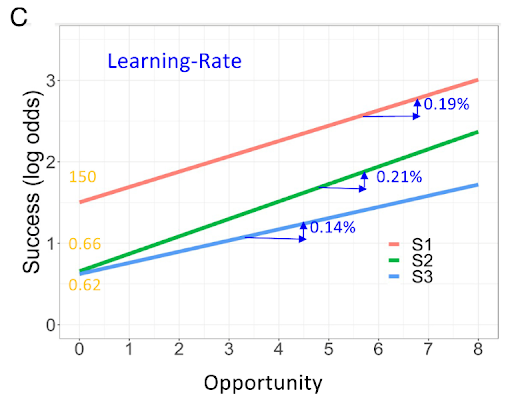
Solving equitability seems to have a straightforward path in light of the article I shared and this chart https://images.squarespace-cdn.com/content/v1/5aa6128850a54f0331abec9a/12aceca8-ae1d-4604-9134-b1d5a5c73d46/pic1.png?format=1500w
In short: identify students who are behind in math preparation, give them an amount of learning experiences proportional to how much they are behind before the course starts, then check everyone is at the same preparation level, then teach the course
 lethal leaf
We used flipped classroom for the discrete math class I was an undergrad TA for
I think it went really poorly but I was a mere undergrad
New prof next sem is gonna get rid of it I think
lethal leaf
long pelican
Solving equitability seems to have a straightforward path in light of the articl...
Is this a surprise to anyone? I think the real issue is actually getting time and money to do this...
I presume this is for pre-university level? Say middle or high school?
long pelican
Yes, traditionally we get taken off track by beliefs such as that some people "just" learn faster or slower than others and there's nothing we can do about it
long pelican
lethal leaf
I presume this is for pre-university level? Say middle or high school?
every level
lethal leaf
Oh this study looked at all levels? Neat
(I can't find the article you're talking about)
dapper flume
What article is this from?
lethal leaf
Right I was asking what level the article was looking at
long pelican
We applied our models to 1.3 million observations across 27 datasets of student interactions with online practice systems in the context of elementary to college courses in math, science, and language
It is every level, after all!
lethal leaf
Neato
Yea I think that finding the time and money to do this (creating extra material + teaching that extra material isn't free) at the K-12 level is quite hard
long pelican
One thing we can do is remove tiered classes
lethal leaf
I mean the idea makes sense especially considering what I see in office hours and tutoring: root causes are lack of understanding prior material not current material
tiered classes?
lethal leaf
Never heard of this. Do you just mean like accelerated vs not accelerated groups of students?
dapper flume
I am confused about what implementation is suggested by this. Is it just a matter of scaffolding people who are behind? I imagine its more but I don't know what.
I’ve come to grips with the disconnect by focusing on the horizontal axis, which represents attempts, not time.
Is competency-based grading in line with this?
long pelican
Hmm, not quite accelerated vs. non-accelerated
lethal leaf
Like in middle school I was part of the accelerated math kids and I learned algebra I in 7th grade rather than 9th grade. Do you mean get rid of that and I should have just gone to the highschool for my algebra I class? Maybe I'm just unfamiliar with the system you're talking about.
long pelican
I still imagine people who find math fun and do it in their free time should still take advanced math classes earlier
lethal leaf
long pelican
Level 5 algebra 2, level 3 algebra 2
Right so idk what this is so I need more context
long pelican
And that's because doing math in their free time gives them more learning opportunities (the unit used in the paper) per year
lethal leaf
I've just never heard the terminology before
long pelican
it's basically sorting students based on math ability
and teaching level 3 classes to lower standards than you'd teach a level 5 class
dapper flume
That is acceleration as far as I understand that term
long pelican
I want to distinguish between that and taking advanced classes earlier
which is what I understand acceleration to be
lethal leaf
Oh so this is like "these are kids who are younger taking algebra 2 so since they're younger we should lower the standards rather than teach them algebra 2 to full standards"?
long pelican
Noooo
The lower level kids are the ones who got C's in previous math classes and struggle generally with math
dapper flume
You mean having like, a "normal" level stats and "advanced" level stats both offered to seniors?
long pelican
the highest level ones are the ones who got A's
lethal leaf
Ohhhh I see what you mean
long pelican
Yes, but in reality it's more that the highest level is the normal version and the lower levels are increasingly remedial
lethal leaf
Yea
Huh that's interesting I've never heard of this
In my years of K-12 you just moved onto the next level regardless of if you got a C or an A as long as you passed
Everyone in the same class
In whatever advanced/normal track you were in
dapper flume
I guess that begs the question again, what does this suggest teachers to be doing?
I'm completely convinced this data is sensible, and it sounds like a problem that mastery-based grading is designed to address. I didn't understand what this meant:
identify students who are behind in math preparation, give them an amount of learning experiences proportional to how much they are behind before the course starts, then check everyone is at the same preparation level, then teach the course
long pelican
- Identify how many learning experiences each student lacks compared to the amount they should have
- Give each student their missing learning experiences before the class starts
Details not thought out yet
dapper flume
I think I see. Though the logistics of how a teacher should actually do that is lost on me.
Does summer school already do this? Should we have C students do part-time summer school? Is this something we can do without stripping more free time from those who are behind?
long pelican
Hm there's a huge amount of hours allocated to math in school that we shouldn't need to dip into anyone's free time
The problem is most of those hours are inefficient because you're trying to teach someone something when they are missing necessary learning experiences to be ready for that something
dapper flume
Is it better then to split students by their learning level into smaller classes? Or is it better to homogenize different learning levels?
long pelican
Neither, I think
It's funny when I think about the fact that the current curriculum structure from elementary school still leaves some students behind
My best explanation for that is that there are certain crucial skills that educators don't explicitly realize you need to learn math, which high SES students get from their interactions with parents at home, but low SES students don't get
(SES = socioeconomic status)
dapper flume
Yeah that was precisely my concern for heavy use of flipped-classroom learning, which would exacerbate that for the ones with lowest resources
long pelican
Cool!
dapper flume
The data from the article is telling me that people get more proficient based on attempts to learn far more than time. However, (in the US at least..) we are still giving all our major assessments and releasing all our benchmark grades simultaneously across all students. Is this the core issue?
long pelican
One such crucial skill I've identified is problem solving. I don't know about you but my parents inexplicably bought a lot of riddle books which I got addicted to which helped my problem solving abilities. I imagine low SES students usually do not get any exposure to that kind of stuff
dapper flume
long pelican
One such crucial skill I've identified is problem solving. I don't know about yo...
Agreed, massive roadblock for my 6th graders. I think teachers are mistaking their lack of experience for lack of effort.
long pelican
I think the solution is to actually figure out the most important unwritten skills are being assumed of students and, instead of assuming they already have them (e.g. from home), to add them to the curriculum instead
Every single one of these will be non-obvious
(or else we would already know about it)
I think problem solving is the more obvious of these
So I've diverged a bit from my initial proposal, but I think it's better
My initial proposal was about patching the holes, this one will prevent the holes
dapper flume
That's a pretty (rightfully) broad solution that I do try to keep in mind. Those are the things that change year-after-year.
Off the top of my head, some of those assumed skills math students really need explicit instruction for:
- Problem solving skills (i.e. using definitions, drawing pictures, simplifying...)
- Literacy skills in math
- Spatial Reasoning
- Modeling with quantities
- Estimation and Number Sense
- Communication and Social-Emotional skills
- Patience
- Metacognition
- Making judgements based on results (especially statistical ones)
- ...
Let's just say there are many
long pelican
Those are all in our awareness, which means I fear the more important ones are still yet to be found
dapper flume
Are you familiar with how mastery-based grading works?
long pelican
yeah
dapper flume
I feel like the kind of teaching which that grading style incentivizes would be more inline with what the data is suggesting for us to do
long pelican
I think I have another one: having practice with logical implications
This was something I had in 3rd grade in the form of "who's lying" riddles, where you solve them with a grid and in the grid you eliminate entries that are logically impossible
dapper flume
My big takeaway is that we need to find ways to focus less on the rate over time people learn, versus the rate per attempt at which people try to learn, which is what mastery-based assessment does
dapper flume
long pelican
I think I have another one: having practice with logical implications
This was s...
love those!
long pelican
I generally don't like fads btw, because conversations around them are always dripping with incorrect implicit assumptions
Actual merits of the thing itself notwithstanding
dapper flume
i hear you
long pelican
Also, funny observation: I noticed in the past few years that problem solving is not divided along SES anymore, because rich students and their parents have figured out that the optimal way to do well in math tests is to practice remembering patterns of worked examples instead of actual problem solving
as a result, many rich students are weak in problem solving too
dapper flume
It is still super divided in my experience, but not necessarily in favor to either party. I do resonate with your observation about the students who have more resources finding slick but unhelpful ways to succeed. However, I think the general literacy rates in lower SES are still so drastically underdeveloped in the area I'm in, that comprehending what a problem means seems to be near impossible for them sometimes. Not to mention emotional disturbance rates for low SES students, which greatly hurt their stamina for doing hard things.
long pelican
Right, yeah. And I did mean problem solving is still divided but the axis isn't quite SES, it's more like whether your parents are scientists I guess
dapper flume
i've seen great success across the board with activities like number talks, though
So many learning experiences packed into a warm-up-length activity
long pelican
assuming everyone is following 😉
dapper flume
There are ways to customize it so more people are engaged. My favorite way is to make the problems very silly
long pelican
Sometimes I think the most important teacher skill is also the one skill education researchers never look at, which is the ability to rapidly understand whether a given student is following and to effectively diagnose why they aren't
dapper flume
Or asking really open-ended questions (i.e. before teaching them about measures of center, give them a set of data and ask them what is in the "middle" of it, and let them find a good way to decide that).
dapper flume
long pelican
Sometimes I think the most important teacher skill is also the one skill educati...
psychology and neuro has some great research on how people use their attention, and how they maintain it. I'm not sure we will ever converge on evidence-based principles for assessing attention, but what we do have is evidence for what people are more likely to pay attention to.
I imagine it is hard to do science on student inattention because the number of variables influencing attention is enormous. For now it is usually left up to the "art" of teaching.
long pelican
Ooo I do not mean paying attention, I mean understanding what is being said (the lack of understanding being due to missing prior knowledge, and the skill is in finding what is missing)
dapper flume
Isn't that constructivism?
long pelican
I... don't understand.
dapper flume
Constructivism is basically an educational-psychology school of thought about how we integrate new knowledge into prior knowledge
long pelican
I am not talking on that theoretical of a level
Just like a diagnostician needs to effectively diagnose why a patient shows certain symptoms, and it could be any number of diseases, what I'm talking about is diagnosing why a student doesn't understand something in the current lesson
 quasi musk
I'm not sure I quite understand your idea of "tiered" or different levels of students in Math Education. Are you saying that "C students" are missing pre-requisites and should be paired with someone/something that will attempt to fill in missing pieces of mathematics
To get them up to speed with what they're currently supposed to be learning?
long pelican
quasi musk
I'm not sure I quite understand your idea of "tiered" or different levels of stu...
"Tiered" describes something that currently exists in many schools, and I'm suggesting revisiting the notion that we should have tiered classes
quasi musk
Yeah, I'm trying to ask what you mean be tiered
Because it's not clear to me what you mean
dapper flume
long pelican
Just like a diagnostician needs to effectively diagnose why a patient shows cert...
I don't mean to overwhelm the conversation, but as far as I understand, that's the goal of informal formative assessment is, right? Socratic questioning, observation of body language, all that
long pelican
Among students who take Algebra 2, won't some of them be sorted into classes that have a lower standard and the better students be sorted into classes that have higher standards?
quasi musk
long pelican
and teaching level 3 classes to lower standards than you'd teach a level 5 class
This statement for instance is very opaque to me
quasi musk
long pelican
Among students who take Algebra 2, won't some of them be sorted into classes tha...
Yes this is true
long pelican
so that's what I mean
quasi musk
In some school districts, but usually it's not based on math ability, and more based on the ability to take notes, not disrupt the class, and do homework
quasi musk
long pelican
Among students who take Algebra 2, won't some of them be sorted into classes tha...
It's really hard to qualify and quantify what these higher standards are
quasi musk
Having taught classes trying to juggle differentiated learning (students in one classroom of vastly differing abilities), it's very hard to properly challenge & teach my high achieving students when I'm consistently having to teach one kid how to take basic notes, to write things down, and explain step by step how to solve an algebra problem
The way I view it is that all my students deserve a roughly equal amount of attention throughout the year, and if I have to sit down & babysit some kid that doesn't want to be there or doesn't want to learn, then that comes at the cost of properly challenging more ready & willing students
dapper flume
quasi musk
Having taught classes trying to juggle differentiated learning (students in one ...
If you have experience with it, does co-teaching seem to help or hurt, in your opinion?
quasi musk
What do you mean by co-teaching? Having two teachers?
dapper flume
Yeah
quasi musk
I think it can help, just as smaller class sizes help. I've done some supplemental instruction stuff, and it can help mitigate this. But I think the true solution to what icy is advocating for is tutoring
A classroom is for generalized learning to an audience of 5-40 students. Individualized tutoring is where you get support on what you're learning in the classroom
The problem with tutoring is that it can be so focused on some issues, and not push you fast enough to keep up with what the standards are
The problem with the classroom is that its too focused on keeping a certain pace, and possibly not addressing each students question adequately
dapper flume
I did an internship at a private school with daily middle-of-day tutoring. That worked fantastically, but the resources needed to scale that to a public school seems impossible
quasi musk
So you have a dual issue in teaching: Do you cover one topic more deeply, or do you cover a breadth of topics? one always comes at the cost of the other
And there is no canonical right answer
I'm a giant advocate for tiered learning classrooms, but having bridges/pathways for students in one rung to move up or down
dapper flume
The district I'm at does that. It's generally really helpful for the students at the extremes of achievement. It hasn't really been a solution to the "making up for learning experience" argument Icy0 made earlier, but to be fair, that's not what it's designed for either
quasi musk
It's an intractable problem that no one institution can resolve. A student must be the driving force of their own education to a certain extent. Our role as educators is to focus that drive down the right paths
Wehther we're in the role as a teacher, tutor, supplemental instructor, peer, etc.
Instead of constantly re-inventing the wheel, we should be there to support what currently exists. Yeah it'd be nice to have 10 billion dollars to go think & tinker with the state education system
How about instead I go down to my local school and try to make a difference as an aide or private tutor
dapper flume
Yeah agreed. I like to advocate for inexpensive and free ways to make education better in little ways.
cosmic ibex
long pelican
Also, funny observation: I noticed in the past few years that problem solving is...
So perhaps the differentiator is not having rich parents per se, but having parents who somewhat understand how mathematics works and try to encourage an interest in it that is not strictly aimed at "the present year's grades". (Which does require some baseline socioeconomic resources to pull off, but beyond a certain point that's not the main limiting factor anymore).
long pelican
yea for problem solving. For cookie cutter problem types, test prep, and content, stuff you usually get tutored in by the tutors that rich parents hire, SES is still a good predictor
cosmic ibex
Yes, I meant differentiator for who gets to learn math well enough that they don't have to keep struggling with cookie-cutter problems.
long pelican
Yeah, except that tutors do train the rich but not problem-solving-type students how to study cookie cutter problems effectively, which works for classes that mainly test and assign cookie cutter problems
tepid smelt
long pelican
Sometimes I think the most important teacher skill is also the one skill educati...
This idea on coming up with good formative assessments during explicit instruction is a good point. I have been meaning to check out some of the work by Dylan William on this exact issue. I do think you need ways to rapidly determine if that class is understanding a topic during explicity instruction. I do think this is an area of weakness for most teachers myself included. He did a podcast with Anna Stoke on formative assessment strategies that was a good listen. https://chalkandtalkpodcast.podbean.com/e/raising-student-achievement-with-dylan-wiliam-ep-24/

In Episode 24, Anna Stokke interviews Dr. Dylan Wiliam, who is an education researcher renowned for his expertise on formative assessment. They begin by discussing PISA scores and the need to improve math proficiency. They then focus on Dylan's two primary recommendations for raising student achievement – a knowledge-rich curriculum and investi...
I worked at one large public school where we did do what you are describing Icy(for freshmen only sadly) in which certain kids were identified as needing more support in middle school and were given an elective where it was a period where they could get extra help with math or any subject for that matter. I basically had a class with about 5-10 students I got to work with for an extra hour. It actually worked really well for the kids who came. I had the freedom to do anything I wanted with them. I do think coming up with strategies to give students more reps is a good idea and it has to happen at the school during school hours. Education resources are great but for kids who need it they wont utilize them well unless guided on how to use them.
long pelican
I've found the term "formative assessment" means different things to different people. What does it mean to yoU?
tepid smelt
I mean in the simpelest way I understand its used during instruction to guide teaching
long pelican
I mean what actions does it consist of, for you
tepid smelt
I believe he breaks it down into 5 key strategies but again I have nto reached it enough
long pelican
If I'm right, the skill I'm talking about is not formative assessment
It's more about how skilled you are during a 1 on 1 conversation with a student
more about problem solving ability (for the teacher) than what methods they use
tepid smelt
I think that is something that comes with experience for sure. Like I begin to learn about a students deficiencies as I understand how they approach a problem and what they are doing wrong. Now the struggle is sometimes what the student needs is quite a lot more time on foundational skills which is where the issues that MoonBears brings up makes it so hard.
I guess if you mean 'soft skills' students need a bit one is just emotional stability. Which to me means not being emotionally affected by struggle.
It's interesting just how some students will emotionally breakdown during a lesson and have a hard time recovering where some just don't mind being wrong often or struggling.
long pelican
For your first paragraph, comes with experience is another word for "don't know how to teach it," right? ;) but what is teacher education for if not teaching teachers skills?
For your second paragraph, I guess you're contributing to my list of unwritten assumed skills high SES students bring in to the classroom. Emotional stability, I like it. It would be cool to have emotional stability exercises be part of the curriculum (perhaps it doesn't even have to be called math)
 jovial sinew
So I have to do a 15 minute presentation on Diophantine approximations on a 3-sphere to an audience of mostly non-math people. Do you guys have any tips?
 near harness
jovial sinew
So I have to do a 15 minute presentation on Diophantine approximations on a 3-sp...
near harness
jovial sinew
So I have to do a 15 minute presentation on Diophantine approximations on a 3-sp...
There's alot of general presentation advice that you can find online like "know your audience" or "try to make the audience interested" that might be helpful.
Personally I would try to have a clear goal on what you want your presentation to achieve before making it. Like because you're giving it to laypeople is your goal mostly to entertain inform or inspire? And once you have that figured out you can design the presentation with that goal in mind.
That being said time is kind of your main resource in a presentation and with only 15 minutes you might not be able to get to as much as you would like.
tawny slate
my question is why are you presenting that to a bunch of nonmath people?
what caused this situation to happen, the context would really help
otherwise yeah, what grimba said, think of it like storytelling more than a technical presentation
get the audience invested
jovial sinew
tawny slate
my question is why are you presenting that to a bunch of nonmath people?
I'm doing research over the summer and everyone gives a 15 minute presentation on their research to everyone else
daring gulch
jovial sinew
I'm doing research over the summer and everyone gives a 15 minute presentation ...
What kind of "research," specifically? Lower-level undergrad?
 noble hare
Generally even the math people a good structure is probably an example sandwich. Open up with a motivating example, then go over the idea in general and then finish with a perhaps more interesting example
 north sable
hi guys
i have a big exam tommorow
can somebody help me to study
like last years exams
cosmic ibex
north sable
can somebody help me to study
Wrong channel.
tight star
noble hare
Generally even the math people a good structure is probably an example sandwich....
…wouldn’t an example sandwich have an example in the middle…?
im just comparing this with, like, cheese sandwich
daring gulch
jovial sinew
Yes
So in that case, especially since you're presenting to non-experts, skip the background information and focus on what makes your topic important. The key in these types of presentations is first and foremost to relate to your audience, i.e. to be entertaining. Add in background information as necessary or as time permits. Since the actual content is secondary you can twist your logic to some extent as nobody is going to be want to verify it anyways, though keeping close to the original sources generally prevents any fallacies from creeping up.
15 minutes is a ton of time to accomplish these objectives, but also a ton of time for your audience to get bored. Throw in a few jokes, perhaps even many. Be ridiculous, but also subtle. Be enthusiastic, and your audience will be too. Don't offend your audience. Don't offend your audience. And please, for the love of Euclid, do not under any circumstances partake in "meta-humor," e.g. making jokes about your presentation, other presentations, yourself, etc. The audience. Does. Not. Care. Only add things the audience will care about or that you will make them care about.
 hot tartan
hello, i need some help in LaTeX
 marsh compass
hot tartan
hello, i need some help in LaTeX
hot tartan
marsh compass
hot tartan
hello, i need some help in LaTeX
hot tartan
thanks got it
 rare surge
I've noticed that sometimes people are confused by the idea of the variable in an integrand being a "dummy variable" . For example here the correct method is substituting u=-x into the LHS, however I had a student get the RHS expression written in terms of u and get stuck on how we can simply just rewrite it with an x instead of u to get the desired result. His thought was "but if x=-u then surely u can't just swap the variables!"

Does anyone have a really neat and simple way of explaining this?
tight star
Yeah I think this comes from believing that a variable represents a particular value, and that different variables usually represent different values
The way I’ve usually dealt with this is by getting rid of dummy variables entirely
Instead, you view integration as a function which takes in a start point, an end point, and an integrand, and spits out a number
The nice thing about this framing is that no dummy variable appears
cosmic ibex
You usually need a variable to describe what your integrand is.
burnt vesselBOT
Pseudonium
 cosmic ibex
In order to make explicit calculation you need a way to describe on the paper which function it is you're trying to integrate.
burnt vesselBOT
Pseudonium
 tight star
And then the dummy variable disappears
cosmic ibex
You still need a way to describe which function it is you have given the name I.
And then the dummy variable reappears.
tight star
I mean I’ve employed this strategy successfully before
It has fixed issues with dummy variables multiple times
cosmic ibex
You've empoyed a strategy that depends on never writing down anything that reveals which function the integrand is?
I don't see how that can possibly work even in principle.
Unless, I suppose, if you go full combinatory logic when defining all your functions (good luck with that).
tight star
cosmic ibex
You've empoyed a strategy that depends on never writing down anything that revea...
Lol obviously not
It’s strange to me that this is so weird
tight star
cosmic ibex
I don't see how that can possibly work ~~even in principle~~.
And yet it has, multiple times
cosmic ibex
You're really using combinatory logic to state which function it is you're integrating?
cosmic ibex
I'm trying to figure out what it is you're proposing.
Are you depending on telepathy for the reader to be able to know what the function you all I does?
tight star
tight star
Instead, you view integration as a function which takes in a start point, an end...
So by this I literally mean the following
cosmic ibex
And you're not actually answering the question.
tight star
Integration is a function $\text{Integrate} : \mathbb{R} \times \mathbb{R} \times (\mathbb{R} \to \mathbb{R}) \to \mathbb{R}$
Of course it’s not technically defined over the whole domain, but the
type of its inputs is a start point (real number), an end point (real number), and an integrand (function from R to R)
cosmic ibex
You're not answering my question.
burnt vesselBOT
Pseudonium
 tight star
cosmic ibex
You're not answering my question.
tight star
cosmic ibex
You're not answering my question.
Yes I am lol
cosmic ibex
How. Do. You. Tell. The. Reader. WHICH. Function. It. Is. You're. Integrating??
tight star
Lol
cosmic ibex
You're still not answering my question.
tight star
So we start off with two functions here
tight star
cosmic ibex
You're still not answering my question.
Jeez so impatient
$I_1(x) = \frac{g(x)}{1 + h(x)^{k(x)} }$
burnt vesselBOT
Pseudonium
 tight star
And $I_2(x) = \frac{g(x) h(x)^{k(x)} }{1 + h(x)^{k(x)} }$
burnt vesselBOT
Pseudonium
 tight star
You do the u-sub on the second integral $u = -x$
burnt vesselBOT
Pseudonium
 cosmic ibex
Dummy variables here.
 tight star
Hahahahahaha
Omg the red circles
That’s hilarious
Anyway
You end up with $\int_{-a}^0 \frac{g(u)}{1 + h(u)^{k(u)} } du$
burnt vesselBOT
Pseudonium
 cosmic ibex
"Anyway" is not a way to ignore the fact that you have dummy variables all over the place in what you claimed would be a way to write down things withoug dummy variables.
cosmic ibex
Okay, I'm out. You're just trolling.
"Lol", "so impatient" and "anyway" all the time instead of just answering.
tight star
tight star
You end up with $\int_{-a}^0 \frac{g(u)}{1 + h(u)^{k(u)} } du$
You wanna show this is equal to $\int_{-a}^0 \frac{g(x)}{1 + h(x)^{k(x)} } dx$
burnt vesselBOT
Pseudonium
 tight star
cosmic ibex
"Lol", "so impatient" and "anyway" all the time instead of just answering.
tight star
cosmic ibex
"Lol", "so impatient" and "anyway" all the time instead of just answering.
I’m literally answering right now
tardy ember
tight star
The way I’ve usually dealt with this is by getting rid of dummy variables entire...
so how did you get rid of dummy variables entirely?
tight star
tardy ember
so how did you get rid of dummy variables entirely?
That’s what I’m just about to write
The point is that you can write both expressions without dummy variables
cosmic ibex
You're LITERALLY USING DUMMY VARIABLES IN EACH AND EVERY FORMULA YOU POST.
tight star
Ooh capslock and bold text
cosmic ibex
That's NOT "without dummy variables".
tight star
tight star
The point is that you can write both expressions without dummy variables
As $\text{Integrate}(-a, 0, I_1)$
burnt vesselBOT
Pseudonium
 cosmic ibex
What does I_1 mean there?
tight star
tight star
As $\text{Integrate}(-a, 0, I_1)$
This doesn’t have dummy variables
tight star
cosmic ibex
What does I_1 mean there?
We defined it earlier!
cosmic ibex
With something that was full of dummy variables!
tardy ember
you defined it using dummy variables
tight star
But this expression I just wrote down doesn’t have them
Usually students understand that I_1 is a function R -> R
An input-output machine
Usually phrasing things as “take a function as input” helps clarify why the dummy variables don’t matter, in my experience
cosmic ibex
I'm still waiting for you explain how you tell the students WHICH function R->R you mean by the notation I_1, without using dummy variables.
tight star
E.g. I’ve done this before for confusions about limits
tight star
cosmic ibex
I'm still waiting for you explain how you tell the students WHICH function R->R ...
I mean that wasn’t my claim lol
tight star
burnt vessel
**Pseudonium**
The point is this doesn’t have dummy variables
cosmic ibex
tight star
The way I’ve usually dealt with this is by getting rid of dummy variables entire...
This was your claim.
tight star
And then it’s easier to see why both sides are equal
tight star
cosmic ibex
This was your claim.
I guess get rid of dummy variables in the final expression?
cosmic ibex
tight star
The point is this doesn’t have dummy variables
That point is that the ONLY definition of your I_1 you have proposes DOES have dummy variables in it.
tight star
Ok…?
Like you can argue all you want but I’ve done this approach multiple times and it’s worked
cosmic ibex
So the approach you tried to describe as "getting rid of dummy variables entirely" actually does not get rid of dummy variables at all.
cosmic ibex
It just moves the very same dummy variable to a different invocation of the TeX bot. But the dummy variable still needs to be there.
tight star
I mean
tight star
tight star
Like you can argue all you want but I’ve done this approach multiple times and i...
.
 austere delta
If you just don't write it down, the student will forget you used them earlier
tight star
Don’t write what down…?
austere delta
The dummy variables
tight star
I’m a little confused by what you mean
austere delta
I'm just saying, that what you did probably works because there's no dummy variable in the final expression
tight star
Essentially, my suggestion to show that $\int_{-a}^0 I_1(x) dx = \int_{-a}^0 I_1(u) du$ is by convincing the student they can both be written as $\text{Integrate}(-a, 0, I_1)$
burnt vesselBOT
Pseudonium
 tight star
Ofc if they’re confused about substituting u = x then there’s a non-trivial amount of convincing to do
But I think it’s an easier approach than trying to convince them u = x makes sense, especially when just a bit ago you set u = -x
tight star
austere delta
I'm just saying, that what you did probably works because there's no dummy varia...
Yes, that’s been my experience
tight star
tight star
Usually phrasing things as “take a function as input” helps clarify why the dumm...
.
tight star
tight star
Ofc if they’re confused about substituting u = x then there’s a non-trivial amou...
Here’s where you’d try to lean into the intuition of “area under graph” or “summing a bunch of small changes”
austere delta
Confusion about dummy variables is basically just a confusion about notation anyway. So if you supress them in the notation, they won't stumble over it.
But I'm not sure if this is a permanent fix, since it never addresses the confusion with dummy variables
tight star
Hmm, how would you approach it? I’m genuinely curious
I’ve used this technique for things like $\lim_{n \to \infty} f(n)$ before
burnt vesselBOT
Pseudonium
 tight star
Where the student was confused “is n infinite? If it’s finite, then how big is it?”
Rephrasing the limit as an operation that takes in a function, f, and spits out a number, helped greatly with this
In fact more than I expected
I guess part of convincing them you can write both sides as $\text{Integrate}(-a, 0, I_1)$ might help address confusions with dummy variables
burnt vesselBOT
Pseudonium
 tight star
Really the usefulness is having notation for integration that doesn’t involve dummy variables
tawny slate
lol
spice matrix
cosmic ibex
Okay, I'm out. You're just trolling.
such great pedagogy
spice matrix
tight star
Instead, you view integration as a function which takes in a start point, an end...
You and Stella would agree so much here.
tight star
Yeah hehe, stella was definitely a big influence on me for this kind of reasoning
spice matrix
cosmic ibex
You usually need a variable to describe what your integrand is.
This is fully consistent with the idea of an integral as a point free function. The variable binding of an integral can just be viewed as syntactic sugar for an anonymous function. If you want to use an anonymous function that’s ok, but point free can also work.
cosmic ibex
What do you mean by "point free function"?
spice matrix
In the case of an integral, many mathematicians prefer to write ∫f where f is a function rather than ∫dx f(x) and they mean the same thing, that’s all.
cosmic ibex
Except that doesn't mean you can avoid dummy variables when you need to define which function f is supposed to be.
spice matrix
I mean, you often can? I personally prefer using variables for their expressivity, but as you said in your deleted reply, combinators. Instead of ∫dx x^2 I could just as well write ∫(^2)
tawny slate
i really do not see how this avoids dummy variables
im with tropo here
integrate sin(x)^2 - ln(x) from 0 to 1 without dummy variables
spice matrix
∫^1_0 (sin^2 - ln)
tight star
tawny slate
i really do not see how this avoids dummy variables
Well, it’s worked with the students I’ve helped
tight star
Harkening back to this, I think it’s clear in my mind now that:
- Functions arise everywhere in math
- Operations on functions also arise everywhere
- Explaining things in terms of functions is often illuminating
I think I properly understand now why I’m so interested in category theory - it makes you an expert at manipulating functions, and this is a generally good math skill to have. For teaching and explaining math to other people, and also for learning math yourself.
plain valve
(If you aren't already good at manipulating functions, should you be learning category theory?)
 graceful void
if by "manipulating functions" you mean "shoehorning every concept into the same framework" then yeah maybe
tight star
plain valve
(If you aren't already good at manipulating functions, should you be learning ca...
Well I know that for me, it made me a lot more comfortable with manipulating them! So, perhaps yes
tight star
graceful void
if by "manipulating functions" you mean "shoehorning every concept into the same...
No…? I mean manipulating functions
halcyon glade
I think this is overly reductive. Sure you could say category theory is about morphisms and morphisms show up everywhere. I could also say set theory is about sets and sets show up everywhere. But it's not like explaining forcing to a student learning how to write a proof is helpful, even when their proof is full of sets.
Similarly I think it's a disservice to category theory to reduce it to manipulating functions.
Going back to the original comment though, I do think teaching the concept of higher-order functions is useful.
tight star
oh sure, I think there’s a lot more depth to category theory than manipulating functions
however, I think this is probably one of the more concrete benefits it provides
easier to understand for someone who hasn’t done any category theory
halcyon glade
(Banned a spammer)
tight star
As an example, I’d never met corestriction before category theory
halcyon glade
 that's not categorically dual to restriction though
halcyon glade
I'm just trying to figure out where the category theory came from. I feel like "we should teach students about higher-order functions as a concept" to "we should teach things framed in category theory" is a huge leap. Maybe I'm misunderstanding your point though.
tight star
I think category theory is a convenient language to teach people these things in?
halcyon glade
(Similarly to how "we should teach students about the concept of functions as sets of inputs/outputs" to "we should teach student about set theory" is a huge leap)
halcyon glade
tight star
I think category theory is a convenient language to teach people these things in...
Convenient in what sense? It seems counterproductive to me to ask a student to, in addition to learning a new concept like higher-order functions, also expect them to learn a new language that they are probably not comfortable with.
tight star
i mean a lot of intro category theory boils down to “can you find an alternative description for maps into X, or maps out of X”?
even this is already very useful
e.g. you can phrase corestriction as follows
suppose S is a subset of X (or subgroup, subspace, sub manifold…)
then maps into S naturally correspond to maps into X whose image is contained in S
that’s just an alternative description for maps into S, which might be easier to check than the definition of map into S supplied by your category
halcyon glade
Well the general case involving groups, vector spaces, or manifolds probably is not interesting to a student just trying to understand why you can make the codomain of a function smaller
tight star
e.g. it’s a lot easier to check that a map into R^3 is smooth and has image contained in S^2, than it is to check directly with charts
halcyon glade
Like, category theory just provides generality, and generality doesn't help here
tight star
halcyon glade
Well the general case involving groups, vector spaces, or manifolds probably is ...
mhm, but you don’t need to do the general case!
each time you introduce a notion of “subobject”
you can say “by the way, here’s an alternative way to map into it, based on the way we’ve constructed it”
halcyon glade
What subject material are you imagining you're helping a student with here in this hypothetical?
tight star
that’s already the majority of what im suggesting
halcyon glade
Intro to proofs?
tight star
i mean subobjects come up all the time
halcyon glade
But like
What sort of course are you imagining
I'm trying to understand your perspective
tight star
any? not even a dedicated course
just the suggestion that, whenever you introduce a notion of subobject, you can say “hey here’s an alternative way to map into it”
halcyon glade
Like, a general notion of "subobject" will not be useful to a student taking an intro to proofs class who's just struggling to figure out how to even write a proof
So I'm trying to imagine your audience
tight star
im not suggesting talking about the term subobject itself
for set theory it’d be a subset
for group theory a subgroup
for topology a subspace
you’d use the term relevant for the field
tight star
tight star
just the suggestion that, whenever you introduce a notion of subobject, you can ...
this is really the majority of my suggestion
halcyon glade
Okay so let's say the student is taking an intro to proofs course and they're learning the concept of S being a subset of X for the first time; your suggestion is just to also say "by the way functions into S correspond to functions into X with their image contained in S"?
tight star
yeah? do you think that would be too much?
halcyon glade
It doesn't go beyond that?
No I'm just trying to pin down what your proposal is before commenting on it
tight star
i mean, does it have to? i think that’s the main thing category theory says about subsets at this stage
you don’t have to mention equalisers or anything
halcyon glade
Yeah I mean, this is what I think, at this point the statement is so watered down that it's not really category theory, it's something that mathematicians have thought about and proved long before category theory was invented
tight star
right, i guess i only met this in my category theory class though
i kind of knew it was possible, but I didn’t even have a name to describe what I was doing
and it got harder for things like topological spaces
halcyon glade
I think it would be a fine thing to say like "oh you should try proving this" because it's a simple exercise that helps them understand how to reason about sets and functions, but like I think tying it all the way to "this is category theory" is a stretch and negatively impacts students' image as to what category theory is in the first place
tight star
so, category theory helped me become more comfortable generally with changing the domain and codomain of functions, even in the “wrong direction”
tight star
halcyon glade
I think it would be a fine thing to say like "oh you should try proving this" be...
I mean, it’s a universal property
halcyon glade
Yeah I don't think there's anything wrong with giving it a name, like "this is corestriction"
tight star
mhm
so then I can wonder - does corestriction work for topological spaces?
but without a name, it’s harder to even have that thought
At least it never came up for me
halcyon glade
tight star
I mean, it’s a universal property
The whole point of category theory though is to generalize beyond sets, at this stage the student doesn't really have any examples other than sets, so mentioning the generality is useless to them. Like I think it'd be reasonable for the student to then think "oh okay, category theory is about reframing trivial statements in complicated ways"
tight star
I mean, is it really that complicated?
it just says how S is related to everything else in the “universe”
halcyon glade
If you take such a statement and call it like a "universal property" I think it does give off the impression of elevating a trivial statement to like something that is meant to be profound
I think the profound thing is that you can conceptualize a lot of different things in math the same way, but the student at this point doesn't have the raw materials to know that
Like I think saying "as an exercise, prove that functions into S have a 1-1 correspondence with functions into X with image contained in S" is completely normal, what's weird to me is then going on to say "in category theory language, this is a universal property" and then naturally you'll have to explain what category theory and universal properties are when the student asks, and at this point you've turned a simple statement into a complicated framework
tight star
halcyon glade
If you take such a statement and call it like a "universal property" I think it ...
Why? All it does it relate S to everything else in the universe
I think universal property is a reasonable name for that
halcyon glade
Well that's not what a universal property is though
It already has a defined meaning, in category theory
tight star
Isn’t a universal property just an alternative description for the functor an object represents?
Than the standard “tautological” one
it’s an alternative description for maps into or out of the object
halcyon glade
In my head it's a statement that something is an initial object in some category, but the precise details don't matter; the point is that "universal property" is a technical term with an established meaning, and if you explain what it is to a student by just saying "it's a property that relates objects to everything else in the universe", it's prone to make them misuse the term, overall hurting their understanding.
tight star
halcyon glade
In my head it's a statement that something is an initial object in some category...
well, you can always frame representability as a terminal/initial object
halcyon glade
Yes but the point is that explaining the intricacies of like what representability is or so on, is a far detour from a student learning basic proof concepts like what a subset is
tight star
im not suggesting explaining the intricacies
you don’t even need to have naturality from the start
even the statement on objects is already useful
and honestly they’ll probably discover naturality if they use universal properties enough
halcyon glade
Yeah I'm saying if you define "universal property" which already has a precise definition in vague terms, it's likely to confuse the student
tight star
I mean
the definition is in the name
and it’s entirely equivalent to initial/terminal objects
what else would you call the concept im talking about?
tight star
tight star
and it’s entirely equivalent to initial/terminal objects
iirc you use the category of elements for this
nlab has a section on it in their page on the yoneda lemma
halcyon glade
Well that's what I'm saying, I wouldn't introduce the concepts of universal properties or the yoneda lemma
I would probably wait to introduce the concept of a universal property until at least a class in abstract algebra
tight star
I wouldn’t introduce yoneda at this stage!
it feels like you’re still misunderstanding what I want to do
halcyon glade
(Where it's useful to think about products of groups, products of rings, etc. sharing some sort of general property)
tight star
I mean, it’s useful to be able to change the codomain of a function
halcyon glade
Well IDK maybe I am, I've also seen you help in help channels though, so I have some idea lol
tight star
yes, please just take what im saying right now
it’s just very common that, for a mathematical object X, there’s a nice alternative description for maps into X, or maps out of X
my suggestion is to make some of these explicit when teaching
say when you’re introducing X
and you can either prove it in class or set it as an exercise
for subsets, quotient sets, products of groups…
it’s just a small addition individually
tight star
and I think it’s reasonable to call such alternative descriptions “universal properties”
given that they describe how X relates to everything else in the universe, through maps
halcyon glade
What is the point of calling it that though? I can't think of any benefit it really provides the student, and it's more likely to confuse in my opinion, with the student calling a bunch of things that aren't universal properties universal properties. I can understand it in an abstract algebra course when you might want to talk about the difference between concrete constructions of products vs definition of the product via a universal property.
halcyon glade
I didn't say they weren't.
I said that if you give a vague definition of "universal property", the student is likely to treat it as a vague term that can be applied anywhere.
The issue being that "universal property" has a precise meaning already.
 storm hawk
Have you seen Morse theory? I think it somewhat supports your philosophy.
tight star
halcyon glade
I said that if you give a vague definition of "universal property", the student ...
I mean you can describe them as
An alternative description for maps into X, or maps out of X
That just says Hom(-, X) or Hom(X, -) is naturally isomorphic to some other functor F
tight star
storm hawk
Have you seen Morse theory? I think it somewhat supports your philosophy.
I haven’t?
tight star
storm hawk
https://stanford.edu/~sfh/morse.pdf
Ohhh you mean the diffgeo thing?
I have heard a little about it yeah, one of my friends is very into diffgeo
I think it’s related but slightly different to what im saying
the idea behind morse theory is that you can learn about a manifold by studying maps to the real numbers
which embodies a general principle of being able to learn about an object by maps to or from that object
and I guess my suggestion is - often there’s easier ways to make such maps than simply applying the definition of “map” for the object, using universal properties
storm hawk
I've no idea about that last part, but it sounded similar to your limit example waaaay above in the thread.
tight star
storm hawk
I've no idea about that last part, but it sounded similar to your limit example ...
have you met any universal properties? and - how is it similar to my limit example?
storm hawk
1- yes, 2- transforming a question about objects (limits) to a question about functions
tight star
ah sure, I think the latter is more a general pattern I’ve noticed of - translating things into functions can help clear up misconceptions
which is why I want to make sure people are good at manipulating functions
so e.g. when you start talking about inputting and outputting functions, things like partial application or currying become quite natural operations
storm hawk
tight star
ah sure, I think the latter is more a general pattern I’ve noticed of - translat...
i agree, but in the sense that it's a different way to view things. some people will find the traditional approach better, some not.
tight star
indeed - but what’s surprised me is that a lot more people than I expected like functions
the limit thing I did was more a “lemme try everything and see what works”
it wasn’t my first approach to explaining it, I tried for a while beforehand the standard way
but somehow, explaining it in terms of functions made things click
and this has happened quite a few times to me when explaining things here
storm hawk
Perhaps some of the details that are usually handwaved, you are formalizing via functions and that little extra rigour helps in comprehension. Either way, I'll keep that approach in mind.
tight star
in that particular case, it was the ability to have a notation like Limit(f), without the dummy variable
btw this is the part of the nlab page on the yoneda lemma I mean - unwrapping the definition basically gets you the category of elements of X
 tepid smelt
I"m curious if you all have any thoughts on this https://matheducators.stackexchange.com/questions/27964/how-to-choose-a-textbook-that-is-pedagogically-optimal-for-oneself It goes counter to a lot of my own thoughts but I feel for a majority of say secondary students it tends to hold up with what I have noticed. I think also the notion of 'thats not how x learned math and look at how far they got' is something I need to be weary of because outliers is not how you should build a system to help the most people. I find this happens a lot in say sports or fitness industry where you will look at how some pro athlete trained and think that is the optimal approach for most people.

Mathematics Educators Stack Exchange
I am currently using the Russian textbook Mathematical Analysis by Zorich. But the more I use it, the more I feel it is making problems too hard or too advanced for the subject and it is unnecessar...
cloud zealot
@wispy slate is this ME post written by you?
tepid smelt
No I just came across it and it got me thinking. I have always valued harder problems both as a student and a teacher but maybe I am misguided
cloud zealot
no, the OP of the ME post is named yinuo an
and there is also an individual here named that
long pelican
tepid smelt
Oh woops I see now. I even responded lol...
I guess I was reflecting on that post today as I am writing a final. I have thought is it maybe a good idea to break apart a challenging problem into a lot of small problems to help have a student access a tougher problem? I am wondering if that somehow robs them of the right questions to ask when solving.
vagrant meadow
tepid smelt
I guess I was reflecting on that post today as I am writing a final. I have thou...
in my opinion, the benefits far outweigh the negatives.
arguably, there's value in studying hard enough to be able to do it without hints or subparts, but I've found that students who can do that are usually anomalies who are just at a level above the class. it's also especially bad to do during a timed test. like... let them struggle and think hard about stuff when they have ample time to do it (like a take home assignment or homework), not when there's other questions they have limited time to solve. that's my two cents.
subparts make it more approachable, and allow you to test their ability to apply specific things they've learned in the course. plus, there's often a big payoff in that they learn a cool result/application/theorem that you didn't have time to cover during the course.
long pelican
I care a lot about people being able to make non-obvious insights. Society needs way more of that skill than it has currently. In fact the median person in society seems to have none of that skill, which I find sad. That's why I teach and test it, when I teach.
For other people who teach, perhaps they just care about students knowing the content, and besides they might not know how to teach the skill of making non-obvious insights. So if this is the scenario, it makes sense not to include any difficult problems in the curriculum at all. But it is famously common to include a couple of them anyways here and there, to give the top students something to do, or else to spread out the grade distribution. Both of these reasons I find much worse than the following simple reason: that I actually care that students can make non-obvious insights...
(Very important: If you do include non-obvious problems, you must also teach that skill and provide practice opportunities. Otherwise, it's just something targeted at top students who already have the skill to some extent.)
cloud zealot
Mathematics Educators Stack Exchange
Background: Most textbooks end a section with a set of questions ranked either by topic or by difficulty. A distinction is often made between "exercises", which are for directly practicin...
vagrant meadow
long pelican
I care a lot about people being able to make non-obvious insights. Society needs...
i think being able to make key insights (especially if they're not obvious) is really important as well. but i'm generally against them surprising students on exams. i think it can absolutely be done well and successfully, usually if the problem is worded well. but i can definitely sympathize with students who get really nervous and anxious during exams, where it makes it super hard for them to think clearly.
btw i'm not saying you're specifically saying "Put them on the exam", i'm just saying in general. i think thought provoking homework questions are super important though. and giving them adequate time in a low pressure environment (like being at home or a library doing homework) to really ponder and work with those kind of questions is really important to the learning process.
long pelican
vagrant meadow
i think being able to make key insights (especially if they're not obvious) is r...
It's only a surprise if they expect exclusively standard problems, for example if you only use standard problems in your course and then use some harder questions on the exam, that's a no-no. Basically you can just tell them ahead of time that k questions will be standard and n-k questions will test for insight (and point to similar questions on homework for practice). And also tell them that getting half of the insight questions is equivalent to an A.
And obviously the kinds of insights you can test for on an exam will have to be something someone can come up with in minutes rather than hours
cosmic ibex
It sounds vaguely like perhaps you have different ideas about what kind of problems "non-obvious insights" refers to ...
wispy slate
cloud zealot
<@456226577798135808> is this ME post written by you?
Yes
wispy slate
wispy slate
Yes
I originally posted the question on Math Overflow but a user suggested me to post it on Math Educators Stackexchange instead and I did.
daring gulch
@wispy slate I'm curious how you've already worked your way up to real analysis as a high school sophomore...? The highest achieving students I know have only made it to calc 3 and diff eq. in high school, and the only way to receive dual enrollment credit for analysis is from a university since community colleges in the US only offer basic calculus. You're not working too far ahead, are you? 
 wind ginkgo
daring gulch
<@456226577798135808> I'm curious how you've already worked your way up to real ...
wind ginkgo
daring gulch
<@456226577798135808> I'm curious how you've already worked your way up to real ...
 I know a guy who read Rudin Analysis in highschool
And another who did the entire first two years of undergrad in highschool
Through self study
wispy slate
daring gulch
<@456226577798135808> I'm curious how you've already worked your way up to real ...
Well I guess it really is just enough exposure to the mathematics community. Also I am homeschooling and I have done most of other subjects at highschool level so I can devote my full time into studying math. Zorich is an integrated calculus analysis approach book btw, but is particularly challenging, so I picked it as I love challenges
daring gulch
wispy slate
Well I guess it really is just enough exposure to the mathematics community. Als...
I see. I suppose homeschooled students are probably a lot more efficient working on their own. Be vigilant on your journey.
wispy slate
daring gulch
I see. I suppose homeschooled students are probably a lot more efficient working...
Thank you, I will be more vigilant.
tepid smelt
daring gulch
<@456226577798135808> I'm curious how you've already worked your way up to real ...
Many kids who are making it to MOP are at similar levels or beyond. I mean in Pasadena kids take calculus by 9th grade as part of math academy and in San Francisco you have proof school which also has everyone take calculus by 9th grade. That is also for the slowest track.
For stronger students the regular curriculum is painfully slow and it's not that hard to self study it all with all the resources online.
I have had one student I knew at a higher performing public school I taught at taking real analysis at a local university with rudin as a sophomore and he only qualified for AIME.
I wish we would encourage more acceleration for those ready. Often we won't even let kids go faster even when they know all the material in the class.
tawny slate
personally, i got real lazy in school because i needed something more accelerated but didnt think to find resources myself
geometry hit me in a weird way because it introduced ideas that weren't super intuitive the first time around, and the writing of proofs felt super tedious for little value
the second slap in the face came during pre-calc, when a solid foundation of functions is needed to work with trig
rude awakening, but by then i had already developed awful study habits
daring gulch
tawny slate
personally, i got real lazy in school because i needed something more accelerate...
This was pretty much the case for me. Self-study didn't even cross my mind because I had no idea that was something people did. Didn't help that I was not-so-blissfully unaware of the future math curriculum I had to take. It wasn't until 11th grade when I took physics that I realized you could actually learn the material from the textbook AND do problems from it. In hindsight, I think it's rather ridiculous we were never given self-contained textbooks in any of my basic math classes.
Looking for resources online I think is a skill that needs to mature over time. This places a great burden on the student that is bad at this due to the guerrilla ||I CANNOT think of a better word for this and it's bothering me so much || nature of online resources, especially if they don't know exactly what they are looking for, and if it is the correct material for their class.
 fallen needle
tawny slate
personally, i got real lazy in school because i needed something more accelerate...
fallen needle
tawny slate
personally, i got real lazy in school because i needed something more accelerate...
me personally i found this place as the best resource. i think zorn's analysis group rly steered me away from algebra and towards analysis
tight star
tawny slate
personally, i got real lazy in school because i needed something more accelerate...
For me I essentially consciously avoided self-study
I knew the resources were out there, it just wasn’t really something I was interested in, and I was happy to just learn at the normal pace
 foggy fable
Hi everyone. I’m the parent of two elementary school students. I used to be on the math club (everyone could join) in high school and was always the worst few students (TJ is competitive). My kids are in elementary school (older one will go to middle school soon) and I want to inspire them to love math and comprehend it better than me. It’s still a bit tough as they’re doing like prealgebra/AoPS Intro stuff and math doesn’t get super fascinating and creative until later on. How can I make these easier/more boring fundamentals more interesting for them so that they keep doing it until they’re at the point where the beautify of math is more easily appreciated? Thanks.
daring gulch
foggy fable
Hi everyone. I’m the parent of two elementary school students. I used to be on t...
Like you said, there isn't really much interesting going on in math at that point. Best, imo, to just keep encouraging them by talking about how the math they are practicing now will be useful in future math which has more applications, like calculus, and drawing connections to applications as much as you can from the material. Once they have completed algebra 2 (or geometry if you feel they're mathematically mature enough) however, I highly recommend taking a look at having them them go through a high school physics textbook like Holt, which can be found easily online or bought cheaply. Physics is easily one of the greatest motivators for math and a significant amount of it can be done with a relatively small amount of math (i.e. without calculus).
foggy fable
daring gulch
Like you said, there isn't really much interesting going on in math at that poin...
Thanks so much for the detailed reply. What makes Holt’s physics textbooks stand out? Just curious
daring gulch
foggy fable
Thanks so much for the detailed reply. What makes Holt’s physics textbooks stand...
Nothing particular. It's the one I used in high school. Its problems are easier than a college algebra-based physics textbook like Cutnell but I find it easier to read and understand in comparison.
mint lark
foggy fable
Hi everyone. I’m the parent of two elementary school students. I used to be on t...
I think you can make a very strong case for how mathematics is both essential and beautiful even at this level. I think it's important to stress how mathematics can be a tool for changing/interpreting the world.
Two examples from different spheres
- The use of mathematics in logistics / "practical concerns", for example being able to calculate how much grain a granary can store using area of a cylinder formulas was crucial for getting large scale civilization running
- The use of mathematics to discover patterns in data through statistics. E.g. climate science, or in social justice through data about policing, racial bias, etc.
It can also be useful to stress how radical some of the basic "accepted" concepts of mathematics are. The ideas of - A number, separate from something it is describing "Three" instead of "Three sheep" is a radical and powerful abstract idea
- Variables, denoted in certain ways especially, to describe unknown quantities.
are both unintuitive, but become sort of accepted at this level
I have a lot of different thoughts on this and how to motivate students to see mathematics as one of the "frameworks of thinking" that all the main schooling subjects of history/science/language/mathematics can be when appropriately applied so feel free to ask questions
There are also many games-type activities that hide mathematics in them in an appropriate way for children. For example sprouts or the candy bar game. Other ideas are introducing basic graph theory with some sort of games/puzzles or modular arithmetic through similar means.
Just because the standard school curriculum doesn't stress these doesn't mean you don't as a parent! And there might be math circles or similar nearby if you don't know these topics yourself
tepid smelt
foggy fable
Hi everyone. I’m the parent of two elementary school students. I used to be on t...
I agree with Faye, but also be careful as a parent trying to force a love of math on your kids. Realize that they are an individual and may enjoy different things. You should encourage whatever their passion is.
That said what has helped me with my kids is more socially. Getting my daughter into the math circle helped a lot to just meet other kids interested in math. They were able to do lectures on topics not typically seen in the standard curriculum.
Other than that just engaging with various puzzles with your kids can help. Exposing them to recreational math or contest math can be more interesting as the problems typically involve more creative solutions.
tawny slate
i also want to echo the idea that there is a lot of interesting math at that level. while it is true that the lower level the math, the more difficult it is to make interesting, the threshold at which math can potentially be interesting is a LOT lower than most people realize
i dont want to double up on what other people have said, and i am not totally sure of what level your kids are at, so ill just throw a couple more example ideas out there, do as you wish with them
for instance, there are a lot of foundational math we take for granted that could be examined and questioned:
- to "count" means to form a one-to-one correspondance with the counting numbers. why could be the problem with other proposed ways to count?
- why is the order of operations the way it is? what if we used a different order?
- why do we write numbers the way we do? is there another way to write them?
youtube channel with videos of the first two topics: https://youtube.com/@zhulimath

YouTube
A channel for all things math, generally geared towards either topics of special interest or an in-depth examination of common subjects and foundations.
foggy fable
mint lark
There are also many games-type activities that hide mathematics in them in an ap...
Cool!!! I have never heard of the Sprouts game (looked it up on Wikipedia) and the candy bars game (is this the one: https://newalbanysugarshoppe.com/the-candy-game?)

New Albany Sugar Shoppe
Thanks everyone for sharing your ideas. I share with them a lot of good math YouTube channels but didn’t know the Zhuli channel. Thanks for sharing. I have gaso otten some good math books for kids (beast academy comic style textbooks, Murderous Maths series, Math With Bad Drawings). Please share with me other good recreational fun math books either here or privately. Yes we go to Math Circle and do small competitions.
lethal hornet
one fun game-type activity that i like to show people:
considering words in the english language, declare that two words with the same english pronunciation are equal.
for example, the words bee and be are equal.
you can now cancel the b and the e to see that e = 1.
the aim of the game is to show that every letter in the english alphabet is 1.
this can also be done in french and german, but im not sure about any others.
the quotient group generated in this way is called the homophonic group (in whatever language you choose). there is a paper on this. i believe its easy to find with a quick google search
 soft scarab
lethal hornet
one fun game-type activity that i like to show people:
considering words in the...
soft scarab
lethal hornet
one fun game-type activity that i like to show people:
considering words in the...
whole = hole
the “hole” on both sides cancels, thus
w = 1
role = roll
“rol” cancels and thus
e = l
now what…🤔
@lethal hornet
lethal hornet
soft scarab
whole = hole
the “hole” on both sides cancels, thus
w = 1
l = 1, from e = 1
shadow flower
night and knight
lethal hornet
midnight scarab
But there's not much math involved lol
this is an exercise from an abstract algebra text book (artin) in the section on free groups
there is quite a bit of math going on in that exercise
lethal hornet
midnight scarab
Fear and fair, height and hate
these also don’t work
they do not have the same english pronunciation
lethal hornet
midnight scarab
Fear and fair, height and hate
in linguistics, words like these are called minimal pairs, since they differ in pronunciation and meaning due to exactly one sound
midnight scarab
I see. The mathematical context might be a bit lost on an elementary school player though
midnight scarab
lethal hornet
there is quite a bit of math going on in that exercise
Meant to reply to this
tawny slate
another funny application of math to linguistics i came up with
i noticed that every language has their own vowel ordering
English: ah, eh, ee, oh, yoo (aeiou)
Chinese: ah, aw, eh, ee, oo, you (aoeiuü)
Japanese: ah, ee, oo, eh, oh (aiueo)
i was wondering what could be the most "natural" ordering, if there could be such a thing
i started to realize that each vowel sound could be mapped onto a 2D plane
where you consider the mouth shape when you make the sound
the x axis is how far out your lips go (eh vs oo)
the y axis is how open your mouth is (ah vs ee)
now we can map, say the english vowels (going to use very informal rough approximation for coordinates here, while not exact, should be good enough topologically)
A: (5,0)
E: (3,0)
I: (1,0)
O: (4,1)
U: (2,1)
cosmic ibex
tawny slate
so now if you consider the standard English order of vowels, youll notice it jumps around irregularly
tawny slate
cosmic ibex
See <https://en.wikipedia.org/wiki/Vowel_diagram>?
oooooh yesyesyes
exactly this
and so a more natural ordering might be to form a loop
A E I U O
or any inversion/cycle of this
glad to know theres a name for this
tawdry venture
tawny slate
and so a more natural ordering might be to form a loop
usually it starts at the top left corner and goes down and then up, like /i e a o u/
daring gulch
What's the best pace to work through problems in a textbook or problem set(s) over a particular time? My thinking is that a number of problems should be done each day such that the number of problems completed changes infrequently from day to day, analogous to keeping an even tempo when practicing music.
E.g. 15→15→15→…
10→10→…→[Harder Section]→5→5→…→[Easier Section]→12→12→…
Using an adjustment of difficulty – 4→8→10→11→11→…→[New Section]→4→9→12→14→13→14→…
I have also thought of simply (or maybe not so simply) increasing the problems done each day in the name of progressive overload, but I figured if problems generally increase in difficulty the further you go in a problem set it doesn't make much sense to blindly increase the volume. Actually, the former method I described earlier is probably closer to the progressive overload used in strength training… There are probably already answers to this question, but I'd like to hear your thoughts.
tawny slate
this idea works for a physical workout because the exercises are mechanical, consistent, and repeatable. if youre trying to test your problem solving skills, however, those are not the qualities of the problems you're solving (for if they are, they would not be testing your problem solving skills)
rather than designing rules for studying from the ground up, you should design them from the top down, based on your goals. first figure out what it is you want to accomplish, then ask yourself if your plan fits that goal
if you can provide that context, we can give better feedback regarding whether or not this is a good idea
daring gulch
I don't think it's that much detail. It's rather flexible, I believe, since it can be adjusted on the fly.
daring gulch
I should mention that I'm targeting this method towards more elementary math because they are rather mechanical in nature, like calculus 1-3, not so much the intermediate or advanced math that follows these classes.
Honestly, I do have trouble self-studying. The method I propose is not so much to force myself to complete a certain number of problems within a timeframe but rather to ensure I am progressing at a proper and efficient pace. Theoretically, this will ensure I am mastering everything properly and if I need more practice or not. Doing all the problems within a textbook is probably sufficient for mastery, but I feel that tracking the number of problems done each day in a systematic fashion is more solid than simply going at it within some few hours and seeing how much work you can complete.
To rehash, the method is more for tracking purposes than strictly to portion the problems one does in a problem set. For example, if I see that my pace has gotten to the point where the problems I am doing is 1→0→1→… I might slow down and go back if the problems are more mechanical in nature, like calculus. Or, I might press on if I'm working through a physics textbook.
daring gulch
As far as problem solving goes… the aim is to learn the specific math for a particular curriculum. Is this a bad thing? No, I don't think so, because this is a stopgap, not an end goal in learning math.
daring gulch
daring gulch
What's the best pace to work through problems in a textbook or problem set(s) ov...
Elaborating some more on how this would play out:
I begin a section of problems by completing an arbitrary number of problems at first, say 10. I aim to work such that it has taken me 2-4 hours to complete a number of problems within a study session. After completing the first 10 problems, I find that it has only taken me 1 hour to complete them, so I increase the amount of problems to 15 the next day. The time taken to complete them is still under 2 hours, so I increase the amount to 30. Uh oh! It has taken me more than 4 hours to complete 30 problems, so I decrease the amount to 20. Usually it takes me 2-3 hours to complete 20 problems, but sometimes 4, so I stick with 20 problems for each day. A few days later, I complete the section in the textbook, and start another one, repeating this process all again.
Do you think this would be helpful, or at least, not detrimental? Please let me know.
tawny slate
again, all you said was this was for "more elementary math", but we have no idea what the topics are, what the problems look like, what textbook youre pulling this out of, what is your end goal, etc so its really hard to give any kind of constructive feedback
you seem very emotionally attached to this new idea you came up with, and ignored the bigger points. is your goal to be able to do routine computation at a certain speed? or is your goal to have a better understanding of math concepts and ideas? because it sounds like youre aiming for the former, considering not only how you are practicing but also that problems/min seems to be your primary metric of evaluating your progress. if your goal is to understand math better, evaluating your progress is a much more nuanced and difficult endeavor than simply checking to see how fast you can solve problems
tight star
So, one way to think of natural numbers is with cardinality - they represent sizes of finite sets, and you can use this to do arithmetic
Another way is as translations on the number line - this view makes it easier to explain where negative numbers come from, and you can define addition as composition
How much more abstract is the latter view compared to the former? E.g. how old do you have to be before you can understand it? I was discussing using this to help teach negative numbers to children aged around 8, but it was suggested to me that it’d be far too abstract - and it’s difficult for me to see where exactly the abstraction comes into play
tawny slate
the abstraction starts to matter imo when you start to think about number geometrically or as "actions", for instance when studying group theory or complex numbers
what makes it difficult for children at that age is that almost any application of numbers that is used in a practical sense doesnt require this idea. taking something as abstract as a translation and giving them names and structure is just not something most kids find natural. from a neuroscience view, we have existing structures in our brain which can identify cardinality, which is why we teach kids how to count before anything else, it is what is naturally encoded in our brains' metastructures
im certainly not saying to never teach an 8 year old this kind of abstraction, but i would personally not recommend it as a standard, and from my own experience it doesnt work too well
daring gulch
tawny slate
again, all you said was this was for "more elementary math", but we have no idea...
we have no idea what the topics are, what the problems look loke, what textbook you're pulling this out of
Calculus 1-3. Something like Stewart.
is your goal to be able to do routine computation at a certain speed? or is your goal to have a better understanding of math concepts and ideas?
The former.
midnight scarab
tight star
So, one way to think of natural numbers is with cardinality - they represent siz...
I've generally seen numbers introduced as points on the real line, which is probably much easier to introduce
Based on everyday things like a ruler or a graduated thermometer (though they're going extinct...)
 dark mural
lethal hornet
one fun game-type activity that i like to show people:
considering words in the...
dark mural
lethal hornet
one fun game-type activity that i like to show people:
considering words in the...
I recently helped run a couple of maths/stem events for Y7~Y11 students, and the workshop I was working on was on combinatorial game theory -- we started with a quick discussion on combinatorial and non-combinatorial games, and getting the students to come up with (non)examples, like chess and go vs bridge, etc.
Anyway, one of the games we'd do towards the end is the Shannon Switching Game which I hadn't seen before, but I thought was great fun and good for teaching:
- Start with any undirected graph with two distinguished vertices, the Source and Sink. (We would draw this as a power station and a house, with the graph being power lines -- good link to applications.)
- One player is Cut, and the other is Short or Join. Each player may start, so there are four possible starting configurations.
- Cut can cut through (remove) an edge from the graph on their turn, while Join can colour in and claim one edge. Cut wins if they can prevent Join from connecting the source and sink, and Join wins if the source and sink are connected.
Unlike the earlier games we were doing in the session (nim, black path game), and it isn't very clear whether any given game (choice of graph) favours Cut, or Join, or first player, or second player. In fact, it turns out that it is never the case that the second player has an advantage, which I thought was rather surprising, given how relatively symmetric the game feels.
tight star
I think people can sometimes have a bias that there must be "one true perspective" that's the correct and/or best one to take - and so it can be difficult to show them that, instead, there's multiple different perspectives you can have on the same phenomenon. And that's fine, so long as you have a way to translate between them.
How would you convince someone the latter is true? I've often heard that, when teaching maths, people can get stuck in one way of thinking about things and are unwilling to consider alternative points of view.
tawny slate
just demonstrate, very clearly, using the simplest examples you can possibly find, how a change in perspective allows you to concretely do something that was previously very difficult or nearly impossible
i think this is a major reason why 3blue1brown videos are appealing (as well as many other math videos)
in my experience, i find that children are happy to consider new perspectives, the only minor challenge is to convince them of their value
tight star
tawny slate
just demonstrate, very clearly, using the simplest examples you can possibly fin...
Right, that seems very reasonable - demonstrating why it’s useful
tawny slate
adults, on the other hand, are often times far more difficult. the only people i have ever engaged with who struggle with this are adults
tight star
That’s interesting! I’ve spoken to teachers who claim the opposite
Where some children continue doing addition and multiplication on their fingers for a long time
Just because it’s familiar
tight star
tight star
That’s interesting! I’ve spoken to teachers who claim the opposite
They seemed to have the impression that some kind of emotional maturity is required to consider different perspectives
And otherwise you lose them very quickly
tawny slate
interesting, i would disagree personally, but i cannot say i have hard evidence one way or another
tight star
I guess I’ve kept coming back to this idea of “perspective”, and translations between them
partially as a result of getting into cat theory
long pelican
That adults are worse than children at considering new perspectives, I cannot agree more
tight star
Interesting interesting
Then perhaps categorical ideas could be useful for teaching kids too - though id have to actually test this out
tawny slate
there is some nuance to this
adults have decreased neuroplasticity, which is perhaps why they tend to be less open to new perspectives
children, on the other hand, have underdeveloped executive functions (the neuroplasticity caps around age 5-10, you can think about this mathematically as saying that the 1st derivative of their ability to abstractly reason peaks then), so they still often times lack the ability to think about very abstract ideas
so i would argue that it is not something to "test", but that it might be a niche thing to use on some students on a case by case basis
you run the risk of demoralizing a student or giving them the wrong impression of what math is if these ideas are introduced too early and poorly
i am trying not to say "dont do this", but i really want to push a nuanced understanding of what to expect of humans cognitively to minimize the adverse effects of teaching in this way
ive tried to teach things like busy beavers, group theory, calculus, etc to students (once a year i will do a fun lesson where i ask what "college level" topic the students are curious about), but even then i try my best to stick to concrete examples and handwave as much as i can, as the goal is to give a general picture rather than to teach a skill, and it is still very difficult
really gotta dumb it down and make it concrete first, plan a lesson before jumping in
tawny slate
@tight star i highly recommend you read this book: https://books.google.com/books/about/How_We_Learn.html?id=dSSZDwAAQBAJ&source=kp_book_description

Google Books
 dapper jewel
so I was making some problem sets to help my classmates revise just sin(x)/x at 0, wanted advice on how to improve this
 minor turtle
dapper jewel
so I was making some problem sets to help my classmates revise just sin(x)/x at ...
minor turtle
dapper jewel
so I was making some problem sets to help my classmates revise just sin(x)/x at ...
are they given the first limit? or are they expected to find it somehow?
dapper jewel
minor turtle
are they given the first limit? or are they expected to find it somehow?
The first limit is given, yes
lethal leaf
Oh so they're just expected to recall it?
minor turtle
i might be inclined to reword "g(x) is not a composition", though i don't know how i would reword it
i guess it depends on your "intended" solution to that one
@dapper jewel
dapper jewel
minor turtle
what is your intended solution
g(x)=sin(x)
lethal leaf
minor turtle
i might be inclined to reword "g(x) is not a composition", though i don't know h...
"find a function g of x" maybe?
long pelican
another solution: g(x) = x
midnight scarab
lethal leaf
"find a function g of x" maybe?
I think the point was to say that g(x) = sin(sin x) is not fair game
Though might as well just say that explicitly
 graceful zenith
Oh man... So much stuff to see here
How to introduce L hospitals theorem to a student of mine, how should i approach?
cosmic ibex
Be sure to present some examples early on where it doesn't make progress, but the limit still exists.
Many students somehow end up thinking that L'Hospital's rule defines the meaning of a 0/0-type limit. It seems to require some explicit effort to prevent that.
midnight scarab
cosmic ibex
Be sure to present some examples early on where it _doesn't_ make progress, but ...
Do you know of any examples where L'Hospital's doesn't helo but where the limit can be found without iterating L'Hospital's?
Cause in my (limited) experience students just memorise that "the limit is given by iterating L'Hospital's"