#linear-algebra
2 messages · Page 145 of 1
 neat jolt
so that makes 2*-2 = -4
i subtract 2nd row - 3rd row
then i swap 3rd row with first row
so that would switch the det sign
making it 4
that the answer I got but the correct answer was -4
is this a typo or
 hollow finch
huh
yeah i think it should be 4
we have R2=R2-R1 which doesnt change the det
swap first and third rows flips the sign so its -2
then we multiply the 3rd row by -2 which makes the det -2*-2=4
hollow finch
i cannot find another transformation which would flip the sign
no column swapping or anything going on
neat jolt
yeah I was super confused about why I got this wrong
hollow finch
maybe its something neither of us are seeing and someone else can find it, but for the time being im reasonably sure its a mistake.

 dusky epoch
this is so low-res it's unreadable
 marble lance
I can sort of make it out. It's not wrong, maybe he wanted you to prove that the zero vector is not in W, and not just assert it
dusky epoch
the very basics of it, yes
 oblique needle
holy shit
am i in the right channel
thats amazing
when i added the 3 vectors I got 0,0,0
is that right
oblique needle
hmm, i'm not too sure how I would use that hint, my first thought would be to just solve a system of equations
 hallow kite
i am supposed to prove this identity and im a bit confused
using that scalar products are commutative i should be able to rearrange and simplify the right side of the equation to 2* A(nabla * B) - 2* B (nabla * A)
that in turn should work with the bac-cab rule (reversed) which should mean that the right side is 2x the left side
is my reasoning correct or did i make a mistake here?
 old flame
I am not sure, but @hallow kite maybe vector triple product may help
hallow kite
the triple product only works with a scalar and a cross product
the bac-cab rule is definitely what simplifies this
hallow kite
ah i found a hint, it seems to have something to do with product rule
 zealous vine
 vital pagoda
If I want to prove a set in R^3 is a vector space is it enough for me show it is a subset of it (by showing it is closed under + and *)?
For example this set is clearly just a plane in R^3, do I really have to prove every single axiom?
vital pagoda
😔
 wintry steppe
(please ping me if answering)
 native rampart
For example this set is clearly just a plane in R^3, do I really have to prove every single axiom?
Yes
wintry steppe
A=QR where A is 2x4 matrix and R is 2x4 matrix. Find invertible matrix Q.
native rampart
Although,you can significantly reduce your work by noting you have to show closure under scalar multiplication, closure under addition and existence of additive inverse and additive identity,and the rest of the axioms always follow for any subset
@vital pagoda
wintry steppe
How can i find Q from there? I found R by appliying RREF.
vital pagoda
? Maybe I am understanding my lecture notes wrong, but can I ask why I also have to show the additive inverse and identity?
native rampart
Because (-1)v is the additive inverse,And (b) gives you that
And from (a) you get additive identity is in W
vital pagoda
right
so the correct way to prove whether my plane is a vector space or not is to prove those four axioms hold, then say the other ones follow?
native rampart
Just use this theorem
Because this theorem gives you a way to prove those 4 axioms
wintry steppe
A=QR where A is 2x4 matrix and R is 2x4 matrix. Find invertible matrix Q. How can i find Q from there? I found R by appliying RREF. Could you please help me? It shouldn't be hard
vital pagoda
rude
wintry steppe

vital pagoda
I'm sorry but I don't really follow 😔
native rampart
Although,you can significantly reduce your work by noting you have to show closure under scalar multiplication, closure under addition and existence of additive inverse and additive identity,and the rest of the axioms always follow for any subset
That theorem says if you just prove closure under addition and multilplication,All other things you need to prove follow easily
Additive identity is 0.v =0,inverse of v is (-1).v(because v+(-1).v=0.v=0)
wintry steppe
May i upload my question?
 magic light
https://i.imgur.com/B3GbIDh.png
T:V->F^n
what does T do exactly?
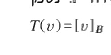
B is a base for V
does it just mean that v in V turns into the base representation? aka v = a_1v_1 + a_2v_2... a_nv_n where v_i is in B?
 weak patio
magic light
weak patio
magic light
B = {[ 1 0 0 ], [ 0 1 0], [0 0 1] }
v = [1 2 3]
[v]b =[1 2 3]b = a_1 *[ 1 0 0] + a_2 [ 0 1 0 ] + a_3 [ 0 0 1 ]
right?
I think I get it just want to make sure I'm correct here
 keen mirage
 thorn lichen
ok so I have A^n = P D^n P^-1
where does the x come in?
just tack it on the end i guess
 gray dust
A^n x=PD^nP^-1 x
thorn lichen
👍
native rampart
It's correct. Though you could word it a bit more generally to include everything
Let U be a subspace with required condition,now construct U' by adding basis vectors to U,such that dim(U')=(n-2)
And repeat everything else with U' and V
 narrow moth
yes but what are we aiming for
native rampart
Well,What if dim U is n-3?
You could just reuse this same argument if you construct such a space
narrow moth
if we prove it for n-2 then doesnt it follow for n-3 too?
we showed there are infinite such X between U and V when U is n-2
dim U i mean
native rampart
Well,not directly
narrow moth
then if its less than that then we choose the ones we chose before
do u see what i mean
native rampart
I think you are saying the same thing
narrow moth
its like we proved we have infinite reals between 0 and 1. and use it to say then obviously there are infinite reals in total
i mean isnt the case with dim U = n-2 the strongest?
native rampart
Yes
narrow moth
then do we still have to consider other U?
native rampart
But,It's better to be explicit about what you are saying
narrow moth
yh i see what u mean
i just showed it for n-2
i still need to mention the other cases
ty!
 red prawn
This is pretty cool
Sheldon Axler - "Down With Determinants!"
https://www.maa.org/sites/default/files/pdf/awards/Axler-Ford-1996.pdf
wintry steppe
hey look it's determinants-bad man
 gritty frigate
Linear algebra better without determinants ??
I will take a look at that
It looks interesting, and the determinant is something like magic
 half ice
Do I agree that lin alg is "better" and "more pure" without determinants? Yes.
Do I agree that every student should learn the "best" version of any given course? No I don't. Determinants make matrix invertibility more concrete and calculation based.
The problem is, then, that understanding what a determinant is becomes important, and most people just don't.
gritty frigate
I love the concept of determinant and I use it a lot, I m a student and I have no idea why it works
So I agree with what you ve just said
red prawn
Determinants are another perspective. Eigenvalues give you a fuller picture, like the difference between having the coordinates of a polygon versus having its area. Knowing both is good.
In representation theory, you'll see the word "eigenvalue" a lot more than "determinant". Humphrey's "Lie Algebras" book develops along the lines of thought as Axler's discourse. Serre's Finite Group Representation book too, not too much in the way of using determinants to give you eigenvalues.
Determinants being thought of as oriented volume is sorta always going on in geometry/mflds. But I learned eigenvalues through determinants, and when I started learning the other ways of looking at it, that made me really happy.
half ice
I agree, you should know both.
Axler is arguing for not knowing one of them.
 steady fiber
someone straight up wrote 16 pages against determinants?
already in the first like 3 paragraphs he's stated a bunch of things that are straight up not true in my experience
that's the end of that
half ice
Similarity conserves most properties
Like, take their determinants. If they're different, the matricies are not similar
gritty frigate
The determinants are the same
The sum of the diagonals are the same
If you want I can give you the matrix
half ice
Another good thing to check is their polynomials
gritty frigate
They are the same hahaha
If I say that their polynomials are the same
And one of them is diagonalizable
Can I be sure ?
I have no idea
$A =\begin{pmatrix}
1& 1 &-2 \
-1& 2& 1\
0& 1 & -1
\end{pmatrix}
B = \begin{pmatrix}
1 &0 &0 \
0& 2 & 0\
0& 0 & -1
\end{pmatrix}
$
 stoic pythonBOT
AfterJack:
gritty frigate
<@&286206848099549185>
 odd kite
what is the question
gritty frigate
Find if A is similar to B
half ice
,w {{1,1,-2},{-1,2,1},{0,1,-1}}


 half ice
,w {{1,0,0},{0,2,0},{0,0,-1}}
half ice
Well, everything is the same, haha. Then, we should try to prove they are similar, in which case we look for a matrix P such that A = PBP^-1
gritty frigate
But wait
If I can tell that A is diagonalizable
I m done
Because for sure B is
gritty frigate
Both of them, A and B are diagonalizable and they have the same polynomial, their diagonal matrix will be the same
And for transitivity, I can tell that A is similar to B
Wow pretty insane subject
half ice
Clever approach
wintry steppe

can someone help me with this on voice?
like explain it to me
my teacher is not doing very good
 bold verge
@gilded solstice if A is nxn and RRE has n leading ones, then what would that mean for G-J elimination of the augmented matrix?
 round coral
if you have done a), you can do b) too
you don't even need any gaussian elimination or inverse to solve this, just directly do it by substitution , will get the answer in a minute
 quasi vale
still cant do it, sorry
wintry steppe
try to find A(1,0,0) by writing (1,0,0) as a linear combination of (2,0,0),(1,1,1),(0,2,1). a similar technique works for the other two columns of A
why should you do this? you know how A acts on those three vectors
quasi vale
alright thanks ill try
wintry steppe
and because A(1,0,0) gives the first column of A, A(0,1,0) the second, etc. (if you did the first part you should know this)
round coral
@wintry steppe That is indeed a good way to solve this.

 spiral garden
what are the prerequisites for linear algebra?
some sites are saying that you don't even need to know calc, some are saying just calc 1
I thought you need to do calc 3 first then linear alg
wintry steppe
you don't need calc 1 or calc 3 or any calc
spiral garden
do unis teach it like that too
wintry steppe
mine does; calc is a corequisite to linear algebra, but neither depends on the other in first year
depending on the level you want to learn, you need anything from just a general comfort with basic mathematics (simple algebra stuff) to comfort with abstract mathematics (writing and reading basic proofs)
good multivariable calculus needs linear algebra to some extent tbh
spiral garden
oh so linear alg is in one way a prereq to calc 3
spiral garden
oh that's great news for me then, would it be crazy to take linear algebra and calc 2 togehter then? My local uni requires calc 1 as a prereq and I'll be taking calc 2 next year anyways so I don't think it will be that bad.
wintry steppe
go for it
you'll be comfortable with using integration and differentiation as examples of linear transformations 😎
spiral garden
nice, what resources would you recommend for linear alg?
wintry steppe
the book by friedberg is a personal favorite
its more on the "abstract" side however, i.e. not focused on computational stuff like row reducing matrices or solving systems of equations
spiral garden
oh
wintry steppe
you'd wanna be able to read and write proofs or at least have some familiarity with that going into it
spiral garden
is this what you are referring to?
wintry steppe
i say that since to some people LA is literally just matrix computations and systems of equations lol
it's a "definition theorem proof" style LA book with a ton of examples and exercises
spiral garden
huh
wintry steppe
some people also recommend axler's book
wintry steppe
those are like the two most common "intro theory-based linear algebra book" recommendations
yes that one
spiral garden
oh nice
 opaque plover
I have show if this is a group or not, I already proved that it is associative, but I can't find a neutral/inverse element.
wintry steppe
if you can't find a neutral element, maybe you can prove there isn't one 
gray dust
@opaque plover P(M) definitely has an identity
let $I$ be the identity. for all $X\sse M$ you have $$X\circ I=M\sm(X\Delta I)=X$$ so find $I$ in terms of $X$ where $X\Delta I=X^c$
stoic pythonBOT
RokettoJanpu:
gray dust
no prob
round coral
have you solved a) ? Just to know if it is really invertible or not, if there is any row with only 0s in the reduced row echelon form, then A is surely not invertible. There are plenty of ways for finding inverse, you can use gaussian elimination. Lots of other methods too. To find P, find inverse of A then multiply it with R you got in part a) as R A^-1 = P I = P
 blazing acorn
hi
red prawn
If you evaluate the transformation at that vector, does it give you a scalar multiple of that vector?
 torn vigil
So I'm a little stuck with this in a book, I looked up solving linear equations using elimination but I'm unable to figure out how they got from a to b , even after following a few examples of different questions, I guess I really just don't understand the method yet , was wondering if someone could point me in the right direction.
 simple hornet
hello
i dont understand why the answer to this is no
in my mind we have that $\mathbb{R}^2 \subseteq \mathbb{C}^2$ and $\mathbb{R}^2$ is a vector space, hence it should be a vector subspace of $\mathbb{C}^2$
this is the definition we're using
oof did the latex bot die
stoic pythonBOT
mirzathecutiepie:
simple hornet
nvm it isnt
red prawn
The complex vector space C is a vector space over the complex numbers. If they left out "complex" and said simply "vector space" they'd be implying real perhaps.
It's a matter of what your scalars are
red prawn
if you multiply a real number by a complex, you don't always get a real number
red prawn
they try to trick you!
simple hornet
bahah, thank you!
red prawn
@torn vigil They multiplied the first equation by 2, then subtract that from the second to get $5y = 5$, then they left the top equation as it was originally
stoic pythonBOT
Apopheniac:
torn vigil
How come they multi by 2 first?
I think I'm struggling because the question is so god dam simple lmfao
red prawn
to get rid of the x, to be able to solve for y
torn vigil
Ohh
red prawn
Then, you take that value of y, plug it into the other equation, and you can then solve for x. then you have both x and y
 little citrus
guys does it matter which order i put eigenvectors in set?
torn vigil
Okay thank you, ima read over that million times till it soaks in to my brain
red prawn
@little citrus the order should match the order of the vectors I would suggest
little citrus
@red prawn i meant like 1 4 first colum and then 1 1 second column
red prawn
of the corresponding eigenvectors, that is
stoic pythonBOT
mirzathecutiepie:
simple hornet
but it's not the same thing in $\mathbb{C}$ right? because i believe you'll have 3 seperate values in the complex numbers
stoic pythonBOT
mirzathecutiepie:
red prawn
Well you should be able to provide a counterexample
simple hornet
yeah the answers provide a counterexample
but if i apply the same reasoning as i used to prove (a) (which is literally just saying that a^3 = b^3 is saying that a = b in R and then showing that (a,a,c) + (b,b,d) is in the set definined in (A)) i can prove (b) as well, which is wrong
red prawn
So to be a subspace means it's got to have the 0 vector, closed under addition, and closed under scalar multiplication. You need to be careful about which scalars are used in defining the vector space as well (are they complex or real scalars used in defining the vector space structure?)
simple hornet
so i guess the problem i have is why i can't apply the same reasoning to the complex numbers
yes i see
red prawn
the sum of cubes, is it equal to the cube of a sum?
simple hornet
what no
i meant that why can't i say $a^3 = b^3 \implies a = b$ in the complex numbers, but i can say that in the real numbers
stoic pythonBOT
mirzathecutiepie:
red prawn
as a general rule, polynomials do not preserve linearity
simple hornet
wdym
red prawn
if you have two vectors $(a,b,c)$ and $(x,y,z)$ it may be true that $a^3=b^3$ and $x^3=y^3$. but what about $(a +x)^3$? Does this always equal $(b+y)^3$?
red prawn
You could ask the same about multiplying by a scalar, does this behave well in the set?
stoic pythonBOT
Apopheniac:
simple hornet
so you're saying that it's not necessary that, given (a,b,c) and (x,y,z) and the condition that a^3 = b^3 and x^3 = y^3 that their vector sum satisfies the same conditions?
what do u mean by behaving well, closure?
red prawn
that's what the importance of subspace is, establishing closure
red prawn
subspace you can think of as "closed under operations, and not empty"
simple hornet
yus
they're an exception bcs we can replace a^3 = b^3 with a = b
and as a rule with the way we've definined addition on the real numbers and complex numbers linearity is preserved
red prawn
I guess you could say in this case, the defining relation happens to reduce to linear.
simple hornet
and linearity is what we require for closure in a subspace right? for like every subspace?
red prawn
Linear and homogeneous in the variables.
simple hornet
wdym homogeneous in the variables
red prawn
an equation/relation where everything has degree 1.
example $y = x + z$ is homogeneous
$y = x + z + 1$ is not homogeneous, so it effectively discards the origin
stoic pythonBOT
Apopheniac:
red prawn
yes!
red prawn
so that you can use algebra. specifically important to be able to solve for things, so you want to have a well-defined notion of the kernel of a transformation
gritty frigate
How do I change the base of a transformation matrix ?
simple hornet
ah i see, so you mean so that we can have solutions to $Ax = 0$?
red prawn
It's much like doing the 2-dimensional $y = mx + b$ problems in HS. Linear algebra does a lot with the mx part, since there's a bit more going on in higher dimensions. then take the info and add stuff in the affine problems
yes!
simple hornet
but just to be clear we can still do those
stoic pythonBOT
mirzathecutiepie:
simple hornet
let's say we have $y = mx + b$ and then we say $Ax = b$ then $Ax - bI = 0$ right?
stoic pythonBOT
Apopheniac:
simple hornet
wait nvm
stoic pythonBOT
mirzathecutiepie:
simple hornet
i messed up i used b as a scalar and a vector both
red prawn
eh, not that important if the reader (myself) understood, but keep track of stuff yes
the y = mx situation is the motivating example, then you keep track of more stuff as you go. That's like the womb that you're trying to get back into, lol, where you can solve for things and do the arithmetic you're accustomed to.
red prawn
Careful with using "canonical" with vector spaces! There's lots of choices made in vector space stuff, canonical means "true without having to make any choice".... Might seem nit-picky, but it's kinda what led to the creation of category theory
simple hornet
ah i was under the impression that canonical just meant that it's the preferred or conventional way of doing things, even though other things are equivalent
it's just easier to do things in one way
also would i be correct in saying this
im tired so if i missed the point i'd be grateful if u could point it out
red prawn
I would suggest for the counterexample pick some specific vectors, that way you don't have to really do any more checking to make sure if the claims are valid or not - they'll be plainly visible to the reader
simple hornet
yus i will do that
i just wanted to be clear on the initial criteria
damn for some reason im not thinking as well as i do usually so if i ask the same things over and over again that's why lol
red prawn
I think it's perhaps a bit less important to say "complex numbers have more cube roots", than it is to say "in the real situation blah happens"
simple hornet
oof where did i say that
red prawn
um i don't guess you did in the white box, lol. just thought it worthwhile to point out. for a counterexample, good idea to pick one. then it's a done counterexample.
simple hornet
ahhh i see
red prawn
i.e., specific values of a, b, etc that demonstrate explicitly what you want to show is happening
opaque plover
if I have to prove if an expression is a ring, then the neutral elements of both operations must be different, right? So if both are the same it is not a ring. Can someone confirm this, please
opaque plover
then it is the same operation?
red prawn
they're elements...
red prawn
If you multiply 1 by a non-zero, you should get the non-zero number you started with. That's given in the definition of multiplicative identity. But there's a (easy) theorem about multiplying by 0...
red prawn
An important starting point that might be easy to overlook is the question are there things in this ring that are not zero in the first place?
simple hornet
are you trying to say the multiplicative identity doesn't exist then? since a * 1 = 1 but since 1 = 0 we have a * 0 = 0
ah nvm
abstract algebra isnt my thing lmao
opaque plover
so, e.g. if we say 1=0 and i am gonna use the 1 for the additive identity then a + 1 = 1 + a = a is wrong
so both have to be different, to ensure that this can not happen
red prawn
Yyeah, but it should eventually come down to something you can point at and say this contradicts this other assumption. I don't know if a+1 = a explicitly does this without saying anything else
simple hornet
i was about to say division by zero might be a problem but i realized this is a ring and multiplicative inverses aren't garunteed oof
opaque plover
but what if i can prove that both are the same and everything still works
red prawn
However, multiplicative inverses always exist for the identity.
If 0=1, what is 1 times 0?
opaque plover
its 0
red prawn
Let $R$ be a ring, with $R\neq {0}$. Then there is an element $x\neq0$ in $R$. What is x times 1? what is x times 0? What happens if 1=0?
stoic pythonBOT
Apopheniac:
opaque plover
for both it is either x or 0
red prawn
well they're equal, right? since 0=1, we multiplied x by the same thing; so whatever we get from either, these must be the same.
opaque plover
yes that's right
red prawn
do you notice the contradiction?
opaque plover
except of both 1 and 0 give me the same thing, not really
oh wait. me stupid, yeah sure
So , e.g. how would you define the identities of this
For the symmetric difference it is the empty set
but for the union too?
red prawn
To me both of these things I like to think of as a sum... does the distributive property hold?
red prawn
Each operation may still have their own null/identity element. But the distributive property is what tells you how they interact with each other. Otherwise, more or less, you would consider these as incompatible in the desired ring sense
opaque plover
so basically if I get that both identies "are the same" then probably the distributive property is not met
or does it depend on the specific case
red prawn
Well you'd have to make sure the multiply by zero theorem holds, but that theorem relies on distributive property
If you don't have distributive, then it doesn't tell you anything
("it" meaning the theorem doesn't hold, so you can't draw a conclusion from it)
opaque plover
yeah got it, thank you very much for your help
 wispy swift
T = x + 1 is injective transformation?
wintry steppe
it's not linear in the #linear-algebra sense, but it is injective
 tame mural
Let's say that f(x) = x^2, g(x) = 2x, h(x) = 3, and z(x) = f(x) + g(x) + h(x).
Does it make sense to say "What is the span of z"?
or, "What is the span of {f, g, h}?"
 quartz compass
the span of z makes sense
but it's distinct from the span of {f,g,h}
span of z is one dimensional, the span of f,g,h is 3 dimensional
tame mural
I see, thanks
quartz compass
you're welcome
wintry steppe
@round coral since A is not square matrix there is no A^-1 am i wrong? I solved the part a.
I need help for part B
 fading plaza
For b), It's about using elementary matrices to reduce A into R.

Mathematics LibreTexts
We now turn our attention to a special type of matrix called an elementary matrix.
P.34-38 might help
wintry steppe
it's same for part c too right?
yeah of course it's same sorry
thank you very much!
I suspected it's about elementary matrices but i thought there would be an easy way
fading plaza

stoic pythonBOT
jan Niku:
 robust pond
ive double checked that this thing has an eigenvalue of $a+b-1$
stoic pythonBOT
jan Niku:
robust pond
so then we have an A-lI of $\begin{pmatrix} 1-b & 1-a \ 1-b & 1-a \end{pmatrix}$
stoic pythonBOT
jan Niku:
robust pond
then for the eigenvector for this eigenvalue, we should have $\vec v = \begin{pmatrix} 1-b \ a-1 \end{pmatrix}$
robust pond
which part?
dusky epoch
v should be in the kernel of A-λI
stoic pythonBOT
jan Niku:
dusky epoch
reverse the components of that and it'll be correct
robust pond
i understand what you mean mechanically but i dont get why its true
isnt 1-b in the x_1 spot
why reverse the components?

doesnt $\left( \begin{array}{cc|c} 1-b & 1-a & 0 \ 0 & 0 & 0 \end{array} \right) \to \vec v = \begin{pmatrix} 1-b \ -(1-a) \end{pmatrix}$
stoic pythonBOT
jan Niku:
robust pond
why?
dusky epoch
(1-b)(1-b) + (1-a)(a-1) is not 0
dusky epoch
cause you put them in the wrong spots
robust pond
? what
1-b should be there
since 1-b = a-(a+b-1)
they are in the correct spots
stoic pythonBOT
jan Niku:
robust pond
why do i get to just reverse them
dusky epoch
$\alpha x_1 + \beta x_2 = 0$ has a nonzero solution given by $(x_1, x_2) = (\beta, -\alpha)$
stoic pythonBOT
Ann:
dusky epoch
so long as alpha and beta aren't both zero
robust pond
wait what 
dusky epoch
don't overthink it
dusky epoch
"just plug it in"
dusky epoch
wym usual method
robust pond
the one i said
the SOE says x_1 (1-b) + x_2 (1-a) = 0
then subtract
x_1 (1-b) = x_2 (a-1)
then uhh
now im second guessing myself
youd usually just pull them directly from the SOE though
like if you had 1x_1 + 3x_2 = 0
your EV would be (1, -3)
dusky epoch
you can set x1 to (a-1) and x2 to (1-b)
robust pond
not (3, -1)
robust pond
👀thats how weve been doing it all semester
i mean beyond this semester thats how weve been doing matrix SOEs in every class
dusky epoch
(1, -3) does not solve x_1 + 3x_2 = 0
robust pond
i dont think its supposed to?
dusky epoch
what the fuck are you even doing anymore
dusky epoch
bruh
robust pond
idk why im confused on this
im doing it the way ive been doing it all semester
hrm
 summer basin
$E_{2,1}(-1)P_{1,2}E_{1,2}(1)$
stoic pythonBOT
secondluckyshot314:
stoic pythonBOT
secondluckyshot314:
summer basin
$b.E_{1,2}D_2(-1)$
stoic pythonBOT
secondluckyshot314:
summer basin
$D_2(-1)E_{2,1}(-1)E_{1,2}(1)$
stoic pythonBOT
secondluckyshot314:
summer basin
or $D_{2}(-1)E_{1,2}(1)$
stoic pythonBOT
secondluckyshot314:
summer basin
All matrices are nxn
simple hornet
hello, this seems to me to be a yes but the answer key says it's no
i mean, it has the identity function $g(x) = 0$, it's closed under scalar multiplication and under addition
stoic pythonBOT
mirzathecutiepie:
simple hornet
and that's how we've been proving this all up to now
I guess ill just show my solution
native rampart
Are you thinking of constant functions?
simple hornet
let $S = {f \in \mathbb{R}^{\mathbb{R}} \mid f(x) = f(x+p) \forall x \in \mathb{R} \text{ and } p \in \mathbb{R}^+}$
well a constant function would be included in the definition, no?
dusky epoch
what you've described there is too narrow
dusky epoch
the period need not be a positive integer
simple hornet
ohhh
dusky epoch
the sine function is periodic yet its period is 2pi which is definitely not an integer
simple hornet
Ahhhh yes it needs to be a positive real number
dusky epoch
anyway if youre talking about the set of ALL periodic functions
it's easy to find a counterexample to closure under addition
stoic pythonBOT
mirzathecutiepie:
Compile Error! Click the  reaction for details. (You may edit your message)
simple hornet
hm but what's confusing me is for some reason the proof that we've doing up till now is working for this too
dusky epoch
what proof
dusky epoch
scalar closure holds
simple hornet
the identity is in here so we don't need to show that
dusky epoch
addition closure does not
take the sum of a 1-periodic function and a sqrt(2)-periodic function
neither one constant
what would the period of the sum be?
simple hornet
But if i have two functions g,f then $h(x) = (g+f)(x) = g(x) + f(x)$ and $h(x+p) = (g+f)(x+p) = f(x+p) + g(x+p) = f(x) + g(x) = h(x)$ and hence the sum is also in the set S
stoic pythonBOT
mirzathecutiepie:
dusky epoch
bold of you to assume the functions will have the same period!
dusky epoch
if you look at the functions which are p-periodic for some specific p
you do get a subspace
dusky epoch
but if you look at all the periodic functions with all periods
you can take one with period 1 and another with period sqrt(2) and suddenly what you have is no longer periodic
simple hornet
wait why is that?
Wait wait couldn't we have the condition
that the two periods be coprime in a sense?
like if one has a period of 2 and the other has a period of 4
then the sum of them would also be periodic
maybe it has a period of 2 or a period of 4 or some other number but it will have a period, right?
dusky epoch
look at my example more carefully
period 1 and period sqrt(2)
imma be more explicit
simple hornet
yes
dusky epoch
let f be 1-periodic with f(x) = x for x ∈ [0,1)
and let g be sqrt(2)-periodic with g(x) = x for x ∈ [0, sqrt(2))
simple hornet
that's kind of what im saying bcs sqrt(2) is irrational, in a sense the two are coprime-ish
simple hornet
yes i think that makes sense
i think the answer key uses the examples of cos and sin
using the same examples of a 1-periodic and sqrt(2)-periodic function
dusky epoch
i went with more straightforward sawtooth functions
simple hornet
yes
i now see how this works
what i understand is in the definition it requires that f(x) = f(x+p) for each x, and 0 is a value that x can take, so we can reduce this requirement to f(0) = f(p) GIVEN THAT THE FUNCTION'S DOMAIN INCLUDES 0, right?
Well not reduce the requirement, but if we can find an error in this reduced form, then it wont hold for all of x
lol im making no sense
simple hornet
But if we see no contradiction, we're going to have to move on to the stronger form which is f(x+p) = f(x)
dusky epoch
i mean for a counterexample you have control over what functions you consider
i found it easier to do sawtooths
simple hornet
yea
so wait your counterexample would work with a say
2 periodic and 3 periodic function?
simple hornet
oh so this only works if we're considering one that's irrational and another that's rational?
dusky epoch
not exactly
the ratio of the periods must be irrational for my counterexample to work
dusky epoch
if $f$ is $p$-periodic and $g$ is $\frac{mp}{n}$-periodic where $m, n \in \bZ$ then $f+g$ will be $mp$-periodic
stoic pythonBOT
Ann:
simple hornet
oof how do we know that
dusky epoch
$f(x+mp) = f(x)$
stoic pythonBOT
Ann:
dusky epoch
$g(x+mp) = g(x + n \cdot \tfrac{mp}{n})$
stoic pythonBOT
Ann:
simple hornet
oh i think i get it
maybe
so this is kinda like LCMs?
the period will be the LCM of the period of the two functions?
wait wouldn't it be
if $f$ is $p$-periodic and $g$ is $\frac{mp}{n}$-periodic where $m, n \in \bZ$ then $f+g$ will be $np$-periodic
stoic pythonBOT
mirzathecutiepie:
simple hornet
it'll be np periodic not mp periodic, i think
nvm you're right lol
but i can't really see why ooof
 crystal oracle
Suppose V is a complex finite dimensional vector space, T is a linear operator on V.
If α∈ℂ is not an eigenvalue of T, how are range(T) and range(T-αI) related?
If λ∈ℂ is an eigenvalue of T, how are range(T) and range(T-λI) related?
I am hoping there is some nice way to characterize that. If not, I would also be interested to know that. I am asking this, because currently I am studying generalized eigenspaces, nilpotent operators, and polynomials of operators. And I have this question which will hopefully make stuff clearer.
native rampart
if x is not eigenvalue, null space of (T-xI) consists only of zero vector
Which means range(T) is same as range (T-xI)
If x is eigenvalue,null space (T-xI) has a dimension>0,implying range (T-xI) is a subspace of range (T)
crystal oracle
@native rampart thanks. Somehow, I totally forgot that T-αI is bijective iff α is not an eigenvalue of T.
simple hornet
oof i still don't think i get this, so here's what i've done so far
Let $f$ be 1-periodic w/ f(x) = x for $x \in [0,1)$
and $g$ be $\sqrt{2}$-periodic w/ g(x) = x for $x \in [0, \sqrt{2})$
Then $h(x) = f(x) = g(x)$.
$h(x)$ has domain $x \in [0, 1)$, assuming it is periodic, there must be $p \in [0,1)$ such taht
h(x+p) = h(x)
0 is in the domain of h(x) hence we can do
h(p) = h(0)
So but h(0) = 0
so h(p) = 0
stoic pythonBOT
mirzathecutiepie:
simple hornet
Where do i go from here?
This doesn't directly answer the question but i'm hoping understanding this will help me in understandnig a solution
crystal oracle
@native rampart I think you're a little mistaken. If T itself is non-invertible, and α is not an eigenvalue of T, then range(T) is not the same as range(T-αI).
native rampart
Mb
T could send v to 0,but (T-xI)v wouldn't be zero
I think rank (T-xI) will always be n,if T is a linear operator from a n dimensional space
Because (T-xI) cannot map a nonzero vector to zero
crystal oracle
yes
native rampart
I don't think you can say anything when x is eigenvalue(nonzero)
Because elements in nullspace wouldn't be mapped to zero under T,while some elements in range T will be mapped to zero
crystal oracle
I agree. I can say something useful when λ is an eigenvalue but T is invertible, though.
crystal oracle
yes
native rampart
dim(range(T-xI))=dim(null(T))+dim(range(T))-dim(x eigenspace)
Because only elements in x eigenspace get mapped to zero
crystal oracle
Yes, though it's easier to replace dim(null(T))+dim(range(T)) with just dim(V)
native rampart
Yes
crystal oracle
Now, I am trying to figure out if I can somehow nicely describe the range of
(T-λ_1 I)(T-λ_2 I)...(T-λ_k I) depending on whether the lambdas are eigenvalues or not.
native rampart
If lambda_i is not an eigen value you can just ignore that term, because it would be a bijection
crystal oracle
Indeed, and because polynomials of T commute, so we can put the bijections first.
native rampart
If you apply (T-xI) , where x is an eigenvalue,You remove all the x eigenvectors
If you remove those vectors to form a new vector space,(T-xI) would be a bijection on that space
crystal oracle
When you say I remove them, do you mean that they are not in range of (T-xI)?
native rampart
I mean remove vectors v such that (T-xI)v=0
crystal oracle
Yeah, I know how the null space of T-xI looks, but I don't know how range of T-xI looks 😦
native rampart
Well,If you restrict the operator to that new space,(T(restricted)-xI) will be a bijection
Because x is not an eigenvalue of that new restricted T
crystal oracle
I don't understand, are you right now talking about T-xI and T-xI or about T-xI and T-yI for x≠y?
native rampart
Are you familiar with operators restricted to a subspace
Basically, You make a new function U such that it's identical to T,but is defined only on a subspace of V
crystal oracle
Are you familiar with operators restricted to a subspace
yes
native rampart
So,We are talking about T restricted to the new subspace which is the vector space but without any eigenvector corresponding to x
Ok,I think That isn't quite true
crystal oracle
Suppose x_1 and x_2 are distinct eigenvalues of T. Then what can I say about (T-x_1 I) restricted to range(T-x_2 I)?
native rampart
It's a bijection on that space
crystal oracle
why?
native rampart
Sorry,mb
Range(T-x_2I) consists of all vectors except those with eigen value x_2
Which means it contains vectors with eigen value x_1
crystal oracle
$$T=\begin{bmatrix} 2&0\0&3\\end{bmatrix}$$
stoic pythonBOT
Phi:
crystal oracle
With this T, (T-2I)(T-3I)=0
Therefore, T-2I restricted to range(T-3I) is not bijective
native rampart
Yes
 peak pivot
native rampart
peak pivot
native rampart
Ok,It doesn't work that nicely
crystal oracle
@native rampart you helped me with the original question. Thanks for that. I think we can leave it at that.
native rampart
I think you can derive the primary decomposition theorem this way
crystal oracle
@native rampart What is primary decomposition theorem? Decomposition of a vector space as sum of generalized eigenspaces? Jordan decomposition? Something else?
Wikipedia gives this https://en.wikipedia.org/wiki/Primary_decomposition
In mathematics, the Lasker–Noether theorem states that every Noetherian ring is a Lasker ring, which means that every ideal can be decomposed as an intersection, called primary decomposition, of finitely many primary ideals (which are related to, but not quite the same as, pow...
native rampart
Sum of generalized eigenspaces
crystal oracle
alright
native rampart
I meant to say (T-3I) is a bijection on {(1,0)}(Subspace obtained by removing (0,1))
crystal oracle
I've covered that decomposition recently. I haven't reached Jordan decomposition yet. I am a little bit annoyed about polynomials over linear operators, because everything about them seems complicated.
simple hornet
if im not interrupting can i ask a question
Number 10 is just the base case for induction that can be used to prove 11, right?
steady fiber
it can be, yes
native rampart
Not if there are uncountably infinite subspaces
simple hornet
I'm just a little way of this because earlier we proved that if $U,W$ are subspaces of a vector space $V$ then $U + W$ is a direct sum iff $U \cap W = {0}$ and the book said that this can't generalize to testing for the intersection of n subspaces, and these two seem kinda similar
stoic pythonBOT
mirzathecutiepie:
simple hornet
oof we haven't even touched the uncountably infinite subspaces thing
dusky epoch
you dont need induction for 11
simple hornet
yeah i proved it using two ways
you can reduce any n intersections to an intersection of two subspaces
but the induction proof is shorter
what are uncountably infinite subspaces?
native rampart
*Uncountably infinite number of subspaces
simple hornet
hm how are these two different?
native rampart
Let's say you take R(real numbers),and for each number in R,you assign a vector space
Induction doesn't work here
simple hornet
i believe uncountably infinite means that for each number in the set you can't assign a natural number to it
and the real numbers are uncountably infinite because by the time you reach the number 2 you already have an infinite number of numbers before it, right?
ah i see so uncountably infinite numbers of things just don't play well with induction then, right?
steady fiber
I mean between any two real numbers you have uncountably infinite real numbers
native rampart
Yes
steady fiber
yes, induction needs some sort of order and a rule to move from one thing to the next in the order
simple hornet
So like if we consider 1, 2,3 we will forever be stuck going between 1 and 2
i guess you could say that the interval [1,2] is countably infinite, but the whole of the real numbers are uncountably infinite then?
steady fiber
no
 half storm
The traditional idea of what you think of induction, no. But there is transfinite induction which I think contends with this for things that are uncountably infinite.
steady fiber
there's no way to "move to the next real number"
let's say you start at 1
what's the next real number in the order
simple hornet
oh wait nvm i got it
steady fiber
makes no sense
simple hornet
yeah we have $n < x < m$ for any two real numbers n,m
stoic pythonBOT
mirzathecutiepie:
simple hornet
so you're right you'll forever be stuck going to the next real number
but the integers and the rationals are countably infinite, right?
half storm
Yea
 royal ore
how would i do b?
 summer wagon
True or False: If S is a subset of vectors in a subspace V such that span(S) = V, then S contains a basis for V.
red prawn
A transformation R^2 -> R^2 has nonzero kernel if and only if it is not invertible, in general.
@summer wagon You want to think of a spanning set of vectors as "enough to generate the space", whereas a basis you should think of as a span with the least number of vectors, "just enough, no extra linearly dependent stuff".
royal ore
but isn't the matrix able to be inverted?
half storm
@royal ore The invertibility of the matrix that you've given is contingent on the values of it's entries
What you've found doesn't necessitate that it be inveritble or noninvertible. You need to show that the kernel of the matrix nonzero if and only if it is noninvertible.
That's what it's asking you to show.
royal ore
so just show me inverting it and how its invertible which would show it being a zero instead of nonzero?
half storm
@royal ore I'm not really sure what you just said to me. But here's what you need to do. You need to show that nonzero kernel implies noninvertibility and vice versa.
To prove the first statement - nonzero kernel implies noninvertibility - you need to start wit hthe assumption that the kernel is nonzero and then show that it is necessarily non inveribile right.
So let's suppose that the kernel is nonzero right? That means that there exist a nonzero vector in $\vec{x} \in \mathbb{R}^2$ such that $A\vec{x} = 0$
stoic pythonBOT
TheDon:
half storm
You need to think of the various other things that this implies that can you lead you to conclude that the matrix is noninvertible.
 livid parrot
how does x_1 * x_2 make the equation 4x_1 - 5x_2 = x_1 * x_2 not linear?
wintry steppe
try scaling all the variables by the same nonzero constant factor and tell me if you get the same equation back
livid parrot
<@&286206848099549185>
wintry steppe
what is your definition of a linear equation?
livid parrot
book doesn't define a definition, hence the confusion
wait
an equation that can be written as a1x+...+anxn = b
wintry steppe
can your given equation be written like that?
wintry steppe
i don't see any products of the x_i's allowed in your definition of a linear equation
livid parrot
couldn't the product of the xi be represented as a new xi?
wintry steppe
ok, let's say "linear in x_1 and x_2" then
livid parrot
ok
wintry steppe
then that means it can be written in the form a_1 x_1 + a_2 x_2 = b
can your given equation be written like that?
livid parrot
yes 4x_1 - 5x_2 - x_12 = 0, where x_12 = x_1 * x_2
wintry steppe
the scalars a_1, a_2, b should be independent of x_1, x_2
and the variables x_i should definitely be independent of eachother
livid parrot
i dont know what those terms mean
i dont see how this isn't a linear equation
book hasnt defined independent or dependent
wintry steppe
it means they don't depend on one another
livid parrot
i see if i multiply x1 and x2 and get say x12 then it should be linear
4x_1 - 5x_2 - x_12 = 0 fits that definition
wintry steppe
x_12 depends on x_1 and x_2
livid parrot
yes
wintry steppe
because you defined x_12 to be their product
livid parrot
correct
livid parrot
i dont understand the justification why its not linear
wintry steppe
livid parrot
why should variables x_i should definitely be independent of eachother
book doesnt state that in def
wintry steppe
maybe i can say it in another way
wintry steppe
yeah i don't know what more to say, sorry
red prawn
Linear is referring to the degree of the expression
red prawn
as opposed to quadratic, etc
livid parrot
hrm
the book doesnt talk aout independence
you mentioned it
and thats your reasoning
but dont explain why
so i dont find your answer very helpful, since the definition mentions nothing about independence
red prawn
Specifying that something is a linear equation is saying you're only allowing scalar multiplication and addition, without any higher dimensional multiplications happening or anything
livid parrot
ah i see, so only scalar multipcation is allowed?
between the coefficient and the variables?
red prawn
If an expression is to be linear
Think of the scalars as something with no dimension, so you can multiply by them and preserve linearity
livid parrot
so by def only scalar mult is allowed, not variable variable mult?
red prawn
Linear independence is a property of a collection of vectors, or subspaces. You can ask "Is this stuff independent of this other stuff?" and there's a yes or no answer
livid parrot
no idea what that means
book only defined basically one thingg at this point, a linear equation
so by def only scalar mult is allowed, not variable variable mult?
?
red prawn
Independence comes later 🙂
livid parrot
brb i have to go somewhere
red prawn
Multiplying vectors together is "multilinear", and one gets into Tensor Products of vector spaces.
livid parrot
hmm can you answer my question because youre talkingg about stuff i dont know what it is
so by def only scalar mult is allowed, not variable variable mult?
red prawn
In linear, you don't multiply vectors.
livid parrot
the variables are vectors in a linear eq?
red prawn
sometimes you can treat them like that. There's a lot of things that carry over from the regular, one-dimensional algebra setup.
livid parrot
I don't see why it isn't linear, there isn't a good explanation i understand
"Tensor Products of vector spaces." doesn't help me understand why x1 * x2 as a new x_n doesn't make the equation linear
it fits the definition of the book so therefore should be linear
wintry steppe
because then you have a linear equation in x_1, x_2, and x_12 and not solely in x_1 and x_2
note the "in ..." after the definition of linear equation you gave
livid parrot
so the variables are vectors?
and therefore not linear when you do vector vector mult?
red prawn
There's coordinates, the components of a vector in certain directions
wintry steppe
red prawn
With the word "variable" I think of something to be solved for. You will encounter these in linear algebra, but I think what you're referring to are the components of a vector
As in, (3,4,5) are the components for a vector, 3 in the x-direction, 4 in the y direction, 5 in the z-direction
livid parrot
A linear equation in the variables x1, .. , xn is an equation that can be written in the form: a1x1 + ... + anxn = b
so variables are always vectors?
and so vector vector mult isnt linear
therefore x1 * x2 isnt linear
due to vector vector mult
red prawn
the x's are assumed to be vectors, and the a's are scalars
You might want to check out 3blue1brown on youtube, they have some fantastic linear stuff
x1*x2 would be considered a quadratic expression, and much like in highschool analytic geometry this entails a bit more curvy stuff
 silk latch
this formula is supposed to return the angle in between two vectors above, but it doesn't. what does this formula do?
 nocturne jewel
$\theta = \arccos{\frac{a \cdot b}{|a||b|}}$ ?
stoic pythonBOT
moshill1:
silk latch
I know this formula, yes, but what about that one?
nocturne jewel
looks like you're using cross product, which iirc is 3D vectors
dot product yields theta ~ 167.3 degrees
silk latch
how can I adapt it for two dimensions?
nocturne jewel
cross product makes no sense is 2D
cross gives a 3rd vector orthogonal to the 2 "input" vectors
narrow moth
can someone help me with this?
narrow moth
the last part
also for first part is it just |(u v w)(x)|?
and for second the matrix (u v w) should be orthogonal
hollow finch
first part meaning "what does it mean that u,v,w form a basis for R3"?
narrow moth
oh no then the next part
for u,v,w to be a basis we need {u,v,w} to be linearly independent and spanning
narrow moth
it means x=x1u+x2v+x3w
so |x|=|x1u+x2v+x3w|
but im not sure if this is what theyre looking for
hollow finch
right but i think its possible to get more specific
whats one way to get the magnitude of a vector
hollow finch
well that works in 2d but i mean in general
narrow moth
3d pythagoras
hollow finch
far more general than that. it has to be something we can do without knowing the coordinates
think about some of the operations youve learned so far that are in terms of the magnitude of a vector
narrow moth
scalar and vector products?
hollow finch
yeah the dot product
narrow moth
so magnitude is √u.u
narrow moth
we dont know what type of a basis uvw is
hollow finch
we dont need to
narrow moth
so do we just expand it and leave it terms of uvw?
hollow finch
yeah
id only bother with the square root at the end btw. no need to drag it along the whole way
narrow moth
oh right so just √((x1u+x2v+x3w).(x1u+x2v+x3w)
hollow finch
exactly
narrow moth
how do they expect us to know which expression they want
for the next part do we want (u v w) to be orthogonal?
hollow finch
personally, i think when they say length or magnitude, the dot/inner product should be the first thing you think of
that will be part of it but it will be more clear once you expand out the whole expression
hollow finch
there it is
id still work out the expansion because that is necessary for the last part
narrow moth
but doesnt that get included in calling the matrix orthogonal?
since colums and rows are unit vectors
hollow finch
yeah the matrix will have to be orthogonal
narrow moth
ok so now i should expand it
stoic pythonBOT
nix:
hollow finch
and yes
stoic pythonBOT
akskhannaaks:
narrow moth
how do we use this for the equation of unit sphere
we know x^2+y^2+z^2=1 in cartesian coordinates
@hollow finch do we use this?
hollow finch
yeah that looks good
so for the unit sphere
would you agree that
x^2+y^2+z^2=1
is equivalent to
|(x,y,z)|^2=1
hollow finch
yeah exactly
hollow finch
np. gl 
narrow moth
do u have time for 1 more question?
hollow finch
sure why not
narrow moth
the last part of this
i showed the identities work by equating dot and vector products separately
but idk what they mean by the significance
is it just that the coordinates stay same?
hollow finch
so lets call (x,y,z) v and the tilde (x,y,z) v'
and the basis B
we're given that (v)_B=(X,Y,Z) and same with (v')_B and the tildes
RHS of the second line is v dot v' right?
and the LHS is (v)_B dot (v')_B
with me so far?
narrow moth
yep
hollow finch
alright so we have that the dot product of the original vectors with respect to the standard basis is the same as the dot product of the coordinate vectors with respect to the orthonormal basis B
i would say that is pretty significant
dot products are preserved through the change of basis
narrow moth
yes because B is orthonormal
hollow finch
third line says something similar. what would it be?
narrow moth
third line says vector product is preserved
narrow moth
so its an isometry?
hollow finch
yeah exactly
narrow moth
but i assumed that in showing that its true
hollow finch
the question is basically asking you to prove it
narrow moth
so i said v_B.v'_B= v.v' to show the identities
hollow finch
oh lol
hollow finch
yeah they only want you to assume that e1,e2,e3 are orthogonormal and they have those defined vector products
hollow finch
youll get something similar to this. and like you remarked before that we want them to be orthonormal for the standard definition of length to be true, youre sort of deriving that
narrow moth
from here the e_i . e_j cancel when i is not j
hollow finch
yeah exactly
narrow moth
i mean theyre 0
hollow finch
right
narrow moth
can i say this is true (Xe_1+...) . (X'e_1+...) = (xi + ...) . (x'i+...)?
red prawn
The significance maybe is the wedge product formula?
narrow moth
never heard of it
red prawn
The upside-down v
red prawn
the cross product, vector product
narrow moth
oh yh so we can see dot and vector products are preserved
hollow finch
yes you can say that
red prawn
Also yields the area of a parallelogram...
narrow moth
in 3d?
red prawn
The parallelogram formed by the two vectors X and Y has area equal to the norm of the vector product |XxY| in 3-space
narrow moth
i thought the significance was that a point with coordinates abc wrt standard basis gets to mapped a point with the same coordinates wrt B
under B
red prawn
I'm looking at a different prob, sorry
narrow moth
oh lol
red prawn
the screen captured problem, #3?
narrow moth
yes
red prawn
yeah, I still say vector product for the bottom identity
narrow moth
cant we see that from the top line too?
since distance is preserved
then its an isometry so vector ptoduct is preserved
red prawn
Ohhhh I didn't notice there were two different bases. Yeah that would be saying that both the dot product and vector product are preserved under orthogonal transformations
silly me
narrow moth
its a weird question since this result has already been established in lecture notes
so i thought were looking for something different
can u help me with 1 last question?
its part ii) of qu 4
we already did part i) before doing qu 3
we know the basis are orthonormal
red prawn
Well, you already did some invariant stuff with the other problem. The dot product is preserved for two vectors. If you use the same vector instead of two different ones...
narrow moth
we dont know if uvw UVW are unit length
red prawn
That's simply orthogonal. So they've told you all the good stuff is assumed by these bases, and you want to prove a certain thing is invariant
narrow moth
so the equations are x1^2+x2^2+x^3^2=X1^2+X2^2+X3^2=1
red prawn
Yes, and these are dot products in disguise
red prawn
Yup
narrow moth
idk what they mean by the equation being invariant
red prawn
Invariant meaning if you calculate the equation for a circle in one coordinate system, it is the same (invariant) as you would get if you apply your transformation first
Invariant under a change of coordinates
narrow moth
the sphere isnt invariant right?
or is the origin the same?
if the origin is the same then the sphere is invariant
wait origin is same
hollow finch
origin must be the same since its a linear transformation
hollow finch
it must be because they are linearly independent
so the only solution to c1e1+c2e2+c3e3=0 is if c1,c2,c3=0
by definition
well thats how youd prove it anyway
narrow moth
yh i see that now
hollow finch
and the sphere is indeed invariant under the euclidean inner product
narrow moth
so if the sphere is invariant then its equation is too?
hollow finch
no since the equation is based on your choice of coordinates (i.e. your basis)
narrow moth
yes but the centre is same and the basis are orthonormal
narrow moth
so basically if the equations 'look' same then theyre invariant?
i mean i still dont understand the concept of invariant equations
so if i have an equation and then i transform the space and find out the equation is the same then its invariant
i think i get it
thanks! ill continue the rest of the problems
 mellow solar


 mild igloo
can I get some help setting up the system of equations
not entirely sure where im getting the y vector
or the v vector to be honest
simple hornet
@mellow solar adj(B) for any matrix B denotes the adjoint of B, which is the transpose of the cofactor matrix, you can look at the wikipedia for that
basically the cofactor matrix helps you find the inverse
mild igloo
got any hints for me?
simple hornet
oof i looked at your problem and im afraid i dont know enough linear algebra to help lol
i myself am learning
mild igloo
shiiiiit
simple hornet
maybe someone else will come along and know