#discrete-math
1 messages · Page 207 of 1
 coral parcel
If R is an equvalence relation, I would just say "an equivalence class" instead of insisting on symbols.
Your underlying trouble here seems to be that you are attempting to write a single closed expression but you want it to produce a variety of different sets.
 spring surge
Yes
coral parcel
What you can write is { a | xRa } with x being a parameter, and by varying x you will then get different equivalence classes.
spring surge
parameter you mean an argument of a function?
coral parcel
Sure, you could view it that way. What I mean is just, rather down-to-earth, that "{ a | xRa }" doesn't evaluate to a concrete set until you supply a value for the variable x.
spring surge
Is there a keyword or book which would nail more complex set building notations?
 ember obsidian
theres not much to setbuilder, u just need to have the right syntax if u wanna write these sets symbolically
say P(x) is a statement, pertaining to each object x in a set of interest, thats either true or false
this is how to write the set of all objects x such that P(x) is true
$\brc{x:P(x)}$
 vital dewBOT
RokabeJintaro
 spring surge
yeah that i've understood.
can I legally define P(x) as x belongs to a set { a | a != x } and { x }
meaning any set which has distinct elements
ember obsidian
the thing is ur struggling to translate conditions into symbols
this is a bit unclear
spring surge
i do.
spring surge
ember obsidian
this is a bit unclear
a set from which I take a random element and all the other elements from the same set are not equal to it
{ a b c d e f.. } every element is not equal between each.
ember obsidian
spring surge
a set from which I take a random element and all the other elements from the sam...
im unsure what ur trying to define
"other" already means different from what ur looking at
coral parcel
Again, your problem is that you want a single expression to give you multiple different results. Expressions simply don't work that way.
spring surge
coral parcel
Again, your problem is that you want a _single_ expression to give you _multiple...
Its just the way math works?
coral parcel
It's how expressions work.
Their job is to evalate to one particular thing.
If you want to speak about several different things, you need to speak about the set of all those things, or write down a property that they all have.
spring surge
but if I define expression a > b
coral parcel
a > b is not an expression.
coral parcel
a>b is a proposition, i.e. something that can be true or false. In contrast expressions are not true or false, but evaluate to things.
spring surge
got it
coral parcel
And in particular, a set builder is an expression.
 ember obsidian
the parameter n is an arbitrary natural number
once i set n to a specific value, we get a specific set
if i set n=2 then i get
{ (1 2) (2 4) (3 6) (4 8) ... }
spring surge
got it
coral parcel
n should probably be an arbitrary rational if I'm understanding Lambdaman correctly.
spring surge
yes
ember obsidian
ah yes but it doesnt detract from the point about how parameters work
spring surge
yeah just a tiny detail
 silent hinge
Hello
We did not get to cover this in class, and I can’t find an example in the textbook but can anyone explain to me what is \ ?

Thanks in advance
coral parcel
Set difference.
ember obsidian
$A\sm B=\brc{x\in A:x\notin B}$
vital dewBOT
RokabeJintaro
 coral parcel
But you can't really write down questions 3, 4, and 5 in list form without some assumptions of whether a and/or b might equal one of 1,2,3,4.
 inner lava
Does anyone have any experience with implementing optimization algorithms for vehicle routing problems? I have zero experience with it and wanted to implement a paper so I could make a mod for city management game.
 iron hearth

Can someone help me with B
Ive tried multiple things and im just working in circles
iron hearth
Im not sure what the ideal way of getting started would be or what manipulations i can do with the laws
 next surge
Determine whether the statements are true or false:
(a) {1, 2} ⊆ [1, 2]
 weary tiger
oh lmao, meaning there's no graph which has one vertex of odd degree
so it's axiomatically impossible
right, I see
spring surge
iron hearth
Apply the rule p -> q = !p or q

Or convert it to this form [ a or b or c or d ]. If there are some two x such as [ a or .. or .. or x or x! ] then its always correct.
 spring surge
next surge
Determine whether the statements are true or false:
(a) {1, 2} ⊆ [1, 2]
spring surge
next surge
Determine whether the statements are true or false:
(a) {1, 2} ⊆ [1, 2]
what does that operator ⊆ means? How does it different from the one without _ underneath?
 upper plume
iron hearth
upper plume
iron hearth
So first assume (P->Q)V(P->R)
Then first assume P->Q
Then we can assume P
Using our 2. assumption we get Q
Then we can insert V to get Q V R
Then we can conclude that P->(QVR)
You can then do the same thing with P->R
And since you proved it for both sides of the V
We can conclude that ((P->Q)V(P->R))->(P->(QVR))
 remote cosmos
spring surge
what does that operator ⊆ means? How does it different from the one without _ un...
remote cosmos
spring surge
what does that operator ⊆ means? How does it different from the one without _ un...
It means it can be the set itself as well
spring surge
oh then same as =<
remote cosmos
Yes
spring surge
Determine whether the statements are true or false:
(a) {1, 2} ⊆ [1, 2] so this statement is true then?
remote cosmos
How are your square brackets defined?
I'm saying that as something you'd want to clarify before thinking about the statement
spring surge
square brackets mean the interval 1..2 including ends.
i know what you mean, its semantic problem
as I see on the net and books [ ] denote a set usually
remote cosmos
Sometimes you'll see $x \in [a, b]$
vital dewBOT
pitabread
 coral parcel
spring surge
Determine whether the statements are true or false:
(a) {1, 2} ⊆ [1, 2] so this ...
coral parcel
spring surge
Determine whether the statements are true or false:
(a) {1, 2} ⊆ [1, 2] so this ...
There are just two numbers to check, which should be easy.
spring surge
remote cosmos
But here it's a question about whether a set is a member
what do you mean?
coral parcel
1 is an element of [1,2], and 2 is an element of [1,2], therefore 1 and 2 are both elements of [1,2], therefore {1,2} is a subset of [1,2].
spring surge
True. It's just syntax problem to understand what square brackets means which bugs this thing a little.
coral parcel
I don't think square brackets in this context can mean anything else than a closed interval. Round brackets are more ambiguous.
Is your problem to understand how a closed interval is a set?
coral parcel
Hmmm. What is your understanding of the closed interval if not as a set?
 paper cove
spring surge
paper cove
spring surge
I don't know. Maybe just the definitions set != interval
but since interval is a subset so its a set. no problem.
coral parcel
I'm trying to figure out what your current understanding is. If an interval is not automatically a set to you, what else can it be?
spring surge
just a different type of datatype in math
same as I take some piece from integer number and get rational
coral parcel
Hmm, I don't think that sounds like a very productive notion. The mainstream way to think is that intervals are (always) a particular kind of sets.
Is there something you can do with a non-set interval that you cannot do when viewing it as a set?
spring surge
coral parcel
Is there something you can do with a non-set interval that you cannot do when vi...
Good question.
Probably no.
coral parcel
I suppose you can ask "what is the right endpoint of this interval" but not in general "what is the right endpoint of this set".
So a better model might be "subtypes" rather than a completely separate type.
spring surge
but encoding kinda equalizes it
I just can say that this element does not belong to the set
or all elements belong except the two
coral parcel
Uh, now you've lost me.
spring surge
I mean you say that interval can have the property of left and right endpoints
set does not
but we can express endpoint meaning in a set notation still
coral parcel
That sounds like a train of thought leading in a dangerous direction. Properties of things is not the same as elements of a set.
spring surge
(1 , 2) means that 1,2 does not belong in a set
spring surge
coral parcel
That sounds like a train of thought leading in a dangerous direction. _Propertie...
I have to take a break and think about it.
coral parcel
No, in interval notation (1,2) means one particular set.
spring surge
coral parcel
No, in interval notation (1,2) means one particular set.
My bad. I wanted to state that (1, 2) means a set which does not have 1 ,2 in it
coral parcel
But is one particular set, and that set happens to not have 1 or 2 in it. It doesn't have 3 or 42 in it either.
You can't take any random set and declare that set to be (1,2) just because neither 1 nor 2 is in your set.
spring surge
True
coral parcel
What I was getting at is what we can still say "the left endpoint of (1,2) is 1" even though 1 is not an element of (1,2).
coral parcel
$(1,2) = { x\in\mathbb R \mid (x>1) \land (x<2) }$
vital dewBOT
Troposphere
 coral parcel
It's still a legal set builder notation, but you'll get a different set out of it.
${ x\in\mathbb R \mid (x\ne1) \land (x\ne2) }$ contains all the elements of $(1,2)$ but it also contains, for example, $0$, $\pi$ and $-42$.
vital dewBOT
Troposphere
 spring surge
oh so then (1,2) != {5,6,7,4}
coral parcel
Very much so.
coral parcel
Yes, in each case plus all of the additional boilerplate of the set builder notation.
spring surge
Got it.
 potent vector
Derive a discrete formulation for the gradient in two dimensions using finite difference quotients
can someone explain to me what could this mean
i dont even know what discrete math is

 pale epoch
this is correct
 pale epoch
a lot of writing for such a simple problem, but yes this is also correct
 tidal tulip
thanks, how would you condense it to be shorter
"The statement claims for all primes, if p is prime, then p+1 is not prime. Consider 2 which is prime, 3 is also prime. Thus this statement is false"
something like that?
pale epoch
i would only provide your counterexample, yes
tidal tulip
k
pale epoch
but i dont know what your teacher expects and what you need to convince yourself
tidal tulip
okay, that makes sense
tidal tulip
can i also get a check for: "Prove that “if p is a prime number, then p + 7 is not a prime number” is true."

ignore my typo
pale epoch
its correct, but unnecessarily phrased as a proof by contradiction
also technically you have to check that p+7 is not 2 in the second case
tidal tulip
let me think about checking p+7 is not 2 in the second case
how would you prove it if not by contradiction
tidal tulip
how do i check p+7 is not 2 when i get to the: (2k+1)+7=2k+8=2(k+4) part
pale epoch
all numbers greater than 2 happen to be not 2
tidal tulip
ok let me rewrite
pale epoch
i only mentioned "technically" because p + 7 > 2 should be obvious
its just that 2 | a is not enough to conclude a is not prime
tidal tulip
so youd just start the proof at the cases part?
pale epoch
which is exactly what you need to do
right
no reason to assume p+7 prime at the start
 pale epoch
sure
tidal tulip
k, excellent ty
iron hearth
spring surge
Apply the rule p -> q = !p or q
We weren’t taught this yet. He told us to use propositional laws
coral parcel
That's a "propositional law" too.
coral parcel
In that case I think it is up to you to disclose what you can use.
iron hearth
Wait im sorry
Im a dumbass
We did learn it bit the negation sign is to the side rather than the top
Also when they grouped the terms together into three was there any law used or we did just because its all or’s
next surge
Is Ø ⊆ {Ø} true?
iron hearth
Was there a law used for the grouping of the statement on the left side?

From the second line to the third
I thought you could only use distributive and the signs had to be or and or
And or and
To work
next surge
coral parcel
The empty set is a subset of *anything*.
What about Ø ∈ Ø?
coral parcel
That's not true -- but that's not a subset symbol either.
 cold hound
is there a name of the law that allows us to make the following proposition: let B be a set of balls, balls in B are red, if a set P is a subset of B then balls in P are red?
just need a formal name
iron hearth
@coral parcel sorry to tag you but can you take a look at my recent question
spring surge
iron hearth
Also when they grouped the terms together into three was there any law used or w...
If you mean my second screenshot. It was grouped not just because it's all or's. That transformation can be achieved by applying propositional laws for target expression. There is the algorithm which you can apply if you wanna do it by hand. But I don't know it well enough so I just fed it to auto solver.
iron hearth
spring surge
If you mean my second screenshot. It was grouped not just because it's all or's....
ahh okay i was just confused becasue i wasnt sure if two p's could be converted into just one without using distributive law
spring surge
(a or b or a) = ( a or b).. (a and b and a) = ( a and b).. those cases I saw in the book. Don't have deep knowledge to explain in further.
 young heath
Dumb question: can anyone tell me why these formulas:

together logically imply that p and r is not a valid consequence but p or r is?
 young heath
the first formula should be premise 1, the one on the right - premise 2 and the two possible answers - conclusions, correct?
coral parcel
You should have a column for the conjunction of the two premises.
It would go 0,1,0,0,1,1,0,0
And in the lines where both your premises are true, p or r is also true.
But there are lines where boh your premises are true, but p and r is not.
For example the second line in your truth table.
young heath
coral parcel
You should have a column for the conjunction of the two premises.
what would the conjunction sign be?
coral parcel
conjunction = fancy word for "and".
young heath
ah gotcha
ok so if I put the conjunction of the two premises in the table
as you said we will have 0,1,0,0,1,1,0,0
but I still don't get what makes the conclusion valid
coral parcel
In all the lines where 01001100 has a 1 there's also a 1 in 01011111.
On the other hand, the second line (p=q=0, r=1) is a case where the two premises are both true, yet p and r is not true. Therefore p and r is not true in all the situations where the premises are, so it had better not be a consequence.

 young heath
coral parcel
On the other hand, the second line (p=q=0, r=1) is a case where the two premises...
young heath
coral parcel
On the other hand, the second line (p=q=0, r=1) is a case where the two premises...
ahh, I think I get it now, so it would be equal to say "if 1 in the conjunction of the two premises does not correspond to a 1 in the conclusion, the conclusion is not valid"...? is my logic correct? 😂
considering p or r is the conclusion...?
coral parcel
Right.
 sharp turtle
Can I have a hint of this question?
Give an example of a relation that is reflexive and symmetric but not transitive. Consider the partition generated by the relation
All I came up with is that the sets in the "partition" are not disjoint, but im not sure how that helps
coral parcel
You can just wing it, figuring out which pairs need to be in the relation in order to be an example. (Hint: take the underlying set to be {1,2,3} and start with the requirement that the relation is not transitive).
sharp turtle
I thought of doing your hint for that set already and got P={{1,3,5}{3,1},{5,1}} as an example; but I'm not sure how to define the relation such that this is the generated equivalence classes
 frosty heron
can someone hekp me with this problem:
 craggy juniper
@frosty heron delete it from here, we don’t like people posting in multiple channels
 shadow geyser
if (x v y) = x + y - xy can we just assume that (~x v y) = ~x + y - ~x*y? or nah
not sure if thats allowed but
 lime rover


 gritty crescent
@lime rover What have you tried/thought so far?
 ebon rune
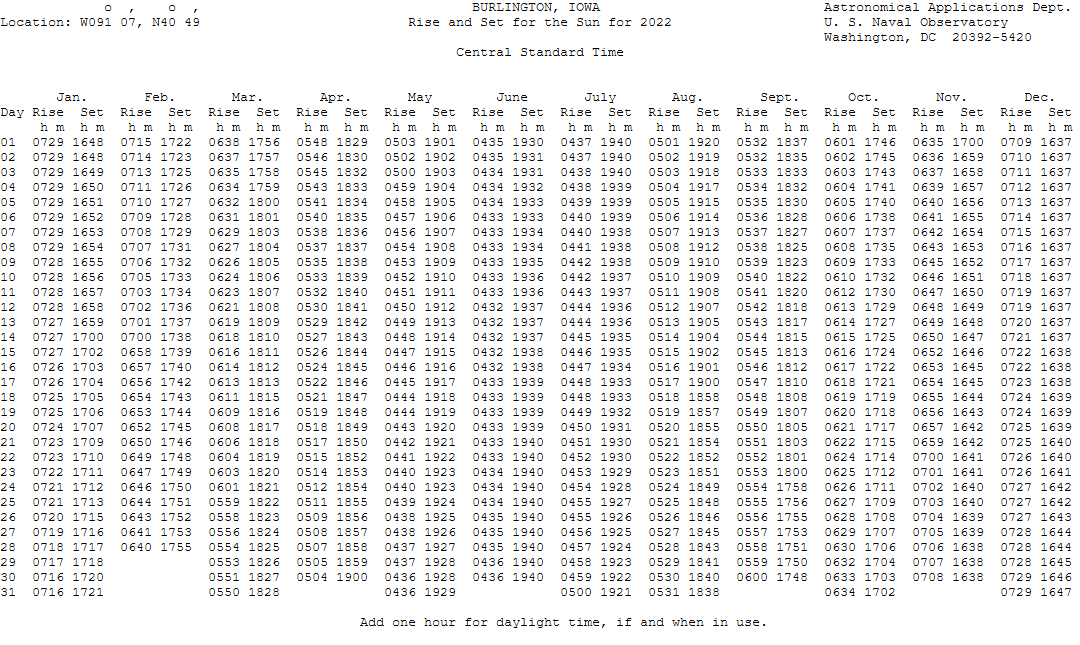
does anyone know a real life data set i could apply the discrete fourier series on
like i need a real life situation to apply the fourier series on
 stray reef
try looking up sunrise/sunset data

found this... png of a record
you can use that
shadow geyser
I have a quesiton
Can anyone check if my set notation is correct?
($\forall$x, y, z $\epsilon$ [0,1])[x > $\frac{1}{2}$][y < $\frac{1}{2}$][x + y $\leq$ 1] $\vee$ ($\forall$x, y, z $\epsilon$ [0,1])[z $\geq$ $\frac{1}{2}$]
hm
vital dewBOT
eswag
 shadow geyser
does that make sense to connect two conditions?
shadow geyser
($\forall$x, y, z $\epsilon$ [0,1])[x $\textgreater$ $\frac{1}{2}$][y $\textless$ $\frac{1}{2}$][x + y $\leq$ 1] $\vee$ ($\forall$x, y, z $\epsilon$ [0,1])[z $\geq$ $\frac{1}{2}$]
vital dewBOT
eswag

 gritty pumice
are [] restrictions
shadow geyser
gritty pumice
and use \in instead of \epsilon
will do it
shadow geyser
gritty pumice
but u can write it better
can you show me?
gritty pumice
shadow geyser
can you show me?
sure
shadow geyser
i want to write it as an or condition
like x has to be greater than 1/2 and y has to be less than 1/2 so that x + y <= 1
or if that entire condition fails make z >= 1/2
gritty pumice
ok

 shadow geyser
can you connect those two?
shadow geyser
vital dew
**eswag**
my professor wrote his sets like this
gritty pumice
but
shadow geyser
so yeah i wasnt sure if mine was right
gritty pumice
oh
gritty pumice
vital dew
**Lsfhv**
the condition is kinda redundent
 gritty pumice
since we take any x such that z from [0,1] is larger than 0.5
gritty pumice
shadow geyser
here's an example of what he wrote on his slides
yea that makes sense
shadow geyser
ah
gritty pumice
shadow geyser
we dont need to say x : z though
yes
shadow geyser
can't we just say z epsilon [0,1] ?
and then just call that a day
there wouldnt be any redundancy
gritty pumice
im not sure what u want that set to be
shadow geyser
hm
gritty pumice
it doesnt really make sense
shadow geyser
So i'm given this problem
 shadow geyser
vital dew
**Lsfhv**
shadow geyser
vital dew
**Lsfhv**
i figured out that to satisfy this set i need the first condition to either be this
if this first condition fails make z >= 1/2
and at that point x,y can be anything
@gritty pumice hopefully that makes sense?
Think you left but that's okay I guess
gritty pumice
shadow geyser
<@!896556282595667980> hopefully that makes sense?
Hi sorry
Hmm
Are you trying to put an or between the conditions?
shadow geyser
Yes
shadow geyser
vital dew
**Lsfhv**
either this works
shadow geyser
vital dew
**Lsfhv**
or this
if condition one evaluates to >= 1/2 then z can be anything
if condition one does not evaluate, make z to be >= 1/2
gritty pumice
shadow geyser
So i'm given this problem
Right I see
Let me do it
so first step is to just expand those symbols
so $x(1-y) + z(1-x+xy) \geq 1/2$
vital dewBOT
Lsfhv
 gritty pumice
shadow geyser
it should be 1-y yes?
gritty pumice
shadow geyser
it should be 1-y yes?
yes
shadow geyser
okay gotcha
gritty pumice
im not really sure how to find every condition on x,y,z easily tbh
shadow geyser
i kinda just
wrote test conditions
and found a pattern
and went along with that
and i figured out that x > 1/2 and y < 1/2 so that x + y <= 1
or just make z >= 1/2
shadow geyser
gritty pumice
if x <0.5 there are still solutions no?
uh
the problem with that is that
the ~x becomes too big
if its < 0.5
so it doesnt work
gritty pumice
what are x,y,z
gritty pumice
shadow geyser
any variables between [0,1]
oh :/
that makes it alot easier lmfao
it doesnt say that on ur question!!!!
lol
shadow geyser
gritty pumice
x = 0
yea but this fails though
gritty pumice
where
shadow geyser
okay to my understanding
x ^ ~y can be written as
~(~x + y - ~x*y)
given the properties they write
which is just
gritty pumice
ok
shadow geyser
1-\left(\left(1-x\right)+y-\left(1-x\right)\cdot y\right)

this is what it expands to
if you substitute x to be 0
and put y to be anything
such as 0,1
 gritty pumice
why is that an issue
shadow geyser
so technically we can just say x and y can be anything
and z is just >= 1/2
what i was thinking of was
gritty pumice
shadow geyser
so technically we can just say x and y can be anything
dont get this
shadow geyser
x and y can be any value in [0,1]
if that first condition doesnt work
you have z which must be >= 1/2
gritty pumice
right
gritty pumice
vital dew
**Lsfhv**
.
from this equation
the brackets are never going to be negative
so yea i think the only condition u need is 1 <= z <= 1/2
shadow geyser
okay but that can't be the point of the question though
gritty pumice
{(x,y,z) : 1<= z <= 1/2}
shadow geyser
the next problem is literally just
the same thing
theres no way it can be that one-dimensional
gritty pumice
gritty pumice
{(x,y,z) : 1<= z <= 1/2}
this is the set of solutions
 gritty pumice
the definitions of ^ and V are different
shadow geyser
yeah but the premise of the quesiton is still the same
gritty pumice
shadow geyser
yeah but the premise of the quesiton is still the same
yes
shadow geyser
x and y can be anything while z is just >= 1/2
gritty pumice
shadow geyser
x and y can be anything while z is just >= 1/2
😄
i mean i havnt done it
but
i guess its just a coincidence ?
shadow geyser
discrete math
gritty pumice
nice
shadow geyser
@gritty pumice apparently this reasoning was wrong 🤣
the TA said we cannot restrict z to be >= 0.5
because there exist z less than 0.5 such that
the left side evaluates to >= 0.5
gritty pumice
yes it makes sense
 alpine gust
this seems like a really...... bad way of writing this argument, is there anyone that can give me insight on how these types of arguments can be written in a more rigorous and "formal" manner?

 distant bobcat
As a wheel graph contains a cycle of order n-1 are all wheel graphs W_n Hamiltonian?
for n >= 3
sharp turtle
sharp turtle
I thought of doing your hint for that set already and got P={{1,3,5}{3,1},{5,1}}...
Can someone help with this?
weary tiger
I don't really get B. Anyone knows how to approach it?
 pale epoch
try to think of a universe where for every x either only p(x) is true or only q(x) is true
then those two statements should differ
weary tiger
so
they have the be =
for the statment to be correct?
but if value of x for p(x) and q(x) is different
then it's worng?
pale epoch
?
pale epoch
try to think of what the statements mean in words
the first is "every x has property p or q"
the second is "every x has property p or every x has property q"
pale epoch
with p(x) = "x = 0" and q(x) = "x = 1"
weary tiger
but that was the answer to A
and I got it right
a the answer is whenever statment 1 is true
statment 2 is true
so they are logically equivalent
I guess
by conversing
pale epoch
a) is the other way around from what i presented
pale epoch
it does not
i mean just because a statement is true, doesnt mean the converse is true
this is an example
stray reef
"everyone in this room wears a red or a blue shirt" ≠ "this room is filled with red shirts or filled with blue shirts"
 gritty pumice
x has lenghth 1
 olive wren
oh yeah it says for all x in the kleene closure of Sigma
weary tiger
basic step should be the smallest number right
olive wren
so youre gonna wanna do 0
olive wren
weary tiger
basic step should be the smallest number right
yessir
In most cases
In this case, yes
weary tiger
for this question, how do you know the range of x?
weary tiger
shouldn't it be epsilon ?
the smallest
or at least 1 since a word's shortest length is 1
 weak sand
MISSISSIPPI in which there are no consecutive symbols S?```

is 70 correct answer? i used (8 choose 4)a is part of the characters
x is part of the strings
and the r means reverse of the string
olive wren
Yes okay
And it asked you to prove this by induction on the length of x
x is in the kleene closure of Sigma
So all the words above Sigma
weary tiger
so all strings yea?
olive wren
Yes
olive wren
So it means it can have any nonnegative integer length
weary tiger
yes
olive wren
weary tiger
so shortest string is 1
The shortest string is epsilon
olive wren
yes
olive wren
no
Concatenation is literally just appending another word. So if you're concatenating hello and there, you get hellothere.
So if you're not appending anything it doesn't change the word
Basically $x\varepsilon = \varepsilon x = x$
vital dewBOT
Slurp
 weary tiger
thanks
weary tiger
stray reef
"everyone in this room wears a red or a blue shirt" ≠ "this room is filled with ...
how do you read there ]x ]y?
]x]y[xy=1]
double quantifiers really
confuse me
vital dewBOT
Ann
 stray reef
"there exist x and y such that..."
stray reef
you can abbreviate $\exists x \exists y$ to $\exists x, y$ unless you're a staunch formalist or your teacher beats you for the slightest informality
vital dewBOT
Ann
 stray reef
but yes what you said is a true statement in any reasonable interpretation
stray reef
then it would be false
stray reef
you would do good to say "true" and "false" instead of "correct" and "incorrect"
weary tiger
ok
stray reef
it is of course not true that for all real x and y we have xy = 1
weary tiger
ok thanks
weary tiger
olive wren
Concatenation is literally just appending another word. So if you're concatenati...

Is this how to do it?
olive wren
,rotate
vital dewBOT
 olive wren
what did you do here?
weary tiger
mathematical induction
weary tiger
should i switch out the x for k in ih?
olive wren
No
weary tiger
what should my ih be?
olive wren
That forall $x\in\Sigma^*$ with a length of $n$ and forall $a\in\Sigma$, $(ax)^r = x^ra$
vital dewBOT
Slurp
 olive wren
And you have to prove that forall $x\in\Sigma^*$ with a length of $n+1$, $(ax)^r=x^ra$
vital dewBOT
Slurp
 olive wren
Remember that if $x$ has a length of $n+1$, then there exists some $x'\in\Sigma^*$ with a length of $n$ and $\alpha\in\Sigma$ such that $x=x'\alpha$
vital dewBOT
Slurp
 weary tiger
stray reef
it is of course not true that for **all** real x and y we have xy = 1
weary tiger
stray reef
it is of course not true that for **all** real x and y we have xy = 1
LOL I JUST finished my quiz and got the same question
that I asked you 5 minutes prior thats so lucky
weary tiger
olive wren
Remember that if $x$ has a length of $n+1$, then there exists some $x'\in\Sigma^...
n+1 will be true because n + 1 is part of length n right?
olive wren
wdym?
iron hearth

quick question this is asking me to translate the statements into logic set them apart by using and
and using propositional laws to make it false?
so it would be (M -> S) and (S -> P) and (not M -> P)
I'm not sure if the translation for the third statement is true

 night heath
if i have p = x^2 -4y =2, will NOT p, ¬p = x^2 -4y !=2, How can i write NOT p
 tidal willow
is it possible to have a set of cardinality > 1 but all elements behave the same as each other when any algebraic operation is performed on them?
if so, can cardinality be infinite? Can this be extended to any operation?
I'm just wondering about this, not in any classes or anything right now
 floral cliff
are you asking if you can have an infinite number of elements in a set theoretically you could
tidal willow
floral cliff
are you asking if you can have an infinite number of elements in a set theoretic...
I'm asking if distinct elements in a set can at least be algebraically identical
i.e minimum {2, n} for n which is algebraically identical to 2 while |{2, n}| = 2
I'm asking because I used a program which has a "superset" function but that superset function treats identical repeated integers as distinct and returns a "superset" as such, so I wondered if that's actually possible in math
floral cliff
Im currently in a discrete mathematics class with computer science application and as far as I know a set can be FINITE with having a 1-1 correspondence with {1,2...,n} for some natural number n. with INFINITE sets they cannot be put into a 1-1 correspondence with {1,2...,n}, that means it has more n elements for any natural number n
so depending on the type of set the answer to your question is yes and no
tidal willow
I guess this is number theory or something, I'm asking if two numbers can be distinct if they have the same algebraic properties
I think
but yeah this wouldn't just be a set over integers
coral parcel
tidal willow
I'm asking because I used a program which has a "superset" function but that sup...
I think "multiset" is the concept you really want here; try googling that.
coral parcel
There are some interesting rabbit holes to explore related to making "elements that are distinct but not algebraically distinguishable" precise, but they're not really relevant if what you need is just a multiset concept. :-)
tidal willow
coral parcel
There are some interesting rabbit holes to explore related to making "elements t...
haha exactly, glad to know those rabbit holes are there though
 median mica
x^2 ≡ 2 (mod 26) --> is there any solution for this? if so, how?
 obtuse lance
it helps if you know the chinese remainder theorem, then it breaks the problem down to solving x^2=2 mod 2 and x^2=2 mod 13
median mica
obtuse lance
it helps if you know the chinese remainder theorem, then it breaks the problem d...
yeah I have been looking into that, but I cannot wrap my head around it
obtuse lance
do you want to find a solution or do you just want to know if one exists
quadratic reciprocity can give you the answer without giving you a solution pretty quick is why I ask
median mica
I know that no x exists to satisfy that
I wanted to find a solution, without necessarily trial and error
obtuse lance
I gotta run rn, but maybe someone can help, at least this lets you know you're on the right path
median mica
obtuse lance
I gotta run rn, but maybe someone can help, at least this lets you know you're o...
sure thing
iron hearth

What boolean law can i apply to keep simplifying
actually i lied so i know i can apply complement law
but did i use the distributive law correctly?
vital dewBOT
 iron hearth
I ended up simplifying it too CD
But im still not sure if I used distributive law correctly
obtuse lance
on the first line you have $AB \overline{AB}$ which if you think of $P=AB$ then you have $P \overline{P}$ which is P and not P, which is false, so you can throw it out
vital dewBOT
Merosity
 iron hearth
ahh okay
 amber minnow
What are the minimal vectors of a lattice?
coral parcel
Probably the shortest nonzero vectors in the lattice. In which context?
 rigid oriole
Can someone point to/give a handwavy explanation for why v is likely to be the shortest non-zero vector in L? (or should I ask in #linear-algebra)
 coral parcel
I think it must be something like: If it's not already a shortest vector in L, you can make it the shortest vector by scaling all of the b_i's and s by a large constant factor. Then a mismatch in the last column will make the vector much larger, so a shortest vector after the scaling must have its last component zero. And then the only contribution to the norm is sum of (2xi-1)², which is minimized by choosing each xi in {0,1}.
The reason why this is handwavy is that if the some of the b_i's are noncommensurable, the last component of v can be arbitrarily close to 0, so it needs some argument to see that keeping it small whlle we blow up the last column will require the integer coefficients to be so large that the other columns dominate the norm.
(I'm assuming all of the b_i's are positive).
rigid oriole
Thanks, will have a think
median mica
obtuse lance
it helps if you know the chinese remainder theorem, then it breaks the problem d...
learning about this in my today's lecture, nice
 safe marlin
If i have 12 different balls :
4 blues, 3 red, 5 yellow
And i want to get 6 balls in one pick
How many possibiltys that i pick 2 balls of ea color?
weary tiger
Is this correct. ?

 robust mango
@weary tiger First one is correct
robust mango
yeah im sure
 elder berry
Not quite, the sum is going from n to 5n, and you sum each term in-between.
The terms between n and 5n aren't just 2n, 3n & 4n, rather you have:
n + (n + 1) + (n + 2) + ... + (2n - 1) + 2n + (2n + 1) + ... + (5n - 1) + (5n).
@weary tiger
weary tiger
elder berry
Not quite, the sum is going from `n` to `5n`, and you sum each term in-between.
...
- (2n - 1) + 2n + (2n + 1)
how did u get these terms?
elder berry
They are just a couple of terms, if the letters confuse you, let's see the same thing with numbers
Let n = 5, we are calculating the sum from i = 5 to i = 25 of i
So far it's clear right? (n = 5, 5n = 25)
weary tiger
yeah
safe marlin
If i have 12 different balls :
4 blues, 3 red, 5 yellow
And i want to get 6 balls in one pick
How many possibiltys that i pick 2 balls of ea color?
elder berry
safe marlin
If i have 12 different balls :
4 blues, 3 red, 5 yellow
And i want to get 6 ball...
Occupied, wait for a bit
safe marlin
It was occupied before you
elder berry
If it were strictly n + 2n + 3n + 4n + 5n, then that would be the sum of 5 + 10 + 15 + 20 + 25
safe marlin
Look above
weary tiger
yeah
elder berry
But, we need the sum of 5 + 6 + 7 + ... + 23 + 24 + 25
You can write that sum as n + (n+1) + ... + (5n - 1) + 5n
weary tiger
ah I see
elder berry
doesn't matter how many terms you include, just the end points matter
weary tiger
is it possible
that I move
the 5
to i instead
and make it i=n to n
or? thats not possible
no nvm
weary tiger
elder berry
doesn't matter how many terms you include, just the end points matter
thank you
elder berry
as far as I can see, that isn't possible, also np
safe marlin
@elder berry could you help me please haha ty
elder berry
Let me see the problem
safe marlin
If i have 12 different balls :
4 blues, 3 red, 5 yellow
And i want to get 6 balls in one pick
How many possibiltys that i pick 2 balls of ea color?
The blue balls not similar as well as yellow balls and red balls
For example we have a blue ball that is bigger then other blue balls
elder berry
Alright, if you need 2 of each, and order doesn't matter, in how many ways can you pick 2 red balls first?
safe marlin
Why the red first
Im gonna pick 6 balls in one pick
6 balls in one pick
Im not gonna pick 2 balls then another 2 then another 2
Im gonna pick the 6 balls in one pick
elder berry
safe marlin
Im not gonna pick 2 balls then another 2 then another 2
Well arriving at the solution is easier if you pick 2 by 2 by 2
and it is no different if you selected all 6 at the same time
elder berry
Yup, it will count the same thing
just that, picking 6 at the same time is harder to calculate
elder berry
What is the proposed answer?
safe marlin
180
elder berry
Give me just a second to calculate it
safe marlin
Ok beast ty
elder berry
Yup, 180 seems to be correct
Let's start with calculating the possibilities
we start considering each color first, in how many ways can you choose 2 red balls
How many are you given at the start?
safe marlin
We have 3 red
elder berry
Right, so from 3 red, you chose 2. What does that end up being?
safe marlin
3!
elder berry
just 3
elder berry
Since we have (3 choose 2) which is the binomial coefficient, you've studied those right?
vital dewBOT
peaceGiant
 safe marlin
Yes!
elder berry
Great, let's repeat this for the other colors, we have 5 yellow, you need to choose 2; and you have 4 blue, and you need to choose 2.
vital dewBOT
peaceGiant
 elder berry
I'll leave the calculations up to you, first one is 10, second one is 6
So far we calculated each independent result, but now we need to combine it together
elder berry
Very good!
elder berry
I would, but I don't know how you arrived at that answer
Can you explain how you got it?
elder berry
Why would you?
elder berry
Indeed they are different, however let's work with an example
Say I have B1 and B2, blue ball 1 and 2
If I had B2 and B1, would that be a different possibility?
It wouldn't, since you essentially have the same pairs of balls at the end
and we care about the distinct scenarios, say having B1 and B3
The combinations already do that division for us, they make the distinction between the given balls
When we say (4 choose 2), we make sure that B1 and B2 are counted once!
So we don't divide by 2.
elder berry
Np, glad to help
 misty elk
I don't know where to begin for the 2nd question. this is for probability class.

 kind geode
hey quick question on finite automaton (nfas/dfas) i have a question to create a nfa that accepts strings that start and end with the same two letters for strings greater than length 2. although the solution i have come up with is a dfa. is there a way of thinking in order to create something thats nondeterministic that completes the same task
(also the next step is to convert my nfa into a dfa using the construction game method so i dont think i can have my nfa = dfa even though my "dfa" would be a valid nfa)
ive been stuck on this for a good hour and any help would be appreciated lol thanks
also 2 weeks into learn this stuff so my knowlege is limited haha
weary tiger
elder berry
Not quite, the sum is going from `n` to `5n`, and you sum each term in-between.
...
hey (2n - 1) + 2n + (2n + 1)
why did the pattern change agian?
going from n+1 n+2 n+3... to 2n-1
coral parcel
kind geode
hey quick question on finite automaton (nfas/dfas) i have a question to create a...
do you mean strings like xyblahxy or strings like xxblahyy?
If you already have a DFA, you can declare yourself to be done -- every DFA is also an NFA. But especially in the xyblahxy case, it's quite a bit simpler to write down an NFA directly.
elder berry
weary tiger
why did the pattern change agian?
There is no pattern. I just wrote some terms, not all of them. Again, n is not given, so it get be arbitrarily large or small.
The main idea is that you are going from n to 5n, rather n + (n + 1) + ... + (5n - 1) + 5n.
In the ... part, you could have the terms 2n - 1, 3n + 2, and so on. It doesn't really matter though.
elder berry
Say we have n=5, 5n - 1 is 24.
5 + 6 + ... + 24 + 25.
So that term is definitely there
elder berry
Yup
elder berry
No problem, are you required to find a general expression for that sum?
kind geode
coral parcel
do you mean strings like `xyblahxy` or strings like `xxblahyy`?
yea for {a,b}* where the x starts and ends with the same two for example abab bbb aabaa ab as long as the front and back read the same. and the thing is the question asks to convert my nfa into a dfa so id assume showing them the same machine would defeat the purpose.
kind geode
coral parcel
If you already have a DFA, you can declare yourself to be done -- every DFA is a...
and ik if it was only like only xy....xy it would be sm easier for nfa but its xy...xy, yy...yy, xx....xx, yx...yx (for strings larger than 2)

ive made this so far and i think it works perfectly although my brain went and made a dfa instead of an nfa
coral parcel
FWIW, that looks like it works.
I imagine what the exercise intended for you to come up with was an NFA with four copies of something like
                ,---. a,b
    a        b   \ /   a       b
* -----> * -----> * -----> * -----> (*)
but the need to recognize strings or length 2 and 3 too would require additional states and/or transitions on top of that.
spring surge
I want to make ordered set with set builder notation. This text generates set with elements like (1,a) (1,b) (2,a).. what predicate to put inside it in order to say "Every element in this set is distinct both by x and y" ?
 ember obsidian
@spring surge wdym "Every element in this set is distinct both by x and y"?
spring surge
ember obsidian
<@!890753475934318612> wdym "Every element in this set is distinct both by x and...
I mean that if we have (a,1) in this set then in this same set cannot be (b,1) (c,1) (a,2)
ember obsidian
spring surge
I mean that if we have (a,1) in this set then in this same set cannot be (b,1) (...
this set isnt well defined
 wide vine
What would be a logical expression for A person can park in the school parking lot if they are a senior or at least 17 years of age. I wrote Parking implies 17 or senior . Does this seem correct?
spring surge
ember obsidian
this set isnt well defined
i see
ember obsidian
there are many possible sets that satisfy that condition
spring surge
ember obsidian
there are many possible sets that satisfy that condition
How to express tuple in set builder notation?
ember obsidian
spring surge
How to express tuple in set builder notation?
wdym
 maiden python
 spring surge
ember obsidian
wdym
spring surge
ember obsidian
wdym
How to encode a set which has element as permutation of given elements?
{ (ordered set of a b c elements) | a b c belongs to {1,2,3} }
ember obsidian
the set of permutations on 3 items
thats the easiest way to word it
formally such permutations are bijections {1,2,3}->{1,2,3}
spring surge
ember obsidian
the set of permutations on 3 items
Is it possible to define it without using function definition?
spring surge
How to put it in formal way?
ember obsidian
forall n in {1,2,3} the triple contains n
spring surge
thanks.
ember obsidian
ur welcome
 copper ore
 coral parcel
The central fact seems to be that on average you expect to find a new smallest number logn times as you walk through the array.
(How to prove that, though ...)
kind geode
coral parcel
I imagine what the exercise _intended_ for you to come up with was an NFA with f...
ah i think so exactly as i have 4 paths with a few others to deal with things like aaa bbb aa bb. although if i use something like the subset construction game on an nfa and get almsot the exact same thing, do you think i would be peanalized for doing so.
(the only nfa feature i really have is a self loop for a duplicate letter, although the way i have structured it kinda renders it useless)
 leaden dust
sorry didn't mean to send that just yet
 leaden dust
start with a base case at n=1 and see that it holds
weary tiger
yes
it does
I'm stuggling with the
inductive step
been trying to do it for 1 hour 😦
leaden dust
what is your inductive hypothesis?
 coral parcel
kind geode
ah i think so exactly as i have 4 paths with a few others to deal with things li...
coral parcel
kind geode
ah i think so exactly as i have 4 paths with a few others to deal with things li...
I expect if you use the subset construction on the kind of NFA I sketched, you would get something more or less like you already have, but probably with some of the states duplicated, and you'd have to minimize the DFA afterwards if you wanted to end with something that's exactly isomorphic to your hand-constructed DFA.
Whether you'd be penalized for jumping directly to the final solution depends (unfortunately) on how inflexible the grader is. It doesn't sound outrageous to me that you could keep enough of the situation in your head to just write down your DFA, but I suppose there's always a risk that they'll be enforcing a secret "you must use the particular tactic we had in mind" grading criterion. It would probably feel safest at least to write some text explicitly showing that you're aware that there could have been such-and-such steps you needed to take here.
kind geode
coral parcel
I expect if you use the subset construction on the kind of NFA I sketched, you w...
ahhh ok makes sense haha, and just to clarify what do you mean by 'minimize' my dfa?
coral parcel
There's an algorithm that takes a DFA and produces a DFA that has the smallest number of states among all DFAs that accept the same language.
kind geode
coral parcel
I expect if you use the subset construction on the kind of NFA I sketched, you w...
but yea ill jsut wrtie down my though process and hope for the best bc i find it hard to think with a 'undeterminable' mindset
kind geode
coral parcel
There's an algorithm that takes a DFA and produces a DFA that has the smallest n...
ohhh no way
ill def look into it
thank you for all the help
acc really appreciate it 🙂
leaden dust
I'm trying to prove Associativity of /\ but i'm unclear how to do it using logical axioms
it's not difficult to understand at all
just unclear on how to properly reference axioms
would you guys recommend an equational proof or hilbert style?
 coral parcel
You'd need to show which axioms about conjunction you have to start from.
weary tiger
coral parcel
You'd need to show _which axioms_ about conjunction you have to start from.
do you have any idea how to solve that problem?
leaden dust
coral parcel
You'd need to show _which axioms_ about conjunction you have to start from.
so just to make sure we're on the same page there's 11 axioms
and only the golden rule uses a conjunction
coral parcel
Treat others like you want them to treat you?
leaden dust
coral parcel
Treat others like you want them to treat you?
lol

they call it the Golden Rule in my class for some reason lol
coral parcel
That looks like it is in dire need of some explicit brackets.
leaden dust
apparrently you can drop them according to axiom 1 lol
it doesn't seem like any of the axioms use conjunction other than 1
 coral parcel
Okay, equivalence is actually associative. But that is one funky set of axioms nonetheless.
 proven silo
weary tiger
proven silo
weary tiger
That is not the inductive step. You want to show \begin{align*}
\sum_{i=k+1}^{5(k+1)} i&=\sum_{i=k+1}^{5k} i+(5k+1)+(5k+2)+(5k+3)+(5k+4)+(5k+5) \
&=3(k+1)(4(k+1)+1)
\end{align}
Notice the sum also starts a different place, so can’t use inductive hypothesis just yet before fixing that.
weary tiger
coral parcel
Treat others like you want them to treat you?
huh?
vital dewBOT
ScapeProf
Compile Error! Click the  reaction for more information.
(You may edit your message to recompile.)
 weary tiger
proven silo
That is not the inductive step. You want to show \begin{align*}
\sum_{i=k+1}^{5(...
weary tiger
proven silo
That is not the inductive step. You want to show \begin{align*}
\sum_{i=k+1}^{5(...
shouldn't it
i=k+1 to 5(k+1) or no?
proven silo
That is what I wrote?
proven silo
No?
coral parcel
leaden dust
it doesn't seem like any of the axioms use conjunction other than 1
Your best bet is probably to rewrite each of the "p and q" in the desired equivalence to "p == q == p or q" and hope things look feasible after the dust settles.
weary tiger
proven silo
No?
1 sec
 leaden dust
coral parcel
Your best bet is probably to rewrite each of the "p and q" in the desired equiva...
leaden dust
coral parcel
Your best bet is probably to rewrite each of the "p and q" in the desired equiva...
 weary tiger
proven silo
Your 1st equality is different that what I wrote don’t you think?
weary tiger
proven silo
Your 1st equality is different that what I wrote don’t you think?
well
you wrote all the terms
betwen 5k+!
and 5k+5
proven silo
Because they should be there?
proven silo
That is what the sum means
leaden dust
coral parcel
Your best bet is probably to rewrite each of the "p and q" in the desired equiva...
if i convert everything to conjunction
and then show the associativity of / is that enough?
proven silo
Do you agree the 1st equality I wrote is correct and yours is wrong?
coral parcel
leaden dust
if i convert everything to conjunction
and then show the associativity of \/ is...
Possibly. I'd hope you have proved some laws already that make it more approachable than it looks. I'd need to sit down and meditate over those axioms for a few hours before I can start to give useful advice about how to use them ...
weary tiger
proven silo
Do you agree the 1st equality I wrote is correct and yours is wrong?
yes
i do
proven silo
So what are you confused about?
weary tiger
because
u said =
summation +...
the first summation isn't =
to the first one
one startks with i=k
and the other starts with i=k+1
so how are u gonna plug one for the other?
which is
i=k to 5k of i = 3k(4k+1)
proven silo
You just said “yes I agree yours is true”. Now saying “no I don’t agree”?
Or what are you saying?
proven silo
No
 proven silo
I said the thing you want to prove is not what you wrote down
Its what I wrote down
You want to show it holds for k+1
Your 1st equality is false like I said
weary tiger
how
are u gonna plug
the first summation at (sk) for first expression?
if they dont match
ok
1 sec
can u type
s(k)?
forget about s(k+1)
proven silo
vital dew
**ScapeProf**
Compile Error! Click the <:errors:504266556054962196> reaction for...
Now read the text I said after the equation
Yes what you wrote down for n=k is true
weary tiger
ok
so now
we need to take s(k)
and prove that it's works
for all k
which makes sense
in the summation u wroye
well I dont get the part where
we need to fix it because its starting at different points
maybe thats why I'm confused
proven silo
||Try adding and subtracting the 1st term||
 median mica
what do you think about this:
Let a, b, c ∈ Z with a != 0. If there exist integers m and n such that a|(m · b + n · c), then a|b and a|c.
craggy juniper
this is not necessarily true
you could have a = 3, b = 2, c = 4, and m = 3, n = 6
median mica
craggy juniper
you could have a = 3, b = 2, c = 4, and m = 3, n = 6
glad I am not losing my mind then, thank you for that
I am however losing over this one though at the moment:
Let a, b, c ∈ Z with a != 0. If a|(m · b + n · c) for all integers m and n, then a|b and a|c.
craggy juniper
that sounds true but i’m not sure of how to prove it
median mica
craggy juniper
that sounds true but i’m not sure of how to prove it
they say we can prove it to be true like this:
take m = 1, n = 0: a|(1 · b + 0 · c), which is to say a|b
take m = 0, n = 1: a|(0 · b + 1 · c), which is to say a|c
what I do not get is that how come we are allowed to show via two cases, when there is an AND in the conclusion of the statement
craggy juniper
median mica
they say we can prove it to be true like this:
take m = 1, n = 0: a|(1 · b + 0 ·...
are you aware that this doesn’t prove anything
median mica
craggy juniper
are you aware that this doesn’t prove anything
I am aware, and I mentioned that to my professor too
coral parcel
Looks like a good proof to me. What's wrong with it?
craggy juniper
i thought you couldn’t just consider one case
or something
idk
i wasn’t really sure
coral parcel
If you're promised that such-and-such holds for all m and n, you're in effect being given infinitely many facts, and you can use as many r few of them to reach your conclusions as you like.
median mica
craggy juniper
<@!728265999257960448> your proof works actually
thank you for the ping
median mica
coral parcel
If you're promised that such-and-such holds _for all_ m and n, you're in effect ...
would you mind joining in a voice channel to explain why the proof works?
coral parcel
Yes, I would mind.
median mica
coral parcel
Yes, I would mind.
alright, then do you mind writing out why the proof works?
coral parcel
What about it do you think doesn't work?
median mica
coral parcel
If you're promised that such-and-such holds _for all_ m and n, you're in effect ...
I just read this, it is just that, it seems weird to me how you can just use "as many" as you can to prove a statement
median mica
coral parcel
What about it do you think _doesn't_ work?
^^^^
craggy juniper
well, like he said, you know all those cases are true
since it works for any integer value of those two
coral parcel
That's what "for all" means: The statements you can get by plugging in values for m and n are each true, separately.
median mica
coral parcel
That's what "for all" _means_: The statements you can get by plugging in values ...
 craggy juniper

median mica
thank you for that
@craggy juniper @coral parcel
craggy juniper
idk how much help i was  but no problem lol
median mica
craggy juniper
well, like he said, you know all those cases are true
^^^^, you helped here
 loud carbon
hey guys
so Im in grade 11 and i just started my functions introductions
relations
so how does -4,-2,2 corespond with 1

I know its not a function because it has 3 y values
but i just dont understand how -4,-2 and 2 all corespond with 1?
coral parcel
That is a drawing of a function. In particular the function f defined by f(-4)=1 and f(-2)=1 and f(2)=1 and f(5)=6.
 bleak pollen
@loud carbon
Varsity Tutors connects you to top tutors through its award-winning live learning platform for private in-home or online tutoring in your area.
This arrival might help with the idea of mapping
But the problem you have is a mapping or function is a many to one
Here some pictures from google
 loud carbon
ok I got it now thanks
il ask for help if i need more
another questions
Im seeing a notation that says (-5,1) (-3,2) (-1,3) (1,2)
nvm
 dim hemlock
a negation of a statement and the original can't both be true, right?
bc I'm running into the issue where my negation and my original statement are true, so I'm probably negating wrong
coral parcel
Yeah, that's a bad sign.
At least the statement and its negation can't be true at the same time.
dim hemlock
so I'm guessing I'm erroneous in converting (1) into the negation (2)? or would it be fine because as long as they're never true with the same x and y then it's fine?

 coral parcel
Hmm, that looks like a correct negation to me. Why do you think they're both true?
In particular, u=1 is a counterexample to (2).
weary tiger
for these types of questions should i use
n+k-1 C k
or
n+k-1 C k-1?

 compact yacht
Let f (x) = 2x where the domain is the set of real numbers. W hat is f(R)? what is the right way to approach this question?
coral parcel
f(R) is the set of all numbers that the function can give you when you input something from R.
Which real numbers are twice something?
 atomic swan
So this discrete math chat is not specifically like for discrete calculus but generally whenever there is something discrete in math?
pale epoch
you can read the channel descriptions for more information
atomic swan
I did
introduction to sets, propositional logic, proofs; elementary number theory, graph theory, combinatorics, basic coding theory, and other discrete subjects. has overlap with other channels.
coral parcel
It basically exists because many universities have a course called "discrete mathematics" covering all the disjointed (!) pieces of math they require computer science or software engineering majors to take, and we can't expect students in such courses to have enough of an overview to know which of 4 or 5 other channels each of their questions fits into.
And now that it does exist, it's also the only good place to talk about certain of the topics which don't really fit naturally in the other "early university" channels, such as graph theory or elementary combinatorics.
kind geode
Hey just another question, If i am told to prove that something is regular. ik you can make a dfa, then its regular, but the question before it tells me to make a dfa. I also dont think I can use induction in my case as I have nothing to do it over. are there any other methods of proofs use to prove something is regular?
coral parcel
If the task just tells you to prove that such-and-such language is regular, you get to choose the method of proof yourself.
Showing a DFA for the language is one way to conduct such a proof. Other strategies include showing an NFA, or a regular expression, or a regular grammar (but that is essentially just an NFA with different notation), or to apply the Myhill-Nerode theorem if you've learned that.
Using induction is allowed, like in any other proof -- but in most problems of this type there won't really be any way to apply induction as the top-level proof step. Induction always concludes statements of the form "for every natural number n such-and-such is true", and "this particular language is regular" doesn't have that form.
However, it can sometimes be useful to use induction as part of your argument that the DFA/NFA/regex/grammar you showed actually recognizes the language you're looking at. (The details will depend a lot on how the definition of the language is structured, and what your overall strategy is).
wide vine
can someone explain the difference between "sufficient" and "necessary" regarding some if then condition
I believe sufficient is like 1 or many possible ways
like an or
my questions pertain to these exercieses

I don't know how I could exactly do (a)
I understand (b)
If Joe is eligible for the honors role then he is maintaining a B average.
I just don't see how I can do some implication with (a)
maybe I am not suppose to?
they had this example early in the section

Because for (a) it seems to suggest that there are many ways of being eligible for the honors program and that maintaining the B average is one of many or perhaps the minimum?
wait
maybe the (a) is
If Joe maintains a B average, then Joe is eligible for the honors program.
because say joe doesn't maintain a B average
the whole thing goes True
ember obsidian
take the implication "if p then q"
wide vine
as the "contract" of p -> q isn't held by p
ember obsidian
other ways to say it include "p is sufficient for q", "q is necessary for p"
coral parcel
Being an archbishop in the Church of England is a sufficient condition for being a member of the House of Lords. (Both archbishops are automatically members).
But it is not a necessary condition. (The house has some members who are not bishops).
On the other hand, being British is a necessary condition for being a member of the House of Lords. (All the members are British subjects).
But it is not a sufficient condition. (I know a Brit who isn't a member).
wide vine
okay so I believe I have it correct for my (a) and (b).
(a): If Joe maintains a B average, then Joe is eligible for the honors program.
(b):If Joe is eligible for the honors program, then Joe has maintained a B average
kind geode
coral parcel
Using induction is _allowed_, like in any other proof -- but in most problems of...
Ahhh i see i was thinking the same thing, I ended up writing out the regular expressions for my dfa, and since I had 4 regular sets, I used a closure property of how the union of regular sets is also regular
kind geode
coral parcel
Using induction is _allowed_, like in any other proof -- but in most problems of...
Ahhh i see i was thinking the same thing, I ended up writing out the regular expressions for my dfa, and since I had 4 regular sets, I used a closure property of how the union of regular sets is also regular
im not too sure how valid of an argument it was but i think it was enouugh xd
im not too sure how valid of an argument it was but i think it was enouugh xd


 coral parcel
I'd follow the hint.
misty elk
im not sure what the hint is telling me
coral parcel
Instead of men and women, we could also say: Suppose the set A has m elements and B has n elements. If A and B have no elements in common, then how many subsets of size r does A union B have?
misty elk
still dont get it
coral parcel
What is the answer to my question?
misty elk
dont know