#point-set-topology
1 messages · Page 292 of 1
 gritty widget
 gentle ospreyBOT
lime_soup
 gritty widget
i need to know that $\operatorname{colim}n(\pi{n+k}(\Sigma^{n}X)=0$
gentle ospreyBOT
lime_soup
 gritty widget
ah okay but $\pi_{n+k}(\Sigma^n X)=0$ for $k<0$
gentle ospreyBOT
lime_soup
 gritty widget
does this realyl work for any space X or do we need some coniditon like finite CW complex
 cosmic prism
any topology experts here right now i need help because i got very lost in pushouts
 lunar yoke
cosmic prism
any topology experts here right now i need help because i got very lost in pusho...
lunar yoke
cosmic prism
any topology experts here right now i need help because i got very lost in pusho...
can you specify your question?
cosmic prism
Let $\alpha:A\rightarrow X,;\beta:A\rightarrow Y,;\gamma:B\rightarrow Y,;\delta:B\rightarrow Z$ be continous maps of topological spaces. Prove that $(X+{A}Y)+{B}Z$ is homeomorphic to $X+{A}(Y+{B}Z)$
gentle ospreyBOT
Zorty
 lunar yoke
did you cover the universal properties of pushouts
it would be a lot easier to prove via them
cosmic prism
thats just this right (didnt want to write it out lol)
 lunar yoke
yes
and the fact that the pushout is determined uniquely up to unique isomorphism through this property
cosmic prism
we barely looked at that a few weeks ago when we briefly covered category theory
lunar yoke
so using this, if you show that the 1st one satisfies the universal property of the second one, you get that they are isomorphic
and with pushouts statements like this follow from / are known as "pushout pasting"
so your diagram looks like this and you can put both of the things in the corner down right
 cosmic prism
yeah i already drew that but i still dont get it lol
lunar yoke
and you can prove all of this by just using the universal properties and so on, without actually looking at the topology
gritty widget
Quiver 
lunar yoke
i guess it really depends on your tastes and how familiar you are with category theory whether you find this easier than working with quotient spaces of quotient spaces
cosmic prism
yeah i have absolutely no clue about category theory
gritty widget
Category theory is just playtime with arrows
cosmic prism
but universal property of pushouts doesnt mention anything about isomorphisms and homeomorphisms in my script so im confused
gritty widget
Well, just try to get what a pushout is, you don't need much category theory knowledge
gritty widget
cosmic prism
but universal property of pushouts doesnt mention anything about isomorphisms an...
Ah. You can prove the isomorphism though
lunar yoke
cosmic prism
but universal property of pushouts doesnt mention anything about isomorphisms an...
well you can show that if 2 objects satisfy the same universal property you have a unique isomorphism between them
thats not special to pushouts, but generally anything similar
for example tensorproducts if you know them
but ok yeah if you dont have much time then its probably easier to actually work with the topological spaces
since you're not familiar with category theory
cosmic prism
so i have to prove that one of the pushouts fufills the universal property of the other one and conclude that theyre isomorphic from that?
lunar yoke
that would work yes
one thing you can show that is helpful for these kind of exercises is the pushout pasting lemma i mentioned above:
In the pictured diagram, if you know that the top square is a pushout, then the bottoms square is a pushout if and only if the whole rectangle (i.e. the diagram made from only the corners) is a pushout
 cosmic prism
lunar yoke
but ok yeah if you dont have much time then its probably easier to actually work...
cosmic prism
lunar yoke
but ok yeah if you dont have much time then its probably easier to actually work...
yeah i think they expect me to do it this way
still have no clue 😵💫
 crimson path
If S is a non-empty compact subset of a metric space and x is some point in the complement of S,
it is possible to show that min{d(p,x) | p in S} exists by invoking continuity of the map f(p) = d(p,x).
Since f is continuous on a compact set, it attains a minimum. Done.
Does anyone know a way of showing this without reference to continuity of f?
I attempted to create an open cover of S by taking a union of balls at each q in S
of radius d(q,p), but could not make much progress beyond obtaining a finite
subcover.
 little hemlock
crimson path
If S is a non-empty compact subset of a metric space and x is some point in the ...
little hemlock
crimson path
If S is a non-empty compact subset of a metric space and x is some point in the ...
Try this cover: ${U_\epsilon}{\epsilon > 0}$ where $$U\epsilon = { p \in S : d(p,x) < \epsilon }.$$ You'll have to justify openness of each $U_\epsilon$ and at this point you are just kind of redoing the proof that $p \mapsto d(p,x)$ is continuous and extreme value theorem.
gentle ospreyBOT
kxrider
 little hemlock
wait well openness is obvious
also, this is just the same cover you came up with ig? Wasn't reading that closely
crimson path
@little hemlock: Hm maybe, not sure. Yours is the set of all points in S within epsilon of x, so I suppose we next want to make epsilon smaller and see how small we can make it before we leave S. Mine is somewhat extraneous and cycles through all elements in S and their distance to x.
@little hemlock: But I did try another approach, though I could not escape referencing continuity. Since x is outside S and S is closed, there is some delta>0 such that B(x,delta) is in the complement of S. Then delta is a lower bound of {d(p,x) | p in S} and thus the infimum exists. We can make a sequence that converges to the infimum, and that will provide a sequence in S. S is compact so it has a convergent subsequence and continuity now will show that the infimimum is the minimum. But I could not do it without continuity of f. I guess it is necessary
little hemlock
yea i mean, if you want something which requires a weaker condition than continuity, mine should suffice. You only need that preimages of open intervals of the form (0, eps) are open
but also any proof which basically reproves continuity of d(p,x) and extreme value theorem in the process is not "referencing" continuity of d(p,x). At least in the sense that continuity is not a premise.
@crimson path
crimson path
@little hemlock: ok thank you very much for your input!
little hemlock
npnp
@crimson path hm im sorry, i just thought more about this and i realize it doesn't work
sorry if you were racking your brain over what i wrote lol
yea this is like a heine borel thing. it would be much much easier to assume continuity. Otherwise I think the program would look like: prove every open cover of f(S) has a finite subcover, and then apply heine borel to see f(S) is closed and bounded
 lament needle
I was watching a 3blue one brown video and it gave a challenge to show that there is no continous mapping from the edge of a mobius band to a circle. So I tried to think about this in terms of the fundamental polygon of the strip. In this qoutient space the top left and bottom right corner of the square are identified and the bottom left and top right corner are identified. So In my head im thinking of this as gluing two line segments together but that would just give us a circle. I would think this provides us with a continous map since these corners are identified?
 lament needle
After thinking more about the question in the video I dont think the question asked about the boundary of the mobius band. But actually that gluing the boundary of the mobius band to a circle required the mobius band to intersect itself
 arctic relic
If someone asks to find homology of a map f and f:x->y, is that the same as the homology of f(X)
Or I guess it might just be the degree of f?
 gritty widget
I know that the cofiber of $X \vee Y \rightarrow X\times Y$ is $X\wedge Y$
gentle ospreyBOT
lime_soup
 gritty widget
But i see no reason why the stable homotopy groups of X smash Y should vanish
If X and Y are now spectra, does $X\vee Y \rightarrow X\times Y$ always induce isomorphism in homotopy
gentle ospreyBOT
lime_soup
 gritty widget
or do we need that X and Y are connective/
 marsh forge
gritty widget
If X and Y are now spectra, does $X\vee Y \rightarrow X\times Y$ always induce i...
marsh forge
gritty widget
If X and Y are now spectra, does $X\vee Y \rightarrow X\times Y$ always induce i...
Stably yes
gritty widget
can you help me see this?
i can't see how to show that the part from the smash does not contribute
marsh forge
Proof might depend on your Prefered model of spectra—it’s immediate if you already know that spectra is additive
Fwiw the smash product of spectra is not the cofiber of this map
gritty widget
at the moment im just working with sequential spectra
marsh forge
The highlighted claim should essentially be like
By definition
Ie you have you cells you define for a product
And the low dim cells are exactly the ones in the inclusion
It should follow from a connectivity argument on the suspended spaces
gritty widget
hmm
marsh forge
I can try to write it out I just feel strangely sleepy atm lol
But basically just argue that the cells in dimension n in the product are exactly the cells in dimension n of one of the two spaces
marsh forge
The reason being that there’s a big range w no cells
gritty widget
i think i see
and then
if i want to do this for general spectra
not just
suspension spectra
marsh forge
I would start by proving the htpy category is additive
There’s probably a direct way
But honestly it’s easier to do the additive thing
gritty widget
yeah
i would like to do it the direct way though just because
when i try to do it the direct way
its seem that we need connective spectra
which i think should be wrong
so there is something I am messing up that i want to fix
marsh forge
You don’t need connective
That doesn’t mean your argument doesn’t need connective tho
Oh, here is a direct argument I think
There’s a sort of obvious way to describe a wedge as a homotopy pushout (include points)
Then pi_n will preserve this homotopy colimit
This also induces natural maps into the product and a universal map into the product
It’s also clear that pi_n(XxY) is the direct sun
Sun
Sum*
So you should get exactly that the homotopy groups agree and the universal map is an iso
gentle ospreyBOT
lime_soup
 gentle ospreyBOT
lime_soup
 gritty widget
so indeed $\pi_(X\times Y)\cong\pi_(X\vee Y)$
gentle ospreyBOT
lime_soup
 gritty widget
this is very foolish of me
im not sure why we can say that this isomorphism is induced by the map X wedge Y to X \times Y
marsh forge
I think you argue this is the same thing as the isomorphism of direct product and sum in Ab
gritty widget
oh so
X wedge Y to X \times Y
is a map between
coproduct and product
hmm no nevermind
becaue the product in spectra should be smash?
marsh forge
No
Product in spectra is \times
Smash product is not a categorical product
It’s a monoidal structure
gritty widget
oh okay
so because X wedge Y to X \times Y is the map between the coproduct and product
marsh forge
Yeah
gritty widget
pi_* should preserve things
marsh forge
Basically the functor preserves this whole diagram
gritty widget
thank you
marsh forge
np
 fair idol
Does the covering space correspondence say that, if the spaces are "nicely connected", there is a bijection between n-sheeted covering spaces of a space X and index n subgroups of X's fundamental group? I'm having trouble interpreting the theorem because it's very wordy
 coral pivot
Yeah, I can explain in more detail when I get home
But for now search like
Galois theory of covering spaces
gritty widget
if a space has sufficiently many adjectives then algebra = topology
fair idol
coral pivot
Yeah, I can explain in more detail when I get home
Thank you so much. I'll keep googling!
I have a feeling that if X is sufficiently nice and $\Tilde{X}$ is an n-sheet covering space of X with it's (Galois)corresponding subgroup Y of $\pi_1(X)$ then there is an isomorphism $\pi_1(\Tilde{X})\cong Y$. I think this is what the correspondence is saying
gentle ospreyBOT
limbostar
 marsh forge
Yeah essentially the theorem tells us that subgroups of pi 1 should be covers and that if $X_H$ is the cover corresponding to $H$ we should have an exact sequence $1\to H\to \pi_1 X \to \pi_1 X_H \to 1$
gentle ospreyBOT
i_hate_printers
 marsh forge
I’m ignoring some conditions for all this to be true
Sorry that last group should be the deck group
And the first group should be pi_1 of cover
Whoops
Technically the deck group is the normalizer kill H but if the cover is normal what I said is true
I always mix this up
fair idol
Thank you so much! I really appreciate that explanation 😃
 mint sage

HELP. I don't even know how to study the topological properties of this quotient space...
 wide kayak
hmmm
good question, I don't know off the top of my head but I know this is important
you can represent two distinct points of X/G by [x] and [y], where there is no g in G for which g*x = y
there's no such g because otherwise we'd have x ~ y, i.e. [x] = [y]
now you want to find two disjoint open sets of X/G containing [x] and [y]
since X is hausdorff there are disjoint open sets U containing x and V containing y
now compactness of G will have to be used somehow
gritty widget
you want to get some open sets in G, somehow, so you could try using continuity of G -> X, g -> gx for each x
that's the first thing that comes to mind for me
it might also help to understand what the open sets in X/G are in terms of the action of G on X. i'd suggest writing them down, it'll help you figure out what you need to do
since you said you don't know how to study the topological properties of this quotient
i'll start: "by the definition of the quotient topology, W is open in X/G if and only if..."
mint sage
Let me try
mint sage
gritty widget
i'll start: "by the definition of the quotient topology, W is open in X/G if and...
but that's what I don't know☹️
gritty widget
then open your textbook and get reading
you can't do a problem on the quotient topology if you don't know what it is
gritty widget
is it possible to write suspension in temrs of attaching a cell
lunar yoke
gritty widget
is it possible to write suspension in temrs of attaching a cell
I dont think so. Recall that the suspension of S^1 is S^2. To get that by attaching a single cell we would have to attach a 2-dimensional cell, and we would get a pushout
S1 ---> S1
| |
D^2 -> S^2
where the left vertical map is the inclusion of the boundary and the right vertical map is the inclusion of the equator. But then you get H_n(D^2,S1) = H_n(S^2,S^1).
This cant be, since Z = H_2(S^2) = H_2(D^2,S1), but H_2(S^2,S^1) = H_2(S^2 v S^2) = Z + Z
there is probably a way easier solution to this
gritty widget
is there a slick way to shwo that the n-th suspension of a space is n-connected
by slick i mean slicker than
for any space X \Sigma X is path connected
then use the induction
marsh forge
gritty widget
is there a slick way to shwo that the n-th suspension of a space is n-connected
Cellular approximation w the correct cell structure should work I think
gritty widget
can you give a slight more i’ve a hint by what you mean by this
marsh forge
I’m not confident it works but I think you should be able to put a cell structure on a suspension that has no cells in the desired range
And then by cellular approximation all maps out of the sphere are nullhomotopic
I’m about to go surfing and haven’t had any coffee so this is the best I can do rn hahah
marsh forge
I want to argue that If X is a CW complex then Sigma X has a cw structure in which the cells are just one dimensional higher cells from X
Like same cells but one dim higher
This will force one extra level of connectivity
I’m not actually sure this works tho lol
Surf time
lunar yoke
marsh forge
I’m not actually sure this works tho lol
in retrospect it should work, since an n-connected cw complex is htpy equivalent to one with trivial n-skeleton
gritty widget
hihi
Can someone help me find a finite topological space with the fundamental group Z2?
aka with two non-homotopic paths
Maybe we could say it is disconnected and it is the union of two sets that are each simply connected? Maybe that would work?
 runic sun
If it's not path connected its fundamental group might be ill-defined, in case both these components would be simply connected it would be trivial at every point.
lunar yoke
gritty widget
Can someone help me find a finite topological space with the fundamental group Z...
Maybe this helps https://en.wikipedia.org/wiki/Pseudocircle
The pseudocircle is the finite topological space X consisting of four distinct points {a,b,c,d } with the following non-Hausdorff topology:
      {

        {
        a
        ,
        b
        ,
        c
        ,
        d
        }
        ,
        {
 ...
I don't think you mean finite. Maybe compact?
Oh what
Ive never seen that pseudocircle thing. Freaky!
gritty widget
wide kayak
I don't think you mean finite. Maybe compact?
I did mean finite, sadly. 😢
gritty widget
lunar yoke
Maybe this helps https://en.wikipedia.org/wiki/Pseudocircle
Alright, I'll look at it now!
wide kayak
Yeah I see. Trippy, I've never thought about homotopy in a finite space
gritty widget
lunar yoke
Maybe this helps https://en.wikipedia.org/wiki/Pseudocircle
Interesting. Do all pseudocircles have pi(X) = Z2?
ohhh
fair idol
If van kampen applies to $X=A\cup B$, can I be real sloppy and take the denominator (some kernel of a map) to be $\pi_1(A\cap B)$
gritty widget
There are two paths, one going left and one going right?
lunar yoke
gritty widget
Interesting. Do all pseudocircles have pi(X) = Z2?
no? the name comes from the space being weakly homotopy equivalent to the normal circle, as the article says
so it has pi_1 Z
not Z2
gentle ospreyBOT
limbostar
 lunar yoke
im not sure if you can use this to construct the thing you want
gritty widget
lunar yoke
so it has pi_1 Z
Okay. So I can construct a set with pi_1 = Z2 from this?
gritty widget
lunar yoke
im not sure if you can use this to construct the thing you want
Ah, okay.
lunar yoke
although the article mentions there is a functorial way to give a finite topological space that is weakly homotopy equivalent to the realization of any finit simplicial complex
and RP^2 should be a finite simplicial complex
(and RP^2 has fundamental group Z2)
gritty widget
lunar yoke
although the article mentions there is a functorial way to give a finite topolog...
Oh, I see!
So there's a way to find a finite space weak homotopic equivalent to RP2, you say?

Can I use this same map?
lunar yoke
gritty widget
So there's a way to find a finite space weak homotopic equivalent to RP2, you sa...
the article cites McCord, Michael C. (1966). "Singular homology groups and homotopy groups of finite topological spaces". Duke Mathematical Journal. 33: 465–474. doi:10.1215/S0012-7094-66-03352-7.
lunar yoke
if this is some sort of homework question then there is definitely some easier way
but I also have never thought about things like this
gritty widget
lunar yoke
if this is some sort of homework question then there is definitely some easier w...
It's an extra credit problem.
So it's much more complex than homework, I'd guess.
gritty widget
lol yeah
hopefuilly
This one looks easier:

I think it's just a set theory problem, basically.
lunar yoke
yeah thats pretty straightforward i would say
gritty widget
lunar yoke
yeah thats pretty straightforward i would say
Do you have any advice for making it formal?
Or any ideas?
lunar yoke
oh wait i misread
i thought it said to show that if V and W and V n W are simpy connected then V u W is
gritty widget
Is a simply connected space minus another simply connected space always simply connected itself?
gritty widget
lunar yoke
i thought it said to show that if V and W and V n W are simpy connected then V u...
That was HW a while ago, I think.
runic sun
gritty widget
Is a simply connected space minus another simply connected space always simply c...
No, consider a disc inside a larger disc
gritty widget
runic sun
No, consider a disc inside a larger disc
Or D^2\{x}
runic sun
Homotopy equivalent
gritty widget
We have simply connected minus simply connected has pi_1 = Z.
These problems are unexpectedly difficult, it seems.
I mean, I have some lower hanging fruit.


Does any one of these three seem easier?
runic sun
These problems look pretty fun, do you mind telling where they're from?
runic sun
Oh, fair enough
runic sun
gritty widget
I can just send them all to you if you want.
I'd appreciate that if you don't mind
gritty widget
Oh, apparently he doesn't accept problems after yesterday.
Well, I might as well try to solve them anyway.
lunar yoke
what did you cover in the course? Just to get an idea of what tools you are supposed to use
gritty widget
lunar yoke
what did you cover in the course? Just to get an idea of what tools you are supp...
General topology up to basic algebraic topology.
gritty widget
So topologies, connectedness + compactness + etc.
lunar yoke
kk
gritty widget
Then
Path-connectedness, homotopy, covering sapces, fundamental group, etc.
Well, rip.
Now I have to actually study for my exam instead of just solving a bunch of problems like I did for my first mid-term. 😢
A problem is 20/0, so 75/100 + 2 * 20/0 = 105% on an exam I barely passed, buahaha.
Oh, well. I really like what we've learned recently anyway.
lunar yoke
gritty widget
Or any ideas?
this looks like the lebesgue lemma could be of use
ok yeah i think that works
starting with a loop in V, you take the homotopy in V u W, subdivide I^2 with Lebesgue, and then substitute the interior of the squares that are mapped to W by extending their boundary that is mapped to V n W, which overall results in a homotopy with image in V
gritty widget
lunar yoke
this looks like the lebesgue lemma could be of use
I'm not familiar with the lemma.
lunar yoke
gritty widget
I'm not familiar with the lemma.
gritty widget
But it's okay. It's too late to get credit for the problems anyway, so I won't die trying to solve it.
gritty widget
lunar yoke
its this https://en.wikipedia.org/wiki/Lebesgue%27s_number_lemma
Thanks! Looks interesting.
lunar yoke
you can try proving it yourself, its just pointset topology and not too hard
moreoever, its very useful
lunar yoke
yeah we apply it on I^2
the open cover we use consists of H^{-1}(V) and H^{-1}(W) where H : I^2 -> V u W is the homotopy
basically, it tells you that you can subdivide the square I^2 into m^2 little squares of sidelength 1/m for some m, so that each little square is mapped either completely to V or completely to W by H
gritty widget
lunar yoke
yeah we apply it on I^2
Could you help me solve a HW problem or two I'm stuck on?
lunar yoke
not now, its 2:30 am here ^^
gritty widget
lunar yoke
not now, its 2:30 am here ^^
Gn!!!!
lunar yoke
but you can always just post them here and see if ppl will respond
gritty widget
Thank you for all of your help today!!
gritty widget
lunar yoke
but you can always just post them here and see if ppl will respond
Okay, will do.
Where p: X-tilde --> X is a covering map and X-tilde is path-connected:
Suppose pi_1{X} is Z (integers) and p-1(x0) is finite. Find the fundamental group of X-tilde.
If X is simply connected, then p is a homeomorphism.
 icy schooner

 flint cove
Does anyone know of a proof of Markovs Topologization theorem (a group is topologizable iff no finite set of inequalities has precisely one solution)? I read the proof in Zelenyuk's book but I have absolutely no Idea what is going on
(ie, I have no Idea why this constructed topology works precisely as we need)
*countable group
gritty widget
A characterization of topologizable countable groups? That's still really nice
flint cove
I don't even know which paper originally contained the proof, that would help as well
(A quick search on scholar yielded surprisingly little. Perhaps I just don't know the right keywords.)
gritty widget
Sometimes they don't have the articles
flint cove
Ah, hold on.
[5] Markov, A.: On unconditionally closed sets. Mat. Sb. 18, 3–28 (1946). (Russian)
Found in
Topologizable structures and Zariski topology by Joanna Dutka and Aleksander Ivanov
Gonna read this next. This should provide some context.
Oof, okay, this doesn't look much more digestible tho lmao

 summer terrace
Hey, is a topology basically a 'generalization' or 'idealization' of continuity and convergence?
A book called Topology through Inquiry motivates the definition through this explanation.
gritty widget
summer terrace
Hey, is a topology basically a 'generalization' or 'idealization' of continuity ...
I mean yeah, it's in the names, almost all functions we care about in topology are continuous or relating to continuity in some way
Convergence comes out more in study of metric spaces but it's there too, sure
summer terrace
Hmm, got it.
summer terrace
The finite complement topology on the reals is just {R}, right?
summer terrace
Oh, my bad.
 hollow harbor
In any case, the finite complement topology includes the empty set as well as any set whose complement is finite
So R\{t_1, ..., t_n} for any numbers t_1,...t_n in R will be an open set in the topology.
You can see that this is a topology since the intersection of finitely many of these sets will just exclude all the numbers from each one. There are finitely many of those.
summer terrace
But R - {t_i} isn't finite, or is it?
hollow harbor
Another way to think about it is that the closed sets are exactly the finite sets (as well as all of R)
hollow harbor
summer terrace
But R - {t_i} isn't finite, or is it?
Right. It has finite complement.
summer terrace
I think I get it.
hollow harbor
For me the easiest way to think about this is in terms of the closed sets instead of the open ones
summer terrace
Not quite there yet, guess I'll read more
gritty widget
hollow harbor
For me the easiest way to think about this is in terms of the closed sets instea...
I wanted to say that just now
Got sniped
 broken nacelle
 gentle ospreyBOT
Wew "DarQ" Tbh
 broken nacelle
nvm
it's coz f has to be well defined
is the converse not always true?
nvm
it's answered in my textbook 
gritty widget
I have a problem.
I need to classify all homeomorphisms from the Sierpinski triangle to itself.
My idea is that an continuous map from the ST to itself is clearly a homeomorphism, and thus is open and continuous, and the only open map from ST to itself would be one which maps the triangles starting at generation X to another generation of the traingles...
But I'm not really sure where to go from there.
Well, Id is clearly one.
gritty widget
gritty widget
My idea is that an continuous map from the ST to itself is clearly a homeomorphi...
I think if we look at the first iteration of the Sierpiński triangle, we have 3 local cut points and they need to be mapped to each other
And the 3 triangles similarly need to be mapped to each other
If we look at the second iteration, I think the same pattern occurs
gritty widget
gritty widget
And the 3 triangles similarly need to be mapped to each other
Ohh, I see! So three total? Or 6?
I think the only homeomorphisms of Sierpiński triangle are the rotations, but I'm not sure

Three
gritty widget
gritty widget
I think the only homeomorphisms of Sierpiński triangle are the rotations, but I'...
Makes total sense!!
Thanks for the idea!! That seems very correct.
Because of all the cut points of the smaller triangles.
They must all be mapped to cut points.
gritty widget
gritty widget
Three
Okay, can you also help me find covering maps f: X -> Y and g: Y -> Z s.t. g o f is not a covering map?
I need to go to work tomorrow
Sorry
npnp
tysm!
Yes, thank you, I was thinking of S_3
My bad for saying the wrong thing
Ohh, so we do get S(3)?
All permutations on three elements?
Thanks, Nobody!
I'm going to tell my professor that "Nobody" helped me solve this one. 😂
I had help from "Nobody."
lol jk
coral pivot
I mean is this all of them? Can u prove it
gritty widget
coral pivot
I mean is this all of them? Can u prove it
Well... It has to map cutting points to cutting points.
They're not actually cut points, just local ones
Also, for the record, he's very abstract and presenting the problem will probably end up like:
Me: "Cutting points map to cutting points, which are preserved by rotations and-"
Prof: "Yep, you've got it."
coral pivot
Right but there’s infinitely many such things
gritty widget
gritty widget
They're not actually cut points, just local ones
Local cut points? Oh, per triangle?
Hmm
coral pivot
So you gotta rule those out ig
gritty widget
gritty widget
Local cut points? Oh, per triangle?
A cut point breaks connectedness
A local cut point breaks connectedness locally
Got it.
 shadow rampart
Is the injection of $\mathbb{Z}^2$ into $\mathbb{R}^2$ a topological embedding? $\mathbb{Z}^2$ has the usual Euclidean metric.
gentle ospreyBOT
dumbo
 shadow rampart
It's distance-preserving which seems like it should be enough
 unreal stratus
Yes, more generally we see Z^2 has the subspace topology from R^2 and subspace inclusions are top embeddings in general
arctic relic
Do covering maps lift the identity loop in X to the identity loop in X tilde
I said yes by functoriality of p* but I’m trying to find counter examples and it’s sort of a black swan situation
For every subgroup G of H, pi_1(X), st it can be realized at a covering space of X has the trivial loop in its group presentation so e has to lift to e
icy schooner
Let $\gamma(\theta) = \begin{pmatrix} cos(\theta) & sin(\theta) & 0 \ -sin(\theta) & cos(\theta) & 0 \ 0 & 0 & 1 \end{pmatrix}, \theta \in [0, 2\pi]$ a loop in $SO(3)$
gentle ospreyBOT
Iteribus
 icy schooner
how do you get a homotopy from $\gamma^2$ to the trivial loop
gentle ospreyBOT
Iteribus
 icy schooner
I don't think I can scale the angle
especially continuously cuz then it wouldn't be a loop at all at some point
 still vessel
Can some one check if my proof is valid?
Thing i want to prove is following:
Let $f: X \rightarrow Y$ be a continuous map then if X is connected so is f(X).
The definitions i am working with are the following:
Contiuous map: $f: X \rightarrow Y$ is said to be contiuous if
$(\forall O_c \in X) (\exists O_{f(c)} \in Y) : (x \in O_c) \land (y \in O_{f(c)})$
where $c \in X$ and $f(c) \in Y$ and $O_c$ is an open ngbh around c.
Connected space: X is said to be connected if
$\nexists U,V \in X$ such that $(U \cup V = X) \land (U \cap V = \emptyset)$
The proof:
Assume Y is not connected, then there exist $U,V \in Y$ s.t. $(U \cup V = Y) \land (U \cap V = \emptyset)$. Let $x,c \in X$ and $y \in U$ and $f(c) \in V$. Since f is continuous, $x \in O_c$ and $y \in O_{f(c)}$. If $y \in O_{f(c)}$ then $U \cap V \neq \emptyset$. Hence Y must be connected.
gentle ospreyBOT
FireLi0n
 unreal stratus
Perhaps I'm misundrstanding something but your definitions don't seem to be correct? For example your definition of continuous doesn't make any sense to me - it's certainly not the standard one
Similarly the definition of connectedness is incorrect
still vessel
unreal stratus
Perhaps I'm misundrstanding something but your definitions don't seem to be corr...
isnt this definition of continuous maps standard definition with open neighbourhoods? Also the connectedness is the one we use, i just failed to write that U and V are open sets
This is from a book
 unreal stratus
still vessel
isnt this definition of continuous maps standard definition with open neighbourh...
unreal stratus
still vessel
isnt this definition of continuous maps standard definition with open neighbourh...
No, if you want it to be pointwise you've switched the roles of Y and X for starters (and not actually mentioned what x and y are either) but the typical definition would be that the preimage of open sets under f is open
unreal stratus
still vessel
And sure, that's the typical definition, but also note when you write it in symbols you need to say U, V are subsets of X rather than elements thereof
still vessel
unreal stratus
And sure, that's the typical definition, but also note when you write it in symb...
ah, okay that makes sense
 unreal stratus
If x is in a path component P and a neighbourhood of x is path connected then that neighbourhood will be contained in P
this is by the definition of path components
broken nacelle
I see
 bronze lake
gritty widget
DOES ANYONE HERE STUDY KNOT THEORY
bronze lake
gritty widget
DOES ANYONE HERE STUDY KNOT THEORY
I did an REU in knot theory, I may be able to answer
gritty widget
What's REU?
Anyways
What's a square knot and is there a trick to tying it faster/more accurately?
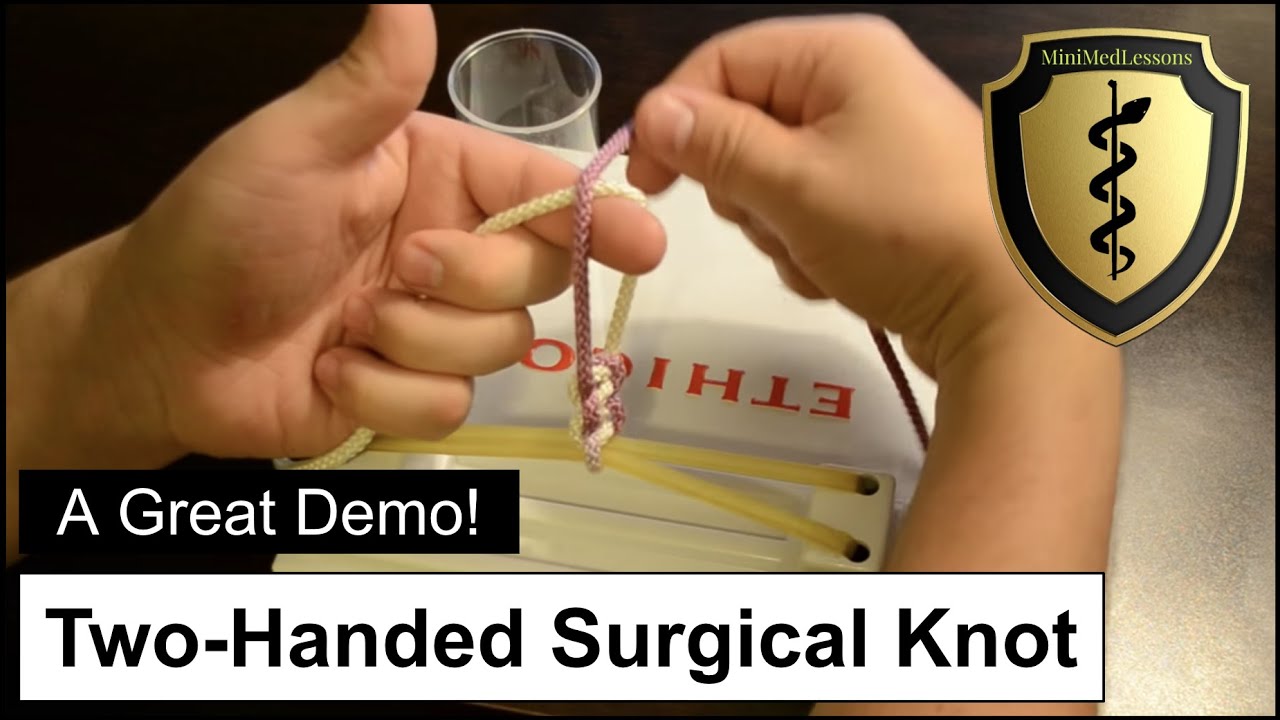
Thanks for watching! Please consider subscribing, liking this video, and sharing with your friends! This video was recorded with High-definition. Use the Settings "gear" in the bottom right hand corner of the video to change the quality to 1080p for the best video quality.
Subscribe: https://www.youtube.com/channel/UCpOaD44L6zU5qNrOagK02CQ
I...
I'm trying to understand the math behind this
Tying knots isn't knot theory afaik
 grave maple
It probably helps though.
 golden gust
probably knot
bronze lake
Square knot? I only know $3_1#3_1^*$
gentle ospreyBOT
cgodfrey
 gritty widget
Tying knots isn't knot theory afaik
gritty widget
gritty widget
Tying knots isn't knot theory afaik
are you saying there aren't tricks I could use to make it better?
 sharp frost
gritty widget
are you saying there aren't tricks I could use to make it better?
sharp frost
gritty widget
are you saying there aren't tricks I could use to make it better?
no he's saying that the study of physically tying knots in string is not really what mathematicians refer to as "knot theory"
wide kayak
physical string knots that are infinitely thin and have the ends tied together
sharp frost
knot theory does coincide with the real practice of tying knots somewhat, one main difference is that in order for something to be counted as a "knot" in mathematics it needs to be joined up at both ends

mathematicians basically look at two of these knots and go "hmm what topological invariants can I use to show that these are not the same knot"
or "how many different knots is it possible to tie if you work in 3-dimensional space"
gritty widget
wait so
if I have a loop
are u saying Ican tie all those without interrupting the loop?
sharp frost
no you can't untangle mathematical knots
wide kayak
not allowed to have the string pass through itself
sharp frost
if you were able to untangle a knot into a loop then the knot would be considered to be identical to a loop
gritty widget
oh
wide kayak
 gritty widget
hmm ok
sharp frost
yeah like in that picture the top left knot is considered to be identical to the loop in the bottom left
on an unrelated note does anyone know whether there's a way of embedding the direct sum $A\times B$ into the free product $A*B$ as a subgroup
gentle ospreyBOT
 sharp frost
assuming A and B are finitely generated
wide kayak
this old book I have has some cool pictures

they're links - multiple knots tangled up
gritty widget
ok so to summarize
knot theory doesn't actually teach u how to tie knots or how strong the knots are?
sharp frost
thats right aha
wide kayak
definitely not how strong the knots are
gritty widget
would u happen to know which field does this?
sharp frost
sailing
gritty widget
hahaha im from a related field
wide kayak
boy and girl scouts
gritty widget
the thing about marine knots are they're good at tying the stuff but they dno why they should tie a certain knot
it's all just
do this do that
so I figured I should dive further in
sharp frost
I think determining the strength of a knot can be done using some things in physics
because physics studies tension and friction, which are what make knots work
or engineering probably
gritty widget
how about researching more efficient ways to tie/untie knots?
sharp frost
I think that mathematicians do do that but it's probably overkill to use that sort of theory on knots in rope (I think at least, knot theory isn't my field)
there are people trying to use knot theory to work out how to unravel DNA
gritty widget
well, it's not so much on sailing knots but on surgical sutures
@sharp frostWould it be possible to do a quick 15 mins or 30 mins informational interview on what you do and what knot theory is about in vc?
whenever you're free ofc
sharp frost
I don't know much about knot theory I'm afraid, you can get a lot more from a youtube video than you can from me https://www.youtube.com/watch?v=aqyyhhnGraw

First in a series of videos about knots. Here we have Carlo H. Séquin from UC Berkeley.
More links & stuff in full description below ↓↓↓
More videos to come at: http://bit.ly/Knot-a-Phile
Edit and animation by Pete McPartlan. Film and interview by Brady Haran
With thanks to Rob Scharein for the use of his software Knotplot - http://www.knotplo...
gritty widget
sharp frost
I don't know much about knot theory I'm afraid, you can get a lot more from a yo...
okay will check it out
thanks anyways :)
gritty widget
Can something be said about inductive dimension of subsets
Say, closed subsets
For covering dimension it can
Which is the same in what I'm doing
gritty widget
why is this true?
X a CW complex then
$[\Sigma^n X, \operatorname{hocolim}k \Omega^k Y{n+k}] \cong \operatorname{colim}[\Sigma^n X,\Omega^k Y_{k+n} ]$
gentle ospreyBOT
lime_soup
 gritty widget
is it true in general homotopy classes of maps into a homotopy colimit is the same as the colimit of the homotopy classes
seemingly we need X compact
(manifesting max to appear)
 cedar pebble
@gritty widget are you sure you want colimits here, rather than limits?
gritty widget
i’m (was) pretty sure?
cedar pebble
hmmm
cedar pebble
like just in standard category theory we have [X,lim Y]=lim[X,Y]
if you have an inverse limit (<-) then this is a limit
gritty widget
okay yes then this is not an inverse limit
this really is a colimit
yeah because
cedar pebble
okay that's weird
so like this statement would be automatically true for (homotopy) limits rather than colimits
gritty widget
you want it to be whatever the groups stabilise to for large n
cedar pebble
or a compact object I guess
cedar pebble
yeah so you need X to be a finite discrete space I think
gritty widget
i have no idea how we use compactness
actually
can i ask you about compact objects
cedar pebble
you're not using compactness, you're using that X is a compact object; these are different notions
sure
cedar pebble
so if C is a locally small category with filtered colimits, an object X in C is compact if Hom_C(X,-):C->Set preserves filtered colimits
gritty widget
in top spaces the finite cw complexes are the compact objects?
cedar pebble
that is, Hom_C(X,colim Y)=colim Hom_C(X,Y)
which is the sort of thing you're trying to do
gritty widget
ooh okay
cedar pebble
In Top, the compact objects are finite discrete spaces
gritty widget
hmm okay
maybe
cw complexes are
generated under colimits by the compact objects
cedar pebble
right
gritty widget
maybe one last question because this is getting away from alg top
but is there some relation between
compact objects
and a size arguement
in a large category
that the compact objects are small?
gritty widget
Hew, how can I find the fundamental group of RP2\{0}?
Any tips?
what is 0 in RP2
gritty widget
gritty widget
what is 0 in RP2
Any point, sorry.
I'm guessing it's Z, that's what it looks like in my head...
Or maybe it's Z x Z, actually?
That would make intuitive sense. Or Z x Z2.
using the description of RP^2 as the disk with antipodal boundary points identified: remove a point, retract outwards to the boundary, and you're left with something homeomorphic to S^1
gritty widget
gritty widget
using the description of RP^2 as the disk with antipodal boundary points identif...
Okay, so my initial idea was correct!
Many thanks!
marsh forge
gritty widget
that the compact objects are small?
Small is sometimes used as a synonym but has nothing to do w sets
gritty widget
Are there theorems of the form dim(XxY) >= dim(X)+dim(Y)-r
 compact bluff
gritty widget
Are there theorems of the form dim(XxY) >= dim(X)+dim(Y)-r
compact bluff
gritty widget
Are there theorems of the form dim(XxY) >= dim(X)+dim(Y)-r
lebesgue covering dimension?
if so, it never holds (unless r=0) for compact spaces, nor when both X and Y are metric
otherwise there are examples where X is metric (and even separable) and Y isn't where the dimension of the product is strictly larger than the sum of the dimensions
gritty widget
@compact bluff compact metric spaces
Yeah, covering dimension
I've made an error in my calculations because I thought the equality holds, but maybe it can be saved a little
compact bluff
equality doesn't hold (in general), but you get dim(X x Y) <= dimX + dimY for compacta
(or even if at least one of X or Y is compact)
gritty widget
How bad can it go?
compact bluff
I wouldn't be surprised if there exist Y of arbitrarily high dimension but you get dim(X x Y) = dim(X) + 1
gritty widget
What about dim(X^n) ?
compact bluff
you might be able to get better estimates on that (though maybe still not perfect)
though apparently this paper gives a necessary and sufficient condition for when dim(X x Y) = dim(X)+dim(Y) https://www.jstage.jst.go.jp/article/pjab1945/36/7/36_7_400/_pdf
Looks like if the Q-(cech) homological dimension equals the dimension of X
might be easier to compute this condition using Lemma 1 in that paper
gritty widget
Hmm...
I think there might be some results in one of the newer versions of books about dim theory
gritty widget
compact bluff
I wouldn't be surprised if there exist Y of arbitrarily high dimension but you g...
Yeah, apparently dim(X x Y) >= dim(X)+1 can't be improved
For compact spaces
 dusky pawn

GitHub
Topological Data Analysis and Deep Learning. Contribute to RandomAnass/TDA-DL development by creating an account on GitHub.
An application of topological data analysis
still vessel
So i dont know if i understand the set of open balls correctly. So the open ball is a set of points which are located a certain distance from a chosen origin of that open ball ( if i understood that correctly). So if i have set of all open balls of a metric space, isnt that just a union of all points as you can just have different open balls with different origins and different distances? You dont even have to care about the distance in the definition of the ball, just the origin, if you have enough balls you will cover all the points by just those points being the origin, no?
lunar yoke
I think you may be confusing the set of all open balls with the union over that set
the set of open balls contains open balls, not points
but you're right that if you take the union over all open balls, you get the whole space back
i.e. every point of your space is in some open ball
still vessel
hmm ok, so how exactly do those open balls form a basis of space then? My understanding of a basis comes from linear algebra where you have vectors from whose linear combination you can produce any other vector in the space. How does this concept extend here?
lunar yoke
no the basis from linear algebra is only the same in idea
the definition is completely different
A collection of open sets of a topological space forms a basis for that topological space, if every open set can be written as the union over open sets in your basis
so in the case of metric spaces, the collection of all open balls form a basis, because you can write any open set as a union of open balls
that may not be obvious immediately, but its not hard to prove
still vessel
lunar yoke
A collection of open sets of a topological space forms a basis for that topologi...
ah okay, that makes more sense. And since the open ball can be as small as possible in "distance" you can form any open set you want with them
lunar yoke
yeah thats the idea
still vessel
now it makes more sense in my head
thanks
just a technical question, are the words "collection" and "set" synonyms or is there some technical difference?
hollow harbor
People often say "collection" when they're working with a set of sets or a set of functions or something else that can get confusing if you don't use separate words.
gritty widget
lunar yoke
no the basis from linear algebra is only the same in idea
Is it?
lunar yoke
i meant in the sense that they determine the object you are working with
or do you mean that there is more analogy there?
gritty widget
The second is how I understood it, and were questioning
cosmic prism
Let $\alpha:A\rightarrow$ and $\beta:A\rightarrow Y$ be continous maps of topological spaces, where $\alpha$ is surjective and $Y$ connected. Show that the pushout $X+_{A}Y$ of $\alpha$ and $\beta$ is connected.
gentle ospreyBOT
Zorty
 cosmic prism
My understanding of connectedness using the more set theory based definitions and visual meanings of pushouts is quite okay, but it's just questions such as these where a very "formal" approach is needed where i really struggle... Can someone help me?
I suppose it would be enough to prove that $Y\rightarrow X+_{A} Y$ is surjective which makes sense since every point in $X$ is identified with some element in $Y$ since $\alpha$ is surjective but im really not sure
gentle ospreyBOT
Zorty
 lunar yoke
since you are working with pushouts, there is a characterisation of being connected that fits quite nicely
a space X is connected iff every continuous map f : X -> {0,1} is constant, i.e. not surjective. Here we equip {0,1} with the discrete topology
if you know that X is connected iff the empty set and X are the only clopen subsets, then this criterion follows basically immediately
and so now we can work with maps out of the space. Recalling the universal property of pushouts, a map X +_A Y -> {0,1} induces maps X -> {0,1} and Y -> {0,1} that commute with maps from the pushout
since Y is conected, the map Y -> {0,1} is not surjective, and since alpha is surjective, the map Y -> {0,1} already completely determines the map X +_A Y -> {0,1}, from which you can conclude that that map is also not surjective
hence X +_A Y is connected
lunar yoke
cosmic prism
I suppose it would be enough to prove that $Y\rightarrow X+_{A} Y$ is surjective...
this works too though
i only saw it now xd
epimorphisms are stable under pushouts
cosmic prism
lunar yoke
since Y is conected, the map Y -> {0,1} is not surjective, and since alpha is su...
How would alpha being surjective imply that the map from the pushout to {0,1} is determined by Y -> {0,1} alone? i dont quite get that part
lunar yoke
ok so if you have x in X, then you can write it as alpha(a) = x for some a in A.
cosmic prism
yes that makes sense
lunar yoke
now use that the square commutes
its a bit hard to write down without names of the maps xd
sending x from X to {0,1} is the same as sending it first to X +_A Y and then to {0,1}
but since alpha(a) = x, this is the same as going A -> X -> X+_A Y -> {0,1}
cosmic prism
right
lunar yoke
which agrees with A -> Y -> X+_A Y -> {0,1} since the diagram commutes
but then this is A -> Y -> {0,1}
so the map X -> {0,1} is already determined by Y -> {0,1}
and the universal property of the pushout tells you that maps out of X +_A Y are uniquely determined by the corresponding pair of maps out of X and Y
if you look at the definition topologically, when you map some element in X+_A Y to another space, you choose a representative in X or Y, and then use the maps from there
cosmic prism
ok i think i got it lol
cosmic prism
lunar yoke
so the map X -> {0,1} is already determined by Y -> {0,1}
doesnt this mean that X is connected as well?
lunar yoke
no
cosmic prism
oh no nvm yeah its just a specific map to {0,1} which is constant of course it doesnt hold for all
lunar yoke
if you want to show X is connected with this method, you start with a map X -> {0,1}
but that doesnt give you a map Y -> {0,1} or X +_A Y -> {0,1} for that matter
cosmic prism
lunar yoke
but that doesnt give you a map Y -> {0,1} or X +_A Y -> {0,1} for that matter
Also: do you by any chance have an example in mind for surjective, continous functions $f: X\rightarrow S$ and $g: Y\rightarrow S$, where X and Y are connected such that the Pullback from f and g is not connected? I've been looking for an example in R but I couldnt find any unconnected curves, where both sides were surjective functions
gentle ospreyBOT
Zorty
 lunar yoke
cosmic prism
Also: do you by any chance have an example in mind for surjective, continous fun...
lunar yoke
cosmic prism
Also: do you by any chance have an example in mind for surjective, continous fun...
yeah so consider S = S^1 and X = Y = [0,1] with f(t) = exp(2pi i t) and g(t) = f(t+1/2)
Then the pullback is X x_S Y = {(x,y) in X x Y | fx = gy} = {(x,x+1/2) | x in [0,1/2]} u {(x,x-1/2) | x in [1/2,1]}
so you get the blue region, which is clearly not connected
 cosmic prism
ohh yes that makes so much sense thankssss
 kind depot
any idea how to prove this. im not sure what is meant by induced in this context tbh
 gritty widget
there exists a map $\tilde{f}\colon\bR P^{n-1} \to \bR P^{m-1}$ such that $\tilde{f}([x]) = [f(x)]$, brackets denoting equivalence classes in projective space
gentle ospreyBOT
TTerra
 kind depot
mmm where our equivalence is $f(x) \approx \lambda^k f(x)$
gentle ospreyBOT
Optimism
 kind depot
? seems like the proof is rather trivial
kind depot
so like is it simply saying let $x \equiv \lambda x$ then noting $f([x]) $ where we take a representative implies taht $f(x) = f(\lambda x) = \lambda^k f(x)$ which is identical to defining a function $\tilde{f}$ over projective spaces?
gentle ospreyBOT
Optimism
 still vessel
Am i right in understanding that every point in a metric space is a limit point of some sequence in that space?
still vessel
haha, i didnt think about that one xD
what if we limit it to non trivial sequences such as that?
coral pivot
you can find sequence such that a repeats infinitely often
your metric space in general could have like an, isolated point
that might be the type of image you are trying to get at
still vessel
hmm, what i am trying to do is to prove the following:
Let $S \subset X$. Prove that $z \in \overline{S}$ iff there is a sequence of points $(x_n)$ in S converging to z.
gentle ospreyBOT
FireLi0n
 still vessel
so i am trying to understand how to approach this
isnt this basically saying that every point has a sequence that approaches it
gritty widget
It's not true in a topological space
still vessel
its a metric space, sty
still vessel
yes
coral pivot
well how are you defining closure/closed sets
still vessel
coral pivot
well how are you defining closure/closed sets
Closure is a union of Interior and Boundary of a set
at least that is the only one i know of
coral pivot
how did you guys define boundary lol
still vessel
give me a sec to find it
$\partial A = { a \in X | \forall O_a : O_a \cap A = \emptyset \land O_a \cap (X-A) \neq \emptyset }$
gentle ospreyBOT
FireLi0n
 still vessel
where $O_a$ is an open neighborhood of a
gentle ospreyBOT
FireLi0n
 coral pivot
I think you wanted both to be not empty
but yeah makes sense
if you combine this and the interior, notice that a closed set C has the property that every point has each neighborhood intersect C
so lets work with this definition of closed
coral pivot
still vessel
hmm, what i am trying to do is to prove the following:
Let $S \subset X$. Prove...
so what progress did you make on this
still vessel
i proved the one way, starting from a sequence and proving that it is in closure
coral pivot
right
still vessel
the other way i dont know how to begin with
coral pivot
so what do you need to show for the other way
still vessel
in my mind i have to show that there is a sequence that converges to that point
coral pivot
coral pivot
if you combine this and the interior, notice that a closed set C has the propert...
sorry this is badly written lol. what i wanted to say was, each point that has all neighborhoods intersecting C is in C
still vessel
i dont know how to show that there is a such sequence
coral pivot
ok so thats not it
still vessel
coral pivot
sorry this is badly written lol. what i wanted to say was, each point that has a...
yeah, i understood what you meant
coral pivot
the idea is that, you are closed if you contain each limit point
so rather than each point having a converging sequence
you want that for each x\in X such that a sequence in Abar converges to it, x\in Abar
does that make sense
still vessel
okay, so i have to prove that a closed subspace contains all its limit points?
i mean, that is kinda trivial, no?
coral pivot
if you mean prove this for general closed sets from your definition, sure. good practice to convert between defs
in particular check that this holds for Abar to show Abar=closed and hence the closure right
(you can directly see this from the neighborhoods defintion btw)
still vessel
Abar is the closure, i dont have to show that its closed
what i meant is that we already showed it earlier, so i can take it as true
coral pivot
sorry when i am saying Abar i mean the set of z such that a sequence in A converges to it
not the closure yet
you want to show its the closure
still vessel
but isnt this the other way around?
i am starting from the assumption that z is element of closure, not that it is a limit point
dont i have to prove that z is the limit point?
coral pivot
Oh sorry thats what you are doing, i was just gonna say that, you already showed the set has to be in the closure right
so now if its closed you get the other inclusion
cause remember by definition, closure is contained in all closed sets containing A right
still vessel
i must admit i am confused at this point
coral pivot
yeah sorry let me write this all out
So let $S$ be the set in question, let $$S' = {x\in X: \text{ a sequence in S converges to x}} $$ and let $\bar{S}$ be its closure, i.e the smallest closed set containing $S$. Now you have already noted that $S'\subset \bar{S}$ as it must contain all the limit points of $S$ right. Now if you show that $S'$ is closed, then $S'\supset \bar{S}$, as all closed sets containing $S$ will contain $\bar{S}$, this is what it means to be the closure
gentle ospreyBOT
JohnDS
 coral pivot
so really all that remains is to show that this set is closed
still vessel
okay i think i understand now, so the point was to prove $S' \subset \overline{S}$ and $S' \supset \overline{S}$
gentle ospreyBOT
FireLi0n
 still vessel
i was missing that from my logic
coral pivot
yeah probably should have written this out earlier, but yeah
still vessel
okay, thanks for the help
still vessel
coral pivot
So let $S$ be the set in question, let $$S' = \{x\in X: \text{ a sequence in S c...
Just to follow up on this as i thought more about it. How can i be sure that S' contains all of S? That doesnt sound right to me.
still vessel
Ah, forgot about that crap sequence again
So every point is S is a limit of a sequence in S but not every sequence in S has a limit point in S
got it
coral pivot
mhm
unreal stratus
Lol that notation S' seems potentially confusing though
since S' would normally be the set of limit points instead of the set of all limits of sequences
coral pivot
I mean the convention I follow these are the same things
still vessel
unreal stratus
since S' would normally be the set of limit points instead of the set of all lim...
whats the difference?
 ashen talon
What's the difference between a Weyl chamber and an alcove?
unreal stratus
Typically in a top space X, a limit point of a set S is a point p of X such that every open neighbourhood of p intersects S in a point besides p. In metric spaces, this is equivalent to there being a sequence in S \ p converging to p
(Every source I've used including Munkres, Rudin and Lee use this)
The difference is that e.g. elements of S needn't be limit points (for example, every point of the cantor set is a limit point thereof, whilst no point of Z is a limit point (both in the subspace topology from standard top on R))
marsh forge
coral pivot
I mean the convention I follow these are the same things
What convention is this?
coral pivot
The convention where limit points just mean there is a sequence converging to it. I don’t remember from where I got this, but never caused me an issue
unreal stratus
what about limit points in a general top space?
coral pivot
Same thing, all nbds intersect the set, I just don’t exclude the actual point
marsh forge
coral pivot
The convention where limit points just mean there is a sequence converging to it...
This is definitely wrong
Like
Against any course in topology or definition I’ve ever seen
coral pivot
What’s the advantage of ur definition over mine
marsh forge
Well for one, every point in a set is the limit of its constant sequence
So your definition is useless lol
Like
In the set {2} \cup [0,1]
2 should not be a limit point
Plus all of the like
Limit point point set yoga is just wrong if you don’t use the standard defn
And a bunch of subsequent defns
coral pivot
Like?
marsh forge
I mean I can go through munkres later and tell you lol but you’re just being obstinate
Like Topologist’s have all agreed on one defn of limit point
And it’s the one used in all the papers and it is not equivalent to yours
Which I’ve never seen anywhere
I mean even in like
Brin and Stuck
A ton of stuff goes wrong
Using your defn
coral pivot
Ok, I mean it doesn’t change any of my explanation to his problem cause I explicitly defined what I wanted S’ to be
gritty widget
Given some co/homology $H_n(X)$ what would it mean to have the co/homology $H_n(X;\bZ)$ I don't really understand the notation if anyone could help!
gentle ospreyBOT
TheEternalKittenLord
 gritty widget
Like I know what X,M would mean (group cohomology)
but Im not too sure about ;
co/homology as in cohomology or homology btw so ignore the fact that cohomology is referenced with H_n aswell
marsh forge
I’m confused
What’s your definition of H_n(X)
Normally that notation is not enough, we need a coefficient group like Z
Often times we just ignore this when the choice is obvious but it’s odd that you’d be comfortable with H_n(X) rather than H_n(X;G)
G just tells us the coefficients we are using
marsh forge
gritty widget
Like I know what X,M would mean (group cohomology)
If X is a space it doesn’t really have a natural notion of group cohomology?
compact bluff
gritty widget
co/homology as in cohomology or homology btw so ignore the fact that cohomology ...
cohomology is usually given by H^n(X) as opposed to H_n(X)... the definition usually depends on which (co)homology theory you're working with. if you look around, people are usually using (integral) singular homology
I've personally found Cech cohomology (for compact spaces) to be useful, because I work with nasty spaces. You can also take advantage of the continuity of the Cech functor in this case.
gritty widget
compact bluff
I've personally found Cech cohomology (for compact spaces) to be useful, because...
Continua?
compact bluff
gritty widget
Continua?
yea
gritty widget
I've started learning about them recently
compact bluff
they can get pretty wild
like when you first see the pseudoarc, you think its crazy (idk if you've ever read the paper "Drawing the pseudo-arc" by Lewis) there comes a time in your life when you realize that the pseudoarc is actually very well-behaved...
gritty widget
compact bluff
like when you first see the pseudoarc, you think its crazy (idk if you've ever r...
Like the circle of pseudo-arcs?
compact bluff
gritty widget
Like the circle of pseudo-arcs?
yea, also the generalizations to solenoids of pseudo-arcs
pseudo-solenoids, higher dimensional hereditarily indecomposable continua
ultra-arcs and ultracoproducts of continua
there's a whole world out there
compact bluff
no ive been studying model theory of continua for the past little while
Not really, I've been more into co-e.c. continua/infinitely generic/model-completeness type things
sure thing
 gritty widget
Can anyone help me find two covering maps f and g s.t. g composed with f is not a covering map?
gritty widget
 pastel thistle
you got an example in #diff-geo-diff-top
gritty widget
gritty widget
Can anyone help me find two covering maps f and g s.t. g composed with f is not ...
there's a result that, under some hypotheses on the spaces, the composition of covering maps is a covering map. something like local path connectedness. try working with some spaces where those fail
gritty widget
gritty widget
there's a result that, under some hypotheses on the spaces, the composition of c...
What's a good example of such a space?
since i don't remember the exact hypotheses, i can't tell you. you can find it online probably
gritty widget
gritty widget
since i don't remember the exact hypotheses, i can't tell you. you can find it o...
Okay, thanks!
wide kayak
one hypothesis that works (for the composition to be a covering map) is if both covering maps have finite sheets
you can find a counterexample involving an infinite sheeted cover
gritty widget
Oh, I did find one!
But thanks!
Actually, i need help with the Sierpinski triangle problem again.
So, I need to prove more rigorously that only three points are cut points, basically.
wide kayak
hmm
gritty widget
wide kayak
hmm
The problem basically asks for what all the homeomorphisms from the Sierpinski triangle to itself are, and the answer is S(3).
But I need to prove it formally.
wide kayak
that makes some sense, given the symmetry group of an equilateral triangle is S3
but I haven't done that problem before and don't know how
it feels intuitively clear that all six of the usual symmetries of an equilateral triangle also are symmetries of the sierpinski triangle
since it's made of all these essentially independent triangles
maybe you can argue that any further symmetry of sierpinsky would give an additional symmetry of the equilateral triangle, which is impossible
gritty widget
Hmm...
gritty widget
wide kayak
maybe you can argue that any further symmetry of sierpinsky would give an additi...
It's homeomorphisms.
Not symmetries.
Hence why connectedness plays a role.
homeomorphisms are bendy symmetries and the sierpinski triangle isn't very bendy
wide kayak
a self-homeomorphism is a symmetry
in a way
bendy symmetry, I like that
is it actually possible to have a self-homeomorphism that's not a rigid body motion?
(for a subspace of R^n)
probably yes but I can't think of one
maybe like... take (0,1)... and start sliding all the points within itself to the right
in a non uniform way
yeah that should work
marsh forge
wide kayak
is it actually possible to have a self-homeomorphism that's not a rigid body mot...
There are tons of self homeomorphisms of a disk
That just like
Mess w stuff
But yes yours works too
wide kayak
does it work on a closed disk?
I guess yes
but I don't think a closed interval has any except reflection
marsh forge
Closed interval has a lot too
Almost all homeomorphisms are not rigid body
Rigid body is super strong
wide kayak
interesting
I figured there would be trouble with the endpoints
like, in [0,1], if you're gonna move 0, you'll have to replace it with something, and then it's not clear how you can keep the mapping one-to-one (if it's not a reflection)
on the other hand if you keep 0 where it is
you'll have to move nearby points away from it
and that could cause a discontinuity
it could be that you're only moving nearby points closer to it
but then I thought you'd have trouble over at 1
marsh forge
Here’s an exercise
The orientation preserving self homeomorphisms of [0,1] are exactly the ways to draw paths from the bottom left to the top right of a square
Such that the path satisfies the vertical and horizontal line tests
wide kayak
ohh
that's really nice
so the closer a point is to 0, the less it moves away, which saves continuity
marsh forge
Sure
 winged viper
this may be a really stupid question--I'm trying to understand the topology generated by a family seminorms on a vector space, and I'm a bit confused. If I'm considering the topology generated by only a single seminorm, then wouldnt the initial topology on this seminorm only contain open sets that are unions of circles? (because every preimage of a seminorm is a union of circles)
 winged viper
my bad, circles centered at the origin*
i guess, rather union of annuli about the origin
i imagine its supposed to be everything generated by the open balls, but i'm not sure what im missing
winged viper
^ realized im really stupid and that the definition of an initial topology on a TVS requires the addition/scalar mult functions to be continuous
 bright acorn
I am currently reading the book "Complex Topological K-theory" by Efton Park. This is an introductory text and mostly deals with K-theory of compact hausdorff topological spaces. And from what I've noticed, a major theme in this book is that when we are doing K theory of compact hausdorff spaces, we can identify the monoid of isomorphism classes of complex vector bundles under whitney sum with a certain monoid of idempotent matrices with coefficients in C(X), so that we have at least a certain explicit description of the K-groups of X in terms of certain algebras of matrices. (I am attaching some screenshots from the book where the author discusses this)
So, I'd like to ask if this relationship between between the K groups of a topological space with certain algebra of matrices still holds up in more general settings. Can we still somehow describe the K groups of a more general topological space in terms of certain (possibly more complicated) operator algebras?


 compact bluff
bright acorn
I am currently reading the book "Complex Topological K-theory" by Efton Park. Th...
compact bluff
bright acorn
I am currently reading the book "Complex Topological K-theory" by Efton Park. Th...
you can relax compactness to locally compact Hausdorff spaces, by noting that for LCH X, the inclusion map i : {p} -> X union {p}, the inclusion of p in the one-point compactification of X, induces a map on the K-groups, K^0(X cup {p}) -> K^0({p}) = Z. Then you define K^0(X) to be the kernel of this map. then K-theory will still give a cohomology theory, but now on LCH spaces
or by more generalized, maybe you mean operator K-theory? In this case, you can define K-theory for C*-algebras and get K-theory for these "noncommutative" spaces, in which case the operator K-theory of C_0(X) for an LCH space X will agree with the topological K-theory of X
bright acorn
compact bluff
or by more generalized, maybe you mean operator K-theory? In this case, you can ...
Oh, I really meant for more general topological spaces, I didn't even know "operator K theory" was really a thing lol.
Yeah, the locally compact hausdorff case is as interesting as the compact hausdorff case, but this book seems to treat mainly K-theory for compact hausdorff spaces.
Which is fine I guess for an introductory book.
compact bluff
yea I'm not sure you can generalize further to get interesting/useful things... I mean if you do, you're probably either going to break the fact it is a cohomology theory, or you're going to break bott periodicity, which are really the only way to compute K-theory
or if there is, I haven't seen it.
though i'm not super well-versed in this stuff
bright acorn

MathOverflow
Edit After the answer by Neil Strickland, I add the word "a ring" in this new version.
In the literature, there is a concept of generalized idempotent: an n- idempotent is an element $a$ of a Ban...
This is the best I could find for the time being.
compact bluff
You might be able to find some answers in this book: https://www.math.uvic.ca/~hemerson/NCG_2.0.pdf
bright acorn
compact bluff
You might be able to find some answers in this book: https://www.math.uvic.ca/~h...
Thanks a lot, I will take a look into it when I get the time 
👀
At the time I am mostly interested in studying K-theory in order to understand better some stuff in differential topology related to cobordism and surgery theory.
But nothing too fancy
Yeah, I will probably have to study foliation theory at some point, since I probably will focus on trying to do geometric topology in the future.
But tbh, idk a lot of references for foliation theory.
Do you know any introductory references to the subject? that would be helpful too.
I will probably not read it soon, but I will keep these ideas in mind until I encounter orbifolds and foliations in the future.
Alright, thanks Ultra. I will try to search for it.
Ah, also Ultra. Do you know any references for studying elliptic operators?
With like, more of a focus on diff top and K-theory, I know K-theory is useful for studying elliptic operators and these also appear a lot in diff top.
So I was thinking studying these would be the next thing to do.
Alright, thanks again Ultra.
 honest narwhal
Wait we doing k theory now
broken nacelle

how can we be sure of that line?
(I hope this is the right channel for such questions, it seems far too basic for what's usually discussed here lol)
gritty widget
L's definition as a supremum
if you could not find such c, then L would not be the least upper bound
golden gust
note that's not always true (e.g. 2 is the supremum of [0,1] union {2}) but it's true here because the set for which L is a supremum is an interval, I think
 deep hearth
Given a compact space X, can we always embed X into a product space [0, 1]^A for some set A?
wide kayak
I don't think non-hausdorff can embed into hausdorff
 river granite
yeah
the existence of such an embedding is equivalent to X being completely regular and Hausdorff
gentle ospreyBOT
Hausdorff
 river granite
@vast estuary sure, take arctan() and compose with a linear function that sends (-pi/2,pi/2) to (a,b)
gritty widget
deep hearth
Given a compact space X, can we always embed X into a product space [0, 1]^A for...
Equivalent to being completely regular
So any compact Hausdorff space embedds into [0, 1]^A for some A
Or more generally any LCH space
deep hearth
gritty widget
Or more generally any LCH space
Got it! Thanks
gritty widget
why do we [X, hocolim Y_n]= colimit [X, Y_n]
if this was not a homotopy colimit
and if X was compact object in whatever category
we would just say
for compact objects
the corepresentable functor preserves filtered colimits
gritty widget
but i’m not sure what to say in this model category case
still vessel
Is this statement true for any topological space?
$$A \subset A'$$, where A is a subset of a topo. space and A' is the set of all limits points of A.
gentle ospreyBOT
FireLi0n

 tawny hazel
Let A be the closed interval [0, 1]. Every point in (0, 1) is an interior point of A.
The points {0, 1} are, again, boundary points of A. A point x ∈ R is an exterior
point of A if x < 0 or x > 1.
Consider x ∈ (0, 1). Let r = min{x, 1 − x} > 0. If y ∈ B(x, r) =(x − r, x + r), then x − r <y < x + r. But r ≤ x, so
y > x − r ≥ x − x = 0,
and r ≤ 1 − x so
y < x + r < x + 1 − x = 1.
Therefore y ∈ (0, 1) so that B(x, r) ⊆ (0, 1). Hence x is an interior point of (0, 1).
Now suppose that x = 0, and fix r > 0. Then x ∈ B(x, r), and x /∈ (0, 1). Let
y = min{1/2 , r/2}. Since r > 0, it follows that y > 0. But y ≤ 1/2 <1 so we conclude that y ∈ (0, 1). Furthermore, |x − y| = y ≤r/2 < r, so y ∈ B(x, r). Therefore, for any r > 0, B(x, r) contains a point in (0, 1), and a point not in (0, 1). Hence x = 0 is a boundary point of (0, 1).
This is a question in my notes. The given set is A and this example proves its interior, exterior and boundary points. I understand the logic behind this, but could someone please help me understand how r is chose for proving x is an interior point
and how y is chosen for proving when x is a boundary point
gritty widget
still vessel
Is this statement true for any topological space?
$$A \subset A'$$, where A is...
No
It's not true for R
still vessel
gritty widget
It's not true for R
why not?
gritty widget
still vessel
why not?
Take any finite subset of R for example
Then A' is empty
If you want this property to hold, you need to take $A\cup A' =\overline{A}$
gentle ospreyBOT
Blitz
 still vessel
but cant you just make a trivial sequence for every point making it a limit point? I feel like i am confusing mulitple things here
gritty widget
Which is the closure of A
This is generally different from derived set A' of A, that's the problem
gritty widget
still vessel
but cant you just make a trivial sequence for every point making it a limit poin...
No way
still vessel
gritty widget
If you want this property to hold, you need to take $A\cup A' =\overline{A}$
this is actually what i am trying to understand, as its a bit confusing with the theorem that point is an element of the closue iff it has a sequence converging to it
gritty widget
Limit points are different from points of closure
still vessel
isnt a limit point a point which has a sequence that converges to it?
gritty widget
No
still vessel
what? i am utterly confused now
gritty widget
If you're not studying limit points then idk why you need to do this rn
still vessel
becouse i need it to prove a theorem
gritty widget
Limit point of a set A is a point x such that for any neighbourhood U of x there is a point y which is in U, A and is distinct from x
Being distinct from x is what makes A' and closure of A different
still vessel
yes, i know that, i just thought its a property not a defintion
gritty widget
It's a definition
For sequences we also have limit points, but they don't relate in any direct way to limit points of sets
For sequences those are just "all possible limits"
More precisely, all possible limits of subsequences
This can be generalized to filters and/or nets
Without trouble
still vessel
so the proof that i am following and trying to understand refrences a theorem which states that a limit point of a set is also a limit of a convergent sequence
isnt this the same as what i said?
This might be only for a metric space i guess
gentle ospreyBOT
Blitz
 still vessel
So the theorem states:
Let $S \subseteq X$, where X is a metric space. Then $z \in \overline{S}$ if and only if there is a sequence of points $(x_n)$ in S converging to z.
gentle ospreyBOT
FireLi0n
 still vessel
doesnt this imply both $A' \subseteq \overline{A}$ and $\overline{A} \subseteq A'$ ?
gentle ospreyBOT
FireLi0n
 flint cove
Is the property „a_n converges to a“ preserved under the sup of topologies?
I tried thinking about it in terms of the closure operator which we can construct explicitly for the sup, but my example doesn't quite seem to work (T_i = cofinite topology adjoining k\N as a closed set, and then hoping that the sup of the Ti is discrete)
Perhaps someone knows how the neighborhood base of a must look like in the sup of the topologies
gritty widget
flint cove
Is the property „a_n converges to a“ preserved under the sup of topologies?
The basis for topology here is $\bigcap_{i=1}^n U_i$ where $U_i$ are open in their respective topologies

 gritty widget
This proves the supremum preserves this property
gritty widget
gentle osprey
**Blitz**
This is possible because the intersection is finite
gritty widget
gentle osprey
**Blitz**
Assuming the previous basic open set contains a
flint cove
Ohh, yeah, that's pretty easy once I flip my mind back to think about the open sets
Thanks @gritty widget
This easily generalizes to filters then, since if all U_i contain some filter element F_i in F, so does their finite intersection
With the special case being the tails filter here
gritty widget
👍
bright acorn
Could you guys give me some motivations for introducing the notion of homotopy equivalence between morphisms of chain complexes of modules? I mean, I guess one of the reasons is that when two morphisms of complex are homotopy equivalent then they induce the same maps on homology. But like, how is this notion of homotopy equivalence related to the notion of homotopy equivalence of maps in the usual sense of topology?
lunar yoke
well for one thing any homotopy in spaces induces a chain homotopy between the singular chain complexes
you use this to show that singular (co)homology is homotopy invariant
If you do the intermediate steps Top -> sSet -> sAb -> Ch, then they all preserve their respective notion of homotopy, where this is only nontrivial for the last map
if you believe that simplicial things are topological, then Dold Kan, which says that the category of (bounded) chain complexes is equivalent to the category of simplicial abelian groups, also gives motivation to have some notion of homotopy
bright acorn
Wait, what is the category of simplicial abelian groups?
lunar yoke
Fun(Delta^op, Ab)
equivalently, the category of abelian group objects in sSet = Fun(Delta^op, Set)
bright acorn
Ah. So like, is this a general construction? If we take any category C, then it is "natural" to consider the category of contravariant functors from the usual simplicial category into C (I.e Fun(Delta^op, C))?
lunar yoke
yes, usually we call them presheaf categories
they pop up everywhere
of course not necessarily with domain Delta^op
but any small category
bright acorn
Ah, ok. I know about sheaves of abelian groups in the context of topology.
But idk about sheaves in category theory.
lunar yoke
E.g. Fun(C^op, Set) is the category of presheaves on C
lunar yoke
bright acorn
But idk about sheaves in category theory.
well to look at sheaves instead of presheaves you need some sort of notion of what it means that a collection of objects covers some other objects
i think you do that with sites
though they can tell you more about that in #algebraic-geometry
bright acorn
Alright, then. Thanks for the insights 👍
marsh forge
bright acorn
Could you guys give me some motivations for introducing the notion of homotopy e...
It is a generalization of it
Homotopy theory extends far beyond spaces
And really shows up anywhere you have some notion of things being “weakly equivalent”
So the idea is that like, chain homotopy to homology is more or less the right analogy to homotopy and pi_*
fair idol
Can somebody remind me how to introduce a cell structure on a genius two surface? I think there is a standard 4n-gon structure but can't find the details
 hollow harbor
it's always these adjacent abab strings right?
i don't really have intuition for why that works
somehow each is like
a petal of the surface
if you think of the surface organized like a fidget spinner or something
yeah i think i see now
fair idol
The way I think about it is when you identify a_1 you turn one copy of b_1 into a loop, same with a_2 and b_2. I think these are where the two holes come from
Given a topological space X and a subgroup $H<\pi_1(X)$ how do I find the corresponding $X_H$ covering space?
I have a concrete example where $X=RP^2\times RP^2$ and $\pi_1(X) = Z_2\times Z_2$. Its subgroups are the identity ${0}$, itself $\pi_1(X)$, and $<(1,0)>$,$<(0,1)>$,$<(1,1)>$.
I have a hunch that the identity of X is the covering space corresponding to X as a subgroup of itself. Further the universal covering space is the one corresponding to the trivial subgroup. There must be some lattice structure here. Any hunches on how to calculate the corresponding connected covering spaces $X_{<(1,0)>},X_{<(0,1)>}$, and $X_{<(1,1)>}$?
I read something about orbits but really couldn't comprehend it.
gentle ospreyBOT
limbostar
 coral pivot
fair idol
Given a topological space X and a subgroup $H<\pi_1(X)$ how do I find the corres...
coral pivot
fair idol
Given a topological space X and a subgroup $H<\pi_1(X)$ how do I find the corres...
Right so the galois corrospondence acts like this:
for a cover Y->X, for a subcover Y', you send it to aut(Y|Y') and for a subgroup H of aut(Y|X), you send it to Y/H
Y/H is the quotient space of the action of H on Y
i.e space of orbits
and you give it the quotient topology
(its like, a "fixed subcover of H" if you will, similar to something you might know from field theory)
 warped rover
Is there no automorphism of a stone-cech compactification that fixes the original space?
oh yeah there is not due to density
warped rover
I thought those were automorphisms over the subspace?
Any automorphism that fixes the original space extends uniquely to that spaces closure
oh yeah
mb

I'll self-sully

Yeah that's a good point though, I should be careful about that
gritty widget
It's a neat result though. I'm assuming by "continuum hypothesis implies there is some" you mean there is a topological space which has multiple such automorphisms
 feral copper
Hi! If I have a Kirby diagram of a 4-manifold X, it induces a surgery diagram on Y=(bdy)X.
But... what is this diagram? I mean, I understand that the 2-handles give a framed link, but what happens with the 1-handle unlink? Does it simply become a 0-framed unlink?
feral copper
The computations that I did work fine if I 0-frame that unlink, but idk in general...
gritty widget
Does $\mathbb{R}^n$ embedd into $SO(n+1)$? Or $SO(m)$ for some $m$.
gentle ospreyBOT
Blitz
