#point-set-topology
1 messages · Page 219 of 1
 sweet wing
 sharp yoke
🤨
im pretty sure ur not supposed to do it this way. Meaning ur not supposed to think of the 2n-gon embedded in R^2 and then say its closed and bounded and hence compact
i could be wrong
im definitely supposed to use this theorem
 sweet wing
yup that's basically the proof
cuz well
you need to give a topology to the 2n-gon
and the only reasonable one is subspace of R^2
sharp yoke
im pretty sure ur not supposed to do it that way but
yea im 100% certain ur not supposed to do it that way
sweet wing
i dont rlly see other way rn lol
sharp yoke
you didn't even use that the polygon has an even number of sides
 gritty widget
What do you mean you're not supposed to do it that way?
sweet wing
sharp yoke
you didn't even use that the polygon has an even number of sides
this is really so that the quotient makes sense
sharp yoke
oh true
that proof just doesn't seem at all connected to what i was reading in the section of this book
that asks this question
sweet wing
(see "surface" part of the thing)
occasionally you still do need to go back to point set stuff to prove things
(btw you still need to show it is a surface)
sharp yoke
yea i think ur proof works i just don't think it was the intended proof
sweet wing
sweet wing
(btw you still need to show it is a surface)
this is why 2n
sharp yoke
why does 2n let you show its a surface
this book defines surface as a connected 2-manifold
sweet wing
yup
so you jus need to show at every point
you can find a open set homeomorphic to R^2
there are really only 3 points to check
sharp yoke
so basically ur saying if there's an odd number of edges there's going to be one edge that can't be paired up. Then any nbhd of a point on that edge can't be homeomorphic to R^2
which is why we need an even number of edges
sweet wing
yup!
sharp yoke
this still feels like it is completely unrelated to the proof it wants us to do. Why would they give us theorem 5.1 and this polygon naming scheme if we're not supposed to use it in the exercise

plus the case of odd edges would still work but instead you would just prove its a 2-manifold with boundary
it just doesn't feel like ur supposed to do it that way
i could be wrong tho
sweet wing
it's just so that like
whatever you are doing
actually makes sense
it's very common to have to fall back to basic point set to make sure everything you're doing makes sense
like
what if there is some naming scheme that doesnt result in a compact surface
then youll have to somehow be more precise in what is "allowed" and ahat sint
sharp yoke
that's exactly the proof i was trying to think about
you suppose for contradiction that the 2n-gon isn't compact (for some naming scheme)
then theorem 5.1 tells you its not homeomorphic to a sphere, connected sum of tori or connected sum of projective planes
and then ur somehow gonna produce a contradiction from there
sweet wing
sharp yoke
then theorem 5.1 tells you its not homeomorphic to a sphere, connected sum of to...
to prove this classification theorem you kinda need that you get compact surfaces from identifying n-gons?
sharp yoke
yea i was just reading through that
i think you're right
im just gonna heine borel like a boss fuck math and fuck this p set
sweet wing
it's really jus a point set exercise to make sure nothing is wrong
sharp yoke
im going to be very proof sketchy about homeomorphisms on the boundary and hope i don't get points taken off
sweet wing
ik it is very meh but these kinda basic stuff to make sure everything is ok is really jus point set
 summer jolt
If $f \in C^\infty(M)$ then is $X(f) \in C^\infty(M)$ for $X \in \mathfrak{X}(M)$?
 gentle ospreyBOT
snypehype

 bitter yoke
yes
summer jolt
That's because $X(f)(p) \in \mathbb{R}$ for $p \in M$? So we have $X(f) : M \rightarrow \mathbb{R}$?
gentle ospreyBOT
snypehype
 bitter yoke
I mean that's how you define X(f) yes
but you would still need to show that its smooth
 uncut surge
okay people i need some intuition
I've never really gotten used to working with complex forms, because to me it's really weird that you suddenly have to start caring about _anti_holomorphic things. Is there a good intuitive reason why, if we're generally only interested in holomorphic functions, and when we require all transition functions of a complex manifold to be holomorphic, why suddenly "antiholomorphic" forms like dx - i dy start showing up?
Would I be missing a lot if all my life i just worked with holomorphic forms and just ignore the complex-conjugated coordinate \bar{z}
okay i guess the dolbeaut operator absolutely requires antiholomorphic things to exist, but only if i've already admitted that i care about non-holomorphic sections in my bundle or something
gritty widget
can any symplectic kings or queens help me see why symplectomorphisms pull back hamiltonian vector fields?
if $f$ is a symplectomorphism and $X_H$ a hamiltonian vector field, i want to see that $f^*X_H=X_{H\circ f}$
gentle ospreyBOT
lime_soup
 gritty widget
I know that $X_H$ is defined to be the unique vector field satisfying $\omega(X_H, -)=dH$. so $X_{H\circ f}$ vector field satisfying $\omega(X_{H\circ f}, -)=d(H\circ f)$
gentle ospreyBOT
lime_soup
 gritty widget
But then $d(H \circ f) = f^dH=f^\omega(X_H,-)$
gentle ospreyBOT
lime_soup
 gritty widget
But this gives $\omega(df X_H, df(-))$ which I can't see why this is equal to $\omega(X_{H\circ f},-)$
gentle ospreyBOT
lime_soup
 uncut surge
First, we should talk about the pushforward of the Hamiltonian vector field, rather than the pullback, right?
That probably doesn'T make anything clearer yet but it's good to be precise lol
If it holds true that $\iota_{f_* X} \omega = (f^{-1})^* ( \iota_X (f^* \omega))$, where $f_$ and $f^$ are the pushforward and pullback respectively, then the statement is true fairly straightforwardly; here $\iota_X \omega$ denotes the interior product of the vector field $X$ with the form $\omega$
awww shit okay i forgot that a symplectomorphism is also a diffeomorphism
gentle ospreyBOT
Lartomato
 uncut surge
Okay, the important thing is to show that $f^* X_H$ indeed fulfils the defining equation for the Hamiltonian vector field of $H \circ f$, that is a good starting point. Hence, consider $\iota_{f^* X_H} \omega$, you want to show that this is $d (H \circ f)$. I believe something like $ \iota_{f^* X_H} \omega = f^* \iota_X (f^{-1})^* \omega$ should follow very generally for all diffeomorphisms $f$, vector fields $X$ and forms $\omega$.
gentle ospreyBOT
Lartomato
 uncut surge
Once you have this, use that f (and f^-1) are symplectomorphisms, use the definition of X_H as a Hamiltonian vector field, and use that the de Rham differential commutes with pullbacks
@gritty widget now i can ping you without breaking my tex
 frigid river
I simplified my task and am now wanting to prove this first: "The set of isolated points, $A$, of $\mathbb{Z}$ is a dense subset of $\mathbb{Z}$." Could you please tell me whether my argument it correct or not? Since $X={x}$ is open for all $x\in \mathbb{Z}$, every $x \in \mathbb{Z}$ is an isolated point. Therefore, $A=\mathbb{Z}$. Hence, $\bar{A} = \mathbb{Z}$.
gentle ospreyBOT
veryhappyperson
 uncut surge
I guess the topology on Z is the one you get from considering it as a subspace of the real numbers? Then yeah, this seems fine; you may want to make sure that you understand why a point x is isolated if {x} is open (and also why {x} is open)
 marsh forge
Yeah you need to be sure 1) you're using the discrete topology or subspace topology (they coincide)
and 2) which of them you are using in order to prove you have open points
The original question makes me unsure this is the correct topology because I don't know why they'd phrase it that way
frigid river
Thank you. The original question was "Prove that the set of isolated points of a countable complete metric space X forms a dense subset of X." I was just trying to prove a simpler case first, because I had no idea how to approach this.
marsh forge
Ah I see
frigid river
Honestly, I have still no idea how to approach this xD It doesn't seem like I can transfer my simple argument to this problem.
gritty widget
uncut surge
<@456226577798135808> now i can ping you without breaking my tex
ah thank you this makes sense
i abusing notation and just writting an empty entry
so i didn't take into account the extra factor from the interior product
 candid mulch
The definition for a derivation involves a linear map from an algebra to itself. Apparently there's a more general definition from an algebra to a bimodule over the algebra.
Now, I'm confused since when defining tangent spaces via derivations, we take a 'derivation' at some point $x$ as $D: C^\infty(M)\to\mathbb{R}$, but this doesn't seem to be covered by the definitions above (or it might be and I'm just big dumb). What am I missing?
gentle ospreyBOT
tanninStains
 candid mulch
I guess I'm just confused on what can constitute a derivation. Is it enough for the domain and target to be algebras over the same field as long as the Leibniz condition is satisfied? Is that more than enough?
uncut surge
The tangent space definition at a point is a bit of an outlier here, since it works by evaluating at a specific point; so D(fg) = f(x) D(g) + D(f) g(x); you of course can't do that in a general algebra; you think of this kind of derivation D(f) as "first you 'derive' f in some way, and then you evaluate at x"
I'm wondering if there's some point of view to rescue this...
Yeah, I think the correct notion here would be the algebraic notion of a derivation of modules, i.e. if you have an algebra $A$ and an $A$-module $M$, then a function $f : A \to M$ is a derivation if $f(ab) = a \cdot_M f(b) + f(a) \cdot_M b$, where $\cdot_M$ denotes the action of $A$ on the module $M$. In your setting, the algebra would be $A = C^\infty(M)$, the module is $M = \mathbb{R}$ and the module structure of a function $f \in C^\infty(M)$ on a real number $r \in \mathbb{R}$ is evaluation at the point $x$ of the manifold, so $f \cdot_M r := f(x) \cdot r$
gentle ospreyBOT
Lartomato
 uncut surge
This is not a super common perspective from my experience, but it's the correct one here at least 🤷
@candid mulch
frigid river
Sorry to ask again, but could someone please give me an example for a subset of a metric space, which closure has an empty interior? I am having a hard time comprehending such things.
bruh
 honest terrace
a less trivial example:
frigid river
and the union of multiple {} is then of first category, right?
honest terrace
In mathematics, the Cantor set is a set of points lying on a single line segment that has a number of remarkable and deep properties. It was discovered in 1874 by Henry John Stephen Smith and introduced by German mathematician Georg Cantor in 1883.Through consideration of this set, Cantor and others helped lay the foundations of modern point-se...
there's definitely simpler examples
like {a} for any a in R
it's closed so it's its own closure (speaking about the cantor set, but that's also true for {a} lol)
candid mulch
uncut surge
This is not a super common perspective from my experience, but it's the correct ...
Hm, it's weird to think of R as a C^infty(M)-module... but I think I see it. Thanks 🙂
frigid river
honest terrace
like {a} for any a in R
That makes sense xD Thank you. But the union of such sets is of first category, right? So does that mean [0,1] is of first category, for example?
honest terrace
I'm sorry i'm not very familiar with the english maths vocabulary, what does being of first category means here ? @frigid river
uncut surge
candid mulch
Hm, it's weird to think of R as a C^infty(M)-module... but I think I see it. Tha...
Yeah, you'd think it would go the other way round 😄 But that's exactly what an evaluation map does to a function!
frigid river
"A subset is of the first category if it is the countable union of nowhere dense subsets."
uncut surge
https://en.wikipedia.org/wiki/Meagre_set This is an alternative name for "of first category"
In the mathematical fields of general topology and descriptive set theory, a meagre set (also called a meager set or a set of first category) is a set that, considered as a subset of a (usually larger) topological space, is in a precise sense small or negligible.
A topological space T is called meagre if it is a meager subset of itself; otherwi...
(find your own language in the sidebar)
frigid river
Ohh 😦
What would be? Nothing in R?
Is there a meagre subset of R?
Is that the only one?
honest terrace
cantor set is nowhere dense, so indeed it is a countable union of nowhere dense subsets
honest terrace
uncut surge
https://en.wikipedia.org/wiki/Meagre_set This is an alternative name for "of fir...
thanks !
frigid river
Wait, is "nowhere dense subset" equivalent to "countable union of nowhere dense dubsets"?
honest terrace
no
here i'm just using the implication
(since if A is a nowhere dense subset, then the union U A is countable (only one element) and well, every subset of the union is a nowhere dense subset)
frigid river
Okay, thank you. I think I have at least some intuition now.
gritty widget
for example Q is a countable union of nowhere dense subsets but is dense everywhere in R
frigid river
Just to be sure, "nowhere dense subset" implies "countable union of nowhere dense subsets", right?
frigid river
Does this imply Q has an empty interior?
frigid river
If I remove a non-isolated point, x, from a countable metric space, X, must {x} necessarily be closed in X?
Or is is it just not open?
$X\setminus{x}$
gentle ospreyBOT
veryhappyperson
 frigid river
Now I am confused. Isn't an isolated point a "finite point set" that is open?
"Anyway finite point sets are always closed in metric spaces"
So an isolated point is open as well as closed? I am sorry if I misinterpret everything xD
That is weird.
Okay, thanks. I can finish up my proof then, I think.
marsh forge
(sets that are both closed and open are what we call (unions of) connected components of a topological space)
frigid river
@gritty widget One last question (I hope xD): Does this mean the complement of the set is open and closed as well?
marsh forge
yes
frigid river
Okay, thanks, again.
 tough imp
marsh forge
(sets that are both closed and open are what we call (unions of) connected compo...
tough imp
marsh forge
(sets that are both closed and open are what we call (unions of) connected compo...
What
Is this actually true?
Any clopen set is a union of connected components?
tough imp
It isn’t true the other direction right?
marsh forge
@tough imp it's always true that they are closed and the converse is true if there are finitely many connected components
 fading vale
is my proof incorrect

or did i like implicitly call upon p(z) and r(z) having no common zeroes somewhere
frigid river
I hope Moth isn't mad because of my interfering with his question, but is this finally correct now? And if it is, why only for "countable" metric spaces?

I take everything back, give me 5 min to rethink
xD
marsh forge
side note
im gonna start ominously putting rigorous terms in quotes
just to keep people on their toes
The function f can clearly be seen to be injective and "continuous"

 sleek thicket
.pin
 lucid geyserBOT
frigid river
lucid geyserBOT
frigid river
{x}
I never said that though. I meant that it is not open, therefore it is only closed, not open as well.
Why not? If {x} is closed, its compliment must be open, does it not?
xD Nothing, just wanted to let the reader know that I knew xD
Why? Does Baire only apply when a set is only open, not closed as well?
And to finish this up, why does this only work for a countable metric space?
My book only states "Let ${U_n}{n=1}^{\infty}$ be a sequence of dense open subsets of a complete metric space $X$. Then $\bigcap{n=1}^{\infty} U_n$ is also dense in $X$. It doesn't say anything about ti only applying for countable union, except I am missing something again.
bruh
Okay, thank you, yet again.
gentle ospreyBOT
veryhappyperson

 long coyote
Let $\alpha:I\to S^2$ be injective. Show that $\alpha(I)$ has an empty interior.
gentle ospreyBOT
亜城木 夢叶
 sleek thicket
Is I an open or closed interval @long coyote?
long coyote
I is closed,
long coyote
yes
sleek thicket
So suppose the image had nonempty interior
Then it would contain a ball
(something homeomorphic to the disk in R^2)
We could pull that back along α to get a subset of I homeomorphic to a disk
Try to prove this is impossible
long coyote
i see
 tawdry widget
α is not surjective therefore we can assume that it maps I to S \ {s} which is homeomrophic to R^2
Using that fact that I is compact we can get that α(I) is a measure-zero set
Where any open ball isn’t
sleek thicket
How do you get that?
There are certainly compact sets that have positive measure
Even ones with empty interior
(eg take a fat cantor set in R and look at its product with itself)
tawdry widget
Sorry it is a mistake it isn’t because I is compact. The set of rational numbers in I is {x_1,x_2,...} any positive real number ε we can find a open neighborhood I_n of x_n in I such that α(I_n) is contained in B(x_n, ε/(2^n)
sleek thicket
tawdry widget
Sorry it is a mistake it isn’t because I is compact. The set of rational numbers...
Right so I think the issue with this proof is that the I_n might not cover I
But I'm having trouble understanding it
tawdry widget
Dead end ... I am completely lost😂
Btw how to illustrate that it’s impossible for I to contain a open subset homeomorphic to an open disk in R^2...
sleek thicket
connectedness
If you remove a point from a connected open subset of I you'll get at least two connected components
Wait no sorry
If U is a connected open subset of I then it must contain some point x distinct from the endpoints of I. Removing such a point disconnects U
But removing any point from a disk will leave it connected
For higher dimensional versions of this question ("invariance of dimension") you need something stronger like homology
tawdry widget
I see. Thanks I got it.
 obtuse meteor
Statement: Computing the cellular boundary maps action on a 2-cell is easy--just read off the coefficients from the exponents of the word you glue along. You can't do this for >=3-cells
Question: But what if instead of a free group--you had something better to glue along???
Question: Am I about to reinvent operads?
sleek thicket
Tfw you like Faye's tweet and then you see it on discord
obtuse meteor
figured someone here might know the answer?
marsh forge
im not sure i understand the question
 manic garden
obtuse meteor
Statement: Computing the cellular boundary maps action on a 2-cell is easy--just...
manic garden
obtuse meteor
Statement: Computing the cellular boundary maps action on a 2-cell is easy--just...
- what 2) no
sleek thicket
This seems like a very strong reaction
obtuse meteor
marsh forge
im not sure i understand the question
do you understand the statement?
marsh forge
let me revisit in the morning but i dont see an immediate connection to operads
obtuse meteor
mhm
as for rephrasing the question
Question: Combinatorially we describe gluing data of a 2-cell onto the 1-skeleton by specifying a word (aka an element of a free group) in the 1-cells. Is there a corresponding type of structure that gives the gluing data of an n-cell onto the (n - 1)-skeleton, and can you get a similar result about computing cellular homology
manic garden
obtuse meteor
Question: Combinatorially we describe gluing data of a 2-cell onto the 1-skeleto...
well, the word structure comes from the fact that an attaching map for a 2-cell is a map from S^1, i.e. an element of pi_1, so part of some non-abelian group
but looking at pi_2 and above is abelian, so "words" in this sense don't really mean much
obtuse meteor
sure
but I don't think the gluing data is given by just looking at the coefficients in pi_2 right?
or am I missing something?
obtuse meteor
:o neat!
sleek thicket
tawdry widget
Using that fact that I is compact we can get that α(I) is a measure-zero set
Here's something interesting: the image of a continuous injective map I -> R^2 might not have measure zero!

In mathematics, an Osgood curve is a non-self-intersecting curve (either a Jordan curve or a Jordan arc) of positive area. More formally, these are curves in the Euclidean plane with positive two-dimensional Lebesgue measure.
gritty widget
lebesgue measure 🤢
 shut moat
real mathematicians use the counting measure on everything 
 hazy siren
can someone help define total boundedness in metric spaces?
gritty widget
go on wikipedia lol
sleek thicket
mean
gritty widget
a metric space is totally bounded if for every r > 0 there's a finite covering by balls of radius r
gritty widget
that was the definition from wikipedia
 quasi forum
I'm having a real tough time with this one. I could really use some help understanding this

 marble socket
(try to look at the contrapositive of the condition)
quasi forum
If the arbitrary intersection is empty, then there exists a finite subset where the finite intersection is also empty.
marble socket
yep!
quasi forum
Ohhhh, then if that's the case, the complement is the space itself!
marble socket
exactly! and complements of closed subsets are open subsets!
marble socket
hehe
quasi forum
I need help on another one, but let me wrap my head around this one first real quick.
Thank you very much!
marble socket

quasi forum

This is the next one. I also ran into a similar issue where I wasn't really sure where to start.
So hold on. Does X not being compact imply it is either not bounded or not closed?
I know the converse is true, but I don't think this implication is true
So how is that hint useful?
Wait... X is a subset of the real numbers
Heine Borel is at play here
marble socket
yep
quasi forum
We haven't proved that direction in class yet, so it's time to take things for granted!
marble socket
hehe okie
so say X was unbounded, can you give me an unbounded function from X --> R?
quasi forum
The most trivial would be f(x)=x
marble socket
is that continuous?
quasi forum
Well, $|x-c|<\delta \Rightarrow |x-c|<\epsilon$ where $\epsilon=\delta$
gentle ospreyBOT
dackid
 marble socket
yep!
so we're done with this case!
what if X was not closed? This means that there is a limit point p of X which is not in X
quasi forum
Yea, I agree with that
marble socket
so try to find a an unbounded function from X --> R
quasi forum
Then what about $\frac{1}{x-p}$
gentle ospreyBOT
dackid
 marble socket
yep this works!
quasi forum
Proving continuity might be a little trickier
marble socket
this is continuous on R\{p} so continuous on any subset of R\{p}
quasi forum
You mind if I try the epsilon delta way? I could use the practice
marble socket
yea okie
 marble socket
so we know that p and c are not the same
quasi forum
Absolutely
marble socket
but if you let delta be huge, then x might get very near p
so first lets assume delta is small enough, we'll assume delta <= |c-p|/2 this will guarantee that x doesn't not go very near p
quasi forum
Okay, I think I follow
marble socket
what can you say about |x-p| now
quasi forum
Would it be smaller than |c-p|/2?
marble socket
quasi forum
Would it be smaller than |c-p|/2?
oh no, its greater
we pick x near c, to make x away from p
In any case, we have |x-p| >= |p-c|/2
marble socket
draw a picture plot p and c and draw x near |p-c|/2 distance of c
marble socket
marble socket
In any case, we have |x-p| >= |p-c|/2
using this, we get |f(x) - f(c)| <= (2/|p-c|^2)* |x-c|
quasi forum
Yep! I see it now
marble socket
so i can take delta = epsilon * |p-c|^2/2
but recall we wanted delta to be smaller than |p-c|/2
else our calculations would be wrong
so final delta should be min(|p-c|/2, epsilon*|p-c|^2/2)
quasi forum
Wait, why the minimum? I understand the epsilon term
I'm just not sure why that isn't sufficient here
quasi forum
This is true
marble socket
what if the epsilon given to you was 2/|p-c|
quasi forum
Then delta would just be |p-c| (if we just look at the epsilon term in the mininum).
marble socket
and then x could get very close to p, as p was a limit point
and our calculation was based of the rough estimate the our |x-c| <= |p-c|/2
so this wouldn't apply and f could be huge
quasi forum
Ah, I see. So the minimum accounts for both cases
marble socket
yep
quasi forum
Ah okay. I see now. Thank you for bearing with me, I'm not sure why I am struggling so much on this one
And now we know the function is continuous and unbounded, so we can conclude the proof
marble socket
yep!
or like i said, you could use the fact that if you have 2 real valued functions f and g which are continuous at a, and g(a) != 0, then f/g is continuous at a
the proof is pretty much what we just did.
quasi forum
Oh... well, that works too :p
 shy blaze
does anyone know here whether Christoffel symbols are constant or dependent on the position in a bundle?
I think they should be dependent on the position in a bundle, but I am not sure
uncut surge
Yeah they're functions of the position
shy blaze
thank you very much!
uncut surge
Wasn't much, but no problem 😄
shy blaze
heh
the notation was just a bit confusing sometimes
especially with the einstein summation convention in the mix as well
 chrome dew
they're basically the components of the partial derivatives of your basis vectors, at least understanding that the question becomes obvious
shy blaze
and the book Im reading uses differential operators as vectors as well, which confused me at first but makes sense
uncut surge
Yeah exactly, what merosity said
shy blaze
yeah its related to vertical and horizontal subspaces and covariant differentiation
uncut surge
The perspective of "tangent vectors = differential operators" is very common (fundamental even) to differential geometry, so it's not all that strange; tho yeah, it takes getting used to
shy blaze
I can type out how I understand it and you guys can see if its correct maybe
so as far as I understand, the vertical subspace of a principal bundle is very simple, and is just tangent to the fiber, so d/dg_i are the basis vectors, then for the horizontal subspace the basis is of the form
d/dx_mu + Gamma_{mu, i, j}g_j d/dg_i
``` (with einstein summation over i and j), and the Christoffel symbols sort of correct for the curvature of the space (so in the direction of your fiber)which then depends on the position in your bundle (makes sense), and the manifold and fiber themselves
is that about correct?
uncut surge
So the g_i are the fibre-coordinates I suppose
shy blaze
yes
yeah a principal bundle over a manifold M and a fiber/structure group G with coordinates x and g respectively
uncut surge
I think your understanding might be right, tho I always forget the precise formulas with which the horizontal subspace is defined from a connection
shy blaze
yeah Ive been having a lot of trouble understanding connections and parallel transport in a rigorous way, but I think I finally got it
it seemed like a bit of a chicken and egg scenario
where the connection and the horizontal subspace seem to be dependent on eachother
uncut surge
Though what is a bit weird: If you had the trivial bundle and the trivial connection, your horizontal subspace should basically just be spanned by the d/dg_i
or wait, no
that's the vertical one
uncut surge
yah
No then this is probably good, yeah; the christoffel symbols correct exactly for the curvature
shy blaze
worst part was that I had a lot of trouble finding a good definition of a connection, especially in the book I was mostly using :/
uncut surge
Haha there's like fifty
shy blaze
yeah
from what I understand its mostly just a function that describes how local coordinates of different neighborhoods in a bundle relate
uncut surge
But the one which is like "an operator $\nabla : \Gamma(TM) \times \Gamma(E) \to \Gamm(E)$ which is $C^\infty(M)$-linear in the first argument and Leibniz-ey in the second one is probably appropriate here
gentle ospreyBOT
Lartomato
Compile Error! Click the  reaction for more information.
(You may edit your message to recompile.)
 uncut surge
shy blaze
from what I understand its mostly just a function that describes how local coord...
uncut surge
shy blaze
from what I understand its mostly just a function that describes how local coord...
That's a good intuitive view I'd say, yeah
shy blaze
yeah, though this is for my thesis, and I'm getting kind of side-tracked with this topic, so I might just keep the exact definition of a connection kind of open haha
but after like a week of struggling I finally understand what I need to I think
uncut surge
Ah, it's good to write down one, and then appeal to your favourite diffgeo book to say "connections have a bunch of equivalent definitions, which give rise to the following stuff i need" or so
shy blaze
Ill be mostly describing what it is along the covariant derivative since it's an example of one I think, and thats the one I mostly need
yeah I referred to a book for a more precise definition
uncut surge
But yeah, that's like 90% of the work in diffgeo, getting a good feeling for all the objects that float around, so don't feel bothered too much if this takes you some time
shy blaze
yeah...
uncut surge
Diffgeo is less "super cool theorems about super cool things" and more just a good useful framework to view geometry through
shy blaze
it was a lot harder than I expected
uncut surge
So understanding the definitions well is an effort in itself
shy blaze
and this is mostly for a physics part of my thesis, where I feel like Im allowed to be a bit less rigorous at least haha
uncut surge
Yah I know how the physicists are
They might even be happy if you leave the details in the dark a little
shy blaze
I usually prefer math, but for stuff like this, where the math behind it is very involved...
manic garden
uncut surge
Diffgeo is less "super cool theorems about super cool things" and more just a go...
there are someee cool theorems (though half of them are "this analytic object ends up really nkt caring about the metric at all")
uncut surge
Which one are you thinking of fam
manic garden
gauss-bonnet is a standard one
uncut surge
Tho I won't deny that there are some cool magic tricks there, most of them are something like "we define this object in charts and then show that no matter which charts we used, it's a globally well-defined boio"
Which is cool in its own right, but rather than revealing something magical, it just kinda tells you that the framework of differential geometry is a good one to work with
But yeah gauss-bonnet is a fair one
It's not something i've personally ever seen treated in a diffgeo course weirdly enough
manic garden
i mean, similar things can be said for alg geo
but there are sick theorems in alggeo
shy blaze
just to be sure, are the \omega_{\mu, a}^b in this math stackexchange answer in fact the christoffel symbols?: https://math.stackexchange.com/questions/2337456/explicit-derivation-of-the-horizontal-subspace-connection-and-covariant-derivat
they are usually denoted with Gamma I guess, but they are in the place where I thought the christoffel symbols would be
uncut surge
Oh yeah they are
shy blaze
whew
uncut surge
This is the cooler way of thinking about Christoffel symbols; you might have heard that they are not globally-well defined/not a tensor; but they are components of the so-called "connection 1-form", which is well-defined globally
Christoffel symbols don't transform well, but christoffel symbols times 1-forms transform well
That's not super important for you but it puts the mind of differential geometers worldwide at ease
shy blaze
yeah I kind of skipped the part of the 1-form, cause I wasnt really sure what it was haha
uncut surge
since we don't have to work with weird objects which only make sense in local coordinates
shy blaze
the book I used kind of dropped it out of nowhere
the connection 1-form did seem like a more general thing than the christoffel symbols though
uncut surge
It's the same data, just packaged in a globally-well-defined way
shy blaze
hmmm
uncut surge
It's like if you have a vector field "X" and you choose local coordinates "X = X_i \partial_i", then the collection of functions X_i across all the different charts does not stitch together to a globally-well-defined function X_i, because its transformation behaviour across different charts sucks
But together with the \partial_i it starts transforming well -- and stitches together to a globally-well-defined vector field, namely X
But that, too, is something difficult to get used to, since "usual" mathematics just takes place in Euclidean space, where the concept of "transformation behaviour" is never something that matters
shy blaze
as in, the field X is transformed when "moving around" the bundle?
uncut surge
In a sense, yes
shy blaze
I mean, when moving around a sphere or a cone youll need it too
uncut surge
Or when moving between two different overlapping charts
shy blaze
yeah I guess thats the most important part
but then what is the 1-form?
is it just a collection of those transformations?
uncut surge
Yeah, written as $\Gamma_{ab}^c dx_a \otimes \partial^c$ or so in local coordinates
gentle ospreyBOT
Lartomato
 uncut surge
It's also a bit weird since it's a tangent-bundle-valued form, lol
shy blaze
but where is the structure on that collection?
just composition or something?
I wasnt sure what to make of it
uncut surge
What kind of structure are you looking for?
uncut surge
Oh, hm, so that it must fulfil some properties or so, like how the christoffel symbols fulfil some identities
Yeah I think this is where my spontaneous knowledge ends
I'm nooot sure if these things will be super important to you quite yet anyway; it's probably just as healthy to think about connections in terms of christoffel symbols for now
shy blaze
heh, I'll be avoiding it anyway when writing, but thanks very much for your help and confirmations
uncut surge
Yeee maybe that's good for now. These are the things that I even sometimes lose my head in, even though I've worked with this stuff for a couple years now
But good luck on your thesis in any case!
shy blaze
thanks!
 steep chasm
There is a one to one correspondence between levi civita connection on M and the globally defined o(n) valued connection one forms
uncut surge
oh yah that was one perspective yes
Tho idk how much easier it makes it on a diffgeo-newbie to think of "o(n)-valued 1-forms" lol; but matter of taste
steep chasm
The christoffel symbols are thereby coordinate patch components of the connection 1-form
With values in the tangent bundle
Which can be regarded as a associated bundle to the O(n) principal bundle over the riemannian manifold
How u can imagine it is that the connection one form in this case describes how we move between tangent spaces (which are the fibers of this bundle which can be seen as just the O(n) group at each point ( a little imprecise cause the fibers are actual O(n) torsors))and we can globally define it
If we now look at a coordinate patch on the manifold we can also regard this connection one form locally as the christoffel symbols
Also u can view the “ way we move between tangent spaces” by saying the connection one form measures how a vector field for example devitates from being horizontal to the fibers
Aka if the vectorfield is horizontal the form vanishes aka is 0
So the covariant derivative d+Γ acts on horizontal vectorfield X through d(X) + Γ(X) = d(X)
summer jolt
I'm trying to understand the proof that the fundamental group of homotopic classes of paths is a group. I'm trying to intuitively make sense of the proof of the existence of inverses.

In this diagram, what exactly is happening?
I can see that we start with $[\alpha \circ - \alpha]$ and end up with the constant path.
gentle ospreyBOT
snypehype
 hazy siren
hello
so compactness implies closeness and boundedness
however the converse is not necessarily true for non euclidian, or anything other than Rn and Cn
i know this
however cant come up with an example for the latter statement
gritty widget
with what metric?
obtuse meteor
this is the most boring example though. An example with a complete space is harder
for metric spaces the better condition than closednesss and boundedness is completeness and totally bounded
gritty widget
pick your favorite infinite-dimensional banach space
obtuse meteor
gritty widget
pick your favorite infinite-dimensional banach space
ball go brrrrrrrrrr
here's a good example of what TTerra was talking about
 summer jolt
Yes, I understand that I think. What I'm struggling is how one "slowly" deforms the path into the constant map visually. That is what the diagram is supposed to do.
obtuse meteor
the diagram is a way of subdividiing I x I in order to make the homotopy more obvious (these diagrams appear in a lot of AT textbooks)
Hm? I don't think that's that hard? It's not sequentially compact
obtuse meteor
summer jolt
Yes, I understand that I think. What I'm struggling is how one "slowly" deforms...
I guess the idea is like. First go all the way along alpha and then all the way back along -alpha
Then go 0.9 along alpha then 0.9 back along -alpha, and kinda like "unfold" it this way
gritty widget
for example, the closed unit ball in C^0([0, 1]), the space of continuous functions on [0, 1], with the sup metric, is not compact. the sequence {x^n} has no convergent subsequence (why?)
oops im late
the questioner is long gone 
obtuse meteor
I'm going to go do my linguistics lecture? I think it's good to see why both conditions are necessary, not just completeness?
totally bounded though
summer jolt
My understanding is the following: you do $\alpha \circ -\alpha$ and then "do" the constant map. And slowly you increase the speed of $\alpha \circ -\alpha$ and so you have "more time" to do the constant map. Then eventually you'll be at a point where you're spending very little time on $\alpha \circ -\alpha$ and most of the time on constant map. Would this be the correct way of thinking about it?
gentle ospreyBOT
snypehype
 obtuse meteor
hmm
something feels weird about this
yeah
if you were just doing it faster
you could do this for any loop
and that would be bad
summer jolt
but what does it mean to do "less" of it?
obtuse meteor
this is a clever example! Thanks for sharing
summer jolt
So is this what you mean by "less"?
 obtuse meteor
mm
we're only doing this at one endpoint
so instead the right half should get smaller
but not the left half :)
(this is required if we want a path homotopy)
summer jolt
@gritty widget oh I see this makes sense. So the speed in the case is unchanged
Ok thanks I think I get it. I'll try to parse the equation and relate it to what you said later.
obtuse meteor
the diagram is slightly different than your proof slimvesus
or no it's the same, I misread
so if you draw a horizontal line in the diagram
then the first section of the line is "wait at x_0", the second section is "do alpha for this time", the third section is "do -alpha for this time" and the fourth section is "wait at x_0"
summer jolt
@obtuse meteor Ah brilliant! that makes it easier to understand
long coyote
how do you use lebesgue number lemma when proving S2 is simply connected
obtuse meteor
So the goal of this proof is you have a loop gamma in S^2 based at x_0
you want to homotope gamma so that it's not surjective, aka it's in S^2 \ {x} for some x != x_0
because S^2 \ {x} is just homeomorphic to the plane, and everything is trivial there
The intuitive picture is you draw a small open ball B around some point x, and then whenever gamma passes through that ball B, you homotope gamma inside of B so that gamma traverses still inside of B without touching x
The way the lebesgue number lemma is used is that you know the preimage of B under gamma is open, so it is composed of finitely many intervals (a_i, b_i)
the preimage of x is closed in [0, 1], so it's compact. The lebesgue number lemma tells you that this compact set is contained in only finitely many of the (a_i, b_i).
and then on each interval [a_i, b_i] which contains this compact set you just nudge gamma a little bit in order to miss x to make your homotopy
the key point is that there are finitely many such intervals, so you can do all of these homotopies no problem
Nice fact: This same proof method shows that for a manifold M with dim M >= 2, there is an inclusion pi_1(M, x_0) into pi_1(M \ {x}, x_0) for any two points x != x_0
long coyote
👍
obtuse meteor
Even nicer fact: I think this same proof method shows that for a manifold M with dim M > n there is an inclusion pi_n(M, x_0) into pi_n(M \ {x}, x_0)
max seems like the relevant expert to check me on this :P
sleek thicket
That isn't true. Consider M = T^2 and n = 1. Then M \ a point is homotopy equivalent to the wedge of two circles, so pi_n(M, x_0) = Z^2 while pi_n(M \ {x}, x_0) is a free group of rank 2. There is no inclusion of Z^2 into a free group of rank 2 by nielsien-schrier (I think a similar thing was on your midterm review faye)
marsh forge
I think the key issue here is that you can construct (it is nonunique) a nice map from $\Omega M\hookrightarrow \Omega(M-x)$. The issue is twofold: you must make a choice for each map and the map is not injective yet. Of course, obviously before you actually remove x it is clear all possible choices are homotopy equivalent and the places where injectivity goes wrong share a homotopy class by construction (in M), so maybe this will work out. Unfortunatley, after you remove the point you remove some possible homotopies so choices are not unique even up to homotopy and depending on your choices you may have also broken homotopy-injectivity. Sham gives an example that shows that even if you try to make your nonunique choices carefully its not quite good enough
@obtuse meteor
Okay after like a million edits i think this is fine now lol
The right way to think about the S^2 example might be that S^2 is exceptional in that you can remove a point and it turns out this point wasn’t necessary for doing any homotopies because you could always go around the other way
sleek thicket
what's Omega?
I would read it as diff. forms but that doesn't makes sense from context
marsh forge
$\Omega X:= \operatorname{Maps}_*(S^1,X)$ is a common notation from alg top sorry
gentle ospreyBOT
MaxJ
 marsh forge
It’s adjoint to $\Sigma X := S^1\wedge X$
gentle ospreyBOT
MaxJ
 sleek thicket
but when talking about manifolds and homotopy invariants it's not my first guess for omega 😛
marsh forge
at least you knew from context i wouldn’t bring up differential forms hahaha
sleek thicket
this is interesting tho
marsh forge
I think its a convincing reason to see that like, homotopy groups are very sensitive to most changes to a space despite the fact that we often think about them as very weak invariants
obtuse meteor
sleek thicket
That isn't true. Consider M = T^2 and n = 1. Then M \ a point is homotopy equiva...
maybe I made a mistake. Instead we want a surjection pi_1(M \ {x}, x_0) to pi_1(M, x_0). Is this true?
obtuse meteor
this way there are no choices to make
you just take the inclusion
and it's surjective via the argument I made
This is of course less useful, because understanding quotients is harder than understanding subgroups (at least imo)
hmm, is there anything really nice you can draw about this?
marsh forge
I decided that was too pedantic of a message
anyway
I think it is worthwhile to think about the kernel here. Take Sham’s example.
Fix a point
make it a disk
the kernel of the pi_1 map is the commutators
and it turns out the loop represented by the boundary of this disk
is that commutator
In general the obstruction to that being an isomorphism should have to do with the associated small disk which you can always draw in a manifold
I’m being a bit cheeky but we can either use path conjugation or or we can move the basepoint to the edge of the disk for this to be actually true
So the kernel of the pi_1 morphisms somehow tells you how much extra connectivity the point you removed was accounting for
(this works well w my discussion of the S^2 example because in degree 1 removing a point has no kernel and therefore that point accounted for no connectivity)
obtuse meteor
yeah this makes sense ^^
unfortunately ofc you can't provide such simple descriptions of what you lose in higher dimensional cases
marsh forge
yeah i have no rigorous backing for this really
but like
to me it seems geometry only ever really tells you anything about one homotopy group
sleek thicket
@fading vale related to my thing about covres

not directly applicable to your problem
but interesting still
fading vale
thinkies
sleek thicket
good problem
I don't think you should try it yet
but also, what do I know
I think the number of sheets of the cover will be the degree of f
but if you talk about degrees later
think about it ig
idk I'm not your boss
fading vale
capitalist shamrock arc
sleek thicket
lol
gritty widget

sleek thicket
i am not now nor have I ever been a member of the american capitalist party
gritty widget
shamrock
im typing up a really long response to my prof's "do part a more carefully"
it's not me insulting him
sleek thicket

fading vale
malevolence
gritty widget
i want to
i really want to
im just summarizing all the things we discussed 
including book page references
sleek thicket
fading vale
book page references
this is so demented
idk if thats what tterra means
but im pretty sure this prof like
makes u cite result by result from the book
i hope so
gritty widget
i require immense clarification because the things in the problem im asked to look at don't even have definitions in the book
sleek thicket
I would simply take a better course?

 honest narwhal
Have you tried being at a school where the TA for analysis isn't trash?
gritty widget

honest narwhal
@sleek thicket you know for a second I thought your theorem was wrong
And then I remembered Sard
sleek thicket
lol
honest narwhal
And I was like 😍
sleek thicket
Sard's good
honest narwhal
Sard is actually an S-tier theorem
sleek thicket
,ban slimvesus
gentle ospreyBOT
This may only be done by a moderator!
sleek thicket
,bt
sleek thicket
I have been angered
gritty widget
hehehe im still typing out this post
obtuse meteor
but it's funny to overkill things sometimes
sleek thicket
I love that theorem
sleek thicket
Bro you're scaring tterra stop
 sleek thicket
Beyond even my tastes
honest narwhal
Definitely on an orientable manfiold you can integrate against a volume form
And that defines a measure
But I'll say this
sleek thicket
What is measure :S
 honest narwhal
It's easier to define measure zero than it is to define measure
Just cap with charts 🙃
obtuse meteor
baby: derivative of a degree d polynomial has at most d - 1 roots, so there is one value which does the right thing
woke: sard's theorem
honest narwhal
Uncertainty principle man
The only microscopes good enough for these sets cost more than the department's budget can afford
So we call it measure zero
honest narwhal
Hah that's a new version of that expression
I usually say nuke a potato from orbit
obtuse meteor
unrelated: sham I'm wondering how long it'll take before I have tons of cringe in my mentions. I already had someone whose twitter name is "ontos of intellect" quote tweet me
sleek thicket
Aw smashing butteflies makes me feel sad
oh it's coming Faye
I'm used the turn off reply feature more aggressively
It is peaceful
 sleek thicket
lol
obtuse meteor

sleek thicket
lmao
honest narwhal
Sounds like something someone for whom the statement is vacuous would say but ok
sleek thicket
Twitter is bad
tterra has the right idea
Just look at filth and never interact with people
honest narwhal
All the fundamental math needed to understand nature at any practical level was mature by the early 20th century. There has been no progress in pure math useful to the public because there is none left to make
obtuse meteor
 honest narwhal
More like
sleek thicket
We're just making things worse imo
obtuse meteor
math is done pack it up
honest narwhal
All the fundamental math needed to understand nature at any practical level was mature by the early 20th century. There has been no progress in pure math useful to the public because there is none left to make
obtuse meteor
sleek thicket
We're just making things worse imo
hm?
honest narwhal
Math is creating undergraduate category theorists and not giving any benefit so
I buy it
obtuse meteor
reject modernity: a standard theory of groups
embrace tradition: a set of equations with substitution rules and a permutation group / general linear group
sleek thicket
schoomers btfo
honest narwhal
Idk if I buy that so much as
The stuff is more advanced so it's harder to appreciate
obtuse meteor
we haven't had time to look back imo
emily riehl has a model of a future where like
homotopy type theory is taught to undergrads
in 2100
honest narwhal
Like I can take 10 big results between 1900 and 1921
And a lot of undergrads/early grad students could understand their significance
obtuse meteor
and infinity-category theory is done as an advanced undergrad course in the language of HoTT
obtuse meteor
mhm
honest narwhal
Poincare conjecture
Which fits more largely in Thurston's geometrization
slim maybe, maybe not. But definitely the sentiment that less happened in 21st century compared to 20th def didn't exist 😛
obtuse meteor
I wana get into dynamics at some level but I feel dumdum
honest narwhal
I am hoping to learn a lot of dynamics over the coming year
honest narwhal
I spent approximately 4 weeks of my life trying to learn dynamics
obtuse meteor
I need to talk about maths with professors and stuff
honest narwhal
I guess my thing is
I found Brin and Stuck non-trivial but kinda doable as a rising third year undergrad
Now I'd be a rising third year grad student
So it's probably not nearly as hard lol
I'm prob gonna use two books
Brin and Stuck + Einsiedler and Ward
obtuse meteor
how do you people like
learn out of books???
maybe I'm just not mathematically mature enough yet?
but I can't keep myself motivated to read a book
and do exercises
compared to like talking about math with profs and stuff
honest narwhal
Yeah usually I prefer lectures tbh but I think the best thing is to not do it totally independently
Either do it under prof guidance or as part of a reading group
At minimum have some external source of accountability to force you to make progress
And optimally you have someone to discuss the math with regularly
honest narwhal
Idk I honestly found Brin and Stuck to be okay
honest narwhal
Like it's hard for sure
At the time I read it, it was easily the hardest math I attempted to read
obtuse meteor
and I'm taking complex analysis next semester
honest narwhal
But as a second/third year undergrad I was able to do stuff
So I feel like now it'd be very doable
Since I'm much more experienced and since a lot of it wouldn't be a first pass anymore
That is tru
I mean dynamics has just one example which matters and it's the hyperbolic toral automorphism right?
jk
 honest narwhal
I will say at the time I never really understood the point of the solenoid shit
B&S has a list of weird examples early on
Solenoid and horseshoe
sleek thicket
@obtuse meteor I don't think it's a maturity thing, at least not necessarily
I can't focus on lecture and so it just doesn't work for me /shrug
honest narwhal
HTA and circle rotation I can appreciate for sure
obtuse meteor
sleek thicket
<@131041620131840000> I don't think it's a maturity thing, at least not necessar...
hmm I see
obtuse meteor
sleek thicket
I can't focus on lecture and so it just doesn't work for me /shrug
wdym by this?
sleek thicket
I mean I read books out of necessity, I guess?
Like if the choices are to read books or watch a lecture
As my main way of learning a thing
The lecture will do almost nothing for me
honest narwhal
^
I'm very big on lectures lol
I think it helps that if I can get myself to focus
Then my memory is crazy fucking good
obtuse meteor
yeah I almost never forget like
statements of theorems
or things we've done in class
honest narwhal
I remember one time I was actually focused in class
obtuse meteor
but I can't read them and remember them as easily at all
honest narwhal
And a few hours later I basically recounted the lecture perfectly
obtuse meteor
I always have to refer back 10 times
honest narwhal
To someone who missed class
obtuse meteor
when I'm reading
honest narwhal
Except one detail in a proof
sleek thicket
Oh yeah and like
honest narwhal
Now I'm usually not focused but then I'm just fucked whether it's lecture or reading
sleek thicket
I did two reading courses on algebra before ever taking an algebra class
honest narwhal
I guess book is nice since you can consult later in that case
sleek thicket
And just found out it works really well for me
obtuse meteor
I just haven't taken an algebra class
honest narwhal
But yeah when my focus is good it's good
sleek thicket
It's my strongest subject/the thing I have the strongest knowledge base in
Well my point isn't really about algebra lol
obtuse meteor
¯_(ツ)_/¯
wtf is /shop lmao
I'm doing algebra and complex analysis next semester
probably nothing else
bc I value my sanity
honest narwhal
Complex analysis is cute
obtuse meteor
I wish I could like
take the next course in algtop next semester
but I really need complex anal
and algebra
so it doesn't make sense lol
it's 596 so it's the qualifying exam level of complex analysis
let me looksee
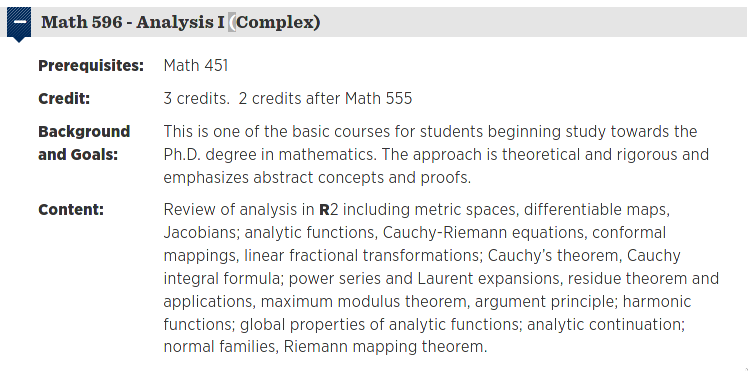
the algtop class also probably uses higher algebra than I know
for a second course
ye

I also don't have any difftop background
obtuse meteor
hmmm yeah
idk
I'm caught in the weird area of things only being offered in fall/winter now I think
and there's an issue of if I have the money to do a 4th year and stuff
and if I need to fast-track graduating and applying to grad school
in which case I need complex analysis
to have a good app
lol
mmm
that sounds like
a bad decision
considering how busy I've been this semester
and that I have to work as a grader next semester
(again money)
sleek thicket
Don't overload yourself
obtuse meteor
yeh
 strong heron
When we use the van Kampen theorem, in the amalgamation product, are the original relations of the participating groups taken into account?

Like, if in this picture a Mobius band is attached along its boundary to the meridian circle gamma, what would be the fundamental group of the resulting space?
Is it not just free on two generators?
sleek thicket
strong heron
When we use the van Kampen theorem, in the amalgamation product, are the origina...
Yes
for your second question I would need to think about it, sorry
strong heron
Can you let me know when you have the time?
sleek thicket
I think by van kampen it would have presentation <a, b, c|aba^-1b^-1, c^2 a^-1>
So we can extend the torus and the mobius band a little to get open sets which cover your space and are pretty much the same
The mobius band's fundamental is generated by the loop c that goes around its central circle (you might need to change basepoint but I don't think it's a huge deal here)
And c^2 is the boundary loop of the mobius circle
the torus is generated by two commuting loops, the loop a called γ in your picture and a horizontal loop b
The intersection is (actually deformation retracts onto) the circle γ in your pic, and so is generated by γ. When looking at the groups, the generator of this will include as the element a in the fundamental group of the torus and c^2 for the mobius band
This is how I get the relation c^2 a^-1 = e
So this group can also be presented by <b, c|bc^2b^-1c^-2>
This contains a subgroup <b, c^2> which is not free so it cannot be a free group (subgroups of free groups are free)
strong heron
That's right. I also got this only. But then I got confused primarily because of this... When you calculate the fundamental group of the 2 holed torus
Then as the standard octagon, you get the presentation <a,b,c,d | aba^-1b^-1cdc^-1d^-1>, right?
strong heron
But if you take it is the connected sum of two 1-holed tori and then use van Kampen, you seem to get <a,b,c,d | aba^-1b^-1=cdc^-1d^-1=1>
How are these two groups isomorphic is what is confusing me.
sleek thicket
I think I know what you did wrong
So that second group is the free product of π1(T^2) and π1(T^2)
Right?
strong heron
Yes, supposed to be
sleek thicket
So if you had two torii touching at a point you could do van kampen to get this fundamental group
But this doesn't work with T^2 # T^2
What open subsets are you using?
Presumably they should be homotopy equivalent to T^2
strong heron
Oh, no. They're homotopic to torus-disk
strong heron
Ah, I see. So they are totally free on two generators!
sleek thicket
Yes!
Because torus \ disk is homeomorphic to torus \ point is homotopy equivalent to a bouquet of two circles
And you could track generators and stuff
But I think it would be ugly
I remember being very confused that the connected sum and wedge sum weren't homotopy equivalent when talking my first class on this stuff
strong heron
Yes, yes. So it's basically (Z*Z)*(Z*Z) where the amalgamation is over Z again? In the connected sum case.
sleek thicket
Yes, but the relations added by amalgamation aren't obvious to me
Oh wait!
I think I see it!!!
Okay think of two squares
strong heron
Hmm, the boundary of the removed disk is equal to the boundary of the torus, right? So I think we will get the same result as in the octagon case. Because the octagon can be subdivided by a line into two 1-holed tori with disks removed.
sleek thicket
With their centers cut out
And the edges identified to be torii
Then the loop in the center looks like aba^-1b^-1
strong heron
Yes, that's what I was saying too..
strong heron
Yeah, you take the hole at a vertex and then stretch it open, do the same for the other square and then join them to get an octagon!
Okay, great! This had been stumping me since morning that why are those relations being added. Many thanks!
sleek thicket
What book are you looking at for this stuff?
strong heron
Mostly Hatcher
 barren sleet
yes hello?
sleek thicket
oh, I just saw you were typing
barren sleet
did you see that i solved my thing from earlier
sleek thicket
felt polite
barren sleet
oh
barren sleet
i was gonna ask a qn about hatcher but shanged my minf
 flint flicker
Hello i am trying to see what the fundamental group of $X$ is, where $X$ is the union of $S^1$ and $C$. $C$ is the plain square of side length $\sqrt2$ and centered at (0,0).
gentle ospreyBOT
kh
 obtuse meteor
this seems homotopy equivalent to a wedge of two circles
but I would have to draw it
do you have a schematic of what this looks like in the plane?
flint flicker
it is a circle and the square in it
obtuse meteor
oh sqrt(2) centered at (0, 0)
one sec
so it's like a square
with the circumscribed circle?
flint flicker
 obtuse meteor
yeah
probably the best way to approach this
is to treat it as a graph
do you have the result on computing the fundamental group of a graph?
flint flicker
No not yet
obtuse meteor
So the idea is like
repeatedly contract edges
until you end up with a wedge of circles
flint flicker
so i will get the full circle ?
obtuse meteor
mmm
no you shouldn't
you should visually go through this contraction process
contract one edge at a time
to make sure you don't miss anything
marsh forge
Is that square filled in
you should be careful
nothing in the original statement makes me think it would or wouldn't be
but the answer changes
obtuse meteor
ah yeah that is important
flint flicker
Yes it is filled in
the second part of the question is what happens if it is not filled in
obtuse meteor
then what we're doing here is if it is not filled in
gentle ospreyBOT
MaxJ
 marsh forge
there we go
a line between two verticies
contract it
and redraw
one at a time if you want to be careful
and eventually you should get some wedge of circles
Oh wait its filled in shoot
okay sorry
first step is deal with the square
Do you know how you might do that?
flint flicker
what i tried so far is to use Van Kampen
but i was not able to go far
maybe try and contract the square?
 marsh forge
Hmmm
Not quite
One thing to keep in mind
Everything that was connected before you contract the square
has to be connected after
Here's a procedural hint
What is your main goal? Contracting the square to a point
So start by drawing the point
Then you've finished w the square
But now you have to ask "How are all the lines that used to touch the square connected to this point"
Well, there is only one way to do it
(it might help to try to animate this in your head if you can)
(visualize the square shrinking and how this pulls on everything else)
flint flicker
my circle will become a 8?
flint flicker
ah yes like a 4 leaf
flint flicker
No i will try using van kampen
Thank you for the help
Your tips were very helpfull
marsh forge
Np!
Eventually after some practice
you'll look at these things and see the answer instantly hahaha
flint flicker
I hope so
marsh forge
something that might help build the skill
is to try to visualize homotopies without drawing them first
and like watch it happen in your brain and see if you can accuratley do it before you do it in the procedural way
might cause some headaches haha
flint flicker
marsh forge
might cause some headaches haha
haha thanks for the help!
i got the same figure after contracting each line in the empty square
it must be wrong
marsh forge
Hm?
Your end result should be a 4-leaf clover
But if the square was not filled in, it should be a 5-leaf I believe
(you can only contract 3/4 of the sides before you don’t have a contractible side)


 marsh forge
in 2->3 you identify two sides of the triangle but you arent allowed to do this
remember all you are doing is contracting one side
the other two can bend or whatever
 rotund thicket
isn't this like taking the quotient space where the corners of the circumscribed square lying on a circle are equal?
marsh forge
not if it isnt filled in no
if it is filled in this is exactly what is happening yes
marsh forge
you can’t preserve homotopy type by contracting a non contractible subspace
marsh forge
(if your method worked then the filled in version would be htpy equivalent to the not filled im which is false)
flint flicker
how can i contract in the second step without merging the two lines
marsh forge
ill draw
flint flicker
ill need to retract 2 lines at the same time?
rotund thicket
but if this was less than 4 points then we wouldn't need to have the circle filled? (sorry for budging in with my question)