#point-set-topology
1 messages · Page 167 of 1
 chrome dew
 unreal mist
Oh.
 white wren
escura if you dont mind what lvl r u at?
chrome dew
in 3D space a single vector defines an oriented plane normal to it so it's equivalent
just ask about what you're actually confused about line integrals in #multivariable-calculus
chrome dew
if you have a more specific question just ask that more directly and if it's too large I can tell you what to cut out lol
are you like a programmer or 3D artist or something
unreal mist
No, at least not yet.
white wren
ah iam tired of thhis thing , goodnight
thank's for ignoring me through all your talking
 coarse kestrel
Does this mean that X=X’, but X is thought as an open set with respect to the topology T while X’ is thought as an open set with respect to the topology T’
 tawny smelt
ahh munkres
coarse kestrel
yes
 solemn crystal
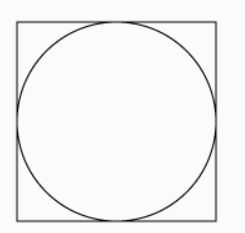 coarse kestrel
Ask in #prealg-and-algebra or a question channel
 loud scarab
I dont understand this definition
Why does it follow from dF: R^n --> R^m not being surjective that the derivative is zero? And what does "carries all vectors in R to the zero vector" mean? Which vectors in R?
 fervent citrus
in general, not surjective doesn't mean 0 but in the case m=1 it does because the only strict vector subspace of R is {0}
and for the second part, view R as a vector space over itself
loud scarab
how to understand that first part in more detail?
where should I read or what is the title of this topic?
fervent citrus
it's linear algebra
in the case m=1, dF_p(R^n) is a vector subspace of R, and assuming dF_p isn't surjective, dF_p(R^n) can only be {0}
fervent citrus
because for example, you'd have dim(F_p(R^n)) < dim(R) = 1, and so dim(F_p(R^n)) = 0
loud scarab
okay I understood that
just something that I want to be clarified
why not add -1 and 1 to the set {0}
to be {-1,0,1}
for example
that wouldnt be a subspace?
fervent citrus
it wouldn't be a vector subspace of the vector space R
fervent citrus
yes
loud scarab
but when I deal with maps from R^n to R^m
 gritty widget
you should try thinking what a vector space/subspace means intuitively
loud scarab
why do I have to treat the structure of R as a vector space?
gritty widget
have a picture in your mind, instead of resorting to axioms
the whole point of calculus is to linearize things
linearize = deal with vector spaces
loud scarab
yeah, this definition is from a differential geometry book
i dont know if it always 'prefers' vector spaces
gritty widget
what do you mean
loud scarab
i mean, when I say {-1,0,1} is a subset of R for example
it is true indeed
but when treating R as a vector space
its not true
gritty widget
it's still a subset
loud scarab
its not a subspace
gritty widget
yes
loud scarab
so surjectivity here depends on the structure of R
right?
for if I say T: U --> R is not surjective
U subset of R
and i dont treat R as a vector space
that doesnt necessary imply that T(u) = 0
gritty widget
surjectivity is a set-theoretic condition which in linear algebra context is equivalent to being full rank, which is a linear algebra condition
that depends
is T a linear map?
loud scarab
yes
loud scarab
linear maps are only defined on vector spaces then?
gritty widget
between vector spaces, yes
loud scarab
oh okay
that bit of information is very useful
these little things matter
thank you
 dim meadow
 elder sonnet
^^ this
Surjectivity of a transformation is the condition that every element in the codomain (output space) is mapped to.
coarse kestrel
Is the order topology on $\brc{1,2}\times\bN$ with dictionary order homeomorphic to topology of $\brc{\frac{n}{n+1}:n\in\bN\cup\brc{0}}\cup\brc{1+\frac{n}{n+1}:n\in\bN\cup\brc{0}}$ as a subspace of $\bR$ with the usual topology?
 gentle ospreyBOT
Whoever:
coarse kestrel
I’m thinking mapping (1,n) to n/(n+1) and mapping (2,n) to 1+n/(n+1)
The first topology is almost discrete, but there (2,0) is not an open set
Same for the second set: almost all singleton are open set, but {1} is not open
Idk I haven’t gotten to the continuity chapter so I’m not sure what I’m thinking is correct xD
 ivory dragon
topology is an undergraduate subject
 frigid tusk
Isn’t topology after calculus?
frigid tusk
Is this normal topology or differential
ivory dragon
not sure what "normal" means, but uh
all of the above?
in theory, this channel covers general/point-set, algebraic, differential, geometric, whatever
coarse kestrel
This channel is specifically for liquid
ivory dragon
[in practice, it's usually more introductory level, but exceptions apply]
frigid tusk
Alright
ivory dragon
tensor in #multivariable-calculus i guess? maybe #advanced-analysis
depending on rigour level
gritty widget
out of interest where is that from
elder sonnet
Looks like fluid dynamics
gritty widget
definitely not differential geometry much less differential topology
elder sonnet
Looks related to Navier-Stokes equations.
ivory dragon
that mostly looks complicated due to subscript spam tbh
its not NS, at least not in any way that im familiar with
in any case, it certainly isnt topology
 hot holly
is it true that the Monotonicity of turning angle of a simple closed curve does not hold when the curve is piecewise regular instead of regular
 west spindle
Monotonicity of turning angle of a simple closed curve
wat
hot holly
emmm so i know there's a theorem which states:
A simple closed regular planar curve α(s) is convex if and only if its planar curvature k(s) has constant sign
but im wondering if the theorem still holds if we change the curve to a piecewise regular curve instead
well, in other words, is it possible to find a simple closed planar curve that is piecewise regular but have a positive and negative curvature at different points on the curve
hot holly
ahh okay i think i figured it out and it is possible..?
 tidal cedar
"transcription rate" makes me think something bio related
gritty widget
what course 
frigid tusk
It’s fluid dynamics
frigid tusk
Those were from a different quiz lol
elder sonnet
Oh okay, good, just making sure. 🙂
 small obsidian
Aww I missed some good topology action
gritty widget
Ok so i'm trying to show that $f:X\to Y$ is continuous iff $f(\overline{U})\subseteq \overline{f(U)}$ for every open $U\subseteq X$. Is it enough for the backward direction to say $\overline{U}\subseteq f^{-1}(\overline{f(U)})$, and since $f^{-1}(\overline{f(U)})$ is closed in $X$ it contains $\overline{U}$ by definition?
gentle ospreyBOT
mart:
gritty widget
yes, in one direction it's enough
@gritty widget
it proves continuous => your condition
ya sorry
since f(f^-1(X)) is always a subset of X
and if A subset B, then f(A) subset f(B)
i'm kinda stuck on the other direction though
can i have a hint
gritty widget
are you sure the other direction is true
I think I might have a counterexample
@gritty widget
gritty widget
what if you take Z with the cofinite topology (a set is closed iff it's Z or finite), R with the usual topology and f:R->Z be, say, the number obtained from the first digits of the conway's 13 function until the first zero, and if there is no first zero, the value of f is 0. Then the image f(U) of every nonempty open set U in R would be infinite, hence the closure of it would be the whole Z, so f would satisfy the condition on the right. However, taking some cofinite subset of Z but not whole Z, and taking its preimage under R, is not an open set in R, because it and its complement are dense in R.
so f is not continuous
i'm honestly not good enough to validate that
 little hemlock
i don't quite understand the supposed coutnerexample, but mart's statement is actually true. i know cuz ive seen it before.
gritty widget
ya it's in lee's top mfds
and i mean
perhaps you've seen a different statement
where U is any set, not just open
this is from Munkres book
oh fuck
little hemlock
ah yea
gritty widget
you're right lmao
ok so
eh i'll just read that ty
i'm honestly not good enough to validate that
tell me which part you don't get, I'll explain it
gritty widget
@gritty widget a simpler counterexample by @steep harbor
f: (R with confinite topology) -> (R with usual topology) with f being the identity map.
cofinite topology is at the end of the chapter
hol up i'll look it up
it's a very simple idea: a set is open iff its empty or its complement is finite
you can easily verify that these sets form a topology
alright got it
ok ya got it nice ty
the ex asks me to prove (2)=>(1) though
well then the ex is dumb and wrong
or do you mean (2) like in the screenshot
no i mean sorry using the labelling from the munkres thing
ah
yes, try solving it now that you know the correct statement of the problem
ok will do ty
gritty widget
sorry for the late response
but
ok so for the backwards direction, suppose for every $U\subseteq X$, $f(\overline{U})\subseteq\overline{f(U)}$ but there is an closed $A$ in $Y$ for which $f^{-1}(A)$ is not closed in $X$. By assumption, $f(\overline{f^{-1}(A)})\subseteq \overline{A}=A$, so then $\overline{f^{-1}(A)}\subset f^{-1}(A)$. But this is absurd, since $f^{-1}(A)$ isn't closed.
gentle ospreyBOT
mart:
 reef eagle
I'm not sure how the length of the radial projection and the density of the cone are related. Does anyone have any insight?
Where density is
 lone sable

I'm not sure how to do 1.b)?
can someone explain the process of doing it
please and thank you
 sweet oasis
Just a quick question, the unit circle is not a simply connected space (unit circle as in all points (x, y) in R^2 such that ||(x, y)||=1)
The norm of (x, y) = 1 I mean, silly discord
 bitter yoke
Yes
@lone sable You should describe more about what you're confused about
this is pretty standard seifer vankampen theorem
sweet oasis
It's only from a sphere and up
Like S^2 and up
That they become simply connected
Btw the sphere isn't a star set right?
In R^3
Star domain apparently it's called
 honest narwhal
It isn't star shaped
sweet oasis
Star domain is such a bad name for it
Like for real never seen anything remotely looking like a star
I got duped.
honest narwhal
Think of the center of a star
There's a line from that point to any point in the star, that's kinda the intuition
sweet oasis
I mean, I know, the thing I think about mostly is the x and y axis
Like sets (x, 0) Union with (0,y)
honest narwhal
 honest narwhal
It's pretty damn close to a star lol
 sweet oasis
Does anyone have a neat example of a simply connected none star domain set in R^2?

I don't think that's even a thing
small obsidian
A crescent moon?
small obsidian
You can't put a straight line between the bottom and the top
But you can connect them
small obsidian
Even a star is not star-shaped for some points in the star haha
 small obsidian
Oop, mb "if there exists a point", we don't get to choose that point
Forgot some of the definition
sweet oasis
Well yeah
small obsidian
Okay, how about a circle with a wall somewhere in the circle?
sweet oasis
I think not
small obsidian
If that makes any sense
small obsidian
Very not star shaped, still simply connected
small obsidian
Well, if we consider the circle to be a 2D surface, not a 1D line
small obsidian
Yaya lol. That's a great way to explain
sweet oasis

 fading vale
with a gap in it
sweet oasis
It's basically a crescent moon
🌙
Although I think the emoji is still a star lol
I cant zoom into its edges
I can kind of eyeball that it isn't
small obsidian
But star-shaped is a really large set of shapes
I'm dumb. An annulus works
Didn't even need the gap
fading vale
can someone explain to me why exactly the klein bottle (the definition im given here is the one w/ the square) is homeomorphic to an annulus with antipodal points on the outer circle identified, and likewise on the inner circle?
like just geometrically
 sweet wing
<non geometrically: construct them as squares with the sides suitably identified and you see that they are basically the same>
like the annulus definitely orientable(i.e. has 2 sides) but now by gluing like that, you're like having both orientations cross each other like similar to construction of mobius strip
https://en.m.wikipedia.org/wiki/Klein_bottle#/media/File%3AKlein_Bottle_Folding_6.svg
(just verifying it's this construction right)
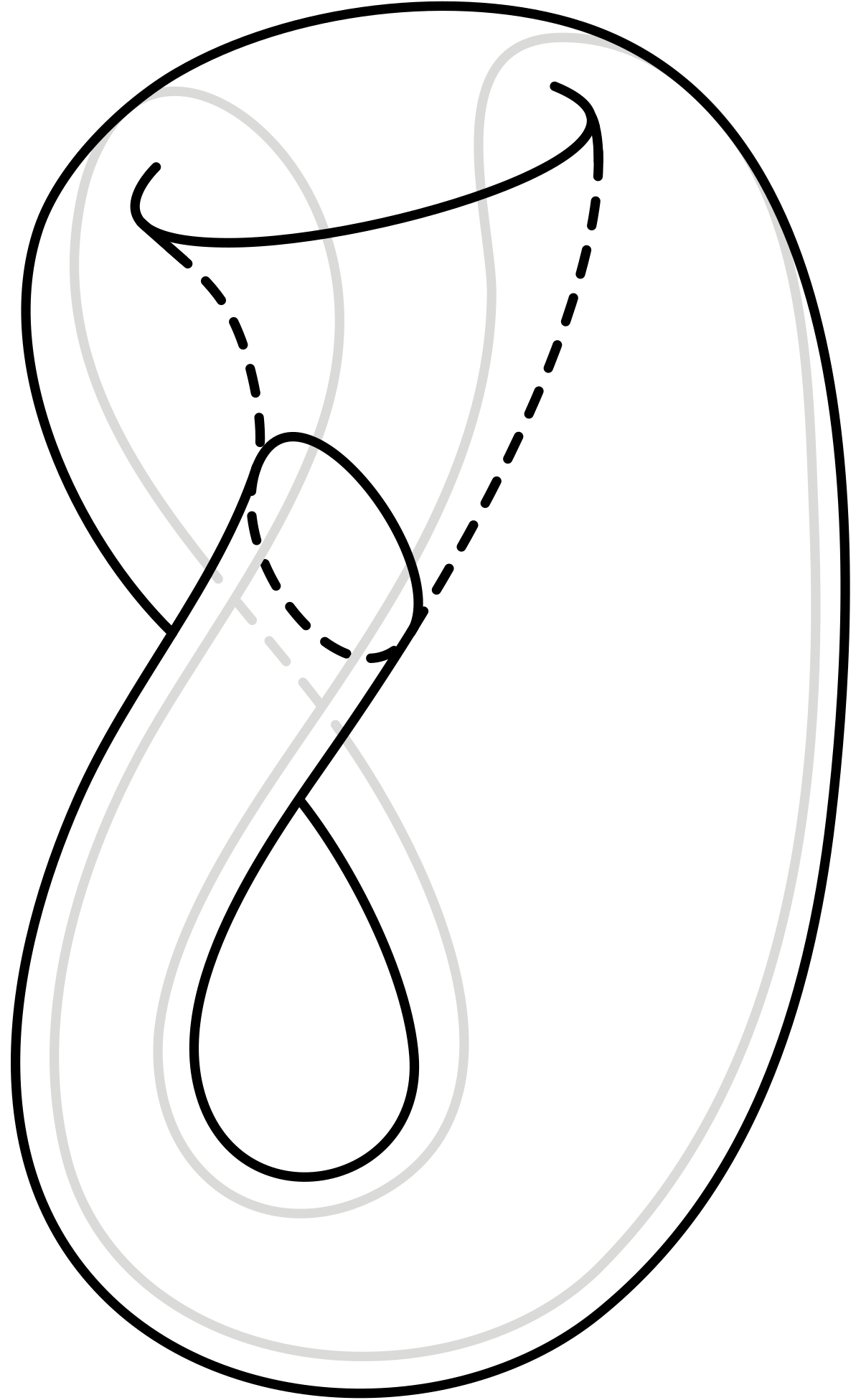
In topology, a branch of mathematics, the Klein bottle is an example of a non-orientable surface; it is a two-dimensional manifold against which a system for determining a normal vector cannot be consistently defined. Informally, it is a one-sided surface which, if traveled ...
fading vale
@sweet wing
when i try to get the annulus from the square it logically feels like this is what should happen
but i dont understand how this is the antipodal points thing
this is probably better
wait oops
i think
this has a problem
maybe im just actually dumb and this is what the text was describing
but like
idts
sweet wing
the annulus is basically a cylinder
fading vale
yea but my problem is like
if u regard this annulus as a cylinder it feels like what should happen is
the left is what i need to get
the right is what i feel like im getting
sweet wing
uh A A' B B' are?
sweet wing
uh the right one is what you should get
chrome dew
that antipodal description you gave sounds wrong or vague I'm not sure sloth
sweet wing
https://discordapp.com/channels/268882317391429632/496785752936546304/704140438143107215
this does work i believe
chrome dew
yeah that works, but I think he's trying to do it "his way" which sounds different
sounds kind of like how he's doing it, the ends would close up into a sphere or something, not sure it's kind of vague to me
I think his original understanding of the phrasing is wrong
fading vale
:|
wait the right one is correct??
??????????
"the space resulting from an annulus by identifying antipodal points on the outer circle, and also identifying antipodal points on the inner circle"
@chrome dew this should be the left one
not the right
shouldnt it??
chrome dew
I think this is written vaguely


 chrome dew
sounds like it's relating antipodal points of the circles to themselves alone, rather than to each other like it should
chrome dew
like if you try to pinch the antipodal points together like you're thinking it's kind of, well
fading vale
yeah its weird
sweet wing
youll get some weird projective nonsense if you relate antipodal points of a single circle tho
fading vale
i guess you get
uh
the real projective line?
lmfao
anyway im gonna go die jesus fuck
chrome dew
✝️
fading vale

 lean cedar
Given a topological space X and a set of sets M, such that M ist closed under complement and closure wrt the topology of X do you guys know a way of putting some algebraic structure on top of M?
Preferrably some inner binary operation of some sorts. Union and intersection do not work 😄
 midnight jewel
so it’s closed under complements and closures but not necessarily unions, intersections or set difference?
lean cedar
correct
midnight jewel
doesn’t sound to me like you can do a whole lot then :/ what do you need it for?
lean cedar
Just some experimentation 😄 Its a mathematical game where one would like to construct a large number of sets from a single subset of R just with complement and closure.
You can also define substructures and generated structers, so we are interested in the structures generated by one set
midnight jewel
you won’t get more than A, clA, intA, X\A, cl(X\A) and int(X\A) from that I don’t think
lean cedar
I think we found an example with 7 sets in class, let me take a look
 quasi spire
hello
I’m confused on what shape has 4 congruent sides and opposite angles are parelel
I don’t know if it’s a rhombus or a palalelogRam
Nvm I think I got it
 vocal wharf
sweet wing
vocal wharf
sweet wing
just a fun thing with closure and interior and using composition you can have like 14 unique functions
adding complements probably pushes it to like 28 i think?
 modern holly
iirc its called kuratowskis closure complement theorem
that you can have at most 14 different sets by complementation/closure starting from a single subset
sweet wing
yup
midnight jewel
okay I wanna know what I’m missing then
cause like
let’s say ∅⊂A⊂X is the set
we can get clA directly and intA = X\cl(X\A)
we can get X\A and then also closure and interior of those
but what else?
sweet wing
oh wait right it should be closure and complement has 14 unique functions oops mb
actually then adding interior operator doesnt change the number
 hexed prawn
Can anyone explain what "countably dense subset"means in reference to seperability
???
bitter yoke
Do you know what it means for a set to be countable?
hexed prawn
Yeah sorry I figured it out... It just means countable and dense right?
ivory dragon
Yeah
"countably dense" isnt a thing, its just a subset that is both countable and dense (within the larger separable space)
hexed prawn
Yeah, just weird language that my professor used on the online lecture.
The other way makes sense.
Now that I got y'alls attention, can I ask why the real numbers aren't seperable under the discrete topology?
Seems like they would be, since {1} is countable, dense, and contained in R.
Oops NVM. Just looked at the definition again.
I thought it was dense if A = A closure, but it's X = A closure...
That would just be openness anyway. Sorry, ignore me.
Sorry, yeah that's what I meant.
I know the definitions I'm just tired... And not paying enough attention to what I say. Thanks
modern holly
@midnight jewel if you are interested in the case where the 14 sets are different (speaking of the closure complements), there is an example in steen and seebach counterexamples in topology, let $A = {\frac{1}{n}: n = 1, 2,... } \cup (2, 3) \cup (3,4) \cup {4.5 } \cup [5,6] \cup {x \in \mathbb{Q}\cap (7,8] }$
i really cant format the curly brackets on discord its impossible
help
ivory dragon
just do it like you'd do in regular tex; \{stuff\}
no need to \\ (unless you want a line break), texit is smart enough to see through discord's formatting
modern holly
ah i see, thanks
gentle ospreyBOT
Jesse?:
lean cedar
nice
midnight jewel
so I need a proof of the following claim: if X⊆ℝ is an uncountable set, then there exists a point p∈X such that p is a limit point from both sides (i.e. there exist sequences in X approaching p from above and from below). I’m quite stuck and I can’t find anything by googling either, just lots of proofs that X must have limit points.
What I have so far:
X contains uncountably many of its limit points, call the set of those points X'.
X’ = L ∪ U, where L are those points approximated from below and U those approximated from above. One of these sets must again be uncountable, wlog U.
now I suppose what I’d want to do is take a point x such that (x,x+ε)∩X is uncountable for all ε and then find a point y in there that satisfies both. For a fixed ε and any descending sequence (yᵢ → x) in that set, there must be an n such that both (x,yn) and (yn, x+ε) are uncountable. I can also choose all the yᵢ to be limit points of X themselves but I don’t think that alone is enough to show anything since the set could be constructed in such a way that there’s “chunks” clustered above the yᵢ such that all of them are only limit points from above.
so I don’t think that approach is one that’ll lead anywhere
midnight jewel
I think this works
as before, call U those points in X which can be approximated from above and assume none of them can be approximated from below and wlog U is uncountable (if not then L must be and the rest is analogous).
then for each x∈U there must be an εₓ > 0 s.t. (x-εₓ, x) does not intersect X. But then those intervals must also all be disjoint, but one cannot have uncountably many disjoint open sets in ℝ since ℝ is separable
midnight jewel
wasn’t an exercise, per se
 uncut surge
everything's an exercise if you're motivated enough
midnight jewel
fair enough
I’m working on my bsc thesis and there’s this bit where in the paper I’m reading they just say “the procedure here is similar to proving that in any uncountable subset H of a line L there is a point of H which is a limit point of H from both directions on L” without any more details or references
so I figured I’d first prove that
and then see how I could adapt it
(it’s a proof sketch that I’m supposed to flesh out since no one’s ever actually published a detailed proof)
(though all the hard parts do have published proofs)
midnight jewel
and now I’m stuck at another statement that looks very innocent and I suspsect is true (if not then I need another idea):
Let G be a collection of sets S⊂ℝ³ each homeomorphic to a sphere. Let further S’∈G be an element wtih the following property: There exists δ>0 such that for all S∈G\{S’} and all homeomorphisms h:S→S’, some point x is moved by h by at least δ.
Then there exists x∈S’ and ε>0 such that the ε-Ball around x intersects no other S∈G.
(dunno if the fact that the sets are homeo to spheres is relevant but that’s the situation I have)
oh and the sets of G are all disjoint
that may be relevant
 wanton marsh
does R even have subsets homeomorphic to a sphere ?
midnight jewel
I literally just noticed that typo
as I saw you typing
fixed
(it does not since a 1-dimensional manifold cannot have a 2-dimensional submanifold)
wanton marsh
k I'm reading the rest
midnight jewel
(or, much simpler, because ℝ minus a point is disconnected but S² minus a point isn’t)
in more abstracted terms my claim is:
If there is no sequence Sᵢ ⊂ G that converges homeomorphically to S’, then there must be a point in S’ which is at least ε away from all the S∈G
wanton marsh
is there an x in S and x' in S' such that |x-x'| < delta, isn't there always an homeomorphism that sends x to x' ?
the automorphism group of a sphere is transitive ?
midnight jewel
sure but it may move some other point farther than δ
wanton marsh
but your property for S' says for some point x in S not forall points x in S
oh wait
okay
midnight jewel
each homeo moves some point farther than δ, but the point depends on the homeo
basically just for each homeo h:S’→S, sup(d(x,h(x))) ≥ δ
wanton marsh
I don't think it's true
midnight jewel
I think it is but it requires the disjointness in a nontrivial way
midnight jewel
my spheres are also all wild but I was hoping to not have to use that in this part of the proof
wanton marsh
as in not diffeomorphic to a normal sphere ?
midnight jewel
as in there is no homeomorphism of ℝ³ to itself that takes them to the standard sphere
I’m not working with smooth structures here at all
just continous embeddings
but the proof sketch I have makes it sound rather straightforward to prove what I need
what I want to show now is that I can associate to each sphere which can be approximated from the exterior but not the interior some open set such that all those open sets are disjoint
that will show me that there exists some sphere that can be approximated from both sides since I’ll otherwise have to end up with uncountably many disjoint open sets
(my bsc thesis is basically “work out the details in this proof outline”)
(and before you ask: Bing[25] has never been published)
wanton marsh
E³ ?
modern holly
some authors use E for euclidean space with the standard metric
its rare, but ive seen it before
wanton marsh
ah yeah
anyway my counterexamples with normal 2-spheres was that each sphere had some kind of tendril that went all the way back epsilon away from S', and each new sphere that you add closer to S' would have its tendril grow at some other place but would have to go inside the previous one's tendril
 coral pawn
How can you prove that the unit square is not metrizable?
I meant the dictionary order
on the unit square
coral pawn
Is that a theorem?
How does one show that it is not seperable
😦 we haven't gone over any of this stuff in class
We're using Munkres if that gives you an idea
We haven't defined a discrete set
Is there a more direct proof?
Nevermind lol I'll just skip this problem and email him about it
I have one more problem that I could use help with
If X is linderof and Y is compact, prove X x Y is linderof
yes I do
Why can we assume that?
I don't get what you're trying to say
If I take an open cover of X x Y, then the sets in them don't neccessarily have to be of the form U x V for some U open in X and V open in Y
Yes, you're right
But how does that imply what you're saying
Oh okay
That makes sense
So is it something like if {U} is a cover, then {B} is also a finite cover where B are basis elements of the sets of {U}
and then since we can take a finite subcover of those
we get a finite subcover {B'}
and then we take all possible unions of the finite collection {B'}
and then that must be a finite subcollection of the {U} we started with?
Is that the chain of reasoning?
Something feels a bit wrong
okay, but then how do we know that there are only finitely/countably many U' which contain a given B'?
Okay
thanks
fervent citrus
Is there a concrete example of a normed vector space that is a Baire space while not being complete?
 pseudo roost
all of the crossings at the bottom have the same sign right ?
gritty widget
Does anyone have any reference on where to learn how to work with topic such as this? http://pagine.dm.unipi.it/tamas/athw.pdf
not looking for answers or hint on the exercise but about notes/books or similar that could help in handle the topic
ivory dragon
to clarify, you're asking for algebraic topology textbook recommendations?
i'd probably recommend Bredon's topology and geometry
Lee is also a text i've heard good things about
gritty widget
lee is wonderful but it only gets to alg top in the last few chapters
vocal wharf
introduction to topological manifolds?
it doesnt go too deep into alg. top.
more of an intro
gritty widget
yeah that would be algebraic topology
they told be hatcher but it does not feels in the same "approach" as hatcher is devoted to calculation while this argument are treated in a much homological approach i feel
(could be wrong, i strongly considers myself a newbie in such topic)
 floral gust
Why is C compact?
wanton marsh
C is a closed subset of a compact space
floral gust
supports of continuous functions are closed?
wanton marsh
it's the closure of f-1(R \ {0}) I think ?
floral gust
Apparently there are two ways to define it
but I guess it is the second that's meant here since M is topological
Thanks!
 hazy token
In Homology, is a j cycle any element of a j chain that maps to 0 under the boundary map?
 sleek thicket
Not sure what you mean by element of j chain
But a j cycle is a j chain which is zero under the boundary map
midnight jewel
I’ve only ever seen the second definition of support
gritty widget
This channel ok for alg geo?
 limpid pine
Ahoy. Could someone assist me with (ii)?
I believe all I have to do is show [x(u,v_0)] satisfies [x_1^2/a + x_2^2/b + x_3^2/c = 1] but my calculation leads me to
[x(u,v_0) = ((1-v_0)cos(u), v_0 + sin(u), -v_0cos(u))]
And I cant seem to tease elliptic properties out of that
gentle ospreyBOT
RamJam413:
limpid pine
squaring and summing components leads me to [1 + 2v_0sin(u) +v_0^2] but idk if thats simply erroneous or if I am one step from showing its an ellipse
gentle ospreyBOT
RamJam413:
limpid pine
<@&286206848099549185>
limpid pine
pls
 peak narwhal
Does the measurement of the interior angles of an equilateral triangle in hyperbolic space still equal pi/3?
ivory dragon
no.
indeed, in hyperbolic geometry, the sum of the interior angles of a triangle is always strictly less than that of two right angles (180 degrees)
observe the last theorem on this page https://www.maths.gla.ac.uk/wws/cabripages/hyperbolic/stewart/stewart.html
peak narwhal
Alright, I had a feeling. I know it's obviously true in Euclidean space but because the interior angle sum is less than 180 in H it seemed like it couldn't always be true
ivory dragon
it's never true
peak narwhal
Oh wow yeah, I thought it was less than or equal to pi
Interesting. Alright, thanks!
ivory dragon
the statement that all triangles have an interior angle sum of pi is equivalent to the parallel postulate.
moreover, the statement that there exists any such triangle is equivalent to the parallel postulate
this paper discusses some proofs in coq https://hal.inria.fr/hal-01178236v2
In this paper we focus on the formalization of the proofs of equivalence between different versions of Euclid's 5 th postulate. Our study is performed in the context of Tarski's neutral geometry, or equivalently in Hilbert's geometry defined by the first three groups of axioms...
sleek thicket
that's really cool
 empty sky
is anyone here expert of the Vietoris–Rips complexes? Expecially in relation with the persistent homology?
gritty widget
Is by any means this isomorphism right? $Z[x]/(x^{2})\otimes Z[y]/(y^{2})\simeq \mathbb{Z}[x,y]/(x^{2},y^{2})$
gentle ospreyBOT
SMC:
gritty widget
it's related to finding a cohomologicl graded ring
gritty widget
my bad im sorry
gritty widget
does anyone know if the formula on the bottom has a name? im trying to proof it but the argument in the book are not clear to me unfortunately
it should be true even w/o the exicission argument, a thing that it's driving me crazy lo
hazy token
The boundary of this complex of 1-simplices should be v4, right?
I’m confused because when I compute the boundary operator, it is v4-v1, which is definitely wrong
fading vale
hi
 versed geode
bye
honest narwhal
Let's go
fading vale
give knowlege
honest narwhal
I'll try to give some commentary but while reading I might just focus for a sec. Def will try to do the problems here though
fading vale
ok :D
versed geode

gentle ospreyBOT
Daminark:
gentle ospreyBOT
slimvesus:
honest narwhal
There's a local degree formula
gritty widget
I'm trying to proof the following
what I have for now it's the following: An element $\varphi \in H^{n}(S.(X)\otimes S.(X))$ correspond to an homomorphism:
$$\varphi: S_{i}(X)\otimes S_{j}(X)\to \mathbb{Z}$$ where we let $i,j$ be all the integers that sum to $n$.
For every element in $S_{n}(X\times X)$ we have a correspondent element in $(S.(X)\otimes S.(X)){n}$ via EZ. The composition $\varphi\circ EZ$ is then an homomorphism from $S{n}(X\times X)\to \mathbb{Z}$ and we define $\alpha_{n}(\varphi)=EZ*\varphi$
gentle ospreyBOT
Stephen:
gritty widget
any hint on how to continue? or is this the wrong road? thanks in advance for any help
gritty widget
up? idk
 prime prism
I know the technical definition of local degree but when my lecturer uses it to compute the degrees of attaching maps he sort of just says it's one basically whenever you pass the point (to which you're calculating the local degree)
is that a fair way of thinking of it - as being +1 or -1 depending on whether you're going with the orientation of the cell or against it
I'll try give an example of what I mean
gritty widget
what I have for now it's the following: An element $\varphi \in H^{n}(S.(X)\otimes S.(X))$ correspond to an homomorphism:
$$\varphi: S{i}(X)\otimes S{j}(X)\to \mathbb{Z}$$ where we let $i,j$ be all the integers that sum to $n$.
For every element in $S{n}(X\times X)$ we have a correspondent element in $(S.(X)\otimes S.(X)){n}$ via EZ. The composition $\varphi\circ EZ$ is then an homomorphism from $S{n}(X\times X)\to \mathbb{Z}$ and we define $\alpha{n}(\varphi)=EZ*\varphi$what I have for now it's the following: An element $\varphi \in H^{n}(S.(X)\otimes S.(X))$ correspond to an homomorphism:
$$\varphi: S{i}(X)\otimes S{j}(X)\to \mathbb{Z}$$ where we let $i,j$ be all the integers that sum to $n$.
For every element in $S{n}(X\times X)$ we have a correspondent element in $(S.(X)\otimes S.(X)){n}$ via EZ. The composition $\varphi\circ EZ$ is then an homomorphism from $S{n}(X\times X)\to \mathbb{Z}$ and we define $\alpha{n}(\varphi)=EZ*\varphi$
gentle ospreyBOT
Stephen:
 hexed tapir
hey do you guys allow talks about computational geometry like (re)meshing and stuff?
coarse kestrel
#computing-software is probably a good place
hexed tapir
oh true thanks
 dusky brook
How do I use arc length to solve this?
I already have the arc length formula
The L_n+1 - L_n>1/n was a suggestion from someone
I don't know how to prove that it's infinite
gentle ospreyBOT
slimvesus:
dusky brook
the first part
hmmm
oof i forgot to say
{1/x,1}
the lower bound is 1/x
higher is 1
i mean 1/n
There wouldn't be bounds right?
if there was no x on the outside, and only sin
the bound would be from -1 to 1
but since there's an x, theres any endless
ok
whats the next move?
well it says F(0)=0
ah
I believe so to.
since one hasnt been given
Heres an idea I got from another peson
So if L_n+1 - L_n > 1/n
Then the length is divergent
and the length is infinite
Would that work?
Or get me partial credit?
But here's the thing
hmm
he gave me a link showing that L_n >1/n

Mathematics Stack Exchange
So for the formula $\dfrac {1}{x}$, If you were to add up all $y$ values from $x=1$ to $x=∞$, wouldn't the sum approach a number because even though you are always adding, aren't you just adding sm...
gritty widget
what I have for now it's the following: An element $\varphi \in H^{n}(S.(X)\otimes S.(X))$ correspond to an homomorphism:
$$\varphi: S{i}(X)\otimes S{j}(X)\to \mathbb{Z}$$ where we let $i,j$ be all the integers that sum to $n$.
For every element in $S{n}(X\times X)$ we have a correspondent element in $(S.(X)\otimes S.(X)){n}$ via EZ. The composition $\varphi\circ EZ$ is then an homomorphism from $S{n}(X\times X)\to \mathbb{Z}$ and we define $\alpha{n}(\varphi)=EZ*\varphi$
gentle ospreyBOT
Stephen:
gritty widget
Any help? Does this sound like a viable way?
dusky brook
me?
gritty widget
Wait isn't this the topology and geometry subdiscord?
dusky brook
ah, so it doesnt work?
gritty widget
Ok, got it
dusky brook
on what?
dusky brook
So i got the answer?
😦
Do you know how I can?
lol
So L_0 is 0
oh ok
so L_2
is 2sin(pi/4)
and 1/n becomes 1
So then its true right?
1.1412- 0 > 1
1.1412- 0 > 1
Whats the induction step?
Give me a summary. i prolly forgot
Calculus II
They told me to ask here XD
We have
But should I go with the 1.4142 > 1?
Or do I need a more general answer showing how L_n+1 - L_n is always greater than 1/n
gritty widget
what I have for now it's the following: An element $\varphi \in H^{n}(S.(X)\otimes S.(X))$ correspond to an homomorphism:
$$\varphi: S{i}(X)\otimes S{j}(X)\to \mathbb{Z}$$ where we let $i,j$ be all the integers that sum to $n$.
For every element in $S{n}(X\times X)$ we have a correspondent element in $(S.(X)\otimes S.(X)){n}$ via EZ. The composition $\varphi\circ EZ$ is then an homomorphism from $S{n}(X\times X)\to \mathbb{Z}$ and we define $\alpha{n}(\varphi)=EZ*\varphi$
gentle ospreyBOT
Stephen:
gritty widget
Is this useful or I should try anything else? Any hint? Thanks
midnight jewel
…of course the moment I am typing a question in a channel that hadn’t had any activity for half a day someone else posts a question
gritty widget
I have been trying to be helped for 2 days
If u want post, I don't think anyone would help us
@midnight jewel
midnight jewel
If $X,Y$ are two compact disjoint subsets of $\R^3$ which are both homeomorphic to each other (specifically, both are homeo to a sphere) and whose Hausdorff distance is less than $\delta$, can one say anything about $\inf {\epsilon \in \R \mid \exists h \colon X \to Y \text{ homeo moving no point farther than $\epsilon$}}$?
gentle ospreyBOT
Sascha Baer:
midnight jewel
(ideally I’d want some bound that tends to 0 as δ does)
(note that while the sets themselves are homeomorphic, there may not be an ambient homeomorphism between them. the h are only defined on X, not on all of ℝ³)
gritty widget
I'm sorry the definition of "Hausdorff distance"?
midnight jewel
$\max{\sup_{x\in X} d(x,Y), \sup_{y \in Y} d(X,y)}$
gentle ospreyBOT
Sascha Baer:
midnight jewel
basically the largest “smallest distance” between the two sets
as in, for each x in X you see how far away that is to Y, then take the supremum over all those values. then do the same over all points y in Y as well
in this case here equivalently, if the hausdorff distance between X and Y is ε, then each set is contained inside an ε-neighborhood of the other
but it could be that regardless, every homeomorphism between X and Y has to move some points a rather far distance
I think there’s no bound cause what you can do is like, take a sphere close to the outer one but then also a tendril that wraps around it many times, which would have to be moved a lot under any homeo
like sth like this but much more extreme
the red is the space between the two spheres
any homeo between the two would have to move some points quite far
even though they are close as sets
midnight jewel
anyway I think I’ve been going about this the wrong way entirely
I think I know what I have to do now
prime prism
slimvesus:
@gentle osprey Aren't the attaching maps just identifying one point with the base point?
one point on the n^cell
 candid glacier
this is in a solid state physics context, but fitting nevertheless imo:
the edges are all the same length
prime prism
Is this obvious? Why should this cup product be 0?
Oh is it just that it's in H^4(S^2)
Aaah
uncut surge
it's also a smiley face
gentle ospreyBOT
slimvesus:
 stoic parcel
No, take S^1 -> S^1 by wrapping around itself twice, this is degree 2
Oh homeomorphism sorry I didn't catch that, yeah that'll always be 1 or -1
gentle ospreyBOT
slimvesus:
stoic parcel
Take M -> N -> M by applying f and then f^{-1} so that you get the identity. Then 1 = deg(id) = deg(f)deg(f^{-1})
You can just use that degree is multiplicative on composition. I think your way works too, since you have a unique preimage. You have to make sure you're taking y to be a regular value though
No problem 🙂
reef eagle
are the branch points of a minimal surface self intersections?
sleek thicket
I'm trying to compute the dimension of a certain space and getting two answers
Let Λ^k(V^*) be the set of alternating k tensors on V
Let S be the subspace of things which can be written as wedges of covectors
I'm trying to determine dim S
If we look at the projectivization P(Λ^k V^*) then I think the image of S is diffeomorphic to the grassmannian Gr(k, V*)?
And this is dimension k(n-k), so S should have dimension k(n-k) + 1
But we also have a smooth (even linear) action of GL(V) on Λ^k(V^*) by (ω•L)(v1,...,vk) = ω(L(v1),...,L(vk))
The nonzero elements of S form an orbit under this action, so S\{0} has dimension equal to the codimension of the stabilizer of any point of S\{0}
Oh nvm I computed the stabilizer wrong
 elder yew
Congrats
elder yew
Is anyone familiar with knot distortion? I'm trying to find a proof that distortion(K) is a certain constant if and only if K is the unkot
unknot*
My sources have led me to a text "Metriques structures pour les varietees riemannennes"
By mikhail gromov, and I'm looking at the text, but I can't seem to locate this anywhere in the text
prime prism
Why is it there are no minimal geodesics on S^2? Isn't a great circle minimal?
uncut surge
are you sure that statement is true? usually the only problem with geodesics on S^2 is that two points aren't necessarily linked by a unique length-minimizing geodesic, namely two points which are diametrically opposed
also, not all geodesics on S^2 are length-minimizing, because you could walk around the great circle in the wrong direction
prime prism
I don't know if it's true, I'm dubious, but I wanted to check because it was just written in the class notes
chrome dew
yeah sounds bogus
pseudo roost
why is this homotopic to gamma(z) = z ?
 marsh forge
What space are you working in
pseudo roost
what's the options ?
pseudo roost
a map from S1 to S1
marsh forge
Ah
Well that latter term is just z times an element of of the unit circle
So your map is just a rotation of the circle
uncut surge
Does that argument count? The fraction still depends on z, so you have to make sure that you don't wrap around the circle twice or something, right?
e.g. if I map z to z², that's also in principle just "z times an element of the unit circle" but it's not homotopic to the identity 'cus it wraps around the circle twice, iirc
marsh forge
Oh right my b i just woke up
uncut surge
Alright, so you'll probably want to analyze the polar angle of the fraction
pseudo roost
this is all of the answer if it helps
I can see for the disc chosen the winding number is 1 so gamma_1 must be homotopic to z but I dont get how to see it from the fraction on the right
uncut surge
I think you can sorta see it without doing the calculation: If z goes through the unit circle, then z + sqrt(2) i parametrizes the unit circle around (0, sqrt(2)) in the complex plane, right?
marsh forge
You should also be able to just integrate it right
you have an explicit complex map
Oh I guess thats the point though
they are avoiding that computation
uncut surge
Now, if you divide that by the norm |z + sqrt(2) i|,that means this fraction is the angle between the connecting line from the origin to the point on the circle that i mentioned, to the real axis
If you imagine what happens with that angle, it increases until you hit the "highest" point on the circle, then it decreases again until you hit the lowest point of the circle, until you're back at angle zero when you went all around the circle
i'm not sure if i'm able to communicate this very clear picture in my head, lol
In any case, this angle doesn't wrap around the circle but it reaches a maximum and a minimum angle, so z times that fraction just wraps once around the unit circle, just in a bit of a distorted way
so this is kinda the picture; the fraction is just e^(i phi), where phi is this angle here. as you wrap around the circle, phi hits a maximum and a minimum angle without ever going a full rotation
so you can write down a homotopy from gamma to the identity by just contracting this angle phi down to zero, which you can do
pseudo roost
Ahhh I see now thanks. If a bit of the black circle z+ic was to be just a bit below the real axis then phi would do a full rotation and it'd be homotopic to z^2 right ?
uncut surge
Yeah, I think so! Glad my visual representation made a bit of sense, lol. @pseudo roost
 velvet finch
@analog cargo Here
 analog cargo
Is there a surjective continuous function from {x,y : x^2+y^2<=1} to R^2?
I suspect the answer is no because of the <= but I'm not quite sure how to show that
bitter yoke
If you have such a function, you could compose it with the norm function from R^2 to R, and that would give you a real valued function, but the extreme value theorem implies that this function must be bounded, which is a contradiction
velvet finch
oh nice
bitter yoke
(since your domain is compact)
marsh forge
I think you can just note that x^2 + y^2 leq 1 is compact
and the codomain you want it to be onto isnt
Sure I guess
i agreed but didnt want to argue lmao
I will, this one time, forgive you
 unique wyvern
When definining a topology, is T, the main set, by definition open and closed like the empty set?
ivory dragon
not necessarily, no.
unique wyvern
Ok can I post some exerpts from my notes I'm struggling a bit aha
gritty widget

ivory dragon
yeah it'll be by definition open and closed
since the set itself
always belongs to the topoology
unique wyvern
ivory dragon
yeah
unique wyvern
unique wyvern
So T is both open and closed
ivory dragon
yes
unique wyvern
Ok, so in the second screenshot, those collection of closed sets
their complements define a topology?
not the closed sets themselves?
ivory dragon
the collection of their complements, yes
since the complement of a closed set
is by definition open
unique wyvern
yh yh
so to define topologies this here gives two ways?
One the original def and 2 the complement def?
ivory dragon
they're equivalent, but yeah
the former way ends up being more convenient "most of the time" but
some statements are "nicer" on the latter version
it uses the zariski topology as an example
which is clunky to define in terms of open sets
but easier in terms of complements of closed sets
unique wyvern
what makes it clunky in terms of open sets
ivory dragon
there's just no nice way to do it
constructing the closed sets is very immediate
constructing the open sets is yuck
besides "construct the closed sets and take their complements"
which is... exactly whats going on here
unique wyvern
Like its easier to deal with finite sets than arbitrary open sets whose complement is finite?
ivory dragon
uh sure
it's just a more natural definition since
you can write out the closed sets definition
very easily
and even give an explicit set builder notation form for the closed sets
but for the open sets
good luck
without saying "complement of closed sets"
unique wyvern
yh its more or less only got two pieces of information attatched the set right
so i guess it makes sense to make your life easier(?) and use which ever description is easiest to verify?
ivory dragon
essentially, yes
these definitions are equivalent, so really
if open sets are "easier" to work with, go with them
if closed sets are "easier", go with them
if it doesnt really matter, make your own choice
unique wyvern
great great thanks for taking the time to explain this
Oh also one more question
its about norms
So you know two norms are equivalent iff there exists constants that sandwich the norms
ah actually the equivalence relation is symmetric ignore me
Ok this is my question
The inequalities in my head, intuitively makes me think that c1B2 is contained in B1 is contained in C2B2
I've seen the proof but just not sure why the inclusions would flip compared to the inequalities
ivory dragon
if you "reduce" the value of the norm
what happens to the size of the unit ball?
motivating example:
suppose we have the unit ball in R^2 under the standard euclidean norm
now suppose we define a new norm which is
just the euclidean norm
but every distance is cut in half
now, a unit ball in this norm will still have a radius of "length 1"
but now the point (2, 0) is "length 1" away from the origin [hence in the unit ball]
since we defined length to be "cut in half from the standard version"
so, if you "reduce" the value of the norm
you "increase" the "size" of the unit ball
these terms are very informal, but hopefully that helps you visualize
unique wyvern
Yes yes this is great
Sorry if this is obvious but I sometimes read in content and not properly play out what its actually saying
ivory dragon
nah no worries, this stuff can be counterintuitive
i remember struggling with that at first too
just remember that when you update a definition (in this case, the definition of the norm on the space), you have to update everything that relied on the definition
including how "big" the unit ball is
[i.e. how much stuff it includes]
 bright acorn
How much of algebra background do you actually need in order to study Hatcher's Algebraic Topology book?
marsh forge
You should be comfortable with most of a typical ug course
minus galois theory
So groups rings, fields are helpful
bright acorn
Any specific results I should be aware of?
Any important theorems or lemmas that could be useful while learning algebraic topology?
Because like, I'm reading Dummit's and Foote's book on the subject; and I don't find modern algebra that much appealing. I'd like to study algebraic topology and other topics, but modern algebra is a prerequisite.
So I'd like to know if it would be a good idea to maybe study both of these topics at the same time; algebraic Topology and modern algebra; if not much of the results of modern algebra are required to understand the subject.
Or if I rely so much on it that I should spend a whole lot of time understanding the subject to then jump into Algebraic Topology.
ivory dragon
does talking about generators scare you
if so you're not ready for alg top
[the converse is not necessarily true]
for a more serious answer
i mean, my first concern is
if you don't like introductory algebra, i'd expect you to have similar feelings regarding algebraic topology
but i guess we can ignore that for now
if you've read the first few chapters of dummit and foote you should be fine
you'll kind of need all of the first few chapters though
like, i cant really narrow out results since
it just uses all of them
except sylow stuff
you'll want particular familiarity with definitions (duh), isomorphisms and other __morphisms, maps in general, group actions...
the various terms for different types of rings, inclusion theorems, basically every theorem on ideals
uhhh
sorry i'm basically reciting an entire algebra textbook
but you kind of need it all
also very good familiarity with spaces, and intuition for "special" subspaces like quotient spaces and whatnot
since uh... hatcher uses the term "quotient" 359 times, most of which in the context of quotient spaces.
i guess in theory you could try and read these texts alongside but
alg top benefits from having a strong intuition for the underlying topics
especially hatcher since that book is like
"fuck formal arguments, intuitive notions all the way, let the reader try and make sense of them"
you really need to have a strong intuition, and i dont think reading the books alongside is conducive to that
gritty widget
do rotman
ivory dragon
like at the very least, you should be super fucking intimate with generators, group actions, quotient spaces, and ideals
going in
and isomorphisms/automorphisms
since you'll need a very strong intuition in all those areas
in order to just decode hatcher's language lmao
ivory dragon
if that all sounds approachable to you, you should be able to handle it
or at least give it a shot
bright acorn
do rotman
How better is it compared to Hatcher's book?
ivory dragon
from what i've heard, the arguments in hatcher are often very intuitive-based and not super rigorous
or rather
they require the reader to flesh out the rigour
themselves
they're perfectly rigorous but most of the rigour is "unstated"
whereas rotman is more explicit and exact
gritty widget
ya hatcher is too handwavy imo
bright acorn
I think it's a good way to introduce the topic somewhat, and trying to come up with the formalism is quite of a good exercise. But I'll check out rotman's book, since I actually prefer more formal books tbh.
The only reason I don't like introductory algebra is because I don't have much interest in the topic. Also, most of the interesting stuff like Lie Groups and Lie Algebras, Galois theory and Representation theory come up really late.
ivory dragon
yeah, thats fair
a lot of intro algebra feels like
"well you need to know how this works to do actual math"
which is kinda
:/
bright acorn
It's like when your friend asks you to watch a series and says: "oh, I know the beginning is not that fun; but trust me, around the 100th episode it becomes reaaaaaally good."
"well you need to know how this works to do actual math"
That's exactly how I felt when studying it
At least Galois Theory is interesting af
Oh
Ok that's cool
Thanks for the clarifications anyway
ivory dragon
well jan i'd consider that one of the things that can realistically be learned
"alongside"
but like if youre learning what a group action is at the same time youre reading hatcher
yiiiikes
explains a lot
sleek thicket
do you really need to know galois theory to understand covering spaces?
I mean so far the analogy between them hasn't actually been that useful for me
uncut surge
I know barely any Galois Theory and I think I understand covering spaces
Didn't even know that there's a close connection between those. Exciting!
midnight jewel
do group actions show up anywhere in the first parts of hatcher? I don’t rememnber
anyway they’re not a particularly difficult concept
and quite neat
floral gust
Or if you really really wanna test it out, instead of hatcher start with Elements of Algebraic topology by Munkres
After covering the later half sections in his top book
midnight jewel
also re:hatcher I liked the book initially but I’m starting to see what people mean with their criticisms
it’s a lovely book to read but it wipes a lot of details under the rug without mentioning
like I don’t even mind if a book skips details for readability. but it would be lovely if it at least mentions when the thing being skipped require some serious consideration before becoming obvious
part of my BSc thesis involves taking an example in hatcher and making it rigorous (the horned sphere)
it’s roughly a page in hatcher and I’ve blown it up to something like 5 A4 pages by filling in details
marsh forge
@sleek thicket no tha analogy is like
basically nonexistent
as far as ive come across lmao
The term "Galois Correspondence" is used and justified imo
but I would say its a stretch to say there is a deep connection
For example, I don't think I've ever even seen a Galois Group show up in AT
unique wyvern
Hello I have a question on topology involving the reals anyone free to help?
small obsidian
Ya
unique wyvern
Sweet, I'll paste the exercise and explain my rationale, I'm quite new to topology so just finding my feet
is this all correct reasoning so far?
uncut surge
that seems güd
unique wyvern
sweet, and then to show strictly finer
I was thinking just take [a,b), suppose that it was in the standard topology => that it can be written as the union of open sets => [a,b) is open in R which is a contradiction?
sleek thicket
I wouldn't say it's a stretch that there's a deep connection between covering spaces and Galois theory
It's just more of an AG thing
small obsidian
@unique wyvern
Take R ∩ [a,inf) showing that all (-inf, a] are also in τ.
Finally, R ∩ (-inf, a] ∩ [b, inf) shows that all (a,b) are in τ
unique wyvern
how does the first statement follow?
coarse kestrel
$(a,b)=\bigcup_{n=1}^\infty\left[a+\frac1n,b\right)$
gentle ospreyBOT
Whoever:
coarse kestrel
If you want to show that (a,b) is in τ
unique wyvern
yh yh ive done this i believe in the photo
coarse kestrel
Yeah it seems alright to me
You need to show that [a,b) is not in the standard topology
unique wyvern
can you do this by contradiction?
assume it is => can be written as a union of open sets => open which is a contradiction?
coarse kestrel
Well a set is open if it can be written as a union basis elements
So show that any basis element containing a will not be contained in [a,b)
Then you’ll show that [a,b) is not open
honest narwhal
You definitely don't need Galois theory to do covering spaces, but the analogy does actually have some more meat to it in the case of Riemann surfaces @marsh forge and @sleek thicket
I'm thinking of reading some Forster soon but basically given a map of Riemann surfaces Y->X, you have a map of field M(X)->M(Y) (meromorphic functions)
And in this setting the Galois theory and covering space theory have quite a lot to do with each other
And if you will allow me to be full of shit temporarily
I think this might be what Etale business is about, to my understanding it's about trying to have a useful notion of pi_1 for schemes
And idk if I had to guess I'd say that the etale pi_1 of Spec(K) is Gal(\overline{K}/K)
honest narwhal
Ah yeah fair
 frosty sundial
(as opposed to Aut(\overline{K}/K))
the idea with etale stuff is that you want to define fundamental group but the topology is just way too course to do any kind of reasonable homotopy
in the regular topological sense, thinking of an open subset U of X is equivalent to an open immersion U --> X, and so for schemes you basically axiomatize what an "open immersion" should be, and then your open sets in a scheme are these "open immersions"
that's called the etale site
for fundamental group, yeah you're right, you just axiomatize what "covering spaces" should be, and then pi_1 is just like aut of a universal cover, or in this case it's defined as the inverse limit of auts of finite covers
marsh forge
Interesting
So I know Etale covers are similar to covering spaces
is there a connection
I always forget which etales are totally different and which ones are actually related
etale space*
frosty sundial
yeah I think like, a covering space in the etale site is "an etale map that's surjective in some sense"
or something like that
marsh forge
An etale space is just like E->B where the map is a local homeo right?
marsh forge
I know basically nothing about schemes yeah
I can't tell if they are something I need to focus on rn
sleek thicket
This is like the main thing I am interested in learning about in AG, whenever I end up trying to learn it again
I would like to read this book when I have time https://www.maa.org/press/maa-reviews/galois-groups-and-fundamental-groups
honest narwhal
Yeah same
 feral copper
I'm not sure my question will make any sense, but let's ask it anyways. On the Hopf fibration page, Wikipedia says it is a locally trivial fiber bundle. Well, by looking at the definition of a fiber bundle, it always is locally trivial, so what would be a non-locally trivial fiber bundle ?
Is it just F→E→B with π-1(x)≅F for all x∈B ?
(like not asking for the homeomorphisms φ and shenanigans ?)
marsh forge
uh yeah i think its just being redundant
marsh forge
so its just a fiberbundle
fading vale
The book I'm using provides these diagrams as a proof that $f_0$ is freely homotopic to $f_1$ along a path $p$ $\iff h_p[f_1] = [f_0]$
gentle ospreyBOT
Sloth:
fading vale
So I guess it feels like these squares are supposed to be representations of I x I?
But I'm just not sure they really click for me
(cross hatching represents lines where the maps are constant)
vocal wharf
if your paths and homotopies are parametrized by I, then this is IxI, yes
the x axis is "time" of your path, the y axis of the homotopy
fading vale
okay
hm
oh i think it clicked
thanks
the idea of the x axis being time helped me a lot
hmm
marsh forge
Whats h_p
feral copper
• Vector fields are sections X→TX, and 1-forms are sections X→T*X. i-forms are sections X→∧ⁱ(T*X). What is a section X→∧ⁱ(TX) (or a section X→(TX)ⁱ if it is irrelevant to consider ∧ⁱ(TX)) ?
• If ƒ:X→Y is smooth, and if f⁎:TX→TY is its pushforward, what would be an equivalent of a pullback f*:T*Y→T*X ?
• X is parallelizable if TX≅XxRⁿ, and : X is a Lie Group => X is parallelizable => X is orientable. Similarly, What concepts revolve around having trivial cotangent bundle, i.e. T*X≅Xx(Rⁿ)* ?```(sorry about the code block, Discord markdown at its finest screwing topology)
sleek thicket
well to say what a section X -> ∧ⁱ(TX) is you have to understand what ∧ⁱ(T_p X) is at a single point p in X
How do you think about this vector space?
a section X -> (TX)^i should just be i independent sections X -> TX, I think
I'm not sure what you mean by "an equivalent of a pushforward T*Y -> T*X"
feral copper
Uhm, I defined ∧ⁱ(V) for vector spaces as the tensor product quotiented by the ideal thingy
And yeah, when I wrote about sections X→(TX)ⁱ I meant the tensor product of TX, not just the direct sum
feral copper
And by equivalent to the pushforward, I meant, how to relate a map f:X→Y into a map f*:T*Y→T*X