#groups-rings-fields
1 messages · Page 194 of 1
 silent bronze
It’s because there’s 2 maps isn’t it
I gotta use like f being bijective or smth weird
silent bronze
Hmm
 round hull
you need to keep track of the forall/there exists throughout the proof
and we started with "let g in G be such that θ(g) is the identity action. then... commutes for all x in G."
it doesn't make sense to then say, "hence x is in Z(G)"
silent bronze
Yea
The first sentence generalises x in G
The second only holds IF x lies in Z(G)
So we say that
 delicate orchid
No. Your conclusion is that g is in Z(G)
silent bronze
For each g in G if the map (phi) sends x to itself then x lies in the ker (theta)
delicate orchid
No? g is in the kernel
delicate orchid
Because theta(g) is the identity map, which is the identity in Aut(G)
silent bronze
Kernel is all elements of G that map to the identity
delicate orchid
delicate orchid
Because theta(g) is the identity map, which is the identity in Aut(G)
Hence g is in the kernel
silent bronze
What
 coral shale
To do these kinda questions, I find it much easier if I write down every single definition I see symbolically
silent bronze
My head is gone
delicate orchid
Theta(g) itself is bijective and thus has trivial kernel
coral shale
It avoids this confusion
coral shale
coral shale
To do these kinda questions, I find it much easier if I write down every single ...
At least to begin with for practice
silent bronze
delicate orchid
Theta(g) itself is *bijective* and thus has trivial kernel
I’m lost
round hull
the codomain of theta is the set of bijections
they're not homos and have no notion of kernel
delicate orchid
We’re not finding the kernel of theta(g). We don’t care about that
We’re finding the kernel of theta
silent bronze
Kernel of theta would be elements of G that map to the identity permutation in Sg
delicate orchid
round hull
the codomain of theta is the set of bijections
“Group of bijections”
coral shale
Yes Ash
delicate orchid
The entire point of this exercise is to show that Inn(G) = G/Z(G) why would we map into Bij(G)
Anyway
coral shale
ker T = {g in G | forall x : g * x = x}
Agreed? * being conjugation
silent bronze
Yes
So Kernel of theta has elements of g, all good
And the centre of G
Also has elements of g
delicate orchid
silent bronze
So Kernel of theta has elements of g, all good
That’s absoLUTELY not true
delicate orchid
Omg
silent bronze
I’ve lost my minddddddd
delicate orchid
Ker T = {g in G : theta(g)(x) = x for all x in G} = {g in G : gxg^-1 = x for all x in G} = {g in G : gx = xg for all x in G} = Z(G)
coral shale
Since u already did the problem, see this quicker solution...
ker T = {g in G | T(g) = id}
= {g in G | forall x in G : T(g)(x) = id(x)}
= {g in G | forall x in G : T(g)(x) = x}
= {g in G | forall x in G : g * x = x}
= {g in G | forall x in G : gxg' = x}
= {g in G | forall x in G : gx = xg}
= Z(G)
oh lol wew
silent bronze
Wow
delicate orchid
Yours is better laid out
round hull
the actual source of confusion imo is between free and bound variables
but i could be wrong
delicate orchid
Nah it’s thinking about a map which maps things TO maps
coral shale
yes, so quantify everything  (whether or not this is the confusion)
silent bronze
Possibly, I struggle with group actions on the group itself
round hull
delicate orchid
Nah it’s thinking about a map which maps things TO maps
agree to disagree
delicate orchid
delicate orchid
Nah it’s thinking about a map which maps things TO maps
I remember struggling with this in undergrad as well
round hull
they got that part immediately
delicate orchid
That seemed to be the only source of confusion for the past 5 minutes lol
round hull
.
delicate orchid
People can state things and not understand them
I do that with 95% of my messages
silent bronze
delicate orchid
People can state things and not understand them
Oh man
coral shale
In undergrad, apart from quantification issues, maps to maps and sht confused me yh
just needs time to click
delicate orchid
 tardy hedge
truuuuueee
tardy hedge
truuuuueee
Were you the summing over orbits guy I was talking with yesterday kiand
silent bronze
Maps are weird man
coral shale
The most straight forward way for me is to write down the set theoretical defns and plow thru
silent bronze
You wanna see a scarier question
delicate orchid
coral shale
The most straight forward way for me is to write down the set theoretical defns ...
Correct and based
coral shale
coral shale
Since u already did the problem, see this quicker solution...
ker T = {g in G |...
like this. 1 step 1 step, every step is a small step i am sure about. Apply one defn or theorem at a time
delicate orchid
silent bronze
You wanna see a scarier question
Sure
 delicate orchid
This follows immediately from what we’ve just done lol
silent bronze
Ye but it’ll take a second
delicate orchid
It’ll take a first ;)
tardy hedge
I still find it cool that normal subgroups are kernels and vice versa
delicate orchid
delicate orchid
It’ll take a first ;)
No need for anywhere near that amount of thinking. This is my hint
delicate orchid
tardy hedge
I still find it cool that normal subgroups are kernels and vice versa
Kernels of CHARACTERS even (WHAAAATTT??)
tardy hedge
waaat
delicate orchid
That’s CRAZY mr lads tbh. I know chat I know settle down calm down
tardy hedge
me in 3 years will be so mind blown
coral shale
coral shale
Since u already did the problem, see this quicker solution...
ker T = {g in G |...
another confusion might have been letters
the order of the letters dont matter in that final definition
of Z(G)
Z(G) = {g in G | forall x in G : gx = xg}
= {x in G | forall g in G : gx = xg}
silent bronze
Isn’t it the first isomorphism theorem that’s like
coral shale
just because of the thing inside being symmetrical
silent bronze
The image of G is isomorphic to G/kernal
delicate orchid
delicate orchid
It’ll take a first ;)
I’m so happy with this hint it’s unreal
Yes. That is the first iso theorem
silent bronze
Hehe
coral shale
delicate orchid
Oh look. The universal property of the quotient.
coral shale
discussions greatest moment...
delicate orchid
tardy hedge
I still find it cool that normal subgroups are kernels and vice versa
Ok here’s something you might actually find interesting: this is true of any subobject you can quotient out by
silent bronze
Oohh so for all normal subgroups
delicate orchid
silent bronze
Oohh so for all normal subgroups
Now we use part c
 low wyvern
Is there a quicker way to prove a finite set is a subgroup than proving associativity for all elements?
silent bronze
low wyvern
Is there a quicker way to prove a finite set is a subgroup than proving associat...
Subgroup test
- non empty
- closed under inverses
- closed under binary operation.
low wyvern
Ye, but I would still have to use the elements and it would still take ages
silent bronze
Uhhh, generalise the elements ?
coral shale
low wyvern
Is there a quicker way to prove a finite set is a subgroup than proving associat...
A subset B.
forall x in B : P(x)
=>
forall x in A : P(x)
its inherited.
low wyvern
ye ik that but I have to find the inverses of each element then show they are in the set
which isn't much quicker tbh. Especially when theyre matrices
coral shale
show your specific problem
delicate orchid
If a, b is in H then ab^-1 is in H if you want to do it in one step
But yeah show the problem
coral shale
low wyvern
which isn't much quicker tbh. Especially when theyre matrices
ur not makin sense
delicate orchid
They are. U ever tried to compute the inverse of a matrix?!? It makes me CRY
coral shale
wolfram does that
low wyvern
not in an exam
delicate orchid
Unless your group is infinite, your inverse will be some power of the matrix you started with
low wyvern
I can do this specific problem as it is the set of 2x2 rotation matrices. However my question stands. Ok thanks wew
coral shale
unrotate
delicate orchid
Well that’s an infinite group
coral shale
is inv
low wyvern
so it's easy but, I just wondered if it was weirder set, could it be done
delicate orchid
Yeah, and I bet those specific angles contain the rotation backwards as well
low wyvern
0,90,180,270
delicate orchid
Yup
coral shale
u said it. exam. they shouldn't give u stupid problems
low wyvern
Hopefully not but you never know
delicate orchid
180 backwards is 180, 90 backwards is 270
But at this point just show the whole thing is generated by the 90 degree rotation one
coral shale
if u have issue so everyone else
u do know, dont assume they could chuck u a 100x100
low wyvern
My aim is to get a high score though, and to do that, I need to rule out all negative possibilities
coral shale
well better start practicing on those 100x100's just in case
low wyvern
lol
delicate orchid
You don’t need to compute inverses for this problem if you just think about what these matrices are actually doing
delicate orchid
delicate orchid
But at this point just show the whole thing is generated by the 90 degree rotati...
Or do this
low wyvern
delicate orchid
Or do this
This was one of the ways they had it done, but they also said to draw a multiplication table and invoke the latin square property. Is this really a proof?
low wyvern
it does do that, I just never really thought of it as a proof
 delicate orchid
low wyvern
This was one of the ways they had it done, but they also said to draw a multipli...
delicate orchid
low wyvern
This was one of the ways they had it done, but they also said to draw a multipli...
Dunno what a Latin is because I’m not a lawyer
coral shale

low wyvern
coral shale
https://tenor.com/view/hypotenuse-a2b2-square-geometry-trigonometry-gif-18715277
I never have seen this lol
coral shale
neither have i
low wyvern
delicate orchid
Dunno what a Latin is because I’m not a lawyer
Latin square property means that every element appears once in each column and row
so you get a group table basically
coral shale
is every latin square a group?
nah
every latin square
is a cyclic group
right
some groups are not latin squares then?
low wyvern
I think it is hold on tho theres a theorem
coral shale
yh, so i reckon all latin squares are groups
(cyclic ones)
but there are groups that arent
so this test is... well kinda useless in my view
cyclic groups are generally easy to spot
low wyvern
 coral shale
eh am i being dumb
oh shit i am
. e a b c
e e a b c
a a e c b
b b c e a
c c b a e
k this is klein 4 which aint cyclic
nice talkin out my ass
coral shale
low wyvern
but then every latin square isnt necessarily a group
low wyvern
It's ok. It is nice to see my stupidity is spreading 
coral shale
for starters you need the identity row/column
to be something precise
But beyond that... i dont feel sure
See this

Mathematics Stack Exchange
So I know that for any group table, every row must contain distinct group elements and the same holds for every column for a group table. And this property is called the Latin square property. Howe...
being latin square is necessary for a group
low wyvern
coral shale
for starters you need the identity row/column
ye thats true
coral shale
low wyvern
This was one of the ways they had it done, but they also said to draw a multipli...
And so, this should be complete bullshit.
low wyvern
ye but remember we are talking about a subgroup so associativiy holds thus it works/
coral shale
uhh ok, fair enough
low wyvern
idk in general
coral shale
to check something is a subgroup, a latin square will tell you its closed
and everything has an inverse
so thats fine
e will be in every row
low wyvern
ye
coral shale
so that tells you x * ? = e has a solution
ite
but really it's like
more work than its worth
to complete the latin square ur computing the whole multiplication table
low wyvern
ye lots of multiplication still lol
coral shale
thats just brute force
(now i see why u asked your first question)
generally, we dont use this to check for subgroups
subgroup criterion way to go
low wyvern
I do use that, but I have only ever done it when a group is defined generally. I guess I have learnt somet from this though. Thanks
 tulip glacier
Is there any intuition behind the tensor product of two vector spaces ?
 south patrol
Yes - usually they are introduced in terms of bilinear maps
 prisma ibex
beat me to it 
south patrol
Given three vector spaces U,V,W, we can contemplate bilinear maps U x V -> W
prisma ibex
it's the universal way to turn bilinear maps into linear maps
south patrol
Now unfortunately bilinear maps aren't linear, so it'd be nice to rephrase it in terms of linear maps
And this space U (x) V has the property that bilinear maps U x V -> W correspond to linear maps U (x) V -> W
in a nice fashion
south patrol
south patrol
And this space U (x) V has the property that bilinear maps U x V -> W correspond...
Really that should be the important bit; you'll then see different constructions of the tensor product, but they basically just force this to be true
tulip glacier
south patrol
And this space U (x) V has the property that bilinear maps U x V -> W correspond...
Okay, this might sound like a dumb question, but how are bilinear maps not linear ?
south patrol
If you have any questions / want more details, i'm more than happy to expand on that
prisma ibex
tulip glacier
Okay, this might sound like a dumb question, but how are bilinear maps not linea...
they are not
tulip glacier
They are, by definition, linear in each of their two arguments.
south patrol
tulip glacier
Okay, this might sound like a dumb question, but how are bilinear maps not linea...
They're linear in each argument, but not overall.
So, for example, have you seen determinants?
tulip glacier
Hmm, what would it mean for them to be linear overall ?
(I've never really talked about linearity outside single-valued functions).
south patrol
Actually even determinants aren't really needed
south patrol
tulip glacier
(I've never really talked about linearity outside single-valued functions).
(be careful - these are all single-valued functions, but i guess yeah the point is multiple inputs)
south patrol
tulip glacier
Hmm, what would it mean for them to be linear overall ?
So uh here's a bit of intuition for example
Let's consider a function F which takes in the width, height and length of a cube and spits out your volume.
It's linear in each of its arguments
But it certainly isn't linear overall
Linear means F ( λ. (x,y,z)) = λ F(x,y,z)
whilst bilinear means you get that for each argument separately
south patrol
south patrol
Let's consider a function F which takes in the width, height and length of a cub...
So for our F here, in fact like
F( λ.(x,y,z)) = F ( (λx, λy, λz)) = λ^3 F(x,y,z)
If you scale a cube up by some factor λ in terms of lengths, then the volume scales like λ^3 instead
(That make sense?)
tulip glacier
Okay, I see.
south patrol
So they are different concepts.
tulip glacier
So linear overall means that it reduces all arguments at the same time, so to speak.
Meanwhile bi/multilinear means that the "coefficient" is counted separately for each argument.
south patrol
Yeah like if you scale the input, the output scales accordingly
Rather than scaling each component separately
I think the example I gave of volume is a good one to keep in mind - in fact the determinant of a matrix / linear map is a multilinear map in the columns of the matrix for example for this reason
Anyway, so linear algebra is normally about linear maps, so it'd be nice to be able to talk about multilinear maps in terms of linear maps - and that's where the tensor product comes in
 slim kayak
tulip glacier
Meanwhile bi/multilinear means that the "coefficient" is counted separately for ...
slim kayak
tulip glacier
Meanwhile bi/multilinear means that the "coefficient" is counted separately for ...
Maybe it also helps to think of V x W as just being the cartesian product of vector spaces for the moment
delicate orchid
Just realised the funny fact that bilinear maps out of modules over a Boolean ring are linear
south patrol
delicate orchid
Just realised the funny fact that bilinear maps out of modules over a Boolean ri...
lol
delicate orchid
And in fact that’s a characterisation of Boolean rings
slim kayak
Category theory at it again, making ever more obtuse definitions for things. So sad
tulip glacier
slim kayak
Category theory at it again, making ever more obtuse definitions for things. So ...
Since you mentioned cartesian products, I actually initially thought that tensor products really were products in the category of vector spaces, but apparently not.
Which is what got me confused.
tulip glacier
south patrol
And this space U (x) V has the property that bilinear maps U x V -> W correspond...
Anyways, so is this the main motivation of a tensor product ?
Then, what do tensors have to do with elements of this weird vector space ?
slim kayak
Yeah no. But tensor products (of algebras) actually appears as an operation in a certain category
slim kayak
tulip glacier
Then, what do tensors have to do with elements of this weird vector space ?
weird vector space means the tensor product?
tulip glacier
slim kayak
weird vector space means the tensor product?
yup
I cannot see yet the connection between multidimensional arrays (my current intuition for tensors) and the elements of a tensor product of two arbitrary vector spaces.
delicate orchid
Tensors are elements of tensor products
slim kayak
They are elements/vectors of that space. Its more of a physicist thing to talk about tensors themselves
delicate orchid
delicate orchid
Tensors are elements of tensor products
By definition
tulip glacier
slim kayak
They are elements/vectors of that space. Its more of a physicist thing to talk a...
Yup, but I need a connection. Just like most vector spaces, while being abstract in definition, can intuitively be represented as sets of "arrows in space" (vectors), at least to a reasonable extent.
slim kayak
A tensor product, most naturally, is defined by its universal property. So you'd have to convince yourself that multidimensional arrays have the same property to see how they are "the same"
 noble lynx
for a ring can ab = 1, but ba not be 1?
south patrol
tulip glacier
Yup, but I need a connection. Just like most vector spaces, while being abstract...
Hm well one thing is that (if you also allow for taking duals) you can form lots of useful spaces like End(V) using duals and tensor products
south patrol
noble lynx
for a ring can ab = 1, but ba not be 1?
Yes
noble lynx
any examples?
south patrol
Here's a funny example - consider R, the group of sequences (a_0,a_1,...) of integers (under addition). Now let S = End(R) be the set of group homomorphisms R -> R. This forms a ring - you can add functions R -> R pointwise, but you can also multiply them just by composing functions. Here, the identity 1 is just the identity map R -> R
Now let b be the element of S which "shifts sequences to the right"
i.e. given some element (a_0,a_1,...) of R, b sends it to (0,a_0,a_1,...)
Let a be the element which shifts stuff to the left, so it sends (a_0,a_1,...) to (a_1,a_2,...)
Now ab is the function which shifts to the right then the left, so it is the identity function.
But ba sends (a_0,a_1,...) -> (a_1,a_2,...) -> (0,a_1,a_2,...)
So ba is not 1.
tardy hedge
Question 10. Does E have to be equal to F?
 delicate orchid
south patrol
So ba is not 1.
delicate orchid
south patrol
So ba is not 1.
I’m gonna be sick
tardy hedge
Ok
 lethal depot
tulip glacier
I cannot see yet the connection between multidimensional arrays (my current intu...
lethal depot
tulip glacier
I cannot see yet the connection between multidimensional arrays (my current intu...
To see the relevance of multidimensional arrays in relation to tensor products, the following reference is useful to enable mindless number crunching. It's not the best way to conceptualise tensor product spaces but is useful to check a result on a computer or get a numerical result from a computer. https://en.wikipedia.org/wiki/Kronecker_product
In mathematics, the Kronecker product, sometimes denoted by ⊗, is an operation on two matrices of arbitrary size resulting in a block matrix. It is a specialization of the tensor product (which is denoted by the same symbol) from vectors to matrices and gives the matrix of the tensor product linear map with respect to a standard choice of basis....
tulip glacier
lethal depot
To see the relevance of multidimensional arrays in relation to tensor products, ...
Thanks!
tardy hedge
south patrol
e.g. K < K(x^2) < K(x)
Ok so basically do u need to show that E must be K(u^n) for some n, and then u can show u is algebraic over that
south patrol
Hm E needn't be of that form
tardy hedge
Dang it
lethal depot
tulip glacier
Okay, this might sound like a dumb question, but how are bilinear maps not linea...
The dot product is a bilinear map so consider the dot product of (2, 2) = 2(1, 1).
tardy hedge
Elements of K(u) are like rational functions of u right
 tribal moss
tulip glacier
I cannot see yet the connection between multidimensional arrays (my current intu...
tribal moss
tulip glacier
I cannot see yet the connection between multidimensional arrays (my current intu...
If the vector spaces are finite-dimensional, then recall that we can make a basis for the tensor product by choosing bases for the two vector spaces separately, and then taking the Cartesian product of those bases. So a basis vector of V otimes W is a pair of basis vectors v_i from V and w_j from W, which means that the coordinates of an arbitrary tensor in V otimes W can naturally be arranged as an multidimensional array indexed by i and j.
tardy hedge
south patrol
I think they are always of the form K(p(u)) though
Oh yea ok
tulip glacier
tribal moss
If the vector spaces are finite-dimensional, then recall that we can make a _bas...
😮
That actually is really intuitive.
Thank you!
lethal depot
tribal moss
If the vector spaces are finite-dimensional, then recall that we can make a _bas...
Take $\mathbb{R}$. 0 is not a basis element but 1 is. $1 \otimes 1$ is not a basis of $\mathbb{R}\otimes\mathbb{R}$, unless I've made a mistake?
 cloud walrusBOT
mikeliuk

 rose prism
lethal depot
Take $\mathbb{R}$. 0 is not a basis element but 1 is. $1 \otimes 1$ is not a bas...
rose prism
lethal depot
Take $\mathbb{R}$. 0 is not a basis element but 1 is. $1 \otimes 1$ is not a bas...
why not?
R tensor R is isomorphic to R so indeed
R tensor V = V in general
lethal depot
rose prism
why not?
The Cartesian product is two dimensional but the tensor product space is only one dimensional?
tribal moss
The cartesian product of {1} and {1} is {(1,1)} which is a one-element set.
The dimension of a vector space is how many vectors there are in a basis, not what each of the basis vectors looks like.
delicate orchid
rose prism
like n-dim tensor m-dim is nm-dim
this can easily be seen by what tropo said earlier about the basis of the tensor product
lethal depot
tribal moss
The cartesian product of {1} and {1} is {(1,1)} which is a one-element set.
I guess $1\otimes 0$ is not an element of $\mathbb{R}\otimes\mathbb{R}$ ? I can't immediately see my blunder but guess I've blundered somewhere.
cloud walrusBOT
mikeliuk
 delicate orchid
it is but 1 (x) 0 is equal to 0 (x) 0
(1 (x) 0) = (1 (x) 0*0) = 0*(1 (x) 0) = (0*1) (x) 0 = 0 (x) 0
lethal depot
Ahh, the Kronecker product confirms as a nice sanity check too. 👍
tulip glacier
This actually made me ask about another intuition - that of an inner product.
I get that inner products somehow encode both the distance and orientation ("angle") between two elements of the vector space, but I've never seen how its universal property reflects that.
delicate orchid
oh I stopped thinking about them like that half a decade ago - they tell you how much two things "overlap". For example taking an inner product of something with respect to a basis element will tell you the multiplicity of that basis element in the decomposition of your thing
tulip glacier
delicate orchid
oh I stopped thinking about them like that half a decade ago - they tell you how...
Oooooh
This actually makes sense.
The most classic example being the dot product, it makes sense now why it has to do with projections etc.
I see, I see.
Thank you!
 coral spindle
Might be worth mentioning that you really want your basis to be orthonormal in this interpretation
delicate orchid
yur
coral spindle
Which isn't a huge worry. Gram–Schmidt guarantees these things exist, and in nice circumstances you get it for free.
Like le epic character theory yee haw
delicate orchid
but even if it isn't the overlap interpretation holds
coral spindle
Yee (haw)
 cloud solar
The number of zero divisors must be a power of a prime
tulip glacier
delicate orchid
oh I stopped thinking about them like that half a decade ago - they tell you how...
I have just one question - why aren't inner products commutative ?
A should overlap B just as much as B overlaps A.
(analogue to set intersection)
tulip glacier
Can inner products be defined on vector spaces whose field is not the complex numbers (or a subset of it, like the real numbers) ?
If yes, then in that case, how would the symmetry up to conjugation be phrased ?
tulip glacier
Okay, I have no idea what that means. I'll probably leave this for later, I guess.
(The Galois group part)
lethal depot
tulip glacier
I have just one question - why aren't inner products commutative ?
It's interesting that we say symmetric in the arguments for inner products written with brackets but commutative for infix operators. Inner products are conjugate symmetric by definition and thus symmetric in the reals. https://en.wikipedia.org/wiki/Inner_product_space
tulip glacier
lethal depot
It's interesting that we say symmetric in the arguments for inner products writt...
Okay, this made me think about another question (sorry if I am asking so many things!!!).
In the case of inner product spaces whose field is the complex numbers: what does it mean, intuitively, that the inner product of two vectors is complex ? How can vectors a and b overlap by exactly 3 + 4i, for example.
Similarly, why does, in this case, the inner product have to be conjugate symmetric, and not fully symmetric ?
delicate orchid
I think if you care about arbitary fields you just define some form on the space
tulip glacier
Like, theoretically, if A overlaps B by 3 + 4i, then B overlaps A by 3 - 4i. What does this mean ?
delicate orchid
like if you're going general on the field you might as well go general on the form as well
tulip glacier
delicate orchid
like if you're going general on the field you might as well go general on the fo...
Oh, I see. Thanks!
tulip glacier
tulip glacier
Like, theoretically, if A overlaps B by 3 + 4i, then B overlaps A by 3 - 4i. Wha...
(This must have a geometric / physical interpretation, especially given how much complex inner product spaces are used in physics)
But the funny fact is that in order to understand the physical interpreation of the mathematics (in this case, symmetry of inner products), I first need to understand the mathematics behind the physical interpretation. 😛
Any help would be appreciated.
Oh, it's obvious actually. 💀
If the vectors are complex, flipping them only actually means flipping them about their real part (that's the whole reason you would want a separation between C and R^2, I think) - so it makes sense that the complex part stays different, thus the inner product is not fully symmetric / commutative.
Is my intuition correct ?
delicate orchid
if it makes sense to you it makes sense
we're talking in heuristics here
tbh the only reason why we demand conjugate symmetry is because we're too CRAVEN to work with <x,x> being non-real
tulip glacier
delicate orchid
tbh the only reason why we demand conjugate symmetry is because we're too CRAVEN...
Hmm, I see.
delicate orchid
"norms have to be real valued noooooo" silence...
tulip glacier
Though my brain still hurts about the overlap of two vectors being complex. And what hurts even more is that this is not just a mathematical thing done for fun, it actually has applications in physics (which I cannot understand yet 😐).
But I guess it is what it is, after working enough with inner product spaces I guess it will make more sense.
delicate orchid
it actually has applications in physics
oh right. I could NOT care less about that
the decomposition into a basis thing is more important
pick an orthonomal basis $v_1, ..., v_n$ using gram schmit then $w = \sum_{i=1}^n \langle v_i, w \rangle v_i$
cloud walrusBOT
W;3w Lads Tbh
 tulip glacier
What is w ?
coral spindle
any vector
tulip glacier
Ok, thanks
 crystal turtle
cloud walrus
**W;3w Lads Tbh**
crystal turtle
cloud walrus
**W;3w Lads Tbh**
Shouldn't that be <v_i, w> • v_i
crystal turtle
:swag:
delicate orchid
YOU are excused
 woeful sage
this is the mathematician's turf kernel, we can't fight them there, let's get em next time
 thick carbon
Let $G$ be a transitive permutation group of degree $n$ with permutation character $\pi$. Prove, for any irreducible character $\chi$ of $G$, $\langle \pi,\chi \rangle \le \chi(1)$, with equality iff the kernel of $\chi$ contains all the stabilisers of $G$.s
Can anyone help me get started on this
Oops one sec
cloud walrusBOT
Faq
 delicate orchid
oh this sounds fun
$\langle \pi, \chi \rangle := \frac{1}{|G|}\sum_{g \in G} \text{Fix}(g)\overline{\chi}(g) \leq |X/G|\overline{\chi(1)} = \chi(1)$
hmmm
that's |G| times <1, chi>
what did I do wrong here one sec
 rocky cloak
First equality seems to assume chi(g) is constant
rocky cloak
That's pretty slick
rocky cloak
I think you mean to remove the sum there
Number of orbits equals average number of fixed points
 long obsidian
I can't remember how to find a field that a ring sits inside. If I have a ring R, is the set R\setminus {0} a multiplicative subset and then I form the set of equivalence classes (x,y) and x in R and y in R with nonzero y!=0 via localization or whatever and this set of equivalence classes is a field?
Does this always work or do I need to work about stuff like whether R is an integral domain? I know I just have to repeat the construction of Q out of Z but Z is an integral domain to begin with.
delicate orchid
right, yes
rocky cloak
long obsidian
I can't remember how to find a field that a ring sits inside. If I have a ring R...
Any ring that sits inside a field is an integral domain
delicate orchid
it's so nice when someone asks a question in the same microfield my research is in it makes me look so clever
long obsidian
rocky cloak
Any ring that sits inside a field is an integral domain
Oooh okay.
How about this say I had Z[x,x^1] is the smallest field this sits inside something predicable like Z(x)?
delicate orchid
thick carbon
Let $G$ be a transitive permutation group of degree $n$ with permutation charact...
hints! Burnside's lemma, and then try and bound \chi(g)
rocky cloak
long obsidian
Oooh okay.
How about this say I had Z[x,x^1] is the smallest field this sits i...
It sits inside Q(x), which should be quite predictable yes.
For any integral domain it's the construction you described earlier. I.e. all fractions a/b with a and b in your ring and b nonzero.
 rotund aurora
If H is normal in K, K is normal in G, and both K/H and G/K are abelian, does it follow that H is normal in G and G/H is abelian?
I don't think so?
long obsidian
rocky cloak
It sits inside Q(x), which should be quite predictable yes.
For any integral do...
Um okay well Z[x,x^-1] contains Z so I can see why it needs Q. Why isn't it all of Q(x)? Uhh so the elements of the field of fractions of Z[x,x^1] should be something like a fraction p(x,x^1)/q(x,x^1). Is the issue elements like (1/2)x+1 because it has an indeterminate and a non integer coefficient?
rocky cloak
long obsidian
Um okay well Z[x,x^-1] contains Z so I can see why it needs Q. Why isn't it all ...
The smallest field that Z[x^±] sits inside of is Q(x) yes.
(1/2)x + 1 is (x + 2)/2 for example
long obsidian
Ahh okay I see you can make the non integer coefficients work by adjusting stuff like that
thick carbon
delicate orchid
hints! Burnside's lemma, and then try and bound \chi(g)
Gotcha, I’ll try that. Thanks!
tribal moss
rotund aurora
If H is normal in K, K is normal in G, and both K/H and G/K are abelian, does it...
Let G be a (not too small) dihedral group, K the rotations, and H = {1}. That's normal in G alright, but G/H is not abelian.
rotund aurora
lol right
I was wondering about the definition of a solvable group. Does it follow that each G_i is normal in G?
 rocky cloak
rotund aurora
I was wondering about the definition of a solvable group. Does it follow that ea...
rocky cloak
rotund aurora
I was wondering about the definition of a solvable group. Does it follow that ea...
It does not follow
long obsidian
rocky cloak
The smallest field that Z[x^±] sits inside of is Q(x) yes.
What is the algebraic closure of something like Q(x)? I've seen the term puiseux series before but I'm confused. They look like power series with fractional exponents. But I'm confused about stuff like whether there is abound on the exponents?
rocky cloak
rotund aurora
I was wondering about the definition of a solvable group. Does it follow that ea...
One example could be
1 < C2 < V4 < A4
Where V4 is the Klein 4 group. Here C2 is not normal in A4. (Though here V4 is abelian, so maybe not the perfect example for what you're asking.)
rotund aurora
thanks
rocky cloak
long obsidian
What is the algebraic closure of something like Q(x)? I've seen the term puiseux...
The puiseux series look like
f(x^(1/n)) / x^m
Where f is a power series with complex coefficients, and n and m are arbitrary positive integers.
long obsidian
rocky cloak
The puiseux series look like
f(x^(1/n)) / x^m
Where f is a power series with c...
And this is what a general element of the algebraic closure of Q(x) is? Just to confirm the algebraic closure of Q(x) are infact these puiseux series?
rocky cloak
long obsidian
And this is what a general element of the algebraic closure of Q(x) is? Just to ...
I believe so yes, just replace 'complex coefficients' with coefficients in the algebraic closure of Q.
 white oxide
is the converse of this true?

namely if [L1L2: K] = [L1: K][L2: K] do we have [L1: K] and [L2: K] relatively prime
south patrol
Q(i)/Q and Q(sqrt(-2)/Q have degree 2, but Q(sqrt(-2),i)/Q is degree 4
I think the point is that n_1 and n_2 being relatively prime forces the intersection to be K again
But you could have intersection K for some other reason (such as in the example I gave)
 delicate orchid
south patrol
I think the point is that n_1 and n_2 being relatively prime forces the intersec...
delicate orchid
south patrol
I think the point is that n_1 and n_2 being relatively prime forces the intersec...
lol
 spice whale
rocky cloak
I believe so yes, just replace 'complex coefficients' with coefficients in the a...
spice whale
rocky cloak
I believe so yes, just replace 'complex coefficients' with coefficients in the a...
does this account for stuff like p⁵ - p - 1 which have solutions inexpressible in radicals
rocky cloak
spice whale
does this account for stuff like p⁵ - p - 1 which have solutions inexpressible i...
Yes, the algebraic closure includes roots to so polynomials.
white oxide
white oxide
because if the converse held this wouldn't be so bad to prove i guess
can i get a hint for this one? i've been like playing with degrees and trying to show that [L1 n L2: K] = 1 but i've been stuck
spice whale
rocky cloak
Yes, the algebraic closure includes roots to so polynomials.
no i mean the puiseux series
would there be a puiseux series that satisfies the equation x⁵-x-1 = 0
rocky cloak
spice whale
would there be a puiseux series that satisfies the equation x⁵-x-1 = 0
That would just be the constant sequence, equal to the root of x^5 - x - 1
spice whale
ok that's a bad example
rocky cloak
But yeah, the algebraic closure contains root of any polynomial equation
spice whale
rocky cloak
But yeah, the algebraic closure contains root of any polynomial equation
no I'm asking can you really represent them all as puiseux series
that seems odd to me
white oxide
white oxide
can i get a hint for this one? i've been like playing with degrees and trying to...
pleaseee
delicate orchid
I literally have no idea soz boss. I can see it if you pass to galois groups lol
white oxide
nah this book hasn't even gone over galois groups yet
delicate orchid
|HK| = |H||K|/|H \cap K|
for H and K subgroups of some G
I imagine the proof is similar here
 dim widget
white oxide
can i get a hint for this one? i've been like playing with degrees and trying to...
dim widget
white oxide
can i get a hint for this one? i've been like playing with degrees and trying to...
Try to prove the contra positive
south patrol
delicate orchid
lol
why lol
delicate orchid
south patrol
why lol
because u cited the exact result he was trying to prove without knowing it
white oxide
dim widget
Try to prove the contra positive
okay i'll try that thanks
 next obsidian
dim widget
Try to prove the contra positive
next obsidian
dim widget
Try to prove the contra positive
You’re a contra positive
 summer path
next obsidian
You’re a contra positive
summer path
next obsidian
You’re a contra positive
You're not a 🐔 🐒
delicate orchid
el pollo mono
rocky cloak
spice whale
no I'm asking can you really represent them all as puiseux series
The field of puiseux series is algebraically closed
Mathematics Stack Exchange
Let $\mathbb{C}$ be the set of complex numbers, and $x$ be an indeterminate. Let $\overline{\mathbb{C}(x)}$ be an algebraic closure of $\mathbb{C}(x)$. Then what are the elements of $\overline{\mat...
white oxide
delicate orchid
|HK| = |H||K|/|H \cap K|
oh wait yeah wouldn't this exercise follow immediately from the correspondence theorem
but i'm not allowed to use that
slim kayak
I didnt know field (extensions) had their own correspondence theorem
delicate orchid
white oxide
but i'm not allowed to use that
find me the page in the united states constitution that disallows this
also I don't know if Gal(L_1L_2) is Gal(L_1)Gal(L_2). I do not know this
white oxide
slim kayak
I didnt know field (extensions) had their own correspondence theorem
oh i guess i was talking about the fundamental theorem of galois theory
delicate orchid
delicate orchid
also I don't know if Gal(L_1L_2) is Gal(L_1)Gal(L_2). I do not know this
and now I know this
 white oxide
delicate orchid
find me the page in the united states constitution that disallows this
white oxide
delicate orchid
find me the page in the united states constitution that disallows this
i can't but it's unethical 100%
this is a stupid counting exercise
i hate counting exercises
because i can't count past 4
dim widget
white oxide
i can't but it's unethical 100%
What does the contra positive of this statement mean?
white oxide
huh
 dim widget
You get to assume what and you’re trying to prove what?
white oxide
how is (*) true because [L2L1: L1][L1: K] is greater than or equal to [L1: K] no
white oxide
dim widget
You get to assume what and you’re trying to prove what?
i mean just L1 n L2 = K and that the degrees aren't' equal to each other right after the prove that
slim kayak
white oxide
how is (*) true because [L2L1: L1][L1: K] is greater than or equal to [L1: K] no
check your earlier image
dim widget
white oxide
i mean just L1 n L2 = K and that the degrees aren't' equal to each other right a...
No
In the contra positive you assume L1 \cap L_2 = E where E is not K
dim widget
white oxide
I meant L1 n L2 not equal to K spacing out
So if they are both E vector spaces what does that tell you about the compositum?
 celest furnace
white oxide
i can't but it's unethical 100%
celest furnace
white oxide
i can't but it's unethical 100%
W
I’m so excited to learn this stuff in a couple weeks
Soon I will know why fifth degree polynomials aren’t solvable
long obsidian
Suppose I had a ring Z[x,x^-1] and another Z[y,y^1] both sit inside Q(x,y). Is there some natural way to consider the smallest ring inside Q(x,y) that contains both Z[x,x^-1] and Z[y,y^-1]? I wanna say the smallest ring should be Z[x,y,x^-1,y^-1] but I'm not sure
slim kayak
long obsidian
Suppose I had a ring Z[x,x^-1] and another Z[y,y^1] both sit inside Q(x,y). Is t...
Well, can you show that such a ring must contain all monomials?
like the elements x^n y^m with n and m integers
Any subring containing Z[x,x^-1] and Z[y,y^1] contains Z[x,y,x^-1,y^-1], and Z[x,y,x^-1,y^-1] happens to contain the former two, hence it is minimum. And the intersection over a sets with a minimum is just said minimum. Assuming how you want to know how to formulate it
south patrol
long obsidian
Suppose I had a ring Z[x,x^-1] and another Z[y,y^1] both sit inside Q(x,y). Is t...
Yes by definition essentially
Z[a] is the smallest subring of (bigger ring) containing a
And the same works for any collection of elements
long obsidian
Right okay I think I see what you mean it probably works out because any such subring would contain the generators of Z[x,x^-1,y,y^-1] as an algebra.
But ohh potato actually I think that is an exercise I've seen before in hungerford. That is the way there are defined. But is this notation Z[a] specific to subrings of a polynomial ring?
slim kayak
should just be the algebra generated by a
not literal polynomials, but if you have a you have a you have -a, then you can build up n times a. You also have a^2 and -a^2 ...
you get the gist
cloud solar
Silly question: the polynomial f=X^2011+2010X with f in Z/2011Z[X] is x(x-1)(x-2)...(x-2010)?
long obsidian
slim kayak
should just be the algebra generated by a
Okay that makes sense but the algebra generated by a has any power a^n by being an algebra and then is closed under sums so seems like it gives you any polynomial in a but yeah I think I get the jist thanks.
slim kayak
cloud solar
Silly question: the polynomial f=X^2011+2010X with f in Z/2011Z[X] is x(x-1)(x-2...
probably not?
nvm i was trippin
cloud solar
From little fermat theorem every element from Z/2011Z is a root of f right?
 tawny dune
yes that is correct
south patrol
Yes this is correct
Both have the same roots 0,1,...,2010 and both are monic of the same degree, so they coincide @cloud solar
More generally, over $\mathbb Z/p$ we have an equality $x^{p} - 1 = \prod_{k=1}^{p-1} (x-k)$. Corollary: $-1 = (p-1)! \mod p$, by plugging in $x = 0$
:)
cloud walrusBOT
potato
 slim kayak
Why does a maximal multplicatively closed set (without 0) contain prime ideals in its complement?
rose prism
such a set S has the property xy in S => x,y in S
slim kayak
saturated right? But why?
rose prism
if not then it wouldnt be maximal
as you could just add x and y
and all their products with the other elts in S
like
suppose $xy\in S$ and $y\in S$ but $x\not\in S$. then $xS\cup S$ is a multiplicative set without $0$ that properly contains $S$
cloud walrusBOT
memorylessfunctor
 slim kayak
right, x cant be the zero divisor of anything in S
slim kayak
Okay thanks 👍
rocky cloak
slim kayak
Why does a maximal multplicatively closed set (without 0) contain prime ideals i...
Prime ideals in the localization exactly corresponds to prime ideals that don't intersect your multiplicatively closed set. So every multiplicatively closed set (without 0) contains a prime ideal in its complement.
slim kayak
Right, if they did intersect they would have units - hence not prime. And by zorn there are prime ideals in the localization, so just pull it back with the pre-image of the map A -> S^-1A?
rocky cloak
A short proof of existence:
(0) is an ideal that doesn't intersect S, so by Zorn's lemma there's a maximal such ideal. Call it p.
Consider x and y not in p. By maximality p + (x) and p+(y) must both intersect S. Let's say a + rx and b + sy are in S. Then
ab + sya + rxb + rsxy
is in S. Since ab + sya + rxb is in p, xy cannot be in p. => p is prime.
slim kayak
Yeah
I think I am maybe missing some intuition somewhere here, like thinking of checking inside S^-1A 
rocky cloak
Yeah, if you have a multiplicatively closed set, your thoughts should wander toward the localization.
slim kayak
yeah...
 spark veldt
in proof of (c) last line, how does cancellation law show they're distinct because n is the smallest integer?

 mighty kiln
spark veldt
in proof of (c) last line, how does cancellation law show they're distinct becau...
mighty kiln
spark veldt
in proof of (c) last line, how does cancellation law show they're distinct becau...
If x^a = x^b, then x^(a-b) = 1
spark veldt
Yeah i get it. Like, they're distinct because $x\neq x^{n-1}\implies x^{2-n}\neq 1$. How does $x^{2-n}\neq 1$ mean that they're not distinct?
cloud walrusBOT
bluepianist
 spark veldt
Can't u have a negative exponent?
 icy bear
oh wait
icy bear
spark veldt
Yeah i get it. Like, they're distinct because $x\neq x^{n-1}\implies x^{2-n}\neq...
because if they were, x^a = x^b, then x^(a-b) = 1
if they were, it would be equal to one
 dire siren
spark veldt
Can't u have a negative exponent?
dire siren
spark veldt
Can't u have a negative exponent?
you don't have to deal with negative exponents
if x^a=x^b and a>b, then x^(a-b)=1 [in case a<b, just write x^(b-a)=1]
the key idea is that you found a positive integer k **smaller **than n with x^k=1, but n was the smallest positive integer with that property
spark veldt
ohh i see
contradicting the fact that a cyclic group with order n, n is the least integer for which x^n=1
got it, thankss!
icy bear
if two groups have the same amount of elements of each order, does that mean they are isomorphic?
or well, at least of each prime order
 winter shore
icy bear
if two groups have the same amount of elements of each order, does that mean the...
winter shore
icy bear
if two groups have the same amount of elements of each order, does that mean the...
very interesting question, it seems not
icy bear
in the prime case I think yes cus
well no actually
I need to reformulate
well
if all of the elements have prime order (excluding the identity), like in a group of order 6 with no element of order 6, it seems to me that since the set of each element with a different order, like one of order 3 and other of order 2 generates the group, an easy homomorphism that turns each "basis" element to each "basis" element of the same order would be an isomorphism yk
I think they're actually called generators
in that context
winter shore
yes, that argument proves a much weaker statement though: that if a group is generated by a set of elements of order pi, with all pi primes and pairwise different, then G is uniquely determined
this is completely wrong
(in fact, it is the multiplication of the cyclic groups of order pi)
icy bear
what's pairwise different?
winter shore
pi =/= pj, whenever i=/=j
icy bear
oh
icy bear
winter shore
~~(in fact, it is the multiplication of the cyclic groups of order pi)~~
wait so
I'm trying to classify the groups of order 6
icy bear
wouldn't that imply that if a group of order 6 has an element of order 3, than it is cyclic?
(which isn't true)
winter shore
So let G be generated by $x_i$ with each $x_i$ having order $p_i$. Let $G'$ be generated by $x'_i$ with each $x'_i$ having order $p'_i$.
cloud walrusBOT
Shiranai
 winter shore
We want define a map by $\prod x_j \mapsto \prod x'_j$
cloud walrusBOT
Shiranai
 white oxide
do we get r = 0 because we're assuming g is minimal with regards to f | gh?

also where do we use the fact that g's degree is less than f?
rocky cloak
icy bear
I'm trying to classify the groups of order 6
If you just want to classify groups of order 6, then I'd show it has one element x of order 3 and one element y of order 2, then think about what yxy could be
icy bear
rocky cloak
If you just want to classify groups of order 6, then I'd show it has one element...
I am doing something similar right now
winter shore
winter shore
We want define a map by $\prod x_j \mapsto \prod x'_j$
I think that's not a homomorphism in general
which is why the argument doesn't work
the map is an injective homomorphism precisely on products of cyclic groups, which lead me to the previous wrong conclusion
anyways, as jagr mentioned, there's just three possible options on what y-1xy could be, one is contradictory so you don't even have to check the other two
white oxide
can somebody explain to me how 20 implies that either f_2 or f_1 is in K?

 winter shore
if you know C6 is not iso to S3
white oxide
white oxide
can somebody explain to me how 20 implies that either f_2 or f_1 is in K?
because we know that f|f_1 or f|f_2. but i'm not entirely sure how this implies that f_1 is a unit or f_2 is a unit
because there are nonconstant polynomials in the ideal (f)
celest furnace
white oxide
also where do we use the fact that g's degree is less than f?
I think that last line—degree argument should show that deg g is 0
white oxide
yea there's a lot cleaner proof involving prime ideals
celest furnace
Nice yeah I thought this was weird
white oxide
white oxide
can somebody explain to me how 20 implies that either f_2 or f_1 is in K?
oh i think i see - we have f_1 divides f, if f_1(a) = 0, f divides f_1, but deg f_1 <= deg f which is the minimal polynomial for a
uhhhhh hence deg f_1 is a unit
nvm that doesn't work
lol
ah
f_1 | f, f_1(a) = 0 => f | f_1, hence f = f_1f_2 = ff_2 => f_2 is in K
tardy hedge
white oxide
do we get r = 0 because we're assuming g is minimal with regards to f | gh?
Wait why r u learning that now
When u were doing so much more advanced stuff b4
icy bear
are C6 and S3 the only groups of order 6?
according to my calculations they are
just wanna be sure
 rustic crown
yee, the phrase is "up to isomorphism"
icy bear
rustic crown
yee, the phrase is "up to isomorphism"
AAAAAAA I know
rustic crown
:3
icy bear
specially in the case of groups isomorphisms are so much "relabeling" that I don't even really think of isomorphisms sometimes
rustic crown
true, but sometimes it can be nice because isomorphisms are not always canonical
icy bear
wdym canonical
rustic crown
so like, in \bC consider the subgruop mu_n of nth roots of unity
slim kayak
plays nicely with certain maps, its a categorical thing
icy bear
category theory?
rustic crown
it's a cyclic group with order n, but to get an iso to Z/nZ, you need to choose a generator
which amounts to fixing one primitive nth root of unity
and there isn't a natural way to pick one out of others
simiarly, there are times, when you would want to think of a group that's naturally a multiplicative group as an additive group, isos make it uwu
icy bear
makes sense ig
but I generally forget the nature of the operation lmao
which sometimes bugs me when doing modular arithmetic with the usual additive Z/nZ cus I forget exponentiation isn't adding
rustic crown
yee, confusing between additive and multiplicative order is 
icy bear
rustic crown
yee, confusing between additive and multiplicative order is <:kongouDerp:4839883...
sad
icy bear
icy bear
which sometimes bugs me when doing modular arithmetic with the usual additive Z/...
thank god for the existence of Z/pZ multiplicative
slim kayak
icy bear
thank god for the existence of Z/pZ multiplicative
That's a ring tho, no?
Or do you mean $(Z/pZ)^{\times}$
cloud walrusBOT
Kerr
 rustic crown
also by CRT, you can write down explicitly what each (Z/nZ)* looks like
slim kayak
CRT?
rustic crown
chinese remainder theorem
slim kayak
Critical ring theory 🤔
rustic crown
(Z/2^kZ)* is generated by 3 and -1 and looks like Z/2^(k-2)Z ⊕ Z/2Z
slim kayak
Close enough
rustic crown
(Z/p^kZ)* are cyclic for odd p
and if you know the generator of (Z/pZ)*, then you also know a generator there
rustic crown
that is hard :3
rotund aurora
indeed
rustic crown
if g is a generator mod p, then g or g+p works
rotund aurora

rustic crown
.<
icy bear
slim kayak
Or do you mean $(Z/pZ)^{\times}$
prob
 merry dawn
guys, can u describe in a few words how commutative algebra differs from a first course in groups/rings/fields (usually called abstract algebra), or if the number of differences outnumbers the similarities substantially, then what is it about?
There is a wiki article 'commutative algebra topics' and here is a sample of it

I mean, we've studied all of it in abstract algebra 🤔
slim kayak
merry dawn
There is a wiki article 'commutative algebra topics' and here is a sample of it
you covered general rings, commutative algebra goes into deeper theory
you are more likely to see homological algebra shoved in somewhere. Deal with general module theory, localization, special classes of rings and some other stuff
tribal moss
My impression is there's no crisp dividing line, there's just too much of it for one course, so the first course has to stop somewhere.
coral shale
so its just more algebra
slim kayak
now it commutes
slim kayak
lol
white oxide
tardy hedge
Wait why r u learning that now
oh i'm just relearning it
it's part of a book titled fields and galois theory
it says it's also an algebra book but it's definitely not a first time algebra book if somebody's looking for one
i also want to refresh my knowledge on these things, i'm not that strong in it i think/definitely haven't mastered it
icy bear
what does classifying mean in that context
 white oxide
icy bear
what does classifying mean in that context
white oxide
icy bear
what does classifying mean in that context
what book is this
icy bear
white oxide
what book is this
algebra by artin
white oxide
oh nice
rotund aurora
icy bear
what does classifying mean in that context
as semigroups
icy bear
rotund aurora
as semigroups
what?
the identity doesn't need to be unique in a semigroup right?
wait no it does
need
e' = e'.e = e
rotund aurora
I mean, ig in part the exercise is to figure out what it means to classify semigroups
but it's a concrete question
icy bear
maybe yeah
maybe it's just the usual isomorphism thing
like, with the function preserving the law of composition
or not
rotund aurora
yes but you should also impose that the identity is brought ot the identity
icy bear
I'll just investigate 🔍
icy bear
rotund aurora
yes but you should also impose that the identity is brought ot the identity
wdym
oh right
no I don't need to impose it
rotund aurora
in the case of groups you can derive it as a corollary of preserving multiplication, I don't know if it is the case for semigroups
icy bear
it is
slim kayak
icy bear
what does classifying mean in that context
write down all up to isomorphism
icy bear
f(a) = f(a.1) = f(a).f(1)
and as proven above, the identity is unique, so f(1) needs to be the identity
slim kayak
90% of the time isomorphisms are all you care about. The other 10% of the time natural isos do the job
icy bear
rotund aurora
you assumed surjectivity
well for an isomorphism I can assume that anyways which is what I care about
slim kayak
isomorphism with a little bit more spice, doesnt matter for now
icy bear
oh sure
rotund aurora
icy bear
well for an isomorphism I can assume that anyways which is what I care about
oh well yeah, in that case the identity is preserved
icy bear
I'm curious now, I don't need that for the exercise but I'm curious about the properties of a semigroup "homomorphism"
like, is the kernel a semigroup and stuff
rotund aurora
like, this is how in rings you say S is a subring of R if blah blah AND the multiplicative identity of S is the same as the multiplicative identity of R
slim kayak
you are meant to write down all associative laws of composition... actually have you introduced semigroup homomorphisms?
icy bear
I invented it rn
slim kayak
icy bear
what does classifying mean in that context
hold on thats just a monoid
icy bear
idk what a monoid is
slim kayak
its a set with a law of composition
It has associativity and an unique identity element
slim kayak
they pop up here and there
rotund aurora
ZZZZZZZZZZZZZZZZZZZZZZZZZZZZZZZZZZZZZZZZZZZZZZZZZZZZZZZZZZZZZZZZZZZZZZZZZZZZZZZZZZZZZZZZZZZZZZZZZZZZZ
icy bear
that's a lot of integers
are you ok
ok so by now I have proved that at least up to 1, s, s², finite cyclic semigroups are groups
slim kayak
rotund aurora
ZZZZZZZZZZZZZZZZZZZZZZZZZZZZZZZZZZZZZZZZZZZZZZZZZZZZZZZZZZZZZZZZZZZZZZZZZZZZZZZZ...
good morning sunshin
icy bear
because of the uniqueness of the identity the compositions are quite limited
rotund aurora
I'm saying that monoids are ubiquitous in number theory, just that you don't call it like that, cuz there is no point
slim kayak
icy bear
ok so by now I have proved that at least up to 1, s, s², finite cyclic semigroup...
what about sending everything to 1
icy bear
oh
leme see
wait that'd just be {1} wouldn't it
1.s = 1
s would be an identity, so s is just 1
I think I have proven something look
white oxide
how would we show that L can expressed as in (22) if R is not of the form K[a]?

because doesn't the argument necessarily involve some simple extension
icy bear
if it's a semigroup {1, ..., s^n}, than if s^n*s = s^k for any k less than or equal to n and not 0, I can separate s^n as
s^k*s^(n-k)*s = s^k
which would mean s^(n-k+1) would be an identity, so if all of those s^something <=n aren't the identity, that's a contradiction, and by the definition of the set (as I'm defining it cus I can>:)) k can't be greater than n, so it's 0, which means s^(n+1) is the identity, which means these finite generated sets are actually cyclic
is my proof correct?
icy bear
icy bear
if it's a semigroup {1, ..., s^n}, than if s^n\*s = s^k for any k less than or e...
by cyclic I mean they really cycle back to the identity
after some n
slim kayak
white oxide
how would we show that L can expressed as in (22) if R is not of the form K[a]?
What L? The fraction field?
slim kayak
As long as your R is an integral domain you can pull the same stunt
white oxide
i know the usual construction of the field of fractions
slim kayak
In this case one focuses on K[a] to later establish some results for algebraic and transcendental a
what is your question then
 static glen
white oxide
how would we show that L can expressed as in (22) if R is not of the form K[a]?
static glen
white oxide
how would we show that L can expressed as in (22) if R is not of the form K[a]?
It's just the same proof, let $F={a/b : a,b\in R, b\neq 0}\subset L \subset E$ then $F$ is a subfield of $E$ with $R\subset F$. As $L$ is the smallest subfield of $E$ containing $R$, get $L\subset F$. Hence $L=F$
white oxide
i'm just curious as to how their proof works in that case
cloud walrusBOT
Max
 static glen
no problem
tardy hedge
white oxide
i also want to refresh my knowledge on these things, i'm not that strong in it i...
i see makes sense
icy bear
icy bear
by cyclic I mean they really cycle back to the identity
which means that s^k*s^(n-k+1) = s^(n+1) = 1, so all finite cyclic semigroups should be groups
slim kayak
icy bear
if it's a semigroup {1, ..., s^n}, than if s^n\*s = s^k for any k less than or e...
hm
keep in mind that semigroups with identity must only have a unique two-sided identity
icy bear
ye
cus 1 = 1.1' = 1' still works
the argument
well the infinite 1-element generated can't in this context be groups cus otherwise they'd be finite
since you only have the positive exponents
ok sooo
the elements also can't repeat as usual
since s^k = s^n -> s^k-n*s^n = s^n which implies s^k-n = e which means k-n = 0 or would mean the semigroup is finite
so they're isomorphic to just the naturals
and if I'm correct I classified them
yey
slim kayak
Looks right
icy bear
ihuu
that was a fun exercise
just discovering stuff
that's why I like exercises which aren't just "prove x"
I think I made a mistake
I assumed that if for any a, a.b = a, b is the identity
need to check how that works for the cyclic semigroups
rotund aurora
icy bear
since s^k = s^n -> s^k-n*s^n = s^n which implies s^k-n = e which means k-n = 0 o...
This is wrong. s^(k-n)*s^n=s^n does not imply s^(k-n)=e
rotund aurora
For example, consider a nilpotent matrix and the semigroup it generates
icy bear
I have no idea what a nilpotent matrix is
rotund aurora
nilpotent means X^n=0 for some n
icy bear
oh
rotund aurora
I mean, it neednt be a matrix, you can just define a semigroup like that formally, but since nilpotent matrices are well known examples, I said that
@icy bear hint: ||consider the set of pairs of positive integers (x,y) such that s^x=s^y ||
icy bear
rotund aurora
<@456945678908653570> hint: ||consider the set of pairs of positive integers (x,...
I suppose I could make some equivalence class with this
like with cosets
a + [x] -> s^a
then ig each semigroup would be related to some equivalence class
defined by the equivalence relation (x, y)
idk if all of them
I will find this out tomorrow
gn
 stable thistle
is there any deep reason that the empty set should be a group but not a field?
 dull marsh
The empty set is not a group though
stable thistle
i meant the singleton set mb
dull marsh
Fields are required to have additive and multiplicative identities which are also distinct
So in a field you should have at least two elements
stable thistle
yes but this doesn't rule out anything except for a singleton
i know what the axioms are i'm asking why should they be that way
dull marsh
So that the zero ring doesn't count as a field
stable thistle
sure but why
prisma ibex
stable thistle
sure but why
Fields are required to have additive and multiplicative identities which are also distinct
this is why
dull marsh
They are asking why do we require that in the first place
 ivory trail
because then you will have a lot of theorems that say "let F be a field that isn't the zero ring, then this happens"
prisma ibex
like even if you allow the zero ring to be a field, the usual theorems about fields don't apply to this at all
dull marsh
Looks like you would need to e.g. change how the theorems about maximal ideals are formulated
prisma ibex
all of Galois theory breaks, etc
ivory trail
for example, vector spaces no longer have a unique dimenison
dull marsh
And the zero vector space starts having ambiguous dimension
prisma ibex
there is supposed to be something like the field with one element where vector spaces over this are sets and so on but this isn't the zero ring
so yeah you don't allow the zero ring
stable thistle
i see
 cobalt heath
prisma ibex
there is supposed to be something like the field with one element where vector s...
cobalt heath
prisma ibex
there is supposed to be something like the field with one element where vector s...
What even is that 
prisma ibex
what even is that
NOBODY KNOWS!
cobalt heath
Where can I read about this?
prisma ibex
nowhere because there isn't a good theory of this
you can read Manin and others for some explaination of what such a theory should satisfy
if you can find the right formulation of F_1 and prove enough things about it then you can prove RH
rotund aurora
prisma ibex
if you can find the right formulation of F_1 and prove enough things about it th...
Would it generalize to GRH?
cobalt heath
When something with one element is so nontrivial
prisma ibex
rotund aurora
Would it generalize to GRH?
yes
the issue is that nobody knows what "Spec(Z) x_{Spec(F_1)} Spec(Z)" should be
by now we kind of know what this looks like "completed at (p,p)" but basically nothing else
cobalt heath
So basically, F_1 is discussed in terms of Spec(F_1)?
prisma ibex
not necessarily
cobalt heath
Wait wh
prisma ibex
I mean ideally if you know how to define one you should be able to define the other
prisma ibex
but for example there are lots of notions that work for F_q that make sense in the limit q->1
and there should be something which makes sense of this
the dictionary between function fields over a finite field and number fields suggests that number fields should be function fields over F_1
cobalt heath
This sounds like a good candidate for Gödel's incometeness
cobalt heath
Wouldn't it be fun
prisma ibex
nah
cobalt heath
Why notttt
prisma ibex
because it has nothing to do with the actual goals of F_1 geometry
cobalt heath
I mean, it might quelch ppl's hopeful thinking
 ivory trail
prisma ibex
the dictionary between function fields over a finite field and number fields sug...
ivory trail
prisma ibex
the dictionary between function fields over a finite field and number fields sug...
but 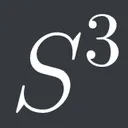 is clearly 3 dimensional and not a curve
prisma ibex
apparently Scholze is "hopeful" but Clausen is "skeptical" that their new formalism for analytic geometry can say the right things about F_1
cobalt heath
There is a new formalism on this?
prisma ibex
yes
all the previous formalisms of analytic geometry cannot treat Archimedean and non-Archimedean geometry on equal footing
Scholze and Clausen can
cobalt heath
Damn, mathematics can go pretty deep
prisma ibex
it's a fairly deep formalism yeah
in particular it requires doing away with topological spaces
and replacing them with something better
cobalt heath
I regret my decision to become a mathematician
cobalt heath
prisma ibex
and replacing them with something better
Hopefully simpler, I guess?
ivory trail
they're condensing F_1? i haven't heard about this actually
prisma ibex
they're trying to
idk if it will actually pan out
Scholze right now is trying to define a sort of "global Fargues Fontaine curve"
which might be some insane analytic space in this formalism
we already know what this should look like at the p-adic places and at the Archimedean places
rotund aurora
prisma ibex
because it has nothing to do with the actual goals of F_1 geometry
bruhh stop lying this is not geometry
prisma ibex
it ought to be!
one should be able to geometrize the global Langlands correspondence over number fields like this
but that's very pie in the sky at the moment
cobalt heath
Is mathematics ever worthy to do for me at this point, like there is too much to study before any trivial publication
prisma ibex
no just get good
cobalt heath
Someone might actually "finish" math, it feels
rotund aurora
cobalt heath
Is mathematics ever worthy to do for me at this point, like there is too much to...
I think this kind of mindset will just draw you back
prisma ibex
nah
cobalt heath
rotund aurora
I think this kind of mindset will just draw you back
True..
But it would be so hard to get a paper published at this point, I mean.
prisma ibex
there are lots of things in math that people consider "finished" but are absolutely not finished
a bulk of the stuff I work on was stuff that was "finished" in the 90s but nobody actually made explicit
stable thistle
i like abstract mathematics for its interestingness i don't really care about applications whether internal or external
ivory trail
cobalt heath
Someone might actually "finish" math, it feels
"finishing math" or even coming "close" would involve a theory of everything for physics, but it is impossible to "finish math" imo
cobalt heath
ivory trail
"finishing math" or even coming "close" would involve a theory of everything for...
Yea, it's just my feelings
rotund aurora
if it were possible to finish math, then you could ask to finish metamathematics
and then metametamathematics
etc
stable thistle
i'm a radical mathematical anti-realist, i think math is just the study of interesting consequences of sets of axioms
rotund aurora
but meta....metamathematics is still mathematics
ivory trail
there are so many unsolved puzzles left in physics that have yet to be studied deeply/mathematically
cobalt heath
Hmm
Even as a grad 1st yr student, I struggled with figuring out how a circle (from complex plane) can be described in R^2 inner product space. The one so trivial yet I had hard time with
Idk why I am suddenly ranting, sorry
Simply that there is massive skill gap between my level and the frontline of research
celest furnace
stable thistle
i'm a radical mathematical anti-realist, i think math is just the study of inter...
Ok
rustic crown
does anyone know how to cutely think of Emil Artin's argument about [F:F^G] <= |G| when G is finite subgroup of Aut(F) for some field F?
say |G| = n, and a0, ..., an in F are elements. we want to show these are linearly dependent over k = F^G. so consider the vector space V = F^(n+1) and then those elements define a vector a in V. we want to find x in V such that <x,a> = 0 and x is G invariant. Since g*x = x, these also satisfy <g*x, a> = 0 which means <x, g*a> = 0 for each g in G.
so the place to look for this x is the subspace W of V which is orthogonal to every g*a. since these are n vectors in an (n+1) dimensional vector space, W is non-trivial. so we want to find a non-zero vector x in W which is fixed by the action of G, hence lies in k^(n+1).
how do i say such an x exists without a lot of by hand tricks?
E. Artin's argument was this:
look at x in W with minimal number of non-zero coordinates. WLOG x0 is non-zero and so dividing by x0, we have an x in W with x0 = 1. claim is this x works. if it didn't, there will be some coordinate which isn't fixed by G, WLOG it's x1 say g*x1 != x1, then x - g*x is another vector in W with smaller number of non-zero entries which is a contradiction >.<
me get whenever these people use clever induction/well-ordering arguments
det was wondering if there is some k[G] or F[G] semi-simplicity happening behind the scenes which i don't see because of the clever-ness >.<
round hull
stable thistle
i know what the axioms are i'm asking why should they be that way
not really an answer but you can alternatively define a field as being a cring where an element is invertible iff it is nonzero
then one direction is the 0 ≠ 1 axiom and the other one is nonzero implies invertible
summer path
prisma ibex
there are lots of things in math that people consider "finished" but are absolut...
Do you consider classification of finite simple groups finished, out of curiosity
prisma ibex
summer path
Do you consider classification of finite simple groups finished, out of curiosit...
Yes and no
It’s certainly finished in the sense that we know the correct statement and essentially have a complete proof of it (spread out between many papers but whatever)
There is still a lot of work to be done streamlining this proof
delicate orchid
prisma ibex
There is still a lot of work to be done streamlining this proof
Good evening chat
summer path
Hewwo det 
 wraith cargo
rustic crown
does anyone know how to cutely think of Emil Artin's argument about [F:F^G] <= |...
wraith cargo
rustic crown
does anyone know how to cutely think of Emil Artin's argument about [F:F^G] <= |...
Mathematics Stack Exchange
Let $E$ be a field. If $G$ is subgroup of $\text{Aut} (E)$, then the set:
$\text{Inv}(G) = {a \in E: \forall \ \eta \in G, \eta(a) = a}$ is a subfield of $E$. Artin's lemma is:
Let $E$ be a fi...
Does this possibly help?
🥺
wraith cargo
rustic crown
det should look at MSE more often ><
It turns out people generally have no idea what the proof does so this wasnt hard to find >-<
rustic crown
summer path
Hewwo det <:eeveeKawaii:556858499930259471>
Hewwo tubu
rustic crown
wraith cargo
Does this possibly help?
okie it didn't really say anything new than what i had already thought :c
wraith cargo
rustic crown
okie it didn't really say anything new than what i had already thought :c
Aw :(
Sowwy

I was reading Popov and Vinberg’s book on invariant theory when they asserted a basic lemma (without proof) that I didn’t recognize. It was this (p. 155): Lemma 2.4: Suppose $latex K$ i…
What about thissssss
slim kayak
rustic crown
does anyone know how to cutely think of Emil Artin's argument about [F:F^G] <= |...
Can you explain what [F:F^G] means? Isn't the latter just a vector space of homomorphisms into the multiplicative group of F? How do you give it field structure?
rocky cloak
slim kayak
Can you explain what [F:F^G] means? Isn't the latter just a vector space of homo...
F^G is the fixed field of G, and is a subfield of F. [F:F^G] is the dimension of F as a F^G vector space.
coral shale
delicate orchid
Good evening chat
its noon u snoozler
 teal vessel
so I'm trying to show that all proper subgroups of a group Z are both finite and cyclic. I've shown that all finitely generated subgroups (of Z) are cyclic, which is sufficient for the second condition, since all finite groups are finitely generated, but now I need to show that all proper subgroups are finite, which is kinda annoying to do. The group in question is the group Z of all "p^n"th roots of unity for some fixed prime p (with n being any positive integer). That is, all complex numbers c such that c^(p^n)=1 for some positive integer n.
my first instinct is to try and show that any infinite subgroup must be equal to Z, but I'm not sure how to word that correctly
wait hold on.... this group's subgroups are ordered by inclusion...
slim kayak
teal vessel
so I'm trying to show that all proper subgroups of a group Z are both finite and...
Z the integers under addition?
teal vessel
slim kayak
Z the integers under addition?
$Z={z \in \mathbb{C} | z^{p^n}=1 \ \text{for some} \ n \in \mathbb{Z}^+ }$
cloud walrusBOT
GoldenPhoenix
 teal vessel
this is pulling directly from the question, which has access to the double-stroke Z vs just script Z, sorry
grouped under multiplication
delicate orchid
teal vessel
wait hold on.... this group's subgroups are ordered by inclusion...
this is a limit of cyclic groups
teal vessel
because n is a positive integer, it seems it must be the case that no matter what infinite subset of n I get I should be able to "absorb" the conditions of the subset into the complex base itself
idk how to articulate that meaningfully tho
icy bear
how is the concept of a set with a law of composition formally defined as a set?
is it like, ordered 3-tuples with (a, b, c) representing axb = c?
a function?
teal vessel
probably the set of pairings of ordered pairs (a,b) with singletons c
or, a subset of that set, anyway
delicate orchid
teal vessel
because n is a positive integer, it seems it must be the case that no matter wha...
It's clear that if the nth graded elements of Z are not in a subgroup H, then all higher gradings must be gone too to satisfy closure (or else we could have z | z^{p^{n+1}} = 1 in our subgroup but not z^p, a contradiction)
the grading I'm referring to is from the isomorphism $Z = \underset{\leftarrow}{\text{lim }} \bZ/p^k\bZ$
cloud walrusBOT
W;3w Lads Tbh
 icy bear
teal vessel
probably the set of pairings of ordered pairs (a,b) with singletons c
icy bear
teal vessel
probably the set of pairings of ordered pairs (a,b) with singletons c
and I suppose if it had 2 laws of composition it would be like {((a,b), (a,b)), c}
and so on
teal vessel
icy bear
and I suppose if it had 2 laws of composition it would be like {((a,b), (a,b)), ...
what do you mean by law of composition here?
delicate orchid
icy bear
how is the concept of a set _with_ a law of composition formally defined as a se...
this would be a valid way of encoding the data of the composition map
a strange one, but it would work
icy bear
teal vessel
what do you mean by law of composition here?
a function from A x A -> A in a set A
that is, all pairs of elements can be composed to go to another element
teal vessel
sure, within ZFC (the system I'm familiar with) you can always make pairs of elements, and the collection of objects "nominated" by members of a set according to some function or principle is always itself a set according to the axiom schema of replacement.
then you just take a subset of the cartesian product of (A x A) x A where the first member of each ordered pair is itself the pair which is associated with the second member
i.e. x(a,b)=c means that the object ((a,b),c) is a member of your function. (don't ask me to write the ordered pairs as pure sets, I don't feel like writing that many curly braces)
actually, because I'm curious: || {{a,{a,b}},{{a,{a,b}},c}}|| don't look if you value your sanity (this only works given the axiom of regularity is true).
icy bear
ig I could also represent it as (A, f)
just one ordered pair
set
law of composition
teal vessel
where A is acting as a stand-in for your original ordered pair?
icy bear
teal vessel
where A is acting as a stand-in for your original ordered pair?
no A is the set
f is the function
teal vessel
you could, sure
icy bear
that is a way of encoding the information
teal vessel
yeh
icy bear
I have seen stuff like (G, *, +) before so maybe that's the common way
the standard
tho idk if I like it
teal vessel
I've seen that, I've seen just "grouped under +"
delicate orchid
The actual answer is we don’t care
teal vessel
"G is a group" is sufficient
delicate orchid
icy bear
I have seen stuff like (G, *, +) before so maybe that's the common way
And this would be more akin to a ring
teal vessel
what's the grouping operation? unless it has some special properties like commutativity, we don't really care.
icy bear
delicate orchid
And this would be more akin to a ring
Ik probably that's where I've seen it
delicate orchid
teal vessel
what's the grouping operation? unless it has some special properties like commut...
Well sometimes we care, in which case we just say “under [operation]”
teal vessel
delicate orchid
Well sometimes we care, in which case we just say “under [operation]”
yeh
but often it's enough to know it's a group in some sense.
dull marsh

I know something is wrong here because in the dihedral group the same relation holds for a rotation and a reflection, but the last equation is not true in that case
rustic crown
you can't show that by induction >.<
rustic crown
say f(x) = b^-1 x b, then the assumption is f(a) = a^n. applying f again, you get f(f(a)) = f(a)^n = a^(n^2)
thus the correct statement you'll get is a * b^k = b^k * a^(n^k)
winter shore
Is there a characterization of finite rings? (similar to the one for finite groups)
dull marsh
I don't think there is a characterization of finite groups, are you perhaps talking about the classification of finite simple groups?
dull marsh
rustic crown
say f(x) = b^-1 x b, then the assumption is f(a) = a^n. applying f again, you ge...
So if we let b have order m, then a = a^{n^m}, meaning the order of a divides n^m - 1
winter shore
dull marsh
I don't think there is a characterization of finite groups, are you perhaps talk...
yeah mb
next obsidian
winter shore
Is there a characterization of finite rings? (similar to the one for finite grou...
Yes, at least in the case it’s commutative
In that case the ring is Artinian and a structure theorem for Artinian rings tells you it decomposes as a product of Artinian local rings
This is already a ton of structure, but I think if you want an even more refined characterization there isn’t any known one
winter shore
cool, thanks!
tardy hedge
So why do we care about polynomials anyway?
next obsidian
Polynomial
coral spindle
Because they are elements of the free R-algebra
tardy hedge
Wooooooow
slim kayak
tardy hedge
So why do we care about polynomials anyway?
They are nice
rotund aurora
next obsidian
In that case the ring is Artinian and a structure theorem for Artinian rings tel...
is this stuff in Matsumura?
next obsidian
rotund aurora
is this stuff in Matsumura?
I don’t remember, maybe not, but it’s standard stuff. Easy enough to prove
rotund aurora
okie
 glossy crag
next obsidian
In that case the ring is Artinian and a structure theorem for Artinian rings tel...
glossy crag
next obsidian
In that case the ring is Artinian and a structure theorem for Artinian rings tel...
Can this be derived from the semisimple decomposition somehow? Do finite rings have 0 Jacobson radical?
next obsidian
No
rocky cloak
glossy crag
Can this be derived from the semisimple decomposition somehow? Do finite rings h...
You can derive it from the semisimple decomposition in the sense, that if R is commutative artinian with Jacobson radical J, then R/J is semisimple and commutative, so R/J is the product of fields. Since idempotents lift modulo J, and in a commutative ring all idempotents are central, R is the product of rings such that modding out the radical gives a field. I.e. R is the product of local rings.
 void cosmos
rocky cloak
You can derive it from the semisimple decomposition in the sense, that if R is c...
void cosmos
rocky cloak
You can derive it from the semisimple decomposition in the sense, that if R is c...
king
similar to that problem u did with me
in my past exams
king of kings
 topaz solar
next obsidian
This is already a ton of structure, but I think if you want an even more refined...
topaz solar
next obsidian
This is already a ton of structure, but I think if you want an even more refined...
Well, apparently if it’s finitely generated and either Noetherian + PI or commutative, then you can determine it by first order formulas
But that is 
rotund aurora
why do people bully noncommutative rings? Aren't they literally more fun?
glossy crag
rocky cloak
You can derive it from the semisimple decomposition in the sense, that if R is c...
That's precisely what I was wondering about, how the R/J decomposition might lift to R. Thanks.
On a related subject, does anyone have a link by any chance to that one short paper that proves Artin-Wedderburn on 2 pages using the Brauer lemma (eRe)? Can't seem to find it anymore.
rocky cloak
Depends what you find fun. When you have more constraints, you also have more tools to state and prove theorems. But at the same time if you're too constrained you'll run out of interesting things to say.
In the field of representation theory of algebras, finite dimensional (noncommutative) algebras is in some sense the "next" level of difficulty after commutative Noetherian rings. So even with this very strong constraint of being finite dimensional, I'd argue noncommutative algebras is more complicated or similarly complicated to commutative Noetherian rings.
Still it is a very interesting field. And I would agree they are more fun 😊
Commutative algebra have this strong connection with geometry and number theory though. So some people (masochists) might argue that makes it more fun.
rotund aurora
I was kind of baiting, but I don't get why there is so much memeing of denying the existence of noncommutative rings, when they are not at all rare
rocky cloak
I guess it all comes down to "ring" being a cool word, and those pesky commutative algebraists wanting it for themselves.
Not liking non-commutative rings is just cring(e)
prisma ibex
rotund aurora
why do people bully noncommutative rings? Aren't they literally more fun?
I mean yes and no
you can't really set up algerbaic geometry with noncommutative rings the same way you can with commutative rings
there's lots of things that break for general rings that make commutative rings extremely nice