#groups-rings-fields
1 messages · Page 176 of 1
 abstract rock
if you've learned about what an automorphism group is, you can show this corresponds to certain automorphisms of the group
 white oxide
will this be sufficient to show that every maximal ideal in Z[x] is generated by 2 elements?
 white oxide
<@&286206848099549185>
 south patrol
Hm I mean it may need a bit more work
Since the Z-basis of I_n could be large enough
All this proof really shows is that every ideal of Z[x] is finitely generated
south patrol
And you can adapt to any PID
Well
This is basically Hilbert's basis theorem if you're interested
if every ideal of R is finitely generated, same is true of R[x]
This is a special case of R = Z, where the hypothesis is immediate since we have a PID
south patrol
Ye that's kinda my point lol like the proof method is too general
south patrol
I can't actually fully remember what's the easiest way to do your problem lol
the only way i have is a bit too powerful
white oxide
lol do you mind dropping it?
south patrol
actually nah it's okay
white oxide
lmao
south patrol
Well basically
Let m be your maximal ideal and consider m intersect Z
that's a prime ideal of Z, hence either 0 or pZ for some prime p
But then that is the harder bit
 rocky cloak
If you know how prime ideals interact with localization, you can say that a prime ideal of Z[x] that doesn't intersect Z corresponds to a prime ideal in Q[x], hence principal
south patrol
Yeah i think that's too fancy for okey's class though
I would say Z is Jacobson (and so is Z[x] as a result) which also shows m intersect Z is maximal
white oxide
wait so in that case would (p, x) = M
white oxide
hmm i'm not sure what jacobson or localization is
white oxide
ah okay lol nw
south patrol
Sorry i messed up lol
white oxide
ur good
south patrol
Yeah idk a non-fancy way to do this lol
Rip
fwiw the fancy way I know is actually like lol
m maximal, so m intersect Z is maximal and hence of the form pZ as jacobson
then we have inclusions 0 < pZ[x] < m
white oxide
Yeah I’m not surprised
south patrol
but a maximal ideal of Z[x] containing pZ[x] corresponds to a maximal ideal of Z[x]/pZ[x] = (Z/p)[x]
white oxide
Ta is a menance
south patrol
but this is a PID, so the maximal ideal is just generated by f mod p for some f in Z[x]
and hence m is generated by p and f
Oof
This is why a lot of the common examples are (2,x) and stuff
since 2 is a prime and x mod 2 is irreducible
But e.g. x^2 + 2 is irreducible over Z, but (2, x^2 + 2) isn't even prime
white oxide
south patrol
Oof
Oh wait so would that proof work with that fancy machinery and stuff
south patrol
wdym
white oxide
Nvm lol I didn’t know what I meant
white oxide
south patrol
since 2 is a prime and x mod 2 is irreducible
Ohhh ok I see
rocky cloak
How about this:
So you have an ideal generated by f1, ..., fn
Consider the ideal in Q[x] generated by the same elements, then this will equal (g) for some polynomial g. (We may assume the coefficients of g are relatively prime)
Case 1: g=1, then there's some combination of the f1 that makes 1, multiplying out the denominators there's some Z[x] combinations of f that make an integer, hence the ideal intersects Z, and you reduce to the Z/p case.
Case 2: the ideal doesn't contain g. Then adding g gives a bigger ideal, hence not maximal.
Case 3: g is contained in the ideal. We know that fi = ghi for rational polynomials h. Choose p relatively prime to all the denominators of the hi coefficients and the coefficients of g. Then the ideal is contained in (p, g) hence equals (p, g)
@white oxide
white oxide
thank you, i'll take a look at that
rocky cloak
(I guess case 2 is redundant)
rocky cloak
white oxide
will this be sufficient to show that every maximal ideal in Z[x] is generated by...
This assumes you've already proven Z[x] is Noetherian though, which you more or less did here
white oxide
rocky cloak
This assumes you've already proven Z[x] is Noetherian though, which you more or ...
Could I also use the hilbert basis theorem for that
Z noetherian
I think
rocky cloak
Yes, that works
 torn warren

hello, I have a question, is my understanding correct?
the red line is translated to red line, and blue line translated to blue line
white oxide
i'm a little confused as to why every element of the tensor product is not of the form a tensor b, if my definition the cosets of K in F are of the form a tensor b?

 delicate orchid
a (x) b + b (x) a is not an elementary tensor
white oxide
what's an elementary tensor?
delicate orchid
x (x) y
white oxide
ohh ok that makes sense i think
delicate orchid
as it says, the tensor product is generated by those elements
generated being the key word
 tribal moss
A useful main example to keep in mind is the tensor product of two vector spaces of dimension n and m. That simply consists of all n×m matrices.
Elementary tensors are the matrices of rank 1.
white oxide
tribal moss
A useful main example to keep in mind is the tensor product of two _vector space...
oh intersesting
tribal moss
(Matrix rank, not tensor rank here).
 long obsidian
What does the quotient $\frac{\mathbb{Z}[x]}{<2>}$ look like?
 cloud walrusBOT
HausdorffT1
 delicate orchid
F_2[x]
long obsidian
So it just amounts to quotienting the underlying ring?
delicate orchid
well see if you can show that
tribal moss
v otimes w is then the matrix v w^T.
(In particular e_i otimes e_j is the matrix with all zeroes except a 1 in the element pointed to by their indices, which tells us that those tensors are a basis for the tensor product).
Since v w^T has a one-dimensional column space (the column space is generated by v, unless w=0), not all matrices can have that form.
white oxide
hmm ok i'll definitely think about that for concreteness, thanks
why exactly do we choose K to be generated by elements of the form (i)-(iii)? can somebody explain it to me like i'm five lol
 delicate orchid
those are the relations a bilinear function satisfies
if you put a "= 0" on the end because we're quotienting
white oxide
is that the same thing as middle linear?
 void cosmos
white oxide
why exactly do we choose K to be generated by elements of the form (i)-(iii)? ca...
void cosmos
white oxide
why exactly do we choose K to be generated by elements of the form (i)-(iii)? ca...
these relations
are exactly what u need
so that u go from bilinear maps in M x N to linear maps in M tensor N
cuz they are equivalent now lmfoa
 next obsidian
Tf is middle linear
void cosmos
white oxide
why exactly do we choose K to be generated by elements of the form (i)-(iii)? ca...
u now quotient the free module by all of these relations
white oxide
next obsidian
Tf is middle linear
 void cosmos
hungerford
next obsidian
But yes this is a bilinear map
Or really it’s a like
“Balanced map” or something
Never in my life have I seen this term lol
white oxide
void cosmos
so that u go from bilinear maps in M x N to linear maps in M tensor N
i think that makes sense...
a little bit..
void cosmos
take these for granted for like 3 minutes
he then proves that this gives out the universal property instantly
hopefully it should click
void cosmos
everyone hates hungerford idk why 😦
delicate orchid
or hungerford whatever
if it's the same book as yesterday this is the last straw
void cosmos
i think he is too far to go back now
white oxide
NAH BRO HUNGERFORD CLEARSS
void cosmos
btw the motivation is ( i think ? ) the same
as with tensor products of vec spaces
which u probably saw in linear alg
white oxide
nah we didn't even get to jordan normal form and determinants and complexification and stuff in lin alg
😹
void cosmos
happens ig haha
this section has one of the coolest shit ever in math for me
the "adjoint" shit with hom and tensor
hopefully it blows ur mind too
white oxide
how is this easy to see :(
 void cosmos
white oxide
how is this easy to see :(
void cosmos
white oxide
how is this easy to see :(
(8)
white oxide
am i supposed to see that $a \otimes 0 + a \otimes 0 = a \otimes 0$ or smt
cloud walrusBOT
okeyokay
 white oxide
void cosmos
(8)
white oxide
void cosmos
(8)
o
delicate orchid
cloud walrus
**okeyokay**
no because it isn't
white oxide
o
wait now how tf does 0 \otimes b = 0 \otimes 0

OH
wait nvm
wait yeah
wait nvm
wait where does one use the fact that x + x = x implies x = 0
cuz
delicate orchid
0 \otimes b = (0*0) \otimes b = 0(0 \otimes b) = 0 \otimes 0
white oxide
$0(0)b \otimes b = 0 \otimes 0b = 0 \otimes 0$
cloud walrusBOT
okeyokay
 delicate orchid
yeah there you go
white oxide
ye
but like how does 0 being the only element that satisfies x + x = x satisfy it
actually nvm
i proved it forget about it lol
hungerford my beloved
❤️
delicate orchid
middle fuckin linear
white oxide
LOL
delicate orchid
that's based
delicate orchid
nobody cares about categories up to isomorphism
white oxide
well Lang calls ufds factorial rings and integral domains entire rings, so imma have to go w/ hungerford sadly
delicate orchid
yeah that's understandable
white oxide
hungerford does just the right amount of hand holding
lang kicks you to the curb and says good luck
void cosmos
yea man not really that was a joke
the only cool part is
we know more definitions
like quasi-regular
lmfao
 sly crescent
delicate orchid
nobody cares about categories up to isomorphism
sly crescent
delicate orchid
nobody cares about categories up to isomorphism
I do
next obsidian
Why is the choice only between Hungerford and Lang????
This is like only babymode or hardcore mode
white oxide
next obsidian
Why is the choice only between Hungerford and Lang????
What other selections are there???
delicate orchid
fartin
white oxide
next obsidian
Aluffi, Dummit and Foote
never heard of those; ergo they must not be good
delicate orchid
white oxide
never heard of those; ergo they must not be good
how
next obsidian

delicate orchid
white oxide
nah i'm just playin i have
 white oxide
do bilinear maps send (0, 0) to 0
 chilly ocean
prove it
delicate orchid
yeah have a think about that one
considering we previously showed that a (x) 0 = 0 (x) 0 there's a slightly more powerful statement you can say
white oxide
hrmmm ok
cuz i was tryna show that $g_1\bigl((a + a', b) - (a, b) - (a', b)\bigl) = 0$, so I got $g_1\bigl((a + a', b) - (a, b) - (a', b)\bigl) = g(0, -b) = g(0, 0)$
 cloud walrusBOT
okeyokay

 night onyx
cloud walrus
**okeyokay**
night onyx
cloud walrus
**okeyokay**
the map (a, b) -> a tensor b is (by definition) linear in both variables, and linear maps send 0 to 0
 cerulean trout
Is F(V)=K here?
 cerulean trout
yeah
 cobalt heath
Perhaps use your intuition?
cobalt heath
 perhaps?
cerulean trout
so then F(V) would include every y???
sorry if im misunderstanding something terribly here ;-;
cobalt heath
Nah actually this is a trivial one so let me apell it out
Soo what is the inverse of 0?
cerulean trout
anything?
cobalt heath
Yep!
cerulean trout
ah ok ic I think
so V(xy-1) = K \ 0
and I(K \ 0) = 0
but V(0) = K
is that right?
cobalt heath
Yep
south patrol
a drawing actually helps here lol
one fun thing is that there is an analogous thing when you consider R (with its standard topology)
It's an example of a projection map which isn't closed
abstract rock
was lookin through that open question article someone posted from arxiv awhile ago and the following seemed like a bit deceptively simple for a 60 yr old problem. Though my question is the original author asking about abelian extensions as abelian galois extensions from galois theory or abelian by abelian extensions in the language of group theory.
 cobalt heath
It took me a few hours to go through first 2 sections of hartshorne chapter 2. How can I go faster?
cobalt heath
I see, thanks. I wish I could go faster to keep up with the scheme homology class.
 chilly radish
cobalt heath
~~Honestly it’s just index reversed~~
chilly radish
cobalt heath
~~Honestly it’s just index reversed~~
It's not tho
chilly radish
I mean there's a lot of fundamental reasons why it's more than just reversing the arrows, but there's cases that you can't really define a homology theory but you can define a cohomology theory
e.g. in the case of sheaf cohomology, you can't define a reasonable notion of sheaf homology, at least at first (you can provide alternative definitions which end up being equivalent)
So for sheaves this is because the category of sheaves might not have enough projectives, bur it always has enough injectives
To define a suitable dual notion of a homology theory you would first need to be able to generalise your definition of derived functor
Which is what sheaf cohomology is built upon
While these will end up being formally dual in some sense, one is much easier to compute in general
And some properties are best seen through the lens of one
cerulean trout
I'm a little confused by the notation here...y_j is a just a a variable in the polynomial, not a function, right? I suppose this is just referring to F_j?
 torn warren

Do I understand this correctly? I translate the red line into red line, and blue line into blue line.
 tiny jolt
cerulean trout
I'm a little confused by the notation here...y_j is a just a a variable in the p...
tiny jolt
cerulean trout
I'm a little confused by the notation here...y_j is a just a a variable in the p...
y_j is the coordinate function
cerulean trout
tiny jolt
y_j is the coordinate function
what is the coordinate function?
the word coordinate does not appear in the textbook prior to this ;-;
cerulean trout
Oh i see
cobalt heath
chilly radish
I mean there's a lot of fundamental reasons why it's more than just reversing th...
I just do not know the fundamental differences between chains and cochains.
Aren’t they just differ by how their index is given?
torn warren
can anyone help me on this understanding..
cobalt heath
torn warren
Seems correct ime
rocky cloak
cobalt heath
Aren’t they just differ by how their index is given?
Algebraically there is no difference between homology and cohomology, except the indexing convention. Both are just kernel modulo image.
But usually you don't just consider the cohomology of a random complex, but you are interested in using homology to study certain objects (topological spaces, sheaves, groups, algebras, smooth manifold, lie algebras). Whether you call something homology or cohomology then comes from how you construct a complex from your object. As a rule of thumb, if the process is closely related to Ext then it's cohomology and if it's closely related to Tor then it's homology.
rocky cloak
cobalt heath
So convention and the origin is important, I guess?
It depends I guess. If you're just studying modules and chain complexes for themselves, and not as an invariant to study anything else then it makes no difference.
So for me, for example, it doesn't really matter whether I think of it as homology or cohomology. Just have to be consistent with indexing of course
cobalt heath
Is valuation just multiplicative homomorphism R -> V? Or is there more to it
 delicate bloom
cobalt heath
Is valuation just multiplicative homomorphism R -> V? Or is there more to it
delicate bloom
cobalt heath
Is valuation just multiplicative homomorphism R -> V? Or is there more to it
what kind of response are you fishing for here
cobalt heath
Sorry, I’ll google for definition when I get time.
I would indeed appreciate some intuition tho
delicate orchid
cobalt heath
I would indeed appreciate some intuition tho
It’s the p-adic valuation but more general
 plush tree
In chapter 7 of Hydon's book on Symmetry methods, he describes a method to find first integrals of ODEs using characteristics of symmetries. The method very roughly takes various permutations of the Wronskian of n+1 (or more) symmetry characteristics for an nth order ODE, and their ratios under some conditions are first integrals. The system o first integrals is then purely algebraic, allowing you to solve the ODE. Since every integral is a first integral of some first order ODE, could this method be used to evaluate arbitrary/undocumented integrals?
 dense raven
When can the multiplication operation of a finitely generated group be extended to its asymptotic cone? I know it works for finitely generated abelian groups.
 tardy hedge
Does problem #25 basically reduce to “odd + odd = even”?
 next obsidian
ya
tardy hedge
Nice
white oxide
what's the importance of this theorem? it seems as if it's saying that right modules preserve exactness under tensoring with certain conditions... is there anything more to this?
 next obsidian
It says tensoring is right exact
delicate orchid
have you seen that Hom is left exact
rocky cloak
Fun fact:
Any right exact functor F: mod R -> mod S that preserves direct sums is given by tensoring with a bimodule
delicate orchid
I buy it
white oxide
delicate orchid
have you seen that Hom is left exact
uhh i went over it like once over the summer i think
delicate orchid
yeah so this is just that but going the other way
white oxide
is it this
 delicate orchid
yur
white oxide
oh so when hungerford says "hom is a sort of dual notion to tensoring" or whatever
delicate orchid
note how the 0 for the tensored sequence is on the other side
white oxide
is this kinda what he means
delicate orchid
white oxide
oh so when hungerford says "hom is a sort of dual notion to tensoring" or whatev...
they're adjoint functors
white oxide
delicate orchid
note how the 0 for the tensored sequence is on the other side
oh ye
wait so
i'm assuming the functors would be you fix a module D, then A \mapsto D \otimes A
and then for the hom functor it's just A maps to Hom_R(A, D)
cloud walrusBOT
WewGhostTbh
 south patrol
I've always wondered if this admits any nicely categorical proof lol
delicate orchid
what the fact that uhhh right/left adjoints between module categories are left/right exact?
south patrol
No lol
delicate orchid
oh
delicate orchid
that's the same thing
delicate orchid
ah
south patrol
That bit always feels dodgy
delicate orchid
yeah I see what you mean now
delicate orchid
apply Ext to the whole thing, and then since they are inverses you get back to where you started :thecosmoshumswithatunemostsweet:
 coral spindle
show us the emoji, wew
delicate orchid
the velvet curtain remains drawn
delicate orchid
no that's just a thing I had in my head
coral spindle
isn't that what all emojis are
delicate orchid
perhaps...
rocky cloak
south patrol
But perhaps we can just pick appropriate D and use Ext to make it work
I mean A -f-> B -> C -> 0 is exact iff C is the cokernel of f. And the definition of cokernel is just that the sequence remains exact when you apply Hom(-, D) for every D
 unkempt mountain
what's the point of learning abstract algebra, can it lead to proving other concepts in math that can do something within the real world, does it just stay in mathematics, or can it directly be applied to reality
delicate orchid
heard of "quantum mechanics"?
rocky cloak
unkempt mountain
what's the point of learning abstract algebra, can it lead to proving other conc...
Abstract algebra does indeed have many applications, both to other fields of math and the sciences
unkempt mountain
interesting
rocky cloak
For example cryptography and coding theory is something you interact with in the real world every day, and heavily uses abstract algebra.
Representation theory of groups apears in solid state physics and chemistry.
Noether's theorem is a theorem in Lagrangian mechanics, relating symmetry groups to preserves quantitees in physical systems.
unkempt mountain
that's cool I always presumed that abstract algebra was just purely mathematical as the abstract name suggests lol
rocky cloak
I mean most mathematicians simply call it algebra, the name "abstract algebra" is just to differentiate it from the primary school subject people call "algebra"
 alpine island
Really I think they should rename the primary school one.
 karmic moat
is this 'extending scalars' just saying you can take an S-module and turn it into an R-module
 tardy hedge
For Z4 x Z2 are all subgroups {e} x Z2, Z2 x Z2, Z4 x {e}, {e} x {e}?
rocky cloak
karmic moat
is this 'extending scalars' just saying you can take an S-module and turn it int...
Yeah, or rather it's giving you one way of turning S modules into R modules
tardy hedge
And Z4 x Z2
delicate orchid
tardy hedge
For Z4 x Z2 are all subgroups {e} x Z2, Z2 x Z2, Z4 x {e}, {e} x {e}?
looks right
tardy hedge
The question itself asked for all cyclic subgrps of that . So i first listed all subgrps and now i will see which ones are cyclic
delicate orchid
don't forget Z2 x {e}
rocky cloak
tardy hedge
For Z4 x Z2 are all subgroups {e} x Z2, Z2 x Z2, Z4 x {e}, {e} x {e}?
Think you're missing at least the one generated by (2, 1) for example
tardy hedge
Oh yeah
rocky cloak
A better way to find all cyclic subgroups is probably to consider the subgroup each element generates
tardy hedge
Yea, prt of the reason im talking about this is cuz i feel there are better ways
tardy hedge
Oh yeah cause a cyclic group must have some element generating it
delicate orchid
exactly
tardy hedge
So for this low order group its easy to check them all
delicate orchid
the rot
karmic moat
oh so true
if i print physical copy
i can put 3 inch margins
so i have room to write annotations
you're a genius!
white oxide
karmic moat
is this 'extending scalars' just saying you can take an S-module and turn it int...
wait bro
i'm literally going over the same theorem now
or at least i think so
my question was how does alpha being a homomorphism imply that it's well-defined

 karmic moat
i think i learned most of this tensor stuff in a linear algebra class
just generalizing to modules now
white oxide
oh damn we didn't cover tensors in lin alg
delicate orchid
tensors in a lin alg is cracked
karmic moat
it was kind of something we shoved at the end because we had time
 summer path
why are all these tensors so large
delicate orchid
that's all of mathematics
karmic moat
real
we defined tensor products, using quotient spaces to define bilinear relations, proved existence of tensor products, and then did extension of scalars
and then i guess he didnt feel like doing more so we moved onto the group of matrices and invariant subspaces
non commutative algebra is weird
im not used to thinking about left and right modules
karmic moat
non-commutative algebraists
dense raven
summer path
who actually cares about noncommutative algebra
geometric group theorists
white oxide
what am I doing wrong here? $\alpha(r_1 + r_2 \otimes b_1 + b_2) = r_1(b_1 + b_2) + r_2(b_1 + b_2) \neq r_1b_1 + r_2b_2 = \alpha(r_1 \otimes b_1) + \alpha(r_2 \otimes b_2)$
 cloud walrusBOT
okeyokay
 rocky cloak
white oxide
what am I doing wrong here? $\alpha(r_1 + r_2 \otimes b_1 + b_2) = r_1(b_1 + b_2...
rocky cloak
white oxide
what am I doing wrong here? $\alpha(r_1 + r_2 \otimes b_1 + b_2) = r_1(b_1 + b_2...
Expecting the two sides to be equal maybe.
I don't see that you're doing anything wrong.
white oxide
oh sorry i meant as in i'm trying to show that alpha is a group homomorphism
and that's what i need to show
that $\alpha(r_1 + r_2 \otimes b_1 + b_2) = \alpha(r_1 \otimes b_1) + \alpha(r_2 \otimes b_2)$ right
cloud walrusBOT
okeyokay
 white oxide
but i expanded them and they're not equal
rocky cloak
white oxide
that $\alpha(r_1 + r_2 \otimes b_1 + b_2) = \alpha(r_1 \otimes b_1) + \alpha(r_2...
No, that's not something you want to show
white oxide
whatever i'll come backc i've seen enough $\otimes$ for today
cloud walrusBOT
okeyokay
 rocky cloak
Being a group homomorphism just means that f(x + y) = f(x) + f(y), no complicated cross addition of the two factors in the tensor like this
south patrol
rocky cloak
I mean A -f-> B -> C -> 0 is exact iff C is the cokernel of f. And the definitio...
Okay nice
 elder wave
karmic moat
maybe i'll buy a physical copy
elder wave
karmic moat
maybe i'll buy a physical copy
It’s a little big, very unhandy
i have one
 spice whale
summer path
who actually cares about noncommutative algebra
spice whale
summer path
who actually cares about noncommutative algebra
rep theorists
also ShiN
rocky cloak
summer path
who actually cares about noncommutative algebra
If your algebra isn't noncommutative then you're just a geometer in disguise
karmic moat
elder wave
It’s a little big, very unhandy
NOOOOOOOOOOO
i was hoping it would be a small-ish size
elder wave
karmic moat
i was hoping it would be a small-ish size
How would that work with >700 pages 
karmic moat
NOOOOO I DIDNT KNOW IT WAS >700 PAGES
day literally ruined
i give up. im not studying hom alg anymore
torn warren
For this theorem, I don't want to use the way as the textbook (see the circled part), after the step irr(beta, F) divides irr(alpha, F), can I prove it in this way?


 south patrol
Helo
torn warren
🥹
south patrol
Okay this is unfamliar notation so i shall perservere
torn warren
which notation?
south patrol
irr(alpha,F) but dw it's clear what it means
Yes I think yours works just fine
If an irreducible polynomial divides another, then they're the same up to units
and since both are monic they agree
I do think symmetry arguments are nice too but yes
torn warren
thank you!
south patrol
np
torn warren
I have another question, can you help me too?
 ivory trail
torn warren
I have another question, can you help me too?
ivory trail
torn warren
I have another question, can you help me too?
you should just post the question and people will help if they want, without making someone commit first
torn warren
okay, let me type it
If I take an example, say let $f=(x-\alpha)^m(x-\beta)^n$, after I apply $\tau_x$ to $f$, do I get $\tau_x(f)=(x-\beta)^m(x-\beta)^n$? My question is it seems undefined for $\tau_x(\beta)=?$
 cloud walrusBOT
WT

 kind pier
what is (c) asking me to do if not to prove (a)?
 torn warren
kind pier
what is (c) asking me to do if not to prove (a)?
torn warren
kind pier
what is (c) asking me to do if not to prove (a)?
just redo part(a) for a,b in Z
kind pier
oh lmfao i didn't notice it said Z+ until now thank you
sly crescent
torn warren
what is lmfao?
Laughing My Fucking Ass Off
rocky cloak
torn warren
what is lmfao?
This feels like a lucky 10000 moment
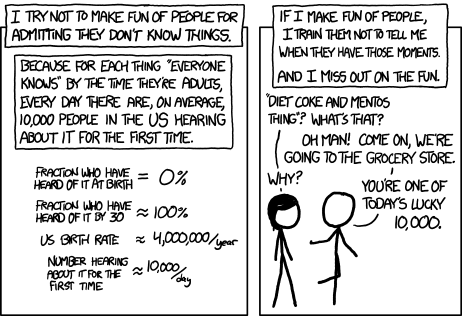
Saying 'what kind of an idiot doesn't know about the Yellowstone supervolcano' is so much more boring than telling someone about the Yellowstone supervolcano for the first time.
torn warren
rocky cloak
This feels like a lucky 10000 moment
https://xkcd.com/1053/
If I take an example, say let $f=(x-\alpha)^m(x-\beta)^n$, after I apply $\tau_x$ to $f$, do I get $\tau_x(f)=(x-\beta)^m(x-\beta)^n$? My question is it seems undefined for $\tau_x(\beta)=?$
cloud walrusBOT
WT

 rocky cloak
torn warren
If I take an example, say let $f=(x-\alpha)^m(x-\beta)^n$, after I apply $\tau_x...
rocky cloak
torn warren
If I take an example, say let $f=(x-\alpha)^m(x-\beta)^n$, after I apply $\tau_x...
That's not what you get from tau(f) though. Should be
(x - beta)^m (x - tau(beta))^n
torn warren
rocky cloak
That's not what you get from tau(f) though. Should be
(x - beta)^m (x - tau(bet...
but what is tau(beta)? it is undefined, since beta is not in F(alpha)
rocky cloak
torn warren
but what is tau(beta)? it is undefined, since beta is not in F(alpha)
tau is defined on the algebraic closure of F, so it's not undefined. Exactly what tau(beta) is is irrelevant to the proof
It will just be some conjugate of beta
torn warren
rocky cloak
tau is defined on the algebraic closure of F, so it's not undefined. Exactly wha...
oh, right, I get wrong, I thought $\psi$ is undefined on beta, right? $\psi(beta)$ is undefined
cloud walrusBOT
WT
 rocky cloak
torn warren
oh, right, I get wrong, I thought $\psi$ is undefined on beta, right? $\psi(beta...
rocky cloak
torn warren
oh, right, I get wrong, I thought $\psi$ is undefined on beta, right? $\psi(beta...
Yeah, psi(beta) would be undefined
(Unless beta happens to be contained in F(alpha) I guess)
torn warren
rocky cloak
Yeah, psi(beta) would be undefined
(Unless beta happens to be contained in F(alp...
thank you, yes, and is there a theorem to say about when the conjugate can be in the same extension field? for example, $Q(\sqrt2)=Q(-\sqrt2), R(i)=R(-i)$, but $Q(2^{1/3})\neq Q((2^{1/3}e^{i2\pi/3})$, while $2^{1/3}$ and $2^{1/3}e^{i2\pi/3}$ are conjugate.
cloud walrusBOT
WT
 rocky cloak
torn warren
thank you, yes, and is there a theorem to say about when the conjugate can be in...
rocky cloak
torn warren
thank you, yes, and is there a theorem to say about when the conjugate can be in...
I'm not sure whether there is any helpful theorem, but it's equivalent to the Galois group having same order as the degree. And in particular the Galois group will be abelian.
So any degree 2 polynomial have the property. Don't know if you can say much more than that.
torn warren
rocky cloak
I'm not sure whether there is any helpful theorem, but it's equivalent to the Ga...
the degree is the highest order of the irr poly, say $n$, and the order is $p^n$ for some prime p as the characteristic. If they are equal then $p^n=n$? do I understand correctly?
cloud walrusBOT
WT

 plush quartz
 rocky cloak
torn warren
the degree is the highest order of the irr poly, say $n$, and the order is $p^n$...
rocky cloak
torn warren
the degree is the highest order of the irr poly, say $n$, and the order is $p^n$...
I'm not sure what you're saying...
plush quartz
This is not true. Let S= {-2,-3,-4,0,2,3,4}
rocky cloak
plush quartz
This is not true. Let S= {-2,-3,-4,0,2,3,4}
2 + (-3) = -1
delicate orchid
4+4 = 8
plush quartz
rocky cloak
2 + (-3) = -1
nvm thanks for correcting my incorrect claim lol
i didnt list a subgroup
torn warren
rocky cloak
I'm not sure whether there is any helpful theorem, but it's equivalent to the Ga...
oh, sorry I thought Galois field, I haven't learn Galois group..
they are very different?
🥹
rocky cloak
torn warren
they are very different?
The Galois group is just the group of automorphisms of a field extension. And you talk about the Galois group of a polynomial by considering the Galois group of the splitting field
Galois fields are just finite fields, so they're not really directly related.
torn warren
rocky cloak
The Galois group is just the group of automorphisms of a field extension. And yo...
is the number of automorphisms of a field extension equals the number of distinct roots in the spliting field?
 uncut girder
torn warren
is the number of automorphisms of a field extension equals the number of distinc...
uncut girder
torn warren
is the number of automorphisms of a field extension equals the number of distinc...
Not necessarily
I encourage you to think of an example
rocky cloak
torn warren
is the number of automorphisms of a field extension equals the number of distinc...
Almost. The order of the Galois group is the dimension of the splitting field.
So tieing back to what I said before, if f is an irreducible polynomial of degree n, with root alpha then F(alpha) is the splitting field of F iff the Galois group has order n
torn warren
Thank you, I will keep in mind this after I learn that chapter, currenlty I am reading spliting field and separable extension

@rocky cloak @uncut girder
tardy hedge
If G has a unique element a of order 2, show that a is in the center of G
uncut girder
Nice
tardy hedge
How we do this
uncut girder
Ate u reading dummit and foote @torn warren
torn warren
uncut girder
Ate u reading dummit and foote <@855446657538064436>
I am reading Fraleigh
uncut girder
tardy hedge
If G has a unique element a of order 2, show that a is in the center of G
Whats the order of the conjugate of an order 2 element by an arbitrary group element?
uncut girder
torn warren
I am reading Fraleigh
Cool
uncut girder
Yes
Say g is the unique order 2 element and a is arbitrary group element. Whats the order of aga^-1?
delicate orchid
can we view this as a degree 2 extension of K(y)? like K(V) = K(y)/(y^5-x^2)? If so then this is obvious
if we can't, then #algebraic-geometry will be more help
cobalt heath
Yea I think that's what's happening here
Btw, is any sheaf on noetherian scheme a coherent sheaf? And is quasicoherent subsheaf of coherent sheaf a coherent sheaf
delicate orchid
it's a degree 2 extension so {1, x} forms a basis of K(V) as a K(y)-vector space
alternatively, any higher terms x^n are either equivalent to y^m or xy^m for some m
this is of course assuming it is actually a degree 2 extenstion, I kind of got that completely from vibes
 charred crescent
can i ask a linear algebra question in here or nah
summer path
 open sluice
#nonlinear-algebra
cobalt heath
Let me ask again.
Is any sheaf on noetherian scheme a coherent sheaf? And is quasicoherent subsheaf of coherent sheaf a coherent sheaf?
I thought so after learning their definition, but professor talked about quasicoherent subsheaf of the trivial bundle, which seems to imply that this wohld not hold.
next obsidian
No, and then yes
cobalt heath
Well so much for me saying "any sheaf on noetherian sheaf"
I meant to say the trivial line bundle.
next obsidian
This also isn’t really the right place for such a question, belongs more in #algebraic-geometry
cobalt heath
I see, thank you.
 mighty spade
Anybody know if there are any free modules (not vector spaces) such that the determinant is still an Euler-Poincaré map?

 sonic coral
Let G be a finite group of order n and H a nontrivial subgroup of G. Let k = [G:H]. If n does not divide k! then G is not simple.
For groups that aren’t simple, does this imply the existence of a subgroup that is “big enough” to show the group is not simple
or is that what the sylow theorems are for
 errant shadow
Are centres always finite abelian groups?
 topaz solar
errant shadow
Are centres always finite abelian groups?
topaz solar
errant shadow
Are centres always finite abelian groups?
Consider the center of an infinite abelian group
errant shadow
topaz solar
Consider the center of an infinite abelian group
Ah right, my bad.
 woeful sage
summer path
<#540211747613704221>
woeful sage
summer path
<#540211747613704221>
vector spaces are just modules over fields 
 teal vessel
just making sure: this is the multiplicative group of the integers mod 2^n, right? i.e. Z (mod 2^n) - {0}
 coral spindle
Yes
teal vessel
ok, that'll be interesting to work with.
abstract rock
Compute the euler totient, should give you what you need
night onyx
teal vessel
just making sure: this is the *multiplicative group* of the integers mod 2^n, ri...
specically those which are coprime to 2^n
teal vessel
yeah, got that pretty quick. I was thinking too smoll
all coprime elements at n=3 square to 1, that's interesting.
 lusty marlin
teal vessel
all coprime elements at n=3 square to 1, that's interesting.
lusty marlin
teal vessel
all coprime elements at n=3 square to 1, that's interesting.
Yes, the multiplicative group of integers mod 8 is isomorphic to ℤ₂×ℤ₂
 noble hedge
Is there a nice way to prove that for a field ext K/F that no homomorphisms from K to F exist when [K:F]>1?
It seems intuitive but I'm a bit concerned about a counterexample involving some weird cardinality.
coral spindle
Well unfortunately this isn't true: the algebraic closure of C(x) is isomorphic to C
noble hedge
Oh shit really?
noble hedge
C not as in complex numbers, right?
coral spindle
C is the complex numbers.
 crystal turtle
Weird cardinality argument comes to the rescue again
delicate orchid
noble hedge
Is there a nice way to prove that for a field ext K/F that no homomorphisms from...
this is true for finite fields by an easy cardinality argument
noble hedge
Ah okay
noble hedge
coral spindle
C is the complex numbers.
Yeah mb I misattributed algebraic closure to C and not C(x)
Okay wait what about extensions of the form [F(x):F]? That'd still be infinite, but F(x) wouldn't necessarily be algebraically closed right?
For infinite fields F
crystal turtle
coral spindle
Well unfortunately this isn't true: the algebraic closure of C(x) is isomorphic ...
I assume this is what one uses to prove this: Just check the alg closure of C(x) has same cardinality as C
coral spindle
noble hedge
Okay wait what about extensions of the form [F(x):F]? That'd still be infinite, ...
Well a homomorphism there is determined by where you send x, which is only well-defined if you choose some element in F which is not a root of a polynomial in F... I'll leave you to see the issue there
noble hedge
All elements a of F are roots of the polynomial x-a right?
And the not-well-defined part comes from the fact that you can construct multiple polynomials that would be mapped to the same element, should you have picked an element that is a root of some polynomial in F?
delicate orchid
multiple polynomials that would be mapped to the same element
immediate contradiction as field homomorphisms must be injective
noble hedge
Right, that's what makes it not well-defined.
teal vessel
double check to make sure I'm not stupid and misremembering things:
for finite, abelian groups, given the orders of x and y are a, and b, respectively, the order of xy should be the LCM(a,b), yes?
 viscid pewter
yes
delicate orchid
G = Z/6Z. o(1) = 6, o(2) = 3, o(1+2) = 2 \neq LCM(6, 3) = 6
teal vessel
so yes, I am being dumb and misremembering things
rocky cloak
noble hedge
Okay wait what about extensions of the form [F(x):F]? That'd still be infinite, ...
Let F be the the field of rational functions in infinitely many variables. Then F is isomorphic to F(x).
I guess an interesting question is whether F can be isomorphic to K if [K:F] is a finite extension
Meh, not that interesting either, as Q(x) is isomorphic to Q(x^2) for example
noble hedge
That was actually the example that made me fear for a weird example involving uncountable cardinalities.
rocky cloak
noble hedge
That was actually the example that made me fear for a weird example involving un...
Well Q(x) is countable
teal vessel
delicate orchid
G = Z/6Z. o(1) = 6, o(2) = 3, o(1+2) = 2 \neq LCM(6, 3) = 6
oh, actually, for a finite abelian group, given |x|=a and |y|=b, |xy| must divide lcm(a,b), so I still have what I need, cool.
noble hedge
rocky cloak
Well Q(x) is countable
Uncountable cardinalities seem even less intuitive to me in these situations and allow for some unfunnyness to occur sometimes.
delicate orchid
teal vessel
oh, actually, for a finite abelian group, given |x|=a and |y|=b, |xy| *must divi...
yeah cause (ab)^n = a^nb^n = e implies o(a)|n, o(b)|n
rocky cloak
noble hedge
Uncountable cardinalities seem even less intuitive to me in these situations and...
Sure, but this time you can't blame uncountability since Q(x^2) < Q(x) is a finite extension of countable fields
noble hedge
I meant as a consideration for the occurrence of a counterexample to my original question.
rocky cloak
Yeah, so there are counterexamples that are countable, so you don't have to do any weird uncountable chenanigans
Maybe I just don't understand what you're trying to say
noble hedge
I wasn't looking specifically for a counterexample, it was more of just an intuition that a counterexample could exist, and that if it were to exist, where it might arise from.
teal vessel
delicate orchid
yeah cause (ab)^n = a^nb^n = e implies o(a)|n, o(b)|n
therefore, |-5| divides |5| in all multiplicative groups Z mod 2^n, now I just need to show that it always contains at least one distinct element for n>=3, and I'm good.
(the proof of the statement is a previous exercise I don't feel like typing out for context, but is easily proven)
delicate orchid
this was uhh (Z/2^nZ)* not cyclic right
teal vessel
yeh
delicate orchid
there's gotta be a funny way we can use the fact that there are 3 square roots of unity mod 2^n to do it
and the fact that it's a 2-group
yeah, cyclic 2-groups have a unique involution, but (Z/2^nZ)* has three
teal vessel
if there are three unique square roots of unity mod 2^n then that's sufficient on its own, since every cyclic group has a unique subgroup of order [divisor of the group's order]
delicate orchid
very good observation
teal vessel
but I then have to find the form of that third root outside of 1 and -1. time for a scavenger hunt ig. will be back with a form in a couple minutes.
teal vessel
sanouth oesndi'b3pai
I love how you can tell what kind of keyboard I use by my keysmashes
lol
delicate orchid
I was using "square root of unity" as a synonym for "involution" but that's not true 
cause 1^2 = 1
rocky cloak
delicate orchid
I was using "square root of unity" as a synonym for "involution" but that's not ...
Better upgrade to "primitive square root of unity"
delicate orchid
I would if I knew what primitive meant
assuming it's just "root of unity of maximal order"
south patrol
Ye
 mossy lintel
How do I prove the following two definitions for splitting field are equivalent?


It's clear if E is a minimal extension then it splits f(x) over F, but how can I get the other direction?
south patrol
well both say it's minimal such that the polynomial splits
maybe the missing thing is that if n= deg f, having n roots is equivalent to splitting into n linear factors - is that what confused you?
mossy lintel
I'm confused about why two splitting fields must have same dimension?
south patrol
hm that isn't in the definitions
But yeah that is a non-trivial theorem
The key idea is: if you add a single root of an irreducible polynomial of degree k, then the extension is of degree k
Because that polynomial is the minimal polynomial
Then that polynomial factorises in that new extension, and if you continue inductively you get the same thing (up to isomorphism) no matter how you add roots
But that is just a sketch
mossy lintel
I'm sorry but what is "the minimal polynomial"?
teal vessel
I've narrowed it down to a form:
(2m+1)^2 is congruent to 1 (mod 2^n) iff m(m+1)=k2^(n-2) for some integers m,n,k. Since these integers have equivalence classes in this modular arithmetic environment, I can probably limit m and k to both be only unique up to congruence mod 2^n, no, smaller congruence, tbd.
m mod 2^(n-1)
delicate orchid
teal vessel
I've narrowed it down to a form:
(2m+1)^2 is congruent to 1 (mod 2^n) iff m(m+1)...
have u tried thinking about some obvious choices for other 2nd roots of unity?
like you'll probably want a 2^(n-1) in there somewhere, as it squares to 0
teal vessel
I have some guesses like the numbers halfway around the cycle or so
teal vessel
The numbers to either side of k=2^(n-1) (the halfway point) are k±1, and when squared they become k²±2k+1=2^n(2^(n-2)±1)+1. Therefore, they both square to 1, thus we have two distinct subgroups of order 2 (as long as n≥3, else it would be 1²=(-1)²=1). This directly implies that (Z/2^nZ)* cannot by cyclic. QED.
delicate orchid
yup!
teal vessel
I am still really curious if I could go about it with the notion of showing that |5|=|-5| while <5>≠<-5>, because the fact that |5| is consistent in this group family was an interesting thing to show.
delicate orchid
yeah that would work
I'm gonna spill the beans now
$(\bZ/2^n\bZ)^{\ast} \cong C_{2^{n-2}} \times C_2$ with the annoying $C_2$ being $\langle -1 \rangle$
cloud walrusBOT
WewGhostTbh
 delicate orchid
so <5> and <-5> would indeed be different, and as you say because |5| = |-5| this implies the group isn't cyclic
alpine island
delicate orchid
$(\bZ/2^n\bZ)^{\ast} \cong C_{2^{n-2}} \times C_2$ with the annoying $C_2$ being...
Oh so that's why 4 has a primitive root
delicate orchid
sure, whatever that means!
alpine island
A number $n$ has a primitive root iff $(\mathbb Z/n)^\times$ is cyclic
cloud walrusBOT
nHail
 alpine island
and the primitive root is the generator of that cyclic group
So 2 is a primitive root of 5
this is really useful for solving some modular equations
Especially equations of the form $a^x\overset{p}{\equiv}b$ (solving for x)
cloud walrusBOT
nHail
 delicate orchid
yeah the primitive root theorem
 old spire
Question: Given an alternative algebra A, is the subalgebra generated by two commutative, associative subalgebras B and C always associative?
In the special case when B and C are both generated by one element, the answer is yes
That's "Zorn's Theorem" or something like that
tardy hedge
I did my group theory midterm and it was pretty easy
Surprised he made it easy like that
It was just like “give example of non abelian order 8 group” and other basic questions
I get disappointed at myself though cause it feels like anytime im met with a question that forces me to think a bit , i fumble
Idk it is what it is
teal vessel
usually because the human mind is really good at pulling up similar problems and solving classes of problems at a time, so when you hit something you have to genuinely think about, it's because you haven't seen something like it before. If you had a basis to approach it from, it would be easy, so difficult (not to be confused with tedious) problems are also novel to you.
open sluice
if you’re thinking then that should be celebrated
tribal moss
There are problems that are good to learn from, and there are problems that are good to evaluate students on, and they're often not the same. For midterms it's the second property that's relevant.
teal vessel
the best problems to learn from are usually the ones that twist your brain up in knots for a couple days and refuse to let go until you have fundamentally changed how you perceive the properties you're working with (at least a small amount)
torn warren
when we say splitting field of some poly f(x), it means the minimal field to contain both F and the zeros of f(x), right? So we can say x^2-2 splits on R, but R is not the splitting field of x^2-2 ?
south patrol
Yes
Though note that the splitting field of a poly is always relative to the field the poly is in and is not unique
so one often says "a" splitting field
torn warren
south patrol
Yes
I try to understand the word "relative", could you give an example?
let f=(x^-2)(x^2-3), where f is in F[x], if we set F=Q, then the splitting field for f is Q(sqrt2, sqrt3). If we set F=Q(sqrt2), the splitting field is still Q(sqrt2, sqrt3)?
tribal moss
But if you set F=R, then the splitting field is R itself.
torn warren
tribal moss
But if you set F=R, then the splitting field is R itself.
yes, is there a non-trivial example?
tribal moss
For example, the splitting fields of x²+1 over Q and R are different?
I'm not quite sure what Potato means by "not unique", but my best guess is: Suppose we know about quaternions, and we ask for splitting fields of x²+1 over R. Alice says "the" splitting field consists of the quaternions of the form a+bj with a,b in R; Bob says it consists of the quaternions of the form a+bk with a,b in R. Those two fields (they are fields) are not the same from the point of view of H, but they are equally good splitting fields.
They are isomorphic, though.
torn warren
tribal moss
For example, the splitting fields of x²+1 over Q and R are different?
For your example, the splitting field is Q(i) and R(i), right?
tribal moss
Yes, R(i) also known as C. 🙂
torn warren
If let $p=x^3-2, a=2^{1/3}, b=2^{1/3}e^{i2\pi/3}, c=2^{1/3}e^{i4\pi/3}$, and $F=Q$, let $S$ be the splitting field of p on Q, then the degree of $S$ is 6. However, the degree of $Q(a,b,c)$ is 27, hence $Q(a,b,c)$ is not the splitting field of p. Is this correct?
cloud walrusBOT
WT
 torn warren
Is the degree of $Q(a,b,c)$ to be 27?
cloud walrusBOT
WT
 south patrol
tribal moss
I'm not quite sure what Potato means by "not unique", but my best guess is: Supp...
south patrol
tribal moss
I'm not quite sure what Potato means by "not unique", but my best guess is: Supp...
It's unique only if you fix an algebraic closure
tardy hedge
Bruh the fact that all that homogenous and particular solution shit from ODEs and matrix equations are just consequences of group homomorphisms 🤯
I love that kind of stuff
So fun
First time learning this so its prob not cool anymore to others lol
tardy hedge
delicate orchid
Everything is a consequence of everything else
Yeah
The connections between everything
abstract rock
tardy hedge
First time learning this so its prob not cool anymore to others lol
Nah b its still somewhat of a hot topic further in you go. although groups are insufficient for depicting general solutions of PDEs they can give a solution with special properties
there's also ergodic groups and groups that describe dynamical systems
alpine island
abstract rock
Nah b its still somewhat of a hot topic further in you go. although groups are i...
a hot topic you say? I suppose they do have rings there.
abstract rock
bahah
torn warren
anyone can help me🥹
If let $p=x^3-2, a=2^{1/3}, b=2^{1/3}e^{i2\pi/3}, c=2^{1/3}e^{i4\pi/3}$, and $F=Q$, let $S$ be the splitting field of p on Q, then the degree of $S$ is 6. However, the degree of $Q(a,b,c)$ is 27, hence $Q(a,b,c)$ is not the splitting field of p. Is this correct? The spliting field is not simply put the roots into Q( . )?
cloud walrusBOT
WT
 white oxide
rocky cloak
Being a group homomorphism just means that f(x + y) = f(x) + f(y), no complicate...
white oxide
rocky cloak
Being a group homomorphism just means that f(x + y) = f(x) + f(y), no complicate...
yea i understand that, but don't we want to show that $\alpha(r_1 \otimes b_1 + r_2 \otimes b_2) = \alpha(r_1 \otimes b_1) + \alpha(r_2 \otimes b_2)$
cloud walrusBOT
okeyokay
 chilly radish
torn warren
If let $p=x^3-2, a=2^{1/3}, b=2^{1/3}e^{i2\pi/3}, c=2^{1/3}e^{i4\pi/3}$, and $F=...
chilly radish
torn warren
If let $p=x^3-2, a=2^{1/3}, b=2^{1/3}e^{i2\pi/3}, c=2^{1/3}e^{i4\pi/3}$, and $F=...
How did you conclude the degree of Q(a,b,c) is 27?
white oxide
or are we fixing r
delicate orchid
cloud walrus
**okeyokay**
yeah that's right, if I remember ur question
it was many a moon ago...
cloud walrusBOT
okeyokay
 delicate orchid
alas, I don't think so
white oxide
huh, why is that so
delicate orchid
expand that back out and you'll get like, r_1(x)b_1+r_1(x)b_2+r_2(x)b_1+r_2(x)b_2
white oxide
doesn't addition of tensors just sum up to addition of cosets or something
white oxide
delicate orchid
expand that back out and you'll get like, r_1(x)b_1+r_1(x)b_2+r_2(x)b_1+r_2(x)b_...
yea
that's why it didn't work
i'm confused as to how to show it's a homomorphism then lol
i'll repost the theorem just for you wew ❤️
delicate orchid
thanks boss
white oxide
 delicate orchid
oh wow this seems annoying
lets call our map out of R x B -> R "f"
then a(r (x) m) = ra(1 (x) m) = rf(1, m) = f(r, m) = rm ok ok just getting some things straight in my head
hopefully you can see that commuting with the scalar product is ok
a(r'(r(x)m)) = a((r'r)(x)m) = r'rm = r'a(r(x)m)
wait yeah I don't buy this. At all
now a(r(x)m)+a(s(x)n) = f(r, m)+f(s, n) = rm+sn, there's no more simplification to be done here
a(r(x)m)+a(s(x)n) = ra(1(x)m)+sa(1(x)n) = rf(1, m)+sf(1, n) = f(1, rm)+f(1,sn) = f(1, rm+sn) = a(1 (x) (rm+sn)) = a(1 (x) rm + 1 (x) sn) = a(r(x)m+s(x) n)
hold on hold on
white oxide
nw take ur time
delicate orchid
there we go
ok
here's the key trick
$\alpha(r \otimes m)+\alpha(s \otimes m) = rm+sn = 1(rm+sn) = \alpha(1 \otimes (rm+sn))$
very devious
white oxide
bruh usually hungerford verifications are very easy/not hard or tedious
tardy hedge
teal vessel
usually because the human mind is really good at pulling up similar problems and...
Thanks for the insights @open sluice @tribal moss
cloud walrusBOT
WewGhostTbh
 delicate orchid
white oxide
thanks man
delicate orchid
white oxide
thanks man
no worries, it was fun to think about
very happy I got it
what clued me in is the fact that they specify the ring had a unit
tardy hedge
you guys are all awesome here
white oxide
oh yeaa
white oxide
cloud walrus
**WewGhostTbh**
wait so here $\alpha(1 \otimes (rm + sn)) = \alpha(r \otimes m + s \otimes n)$?
cloud walrusBOT
okeyokay
 delicate orchid
yeah so the explicit transformations would be
$1 \otimes (rm+sn) = 1 \otimes rm + 1 \otimes sn = r \otimes m + s \otimes n$
cloud walrusBOT
WewGhostTbh
 white oxide
right right got it
muchos gracias
sanity check: does this expression equal $\bigl(a_{11} \otimes b_{11} + a_{12} \otimes b_{12} + \dots + a_{1m_1} \otimes b_{1m_1}) \otimes c_1\bigl) + \bigl((a_{21} \otimes b_{21} + a_{22} \otimes b_{22} + \dots + a_{2m_2} \otimes b_{2m_2}) \otimes c_2)\bigl) + \dots$?

I HATE SUMMATIONS
cloud walrusBOT
okeyokay
 delicate orchid
yes
white oxide
lol i should know this by now but whenever you see a double summation as in the expression farthest to the right is it safe to think of it as a permutation of the indices
delicate orchid
it's just the associativity of addition
no, no it isn't
it's linearity
we have $(a_1 \otimes b_1+a_2 \otimes b_2) \otimes c = (a_1 \otimes b_1 \otimes c + a_2 \otimes b_2 \otimes c)$
cloud walrusBOT
WewGhostTbh
 white oxide
i see i see
torn warren
chilly radish
How did you conclude the degree of Q(a,b,c) is 27?
is it $333=27$?
cloud walrusBOT
WT
 torn warren
each root has degree of 3
delicate orchid
||if I'm not mistaken c is already in Q(a,b)||
chilly radish
delicate orchid
||if I'm not mistaken c is already in Q(a,b)||
Spoilers!!
delicate orchid
the most minor of spoilers
chilly radish
torn warren
is it $3*3*3=27$?
Give me your reasoning for why [Q(a,b,c):Q(a,b)] is 3 for example
chilly radish
delicate orchid
the most minor of spoilers
It's kind of the whole point
torn warren
delicate orchid
||if I'm not mistaken c is already in Q(a,b)||
c=a^-1*b^2, so c is in Q(a,b), but is there a systemtic way to determine the degree of a extension field, instead of counting them?
delicate orchid
well if c is in Q(a, b) it's pretty safe to see that the degree of Q(a, b, c) as an extenstion of Q(a, b) is 1
torn warren
delicate orchid
well if c is in Q(a, b) it's pretty safe to see that the degree of Q(a, b, c) as...
so c is a redundant zero, but it counts as conjugate
delicate orchid
I don't know what that means, my point was that Q(a,b,c) is literally equal to Q(a,b) so as a Q(a,b) vector space it has dimension 1, and is thus a degree 1 extenstion
torn warren
Does that mean everytime I have to try all combinations to see a parameter can be expressed by other parameters?
torn warren
delicate orchid
I don't know what that means, my point was that Q(a,b,c) is literally equal to Q...
yes, my question is there a systemtic way to determine if a parameter is redundent, rather than try all possible combinations?
delicate orchid
dunno! If you're quoitenting out by a minimal polynomial then you can read off the degree as the degree of the polynomial
white oxide
are all tensor product proofs tedious
torn warren
delicate orchid
dunno! If you're quoitenting out by a minimal polynomial then you can read off t...
the minimal poly is p=x^3-2, so [Q(a):Q]=3, [Q(b):Q]=3, [Q(c):Q]=3
white oxide
white oxide
are all tensor product proofs tedious
it seems like most of them use the universal property
delicate orchid
white oxide
it seems like most of them use the universal property
the tensor product is the universal property ;3
delicate orchid
torn warren
the minimal poly is p=x^3-2, so [Q(a):Q]=3, [Q(b):Q]=3, [Q(c):Q]=3
yeah. but by the tower law [Q(a,b,c):Q] = [Q(a,b,c):Q(a,b)][Q(a,b):Q(a)][Q(a):Q]
so you can't just multiply these together
torn warren
but what about [Q(a, b):Q(a)]? on Q(a), p=(x-a)(x^2+ax+a^2)
delicate orchid
well if you quotient out by that you won't get a field
torn warren
so the irreducible part is quadratic, so the degree is 2?
delicate orchid
yup!
torn warren
why can't we stop here, since p can be factorized on Q(a)
why we proceed to factor the quadratic part?
delicate orchid
can you factor it over Q(a)?
torn warren
delicate orchid
can you factor it over Q(a)?
p=(x-a)(x^2+ax+a^2)
delicate orchid
no, the quadratic part
torn warren
delicate orchid
no, the quadratic part
no the quadratic part can't, but my question is why we need to factor the quadratic part?
delicate orchid
ok I'm just going to ignore the fact that you're claiming the quadratic is both irreducible and then asking why we need to factor it
We want to extend Q(a) to Q(a, b) so we need to quotient Q(a)[x] by the minimal polynomial of b over Q(a)
 torn warren
delicate orchid
ok I'm just going to ignore the fact that you're claiming the quadratic is both ...
torn warren
delicate orchid
ok I'm just going to ignore the fact that you're claiming the quadratic is both ...
I see, thank you!!
summer path
i mean you kinda define tensor product via universal property
unless you really want to list out all the properties i guess
white oxide
if we're considering the space of all maps of $V \times W$ into $X$ to be a module, would we consider $\mathscr{L}(V, W; X)$ to be a submodule of $\text{Hom}_R(V \times W, X)$?
 cloud walrusBOT
okeyokay
 white oxide
so that the induced operation would be given by $f * g \mapsto fg$ instead of composition
cloud walrusBOT
okeyokay


 prisma ibex
categories with more than one notion of tensor product
south patrol
white oxide
if we're considering the space of all maps of $V \times W$ into $X$ to be a modu...
No
Bilinear maps are not linear
They seem to be viewing it as a subspace of all maps V x W -> Z of sets
delicate orchid
How did you do it?
It’s a bijection in even characteristic
Odd order <=> odd characteristic
(-1)^2 = 1^2
I’d help but I really have no idea how to approach affine varieties over finite fields
rocky cloak
Hmm, so at least if q-1 is divisible by 4:
There is the 0 solution.
If exactly one variable is 0, this is the same as solving x^2 + y^2 = 0, which is equivalent to (x/y)^2 = -1. Since q is 1 mod 4, there are exactly 2 solutions. And since there are q-1 choices for y, that gives 2(q-1) solutions. Adding in that any of the 3 variables could have been 0, that's 6(q-1) solutions.
Lastly if all are nonzero. Pick i to be a square root of -1 and rescale the variables by ix3. Then it's equivalent to x^2 + y^2 = 1.
Let f(z) be the legendre symbol, so f(0) = 0, f(z) = 1 when z is a square and f(z) = -1 otherwise.
Then the number of solutions to x^2 = z is 1+f(z).
Now to find the number of non-zero solutions to x^2 + y^2 = 1 pick x arbitrarily. Notice x cannot be 0, 1 or -1. For any given x the number of choices for y is 1 + f(1-x^2). So the number of solutions is [sum 1+f(1-x^2)] where we sum over all x not equal to 0, 1 or -1.
Change variables to x = z-1. Then this is the same as
sum 1 + f(2z - z^2) = q-3 + sum f(2z - z^2)
Where we sum over all z not equal to 0, 1 or 2. Dividing a number by z^2 doesn’t change whether it is a square, so
sum f(2z - z^2) = sum f(-1 + 2/z)
As z ranges over all elements except 0, 1, 2, we have that -1+2/z ranges over all elements except 0, 1, and -1.
Since exactly half of all nonzero elements are squares the sum of f(z) over non-zero z is 0. Removing 1 and -1 from the sum, then gives -f(1)-f(-1) = -2.
So there are q-3-2 = q-5 nonzero solutions to x^2 + y^2 = 1. Counting for the possible values of x_3, that’s (q-1)(q-5) = q^2 - 6q + 5 solutions. Adding in the ones we found earlier there are
q^2 -6q + 5 + 6(q-1) + 1 = q^2
solutions.
you can probably do something similar if q is 3 mod 4, havent thought about it
rocky cloak
I mean, that's basically what I'm doing when I'm dividing everything by one of the nonzero terms
 elfin prairie
Give an example of a subset of a ring that is a subgroup under addition but not a subring
Now how do I go about picking a ring
to work with
tardy hedge
Oh yea the fact that any coset of a subgroup H has the same elements as H is almost obvious cause there are at most size of H products and theyre all unique
cuz if ah1 = ah2 then h1 = h2
south patrol
elfin prairie
Now how do I go about picking a ring
I think basically any ring will work
elfin prairie
Integers under addition and multiplication won't I think
elfin prairie
yeah but bZ is also a subring
elfin prairie
1?
south patrol
Is 1 in bZ
elfin prairie
no
south patrol
So there you are hehe
elfin prairie
there is no mention of having or not having identity
elfin prairie
a set with 2 operations under one of whom it is an abelian group and the other operation is associative and distributes over the 1st operation
so we want the other operation to be either not associative or not distributive
mossy lintel
elfin prairie
so we want the other operation to be either not associative or not distributive
Or just not closed
alpine island
prof just proved 2nd iso. theorem
some guy asks "so what's the intuition for this? like if I had to prove it what should I think?"
and the prof responds "you'll get intuition from the 4th isomorphism theorem"

teal vessel
what's the statement of the second isomorphism theorem?
tribal moss
They're numbered differently in different texts. 
teal vessel
then I suppose the better question is: what is the statement of the isomorphism theorem which your prof has called the second?
alpine island
teal vessel
what's the statement of the second isomorphism theorem?
A/(A intersect B) isomorphic to (AB)/B
teal vessel
looks like that'll be fun when I get to it.
alpine island
Yeah it's not hard to prove it from 1st. iso theorem
aka discussion's greatest moment
consider a homomorphism from A -> (AB)/B
then show the kernel is A intersect B
summer path
Everyone can count to 1, and then the rest is some arbitrary permutation
But you only really need to know the first one since the others are kinda just exercises that follow from it
delicate orchid
yeah but having the specific forms is occasionally handy
summer path
Just prove them as exercises and then hope you remember them 3 years later
(I didn't remember them 3 years later)
 amber plank
Very simple question:
Classifying all groups of order 98.
Turns out, not so simple and I am in pain
The way I approached it is first via Sylow's theorem --> unique (therefore normal) Sylow 7-subgroup of order 49, so either C_7 x C_7 or C_49, and the Sylow 2-subgroups are all copies of C_2.
The case of the Sylow 7-subgroup being C_49 is very easy, as using semidirect products gives you all possible subgroups here.
However in the case of it being C_7 x C_7, the automorphism group explodes into being isomorphic to the massive GL_2(F_7), so I don't know how to continue from here if I were to use the same method.
I calculated all subgroups of order 2 of GL_2(F_7), but that's still 49 cases to consider, any way to simplify this further?
delicate orchid
,w prime factors of 98
cloud walrusBOT


 Requested by wewladstbh
delicate orchid
Requested by wewladstbh
delicate orchid
uh oh!
so yeah lets consider split extenstions
ok so C_7 x C_7 is order 48 so you'd want to extend it by an order 2 subgroup of GL_2(F_7)
there aren't too many of those I don't think
amber plank
there are 49 of them sadly
delicate orchid
:uponthewitnessing:
cobalt heath
How do you know 49?
amber plank
subgroup of order 2 contains an element of order 2 and the identity, so it's just finding all elements of order 2
So matrix
(a, b)
(c, d)
when squared giving I_2
delicate orchid
most of these will produce isomorphic extenstions
elfin prairie
mossy lintel
Or just not closed
right
cobalt heath
amber plank
So matrix
(a, b)
(c, d)
when squared giving I_2
Are there 49 of these
Huh.
delicate orchid
there seems to be 57 of them
 delicate orchid
now lemme think
cobalt heath
Ah. Conjugacy class..
delicate orchid
their action on C_7^2 is given by the action on F_7^2, if it's the -I_2 case then this should give us <a,b,c | a^7 = b^7 = [a, b] = c^2 = 1, cac = a^-1, cbc = b^-1>
now staring at this it really looks like some copies of (C_7 \ltimes C_2)
cobalt heath
Perhaps elements of the same conjugate class gives the same group?
delicate orchid
and since the other matrices are all conjugate in GL(2, 7) they should give isomorphic extenstions
yeah exactly
so there should be two non-abelian groups here + C_49 \ltimes C_2 \cong D_98 for 3 non-abelians in total, plus the two abelian ones for 5 in total
amber plank
If I understand things correctly, for context I have not done split extensions
Via semi-direct products, for any homomorphism π: C_2 -> Aut(C_7 x C_7) we can form a semidirect product [C_7 x C_7] °π [C_2] here
What I'm wondering and whether I am correct on this, two semidirect products like that are isomorphic as long as im π is in the same conjugacy class of subgroups order 2 of Aut(C_7 x C_7)
delicate orchid
by "split extenstion" I just mean a group formed by a semidirect product
amber plank
Right okay
delicate orchid
amber plank
If I understand things correctly, for context I have not done split extensions
V...
this is true but I can't remember why...
gimme a min
amber plank
Yeah that's what I was about to ask about
I'd guess it's this theorem extended slightly somehow

That would make sense
delicate orchid
Let $H, H' \leq \text{Aut}(G)$ and consider $X = G \rtimes H, X' = G \rtimes H'$, furthermore let $H = \phi H' \phi^{-1}$ for some $\phi \in \text{Aut}(G)$. Then I believe the map $\theta \colon X \rightarrow X'$ sending $(g, h)$ to $(g, \phi h\phi^{-1})$ is an isomorphism.
cloud walrusBOT
WewGhostTbh
 cobalt heath
I think this is analogous to some linear algebra fact
amber plank
Hmmm
delicate orchid
cobalt heath
I think this is analogous to some linear algebra fact
it will be in our case cause we're viewing our group as F_7^2
cobalt heath
Ah yep
delicate orchid
I was playing around with the idea of conjugate matrices having equal eigenvalues
delicate orchid
cloud walrus
**WewGhostTbh**
but it just seems easier to view it like this
amber plank
delicate orchid
there seems to be 57 of them
So now the question becomes, how do we show all non-identity, non- -I_2 matrices of order 2 in GL_2(F_7) are conjugate
delicate orchid
proof by throwing it into magma
amber plank
classic
delicate orchid
a matrix is order 2 if and only if all of it's eigenvalues are square roots of unity
cobalt heath
Huh, magma
delicate orchid
so we have 3 possiblities, (1, 1), (1, -1), (-1, -1)
first is the identity, obvs
amber plank
h u h
cobalt heath
But that assumes Diagonalizable
delicate orchid
no? it doesn't
cobalt heath
Hm, doesn't it
delicate orchid
the eigenvalues of any matrix raised to the nth power are the eigenvalues to the nth power no?
yeah I googled it, it's true
cobalt heath
I mean, same eigenvalue does not guarantee the same conjugacy class. Or does it
cobalt heath
Is it something that holds specifically in this case
amber plank
cloud walrus
**WewGhostTbh**
Also yeah this should be an isomorphism very easily
delicate orchid
cobalt heath
Is it something that holds specifically in this case
similar matrices have the same characteristic polynomial
anyway this is way overcomplicating it
cobalt heath
But how about the vice versa
We need that when they have the same characteristic polynomial, then they are similar.
delicate orchid
delicate orchid
the eigenvalues of any matrix raised to the nth power are the eigenvalues to the...
this is still true
so the eigenvalues must still be the square roots of unity
(-1, -1) is central so it's off on it's own
cobalt heath
Yep, but there can be more conjugacy classes.
Like
(1 1
0 6)
Is this in the same conjugacy class as
(1 0
0 6)
delicate orchid
except everything in (1, -1) is diagonalisable because they have unique eigenvalues with multiplicity one each
delicate orchid
cloud walrus
**WewGhostTbh**
again the group theory is simpler
amber plank
the group theory was easy until the conjugacy class shenanigans
amber plank
and once you get that you get everything else
 cobalt heath
.>
delicate orchid
can it be extended to groups of order pq^2 where p divides q-1?
I see no reason why not
teal vessel
this seems too easy.... if g is in the normalizer of <x>, then gng^-1 is a map from <x> to <x> for all n in <x>, and for all members of the cyclic group of x, there exists some integer a such that n=x^a (technically infinitely many, but who's counting?), therefore, g being in the normalizer of <x> necessarily implies that there's some integer power a of x which gxg^-1 maps to, because of the definition of these two objects. Am I missing something?

(other than the second half of the question)
teal vessel
here's the second half, and I'm stuck on the final step, showing that for all 0<=i<n, the elements are distinct. What if a=0?
 delicate orchid
conjugation is invertible
teal vessel
I know that means something but my brain just isn't taking it nicely
delicate orchid
it's a bijection
teal vessel
suppose gxg^-=1, then it must be that gx=g, and then therefore that x=1, so for any non-identity x, that would be a contradiction, ok.
idk why that was so hard
so then for any mappings that give you x^ak=x^am, k must be congruent to m mod n, which means that only one of k or m is in the desired range of 0<=k<n, therefore it must be unique. good
sly crescent
What are the biquaternion unitary groups? There are three choices for the involution: the biconjugate, the complex conjugate, and their composition. I know the first one gives Sp(2n,C). What about the other two?
white oxide
would we also generate M with linearity in the other components? i.e. we would also consider M to be generated by $(x_1, \dots, x_{i - 1} + x_{i + 1}', \dots, x_n) - (x_1, \dots, x_{i + 1}, \dots, x_n) - (x_1, \dots, x_{i + 1}', \dots, x_n)$ and then similarly for every other component
 cloud walrusBOT
okeyokay
 white oxide
can somebody please help me understsand why the induced map takes the value 0 on N? or how f being multilinear implies it?
 delicate orchid
N is pretty much defined to be the kernel of any multilinear map you put on M
night onyx
white oxide
would we also generate M with linearity in the other components? i.e. we would a...
I think it means for each i, lol a little poorly worded
assuming this is construction of the tensor product of the E_i's
white oxide
lol yea i figured
ye
also is this a definition for the action of a on x tensor y

or can it be proved
night onyx
you can prove it from the construction
delicate orchid
you can show that both of these elements are in the same equivalence class of the quotient you've just done
in fact the quotient was designed so that this property holds
night onyx
yep, specifically that you're quotienting the free module generated by the product, which are finite R-linear combinations of elements in the product of the E_i's
white oxide
so the elements of the tensor product $A \otimes B$ look like finite sums $a_1 \otimes b_1 + a_2 \otimes b_2 + \dots + a_n \otimes b_n$ right
cloud walrusBOT
okeyokay
 white oxide
because A x B generates this quotient module
night onyx
cloud walrus
**okeyokay**
yep, not uniquely though
white oxide
hmm okay
this shit is hard to wrap my head around lol
do you know of any good videos which explain em?
actually i found a really good one it seems like
The tensor product of vector spaces (or modules over a ring) can be difficult to understand at first because it's not obvious how calculations can be done with the elements of a tensor product. In this video we give an explanation of an explicit construction of the tensor product and work through several example computations, such as finding a g...
holy fuck this guy is phenomenal
night onyx
A good way to think about this is when you have two modules A and B, you want to form a bigger space where you can "multiply" elements of A and B together in a bilinear way, like how a(b + c) = ab + ac. The natural way to do this (lol it'll seem natural after a lot of experience at least) is that you take the free module generated by pairs (a, b), and then quotient in such a way that (a, b + c) and (a, b) + (a, c) are equal.
quotienting is literally like, imposing new relations on a structure
in terms of pairs (a, b + c) and (a, b) + (a, c) are different, so you just force them to be the same
white oxide
yeah that makes sense!!
he was just talking about that in the vid but i think ur explanation really reinforced it
night onyx
lol but you're right, it's definitely difficult to wrap your head around at first
eventually though this construction is like, THE way to form new structures with relations you want to hold
like you want to find some "universal" structure where certain formulas hold, so you form some free structure, and quotient by those relations
white oxide
i see, so for example we're just quotienting by distributivity
cuz a tensor (b + c) = a tensor b + a tensor c
similarly scalar multiplication
night onyx
exactly
white oxide
so that we can have equality in the bigger space
night onyx
yeah exactly
white oxide
got itt, def making more sense let's go
night onyx
lol and more generally basically every algebraic object is the quotient of some free object
next obsidian
night onyx
lol and more generally basically every algebraic object is the quotient of some ...
Line bundles be like:
night onyx
cause like, you have some algebraic structure A, you form the free structure generated by A as a set, and then quotient out by exactly the original relations in A
which is pointless obviously lol, but it motivates the idea that if you want to find certain algebraic objects which have certain properties, you should form some free thing, and quotient out by the relations you want
the tensor product is arguably the most important, because a lot of other objects are formed by taking quotients of the tensor products, like alternating products, symmetric products, any thing where you multiply and want certain weird symmetries/antisymmetries to hold
torn warren
delicate orchid
well if c is in Q(a, b) it's pretty safe to see that the degree of Q(a, b, c) as...
suppose r1, r2, ..., rn are roots for poly of degree n, then we can prove in general that Q(r1, r2, ..., rn) : Q(r1, r2, ..., r n-1)=1, right? because we have Vieta's formula.
white oxide
night onyx
which is pointless obviously lol, but it motivates the idea that if you want to ...
i see that makes sense, thanks!
so the tensor product kinda allows us to "multiply" vectors
night onyx
kindof, though technically it's the space of "multiplied vectors"
if you really want to form a space where you can do multiplication on vectors, like take a vector space V and be able to arbitrarily multiply them together, you need to start with the ground field K, add in all elements of V, add in all v \tensor w, add in all v \tensor u \tensor w, etc
then (ignoring tensor product symbols for a moment), you can form r, v, rv, vw, vwu, v^2u, all products like that
but it's a very large space lol
it contains V and all possible tensor products of V with itself
abstract rock
i always thought of it as the space of all possible multiplication-like operators between two vector spaces
white oxide
night onyx
if you really want to form a space where you can do multiplication on vectors, l...
oh hm yea i'm about to go over ground rings
does this induced linear map T(f_1, \dots, f_n) arise from the universal property of the tensor product? or is it more or less a canonical map
 night onyx
yeah but if you form V tensor W, that's like, JUST the space of two vectors multiplied. It's not a space in which you can multiply vectors, it's the space which contains the product of two vectors
white oxide
i see, i guess that makes sense
night onyx
iti doesn't contain any vectors in V, or 3 vectors multiplied together
white oxide
white oxide
does this induced linear map T(f_1, \dots, f_n) arise from the universal propert...
like would this map just be given by $(e_1' \otimes e_2' \otimes \dots \otimes e_n') \mapsto (f(e_1') \otimes f(e_2') \otimes \dots \otimes f(e_n'))$
cloud walrusBOT
okeyokay
 night onyx
It's the unique linear map T such that T(e'_1 \tensor. .... \tensor e'_n) = f(e'_1) \tensor ... \tensor f(e'_n) for all e'_i, yeah
night onyx
but actually, you need to be careful about just assuming you can define T on tensors and assume that properly defines a map, because tensors are equivalence classes
lol this is a subtle point, but you can't just say define T(a \tensor b) = .....
like you first have to define a bilinear map S: V x W -> X, and then use the universal property to conclude there exists a unique linear map T such that T(v tensor w) = S(v, w)
white oxide
yeah it seems like all of these proofs are relying on the universal property in order to show that two things are isomorphic lmfao
night onyx
yeah, that's really common
showing that X is isomorphic to V \tensor W often just means you're showing X satisfies the universal property of the tensor product in a clever way
white oxide
yeah that makes sense
night onyx
white oxide
yeah that makes sense
just to get your hands dirty, prove the tensor product of R^n and R^m is the set of linear maps R^n -> R^m
night onyx
lol fair enough!
delicate orchid
verifications are exercises!
white oxide
yeah but they're mostly tedious ones/not very enlightening...
like show such and such is a subgroup!
check that it's multilinear!
this shows that it's surjective since this bilinear map induces this linear map out of the tensor product right

the bilinear map that i'm referring to is the one in the last sentence, before "Gives rise"
delicate orchid
yeah so the universal property says that for each bilinear map out of E x F there is a UNIQUE map out of the tensor product, giving rise to a bijection